Switching to coformulated elvitegravir, cobicistat,
emtricitabine, and tenofovir versus continuation of
non-nucleoside reverse transcriptase inhibitor with
emtricitabine and tenofovir in virologically suppressed
adults with HIV (STRATEGY-NNRTI): 48 week results of
a randomised, open-label, phase 3b non-inferiority trial
Anton Pozniak, Martin Markowitz, Anthony Mills, Hans-Juergen Stellbrink, Antonio Antela, Pere Domingo, Pierre-Marie Girard, Keith Henry, Thai Nguyen, David Piontkowsky, Will Garner, Kirsten White, Bill GuyerSummary
Background Coformulated elvitegravir, cobicistat, emtricitabine, and tenofovir disoproxil fumarate (tenofovir) might be a safe and effi cacious switch option for virologically suppressed patients with HIV who have neuropsychiatric side-eff ects on a non-nucleoside reverse transcriptase inhibitor (NNRTI) or who are on a multitablet NNRTI-containing regimen and want a regimen simplifi cation. We assessed the non-inferiority of such a switch compared with continuation of an NNRTI-containing regimen.
Methods STRATEGY-NNRTI is a 96 week, international, multicentre, randomised, open-label, phase 3b, non-inferiority trial enrolling adults (≥18 years) with HIV-1 and plasma HIV RNA viral load below 50 copies per mL for at least 6 months on an NNRTI plus emtricitabine and tenofovir regimen. With a computer-generated randomisation sequence, we randomly allocated participants (2:1; blocks of six, stratifi ed by efavirenz use at screening) to switch to coformulated elvitegravir, cobicistat, emtricitabine, and tenofovir (switch group) or continue the NNRTI plus emtricitabine and tenofovir regimen (no-switch group). Key eligibility criteria included no history of virological failure and an estimated glomerular fi ltration rate of 70 mL per min or greater. The primary endpoint was the proportion of participants with plasma viral loads below 50 copies per mL at week 48 based on a snapshot algorithm with a non-inferiority margin of 12% (assessed by modifi ed intention to treat). This trial is ongoing and is registered at ClinicalTrials.gov, number NCT01495702.
Findings Between Dec 29, 2011, and Dec 13, 2012, we randomly allocated 439 participants to treatment: 290 participants in the switch group and 143 participants in the no-switch group received treatment and were included in the modifi ed intention-to-treat population. At week 48, 271 (93%) of 290 participants in the switch group and 126 (88%) of 143 participants in the no-switch group maintained plasma viral loads below 50 copies per mL (diff erence 5·3%, 95% CI –0·5 to 12·0; p=0·066). We detected no treatment-emergent resistance in either group. Safety events leading to discontinuation were uncommon in both groups: six (2%) of 291 participants in the switch group and one (1%) of 143 in the no-switch group.
Interpretation Coformulated elvitegravir, cobicistat, emtricitabine, and tenofovir seems to be effi cacious and well tolerated in virologically suppressed adults with HIV and might be a suitable alternative for patients on an NNRTI with emtricitabine and tenofovir regimen considering a regimen modifi cation or simplifi cation.
Funding Gilead Sciences.
Introduction
HIV treatment guidelines, including those from the US Department of Health and Human Services and the European AIDS Clinical Society, endorse regimen simplifi cation, or pre-emptive switches, in patients with virological suppression to improve treatment adherence, enhance tolerability, and prevent long-term toxicity.1,2
Patients with HIV on a non-nucleoside reverse transcriptase inhibitor (NNRTI)-containing regimen might be appropriate candidates for treatment
modifi cation to a NNRTI-sparing regimen if they have neuropsychiatric side-eff ects such as anxiety, insomnia, dizziness, and abnormal dreams.3 Additionally, those
who are on a multitablet NNRTI-containing regimen might want a simplifi cation to a single-tablet regimen.
Coformulated elvitegravir, cobicistat, emtricitabine, and tenofovir disoproxil fumarate (tenofovir), containing the HIV-1 integrase strand transfer inhibitor (INSTI) elvitegravir boosted by the CYP3A4 enzyme-based pharma cokinetic enhancer cobicistat, is effi cacious, safe,
Lancet Infect Dis 2014
Published Online June 5, 2014 http://dx.doi.org/10.1016/ S1473-3099(14)70796-0 See Online/Comment http://dx.doi.org/10.1016/ S1473-3099(14)70743-1 See Online/Articles http://dx.doi.org/10.1016/ S1473-3099(14)70782-0
HIV Unit, St Stephens Centre, Chelsea and Westminster Hospital, London, UK
(A Pozniak MD);
Aaron Diamond AIDS Research Center, New York, NY, USA
(Prof M Markowitz MD); Anthony Mills MD Inc, Los Angeles, CA, USA
(A Mills MD); ICH Study Center, Hamburg, Germany
(H-J Stellbrink MD); Hospital Clinico Universitario, Santiago de Compostela, Santiago de Compostela, Spain
(A Antela MD); Hospital de la Santa Creu iI Sant Pau, Barcelona, Spain
(Prof P Domingo MD); Hospital Saint-Antoine and INSERM, Paris, France (P-M Girard MD); Hennepin County Medical Center, Minneapolis–St Paul, MN, USA (Prof K Henry MD); and Gilead Sciences Inc, Foster City, CA, USA (T Nguyen MD, D Piontkowsky MD, W Garner PhD, K White PhD, B Guyer PharmD) Correspondence to: Dr Anton Pozniak, St Stephens Centre, Chelsea & Westminster Hospital, 369 Fulham Road, London SW10 9NH, UK
and well tolerated in antiretroviral-naive adult patients with HIV and is a recommended INSTI-based regimen in the US Department of Health and Human Services and British HIV Association treatment guidelines.4–9
Whether patients with virological suppression on an NNRTI plus emtricitabine and tenofovir regimen who continue to have neuropsychiatric side-eff ects would have symptom improvement after switching to an INSTI, or whether those on a multitablet NNRTI-based regimen would subsequently have more treatment satisfaction with treatment simplifi cation to a single-tablet regimen, is unknown. We aimed to answer these questions in the STRATEGY-NNRTI trial.
Methods
Study population
STRATEGY-NNRTI is a phase 3b, randomised, open-label, ongoing study done at 72 sites in Australia, Europe, and North America. Participants eligible for inclusion had HIV-1, were aged 18 years or older, and had a plasma HIV RNA viral load below 50 copies per mL while on a stable regimen consisting of an NNRTI with emtricitabine and tenofovir for at least 6 consecutive months. Parti cipants were on their fi rst or second regimen at randomisation. For patients on their second regimen, we excluded those who had a viral load of 50 copies per mL or higher at the time of change in antiretroviral treatment, and those who had had two consecutive viral load measurements of 50 copies per mL or higher after fi rst achieving a viral load below 50 copies per mL. Participants had to have genotypic testing before starting initial combination antiretroviral treatment with no known resistance to any of the study drugs including the reverse transcriptase resistance mutations Met184 Val/ Ile, Lys65Arg, or three or more thymidine analogue-associated mutations that included Met41Leu or Leu210Trp. No historical genotype for the integrase gene was required. Additionally, participants had to have not previously used any approved or investigational INSTI and had to have had an estimated glomerular fi ltration rate (GFR) of 70 mL per min or greater.
The study was done in accordance with the Declaration of Helsinki. The protocol was reviewed and approved by central or site-specifi c institutional review boards or ethics committees. All participants gave written informed consent.
Randomisation and masking
We randomly allocated eligible participants (2:1; blocks of six, stratifi ed by efavirenz use at screening) to switch to coformulated elvitegravir 150 mg, cobicistat 150 mg, emtricitabine 200 mg, and tenofovir 300 mg (INSTI regimen) once daily with food (switch group), or remain on the NNRTI regimen, which also included emtricitabine and tenofovir (no-switch group). We used a computer-generated randomisation schedule and an online interactive voice response system created and
managed by Bracket (San Fransisco, CA, USA), which had no further role in the trial. The study design was open-label, which allowed assessment of treatment satisfaction and adherence with a single-tablet versus multitablet regimen, when applicable.
Procedures
Post-baseline study visits occurred at weeks 4, 8, 12, 24, 36, and 48, after which participants continued treatment with visits every 12 weeks until week 96. Safety was assessed by laboratory tests, physical examinations, and adverse events (recorded by investigators on electronic case report forms). Laboratory analyses included haematological tests, serum chemistry tests, urinalysis, CD4 cell counts, fasting lipid parameters (Covance Laboratories; Indianapolis, IN, USA), and plasma HIV RNA testing (Amplicor HIV-1 Monitor Test [version 1.5]; Roche Diagnostics, Rotkreuz, Switzerland). Virological failure was defi ned as two consecutive visits with a plasma viral load of 50 copies per mL or higher. We did HIV genotyping and phenotyping of protease, reverse transcriptase, and integrase genes in cases of confi rmed virological failure with viral loads of 400 copies per mL or higher at the confi rmation visit, with viral load of 400 copies per mL or higher at week 48, or on early discontinuation for any reason, using the PhenoSense GT, PhenoSense Integrase, and GeneSeq Integrase assays (Monogram Biosciences; South San Fransisco, CA, USA). We obtained patient-reported outcomes using health-related quality-of-life questionnaires including the expanded HIV symptom index, Center for Epidemiologic Studies Depression, State-Trait Anxiety Inventory, Short Form 36, visual analogue scale adherence, and HIV treatment satisfaction, administered at baseline and subsequent study visits.
Statistical analysis
All analyses were prespecifi ed in the protocol and statistical analysis plan. Analyses included all data available after the last enrolled participant had completed the week 48 visit (October 31, 2013) or prematurely discontinued the study drug. We did no interim analysis before week 48. The full analysis set was the modifi ed intention-to-treat population, which consisted of participants randomly allocated to treatment and treated with at least one dose of study drug, excluding those with pre-existing prohibited resistance mutations on their historical genotype.10 Participants in both groups were
equally assessed and excluded for violation of this major eligibility criterion.
The primary endpoint was the proportion of participants who maintained viral load below 50 copies per mL at week 48 according to the snapshot algorithm as defi ned by the US Food and Drug Administration (FDA).11 We also did a per-protocol snapshot sensitivity
analysis. The per-protocol population consisted of the modifi ed intention-to-treat population, excluding
participants with a protocol violation that met pre-specifi ed criteria, such as not having sensitivity to emtricitabine and tenofovir on historical genotype, not having virological suppression at both screening and baseline, not having HIV RNA assessments in the week 48 analysis window for reasons other than discontinuation because of lack of effi cacy, and taking protocol-prohibited drugs. A secondary effi cacy endpoint was the proportion of participants who maintained viral load below 50 copies per mL at week 48 according to the FDA-defi ned time to loss of virological response (TLOVR) algorithm.12 Secondary endpoints
included change in CD4 cell count, safety, and tolerability of the two regimens through week 96. We assessed rates of virological success and diff erences by subgroup according to age, sex, race, efavirenz and non-efavirenz NNRTI use at baseline, and number of previous antiretroviral regimens.
In the primary effi cacy analysis, non-inferiority would be concluded if the lower bound of a two-sided 95% CI for the diff erence in proportions (switch group minus no-switch group) of participants who maintained plasma
viral load below 50 copies per mL at week 48 was greater than –12%. We calculated the two-sided 95% CI for the diff erence in percentages of virological success between treatment groups with an unconditional exact method using two inverted one-sided tests with standardised statistics using StatXact (version 8).13 If non-inferiority
was established in the primary effi cacy analysis and the lower bound of 95% CI was greater than zero, then we would test superiority at the nominal 5% signifi cance level with Fisher’s exact test. A sample size of 420 participants provided at least 85% power to establish non-inferiority for the percentage of participants maintaining virological suppression at week 48, with assumed response rates of 82% in both groups, and a non-inferiority margin of 12%. We used nQuery Advisor (version 6.0) to calculate sample sizes.
We summarised all safety data obtained on or after the fi rst dose of study drug up to 30 days after the last dose of study drug with descriptive statistics. We coded adverse events using the Medical Dictionary for Regulatory Activities (version 16.1), and estimated GFR by use of the Cockcroft-Gault method.14 We tested
269 on treatment at the time of analysis
22 discontinued study drug 9 withdrew consent 6 adverse event 4 protocol violation* 2 investigator’s discretion 1 lost to follow-up 291 treated (safety population)
125 on treatment at the time of analysis
18 discontinued study drug 13 withdrew consent
2 lost to follow-up 1 adverse event 1 protocol violation 1 investigator’s discretion 143 treated (safety population)
292 assigned to coformulated elvitegravir, cobicistat, emtricitabine, and tenofovir (switch group)
1 not treated due to noncompliance
147 assigned to continue the NNRTI plus emtricitabine and tenofovir regimen (no-switch group) 4 not treated 3 withdrew consent 1 protocol violation 439 randomly assigned 571 participants screened 132 excluded
116 did not meet eligibility criteria
52 estimated glomerular filtration rate below eligible threshold 19 HIV RNA ≥50 copies per mL at screening
14 on NNRTI <6 months before screening 11 history of confirmed virological rebound 10 no historical genotype
3 abnormal liver function tests 7 others
16 eligible but not assigned
Figure 1: Trial profi le
Patients could have been excluded after screening for more than one reason. *Modifi ed intention-to-treat population excluded one participant in the switch group because they had prohibited resistance mutations. NNRTI=non-nucleoside reverse transcriptase inhibitor.
treatment diff erences for continuous laboratory results using the Wilcoxon Rank Sum test. We used SAS (version 9.2) for all statistical analyses.
This study is registered with ClinicalTrials.gov, number NCT01495702.
Role of funding source
The study funder designed the study and managed the data collection, data analyses, and study report write-up. On request, all authors were given access to the full study data and are responsible for the accuracy of this report. The lead and corresponding author reviewed the complete study report and had fi nal responsibility to submit for publication.
Results
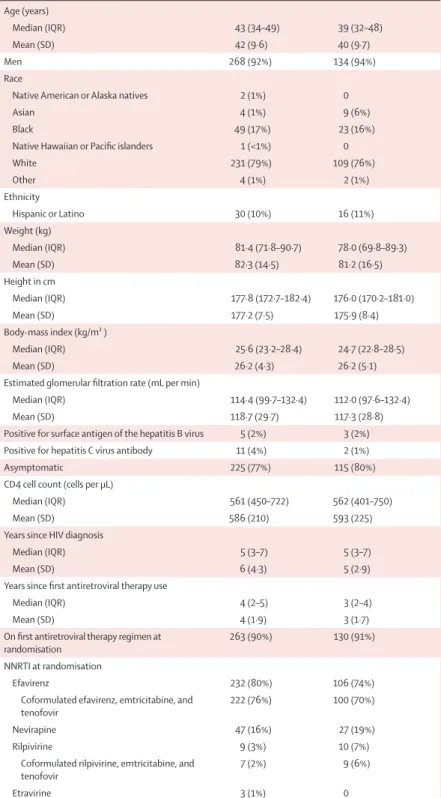
Between Dec 29, 2011, and Dec 13, 2012, we screened and randomly allocated 439 participants to treatment (fi gure 1). At randomisation, 338 (78%) of 434 participants were on a single-tablet regimen and the most common reason for interest in the study given on the enrolment survey (self-administered at screening) was related to side-eff ects of their current regimen, whereas 80 (83%) of 96 participants on a multitablet NNRTI-containing regimen cited a desire to simplify their current regimen as the reason for their interest in the study. Other reasons for enrolment in the study (patients could give more than one reason) included a desire to contribute to HIV research, access to HIV drugs, and drug dosing preferences. Baseline charac teristics were well matched between the two treatment groups (table 1). Most participants were on an efavirenz-containing regimen and on their fi rst regimen at the time of randomisation. We excluded one participant (in the switch group) from the modifi ed intention-to-treat population because they had resistance to study drugs on historical genotype (Asp67Asn, Lys70Arg, Met184Val, Thr215Tyr, and Lys219Gln).
The switch regimen was non-inferior to the no-switch regimen at the week 48 primary endpoint based on the number of participants with viral loads below 50 copies per mL (treatment diff erence 5·3%, 95% CI –0·5 to 12·0; p=0·066; table 2). Few participants had virological failure at week 48 in either group (table 2). A larger proportion of participants in the no-switch group than in the switch group had no virological data at week 48 (16 [11%] of 143 participants vs 16 [6%] of 290 participants), with the diff erence driven mainly by participants who withdrew consent but whose last viral load was below 50 copies per mL (table 2).
Virological suppression was high in both groups in the sensitivity per-protocol analysis: 267 (99%) of 269 participants in the switch group and 123 (99%) of 124 in the no-switch group had viral load below 50 copies per mL at week 48 (diff erence 0·1%, 95% CI –2·1 to 3·5; p=1·00), showing non-inferiority of the switch regimen to the no-switch regimen. A secondary effi cacy analysis, based on FDA-defi ned TLOVR algorithm, showed that 266 (92%) of 290 participants in the switch group and 124 (87%) of 143 participants in the no-switch group responded
Switch group (n=291) No-switch group (n=143)
Age (years)
Median (IQR) 43 (34–49) 39 (32–48)
Mean (SD) 42 (9·6) 40 (9·7)
Men 268 (92%) 134 (94%)
Race
Native American or Alaska natives 2 (1%) 0
Asian 4 (1%) 9 (6%)
Black 49 (17%) 23 (16%)
Native Hawaiian or Pacifi c islanders 1 (<1%) 0
White 231 (79%) 109 (76%) Other 4 (1%) 2 (1%) Ethnicity Hispanic or Latino 30 (10%) 16 (11%) Weight (kg) Median (IQR) 81·4 (71·8–90·7) 78·0 (69·8–89·3) Mean (SD) 82·3 (14·5) 81·2 (16·5) Height in cm Median (IQR) 177·8 (172·7–182·4) 176·0 (170·2–181·0) Mean (SD) 177·2 (7·5) 175·9 (8·4) Body-mass index (kg/m² ) Median (IQR) 25·6 (23·2–28·4) 24·7 (22·8–28·5) Mean (SD) 26·2 (4·3) 26·2 (5·1)
Estimated glomerular fi ltration rate (mL per min)
Median (IQR) 114·4 (99·7–132·4) 112·0 (97·6–132·4)
Mean (SD) 118·7 (29·7) 117·3 (28·8)
Positive for surface antigen of the hepatitis B virus 5 (2%) 3 (2%) Positive for hepatitis C virus antibody 11 (4%) 2 (1%)
Asymptomatic 225 (77%) 115 (80%)
CD4 cell count (cells per μL)
Median (IQR) 561 (450–722) 562 (401–750)
Mean (SD) 586 (210) 593 (225)
Years since HIV diagnosis
Median (IQR) 5 (3–7) 5 (3–7)
Mean (SD) 6 (4·3) 5 (2·9)
Years since fi rst antiretroviral therapy use
Median (IQR) 4 (2–5) 3 (2–4)
Mean (SD) 4 (1·9) 3 (1·7)
On fi rst antiretroviral therapy regimen at randomisation
263 (90%) 130 (91%)
NNRTI at randomisation
Efavirenz 232 (80%) 106 (74%)
Coformulated efavirenz, emtricitabine, and tenofovir
222 (76%) 100 (70%)
Nevirapine 47 (16%) 27 (19%)
Rilpivirine 9 (3%) 10 (7%)
Coformulated rilpivirine, emtricitabine, and tenofovir
7 (2%) 9 (6%)
Etravirine 3 (1%) 0
Data are n (%) unless otherwise stated. NNRTI=non-nucleoside reverse transcriptase inhibitor.
to treatment at week 48 (diff erence 5·0%, –1·1% to 12·1; p=0·12). Subgroup analyses according to age, sex, race, efavirenz and non-efavirenz NNRTI use, and number of previous regimens showed high rates of virological success on the switch regimen at week 48 (fi gure 2).
One participant in each group met the criteria for genotypic resistance testing, but neither had emergent resistance. Both participants remained on study
treatment and achieved virological suppression after week 48. We saw no between-group diff erence in increases from baseline at week 48 in CD4 count: mean 56 cells per μL (SD 147) in the switch group versus 58 cells per μL (179) in the no-switch group.
Adverse events occurred at similar frequencies in both groups and most were grade 1 or 2 in severity (table 3). In analysis of adverse events that occurred in 5% or more of
Switch group (n=290) No-switch group (n=143)
Plasma HIV RNA concentration <50 copies per mL at week 48 271 (93%) 126 (88%) Plasma HIV RNA concentration ≥50 copies per mL at week 48 3 (1%) 1 (1%)
Plasma HIV RNA concentration ≥50 copies per mL 2 1
Discontinued due to lack of effi cacy 0 0
Discontinued due to other reasons and last available HIV RNA ≥50 copies/mL 1 0
No virological data at week 48 16 (6%) 16 (11%)
Discontinued due to adverse event or death 5* 1
Discontinued due to other reasons and last available HIV RNA <50 copies/mL† 11 13
Missing data during window, but on study drug 0 2
Data are n (%) or n. *One participant had an adverse event that led to study drug discontinuation but also had a plasma HIV RNA concentration below 50 copies per mL in the week 48 analysis window and was classifi ed as a virological success. †Other reasons included withdrawn consent, loss to follow-up, and protocol violation.
Table 2: Virological outcome at week 48 according to snapshot analysis
Difference (%) On second regimen at baseline On first regimen at baseline Non-efavirenz Efavirenz Non-white White Women Men Age ≥40 years Age <40 years Overall n/N 271/290 126/143 107/114 62/74 164/176 64/69 251/267 119/134 20/23 7/9 216/230 99/109 55/60 27/34 214/231 91/106 57/59 35/37 245/262 114/130 25/27 11/12 Virological success (%) –20 –10 0 10 20 30 40 50 0 10 20 30 40 50 60 70 80 90 100
Switch group No-switch group
Favours no switch Favours switch
Figure 2: Virological success and diff erence at week 48, by subgroup
Data are for the modifi ed intention-to-treat analysis set. Subgroup not analysed owing to small numbers included two participants who had been on more than two previous regimens.
See Online for appendix
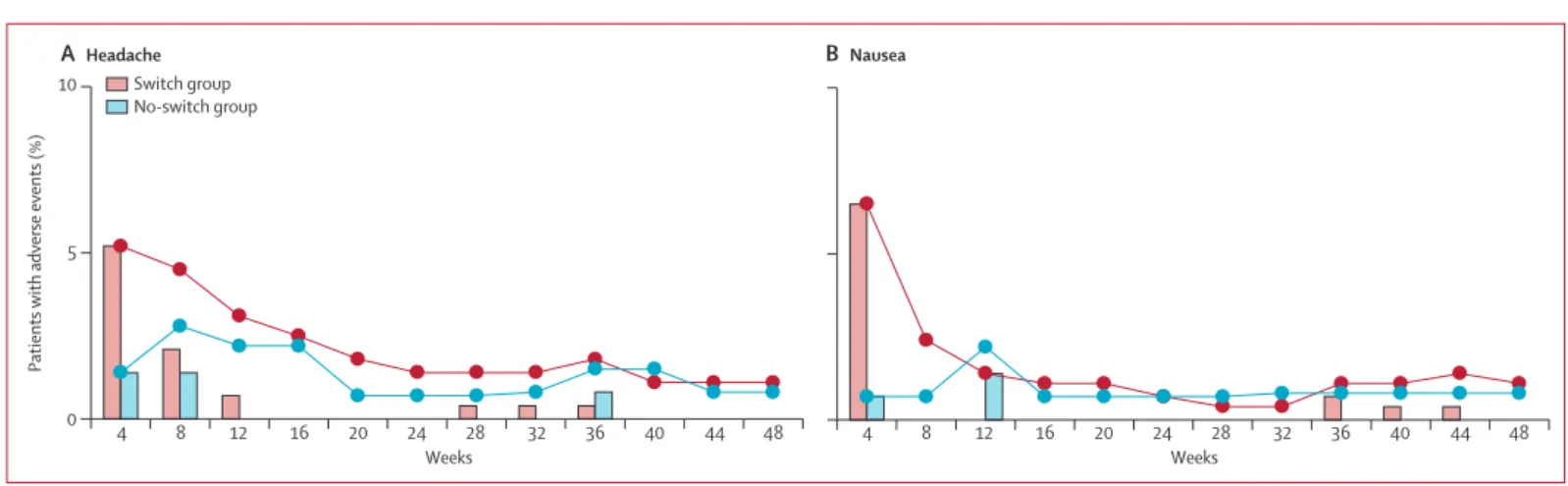
participants in either group, fatigue, cough, headache, and nausea occurred more often in the switch group compared with the no-switch group (table 3). We saw no between-group diff erence in the occurrence of other adverse events. Most headache and nausea were grade 1 or 2 in severity, occurred by week 4 or week 8, and were transient—none led to discontinuation of study drugs. Rates of headache and nausea were similar between treatment groups by week 12 (fi gure 3). Adverse events that led to study drug discontinuation were uncommon in both groups: causes in the switch group were arthralgia, coccydnia, paraesthesia, muscle atrophy, and hypoaesthesia (one patient had all fi ve symptoms), suicide (one), dysgeusia (one), prurigo (one), acquired Fanconi’s syndrome (one), and increased blood creatinine (one); the cause in the no-switch group was altered mood
(one). The individual with Fanconi’s syndrome had laboratory test results suggestive of proximal renal tubulopathy including proteinuria and glycosuria on a tenofovir-containing regimen at screening and baseline visits; his renal function and tubular markers improved to baseline levels after discontinuation of tenofovir. One participant in the switch group died from suicide during the study—the investigator regarded this death as being unrelated to study drug.
Most participants had at least one treatment-emergent laboratory abnormality reported during the study, which were mostly grade 1 or 2 in severity. Grade 3 or 4 laboratory abnormalities were reported for a similar percentage of participants in the switch (28 [10%] of 291 participants) and the no-switch (19 [14%] of 143) groups. Starting at week 4, we saw increases from baseline in serum creatinine concentration that generally stabilised and were non-progressive through week 48 in the switch group (median 11 μmol/L [IQR 4 to 18]); we saw no change between baseline and week 48 in serum creatinine concentrations in the no-switch group (–1 μmol/L, –5 to 6; appendix).
Other than a small decrease in high-density lipoprotein cholesterol in the switch group versus no change in the no-switch group, we saw no changes from baseline at week 48 in fasting lipid concentrations in both groups (appendix). Subgroup analysis showed small decreases from baseline at week 48 in fasting total (p=0·01), low-density lipoprotein (p=0·001), and high-low-density lipoprotein (p=0·008) cholesterol in participants in the efavirenz switch subgroup versus no changes from baseline in those who continued an efavirenz-containing regimen (appendix). We recorded small increases from baseline at week 48 in low-density lipoprotein cholesterol (p=0·018) and the ratio of total cholesterol to high-density lipoprotein cholesterol (p=0·026) in participants in the non-efavirenz NNRTI switch subgroup (appendix).
Results of the expanded HIV symptom index showed that occurrence of anxiety, insomnia, dizziness, vivid dreams, weird or intense dreams, and nightmares
Switch group (n=291) No-switch group (n=143) Summary of adverse event
Adverse event 237 (81%) 107 (75%)
Grade 3 or 4 19 (7%) 9 (6%)
Serious adverse events 14 (5%) 6 (4%)
Discontinuation due to adverse event 6 (2%) 1 (1%)
Death 1 (<1%) 0
Adverse events occurring in at least 5% of participants in either group
Upper respiratory tract infection 28 (10%) 10 (7%)
Headache* 28 (10%) 5 (3%) Nasopharyngitis 27 (9%) 14 (10%) Diarrhoea 23 (8%) 10 (7%) Nausea† 23 (8%) 4 (3%) Cough‡ 20 (7%) 3 (2%) Insomnia 17 (6%) 7 (5%) Fatigue§ 16 (5%) 1 (1%) Arthralgia 15 (5%) 4 (3%)
Data are n (%). p values are derived from Fisher’s exact test for comparison of diff erences between groups. *p=0·03. †p=0·05. ‡p=0·04. §p=0·02.
Table 3: Adverse events
0 5 10
Weeks
Patients with adverse events (%)
A Headache B Nausea 4 8 12 16 20 24 28 32 36 40 44 48 Weeks 4 8 12 16 20 24 28 32 36 40 44 48 Switch group No-switch group
Figure 3: Incidence and prevalence of headache (A) and nausea (B)
decreased from week 4 to week 48 compared with baseline in particpants who switched from an efavirenz-containing regimen to the INSTI regimen (appendix); whereas we saw no changes in these symptoms in participants who switched from a non-efavirenz NNRTI nor in those continuing an efavirenz-containing regimen. Rates of the other HIV symptoms did not increase or decrease compared with baseline, from week 4 to week 48, in either group (data not shown). Participants in the efavirenz switch subgroup had higher treatment satisfaction scores than did those who continued an efavirenz-containing regimen (range –30 to 30) at week 4 (mean 17·6 [SD 11·9]
vs 11·7 [12·9]; p=0·0005) and week 24 (21·3 [10·3] vs 13·7 [12·6]; p <0·0001). Patient-reported outcomes from other questionnaires including Center for Epidemiologic Studies Depression, State-Trait Anxiety Inventory, Short Form 36, and visual analogue scale adherence were generally favourable in both groups, unchanged from baseline within treatment group, and not diff erent between treatment groups (data not shown).
Discussion
Our fi ndings suggest that a switch to coformulated elvitegravir, cobicistat, emtricitabine, and tenofovir is non-inferior to continuing an existing NNRTI-based regimen for the treatment of virologically suppressed adult patients with HIV and no history of virological failure. To the best of our knowledge, STRATEGY-NNRTI is the fi rst fully powered study to show the efficacy, safety, and tolerability of switching to coformulated elvitegravir, cobicistat, emtricitabine, and tenofovir from an NNRTI, emtricitabine, and tenofovir regimen in such patients (panel).
The low rate of virological failure and absence of emergent resistance in the switch group over 48 weeks suggest that this treatment could be a durable switch option. At baseline, all participants had virological suppression and diff ered from treatment-naive participants who were viraemic in the pivotal phase 3 studies GS-US-236-01024 and GS-US-236-0103.5 Nevertheless, the
absence of emergent resistance to reverse transcriptase and integrase in our trial was reassuring when participants were switched from one antiretroviral drug class to another (ie, NNRTI to INSTI). However, our fi ndings of no emergent resistance might not be replicated in real-life settings in larger groups of patients with less stringent follow-up.
The INSTI regimen was well tolerated by parti cipants who switched from the NNRTI-containing regimen, as evidenced by infrequent discontinuations due to adverse events. Adverse events such as fatigue, cough, headache, and nausea were more common in the switch group but were consistent with the known safety profi le of the regimen from previous phase 3 studies.4,5 After switching
treatment, some patients might not tolerate a new regimen, and in this study six patients who switched and one patient who continued the original antiretroviral
treatment regimen discontinued study treatment because of adverse events.
Compared with baseline, rates of patient-reported, efavirenz-associated, neuropsychiatric symptoms (eg, anxiety, insomnia, dizziness, and abnormal dreams)3
decreased from week 4 through week 48 in participants who switched to the INSTI regimen. The higher rates of neuropsychiatric symptoms shown by the HIV symptom index than reported by investigators suggest that many patients on an efavirenz-containing regimen might continue to have these symptoms for years without reporting them to their physician. Findings from a previous efavirenz-to-rilpivirine open-label switch study and several small double-blind studies assessing a switch from efavirenz to etravirine or raltegravir have also shown similar improvement in neuropsychiatric symptoms.15,18,19
Efavirenz is a recommended or fi rst-line NNRTI in most HIV treatment guidelines1,2,9 and is the comparator
treatment in non-inferiority trials of many new anti-retroviral drugs.4 Although the virological effi cacy of an
efavirenz-containing regimen and the INSTI regimen was similar between our trial and a previous trial of treatment-naive patients,4 the tolerability profi le of the INSTI
regimen, as defi ned by investigator-reported adverse events and patient-reported outcomes, diff erentiates it from efavirenz.
Participants switching treatment had increases in serum creatinine concentrations consistent with the inhibitory eff ect of cobicistat on the multidrug and toxin extrusion-1 (MATE-1; also known as SLCA7A1) renal transporter, which mediates renal tubular creatinine secretion.20,21 The scale of increase in serum creatinine
concentration seen in this study was similar to that seen in the pivotal phase 3 studies of treatment-naive patients.4,5 Use of cobicistat in patients with estimated
glomerular fi ltration rates lower than that recruited to this study is under investigation.22 Although the
long-term eff ect of cobicistat inhibition on renal transporters is unknown, studies of cobicistat in healthy volunteers showed that inhibition on MATE-1 is reversible on its discontinuation.20 Switching to the INSTI regimen from
a regimen containing efavirenz was associated with a small improvement in some fasting lipid variables, which might not be clinically signifi cant but is consistent with the preferential lipid profi le of the INSTI regimen compared with efavirenz, emtricitabine, and tenofovir as seen in a previous study (GS-US-236-0102).4 Fasting lipid
parameters such as low-density lipoprotein cholesterol and triglycerides did not worsen with the switch to a cobicistat-boosted regimen, which was reassuring. Cobicistat is a pharmacokinetic booster that has been likened to ritonavir, which is known for its lipid eff ects.23
Some limitations of this study include the small number of women and the open-label design. The diff erence in rates of virological success might have been smaller if the study had been double-blinded. The higher rate of virological success in the switch group
was driven primarily by the higher rate of discontinuation in the no-switch group for non-virological reasons. Participants with tolerability issues on an NNRTI or those on a multitablet NNRTI-based regimen who were not assigned to the switch group might have felt deprived of the chance to try the switch treatment and might have been more likely to withdraw from the study. Additionally, a potential bias could have occurred in patient-reported symptoms because of knowledge of treatment assignment. Potential bias also exists when patients are excluded from the intention-to-treat analysis population after randomisation. In this study, only participants with a major eligibility violation (eg, prohibited resistance
mutations to study drugs) were excluded, and this was done with equal scrutiny without regards for treatment assignment. Investigators might also have been more likely to attribute an adverse event to study drug in patients in the switch group than in those who continued a stable regimen—this might explain the higher rates of some investigator-reported adverse events in participants who switched treatment. These biases are less likely to exist in a double-blind study, but such a study would hamper assessment of patient satisfaction with a single-tablet versus multitablet regimen. Additionally, because we enrolled individuals receiving various NNRTIs, including nevirapine, which is given only as part of amultitablet NNRTI-containing regimen, a double-blinded study with placebo pills would have been impractical. Finally, the well described side-eff ects of some NNRTIs such as efavirenz and the increases in serum creatinine concentration associated with a cobicistat-containing regimen would make double-blinding less eff ective.
Few participants were on a multitablet NNRTI-containing regimen at screening. Most of these individuals enrolled in the study because they wanted to simplify their treatment regimen. One possible defi nition of simplifi cation is the reduction in the number of pills or dosing frequency of antiretroviral treatment. Findings from studies assessing regimen simplifi cation strategies showed that patients prefer to take fewer pills,24,25 and
fi ndings from observational studies indicate that virological and clinical outcomes can be better for patients treated with single-tablet versus multitablet regimen, even in the most diffi cult-to-treat patient populations.26–29 The benefi ts of a single-tablet regimen
include improved adherence, reduced risk of selective noncompliance, and lower risk of prescription error, all of which might decrease the risk of treatment failure and drug resistance.30
Because continuation of an NNRTI-containing single-tablet or multisingle-tablet regimen is not suitable for all patients, coformulated elvitegravir, cobicistat, emtri-citabine, and tenofovir—the fi rst INSTI-based single-tablet regimen—is an alternative treatment option for virologically suppressed patients with no history of virological failure or resistance to study drugs.
Contributors
AP, MM, AM, H-JS, AA, PD, and KHenrolled participants and reviewed
and interpreted analyses of data.WG, KW, and DP designed the study.
WG, KW, and TN oversaw data collection. WG, KW, DP, and TN analysed data, which were reviewed and interpreted by WG, KW, DP, TN, and BG. AP and TN wrote the fi rst draft of this report. The draft report was edited by AP, MM, AM, H-JS, AA, PD, KH, TN, DP, WG, KW, and BG.
Declaration of interests
AP has received grants from Gilead Sciences, during the conduct of the study; grants from Bristol-Myers Squibb, Gilead Sciences, Janssen, Merck, ViiV, personal fees from Bristol-Myers Squibb, Gilead Sciences, Janssen, Merck, and ViiV, outside the submitted work; is involved in data review activities for the ACT Consortium Trials, MRC, and PENTA Trials and is President of NEAT-ID Foundation and is a
Panel: Research in Context
Systematic review
We searched Medline, Embase, Biosis, and Current Contents with the following search terms for randomised controlled, clinical trials of a switch in treatment from a non-nucleoside reverse transcriptase inhibitor to an integrase inhibitor in virologically suppressed patients with HIV : elvitegravir or vitekta, raltegravir or isentress, dolutegravir or tivicay, HIV integrase inhibitor or integrase strand transfer inhibitor, non-nucleoside reverse transcriptase inhibitor, switch, and simplifi cation. We searched for papers written in English and did our last search on April 14, 2014. Excluding reviews, we identifi ed two reports. SWITCH-ER was a 4 week, randomised, double-blinded crossover study assessing the preference of virologically suppressed patients on efavirenz (n=57) for an efavirenz or raltegravir regimen.15 Most patients preferred raltegravir; these patients also hadlower
anxiety and stress scores after switching. RASTA was a 48 week, randomised, open-label study assessing virologically suppressed patients switching from a non-nucleoside reverse transcriptase inhibitor (NNRTI; n=16), protease inhibitor (n=23), or other antiretroviral (n=2) to raltegravir.16 Virological failure was seen in fi ve (13%) patients who switched to
raltegravir. Patients who switched from efavirenz (n=15) had improvement in cognitive function evidenced by statistically signifi cant improvement in delayed recall of words on the Rey’s memory test.
Interpretation
STRATEGY-NNRTI is being done in parallel with STRATEGY-PI,17 another fully powered,
randomised, open-label non-inferiority trial assessing the safety and effi cacy of switching to coformulated elvitegravir, cobicistat, emtricitabine, and tenofovir from a ritonavir-boosted protease inhibitor in combination with the same NRTI backbone of emtricitabine and tenofovir in virologically suppressed adult with HIV.In both studies, switching regimen was non-inferior to continuation of the baseline NNRTI or a ritonavir-boosted protease inhibitor regimen in maintaining virological suppression at week 48. The integrase strand transfer inhibitor (INSTI)-based regimen was well-tolerated with favourable patient-reported outcomes. In STRATEGY-NNRTI, rates of virological success for participants switching regimen compared with those continuing an NNRTI plus emtricitabine and tenofovir regimen were high in the overall study population and across subgroups according to age, sex, race, efavirenz versus non-efavirenz NNRTI, and the number of previous regimens. We recorded no treatment-emergent resistance in the switch group up to week 48. The limitations of both studies are similar: both had an open-label study design, which might have contributed to the higher number of discontinuation due to non-virological reasons in the comparator groups. Results of these phase 3b switch trials suggest that coformulated elvitegravir, cobicistat, emtricitabine, and tenofovir is effi cacious and well tolerated in virologically suppressed adults with HIV on an NNRTI or a ritonavir-boosted protease inhibitor with emtricitabine and tenofovir regimen considering a regimen modifi cation or simplifi cation.
member of guideline panels for BHIVA, European AIDS Clinical Society, WHO. MM has received grants from Gilead Sciences, during the conduct of the study; and personal fees from Gilead Sciences, Bristol-Myers Squibb, Merck, outside the submitted work. AM has received other payment from Gilead Sciences, during the conduct of the study; and personal fees from Gilead Sciences, Janssen, and Merck, other from GenProbe, Kowa, Pfi zer, Repros, and Sumagen, outside the submitted work. HS has received grants from Gilead Sciences, during the conduct of the study; and personal fees from AbbVie, Bristol-Myers Squibb, Gilead Sciences, Janssen-Cilag, Merck, Sharp and Dohme, ViiV, outside the submitted work. AA has received grants from Gilead Sciences, during the conduct of the study; and personal fees from AbbVie, Bristol-Myers Squibb, Gilead Sciences, Janssen-Cilag, Merck Sharp Dohme, ViiV, outside the submitted work. PD has received grants from Gilead Sciences, during the conduct of the study; grants and personal fees from Gilead Sciences and Janssen-Cilag; and personal fees from AbbVie, Boehringer Ingelheim, Bristol-Myers Squibb, Ferrer International, Merck Sharp and Dohme, Theratechnologies, and ViiV, outside the submitted work. PMG has received other payment from Gilead Sciences, during the conduct of the study; and personal fees from Abbot, Bristol-Myers Squibb, Gilead Sciences, GlaxoSmithKline, Janssen, and ViiV, outside the submitted work. KH has received grants from Gilead, and grants from GSK/ViiV, during the conduct of the study. TN, DP, WG, KW, and BG are employed by and hold stocks in Gilead Sciences.
Acknowledgments
We thank Javier Szwarcberg and Martin S Rhee for their critical review of the report. We also thank Andrew Plummer, Ramin Ebrahimi, Helen Kuo, Yu Ning, Eric Wang, Ting Bai, Sandy Shen, Desiree Benavente, and the STRATEGY-NNRTI study team. We presented some of our fi ndings at the Conference on Retroviruses and Opportunistic Infections; Boston, MA, USA; March 3–6, 2014. abstract 553LB. References
1 Panel on antiretroviral guidelines for adults and adolescents.
Guidelines for the use of antiretroviral agents in HIV-1-infected adults and adolescents. http://aidsinfo.nih.gov/contentfi les/ lvguidelines/adultandadolescentgl.pdf (accessed May 22, 2014).
2 European AIDS Clinical Society. EACS guidelines version 7.0.
http://www.eacsociety.org/Portals/0/Guidelines_Online_131014.pdf (accessed March 25, 2014).
3 Bristol-Myers Squibb. SUSTIVA (efavirenz) capsules and tablets for
oral use. US prescribing information. http://packageinserts.bms. com/pi/pi_sustiva.pdf (accessed May 22, 2014).
4 Sax PE, DeJesus E, Mills A, et al. Co-formulated elvitegravir,
cobicistat, emtricitabine, and tenofovir versus co-formulated efavirenz, emtricitabine, and tenofovir for initial treatment of HIV-1 infection: a randomised, double-blind, phase 3 trial, analysis of
results after 48 weeks. Lancet 2012; 379: 2439–48.
5 DeJesus E, Rockstroh JK, Henry K, et al. Co-formulated elvitegravir,
cobicistat, emtricitabine, and tenofovir disoproxil fumarate versus ritonavir-boosted atazanavir plus co-formulated emtricitabine and tenofovir disoproxil fumarate for initial treatment of HIV-1 infection: a randomised, double-blind, phase 3, non-inferiority trial. Lancet 2012; 379: 2429–38.
6 Wohl D, Cohen C, Gallant JE, et al. Elvitegravir/cobicistat/
emtricitabine/tenofovir df (stb) demonstrates durable effi cacy and
favorable long-term safety profi le versus efavirenz/emtricitabine/ tenofovir df (atr) at week 144 in treatment-naive hiv patients. 53rd Interscience Conference on Antimicrobial Agents and Chemotherapy (ICAAC); Denver, CO, USA; Sept 10–13, 2013. H-672A.
7 Clumeck N, Molina JM, Henry K, et al. Elvitegravir/cobicistat/
emtricitabine/tenofovir df (stb) has durable effi cacy and
diff erentiated safety compared to atazanavir boosted by ritonavir plus emtricitabine/tenofovir df in treatment-naïve HIV-1 infected patients: week 144 results. 14th European AIDS Conference; Brussels, Belgium; Oct 16–19, 2013. abstract LBPS7/2.
8 Panel on Antiretroviral Guidelines for Adults and Adolescents.
Recommendation on integrase inhibitor use in antiretroviral treatment-naive HIV infected individuals from the hhs panel on antiretroviral guidelines for adults and adolescents. http://aidsinfo. nih.gov/contentiles/upload/AdultARV_INSTIRecommendations. pdf (accessed March 25, 2014).
9 Williams I, Churchill D, Anderson J, et al. British HIV Association
guidelines for the treatment of HIV-1-positive adults with
antiretroviral therapy 2012. HIV Med 2014; 15 (suppl 1): 1–85.
10 US Food and Drug Administration, Center for Drug Evaluation and Research, Center for Biologic Evaluation and Research. Guidance for industry: E9 statistical principles for clinical trials. http://www. fda.gov/downloads/Drugs/
GuidanceComplianceRegulatoryInformation/Guidances/ ucm073137.pdf (accessed April 29, 2014).
11 US Food and Drug Administration, Center for Drug Evaluation and Research. Guidance for industry: antiretroviral drugs using plasma HIV RNA measurements—clinical considerations for accelerated and traditional approval. http://www.fda.gov/downloads/Drugs/ GuidanceComplianceRegulatoryInformation/Guidances/ UCM070968.pdf (accessed March 25, 2014).
12 Smith F, Hammerstrom T, Soon G, et al. A meta-analysis to assess the FDA DAVP’s TLOVR algorithm in HIV submissions. Drug Inform J 2011; 45: 291–300.
13 Chan IS, Zhang Z. Test-based exact confi dence intervals for the
diff erence of two binomial proportions. Biometrics 1999; 55: 1202–09.
14 Cockcroft DW, Gault MH. Prediction of creatinine clearance from
serum creatinine. Nephron 1976; 16: 31–41.
15 Nguyen A, Calmy A, Delhumeau C, et al. A randomized cross-over study to compare raltegravir and efavirenz (SWITCH-ER study). AIDS 2011; 25: 1481–87.
16 Fabbiani M, Mondi A, Colafi gli M, et al. Safety and effi cacy of
treatment switch to raltegravir plus tenofovir/emtricitabine or abacavir/lamivudine in patients with optimal virological control: 48-week results from a randomized pilot study (Raltegravir Switch for Toxicity or Adverse Events, RASTA Study). Scand J Infect Dis
2014; 46: 34–45.
17 Arribas JR, Pialoux G, Gathe J, et al. Simplifi cation to
coformulated elvitegravir, cobicistat, emtricitabine, and tenofovir versus continuation of ritonavir-boosted protease inhibitor with emtricitabine and tenofovir in adults with virologically suppressed HIV (STRATEGY-PI): 48 week results of a randomised,
open-label, phase 3b, non-inferiority trial. Lancet Infect Dis 2014; published online June 5. http://dx.doi.org/10.1016/S1473-3099(14)70782-0.
18 Nelson M, Winston A, Waters L, et al. Multicentre open-label study of switching from atripla to eviplera for possible efavirenz associated CNS toxicity. 53rd Interscience Conference on Antimicrobial Agents and Chemotherapeutic; Denver, CO, USA; September 10–13, 2013. abstract H-672B.
19 Waters L, Fisher M, Winston A, et al. A phase IV, double-blind, multicentre, randomized, placebo-controlled, pilot study to assess the feasibility of switching individuals receiving efavirenz with continuing central nervous system adverse events to etravirine. AIDS 2011; 25: 65–71.
20 German P, Liu HC, Szwarcberg J, et al. Eff ect of cobicistat on glomerular fi ltration rate in subjects with normal and impaired
renal function. J Acquir Immune Defi c Syndr 2012; 61: 32–40.
21 Stray KM, Bam RA, Birkus G, et al. Evaluation of the eff ect of cobicistat on the in vitro renal transport and cytotoxicity potential of
tenofovir. Antimicrob Agents Chemother 2013; 57: 4882–89.
22 Post F, Villanueva JA, Fisher M, et al. Renal safety of elvitegravir/ cobicistat/emtricitabine/tenofovir DF (STB) and cobicistat-boosted protease inhibitor regimens in HIV-1-infected patients with mild to moderate renal impairment. 7th International AIDS Society Conference on HIV Pathogenesis, Treatment, and Prevention; Kuala Lumpur, Malaysia. June 30 to July 3, 2013. abstract TUPE280.
23 AbbVie Inc. NORVIR (ritonavir) capsules, soft gelatin for oral use. US Prescribing Information. http://www.rxabbvie.com/pdf/ norpi2a.pdf (accessed May 22, 2014).
24 Hodder SL, Mounzer K, DeJesus E, et al. Patient-reported outcomes in virologically suppressed, HIV-1-infected subjects after switching to simplifi ed, single-tablet regimen of efavirenz, emtricitabine, and tenofovir DF. AIDS Patient Care STDS 2010;
24: 97–96.
25 Airoldi M, Zaccarelli M, Bisi L, et al. One-pill once-a-day HAART: a simplifi cation strategy that improves adherence and quality of life of HIV-infected subjects. Patient Prefer Adherence 2010;
26 Bangsberg DR, Ragland K, Monk A, Deeks SG. A single tablet regimen is associated with higher adherence and viral suppression than multiple tablet regimens in HIV+ homeless and marginally
housed people. AIDS 2010; 24: 2835–40.
27 Cohen CJ, Meyers JL, Davis KL. Association between daily antiretroviral pill burden and treatment adherence, hospitalization risk, and other health utilisation and costs in a US medicaid
population with HIV. BMJ Open 2013; 3: e003028.
28 Sax PE, Meyers JL, Mugavero M, Davis KL. Adherence to antiretroviral treatment and correlation with risk of hospitalization among commercially insured HIV patients in the United States. PLoS One 2012; 7: e31591.
29 Hanna DB, Hessol NA, Golub ET, et al. Increase in single-tablet regimen use and associated improvements in adherence-related outcomes in HIV-infected women. J Acquir Immune Defi c Syndr
2014; 65: 587–96.
30 Llibre JM, Arribas JR, Domingo P, et al. Clinical implications of fi xed-dose coformulations of antiretrovirals on the outcome of