Louisiana State University
LSU Digital Commons
LSU Doctoral Dissertations Graduate School
2004
Construct validation of an Arabic version of the
Learning Transfer System Inventory for use in
Jordan
Samer Abdelkarim Khasawneh
Louisiana State University and Agricultural and Mechanical College, [email protected]
Follow this and additional works at:https://digitalcommons.lsu.edu/gradschool_dissertations Part of theHuman Resources Management Commons
This Dissertation is brought to you for free and open access by the Graduate School at LSU Digital Commons. It has been accepted for inclusion in LSU Doctoral Dissertations by an authorized graduate school editor of LSU Digital Commons. For more information, please [email protected]. Recommended Citation
Khasawneh, Samer Abdelkarim, "Construct validation of an Arabic version of the Learning Transfer System Inventory for use in Jordan" (2004).LSU Doctoral Dissertations. 3856.
CONSTRUCT VALIDATION OF AN ARABIC VERSION OF THE
LEARNING TRANSFER SYSTEM INVENTORY FOR USE IN JORDAN
A Dissertation
Submitted to the Graduate Faculty of the Louisiana State University and Agricultural and Mechanical College
in partial fulfillment of the requirements for the degree of
Doctor of Philosophy
in
The School of Human Resource Education and Workforce Development
by
Samer Abdelkarim Khasawneh B.S., Yarmouk University, 1991 M.S., Central Michigan University, 1998
Dedicated to my parents (Abdel-karim Saleh Khasawneh and Fathia Mahmoud Athamneh), sisters, and brothers
ACKNOWLEDGEMENTS
This dissertation represents years of hard work on my part, but many more years of support and encouragement by some very exceptional people including family, mentors, friends and colleagues.
I am especially grateful to my parents, Abdel-Karim Saleh Khasawneh and Fathia Mahmoud Athamneh, my sisters (Summer, Lana, Faten, Heba, Lara, and Rasha) and my brothers (Thair and Mohammad) for their prayers, love and support.
I would like to express my sincere gratitude to my dissertation committee chair, Dr. Reid A. Bates, for his timely, indispensable support, and his extraordinary friendship, and much appreciation goes to my committee members, Dr. Michael F. Burnett, Dr. Satish Verma, Dr. Christine Distefano, and Dr. Kaustuv Roy for their guidance and support.
Finally, I would like to thank all my friends and colleagues at Louisiana State University especially those from the school of Human Resource Education.
TABLE OF CONTENTS
DEDICATION
... iiACKNOWLEDGEMENTS
... iiiLIST OF TABLES
... viiLIST OF FIGURES
...xABSTRACT
... xiCHAPTER 1
INTRODUCTION
...1Rationale for the Study ...2
Description of the LTSI ...4
Importance of the Study...5
Problem Statement ...6
Research Questions...6
CHAPTER 2 LITERATURE REVIEW
...8Training-Learning Transfer in the Workplace...8
Types of Transfer...9
Factors Affecting Training Transfer ...10
Environmental Factors ...13
Motivational Factors ...15
Ability Factors ...17
Secondary Influences ...19
Development of the LTSI ...21
Development and Construct Validation of the LTSI ...21
The Learning Transfer System Inventory (LTSI) Revisions ...24
Cross-Cultural Construct Validation of the LTSI...26
Convergent and Divergent Validation of the LTSI...29
Criterion-Related Validation of the LTSI ...31
The Domain of Learning Transfer and Organizational Learning ...35
Translation of Materials for Cross-Cultural Research ...38
The Translation Process...40
Summary ...45
CHAPTER 3 RESEARCH METHODOLOGY
...46Study Design...46
Population and Sample ...46
Protection of Human Subjects ...47
Instrumentation ...48
Data Collection Procedures ...53
Data Analysis Procedures ...54
Research Question One...54
Research Questions Two and Three ...58
Research Question Four ...61
CHAPTER 4 ANALYSIS OF RESULTS
...63Demographic Profile...63
Gender of Respondents ...63
Age of Respondents ...63
Educational Level of Respondents...64
Years of Experience in the Current Organization...65
Types of Training Attended ...65
Choice of Training of Respondents ...66
Sector of Organization of Respondents ...66
Task of Organization for Respondents ...67
Research Question One...68
Training-Specific Domain ...70
Training-in-General Domain ...78
Summary for Research Question One...83
Research Questions Two and Three ...86
Gender...87 Age...88 Level of Education...89 Years of Experience...91 Types of Training...93 Choice of Training ...96 Sector of Organization ...98
Task of the Organization...100
Summary for Research Questions Two and Three ...104
Research Question Four...105
Descriptive Statistics...106
Regression Analysis...109
Overall Organizational Learning Measure...109
Knowledge Indeterminacy ...112
Learning Latitude...114
Organizational Unity...117
Innovation ...119
Summary for Research Question Four...122
CHAPTER 5 DISCUSSION...
124Construct Validation ...124
The Learning Transfer System and Group Differences ...128
Individual Differences ...128
Situational Differences...130
Recommendations for Future Research ...135
REFERENCES
...139APPENDIX
A FACT SHEET, LEARNING TRANSFER SYSTEM INVENTORY (LTSI), ORGANIZATIONAL LEARNING SCALES, AND DEMOGRAPHIC
VARIABLES ...150 B LTSI SCALE DEFINITIONS AND DESCRIPTIONS ...163
C OBJECTIVE EVALUATION INSTRUMENT FOR THE ORIGINAL LTSI
ITEMS AND THE BACK-TRANSLATED ITEMS ...169
D RESULTS OF THE OBJECTIVE EVALUATION ...183
E ARABIC TRANSLATION OF THE FACT SHEET, LTSI ITEMS, ORGANIZATIONAL LEARNING ITEMS, AND DEMOGRAPHIC
VARIABLES ...190 F BEGINNING AND ENDING COMMUNALITIES FOR ITEMS OF THE
TRAINING-SPECIFIC SECTION, TRAINING-IN-GENERAL SECTION
AND ORGANIZATIONAL LEARNING SECTION...202 G LETTER OF PERMISSION...206
VITA
...208LIST OF TABLES
Table 1. Definitions of Organizational Transfer Climate Variables...22
Table 2. LTSI Scale Definitions, Loadings, and Reliability Coefficients ...25
Table 3. LTSI Instrument Development ...28
Table 4. Summary of the LTSI Criterion Validity Studies...35
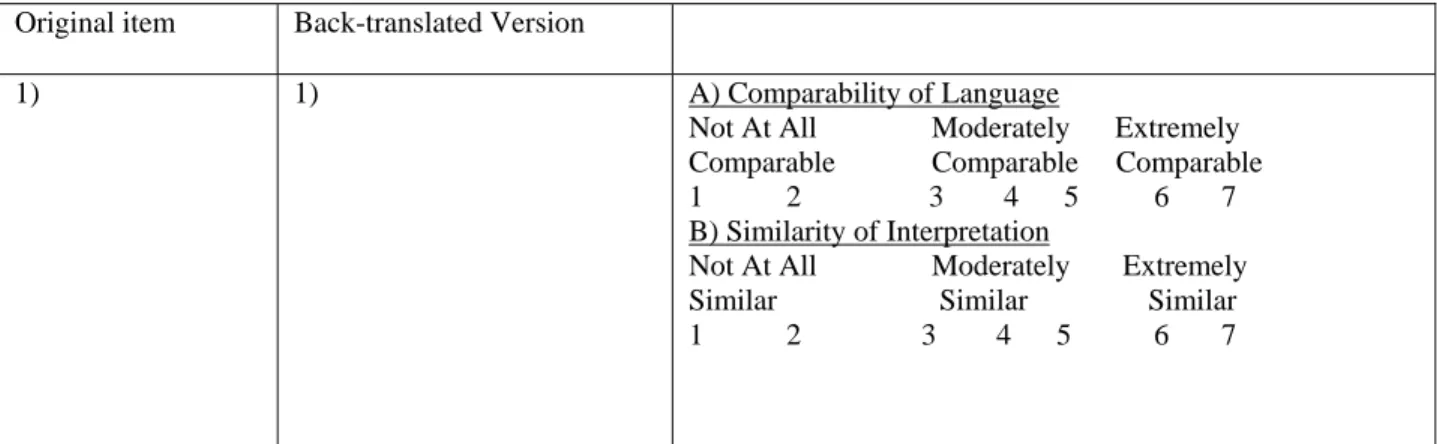
Table 5. Objective Evaluation of Instrument Equivalency...53
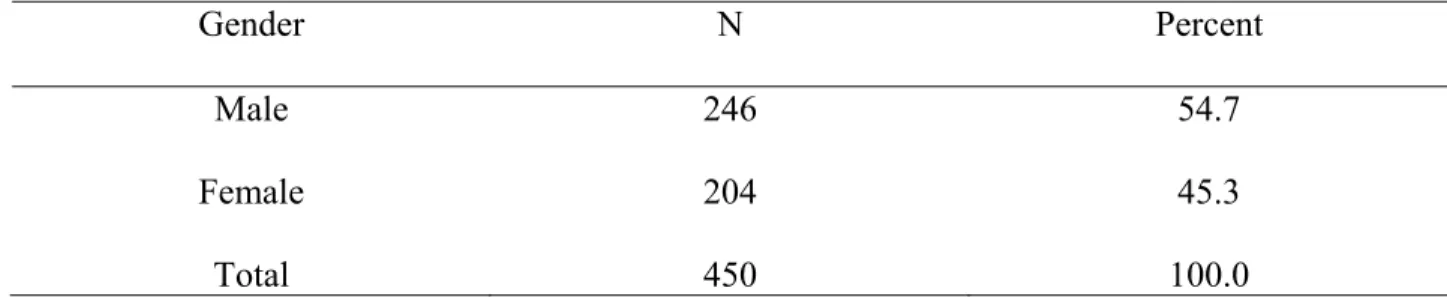
Table 6. Sample Description by Gender ...63
Table 7. Sample Description by Age ...64
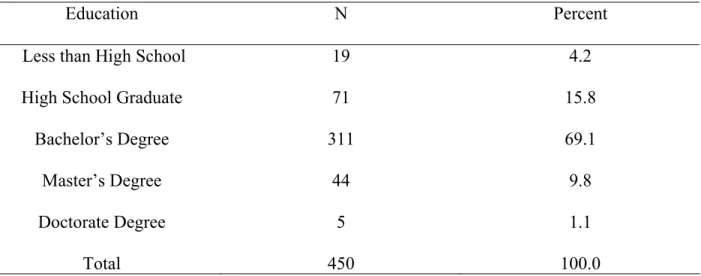
Table 8. Sample Description by Educational Level...64
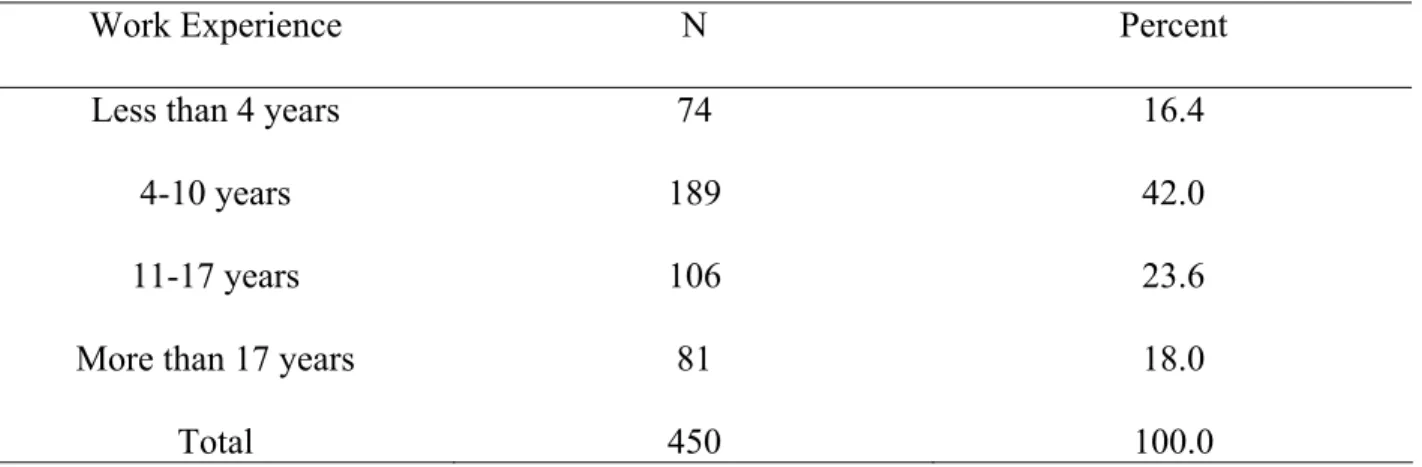
Table 9. Sample Description by Work Experience in Years ...65
Table 10. Sample Information by Types of Training ...65
Table 11. Sample Information by Choice of Training...66
Table 12. Sample Information by Sector of the Organization ...67
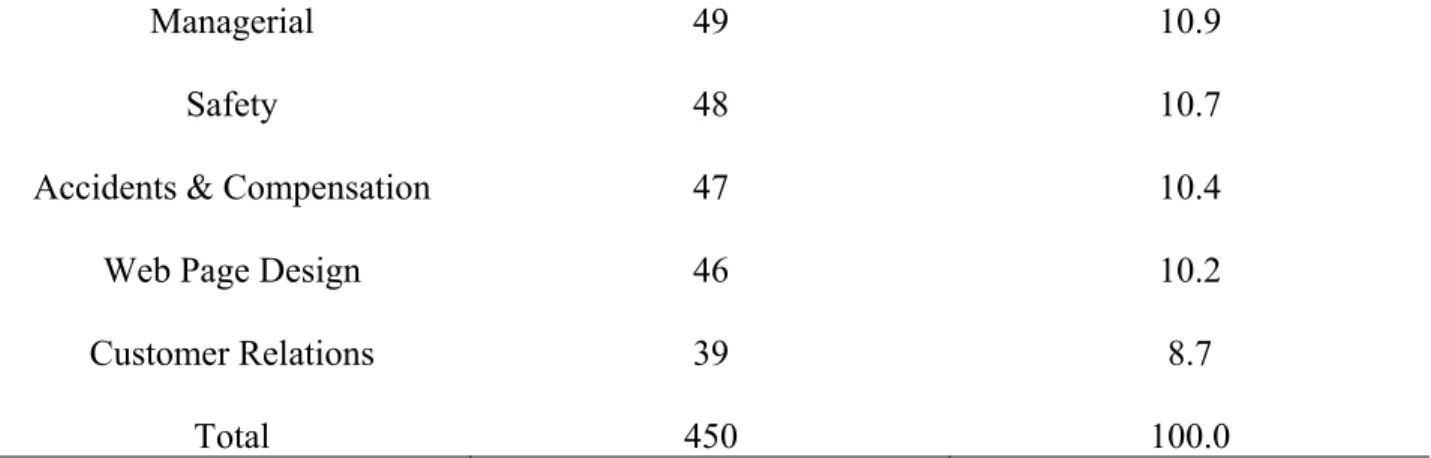
Table 13. Sample Information by Task of the Organization ...67
Table 14. Factor Loadings for the Training-Specific Domain...74
Table 15. Factor Correlation Matrix for the Training-Specific Domain ...78
Table 16. Factor Loadings for the Training-in-General Domain...81
Table 17. Factor Correlation matrix for the Training-in-General Domain ...82
Table 18. Factor and Item Comparisons between the ALTSI and the LTSI ...83
Table 19. Means, Standard Deviations, Coefficient Alpha, and Intercorrelations for the ALTSI...85
Table 20. Multivariate Tests of Significance, Effect Size, and Power for Gender...88
Table 21. Multivariate Tests of Significance, Effect Size, and Power for Age Groups ...89
Table 23. Univariate F-Tests Results for the 16 ALTSI Factors across Levels of Education...90
Table 24. Post Hoc Comparisons across Levels of Education...91
Table 25. Multivariate Tests of Significance, Effect Size, and Power for Years of Experience ...92
Table 26. Univariate F-Tests Results for the 16 ALTSI Factors across Years of Experience ...93
Table 27. Post Hoc Comparisons across Years of Experience ...93
Table 28. Multivariate Tests of Significance, Effect Size, and Power for Types of Training...94
Table 29. Univariate F-Tests Results for the 16 ALTSI Factors across Types of Training ...95
Table 30. Post Hoc Comparisons across Types of Training...95
Table 31. Multivariate Tests of Significance, Effect Size, and Power for choice of Training ...97
Table 32. Univariate F-Tests Results for the 16 ALTSI Factors across Choice of Training...97
Table 33. Mean and Standard Deviation for Choice of Training ...98
Table 34. Multivariate Tests of Significance, Effect Size, and Power for Sector of Organization...99
Table 35. Univariate F-Tests Results for the 16 ALTSI Factors across Sector of Organization...100
Table 36. Mean and Standard Deviation for Sector of Organization ...100
Table 37. Multivariate Tests of Significance, Effect Size, and Power for Task of the Organization...101
Table 38. Univariate F-Tests Results for the 16 ALTSI Factors across Task of the Organization...102
Table 39. Post Hoc Comparisons across Task of the Organization...102
Table 40. Correlation Table for the Organizational Learning Measures and the ALTSI Factors ...108
Table 41. Multiple Regression Analysis of an Overall Measure of Organizational Learning ....110
Table 42. Hierarchal Multiple Regression Analysis of an Overall Measure of Organizational Learning ...111
Table 43. Multiple Regression Analysis of Knowledge Indeterminancy ...112
Table 44. Hierarchal Multiple Regression Analysis of Knowledge Indeterminancy ...113
Table 45. Multiple Regression Analysis of Learning Latitude...115
Table 46. Hierarchal Multiple Regression Analysis of Learning Latitude ...116
Table 47. Multiple Regression Analysis of Organizational Unity...117
Table 48. Hierarchal Multiple Regression Analysis of Organizational Unity...118
Table 49. Multiple Regression Analysis of Innovation ...119
Table 50. Hierarchal Multiple Regression Analysis of Innovation ...121
LIST OF FIGURES
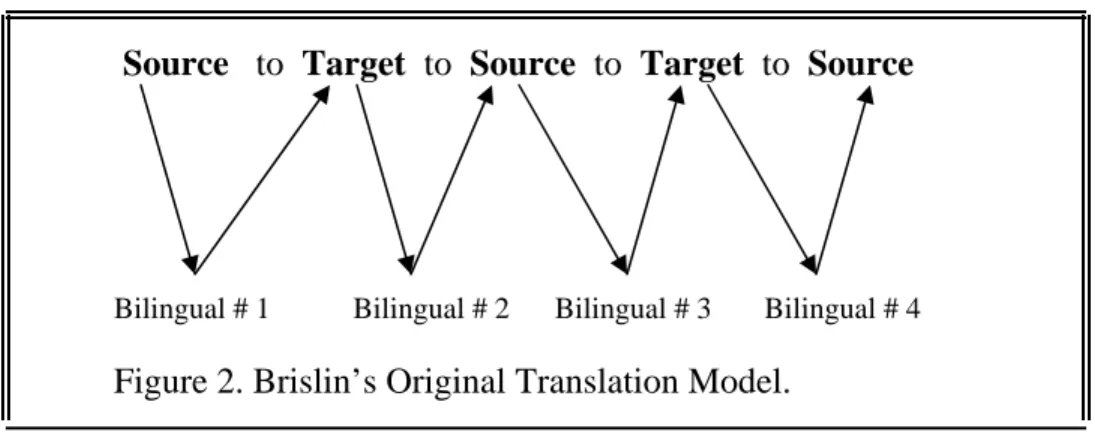
Figure 1. Conceptual Model of Instrument Constructs...12 Figure 2. Brislin’s Original Translation Model ...43
ABSTRACT
Organizations in Jordan have invested heavily in employee training. However, these training efforts may not be as effective. One area of particular interest is learning transfer, or the extent to which learning from training is applied on the job. Recent research efforts have led to the development of the Learning Transfer System Inventory (LTSI), the only valid and reliable measure of key transfer system factors. This study validated the constructs of the LTSI for use in Jordan. By doing so, HRD practitioners in Jordan can use such instrument to diagnose early problems with learning transfer, the key to training effectiveness and individual performance.
The LTSI was translated through a rigorous cross-cultural translation process which involved forward and back translations, pilot testing, and the establishment of equivalency using objective measures of evaluation. The ALTSI was administered to 500 employees employed by 28 public and private sector organizations operating in Jordan who have attended nine different types of training. Responses were received from 450 employees with a response rate of 90%. The results showed that 18 factors were valid for use in Jordan. The reliabilities of these factors ranged from .70 to .87 with the exception of three factors.
The study also investigated the perceptions of transfer system characteristics across selected individual variables (gender, age, levels of education, and years of experience) and situational variables (types of training, choice of training, sector of the organization, and task of the organization). The results suggested that the learning transfer system perceptions differed across the individual variables (except for gender and age) and the situational variables. Private organizations and the technical sector appeared to have the strongest transfer system. Moreover, employees were more prone toward voluntary training.
Finally, the study established the relationship between the learning transfer system domain and the organizational learning domain, thus expanding their nomological network. The learning transfer systems explained a significant portion of the total variance in each measure of organizational learning. Results suggested that higher levels of learning transfer were associated with higher levels of organizational learning.
CHAPTER 1
INTRODUCTION
The present study is exploratory in nature with the primary purpose of validating and constructing an Arabic version of the Learning Transfer System Inventory (LTSI) for use in the country of Jordan and other Arabic-speaking countries. The LTSI is used as an evaluation and diagnostic tool to uncover the factors that affect transfer of learning in organizations. This in turn is expected to result in effective training and improved individual and organizational performance. The LTSI was chosen because it is a theoretically and psychometrically sound instrument that has shown evidence of cross-cultural factor validity. The LTSI has been translated and used in two different cultural contexts. It has been used in organizations in Taiwan (Chen, 2003) and Thailand (Yamnill, 2001). Moreover, the LTSI was tested with over 5000 subjects in the United States (U. S.) and has shown evidence of reliability as well as construct validity, criterion validity, convergent validity, and divergent validity (Bates, 1997; Bates, 2001; Bates, Holton, Seyler, & Carvalho, 2000; Bookter, 1999; Holton, Bates, & Ruona, 2000; Holton, Bates, Seyler, & Carvalho, 1997; Ruona, Leimbach, Holton, & Bates, 1999; Seyler, Holton, Bates, Burnett, & Carvalho, 1998). Validation of the LTSI in this study will advance learning transfer research in Jordan and other Arabic speaking countries where such research is almost non-existent. With an Arabic version of the LTSI, organizations in these countries will be able to diagnose early problems with learning transfer which can provides us with important insights into potential catalysts and barriers to training effectiveness. Understanding and improving training will ultimately advance organizational performance, the driving engine for the economy of Jordan.
Rationale for the Study
The world has become a globalized economic system, where countries with high levels of technology, finance, and information have more advantages in controlling the different sources of human capital, raw materials, and product development and distribution. Jordan, a small but strategic country, is plugged into the world economic system by privatizing its economy to attract foreign investments and is pursuing further steps in developing human capital in both private and public sectors (Central Bank of Jordan, 1994). It is doing so by strengthening and improving the education system, and establishing various institutions within the country for the sole purpose of employee training in various fields and disciplines, including vocational, trade, agricultural, education, technological, and other professional careers. Human Resource Development (HRD) in Jordan leads to the economic development of the whole nation and plays an essential role in the development of the countries surrounding Jordan (Central Bank of Jordan, 1994).
In Jordan, the HRD process operates within the domains of economic, social, political, and cultural values. It is concerned with developing and nurturing the workforce supply elements (i. e., all levels of formal and non-formal education systems, technical and vocational workers, dropouts, expatriate workers, and repatriate workers) and competency upgrading, performance improvement, and professional mobility and advancement. It strives to develop and nurture the workforce demand elements (i. e., adaptation to local, regional, and international labor market needs due to social and economic changes) while taking into consideration the various technological needs of the nation, such as information systems and data bases, to better link supply and demand elements. The HRD profession in Jordan also strives to be a knowledge-driven profession as evidenced by its efforts to link practice with research (Masri, 1998).
HRD has played an important role in maintaining a stable economic status for Jordan during the Gulf War crises (Neff, Wall, & Reynolds, 1992), which dramatically affected its neighboring countries. Jordan is determined to integrate its economy with the rest of the world and realizes that the competence and performance of the private sector is the engine behind such a move. To this end, Jordan has taken positive steps toward gaining a free trade agreement with the World Trade Organization (Business & Investment in Jordan, 1995) and has entered into a free trade treaty with the U.S. (Jordan Economics, 2001).
Jordanian organizations, like organizations throughout the Middle East, have invested heavily in the training and development of their employees. For example, organizations in the Middle East spend more than twice on training per employee ($783) than do organizations in Latin America ($311). This level of investment per employee is also substantially higher than the overall world average ($630) (ASTD, 2002). It is expected that Jordanian organizations (compared to other organizations operating in the Middle East region) invest the most in employee training because of the skills and expertise of its professional and blue-collar workforce. For example, Jordan exports more than 300, 000 skilled, highly educated workers to neighboring Arab countries (Masri, 1998). In short, Jordanian organizations – as with U. S. organizations – see investment in training activities as critical for continuously improving individual job performance and overall organizational success.
Jordan, however, may not be immune to the ‘transfer problem’- or the discrepancy between what is learned in training and the extent to which that learning is ultimately used on the job – that has plagued many organizations in the U.S. and elsewhere. Many (Holton et al., 2000; Holton et al., 1997) believe that much of the discrepancy between learning and application can be attributed to a lack in the ability to assess, measure, diagnose, and understand the complex set
of factors that make up learning transfer systems. However, little research on training effectiveness has been undertaken in Jordan. Ability to assess transfer and transfer-related factors would provide more complete understanding of training effectiveness in Jordanian organizations. Accurate assessment is critical if organizations are to realize the full benefit from training investments. Finally, the development of a well-validated set of transfer scales is a key requirement. To date, however, no such measurement tools exist for countries and cultures outside the U. S.
The validation of the LTSI in Jordan will provide organizations in the Middle East with a tool that can improve training effectiveness by identifying the system of variables which influence the transfer of learning from the training environment to the work environment. Researchers from the School of Human Resource Education at Louisiana State University have developed and tested the LTSI, currently the only validated instrument available that measures a comprehensive set of learning transfer system factors.
Description of the LTSI
The LTSI can be used in multiple ways to improve training transfer in organizations. According to Holton et al. (2000), the LTSI can be used before training as a diagnostic tool to discover unknown and potential transfer problems and identify leverage points for change. It can be used as an evaluative tool following training to obtain additional information about why a training program did or did not work. The LTSI is also valuable as a diagnostic tool for investigating known transfer of training problems; as a means for targeting interventions designed to enhance transfer; as a mechanism for incorporating evaluation of transfer into regular employee assessments; and as an assessment tool to identify knowledge and skills needed by supervisors and trainers to support learning transfer. In particular, the LTSI can help us
identify the factors that contribute to the success of training transfer and further identify potential weaknesses in a particular work setting that have contributed to the failure of training.
The LTSI was developed by Holton and Bates (2002) and it is based on the Conceptual Evaluation and Measurement Model of Learning Transfer developed by Holton (1996). The LTSI includes 16 constructs that influence transfer. These 16 constructs represent two distinct domains. The training specific realm, with 11 constructs, includes constructs believed to influence a specific training session or intervention (program-specific). These include: learner readiness, motivation to transfer learning, personal positive, personal outcomes-negative, personal capacity for transfer, peer support, supervisor/manager support, supervisor/manager sanctions, perceived content validity, transfer design, and opportunity to use learning. The second domain includes more general, less program-specific factors that may influence any or all types of training being conducted. These factors include transfer of effort-performance expectations, effort-performance-outcomes expectations, resistance/openness to change, performance self-efficacy and feedback/performance coaching.
Importance of the Study
The present study will extend previous research done with the LTSI by conducting a cross-cultural validation of an Arabic version of the LTSI (ALTSI) in Jordan and exploring how the constructs measured by the ALTSI vary across organizations and are associated with other factors. This research is important because creating an Arabic version of the LTSI will enable researchers in Jordan to investigate the factors that influence transfer and to more fully evaluate the effectiveness of training. It is hoped that research such as this will draw attention to the importance of transfer in the viability of organizations and the economy as a whole in Jordan and spur greater intent and effort in understanding training effectiveness. For example, a
cross-culturally validated set of transfer system scales with known or acceptable psychometric qualities will facilitate meaningful study of learning transfer in organizations working in Arabic cultures, and will help those organizations assess transfer systems, develop interventions to enhance learning transfer, and ultimately improve organizational performance. In addition, a validated ALTSI scale will facilitate the study of learning transfer across cultures and the cross-organizational comparisons of learning transfer systems.
Problem Statement
Jordan and other Middle Eastern countries are investing heavily in employee training. This training is expected to improve both individual and organizational performance. It will not do so, however, unless what is learned in training is used on the job. Unfortunately, virtually no research in Jordan or the Middle East has been directed at understanding and improving learning transfer systems. Improving the learning transfer systems in organizations in Jordan requires the ability to accurately measure and diagnose the strengths and weaknesses of those systems. To date, no such measurement tool exists. Therefore, the purpose of this study is to develop a valid and reliable Arabic version of the LTSI for use in Jordan.
Research Questions
The present study will address the following research questions:
1. Will exploratory factor analysis of the ALTSI result in an interpretable factor structure consistent with the original LTSI factor structure?
2. Do individual perceptions of all the ALTSI factors differ systematically across participant demographic characteristics including gender, age, level of education, and years of experience in the current organization?
3. Do individual perceptions of all the ALTSI factors differ systematically across types of training, choice of training, sector of the organization (public vs. private), and task of the organization (e.g., manufacturing, high-tech, banking, and insurance)?
4. Do learning transfer system factors explain a significant portion of the variance in organizational learning characteristics in Jordanian organizations? This research question included two types of analyses:
(a) Do learning transfer system factors explain a significant portion of the variance in an overall measure of organizational learning?
(b) Do learning transfer system factors explain a significant portion of the variance in individual facets of organizational learning including knowledge indeterminancy, learning latitude, organizational unity, and innovation?
CHAPTER 2
LITERATURE REVIEW
The literature review for this study is organized in five sections. The first section discusses literature on training transfer, types of transfer and factors affecting transfer. The second section reviews the development of the LTSI. The third section discusses the validation studies pertaining to the LTSI. The fourth section discusses the relationship between learning transfer and organizational learning. The final section reviews cross-cultural materials for translation and methods of translation.
Training-Learning Transfer in the Workplace
The literature has used various terms besides learning transfer, such as “transfer” and “training transfer”, to conceptualize the same meaning. Learning transfer is defined as the degree to which trainees effectively transfer and apply the Knowledge, Skills, and Attitudes (KSAs) gained in the training environment to the work environment (Tannenbaum & Yukl, 1992). Learning transfer in the work place is concerned with how organizational members apply, generalize, and maintain work-related behavior changes that result from training. Transfer of training takes place whenever learned KSAs affect job performance.
Training transfer is an important area of research in human resource and leadership development because, in the global economy, an organization’s investment in training activities are aimed at improving employee job performance, and represents an enormous financial expenditure. In the U.S. alone, organizations spend more than $400 billion on employee training (Holton et al., 1997). However, despite this high level of expenditure, only about 10% is projected to payoff in improved work performance resulting from the transfer of learning to the
job (Garavaglia, 1993). This issue of lack of transfer has encouraged HRD professionals and scholars to investigate the reasons behind such a discrepancy.
Types of Transfer
The issue of learning transfer is complex and multidimensional in nature. The literature suggested different types of transfer. For example “transfer distance”, a concept suggested by Laker (1990) refers to “near transfer” and “far transfer”. When a trainee applies what is learned from training to job situations similar to the training content, it is called near transfer, while if trainees apply what is learned to job situations different from the training content, then it is called far transfer. According to Holton and Baldwin (2000) near transfer represent short term results (our primary concern) while far transfer refers to long term transfer similar to generalization of learning construct suggested by Baldwin and Ford (1988). Transfer can also be classified as positive (facilitating job performance) and negative (inhibiting job performance) (Cormier & Hagman, 1987). Moreover, Royer (1979) characterized transfer as specific and non-specific, literal and figural. Specific transfer refers to a situation where there is a clear similarity between stimulus in the original learning and stimulus elements in the transfer learning (content dependent). The learner then will have the ability to detect those shared elements and will therefore lead to quicker acquisition of the transfer task. In nonspecific transfer, shared elements do not exist (content independent). Literal transfer involves transferring intact skill to a new learning task, while figural transfer involves using our own thinking as a tool to think about problems or learning about a particular issue.
Other types of generalization such as vertical and lateral transfer are equally important in understanding the transfer process. According to Gagne (1970), vertical transfer occurs when a skill contributes to the acquisition of another skill or knowledge (e.g., performance of a task at a
more advanced level of complexity than the task learned). Lateral transfer is defined as “a kind of generalization that spreads over a broad set of situations at roughly the same level of complexity” (p. 231). Finally, transfer is seen as having elements of time such as the differentiation between initiating transfer (the trainee first attempts to apply learning) and maintenance of transfer (persistence of trainees in applying learning) (Laker, 1990).
The distinction between these types of transfer characterizes the multidimensional nature of transfer and has several implications for understanding the transfer process. For example, training that emphasizes the acquisition of specific technical skills applicable to the job are more concerned with near transfer (Laker, 1990). The design for this type of training may be behavioral in nature and the degree of transfer may be more influenced by system factors (e.g., similarity of task between the training environment and the work environment) rather than personal factors such as motivation. However, management development training may emphasize far transfer because such training depends on interpersonal interactions, and it is more a function of personal factors rather than system factors. Therefore, variations in training content and training objectives influence which dimensions of transfer will be emphasized, all of which can network with a broad range of other variables (e.g., environment factors, motivation factors) to affect training outcomes.
Factors Affecting Training Transfer
There has been a plethora of research on the factors that influence the transfer process. A comprehensive study by Baldwin and Ford (1988) reviewed previous literature on learning transfer and proposed that learning transfer is a function of three general factors. These factors included training design (learning principles, training sequencing, and training content validity), trainee characteristics (ability, motivation, and personality) and the work environment
(supervisor and peer support, and the opportunity to apply learned skills on the job) all of which influence an individual’s ability to maintain and generalize their learned behavior on the job.
Indeed, training transfer is complex and is influenced by a variety of factors both in a direct and indirect ways. Despite this belief, much of the transfer research has focused on studying only specific factors that influence transfer of training rather than studying a whole set of factors in combination. For example, Matheieu and Zajac (1990) found that trainees who had high levels of motivation performed at higher rates and learned more than those trainees who had lower levels of motivation. Ford, Quinones, Sego, and Sorra (1992) found a positive correlation between the trainee’s level of self-efficacy and transfer and job performance. Xiao (1996) found that supervisor support explained significant partial variance in self-reported measures of learning transfer. Finally, Gielen (1995) found that the trainee’s self-efficacy and supervisory support accounted for 23% of the variance in the opportunity to perform.
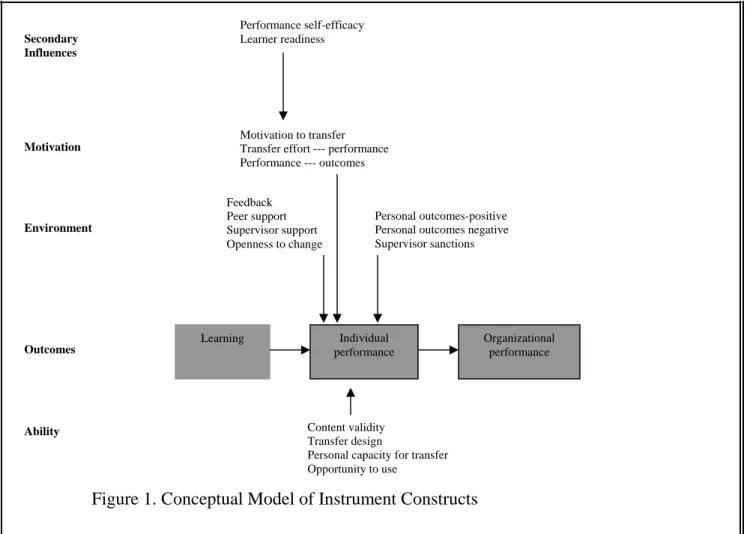
Other researchers, however, believe that a systems view of training transfer is a more useful approach because of the importance of examining a variety of factors that interact together to influence training transfer (Kozlowski & Salas, 1997; Mathieu, Martineau, & Tannenbaum, 1993). For example, Holton et al. (2000) conceptualized a model of training transfer (see Figure 1), which included a whole set of transfer factors. The conceptual transfer model recognizes that transfer is influenced by a system of factors (the learning transfer system). This system includes factors such as interpersonal support for transfer, reward systems, personal characteristics, motivational influences, and training design elements. HRD practitioners and researchers wishing to improve learning transfer must be able to diagnose and study this system of factors. To date, the only valid and reliable instrument that measures a comprehensive set of learning transfer was developed by Holton and Bates (2002). The instrument was named the LTSI, and it
has been widely used across different organizations and training types, and has proven to be valid and reliable in diagnosing training transfer.
The above model recognizes that learning, individual performance, and organizational performance are primary outcomes of training. Individuals are expected to acquire learning during training. This learning is expected to improve performance on both the individual and organizational levels. Within this model, three classes of factors are believed to be the primary variables that interact to affect the transfer of learning from the training environment to the work environment. These factors are ability of trainees to use KSAs in the job setting, motivation to use KSAs, and work environment supporting use of KSAs. The model also includes secondary Secondary Influences Motivation Environment Outcomes Ability Learning Individual performance Organizational performance Feedback Peer support Supervisor support Openness to change Personal outcomes-positive Personal outcomes negative Supervisor sanctions Motivation to transfer
Transfer effort --- performance Performance --- outcomes
Content validity Transfer design
Personal capacity for transfer Opportunity to use
Performance self-efficacy Learner readiness
Figure 1. Conceptual Model of Instrument Constructs
Note. From “Development of a generalized learning transfer system inventory,” by E. F. Holton III, R. A. Bates, & W. E. A. Ruona, 2000, Human Resource Development Quarterly, 11, p. 339.
influences (trainee characteristics) that affect learning transfer through their influence on motivation. This model will be used as a framework in reviewing training literature on factors influencing training transfer.
Environmental Factors.
A review of current training literature (Baldwin & Ford, 1988; Bunch, 2001; Ford, Kozlowski, Kraiger, Salas, & Teachout, 1997; Kozlowski & Hults, 1987; Richman-Hirsch, 2001; Rouiller & Goldstein, 1993; Tracey, Tannenbaum & Kavanagh, 1995) suggests that work environments can have a powerful impact on the extent to which newly acquired KSAs are used on the job. In general, research suggests that a post-training environment can either encourage or discourage the application of newly acquired skills on the job (Richman-Hirsch, 2001). The more positive the organizational transfer climate (e.g., more supportive context, especially from supervisors in the form of reinforcement and feedback), the more likely the employees will use the skills on the job (Richman-Hirsch, 2001; Rouiller & Goldstein, 1993). The more negative the organizational transfer climate (e.g., task constraints), the less likely trainees will be motivated to transfer and apply learned KSAs on the job (Noe & Schmitt, 1986).
Characteristics of the work environment including the level and type of support (supervisory and peer support) (Ford & Quinones, 1992; Quinones & Ford, 1995) have been recognized as some of the most important work environment factors influencing the transfer process. Researchers have recognized the importance of the supervisor’s role in training transfer, and have classified it as the most influential variable (Xiao, 1996) because “most employees work hard to determine exactly what their boss expects and then strive to meet those expectations” (Georgenson, 1982, p. 75). Moreover, supervisor support can be classified as either supportive or non-supportive. Holton et al. (2000, 1997) suggest there are occasions in
which supervisors actively oppose employee use of new learning. Such behavior has been found to be negatively correlated with transfer. For example, Fleishman (1955) found that those supervisors who received training on how to be more caring of their employees were not successful at applying what they have learned. Follow-up interviews revealed that the reason for such failure was because supervisors of the trained managers were not supportive of the goals of the training.
Ford et al. (1992) also found that after technical training was provided for United States (U. S.) Air Force aviators, trainees had different opportunities to perform what they learned on the job. Further investigation revealed that supervisory and peer support had a substantial influence on trainees’ access to opportunities for using new learning. Xiao (1996) studied learning transfer in four electronic companies in China. Organizational factors such as supervisor and peer support were the most influential in predicting transfer of training, explaining 12% of the variance in transfer. Brinkerhoff and Montesino (1995) investigated the influence of management support on the transfer and usage of trained skills on the job. The study involved 91 trainees who were divided into two groups: group 1 received management support while group 2 did not receive any support. Results indicated that group 1 had higher “training usage” and had more positive perceptions of transfer in comparison to group 2.
It is well documented that supervisor support is one of the most influential elements in training transfer (Baldwin & Ford, 1988; Tannenbaum & Yukl, 1992). It is the supervisor who controls transfer-related resources and who can and should provide rewards and performance feedback in ways to maintain learning transfer (Baldwin & Ford, 1988; Kozlowski & Salas, 1997).
Norms about change are another work environment factor that can influence learning transfer. For example, openness to change refers to the degree by which the trainees perceive their organization in general and their work group specifically to be open to new ideas and support and invest in change (Donovan, Hannigan, & Crowe, 2001). Bates et al. (2000) investigated the influence of support/openness to change on motivation to transfer of 73 chemical production workers after participating in a computer-based training. The study revealed that change resistance correlated negatively with motivation to transfer (r = -.36, p < .01) implying that the higher the degree of resisting changes by the organization (management and work group) the lower the degree of transfer.
In summary, the work environment can have a powerful impact on facilitating or inhibiting learning transfer. Some of the most influential variables in the work environment that influence transfer include supervisory and peer support. Supervisors can be either supportive or non-supportive of new learning. The supervisors also play an important role in maintaining learning on the job through proper rewards and prompt feedback. Finally, the environment of the organization that is open to new ideas and supports and invests in change may facilitate the transfer process.
Motivational Factors.
Another key factor influencing learning transfer is the motivation of trainees to transfer (Noe, 1986; Tannenbaum & Yukl, 1992). Motivation to transfer refers to the direction, intensity, and persistence of effort to acquire new skills from training and apply what is learned on the job (Noe, 1986; Salas & Cannon-Bowers, 2001). Trainees’ motivation to transfer and use training is crucial for the effectiveness of training (Baldwin & ford, 1988; Broad & Newstrom, 1992; Ford & Quinones, 1992; Kozlowski & Salas, 1997; Roe, 1997). As mentioned by Noe (1986)
“trainees are likely to be motivated to transfer new skills to the work situation when they are confident in using the skills; are aware of work situations in which demonstration of the new skills is appropriate; perceive that job performance improvements may likely occur as a result of use of the new skills; and believe that the knowledge and skills emphasized in the training program are helpful in solving work-related problems and frequent job demands” (p. 743).
One of the key motivational variables affecting transfer is trainees’ expectation about learning and learning transfer. Vroom (1964) defines expectancy as the level of effort that people believe will result in a particular outcome. Expectancies have been operationalized under two constructs: effort-performance expectancy (i. e., the expectations that a particular effort will lead to a particular performance) and performance-outcomes expectancy (i. e., the expectations that this action will lead to some type of reward) (Lawler, 1973).
Several studies have established that these motivational elements can have an impact on trainees’ application of new learning on the job. For example, a positive relationship was found between trainees’ expectancy and post training performance (Froman, 1977) and that raising employee expectation about outcomes enhances performance (Eden & Ravid, 1982). In addition, Werner, O’Leary-Kelly, Baldwin, and Wexley (1994) asserted that expectations of trainees about the outcomes of training might influence motivation to learn and subsequent performance. Noe (1986) discussed that trainees will be more motivated to perform well in training if they believe that their effort will lead to performance and that their performance will lead to rewards.
Tannenbaum and Yukl (1992) emphasized the importance of motivation before training (pretraining motivation) and suggested it could be an important factor in learning transfer. For example, Noe and Schmitt (1986) developed a composite measure of pretraining motivation that included three variables (effort-performance expectations, performance-outcome expectations,
and motivation to learn). This composite measure was found to be positively and significantly correlated with learning, and that learning had a significant influence on job performance measures. Similarly, Facteau, Dobbins, Russell, Ladd, and Kudisch (1995), in a study of 967 public sector managers and supervisors, found that a measure of pretraining motivation was predictive of managers’ self-reported training transfer.
In summary, this research suggests, in general, that motivation to transfer is to some degree contingent upon trainees’ expectations that their effort would lead to performance and that performance should result in some type of reward.
Ability Factors.
Ability factors refer to those elements that are present in the training and work environment which enable trainees to transfer learning effectively. Training design is one ability element that can contribute to effective training and transfer (Baldwin & Ford, 1988; Tracey, Hinkin, Tannenbaum, & Mathieu, 2001). The training design literature suggests a number of important design elements such as identical elements, general principles, stimulus variability, and various conditions of practice (Baldwin & Ford, 1988; Goldstein & Musicante, 1986) may be important factors in the transfer process. The theory of identical elements suggests for example that the greater the similarity along multiple dimensions between the task as it is learned in training and as it is applied on the job the greater the potential for successful transfer (Thorndike & Woodworth, 1901). General principles include teaching trainees not only skills, but also theoretical principles that underlie the training content (McGee & Thayer, 1961). Stimulus variability proposes that when various relevant training stimuli are employed, then transfer is maximized (Ellis, 1965). As cited in Baldwin and Ford (1988), conditions of practice imply several notions: 1) training should be divided into segments (mass versus distributed
training); 2) practice in sum total, versus practicing with parts of the training material at a time (whole versus part training); 3) providing trainees with information about their performance (feedback); and 4) providing trainees with continuous learning beyond the skills learned and their applicability (overlearning).
More recent scholars (Bates, Holton, & Seyler, 1998) have proposed a training content validity construct as an important training design factor in learning transfer. Content validity refers to the degree to which trainees perceive that training content (KSAs) accurately reflects and meets actual job demands, and that methods and materials used in training content are similar to what is used in the actual job setting (Holton et al., 2000). If trainees perceive that the training program is relevant to their job requirements and performance then their motivation to transfer and practice on the job will be higher (Baldwin & Ford, 1988; Garavaglia, 1993). Research by Bates et al. (2000) found that “the higher the perceived relevance and utility of training program content…the more highly motivated they will be to master that content” (p. 28).
Other strategies such as goal setting, self-management, and relapse prevention have also been suggested as design factors that may have an impact on the transfer process (Bates, 1997; Werner et al., 1994). Goal setting is the process of setting specific, hard goals to meet some performance objectives (Locke, 1968). Self-management is defined as a process where trainees are taught how to deal with various incentives, responses, and consequences to achieve their personal outcomes (Luthans & Davis, 1979). Relapse prevention is a strategy used to provide help for trainees to understand the process of relapse for the purpose of not going back to the unwanted behavior which in turn enhances transfer (Wexley & Baldwin, 1986).
Design factors such as these have been included in a construct that Holton et al. (2000) call transfer design. Transfer design is defined as ”the degree to which training has been
designed and delivered to give trainees the ability to transfer learning to the job” (p. 334). The inclusion of transfer design elements is important for learning transfer because these elements enhance trainees’ ability to retain, use, and apply knowledge on the job.
The opportunity to use tasks learned during training on the job is another ability element that can have a direct effect on transfer (Baldwin & Ford, 1988). The literature shows that the lack of opportunity to perform learned tasks is related to performance decrements (Ford & Quinones, 1992). If trainees are not allowed to practice with trained skills on the job then their training and transfer will be ineffective (Noe & Ford, 1992).
In order to find the opportunity and to use new learning on the job it is important that trainees have some ‘space’ in their work life to make this happen. In other words, trainees may return to work after training only to be faced with a number of job demands or responsibilities that limit their ability to transfer learning. Holton et al. (2000) define this as personal capacity for transfer, or “extent to which individuals have the time, energy, and mental space in their work life to make changes required to transfer learning to the job” (p. 334).
Secondary Influences.
Work environments, motivation, and ability elements are seen as “primary transfer influences” because they directly influence individual transfer performance. Other factors, particularly individual characteristics, have been shown to be important factors in the transfer process primarily through their influence on transfer-related motivation. Because the influence of these factors is mediated through their influence on motivation, they have been termed secondary influences on transfer. These secondary influences include performance self-efficacy and learner readiness.
Learner readiness is a construct conceptualized by Bass and Vaughn (1966) to encompass individual attributes such as maturation, experiential background, and motivation level that either inhibit or exhibit learning. This definition implies that trainees should be provided with realistic training previews (Hicks & Klimoski, 1987), (i. e., information shared prior to attending training about the training content and training methods) (Tannenbaum & Yukl, 1992) or even involved in the needs assessment process, or the design of the training program (Baldwin & Magjuka, 1991). This construct is concerned with the extent to which trainees are psychologically ready for training. Research suggests, for example, that trainees who received information about the training prior to their participation have superior intentions to transfer and apply what they learned back to their respective job settings (Baldwin & Magjuka, 1991).
The level of confidence (self-efficacy beliefs) trainees have in their ability to use the trained skills is also seen as a potentially important influence on transfer-related motivation. Self-efficacy is one of the main constructs of social learning theory developed by Bandura (1977) and has been shown to be positively related to training outcomes such as performance (Gist, 1987; Saks, 1995; Salas & Cannon-Bowers, 2001; Tannenbaum & Yukl, 1992; Tracey et al., 2001). Self-efficacy has been shown to predict performance in interpersonal skills training (Gist, Stevens & Bavetta, 1991) and insurance sales (Barling & Beattie, 1983). Moreover, self-efficacy was also related to motivation to transfer (Ford et al., 1992).
Other attitudinal factors such as job involvement (Lawler, 1986), organizational commitment (Noe, 1986), and goal orientation (Phillips & Gully, 1997), can also contribute to the effectiveness of the transfer process. Job involvement (the degree to which individuals psychologically identify with their work and the importance of work for their figure (Lodahl & Kejner, 1965) was considered a predictor of training motivation (Colquitt, Lepine, & Noe, 2000).
Organizational commitment (attachment of an individual to an organization) was also thought to have an influence on pre-training motivation (Facteau et al., 1995). Finally, goal orientation (defined as the mental representation used by people to explain and behave in achievement situations) was found to influence self-efficacy (Phillips & Gully, 1997). It was also positively related to cognitive activity, (Fisher & Ford, 1998) and was considered as a predictor of training motivation (Colquitt et al., 2000).
Development of the LTSI
As was mentioned earlier, gaining a greater understanding of the transfer process
includes consideration of a system of factors. The impetus behind the development of the LTSI was to build an instrument capable of measuring what research suggests may be a key set of learning transfer system factors. The next sections of this manuscript describe the research and development efforts that support the validity and reliability of this instrument.
Development and Construct Validation of the LTSI
The initial development of the LTSI was based on the transfer climate instrument established by Rouiller and Goldstein (1993). Rouiller and Goldstein (1993) proposed that trainees perceive climate in organizations according to psychological cues (both situational and consequential). Table 1 shows that Rouiller and Goldstein (1993) conceptualized the training transfer climate as consisting of two types of workplace cues which include eight unique dimensions. The first set is called situational cues (goal cues, social cues, task cues, and self-control cues) that remind trainees of what they learned in training or provide them with an opportunity to practice with their training on the job. The second set of workplace cues, consequence cues (positive feedback, negative feedback, punishment, and no feedback), relate to
the job outcomes that affect the extent to which training has been transferred. These cues comprise what Rouiller and Goldstein (1993) called the learning transfer climate.
Table 1. Definitions of Organizational Transfer Climate Variables.
Situational Cues. Cues that serve to remind trainees of their training or provide them with an opportunity to use their training once they return to their jobs.
A. Goal cues. Serve to remind trainees to use their training when they return to their jobs; for example, existing managers set goals for new managers that encourage them to apply their training on the job.
B. Social cues. Arise from group membership and include the behavior and influence processes exhibited by supervisors, peers and/or subordinates; for example, new managers who use their training supervise differently from the existing managers.
C. Task cues. Concern the design and nature of the job itself; for example, equipment is available in this unit that allows new managers to use the skills they gained in training.
D. Self-control cues. Concern various self-control processes that permit trainees to use what has been learned; for example, “I was allowed to practice handling real and job-relevant problems”.
Consequences. As employees return to their jobs and begin applying their learned behavior, they will encounter consequences that will affect their future use of what they have learned.
A. Positive feedback. In this instance, the trainees are given positive information about their use of the trained behavior; for example, new managers who successfully use their training will receive a salary increase.
B. Negative feedback. Here, trainees are informed of the negative consequences of not using their learned behavior; for example, area managers are made aware of new managers who are not following operating procedures.
C. Punishment. Trainees are punished for using trained behaviors; for example, more experienced workers ridicule the use of techniques learned in training.
D. No feedback. No information is given to the trainees about the use or importance of the learned behavior; for example, existing managers are too busy to note whether trainees’ use learned behavior.
Transfer climate is seen as the medium through which the work environment may influence the transfer of learning to the job. It is the individual perceptions of the work environment (Jones & James, 1979), which distinguishes it from other environments. These perceptions are likely to result from the behaviors and policies of members of the organization who, in turn, use it as a basis to form judgments and interpret situations (Pritchard & Karasick, 1973). For example, if trainees perceive their work environment as supportive of using newly acquired skills on the job, then they are more likely to use those skills on the job. Researchers (Holton et al., 1997) have asserted the role of the transfer climate as a mediating variable in the relationship between the organizational environment and the attitudes of individuals toward the job and their job behavior. Even though learning may be acquired during training, Rouiller and
Note. From “The relationship between organizational transfer climate and positive transfer of training, “ by J. Z. Rouiller and I. L. Goldstein, 1993, Human Resource Development Quarterly, 4, p383.
Goldstein (1993) mentioned that transfer climate might either inhibit or help facilitate the transfer of what has been learned in training into the job situation.
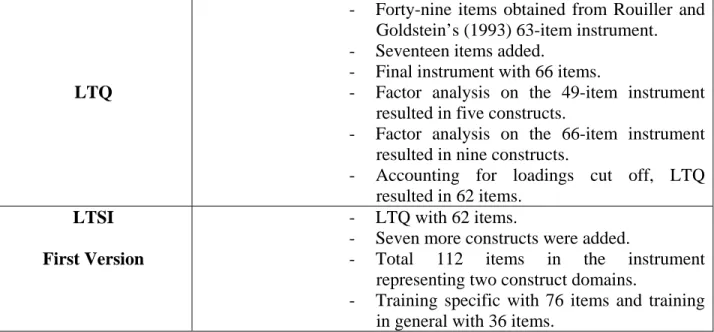
The first version of the LTSI was developed by Holton et al. (1997) and was named the Learning Transfer Questionnaire (LTQ). The instrument contained 66 items, 49 of which were taken from Rouiller and Goldstein’s (1993) original 63-item transfer climate instrument. Holton et al. (1997) added 17 new items both to measure a construct named “opportunity to perform” (Ford et al., 1992) and to strengthen some of the other variables. The expanded transfer climate instrument (66-items) was tested with 189 operating technicians from four petrochemical manufacturing facilities.
Holton et al. (1997) performed two sets of factor analysis. First, the original 49 items taken from Rouiller and Goldstein (1993) instrument were factor analyzed to determine if the underlying factor structure in the sample matched that found by Rouiller and Goldstein. The analysis resulted in five factors, as follows: supervisor support, peer/task support, transfer design, personal outcomes-positive, and personal outcomes-negative. These constructs were not similar to those proposed by Rouiller and Goldstein (1993).
The same factor analytic procedures were used with the expanded 66-item instrument. Common factor analysis resulted in nine constructs, explaining 80.6 percent of the common variance. Of the 66 items, 62 loaded at .40 or higher and were retained for further analysis. Nine constructs emerged and were labeled as follows: supervisor support, opportunity to use skills, transfer design, peer support, supervisor sanction, personal outcomes-positive, personal outcomes-negative, resistance, and content validity. Eight of the nine constructs had a simple structure, meaning that the items of one construct loaded high on that specific construct (.50 or greater) and less than .14 on all other factors in the scale. Reliabilities for these constructs ranged
from .68 to .95 with an average alpha of .79. Contrary to Rouiller and Goldstein’s (1993) proposition that people perceive transfer climate by psychological cues, this analysis revealed that trainees perceive transfer climate by organizational referents (e.g., supervisor support, peer support).
The Learning Transfer System Inventory (LTSI) Revisions
After an extensive review of additional research, Holton et al. (2000) added seven more scales to the LTQ to comprise 16 factors. The new version was called the “Learning Transfer System Inventory” (LTSI). These 16 constructs (with 112 items) represented a more comprehensive set of factors believed to affect the transfer of training. The instrument was divided into two construct domains: the first section (training specific) included 11 constructs and contained 76 items. The second section (training general) included five constructs, containing 36 items.
To test the construct validity of the LTSI, data from 1,616 trainees from a wide range of industries and training programs were collected. An exploratory factor analysis using common factor analysis was performed. It is appropriate to use this method when the purpose is to uncover the underlying structure of the instrument. The two sections of the instrument were factor-analyzed separately. The analysis revealed high loading on major factors (.62) and low cross loading on other factors (.05). Cronbach alpha reliabilities ranged from .63 to .91 with only three of the scales below .70 (.63, .68, .69) (see Table 2). After dropping inappropriate items (i. e., items that loaded weakly or loaded singly), 68 items were retained in the final instrument, measuring 16 constructs. The overall measure of sample adequacy (MSA) values for each item was above .90 and items had factor loadings above .40.
The most recent version of the LTSI contains 89 items. These include the 68 items retained from the Holton et al. (2000) study and 21 additional items included in an effort to strengthen the reliability of the following scales: personal outcome-positive, personal capacity for transfer, supervisor/manager sanctions, opportunity to use learning, and feedback/performance coaching (see Table 2).
Table 2. LTSI Scale Definitions, Loadings, and Reliability Coefficients.
Factor Training Specific Scales DEFINITIONS NUMBER OF ITEMS ∝ Supervisor/ Manager Support Transfer Design
Perceived Content Validity Motivation to Transfer Learning Peer Support Personal Outcomes- Negative Learner Readiness Opportunity to Use Learning Personal Outcomes- Positive Personal Capacity for Transfer Supervisor/ Manager
The extent to which supervisor/manager support and reinforce use of training on the job.
The degree to which 1) training has been designed and delivered to give trainees the ability to transfer learning to the job, and 2) training instructions match job
requirements.
The extent to which trainees judge training content to accurately reflect job requirements.
The direction, intensity, and persistence of effort toward utilizing in a work setting skills and knowledge learned. The extent to which peers reinforce and support use of learning on the job.
The extent to which individuals believe that not applying skills and knowledge learned in training will lead to outcomes that are negative.
The extent to which individuals are prepared to enter and participate in training.
The extent to which trainees are provided with or obtain resources and tasks on the job enabling them to use training on the job.
The degree to which applying training on the job leads to outcomes that are positive for the individual.
The extent to which individuals have the time, energy, and mental space in their work lives to make changes required to transfer learning to the job.
The extent to which individuals perceive negative responses from supervisor/managers when applying skills
6 4 5 4 4 4 4 4 3 4 3 .91 .85 .84 .83 .83 .76 .73 .70 .69 .68 .63
Training in General Scales Resistance/ Openness to Change Performance- Outcomes Expectations Transfer Effort- Performance Expectations Performance Self- Efficacy Feedback/ Performance Coaching
The extent to which prevailing group norms are perceived by individuals to resist or discourage the use of skills and knowledge required in training.
The expectation that changes in job performance will lead to valued outcomes.
The expectation that effort devoted to transferring learning will lead to changes in job performance.
An individual’s general belief that they are able to change their performance when they want to.
Formal and informal indicators from an organization about an individual’s job performance.
6 5 4 4 4 .85 .83 .81 .76 .70
Cross-Cultural Construct Validation of the LTSI
Yamnill (2001) carried out a study to validate the factor structure of the LTSI with a sample from Thailand. The study covered a cross section of Thai organizations (60) and random sampling was employed to choose trainees who had completed training in the past two months. The sample of the study was 1256 trainees, from whom 1,029 usable responses were received for a response rate of 81.9%. Two versions of the LTSI were used. One with 68 validated items, and the other with 89 items (21 additional research items included). Exploratory common factor analysis with oblique rotation was employed. The author factor analyzed each section separately for both versions of the LTSI. Version one (89 items) had two sections: specific training (contained 63 items) and training in general (contained 26 items). Version 2 (68 items) of the LTSI also has two sections: training specific (38 items) and training in general (30 items).
Note. From “development of a generalized learning transfer system inventory,” by E. F. Holton III, R. A. Bates, & W. E. A. Ruona, 2000, Human Resource Development Quarterly, 11, pp. 344-346.
The results of the factor analysis (LTSI with 89 items) for the first section showed that 11 factors emerged and 55.19% of the variance explained. With regard to item loadings, 52 items met the minimum loading value of .35. Reliability coefficients were acceptable for all factors, ranging between .61 and .88.
Factor analysis for the second section (training in general) resulted in the emergence of five factors explaining 53.65% of the variance. Twenty-one items loaded .35 or higher on the five factors. The reliability for the factors was between .63 and .83, with only one factor reliability below .70. In conclusion, 73 items were retained in the instrument, assessing 16 factors.
For the 68-item LTSI, the same criteria for retaining the factors as stated above were used, resulting in the retention of 38 items representing 11 constructs for the specific training section (the same number found by Holton et al. (2000). Four factors were identical and the other seven factors were nearly identical (only two items loaded on different factors). The factors in the Thai version of the LTSI were named the same as those in the original English version of the LTSI. The reliability coefficients for these factors ranged from .58 to .85, with an average Cronbach alpha of .73. For the second section (training in general), 21 items were retained, explaining 53.1% of the variance and representing five factors. Three of these factors were identical to the original LTSI. The reliability coefficients for these factors ranged from .61 to .81 with an average Cronbach alpha of .72. In brief, the 68-item instrument resulted in 59 items, measuring 16 factors, while the 89-item instrument resulted in 73 items measuring 16 factors. The conclusion of the study asserted that the LTSI proposed by Holton et al. (2000) is cross-culturally valid for use in Thailand.
In another effort at the cross-cultural validation of the LTSI, Chen (2003) used a sample of 583 trainees from 20 different Taiwanese organizations. Chen (2003) used similar factor analytic criteria to that proposed by Yamnill, except for the minimum loadings (.40) of retaining items on factors. The impact of using this higher loading cut off was the loss of important items to the instrument. For the 68-item version, on the training in specific section, six factors were found to be identical to the original instrument with 39 items. These factors had reliabilities ranging from .68 to .89. For the training in general section, four out of five factors were identical to the original LTSI (19 items), with reliabilities all exceeding .80. With regard to the 89-item analysis, on the training specific section, ten factors emerged with 54 items, while all five factors in the training in general section were validated (25 items). The reliabilities ranged from .68 to .92 for specific factors and above .80 for training in general scales. Chen (2003) concluded that 14 factors of the LTSI are cross-culturally valid for use in Taiwanese organizations. In summary, employing similar factor analytic techniques supports the cross-cultural factor structure of the LTSI. Table 3 provides a summary of this research.
LTQ
- Forty-nine items obtained from Rouiller and Goldstein’s (1993) 63-item instrument.
- Seventeen items added.
- Final instrument with 66 items.
- Factor analysis on the 49-item instrument
resulted in five constructs.
- Factor analysis on the 66-item instrument
resulted in nine constructs.
- Accounting for loadings cut off, LTQ
resulted in 62 items. LTSI
First Version
- LTQ with 62 items.
- Seven more constructs were added.
- Total 112 items in the instrument
representing two construct domains.
- Training specific with 76 items and training in general with 36 items.
Convergent and Divergent Validation of the LTSI
Bookter (1999) conducted a study that examined the LTSI’s convergent and divergent validity. As indicated by Robinson, Shaver, and Wrightsman (1991), the convergent and divergent validity of an instrument is a necessary component for a psychometrically sound instrument. Convergent validity is defined as the extent to which a measure is assessing what it is purported to assess while divergent validity refers to the extent that a measure is not assessing something that it is not purported to assess (Campbell & Fiske, 1959). Simply, convergent-divergent validity testing seeks to further establish the empirical validity of a measure by examining the correlations between the target measure and measures of similar constructs or opposing constructs. Convergent validity tests the extent to which different measures of the same or similar constructs are correlated. Divergent validity tests the extent to which measures of opposing constructs show low or negative correlations. Bookter’s (1999) study proposed to answer the following research questions:
- Factor analysis resulting in 68 items
measuring 16 constructs. LTSI
Present Version
- LTSI with 68 items.
- Twenty-one research items added.
- New LTSI with 89 items measuring 16
constructs. Cross-Cultural
Construct Validation (Yamnill’s Study)
- LTSI (68-item instrument) resulted in 59
items measuring 16 constructs.
- LTSI (89-item instrument) resulted in 73
items measuring 16 constructs. - Fifteen constructs were validated. Cross-Cultural
Construct Validation (Chen’s Study)
- LTSI (68-item instrument) resulted in 58
items measuring 10 constructs.
- LTSI (89-item instrument) resulted in 79
items measuring 15 constructs. - Fourteen constructs were validated.