THE GOVERNMENT OF THE REPUBLIC OF HUNGARY
T
HE
N
EW
H
UNGARY
D
EVELOPMENT
P
LAN
National Strategic Reference Framework of Hungary
2007–2013
Employment and Growth
Preface
Hungary has reached the gateway of a historical opportunity. Between 2007 and 2013, the country will be eligible for a development fund of EUR 22.4 billion to re-align itself with advanced countries. This is the money of European tax-payers. Together with the funds available for rural development, Hungary can use almost HUF 8,000 billion. Through the successful use of this enormous amount, we can strengthen our existing capacities and eliminate obstacles that hamper our development. If we are able to find our own key leverage points and study our competitors, the economy can show a spectacular growth within the next couple of years. The outstanding performance of the most talented is a precondition for our welfare. If we support the renewal of the society, we can increase the number of employees and efficiently contain poverty. More and more people will be able to advance and fend for their families. Meanwhile, a fair share of public burdens will create resources enabling the solidarity based society to provide reasonable living conditions for those unable of self-reliance. If we stick together, we will succeed.
This historicalopportunity, however, may be lost if we cannot grow up to the task or if we settle for less, i.e. we are satisfied with common places instead of an offensive strategy based on our own strengths, if we fragment resources under the pressure of excluded groups instead of selecting large-scale objectives working in synergy, if we prefer some prestige investments instead of everyday work, if we measure success by achievements of tomorrow instead of long-term effects. If we chose isolation instead of fighting and winning in global competition, we will establish ourselves only for survival. The example of countries in the front-rank of realignment shows that we need a brave and creative economic development concept embracing issues of employment as well that respects both the satisfaction of social demands and macro-economic stability.
Therefore, we have to consider several aspects when elaborating the underlying vision of our development strategy. We have to examine our ideas in the light of the actual situation and bearing capacity of the country. On the other hand, we should not forget that a European Union endeavouring progress has expectations requiring modernisation in terms of the absorption of development funds. We have to consider also that other emerging regions – like South-East Asia or South-East Europe – are our competitors. It is obvious that our economy – as Member State of the European Union striving for realignment – cannot be competitive with low wages anymore: instead, we must offer products and services that represent high added value. Especially in a situation where our competitors are not regarded as ‘enemies’ to be defeated – quite the contrary, we establish prospering co-operation with them. The history of the European Union is a good example for the fact that everyday co-operation can create mutual trust opening new horizons of development, eliminating long standing conflicts. This lesson can be an excellent guideline not only in the global competition but also in solving old internal conflicts!
Our development strategy can be implemented only if driven by the synergic effects of several governmental measures. Without long-term balance, the indebtedness of the country will further increase, and we fall behind compared to developed countries. We want a state characterised by less privileges, higher performance, less bureaucracy and cost efficient operation. To ensure safe financing, we have to increase revenues and cut expenditures – the lost balance can be restored.
The existing welfare system cannot be maintained without re-thinking the role of the state
and individual responsibility even in the near future – although it has been consuming too many resources at the expense of economic growth. Therefore, we have to re-organise public administration serving the citizens and companies. We have to modernise healthcare, education and the social system available for everyone so that these systems can perform at a higher quality level. Development implemented from EU funds can be based on these – within seven years, these efforts can result in a physically and socially new Hungary. But, we have to do a lot until then!
First of all, we had to define the two most important objectives to remedy our most acute problems, resulting in the improvement of the life of most people: these objectives are the
expansion of employment and the establishment of the conditions of sustained economic growth. The effects of the implementation of these two objectives cannot be appreciated enough in a country where half of the people of active age cannot find a job, and the GDP does not reach even the two-third of the EU average.
However, we have a crucial task as well, representing counterbalance for our development course focused on employment and growth. The imperatives of sustainability and cohesion
are curbs calling our attention to the fact that only long-term viable processes can be launched. Environmental sustainability means the conservation of our natural values, so that also our children can enjoy them. Economic sustainability in turn means that we do not have to pay more taxes to ensure the successful operation of the results of development. Similarly, social sustainability means that we have to assist more and more people to care for themselves and take responsibility for the country as a whole.
Social and regional cohesion is the manifestation of the principle of solidarity. Its message is that we need everybody. We shall create opportunities for the citizens to prosper, even for those living in the most disadvantaged regions with the least hopeless situation.
Nevertheless, good and commonly accepted objectives alone are not sufficient. We need clear principles as well to avoid the reproduction of new problems to be solved after several years of development. With the help of the EU funds, we have to put the country onto a development course leading us to sustained welfare even without further external assistance. Therefore, the following principles will be considered during development:
• Instead of maintaining the existing wrong structures, we have to support the reforms of major state distribution systems and public services, moreover, they have to become catalysts of development;
• the development policy should contribute to reducing the rate of redistribution by changing the structure of state expenditures;
• within the structure of redistribution, burdens of employment must be reduced while the role of consumption and wealth increased,
• instead of the substitution of private capital, investments of private capital without return must be supported,
• development actions with synergic and multiplier effect must be supported, • a cultural change must be promoted by which
o performance and individual initiatives are respected more, o self-reliance is appreciated,
o social solidarity and co-operation is strengthened,
o the necessity of equal and returning opportunities and non-discrimination is
o compliance with the law becomes standard in the society, and
o the capacity of action and autonomy of individuals and communities are
strengthened.
The New Hungary Development Plan was prepared on the basis of the above principles. This Plan
• sets out the development strategy for extended employment and economic growth; • outlines the most important developmental tasks that can secure the improvement of our
social, economic and environmental circumstances in a sustainable fashion;
• defines developmental programmes that are adjusted to the expectations of and changes in the society and the economy for the purpose of efficiency, and release the developmental and innovative power of people and their businesses;
• sets the objective that national and regional programmes should mutually support each other, so that their joint and synergic impact can go beyond the successful implementation of partial objectives;
• gives a broad outline of a transparent, simple and efficient structure of institutions that is able to effectively implement the programmes and to ensure the use and wide accessibility of funds.
The Government or the state alone cannot implement these changes and development actions: we can achieve our goals only by the co-operation of millions. A country can rely exclusively on the performance of its citizens – this understanding is a precondition for success. Again, competitive economy is the condition of economic growth whereas extended employment is a prerequisite of a solidarity based society. Therefore, we have to empower our citizens to cope with the competitive world of ours. Similarly, we have to enable the state to support those unable to compete. If the country cannot adjust itself to the rapidly changing world, our system of values cannot be maintained anymore. If we do not allow the talented to soar and we do not support the eager in becoming stronger, then we will not be able to provide security for those falling behind. Envisioning extended employment and economic growth, the Government intends to put the country onto a new and sustainable course of development
through the New Hungary Development Plan. Still, the Government can achieve its goals only by the active co-operation of businesses, municipalities, non-governmental organisations and churches successfully applying and utilising available funds. Hungary can be in the front only by concerted efforts on national level.
Table of Contents
Executive Summary ... 1
1. Introduction ... 11
1.1. Premises ... 11
1.2. The purpose and motivation of this document ... 11
1.2.1. The determinant role of the geo-political position of Hungary... 11
1.2.2. Theoretical foundations of the strategy... 12
1.2.3. Participants in the preparation of The New Hungary Development Plan, the work progress ... 14
1.2.4. Public discussion on the New Hungary Development Plan... 15
2. Foundations of the strategy ... 19
2.1. The medium term macro-economic course... 19
2.1.1. Situation and prospects of our macro-economy... 19
2.1.2. Macro-economic objects ... 20
2.2. Hungary is eligible for Community support ... 21
2.3. The development of the country is strongly determined by international trends... 22
2.4. Social-economic situation analysis ... 23
2.4.1. Economic growth with structural risks... 23
2.4.2. Low level of activity, stagnating employment ... 24
2.4.3. The dual nature of economic structure... 27
2.4.4. Our transport system requires development... 31
2.4.5. The change for market economy has required substantial social sacrifices... 33
2.4.6. Environmental values, with serious deficits... 41
2.4.7. Increasing regional differences ... 44
2.4.8. Re-thinking the role of the state ... 48
2.4.9. Disparities, weaknesses and potentials determinant from the aspect of growth and employment ... 50
2.5. Experiences of the First National Development Plan ... 53
3. Defining the Strategy ... 59
3.1. Strategic objectives of the New Hungary Development Plan ... 59
3.1.1. Overall objective: increased employment and promotion of long term growth .. ... 59
3.1.2. Increased employment... 61
3.1.3. Permanent growth ... 63
3.1.4. Horizontal policies ... 64
3.1.5. The strategy also serves Hungary’s international integration ... 74
3.2. Thematic and regional priorities related to the objectives ... 75
3.2.1. Priority 1 : Economic development... 76
3.2.2. Priority 2: Transport development ... 84
3.2.3. Priority 3. : Social Renewal... 90
3.2.4. Priority 4 : Environment and energy development ... 104
3.2.5. Priority 5.: Regional development ... 110
3.2.6. Priority 6: State reform... 125
3.3. Coordination and communication of the New Hungary Development Plan... 131
4. List and Structure of the Operational Programmes... 132
5. Indicative Financial Plan and Additionality... 133
5.1. Indicative financial allocation plan of the operational programmes ... 133
5.2. Verifying compliance with the additionality principle ... 137
6.1. Institutional system ... 140
6.1.1. The National Development Council... 140
6.1.2. Development Policy Steering Committee ... 141
6.1.3. The National Development Agency... 142
6.1.4. Managing Authorities (MA)... 143
6.1.5. Intermediate bodies (IB)... 146
6.1.6. Enhancement of the administrative capacity of implementation ... 147
6.1.7. Responsibilities of the line ministers involved in the operational programmes 149 6.1.8. Monitoring Committees ... 149
6.1.9. Institutional conditions of the regional operational programmes... 151
6.1.10. Financial management and control ... 152
6.2. Implementation processes ... 153
6.2.1. Coordination mechanisms ... 153
6.2.2. Basic principles ... 156
6.2.3. Compliance with horizontal principles ... 156
6.2.4. Processes ... 158
6.3. Efficiency of the administrative capacity in the service of the NHDP ... 159
7. Coherence and consistence ... 161
7.1. Coherence with the National Action Programme ... 161
7.2. Compliance with the Community Strategic Guidelines... 162
7.3. Compliance an coordination with the New Hungary Rural Development Strategic Plan and the National Strategic Plan for Fisheries sector ... 163
7.3.1. Principles of planning coherence ... 163
7.3.2. Co-ordination during implementation... 164
8. Evaluation (ex-ante and environmental evaluation)... 164
8.1. Ex-ante evaluation... 164
8.2. Environmental evaluation ... 167
Executive Summary
The Role of The New Hungary Development Plan
The most important objective of The New Hungary Development Plan (short: NHDP) is to expand employment and to create the conditions for long term growth. For this purpose it launches co-ordinated state and European Union developments in six priority areas: the economy, transport, for the renewal of the society, environment and energy, regional development and state reform.
Situation Analysis
1. The growth of the economy implies structural risks
The Hungarian economy has seen unbroken and rapid development since 1996. Labour productivity has grown at a higher rate than in developed countries since the political change. However, recent years have seen a strengthening of equilibrium programmes, the risks of which are aggravated by the very high level of openness of the Hungarian economy. Our dependency on imported energy is another substantial macro-economical exposure factor.
2. There is a low level of activity and stagnating employment in Hungary
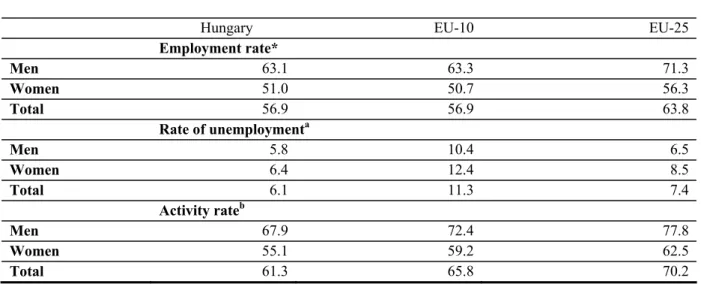
There is an extremely low level of participation on the labour market, and there are particularly many untrained individuals who don’t work. Many people are cornered out from the labour market due to ill health. Illegal employment also deteriorates the situation of employment substantially. While there is a generally high level of productivity of the workforce, this productivity is highly dispersed according to age. One of the main reasons for that is that very few people undertake continuous training or learning in addition to work. There are very significant regional differences in employment on the level of micro regions. The issue is worsened by the low level of mobility of workforce and the pure accessibility of the nearest work opportunities in some of the regions. All of these factors mean that the market processes are unable to leverage the regional and structural disparities in the supply and demand of workforce.
3. The economic structure is characterised by a dual nature
The Hungarian economy could successfully integrate into the world economy, and its structure has been modernised. At the same time there are substantial and growing regional disparities in the economy.
International businesses play a key role in the Hungarian economy. Our major companies are competitive even on an international scale. Small and medium sized businesses are the most important employers, however, they carry major reserves in improving their productivity. Typically, it is the larger businesses that use state of the art organisational, developmental and management methods. We can see a low level of ability and willingness of SMEs to
co-operate, their market financing is difficult due to their disadvantaged situation resulting from their size.
Hungarian R&D spending lags behind the EU average, especially in the business sector. We have sizeable research capacities that are partly unused. Despite a substantial growth in the area, we still suffer from a large backlog in establishing the information society.
4. The transport system needs development
Hungary has a dense transport grid, but transport needs often exceed the capacity of the road and railroad networks. The transport network is characterised by a focus on Budapest and massive regional differences.
Hungary has a preferential economic-geographical situation, which offers good opportunities for the domestic development of international, commercial, transport and logistical services. The modal split is better in Hungary than in EU-15 in terms of sustainability -due to the relatively high rate of rail and community transport. However the isolation of transport networks sets back either intermodality or preference to transport modes with less pollution. However, the quality of the road network is far from the needs of traffic and the technical characteristics and the service level of the railroad network are weak.
Although our public transport network is developed in European terms, stronger urbanisation and desurbanisation processes present an important challenge for domestic public transport.
5. The change for market economy has required substantial social sacrifices
Large masses of people were cornered out from the labour market during the nineties. This and the negative demographical developments (the population of Hungary is aging, and the number of population is decreasing) are an increasing burden on the systems of care.
While the general level of training of the population has increased substantially, there has been no improvement in the efficiency of education. The renewal of the quality and structure of public education is imminent, which is also necessary because the current school system reinforces social differences. There has been a dynamic growth in the number of students in higher education; however, the productivity and cost efficiency of higher education have deteriorated. Vocational training has not adapted to the needs of the labour market; the rate of participation in adult training is low, and the system suffers from large disparities. The utilisation of our rich intellectual and cultural heritage and the improvement of access to culture represent serious challenges that also carry large opportunities for the entire society. The health status of Hungarians is rather poor in comparison to the level of economic development. Health consciousness is on low level, the system of healthcare is obsolete and still focused on illnesses, while the infrastructure of care is outdated. Shortcomings in healthcare generate serious burdens on the economy. On the other hand, Hungarian healthcare services also provide a great deal of opportunities.
Inactivity has lead to a regeneration of poverty that is complemented by a geographical concentration of disadvantaged individuals. Social isolation has worsened through meagre and insecure income, poor housing, unemployed parents in families, more difficult access to
public services and the poor utilisation of advanced information service tools. Child poverty has been a growing problem.
Social backwardness is a particularly pressing problem for the people of Roma origin. Their situation is also aggravated by several forms of discrimination. People living with disabilities or impairment are hardly present on the labour market, at the same time, conditions of integrated education are also missing. Mothers with children stand rather poor chances on the labour market when returning after maternity leave.
Despite a growing level of non-governmental activity, there have been very little social dialogue and preparedness to co-operate in certain areas.
6. We have substantial environmental values, but risks are also high
The environmental status of Hungary has been substantially influenced by both the quality of the ecological system of the Carpathian Basin and global climate change. We should be prepared for increasingly more extreme whether.
The country has very preferential natural characteristics with substantial thermal water and geothermic energy resources. The status of the environment is good, however, we must do a lot to keep it that way because current environmental processes are not sustainable. The level of environmental awareness is improving but still quite low; and the amount of energy used does not reduce despite improved energy efficiency.
Urban areas suffer from specific environmental issues. Architectural heritage is threatened by a number of risks. The revivification of urban quarters and rural areas offers serious perspectives.
7. Increasing regional differences
Regional differences in development have not reduced over the past 15 years. Differences on the level of micro regions are by far higher than those on the regional level.
The level of development of Central Hungary stands above the level of other regions, but it is burdened with internal contradictions. The north-eastern regions are the most backward economically; southern regions require restructuring as the pace of their development lags behind other regions. Regions in the West and North-Transdanubia develop faster than the national average, but their internal contradictions remain strong. Tackling cross-regional issues requires co-ordinated, large regional development efforts.
8. The role of the state needs rethinking
The system of democratic legal and other institutions meeting the requirements of the rule of law has been established by now, but its further development can release substantial resources. The Hungarian public administration is not efficient: its age composition and incentive systems are not right. The Hungarian society demonstrates a lower than the European average level of compliance with the law and public confidence. The reason for that lies with the massive arrears we have in good quality legislation. Public services do not rely on IT-communication technologies yet. Reconsidering the distribution of tasks among central and regional levels of public administration cannot be postponed any longer.
Experience from the First NDP
The main objective of the First National Development Plan, namely to reduce our shortfall in the level of per-capita GDP has partly been achieved, however, the shortfall has still remained quite substantial.
Experience gathered with the implementation of NDP I has yielded a number of useful lessons. Legislative modifications effected in the meantime focused on the simplification and acceleration of processes and the protection of public funds.
Closer co-operation between implementation and planning can result in further improvement of the success of measures. During implementation, accountable and well-defined objectives are pivotal. The performance of the participants must also be measured. Overregulation should be resolved, while performance measurement processes should be introduced. Former interventions need to be evaluated, and more attention should be paid to the exploration of the effective mechanisms of development efforts.
The Development Strategy
By eliminating the shortcomings explored in the situation analysis and by exploiting existing values, the strategy aims at the development of the country and strengthening its international competitiveness. Overall objectives of The New Hungary Development Plan:
1. extending employment,
2. creating the conditions for long term growth.
Overall objectives
1. Measures to extend employment:
• increasing supply of workforce: improving the employability of the individual; • increasing demand for workforce: creating jobs;
• creating an employment environment that co-ordinates supply and demand. 2. Measures to promote sustainable growth:
• improving competitiveness; • widening the economic basis;
• improving the business environment, including
o improved access,
o improved regulatory environment, increased efficiency of state services Horizontal policies
Two general aspects should be focused on when implementing with developmental objectives. Sector and regional programmes must be transcended by
• the principle of environmental, macro-economic and societal sustainability; and
• strengthening regional and social cohesion, including gender equality and equal opportunities for disadvantaged groups and non-discrimination.
Various fields of environmental sustainability have direct linkages to the compliance with environmental commitments in the Accession Agreement. Hungary is committed to meet in their totality these obligations by developments to be realised within and outside of the framework of the NHDP.
Within the environmental sustainability combating climate change should receive greater attention. Action against climate change needs increased funding in the NHDP and to be integrated in all sectoral policies, with special emphasize on transport and energy sectors.
Priorities
In order to achieve above objectives, developmental efforts will concentrate on six areas. Accordingly the priorities include the following:
1. economic development, 2. transport development 3. social renewal,
4. environment and energy development, 5. regional development,
6. state reform.
Many of the elements of the priorities are inter-linked and have an impact on each other. When defining the contents of these priorities, we have concentrated on the solution of major social issues and tasks resulting from the comprehensive reform of public administration. These major social issues require an integrated approach. To solve these problems, we have worked out so called ‘flagship projects’ answering the comprehensive solution of the most acute social troubles. During implementation, the tools of development policy will be coupled with other tools of the Government such as, for instance, re-structuring tools inherent in regulatory opportunities.
Priority 1: Economic development
The following groups of interventions will serve the promotion of the economy:
• Creating innovative, knowledge based economy with planned tools as follows: supporting market oriented R&D activities; promoting the innovation activities and co-operations of businesses; motivating the establishment of technology intensive (spin-off) small businesses; promoting technology transfer; strengthening bridge building and incubation activities; development of the background infrastructure of R&D.
• Improving the income generating ability of small and medium sized business with planned tools as follows:
improving the capital supply of SMEs; widening the culture of entrepreneurship; organisational development; technology update; encouraging partnerships between SMEs.
• Developing the business infrastructure and services with planned tools as follows: developing industry parks; improving info-communication technologies (ICT) and the physical infrastructure; establishing the network of logistics parks; building broadband IT networks; developing the legislative and regulatory framework for the business environment.
These interventions can be implemented within the framework of the Economic Development Operational Programme and the regional operational programmes.
Priority 2: Transport development
• Improving the international accessibility of the country with planned tools as follows:
extension of the expressway network on TEN routes; modernisation of main international railways,
improvement of infrastructure of river transport. .
• Improving regional accessibility with planned tools as follows:
development other elements of the road networks beyond the development of
motorways on the TEN network; development of community transport and alternative modes harmonised with the development of main railway lines, establishment of regional transport associations.
.
• Connection of transport modalities, development of the inter-modality and transport infrastructure of economic centres the elements of which include:
connecting various transport modalities, in accordance with the improvements of their cooperation (co-modality) the improvement of accessibility of railways, ports, intermodal centres with the development of connecting links.
• Developing urban and suburban community transport with planned tools as follows:
developing and linking suburban railroads to local mass transport; building bicycle roads; reducing the rate of traffic in downtown areas.
These interventions can be implemented within the framework of the Transport Operational Programme and the regional operational programmes.
Priority 3: Social renewal
The following groups of interventions will promote the renewal of the society: • Improving employability with planned tools as follows:
services to promote entry to the labour market and employment; developing knowledge and skills necessary for employment; preventing long term unemployment; measures to promote migration within the labour market; subsidies to support the employment of disadvantaged individuals; social security discounts; improving employment rehabilitation;
• Improvingadaptability with planned tools as follows:
transforming the institutional structure of vocational training and establishing the regional system of vocational training and accredited adult training; developing the capacities of social partners; reducing the impacts of restructuring processes on the labour market; flexibility and security on the labour market; (including reconciliation of family and working life and family-friendly working environment) promoting the adjustment of non-governmental organisations and churches to their roles as service providers.
• High quality education and availability for all with planned tools as follows:
improving problems solving capacities; developing digital literacy, language, natural science and lifestyle skills; co-ordinating the needs of training with those of the society and the economy; developing business and entrepreneurial skills and developing the cultural capital;
complex educational development programmes; creating of a measurement and evaluation system; modernisation of the training and further training of teachers; introducing cost efficient organisational forms; promoting regional partnerships and helping the integrated education of pupils in disadvantaged situation.
• Developing human resources necessary for research and development and innovation with planned tools as follows:
continuation of the reform of higher education and of the Bologna process, quality development of higher education; creating regional knowledge centres; supporting research universities and colleges; developing the institutional system of talent support; practice oriented programmes in higher education; expanding technical and natural science training.
• Conservation of health, social inclusion and participation with planned tools as follows:
developing health and the conservation of health, promoting healthy lifestyles; developing social services, reducing child poverty; social integration of disadvantaged groups – with special regard to Roma people and disabled people; measures targeted at the reduction of erosion and deviances in schools; fighting against discrimination, developing social services, services for children and the youth, services promoting equal opportunities, strengthening social capital and local communities, strengthening non-governmental organisations, protecting consumers and the attended, developing cultural capital.
• Developing the human infrastructure with planned tools as follows:
eliminating physical, environmental and communication obstacles, modernisation of the rehabilitation system, developing services of day-care for children, establishing multifunctional human services centres; modernising social and child protection institutions with large staff; improving the background infrastructure of vocational training, creating regional training networks; information technology development in the field of education and healthcare; strengthening the basic infrastructure of higher education, infrastructure serving technical and natural science training, strengthening service and innovation centres; improving service forms facilitating the re-structuring of the healthcare system, improving conditions of infrastructure; developing priority healthcare institutions with objectives of prevention, healing and rehabilitation; establishing infrastructure for integrated employment and social service systems; developments related to cultural services and creative economy; cultural capital of Europe project.
These interventions can be implemented within the framework of the Social Renewal and the Social Infrastructure Operational Programmes. These programmes will be complemented by measures of the State Reform Operational Programme and the Electronic Public Administration Operational Programme. The elimination of physical and environmental obstacles must be implemented during all developments foreseen under the operational programmes.
Priority 4: Environment and energy development
The following groups of interventions serve environmental and energy developments: • Environmental improvement with planned tools as follows:
• healthy and clean settlements, within this waste and waste water management, improving the quality of drinking water, protection against floods, protection of the
quality and quantity of our waters, prevention of further pollution of waters (protection of water bodies of high importance, water aquifer protection, recultivation of waste deposits and environmental remediation), state measures of WFD implementation, wise management of our natural assets, promotion of sustainable production and consumption habits, raising awareness of environmental and climate issues.
• Environment-friendly energy developments with planned tools as follows:
promoting development actions targeted at energy efficiency and saving, as well as at the production and use of renewing sources of energy.
These interventions can be implemented within the framework of the Environment and Energy Operational Programme and the regional operational programmes.
Priority 5: Regional development
The following interventions should take us towards balanced regional development: • Co-operative and competitive urban network based primarily on the establishment of
developmental poles.
• Renewing countryside: integrated and sustainable development of villages and rural areas.
• Realignment of backward regions, meaning the implementation of complex realignment programmes.
• Sustainable development of the region of Lake Balaton, and additionally the regions of the rivers Danube and Tisza.
These interventions are included in seven regional operational programmes: South Great Plain OP, South Transdanubia OP, North Great Plain OP, North Hungary OP, Central Transdanubia OP, Central Hungary OP, West Pannon OP.
The most important objectives of the regional operational programmes include: - strengthening regional competitiveness;
- increasing the tourism attractiveness of regions;
- developing regional transport infrastructure and community transport, improving the status of local alignment;
- promoting energy efficiency and saving as well as the use of renewable energy sources;
- general, integrated development of settlements,
- reducing social and regional disparities within the regions, - developing social infrastructure.
Priority 6: State reform
The aim of the state reform priority is to coordinate the reforms taken in different sectoral fields, furthermore the renewal of public administration.
In the area of renewal public administration, the following interventions will be implemented:
- Renewal of governance, and thus improvement of the social success of policy making − especially legislation - and implementation;
- strengthening civil society participation in public affairs;
- transforming public administration to a service oriented way, spreading electronic case handling
- higher organizational performance and more cost-effective operation of institutions;
- improvement of the human resources skills;
- strengthening the decision making on integrated micro-regional and regional level for the sake of implementation the subsidiarity principle
These interventions can be implemented within the framework of the State Reform and the Electronic Public Administration Operational Programme.
Planned Distribution of Funds among Operational Programmes
Hungary is entitled to receive EUR 22.4 billion euro development funds – calculated at price levels of 2004 and equivalent 25.3 billion euro at current price level – from the cohesion policy of the EU between 2007 and 2013, which is supplemented by domestic co-financing and private capital. Also, an additionally EUR 3.8 billion at current prices are available from the European Agricultural and Rural Development Fund and 34.3 million form the European Fisheries Fund.
The following aspects were considered when planning the distribution of funds:
• relevant European Union regulations on the use of the Cohesion Fund and Structural Funds;
• the relative weight of certain areas of intervention in attaining the main objectives set; • developmental obligations in the protection of the environment and transport arising
from Hungary’s EU membership;
• the size and relative level of development of individual regions of the country; • the assumed absorption capacity of individual areas of intervention;
The following funds may be available within the individual operational programmes also considering the 15% national co-financing – of indicative character, calculated at price levels of 2004:
265 HUF/euro, prices of 2004
Operational programmes billion HUF Total
Economic Development OP 690.0
Transport OP 1703.2
Social Renewal OP 966.0
Social Infrastructure OP 538.9 Environment and Energy OP 1140.0
West Pannon OP 128.3
Central Transdanubia OP 140.5
South Transdanubia OP 195.0
South Great Plain OP 207.1
North Great Plain OP 269.6
North Hungary OP 249.9
Central Hungary OP 419.0
State Reform OP 40.9
Electronic Public Administration OP 99.8
Implementation OP 87.2
The New Hungary Development
Plan in total 6875.4
European Territorial Cooperation* 106.8
*Note: Programmes under the objective of the European Territorial Cooperation are described in separate documents.
The list of projects contained in the Annex to the Development Plan is of indicative character only; the Government will decide on the finalisation of the list after comparison to other project lists and evaluation.
1.
Introduction
1.1.
Premises
The development of Hungary comes to a turning point on the 1st of January of 2007. We will be granted the opportunity by achieving a proper use of a total of EUR 22.4 billion from the Structural Funds and Cohesion Fund of the European Union to strengthen those directions of development that have proven to be successful over the past 15 years, and we can face the issues that hinder our progress. This may launch and unprecedented waive of development in Hungary, by which we might approach and in many regards even reach the average level of development of the European Union by 2013.
Certain strong measures are needed by the administration in the operation of the public sector in order to make sure that this process of realignment, which has been successful for long from many aspects, can remain sustainable, and also in order to make sure that Hungary can stand the global competition. In line with the Lisbon Agenda of the European Union, the Hungarian strategy focuses on improving employment and growth,
while it also respects the Gothenburg principle of sustainability.
We can approach the average level of development of the EU by 2013 The main objective of the Development Plan is to increase employment and to strengthen conditions of growth
1.2.
The purpose and motivation of this document
The New Hungary Development Plan has been formulated as a strategy based on the most important findings of developmental policy work over the past twelve months, and with regard to the requirements for community and domestic strategic documents. This strategy is the Hungarian National Strategic Reference Framework for the use of funds from the Structural Funds and the Cohesion Fund of the European Union between 2007 and 2013. The New Hungary Development Plan corresponds to the expectations of the EU
1.2.1. The determinant role of the geo-political position of Hungary When creating our strategy, we have to consider increasing global
processes happening in world economy as well as the impact of the eastward enlargement of the European Union on the country. Hungary is located at the intersection of three major European regions. As member of the EU, it is an attractive entry point to the largest market of the world, at the same time, it is an excellent starting point when heading to the integrating South-East-European region and the East-European market. The geographical position and the system of contacts of the country can be very attractive in the eyes of professional investors looking for production and service bases and regional management centres. However, the increasing integration of the world economy, the explosive development of the region of South-East-Asia and the expected further enlargement of the European Union represent new challenges in the field of competition. These trends call
When creating our strategy, we paid attention to the advantageous geo-strategic position of the country and the increasing
integration of world economy
for the strengthening of factors influencing the competitiveness of companies, the strengthening of globally competitive businesses and the extension of the basis of competitiveness of the country.
Resulting from the advantageous geo-strategic location of Hungary, the country can undertake important logistic roles. Diversity in terms of ethnic groups as well as the presence of Hungarian nationalities can considerably facilitate the spread of regional co-operation, the transfer of technology and knowledge and innovation.
The lack of workforce in certain sectors resulting from increased growth, can be reduced by immigration from neighbour countries, in addition to the strengthened flexibility of national labour market.
1.2.2. Theoretical foundations of the strategy
The New Hungary Development Plan is based on the strategic objectives contained in the National Development Policy Concept (NDPC) and National Regional Development Concept (NRDC), both as approved by the Parliament. These elements are supplemented by the decrees defining the terms of reference for the cohesion policy, the Community Strategic Guidelines (CSG) containing community priorities, the Sustainable Development Strategy as accepted by the European Council in Gothenburg, and the National Action Programme attached to the renewed Lisbon Agenda. The Development Plan is also in line with the New Hungary Rural Development Strategic Plan that is being compiled in parallel.
The Development Plan is built upon a number of background documents
The long-term objectives and priorities of Hungary’s development policy and the measures to obtain these objectives are contained in the National Development Policy Concept approved by the Parliament in December 2005. The Concept provides that Hungary should become one of the most dynamically developing countries of Europe by 2020. The living standards and the quality of life of the people should improve, i.e. there should be more and better jobs, higher incomes, safe, clean and quality environment providing healthier, longer and more complete life.
NDPC formulates objectives for the planners until 2020
The National Regional Development Concept approved by the Parliament in conjunction to the NPDC sets out the objectives, concepts and priorities for the country’s regional development policy. Thereby it creates a framework for the consequent enforcement of regional aspects in working out both sector policies and national or regional programmes. This also secures the regional perspective of national developmental planning. The regional development policy intends to secure the harmonic and efficient operation of all regions of the country and their balanced and sustainable development, while we also want to reduce the rate of regional backwardness.
NRDC provides the regional aspect of planning
Documents used to compile the strategy
Frames adopted by the European Union:
• Community Strategic Guidelines, 2007-2013; cohesion policy in support of growth and jobs (communication from the Commission orienting cohesion policy planning),
• Regulations containing the rules of use of the European Social Fund, the European Regional Development Fund and the Cohesion Fund and Council Regulation (EC) No 1083/2006 containing the general rules of the Council of the European Union for the three funds, and the regulation of the European Parliament and the European Council on the European grouping of territorial cooperation,
• Integrated Guidelines for Growth and Jobs (guidelines of the national reform programmes compiled by individual member states for 2005-2008 in the framework of renewing the Lisbon process), • Regulations on the European Agricultural Fund for Rural
Development (EAFRD),
• Sustainability Requirements as formulated in Gothenburg, and the Sustainable Development Strategy renewed by the Council of the European Union on 15 June 2006,
• Environment Action Programme 2001–2010,
• i2010: A European Information Society for Growth and Employment Programme
Key Hungarian documents considered:
• National Development Policy Concept (2005–2020), • National Regional Development Concept (2005–2020),
• National Action Programme (2005–2008) and the Revised National Lisbon Action Programme of October, 2006,
• New Hungary Rural Development Strategic Plan (2007–2013, version sent to social discussion),
• National Programme of Environmental Protection (2003–2008), • Lifelong Learning Strategy,
• Updated Convergence Programme of Hungary of September, 2006. • National strategy report on social protection and social cohesion
2006–2008 (in development)
Underlying sectoral concepts and strategies:
During our work we relied on the sector development concepts attached to the National Development Policy Concept and the National Regional Development Concept. These include the following:
The Development Plan also builds upon sector and regional concepts
• Competitiveness concept paper,
• Hungarian information society strategy (HISS) – (1126/2003. government resolution),
• Transport policy concept,
• Healthcare development concept (HDC), • National Tourism Development Strategy, • National Programme for the Disabled
• National strategy report on social protection and social cohesion 2006– 2008
Conceptual proposals and strategic plans under preparation, used in their draft version:
• National Strategy for Sustainable Development, • SME strategy (working draft, under development),
• Science, technology policy and innovation strategy (accepted by the Government in 1st reading),
• Energy policy concept (approval pending)
In addition those to described above, a few overall strategies have also be compiled that can typically be implemented through the co-operation of several sectors. Some elements of these are treated by the relevant operational programmes as a priority (e.g. developmental poles, renewable energy or the healthy society).
New,
comprehensive strategies are also conceived as part of the planning process
1.2.3. Participants in the preparation of The New Hungary Development Plan, the work progress
Pursuant to the Government Resolution 1076/2004.(VII.22.) on the Contents and Organisational Framework of Compiling the Development Plan for the period between 2007 and 2013, the Development Plan has been written in co-ordination with the National Development Office and its legal successor, the National Development Agency, under the leadership of the minister without portfolio responsible for the co-ordination of European integration matters (later for European matters) and – from June 2006 – under leadership of the government commissioner for development policy. In addition to line ministries and national agencies, the Hungarian Academy of Sciences, regional development councils and, through experts, several scientific research institutions and advisory bodies also participated in the development of the contents of individual chapters.
Representatives of the science community and NGO’s also participated in the planning in addition to public administration
During the elaboration of the plan, we had regular consultation with Managing Authorities of the 1st National Development Plan to utilise experiences collected.
According to those set out in the Government Resolution 1076/2004(VII.22.) the first step included the National Development Policy Concept and the National Regional Development Concept, which were approved by the Parliament in a resolution on 14 December 2005. The preparation of The New Hungary Development Plan started on the basis of these documents and the National Action Programme for the implementation of the Lisbon Agenda in September 2005.
The main objectives of the plans were defined by the Parliament
The National Development Office co-operated with the planning departments of relevant ministries, and organised a series of workshop discussions with the participation of almost 400 persons to lay the foundations for the development plan. The findings of the workshops were integrated into the situation analysis and strategic chapters of the plan. Workshop discussions were organised in the following 13 fields:
Several hundred people participated in the professional discussions preceding the planning process
1. improving the demographic situation, 2. strengthening social capital,
3. improving physical access
4. sustainable improvement of the competitiveness of the Hungarian economy,
5. enfolding the information society,
6. increasing the level of competitive knowledge and culture, 7. improving the health status of the population,
8. expanding employment, 9. the role of culture,
10. protection and sustainable use of natural resources and environmental values,
11. improving security,
12. medium term objectives of balanced regional development, 13. strengthening social cohesion.
1.2.4. Public discussion on the New Hungary Development Plan Stakeholders from the society could join the preparation of The New Hungary Development Plan from the earliest phases. We introduced the concepts on the main objectives in several dozens of fora and events when compiling the National Development Policy Concept as a preparation for the plan. Professional and regional discussion series were organised to collect the opinions as a backbone for our work. The public discussion on the concept was conducted for two months in the summer and early autumn of 2005. Approximately four hundred organisations gave their opinions. All of the proposals sent in writing and the questionnaires returned by our partners were published on the webpage on the National Development Office. The thirteen planning workshops were the first step in establishing a partnership for the development plan. These meetings were organised with the participation of several hundred experts and the representatives of many organisations. These workshops were complete with a series of fora organised in 19 counties in co-operation with the local media and with the participation of the widest audience to introduce regional and local development concepts. Stakeholders participated actively already in the preparation of the concept used as a foundation for the plan
On its meeting on 27th February, 2006, the Development Policy Cabinet chaired by the Prime Minister accepted and submitted for discussion with the stakeholders the first reading of the Development Plan. That document did not contain the social-economic situation analysis used as the foundation for the strategy, or the planned distribution of funds among operational programmes or the proposal for the institutional systems.
Several hundred people commented on the previous version of the Development Plan
Stakeholder reconciliation was conducted from 28th February, 2006 to 3rd April, 2006. The process included specific requests sent to 4900 social, professional, civil and local organisations to participate in the discussion about the document, while there were approximately 30,000 downloads of the document from the National Development Office webpage during this period. Finally, 470 organisations sent back comments on the document. In order to secure synergy among the development programmes, we organised ten discussions during the public debate, which made it possible for the most important social, professional, scientific and civil interest groups to develop a common platform.
A new period of reconciliation with social stakeholders started on 1st August, 2006 when the Government sent the New Hungary Development Plan – its second reading – to partnership discussion. That document already included a situation analysis, tables of financial allocations and major indicators as well. The document was available for all on the Internet during social reconciliation ended in the second half of September: almost 11 thousand people have downloaded in one month.
The National Development Agency asked about 4 and a half thousand organisations to formulate their opinions and proposals concerning the document.
The development plan has been discussed by the most important national reconciliation for including the Economic and Social Council, the National Council for the Reconciliation of Interests - whose decision preparatory body, the National Development Committee holds regular meeting with the National Development Agency - , the National Regional Development Council, the National Environmental Protection Council and the Hungarian Academy of Sciences. The plan has been on the agenda of the newly established National Development Council on the 5th of September 2006. In addition to that, consultation was held with representatives of historical churches in Hungary.
Parallel to the partnership process, the colleagues of the National Development Agency took part on several open panels and professional meetings, which were held occasionally on a micro-regional level. The leaders of the Communication Department of the NDA have been invited by the Interministerial Committee for Roma Affairs and the Equal Chances Working Group of the Disabled People and they gave in-depth information on the public debate on the NHDP. Due to this there have been numerous comments from organizations representing equal chances and non-discrimination, e.g. form the Civil Right Foundation of Roma People, the Hungarian-Romanian Friendship Society in Budapest, Motivation Foundation for the Support of Handicapped People, or the Professional Workshop for the Equal Rights between Women and Men. Moreover, the Agency has initiated sectoral and regional reconciliation relating to the priorities. The document has been discussed by the
A new period of reconciliation with social stakeholders started on 1st August, 2006
Developmental Councils of all the seven Hungarian regions. A special discussion was held for professional organisations active in the field of transport, human sector, economic development, state reform, environmental protection and regional development. The schedule and contents of the reconciliation process can be downloaded from the homepage of the National Development Agency (http://www.nfu.gov.hu/). By the deadline of 4th September, almost 300 opinions were sent by about 600 organisations and individuals. These opinions and proposals have been processed. To ensure high transparency, all of these can be downloaded from the homepage. A special reconciliation was held with experts of the parties in the Parliament. The Parliament held a discussion about the New Hungary Development Plan in 17th October, 2006. The National Development Council set up with regional representatives, delegates of the Economic and Social Council and acknowledged experts of fields involved has also discussed the development plan modified according to opinions of partners. The Government has decided about the document based on the results of those reconciliations before submitting it to the European Commission.
The list of the most important social organisations involved in social reconciliation can be found in Annex 1.
The partners formulated several ideas that will be considered and examined when planning the operational programmes serving the implementation of the New Hungary Development Plan. The National Development Agency started the social reconciliation of operational programmes in the second half of October.
The discussion with all stakeholders fundamentally confirmed the justified nature of our original objectives. However, stakeholders laid a bigger emphasis on improving accessibility, the importance of the information and knowledge based society, and on the aspects of environmental and social sustainability.
Stakeholders mostly confirmed the proposals of the planners
Based on the opinions of the partners, the development plan should put more emphasis on fields as follows:
enriching elements of social cohesion and equal opportunities and non-discrimination as horizontal policy, with special regard to equal opportunities of genders;
comprehensive treatment of the specific problems pertaining the Roma;
the importance of the protection of the environment in every priority,
importance of the human dimensions of sustainability, containment of the decreasing demographic trend, counter-balancing expected effects of migration;
developing the SME sector with special regard to the spill-over of R&D and innovation results in services and products;
enhanced presence of tourism;
increased demand on labour through job creation within the field of
Modifications of content after social
economic development;
promoting flexible employment forms, strengthening elements targeted at the elimination of unreported work;
preventing the reproduction of poverty and the development of social exclusion already in childhood;
developing basic skills (language competency, mathematical abilities, digital literacy, business skills, mother tongue).
Partners also pointed out the following:
solving problems also requires an integrated approach and additional tools parallel to those defined in the plan;
coherence with the Convergence Programme is critical, therefore, negative effects of the creation of balance must be reduced in the initial stage of development, whereas in the second stage of that, development resources can contribute already to absolute growth; resources must be spent on the renewal of public service systems in
a way contributing both to cost efficiency and quality improvement; the development of the human sector and improved co-operation
also serves the purposes of the strengthening of the civil sector, therefore, social-economic return on funds allocated to these fields is crucial;
due to the importance of integrated rural development, co-operation must be maintained with the European Agricultural and Rural Development Fund;
the institutional system of implementation should be more simple and ‘applicant friendly’ in the next programming period.
In the framework of the stakeholder reconciliation (and beyond the timeframe given above) we had continuous discussions with the European Commission as required by the relevant decrees. The results of this consultation have been integrated into the strategy.
We also consulted the European Commission
2.
Foundations of the strategy
2.1.
The medium term macro-economic course
2.1.1. Situation and prospects of our macro-economy
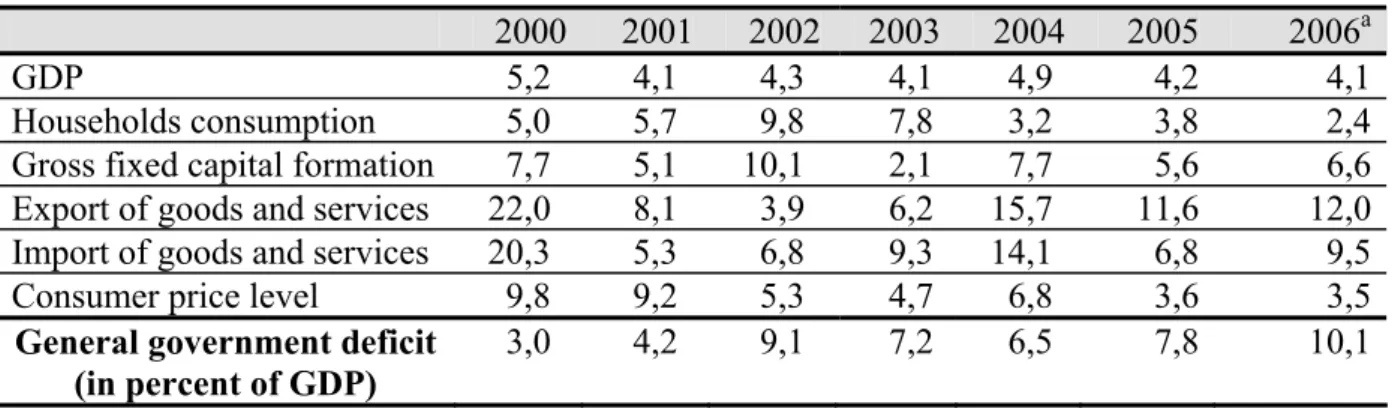
The structure of the Hungarian economy is healthy and driven by export and investments in growth. The rate of GDP growth was significantly higher in 2004 than the average of previous years. Consequently, actual output exceeded potential output in 2004, therefore, the output gap became positive – the situation remained until 2006.
Growth
structure is essentially
healthy
According to economic policy expectations of the Government, the medium term macro-economic course can be divided in two clear-cut sections. The period until 2009 is the period of creating long term balance to be achieved by the considerable cut-back of the general government deficit and the restoration of external equilibrium. As a result of measures targeted at the improvement of balance, actual growth will significantly slow down in 2007-2008 then it returns to the former higher level of balanced course while the level of output will decrease below the potential output. As a result of that, the output gap will became negative by 2007 and in 2008-2009, it may reach –2% of potential output. Until the balance is restored, a temporary slow-down can be expected in economic growth until 2009
Sustained and long term growth can start on the basis of the balance created by 2009. According to the forecasts, the actual growth rate can reach the level of 2007 after 2009 but the output level won’t reach the level of potential output until 2011, thus output gap will remain slightly negative.
By 2009, we can return to a balanced course of growth
The international environment will support national economic growth in the coming years, although monetary restrictions and changing oil prices represent some risks. The growth of world economy will entail a significant expansion of world trade in the next couple of years. In 2007, the growth of the European Union will also be expectedly decreasing as a result of the German consolidation package. At the same time, through the entire horizon of the prognosis a long term and high growth can be expected in new Member States that are crucial from the aspect of Hungarian export, in the entire horizon of the prognosis. The potential further increase of oil prices can be risky for the growth forecast. At the same time, the recent increase of the consumer price index in the United States calls the attention to inflation risks of increased use of capacities. Off-balances of the global paying deficit have not been improving either; consequently, they are still long term elements of uncertainty. External factors basically favour the strengthening of the national economy, however, elements of risks are also present
Table 1: Medium term macro-economic indices
20061 2007 2008 2009 2010 2011
Change compared to previous year (%)
Increase of gross domestic product at the constant price
4.1 2.2 2.6 4.2 4.3 4.5*
Domestic consumption 2.0 0.3 0.7 3.3 3.7 4*
Households consumptions 2.4 -0.8 0.0 1.8 2.7 3.0* Gross accumulation of fixed assets 6.6 2.4 4.0 7.5 6.8 6-8
Foreign trade volume
Export (goods and services) 12.0 10.6 9.7 9.4 9.3 8-10 Import (goods and services) 9.5 8.1 7.5 8.6 8.9 8-10
Number of employees 0.3 0.0 0.3 0.7 0.7
0.7-1.0
Consumer price level 3.5 2.2 2.6 4.2 4.3 4.5*
In the percent of GDP
Current account deficit 7.9 5.0 3.3 2.3 1.5 1.0*
General government deficit 10.1 6.8 4.3 3.2 2.7 2.2
Gross debt 68.5 70.1 71.3 69.3 67.5 65-66
* approximate values Source: Ministry of Finance2
2.1.2. Macro-economic objects
The long term objective of economic strategy is modernisation and catching-up to the EU-15 average. On the short term, however, major task is to restore balance. Long term objective remains the support of extended employment as well as the promotion of strengthening competitiveness and capital attracting capacities.
The continuation of the catching-up process requires balance at the moment
The economic policy programme of the Government focuses on creating equilibrium and structural reforms in the next two years. This will lay the foundation for faster growth in the coming period and for the introduction of the euro in harmony with the performance of the economy. In addition to the government programme, these objectives are also expressed by the New Equilibrium Programme for 2006 through 2008 and the Convergence Programme built upon that.
The equilibrium is an internal need and a requirement of the European Union
Macro-economic stability is a condition for the successful development policy. The reasonable and efficient use of European Union funds also helps to achieve such stability. Accelerated economic growth generates additional funds in the budget. Developmental funding from the cohesion policy help the reform of major public service systems (pension system,
European Union funds also help to achieve stability
1 As statistical data for 2006 are not yet available, therefore the table contains data for the year 2006 as
forecasted in the Convergence Programme of September 2006.
healthcare and social systems, education) in order to make sure that they can operate more successfully and efficiently.
2.2.
Hungary is eligible for Community support
The terms and conditions for community support eligibility are regulated in Articles 5-7 of the Decree 1083/2006 of the Council3. This provides that so-called NUTS-II regions come under the Convergence objective, where the per-capita GDP on purchase power parity is less than 75% of the community average in the 2000-2002 period.
Hungary is one of the main winners of the cohesion policy of the European Union
The 2005 supplement to the 1059/2003/EC Decree of the European Parliament and Council of 23 May 2003 sets out that the area of Hungary is divided into seven NUTS-II regions. The table below shows the GDP data of the individual regions.
The area of Hungary is divided into seven regions
Table 2: Per-capita GDP in Hungarian regions, average of 2000–2002 Region PPS (unit of effective
demand)
Percentage of the EU-25 average, measured by
parity-based effective demand
Central Hungary 18,374 89.7
Central Transdanubia 10,706 52.3
West Pannon 12,362 60.4
South Transdanubia 8,470 41.4
North Hungary 7,392 36.1
North Great Plain 7,436 36.3
South Great Plain 8,075 39.4
Source: Eurostat, News release 47/2005
The Community average of per-capita GDP in 2000-2002 was EUR 20,478. On this basis the following regions come under the ‘Convergence’ objective:
Central Transdanubia West-Transdanubia South Transdanubia North Hungary North Great Plain South Great Plain
Six of the regions fall into the highest support category
Central Hungary is in a special situation. Pursuant to Article 5, Section (1) this region does not come under the Convergence objective because its per-capita GDP was above 75% of the EU 25 average in 2000-2002. However, the region does match the requirements of Article 8, Section (2), i.e. it comes under objective 1 as defined in 1260/1999/EC in 2006, and the per-capita GDP in 2000-2002 exceeded 75% of the EU 15 average according to Article 5, Section (1). This means that the region is eligible to the so-called phasing in support under the ‘Regional competitiveness and employment’ objective.
Central Hungary is in a special situation