Essays on Microfinance Repayment Behaviour:
An Evaluation in Developing Countries
Thesis submitted to The University of Reading for the degree of Doctor of Philosophy
HENLEY BUSINESS SCHOOL
THE UNIVERSITY OF READING
ICMA Centre
Guan Huang February 2018
Abstract
---Microfinance research concerns addressed in this thesis relate to: the associations between the individual characteristics of borrowers and the probabilities of being in delinquent or default; the determinants for the financial awareness of interest repayment; and the application and comparison of modern missing data techniques (Multiple Imputation, Maximum Likelihood Estimation, and Predictive Mean Matching) with incomplete loan book data. The thesis emphasises credit scoring issues that affect repayment performance and re-volves around three empirical chapters that seek to address the above research concerns. Survey and loan book data from individuals in 51 MFIs across 27 developing countries. The data were compiled by the MFIs and collected by Micro Finanza Rating. Varied micro-econo-metric techniques (ordinary least squares, Logit regression, Tobit regression, Two-Part model, Double-Hurdle model, Box-Cox transformation, and three missing data imputation methods: Multiple Imputation, Maximum Likelihood Estimation, and Predictive Mean Matching) are used depending on the hypotheses being considered in each chapter.
The main findings are: engaging in agriculture is related to a lower probability of default that measured by the amount of arrear in general; besides, the association between agriculture and the length of delayed repayment is insignificant; previous access to micro-finance has positive association with the financial awareness of the clients who lived in urban areas; in addition, previous access to saving service has positive effect on the clients with at least primary education; when the missing microfinance data is semi-continuous, PMM outperforms MI and ML in most simulations; for binary or ordinal categorical data, PMM performance surpass MI and ML only when the sample sizes of data are large, the missing rates are low, and the missing mechanism is MAR.
The thesis suggests the following recommendation both for management of MFIs and government: we need to make financial services for poor farm households and farm-related business more attractive to the MFIs; financial awareness can be improved by access to microfinance services, hence extra learning programmes may be unnecessary; Two-Part Model should be applied to credit scoring; and PMM imputation is the best technique to be applied to deal with the missing data issues and improve data quality in microfinance.
Declaration
---No portion of the work referred to in the thesis has been submitted in support of an applica-tion for another degree or qualificaapplica-tion of this or any other institute of learning.
Copyright Statement
---The author of this thesis (including any appendices and/or schedules to this thesis) owns certain copyright or related rights in it (the “Copyright”), and he has given the University of Reading certain rights to use such Copyright, including for administrative purposes.
Copies of this thesis, either in full or in extracts and whether in hard or electronic copy, may be made only in accordance with the Copyright, Designs and Patents Act 1988 (as amended) and regulations issues under it or, where appropriate, in accordance with licensing
agreements which the University has from time to time. This page much form part of any such copies made.
The ownership of certain Copyright, patents and designs, trademarks and other intellectual property (the “Intellectual Property”) and any other reproduction of copyright works in the thesis, for example graphs and tables (“Reproductions”), which may be described in this thesis, may not be owned by the author and may be owned by third parties. Such Intellec-tual Property and Reproductions cannot and must not be made available for use without written permission of the owner(s) of the relevant Intellectual Property and/or Reproduc-tions.
Further information on the conditions under which disclosure, publication and
commercialisation of this thesis, the Copyright and any Intellectual Property and/or Repro-ductions described in it may take place is available in the University IP Policy (see
https://www.reading.ac.uk/library/finding-info/copyright/lib-copyright.aspx), and in the Uni-versity’s policy on presentation of Thesis.
List of Contents
---Abstract………i Declaration………ii Copyright Statement………..ii List of Tables……….v
List of Abbreviations ……….ix
Chapter 1: Introduction………1
1.1 Motivation.…...1
1.2 Objectives………..………4
1.3 Structure of the Thesis………..………5
Chapter 2: Individual and Household Level Impacts of Microfinance Programmes on the Well-being of the Poor…...6
2.1 Introduction…...6
2.2 Methodologies of the Impact Assessment Studies………7
2.2.1 Definitional and conceptual Issues………7
2.2.2 Research designs and validity…...10
2.2.3 Statistical methods of analysis…...11
2.2.4 Common bias in microfinance assessments…….………12
2.3 Major Empirical Results and Controversies……..……….………13
2.3.1 Significant impacts of micro loans ………...………13
2.3.2 Insignificant impacts of micro loans ……….…...14
2.3.3 Impacts of interest rate policy and group lending………15
2.3.4 Impacts of access to finance …...15
2.3.5 The issues of data quality……….……….16
2.4.1 Quasi-experimental studies………...………17
2.4.1.1 With/without and before/after studies………..………17
2.4.1.2 Pipelines studies…...19
2.4.2 Experimental studies (RCTs)……….…...21
2.4.3 Women empowerment studies…...23
2.5 Conclusions and Implications…...24
Chapter 3: Delinquency of Microfinance: A Two-part Probit Analysis of Cross-MFI Data…….25
3.1 Introduction………..25
3.2 Literature Review………..27
3.2.1 The concepts of loan delinquency and loan default……….…….27
3.2.2 Determinants of loan delinquency or default in microfinance…...28
3.2.2.1 Main findings related to individual socio-geographic charac-teristics……….28
3.2.2.2 Main findings related to business characteristics……….31
3.3 Data…...33
3.4 Methodology…...36
3.4.1 Econometrics models for censored data…...36
3.4.2 The Tobit model………37
3.4.3 The Two-Part model (2PM)………...……….40
3.4.4 Cragg’s Double-Hurdle model (DH)………42
3.4.5 The Box-Cox transformation and likelihood functions……….44
3.5 Empirical Results and Discussion…...45
3.5.1 Model comparison and relations between marital status and loan de-linquency……….………...…….45
3.5.2 Subsample analysis between different microfinance institutions………48
3.5.3 Interaction terms analysis of marital status………50
3.5.4 Further analysis of the impacts of loan classification standards………..52
Chapter 4: What Drives Financial Awareness in Microfinance? ……….64
4.1 Introduction………..64
4.2 Literature Review………..66
4.2.1 Financial awareness and the framework of financial literacy……….……66
4.2.2 Main findings in the previous studies………67
4.2.3 Limitations of the previous studies……….………..69
4.2.4 Motivations and research questions……….70
4.3 Data and Methodologies……….……..……….71
4.3.1 Descriptive statistics……….71
4.3.2 Missing data imputation methods………..73
4.3.3 Estimation methods…...74
4.4 Results and Discussion…...76
4.4.1 Relation between access to credits and financial awareness……….76
4.4.2 Split-sample Analysis………..…….78
4.4.3 Interaction effects……….80
4.4.4 Further Analysis………..81
4.5 Conclusions and limitations…...82
Chapter 5: Multiple Imputation, Maximum Likelihood and Predictive Mean Matching for Semi-continuous Missing Data: A Study of A Microfinance Administrative Loan Book………..95
5.1 Introduction………..95
5.2 Goals of this research……….96
5.3 Literature Review………..97
5.3.1 The Distribution of Missing Data…...97
5.3.2 Multiple Imputation and Maximum Likelihood Estimation………..99
5.3.3 Predictive mean matching……….100
5.4 Data and Missingness Simulation…...102
5.4.1 Modifying the population……….…...102
5.4.3 Generating missingness………..104
5.5 Missing Data Imputation Methods…...107
5.5.1 Multiple Imputation………..107
5.5.2 Predictive Mean Matching…...109
5.5.3 Maximum Likelihood Estimation………..109
5.5.4 Completed Case Analysis………112
5.5.5 Evaluation of Imputation Performance………113
5.6 Empirical Results………..………114
5.6.1 Semi-continuous variable in univariate missing data……….……114
5.6.2 Semi-continuous variable in multivariate missing data…………..……….116
5.6.3 Binary variable in univariate missing data……….117
5.6.4 Binary variable in multivariate missing data……….……119
5.6.5 An Ordinal variable in univariate missing data…...120
5.6.6 An Ordinal variable in multivariate missing data…...121
5.7 Conclusions and Discussion…...123
Chapter 6: Conclusion……….144
6.1 Introduction………144
6.2 Summary of Results………..145
6.2.1 Delinquency of microfinance………..145
6.2.2 What drives the financial awareness in microfinance? ………146
6.2.3 MI, ML and PMM for semi-continuous missing data in loan book……147
6.3 Implications and Recommendations………..148
6.4 Limitations and Future Considerations……….150
Appendix A: Top 25 Business Activities in Microcred and Finca Peru by Population………….152
Appendix B: Financial knowledge, attitudes and behaviour (average scores); Stacked points (weighted data): all respondents, sorted by overall score………153
Appendix C: Basic Information of the Microfinance survey database………..154
List of Tables
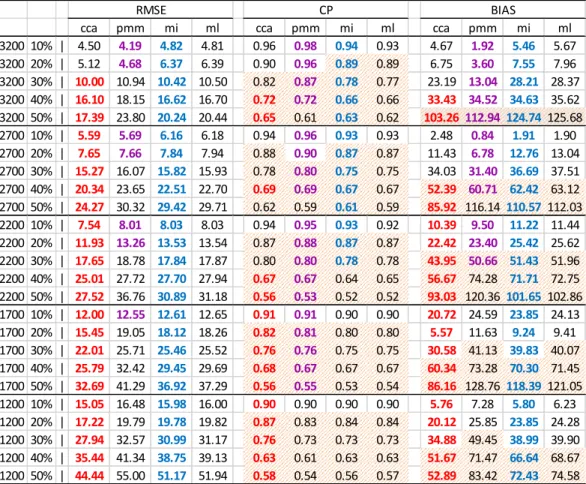
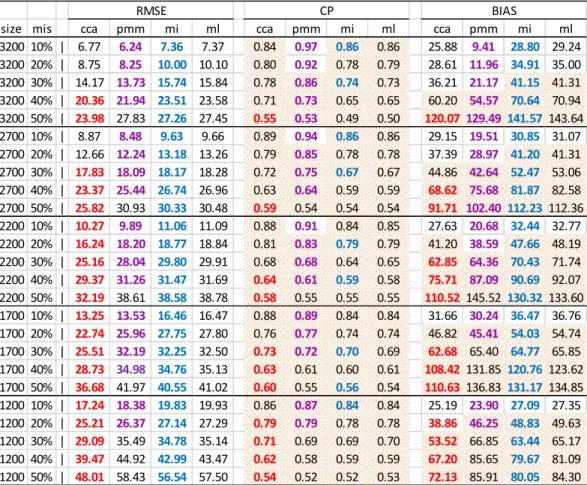
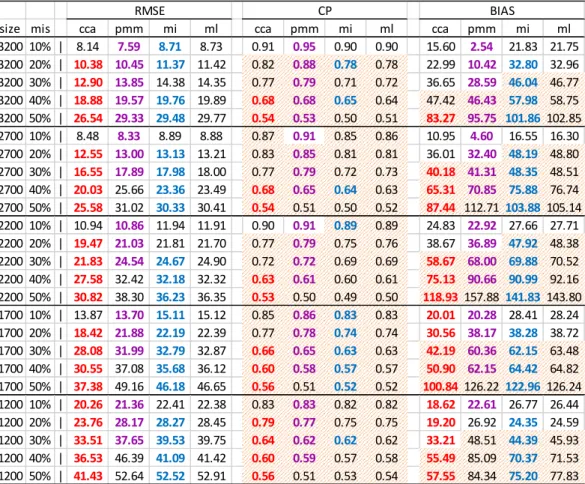
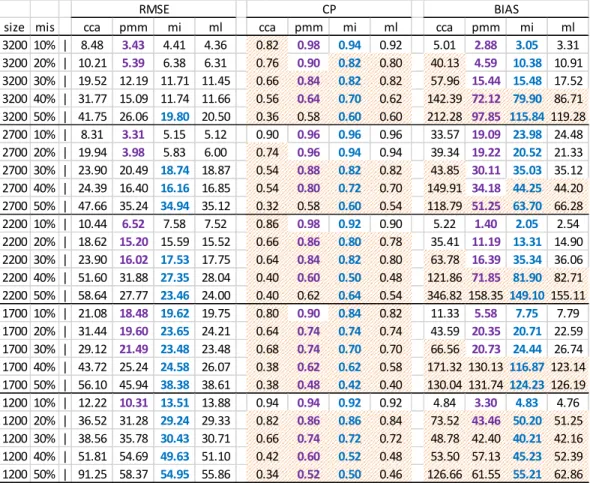
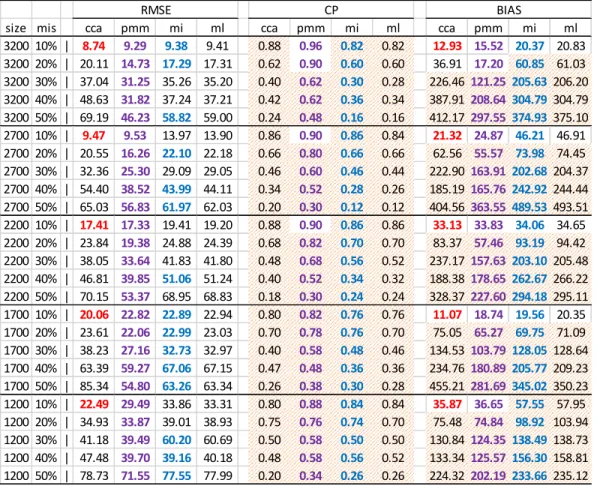
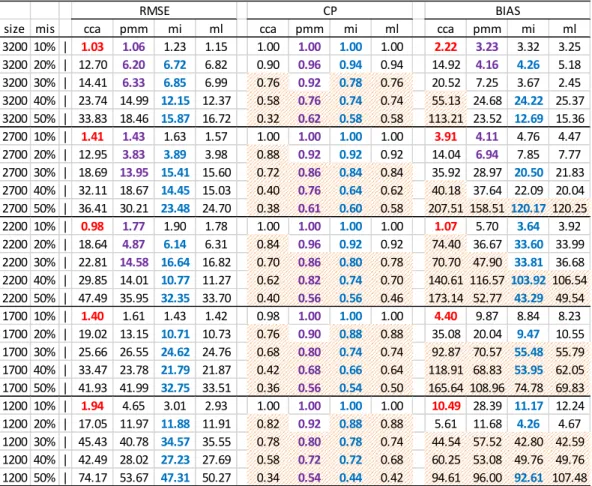
---Table 3.1: Summary Statistics………..56 Table 3.2: Correlations Analysis………..………57 Table 3.3 Panel A: MLEs for Four Models (Dependent: Amount in Arrears (in USD))…………..58 Table 3.3 Panel B: MLEs for Four Models (Dependent: Delayed Repayment (in Days))………..59 Table 3.4: Subsample Analysis between MFIs (2PM)………60 Table 3.5 Panel A: Interactions Analysis (Dependent: Amount in Arrears (in USD))………..61 Table 3.5 Panel B: Interactions Analysis (Dependent: Delayed Repayment (in Days))………....62 Table 3.6: Logistic Regression Analysis Based on Credit Collection Process………63 Table 4.1: Descriptive Statistics of the Data before Appling Multiple-Imputation………..84 Table 4.2: Descriptive Statistics of the Data after Appling Multiple-Imputation………..84 Table 4.3: Previous Access to Credits and Financial Awareness of Interest Rate (Part 1)……..85 Table 4.3: Previous Access to Credits and Financial Awareness of Interest Rate (Part 2)……..86 Table 4.4: Previous Access to Credits Regional and Religious Split-Sample Analysis (Part 1)..87 Table 4.4: Previous Access to Credits Regional and Religious Split-Sample Analysis (Part 2)..88 Table 4.5: Interactions on the Relation between Previous Access to Credits and Socio-demo-graphic Characteristics (Part 1)………89 Table 4.5: Interactions on the Relation between Previous Access to Credits and Socio-demo-graphic Characteristics (Part 2)………90 Table 4.5: Interactions on the Relation between Previous Access to Credits and Socio-demo-graphic Characteristics (Part 3)………91 Table 4.5: Interactions on the Relation between Previous Access to Credits and Socio-demo-graphic Characteristics (Part 4)………92 Table 4.6 Robustness Check with Alternative Proxy of Interest Repayment Awareness………93 Table 5.1: Summary Statistics of 11 Variables (N=3,200)………125 Table 5.2 Panel 1: RMSE and Coverage Rate of Estimated Coefficients for Semi-continuous Dependent Variable (Univariate MCAR Missing Data) – Grouping by Sample sizes………126
Table 5.2 Panel 2: RMSE and Coverage Rate of Estimated Coefficients for Semi-continuous Dependent Variable (Univariate MAR Missing Data) – Grouping by Sample sizes………..127 Table 5.2 Panel 3: RMSE and Coverage Rate of Estimated Coefficients for Semi-continuous Dependent Variable (Univariate MNAR Missing Data) – Grouping by Sample sizes………128 Table 5.3 Panel 1: RMSE and Coverage Rate of Estimated Coefficients for Semi-continuous Dependent Variable (Multivariate MCAR Missing Data) – Grouping by Sample sizes…………129 Table 5.3 Panel 2: RMSE and Coverage Rate of Estimated Coefficients for Semi-continuous Dependent Variable (Multivariate MAR Missing Data) – Grouping by Sample sizes…………..130 Table 5.3 Panel 3: RMSE and Coverage Rate of Estimated Coefficients for Semi-continuous Dependent Variable (Multivariate MNAR Missing Data) – Grouping by Sample sizes………..131 Table 5.4 Panel 1: RMSE and Coverage Rate of Estimated Coefficients for Binary Dependent Variable (Univariate MCAR Missing Data) – Grouping by Sample sizes………132 Table 5.4 Panel 2: RMSE and Coverage Rate of Estimated Coefficients for Binary Dependent Variable (Univariate MAR Missing Data) – Grouping by Sample sizes………..133 Table 5.4 Panel 3: RMSE and Coverage Rate of Estimated Coefficients for Binary Dependent Variable (Univariate MNAR Missing Data) – Grouping by Sample sizes………..134 Table 5.5 Panel 1: RMSE and Coverage Rate of Estimated Coefficients for Binary Dependent Variable (Multivariate MCAR Missing Data) – Grouping by Sample sizes……….……….135 Table 5.5 Panel 2: RMSE and Coverage Rate of Estimated Coefficients for Binary Dependent Variable (Multivariate MAR Missing Data) – Grouping by Sample sizes……….………….136 Table 5.5 Panel 3: RMSE and Coverage Rate of Estimated Coefficients for Binary Dependent Variable (Multivariate MNAR Missing Data) – Grouping by Sample sizes……….……….137 Table 5.6 Panel 1: RMSE and Coverage Rate of Estimated Coefficients for Ordinal Dependent Variable (Univariate MCAR Missing Data) – Grouping by Sample sizes………138 Table 5.6 Panel 2: RMSE and Coverage Rate of Estimated Coefficients for Ordinal Dependent Variable (Univariate MAR Missing Data) – Grouping by Sample sizes………..139 Table 5.6 Panel 3: RMSE and Coverage Rate of Estimated Coefficients for Ordinal Dependent Variable (Univariate MNAR Missing Data) – Grouping by Sample sizes………..140 Table 5.7 Panel 1: RMSE and Coverage Rate of Estimated Coefficients for Ordinal Dependent Variable (Multivariate MCAR Missing Data) – Grouping by Sample sizes………..141 Table 5.7 Panel 2: RMSE and Coverage Rate of Estimated Coefficients for Ordinal Dependent Variable (Multivariate MAR Missing Data) – Grouping by Sample sizes………..142 Table 5.7 Panel 3: RMSE and Coverage Rate of Estimated Coefficients for Ordinal Dependent Variable (Multivariate MNAR Missing Data) – Grouping by Sample sizes………..143
List of Abbreviations
---2SLS Two-Stage Least Square 2PM Two-Part Model
AIC Akaike's Information Criterion CCA Complete Case Analysis CI Confidence Interval CP Coverage Probability
DH Cragg's Double-Hurdle Model DID Difference in Differences FDH Full Doule-Hurdle Model GE Generalization Error
IADB Inter American Development Bank
INFE International Network on Financial Education IV Instrumental Variables
LD Listwise Deletion MAR Missing at Random
MCAR Missing Completely at Random MDT Missing Data Techniques MFI Microfinance Institutions MI Multiple Imputation
MI-LOGIT Multiple Imputation for Logistic Variables
MI-OLOGIT Multiple Imputation for Ordered Logistic Variables MICE Multiple Imputation by Chained Equations ML Maximum Likelihood
MNAR Missing Not at Random MSE Mean-Square Error
NPL Nonperforming Loans to Total Gross Loans
OECD Organisation for Economic Co-operation and Development OLS Ordinary Least Square
PaR Portfolio at Risk
PaR30 Portfolio at Risk for 30 days PMM Predictive Mean Matching PSM Propensity Score Matching RCT Randomised Control Trials RMSE Root Mean Square Error
Chapter 1:
Introduction
---1.1 Motivation
Microfinance is an emerging market particularly amongst the urban and peri-urban popula-tions in developing countries. Private microfinance institupopula-tions and local governments are the primary support for the growth of this sector. Technically speaking, microfinance is a business in which the lenders provide short-term loans to small or micro enterprises or low-income households, and characterised by the use of collateral substitutes. Microfinance is a way of supplying small credits to finance small projects to help the poor have an income through forming their own small-scale business to earn their daily bread and improve their living standards. Microfinance Institutions (MFIs) use social sanctions and credit denial as punishments for defaulting borrowers. These punishments serve the role of collateral substi-tutes. However, a successful social sanction requires navigating a delegation problem. Be-sides, the credit denial lacks market value. It may lead to adverse selection and a higher probability of a non-repayment equilibrium.
A delayed instalment is said to be delinquent, and a repayment that has not been made is said to be in default. The possibilities of being delinquent or defaulted in the microfinance industry are controversial. The rapid proliferation of MFIs has drawn criticism. Howard et al. (2006) indicate that some people fear that it has outpaced the capacity of the developing country governments to implement regulatory measures, and it created a wild environment in which borrowers with limited financial knowledge may be exploited by incompetent or immoral lenders. In order to alleviate poverty, provision of subsidised credit was embraced by lots of countries during the period from 1950’ to 1980’. The repayment rates often dropped below 50%. These experiences were almost disasters (Morduch, 1999). Loan delin-quency and default have continued to cause severe challenges to most MFIs.
It is in this regard that the first objective of this thesis was designed to investigate the deter-mine factors associated with loan delinquency among the microfinance participants. Regarding the current literature, most empirical studies focus on the effects of business
characteristics of micro-enterprises and the credit policies of a single Microfinance Institu-tion. Studies related to individual socio-geographic characteristics with high-quality cross-MFI data are scarce. On the other hand, the indicator of delinquency or default is usually dichotomised to a dummy variable in the prior studies. Information lost is severe. These two issues are the motivations for the first empirical study in this thesis - A two-part probit analy-sis which focuses on the individual characteristics of microfinance borrowers.
Regarding the determinants of loan delinquency and default, one of the most well-known factors is financial literacy. Traditionally, financial literacy refers to the sets of knowledge and skills that allow an individual to make effective decisions with his/her financial re-sources. However, there is no universal definition of it. In the previous literature, most au-thors established their versions of measurements for financial literacy based on their re-search objectives that linked to specific financial education programmes provided by MFIs. One of the most widely used frameworks to measure the financial literacy is suggest by Lu-sardi and Mitchell (2008). In their framework, there are three basic financial questions corresponding to interest rates, inflation, and diversification. It is obvious that such a frame-work does not include a measurement of financial awareness. In fact, Carpena et al. (2011) claim that the financial literacy programmes may affect a client’s financial decision-making process through other channels besides developing his/her computational capability and common sense. Access to finance can make individuals and households more aware of their financial conditions and available products, and reshape their attitudes towards financial be-haviours. INFE (2011) also defines financial literacy as a combination of awareness,
knowledge, skill, attitude and behaviour necessary to make financial decisions.
Considering the characteristics of microfinance, financial awareness might be the most im-portant factor associated with loan delinquency or default. Different from loans from com-mercial banks, the loans from MFIs usually have small amounts, high-interest rates, short instalment intervals, short repayment cycles, and low levels of collateral. In this case, the ca-pability of self-control and personal preference outweigh the financial caca-pability and skill. The microfinance studies that focus on the financial literacy are rare, don't even bother the financial awareness, financial attitude, etc. It motivates me to study the relations between the clients’ individual or household level characteristics and their financial awareness of in-terest repayment in the microfinance industry specifically. In the second empirical study, I focus on the relations between financial awareness and a client’s previous access to micro-finance services.
During the studying of loan delinquency and financial awareness in the microfinance indus-try, an unexpected issue arises. I found that almost all variables in the administrative loan book data and client survey data have a certain number of missing values, and the missing percentages for some variables are even higher than 20%. In fact, the situation of incom-plete data exists in many areas of empirical research, especially prevalent in social and be-havioural studies. In many cases, missing values simply happen when respondents are not available for the surveys, or there is a human mistake when collecting the data and the infor-mation is damaged.
To deal with the missing data, the simple complete case analysis (CCA) techniques such as listwise and pairwise deletions are still popular in many papers nowadays. King et al. (2001) have reviewed a great number of studies and concluded that data analysis in political sci-ence research typically loses a third of the cases due to listwise deletion of missing data. The increase in MSE is comparable to what we can expect from omitted variable bias. CCA may generate significant biases when the percentage of missing values reaches about 20%. For instance, when a dataset has ten variables and 3% of data randomly missing in each variable, then the total missing percentage for the dataset may vary from 15% to 30% if CCA is ap-plied. As results, the researchers who process the missing data with CCA have to put up with either the severe information loss caused by a high percentage of missing data or dropping a great number of incomplete explanatory variables.
With modern missing data techniques (MDT), we can impute the missing values, so the max-imum amount of information is restored and keep the data less biased at the same time. It helps us to perform more robust empirical analysis and obtain more convincing results. Pop-ular MDT which are potentially suitable for microfinance loan book data and survey data in-clude Multiple Imputation (MI), Maximum Likelihood (ML) estimation, and Predictive Mean Matching (PMM). While the previous literature suggests that these MDT outperform the tra-ditional CCA in most cases, it is unclear whether they are preferable when the real missing mechanism is unknown, and the assumption of a normal distribution is violated, such as the semi-continuous variable ‘Arrears’ in our data. It motivates me to implement a systematic evaluation of the missing data imputation performances of MI, ML and PMM with semi-con-tinuous data.
1.2 Objectives
The aim of the first empirical chapter lies in addressing the individual level determinants rel-evant to the microfinance delinquency. The second empirical chapter sets out to be the first rigorous cross-MFI study of the relation between a client's individual/household level char-acteristics and financial awareness of interest repayment. Finally, the third empirical chapter provides a systematic evaluation for the imputation performances of MI, ML and PMM with actual administrative loan book data, as there are so few performance comparison studies of different missing data techniques available in the current literature.
More specifically, these three chapters in the thesis respectively study the following eleven hypotheses and four research questions:
H1.Married individuals have a lower probability of default and lower intensity of delin-quency.
H2.The youngest and oldest borrowers have a lower probability of default and a smaller in-tensity of delinquency, while the middle‐age group of consumers have a higher probability of default and a larger intensity of delinquency.
H3.Female borrowers have a lower probability of default and a smaller intensity of delin-quency.
H4.Borrowers with higher educational levels have a lower probability of default and a smaller intensity of delinquency.
H5.The credit destined to an agricultural sector has a lower probability of default and a smaller intensity of delinquency.
H6.Women have a lower probability of being aware of their interest rate.
H7.Older borrowers have a lower probability of being aware of their interest rate
H8.Less educated borrowers have a lower probability of being aware of their interest rate.
H9.Borrower living in rural areas have a lower probability of being aware of their interest rate.
H10.Clients who have saving account before (or previously accessed to moneylenders, pre-viously accessed to MFIs, prepre-viously accessed to formal banks) have a higher probability of being aware of their interest rate.
H11.Borrowers who have no education, but have saving account before (or previously ac-cessed to the moneylenders, previously acac-cessed to MFIs, or previously acac-cessed to formal banks) have a higher probability of being aware of their interest rate.
Q1.Will Predictive Mean Matching consistently outperform Multiple Imputation, Maximum Likelihood estimation, and Complete Case Analysis, across different types of data especially for semi-continuous variables?
Q2.Will Predictive Mean Matching consistently outperform Multiple Imputation, Maximum Likelihood estimation, and Complete Case Analysis, across different missing mechanisms?
Q3.Will Predictive Mean Matching consistently outperform Multiple Imputation, Maximum Likelihood estimation, and Complete Case Analysis, across different sample sizes?
Q4.Will Predictive Mean Matching consistently outperform Multiple Imputation, Maximum Likelihood estimation, and Complete Case Analysis, across different missing data rates? All hypotheses and research questions will be discussed in detail and motivated based on ex-isting literature in the empirical chapter 3 to 5.
1.3 Structure of the Thesis
The thesis is structured around three empirical chapters that seek to address the above re-search questions. Chapter 2 presents a systematic review of the prior literature related to impact assessment of microfinance programmes on the well-being of the poor. It
investigates the methodologies, empirical results, and potential biases of the previous stud-ies. The empirical Chapter 3 to 5 present the main body this thesis. Chapter 3 provides a dis-cussion on the relationships between individual or household level characteristics and loan delinquency. Chapter 4 assesses the influences of previous access to credit on the financial literacy of a client. In Chapter 5, I evaluate the imputation performances of MI, ML and PMM on a real microfinance loan book data under various combinations of sample sizes, missing rates, missing mechanisms, and data types. The last chapter of the thesis provides a sum-mary of the empirical chapter, implication recommendations, and areas for further work.
Chapter 2:
Literature Review: Individual and Household Level Impacts of
Microfinance Programmes on the Well-being of the Poor
---2.1 Introduction
Since the Nobel Peace Prize winner, Muhammad Yunus firstly introduced the concept of mi-crofinance into Grameen Bank 39 years ago, whether mimi-crofinance programmes could gen-erate positive impacts have been studied for a long time. Theoretically, it has the potential to enable income-generating investments, smooth consumption and reduce financial vulner-ability. In 2011, the United Nations Capital Development Fund even tried to explore micro-finance as a practical social protection tool. Beginning with the traditional financial interven-tion which only provided credit to the poor, microfinance has evolved over decades and now includes many services, such as micro-savings, micro-leasing, micro-insurance and financial training programmes. In general, microfinance is apparently successful and promising, at least in the early evaluations.
However, according to the recent reviews of literatures related to microfinance impact assessments (Gaile and Foster, 1996; Sebstad and Chen, 1996; Goldberg, 2005; Odell, 2010; Duvendack et al., 2011; Orso, 2011; Stewart et al., 2012), we have no convincing objective evidence of either positive or negative impacts. Rigorous quantitative results are rare and inconclusive (Armendariz and Morduch, 2005). Also, whether microfinance programmes that focused on women were more effective was unclear (for instance, Pitt and Khandker, 1998 vs Karlan and Zinman, 2009). Overall, the empirical findings of the effectiveness of micro-finance programmes are still controversial.
This review set out to discuss and summarise not only the major findings in previous
literature but also their research designs, statistical analysis methods, limitations and poten-tial biases. These technical challenges could provide a better view of the current research sit-uation and lay a solid foundation for the further impact assessment studies. The rest of the review is structured as follow: Section 2.2 introduces the methodologies that used in the previous literature in details. Section 2.3 presents the major empirical impact evaluation
findings and controversies. As a base of further research, the bias and limitations are discussed in the context of the representative papers in Section 2.4. The conclusion and im-plications for research are presented at the end.
2.2. Methodologies of the Impact Assessment Studies
In general, while various methodologies have been implemented to the microfinance impact assessments, a few of them are found to be dominating the studies throughout the years. Micro-credit was the most widely studied financial intervention, following by micro-saving and micro-leasing in sequence. Other interventions have rarely been explored. Income, en-terprise profits/revenues, housing improvements, education, and women empowerment were the dominating dependent variables. In terms of research designs and statistical analy-sis methods, with/ without (before/after) comparisons and Propensity Score Matching were the mainstream techniques. It is also noticeable that a high proportion of reviewed studies exposed to the risk of selection bias. All these features and more details of the methodolo-gies are discussed in the subsections below.
2.2.1 Definitional and conceptual Issues
The key econometric characteristics of the literature reviewed and the relationships be-tween the central concepts are outlined and defined as follows:
Participants of Microfinance Programmes (Treatments and Controls): The papers reviewed in this chapter mainly focus on individuals living in 40 low income and 56 lower-middle in-come countries with very few assets that can be used as collaterals. As defined by the World Bank, GNI per capita was the main criterion to classify countries. Participants of micro-finance programmes have to be identified as poor or vulnerable within their society. Target groups might include individuals, households or microenterprises that were exposed to the influence of particular microfinance services.
Microfinance Interventions (Independents): Microfinance interventions are complex and di-verse. For instance, a credit product may involve savings, training and etc. The papers in-cluded in this review focus on three of the largest financial inclusion services: micro-credit, micro-savings and micro-leasing (e.g., Stewart et al., 2012). Micro-credit is the provision of small loans to the poor, usually in cash, with considerably varying interest rates between 20% and 40%. While some MFIs charge a fixed rate on the amount borrowed, a floating rate
is more commonly used. Micro-savings is a deposit service which is usually linked to credit as a compulsory condition of an individual loan or a pool of shared group savings resources. It protects participants from unexpected shocks and encourages them to build an asset base (Hulme et al., 2009). Micro-leasing is a contractual arrangement which allows the lessee to use an asset owned by the lessor in exchange for specified periodic payments (Gallardo, 1997). It enables the poor to access productive assets and to generate income. All these fi-nancial services mentioned in previous studies were provided by basic, transformed or com-mercial MFIs, NGO MFIs, comcom-mercial banks, credit cooperatives and other public sector fi-nancial services providers.
Economic, Social and Empowerment Outcomes (Dependents): There are hundreds of out-come variables have been tested in the reviewed papers. Hence, I need to organise them into groups for presentation. In terms of category, the outcomes can be classified into eco-nomic (mainly credit received from microfinance, business inputs, production, sales, profits, expenditures, housing, durables and assets), social (mainly health and education expendi-tures) and empowerment (control power of home expenditure and strength of social inter-action, exclusively of women). Economic indicators have been dominating microfinance as-sessments for long. Measuring changes in income is the first choice of many researchers though changing income alone is insufficient to draw conclusions about the status of house-hold members. Social indicators became popular in the 1980s and had been introduced into microfinance as an attempt to examine if microfinance could contribute to empowerment (Goetz and Sen Gupta, 1996; Schuler and Riley, 1996; Mayoux, 1997). This development has led to the new measurements such as individual control over their resources, discursive power in the household decision and community participation, and permitted the develop-mental impacts to be assessed in a much more sophisticated manner.
Lots of studies, such as those will be discussed in subsection 2.3.2, have conducted impact assessments on the same data with different sub-samples and methods of estimation. Two of the most iconic databases are: 1. the cross-sectional data from a World Bank funded re-search which conducted a survey in 1991-1992 on three leading microfinance group-lending programmes in Bangladesh (Pitt and Khandker, 1998); 2. the three longitudinal studies in the late 1990s on Peru, India & Zimbabwe funded by USAID. Regarding the impact assessment studies reviewed in this chapter, our statistics show that 75% of them were implemented on economic indicators. Only 16% and 9% of them were implemented on social and empower-ment indicators respectively. Besides, more than 40% of the economic and empowerempower-ment impact assessments have found significant results, while the percentage for social was just
25%. It appears that trying to identify the relationships between the microfinance interven-tions and the improvements of programme participainterven-tions’ livelihoods is a challenging task. Hierarchy of the Microfinance Outcomes (Theory Map): While a number of outcomes reflect the direct influences of access to microfinance, such as increases in borrowing, most of the others have few specific implications for the value of microfinance, such as improved dwell-ing conditions. In order to review the previous studies that spread on the different levels of the causal chain of microfinance impacts more systematically, I have developed a rough net-work which illustrates the hierarchy and the potential relationships between various out-comes are presented in Figure 2.1. Red and violet represent the beginning and the end of the entire impact casual chain respectively. Orange, green and blue indicate the outcomes’ closeness to personal/household well-being. The common positive and negative relation-ships between outcomes are marked by solid and dash lines. Starting at the top is the effect of access to microfinance, which leads to increased borrowing. Through this route, access to credit will increase the cash balances, improve the financial literacy, and indirectly influences sales and revenues. If the enterprise succeeds, it will lead to greater profit, income and con-sumption. Otherwise, access to credit may lead to a series of negative outcomes shown on the right of the figure. Finally, access to microfinance reshapes the expenditure patterns of participants and hence improves their livelihoods qualities. Despite the complications shown here, most of the research included in this review was framed by the most simplistic causal models that directly link access to credit to the final-stage indicators of well-being. There-fore, the subsequent theory can be expanded on those indicators of effect intermediate, such as the attitudinal impacts on clients.
Figure 2.1
Hierarchy, Relationships and Outcomes of Microfinance
2.2.2 Research designs and validity
Because of the difficulties of assessing impacts in development, it is not easy to solve the un-certainty of microfinance’s effectiveness (Haddad, 2011, Karlan and Appel, 2011). To isolate the impact of microfinance is the key to identify what would happen without it during as-sessments. This section presents the features of the major research designs encountered in the previous microfinance impact assessment studies.
Based on a hierarchical order of internal validity (from strongest to weakest), research de-signs in the reviewed papers can be classified into three levels: experimental, quasi-experi-mental and simple comparison studies. Simple comparison studies investigate groups with and without interventions by using the data collected after interventions. Thus, their results
Access to Micro-finance
Borrowing
Amount FinancialLiteracy
Production Turnovers Sales Business Profit Women Empower-ment Repayment Default Borrowing from Other Sources Expendi-ture Patterns Education Health Dwelling and etc. Income Consump-tion Business Losses
can only be considered as the association between variables but not strong evidence of cau-sality. On the contrary, experimental studies provide the most robust results with random allocation to intervention and comparison groups including with/ without (before/after) data. The Randomised Control Trials (RCTs), which constitute the only purely experimental method, have been widely debated as an assessment tool of social and development inter-ventions. While many supports highly appreciate RCTs and use RCTs as the standards to judge other research designs, there are still limitations, such as double-blinding, pseudo (meaning) effects, experiment effects and the assumption of no spill-over effects (Blundell and Costa Dias, 2009). In fact, there are few studies have been done using RCTs as they are costly and laborious. Quasi-experimental studies are the compromised form of the pure ex-periments. They are either unable to randomise the participants of an intervention or unable to acquire the ex-ante data. All the research designs described as pipelines, with/without (before/after) comparisons, panel, longitudinal or natural experiments are quasi-experi-ments. The common threats to their validity are: 1. non-random allocation; 2. the risk of confounding; and 3. the bias of selections and programme placements. Despite these disad-vantages, Cook et al. (2008) and Kunz et al. (2007) have shown that quasi-experiments can generate similar findings to RCTs by using appropriate statistical methods.
In summary, none of the research designs is absolutely superior. Roger (2010) reminds us that the quality of evidence should be judged by whether the internal and external validity has been systematically checked, instead of whether a particular method has been used. However, it is found that the with/without (before/after) comparisons and panels have been used in over 80% of the reviewed papers, while that percentage for pipelines and RCTs were just 13% and 4% respectively.
2.2.3 Statistical methods of analysis
This subsection discusses the characteristics, limitations, and applications of the most com-monly used statistical methods used in the microfinance impact assessment studies. Propensity Score Matching (PSM): The basic idea of matching on microfinance is to estimate the effect of an intervention of a particular programme by accounting for a group of covari-ates that influence receiving the intervention. Thus, PSM can account for the selection on observables and reduce the bias caused by confounding variables during the estimations. Noticeably, the selection on unobservable remains unaccounted for. The drawback of PSM is that matching estimators are sensitive the choice of data and not robust enough. It means that matching is appropriate only when high-quality data are available (Smith and Todd,
2005). Therefore, a sensitivity analysis which explores the robustness of matching estimators is crucial to obtain rigorous results.
Difference in Differences (DID): In contrast to the with/without and the before/after
estimate of intervention effect, the DID estimators represent the difference between the dif-ferences of the treatment and control groups. Hence DID can be used to control the fact that microfinance interventions are more likely on some types of people, and create similar ef-fects of using PSM. Smith and Todd (2005) have found evidence that a DID approach is more appropriate as an evaluation strategy by replicating Dehejia and Wahaba’s (2002) study, in which the authors claimed that PSM results are good approximations to those estimated by experimental approaches. However, there is no conclusive evidence on either side of this de-bate in terms of the current literature.
Instrumental Variables (IV): The IV approach has the function to control the selection of ob-servables and unobob-servables simultaneously (Basu et al., 2007). The instruments are a set of variables which influence people’s decisions to participate in specific a programme but have no impacts on the final outcomes. Therefore, exogenous is the key for a valid instrument (Caliendo, 2006). Examinations on the qualities of instruments can be done by over-identifi-cation tests (e.g., Hansen-Sargan test). Nonetheless, Deaton (2010) has queried the reliabil-ity of these tests as he proved that the invalid instruments were able to pass the tests in some cases. In addition, a number of researchers such as Heckman and Vytlacil (2007) ar-gued that Two-Stage Least Square (2SLS) is not always better than the Ordinary Least Square (OLS) especially when the instruments are weak.
2.2.4 Common bias in microfinance assessments
The most common biases that exist in the literature reviewed are introduced in this section. According to the common classification scheme of bias from the Cochrane Handbook for Systematic Reviews of Interventions (2011), the key components of bias can be defined as: 1. selection bias (systematic differences between baseline characteristics of the treatment and control groups); 2. performance bias (systematic differences between groups received different amounts of treatment); 3. detection bias (systematic differences between groups as some are affected by the experiment itself along with the interventions of interest); 4. at-trition bias (systematic differences between groups with different numbers of withdrawal members); 5. reporting bias (systematic differences between reported and unreported find-ings due to selective behaviour).
Regarding the five types of bias, selection bias is of particular importance in studies of micro-finance because who engage in micromicro-finance programmes and are successful in business are impossible to have lots of same characteristics as those who do not. This makes micro-finance impact assessment an extremely difficult task. In context to the previous sections, it is presented that 93% of the studies included in this review are quasi-experiments and the bias of selection is one of the main threats to their validity.
2.3 Major Empirical Results and Controversies
2.3.1 Significant impacts of micro loans
A large number of individual/household level microfinance impact assessment studies have found significant positive effects of expanding access to finance to the poor. Most of these studies focused on Bangladesh because of the success story of a local microfinance institu-tion - Grameen Bank - has successfully extended credit to more than 2.6 million people to reduce poverty. Pitt and Khandker (1998) conducted a multipurpose quasi-experimental household survey on 87 villages in rural Bangladesh and found that credit is an important determinant of many outcomes, especially for women. By using the same database, Khand-ker (2005) examined the effects of microfinance on poverty reduction at both the individual level and village level. The results are consistent with the former one and suggest that mi-crofinance can help the local economy.
Besides Bangladesh, similar researches have been conducted in other developing countries as well, while the number of studies is relatively small. Karlan and Zinman (2010) have con-ducted another survey on 787 marginal applicants (new, rejected, but potentially creditwor-thy) in South Africa, linked it with loan repayment data, and estimated the impact of credit supply expansion using field experiment. They came to the similar conclusions as Pitt and Khandker (1998). In addition, the marginal loans were found to be profitable for the lenders as well with some evidence. Lensink and Pham (2012) have examined the impact of micro-credit on self-employment profits based on a huge sample of 9,189 households in Vietnam. Their findings also reveal positive effects of access to credit on self-employed households. As a representative of cross-country analysis, McIntosh et al. (2011) conducted a field research in Guatemala, India, and Ghana. They estimated the effects of development programmes by the “Retrospective Analysis of Fundamental Events Contiguous to Treatment” method and
found the strongest relationship between credit and household improvement when using the endogenous measure.
2.3.2 Insignificant impacts of micro loans
Nevertheless, some studies such as Roodman and Morduch (2014) have indicated that Pitt & Khandker’s (1998) and Khandker’s (2005) evidence for impacts are weak and fail in expung-ing endogeneity. By usexpung-ing a field experiment and follow-up survey that measured impacts of credit expansion for micro-entrepreneurs in Philippines, Karlan and Zinman (2009) found surprising result that creditworthy customer who randomly receive credit shrink their busi-nesses relative to the control group. Expanding access to credit increases profits for male but not for female borrowers. Besides, they found no evidence that increased access to credit improves well-being; rather, they find some evidence of a small decline in self-re-ported well-being.
Some other studies which go against the findings of Khandker (2005) claim that the micro-finance programmes, in reality, have little impact on the poorest or the most vulnerable. Navajas et al. (2000) have analysed the evidence of the depth of outreach for five MFIs in Bolivia with the random sample of 622 active borrowers. They indicated that most of the poor households reached by the MFIs were just near the poverty line – the richest of the poor. By conducting a survey on the 444 households in Thailand, Coleman (2006) has evalu-ated the impacts of two microfinance programmes with controls on the endogenous self-selection and indicated that wealthier people are more likely to participate than the poor. On the other aspect, Amin et al. (2003) have assessed the impacts of microcredit pro-grammes on both the relatively poor and vulnerable by surveying 120 households in Bangla-desh. They found that microcredit was less successful at reaching the vulnerable comparing to reaching the poor. The contradictions among all research introduced in subsections 2.3.1 and 2.3.2 have produced controversy and confusion for some time.
Some other studies have discovered that the impacts of microfinance programmes can be affected by external factors. For instance, Imai and Azam (2010) have examined whether mi-crofinance reduces poverty in Bangladesh drawing upon the national representative panel data that covers more than 3,000 households with the treatment effects model. It found that simple household access to general loans from MFIs could not increase the household
income, while household access to general loans for productive purposes from MFIs signifi-cantly increased household income.
2.3.3 Impacts of interest rate policy and group lending
Besides directly assessing the impacts of microfinance/microcredit, many studies also tried to indirectly assess the impacts in terms of the changing interest rate policy or the group lending method.
By examining in the interest rate on microfinance loans in the slums in Bangladesh with the loan book data of 5,147 clients of SafeSave programme, Dehejia et al. (2012) have studied the price elasticity of credit demand of the poor. It was found that target clients took smaller and more frequent loans and repaid faster as a reaction to the increased interest rate. Karlan (2007) exploited a quasi-random group formation process with 2,054 loan book rec-ords of FINCA-Peru to find evidence to support peer monitoring and joint-liability methods. He indicated that individuals with stronger social connections to their fellow group members have higher repayment and higher savings, as the social connection would deteriorate after default and the method of peer monitoring let the individuals know who should be punished after default. In contrast, Coleman (1999) claimed that most of the group lending impact studies neglected the issues of self-selection and endogenous programme placement and the programme loans have very little impacts according to his findings.
2.3.4 Impacts of access to finance
Analysing the determinants of access to finance (or creditworthiness) is another interesting area that has attracted many researchers in the recent years. Johnston and Morduch (2008) used a survey including 1,438 households in Indonesia to analyse the prospects for expand-ing financial access. They found that about 40% poor households were judged creditworthy according to the criteria but fewer than 10% borrowed from a micro-bank or formal lender. Some studies also try to identify the relations between gender difference and access to credit. Agier and Szafarz (2013) have investigated whether men and women benefit from the same credit conditions by establishing their original model and testing its predictions on a loan book data comprising more than 34,000 applications from an MFI in Brazil. A loan size gender gap was detected, and it would increase disproportionately with respect to the scale of potential projects.
There are many other interesting combinations of topics that worth studying, such as Beisland and Mersland’s (2012) recent study that investigated the use of microfinance ser-vices among economically active disabled people in Uganda. However, these non-main-stream studies usually have little empirical supports behind them.
2.3.5 The issues of data quality
In terms of individual/household level studies of microfinance impact assessment or access to microfinance, high-quality data is the determining factor as it is extremely difficult to ac-quire. Unlike enterprise level microfinance studies that often use similar databases such as Mix-Market and Microcredit Summit, the data used at the individual level are always distinc-tive in each paper.
First, most of the data are related to specific small areas, provinces, villages and etc., such as the local field experiments conducted by Karlan and Zinman (2009; 2010), and Roodman and Morduch (2014). Bangladesh has attracted the attention of many researchers while the studies about other countries are scarce. Cross-MFI analyses are so rare that it is difficult to find any relevant papers.
Second, individual/household surveys are widely used while personal loan book data are used in very few studies: Storey (2004), Alesina et al. (2008), Bellucci et al. (2010), Agier and Szafarz (2013) and etc. All these loan book studies concentrate on the subject of access to finance but impact assessment. As the loan books are provided by specific MFIs with details of an enormous number of clients (sometimes greater than 50,000), the quality of data used in these papers is very high. The largest problem of loan book data may be the difficulty to generate a “without programme” control group for impact assessment.
Third, most individual/household surveys only covered a small number of respondents. Ex-cept for a few studies such as Lensink and Pham (2012) that interviewed over 9,000 house-holds, the sample sizes of the majority of surveys are less than 500. For instance, Park and Ren’s (2001) and Coleman’s (2006) survey data only covered about 450 households. Insuffi-cient participation of microfinance in remote areas heavily limits the sample size. However, with the capabilities to specialize in the unique natures of each treated group and to estab-lish control groups, survey data is more suitable for impact assessment than loan book data. Combing the two types of data to support more complete analyses might be a trend for fur-ther studies.
2.4 Limitations of the Current Literature
In the following three sections, summary evidence from the studies and papers reviewed are organised and discussed by their fundamental research designs as presented in 2.2.2. As the amount of related literature is enormous, and many of them provided very similar results, it is impossible to talk or even mention about every single paper. To make this review as inclusive as possible, the studies presented below are selected by their influence in the area of microfinance impact assessment such as the series of Pitt and Khandker and those con-tributed by USAID. Sections 2.4.1 and 2.4.2 discuss the quasi-experimental and the experi-mental results respectively. The studies focusing on women empowerment are presented in the extra section 2.4.3.
2.4.1 Quasi-experimental studies
The results of the quasi-experimental studies are separated and discussed in two sub-sec-tions: the with/without studies and the pipeline studies. Broadly speaking, the with/without studies have assessed a higher proportion of impacts on the later stage of the causal chain that highlighted by blue and purple in Figure 2.1, comparing to the studies using pipelines. Most of the economic outcomes of the with/without studies (by the IV methods) are signifi-cant and more likely to be positive. Nevertheless, there are few signifisignifi-cant outcomes on the social side and on women’s empowerment. On the other aspect, the vast majority of the outcomes assessed in pipeline studies are insignificant.
2.4.1.1 With/without and before/after studies
This section starts by briefly introducing the two iconic studies of Pitt and Khandker and USAID, and then discusses the influential studies developed based on them.
The Pitt and Khandker series of studies in Bangladesh (1998, 2002, 2003, 2006, and 2011): The fundamental cross-sectional data in these studies were collected from a survey con-ducted in 1991-1992 on three group lending programmes in Bangladesh. The survey in-cluded 87 villages and 1,789 households in rural areas. Labour supply, enrolment of educa-tion, expenditure per capita and non-financial assets were the main indicators. In 1998-1999, for the purpose of investing long-term microfinance impacts, Khandker resurveyed the same households and surveyed another 810 households from both the original and new vil-lages in the original thanas.
Based on this data, Pitt and Khandker used a quasi-experiment to sample the targets. Ac-cording to whether a target is living in the village with microfinance programmes and whether a target has a choice to join the programmes, all households were split into four sub-samples. By running the IV regressions, Pitt and Khandker found that microcredit has significant and positive influences on the indicators shown in the last paragraph. They stressed that larger positive influences were found when female clients were involved in the programmes. As an extension to the findings, Khandker re-examined the results with the 1998-1999 data and found that the impacts of microcredit on poverty reduction were sus-tainable in the long-run. Moreover, positive spill-over effects were found at the village level. However, many associated studies of Pitt and Khandker’s original data have failed to repli-cate the same findings, probably because of the complication and poor documentation of research design. Instead of the IV approach, Morduch (1998) and Roodman and Morduch (2014) have applied PSM in the re-examination. They found a contradictory result that there were hardly any impacts and argued that Pitt and Khandker have overestimated the impacts because the criteria for eligibility were not strictly implemented. Slightly different to Rood-man and Morduch’s study, Chemin (2008) has found significant and positive impacts for half of the outcomes by using PSM on the same data, though the results were lower than Pitt and Khandker’s findings and the impacts on the other half were almost negligible.
Moreover, a number of studies such as Duvendack (2010) and Duvendack and Palmer-Jones (2012) indicated that the situation of multiple sources of borrowing had not been consid-ered in the papers discussed above. By using a strategy named ‘novel treatment’ to obtain more homogeneous control groups, Duvendack found mixed results when he compared mi-crocredit participants with who accessed to other sources of credit. Venkata and Yamini (2010) have pointed out that many microcredits were often too small to cover the costs of micro-entrepreneurship and multiple sources of borrowing help to smooth the borrowers’ income and consumption. As another explanation, Coleman (1999) and Fernando (1997) in-dicated that it is common for debtors to use borrowing from one source to repay the loans of another. Based on these views, both the Pitt and Khandker studies and the associated criticisms are not convincing enough. In addition, using PSM to replicate the Pitt and Khander studies is doubtable, in terms of the limits that already discussed in 1.3 (requiring high-quality data). Further discussion on the analysis methods is beyond the scope of this section.
The USAID studies in India, Peru and Zimbabwe: The target of the three longitudinal studies was to evaluate microfinance impacts on the poor. All panel datasets were collected by USAID in the late 1990s. The data at all three different levels (individual, household and firm) were included in the studies. Similar to the issues encountered in the Pitt and Khandker data, the robustness of USAID’s selection procedure of control groups is questionable. Some unobservable characteristics which account for why the eligible individuals/households did not participate in microfinance programmes made the sampling of USAID less convincing. As the earliest studies using the USAID panel data, Chen and Snodgrass (1999, 2001) found evidence that microfinance led to changes at the household level and detected positive im-pacts on income, income per capita, income diversification, expenditure on food and re-sistance to shocks. However, the results at the individual and firm levels were insignificant. As explained by Chen and Snodgrass, a possible explanation was that most clients of the mi-crofinance programmes were workers instead of entrepreneurs. By using PSM and DID to reduce the selection bias, Augsburg (2006) and Duvendack (2010) re-examined and broadly confirmed Chen and Snodgrass’ findings. However, Duvendack also pointed out that the matching estimates (of PSM) were very sensitive to the selection on unobservables. Micro-finance participants might have been superior to non-participants long before joining the programmes, in terms of social networks, wealth and skills (Armendariz and Morduch, 2010). In brief, the re-investigation of the USAID studies (and Pitt and Khandker’s studies) have greatly weakened reliability of the empirical support for microfinance’s poverty reduc-tion funcreduc-tion.
2.4.1.2 Pipelines studies
Coleman (1999, 2006 and etc.) was the very first researcher who tempted to apply pipeline designs in microfinance impact assessments. Since then his method has been widely used. He conducted the surveys on 455 households in North-eastern Thailand during the period 1995-1996. Self-selection and non-random programme placement bias were controlled by observable village-level fixed effects. The 1995 data were related to the participants and non-participants in villages where microfinance already activated, and the 1996 data identi-fied potential participants and non-participants in villages where microfinance was planned to operate. By using DID to estimate the difference in different incomes between partici-pants and non-participartici-pants with village controls, Coleman has found little impact of
micro-finance. Moreover, he concluded that micro-finance had positive impacts on increased bor-rowing activities and debts because it was discovered that many participants joined the programmes for consumption purposes instead of entrepreneurship or investment. The second important series of studies was conducted by Copestake et al. (2001, 2002 and 2005). The 2001 paper reported microcredit impact in a group liability context in Zambia us-ing two cross-sectional sample groups and a pipeline group. Only a number of hardly statisti-cally significant outcomes were found. This finding was vitiated due to the high exit rate of the sample group clients between different loan cycles. As an improvement, the 2002 paper involved continuing borrowers to eliminate the problem of exits, drop-outs and graduates. Some initial levelling up effects on business income was found, but the microfinance impacts on the other variables such as business profit and transfers to the household budget were polarized. Different from the two previous studies, the 2005 paper estimated impacts in a basic DID model and a multivariate model by using panel data from Peru. The results sug-gested that the programmes have significant effects on individual and household income (more for richer than poorer ones), but no effects on business sales and profit.
Colman’s and Copestake’s studies are remarkable for two reasons, the very large number of assessed variables and the relatively slim and straightforward econometric analysis method – using DID without lots of control variables or 2SLS. In fact, Steele et al. (2001) have done something very similar to Colman’s 1999 paper, but the more sophisticated methods in-cluded in that study made it harder to replicate. There are few studies that have applied other analysis methods besides DID. One noticeable example trying is that Setboonsarng and Parpiev (2008) applied PSM to pipeline data in the expectation that it would provide higher robustness. They did it, but at the cost of a dramatic loss of an important part of the data: a great number of participants (with low propensity scores) for whom there were lots of po-tential matches had been dropped. This was a preposterous basis to undertake further im-pact analysis and obtain convincing results. It showed us that excessive pursuit of statistical precision has an adverse effect on the pipeline studies of microfinance impact assessment, in which there were usually tons of unobservable.
Regarding the results that found in the other pipeline studies, most of them are very similar to Colman’s findings: 1. microfinance has significant positive influence on the early stage (Figure 2.1) outcomes such as borrowing and business activities; 2. it has no statistically sig-nificant influence on the variables of well-being. All these studies have provided evidence that the earlier impact assessments made by other analysis methods were overoptimistic. In
addition, some of them argued that the clients of microfinance services were the riches of the poor instead of the very poorest ones. In contrast, there are very few papers that sug-gested significant positive effects. As a representative, Deininger and Liu (2013) tested a large number of variables with unique econometric specifications and detected a significant positive influence on the well-being of clients. However, their study is vulnerable to bias as the treatment and control groups have different locations.
The biggest constraint of the pipeline method is by the nature of itself that there is only a tiny period of time within which the treatment group and pipeline group can be considered to be different. Therefore, the impacts estimated by such method may only be effective in the short-term, while the majority of social influences are likely to be observable only in the long-term.
2.4.2 Experimental studies (RCTs)
While RCTs are recognised as the most robust methods for impact assessments in the devel-opment industry, the full potentials of RCTs are still waiting to be explored, and very few rig-orous studies about the impact of access to microfinance relative to no access are found and included here. This section begins with the introduction of some details and threats to the validity of the essential papers and then discusses their findings.
As claimed by the authors, Banerjee et al. (2015) have conducted the first randomized ex-periment of the impact of introducing microfinance to a new market. The panel data used in this study was a subset of 104 slums (approximately 65 households in each of them) at the southern Indian state Hyderabad, where Spandana (an MFI that focuses on self-formed fe-male borrowing groups) considered to select some areas for opening branches randomly. The baseline survey and end-line survey were conducted before and subsequent to the ran-domisation respectively. It is not clear that whether the selection of the baseline survey par-ticipants has been randomised (Type 1 bias, see 1.4). The second threat to validity was the possibility that potential participants in the control slums postponed business expansions because they expected for low-cost loans from Spandana in the near future (Type 3 bias) ra-ther than pure commercial consideration. On the ora-ther hand, the risk of attrition bias was low, and the spill-over effect has been accounted by acknowledging the entrance of other MFIs in the sample slums.
Another fascinating series of RCT studies are conducted by Karlan and Zinman (2009 and 2010). Only the 2009 paper is presented in this review as both studies have taken a very sim-ilar approach. The authors used a field experiment and follow-up survey to measure impacts of credit expansion (by the First Macro Bank in Manila) for micro-entrepreneurs with mid-creditworthy (A credit scoring software was used by the MFI to render disposition based on applicants’ household and business information. 31 and 59 were the automatic rejected and approved thresholds. Decisions for who scored 31-59, the mid-creditworthy applicants, de-pended on the MFI’s loan officers’ judgement). These applicants were randomly assigned to the approved (intent-to-treatment) groups with 60%, and 85% approval rates and the rest were assigned to the rejected (intent-to-control) groups for further assessments. The term ‘intent’ means that loan officers did not always make the offers as instructed by the soft-ware though it was highly possible. Randomisation might not be well achieved because of the loan officers’ selections on unobservable information (Type 1 bias). Moreover, loan offic-ers may dissimilarly treat the clients and paid extra attention to the mid-creditworthy clients who received loans compared to the high-end clients. This is also a potential threat to valid-ity (Type 2 bias). Besides, a less creditworthy client who accepted the offer might attribute his/her success to the reason of being surveyed and altered behaviours accordingly (Type 3 bias). The issues of attrition bias and spill-over/in effect are unclear in this study as there is no evidence about how characteristics affected the attrition rate (30%) and whether the other MFIs have influences on the participants.
Putting aside the highlighted research designs used by these studies, very little significant impacts of microfinance were founded on the well-being outcomes. By testing a large num-ber of variables, Banerjee et al. (2015) founded no discernible effect on education, health and women empowerment within the 15-18 month time period while the effect on house-hold expenditure and expanding business was significant. It can be regarded as strong evi-dence that microfinance has no short-term impacts on well-being, which is a popular inter-pretation in the Economist. The findings of Karlan and Zinman (2009) were a bit more complex. They found some evidence that the borrowing amount and profit of clients did in-crease after participating in the microfinance programmes. However, they appeared to shrink their businesses by shedding unproductive employees. The effects of treatment were stronger for male and higher-income entrepreneurs. Besides the fact that borrowing house-holds substituted away from labour into education, no evidence of significant increases in well-being was identified. In summary, the contribution of the previous RCTs studies was very limited, probably because of the intention-to-treat basis used in estimations and the