Outline of Expression of Interest to Participate in SREP
I. COUNTRY AND GOVERNMENT AGENCY SUBMITTING EXPRESSION OF INTEREST Country: Kiribati
Government Agency Submitting Expression of Interest: Ministry of Public Works and Utilities.
II. DESCRIPTION OF THE COUNTRY AND ENERGY SECTOR CONTEXT
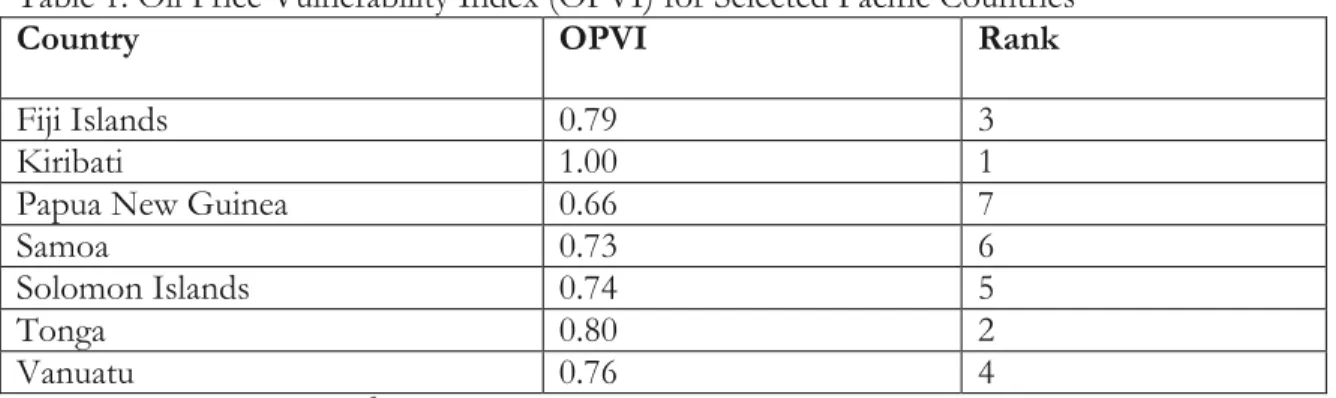
The energy profile for Tarawa and Kiritimati are both very different from the outer islands. Electrical and petroleum energy use are dominant in Tarawa and Kiritimati, while in the outer islands most energy is supplied by biomass and solar energy. Supply of electric power is provided primarily by the Public Utilities Board (PUB) on Tarawa, though there are small grids on Kiritimati and at some boarding schools and Island Council (IC) facilities on other outer islands. The on-grid access to electricity is 87% on Tarawa, 75% by the multiple small grids on Kiritimati and 54% on the Outer Islands. The access to electricity on the Outer Islands is mostly supplied from solar off-grid system and a few generators supplying IC offices, Secondary School and Community facilities. The country has no conventional resources of energy. Providing energy for electricity and transportation to the dispersed islands is overwhelmingly dependent on imported fuel oil, and therefore vulnerable to fuel price volatility1. Diesel fuel oil accounts for bulk of the energy supply in the country (about 60% in 2011)2. The key to energy security and reduced vulnerability is to diversify energy supply, and to include a balance between demand-side management, increases in the efficiency of existing energy supplies, and the development of new fuel and electricity sources that use cheaper fossil fuels or are renewable. The Government of Kiribati is very much aware and concerned about environmental degradation as a result of the heavy dependence on diesel fuel and global warming and is therefore actively focusing on the use of renewable energy capable of supplying reliable electricity to the islands.
Table 1: Oil Price Vulnerability Index (OPVI) for Selected Pacific Countries
Country OPVI Rank
Fiji Islands 0.79 3
Kiribati 1.00 1
Papua New Guinea 0.66 7
Samoa 0.73 6
Solomon Islands 0.74 5
Tonga 0.80 2
Vanuatu 0.76 4
Source: ADB Calculation3
Kiribati is resource poor in general but does have a good solar energy resource. However, thus far the share of solar in the energy balance accounts for no more than 1% of the total energy consumption, as it has been used almost exclusively for outer island lighting and basic electrification
1
Taking control of Oil: Managing Dependence on Petroleum Fuels in the Pacific
2
2
with little grid-based generation. This is soon to change with large grid-connected solar installations planned in co-operation with the World Bank, United Arab Emirates and the Government of Japan (PEC Fund) and by the rural electrification project financed by the European Union. Biomass is by far the largest renewable energy use, with coconut husks, shells and fronds being the dominant energy source for cooking and copra drying in Kiribati due to its abundance. Biomass is estimated to supply about 25% of the gross national energy use. Other renewable energy sources, such as wind and biofuel, remain negligible sources, though there is substantial development potential for both based on the resource assessment that was carried out lately on wind and biofuel on the two main Islands of Tarawa and Kiritimati.
The National Energy Policy was established in 2009 in association with the Kiribati Development Plan and has as its primary goals human resource development in the energy sector, development of livelihoods, energy security and energy access. The guiding principles are sustainability, gender equity, environmental compatibility, stakeholder participation, good governance and cultural/traditional compatibility.
With regards to renewable energy the policies include: Promoting sustainable renewable energy access;
Ensuring that the limited biomass resources are used in an economically, environmentally and culturally sustainable manner;
Strengthening collaboration with development partners for the advancement of renewable energy programmes;
Promoting and encouraging the use of appropriate renewable energy technologies; Expediting the replication of successful solar programmes; and
Introducing appropriate incentive packages including taxes, duties and tariffs to encourage the use of renewable energy technologies.
In 2012, the Government of Kiribati and the International Renewable Energy Agency (IRENA) conducted a Renewable Readiness Assessment (RRA) with a goal to maximize the economic use of Kiribati renewable energy resources. The results of the study are listed below;
I. Maintaining grid stability while allowing a high level of solar PV input. II. Develop CNO as a biofuel for power generation and transportation. III. Rural electrification using renewable energy.
IV. Policy, legislation and regulation development to support renewable energy.
Another significant outcome of the RRA is the fossil fuel reduction target for electricity generation by 2025 which was stated in the Majuro Declaration. This is an important measure to reduce the consumption of imported fossil fuel and the Government is committed to work towards achieving the target with the support from its development partners. The target is focused on the following sectors;
I. South Tarawa 45% (23% RE and 22% EE)
II. Kiritimati Island 60% (40% RE and 20% EE)
III. Rural public infrastructure 60% (40% RE and 20% EE)
>Southern Kiribati Hospital and Ice plants
IV. Rural public and private institutions 100% (100% RE)
3 III. RATIONALE FOR SELECTED SECTORS FOR SREP FINANCING
Renewable development in Kiribati have been focused mainly on solar both in the rural and urban area while there has been moderate development on the use of CNO as an alternative fuel for use in the Power and Transport sectors. The use of CNO as biofuel has potential in curbing the use of fossil fuel for transportation which presently consumes more than 50% of the annual fuel imports.
Figure 1: Petroleum import (KOIL) Figure 2: Fuel Consumption (EPU)
The Kiribati Copra Mill Company Limited has been refining coconut oil for mixing with diesel fuel and kerosene to make biofuel and its understands the possibilities of using its CNO production as biofuel. The refining process includes some reduction in fatty acid content and 5 micron filtering. In 2006 the plant boiler successfully used diesel fuel for start-up and the refined CNO for its operation. Tests of various blends of CNO and diesel fuel or kerosene have been carried out and it was found that above 20% CNO mixed with diesel fuel the boiler was hard to fire up but with kerosene trials up to 40% kerosene and 60% CNO was satisfactory. Tests also have been carried out on the plant backup generator and vehicles. Tests were stopped when engine problems occurred, mostly in the form of fuel filter clogs and carbon build up in the engine cylinders. These technical issues experienced in using CNO biofuels were much associated with a lack of information about the specifications required of the product and the type of equipment needed for its refining and quality control.
A South Pacific Applied Geoscience Commission (SOPAC) study published in 2006 estimated that the annual production of CNO in Kiribati could be sustained at 3-4 million litres per year and that level of production could be used for biofuel without impacting traditional uses, including pig feed and human consumption.
2,000,000 4,000,000 6,000,000 8,000,000 10,000,000 12,000,000 14,000,000 16,000,000 18,000,000 2007 2008 2009 2010 2011 Liters
Annual Petroleum Import
Petrol Diesel Kerosene Electrri
city 28% Transp ort 68% Other 4%
Fuel consumption by enduse sector
4
The proposed project for SREP financing will focus on CNO for Biofuel use in both the power and transport sector through a budget estimated at $4 million (Australian). There will be 4 components for this proposal and the proposed actions are as follows;
1) Component 1: CNO implementation Plan
Prepare a CNO implementation plan for Kiribati’s CNO Biofuel development that shows the specific actions, timelines and resources necessary to develop CNO as an acceptable diesel fuel replacement for land and sea transport and for electricity generation.
2) Component 2: Fuel standard and quality control
Establish fuel standards and a testing facility for CNO based biofuel to be used for testing fuel intended for power generation and transport in Tarawa and Kiritimati Island.
3) Component 3: Mobile Copra mills
Develop mobile copra mills for use on Kritimati Island and Teraina that can be manged by local operators and themselves moved among production areas so as to avoid the high cost of transporting coconuts from plantations.
4) Component 4: Electric power generators
Procure an electric power generation (genset), designed for use with CNO for base load generation for Tarawa and for Kiritimati power generations.
IV. ENABLING POLICY AND REGULATORY ENVIRONMENT
The MPWU has primary responsibility for the planning, management and coordination of the energy sector. Other entities with energy sector responsibilities are:
The EPU within the MPWU coordinates the implementation of energy policies and provides advice and assistance on all energy related matters and activities.
The PUB is a government-owned body responsible for provision of power, water supply and sewage services for South Tarawa.
The KSEC is a government-owned company responsible for the provision of electrical services for rural areas through the operation and maintenance of solar PV systems currently manages around 224 kWp of solar for outer island residences, 47.6 kWp of solar for community buildings, 6.4 kWp for communications. In the past it has also been contracted for the maintenance of solar pumps for the Public Works Department, health centre solar installations, school solar systems for the Ministry of Education and solar installations for schools of various church groups.
The Public Works Department (PWD) maintains a number of solar pumps throughout Kiribati that are used at schools, villages and IC facilities.
The Kiribati Oil Company (KOIL) is a government-owned company involved in the import and distribution of petroleum products throughout Kiribati.
The Ministry of Line and Phoenix Islands Development (MLPID) is responsible for all government services, including electricity supply, on Kiritimati Island and the populated Line and Phoenix islands.
The Public Utilities Ordinance (CAP 83 of 1977 revised 1998 and 2010) provides the legislative basis for the formation of the PUB. It also provides for the MPWU to declare electricity supply and/or water supply areas as exclusive to the PUB for the provision of services. The ordinance was
5
amended to provide more autonomy to the PUB and it is currently acting as a parastatal body with its own terms of service and tariff management.
The three key local suppliers of energy services are all state-owned entities. The KOIL imports and distributes petroleum products (except for some private importing and distribution of LPG), the KSEC is responsible for most rural electrification and the PUB provides electricity, water and sewage services on most of Tarawa. Due to the total dependence of the modern segment of the Kiribati economy on imported fuels, the increasing cost of those fuels has created serious economic problems for the Kiribati government.
The PUB, KSEC and KOIL all operate under their individual Boards of Directors that are appointed by the Kiribati government and all are essentially self-regulating, though the MPWU has oversight responsibility. All are required to submit auditable financial statements annually and the government carries out an audit. Tariffs for the PUB and KSEC are set by their respective boards and prices for petroleum products from the KOIL (except for diesel fuel) are regulated under the Prices Ordinance.
The government of Kiribati plays a key role in providing financial resources to the energy sector as the PUB is a state-owned enterprise. Almost 25% of the AUD 90 million (approximately USD 94 million) national import expenditure goes to purchasing fuels for power generation and transportation. Most of the capital investment in the energy sector comes from the donor community, including the EU, the World Bank, JICA and the PEC Fund among others. Private sector investments are extremely limited. Investment in the energy sector is low in Kiribati, as a few enterprises have even limited activity relating to energy development.
V. INSTITUTIONAL AND TECHNICAL CAPACITY
Constraints and issues in the human and institutional capacity in the energy sector, avenues to address and resolve these issues have been included in the Kiribati Development Plan (KDP) and the KNEP. Government in 2009 endorsed the ambitious restructuring plan of the Ministry of Public Works and Utilities which includes the restructuring of the Energy Planning Unit (EPU) with a view to enhancing the effective and efficient delivery of energy services. This plan has been active since the beginning of 2012. Currently, the Kiribati Government includes some well qualified personnel, and has plans and policies to provide capacity building plus advanced trainings are available and opportunities for personal improvement continue to be improved and encouraged. Kiribati also has a historical record of stable government and one with a very low rate of corruption in the public service compared to many other Pacific Countries. The KDP also prioritizes good governance as an essential ingredient to socio-economic development and the Kiribati government is keen to see that good governance policies and practices are actively developed and exercised especially throughout the public service.
Some recent donor funding for renewable energy has been accepted and managed by the government and related projects have been successfully implemented. These include:
1. Wind Resource Assessment in Kritimati Island.
6
2. Renewable Energy systems for water pumping in rural communities.
Status: Successfully completed
3. Solar PV hybrid for Chevalier college, Abemama Atoll
Status: Phase 1 successfully completed
4. Biofuel production and refining development at the Kiribati Copra Mill Company.
Status: Phase 1 successfully completed
Preliminary risk analysis andmitigation
Type of
Risk Risk Mitigation of risk / contingency
Economic / Social
Consumer willingness to use biofuel as a substitute to imported petroleum products.
Public awareness and promoting the use of Biofuel to target the consumer market especially in the transport sector. Carry out highly visible trials to prove the acceptability of the product for general use
Economic
Risk that the locally produced biofuel price is not competitive with imported fuel price.
Government to put in place incentives promoting the use of locally produced fuel.
Economic
Risk that copra industries cannot sustainably produce sufficient copra for biofuel production.
Copra is considered a cash crop in the Outer Islands and Government has made appropriate policy commitments to boost copra production and thus the income of the farmers.
Economic Risk that the human resource capacity is not sufficient to implement the project
Technical assistance will be sought to cover the human resource gaps.
VI. PROGRAMS OF MDBS AND DEVELOPMENT PARTNERS
To date roughly 34% of outer island homes have solar lighting services and this will increase significantly when the solar lighting project financed by the European Union finally concluded in 2015. In addition, Taiwan Government donated 2160 solar lighting kits which were distributed to 426 community halls in most of the Islands. The table below shows the coverage of the solar system in the Outer Islands.
Total number of households in Kiribati (2010 Census) Outer islands households only (2010 Census) No of Households with existing Solar System in the OI (2010 census) Total No. of Households to be covered under EDF10 project Remaining No of Households to be covered to achieve 100% coverage
7
16043 8011 2923 2290 3458
Table 1: No of Households with solar system
The Government of the Republic of Kiribati considers the development of its outer islands as an essential part of its development policy. This policy aims to improve the quality of life and economic conditions of the outer islands and providing greater access to modern electricity services is a key component in the effort to improve outer island socio-economic conditions.
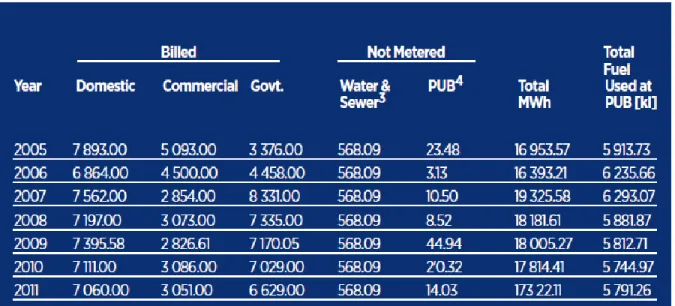
In the urban areas, supply of electric power is provided primarily by the Public Utilities Board (PUB) on Tarawa, though there are small grids on Kiritimati. The on-grid access to electricity is about 44% by the PUB plus another 3% by the multiple small grids on Kiritimati. As seen in Table 1, Tarawa electricity demand in 2011 was about 6.6 GWh for government, 7 GWh for domestic and 3 GWh for commercial. Since there is no significant tourism or other industry, commercial uses are mostly for stores and offices.
Table 2 also shows the sale of generated electricity on Tarawa which was approximately 17.3 GWh, requiring a use of around 5.8 megalitres (ML) of automotive diesel oil (ADO). Running the generators cost PUB about $8million annually.
Table 2: Electricity Statistics 2005-2011(MWh) Source: PUB
A feasibility study on the potential for grid-connected solar PV on the South Tarawa grid system has been undertaken with the assistance of the WB. The study found that 900 kWp (STC) and 800 kWp (AC) of solar PVs can be connected to the grid without the need for enhancements to the grid systems and operations provided the installations are appropriately sized, specified and located and there are controls to cut back on solar input on weekends and holidays to ensure grid stability can be maintained. Kiribati, with the support of the WB, has agreed on four sites where an initial 516 kWp (STC) of solar PVs are to be installed with funding from AusAID through the Pacific Regional Infrastructure Facility and the Global Environment Facility.
8
In addition, Kiribati is working with the PEC Fund to install additional solar PV capacity to take the total installed capacity to the technically feasible limit of 900 kWp of grid connected solar PV systems. The United Arab Emirates (UAE) project implemented by Masdar will add another 400kW of solar PV capacity which will make up a total of 1.3MW of solar PV capacity to be installed to the existing grid. The UAE project will utilize a control and monitoring system which will prevent grid instability and allows the grid to absorb much more than what was determined by the WB study. It is estimated that PUB will save at least 0.8 million on fuel once all systems comes online.
In addition, Kiribati has examined several options to utilize coconut oil (CNO) as a substitute for diesel fuel. KCMCL attempted to use CNO in their production boilers and vehicles at different blending ratios and through those trials it was learned that CNO must be treated and filtered to upgrade its fuel quality and remaining moisture must also be removed. There is little doubt that diesel-powered generators can run safely on blended CNO if the challenges posed by CNO use are well understood and effectively managed.
The proposed project will enable the Government of Kiribati to establish a facility needed for a biofuel plant which will include a completely independent biofuel testing facility that can assure the Power and Transport sector that the delivered biofuel meets the standards that have been set for CNO to be used as a diesel replacement. The project will include purchasing of a 2 megawatt dual fuel engine for PUB and a 500kW for Kiritimati Island plus a biofuel production facility in Tarawa, Kiritiamti Island and Teraina. The development of biofuel, which was one of the key results from the IRENA RRA, will complement the solar and wind development projects and will help the Government achieve its imported fuel reduction targets by significantly reducing the use of imported petroleum in the transport and power sectors.
Kiribati is willing to assist and fully cooperate to meet the criteria and to achieve the objectives of SREP and confident that SPREP can be implemented successfully in the country. As mentioned, an enabling environment, or policy, regulatory and institutional framework has been set with the hope that these frameworks will be able to effectively pave way for SREP successful implementation through which renewable energy can transform the country.