Temporary Work,
Permanent Injuries:
Realities in the Food Processing Industry
and a Call to Action
Temp work in the Central Valley food processing industry
Nationwide, there were about 3.4 million so-called “staffing-agency jobs” last year, or 2.25% of total national employment, according to the National Employment Law Project. What we know is that as this workforce trend grows, so does the erosion of workers’ basic rights to health and safety.
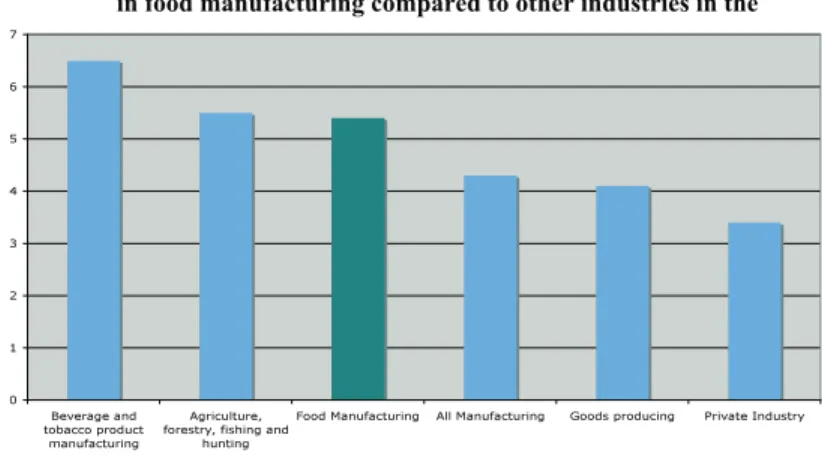
As employers shirk employment responsibilities to limit liability or long-term commitment, these workers face some of the highest levels of risk for serious injuries. In its recent investigation Temporary Work, Lasting Harm, Pro Publica found that in California, temporary workers had about a 50 percent greater risk of being injured on the job than traditional direct-hire employees. Workers in the food processing industry are particularly vulnerable to health and safety risks in the workplace, which is reflected by the fact that in 2012, nonfatal work-related injury or illness for full-time food-manufacturing workers’ were greater than in all of manufacturing and the private sector.
Our investigation looks at this reality that “temp workers” in the food processing face everyday and makes a call to action to Governor Jerry Brown to act now to protect California workers.
Taylor Farms- a fight for health and safety on the job
Taylor Farms food processing workers feed the nation. They wash, cut, and package salads and other products for the largest supplier of fresh-cut produce in the United States. Taylor Farms is a long-time employer of 2,500 Teamsters in Salinas, Calif., and workers in Tracy who are fighting for the same treatment that the Salinas workers enjoy: a chance to earn above the minimum wage, affordable healthcare coverage for their children, a better future for their families, respect at work, an environment free from discrimination and harassment based on sex, race and national origin, reasonable accommodations for injured and disabled workers, rights under the workers’ compensation system, and safe and healthy working conditions.
Approximately one-third of the employees at Taylor Farms are contracted through two “permatemp” agencies, often for many years, despite the fact that they work alongside coworkers who are directly employed by Taylor Farms.
Through hours of interviews and conversations with Taylor Farms workers our investigation found these workers report:
1. A hazardous work environment with little to no training provided resulting in high rates of injury
2. Major challenges, mistreatment and retaliation after being injured at work
3. Long-term hardships, both at work and at home when injured
The Taylor Farms food processing plant in Tracy is currently under investigation by California’s Division of Occupational Safety and Health (Cal/OSHA) due to complaints filed by workers for numerous Health and Safety violations at the plant.
Call to Action – Protecting workers in the new subcontracted economy
Governor Jerry Brown has an opportunity to protect workers in this subcontracted economy. Currently, AB 1897 (Hernandez), is waiting for Governor Brown’s signature into law to hold companies accountable for serious violations of workers’ rights, committed by their own labor suppliers, impacting workers on their own premises. This simple rule will incentivize the use of responsible
contractors, rather than a race to the bottom. It will protect vulnerable temporary workers, as well as businesses that follow the law and don’t profit from cheating workers. It offers workers a clear path to accountability for workplace violations, and it offers employers a clear path to compliance.
We can no longer allow companies to get away with the treatment we see in workplaces like Taylor Farms. We must work towards ensuring all workers have a voice on the job and their health and safety is prioritized.
This state rule will provide a much-needed tool to help move forward efforts to expand corporate accountability through codes of conduct and living wages for subcontracted workers.
It’s time to take a key step to protect all workers in California by signing AB 1897.
Stories of Injured Workers:
A Reflection of Health and Safety in the Food
Processing Industry in the Central Valley
Sivan Sadeh, B.A. and Anna Cibils, B.A.
WORKING PARTNERSHIPS USA
W
orking Partnerships USA collaborated with the Occupational Health Internship Program to
investigate health and safety conditions faced by food processing workers and specifically
subcontracted workers at Taylor Farms in Tracy, CA. This brief summarizes our findings
from interviews with workers and begins to explore how workers’ health and safety are affected by the
national trend towards increased outsourcing, temporary and contingent employment.
Background
In 2008, food-manufacturing revenue in San Joaquin County exceeded $4 billion. These profits largely do not return to the workers and communities of this county, where 18% of the population lives below the poverty line. Latino and immigrant communities are disproportionately impacted by these inequalities since they make up a large portion of the population of the Central Valley. Another issue contributing to the vulnerability of these working communities relates to the fact that, increasingly, companies are hiring temporary workers from agencies. Temporary workers generally receive lower wages, no benefits, and have very little job security, making them a much more vulnerable work force. One example of this vulnerability lies in the fact that they are less likely to report injuries or bring up hazardous working conditions for fear of losing their job. Central Valley residents who work in postharvest
food production (chopping, washing, packaging, and otherwise preparing agricultural products for transport and sale) are an example of these vulnerable working communities. They face high health risks in the workplace with little access to protections. In 2012, incidence rates of nonfatal work-related injury or illness for full-time food-manufacturing workers were greater than the rates for all of manufacturing and for private industry (Figure 1).
We interviewed sixteen injured workers at the Taylor Farms plant in Tracy, California to further examine the causes of work-related injuries and to gain an understanding of the immediate and long-term effects
experienced by an injured worker after reporting an injury. Taylor Farms is currently going through a major OSHA investigation after a complaint was filed about working conditions inside the plant.
Source: U.S. Bureau of Labor Statistics, U.S. Department of Labor
Figure 1: Rates of nonfatal workplace injuries and illnesses in food manufacturing compared to other industries in the
2 | Stories of Injured Workers: A Reflection of Health and Safety in the Food Processing Industry in the Central Valley
Our Findings
1. Interviewed workers reported enduring a hazardous work environment
“New people starting at the company don’t get the necessary information to do their work...If you
put someone new in a job without training, everyone is at risk.”
--Injured Taylor Farm Worker[Translated from Spanish]
“The big problem that has always existed as long as I’ve been working there are the chemicals.”
The worker pointed to light lines under his eyes left by the stream of tears caused by the worker’s
reaction to the chemicals at work. “A lot of tears...you cry and cry, and the burning...The other
day, I could not even open my eyes. I couldn’t even do my work. I believe [the chemicals] have
done damage to my vision. Workers have left work because they couldn’t stand [the pain in
their] eyes…..Many people think it’s the onions...it’s the chemicals.” [Translated from Spanish]
The workers we interviewed brought up several concerns about health and safety conditions at the Taylor Farms, Tracy plant, some of which may in violation of OSHA standards. They include:
• Slippery floors • Heavy lifting
• Working in extremely cold temperatures • Exposure to chemicals
• No access to Personal Protective Equipment • No health and safety training
2. Interviewed workers reported major challenges and mistreatment after
being injured at work
“Después de que fui a la sala de emergencia, me llamó muy molesta la de la compañía y me dijo
que vaya ese día, pero nunca me atendió la cita que ella me hizo. Y de ahí yo llamaba a la oficina,
a los supervisores, pero nunca tenían tiempo para mi. Después de eso me despidieron del trabajo.”
[Translated from Spanish]
“After I went to the emergency room, someone from the company called me, sounding very bothered,
and told me to go meet with her that day, but she never made it to the appointment. After that, I kept
calling the office, the supervisors, but they never had time for me. After that, I was fired from my job”
-Temporary worker who was fired after being injured and seeking medical attention on their own
Taylor Farms processes and packages food for major chains such as Wal-Mart, McDonald’s, and Chipotle. The Tracy plant employs 900 non-unionized workers, a majority of whom are Latino and Spanish-speaking. Around 2/3 of Taylor Farms’ Tracy plant workers are considered temporary workers – even though some have worked at Taylor Farms for up to 10 years. The plant is made up of fast-paced assembly lines where workers are doing tasks such as: chopping, putting produce through chemical washes, moving large trays, packaging and assembling food products.
• Most workers we interviewed experienced negative consequences after reporting their injury such as being ignored, doubted, or punished by the employer. Punishment by the employer included harassment and in some cases firing.
• All workers reported that the medical attention they received by the company doctor was inadequate. Most workers claimed that the doctor was discrediting their pain and not thoroughly checking their injury. • Of the workers who received work restrictions, most of them said that the company did not accommodate
for their restrictions once they returned to work making their injury worse.
3. What interviewed workers reported experiencing after injury at
Taylor Farms
4. Interviewed injured workers reported facing long-term hardships, both
at work and at home
“Si, sigue el problema. Hay veces que no puedo caminar…Hay veces que me duele mucho y no
puedo ni levantarme.”
[Translated from Spanish]
“My problem continues. Sometimes I cannot walk...Sometimes it hurts so much that I can’t stand
up...it’s a struggle to sit down and get back up.”
--Permanent worker with work-related back injury• The majority of workers we interviewed still do not feel fully recovered from their injury and have no access to more medical treatment because of a variety of barriers. Several workers mentioned that taking time off would help them recover, but they cannot do so because of financial reasons.
• Many workers continue to experience pain and physical hardship due to inadequate Return-to-Work support. • The majority of the workers we interviewed said that the injury had negatively impacted their family
eco-nomically or their life at home. Reasons included difficulty paying for their children’s university tuition, difficulty supporting family members in their home country depending on them financially, and difficulty providing childcare and doing household chores.
5. Interviewed workers reported addressing these challenges with systems
of community support
Throughout the interviews we saw several instances of workers using community support and self-advocacy as a way to create a safer work environment by adjusting their work to accommodate their injury, training coworkers, and assisting injured coworkers. This general sense of community support was illustrated at the Teamsters workers’ meetings we attended. Here, we witnessed workers standing up to denounce recent abuses at the company as well as taking leadership on worker-led actions at the plant to address the violations they were facing. Furthermore, a common assessment among many of the workers we interviewed was that since the workers have been putting pressure on the company, changes have been made to eliminate health and safety risks, and many of them feel more empowered to fight for their rights knowing that they have the support of the union.
The Occupational Health Internship Program (OHIP) is a national summer internship dedicated to helping students learn about the field of occupational safety and health (OSH) from those most at stake: working people.