TOWARDS DEVELOPING A DOUBLE CROPPING SYSTEM BETWEEN WINTER BARLEY AND SOYBEAN IN THE UPPER MIDWEST
A THESIS
SUBMITTED TO THE FACULTY OF THE GRADUATE SCHOOL
OF THE UNIVERSITY OF MINNESOTA
BY
Hang Becky Zhong
IN PARTIAL FULFILLMENT OF THE REQUIREMENTS
FOR THE DEGREE OF
MASTER OF SCIENCE
Kevin Smith and Aaron Lorenz, Advisors
i
ACKNOWLEDGEMENTS
There are many people I would like to acknowledge who have given me guidance, support, and advice during my graduate study at the University of Minnesota (UMN). I want to first thank my advisors, Dr. Kevin Smith and Dr. Aaron Lorenz for giving me an opportunity to conduct research and study at UMN. I am extremely grateful for all the advice and mentorship that my advisors have provided me over the course of the last three years. Before coming to Minnesota, I must say that I have not experienced a “real winter” for many years, and I am so glad for the many experiences during the past three winters that I had in Minnesota, especially the times when I wondered if it would be me or my research experimental subjects: winter barley that will
survive the long winters.
Thank you to my committee members, Dr. Nancy Ehlke, and Dr. Brian Steffenson for giving me guidance and support along my graduate career here at UMN. I also want to thank Dr. Craig Sheaffer for allowing me to be a Teaching Assistant in AGRO 1103, where I learned so much about undergraduate teaching and truly enjoyed working with such a diverse and wonderful cohort of students. Thank you to Dr. Jochum Wiersma, Dr. Scotty Wells, and Dr. Seth Neave for giving me agronomy advice on winter barley, soybean and the overall cropping system between winter barley and soybean. Thank you to Dr. Paul Porter for supporting me to apply and
eventually attend the 2018 Chicago Council on Food Security Symposium. What an incredible experience! Thank you to Dr. Mary Brakke for allowing me to conduct a survey research project on undergraduate teaching and writing. I would like to thank Dr. Craig Sheaffer and Dr. Don Wyse, along with Department Head Dr. Nancy Ehlke and Associate Dean Dr. Gregg Cuomo for giving me tremendous amounts of support during the most traumatizing periods of my graduate school experience. Thank you all for giving me thoughtful advice and encouragement that have enabled me to stay focused and even more determined towards my academic dream.
I also want to thank Ed Schiefelbein, Guillerm Velasquez, Sonia Bolvaran, Steve Quiring, Tom Hoverstad, Alex Hard, Eric Ristau and many other technicians for helping me with all the research plot designs and field trials. I will never forget the many memorable experiences I have had with our wonderful field crews in both soybean and barley breeding labs. I would not be able to accomplish anything without your help. I am also very grateful to many undergraduate student workers who have helped me with field work and data curation.
Thank you to my life-long mentor, Professor Rich Kamens for giving me so much wonderful advice and encouraging me to pursuing research in an interdisciplinary field. Thank you to Dr. Shabbir Gheewala for giving me advice and leading me into a new field for the better future of sustainable agriculture and thinking more towards the “Food-Energy-Water” Nexus. Thank you to Connie Carlson and Colin Cureton for giving me advice on the winter barley interview project. What a great state, and what a wonderful experience for me to connect with so many stakeholders of the malting barley supply chain and learn about their perspectives on the development of winter barley and a winter barley-soybean double cropping system.
Lastly, I am incredibly appreciative of my mother, who have supported me along the way of my graduate school study no matter how dark I felt at times. I am so thankful for everything she has done for me, and for all the encouragement and support she has given me. I am also very thankful of my family in China and the US who have given me great support throughout my graduate school study. Thank you to my fellow APS colleagues and friends for all your kind support and friendship! Thank you to all, and there are just so many people that I am so grateful for since I
ii
came to Minnesota. I would not be able to accomplish what I have done without any one of your help and support.
ABSTRACT
Multiple cropping systems offer the potential of producing crops at the same time as providing ecosystem functions in the same space. Double cropping represents an approach of multiple cropping, which is the practice of planting a second crop
immediately following the harvest of a first crop. A winter malting barley and soybean double cropping system presents an area that warrants research efforts in the Upper Midwest. A research project that investigates toward double cropping winter barley (Hordeum vulgare L.) and soybean (Glycine max L.) was carried out in Minnesota. The key challenge for winter barley to be successful in cold climates, including Minnesota, is winter survival. A study examining the effect of fall planting dates on winter survival and yield was conducted in southern Minnesota. The objectives were to evaluate the effect of planting date, cultivar, fall growth, and winter weather on winter barley survival. No specific fall planting date from early September to Mid-October affected winter survival. Planting dates that resulted in fall accumulated GDD from 600 to 1400 were associated with better winter survival in years with sufficient snow cover. Less than four inches of snow cover and temperatures at or below -4°F for more than three days led to poor winter survival in five of the eleven site-years.
Double cropping in cold climates could be accomplished using short-season soybeans that can be planted later to allow for a previous crop like winter barley. An experiment was conducted to assess variations of phenology, yield, seed quality, and days to maturity of 23 soybean cultivars in maturity groups 00 to 0 planted around late-June to early July
iii
in a short-season system (SS) compared to soybeans planted in May in a full-season (FS) system across northern and southern latitude regions in Minnesota. Results showed that latitude-cropping system variations had great influence on soybean yield, seed quality, and days to maturity.Significant cultivar x latitude-cropping system effects were found between northern latitude full-season and southern latitude short-season production systems for yield, protein concentration, oil concentration, and days to maturity, and indirect selection may be applicable for these traits between the established breeding program for northern latitude full season and the potential southern latitude short-season production systems. No specific growth stage was associated with yield in the short-season cropping system.
As researchers work to improve the agronomic management and genetic development of a double cropping system between winter barley and soybean in Minnesota, there is a lack of understanding of the economic and environmental perceptions of a potential winter malting barley crop among local farmers and the malting barley end-users. An interview study was conducted to gain information on the views of winter barley in Minnesota among various stakeholders. By sharing the current status of winter barley breeding and agronomic management research, we examined interests and concerns for winter barley and a potential winter barley-soybean cropping system among important stakeholders that included farmers, maltsters, and brewers. Results of this study may aid in determining interested areas and opportunities that researchers and stakeholders could possibly connect and work collaboratively toward the eventual adoption of winter barley and a winter barley-soybean double cropping system on Minnesota cropping landscapes.
iv TABLE OF CONTENTS ACKNOWLEDGMENTS ... i ABSTRACT ... ii LIST OF TABLES ... vi
LIST OF FIGURES ... viii
CHAPTER 1. THE PRESENT STATUS AND CHALLENGES TOWARDS DEVELOPING A DOUBLE CROPPING SYSTEM BETWEEN WINTER BARLEY AND SOYBEAN IN THE UPPER MIDWEST A REVIEW. ...1
1.1 Multiple cropping systems: Ecosystem and economic benefits, and its design implications based on Genotype (G) x Environment (E) x Management (M) interactions ...1
1.2 Towards a winter barley-soybean double cropping system in the Upper Midwest ...4
1.2.1 Cultivation and use of soybean, and double cropping soybean in the US ...4
1.2.2 Cultivation and uses of barley with a focus on the potential of winter malting barley production in the US ...8
1.2.3 Feasibilities and benefits of a winter barley-soybean double cropping system: Focusing in Minnesota ...11
1.2.4 Potential challenges for soybean to fit in a double cropping system ...14
1.2.5 Potential challenges for winter barley to fit in a double cropping system ...16
1.2.6 Cultivar development and management practices for short-season soybean production ...18
1.2.7 Breeding improvement and best management practices for winter barley...21
1.3 Assessment of a winter barley-soybean double cropping system ...25
1.3.1 Stakeholder engagement towards new crop and cropping system development ...25
1.3.2 Interview research methodology for understanding stakeholder perceptions ...26
CHAPTER 2: ASSESSMENT OF WINTER BARLEY IN MINNESOTA: RELATIONSHIPS AMONG CULTIVAR, FALL SEEDING DATE, WINTER SURVIVAL, AND GRAIN YIELD ...31
2.1 Synopsis ...31
v
2.3 Field Experiments and Treatment Description ...33
2.4 Data Collection and Analysis...34
2.5 Results and Discussions ...36
2.5.1 Environmental Conditions ...36
2.5.2 Planting Date and Cultivar Effects on Winter Survival ...36
2.5.3 Effect of Fall Growth on Winter Survival ...37
2.5.4 Effect of Winter Weather Conditions on Winter Survival ...38
2.5.5 Effect of Winter Survival on Grain Yield ...39
2.5.6 Future Outlook of Winter Barley Production in Minnesota ...39
CHAPTER 3: DIVERSIFYING SOYBEAN-BASED CROPPING SYSTEMS: EXPLORING CULTIVAR X ENVIRONMENT INTERACTIONS FOR DOUBLE CROPPING SOYBEANS IN THE UPPER MIDWEST...50
3.1 Introduction ...50
3.2 Material and Methods ...54
3.2.1 Site, Experiment, and Cultivars ...55
3.2.2 Measurements ...56
3.2.3 Calculations and Data Analysis ...57
3.3 Results and discussion ...58
3.3.1 Environment ...58
3.3.2 Cropping System Effects on Seed Yield, Quality, and Days to Maturity Variations ...58
3.3.3 Cropping System Variations in Southern Latitude Regions ...60
3.3.4 Variations between Soybeans Planted within FS in Northern Latitude and SS in Southern Latitude ...63
3.3.5 Breeding Program Implications for Developing SS Soybean in Southern Latitude Regions ...64
3.3.6 Variation of Growth-Stage Duration in Southern Latitude Regions 67 3.4 Conclusions ...68
CHAPTER 4: STAKEHOLDER PRECEPTIONS TOWARDS DEVELOPING WINTER BARLEY AND THE WINTER BARLEY-SOYBEAN DOUBLE CROPPING SYSTEM IN MINNESOTA ...83 4.1 Introduction ...83 4.2 Research Purpose ...87 4.3 Research Methodology ...87 4.4 Results ...89 4.4.1 Farmers ...89 4.4.2 Maltsters ...92 4.4.3 Brewers ...93
4.4.4Stakeholder Engagement Assessment...95
4.5 Conclusions ...95
APPENDIX. Interview guide...101
vi
LIST OF TABLES
Table 1-1. Outline of soybean double cropping studies in the Upper Midwest (2010-2018). ...28 Table 2-1. Winter barley cultivars evaluated for winter survival for ten site-years at St. Paul (STP) and Lamberton (LAM), Minnesota. ...40 Table 2-2. Targeted and actual planting dates used in evaluating the winter survival for ten site-years at St. Paul (STP) and Lamberton (LAM), Minnesota. ...41 Table 2-3. Effect of planting date and cultivar treatments on winter barley survival in four growing seasons at St. Paul and two at Lamberton, MN. ...41 Table 2-4. Accumulated growing degree days (GDD) °F (base=32) from actual planting date to freeze-up date for four target planting date treatments used in the evaluation of the winter survival of winter barley cultivars for ten-site years at St. Paul and Lamberton, Minnesota. ...42 Table 2-5. Number of days with a lack of sufficient snow coverage in St. Paul from 2010-2013, and 2015-2018, and Lamberton from 2015-2018. ...43 Table 2-6. Percent winter survival for three winter barley cultivars at each target planting date for three growing seasons at St. Paul and one at Lamberton, MN. ...44 Table 2-7. Effect of planting dates (day of the year) on grain yield of winter barley
cultivar McGregor for five site-years. ...45 Table 3-1. List of cultivars, source (NDSU: North Dakota State University, UMN:
vii
Table 3-2. Experimental details with respect to test sites, soils, and dates of planting and harvest at Lamberton, Waseca, Westbrook, Crookston, and Shelly, MN within full-season (FS) and double cropping (SS) production systems. ...71 Table 3-3. Mean monthly air temperature and total monthly precipitation at Waseca, Lamberton, MN (southern latitude region) in 2017 and 2018 growing season and
Crookston, MN (northern latitude region) during the 2018 growing season, and during the past 30 years.. ...72 Table 3-4. Means and ranges of yield, protein, oil, and maturity date for cultivars in northern latitude regions: Crookston and Shelly, MN, and southern latitude regions: Waseca, Lamberton and Westbrook, MN within FS and SS cropping systems. ...73 Table 3-5. Mean squares from analysis of variance of yield, protein, oil, and days to maturity for soybean cultivars in Minnesota during 2017 and 2018. ...74 Table 3-6. Cultivar and environment effects on yield, protein, oil, and days to maturity for full-season (FS) and double cropping (SS) systems at Waseca and Lamberton, MN in 2017 and 2018, and Westbrook, MN in 2018. ...75 Table 3-7. Averages, yield rankings (in parentheses), mean across all the cultivars, and Spearman’s correlation coefficients for full-season (FS) and double cropping (SS)
systems effect for yield, protein, oil, and days to maturity in southern latitude regions. .76 Table 3-8. Mean squares from analysis of variance of yield, protein, oil, and days to maturity for soybean cultivars planted in northern latitude-full-season and southern latitude-short-season latitude regions during 2017 and 2018. ...77 Table 3-9. Mean squares from analysis of variance of yield, protein, oil and days to maturity in response to cropping system-latitude (North-Full season and South-Short season) effects. ...78 Table 3-10. Averages, yield rankings (in parentheses), mean across all the cultivars, and Spearman’s rank correlation coefficients for northern-latitude (N) full-season and
southern-latitude (S) short-season cropping systems effect for yield, protein, oil, and days to maturity. ...79 Table 3-11. Means of days spent in growth stages include vegetative (V), flowering (R1-R3), pod setting (R3-R5), seed filling (R5-R7), complete reproductive phase (R1-R8), and days to maturity (DTM) of all cultivars at FS and SS planting dates (PD) during 2017 and 2018 at Waseca and Lamberton, MN. ...80 Table 3-12. Correlations between yield, vegetative (V), flowering (R1-R3), pod setting (R3-R5), seed filling (R5-R7), complete reproductive phase (R1-R8), and days to
viii
maturity (DTM) at FS and SS planting dates (PD) during 2017 and 2018 at Waseca and
Lamberton, MN. ...81
Table 4-1. Description of farmers interviewed. ...97
Table 4-2. Description of brewers interviewed. ...98
Table 4-3. Description of maltsters interviewed. ...99
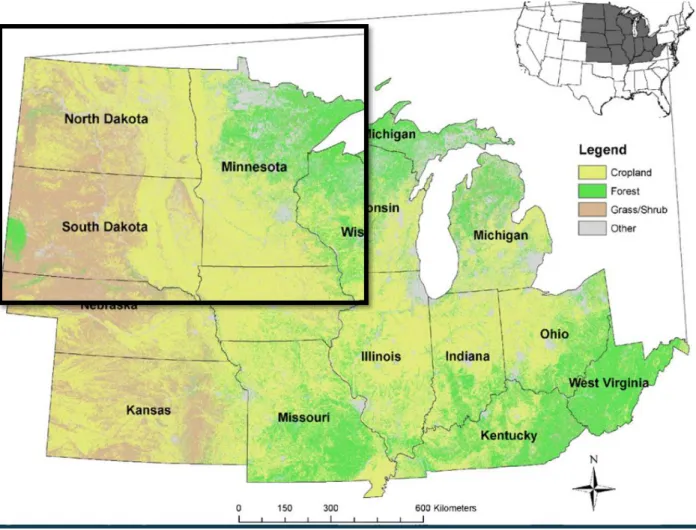
LIST OF FIGURES Figure 1-1. Map of the Midwest emphasizing the Upper Midwest. ...28
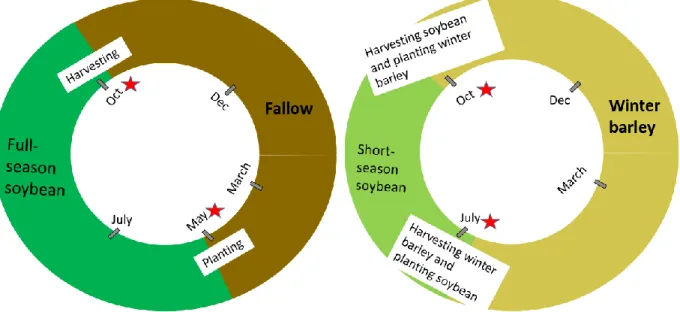
Figure 1-2. Illustration of the monocroping soybean production system (left), and a potential winter barley-soybean double cropping system in Minnesota (right). Stars highlight the planting and harvesting time for each crop. ...29
Figure 2-1. Maximum temperature per day (blue line), minimum temperature per day (red line), snow depth per day (light blue area), and precipitation per day (dark blue area), presence of four inches of snow depth when minimum temperature is at or below -4°F (black line), and regression analysis of planting date to winter survival 2010-2013 and 2015-2018 at St. Paul, MN. ...62
Figure 2-2. Weather conditions include maximum temperature per day (blue line), minimum temperature per day (red line), snow depth per day (light blue area), and precipitation per day (dark blue area), presence of four inches of snow depth when minimum temperature is at or below -4°F (black line), and regression analysis of planting date to winter survival during 2015-2018 at Lamberton, MN. ...63
ix
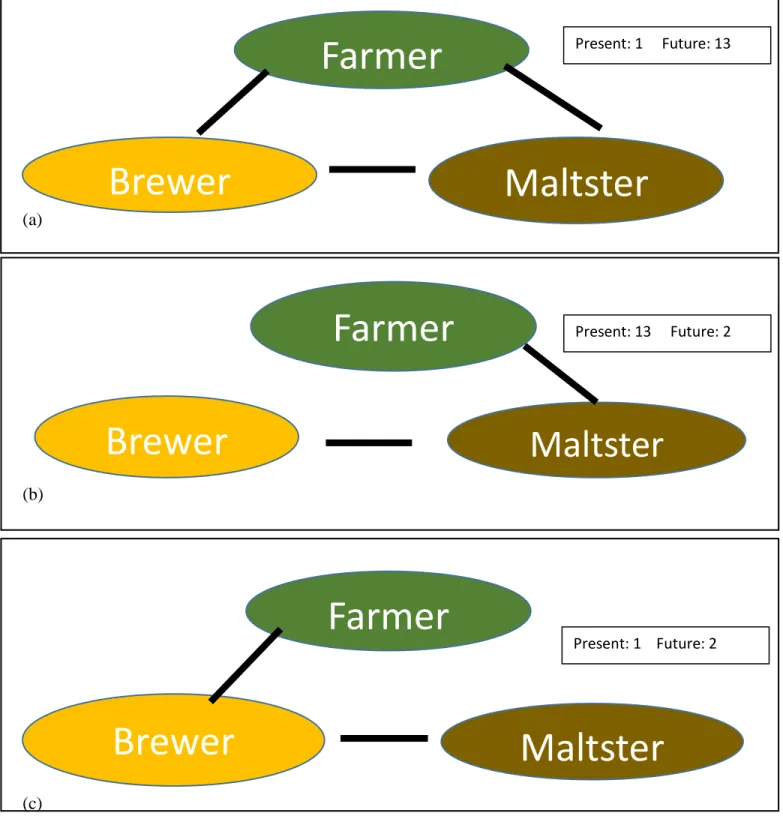
Figure 2-3. Relationship between winter survival and grain yield for the cultivar McGregor at five site-years with greater than 20% average winter survival. Each point represents a plot at each site-year. ...64 Figure 3-1. Map of all sites and latitude regions in Minnesota. Yellow area indicates the northern-latitude region, and green area indicates the low-latitude regions. ...82 Figure 4-1. Interviewees were asked to select one of the nexus diagrams of possible relationships between three key stakeholder groups: farmer, brewer, and maltster that they envision for the future of winter and local malting barley supply chain development. ...100
1
CHAPTER 1. THE PRESENT STATUS AND CHALLENGES TOWARDS 1
DEVELOPING A DOUBLE CROPPING SYSTEM BETWEEN WINTER BARLEY AND 2
SOYBEAN IN THE UPPER MIDWEST 3
4
1.1 Multiple Cropping Systems: Ecosystem and Economic Benefits, and Design 5
Implications Based on Genotype (G) x Environment (E) x Management (M) Interactions. 6
The challenge of agriculture today is to contribute to current and future food security, limit the 7
adverse effects on the environment, and produce ecosystem services (Gesch et al., 2014; Tilman 8
et al., 2002). Intensive farming practices associated with monospecies cropping systems, also 9
known as ‘monocropping’ deliver provisional services such as food, fiber, and feed, but fall short 10
in environmental protection and ecosystem services (Gaba et al., 2015; Tilman et al., 2002). 11
Complete reliance on conventional monocropping simply cannot meet this challenge. Multiple 12
cropping systems can produce crops while providing several ecosystem functions in the same 13
space (Gaba et al., 2015). At the field scale, multiple cropping systems may include annual crops 14
grown together (Litrico and Violle, 2015), or grown in subsequences (Gaba et al., 2015). 15
Numerous studies have shown that multiple cropping systems reduce soil erosion and nutrient 16
loss (Dabney, 1998), and act directly on soil fertility by improving soil organic matter and 17
promoting N2 fixation through legumes (Di and Cameron, 2002; Dinnes et al., 2002; Tiemann et 18
al., 2015). Multiple cropping systems use lower amounts of synthetic agrichemical inputs 19
compared to monocropping systems (Davis et al., 2012). A long-term multiple cropping system 20
study that included red clover (Trifolium pretense) or alfalfa (Medicago sativa) grown 21
overwinter prior to planting corn (Zea mays) in Ontario showed that such crop diversification 22
systems increased the chance of capturing favorable growing conditions and yield for the corn 23
2
crop (Gaudin et al., 2015) than monocropping corn. In addition, improved pollinator health has 24
been reported in multiple cropping systems through increased nectar production when oilseed 25
crops such as pennycress, winter camelina, and winter canola were planted as winter cover crops 26
in South Dakota (Eberle et al., 2015). 27
There are several types of multiple cropping systems. Double cropping, also known as 28
sequential cropping, is the practice of planting a second crop immediately following the harvest 29
of a first crop, thus harvesting two crops from the same field in one year. However, double 30
cropping requires a sufficiently long growing season and crops that mature quickly enough to 31
allow two harvests in one year. Relay-intercropping is a technique in which different crops are 32
planted at different times in the same field, and both (or all) crops spend at least part of their 33
season growing together in the field. Strip cropping involves two or more crops planted in strips 34
such that most plant competition occurs within each crop rather than between crops in the same 35
field (Nafziger, 2012). 36
In particular, double cropping has been reported to use climatic, land, labor, and 37
equipment resources more efficiently and produce more total grains per year (Crabtree et al., 38
1990; Sandler, 2014). Overall farm management can be greatly improved with double cropping 39
because equipment and personnel work load distribution are more evenly spread out 40
(Holshouser, 2016). Moreover, previous research has indicated that a double cropping system 41
between soybean and winter wheat improved the capture and efficient use of annual precipitation 42
and photosynthetically active radiation (PAR) in comparison to monocropping wheat (Triticum 43
aestivum L.) and soybean (Caviglia et al., 2004). 44
Yields of major commodity crops have increased over time due to three major factors: 45
improved genetics (G), improved management (M), and environmental (E) adaptations (Hatfield 46
3
et al., 2015). These factors may apply towards the development of crops that fit into a multiple 47
cropping system, especially double cropping. Plant breeding improvement has traditionally 48
focused on optimizing the agronomic value, particularly the harvestable yield of a single crop 49
(Litrico and Violle, 2015). Brakke et al. (1983) found significant effects of cropping system, 50
environments within each cropping system, genotype, and genotype by cropping system for days 51
to flower, yield, and harvest moisture in corn between an “ecofallow” (double cropping with 52
winter wheat) and conventional cropping systems. The authors concluded that maximum corn 53
yields can be achieved in Nebraska by developing specific cultivars for each cropping system in 54
distinct environments (Brakke et al., 1983). Holland and Brummer (1999) compared the cultivar 55
rankings of oat (Avena sativa L.) in monocropping and intercropping systems with berseem 56
clover (Trifolium alexandrinum L.) in Iowa. The authors concluded that the productivity of the 57
oat–berseem clover intercrop will more likely be improved through the agronomic productivity 58
improvement of berseem clover in the intercropping cropping system (Holland and Brummer, 59
1999). Another study comparing corn monoculture, corn-bean intercrop, and corn-clover 60
intercrop showed more similarities for corn yield between the intercrops than between either 61
intercrop and monoculture, leading the authors to conclude that selection of hybrids adapted to 62
corn-clover intercrop or corn-bean intercrop are more preferred (O’Leary and Smith, 1999). 63
However, it was not until more recently that scientists began to suggest plant breeding 64
efforts toward the development of multiple cropping systems for enhanced environmental and 65
ecosystem services (Robertson and Swinton, 2005; Runck et al., 2014). In addition, there has 66
been a rapid growth of the local agriculture movement across the US in recent years. The 67
“locavore” movement has encouraged deeper connections among end-users, growers, plant 68
breeders and agronomists (Brouwer et al., 2016). Selection of plant varieties specifically adapted 69
4
to multiple cropping systems and local end-use markets may become an important component of 70
building a resilient food system (Brouwer et al., 2016). Informed plant breeding decisions for a 71
double cropping system may create significant impacts if the positive ecosystem and economic 72
valuations are disseminated and adopted by local communities and the society at large. 73
1.2 Towards a winter barley-soybean double cropping system in the Upper Midwest. 74
1.2.1 Cultivation and use of soybean, and double cropping soybean in the US. Soybean is 75
one of the most important legume crops utilized and consumed worldwide. Originally from 76
China, soybean is one of the oldest domesticated crops on earth (Sheaffer and Moncada, 2012). 77
Historical evidence reports the first utilization of soybean as a food crop in Northeastern China 78
around 1700–1100 B.C. (Hartman et al., 2011). Today, soybean is grown across a wide range of 79
latitudes throughout the world. In the US, soybean is grown in approximately 30 states 80
(Mourtzinis and Conley, 2017), spanning latitudes from 30°N to 50°N, and encompassing 81
regions from southern Texas to the northern tip of North Dakota. In Brazil, soybean production 82
has expanded to very low latitude regions between 15°S and 5°N (Chang et al., 2015; Goldsmith, 83
2008) due to breeding efforts of extending the long juvenile period in soybean production 84
(Chang et al., 2015). In China, soybean is grown from 19°N to 50°N, and elevation ranges from 85
50 to 3000 meters (Wang et al., 2001). Top five countries for soybean production each year 86
include the US (~124 million metric tons), Brazil (~123 million metric tons), Argentina (~53 87
million metric tons), China (~17 million metric tons), and India (~11 million metric tons) (Chang 88
et al., 2015; USDA Foreign Agricultural Service, 2019).In the US, the top three states with the 89
most soybean production are all concentrated in the Upper Midwest, and they include Illinois 90
(~11 million acres), Iowa (~10 million acres), and Minnesota (~8 million acres) (National 91
5
Agricultural Statistics Service (NASS), 2018). Virtually all the soybean produced in this region 92
is monocropped in dryland production systems in rotation with corn (Borchers et al., 2014). 93
Soybean is an annual plant in the Fabaceae family. It is a self-pollinating and diploid 94
plant with 20 chromosomes (2n=40) (Liu et al., 2016). The 1.1 gigabase soybean genome 95
includes 46,430 genes (Greilhuber and Obermayer, 1997; Zhang et al., 2015). Most genes 96
(~75%) have multiple copies due to soybean genome duplications, which occurred at 97
approximately 59 and 13 million years ago (Schmutz et al., 2010). Soybeans, compared to most 98
crops, have limited genetic diversity which offers challenges to crop improvement (Bandillo et 99
al., 2017). There are two types of soybeans grown in the US. Indeterminate, which is mostly 100
grown in the Upper Midwest, and determinate, which is mostly present in the southern regions of 101
the US (Sheaffer and Moncada, 2012). Reproductive and vegetative development co-exist after 102
the appearance of the first flower in indeterminate types, whereas in determinate and semi-103
determinate soybean genotypes, vegetative activity ends at the stem apex, and reproductive 104
growth begins when apical meristem eventually becomes a raceme (Egli, 2011; Setiyono et al., 105
2007). As a legume, soybean is capable of fixing its required N using biological nitrogen fixation 106
(Herridge et al., 2008; Stoyanova, 1996). The subsequent crop in a crop rotation program can 107
utilize residual nitrogen remaining in the soil and thus reduce the need of synthetic N input 108
(Bundy et al., 1993; Park et al., 2005; Keyser and Li, 1992). 109
Along with its dissemination worldwide, soybean has adapted to various cropping 110
systems and growing environments, especially to the local day length and temperature conditions 111
(Liu et al., 2017). In the Upper Midwest, full-season soybean planting typically peaks during mid 112
to late May (Kandel and Endres, 2019; Specht et al., 2012). Originally a short-day plant, soybean 113
is known to be highly sensitive to temperature and photoperiod (Board and Hall, 1984; Egli and 114
6
Bruening, 1992; Emerson Nafziger, 2012; Liu et al., 2017). Temperature can influence the rate 115
of crop growth, but more importantly, photoperiod impacts the temperature response in soybean, 116
in that long daylength slows the developmental rate (Miladinovic et al., 2006; Setiyono et al., 117
2007). Over the years, soybean production has expanded to extremely high latitude regions 118
through the introduction of early maturing and photoperiod-insensitive varieties (Cober and 119
Voldeng, 2012; Wilcox, 2001; Xu et al., 2013). 120
Major diseases for soybean in the Upper Midwest include Phytophthora root rot 121
(Phytophthora sojae), soybean cyst nematode (Heterodera glycines), and Rhizoctonia damping-122
off and root rot (Rhizoctonia solani). A major pest to soybean production is soybean aphid 123
(Aphis glycines) (Chen et al., 2007; Kandel and Endres, 2019; Knodel et al., 2018; Wrather et al., 124
1997). Various research studies have concluded that different planting dates for soybean can 125
greatly influence its exposure to insect pests (Hammond et al., 1991; Zeiss and Klubertanz, 126
1994), and soybean diseases (Grau et al., 1994; Shrestha and Lindsey, 2019). 127
Due to its high protein and oil content, and functional composition such as isoflavones, 128
soybean is rich in nutritional value (Hartman et al., 2011; Liu et al., 2017; Singh and Hymowitz, 129
1999). It is estimated that protein ranges from 30-48% with an average of 40%, and oil ranges 130
from 13-22% with an average of 20% in a soybean seed (Singh and Hymowitz, 1999; Wilson, 131
2004). Soybean oil can be converted to margarine, mayonnaise, shortening, salad oils, and salad 132
dressings. Soybean protein meal is used primarily as a source of high-protein feeds for the 133
production of livestock (Johnson et al., 2008). Soybean is also directly consumed by people 134
worldwide, popular soybean food items include edamame, tofu, soy milk, and soy sauce 135
(Johnson et al., 2008). 136
7
Plant breeders have been releasing soybean varieties based on maturity group (MG) 137
zones that represent defined areas where a cultivar is best adapted in the US (Mourtzinis and 138
Conley, 2017). The MG designation for soybean cultivars in the U.S. is based on soybean 139
development response to photoperiod (Boerma et al., 2004; Setiyono et al., 2007). MG ranges 140
from 00 in North Dakota for the very early maturing varieties to X in Florida (Boerma and 141
Specht, 2004; Zhang et al., 2007). In the Upper Midwest, MG of 00 to III are commonly planted 142
for mono-cropping purposes (Mourtzinis and Conley, 2017). 143
Double cropping soybeans, also called short-season soybeans are planted in June to July, 144
and harvested in October to November so a winter annual can be planted again within a double 145
cropping system in the Upper Midwest (Berti et al., 2017; Johnson et al., 2017). A major 146
challenge for planting dates that extend into June and July is that soybean yield often decreases 147
substantially (Emerson Nafziger, 2012; Wesley, 1999). Historically, double cropping soybean 148
production is commonly practiced in the Upper and Mid-south regions of the US due to much 149
later fall frost dates and longer growing seasons observed in these regions (Browning et al., 150
2011; Camper et al., 1972; Egli and Bruening, 2000; Holshouser, 2014; Thomason et al., 2017). 151
Winter wheat is the most common winter annual crop paired with soybean in a double cropping 152
systems in these regions (Kyei-Boahen and Zhang, 2006). In addition, the acreage devoted to 153
double cropping in the Southeast US depends heavily on the commodity prices of both the winter 154
annual and soybean. When soybean prices are relatively high, more farmers would choose to 155
plant full-season soybean than double cropping to maximize yield and profit (Borchers et al., 156
2014). 157
Available research about double cropping soybean in Southern US might not be relevant 158
or readily applicable to the growing conditions in the Upper Midwest. While there is interest to 159
8
incorporate soybean in double cropping systems with winter annuals (Gesch and Archer, 2013; 160
Moore and Karlen, 2013), currently no cultivar development or breeding program has been 161
established for double cropping soybean production in the Upper Midwest. 162
1.2.2 Cultivation and Usesof Barley with a Focus on the Potential of Winter Malting 163
Barley Production in the US. Barley (Hordeum vulgare L.) is one of the most ancient crops still 164
grown and used around the world. Domesticated around 10,000 years ago in the Fertile Crescent 165
(Badr et al., 2000), barley is extremely adaptable to a wide range of growing environments, 166
though much of the world's barley is produced in regions where cereals such as maize and rice 167
cannot grow well (Zhou, 2009). The production range for barley includes a subarctic growing 168
region that extends as far as 70° north latitude, and a subtropical zone of cultivation that extends 169
into North Africa. Furthermore, barley is cultivated at elevations as high as 4,000 m (13,120 ft) 170
in the Andes and as high as 4,700 m (over 15,415 ft) in the highlands of Tibet (Hertrich, 2013). It 171
ranks fourth in both quantity produced and in area of cultivation of cereal crops in the world 172
(Zhou, 2009). The top five countries or regions with the most barley production (by metric tons) 173
in the world include European Union (~58 million metric tons), Russia (~20 million metric tons), 174
Australia (~8 million metric tons), Canada (~8 million metric tons), and Ukraine (~7 million 175
metric tons), (USDA Foreign Agricultural Service, 2019). The United States produced 3.12 176
million metric tons of barley in 2017-2018, and the majority of barley is produced in the northern 177
and western states, with most production in Montana, North Dakota and Idaho (National 178
Agricultural Statistics Service (NASS), 2018). 179
Utilization of barley is highly diverse. Historically, barley was introduced to the United 180
States by European immigrants and has now become an important crop for both animal feed and 181
malting end-use (Hertrich, 2013; Roth et al., 2016). Globally, animal feed is the largest use of 182
9
barley, accounting for about 60% of global consumption (Ullrich 2010). However, in the United 183
States, approximately 66% of the barley grain produced is used in food and beverage (primarily 184
as malt) and industrial products, while 22% is used in feed and byproducts, and 12% is exported 185
(U.S. Grains Council, www.grains.org). 186
A plant in the Poaceae family, barley is a cool-season annual plant that is naturally self-187
pollinating (Ullrich, 2010), and it is a diploid species with seven chromosomes (2n=2x=14), 188
designated as 1H to 7H according to their homeology to other species in the Triticeae (Graner et 189
al., 2010). The barley genome is estimated at a haploid size of about 5.1 gigabases (International 190
Barley Genome Sequencing et al. 2012). There are two types of barley: two-rowed and six-191
rowed types commonly grown in the world (Garstang et al., 2011). The difference between six-192
row and two-row types is genetically controlled by the Vrs1 gene (Komatsuda et al., 2007). Both 193
six-row and two-row barley can be planted either in the spring or fall to be used for malting 194
(Gallagher, 1983). In recent years, two-row barley has dominated the malting barley production 195
in the US as two-row kernels are more uniform in size and can be crushed more effectively than 196
the laterals of six-row types, and thus produce more barrels of beer. The brewing industry 197
supported research that led to higher enzyme levels and other improvements to two-row varieties 198
(Hertrich, 2013; Springer, 2018). 199
Planted in the fall, winter barley will overwinter, and eventually mature by the 200
subsequent summer. Winter barley generally reaches grain maturity approximately three to four 201
weeks earlier than spring barley (Culman et al., 2017). The growth habit of winter barley can be 202
classified as the true winter type that requires vernalization or facultative that does not require 203
vernalization (Kirby et al., 1985). Facultative winter barley types can be planted in the spring or 204
fall and may offer flexibility of planting choices to growers (Hayes et al., 2012; von Zitzewitz et 205
10
al., 2005). Previous research has shown that winter barley has an advantage in weed suppression, 206
and could be grown with no herbicide applications (Dhima et al., 2006). When compared with 207
winter wheat, winter barley requires less nitrogen application to achieve acceptable yields, which 208
enables this crop to perform better in low-input conditions (Delogu et al., 1998). As a result, the 209
reduced N requirements makes winter barley a better choice to reduce surface and groundwater 210
pollution due to nitrate leaching in winter and early spring. 211
The top five countries for winter barley production are: Germany, France, United 212
Kingdom, Czech Republic, and Denmark. Winter barley growng in the US had less than 1% of 213
the total barley production (Hertrich, 2013), and is mostly grown in the Mid-Atlantic states from 214
Pennsylvania south into Virginia (Lazor, 2013), with most of its production aimed for animal 215
feed. Winter barley has been reported to exhibit lower protein content than spring barley (Batal 216
and Dale, 2016), which makes it an ideal crop to be used for malting purposes. Malting barley 217
generally receives a higher premium price than that for feed barley (National Agricultural 218
Statistics Service, 2018). 219
In general, malting barley grain should have high germination (≥95%), low protein (≤
220
125 g kg–1 on a dry-weight basis), high plumpness (>900 g kg–1 and >800 g kg–1 retention on a 221
2.38-mm slotted screen for two-row barley and six-row barley, respectively), low deoxynivalenol 222
(DON) levels (<1 mg kg–1), high test weight, minimal skinned and broken kernels (<5%), intact 223
kernels and husks, kernel uniformity, free from blight and other diseases, and no signs of pre-224
harvest sprouting (American Malting Barley Association, 2014; Kendall, 1994). Previous 225
research has also shown that winter barley can out yield spring barley by 5 to 50% (del Moral 226
and del Moral, 1995; Raun and Johnson, 1999). Furthermore, winter barley is more water-use 227
efficient since it utilizes moisture from spring snow thaw (Szűcs et al., 2007; von Zitzewitz et al., 228
11
2005). Planting winter barley in the fall may also avoid the year to year variability of spring field 229
work (Hertrich, 2013). 230
1.2.3 Feasibilities and Benefits of a Winter Barley-Soybean Double Cropping System: 231
Focusing in Minnesota. The Upper Midwest represents the largest row crop production region 232
in the US (National Agricultural Statistics Service (NASS), 2018). It generally consists of three 233
states, which includes Minnesota, South Dakota, North Dakota, and may include parts or the 234
entire state of Iowa, Wisconsin, and Nebraska (Maxwell et al., 2008; Morton et al., 2015). A 235
corn-soybean rotation system currently dominates the cropping landscape in the Upper Midwest. 236
In 2017, over 17 and 14 million acres of corn and soybean were planted in this region. Full-237
season soybeans were reported to be planted 95% of the times (Johnson et al., 2017; National 238
Agricultural Statistics Service (NASS), 2018), and are typically planted in late-April to early 239
May and harvested from September to early November (Wright et al., 1999). 240
In recent years, there is a growing interest to diversify the current cropping landscape by 241
planting soybean with winter cash cover crops to take advantage of the fallow period (Johnson et 242
al., 2017; Lund, 2015; Ott et al., 2019). The extensive summer annual cropping systems in 243
Minnesota are actively growing for only a few months, leaving fields fallow for much of the 244
year. Without crops covering the land, fallow ground is vulnerable to erosion and nutrient runoff 245
(Dinnes et al., 2002; Noland et al., 2018; Staver and Brinsfield, 1998). Nutrient and fertilizer 246
runoff can buildup in lakes, streams and rivers and negatively affect water quality (Goolsby et 247
al., 2001; Kladivko et al., 2004). Cropland accounts for 51% of the total land area in Minnesota 248
(National Agricultural Statistics Service (NASS), 2018), and agricultural land management 249
choices can have major effects on water quality (The Water Resources Center, 2017). After 250
12
harvesting soybeans, planting a winter cereal crop may reduce residual soil N and therefore N 251
leaching by converting it to crop biomass N (Fraser et al., 2013; Zhu and Fox, 2003). 252
One winter cash crop that could be planted following the immediate harvest of soybean is 253
winter barley. Craft beer is now established as a vibrant segment of the US beverage industry 254
(Graefe et al., 2018), and the number of craft breweries nearly doubled from 2013 (3814) to 2018 255
(7346) across the nation (Brewers Association, 2018). Many craft malt houses have been created 256
in response to the rapidly growing North American craft brewing industry in recent years 257
(Brouwer et al., 2016; Elzinga et al., 2018; McLaughlin et al., 2014). In Washington (state) for 258
example, more than 30 craft malt houses have opened from 2001 to 2016 with the goal of 259
producing unique malts from regionally grown grains (Brouwer et al., 2016; Thomas, 2013). 260
Similarly in New York, a Farm Brewery License Program was established in 2016 with the goal 261
to incentivize farm breweries to source 20% of their ingredients locally when making malted 262
beverages, and this percentage will increase to 90% by 2024 (Hmielowski, 2017; Stempel, 263
2016). Winter barley produced in the Upper Midwest that meets the malting standards can 264
potentially fulfill the local market demand (Culman et al., 2017; Hayes et al., 2012). 265
Furthermore, planting winter barley and soybean in the same year presents a double 266
cropping opportunity in Minnesota (Figure 1-2). This would enable barley to share some of the 267
large acreages traditionally planted to soybean. A winter barley-soybean double cropping system 268
has been established in the Mid-Atlantic region of the US (Camper et al., 1972) for many years, 269
with winter barley produced for feed end-use. In Minnesota, barley has been an important spring-270
sown crop for more than 130 years, reaching a peak acreage of over 1.2 million acres in 1988 271
(Ash and Hoffman, 1989). However, spring barley acreage has since been declining, and can be 272
attributed to many complex reasons. One of the reasons is the severe fungal disease pressure 273
13
caused by Fusarium Head Blight (caused primarily by Fusarium graminarum). One potential 274
advantage of implementing the winter barley-soybean double cropping system in the Upper 275
Midwest could be the reduced severity of Fusarium Head Blight (FHB) disease. Fall planted 276
winter barley typically heads early (early June) and may avoid weather conditions that are the 277
most conducive to FHB infection and development. In addition, soybean is not known to be a 278
host for FHB. Double cropping winter barley and soybean may reinvigorate the barley 279
production in areas that had not seen small grain productions for decades and years in the Upper 280
Midwest. It was reported that winter malting barley grown in the Ohio Valley is harvested 281
approximately 10 days earlier than winter wheat, providing an opportunity for producers to plant 282
double cropping soybean after barley harvest (Culman et al., 2017). Moreover, similar to winter 283
wheat and other winter cereal crops, winter barley planted in a double cropping system may 284
utilize the nitrogen credit provided by the previous soybean crop and lower the N requirement, 285
ultimately maximize economic returns and reduce the potential risk of nitrate losses through 286
leaching or denitrification (Gaudin et al., 2014; Varvel and Peterson, 1990; Yamoah et al., 1998). 287
Developing a winter malting barley and soybean double cropping system in the Upper 288
Midwest where double cropping soybean has not been traditionally produced will require 289
additional research. New winter barley varieties, soybean MG and variety evaluations, improved 290
agronomic practices, and rigorous economic analyses are needed before this cropping system can 291
be fully established on the Minnesota cropping landscape. Research on winter barley and double 292
cropping soybean crops individually, and the eventual integration of these crops in a double 293
cropping system will be necessary to determine breeding targets, agronomic management 294
strategies, and enterprise budgets to make this cropping system economically and 295
environmentally viable and adopted by growers and other supply chain stakeholders. 296
14
1.2.4 Potential Challenges for Soybean to Fit in a Double Cropping System. Yield for double 297
cropping soybean is often reduced compared to a full-season soybean production system. 298
Previous planting date studies show that average yields are generally similar for soybeans 299
planted until mid-May, but begin to decline rapidly as delayed planting occurs in June for most 300
of the soybean producing areas in the US (Egli and Bruening, 1992). In southern Minnesota, 301
yield loss was around 20% for soybean planted in early June, and the yield loss increased to 43% 302
when soybeans were planted in late June (Wright et al., 1999). In Nebraska, Bastidas et al. 303
(2008) found that yield ranged from a low of 3.6 Mg ha–1 to a high of 4.1 Mg ha–1 for MG III 304
cultivars, and a 12% reduction in relative yield performance was observed in delayed planting in 305
mid-June when compared to a full-season planning date in early May. Salmeron et al., (2014) 306
found that the genotype by environment (G×E) interaction accounted for 22 to 38% of the total 307
yield variability in a study of 16 cultivars (MG III-VI) at four planting dates ranging from early 308
April to late June in 10 locations throughout latitudes ranging from 30.6 °N to 38.9 °N. Egli 309
(2008) analyzed soybean yield trends from 1972 to 2003 in four states: Iowa, Nebraska, 310
Kentucky, and Arkansas, and found double cropping soybeans associated with stagnant yields in 311
Kentucky. Egli and Cornelius (2009) found that grain yield began to decline rapidly when 312
planting date was later than May 27th in the Southeast US, regardless of MG. Delayed planting, 313
particularly for double cropping soybean production purposes have severely reduced soybean 314
yield across various cropping landscapes. 315
In addition to yield, delayed-planting in a double cropping system greatly affects soybean 316
development throughout the growing season. Reduced soybean yield can be affected by the 317
reduced duration of reproductive phases, water and nutrient availability, and the amount of 318
stubble of the previous winter crop (Caviglia et al., 2011; Hansel et al., 2019). Many research 319
15
studies conducted in the Southeast US have indicated that soybeans planted within double 320
cropping conditions can result in shorter plants with fewer nodes (Egli and Bruening, 2000; 321
Salmeron et al., 2014), smaller vegetative mass at the beginning of seed filling (Egli and 322
Bruening, 2000; Kane et al., 1997; Purcell et al., 2002), reduced flowering to pod-set period 323
(Egli and Bruening, 2000), and compromised light interception due to incomplete canopy closure 324
and a shorter growing season (Ball et al., 2000; Purcell et al., 2002; Salmeron et al., 2014). In 325
particular, plant height has been questioned as a potential trait related to yield response (Arslan et 326
al., 2006; Hu and Wiatrak, 2012). However, the effect of plant height to yield for indeterminate 327
varieties were found to be inconsistent within double cropping conditions (Wilcox and 328
Frankenberger, 1987; Pedersen and Lauer, 2004). Another study carried out by Pfeiffer (2000) in 329
Kentucky showed that greater plant height of indeterminate and determinate soybean types did 330
not consistently increase yield in the lower yielding double-crop environments, and the selection 331
of tall soybean lines did not provide improved adaptation to the double cropping soybean 332
production system. 333
Variation in phenology has been extensively studied for double cropping soybean 334
production systems. Board and Hall (1984) observed that warm temperatures and short day 335
length encountered in July shortened the vegetative phase of cultivars in MGs V-VIII planted 336
late in Louisiana. Also in Louisiana, Heatherly (2005) reported that the late planting date reduced 337
the duration of both vegetative and reproductive growth stages of MG IV through VI soybean. In 338
Kentucky, flowering and pod set (R1-R5) stages determined the critical period for final yield 339
response in late-planted soybean, whereas seed filling period was not as critical for yield 340
determination in late-plantings (Egli and Bruening, 2000). Weavers et al. (1991) found that the 341
duration of seed filling (R5–R7) was reduced in later planting dates in June and July for both 342
16
indeterminate (MG VIII) and determinate (MG VII) varieties in Alabama. Chen and Wiatrak 343
(2010) found that later plantings shortened the duration of flowering (R1–R3) and pod setting 344
stages (R3–R5), but not the seed filling stage (R5–R7) by comparing MGs IV to VIII planted in 345
dates ranging from late April to mid-July in South Carolina. Kane et al (1997) reported that 346
between MGs of 00 to IV, vegetative, pod setting, and seed filling were all correlated with yield 347
at planting dates from late April to early June, except during the late June planting date in 348
Kentucky. It is important to note that many studies have identified the reproductive period to 349
affect yield for soybeans planted within a double cropping system, though no specific duration of 350
the reproductive period was confirmed to cause yield variations. 351
1.2.5 Potential Challenges for Winter Barley to Fit in a Double Cropping System. A lack of 352
sufficient winter hardiness to reliably survive the harsh Minnesota winters presents the most 353
critical challenge for winter barley production. Compared to winter wheat and winter rye, winter 354
barley is more susceptible to damage caused by low temperature (Andrews and Pomeroy, 1981). 355
In environments such as the Upper Midwest, it was once impossible to incorporate fall-sown 356
barley in any crop production system due to its sensitivity to harsh winter conditions (Hayes et 357
al., 2012; USDA-Natural Resources Conservation Service, 2016). Therefore, winter barley has 358
been grown only as a cover crop in such environments, and the cover crop is not harvested for 359
grain (Midwest Cover Crops Council (MCCC), 2012; USDA-Natural Resources Conservation 360
Service, 2016). 361
Winter barley must cope with cold stress while simultaneously defending itself from 362
diverse pathogens and pests. In addition, barley in general is more susceptible to diseases and 363
pathogens during a hot and humid climate in the early fall (Dickson et al., 1979). The most 364
economically significant disease in Minnesota is FHB, also known as scab (McMullen et al., 365
17
2012). FHB can cause yield losses by reducing kernel development (Paulitz and Steffenson, 366
2011). The fungus causing FHB produces mycotoxins such as deoxynivalenol (DON), which is 367
harmful to humans and animals (Burrows 2012). For this reason, the threshold for DON content 368
in malting barley is very low (< 1 ppm), and infection is favored by prolonged wet weather and 369
high humidity (Paulitz and Steffenson, 2011). Typical signs of FHB on barley include tan to dark 370
brown lesions at the base of the kernels. Infections of FHB can spread up the entire kernel within 371
a few days under warm, moist conditions. Early infections result in complete sterility of florets, 372
whereas late infections may only reduce yield slightly (Paulitz and Steffenson, 2011). 373
In addition, several foliar diseases may affect winter barley in the Upper Midwest. 374
Powdery mildew is caused by a fungus, Blumeria graminis (= Erysiphe graminis f. sp. hordei) 375
that overwinters on stubble and certain wild grasses. Effective management strategies include 376
planting resistant cultivars of barley, crop rotation, elimination of crop residue, and control of 377
volunteer grains and weed hosts reduce inoculum survival from one season to the next for 378
powdery mildew (Paulitz and Steffenson, 2011; Stuthman et al., 2007). Leaf rust is a highly 379
important rust disease caused by Pucciniahordei Otth, and its symptoms include orange-brown 380
pustules full of dusty spores that can be observed on the leaf surface and are often surrounded by 381
a chlorotic halo. This disease can be controlled by foliar fungicides, particularly those with 382
systemic action, such as triadimefon. For most situations, the use of resistant cultivars is the best 383
and most useful control measure (Mathre, 1997). Another disease to consider is Barley Yellow 384
Dwarf, which is caused by the Barley Yellow Dwarf Viruses (BYDV), and is transmitted by 385
aphids (McGrath and Bale, 1990). Winter barley sown in the autumn can be infected early by 386
this pathogen, decreasing both the vigor and winter hardiness of the crop. Barley can also be 387
infected with this disease in the spring time. Symptoms caused by BYDV are highly variable due 388
18
to host factors (e.g., genotype, age, and physiological condition), and may begin as uneven 389
blotches of bright yellow discoloration on the tips and margins of older leaves. Management of 390
BYDV includes eliminating the grass hosts to reduce the inoculum because BYDV has an 391
extensive host range. It is likely that these diseases will become more prevalent as more winter 392
barley is grown in the region. 393
1.2.6 Cultivar Development and Management Practices for Short-Season Soybean 394
Production. Plant growth is a function of both genotype and environment (Shank and Adams, 395
1960), and the interaction between genotype and environment (G X E). The extent of genotype-396
by-environment interactions will determine whether a breeding program should be dedicated to 397
develop cultivars specifically adapted to a “target environment” or cropping system (Brakke et 398
al., 1983). In the US, there is currently no evidence of any specific breeding effort on the 399
development of soybean cultivars for a double cropping system with winter barley. Crop 400
performance traits important to a double cropping soybean may include (1) yield; (2) quality 401
characteristics; (3) early season vigor (important for reduced tillage conditions that are preferred 402
in double cropping systems); (4) disease resistance; (5) insect resistance; (6) lodging resistance 403
or standability (Alley and Roygard, 2002). Breeding improvement for these traits could help to 404
develop more appropriate soybean cultivars suitable for double cropping production systems. 405
Carter and Boerma (1979) conducted the first study on late planting soybean genetic variation, 406
and they found significant genotype × planting date interactions for seed yield, lodging, 407
flowering date, height at flowering, and height at maturity when soybeans of MGs VI and VII 408
were planted at a normal date (late-May) and late date (late-June) in Georgia. They suggested 409
using a separate selection program for double cropping systems. However, Panter and Allen 410
(1987) reported that it is not necessary to establish a double cropping soybean breeding program 411
19
in Tennessee. They determined that the determinate F4–derived lines of MG IV-V yielded 412
significantly more in double cropping trials, and the double cropping yield of both indeterminate 413
and determinate types can be predicted from full-season production yield. 414
Cultivar selection has been evidenced as the single most important decision for maximizing 415
economic returns without incurring additional expenses, especially as it pertains to the choice of 416
maturity group (MG) to be used for double cropping soybean production (Boersma, 2018). 417
Moving cultivars developed for full-season soybean production systems based on their 418
designated MG has been a common practice for double cropping soybean production. The 419
influence of soybean MG on grain yield will be highly important for growers to be aware of and 420
understand (Shrestha and Lindsey, 2019). Using later MG cultivars is often recommended by 421
extension services in the U.S. Midsouth for double cropping soybean production systems, where 422
late maturities at late plantings can benefit from greater rainfall and mild temperatures at the end 423
of the growing season (Purcell et al., 2003; Salmeron et al., 2014). An explanation for this is the 424
long growing season in the southeast (Chen and Wiatrak, 2010). Egli and Bruening (2000) 425
concluded that the only advantage of using early-maturing cultivars was their earlier maturity 426
without significant yield loss. However, this strategy will not be applicable in the Upper Midwest 427
due to a much shorter growing season (Boersma, 2018). Double cropping soybean production 428
has been traditionally limited in the Upper Midwest due to the increased likelihood of receiving a 429
fall frost prior to soybean maturation. Although in recent years, several research studies have 430
explored moving full-season soybean cultivars of earlier MGs that were developed in higher 431
latitude to a region in lower latitude for double cropping soybean production in the Upper 432
Midwest (Table 1-1). 433
20
In addition, various research studies have examined the effect of management practices 434
for double cropping soybean production systems. In Ontario, Canada, soybeans planted at a 435
higher density closed the canopy faster and established the maximum pods per acre possible 436
since plant branching, canopy development, and the number of nodes per plant are limited with 437
late seeding when double cropping soybean was followed by the harvest of winter barley 438
(Richter et al., 2013). Egli and Bruening (2000) found that in Kentucky, the narrow row-high 439
population treatment did not consistently produce higher yields in either normal or double 440
cropping planting dates for soybean, and the authors suggested that the reduction in seed number 441
per square meter was the primary cause of low yield in late plantings (Egli and Bruening, 2000). 442
To this point, no research has examined management effects on yield response in late planting 443
conditions in high latitude regions include the Upper Midwest. 444
Unmanned aerial vehicles (UAVs) are useful tools for phenotyping crop growth in field 445
conditions, and may be used to assist breeders in mitigating the yield gap for double cropping 446
soybean as it can bridge the gap between genomics and phenotypes (Yu et al., 2016; Makanza et 447
al., 2018; Castelao Tetila et al., 2017). In particular, UAVs are operated at a low altitude to 448
capture images with sufficient resolution for measuring individual field plots, and they can be 449
deployed on demand to ensure optimal temporal resolution during the crop growing season (Yu 450
et al., 2016). Moreover, lowered costs and easier operational skills are making the UAV-based 451
phenotyping a promising solution for plant breeding programs. Several field stress variations 452
have been detected using the UAV-based phenotyping systems for soybeans, and they include 453
maturity classification, foliar disease identifications, weed detections, and leaf area coverage 454
(Jarquin et al., 2018; Keller et al., 2018; Castelao Tetila et al., 2017; Yu et al., 2016). Continued 455
investigations of phenotyping traits that are important for improving soybean cultivar 456
21
development against biotic and abiotic stresses within a double cropping production system can 457
be explored using the UAV-based approach. 458
1.2.7 Breeding Improvement and Best Management Practices for Winter Barley. Due to the 459
economic and environmental benefits of growing a cash winter malting crop, winter barley 460
breeding efforts focused on improved winter hardiness have accelerated in the US and several 461
winter two-row cultivars have been released in recent years (Windes and Obert 2009; Obert et 462
al., 2009). In 2009, a winter malting barley breeding program was established at University of 463
Minnesota (UMN), and is currently focused on developing two-rowed winter varieties. The 464
target breeding environment for winter barley is in southern Minnesota, where the winter climate 465
is not as harsh and where the possibility of double cropping exists. Thereafter, if sufficient and 466
reliable winter hardiness is achieved in the breeding program, new breeding lines will be trialed 467
in central and northern parts of the state. 468
Winter hardiness is a complex characteristic involving three primary traits: low 469
temperature tolerance (LTT), photoperiod (PPD) sensitivity, and vernalization (VRN) sensitivity 470
(Szűcs et al., 2007), and their pathways are highly interconnected (Muñoz-Amatriaín et al., 471
2010). Combining winter hardiness with acceptable malting characteristics remains a challenge 472
(Muñoz-Amatriaín et al., 2010). Previous research indicated that there are many minor effect loci 473
contributing to LTT (Chen et al., 2009a, 2009b; Falcon, 2016; Skinner et al., 2006). Genomic 474
selection (GS) is especially appropriate for quantitative traits including winter hardiness. It 475
incorporates all marker information in the prediction model, thereby avoiding biased marker 476
effect estimates due to small-effect Quantitative Trait Loci (QTL) (Falcon, 2016; Heffner et al., 477
2009; Meuwissen et al., 2001). Previous GS results showed that the two traits that were most 478
22
crucial to the breeding goals of improved winter hardiness and malting extract were significantly 479
improved in just two cycles of genomic selection (Falcon, 2016). 480
Field-scale winter survival evaluation is the most important indicator of winter hardiness 481
for winter barley. Several environmental factors that contribute to winter survival include low 482
temperatures, drought, flooding, soil heaving, ice encasement, desiccation, smothering, diseases 483
and insects (Andrews, 1996; Andrews and Pomeroy, 1977). Cereal plants such as winter barley 484
experience the most rapid change in LTT tolerance during initial stages of cold acclimation, 485
which is an inducible process that occurs when plants are exposed to low non-freezing 486
temperatures (Levitt, 1980). Once fully acclimated, cereals can maintain a high level of cold 487
hardiness provided crown temperatures remain near or below freezing (Andrews and Pomeroy, 488
1977; Fowler et al., 2014; Gusta and Fowler, 1979). However, if plants are exposed to 489
temperatures above the acclimation threshold, acquired LT will be rapidly lost (Fowler et al., 490
2014). The LT50 value, which refers to the temperature at which 50% of the population is killed 491
in a controlled freeze test is used to quantify LTT (Fowler et al., 2014; Luo, 2011). Winter barley 492
has been found to have an average LT50 value around -10°C (Kolar et al., 1991), but cultivars 493
developed for cold environments such as the Upper Midwest may exhibit lower LT50 values. 494
Damage to the crown tissue was found to be another major factor for winter survival in 495
most climates. Soil temperature at the crown depth is also critical to the acclimation process and 496
winter survival for most winter cereal plants (Chen et al., 1983; Fowler et al., 2014). Crowns 497
formed relatively deep are better protected against low temperature because of insulation 498
provided by the soil (Dofing and Schmidt, 1985). In winter wheat, crown has been reported to be 499
normally located less than two inches (5cm) below the soil surface (Fowler and Moats, 1995), 500
and such depth may be relevant for winter barley. 501
23
Proteins are directly involved in plant stress response, and an additional research area that 502
can contribute to a better understanding and improvement of cold stress expression is proteomics 503
(Gołębiowska-Pikania et al., 2017). Although each barley plant contains the same set of genes, 504
the set of proteins produced in different tissues of a barley plant can be different and dependent 505
on gene expression (Guo et al., 2016). Proteomics complements genomics and is useful in 506
identifying protein expression results based on responsive genes detected through genomics 507
research (Eldakak et al., 2013). 508
At the proteome level, profound alterations in protein relative abundance levels have 509
found between cold stressed and control plants and between differential genotypes of winter 510
barley and winter wheat genotypes (Kosová et al., 2014). Comparative proteomic studies can 511
contribute to the identification of novel proteins within a genotype or across various genotypes, 512
and determine potential protein markers of the cold stress tolerance. Protein marker information, 513
along with genome sequencing data could stimulate further research and applications in breeding 514
for an improved cold stress tolerance in winter barley (Kosová et al., 2014). In winter wheat, it 515
was noted that field evaluation of winter survival is often not an ideal measure of cold tolerance 516
due to inconsistent evaluations of test winters that may allow for the detection of winter 517
hardiness variations among genotypes (Fowler and Gusta 1979). Breeding lines that exhibit 518
various levels of winter hardiness may be detected by drawing correlations between responsive 519
genes and observed stress tolerance phenotypes through a combination of genomics and 520
proteomics research without evaluating any field trials. 521
Timely planting is a key component for successful winter barley production (Culman et 522
al., 2017). Winter barley can be grown in various regions in the US between September to 523
November. In the New England area such as in Vermont, the third week of September to early 524
24
October planting date has been recommended for winter barley planting date (Darby et al., 2017; 525
Wise et al., 2016). In the Ohio Valley region, planting is recommended after the Hessian fly 526
(Mayetiola destructor)–safe date (Culman et al., 2017), and this date typically falls on the third 527
week of September (Shrestha and Lindsey, 2019). The Hessian fly–safe date coincides with 528
reduced numbers of adult aphids (Aphis spp.), which can transmit barley yellow dwarf virus to 529
seedlings in the autumn (Paul and Hammond, 2010). In Michigan, it was observed that winter 530
barley planted by mid-September resulted in higher yield and lower grain protein (McFarland et 531
al., 2014). 532
Input requirements, particularly nitrogen, are relatively low for winter barley. Therefore, 533
this crop is typically grown under moderate nitrogen fertility conditions because high fertility 534
will reduce kernel plumpness, increase lodging, and exceed the kernel protein threshold preferred 535
by brewers (Culman et al., 2017; Shrestha and Lindsey, 2019). In determining the appropriate 536
nitrogen fertilizer levels, the grain protein target for malting barley is between 11.5% and 13% 537
(Mahler and O. Guy, 2007). Compared to winter wheat, winter barley requires fewer fungicide 538
sprays and fertilizer inputs (Mahler and O. Guy, 2007). In such a respect, it is a lower input crop, 539
helping to reduce the overall production cost and easing cash-flows. 540
Further research to examine other agronomic management practices such as planting 541
density, row spacing, and fertility management will be crucial to the successful production of 542
winter barley. While breeders will continue to develop winter barley varieties that can 543
consistently survive and thrive under winter conditions in Minnesota, producers should do 544
everything they can to plant at the proper time, depth, and in better drained fields to increase the 545
chances of winter survival (Verbeten et al., 2014). 546
1.3Assessment of a Winter Barley-Soybean Double Cropping System 547