Annotating the Focus of Negation in terms of Questions Under Discussion
Pranav Anand Department of Linguistics University of California, Santa Cruz
Santa Cruz, CA 95064 USA
Craig Martell
Department of Computer Science Naval Postgraduate School
Monterey, CA USA
Abstract
Blanco & Moldovan (Blanco and Moldovan, 2011) have empirically demonstrated that negated sentences often convey implicit pos-itive inferences, or focus, and that these in-ferences are both human annotatable and ma-chine learnable. Concentrating on their anno-tation process, this paper argues that the focus-based implicit positivity should be separated from concepts of scalar implicature and neg-raising, as well as the placement of stress. We show that a model making these distinctions clear and which incorporates the pragmatic notion of question under discussion yieldsκ rates above .80, but that it substantially de-flates the rates of focus of negation in text.
1 Introduction
The recent paper by Blanco & Moldovan (Blanco and Moldovan, 2011) has highlighted the fact that negation in natural language is more that just a propositional logic operator. The central claims of the paper are that negation conveys implicit positiv-ity more than half of the time and that such positivpositiv-ity is both reliably annotatable by humans and promis-ingly learnable by machine. In this paper, we eval-uate their annotation process and propose a differ-ent model that incorporates the pragmatic concept that discourse is guided byquestions under discus-sion (QUDs), often implicit issues that hearers and speakers are attending to. We concentrate on the corpus used in (Blanco and Moldovan, 2011), PB-FOC.1
1PB-FOC was released as part of *SEM 2012 Shared Task: Resolving the Scope and Focus of
Nega-Our animating concern can be seen concretely by comparing the examples2from the corpus provided below.
(1) a. “They were willing to mistreat us be-cause we hadn’t shownany moxie, any resistance,” says William Queenan, a DC-10 pilot and 14-year Federal vet-eran. (ex. 939)
b. “Iwon’t be throwing90 mph, but I will throw 80-plus,” he says. (ex. 1)
c. “Some shows just don’t impress, he says, and this is one of them.” (ex. 30) d. “But we don’t believethere is enough
of a difference to be clinically signifi-cant,” Dr. Sobel said. (ex. 426)
We believe these examples are incorrectly anno-tated, but in somewhat different ways. Following Blanco & Moldovan, assume that focus of negation is diagnosed by an implication that some alternative to the focus would make a sentence true. Then in (1a), in which the focus is annotated as being on the negative polarity itemany moxie, any resistance, it is not clear that there is focus at all. If there were, the sentence would imply that the pilots in ques-tion showed something but not some moxie. This doesn’t seem to be the meaning intended. In con-trast, in (1b), we agree that focus is present, but take it to be on the phrase90 mph, as is confirmed
tionhttp://www.clips.ua.ac.be/sem2012-st-neg/
2The citation (ex.n) will refer to thenthannotated instance in the PB-FOC dataset. In these and following examples, we indicate the PB-FOC focus by emboldening and our suggested alternative (if present) by italics
by the overt contrast that follows. Finally, (1c) and (1d) both show something more complex; in (1c) the scalar quantifiersomeis not in the scope of negation (lest it mean no shows impress), and thus cannot be a focus. Nonetheless, we agree that a positive im-plicature arises here (namely, that some shows do impress), but we suggest that this is simply a fact about scalar implicatures. Finally, in (1d), in which the verbbelieveis a so-called neg-raiser (a predicate
P such that ¬P(x) ↔ P(¬x)), the implicit posi-tivity about a belief the doctors have is not due to pragmatic focus, but a lexical property of the verb in question.
In sum, what worried us was the variety of con-structions being considered equivalent. In order to respond to these concerns, we reannotated2304 sen-tences from the development subcorpus, being care-ful to try to tease apart the relevant distinctions men-tioned above. This paper documents that effort. Our central finding is that the PB-FOC data contains an overabundance of focus-marked phrases (i.e., cases like (1a)): the PB-FOC rate of focus marking in our subcorpus is 74% (somewhat higher than the 65%
for the whole dataset), while we observed a rate of
50%. Although the reduction in focus-marking oc-curs across all Propbank role types, we show that it is highest with the A1 and AM-MNR roles. One central reason for the overmarking, we argue, is that the definition of focus of negation Blanco & Moldovan use is somewhat vague, allowing one to confuse emphasis with implicit positivity. We ar-gue instead that although they are right to correlate stress with focus (by and large), focus is connected to referencing a QUD (Rooth, 1996; Roberts, 1996; Kadmon, 2001), and only indirectly leads to positiv-ity.
2 Delimiting Focus of Negation
2.1 What Focus of Negation is
Following (Huddleston and Pullman, 2002), Blanco & Moldovan define the focus of negation as “that part of the scope [of negation] that is most promi-nently or explicitly negated.” They further argue that when there is a focus of negation, it yields a cor-responding positive inference. This idea has roots in Jackendoff’s seminal theory of focus (Jackendoff, 1972). Jackendoff proposes a) that focus in general
(with or without negation) partitions a sentence into a function, obtained by lambda abstracting over the focused constituent and b) that negation is a focus-sensitive operator, stating that the function applied to the focused constituent yields falsity. To capture the positive inference cases, Jackendoff initially claims that focus always presupposes that there is some el-ement in the function’s domain (i.e., there is some way to make the sentence true).
(2) Bill likesMary.7→ hλxBill likesx, Maryi
(3) not(hf, xi) = 0.
(4) focus presupposition:∃y[f(y) = 1].
While 4 might be correct for focus-sensitive op-erators likeonly, it is clearly not for negation. As Jackendoff himself points out, the sentence
(5) Bill doesn’t likeanybody.
clearly does not lead to the inference that Bill likes someone, even when anybody is strongly stressed. More contemporary work (Rooth, 1996; Roberts, 1996) has instead argued that what focus presup-poses is that there is a relevant question under dis-cussion (QUD). In the case of 2, it is the question
(6) Who does Bill like?
The QUD model assumes that dialogue is struc-tured in terms of currently relevant (often implicit) questions, which serve to explain how a coherent discourse arises. Focus is thus coherent in context if the corresponding QUD is relevant. This serves to explain Jackendoff’s counterexample (5) –anybody
is focused because the question (6) is currently rele-vant. Under this account, focus of negation does not automatically yield an existential positive inference, but only if the corresponding QUD is assumed to ex-clude negative answers (i.e., if it is assumed thatno oneis not a suitable answer toWho does Bill like?). Adopting the QUD model thus means that in deter-mining the positive inferences from a negated sen-tence, we must ask two questions:
a) What is the relevant QUD for this sentence/sub-sentence?
2.2 What isn’t Focus of Negation
Thus, we see that the positive inference resulting from a negated sentence is the result of an inter-play of the general meaning of focus (referencing a relevant QUD) and context (furnishing an assump-tion that some non-negative answer to the QUD ex-ists). However, there is another way of yielding pos-itive inferences to negated sentences, relying merely on the familiar theory of scalar implicature. Con-sider (7) below, which involves the scalar expres-sionmuch(roughly equivalent toa lot). In positive assertions, using the quantifiera lotentails the corre-sponding alternative withsome, and usingallentails
a lot. In the scope of negation, these patterns reverse, giving rise to opposite implicatures. Thus, (7) impli-cates that the stronger alternative (8) is false and thus (9) – thatsome but not muchof a clue is given.
(7) assertion: However, it doesn’t give much of a clue as to whether a recession is on the horizon. (ex. 122)
(8) stronger alternative: It doesn’t give any clue as to whether a recession is on the horizon. (9) implicature: It gives some clue as to whether
the recession is on the horizon.
A different problem occurs with ‘neg-raising’ predicates like believe, expect, think, seem, and
want. Since (Filmore, 1963), it has been noted that some clausal embedding predicates seem to interpret a superordinate negation inside their scope – that is, BILL DOESN’T THINKMARY IS HEREseems to be equivalent to BILL THINKSMARY ISN’T HERE.
While neg-raising is defeasible in certain contexts and its explanation is contentious (see (Gajewski, 2007) for discussion), it does not seem to be depen-dent on focusper se. In particular, putting focus on any element in the complement clause seems to en-gender a different positive inference. For example, in (10), this would give rise to the inference that Bill wants to talk to someone else, not simply that he wants to not talk to Mary.
(10) Bill doesn’t want to talk toMary.
In short, neg-raising cases should be considered more properly to be cases where thescopeof nega-tion is semantically lower than it appears, not cases of focus driven inference.
3 Reannotation
We annotated2304 examples from the shared task training corpus. As in the original study, annotators were shown a target sentence as well as the prior and following sentence and were asked to mark the focus of negation in the target. Annotators followed a three step process. First, they were instructed to “move” the negation around the sentence to various constituents, as exemplified below, introducing an existential quantificationalsome. . .but not.
(11) a. [She]A0 didn’t have [hot water]A1 [for five days]AM−T M P. (ex. 1925)
b. Someone but not her had hot water for five days.
c. She had something but not hot water for five days.
d. She had hot water but not for five days.
They were then asked to determine which if any of these was most relevant, given the surrounding context and mark that as the focus. In determining which was most relevant, annotators asked whether the question corresponding to each altered sentence (e.g., Who had hot water for five days?) appeared to be under discussion in context.3
Three linguist annotators were selected and trained on 20 examples randomly drawn from the training set, including 5 examples of scalar “focus”, 3 of neg-raising, and 5 instances of no focus. An-notators were given explicit feedback on each trial annotated. The annotators then annotated the re-maining2284examples in our subcorpus with100%
overlap and 2 annotators per token.
3.1 Results
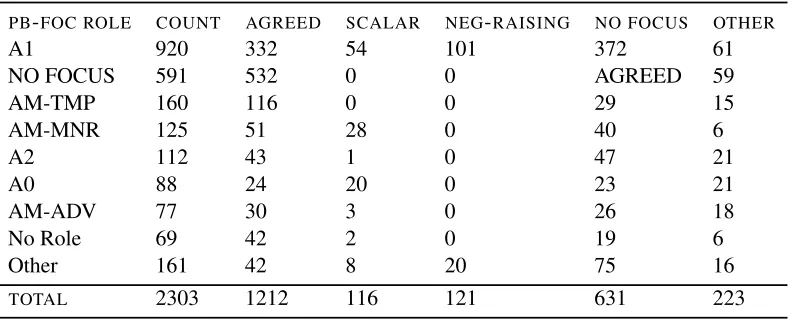
Figure 1 summarizes the differences between PB-FOC and our annotation by role4. Our annotators
achieved a pairwiseκof 0.82. Our agreement with PB-FOC was significantly lower: κ = 0.48 if we exclude scalars and neg-raisers and0.59if we count them as focused.
3
The QUD model in general allows multiple foci, e.g., Who had hot water when? We did not consider multiple foci in the present study.
PB-FOC ROLE COUNT AGREED SCALAR NEG-RAISING NO FOCUS OTHER
A1 920 332 54 101 372 61
NO FOCUS 591 532 0 0 AGREED 59
AM-TMP 160 116 0 0 29 15
AM-MNR 125 51 28 0 40 6
A2 112 43 1 0 47 21
A0 88 24 20 0 23 21
AM-ADV 77 30 3 0 26 18
No Role 69 42 2 0 19 6
Other 161 42 8 20 75 16
[image:4.612.74.471.57.218.2]TOTAL 2303 1212 116 121 631 223
Figure 1: Overall comparison of roles
As Figure 1 shows, the central reason for this discrepancy is the631examples where our annota-tors did not find focus where PB-FOC indicated that there was some; in contrast, only59 examples that PB-FOC labeled as focusless were disagreed with. There are two interesting trends. First, we found an abundance of cases where the the question pro-duced by the PB-FOC focus yielded an uninforma-tive question (12% of disagreements), often in cases containing predicates of possession (e.g.,have, con-tain). For example, in (12), the PB-FOC label would be answer the question What do American Brands conclude they have under the contract?, which does not seem relevant in context.
(12) possession (7%): “We have previously had discussions with representatives of Pinker-ton’s Inc. concerning the (sale of the com-pany) and we concluded that we did not have
liabilityunder the contract,” says American Brands. (ex. 181)
An additional 4% of the disagreements involved idiomatic expressions, where neither the syntactic nor the semantic sub-constituents could be mean-ingfully separated; in (13), take kindly to that as a whole is negated, and focusing on any one part will upset the idiom. Although of small number, the bi-ased questions exemplified in (14) are illustrative of negation’s chimerical lives; in these questions, nega-tion’s function is at the discourse level and it has no propositional negative force.
(13) idioms (4%): But media-stock analyst Richard J. MacDonald of MacDonald
Grippo Riely says Wall Street won’t take
kindlyto that. (ex. 2081)
(14) biased questions (10 instances): But wouldn’t a president who acted despite Sen-ate objections be taking grave political risks? (ex. 489)
4 Conclusion
References
Eduardo Blanco and Dan Moldovan. 2011. Semantic Representation of Negation Using Focus Detection. In
Proceedings of the 49th Annual Meeting of the Asso-ciation for Computational Linguistics: Human Lan-guage Technologies (ACL-HLT 2011), Portland, OR, USA.
Charles Filmore. 1963. The position of embedding trans-formations in grammar.Word, 19:208–231.
Jan Robert Gajewski. 2007. Neg-raising and polarity.
Linguistics and Philosophy, 30:289–328.
Rodney Huddleston and Geoffrey K. Pullman. 2002. The Cambridge Grammar of the English Langauge. Cam-bridge University Press.
Ray Jackendoff. 1972. Semantic Interpretation in Gen-erative Grammar. MIT Press, Cambridge, Mass. Nirit Kadmon. 2001. Formal Pragmatics:
Seman-tics, PragmaSeman-tics, Presupposition, and Focus. Wiley-Blackwell.
Craige Roberts. 1996. Information structure: Towards an integrated theory of formal pragmatics. In Jae-Hak Yoon and Andreas Kathol, editors,OSU Working Pa-pers in Linguistics, Volume 49: PaPa-pers in Semantics, pages 91–136. The Ohio State University Department of Linguistics.