User-Controlled, Robust Natural Language Generation from an Evolving
Knowledge Base
Eva Banik Computational Linguistics Ltd London, UK
Eric Kow Computational Linguistics Ltd London, UK
Vinay Chaudhri∗ SRI International
Menlo Park, CA
Abstract
In this paper we describe a natural lan-guage generation system which produces complex sentences from a biology knowl-edge base. The NLG system allows do-main experts to discover errors in the knowledge base and generates certain parts of answers in response to users’ questions in an e-textbook application. The system allows domain experts to cus-tomise its lexical resources and to set pa-rameters which influence syntactic con-structions in generated sentences. The system is capable of dealing with certain types of incomplete inputs arising from a knowledge base which is constantly edited and includes a referring expression gen-eration module which keeps track of dis-course history. Our referring expression module is available for download as the open source Antfarm tool1.
1 Introduction
In this paper we describe a natural language gen-eration system we have developed to interface with a biology knowledge base. The knowledge base (KB) encodes sentences from a biology text-book, and the ultimate goal of our project is to develop an intelligent textbook application which can eventually answer students’ questions about biology2(Spaulding et al., 2011).
∗
The work reported in this paper was supported by fund-ing from Vulcan, Inc. We would also like to thank the mem-bers of the Inquire Biology development team: Roger Cor-man, Nikhil Dinesh, Debbie Frazier, Stijn Heymans, Sue Hi-nojoza, David Margolies, Adam Overholtzer, Aaron Spauld-ing, Ethan Stone, William Webb, Michael Wessel and Neil Yorke-Smith.
1
https://github.com/kowey/antfarm
2http://www.aaaivideos.org/2012/
inquire_intelligent_textbook/
The natural language generation module is part of a larger system, which includes a question un-derstanding module, question answering and rea-soning algorithms, as well as an answer presenta-tion module which produces pages with informa-tion from the KB. We measure the progress and consistency of encoding by asking “what is an X?” type questions of the application and evaluate the quality of answers. In response to these questions, the system generates “glossary pages” of concepts, which display all information about concept X in the KB that are deemed relevant. The NLG mod-ule is used for two purposes in our system: to check the completeness and consistency of the KB (instead of looking at complex graphs of the en-coded knowledge, it is easier to detect errors in natural language sentences), and to present parts of answers in response to questions.
One goal of our project was to develop a tool which empowers biology teachers to encode do-main knowledge with little training in formal knowledge representation. In the same spirit, we aimed to develop an NLG system which allowed domain experts to easily and intuitively customize the generated sentences as much as possible, with-out any training on the grammar or internal work-ings of the system. This was necessary because many domain-specific concepts in the KB are best expressed by biology terminology and linguistic constructions specific to the domain. We devel-oped a utility which allows encoders to not only associate lexical items with concepts in the KB but also customise certain lexical parameters which influence the structure of sentences generated to describe events.
Another requirement was robustness: since the knowledge base is constantly edited, the NLG sys-tem had to be able to deal with missing lexical in-formation, incomplete inputs, changing encoding guidelines, and bugs in the KB as much as possi-ble. The system also had to be flexible in the sense
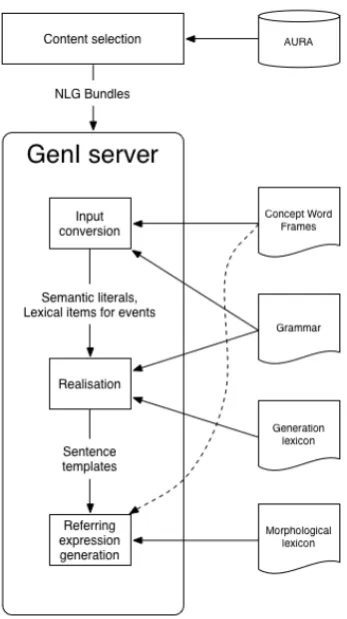
Figure 1: Architecture of the AURA NLG system
that it had to be able to generate different versions of the same output to suit specific contexts or types of concepts in its input. Our system therefore gen-erates all possible realizations for a given input, and allows the answer presentation module to send parameters to determine which output is returned in a specific context.
After describing the architecture of the NLG module in detail we explain how the system is able to deal with unseen combination of event-to-entity relations when describing events. We illustrate the utility we developed to allow domain experts to customize the system’s output by adding parame-ters to lexical entries associated with concepts.
2 Related Work
Work on natural language generation from ontolo-gies and knowledge bases tends to fall into two groups. On the one hand, there are tools for ontol-ogy verbalization which tend to handle a limited number of relations, and where the goal of the sys-tem is to help the work of knowledge engineers. These systems produce template based outputs, and the texts closely follow the structure of the ontology (Wilcock, 2003; Galanis and
Androut-sopoulos, 2007). Some of these systems attempt to minimize reliance on domain-specific linguistic resources and attempt to detect words in the labels of the ontology to use as lexical items (Mellish and Sun, 2005). On the other hand there are NLG sys-tems which take their input from complex knowl-edge bases (Reiter et al., 2003; Paris, 1988) and produce fluent texts geared towards users other than knowledge engineers. These systems pro-duce outputs tailored to the user or the context and they are difficult for non-NLG-experts to cus-tomize or port to a different domain. Our system falls halfway between these two groups: like on-tology verbalizers, we wanted to produce output for all inputs, using ontology labels if necessary in the absence of lexical entries. However, like so-phisticated NLG systems, we also wanted to gen-erate good quality output for inputs for which the system had lexical resources, and we also wanted to be able to tailor the generated output to the con-text in which it is displayed. Our input was also more expressive than the input of ontology verbal-izers, because of the presence of cardinality con-straints and co-references in our KB. Our work is perhaps most closely related to the MIAKT sys-tem which also allows domain experts to edit lex-ical knowledge and schemas (Bontcheva, 2004; Bontcheva and Wilks, 2004). Like MIAKT, we also aimed to develop an NLG system which can be easily maintained as the KB changes.
3 Architecture of the AURA NLG system
detail. The generation pipeline consists of four main stages: content selection, input conversion, realisation and referring expression generation, as illustrated in Fig1.
3.1 Content Selection
Question answering and reasoning algorithms that return answers or other content in AURA are not engineered to satisfy the purposes of natural lan-guage generation. The output of these algorithms can be best thought of as pointers to concepts in the KB, which need to be described to provide an answer to the user. In order for the answer to be complete in a given context, the output of reason-ing algorithms have to be extended with additional relations, depending on the specific question that was asked, and the context in which the answer was found in the KB. The relations selected from the KB also vary depending on the type of con-cept that is being described (event, entity, role, property). For example, a user might ask “What is a catalyst?”. To answer this question, AURA will retrieve entities from the KB (“role players”) which play the role of catalyst in various events. For example, it will find “adenylyl cyclase”, which is defined in the KB as a universal catalyst, i.e., this information is encoded on the concept map of Adenylyl cyclase and is regarded as a “universal truth”. In this case, our content selection algorithm will return a singleplaystriple, and the NLG sys-tem will produce“Adenylyl cyclase is a catalyst’.’
Another entity that will be returned in response to the question is “ribosomal RNA”. However, ribo-somal RNA is a catalyst only in specific situations, and therefore we need to give more detail on the contexts in which it can play the role of a catalyst. This includes the event in which ribosomal RNA is a catalyst, and perhaps the larger process dur-ing which this event occurs. Accorddur-ingly, content selection here will return a number of relations (in-cludingagent,object,subevent), and our NLG system will produce:
“In translation elongation, ribosomal RNA is a catalyst in the formation of a peptide bond by the ribosomal RNA and a ribosome.“
Similarly, for “triose phosphate dehydrogenase” we will produce
“In energy payoff phase of glycolysis, NAD plus is converted by a triose phosphate dehydrogenase to a hydrogen ion, an NADH and a PGAP. Here, the triose phosphate dehydrogenase is a catalyst.“
For “cellulose synthase” the situation is slightly different, because the event in which this entity plays the role of catalyst is not part of a larger pro-cess but the function of the entity. So we need slightly different information to produce the cor-rect sentence:“The function of cellulose synthase is conversion of a chemical in a cell to cellulose. Here, a cellulose synthase is a catalyst.”
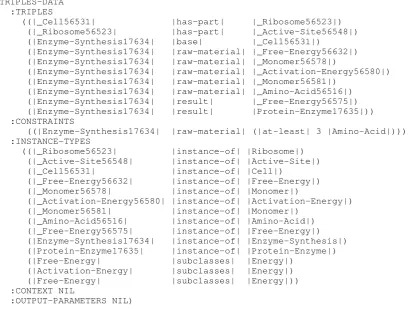
The task of the AURA content selection module is to determine what information to include for each entity or event that was returned as the answer to the question. We do this by retrieving sets of rela-tions from the KB that match contextual patterns. We also filter out relations which contain overly generic classes (e.g., Tangible-Entity), and any du-plication arising from the presence of inverse rela-tions or inferences in the KB. The output of con-tent selection is a structured bundle (Fig. 2), which contains
(1) the relations that form the input to NLG (2) information about concepts in the input: what class(es) they belong to, cardinality constraints (3) parameters influencing the style of output texts.
3.2 Input Conversion
The realisation phase in our system is carried out by the GenI surface realizer (Kow, 2007), using a Tree-Adjoining Grammar (Joshi and Schabes, 1997). The task of the input conversion module is to interpret the structured bundles returned by content selection, and to convert the information to GenI’s input format. We parse the structured bundles, perform semantic aggregation, interpret parameters in bundles which influence the style of the generated text, and convert triples to semantic literals as required by GenI.
4 Handling Unseen Combinations of Relations
(TRIPLES-DATA :TRIPLES
((|_Cell56531| |has-part| |_Ribosome56523|) (|_Ribosome56523| |has-part| |_Active-Site56548|) (|Enzyme-Synthesis17634| |base| |_Cell56531|)
(|Enzyme-Synthesis17634| |raw-material| |_Free-Energy56632|) (|Enzyme-Synthesis17634| |raw-material| |_Monomer56578|)
(|Enzyme-Synthesis17634| |raw-material| |_Activation-Energy56580|) (|Enzyme-Synthesis17634| |raw-material| |_Monomer56581|)
(|Enzyme-Synthesis17634| |raw-material| |_Amino-Acid56516|) (|Enzyme-Synthesis17634| |result| |_Free-Energy56575|) (|Enzyme-Synthesis17634| |result| |Protein-Enzyme17635|)) :CONSTRAINTS
((|Enzyme-Synthesis17634| |raw-material| (|at-least| 3 |Amino-Acid|))) :INSTANCE-TYPES
((|_Ribosome56523| |instance-of| |Ribosome|) (|_Active-Site56548| |instance-of| |Active-Site|) (|_Cell56531| |instance-of| |Cell|)
(|_Free-Energy56632| |instance-of| |Free-Energy|) (|_Monomer56578| |instance-of| |Monomer|)
(|_Activation-Energy56580| |instance-of| |Activation-Energy|) (|_Monomer56581| |instance-of| |Monomer|)
(|_Amino-Acid56516| |instance-of| |Amino-Acid|) (|_Free-Energy56575| |instance-of| |Free-Energy|) (|Enzyme-Synthesis17634| |instance-of| |Enzyme-Synthesis|) (|Protein-Enzyme17635| |instance-of| |Protein-Enzyme|) (|Free-Energy| |subclasses| |Energy|)
(|Activation-Energy| |subclasses| |Energy|) (|Free-Energy| |subclasses| |Energy|)) :CONTEXT NIL
:OUTPUT-PARAMETERS NIL)
A protein enzyme is synthesized in an active site of a ribosome of a cell using at least 3 amino acids and 2 monomers. This process transforms activation energy and free-energy to another free-energy.
Enzyme synthesis – a protein enzyme is synthesized in an active site of a ribosome of a cell using at least 3 amino acids and 2 monomers. This process transforms activation energy and free-energy to another free-energy.
[image:4.595.78.497.64.373.2]Synthesis of a protein enzyme in an active site of a ribosome of a cell using at least 3 amino acids and 2 monomers. This process transforms activation energy and free-energy to another free-energy.
Figure 2: An example input bundle and the three outputs generated by our system for this input
S
NP – S
RX[1]
agent
VP
V RX[2]
object
PP PP PP PP
P RX[3]
destination
P RX[4]
instrument
P RX[5]
origin
P RX[6]
path
S
S↓ S Punct
Punct N VP
this process
V RX[7]
require
raw-material
RX
RX∗ P RX[8]
of
has-part
Figure 3: Tree selection
of event-to-entity relations and sentences would be given based on encoding guidelines used to cre-ate the knowledge base. However, the goal of our project is to continuously expand the knowl-edge base with more information, encoding new types of events, and enriching existing events with more detail as we go along (e.g., by specifying
[image:4.595.78.507.487.623.2]associated with each event type, and the relations that can be used to express them. However, be-cause our knowledge base is continuously chang-ing, neither the number of entities linked to spe-cific events, nor the types of relations used are stable and therefore it was impossible to build such a generation lexicon from the KB. Instead, we adopted an approach where we detect “event frames” in the input of the system, and automat-ically create entries for them in the generation lexicon, guessing sentence structure and ordering based on the event participants. An event frame is a set of event-to-entity relations which have the same event in the domain of the relations, and par-ticipating entities in the range. We currently dis-tinguish between two types of event frames, de-pending on the type of the entities in the range of relations: participant frames (ranges are of type Tangible-Entity) and energy frames (ranges are type Energy). An example of a participant frame and an energy frame extracted from the input il-lustrated in section 4.2 is ilil-lustrated below:
Participant frame:
(Uptake07 path Plasma-membrane78) (Uptake07 origin Extracellular-Side52) (Uptake07 destination Cytoplasm39) (Uptake07 agent Cell-Surface-Receptor79) (Uptake07 instrument Coated-Vesicle49) (Uptake07 object Cholesterol08)
Energy frame:
(Uptake07 raw-material Chemical-Energy70) (Uptake07 raw-material Free-Energy89)
Our input conversion module detects event frames and automatically creates an entry in GenI’s generation lexicon for each frame, an-chored on a noun or verb associated with the event in our concept-to-word mapping lexicon. The en-tries link the sets of relations in the frame to a tree with the same number of arguments, attempting to place entities that playagent andobject par-ticipants into subject/object positions in the tree if they exist. Our algorithm also attempts to deter-mine the best syntactic construction for the spe-cific combination of participant relations, and de-cides between selecting an active sentential tree, a passive sentential tree, a complex noun phrase, or a combination of these. This process also in-volves deciding based on the event participants whether the tree will be anchored on a transitive verb, an intransitive verb, or a verb with a prepo-sitional object, and assigning default prepositions to event participants (unless we have more detail specified in the lexicon, as described in the next section). The elementary trees in the grammar
are named after the number of referring expres-sions and prepositional phrases in the tree, and we use this naming convention to automatically gen-erate tree names (or tree family names) for lexi-cal entries, thereby linking trees in the grammar to GenI’s generation lexicon. The two S-rooted trees in Fig 3 were selected based on automatically gen-erated lexical entries for the two frames above.
4.1 Realisation
The GenI surface realizer selects elementary TAG trees for (sets of) relations in its input and com-bines them using the standard operations of sub-stitution and adjunction to produce a single de-rived tree. We have developed a feature-based lex-icalized Tree Adjoining Grammar to generate sen-tences from relations in the KB. Our grammar has two important properties, following the approach in (Banik, 2010):
(1) our grammar includes discourse-level elemen-tary trees for relations that are generated in sepa-rate sentences, and
(2) instead of the standard treatment of entities as nouns or NPs substituted into elementary trees, our grammar treats entities as underspecified re-ferring expressions, leaving the generation of noun phrases to the next stage. The underspecified re-ferring expressions replace elementary trees in the grammar, which the generator would otherwise have to combine with substitution. This under-specification saves us computational complexity in surface realisation, and at the same time allows us to make decisions on word choice at a later stage when we have more information on the syn-tax of the sentence and discourse history.
The output of the realizer is an underspecified text in the form of a sequence of lemma - feature structure pairs. Lemmas here can be underspeci-fied – instead of an actual word, they can be an in-dex or a sequence of indices pointing to concepts in the KB. The syntax and sentence boundaries are fully specified, and the output can be one or more sentences long. The feature structures asso-ciated with lemmas include all information neces-sary for referring expression generation and mor-phological realisation, which is performed in the next phase. To give an example, the set of rela-tions below would produce an output with 8 un-derspecified referring expressions (shown as RX), distributed over two sentences:
(Uptake07 destination Cytoplasm39) (Uptake07 agent Cell-Surface-Receptor79) (Uptake07 instrument Coated-Vesicle49) (Uptake07 object Cholesterol08)
(Uptake07 raw-material Chemical-Energy70) (Uptake07 raw-material Free-Energy89)
NP(Uptake07) – RX[1] absorb RX[2] to RX[3] of RX[8]
with RX[4] from RX[5] through RX[6]. This process re-quires RX[7].
The elementary trees selected by the realizer for this output, and the correspondences between re-lations and referring expressions are illustrated in Fig.3.
4.2 Referring Expression Generation
The final stage in the NLG pipeline is performing morphological realisation and spelling out the re-ferring expressions left underspecified by the real-isation module. The input to referring expression generation is a list of lemma - feature structure pairs, where lemmas are words on leaf nodes in the derived tree produced by syntactic realisation. In our system, some of the lemmas can be unspec-ified, i.e., there is no word associated with the leaf node, only a feature structure. For these cases, we perform lexicon lookup and referring expression generation based on the feature structure, as well as morphological realisation. To give an example, the input illustrated in the previous section will be generated as
“Uptake of cholesterol by human cell– a cell surface receptor absorbs cholesterol to the cyto-plasm of a human cell with a coated vesicle from an extracellular side through a plasma membrane. This process requires chemical energy and free-energy.”
Many concept labels in our ontology are very complex, often giving a description of the concept or the corresponding biology terminology, and therefore these labels can only be used for NLG under specific circumstances. To overcome this problem, we have created a lexicon that maps con-cept names to words, and the grammar has control over which form is used in a particular construc-tion. Accordingly, we distinguish between two types of underspecified nodes:
• NP nodes where the lexical item for the node is derived by normalizing the concept class associated with the node (Uptake-Of-Cholesterol-By-Human-Cell → “uptake of cholesterol by human cell”)
• RX (referring expression) nodes where lex-ical items are obtained by looking up class names in the concept-to-word mapping lexi-con (Uptake-Of-Cholesterol-By-Human-Cell
→“absorb”)
The feature structures on RX nodes in the out-put of GenI describe properties of entities in the in-put, which were associated with that specific node during realisation. The feature structures specify three kinds of information:
• the identifier (or a list of identifiers) for the specific instances of entities the RX node refers to
• the KB class for each entity
• any cardinality constraints that were asso-ciated with each entity for the relation ex-pressed by the tree in which the RX node ap-pears
We define cardinality constraints as a triple (Do-main, Slot, Constraint) where the Constraint itself is another triple of the form (ConstraintExpres-sion, Number, ConstraintClass). ConstraintEx-pression is one ofat least,at most, orexactly and ConstraintClass is a KB class over which the constraint holds. There is usually (but not neces-sarily) one or more relations associated with ev-ery cardinality constraint. We say a triple (Do-main Slot Range) is associated with a cardinality constraint (Domain, Slot, (ConstraintExpression, Number, ConstraintClass)) if
• the Domain and Slot of the associated triple is equal to the Domain and Slot of the cardi-nality constraint and
• one of the following holds:
– either (Range instance-of Constraint-Class) holds for the range of the triple
– or Range is taxonomically related to ConstraintClass (via a chain of subclass relations)
<refex> = <umbrella> SPACE <refex> | <umbrella> <umbrella> = <group> ( <refex> )| <group>
<group> = <class> <instances> <constraints> <instances> = :: <instance> <instances> | <instance>
[image:7.595.318.517.182.436.2]<constraints> = : <constraint> <constraints> | <constraint> <constraint> = <op> : <num> | unk : <dash-delimited-string> <op> = ge | le | eq
Figure 4: Syntax of the referring expression language
in this language are constructed from triples dur-ing the input conversion stage, when we perform semantic aggregation. The groups are then passed through elementary trees by the realisation module (GenI) to appear in the output as complex feature structures on leaf nodes of the derived tree. The re-ferring expression generation module parses these complex feature values, and constructs (possibly complex) noun phrases as appropriate.
To illustrate some examples, the following fea-ture value shows a simple referring expression group which encodes two entities (Monomer14 and Monomer7) and two cardinality constraints (at least 2 and at most 5). This expression will be gen-erated as “between 2 and 5 monomers”:
Monomer::Monomer14::Monomer7:ge:2:le:5
We also allow more complex cardinality con-straints which give the general type of an entity and specify examples of the general type, as in“at least 3 organic molecules (2 ATPs and an ethyl al-cohol)”:
Organic-Molecule:ge:3 (ATP:: ATP80938:eq:2
Ethyl-Alcohol:: Ethyl-Alcohol80922)
The referring expression generation module makes three main decisions based on the refer-ring expression, additional feature structures on the node, and discourse history: it chooses lem-mas, constructs discriminators, and decides be-tween singular/plural form. The algorithm for dis-criminator choice in the referring expression gen-eration module is illustrated in Fig 5. Our refer-ring expression generation module, including dis-course history tracking and determiner choice, is made available in the Antfarm3open source tool.
5 Giving Domain Experts Control over Sentence Structure
By automatically associating event frames with el-ementary trees we are able to generate a sentence for all combinations of event-to-entity relations
3https://github.com/kowey/antfarm
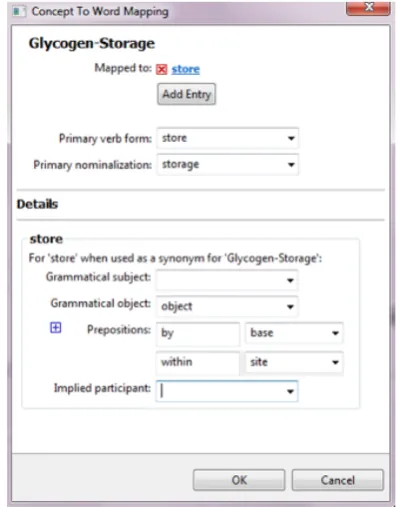
Figure 6: Parameters in the concept-to-word map-ping lexicon
foreach group in the referring expressiondo
ifall members of the group are first mentions and there are no distractors in the history:then if the group has cardinality constraints:then
upper boundM→at most M
lower boundN→at least N(multiple group members in this case are also interpreted as lower bound) both bounds→between N and Morexactly N
else
one group member→generate an indefinite determiner (a/an) more than one member→generate a cardinal
end if end if
if the group is a first mention but there are distractors in the discourse historythen ifthe group has only one memberthen
if the group exactly matches one previous mention→another
if the group exactly matchesN >1previous mentions→the Nth
if there is a 2-member group in the history, and one of the members was mentioned by itself→the other
if the discourse history has more than one distractor→a(n) Nth
end if
ifthere are multiple group membersthen
if the group is a subset of a previously mentioned group which has no distractors→N of the
end if end if
ifthe group is not a first mentionthen
if the group has upper and/or lower bounds→the same
if the group has one member only→the
if the group has multiple members→the N
end if end for
Figure 5: Algorithm for discriminator choice in our referring expression module
event participant can appear in subject and ob-ject positions depends not only on the type of the event, but also on the encoding guidelines which are continuously evolving.
In order to improve the quality of the gener-ated output, and to give domain experts control over customizing the system without having to un-derstand details of the grammar, we extended the concept-to-word mapping lexicon with parameters which control preposition choice, and allow cus-tomization of the position of participating entities. We developed a graphical user interface which al-lows encoders (biology domain experts) to add and edit these lexical parameters as they encode concepts in the KB.
To give an example, in the absence of a lexical item and any parameters for the event Glycogen-Storage, our system would produce the following default output, attempting to use the concept label as the main verb of the sentence in an automati-cally produced generation lexicon entry:
“Glycogen storage – glycogen is glycogened storage in a vertebrate in a liver cell and a muscle cell.”
In order to improve the quality of the output, one of our biology teachers has customized the param-eters in the lexicon to yield:
[image:8.595.309.535.386.514.2]“Glycogen storage – glycogen is stored by a
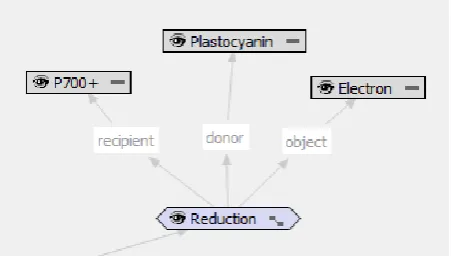
Figure 7: Concept map for the event ’Reduction’
vertebrate within a liver cell and a muscle cell.”
This was achieved through a graphical user inter-face which is part of the tool used for knowledge encoding, and is illustrated in Fig 6. Our sys-tem allows encoders to re-generate sentences af-ter editing the parameaf-ters to see the effect of the changes on the output. The top half of the win-dow in in Fig 6 allows encoders to associate words or phrases with concepts, where they can add as many synonyms as they see fit. One of the syn-onyms has to be marked as the primary form, to be used for generation by default.4 For events,
4The concept-to-word mapping lexicon is shared between
ques-(a) “Plastocyanin reduces P700+” (b) “P700+ receives an electron from plastocyanin.”
Figure 8: Concept-to-word mapping parameters for the two synonyms of Reduction
the primary form is a verb and its nominalization, and for entities it is a noun. The bottom half of the window shows the parameter settings for each synonym associated with the concept. Here the encoders can specify relations which link the sub-ject and obsub-ject of a verb to the event (grammatical subject/object), and assign prepositions to other event-to-entity relations for the verb, when it is used to realize the specified event. There is also an option to tell the NLG system to ignore some of the event participants when using a specific verb for the event. This functionality is used for verbs that already imply one of the participants. For ex-ample, the word polymerization already implies that the result of the event is a polymer. In these cases there is no need for the NLG system to gen-erate the implied participant (here, result). An-other example is the verb reduce, which implies that the object of the event is an electron. The ed-itor allows the users to enter different parameter values for the synonyms of the same event. For example, the graph in Fig 7 could be described in at least three different ways:
1. P700+ is reduced by plastocyanin 2. Plastocyanin reduces P700+
3. P700+ receives an electron from plastocyanin.
Here sentences 1 and 2 make no mention of the electron involved in the process, but sentence 3 ex-plicitly includes it. In order for the system to cor-rectly generate sentences 1 and 2, the concept-to-word mapping parameters for “reduce” (as a syn-onym for Reduction) have to include an implied participant. Otherwise the system will assume that all participants should be mentioned in the sen-tence, and it will generate “P700+ is reduced by a plastocyanin of an electron”. Fig 8. illustrates the different concept-to-word mapping parameters needed for the two synonyms for Reduction in or-der to generate the above sentences correctly.
tions onto concepts in the KB.
6 Conclusions
References
E. Banik. 2010. A Minimalist Architecture for Gener-ating Coherent Text. Ph.D. thesis, The Open Univer-sity, UK.
K. Barker, B. Porter, and P. Clark. 2001. A library of generic concepts for composing knowledgebases. In
Proceedings K-CAP 2001, pages 14–21.
K. Bontcheva and Y. Wilks. 2004. Automatic report generation from ontologies: the MIAKT approach. In 9th Int. Conf. on Applications of Natural Lan-guage to Information Systems, page 324335, Manch-ester, UK.
K. Bontcheva. 2004. Open-source tools for creation, maintenance, and storage of lexical resources for language generation from ontologies. In 4th Conf. on Language Resources and Evaluation, Lisbon, Portugal.
D. Galanis and I. Androutsopoulos. 2007. Generat-ing multilGenerat-ingual descriptions from lGenerat-inguistically an-notated owl ontologies: the NaturalOWL system. In
INLG07, Schloss Dagstuhl, Germany, page 143146.
D. Gunning, V. K. Chaudhri, P. Clark, K. Barker, Shaw-Yi Chaw, M. Greaves, B. Grosof, A. Leung, D. Mc-Donald, S. Mishra, J. Pacheco, B. Porter, A. Spauld-ing, D. Tecuci, and J. Tien. 2010. Project halo up-date - progress toward digital aristotle. AI Magazine, Fall:33–58.
A. K. Joshi and Y. Schabes. 1997. Tree-Adjoining Grammars. In Grzegorz Rosenberg and Arto Sa-lomaa, editors, Handbook of Formal Languages and Automata, volume 3, pages 69–124. Springer-Verlag, Heidelberg.
E. Kow. 2007. Surface realisation: ambiguity and determinism. Ph.D. thesis, Universite de Henri Poincare, Nancy.
C. Mellish and X. Sun. 2005. The semantic web as a linguistic resource: Opportunities for natural lan-guage generation. InKnowledge-Based Systems.
C.L. Paris. 1988. Tailoring object descriptions to the users level of expertise. Computational Linguistics, 14(3):6478. Special Issue on User Modelling.
E. Reiter, R. Robertson, and L. M. Osman. 2003. Lessons from a failure: generating tailored smok-ing cessation letters. Artificial Intelligence, 144(1-2):41–58.
A. Spaulding, A. Overholtzer, J. Pacheco, J. Tien, V. K. Chaudhri, D. Gunning, and P. Clark. 2011. Inquire for ipad: Bringing question-answering ai into the classroom. InInternational Conference on AI in Ed-ucation (AIED).