Proceedings of the 2016 Conference on Empirical Methods in Natural Language Processing, pages 1912–1917,
Orthographic Syllable as basic unit for SMT between Related Languages
Anoop Kunchukuttan, Pushpak Bhattacharyya Center For Indian Language Technology, Department of Computer Science & Engineering
Indian Institute of Technology Bombay {anoopk,pb}@cse.iitb.ac.in
Abstract
We explore the use of theorthographic syl-lable, a variable-length consonant-vowel se-quence, as a basic unit of translation between
relatedlanguages which use abugida or alpha-betic scripts. We show that orthographic sylla-ble level translation significantly outperforms models trained over other basic units (word, morpheme and character) when training over small parallel corpora.
1 Introduction
Related languagesexhibit lexical and structural
sim-ilarities on account of sharing a common ances-try(Indo-Aryan, Slavic languages) or being in pro-longed contactfor a long period of time (Indian sub-continent, Standard Average European linguistic ar-eas) (Bhattacharyya et al., 2016). Translation be-tweenrelatedlanguages is an important requirement due to substantial government, business and social communication among people speaking these lan-guages. However, most of these languages have few parallel corpora resources, an important requirement for building good quality SMT systems.
Modelling the lexical similarity among related languages is the key to building good-quality SMT systems with limited parallel corpora. Lexical
sim-ilarityimplies that the languages share many words
with the similar form (spelling/pronunciation) and meaning e.g. blindness is andhapana in Hindi, aandhaLepaNaa in Marathi. These words could be cognates, lateral borrowings or loan words from other languages. Translation for such words can be
achieved by sub-word level transformations. For in-stance, lexical similarity can be modelled in the stan-dard SMT pipeline by transliteration of words while decoding (Durrani et al., 2010) or post-processing (Nakov and Tiedemann, 2012; Kunchukuttan et al., 2014).
A different paradigm is to drop the notion of word boundary and consider the character n-gram as the basic unit of translation (Vilar et al., 2007; Tiedemann, 2009a). Such character-level SMT bas been explored for closely related languages
likeBulgarian-Macedonian, Indonesian-Malaywith
modest success, with the short context of unigrams being a limiting factor (Tiedemann, 2012). The use of character n-gram units to address this limi-tation leads to data sparsity for higher order n-grams and provides little benefit (Tiedemann and Nakov, 2013).
In this work, we present a linguistically moti-vated, variable length unit of translation — ortho-graphic syllable (OS)— which provides more con-text for translation while limiting the number of ba-sic units. The OS consists of one or more conso-nants followed by a vowel and is inspired from the
akshara, a consonant-vowel unit, which is the
funda-mental organizing principle of Indic scripts (Sproat, 2003; Singh, 2006). It can be thought of as an
ap-proximate syllable with the onset and nucleus, but
no coda. While true syllabification is hard, ortho-graphic syllabification can be easily done. Atreya et al. (2016) and Ekbal et al. (2006) have shown that the OS is a useful unit for transliteration involving Indian languages.
We show that orthographic syllable-level
lation significantly outperforms character-level and strong word-level and morpheme-level baselines over multiple related language pairs (Indian as well as others). Character-level approaches have been previously shown to work well for language pairs with high lexical similarity. Our major finding is that OS-level translation outperforms other approaches even when the language pairs have relatively less lexical similarity or belong to different language families (but have sufficient contact relation).
2 Orthographic Syllabification
The orthographic syllable is a sequence of one or
more consonants followed by a vowel, i.e a C+V unit. We describe briefly procedures for ortho-graphic syllabification of Indian scripts and non-Indic alphabetic scripts. Orthographic syllabifica-tion cannot be done for languages usinglogographic
andabjadscripts as these scripts do not have vowels.
Indic Scripts: Indic scripts are abugida scripts, consisting of consonant-vowel sequences, with a consonant core (C+) and a dependent vowel ( ma-tra). If no vowel follows a consonant, an implicit
schwa vowel [IPA: ə] is assumed. Suppression of
schwais indicated by thehalantacharacter
follow-ing a consonant. This script design makes for a straightforward syllabification process as shown in the following example. e.g. लक्षमी (CV CCV CVlakShamI ) is segmented asल क्ष मी(CV CCV CVla kSha mI ). There are two exceptions to this scheme: (i) Indic scripts distin-guish between dependent vowels (vowel diacritics) and independent vowels, and the latter will consti-tute an OS on its own. e.g. मुम्बई (mumbaI) → मु म्ब ई (mu mba I) (ii) The characters anusvaara
and chandrabindu are part of the OS to the left if
they represents nasalization of the vowel/consonant or start a new OS if they represent a nasal consonant. Their exact role is determined by the character fol-lowing theanusvaara.
Non-Indic Alphabetic Scripts: We use a simpler method for the alphabetic scripts used in our experi-ments (Latin and Cyrillic). The OS is identified by a C+V+ sequence. e.g. lakshami→la ksha mi,
mum-bai→mu mbai. The OS could contains multiple
ter-minal vowel characters representing long vowels (oo
incool) or diphthongs (aiinmumbai). A vowel
start-Basic Unit Example Transliteration
Word घरासमोरचा gharAsamoracA
Morph Segment घरा समोर चा gharA samora cA Orthographic Syllable घ रा स मो र चा gha rA sa mo racA Character unigram घ र ◌ा स म ◌ो र च ◌ा gha r A sa m o ra c A Character 3-gram घरा समो रचा gharA samo rcA
something that is in front of home: ghara=home, samora=front, cA=of
Table 1: Various translation units for a Marathi word
ing a word is considered to be an OS.
3 Translation Models
We compared the orthographic syllable level model (O) with models based on other translation units that have been reported in previous work: word (W), morpheme (M), unigram (C) and trigram characters. Table 1 shows examples of these representations.
The first step to build these translation systems is to transform sentences to the correct representation. Each word is segmented as the per the unit of rep-resentation, punctuations are retained and a special
word boundary marker character (_) is introduced
to indicate word boundaries as shown here:
W: राजू , घराबाहेर जाऊ नको .
O: रा जू _ , _ घ रा बा हे र _ जा ऊ _ न को _ .
For all units of representation, we trained phrase-based SMT (PBSMT) systems. Since related lan-guages have similar word order, we used distance based distortion model and monotonic decoding. For character and orthographic syllable level models, we use higher order (10-gram) languages models since data sparsity is a lesser concern due to small vocabu-lary size (Vilar et al., 2007). As suggested by Nakov and Tiedemann (2012), we used word-level tuning for character and orthographic syllable level models by post-processing n-best lists in each tuning step to calculate the usual word-based BLEU score.
While decoding, the word and morpheme level systems will not be able to translate OOV words. Since the languages involved share vocabulary, we transliterate the untranslated words resulting in the post-edited systems WX and MX corresponding to
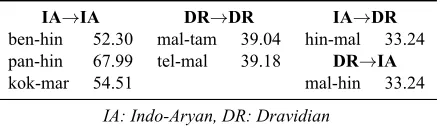
IA→IA DR→DR IA→DR
ben-hin 52.30 mal-tam 39.04 hin-mal 33.24
pan-hin 67.99 tel-mal 39.18 DR→IA
kok-mar 54.51 mal-hin 33.24
[image:3.612.76.296.58.123.2]IA: Indo-Aryan, DR: Dravidian
Table 2: Language pairs used in experiments along with Lexical Similarity between them, in terms of LCSR between training corpus sentences
simply concat the output units between consecutive occurrences of the marker character.
4 Experimental Setup
Languages: Our experiments primarily concen-trated on multiple language pairs from the two ma-jor language families of the Indian sub-continent (Indo-Aryan branch of Indo-European and Dravid-ian). These languages have been in contact for a long time, hence there are many lexical and gram-matical similarities among them, leading to the sub-continent being considered alinguistic area (Eme-neau, 1956). Specifically, there is overlap between the vocabulary of these languages to varying de-grees due to cognates, language contact and loan-words from Sanskrit (throughout history) and En-glish (in recent times). Table 2 lists the languages involved in the experiments and provides an indica-tion of the lexical similarity between them in terms of the Longest Common Subsequence Ratio (LCSR) (Melamed, 1995) between the parallel training sen-tences at character level. All these language have a rich inflectional morphology with Dravidian lan-guages, and Marathi and Konkani to some degree, being agglutinative. kok-mar and pan-hin have a high degree of lexical similarity.
Dataset: We used the multilingual ILCI corpus for our experiments (Jha, 2012), consisting of a mod-est number of sentences from tourism and health domains. The data split is as follows – training:
44,777, tuning 1K, test: 2K sentences. Language
models for word-level systems were trained on the target side of training corpora plus monolingual cor-pora from various sources [hin: 10M (Bojar et al., 2014), tam: 1M (Ramasamy et al., 2012), mar: 1.8M (news websites), mal: 200K (Quasthoff et al., 2006) sentences]. We used the target language side of the
parallel corpora for character, morpheme and OS level LMs.
System details: PBSMT systems were trained us-ing theMosessystem (Koehn et al., 2007), with the
grow-diag-final-andheuristic for extracting phrases,
and Batch MIRA (Cherry and Foster, 2012) for tun-ing (default parameters). We trained 5-gram LMs with Kneser-Ney smoothing for word and morpheme level models and 10-gram LMs for character and OS level models. We used theBrahmiNet translit-eration system (Kunchukuttan et al., 2015) for post-editing, which is based on the transliteration Mod-ule in Moses (Durrani et al., 2014). We used un-supervised morphological segmenters trained with
Morfessor(Virpioja et al., 2013) for obtaining
mor-pheme representations. The unsupervised morpho-logical segmenters were trained on the ILCI corpus and the Leipzig corpus (Quasthoff et al., 2006).The morph-segmenters and our implementation of ortho-graphic syllabification are made available as part of theIndic NLP Library1.
Evaluation: We use BLEU (Papineni et al., 2002) and Le-BLEU (Virpioja and Grönroos, 2015) for evaluation. Le-BLEU does fuzzy matches of words and hence is suitable for evaluating SMT systems that perform transformation at the sub-word level.
5 Results and Discussion
This section discusses the results on Indian and non-Indian languages and cross-domain translation.
Comparison of Translation Units: Table 3 com-pares the BLEU scores for various translation sys-tems. The orthographic syllable level system is clearly better than all other systems. It signifi-cantly outperforms the character-level system (by 46% on an average). The character-based system is competitive only for highly lexically similar lan-guage pairs like pan-hin and kok-mar. The sys-tem also outperforms two strong baselines which ad-dress data sparsity: (a) a word-level system with transliteration of OOV words (10% improvement), (b) a morph-level system with transliteration of OOV words (5% improvement). The OS-level representa-tion is more beneficial when morphologically rich
W WX M MX C O
ben-hin 31.23 32.79 32.17 32.32 27.95 33.46
pan-hin 68.96 71.71 71.29 71.42 71.26 72.51
kok-mar 21.39 21.90 22.81 22.82 19.83 23.53
mal-tam 6.52 7.01 7.61 7.65 4.50 7.86
tel-mal 6.62 6.94 7.86 7.89 6.00 8.51
hin-mal 8.49 8.77 9.23 9.26 6.28 10.45
mal-hin 15.23 16.26 17.08 17.30 12.33 18.50
Table 3: Results - ILCI corpus (% BLEU). The
reported scores are:- W: word-level, WX: word-level
fol-lowed by transliteration of OOV words,M: morph-level,MX:
morph-level followed by transliteration of OOV morphemes,C:
character-level,O:orthographic syllable. The values marked in
bold indicate the best scores for the language pair.
C O M W
ben-hin 0.71 0.63 0.58 0.40
pan-hin 0.72 0.70 0.64 0.50
kok-mar 0.74 0.68 0.63 0.64
mal-tam 0.77 0.71 0.56 0.46
tel-mal 0.78 0.65 0.52 0.45
hin-mal 0.79 0.59 0.46 -0.02
[image:4.612.329.525.59.181.2]mal-hin 0.71 0.61 0.45 0.37
Table 4: Pearson’s correlation coefficient between lex-ical similarity and translation accuracy (both in terms of LCSR at character level). This was computed over the test set between: (ii) sentence level lexical similarity be-tween source and target sentences and (ii) sentence level translation match between hypothesis and reference.
languages are involved in translation. Significantly, OS-level translation is also the best system for trans-lation between languages of different language fam-ilies. The Le-BLEU scores also show the same trend as BLEU scores, but we have not reported it due to space limits. There are a very small number of un-translated OSes, which we handled by simple map-ping of untranslated characters from source to tar-get script. This barely increased translation accuracy (0.02% increase in BLEU score).
Why is OS better than other units?: The im-proved performance of OS level representation can be attributed to the following factors:
One, the number of basic translation units is limited and small compared to word-level and
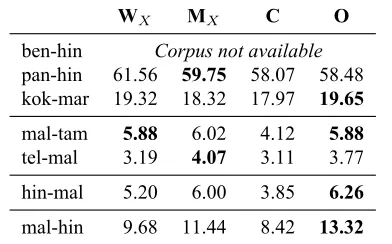
WX MX C O
ben-hin Corpus not available
pan-hin 61.56 59.75 58.07 58.48 kok-mar 19.32 18.32 17.97 19.65
mal-tam 5.88 6.02 4.12 5.88
tel-mal 3.19 4.07 3.11 3.77
hin-mal 5.20 6.00 3.85 6.26
[image:4.612.80.290.59.174.2]mal-hin 9.68 11.44 8.42 13.32
Table 5: Results: Agricuture Domain (% BLEU)
morpheme-level representations. For word-level representation, the number of translation units can increase with corpus size, especially for morpholog-ically rich languages which leads to many OOVs. Thus, OS-level unitsaddress data sparsity.
Two, while character level representation too does not suffer from data sparsity, we observe that the translation accuracy is highly correlated to lexical similarity (Table 4). The high corre-lation of character-level system and lexical simi-larity explains why character-level translation per-forms nearly as well other methods for language pairs which have high lexical similarity, but per-forms badly otherwise. On the other hand, the OS-level representation has lesser correlation with lexi-cal similarity and sits somewhere between character-level and word/morpheme character-level systems. Hence it is able to makegeneralizations beyond simple char-acter level mappings. We observed that OS-level representation was able to correctly generate words whose translations are not cognate with the source language. This is an important property since func-tion words and suffixes tend to be less similar lexi-cally across languages.
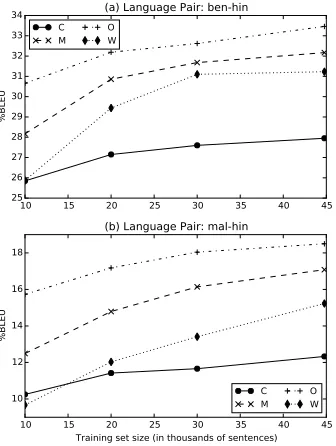
[image:4.612.101.269.273.397.2]10 15 20 25 30 35 40 45 25
26 27 28 29 30 31 32 33 34
%BLEU
(a) Language Pair: ben-hin
C M OW
10 15 20 25 30 35 40 45 Training set size (in thousands of sentences) 10
12 14 16 18
%BLEU
(b) Language Pair: mal-hin
C M OW
Figure 1: Effect of training data size on translation accuracy for different basic units
Corpus Stats Lex-Sim W C O
bul-mac (150k,1k,2k) 62.85 21.20 20.61 21.38
dan-swe (150k,1k,2k) 63.39 35.13 35.36 35.46
[image:5.612.100.268.76.299.2]may-ind (137k,1k,2k) 73.54 61.33 60.50 61.24
Table 6: Translation among non-Indic languages (%BLEU). Corpus Stats show (train,tune,test) split
Robustness to Domain Change: We also tested the translation models trained on tourism & health domains on an agriculture domain test set of 1000 sentences. In this cross-domain translation scenario too, the OS level model outperforms most units of representation. The only exceptions are thepan-hin
andtel-mallanguage pairs for the systemMX
(accu-racies of the OS-level system are within 10% of the MXsystem). Since the word level model depends on
coverage of the lexicon, it is highly domain depen-dent, whereas the sub-word units are not. So, even unigram-level models outperform word-level mod-els in a cross-domain setting.
Experiments with non-Indian languages: Ta-ble 6 shows the corpus statistics and our re-sults for translation between some related non-Indic language pairs (Bulgarian-Macedonian,
Danish-Swedish, Malay-Indonesian). OS level representa-tion outperforms character and word level represen-tation, though the gains are not as significant as In-dic language pairs. This could be due to short length of sentences in training corpus [OPUS movie sub-titles (Tiedemann, 2009b)] and high lexical similar-ity between the language pairs. Further experiments between less lexically related languages on general parallel corpora will be useful.
Effect of training data size: For different train-ing set sizes, we trained SMT systems with vari-ous representation units (Figure 1 shows the learning curves for two language pairs). BPE level models are consistently better than word as well as morph-level models, and are competitive or better than OS level models. Note thatbn-hiis a relatively morpholog-ically simpler language where BPE is just compet-itive with OS over the complete dataset too as dis-cussed earlier.
6 Conclusion & Future Work
We focus on the task of translation between
re-lated languages. This aspect of MT research is
im-portant to make available translation technologies to language pairs with limited parallel corpus, but huge potential translation requirements. We pro-pose the use of theorthographic syllable, a variable-length, linguistically motivated, approximate sylla-ble, as a basic unit for translation between related languages. We show that it significantly outper-forms other units of representation, over multiple language pairs, spanning different language families, with varying degrees of lexical similarity and is ro-bust to domain changes too. This opens up the possi-bility of further exploration of sub-word level trans-lation unitse.g. segments learnt using byte pair en-coding (Sennrich et al., 2016).
Acknowledgments
References
Arjun Atreya, Swapnil Chaudhari, Pushpak Bhat-tacharyya, and Ganesh Ramakrishnan. 2016. Value the vowels: Optimal transliteration unit selection for machine. InUnpublished, private communication with authors.
Pushpak Bhattacharyya, Mitesh Khapra, and Anoop Kunchukuttan. 2016. Statistical machine translation between related languages. InNAACL Tutorials. Ondřej Bojar, Vojtěch Diatka, Pavel Rychlý, Pavel
Straňák, Vít Suchomel, Aleš Tamchyna, and Daniel Zeman. 2014. HindEnCorp – Hindi-English and Hindi-only Corpus for Machine Translation. In Pro-ceedings of the 9th International Conference on Lan-guage Resources and Evaluation.
Colin Cherry and George Foster. 2012. Batch tuning strategies for statistical machine translation. In Pro-ceedings of the 2012 Conference of the North American Chapter of the Association for Computational Linguis-tics: Human Language Technologies.
Nadir Durrani, Hassan Sajjad, Alexander Fraser, and Hel-mut Schmid. 2010. Hindi-to-Urdu machine transla-tion through transliteratransla-tion. InProceedings of the 48th Annual Meeting of the Association for Computational Linguistics.
Nadir Durrani, Hieu Hoang, Philipp Koehn, and Hassan Sajjad. 2014. Integrating an unsupervised translitera-tion model into Statistical Machine Translatranslitera-tion. EACL 2014.
Asif Ekbal, Sudip Kumar Naskar, and Sivaji Bandy-opadhyay. 2006. A modified joint source-channel model for transliteration. InProceedings of the COL-ING/ACL on Main conference poster sessions. Murray B Emeneau. 1956. India as a lingustic area.
Lan-guage.
Girish Nath Jha. 2012. The TDIL program and the Indian Language Corpora Initiative. InLanguage Resources and Evaluation Conference.
Philipp Koehn, Hieu Hoang, Alexandra Birch, Chris Callison-Burch, Marcello Federico, Nicola Bertoldi, Brooke Cowan, Wade Shen, Christine Moran, Richard Zens, et al. 2007. Moses: Open source toolkit for Statistical Machine Translation. InProceedings of the 45th Annual Meeting of the ACL on Interactive Poster and Demonstration Sessions.
Anoop Kunchukuttan, Ratish Pudupully, Rajen Chatter-jee, Abhijit Mishra, and Pushpak Bhattacharyya. 2014. The IIT Bombay SMT System for ICON 2014 Tools contest. InNLP Tools Contest at ICON 2014. Anoop Kunchukuttan, Ratish Puduppully, and Pushpak
Bhattacharyya. 2015. Brahmi-Net: A transliteration and script conversion system for languages of the In-dian subcontinent.
I Dan Melamed. 1995. Automatic evaluation and uni-form filter cascades for inducing n-best translation lex-icons. InThird Workshop on Very Large Corpora. Preslav Nakov and Jörg Tiedemann. 2012.
Combin-ing word-level and character-level models for machine translation between closely-related languages. In Pro-ceedings of the 50th Annual Meeting of the Association for Computational Linguistics: Short Papers-Volume 2.
Kishore Papineni, Salim Roukos, Todd Ward, and Wei-Jing Zhu. 2002. BLEU: a method for automatic evalu-ation of machine translevalu-ation. InAssociation for Com-putational Linguistics.
Uwe Quasthoff, Matthias Richter, and Christian Bie-mann. 2006. Corpus portal for search in monolingual corpora. InProceedings of the fifth international con-ference on language resources and evaluation. Loganathan Ramasamy, Ondřej Bojar, and Zdeněk
Žabokrtský. 2012. Morphological Processing for English-Tamil Statistical Machine Translation. In
Proceedings of the Workshop on Machine Translation and Parsing in Indian Languages.
Rico Sennrich, Barry Haddow, and Alexandra Birch. 2016. Automatic evaluation and uniform filter cas-cades for inducing n-best translation lexicons. InACL. Anil Kumar Singh. 2006. A computational phonetic model for Indian language scripts. InConstraints on Spelling Changes: Fifth International Workshop on Writing Systems.
Richard Sproat. 2003. A formal computational analysis of Indic scripts. InInternational symposium on indic scripts: past and future, Tokyo.
Jörg Tiedemann and Preslav Nakov. 2013. Analyzing the use of character-level translation with sparse and noisy datasets. InRANLP.
Jörg Tiedemann. 2009a. Character-based PBSMT for closely related languages. InProceedings of the 13th Conference of the European Association for Machine Translation.
Jörg Tiedemann. 2009b. News from opus-a collection of multilingual parallel corpora with tools and interfaces. InRecent advances in natural language processing. Jörg Tiedemann. 2012. Character-based pivot translation
for under-resourced languages and domains. InEACL. David Vilar, Jan-T Peter, and Hermann Ney. 2007. Can we translate letters? In Proceedings of the Second Workshop on Statistical Machine Translation. Sami Virpioja and Stig-Arne Grönroos. 2015. Lebleu:
N-gram-based translation evaluation score for morpho-logically complex languages. InWMT 2015.