Study of Lightning Safety Distance Using Rolling
Sphere Method
Nor Zaihar Yahaya, Mohd Akhmal Daud
Electrical & Electronics Engineering Department, Universiti Teknologi PETRONAS, Tronoh, Malaysia Email: [email protected], [email protected]
Received February 5,2013; revised March 7, 2013; accepted March 22, 2013
Copyright © 2013 Nor Zaihar Yahaya, Mohd Akhmal Daud. This is an open access article distributed under the Creative Commons Attribution License, which permits unrestricted use, distribution, and reproduction in any medium, provided the original work is properly cited.
ABSTRACT
The development of a computer program for evaluation of lightning safety distance between the tower and satellite dish is written in M-File MATLAB. The 3-dimensional illustrative graphics model is used to capture better understanding on how lightning protection system (LPS) works. The study of physical length of grounding electrode used on the tower is found to be significantly affecting the grounding system performances where they depend on magnitude of dispersed lightning strikes current and the settling time for the current to completely disperse. The grounding system performance is studied by using lightning impulse current (LIC) generator, simulated in OrCad PSpice software. It is found that the optimum length of vertical lightning rod in LPS is the same with the striking distance. There is no significant improve- ment is observed in lightning safety distance if the length of vertical lightning rod is higher than striking distance. The lightning strike peak current that has larger magnitude than the withstanding insulation level of specified object causes no physical damage. It is because the lightning safety distance increases when the lightning strike peak current becomes higher. It is also found that the lower grounding impedance generates higher magnitude of dispersed peak current and faster settling time.
Keywords: Lightning Protection System (LPS); Rolling Sphere Method (RSM); Striking Distance
1. Introduction
The lightning protection system (LPS) relies upon the application of the physics of electrical discharges. It is needed to protect the electrical and electronic equipment against the lightning strikes, for example the telecommu- nication tower. There are two types of subsystems in designing conventional LPS. The first subsystem is called air termination system which consists of natural conductive components in vertical form of structure from the horizontal ground level surface, also known as light- ning rod. The protection zone of LPS is defined as the volume of space where the air termination provides pro- tection against a direct lightning strike by attracting the strike to it. The Rolling Sphere Method (RSM) is based on Electro-geometric Model (EGM) which is one of the techniques used to determine the lightning safety dis- tance. The striking distance is the total distance of the lightning strikes to the rod. It can be determined using the amplitude of lightning strike peak current. There is another protection method called the Cone Protection Method. However, this method yields inaccurate results
and has low protection efficiency [1,2].
The second subsystem is called earth termination sys-tem used to conduct the lightning strike current from the air termination system to the ground by connecting downward conductors to a grounding cylinder electrode. The grounding electrode is important as it keeps the en-closure voltage of the equipment to be equal to the earth potential [3]. The amount of magnitude of dispersed lightning peak current is affected by the grounding im-pedance values. In fact, it is influenced by the character-istics of water or soil resistivity and length of grounding electrode.
2. Lightning Protection System Scheme
2.1. Lightning Safety Zone Using RSM
Figure 1 shows the concept of RSM technique for LPS
scheme. The protection zone can be visualized as the surface of a sphere with radius striking distance, S is rolled toward the mast. This concept has led to the given rolling sphere scheme for simplified Electro-geometric Model [5]. The striking distance, S with respect to light-ning strike peak current, Is is calculated by using (1).
0.65
10 s
S I
Here, the equipment will be protected under the boundary of protected zone. The horizontal ground safety radius, Rg for height of lightning rod, h1 is governed by (2).
2 1 1
2
Rg S h h (2) The lightning object safety radius, Ro for height of ob-ject, h2 is given by using (3).
2 2 2 2 1 1 S h h S h h
2 1
2
o g
R R (3)
From (3), the vertical lightning rod that has a radius equals to its striking distance will attract the stepped leader. The Is that is discharged at a distance away from S
[image:2.595.308.537.98.305.2]will be grounded to the ground.
Table 1 shows the lightning protection standard based
on International Electro-technical Commission (IEC 61024-1), where the protection levels can be interpreted as level I, level II, level III and level IV. The maximum Is
in each level is given by 2.9 kA, 5.4 kA, 10.1 kA and 15.7 kA respectively. This eventually gives the lightning interception efficiency at 99%, 97%, 91% and 84% re-spectively. By adopting the IEC 61024-1 standard, the lightning safety distance can be calculated using the level of protection required.
[image:2.595.308.537.99.305.2] [image:2.595.65.279.596.711.2]2.2. Grounding System Performances Based on Termination Impedance
Figure 2 shows the typical grounding electrode used in
IS IS IS IS
S
S IS
h STRIKES
SHIELD STRIKES
GROUND STRIKESGROUND
BOUNDARY OF PROTECTED ZONE
FOR CURRENT IS PROTECTED ZONE AT
ELEVATION h FOR IS
Figure 1. Lightning protection zone area by RSM technique [4].
Table 1.EC 61024-1 lightning protection standard [6].
Maximum Lightning Peak Current Value (Is)
Protection Level
Interception Efficiency
2.9 kA I 99%
5.4 kA II 97%
10.1 kA III 91%
15.7 kA IV 84%
Under the ground level
Length of grounding electrode, l x
Diameter of grounding electrode, 2r
Figure 2. The grounding electrode.
this study where the grounding impedance will be af-fected by soil or water resistivity [7]. Nevertheless, there are also other criteria that can influent the grounding im-pedance such as length of grounding electrode, l, the ra-dius of grounding electrode, r and also the burial depth of grounding electrode, t. The grounding impedance, ZA is given by using (4).
2
ln 1
2
π A
l r t Z
l
(4)
3. Design Issue
In order to design a direct stroke shielding system for satellite dish, the engineer must consider several elusive factors inherent in lightning phenomena. The factors are:
The magnitude of lightning strikes peak current is unpredictable.
The complexity and cost of the solution involved to analyze a lightning protection system design in detail. The unavailability data of lightning strikes occurrences and its frequency at telecommunication station. In the real application of LPS, there is no known method that can be providing 100% safety protection against the lightning strikes. The uncertainty, complexity, and cost of performing a detailed analysis of the LPS have his-torically resulted in simple rules of thumb being utilized in the design. In order to design the LPS, the four-step approach is suggested:
Select an appropriate design method and lay out the LPS configuration.
Evaluate the significant and value of the facility being protected.
Investigate and analyze the frequency of lightning strikes occurrences at the facility that required protec-tion.
3.1. Configuration of Existing Protection System
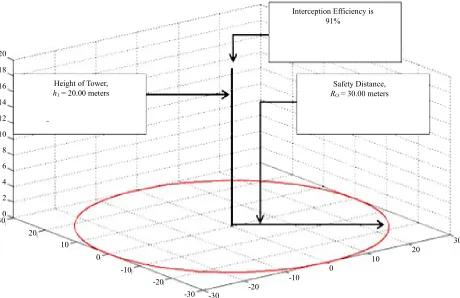
Figure 3 shows the configuration of existing protection
system. It can be seen that the lightning safety distance between the tower (height of 20 m) and satellite dish is 30 m. This arrangement can be interpreted as a level III lightning protection standard according to the IEC 61024-1. It is found that the interception efficiency of the LPS is 91%.
Therefore, the new distance arrangement should pro-vide the highest level of protection to reduce the possi-bility of satellite dish failure due to lightning strike. Also, the existing ZA at the tower is determined as 15 Ω. This value is usually recommended to be in between 1 Ω and 10 Ω based on water or soil resistivity [6].
4. Methodology
4.1. Lightning Safety Distance
Equations (1)-(3) are used to find the new lightning safety distance for satellite dish. To do this, the pro-gramming script is built in M-File Matlab software to allow users to key in the necessary inputs data before the result of lightning safety distance can be simulated. The required input parameters are:
The, IS based on IEC 61024-1 Lightning Protection Standard in Table 1.
The h1.
The dimensions of protected object include height, h2,
[image:3.595.308.536.102.238.2]width, w2 and length, l2.
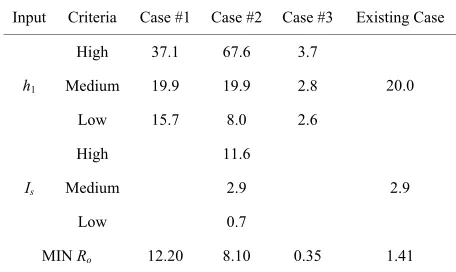
Table 2 shows the parameters to be studied in finding
their relationship with the lightning safety distance. The
30 meters
Grounding Impedance, ZA
Tower
Figure 3. Existing configuration at telecommunication
sta-Tab
tion.
le 2.Set of parameters for lightning safety distance.
Input Criteria Case #1 Case #2 Case #3 Existing Case
High 37.1 67.6 3.7
M
h1 20.0
M
Is 2.9
MIN o 20 8. 0.35 1.41
edium 19.9 19.9 2.8
Low 15.7 8.0 2.6
High 11.6
edium 2.9
Low 0.7
R 12. 10
put parameters are h and I. Here, the LPS will be
pro-4.2. Grounding System
of Z used in this work. The
re 4 shows the R-L-C circuit diagram used to pro-du
p between R, I and h.
. As fo
in 1 s
tected if Ro is larger than the MIN Ro or vice versa.
Table 3 shows the values A
low, medium and high length of grounding electrodes are 10 m, 100 m and 350 m respectively. The calculation of
ZA is based on Equation (4). Each of ZA value will be applied into the lightning impulse current (LIC) genera-tor. The height of grounding electrode value is adjusted to let ZA become lower than 10 Ω. Other constant pa-rameters used are r and t of 0.004 m and 0.5 m respec-tively.
Figu
ce the natural lightning waveform characteristics [8,9]. Using this circuit, the grounding impedance will be ap-plied to analyze the performance of the grounding sys-tem.
[image:3.595.63.280.545.711.2]5. Results & Discussions
Figure 5 shows the relationshi o s 1
The Ro increases when the lightning strike current is lar-ger than Is in all cases. For an example in case #1, the Ro
of high current Is (11.6 kA) is 27.8678 m whilst for the medium current Is (2.9 kA) is 12.6311 m. The result shows that Ro of high current Is has wider coverage than the medium current and therefore the object is securely protected. Nevertheless, Ro decreases when the lightning strike current is smaller than the medium current Is for all cases. In case #1, the Ro of low current Is (0.7 kA) is 3.4312 m and for the medium current is 12.6311 m. The result shows that Ro of low current Is is smaller than the medium current. Here, the object lies out of the protec-tion region and hence prone to lightning strikes. However, if the value of medium current Is was selected based on the withstand insulation level of specified object, low current Is should cause no damage to the equipment.
Figure 6 shows the relationship between Ro and h1
Table 3. Grounding impedance values depending on the type of soil or water resistivity.
Grounding Impedance, ZA (Ω)
Type of Soil Resistivity,
or Water ρ (Ω·m) Low Med. High
Clay 100 15.14 2.25 0.76
Groundwater, well,
6. spring water
Sandy clay,
150 22.71 3.37 1.13
cultivated soil Rain water
300 45.421 741 2.27
1300 196.82 29.12 3.83
Figure 4. LCI generator with grounding impedance inser-tion. 12.2 CASA #1 L ightning Sa fe ty Dis tance ( m eter ) CASA #2 30 25 20 15 10 5 0 8.1 CASA #3 0.35
27.8676 27.0479 0.877
12.6311 8.5377 0.5231 3.4312 1.2868
MIN. Safety Distance Required
High Current Medium Current
Low Current 0.2679
Figure 5. Lightning safety distance, Ro versus lightning strike peak current, Is.
12.2 CASA #1 L ightning Saf ety Di st an ce ( m eter ) CASA #2 14 12 10 8 4 6 2 0 8.1 CASA #3 0.35 1.9054
12.6311 8.5377 0.5231
12.1678 4.5487 MIN. Safety Distance Required High Lightning Rod Medium Lightning Rod Low Current Lightning Rod 8.5379 12.6312
12.6312 m while for the medium lightning rod (19.9 m) is 12.6311 m. Th
0.1431
Figure 6. Lightning safety distance, Ro versus length of lightning rod, h1.
ssments
tellite dish, based on
ystem Assessments
ween the
dis-e lo
is small difference in Ro indicates that in order to be protected, at least the medium length of light-ning rod must be applied. The object will not be secured for a lower length (15.7 m). The same explanation goes for case # 2 and case # 3.
5.1. Comparative Asse
Figure 7 shows the existing Ro of sa
Level III protection. The interception efficiency level is 91 %. As shown in the figure, the Ro at the telecommu-nication station is 30 m. Since the satellite dish is vul-nerable to lightning strike, higher safety level of protec-tion is need to be implemented. This can be improved by using Level I.
Figure 8 shows the improved Ro of satellite dish, using
Level I protection system. The new Ro is 11.27 m. It has closer distance compared to Figure 7. The Ro is reduced by 62.43% indicating an improvement. Hence, the tower has then been equipped with the 99 % of lightning inter-ception efficiency.
5.2. Grounding S
Figure 9 shows that the relationship bet
persed lightning peak current, Ids and length of electrode,
l. The resistivity, ρ (Ω·m) depends on the type of soil or water. Using l of 350 m, this makes ZA to be less than 10
Ω and hence gives result in highest Ids. As an example for the clay resistivity, the Ids is found to be 82.285 kA com-pared to 37.431 kA and 6.441 kA in medium (100 m) and low (10 m) electrode length respectively. Therefore, the amount of dispersed lightning peak current is propor-tional to the length of electrode. This shows that a lower
ZA will make Ids larger and hence better grounding sys-tem.
Figure 10 shows the relationship between the settling
time, ts for lightning current dispersal, and length of elec-trode, l. In the analysis, the ts will become longer (slower speed) when l of 350 m is used, for instance in clay, the ts
is given as 907.2 ms. This indicates that the ts is inversely proportional to l. Therefore, the low ZA and l values are preferred to make the ts shorter ie completely disperse lightning current faster.
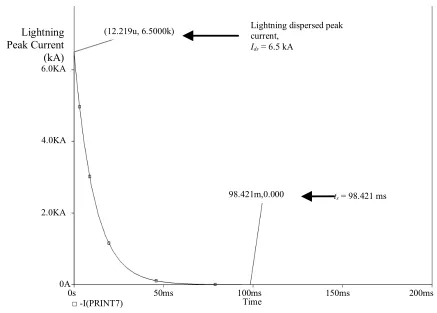
Figure 11 illustrates the Is by using ZA of 15 Ω. The
simulated waveform indicates that the amount of Ids is 6.5 kA. In addition, the ts is determined as 98.421 ms.
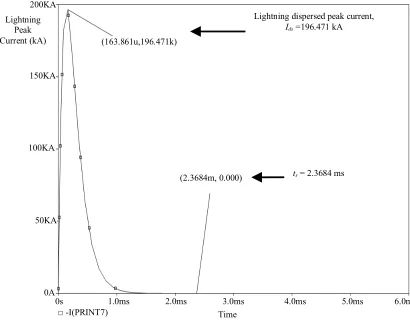
Figure12 shows the magnitude of Ids using ZA = 0.004 Ω.
Here the Ids shows and increase in current of 196.471 kA with faster ts of just 2.3684 ms. This satisfies the expec-tation in the hypothesis.
Thus, in order to produce the ZA smaller than 10 Ω, the
30
Interception Efficiency is 91%
20
18
16
14
12
10
8
6
4
2
0
Safety Distance, RO = 30.00 meters
20
30
10 20
0 10
0 -10
-10 -20
-20 -30 -30
[image:5.595.67.527.85.383.2]Height of Tower, h1 = 20.00 meters
Figure 7. Existing LPS configuration.
10
Interception Efficiency is 99%
Safety Distance, RO = 11.27 meters
15 10
0
-10
-20 -20 -15 -10
0
10 5
20
18
16
14
12
10
8
6
4
2
0
Height of Tower, h1 = 20.00 meters
5
-15 -5
-5
Total Horizontal Saf Rg = 20.00 m
20 15 ety Distance,
[image:5.595.65.534.397.712.2]eters
85 80 75 70 65 60 55 50 45 40 35 30 25 20 15 10 5 0
Clay (100 Ω·m)
Rain water (1300 Ω·m) Sandy clay, ultivated soil (300 Ω·m) C
G w so
roundwater ell, springwater
il (1350 Ω·m)
Lo
w (
10
me
ter
s)
Me
di
um
(
100
m
eter
s)
Hi
gh
(3
50 m
et
ers
)
L
ight
ni
ng
C
urre
nt
B
eing
Di
sp
er
se
d
[image:6.595.319.531.80.368.2](kA)
Figure 9. Dispersed peak lightning current, Ids versus ty pe and length of electrode, l.
900
Clay (100 Ω·m)
800
700
600
500
400
300
200
100
0
Groundwater well, spring water soil (350 Ω·m)
Sandy clay, cultivated soil (300 Ω·m)
Lo
w (
10
me
ter
s)
Me
di
um (
100
m
eter
s)
Hi
gh
(
350
m
et
ers
)
Rain water (1300 Ω·m)
Se
ttin
g T
ime
(
m
[image:6.595.64.282.83.363.2]s)
Figure 10. Settling time, ts versus length of electrode,l.
Lightning dispersed peak current,
Ids = 6.5 kA
Lightning Peak Current (kA)
(12.219u, 6.5000k)
6.0KA
4.0KA
2.0KA
0A
98.421m,0.000 ts = 98.421 ms
0s 50ms 100ms 150ms 200ms Time
□ -I(PRINT7)
[image:6.595.67.504.395.708.2]Lightning dispersed peak current,
Ids =196.471 kA
ts= 2.3684 ms
Lightning Peak Current (kA)
0s 1.0ms 2.0ms 3.0ms 4.0ms 5.0ms 6.0ms Time
(2.3684m, 0.000) (163.861u,196.471k)
200KA
150KA
100KA
50KA
0A
[image:7.595.91.501.87.409.2]□ -I(PRINT7)
Figure 12. Lightning impulse current (LIC) with 0.004 Ω grounding impedance, ZA.
ecomes better. In addition, when the lower ZA is used,
ced the simulation results about the
of lightning vertical
ur-e can bur-e producur-ed by
figuration using rolling sphere me-th
impedance where the improvement to 99.97% is
moni-ents
thank Universiti Teknologi inancial support to publish
REFERENCES
[1] P. Y. Okyere luation of Rolling
Sphere Metho l Concept: A Case
b
the magnitude of Ids becomes higher and hence makes the
ts for Ids to completely disperse faster.
6. Conclusions
This work has produ
lightning protection system based on International Elec-tro-technical Commission (IEC 61024-1) standard. The results are summarized as follow:
Generally, the optimum length
rod should be the same with the striking distance.
The striking distance will extend when the peak c rent magnitude of lightning strike gets bigger. This will improve the lightning safety distance and even-tually protect the object.
Low grounding impedanc hav- Study,” IJME-INTERTECH Conference, 2006, pp. 1-20.
[2] E. M. Thomson, “A Critical Assessment of the US Code for Lightning Protection,” IEEE Transaction on Electro- ing longer grounding electrode and low resistivity in
the soil or water. Hence, this makes the grounding capability better.
The new LPS con
od has improved the lightning interception efficiency by 8%. It is found that the new lightning safety distance between tower and satellite dish with level I has been reduced by 62.43%. This also applies to the grounding
tored having more lightning peak current being dispersed up to 96.69%. In addition, the lightning strike current has dispersed completely faster having a remarkable speed increase by 97.59%.
7. Acknowledgem
The authors would like to PETRONAS for providing f this work.
and E. George, “Eva d Using Leader Potentia
magnetic Compatibility, Vol. 33, No. 2, 991, pp. 132-138. doi:10.1109/15.78350
[3] A. Ametani, H. Morii, T. Kubo and T. Chikaraa, “Im- pedance Characteristics of Grounding Electrodes on Earth Surface,” Electric Power Systems Research, Vol. 85, 2012, pp. 38-43. doi:10.1016/j.epsr.2011.07.006
ing of Substations,” Georgia Power Company, Atlant
ng Shielding Systems,” IEEE Industry
Applica-y, Stevenage, 2010.
Wire,”
i, June 2004, pp. 1-7.
or and Light-
a, I
2007.
[5] A. C. Liew and C. M. Gui, “Performance Assessment of Lightni
tions Society Annual Meeting, Vol. 2, Seattle, 7-12 Octo- ber 1990, pp. 1989-1994.
[6] C. Vernon, “Lightning Protections,” The Institution of Engineering and Technolog
[7] H. Motoyama, “Experimental and Analytical Studies on Lightning Surge Characteristics of a Burial Bare
EEJ Transactions on Power and Energy, Vol. 126, No. 5, 2008, pp. 556-561.
[8] M. Gamlin, “Impulse Current Testing,” Lightning Protec- tion Forum, Shangha
[9] M. S. Kamarudin, E. Sulaiman, M. Z. Ahmad, S. A. Zulkifli and A. F. Othman, “Impulse Generat
![Table 1. EC 61024-1 lightning protection standard [6].](https://thumb-us.123doks.com/thumbv2/123dok_us/7765204.714524/2.595.308.537.98.305/table-ec-lightning-protection-standard.webp)