z
RESEARCH ARTICLE
SOLUTION OF A POROUS MEDIUM PROBLEM USING LAPLACE TRANSFORM AND GENERAL
SIMILARITY TECHNIQUE
*Dr. Shama M. Mulla and Dr. Chhaya H. Desai
Department of Mathematics, Sarvajanik College of Engineering and Technology Surat-395001, Gujarat, India
ARTICLE INFO ABSTRACT
The present paper describes and studies the flow of two immiscible fluids in a cylindrical porous medium. Initially, the porous medium is partially filled with oil and then water is passed through it. Since oil and water are non-mixing nature of fluids, the instabilities occur at the interface. In this paper, the phenomenon of instabilities in the polyphasic flow through homogeneous porous medium is discussed under the assumption of mean capillary pressure. The resulting governing equation is a linear partial differential equation which gives the saturation of water at any point in the cylinder at any time. The analytical solution has been obtained using two different methods - the Laplace transform and the similarity solutions via infinitesimal Lie group of transformations. The solution is also analysed graphically.
Copyright © 2014 Dr. Shama M. Mulla and Dr. Chhaya H. Desai. This is an open access article distributed under the Creative Commons Attribution License, which permits unrestricted use, distribution, and reproduction in any medium, provided the original work is properly cited.
INTRODUCTION
When a porous medium filled with some fluid is brought into contact with another fluid which preferentially wets the medium, it is observed that there is a spontaneous flow of the wetting fluid into the medium and a counter flow of the resident fluid from the medium. This arises in physical situations involving multiphase flow systems. The phenomenon of instabilities in polyphasic flow through homogeneous porous medium without capillary pressure was discussed by Scheidegger and Johnson. The behaviour of instabilities in a displacement process through heterogeneous porous medium with capillary pressure was examined by Verma. In the present paper, the phenomenon of instabilities in polyphasic flow through homogeneous porous medium with mean capillary pressure has been discussed. The resulting governing equation is a non-linear partial differential equation.
Formulation of the Problem
We consider a cylindrical mass of porous matrix of length L that is initially saturated with non-wetting fluid say oil. We assume that the lateral boundaries of the medium as well as one of the cross-sectional faces are impermeable while the only remaining open end is exposed to an adjacent formation of fluid say water which wets the medium preferentially relative to oil. Such circumstances give rise to the phenomenon of linear counter current imbibitions in which there is a spontaneous linear flow of wetting fluid i.e. water into the porous medium and a linear counter flow of the native fluid i.e. oil from the medium. This gives rise to the instabilities at the interface between the two fluids. For the flow system, the seepage velocity of the wetting and the non- wetting phases are given respectively as
x
P
K
k
v
w w w w
(
1
)
x
P
K
k
v
o o o o
)
2
(
*Corresponding author: Dr. Shama M. Mulla
Department of Mathematics, Sarvajanik College of Engineering and Technology Surat-395001, Gujarat, India
ISSN: 0975-833X
Available online at http://www.journalcra.com
International Journal of Current Research Vol. 6, Issue, 09, pp.8751-8759, September, 2014
INTERNATIONAL JOURNAL OF CURRENT RESEARCH
Article History: Received 10thJune, 2014 Received in revised form 16thJuly, 2014
Accepted 05thAugust, 2014
Published online 30thSeptember, 2014
Key words: Laplace transforms,
Infinitesimal Lie group method, Immiscible fluids, Instabilities, Porous medium and
Similarity solutions
z
RESEARCH ARTICLE
SOLUTION OF A POROUS MEDIUM PROBLEM USING LAPLACE TRANSFORM AND GENERAL
SIMILARITY TECHNIQUE
*Dr. Shama M. Mulla and Dr. Chhaya H. Desai
Department of Mathematics, Sarvajanik College of Engineering and Technology Surat-395001, Gujarat, India
ARTICLE INFO ABSTRACT
The present paper describes and studies the flow of two immiscible fluids in a cylindrical porous medium. Initially, the porous medium is partially filled with oil and then water is passed through it. Since oil and water are non-mixing nature of fluids, the instabilities occur at the interface. In this paper, the phenomenon of instabilities in the polyphasic flow through homogeneous porous medium is discussed under the assumption of mean capillary pressure. The resulting governing equation is a linear partial differential equation which gives the saturation of water at any point in the cylinder at any time. The analytical solution has been obtained using two different methods - the Laplace transform and the similarity solutions via infinitesimal Lie group of transformations. The solution is also analysed graphically.
Copyright © 2014 Dr. Shama M. Mulla and Dr. Chhaya H. Desai. This is an open access article distributed under the Creative Commons Attribution License, which permits unrestricted use, distribution, and reproduction in any medium, provided the original work is properly cited.
INTRODUCTION
When a porous medium filled with some fluid is brought into contact with another fluid which preferentially wets the medium, it is observed that there is a spontaneous flow of the wetting fluid into the medium and a counter flow of the resident fluid from the medium. This arises in physical situations involving multiphase flow systems. The phenomenon of instabilities in polyphasic flow through homogeneous porous medium without capillary pressure was discussed by Scheidegger and Johnson. The behaviour of instabilities in a displacement process through heterogeneous porous medium with capillary pressure was examined by Verma. In the present paper, the phenomenon of instabilities in polyphasic flow through homogeneous porous medium with mean capillary pressure has been discussed. The resulting governing equation is a non-linear partial differential equation.
Formulation of the Problem
We consider a cylindrical mass of porous matrix of length L that is initially saturated with non-wetting fluid say oil. We assume that the lateral boundaries of the medium as well as one of the cross-sectional faces are impermeable while the only remaining open end is exposed to an adjacent formation of fluid say water which wets the medium preferentially relative to oil. Such circumstances give rise to the phenomenon of linear counter current imbibitions in which there is a spontaneous linear flow of wetting fluid i.e. water into the porous medium and a linear counter flow of the native fluid i.e. oil from the medium. This gives rise to the instabilities at the interface between the two fluids. For the flow system, the seepage velocity of the wetting and the non- wetting phases are given respectively as
x
P
K
k
v
w w w w
(
1
)
x
P
K
k
v
o o o o
)
2
(
*Corresponding author: Dr. Shama M. Mulla
Department of Mathematics, Sarvajanik College of Engineering and Technology Surat-395001, Gujarat, India
ISSN: 0975-833X
Available online at http://www.journalcra.com
International Journal of Current Research Vol. 6, Issue, 09, pp.8751-8759, September, 2014
INTERNATIONAL JOURNAL OF CURRENT RESEARCH
Article History: Received 10thJune, 2014 Received in revised form 16thJuly, 2014
Accepted 05thAugust, 2014
Published online 30thSeptember, 2014
Key words: Laplace transforms,
Infinitesimal Lie group method, Immiscible fluids, Instabilities, Porous medium and
Similarity solutions
z
RESEARCH ARTICLE
SOLUTION OF A POROUS MEDIUM PROBLEM USING LAPLACE TRANSFORM AND GENERAL
SIMILARITY TECHNIQUE
*Dr. Shama M. Mulla and Dr. Chhaya H. Desai
Department of Mathematics, Sarvajanik College of Engineering and Technology Surat-395001, Gujarat, India
ARTICLE INFO ABSTRACT
The present paper describes and studies the flow of two immiscible fluids in a cylindrical porous medium. Initially, the porous medium is partially filled with oil and then water is passed through it. Since oil and water are non-mixing nature of fluids, the instabilities occur at the interface. In this paper, the phenomenon of instabilities in the polyphasic flow through homogeneous porous medium is discussed under the assumption of mean capillary pressure. The resulting governing equation is a linear partial differential equation which gives the saturation of water at any point in the cylinder at any time. The analytical solution has been obtained using two different methods - the Laplace transform and the similarity solutions via infinitesimal Lie group of transformations. The solution is also analysed graphically.
Copyright © 2014 Dr. Shama M. Mulla and Dr. Chhaya H. Desai. This is an open access article distributed under the Creative Commons Attribution License, which permits unrestricted use, distribution, and reproduction in any medium, provided the original work is properly cited.
INTRODUCTION
When a porous medium filled with some fluid is brought into contact with another fluid which preferentially wets the medium, it is observed that there is a spontaneous flow of the wetting fluid into the medium and a counter flow of the resident fluid from the medium. This arises in physical situations involving multiphase flow systems. The phenomenon of instabilities in polyphasic flow through homogeneous porous medium without capillary pressure was discussed by Scheidegger and Johnson. The behaviour of instabilities in a displacement process through heterogeneous porous medium with capillary pressure was examined by Verma. In the present paper, the phenomenon of instabilities in polyphasic flow through homogeneous porous medium with mean capillary pressure has been discussed. The resulting governing equation is a non-linear partial differential equation.
Formulation of the Problem
We consider a cylindrical mass of porous matrix of length L that is initially saturated with non-wetting fluid say oil. We assume that the lateral boundaries of the medium as well as one of the cross-sectional faces are impermeable while the only remaining open end is exposed to an adjacent formation of fluid say water which wets the medium preferentially relative to oil. Such circumstances give rise to the phenomenon of linear counter current imbibitions in which there is a spontaneous linear flow of wetting fluid i.e. water into the porous medium and a linear counter flow of the native fluid i.e. oil from the medium. This gives rise to the instabilities at the interface between the two fluids. For the flow system, the seepage velocity of the wetting and the non- wetting phases are given respectively as
x
P
K
k
v
w w w w
(
1
)
x
P
K
k
v
o o o o
)
2
(
*Corresponding author: Dr. Shama M. Mulla
Department of Mathematics, Sarvajanik College of Engineering and Technology Surat-395001, Gujarat, India
ISSN: 0975-833X
Available online at http://www.journalcra.com
International Journal of Current Research Vol. 6, Issue, 09, pp.8751-8759, September, 2014
INTERNATIONAL JOURNAL OF CURRENT RESEARCH
Article History: Received 10thJune, 2014 Received in revised form 16thJuly, 2014
Accepted 05thAugust, 2014
Published online 30thSeptember, 2014
Key words: Laplace transforms,
Infinitesimal Lie group method, Immiscible fluids, Instabilities, Porous medium and
where
k
wandk
o are the respective relative permeabilities of water and oil,K
is the permeability of the porous medium,P
w andP
o are the pressures and
wand
o are the viscosities of the water and oil respectively.Using the mathematical condition for the imbibitions phenomenon
v
w
v
o
0
, we will get0
x
P
k
x
P
k
o o o w w w
)
3
(
From the definition of capillary pressure, we will get
w c
o
P
P
P
Differentiating with respect to
x
, we will getx
P
x
P
x
P
o c w
(
4
)
Using equation
(
4
)
in(
3
)
and simplifying, we will getx
P
k
k
v
k
x
P
c o o w w o o w
)
5
(
Using equation
(
5
)
in equation(
1
)
, we will getx
P
k
k
k
k
K
v
c w o o w o w w
)
6
(
The equation of continuity for wetting phase is given by
0
x
v
t
S
P
w w(
7
)
The capillary pressure
P
cis a decreasing function of saturation of wetting phase and is related asw
S
P
(
8
)
Using equation
(
8
)
in equation(
6
)
and takingo o w o o w o w
k
k
k
k
k
, we will get2 2
x
S
k
k
k
k
K
v
w w o o w o w w
(
9
)
Using equation
(
9
)
in equation(
7
)
, we will getSince the porous medium is homogeneous, the porosity
P
and permeabilityK
are constants. Takingo o
P
K
k
a
, equation)
10
(
will take the formx
S
x
S
a
w w
2 2
)
11
(
which is a linear partial differential equation.
The relevant initial and boundary condition are
L
X
X
S
w(
,
0
)
0
,
0
t
t
t
S
w(
0
,
)
(
),
x
L
t
t
S
w
,
0
,
x
t
t
S
w
,
0
,
where
is Direct-delta function.Analytical Solution
The linear partial differential equation given by
11
along with the initial and boundary conditions has been analytically analysed using two different methods.Laplace Transform method
We will use Laplace transformation to find the solution of
(
11
)
Multiplying each term of
(
11
)
bye
std
t
and then integrating the resulting equation from0
to
, we will get
0 0
2 2
t
d
t
S
e
t
d
x
S
a
e
st w st ww w
S
s
x
d
S
d
a
2
2
(
12
)
where
0
)
,
(
)
,
(
x
s
e
S
x
t
d
t
S
wt s
w represents the Laplace transform of
S
w( t
x
,
)
Now equation
(
12
)
is an ordinary differential equation with constant coefficients.Its solution is given by
a s x a
s x
w
x
s
c
e
c
e
S
(
,
)
1
2 )
13
(
)
,
( t
x
S
w is saturation of water at any facex
at any timet
anda
is constant depending on the medium.The boundary conditions
)
(
)
,
0
(
0
)
0
,
(
x
and
S
t
t
S
w
w
indicate the saturation of water from
x
x
to
x
0
at timet
t
to
t
0
S
(
x
,
0
)
S
x
,
s
0
0
L
w w
S
(
0
,
t
)
S
0
,
s
1
L
w wNow choose
c
1
0
so that,S
w is bounded asx
. From(
13
)
, we will get
as x
w
x
s
c
e
S
,
2 Using
L
S
w(
0
,
t
)
S
w
0
,
s
1
, we will getc
2
1
Equation
(
13
)
will become
as x
w
x
s
e
S
,
Taking inverse Laplace transform we will get,
at
x
t
x
a
t
x
S
w4
exp
2
1
,
2 2 3
Therefore, the saturation of water
S
w at any timet
0
and for length 0 < x < L is given by
at
x
t
x
a
t
x
S
w4
exp
2
1
,
2 2 3
)
14
(
General Similarity Technique
We will use General Similarity technique to find the solution of
(
11
)
as discussed by Bluman and Cole. Takinga
x
y
in(
11
)
, it will take the formt
S
y
S
w w
2 2Infinitesimal Lie group of transformations will be
)
(
)
,
,
(
)
(
)
,
,
(
)
(
)
,
,
(
2 2 2
O
S
t
y
y
y
O
S
t
y
t
t
O
S
t
y
S
S
w w w w w
Equation
(
11
)
will remain invariant under the Lie group of transformation and will take the form
t
S
y
S
w w2
Substituting the infinitesimals
yyand
t in(
15
)
and comparing the coefficients of various order derivatives ofS
w, we will get a group of six- parameter equations which are given ast
y
y
t
m
l
2
2
t
t
w
S
y
m
t
y
2
2
4
2
16
where
l
, m
,
,
,
and
are all parameters and are constant. Invariance ofy
0
,t
0
andS
w(
0
,
t
)
(
t
)
reduce the six-parameter equations to a subgroup of two-six-parameter equations which are given ast
y
y
2
2
t
t
w
S
t
y
2
2
4
2
17
We will discuss the solution under different cases.
Case 1 When
0
,
1
From equation
(
17
)
we will getw
S
t
y
2
2
The characteristic equations will be
wS
d
t
d
y
d
w w
S
S
d
t
t
d
y
y
d
2
2
Its solution is
)
(
1
1 1
F
t
S
w
wheret
y
1
(
18
)
Case 2 When
0
,
1
From equation
(
17
)
we will getw
S
t
y
t
t
y
2
4
2 2
The characteristic equations will be
wS
d
t
d
y
d
w wS
t
y
S
d
t
t
d
t
y
y
d
2
4
2 2Its solution is
)
(
4
exp
1
2 2 2
F
t
y
t
S
w
wheret
y
2
)
19
(
Equating the two functional forms of the solutions given by equations
(
18
)
and(
19
)
along with the value of the source condition
2
1
, we will get
)
4
(
exp
2
1
)
(
2 1 1 1 1
F
and 2
2 22
1
F
Using the value of
F
1
1 in equation
18
, we will get
t
y
t
y
t
y
S
w4
exp
2
1
,
2 2 3
Buta
x
y
, therefore the solution will be given by
t
a
x
t
x
a
t
x
S
w4
exp
2
1
,
2 2 3
20
Graphical Representation
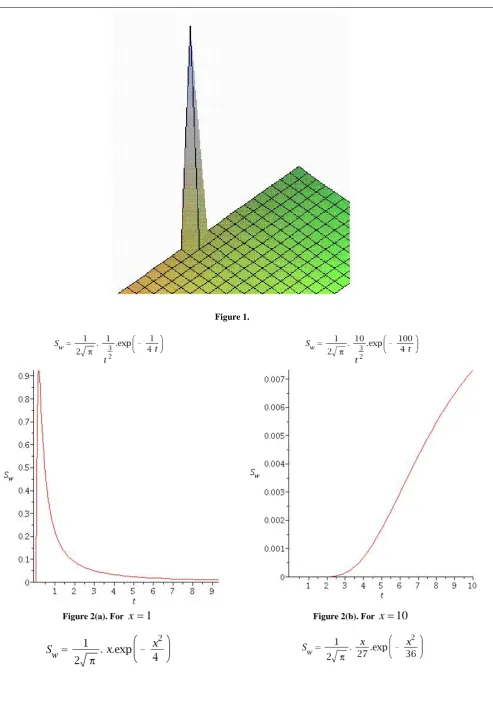
below-Figure 1.
Figure 2(a). For
x
1
Figure 2(b). Forx
10
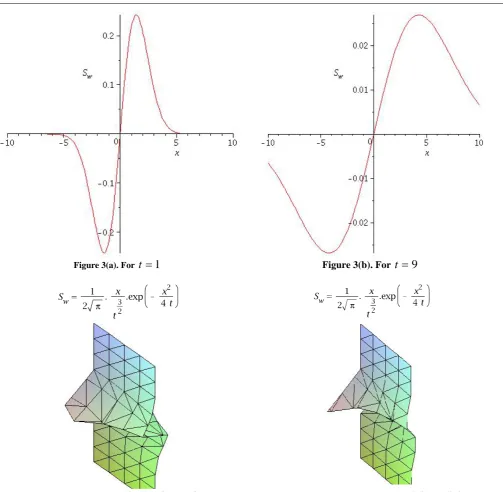
[image:8.595.52.546.44.762.2] [image:8.595.162.403.53.346.2]Figure 3(a). For
t
1
Figure 3(b). Fort
9
Figure 4(a). Varying
t
between
0
.
5
to
0
.
5
Figure 4(b). Varyingt
between
0
.
05
to
0
.
05
Conclusion
The present study shows that the analytical solutions obtained by Laplace transform method and by General Similarity technique is same. Graphically we observe that the instabilities at the interface between the two immiscible fluids give rise to fingers. These perturbations can be seen in Figures 1, 4(a) and 4(b). Keeping x constant and with the increase in the value of t, we can see that the effect of exponential term is neglected but because saturation of water is inversely proportional to t, its value decreases with the increase in the value of t. This can be seen in Figures 2(a) and 2(b) where it is plotted for two different values of x. Keeping t constant, we can see that the saturation of water occurs as a product of linear function of x and the negative exponential function of x. With the increase in the value of x, the nature of saturation is parabolic and it has the value zero for large values of x. This can be seen in Figures 3(a) and 3(b) where it is plotted for two different values of t.
REFERENCES
Andrews, L.C. and Shivamoggi, B.K. 1999. Integral Transforms for Engineers, New Delhi, Prentice-Hall of India Pvt. Ltd. Berman A.S. Laminar flow in channels with porous walls, J. Appl. Phys. 24, 1232-1235, 1953.
[image:9.595.42.546.43.535.2]Bluman, G.W. and Cole, J.D. Similarity methods for differential equations, Springer-Verlag, New York, Heidelberg, Berlin, pp 207-213,1974.
Bluman, G.W. and Kumei, S. Symmetries and differential equations, Springer-Verlag, New York, 1989. Debnath, L. 1995. Integral Transforms and Their Applications. Florida, CRC Press Inc.
Hansen, A.G. and Na, T.Y. Similarity analysis of differential equations by Lie group, J. of the Franklin inst., vol. 292, 1971. Johnson, E.F. and Scheidegger, A.E. 1961. The statistical behavior of instabilities in displacement process in porous media,
Canadian J. Phys., vol.39, pp 326.
Kreyszig, E. 2010. Advanced Engineering Mathematics (8thEdition), Wiley-India.
Olver, P.J. Applications of Lie groups to differential equations, Graduate texts in Mathematics, Vol. 107, Springer-Verlag, New York, 1993.
Scheidegger, A.E. The physics of flow through porous media, University of Toronto, p 229-230, 1960
Seshadri, R. and Na, T.Y. Group invariance in engineering boundary value problems, Springer-Verlag, New York, 1985. Sneddon, Ian N. 1974. The use of Integral Transforms. New Delhi, Tata McGraw Hill Publishing Co. Ltd.
Spiegel, Murray R. 1986. Theory and problems of Laplace Transforms, Singapore, McGraw Hill Book Co.
Verma, A.P. 1969. Statistical behavior of fingering in a displacement process in heterogenous porous medium with capillary pressure, Can. J. Phys., vol.47, No.3, pp 319- 324.
Zhou C., C.A. Dawson and J. Majdalani. Two dimensional viscous flow between slowly expanding or contracting walls with weak permeability, J. Biomech. 35, 1399-1403, 2002