1
Using the Plan-Do-Study-Act model: Pacesetters experiences
Abstract
Purpose – Several evaluation tools can be used to test interventions. This article analytically reviews the Plan-Do-Study-Act (PDSA) model used in the Pacesetters national programme evaluation.
Method - The evaluation team’s two-fold role is outlined: supporting project teams to develop PDSA plans and collecting overarching evaluation data. Four case studies are used to show the PDSA model’s application and effect in a participatory action learning approach.
Limitations - Despite the limited cases presented, it is clear that all four studies illustrate the PDSA model’s potential benefits in a participatory evaluation approach, which involves public and patients.
Findings - The model’s effective use is premised on several enabling factors such as: teams appreciating the model; a climate that values all learning and open to re-planning; timely engaging any external evaluators whose role is clearly communicated to all project stakeholders. Implications for research, practice and/or society - There are clear intentions to promote evidence-based commissioning in the UK that values patient and public involvement. The PDSA model analysed here suggests it has the potential to test and implement changes in real work-place settings and to involve the public in evaluation planning.
Value - Case study analysis identifies new reflections on the PDSA model’s use to support innovative practice development in the NHS with public involvement in a participatory approach.
Key words – Plan-Do-Study-Act, Patient and public involvement, Participatory evaluation, Health inequalities, UK.
Paper type - Case study. Received – 8th Sep 2011 Revised –
Accepted -
Acknowledgements: This work was undertaken by University of the West of England staff, who received funding from the Department of Health via NHS London; the views expressed in this publication are the authors’ and not necessarily the Department of Health or NHS London. We are grateful also to the following for their support and participation: NHS organization participants; NHS staff; community and service user participants in Pacesetters projects.
Introduction
2
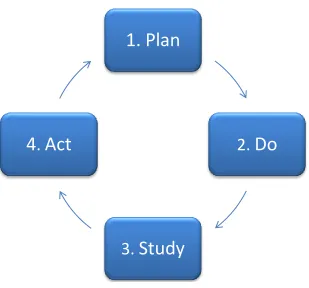
[image:2.612.153.462.230.518.2]services are changed and is promoted as part of the ‘Model for Improvement’ developed by Langley et al., (2009). The PDSA model includes a four-stage model; planning for the change, trying it, observing the results and acting on what is learned (Figure 1). Completing one cycle may lead to change or a return to the planning stage for ongoing testing. The model accepts that not all change will work as planned and that it is crucial to create a learning culture that allows participants to observe and reflect on what is and is not working, and then plans and tests out new actions to overcome challenges.
Figure 1: Plan-Do-Study-Act model.
1. Plan
2.
Do
3
The PDSA model was implemented to test ideas for improving the Pacesetters Programme (DH, 2008a), a Labour government initiative aimed at reducing health inequalities and delivering equality and diversity improvements for patients and service users. The initiative was founded on involving patient and public in designing creative and innovative interventions for service delivery, underpinned by initial development work and an evidence-base. Simultaneous evaluation aimed at measuring specified outcomes was intended to inform spread and sustainability (DH, 2008a). The programme was structured to include six geographical regions. Project members worked with Strategic Health Authority staff on change programmes developed inacute and primary care community mental health hospitals or ambulance providers
The Pacesetters Programme was premised on local NHS organisations applying the PDSA model to underpin their local change projects, with externally commissioned participatory evaluation intended to both contribute to and draw upon the local evaluations undertaken as part of the PDSA process. A participatory evaluation approach was used to ensure that stakeholders were actively involved in all service design and monitoring stages. Within this approach, evaluators support stakeholders to define project range and scope, co-design the service and design an evaluation that meets their local information needs (Cousins and Whitmore, 1998). Stakeholders are encouraged to reflect on the evaluation findings, identify learning and how this should be used to improve services. In this article, we analyse the PDSA model’s effectiveness as a vehicle for testing and implementing four Pacesetters innovation projects and recommend future evaluative practices.
Methods
To facilitate a participatory evaluation approach, it was important to engage all relevant public and professional stakeholders in the evaluation process, to convince them that their voices would be heard and that they had the opportunity to help design and evaluate the projects. To maximise participation in the evaluation, the evaluators sought to involve project teams in early dialogue. This required negotiating meetings with different stakeholder groups and to encourage community participation, a local venue was used in some instances. A further incentive for involvement in the evaluation for both public and professionals was the opportunity offered to develop their skills in participatory evaluation as an approach and in particular evaluation skills.
The evaluators had two distinct roles, to: (a) advise and support project teams and help them make their PDSA evaluation plans more coherent; and (b) collect data for the overarching externally commissioned evaluation (data were collated across the regional projects), feeding into an overall programme evaluation. Whilst the evaluators worked on several projects, here we concentrate on presenting a sub-sample judged to have completed at least one PDSA cycle during the evaluation period. The fact that all projects cannot be presented highlights the reality of conducting a real-world evaluation in a rapidly changing policy context. Approximately half of the total eighteen projects l projects did not complete a PDSA cycle during the engagement period with the external evaluation team, an outcome that reflects the evaluation’s complexities.
4
implementing necessary improvements (Act). The external evaluation team’s support for individual projects during the first PDSA cycle’s initial stages was limited by the external evaluation’s contraction after the projects had started. Projects were at different development-stages and despite the intention to apply the PDSA model, evaluation was often not central to the planning process. Additionally, ongoing support throughout the project life was complicated as the external evaluation was due to be completed before the project team achieved their local evaluation. Furthermore, the PDSA model was not always well understood or owned by project participants, whether NHS staff or public members.
Despite these tensions, the evaluators were able to support some projects to develop an initial (Plan), implement the innovation (Do) and select, develop and test methods for documenting change (Study). Project teams were guided to identify realistic objectives and indicators that could be achieved within the resource and time constraints. Indicators varied across the projects and included both qualitative and quantitative data. Qualitative data included participant interviews while quantitative indicators incorporated numerical data such as new-service attendance figures and individual lifestyle-changes, for example, recording weight. As the findings emerged there was a need to support project participants in learning from the local change ideas (Study), modify the innovation where needed (Plan, Do) and implement the improvements (Study, Act). As part of our overall participatory evaluation roles, the evaluators worked with the project stakeholders in several ways to gather overarching data. Approaches included attendance at project team meetings, analyzing progress reports and encouraging reflections on the challenges and key learning from the projects. In particular, the team explored four themes related to the programme’s guiding principles that reflected user involvement, the innovation, underpinning evidence-base, using simultaneous evaluation. The evaluation process was complicated because the project teams seemed unclear about participatory approaches related to the programme’s rigid monitoring requirements. There were parallel reporting-streams in the overall programme level evaluation that required multiple monitoring templates to be completed; some were perceived intimidating and complicated. Some templates were developed from Logic Models, which present the relationships between the resources invested in the project, the short term and long term outputs (McLaughlin and Jordan, 1999), also included in the programme evaluation.
The evaluation’s participatory approach needed to meet ethical review, research governance and data protection requirements. The evaluation was categorised as ‘service evaluation’ and so did not require review by the NHS Research Ethics Service; however, the evaluation team secured university ethics approval prior engaging the project stakeholders.
Case study projects
Four innovative change projects involving the public are presented. These were judged to have completed the PDSA cycle.
Case 1
5
Do: The project started prior to evaluator engagement and encouraged women to determine their lifestyle changes and included information on healthy eating, recipes and cooking. The programme was implemented in a hospital by two committed healthcare professionals over five face-to-face meetings, with integrated telephone support.
Study: The evaluation team was involved after initial planning work but prior to programme delivery. The evaluators were able to guide evaluation data collection, which included a food questionnaire, weight and blood glucose measurement, food diaries and interviews with women completing the programme. The evaluation team facilitated reflective discussions with the two project leaders – part of the overall evaluation. Through this process, it became clear that recruitment to the programme was problematic and ongoing attendance was also an issue.
Act: Reflections led to changes in the study approach, with telephone interview data being sought from non-attendees and non-completers. Data informed the actions taken in planning for a second delivery and PDSA cycle. Changes included updating the questionnaire, adding physical exercise to the programme and more crucially, changing delivery time and community setting.
Case 2
Plan: Established prior to evaluator engagement, this project aimed to improve healthy lifestyles in people with learning disabilities (PWLD), who are more likely to experience health problems and die from preventable causes (Disability Rights Commission, 2006). The project addressed how effective working between health professionals, leisure services and
engaging PWLD more effectively could promote healthier lifestyles. Do: Fourteen PWLD attended a 12 week programme with input from several health
professionals. The local health centre provided a meeting venue. The programme promoted healthy cooking/eating and PWLD attended exercise sessions at the local health centre. Each participant completed a Health Action Plan, which addressed activity and dietary objectives. It was intended that GPs would carry out an annual health check to monitor progress.
Study: Project data were collected through quantitative measurements such as pedometers, weight, BMI and quality of life indicators. The project team also facilitated client focus groups and calculated the programme’s running costs. The evaluation team met project stakeholders, observed and participated in steering groups and one client focus group. Act: Several changes were made to the evaluation approaches and programme delivery following
data analysis. steering group composition was reviewed and changed to include two, rather than one PWLD and GP representatives. The focus groups failed to yield quality evaluation data and therefore the approach was changed to include a more informal ‘reunion’ group. Group costs were high and a more cost-effective delivery model, employing lower cost staff, was developed.
Case 3
6
Do: Initial planning was based on interviews undertaken with six women attending mixed-gender CVD Trust rehabilitation exercise classes. The innovation intended to provide CVD rehabilitation for women only and develop materials to raise CVD awareness among women. Two events were planned at which service users were canvassed for their views. Difficulties in accessing women who had been through the Trust CVD rehabilitation programme prevented the intended approach being pursued. The evaluators and team developed a ‘market stall’ approach, held in the hospital, where questionnaire data about several promotional materials were collected.
Study: Questionnaire data from 67 women respondents collected at the market stall were analysed. The results showed that women favoured eye-catching, colourful, informative, attention grabbing, visual illustrations. Women also suggested various ways in which the message about female heart disease dangers could be more effective. These included: leaflets, posters, bags, T-shirts, adverts, mugs, key-rings and information in GP surgeries, media and the internet.
Act: The cardiac team reflected on the results that showed women preferred far more colourful and aggressive designs than had been the team’s preference. The team had thought that women would prefer classic designs with muted colours. This information was shared with the British Heart Foundation to enable prototype materials to be developed. The exercise proved valuable by highlighting the importance of gaining service user input in developing promotional materials.
Case 4
Plan: The project aimed to improve care for transgender peoplein acute hospital settings and address some responsibilities related to trans healthcare delivery set out by the Department of Health (2008b). Trans individuals are those whose gender identity has been (partly) reassigned, either male to female or female to male. The project’s main focus was healthcare delivery for trans individuals unrelated to their gender reassignment.
Do: A trans-people focus group was used to explore their experiences accessing healthcare. A project team was established that included six trans individuals, some of whom had taken part in the focus group and chaired project meetings. The project team, assisted by the external evaluators, developed a survey to gather information on healthcare staff’s understanding and awareness about trans-gender issues.
Study: The focus group and survey results were analysed by the project team. Results showed that significant staff in the trust were unsure, or lacked information about managing complex situations involving trans individuals; for example, where to place a patient needing hospital admission who was still in transition, so exhibiting both female and male characteristics.
Act: The survey results were used to develop a guide for trans-individuals care in acute settings, which was placed on the trust website and a training strategy for trust staff was designed by the project team, based on the guide and delivered by trans individuals with appropriate skills and expertise.
Findings
7
evidence from the cycle to inform actions and future planning. Case 1 identified the need to capture data from non-attendees and health-promotion programme non-completers. Case 2 acknowledged the need to change focus group data collection techniques to ‘reunion groups’ and included a second service user on the advisory committee. Cases three and four highlighted the importance of service user involvement in promotional materials development and staff training information. Positive findings such as these are not untypical and there are several projects reporting the PDSA model’s effectiveness in formative evaluation and health service redesign (Brown, 2006; Gray et al., 2007). However, the evaluators’ experiences suggest there was scope to improve PDSA model’s use.
The evaluation team sought to engage relevant project stakeholders in a participatory evaluation approach, to shape evaluation design and delivery using the PDSA model. However, delayed evaluation-team engagement meant all four cases had completed background work and planning prior to their involvement. Project teams had completed background work with service user input, agreed the innovation, had plans for implementation and some had organised an advisory committee, not always with service user input. Evaluation plans were often not central to this work as project teams had not always appreciated the intention to use the PDSA model in the Pacesetters evaluation. Project development meant there was limited opportunity for evaluator input to the planning stage, though there was more scope to review implementation (Do), developing evaluation plans (Study) and how these would support the action stage. Given their late appointment, evaluators were sensitive to the investment made by project teams when making observations and recommending changes. This was particularly crucial in one project where the team viewed external evaluators as a criticism of their efforts. These experiences highlight how important it is to engage the external evaluation team early. Prompt appointment will maximise potential to help project teams to develop evaluation plans using the PDSA model.
To facilitate completion and sustainability, the evaluators were keen to ensure that project teams maintained ownership and understood the evaluator’s two-fold role in the project: (a) to advise and support the project teams when making their PDSA evaluation plans more coherent; and (b) to collect data for the overarching externally commissioned evaluation. This dual role was clarified, challenging the expectations of those perceiving that the evaluators’ role was to undertake the PDSA model ‘study’: collecting, analysing and producing project evaluation data. Whilst the evaluators supported these aspects, it was not their primary role. Ensuring understanding was also important as the evaluators were due to complete their work prior to the project teams and therefore some individual projects would need to continue the PDSA activity. Ideally, evaluators would be contracted for the project’s duration; however, when this is not the case, ensuring that the project plan and evaluation ownership remains with the team responsible is crucial to ongoing PDSA cycle activity and eventual service adoption.
8
expounded as part of the PDSA model. These externally derived and complex reporting templates, some from the Logic Model (McLaughlin and Jordan, 1999), often sought less relevant information to the local project. These templates focussed on monitoring short- and long-term outputs and were centred on capturing outcome data rather than the wider learning from the project. Project teams found the templates intimidating and confusing and the emphasis on outcome measures engendered a reluctance to record wider learning. A wholly participatory approach might have developed reporting mechanisms that enabled and supported the team using the PDSA model and created a learning culture that reflected on what is and not working, and then plans and tests new actions to overcome challenges. To ensure broader learning was captured, the evaluation team encouraged project teams to reflect and record the processes occurring in PDSA cycle stages as part of team meetings. This provided evidence within the PDSA model, which informed the activity cycles and reflected the model’s philosophy.
Conclusions
Given the enormous changes in NHS commissioning and the commitment to evidence-based service commissioning, tools are required that offer the potential to test and implement changes in real work-place settings. Our analysis suggests the PDSA model offers an evaluation approach that supports innovative practice in the NHS and facilitates public involvement. Its effective use is premised on several enabling factors. It is crucial that project stakeholders are conversant with the model. This cannot be assumed and stakeholder education may be required. It is also important that staff and service users employing the model are working within a climate that is open to observing and reflecting on the successes and problems and is prepared to test new actions so that challenges are overcome. Any project’s evaluation plan is crucial and should be developed at the initial planning stage, prior to starting the cycle. All relevant stakeholders should be engaged at this point, which may include evaluators and the public. Any reporting processes developed should be meaningful to the project and preferably developed by the project team as part of a participatory evaluation approach. This will ensure that reporting is locally owned and is more likely to engender team commitment. Effectively employing the PDSA model allows staff and the public to identify what does and doesn’t work and provide an evidence-base for considering decisions regarding care delivery processes.
References
Brown, A. (2006), ‘Redesigning patient services’, Nursing Management, Vol. 13 No. 2, pp.26- 30.
Cousins, J. and Whitmore, E. (1998), ‘Framing participatory evaluation’, New Directions for Evaluation, Vol.1998 No.80, pp.5-23.
Deming, W.E. (2000), The New Economics for Industry, Government, and Education, 1st ed., The MIT Press., Cambridge, MA.
Department of Health. (2003), Tackling health inequalities: A programme for action, Department of Health, London.
Department of Health. (2006), Turning the corner: improving diabetes care, Department of Health, London.
9
Department of Health. (2008b), ‘Trans: a practical guide for the NHS’, Department of Health, London.
Department of Health. (2011), ‘Full response to the future forum report’, <:http://healthandcare.dh.gov.uk/detailed-response/>, accessed June 2011.
Disability Rights Commission. (2006), ‘Equal treatment- Closing the gap’, Disability Rights Commission, < http://drg-gb.org>, accessed July 2011.
Gray, J., Eden, G. and Williams, M. (2009), ‘Developing the public health role of a front line clinical services: integrating stop smoking advice into routine podiatry services’, Journal of Public Health, Vol. 29 No. 2, pp. 118-122.
Johnson, P. and Raterink, G. (2009), ‘Implementation of a diabetes clinic-in-a-clinic project in a family practice setting: using the plan, do, study act model’, Journal of Clinical Nursing’
Vol.18 No. 14, pp. 2096-2103.
Langley, G.L., Nolan, K.M., Nolan, T.W., Norman, C.L. and Provost, L.P. (2009), The Improvement Guide: A Practical Approach to Enhancing Organizational Performance,
2nd ed., Jossey Bass, San Francisco.
McLaughlin, J. A. and Jordan, G. B. (1999), ‘Logic models: A tool for telling your program's performance story’, Evaluation and Program Planning, Vol.22 No.1, pp. 65-72.
NHS Institute for Innovation and Improvement (2008), “ Plan, Do, Study, Act (PDSA)”
,available at:
http://www.institute.nhs.uk/quality_and_service_improvement_tools/quality_and_service_i
mprovement_tools/plan_do_study_act.html (accessed 2 December 2011).
Porter, C. (2009), ‘Improving GP diabetes management - a PDSA audit cycle in Western Australia’, Australian Family Physician, Vol. 38 No. 11, pp.939-44.