Reusing software assets in agile development
organizations - a management tool
A case at a medium sized software development organization
Reusing software assets in agile development
organizations - a management tool
A case study at a medium sized software development organization
Hengelo, August 2010
Author:
Wouter Spoelstra
Program: Business and Information Technology,
School of Management and Governance
Graduation committee:
Marten van Sinderen
Department: Information Systems (IS)
Maria Iacob
Department Information Systems and Change Management (ISCM)
Jasper Laagland
Department External
Johan te Winkel
Department External
University of Twente
Drienerlolaan 5
Preface
This paper presents the final research project of my master Business Information Technology. After six and a half pleasant years at the University of Twente this research completes my study and provides me the opportunity to discover the world in a new way, to choose a new direction on the road that leads me to the day of tomorrow.
While standing on this road and looking backwards I realize that I would not be here without the great support provided by a lot people, which I hereby want to thank.
First of all, I would like to thank my supervisors from the university, Maria Iacob and Marten van Sinderen, for their patience and ongoing support in all the research directions I went through. Their discussions and sharp feedback allowed me to structure and focus my ideas in such a way as this research report now presents to you.
The research project was completed during an internship at a medium sized software development organization. I would like to thank the management for offering me this opportunity. Moreover, I would like to express my gratitude to Jasper Laagland and Johan te Winkel as my company supervisors for their insights, fruitful discussions and motivation during the whole process. Furthermore, I would like to thank all my fellow colleagues and other interns for the interesting discussions, pleasant lunch breaks and good working atmosphere. Among these people I would like to thank the experts in particular, who helped me with the validation of the research outcomes.
Much appreciation also goes to my parents, my family and my friends for their everlasting support in finishing this research project successfully and supporting me during all the miles that I have travelled on my road already. Special thanks go to Erik van Gorp for helping me review this thesis thoroughly.
When looking backwards at the distance that I have travelled the choices made seem to be so obvious. But when looking forward the choices are not so obvious at all. The road bends in many directions and its crossings represent opportunities which you can take or cannot take.
In the short term future I take the opportunity to submit a paper version of this research to the ACM symposium on Applied Computing. If the paper is accepted a possible trip to Taiwan may follow. If the paper is not accepted this may be my last scientific contribution, because I already started working the 1st of August. From there on my journey continues and many new opportunities and choices are likely to follow.
Now we have arrived at the point that I have nothing more to say than that I hope you will enjoy reading and will be able to maximally benefit from the contents of this thesis. If you have any questions or comments then please do not hesitate to contact me, I will be happy to help you if I can.
Best regards,
Wouter Spoelstra
Management summary
Research background
Organization have been building on existing knowledge since the beginning of ages. The reuse of existing knowledge has proven to be a valuable basis for increasing employee productivity and product quality. In the software industry the reuse of knowledge manifests itself in software assets such as code components, functional designs and test cases. The reuse of this kind of knowledge is also referred to as software reuse. Software reuse is well described as a two-fold process. On one side software reuse is about creating reusable assets and on the other side it is about using these reusable assets in building new solutions.
The reuse of existing software assets offers intuitively great benefits, but unfortunately it has never reached its full potential. Within the normal project scope the creation of reusable assets is at its best a secondary concern, as the focus of a project is on creating a project specific solution as fast as possible and with minimal resources. In order to leverage knowledge outside the project scope additional resources are required. These resources are not always available and are more difficult to justify.
One of the organizations reusing existing knowledge in order to create new applications is the case organization. The medium sized software development organization is interestingly enough also working with agile development methodologies, imposing possible additional constraints on the reuse of software assets. Agile development methodologies are characterized by smaller project teams, informal processes and multiple development iterations. The use of these informal processes and the emphasis on communication and collaboration over extensive documentation can impose additional constraints on the leverage of knowledge outside the project scope. The reuse of software assets in combination with agile development methodologies is fairly unknown in literature.
Problem
The problem of software reuse in agile development environments is a complex one. When analyzing the problem in more depth it appeared that there is no holistic approach to address software reuse issues. Without such an approach an organization is not able to address specific software reuse issues and to identify potential improvement areas for achieving even greater benefits. Furthermore organizations are not always aware of the possibilities of reaching higher reuse levels and certainly do not know how to do this.
In order to address this problem a literature survey was performed with the purpose to extract requirements on the management tool for addressing those reuse issues. The requirements are extracted from the analysis of the concepts „software reuse‟, „agile development methodologies‟ and „software reuse frameworks / models‟.
Solution
The proposed solution is a software reuse management tool. The management tool provides the structure and the mechanisms for addressing software reuse issues. Although the tool was intended to be specific for typical agile development environments, the decision was made not to do this, as agile development methodologies can be successfully applied in more complex environments.
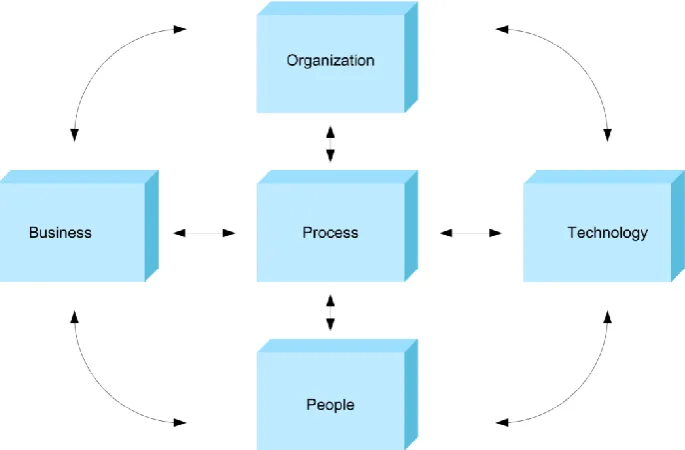
The management tool is based on two main components, a reuse maturity model and an assessment method. The reuse maturity model consists of five maturity levels and fifteen reuse factors. The maturity levels are incremental plateaus for addressing software reuse. The reuse factors are factors described in literature as factors influencing software reuse, quite similar to success factors. In order provide the users mechanisms to structure the reuse factors they are organized in categories according to the BTOPP (business, technology, organization, process and people) model. Within the results of the literature review two reuse factors are emphasized because of their importance for agile development methodologies. Namely the reuse factors „communication channels and support‟ and „communication tool support‟. These two reuse factors are, however, expected to be similar important for other development environments. Each combination, of a reuse factor and a maturity level, is represented by a set of reuse practices. These reuse practices are the result of operationalizing a reuse factor and can be measured by the assessment method component. The assessment method component adds a score and a relevance to each reuse factor. The score represents the state of a reuse factor in a maturity level and the relevance variable serves as an indicator for the importance of a reuse factor in a specific context. By using the relevance variable an organization can make the management tool specific for their individual context, which can possible be one where agile development methodologies are utilized. The assessment method component can be used to indicate strong and weak points of an organization.
Recommendations
Table of Contents
1. Introduction ... 3
1.1 Background ... 3
1.2 Research setting ... 3
1.3 Problem statement ... 4
1.4 Research objective ... 5
1.5 Research questions ... 5
1.6 Research method ... 6
1.7 Report structure ... 6
2. Literature survey ... 8
2.1 Software reuse ... 8
2.2 Agile development ... 12
2.3 Evaluating existing software reuse frameworks and models ... 15
2.4 Summarizing requirements ... 18
3. Reuse management tool ... 20
3.1 Solution approach ... 20
3.2 Management tool structure ... 21
3.3 Software reuse maturity levels ... 23
3.4 Reuse factors ... 26
3.5 Reuse practices ... 51
3.6 Reuse factor scoring ... 53
3.7 Reuse factor relevance ... 55
3.8 Using the management tool ... 56
4. Validation approach ... 60
4.1 Validation model ... 60
4.2 Validation method ... 61
4.3 Expert selection and case setting ... 64
5. Validation results ... 65
5.1 Requirements evaluation ... 65
5.2 Application results ... 66
5.3 Expert evaluation ... 84
5.4 Evaluating validation results ... 88
6. Recommendations ... 90
6.1 Recommendations for improving the management tool ... 90
6.2 Recommendations for the case organization ... 91
7. Discussion and conclusion ... 92
7.1 Conclusion ... 92
7.2 Contributions ... 93
7.4 Limitations and further research ... 93
7.5 Recommendations for the case organization ... 94
List of abbreviations ... 95
List of figures ... 96
List of tables ... 97
List of references ... 98
Appendix A – List of interviewees ... 104
Appendix B – Interview guidelines ... 105
Appendix C – Top 25 IS journals ... 106
Appendix D – Included empirical studies ... 107
Appendix E – Overview reuse factors ... 110
Appendix F – Mapping reuse factors to the BTOPP model ... 112
Appendix G – Mapping the CMMI-DEV model to reuse factors ... 113
Appendix H – Mapping reuse factors to maturity stages ... 115
Appendix I – Organizational models ... 116
Appendix J – Expert panel ... 118
Appendix K – Validation procedure... 119
Appendix L – Documents for validation: background ... 120
Appendix M – Documents for validation: assessment method ... 125
Appendix N – Documents for validation: evaluation form ... 144
Appendix O – Assessment scores... 146
Appendix P – Assessment relevance ... 147
1.
Introduction
This chapter provides the reader with an insight into the research area and the background of this thesis. First of all the research background will be illustrated by means of an example. Secondly the research setting and the problem statement are elaborated on. Thirdly the research objectives and the research approach are discussed. Lastly the thesis structure is described.
1.1
Background
The reuse of knowledge is considered a major factor for increasing productivity and quality. Although organizations have always used different knowledge practices to produce goods and services, their way of sharing knowledge is often informal and not systematic [1]. A large quantity of literature is dedicated to this subject as the reuse of knowledge is interesting to both practitioners and researchers.
In the software industry the reuse of knowledge manifests itself in the reuse of products and code components. Unfortunately, reusing such knowledge assets is not always without risks. The accident with the Ariane 5 rocket, on 4 June 1996, is arguably one of the most expensive software failures in history [2]. The reuse of a wrong piece of software demonstrated that that system safety and quality does not necessary increase with component reuse, instead it actually took millions of dollars due to a fatal failure [3]. Nuseibeh argues that large scale software development is an engineering principle that requires „precise specifications and trained engineers‟ for the development of „safer‟ systems [3].
Precise specification and trained engineers indeed seem to be crucial for the development of safety critical systems, other more agile practice can be applied for the development of non-safety critical systems. Related to the Ariane 5 rocket example, Nuseibeh recognizes the influence of both fine-grained processes, such as „programming and design techniques’, and coarse-grained processes, such as „project management‟, in software development and reuse [3]. These insights perfectly illustrate the
large variety of aspects visible throughout this research.
In literature the reuse of existing software assets is referred to as software reuse. Software reuse can be considered as a specific form of knowledge management, where the knowledge assets to be managed are specified down to software assets. Software reuse can be expected in any organization developing software products. The focus of knowledge management is on the support of creating, storing, retrieving, transferring and applying knowledge in organizations [4-5]. Software reuse should similarly support such processes, depending on the nature and the scope of the individual organization.
Throughout this research, software reuse is approached from a business perspective. The technology, such as modular or object oriented languages needed for software reuse, is therefore taken for granted. The focus is instead on more managerial issues, such as the coarse-grained processes mentioned by Nuseibeh.
1.2
Research setting
1.3
Problem statement
The introduction started with the statement that companies have always used different knowledge practices to produce goods and services. This statement is also true for software development organizations, who have employed software reuse since the beginning of programming languages, to achieve increased employee productivity and higher product quality [6].
Although, intuitively large gains can be obtained with software reuse and a lot of research was dedicated to the subject, it has never reached its full potential. Within the normal project scope the creation of reusable assets is at its best a secondary process, as the focus of such a project is on creating project specific solutions, as fast as possible and with minimal resources [7]. In order to leverage knowledge outside the project scope additional resources are required and several issues have to be addressed [8]. The resources to create and maintain reusable assets are not always available and organization lack concrete insights in the potential of software reuse [9].
The use of agile development methodologies in combination with software reuse raises new questions [10]. Software development, in general, is a knowledge-intensive activity and its success heavily depends on the developers‟ knowledge and experience [11]. The use of agile methodologies emphasizes the dependency on these individuals even more, as the focus of agile development methodologies is on people and communication, and less on documentation [12]. Tacit knowledge is used and shared, rather than explicit knowledge. Tacit knowledge is knowledge stored in the minds of individuals, where explicit knowledge is stored in artefacts [13]. The extensive use of tacit knowledge seems to impose constraints on the reusability of software assets. Nevertheless software reuse also occurs in these organizations, but is just understood in a limited manner.
The case company is one of the companies successfully reusing software assets utilizing agile development methodologies. Although there are some known issues, their primary interest is optimizing the software reuse program, to achieve higher reuse levels in the future. Higher reuse levels are expected due to maturing solutions and domains that are continuously redfined.
To create a relevant background of known issues a prelimairy research was carried. These known issues with software reuse include that components are being developed over multiple locations, changes in components are not always communicated and that resources are not available to assign full-time roles dedicated to the management of reusable assets. Some of these issues are obviously related to software reuse in general, while others seem to be emphasized by the use of agile methodologies and the related team structures. The team structure is also inherent to the organizational structure, which promotes the flexibility of a smaller organization while still being able to grow large. An overview of the interviewees used for the primary research is presented in Appendix A. Appendix B presents the used interview protocol. The results are not included in the Appendix, but are elaborated on throughout this research report. The main reason for this is that the results, at the point in time they were obtained, lacked a concrete framework for analysis.
The problem to be solved by this thesis is that there is no good framework or tool, against which software reuse issues can be mapped, discussed and evaluated. Because there is no such a framework or tool employees find it difficult to discuss the problems and identify potential solution areas. Also it is unknown what higher levels of software reuse actually are. As such, the problem statement is formulated as following:
P1:Companies have difficulties in addressing software reuse management issues.
1.4
Research objective
Ellis and Levy note that the research objective is to provide an answer to the research problem [14]. This research should provide insights into how companies can address software reuse issues, evolving over time through different levels of reuse. Based on the former, the following research objective is formulated:
O1: To develop a management tool for addressing software reuse issues.
The management tool for software reuse, or simpler, the reuse management tool, needs to be applicable in agile development environments. Based on the previous section some other requirements also became visible. The literature review describe in Chapter 2 is used to gather and formulate all the requirements.
1.5
Research questions
The research objective is operationalized by research questions [14]. Based on the research objective formulated in the previous section, the following main research question is formulated:
R1: How to address software reuse issues through the use of a management tool?
To answer the main research question several sub-questions are defined, which follow the research method elaborated on in section 1.6. The sub-questions formulated are:
Problem analysis
R.1.1: What is software reuse and what are software reuse issues?
R.1.2: What are the incremental stages for addressing software reuse issues?
R1.3: What are the characteristics of agile development methodologies and how does it influence software reuse?
Based on the previous questions:
R.1.4: What are requirements for the software reuse management tool?
Solution alternatives
R.1.5: Which frameworks and models are available to describe software reuse and how suitable are they for a software reuse management tool?
R.1.6: How to define or adapt a suitable software reuse management tool?
Solution validation
R.1.7: Does the software reuse management tool meet the requirements as formulated in R4? R.1.8: Is the software reuse management tool applicable in an organization working with agile development methodologies (such as at the case company)?
Solution evaluation
R.1.10: To what extent can the software reuse management tool be applied to other organizations?
R.1.11: Which improvements are possible for future research?
1.6
Research method
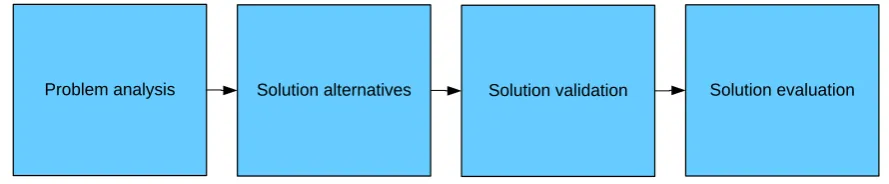
The research method is based on the first four phases of the regulative cycle [15]. The regulative cycle is the „general structure of a rational problem solving process‟ [15]. The first phase is the
investigation of the current problem. This phase consist consists of identifying relevant problems and relating it to the current state of literature. The second phase consists of formulating solution alternatives, based upon relevant findings in literature. The third phase consists of validating the results within the given research setting. The final phase is the solution evaluation. Here the results are generalized and discussed, including implications for future research. An overview of the research design is presented in Figure 1.
[image:12.595.74.519.269.361.2]Problem analysis Solution alternatives Solution validation Solution evaluation
FIGURE 1: RESEARCH METHOD
The problem analysis is based on a literature review, where the results of the initial interviews are used as a relevant background. The purpose of the literature review is to identify requirements for a software reuse management tool and to evaluate available tools, frameworks and model. The evaluation of the existing tools, framework and models is part of the solution alternatives. Based on that, a new or adapted management tool is proposed. The management tool is validated through the use of an expert panel in combination with a case study. The expert panel is asked to apply the management tool to their organization, after this step the results are discussed and evaluated. During the application process and active researcher role is maintained to acquire insights in the reasoning of the experts. The results are used to improve the management tool and to provide recommendations to the case company
1.7
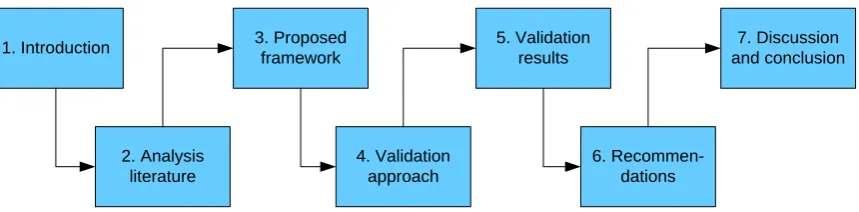
Report structure
1. Introduction
2. Analysis literature
3. Proposed framework
4. Validation approach
5. Validation results
6. Recommen-dations
[image:13.595.86.516.76.182.2]7. Discussion and conclusion
2.
Literature survey
This chapter discusses the literature survey. The goal of the literature survey is to derive relevant requirements for a software reuse management tool. For this the concepts of software reuse, agile development are analyzed and discussed. After that, existing reuse frameworks and models are evaluated based on the defined requirements. Based upon the evaluation a conclusion is drawn whether to use existing reuse framework and models or to create a new one. The chapter is rounded off by a summary of the requirements discovered in the survey.
2.1
Software reuse
The introduction of this thesis started with the statement that software reuse does not differ much from knowledge management. Interestingly, some researchers use both terms to describe the same concept, e.g. Desouza et al. [16]. When investigating both concepts more closely, it appears that the assets to be managed with software reuse are specified down from general knowledge assets to software related assets. Furthermore, as mentioned by the framework of Holsapple and Joshi, using managed assets is the same are reusing managed assets [17]. This indicates that the management of assets used is the same as the management of assets to be reused. This section elaborates on software reuse characteristics and reusable assets. At the end of this section requirements are derived for the reuse management tool. Although there are many similarities between knowledge management and software reuse, the concept of knowledge management is not further elaborated on in this research report. The interested reader can use the literature survey of Alavi et al. [4] as a starting point for knowledge management research.
According to Krueger the essence of software reuse is „the process of creating software systems from existing software rather than building software systems from scratch‟ [18]. Mili et al. describe
software reuse as a two-fold concept. First of all it is about „building software that is reusable by design‟ and secondly it is about „building with reusable software‟ [19]. This two-fold definition
explicitly indicates that software reuse it not pure a technical issue, but also an organizational one.
Systematic software reuse has been regarded as the only appropriate solution for the notion of the software crisis as mentioned in 1968 [18-20] . Systematic software reuse is defined as reuse which is repeatable and excludes ad-hoc reuse events [7]. The software crisis was used to describe the „ever increasing burden and frustration that software development and maintenance have placed on otherwise happy and productive organizations‟ [20]. The alternative for systematic software reuse is
automating the development process in such a way that „a computer system is capable of producing executable code based on informal, incomplete and incoherent user’s requirements’ [19]. At the time Mili et al. wrote this statement such an alternative was considered futuristic. Currently, much research is focussed on the development of model driven engineering and model driven architectures. For further reading see the paper of Atikson et al. [21] and the paper of Favre et al. [22]. Despite the fact that software reuse has never reached its full potential it still offers great potential for increasing software productivity and software quality [19-20]. Lanergan and Grasso estimated that 60 percent of all business application designs and code are redundant and thus can be standardized for reuse [23]. Reuse levels reported in literature range from 20% to 85%, but there are some research reports where no significant reuse levels are achieved, making such reuse figures rather meaningless. Reaching high levels of reuse seems to be associated with narrow domain focus and a suitable development strategy [24].
Software reuse literature, in its early years, was focused on repositories and technical issues such as search and retrieval of reusable assets. Another name for the repository storing reusable assets is the software library. Burton et al. define a software library as a architecture with four subsystems: „library management‟, „user query‟, „software component retrieval and evaluation score‟ and „software computer aided design‟ [25]. The second wave of literature regarding this topic recognized that
Through the various literature waves different approaches and reusable assets are identified and discussed as well. Krueger defines software reuse approaches ranging from: source code components, software schemes or reusable program patterns, reusable transformation systems, application generators up to very high level languages and reusable processors [18]. Morisio et al. distinguish software reuse by different process maturity levels ranging from ad-hoc to systematic. Beside that they also recognize reusable assets varying from code composition to code generation, and from only reusing code to reusing all artefacts [7]. All of them share the distinction between an approach with „building blocks‟, which is based on reusing software products, and the „generative or reusable processor‟ approach, which is based on reusing the process of previous software development efforts,
often embodied in computer tools (processors) which automate parts of the development process [7, 18-19].
An article by Griss also captures the different reuse approaches and reusable assets by presenting an incremental view. The view is in line with the results revealed by the initial interviews held for the problem analysis. With this view it remains important to note that the highest levels of reuse are not necessary the best, this rather depends on other factors such as the scope of the domain and the development strategy. An overview of the incremental levels of Griss is presented in Figure 3.
Benefit
Investment, experience High
Low
Low High
5. Systematic domain specific reuse
Reuse libraries
Reuse factories
Maintenance teams
0.None
1. Code leverage
2. Black box reuse
3. Managed work products
[image:15.595.75.515.301.530.2]4. Architected reuse
FIGURE 3: INCREMENTAL STAGES OF REUSE ADAPTED FROM [27].
black-box component are changing and in order to satisfy a broader range of people it is required that its development is guided into a certain direction. This is what is happening with a managed work product, where a team of users is guiding the development of reusable assets. Beyond this point, it is necessary to architect the components according to the structure of the application that will use them, in order to reach higher reuse levels. The use of architectures and the set of components may be optimized by systematic domain specific reuse [27]. The use of architectures to develop components is in line with the reuse factory approach, also referred to as product line development. A product line is a set of related products set up in a shared manner.
Systematic software reuse is presented in literature as the solution to achieve higher reuse levels. This approach is strengthened by various researchers reporting both productivity and quality gains with more formalized processes [28-29]. Such an approach is often rather static, where the assumption is made that components are predefined and carefully tested before they are populated into a repository. Only a few researchers noted the dynamic aspects of software reuse. Henninger is one of them and he notes that: „repositories for software reuse are faced with two interrelated problems: acquiring the knowledge to initially construct the repository, and modifying the repository to meet the evolving and dynamic needs of software development organizations' [30]. Henninger maintains a library approach in the above mentioned citation. When taking a product line approach, additional insights regarding software component evolution are gained. Tomer et al. describe the evolving dynamic aspects along three axes: the development, maintenance and reuse axis [31]. An overview of this model is presented in Figure 4.
Reuse axis (products)
Maintenance axis (evolution cycles)
Development axis (artifact versions) Core-asset
repository
Product A Product B
Mining an existing asset
[image:16.595.83.479.377.573.2]Acquiring a core asset
FIGURE 4: THE THREE-DIMENSIONAL EVOLUTION OF A SOFTWARE PRODUCT LINE [31].
Transformation operations (Development, Maintenance)
External Acquisition
(COTS)
New for Reuse
Repository assets
Private Assets
Copy and Paste
Adaption for Reuse
Black-Box reuse
New Development White-Box reuse
Mining and Cataloging Cataloged
assets Acquisition
R
P P ‘
R ‘
T
ra
n
s
it
io
n
o
p
e
ra
ti
o
n
s
(
R
e
u
s
e
[image:17.595.135.429.84.311.2])
FIGURE 5: ASSETS AND REUSE OPERATIONS [31].
As mentioned earlier, reusable software assets can be used as black-box or white-box components [9]. The model of Tomer et al. [31] explicitly recognizes this distinction. With black-box the component is used 'as-is', which means that it is not adjusted, but instead its environment has to be adjusted to it. With white-box reuse the component itself is adjusted, allowing multiple versions of the same component simultaneously. Higher reuse gains are reported with black-box reuse, which is in line which Krueger's theory of reuse and abstractions. According to this theory reuse can only be successful when abstractions are present hiding the internal logic of components [18].
The key message of software reuse is that the costs related to the reusable assets are lower than when all components are redeveloped from the ground up. This means that with a successful reuse program the average cost of searching for a component, determining its reusability and adjusting or building a new one is lower than the costs of continuously building new components [19]. In practice also indirect costs and gains play a role, such as the possible shorter time to market and the scalability of applications.
During the literature survey it appeared that successful software reuse programs are described by addressing relevant reuse factors. Earlier in this section it already appeared that the factors can be increasingly addressed according to the model of Griss. Beside that the components are often not static, but instead they are dynamic and evolving over time. Based on that premise, the following three requirements for a reuse management tool are defined:
Req1: The management tool should address multiple, incremental, levels of reuse in line with the view of Griss [27].
Req2: The management tool should address relevant factors describing software reuse issues.
Req3: The management tool should address changing reusable assets.
organizational factors. The emphasis of recent research is on organizational factors, instead of technical factors. All investments made in software reuse should be justified in such a way that the average cost related to software reuse are lower than the cost associated with building components from scratch. Multiple reusable assets exist, which can be used as static items, but are more likely to be reused as dynamic items, evolving over time.
2.2
Agile development
This section discusses agile development methodologies and related to that the characteristics of agile development environments. A short introduction to the creation of more agile development methodologies is provided. After that agile development methodologies are compared with more traditional methodologies, such as the waterfall model. The comparison is used to provide an insight in the characteristics. Lastly the use of agile development methodologies is evaluated for the adoption of software reuse and relevant requirements are derived.
The development of agile methodologies started two decades ago, back in the 90‟s, to meet rapidly changing requirements and short product cycles, utilizing: iterative development, prototyping, templates, and minimal documentation requirements [32]. Among these agile approaches are „Extreme Programming, Crystal methods, Lean Development, Scrum, Adaptive Software development’ and others [33].
All of these methodologies share the common values formulated and promoted by the Agile Manifesto [12]. These are „individuals and interaction over processes and tools‟, „working software over comprehensive documentation‟, „customer collaboration over contract negotiation‟, „responding to change over following a plan‟ [12]. In all stages of the development process, they are characterized to
embrace change rather than to fight against it. This is in sharp contrast with more traditional methods, which try to eliminate change in the early stages of the development process, as changes in a later stage would mean significant increases in costs [34]. Such changes can, however, not always be overcome.
In order to create an understanding of what agile development methodologies really are, the example of Scrum is used. An overview is presented in Figure 6 and elaborated on below the figure.
Product backlog: Prioritized product features desired by the customer Sprint backlog:
Feature(s) assigned to sprint
New functionality is demonstrated
at end of sprint Every 24
hours
Every 30 days Backlog items
expanded by team
3%
Scrum 15 minute daily
[image:18.595.81.524.479.756.2]meetings
Scrum is designed to handle rapidly changing business requirements. With this method work is broken down into series of „sprints‟ based on a prioritized list of backlog items. The backlog items contain the requirements of features assigned to the sprint. Daily meetings are used to share relevant issues based on the exchange of tacit knowledge. A sprint itself should last one to a maximum of four weeks. After a sprint a working product is delivered and the next sprint can be prepared [32].
The example of Scrum illustrated several characteristics which are common to most agile development methodologies. Iterations are used to develop products, opposing the traditional planned approach. This difference is well illustrated by Robey et al. stating that just as water does not flow uphill, the waterfall model does not allow iterations [36]. By further comparing agile development methodologies with traditional methodologies more insights are gained. Several researchers elaborate on the similarities and the difference between both methodologies, e.g. [37-38]. The differences mentioned by Nerur [38] are presented in Table 1.
Characteristics Traditional Agile
Control Process centric People centric
Management Style Command-and-control Leadership-and-collaboration
Knowledge management Explicit Tacit
Role assignment Individual , favours
specializations
Self-organizing teams, encourages role interchangeability
Communication Formal Informal
Customer’s role Important Critical
Project cycle Guided by tasks or activities Guided by product features
Development model Life cycle model (Waterfall,
Spiral, or some variation)
The evolutionary-delivery model.
Desired organizational form / structure
Mechanistic (bureaucratic with high formalization)
Organic (flexible and participative encouraging cooperative social action)
Technology No restriction Favours object-oriented
technology
TABLE 1: AGILE METHODOLOGIES COMPARED WITH TRADITIONAL METHODOLOGIES [38].
Tacit knowledge cannot be captured as it is stored in the minds of individuals. As such, the focus is on explicit knowledge [13]. Explicit knowledge does not seem to have priority with agile development methodologies, nevertheless several artifacts are created. Two reasons exist for creating those artifacts. First of all, artifacts are created to facilitate communication and understanding among project members, and secondly they are created to facilitate communication and understanding between the project members and the customer [38]. The purpose of agile development methodologies is not to ignore documentation, rather it is to prevent over-documentation by having frequent face-to-face meetings. Over-documentation is inherent to long communication chains, in which the writer cannot estimate the prior knowledge of the reader [40]. Furthermore a document can never contain all the elements required for a successful knowledge transfer, so communication remains essential.
The artefacts created during agile development practices do not differ radically from other software development projects. The created artifacts also include requirement specifications (possible in the form of Scrum backlogs), architectural descriptions, source code and test cases. The various artefacts provide different views on the system at different points in time. This means that artifacts do not exist in isolation from each other, but rather are complementary. They all represent the final solution. Likewise, changing requirements in one document possible relate to changes in other documents and have an impact on the final solution or the other way around [9]. The main delivery points for the artifacts are at the beginning or the end of an iteration cycle. At the end of each iteration a release is deployed, representing the state of the solution at that point in time.
Another important aspect of agile development methodologies is the changing roles. Instead of specialization, self-organization teams are used where roles are interchanged. This also enables workers a certain amount of freedom to coordinate their own activities. Social interaction and frequent meetings are stimulated.
Agile development methodologies have proven to be successful in settings where the team size consists of a maximum of 15-20 people [34]. In these setting the focus is on the talents and skills of individuals, where the process is moulded to the needs of individuals and teams, instead of the other way around [41]. Agile methodologies alone are, however, not sufficient in more complex environments such as in large scale projects or distributed environments. This does not mean that they cannot be successful in more complex settings, rather the contrary. Several researchers have identified successful applications of agile development methodologies in such settings, e.g. [42-43].
Ambler defines 8 factors against which agile development methodologies can be scaled to meet the demands of more complex environments [44]. These are:
1. Team size
2. Geographical distribution 3. Regulatory compliance
4. Domain complexity
5. Organizational distribution 6. Technical complexity 7. Organizational complexity 8. Enterprise discipline
The exact way of scaling the factors depends on the individual organization. The organization has to select those factors that are important for them and tailor the methodologies accordingly [44].
not focus on producing reusable assets, which require substantially larger time investments [10]. While this is true, it is not a problem limited to agile development methodologies, rather for software development in general (see also section 2.1). The second argument is that reusable artefacts require a certain amount of control, as the impact of changes in one artefact affect all applications using that artefact [10]. A part of this is covered by configuration management issues, but the other part has to deal with the control issues of self organizing teams. Communication and control issues are therefore regarded as an important aspect of organizing software reuse in agile development settings. This aspect is also present when reusing in other development environments, where reusable assets also have to be leveraged outside the project scope (see also section 2.1), it is only more reinforced when using agile methodologies.
Based on the comparison of agile development methodologies and more traditional methodologies several characteristics are identified. The characteristics are related to software reuse and based on that the following requirements are extracted:
Req4: The focus of the management tool should be on code components
Req5: The management tool should not be limited to agile development environments.
Req6: The management tool should provide options to make it specific to the individual context of an organization.
Req7: The management tool should address relevant communication and control issues.
The focus should be on code components as agile development methodologies are focussing on producing code as fast as possible. This, however, does not mean that the tool should be limited to it, as additional artefacts such as design documents are still used to support the code components. The management tool should not be limited to agile development environments as recent research has proved that they can be scaled up to more complex environments. Limiting the tool to only typical agile environments would result in a limited applicable tool. The management tool should, however, provide options to make the tool specific for the context of an individual organization. Based on the comparison it already appeared that certain aspects of the management tool are more applicable for a traditional environment than for an agile development environment. Among these are the differences between the focus on process and people aspects. Lastly the management tool should address relevant communication and control issues, as they are indentified as relevant scaling factors.
To conclude this section: agile methodologies promise great benefits over traditional methodologies. By doing so, they focus on characteristics such as people and communication over documentation, imposing constraints on their use over multiple projects. Nevertheless, agile methodologies can successfully be scaled up to meet more complex settings. The literature regarding software reuse lacks a concrete understanding of software reuse issues in agile project settings. While it is not the direct purpose of this thesis, it may require that agile development methodologies have to be scaled up in order to successfully apply software reuse.
2.3
Evaluating existing software reuse frameworks and models
This section discusses relevant existing software reuse frameworks and compares them according to the criteria defined in the previous sections. The goal of this section is to check which models or framework can be used for a software reuse management tool. The articles of Frakes and Terry [45] and Garcia et al. [46] are used as guideline for identifying existing frameworks and models. The various frameworks and models are first presented according to their timeline, after which they are evaluated.
reuse benefits. In the research approach of Holibaugh et al. a synthesis between an evolutionary and an empirical approach is suggested for investigating software reuse. The evolutionary approach is not elaborated on in the paper of Holibaugh et al., but they do note incremental steps to get from ad-hoc reuse to folklore (systematic reuse).
Koltun and Hudson introduced the Reuse Maturity Model (RMM) in 1991 [48]. The model is introduced to assess organizational processes instrumental to achieving high levels of reuse. The model consists of 5 maturity levels, similar to the levels defined by the CMM of the SEI institute, and 10 dimensions of maturity. The model was set up to enable executive management to view software reuse as an interconnected set of cultural, institutional, financial, technical and legal challenges that must be tackled in a coordinated fashion.
In the same year Prieto-Díaz proposed a model for implementing reuse [49]. The model also defines 5 levels: initiation, expansion, contraction, steady state and expansion. Although the model is rather descriptive it does mention various factors influencing software reuse. These factors are ranging from technical to managerial, economical and legal.
Both models seem to be used as the basis for the STARS (Software Technology for Adaptable Reliable Systems) maturity reuse model, presented at the Fifth Annual Workshop on Institutionalizing
Software Reuse in 1992 [50-52]. The reuse maturity model was organized around three parts, an abstract model, self-assessment questions and procedures, and guidelines for strategy formulation. The reuse processes formulated are: reuse planning, reuse creation, asset management and asset utilization. These processes form the basis of the reuse maturity model, where going through these processes can be seen as incremental steps. First a plan is created, after that reusable assets are created, next asset management follows and lastly the assets have to be utilized. Garcia et al. note that the major disadvantage of this approach is that the initial investments are rather high [46].
In 1993, an upgrade of the STARS model was presented by T. Davis [53]. The model is meant for improving an organization‟s reuse capability and therefore referred to as the Reuse Capability Model (RCM). The RCM consists of two components, an assessment model and an implementation model. The assessment model is used to measure the state of the reuse capability of an organization, based on critical success factors. The papers suggests that strengths (and thus weaknesses) should be identified on which future goals should be set. The implementation model contains four stages: opportunistic, integrated, leveraged and anticipating. Based on mapping characteristics of the results formulated during the reuse assessment the right implementation stage can be chosen as reference point for further developing the reuse capabilities into a reuse-based culture [54].
The work of Wartik and Davis (1999) elaborates on the RCM created in 1993, by proposing a phased reuse adaption model [55]. The insights gained by applying the RCM in about 30 organizations lead to conclusion that risks had to be reduced or avoided during reuse adaption. This resulted in a phased model. The defined phases are „scoping and assessment‟, „definition‟, „pilot use and demonstration‟, „management and evolution‟, and „expansion‟. Each phase starts with evaluating reuse goals and a justification should be made for further steps. Although this model is obviously another step forward it remains rather static. Reuse is the result of carefully planned activities.
In the 2007 paper of Garcia et al. the results of the RiSe (Reuse in Software Engineering Group) project are presented [46]. After Garcia et al. evaluated the vast majority of reuse models mentioned above, they came up with a reuse maturity model. This model consists of 5 maturity levels (ad-hoc, basic, initial, organized and systematic) and 15 reuse factors divided over 4 categories (organizational, business, technology and process). The main goal of this model is to propose a systematic and incremental approach to reuse adoption. At the same time they combine the results of the previous models in the latest known version of a software reuse model.
After evaluating existing software reuse frameworks and models another requirement was added. This is due to the fact that most of the existing framework and models provide little guidance regarding their application and assessment.
Req8: The management tool should support users with guidelines and an assessment method.
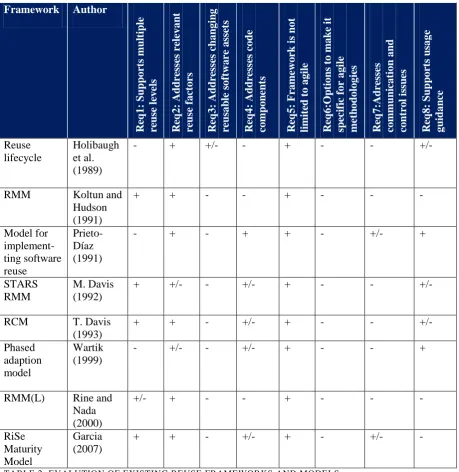
The various models and frameworks are compared on the previously defined requirements resulting in Table 2.
Framework Author
R eq1: Su pp or ts m ul ti p le re use lev el s R eq2: A dd re ss es r el evan t re use fac tor s R eq3: A dd re ss es c han g in g re usab le s of tw a re a ss et s R eq4: A dd re ss es c ode com pon ent s R eq5: Fra m ewo rk i s not li m it ed to ag il e R eq6: O p ti ons to m ake it spec if ic f or ag il e m et h odolo gi es R eq7: A dre ss es com m un icat ion an d cont ro l iss u es R eq8: Su pp or ts u sage guidanc e Reuse lifecycle Holibaugh et al. (1989) - + +/- - + - - +/-
RMM Koltun and
Hudson (1991) + + - - + - - - Model for implement-ting software reuse Prieto-Díaz (1991) - + - + + - +/- + STARS RMM M. Davis (1992) + +/- - +/- + - - +/-
RCM T. Davis
(1993) + + - +/- + - - +/- Phased adaption model Wartik (1999) - +/- - +/- + - - +
RMM(L) Rine and
[image:23.595.67.527.281.754.2]Nada (2000) +/- + - - + - - - RiSe Maturity Model Garcia (2007) + + - +/- + - +/- -
Based the evaluation as presented in Table 2, several conclusions can be drawn. First of all, there is no existing framework or model that meets all the requirements of the reuse management tool. Secondly, the RiSe maturity model [7] satisfies most criteria, but also fails at crucial points, namely: in addressing changing reusable assets and providing practical guidance. The assessment method was out of scope at when the Rise Maturity model was presented and the model was never validated. No additional papers were found describing such an assessment method or validation related to the Rise Maturity Model. Changing reusable assets are also barely addressed by the model. Some reuse maturity models present configuration or change management as a way of managing changes, but in the RiSe maturity model this aspect is rather buried in other factors. Some characteristics of changing reusable assets are recognized in factors such as „previous development of reusable assets', 'origin of the reused asset' and 'technology support'. Nevertheless this point is rather weakly addressed. The strong point is that it elaborates on the work of previous reuse maturity models. Thirdly, almost all the reuse models and frameworks use the Capability Maturity Model (CMM) of the Software Engineering Institute (SEI), see e.g. [56]. Although many models and frameworks claim to use CMM, it is actually used as guidance instead of a prescription. Ted Davis mentioned that 'maturity as an indicator of capability' and 'the use of maturity levels' is not present in his model. The same is true for many other reuse frameworks and models. Fourthly, the reuse factors mentioned by the existing reuse maturity models resemble each other, but at the same time lack a systematic theoretical foundation. The reuse factors can serve as a basis for describing software reuse.
Summarizing this section existing reuse maturity models fail to meet all the requirements. The model presented by Garcia et al. provides a good starting point, although the model itself was never finished. A more systematic literature review to software reuse factors should serve as the basis for the software reuse management tool.
2.4
Summarizing requirements
Based upon the literature survey eight requirements were extracted. These requirements are briefly discussed and summarized in this section.
The first requirements states that the software reuse management tool has to address multiple, incremental levels of reuse in line with the view of Griss [27]. The incremental levels of reuse defined by Griss are: code leverage, black-box components, managed work products, architected reuse and domain optimizing reuse.
The second requirement states that the management tool has to address relevant factors describing software reuse. Although some of these factors have been addressed by the literature review, a more systematic approach is needed to identify them. This is elaborated on in chapter 3.
The third requirement states that the management tool has to support reusable artifacts, which are inherent to changes. The changes are inevitable when working with agile methodologies.
The fourth requirement states that the management tool should focus on code components. The focus of agile methodologies is on producing code as fast as possible, where documentation is only used as support. Similarly the management tool should focus on code components, where documentation is only used as support.
The fifth requirement states that the management tool should not be limited to agile methodologies alone. This seems to be contradicting at first sight, but agile methodologies can be scaled up to more complex environments. To make the management tool applicable for these environments as well, the focus has to be at a more general level.
The seventh requirement states that the management tool has to address relevant control and communication issues. Where face-to-face communication and co-location are sufficient in smaller projects additional attention has to be paid to control and communication issues in larger projects or multiple smaller projects.
The eighth and the final requirement states that the management tool has to provide guidance in its application through an assessment method. Existing reuse framework and models provide little to no guidance in its application. The management tool should include both a reuse maturity model or framework and an assessment method.
3.
Reuse management tool
This chapter proposes a reuse management tool suitable for organizations working in agile development environments. Its goal is to provide those organizations a roadmap for managing their reusable assets through various incremental stages of software reuse. The first section of this chapter elaborates on the chosen solution approach. The second section describes the components of the management tool. In the sections after that, the components of the management tool: the maturity levels, the reuse factors and the practices with the assessment method are elaborated on. In the final section guidelines are provided for the application of the management tool.
3.1
Solution approach
Setting up a reuse management tool can be done in several ways. Therefore this section elaborates on the possible solution approaches in paragraph 3.1.1, their advantages and disadvantages are discussed in paragraph 3.1.2 and the chosen approach is discussed in paragraph 3.1.3.The chosen approach is worked out throughout the rest of this chapter.
3.1.1 Possible approaches
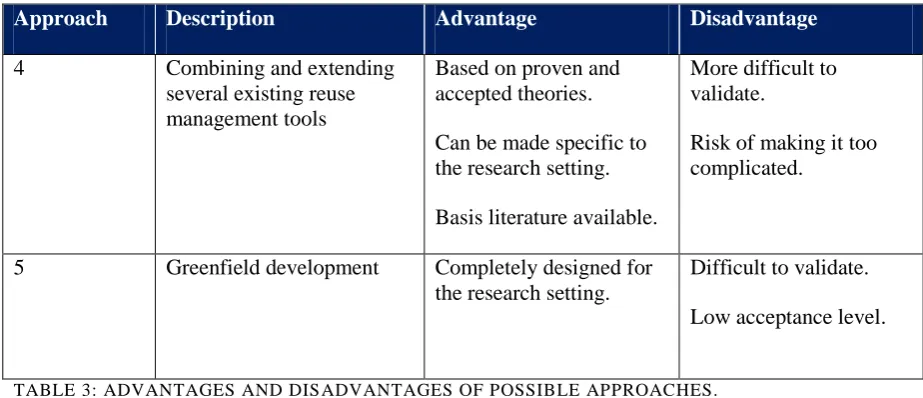
The first approach consists of using an existing reuse management tool for this particular research setting. The second approach consists of combining existing reuse management tools. This will enhance the coverage of a newly created tool. The third approach is extending an existing reuse management tool. New elements, specific to this research setting, can be added to the management tool. The fourth approach combines elements of existing reuse management tool together with new elements, into a new management tool. The fifth approach is Greenfield, which defines a completely new reuse management tool, not based on previous created tools or models.
3.1.2 Advantages and disadvantages
In this paragraph the possible approaches are examined in more detail. The approaches are summarized in Table 3 with the advantages and disadvantages stated. The approaches are explained in the text below.
Approach Description Advantage(s) Disadvantage(s)
1 Use of existing reuse
management tool.
Use of proven and accepted theories.
Easy to validate
Not specific for the research setting.
2 Combining existing reuse
management tools.
Use of proven and accepted theories.
Relatively easy to validate.
Does not directly match the research setting.
3 Extending existing reuse
management tools.
Based on proven and accepted theory.
Can be made specific for the research setting.
Limited to the basis of the used reuse
Approach Description Advantage Disadvantage
4 Combining and extending
several existing reuse management tools
Based on proven and accepted theories.
Can be made specific to the research setting.
Basis literature available.
More difficult to validate.
Risk of making it too complicated.
5 Greenfield development Completely designed for
the research setting.
Difficult to validate.
[image:27.595.64.526.69.268.2]Low acceptance level.
TABLE 3: ADVANTAGES AND DIS ADVANTAGES OF POSSIBLE APPROACHES.
Although existing literature contains, implicitly or explicitly, elements related to reuse management tool suitable for agile development environments, there is no tool focused on guiding the implementation of reuse in such settings. Therefore no existing tools can be used. For the same reason a combination of two existing reuse management tool does also not lead to a solution.
The remaining approaches can all be used to set up a software reuse management tool. The third approach can be used as a basis, but would limit us to the structure provided by that management tool. The fourth approach is more labour intensive and combines reuse management tools with new elements. Although it provides a solid basis it also has the risk to run out of scope or become too difficult to integrate and validate. The fifth approach can also be used to set up a new and specific reuse management tool. This approach should, however, only be chosen when the other approaches do not fit, because of its disadvantages.
3.1.3 Chosen approach
The chosen approach for setting up the reuse management tool, is the fourth approach, which combines elements from several existing reuse management tool and new elements into the proposed reuse management tool. The reason for not choosing the third approach is that the similarities and thus the overlap between existing reuse management tools is great. All of them are, directly or indirectly, related to the SEI CMM levels combined with a relevant, but often different, set of success factors. Combining the sets of success factors can provide a more solid basis for a reuse maturity model.
3.2
Management tool structure
Management tool
Reuse maturity framework
Reuse factors Software reuse
maturity levels
Reuse practices Contain
Form
Measured by
Scores (0-10)
Relevance (0-5) Indicate Operationalized
by
Organized into
Indicate
Measured by Reuse level and
organizational capability
Activities Software reuse as
a concept Indicate
Describe Represent
Assessment method
Maturity of a reuse factor
Represent
Relevance of a reuse factor
[image:28.595.73.524.71.327.2]Represent
FIGURE 7: MANAGEMENT TOOL STRUCTURE DERIVED FROM [57].
The basic structure is derived from the Software Process Improvement (SPI) framework defined by Niazi et al. [57]. The original framework defines maturity levels, critical success factors and practices for assessment. The process improvement framework is described in Figure 7 as the reuse maturity framework. The maturity levels are make specific to software reuse maturity levels, the critical success factors are renamed to reuse factors and the practices are made specific to reuse practices. The paper of Niazi et al. [57] also describe how the reuse practices can be operationalized through the use of an assessment matrix. This matrix based approach is originally proposed by Daskalantonakis [58]. The matrix based approach adds a fixed score to a combination of reuse practices, which in turn represent a reuse factors at a maturity stage. The matrix based approach is extended with a relevance variable and taken as the assessment component in the structure of the management tool. The relevance variable is added to be able to make the assessment method specific for an individual situation, which is possible a situation where an organization works with agile development methodologies, but not necessary. The structure elements are represented as blue boxes in Figure 7. The relation among the elements is clarified by the arrows. The circles provide a brief description of the structure elements.
The structure of the first component of the management tool shows great similarities with existing reuse maturity models and frameworks. These also describe maturity levels and reuse practices. Implicitly the models and frameworks also define reuse practices, when they define the characteristics of a reuse factor at a certain stage. These insights can be used to fill in the elements of the management tool. The existing reuse maturity models and frameworks, however, fail in putting the results into practice. As such the assessment method for software reuse is a new component, and an addition to existing literature.
- Different studies have confirmed the value of CSF‟s in the field of information technology.
- Implementation programs require real life experiences where on learns from mistakes and continuously improves the implementation process. CSF‟s are based on relevant real life experience and can provide practical guidance.
- The CSF approach is regarded as a richer view when considered in the context of their importance for each stage of the implementation process.
For this research the distinction between CSF‟s and KPA‟s is relevant, but does not lead to the decision whether one is better and should be used over the other. The choice is made to use existing insights, based on a large body of relevant research as the basis for the management tool. These existing insights are based on reuse factors instead of on process areas, so it is a logical choice to base the model on the reuse factors as well. Furthermore one of the requirements set up for the proposed management tool is to address relevant reuse factors, instead of KPA‟s. The comparison with the CMMI model is regularly made throughout this thesis, to clarify the similarities and the differences. Beside that, CMMI is considered a useful guideline, as it is considered a proven and accepted way to fill in the maturity stages, as also explained in section 3.3.
As already became clear from several references in this section, section 3.3 elaborates on the reuse maturity levels. The reuse factors are explained in section 3.4. The reuse practices can also be derived from section 3.4, but their characteristics are summarized in section 3.5. The assessment method, with the use of a fixed score and a relevance variable, is discussed in section 3.6. The interpretation of the results is discussed in section 3.7.
3.3
Software reuse maturity levels
Software reuse maturity levels are the first element of the management tool structure. Software reuse maturity levels present an evolutionary plateau for incrementally adapting software reuse and managing related issues. The correct level of adapting software reuse depends on the context of an individual organization, which means that not all organization can reach the highest reuse levels. This section first elaborates on the incremental software reuse adaption as suggested by the interviewees. The results are presented in section 3.3.1. After that the incremental adaption of existing reuse maturity models and frameworks is discussed in section 3.3.2. Lastly the used maturity levels for this thesis are elaborated on in section 3.3.3.
3.3.1 Incremental software reuse adaptation according to the interviewees
The interviews held at the start of this research provided useful insights for the incremental adaption of software reuse.
The interviewees expect that higher reuse levels can be achieved in the future. The reason for this is two-fold. First of all they note that the solutions for a domain are becoming increasingly mature. More and more customers are requesting similar solutions resulting in a set of components which can be used out of the box. Secondly they note that the focus on a market niche is continuously being redefined. The focus can be set on a new market niche, but can possible also lead to a refocus on an existing market niche. When the choice is made to refocus on an existing market niche, two business units divide the market niche in two logical parts and set their focus points. By doing so the similarities among customers is also likely to increase, possibly leading to higher levels of reuse.
The views of the interviewees regarding higher reuse levels are in line with existing literature. Rothenberger noted that organization are likely to invest more in reuse activities, when they are in a narrow domain [60]. The reason for this is that number of times that individual components are reused is higher than in wider domains. Beside that he noted that the experience of developers in a narrow domain is likely to lead to a better quality of the set of components as a whole [60]. These statements explicitly indicate that a narrower and a more mature domain lead to higher reuse levels. The shift from white-box to black-box components is recognized in the article of Griss [27]. Griss notes that black-box components are not an end by itself, as several parties will push the component in different directions. The result is that the black-box component will become work-products, which have to be managed actively. The model of Griss is explained in section 2.1 and will be used as the basis for defining higher reuse levels in section 3.3.3.
3.3.2 Incremental software reuse adaptation according to existing maturity models and frameworks.
Existing reuse maturity models and frameworks use the Capability Maturity Model (CMM) to describe incremental steps of software reuse. The reason for this is that existing literature assumes that higher reuse levels can only be achieved with a more systematic software reuse process. The CMM is a maturity framework which describes incremental steps according to more mature processes. Therefore it is a logical choice to use the CMM to describe incremental steps of software reuse.
The latest version of CMM is the Capability Model Integration for Development (CMMI-DEV) [59]. Similar to the original CMM model it defines maturity stages ranging from ad-hoc, to defined, managed, measured and ends with optimizing. The stages are incremental and can be viewed both continuous as staged. Incremental
![FIGURE 3: INCREMENTAL STAGES OF REUSE ADAPTED FROM [27].](https://thumb-us.123doks.com/thumbv2/123dok_us/1212658.644945/15.595.75.515.301.530/figure-incremental-stages-reuse-adapted.webp)
![FIGURE 4: THE THREE-DIMENSIONAL EVOLUTION OF A SOFTWARE PRODUCT LINE [31].](https://thumb-us.123doks.com/thumbv2/123dok_us/1212658.644945/16.595.83.479.377.573/figure-dimensional-evolution-software-product-line.webp)
![FIGURE 5: ASSETS AND REUSE OPERATIONS [31].](https://thumb-us.123doks.com/thumbv2/123dok_us/1212658.644945/17.595.135.429.84.311/figure-assets-and-reuse-operations.webp)
![FIGURE 6: SCRUM DEVELOPMENT PROCESS [35]](https://thumb-us.123doks.com/thumbv2/123dok_us/1212658.644945/18.595.81.524.479.756/figure-scrum-development-process.webp)
![FIGURE 7: MANAGEMENT TOOL STRUCTURE DERIVED FROM [57].](https://thumb-us.123doks.com/thumbv2/123dok_us/1212658.644945/28.595.73.524.71.327/figure-management-tool-structure-derived.webp)