1
SOLVING CUSTOMER-DRIVEN
HETEROGENEITY IN
ORGANIZATIONS:
DEALING WITH INTERNAL
TENSIONS TO REACH SOLUTIONS
FOR CUSTOMER INQUIRIES
MASTER THESIS
AUTHOR:
LISA BAKIR
UNIVERSITY:
UNIVERSITY OF TWENTE
FACULTY:
BEHAVIOURAL MANAGEMENT AND SOCIAL SCIENCES
STUDY:
MASTER BUSINESS ADMINISTRATION
SPECIALIZATION TRACK:
MARKETING & STRATEGY
FIRST SUPERVISOR:
DR. R.P.A. LOOHUIS MBA
SECOND SUPERVISOR
:
DR. A.M. VON RAESFELD-MEIJER
COMPANY
: VOORTMAN STEEL MACHINERY
Introduction
Creating customer value persists to be a core element in business (Miles, 1962; Porter, 1985; Anderson & Narus, 1999) and is one of the main goals of marketing as it provides a sustainable competitive advantage in means of differentiation that can be achieved by offering better value for target customers (Narver & Slater, 1990; Ravald & Grönroos, 1996; Grönroos, 2000). Logically, the marketing concept proposes that “an organization’s purpose is to
discover needs and wants in its target markets and to satisfy those needs more effectively and efficiently than competitors (Slater & Narver, 1998, p. 1001). The meaning and implementation of the marketing concept is “customer
oriented”, “market driven”, and “market oriented” (Webb, Webster, Krepapa, 2000, p. 102). Over time, when adopting the marketing concept in business, the role of marketing changed from seeing marketing less as a function, but more as a set of values and processes where all functions in an organization engage in implementing (Moorman & Rust, 1999). Thus, in this view marketing becomes everybody’s job and is not solely the responsibility of the marketing department (Greyser, 1997; Kohli & Jaworski, 1990). Undoubtedly, it emphasizes that creating superior value requires the coordinated efforts of different departments, which is better known as interfunctional coordination in market orientation literature (Narver & Slater, 1990; Day, 1994; Deshpandé, Farley, & Webster 1993). To satisfy customer needs more effectively, classic marketing strategies for designing a targeted customer-centric strategy are concerned with the segmentation of heterogeneous markets into a number of smaller homogeneous markets based on the varying wants of consumers, subsequent targeting of which segments to serve based on the market segments’ attractiveness, and taking a distinct and unique position for the product or service relative to competition and translating this into an appropriate marketing mix (Dibb & Simkin, 1991, 1994; Kotler & Armstrong, 2009; Smith, 1995; Wind & Bell, 2008). Thus, marketing strategies are concerned with homogenizing target markets and trying to manage the ambiguity in customers’ needs.
However, creating value is inherently a heterogeneous process since no two customers are the same (Zeithaml & Bitner, 2000). Bolton (1998) argues that some customers have a higher utility for a service offering than others, so a considerable amount of heterogeneity is present. It is therefore important to incorporate heterogeneity among preferences and attitudes in the underlying dimension of value (Desarbo, Jedidi, Sinha, 2001; Olsen, Prebensen, & Larsen, 2009). Therefore, the notion of customer heterogeneity has become an innate part of the new Service-Dominant Logic (SD logic) in marketing as promoted by Vargo and Lusch (2004). This perspective on value creation (Edvardsson, Gustafsson, & Roos, 2005) by Vargo and Lusch (2004) challenged the traditional view of marketing for its focus on the exchange of goods and services (Good-Dominant Logic) as primary unit of value rather than how value is actually derived from using goods and services (see also Gummesson, 1995). It follows that
customers, is context and meaning specific (Grönroos, 2008, Schembri, 2006; Vargo & Lusch, 2008). Or as Vargo and Lusch (2008) argue: “value is idiosyncratic, experiential, contextual, and meaning laden” (p. 7). Consequently, value cannot be created unilaterally, but is co-created with customers and is not embedded in offerings but rather determined in use by the customer also known as value-in-use (Vargo & Lusch, 2004; Grönroos, 2008; Woodruff, 1997). As customers are co-creators of value, they also determine the value of offerings as value-in-use (Vargo & Lusch, 2004). Logically, the active customer role in value creation follows from the concept of value-in-use (Grönroos, 2008). From this perspective, suppliers can initiate value propositions that meet customers’ needs, but only the customer can determine what is of value, so the experience of it is customer specific (Ballantyne, Varey, Frow, & Payne, 2008; Grönroos, 2004; Storbacka & Lehtinen, 2001; Vargo & Lush, 2008).
question of this research is:
How does customer-driven heterogeneity manifests in the process of handling inquiries? Does this lead to tensions? And how are the tensions resolved in the organization and lead to solving customer problems?
Using an Actor-Network Theory (ANT) (Latour, 2005) infused practice theory lens (Gehman, Treviño, & Garud, 2013), emphasis is on the doings and sayings of actors (Schatzki, 2001) and how the imposed heterogeneity that emerges in action manifests in reaching consensus on how to solve customer inquires. In particular, customer-driven heterogeneity emerging from customer problems and whishes are investigated. As such, this study will illustrate how imposed heterogeneity is managed and with what result for the customer. The study sought to generate new theoretical insights based on inductive reasoning (Sandberg & Tsoukas, 2011) by providing a theoretical framework on the type of processes that occur in solving customer problems. Informed by the ANT-infused practice lens, an Ethnographic Case Study (ECS) (Visconti, 2010) is carried out by making use of complemented forms of observational and interview data. The study is explored in a single-case industrial steel machinery organization serving the beam and plate processing industries. Though it has been stated that in industrial markets service is seen as an added-on value (Robinson, Clarke-Hill, & Clarkson, 2002), manufacturers are increasingly adopting service based strategies to remain competitive despite of declining profitability in core product markets, slower growth, and commoditization (Salonen, 2011).
Grönroos (2011) calls for further research of adopting service marketing concepts in business relationships and the marketing implications for the firm resulting of this logic (Grönroos & Ravald, 2011). Also, Ostrom et al. (2010) discuss the priority for more research on business-to-business services. Especially, the understanding of organization and employee issues relevant to successful service provision (Ostrom,Parasuraman, Bowen, Patrício, & Voss, 2015). In addition, Kohtamäki and Rajala (2016) propose more use of ANT, practice theory and narrative methods in B2B context for value co-creation research. These priorities motivate the current research by responding to these calls. Hereby contributions are made to co-creation literature (e.g., Prahalad & Ramaswamy, 2004; Vargo & Lusch, 2004, 2008; Payne et al., 2008; Grönroos, 2008, 2011) by deepening the knowledge on the complexity in the practices and processes that support co-creation and its implementation inside organizations. From a practical standpoint, organizations will have the apprehension how customer problems are resolved and which path this follows through the organization.
The outline of the study is as follows. First, an evaluation of previous research on interfunctional coordination and value co-creation is provided that eventually indicates the research gap. In addition, the ANT-infused practice lens is introduced which builds on an existing framework by Gehman et al. (2013). Following, the
methodology is described which delineates the chosen research strategy and techniques used for data collection and analysis. Further, results are presented in narrative accounts which elicit the dynamics in solving customer problems and eventually leads to a construction of an extended framework. This contributes to the insights about understanding the practices involved in the emergence of coming up with a solution. Lastly, the research question is answered and implications, limitations and directions for future research are stated in the discussion.
2. Literature review
2.1 Customer orientation and the coordinated functional efforts to create superior customer value
This study will only focus on interfunctional coordination as a means to infer how working together across departments unfolds when handling customer inquiries. However, to get a clear understanding of the engagement in activities across departments to create customer value, the related concepts of interfunctional coordination have to be discussed as well. Interfunctional coordination originates from the market orientation concept. The market orientation concept has received a lot of attention by scholars (e.g. Day, 1994; Deshpandé et al., 1993; Kohli & Jaworksi, 1990, Narver & Slater, 1990, Ruekert, 1992; Shapiro, 1988). The market orientation concept in its turn comes from the marketing concept, in which market orientation refers to the extent of implementing the marketing concept in an organization (Agarwal, Erramilli, Dev, 2003; Jaworski & Kohli, 1993; Webb et al., 2000). The marketing concept, a philosophy in business, states that “the firm should base all its activities
on the needs and wants of customers in selected target markets” (Grönroos, 1989, p. 52), and while doing so, in a more effective way than competitors (Kotler, 1997). So, the marketing concepts is innately committed to a customer-orientated focus (Desphandé et al., 1993). Marketing is not viewed as a sole function in an organization, but as a principle that spreads throughout the whole organization (McKenna, 1991). Therefore, it is no surprise that in order to become more market oriented, and thus, to create customer value, engagement of every employee and functions are essential. Accordingly, coordinated responses are needed of the interfunctionally established dependencies.
describes that organizations can become more “market-driven” by identifying and building special capabilities such as market-sensing and customer-linking capabilities (Day, 1994). Day (1994, p. 38) refers to capabilities as “complex bundles of skills and collective learning, exercised through organizational processes, that ensure superior coordination of functional activities.” Emphasizing decision-making processes,Shapiro (1988) argues that three characteristics make an organization market driven: (i) information on all important buying influences permeates every corporate function; (ii) strategic and tactical decisions are made interfunctionally and interdivisionally; (iii) divisions and functions make well-coordinated decisions and execute them with a sense of commitment. In another way,Kohli and Jaworski (1990, p. 6) refer to market orientation as “the organizationwide generation of market intelligence pertaining to current and future customer needs, dissemination of the intelligence across departments, and organizationwide responsiveness to it.” Market intelligence
comprises all the exogenous market factors that may influence the current and future needs of customers (Kohli & Jaworski, 1990). Closely related to this conceptualization is Narver and Slater’s operationalization of market orientation while underwriting a cultural perspective (1990,1994): “market orientation consists of three
behavioral components – customer orientation, competitor orientation, and interfunctional coordination – and two decision criteria - long-term focus and profitability” (Narver & Slater 1990). All definitions summed up, organizations need the thorough understanding of their target customers and the market they are operating in to subsequently make committed interfunctionally coordinated decisions on basis of this information to ensure value provision for its customers (Kohli & Jaworski, 1990; Narver & Slater, 1990; Shapiro, 1988). So, in practice, a market concept entails three pillars: customer focus, competitor focus, and coordination (Day & Wind, 1980; Kohli & Jaworski, 1990; Narver & Slater, 1990).
Despite the differences, all authors explicitly or implicitly acknowledge that the organization must act to provide value for customers (Jaworski & Kohli, 1996). That is, in all definitions for market orientation the core value is related to the coordinated efforts of all departments to take action and work together to actually create value for customers (Narver, Slater, & Tietje, 1998). For instance, Slater and Narver (1994) explicitly mention that the value for the customer is a result of successfully utilizing core capabilities which can be developed in all functional areas in an organization.
Importance for coordination has been long withstanding in organization theory (e.g., Malone & Crowston, 1994; Thompson, 1967). But, why is interfunctional coordination so crucial in market orientation literature? Poor coordination will lead to a misapplication of resources and a loss of exploiting market opportunities (Shapiro, 1988). Hence, interfunctional coordination is important in the value creation process (Golicic & Vitasek, 2007). Understandably, regular communication and cooperation between functions reduce redundancies in tasks and improve process efficiencies
(Golicic & Vitasek, 2007). This greater efficiency converts to improved value creation and competitiveness (Golicic & Vitasek, 2007). According to Kahn and Mentzer (1998) integration of departments calls for interaction and collaboration. Outcomes show that collaboration and interaction drive organizational performance (Kahn & Mentzer, 1998). In addition, interfunctional coordination leads to increased organizational excellence (i.e., efficiency and effectiveness) (Tuominen, Rajala, & Möller, 2000). Building on Kahn and Mentzer (1998) and Kahn, Reizenstein, and Rentz (2004), Golicic and Vitasek (2006), propose that the essential elements of interfunctional coordination comprise of collaboration, open communication, and an organizational climate that supports the prior two components. However, Golicic and Vitasek (2007) state that interfunctional coordination is difficult to implement. Agarwal et al. (2003, p. 78) describe that “an
alignment of the functional areas' incentives and the creation of interfunctional dependency is needed, so that each area perceives its own advantage in cooperating closely with the others, to achieve effective interfunctional coordination.” Kohli and Jaworski (1990) implicitly acknowledge the difficulties in interfunctional coordination as they view interdepartmental dynamics as an antecedent for market orientation. Kohli and Jaworski (1990, p. 9) define interdepartmental dynamics to denote the “the formal and informal interactions and relationships among an organization’s departments” and operationalize this with interdepartmental connectedness and interdepartmental conflicts.
2004). In this way, it does not underwrite the implications of dynamic exchange relationships that are present in value creation (Grönroos, 2011; Vargo & Lusch, 2004). As a market orientation enables organizations to learn (Dickson, 1996) and as such, is inherently a learning organization (Slater & Narver, 1995), it might be argued that interaction between customer and organization is valued, something which is foundational in SD-logic to jointly create value. Nonetheless, as value is perceived to be embedded in the good and service offerings, it does not define the impact that the customer has on the organization’s processes as the customer is the one that perceives and determines what is of value (Vargo & Lusch, 2004). Value creation turns out to be much more dynamic and heterogeneous in the service centered view of marketing (Vargo & Lusch, 2004). The focus on the dynamics of exchange processes (i.e., exchange of intangibles, specialized skills and knowledge, and processes) (Vargo & Lusch, 2004) draws attention to not only the joint exchange process, but as well as the supplier’s own business processes and practices which influence the core business process of the customer and naturally the value that the customer manages to create out of the core offering (Grönroos, 2011). While customer value is not explicitly defined in market orientation literature, choosing SD-logic as a point of departure means to view interfunctional coordination in terms of supporting the co-creation of value as the customer is the one that determines the value of offerings in use (Vargo & Lusch, 2004). In summary, as interfunctional coordination remains a critical concept and prerequisite to provide the desired benefits for customer, the dynamics of customer-driven heterogeneity has major implications herein and needs to be highlighted thoroughly.
2.2 Value creation and value co-creation through an SD logic lens: emphasis on dynamics and heterogeneity
So far we have argued that interfunctional coordination is a traditional but important concept in everyday business and marketing thought, however it is not adjusted to the idiosyncratic environment of value creation. Viewing marketing as process and not simply as a separate business function, continues in SD-logic, as Vargo and Lusch (2004) state that the service-centered view implies a market-oriented and learning organization (Slater & Narver, 1995). Inherently, importance is attributed to interfunctional coordination. However, as the nature of marketing shifts from the primacy of tangible resources to intangible resources in SD logic, it has much further “implications for
how exchange processes, markets, and customers are perceived and approached” (Vargo & Lusch, 2004, p. 3) and by doing so, has implications on interfunctional coordination. This critical distinction is made in operand and operant resources representing static versus dynamic resources. Operand resources require to be operated or acted on to produce an effect (e.g., machine) whereas operant resources are the producers of effects and act on other operant resources (e.g., knowledge and skills) (Constatin & Lusch, 1994; Vargo & Lusch, 2004). Subsequently, knowledge is perceived to be the fundamental source for
remain unexplored. Day and Moorman (2010, p. 233) argue that “no firm can consistently drive superior value without
investing in and managing the capabilities to do so.’’
Logically, this means that organizations also have to put one step back and look at their own business processes and practices in order to comprehend the means to co-create value (Payne et al., 2008). Not only the interactions between customer and organizations have to be aligned and coordinated, interactions between employees in organizations have to be coordinated as well (Kohli & Jaworski, 1990). Taking the dynamics that operant resources bring and the imposed heterogeneity resulting from value-in-use into account, issues in coordinating the processes and practices that constitute the support of co-creation of value are likely to occur for suppliers. Prior research has not devoted much effort to understand the emergence of these problem-solving processes for suppliers unfolding over time.
2.3 Towards a practice perspective on understanding the dynamics of dealing with customer-driven heterogeneity and tensions that arise with that
To explore the black box of how departments work to contribute to value creation, in particular, how the problem-solving process emerges and how their coordinated decisions are affected by imposed customer-driven heterogeneity, is investigated by applying a theoretical lens of practice theory. Practice theory can offer new ways to understand and explaining social and organizational phenomena (Bain & Mueller, 2016; Feldman & Orlikowski, 2011; Miettinen, Samra-Fredericks, & Yanow, 2009; Nicolini, 2012). Practices can be postulated to be routinized ways of doing performed by actors, underpinned by operand and operant resources (Marcos-Cuevas et al., 2016; Reckwitz, 2002). Practices simply refer to ways of doing things as it is a manifold of doing and sayings, an array of activities (Schatzki, 1996; Schatzki, 2001). Thus, practice-orientated research examines what people do (i.e., action-oriented) rather than what they say they do (Pickering, 1992). Practices ensure stability and regularity for organizations (Cohen, 2007). Schatzki (2006) views organizations as bundles of practices and material arrangements. Likewise, Orlikowski (2007) considers organizational practices to be “sociomaterial”, referring that practices entail both social aspects, as well as material aspects such as ICT systems, tools, technology, and materials. There is an inherent inseparability between the social and the technical (Orlikowski & Scott, 2008). Hence, it means that in every working life, situated actors are not only engaged in social interaction, but also in interaction with material dimensions in many ways. So, the social and the material are constitutively entangled when actors try to perform tasks and materiality is integral to their organizing. Materiality is used by actors, so it mediates their activities (Orlikowski, 1992). In this theory, human action may be enabled but also constrained by technology by the meaning actors appropriate to it influenced by its design, organizational standards and norms, and interpretive schemes (Orlikowski, 1992). Applied to this research, this
view asserts that technology and inherently systems are intrinsic in creating solutions but may as well play an important role in engender tensions during the achievement of a solution for customers.
By applying a theoretical lens of practice theory means to concentrate on everyday activity, yet to be critically involved with a specific explanation for that activity (Feldman & Orlikowski, 2011). It is concerned with the “dynamics of
between actors can result in controversies on how to solve the problem for a customer. These then end when a compromise is found between actors.
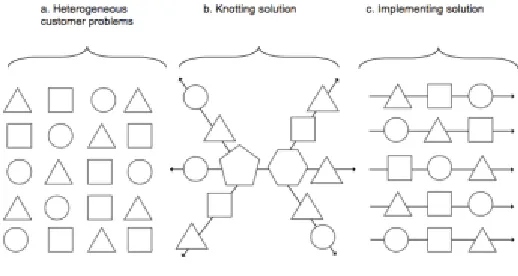
[image:7.595.30.289.565.703.2]This study will draw on a conceptual model proposed by Gehman et al. (2013). Gehman et al. (2013) used an ANT-infused practice lens to view how values come to be practiced in organizations, in which they call value practices. By studying the development of an honor code within a large business school, the authors theorize that the values work comprises of four interrelated processes: dealing with pockets of concern, knotting local concerns into action networks, performing values practices, and circulating values discourse. Although the topic is different from this research, the model provides an excellent frame of reference to study the emergence of solving customer problems. The adopted assumption in this research holds that heterogeneous customer inquiries could lead to controversies that have to be resolved. Therefore, on basis of the theoretical model of Gehman et al. (2013) an initial conceptual model is proposed in figure 1. The first process is dealing with the pockets of concern that the heterogeneous customer problems bring about and where the actual problem that must be resolved, becomes framed by actors. Second process is where these pockets become enrolled, or better, knotted into the network of heterogeneous elements through interaction of actors and technological systems mediated by the immanent knowledge in those elements and reach their solution in this process (Schembri, 2006). One might expect that these first two processes will be very ambiguous in practice, as every customer problem is relatively unique and asks for a specific response. Thus, it seeks for a different way in which the heterogeneous social and material elements interact with the customer problem. The final process is where the pockets of concern are stabilized to be implemented as a solution for customers.
Figure 1. Customer-driven Heterogeneity Theoretical Model (Based on Gehman, et al., 2013)
3. Methodology
3.1 Research strategy
Guba and Lincoln (1994) define a paradigm as “the basic belief system or worldview that guides the investigator, not only in choices of method but in ontologically and
epistemologically fundamental way” (p. 105). So,
organizational studies always are concerned with fundamental assumptions on the nature of organizational phenomena (ontology), the nature of knowledge about the phenomena (epistemology), and the nature of ways of investigating the phenomena (methodology) (Gioia & Pitre, 1990). Hitchcock and Hughes (1995, p. 12) propose that the ontological assumptions induce epistemological assumptions where these in turn give rise to methodological considerations, and these in turn give rise to the issues of data collection and instrumentation. Consequently, this shows a primacy derived from the ontology to the methodology (Burrell & Morgan, 1979; Crotty, 1998; Guba & Lincoln, 1994).
This research adopts a constructivist-interpretivist research paradigm which is focused on the understanding of social phenomena within the frame of reference of the participants rather than explaining and generalizing (Burrell & Morgan, 1979; Guba & Lincoln, 1994). Herein understanding must be based on the experience of people in organizations (Bryman & Bell, 2015). Ontologically it asserts that no one reality exists, as reality is relative. The epistemological position is subject to subjectivism, implying that knowledge is a result of interaction between actors. (Guba & Lincoln, 1985). Consequently, knowing and understanding is based on one’s own construction in mind, but socially mediated through interaction. So, this paradigm postulates intersubjectivity, which refers to shared understanding (Anderson, 2008).
The adopted research paradigm implies a qualitative research strategy. A qualitative research strategy is being opted to get a clear understanding of the practices of employees. Here theory is generated out of research, which denotes an inductive view (Bryman & Bell, 2015). All these views coincide with this research as an interpretive approach is needed to comprehend and interpret the meanings of the behavior of the people under investigation in this research. Arriving from the chosen ANT infused practice-lens, Orlikowski (2010) states that the chosen mode of practice theory guides the logic of a researcher’s inquiry, which is why it can be stated that practice theory may not only have a theoretical agenda, but also a method one (Miettinen et al., 2009). Miettinen et al. (2009) indicate that the empirical research program for practice theory is “ethnographic in its sensibility” (p. 1312).
3.2 Ethnography
Ethnography finds its roots in anthropology (Crotty, 2003). It has received increased attention in different fields, both practical and theoretical (Hammersley & Atkinson, 1983). Especially in social sciences it is becoming popular (Scott-Jones & Watt, 2010). Ethnography is seen as an important part in organizational studies (Van Maanen, 2011; Ybema, Yanow, Wels, & Kamsteeg, 2009). Erickson (1973, p. 10) states that ethnography literally means: “writing about the
nations”; “graphy” from the Greek verb “to write” and “ethno”
(Angrosino, 2007). Rosen (1991, p. 12) argues that “the goal of ethnography in general is to decode, translate, and interpret the behaviours and attached meaning systems of those occupying and creating the social system being studied.” This is why he refers to it as it being largely an act
of sense-making where a dyadic translation from action in relationship to meaning takes place.
Carrying out ethnography comprises two distinct activities, which comprise the core of ethnographic research (Emerson, Fretz, & Shaw, 1995). Firstly, the researcher enters a social setting, referred to as “the field” and gets to know the people involved in it by participating in the daily routines of this setting. Operationally, fieldwork requires the full-time work of researcher over a long period of time, watching what happens, listening to what is said, and asking questions, so it consists mostly of ongoing interaction with the actors of study in their everyday life (Conklin, 1968; Hammersley & Atkinson, 1983, Rosen, 1991; Van Maanen, 2011). Ethnographers have to deal with three fundamental aspects of human experience, namely: what people do, what people know, and the things people make and use (i.e., cultural artifacts) (Spradley, 2016). Recording of what is observed is done by taking field notes. Field notes are the foundation on which ethnographies are formed (Walford, 2009). The second activity is where the researcher produces a written account of what is observed and learned by being immersed in the world of the people. Thus, the result of fieldwork is texts, based on the recordings of field notes (Sanjek, 1990).
Ethnography has multiple perspectives and practices (Atkinson, Delamont, Coffey, Lofland, & Lofland, 2007; Hammersley & Atkinson, 1983). So, even though there are differences, many traditions in ethnography share common features in which they are grounded in the commitment to the first-hand experience and exploration of particular cultural or social setting by participant observation, although it is not restricted to that collection method only (Atkinson et al., 2007). Likewise, Crotty (2003) states that ethnography has its methods of preference referring to participant observation. Hammersley and Atkinson (1983) even mention participant observation as a cognate term of ethnography.
Ethnography is employed in this study as a methodology (Crotty, 2003). Guided by a practice lens, working practices of employees are investigated in organizational setting. Hence, this research is devoted to organizational ethnography, particularly the research strand which comprises the following of actions, actors and artefacts (Yanow, Ybema, & Hulst, 2012). A primary objective of organizational ethnography is to “uncover and explicate the ways in which people in particular work settings come to understand, account for, and otherwise manage their day-to-day situation” (Van Maanen, 1979, p.
540). So, to get close to the ordinary everyday acting of people, empirical investigation should be directed to getting as close as possible to this “lived experience”. Ethnography provides this proximity to practice as it is directed to the commitment to understanding in natural settings. Not only are practices in which actors are engaged, most
appropriately investigated trough ethnography, ethnography provides deeper understanding in business-to-business markets. It is said that business research may benefit from more interpretative methods as means to understand the complexity of the business world (Visconti, 2010), certainly considering that interpretation is evident in every scientific study (Gummesson, 2003). The applied ANT-infused lens of practice theory emphasizes the sayings and doings of people in organizational life while asserting importance to the entanglement of social and material elements in employees’ practices (Orlikowski, 2007). Naturally, while being involved in the understanding of how employees manage to solve customer problems, attention is also devoted to the materials, ICT-systems, and other technologies they use and lead into solving problems.
3.3 Ethnographic Case Study (ECS)
Visconti (2010) provides a comprehensive framework for conducting ethnography in case setting, combining organizational ethnography and case study research. The ethnographic investigation is carried out following alongside of the six steps proposed by Visconti (2010).The six steps entail: goal setting, sampling, immersion, data collection, data interpretation, and reporting. Visconti (2010, p. 29) defines Ethnographic Case Study research as “the application of the ontological, epistemological and methodological features of ethnography to a theoretically selected set of business cases.”
The current investigation takes place in an industrial steel CNC machinery manufacturer. The organization serves two types of processing industries, namely the beam processing industry and the plate processing industry. Herein, the organization distinguishes five types of branches: machinery & equipment, tower industry, oil, gas and energy, steel fabrication, and steel processing and supply. With over 250 employees, the organization is considered a large enterprise. Over 90 percent of all machines are sold abroad, indicating the international and dynamic environment the company is operating in. Departments who are mostly directly involved for customer inquiries are: Sales, Product Management, Projects, Field Service, Support, Engineering Beams, and Engineering Plates, Software, Parts and Consumables. Daily operations in the organizations mainly consist of acquiring new customers, carrying out new projects and by doing so, involve a lot of engineering, and providing after sales services as support, maintenance, and sale of parts and consumables.
3.3.1 Goal setting
underwrite the practices as de-stabilizing and stabilizing over time. (Pettigrew, 1997; Van de Ven & Poole, 1995). Further, governed by ANT, attention was devoted to occasions of controversy where actors where engaged in practices that were clouded. In extension, it was undertaken to trace the connections between the heterogeneous social and material elements in actors’ practices (Orlikowski, 2007).
3.3.2 Sampling
The range of following a process was delineated from the moment that a certain customer inquiry entered the organization until the moment when the involved employees reached a solution for the specific inquiry. Customer inquiries were investigated from the beginning as much as possible. This means that investigation took place in real time, but sometimes entailed retrospective episodes. Followed customer inquiries will be referred to as “events”. Purposive sampling as a technique of non-probability sampling was used to preliminary select the organizational departments and the key informants involved in the departments (O’Reilly, 2012; Visconti, 2010). The investigated departments are considered to perform front-line operations and as such, handle incoming customer inquiries. The inquiry handling processes may or may not be visible to the customer. Additionally, theoretical sampling was relied on. While this means to select cases which probably extent, replicate or illuminate the emergent theory (Eisenhardt, 1989), in this research theoretical sampling meant to start the fieldwork at the departments where heterogeneous customer inquiries are mostly apparent and required inter-departmental handling. From there on customer inquiries where followed into the organization. Thus, the theoretical notion of heterogeneity and interfunctional coordination, where the research is based on, guided the scope of where data collection took place. Furthermore, by using a snowball technique, employees that were already observed by being involved in an event, were asked to propose other interesting events that could be investigated (Gehman et al., 2013).
3.3.3 Immersion
Visconti (2010) states that in this stage, the researcher gradually naturalizes in the inquired culture of an organization’s everyday life, providing sensitivity to interaction (Emerson, Fretz, & Shaw, 1995). In order to grasp what people experience as meaningful and important, an ethnographer seeks deep immersion in people’s world (Emerson et al., 1995). Immersion into the culture allows for seeing from the inside how people carry out their daily activities, or in this case the daily tasks of employees. Here the researcher either is part or detached from the inquired context. The degree of the role of an observer suggests the scope of immersion, namely what the researcher is able to see and hear is decided by “the extent to which the observer participates and is involved” (Shkedi & Harel, 2004, p. 161). Gold (1958) poses types of observers. The researcher in this study is partly detached from the context, following the role of the observer as participant role, mentioned by Gold
(1958). So, the actors were aware that they were being studied, with some connection to the setting. Although there was little involvement in the natural setting, the reseacher was naturally and normally not part of the case setting (Gold, 1958). Deep immersion was especially achieved by a period of initial familiarization in the organization before actual recording of events took place.
3.3.4 Data collection
According to LeCompte and Schensul (1999) essential methods of data collection for ethnography are: observation, tests and repeated measures, surveys, interviews and content analysis. Without observations and interviews no researcher can conduct an ethnography (LeCompte & Schensul, 1999). This is line with Arnould and Wallendorf (1994) as they state that observations should be supplemented by forms of verbal accounts. Underlying this conception is the fact that observational data alone “do not providedirect access to the perceptions, values, and beliefs of informants and reveal little about informants' internal states” which is related to an emic viewpoint (Arnould & Wallendorf, 1994, p. 488). Emic viewpoints are engaged with meaning as seen by the informants themselves, and in such a way are associated with the interpreted subjective experience of the informants that provides understanding of their lived experience, which of course, is better elicited by forms of verbal accounts (Arnould & Wallendorf, 1994; Borghini, Golfetto, & Rinallo, 2006). Etic viewpoints however, are the interpreted understandings of the informants’ experiences on basis of the outside viewpoint of the researcher. Subsequently, to balance the development of data that would allow for both emic and etic viewpoints in the interpretative stage of data, several data collection techniques were used in this research. Hence, observations, informal and unstructured ethnographic interviews were used for data collection, with observations being the dominant source of information (Arnould & Wallendorf, 1994; Bernard, 2002; Spradley, 1979). An overview of the used data sources and corresponding key informants per event can be found in table 1.
Table 1. Overview of used data sources, involved informants/departments, and timeframe.
Observations and statements of informal interviews were recorded in field notes. “Fieldnotes are distinctively a method for capturing and preserving the insights and understandings stimulated by these close and long-term experiences” (Emerson et al., 1995, p. 10). Unstructured interviews were digitally recorded and transcribed. Combined the three data sources generated 138 pages (common standards) worth of data. Immersion in the field took nearly three months in which the first two weeks no concrete recorded observations took place of specific cases, but was intended to get familiar with the employees, the environment, the context specific branch of the company and its general technological systems that were used in everyday use. In this way, understanding of the later followed processes occurred in a much easier way. In addition, this may have resulted in receiving richer details as actors became accustomed to the presence of the researcher in the field. A total of eight cases, in which either the customer inquiry counted a specific customer desire or a specific customer problem was followed to see how this social process of finding a solution for the customer was established.
Rigor and credibility was established by using a variety of data sources in each of the eight cases (Denzin, 1989). In addition, for the two retrospective inquiries, information was derived from multiple actors and member-checked among the involved actors. Moreover, “thick descriptions” of the events ensure transferability of results (Geertz, 1973; Guba & Lincoln, 1985).
3.3.5 Data interpretation (Data analysis)
Analysis is where meaning attribution (i.e., interpretation) takes places (Visconti, 2010). When analyzing the data of this study, a distinction is made as proposed by Van Maanen (1979) which adheres to the emergence of first and second order data. Van Maanen (1979) describes that the collection of ethnographic data results in two main sources of information, namely first order and second order data. First order data are the “facts” achieved by conducting fieldwork of observations and interviewing (Van Maanen, 1979; Visconti, 2010). Observations represent operational data whereas interviews portray presentational data (Visconti, 2010). Second order data are the “theories” an ethnographer uses to make sense of the facts (Van Maanen, 1979). Here the researcher is more distant from informants and sense-making occurs on ground of knowledge of previous literature (Borghini et al., 2006). Basically, it is the notions used to explain the facts related to the interpretations formed by the researcher based on the first order data (Van Maanen, 1979; Visconti, 2010). This means that the interpretative process of data deals with etic and emic information, resulting in rich data accounting for both the insiders’ as well as the outsider’s view (Pike, 1967). In this study the emergence of first order findings was achieved by thick descriptions of each respective event by constructing narrative accounts (Geertz, 1973). Thereupon, these narratives where categorized in terms of the extent of controversies present driven by heterogeneous customer inquiries. Or in better words, this lead to the construction of three types of customer inquiries: low controversial, moderate controversial and high controversial. Although some events represented considerable instances of controversies or tensions, some were not particularly driven by the heterogeneous customer inquiry itself but emerged as a consequence from that internally. Open coding then was conducted on each category to identify the associations. Taking customer-driven heterogeneity as the primary unit for analysis, classifications and patterns could emerge on basis of tracing connections and translating between subsequent actions in each narrative related to the category (Callon, 1986; Lindberg & Czarniawska, 2006). In the second stage of analysis suggestions by Gioia and Chittipeddi (1991) were followed to establish second order findings which adheres to finding theoretically explanatory dimensions. This stage eventually provided the emergence of a theoretical framework based on the theoretical processes proposed from the initial conceptual model in the second chapter (Figure 1). A delineation of all events in the classification of types of controversies and the subsequent nature and characteristics of the controversy is illustrated in
table 2.
3.3.6 Reporting
The written narrative accounts of the events are subject to the adoption of realist account writing (Van Maanen, 1979). Hence, the situations are described as objectively as possible. Meaning, that the accounts were written relating to the highest detachment of the researcher, as if the researcher did not influence the situations observed. Data Sources Key
informants/Departments
Timeframe of reaching solution +/- Event 1 Observations, informal interviews
Support Engineer (Support), Service Coordinator (Field Service), Field Service Engineer (Field Service)
1 day
Event 2 Support Engineer (Support), R&D Engineer (Engineering Plates), Service Coordinator (Field Service),
2 days
Event 3 Field Service Engineer (Field Service), Support Engineer (Support), Software Engineer (Software)
1 week
Event 4 Observations, informal interviews, meeting
Dealer and Sales Manager (Sales), Product Manager (Product Management), Product Support Engineer (Engineering Beams), Software Engineer (Engineering Beams) 1 week Event 5 (Retrospect) Unstructured interviews
Product Manager (Product Management), R&D Engineer (2) (Engineering Plates), Project Leader (Projects)
2 weeks
Event 6 (Retrospect)
Unstructured interviews
Product Manager (Product Management), R&D Engineer (2) (Engineering Plates)
6 weeks
Event 7 Observations, informal interviews, meetings
Product Manager (Product Management), Team R&D (Engineering Plates), Project Leader (Projects)
5 weeks
Event 8 Observations, informal interviews, meetings
Product Manager (Product Management), Team R&D (Engineering Plates), Project Leader (Projects)
[image:10.595.35.302.52.384.2]Inherently, this means that even though a complementary approach of integration of both etic and emic viewpoints was embraced, these accounts do emphasize the etic view a bit more.
4. Case study: from problems to solutions
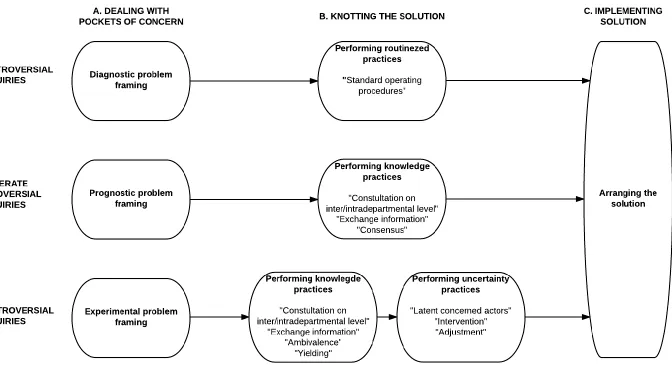
As one might expect in an industrial manufacturing organization or any organization, a wide range of diverse incoming customer inquiries were present. All studied events are idiosyncratic, but focusing on heterogeneity and drawing connections between the subsequent actions that took place allowed to trace patterns in the different events. The overall findings imply that the amount of customer-driven heterogeneity drives the intensity of collaboration and tensions present. Inevitably, to eventually reach solutions unfolds in different processes when actors are confronted by uncertainty prescribed by the customer inquiries which drive direct and indirect controversies. We attended to moments of controversies present in the events by asking why tensions and uncertainty were present. Subsequently, we could distinguish three types of customer inquiries, namely: low controversies, moderate controversies, and high controversies. The events differ in their nature on the interaction between the social and material elements that takes places. Consequently, applied to conceptual model, it means that each of these three types of inquiries travels through a different kind of dynamic in the “dealing with
pockets of concern” and “knotting the solution”
process.
In event 1 and 2 we found a low degree of controversies present. This was because actors relied on their own accumulated know-how and experience to shape the solution, and followed standardized routines in order to mobilize the solution, showing serenity in executing their tasks. Although, event 2 did show a little tension which was caused indirectly, but did not alter the way how the solution should have been reached.
More apparent complexity in customer inquiries were classified as causing moderate controversies. These controversies were subtle relating to shared uncertainty. This was found in event 3, 4, and 5. Although these three varying customer inquiries were recognized to be rather routine questions, all had in common that it did not turn out to be the case as the process enfolded. There was the need to consult one or multiple times with different actors to establish a solution for the customer. These collaborations either were needed to brainstorm about possible solutions or to complement knowledge that was missing. As such stability was reached and actors could proceed with arranging a solution for the customer.
In high controversial inquiries, shared uncertainty is also the underlying motive of the controversies but manifests in a different way than moderate controversial inquiries. High complex inquiries caused intensive collaboration, but most apparent for discussion with visible disagreements, latent reactions of concerned employees and interventions. Event 6, 7, and 8 carried high controversies. In comparison with the other three events that
Table 2. Illustrative narrative analysis
Narrative analysis Classification of customer
inquiries by controversies present
Nature of controversy Characteristics of controversy
Event 1 – Valve Problems: A customer had a problem and felt this was the organization’s fault, after investigation by a Support Engineer he concluded that a broken wire connected to a valve should be replaced. Therefore, the inquiry was assigned to the Service Coordinator who sent over a Field Service Engineer to fix the issue that same day.
Event 2 – Valve Problems 2.0: A customer had a broken valve. However, the Support Engineer could not assign the inquiry to the Service Coordinator, simply because he could not find the article number in the designated manual. Consequently, it took some extra time to find article number, ensure an updated manual by the supplier and supply of new stock of these specific valves by the Support Engineer in consultation with a R&D employee. Hereafter, the inquiry was assigned to the Service Coordinator who planned a visit by a Field Service Engineer.
Low controversial inquiries N/A N/A
Event 3 – Software Problems: A Field Service Engineer was on-site with a customer and encountered a problem with a lacking infeed roller conveyer. He contacted a Support Engineer who concluded that it probably was a software issue. As such, the inquiry was assig ned to a Software Engineer. Soon the Software Engineer came up with a temporary solution, by changing a specific parameter. However, a total solution could not be established, as the Field Service Engineer did not provide adequate information for the Software Engineer to rep roduce the problem. Thus, it led to great frustrations of the Software Engineer.
Event 4 – Integration Of New Machine System: A customer in Australia wanted integration of a new drilling and saw system into his existing system setup and requested a proposal. Thus, the dealer contacted a Sales Manager who then assigned this task to a Product Manager to create a lay-out. In consultation with Product Support Engineer and a Software Engineer respectively, a final lay-out was established after some alterations in response to the Dealers’ and customers’ feedback.
Event 5 – Plasma Center Marking: A customer wanted to have the functionality of plasma center marking. Due to poor coordination in the project phase by the original Project Manager and the functionality that was not documented in the Order Checklist, it was no surprise that this functionality came up during the commissioning phase as employees went through the acceptance protocol with the customer. Aft er a new Project Manager was assigned to this project, the inquiry was soon followed up by Engineering Plates and Product Management who developed and integrated the functionality for the customer.
Moderate controversial inquiries
Shared uncertainty on how to approach the
problem
“Cold” – no disagreements, ends
with consensus
Event 6 – Countersunk Holes: A customer wanted to be able to cut countersunk holes, although this functionality was already on the priority list of R&D, it was not in its final form at that point. It was not documented well and not fined-tuned yet. During training the customer indicated that he wanted the quality of the cuts to improve, but did not indicate too much rush into this. Engaged with other running i ssues and developments lead to a lack of anticipation by R&D employees to follow up the current issue and as such, resulted in a frustrated customer. Immediate action then was undertaken and the functionality was fine-tuned and integrated into the customer’s software. However once implemented, there were tolerance problems. This then caused some frustrations and concerns with the Management as again there were some problems. Hereafter, the involved employees came up with an idea and tested thoroughly in which then the functionality finally was solid and integrated into the customer’s software.
Event 7 – Countersunk Nib Holes: A newly assigned Project Manager had the difficulty in restoring the relationship with this customer. After investigation, together with a R&D employee, a Product Manager and the customer, the customer indicated that he wanted to cut countersink holes with a nib as the customer would insert nib bolts herein. The Project Manager kept adequate overview at all times and after a proposed meeting with the R&D team and a Product Manager they came up with a proposal. Hereafter an assigned employee was responsible for the execution of this proposal. However, the Product Manager had some concerns about the execution of the proposal. As such, together with the Product Manager the proposal reached its final form after some time and then was communicated to the customer by the Project Manager.
Event 8 – Establishing Correction Values For Bevel Cutting: A customer wanted to be able to correct values for specific type of bevel cuts in the organization’s own Operating Software. But, this was not clear to the employees as they only found this out during the discussing of their proposal, which was actually to integrate the functionality in the Nesting Software and not the Operating Software. The invol ved employees came up with this solution because this would have meant the most efficient way of establishing this functionality for the customer considering the amount of work and time that would have to be put into this. Yet, as the former Sales Manager actually promised the integ ration of the functionality in the Operating Software, it left the employees with no other choice than to do that. However, a R&D employee leaving the company impeded the scarce R&D capacity even further and caused concerns with employees. As such, there was decided to recruit two R&D employees to ensure that the set deadline for this functionality would be met.
High controversial inquiries
Shared uncertainty on how to approach the
problem
“Hot” – apparent disagreements and concerns, ends with
4.1 Straightforward logic: relying on past experiences and knowledge
Event 1 – Common valve problem
A customer’s valve had been exchanged by a Field Service Engineer (FSE), but encountered lasting problems. When customers experience problems with their machines, a Support Engineer (SE) will try to solve this remotely by phone in combination with TeamViewer to view and control the organization’s own Operating Software (OSW), before a FSE will be sent over on-site. After some investigation by phone with the customer and checking the machine’s system via TeamViewer , the SE came to the conclusion that a connected wire of the valve was causing the problem. The SE indicated the commonness of the problem, and thus the amount of heterogeneity present: "These are no special things. That the switching wire is broken, happens quite often". Even tough, it was a common problem, there was a little pressure on handling this inquiry quickly: “He
immediately wants to have an engineer on-site, without having to pay money of course.” As such, the SE immediately called the Service Coordinator (SC), who is responsible for planning the FSE employees and informed him on the situation. The SE pointed out to the SC that the customer feels as it is “their” problem as the FSE did not test the newly exchanged valve which explains the rush in solving this quickly. After following a standardized recording of the data in the ERP software SAP, and sending a standard mail to the SC which contains the number of the needed part, the inquiry was assigned to the Field Service Department (FS Department). Scheduling a FSE is normally a simple routine practice, however, this time the fact that the specific wire had never been replaced before in the past, and thus not in stock, lead to the SC having to search for an alternative solution. Even though the SC was not too happy about this fact, he remained calm. He looked up a module drawing where the SC found out that another cable next to the original cable could be transferred to replace the faulty wire, continuing with finishing this inquiry. After informing the customer that a FSE would come over and updating information in SAP, in conversation with the assigned FSE, the FSE expressed his concern as he was not too sure if the wire would be long enough to reach and replace the faulty wire. The SC assured him that it would, which did not cause any discussion. Thus, the FSE was ready to leave after all required information. The question remained what would happen to the fact that the customer clearly indicated that this problem is the organization’s fault. The SC clarified:
"(…) I have to wait and see what will happen there. The mechanic could not test the valve yesterday as the roller conveyor was running. So, I have yet to see what I will do". After the visit, the FSE confirmed the faulty wire was the problem and was fixed by replacing it. It seemed a consensus was reached with the customer, as the customer was going to pay for the service costs, although travel expenses could not be charged.
Event 2 – Valve problem 2.0
A customer experienced problems with a valve connected to a cutting table. Through examining the situation via the phone and looking with TeamViewer, a SE inferenced that either the valve itself or connected parts to the valve were causing the problems. Thus, a FSE had to come on-site to replace the parts and solve the occurring problems. There were no uncertainties present that might altered the way in which the SE would have come up with a solution. The handling of this inquiry was simple in its essence, governed by held knowledge of the SE. Yet, there were some difficulties present in this routine. However, these were related to the fact that the resources for handling the inquiry adequately were not easily uncovered, not directly associated with the kind of problem the customer has. For this reason, this customer inquiry was also appointed as a simple routine process.
Before handing the inquiry over to the FS Department, the required parts with their corresponding article numbers had to be identified. The article numbers of the connected parts of the valve were findable. But, the SE could not find the article number of the valve in documents. The clearly irritated SE explained: “The manuals are not up-to-date. With new machines the parts are not findable.” When he was asked why this is the case, he answered: “No, idea. You
have to ask the other people. (…) Everybody that is located before this department, Parts, Plates, Beams. (…) No one feels responsible [to have things sorted out, like up-to-date manuals]”. The SE undertook several search attempts in several documents without any result. Hereupon the SE brought in help of the Engineering Plates (EP) Department for them to found out the article number via a task in SAP, which had not been picked up. As such, later on the SE called the SC for him to find the article number of the valve, in which the SC eventually succeeded. An R&D employee of the EP Department, who had been informed about the situation, came over to the SE and brought the needed valve with him. After some talk it seemed that the SE had to ensure the provision of a new valve, as the valve that would be used for this customer, was the last one in stock. The SE also took care to receive an updated version of the manual with the right article numbers from their supplier. The SE later explained: “Normally, they [EP Department] have contact with suppliers. (…) Typically we [Support Department] do not. But in this case…. Otherwise we cannot proceed. (…) It will take too long for the customer”. Though he took extra effort to do this, he was not pleased with the situation: Why do we have to do these things at Support [Department]? We must help customers, not help our guys”.
Shortly after finding out the other numbers of the other parts, the standardized recording in SAP and sending the standard mail to the SC followed, which marked that the inquiry was assigned to the SVC department. Hereafter, the inquiry run very smoothly, since scheduling a FSE is routine work. The SC contacted the assigned FSE and customer, made a service order in SAP, sending a mail to the warehouse to order pick the other needed parts and scheduled the FSE for the inquiry in the planning system.
Aggregate analysis of events
Very evidently, in all inquiries the problem is framed immediately. The situations for event 1 and 2 are not particularly new, so through interrogation the employees could identify what was causing the problems in the customers’ machines. Interrogation is based on ruling out options. As the inquiries are literal technical problems that arise on machines, framing happens as a diagnostic process. This is constituted by an entanglement of past experiences resulting in held knowledge by the employees. As such, the process after framing enfolds into following
standardized routines to mobilize the identified solution.
4.2 Many heads are better than one: consultation between different actors on intra- and interdepartmental level
Event 3 – Software problems
A FSE was abroad on-site with a customer to handle some problems, but during his visit he encountered another problem: some of the in-feed roller conveyors were not working properly as they did not move material any further. As the FSE could not fix this problem by himself, he contacted a SE from the Support Department. Remote control was offered via TeamViewer by the SE for the situation. After some initial investigation, the SE suspected that the cause originated in the software. Accordingly, a Software Engineer (SWE) of the Software Department was brought into the inquiry by the SE. Since the SWE corroborated that the problem was probably being caused by a bug in the organization’s own OS, the SE assigned a task in SAP with attached the needed documents (i.e., screenshots of parameters and a backup of the system) for the SWE to reproduce the situation in the software and follow-up the inquiry further. Although, bugs in the software occur more often, the SWE could not reproduce the problem showing a more complex inquiry that was present. After contacting the SE again for some extra information so he could match the situation (i.e., all same variables) as best as possible, the SWE still was not able to reproduce the problem: “Since everything is working here, we cannot do
anything right know”.
Quickly, the SWE stopped by the SE, to ensure smoother communication, as previous communication happened via chat with the FSE, the SWE suggested to call the FSE. The conversation between the three employees came down to the fact that the FSE had to try to reproduce the situation on-site again, otherwise there was no progression in fixing the problem. Soon, the FSE was able to reproduce the situation in a similar matter whereupon the SWE and SE came up with a temporary solution, by changing a specific parameter in the OSW that would allow for immediate material detection, the material did ran over the roller conveyer. However, even if this setting is not on, the problem should still not occur. Thus, further investigation by the SWE was still needed.
In consultation with each other (i.e., SWE and SE), the SE asked the FSE to undo the temporal solution and to make a video of whole infeed cycle when the problem would
arise. In this way, the SWE would have more clues that might uncovered the root cause and to finally solve the problem. Until this point, everything ran quite easily, even though the heterogeneity of this problem was reasonable. However, after the SWE received some videos that the FSE had made, frustrations began to came up. There was already some annoyance present with the SWE as it took very long to receive the videos. The FSE made three videos of which only one showed the problem of the roller conveyer of the machine, and even that video was of very low quality and shot very shaky. Thus, the videos did not add anything to convey more information so that the SWE could solve the problem. The SWE made some very mocking comments when reviewing the videos, and said: “I’m going to call him,
I’m getting really bothered by this”. In the conversation with the FSE the SWE clearly expressed his dissatisfaction and continued to interrogate in which situation the problem happens as he articulated that software always reacts uniformly. As soon as it would happen again the SWE asked him to provide as much information as possible about the situation. The ongoing frustration with the SWE was voiced to the SE and both found it clear that the next move was up to the FSE. Then the SWE tried to replicate something he saw in the video and shared this with the FSE via mail. He stressed yet again in that mail that the FSE should provide him with more information as he was still not able to detect the problem and solve the issue.
After several check-ups by the SWE and SE on the FSE, he still had not encountered the problem anymore in the following days. So, there was decided to close the inquiry. The SWE was not happy about the situation as he explained that this case was special, since he normally solves 90 percent of all tasks mostly in a short amount of time while this one has a really long lead time and this issue had not even been solved.
Event 4 – Coming to the right machine system lay-out: back and forth
A Dealer (DLR) in Australia had a customer who wanted a new machine system added to his existing machine set-up. The dealer in Australia contacted a Sales Manager (SM), which then went to Inside Sales and came to the Product Manager (PDM) Beams. The request had a high priority as the customer was awaiting the forthcoming proposal. The fact that several people were involved in this inquiry and thus could give an opinion on the lay-out made this an ambiguous process.
The PDM explained the common procedure for quotations: “What we actually normally try is to firstly have the lay-out completely correct, and then we will start with making quotations. "So, you actually want to capture as much have as much as possible, before you start with the quotation”. He had a reasonable idea of how to integrate the new system into the current system lay-out based on the provided information via the dealer, but “There are still a few