The Influence of Industry 4.0
on Reshoring
The Impact of the Fourth Industrial Revolution on Relocation Decisions
MASTER THESIS
The Influence of Industry 4.0 on Reshoring
July 2019
Author
Name: L. Laseur (Leonárd)
Programme: MSc Business Administration Institute: University Twente
PO Box 2017 7500 AE Enschede
Faculty: Faculty of Behavioural, Management and Social sciences (BMS)
Graduation Committee
Dr. R. Harms
Department: Nikos Department For Entrepreneurship, Strategy & Innovation Management (NIKOS-ESIM)
Dr. R.P.A. Loohuis
Abstract
Table of contents
Abstract 3
1. Introduction 6
1.1 Industry 4.0 and reshoring 6
1.2 Research question 8
1.3 Academic Contribution 10
2. Literature review 11
2.1 Search process and the literature selection 11
2.2 Industry 4.0 13
2.2.1 Major manufacturing techniques of Industry 4.0 15
2.2.1.1 Internet of Things manufacturing concept 15
2.2.1.2 Intelligent manufacturing concept 16
2.2.1.3 Cloud based manufacturing 16
2.3 Current literature about reshoring 18
2.3.1 Nearshoring 18
2.3.2 The Reshoring Framework 19
2.4 Which enablers of Industry 4.0 influence which reshoring drivers 21
2.4.1 Industry 4.0 and Risk, uncertainty and ease of doing business 22
2.4.2 Industry 4.0 and Cost-related drivers 24
2.4.3 Industry 4.0 and infrastructure related drivers 26
2.4.4. Industry 4.0 and Competitive priorities 27
2.5 Summarizing the literature review 29
3. Methods 31 3.1 Qualitative research 31
3.2 Constraints and Criteria 32
3.3. Data collection 33
3.3.1 Preparation for the semi-structured interview 36
3.3.2 The semi-structured interview 36
3.4 Describing the case companies 39
3.4.1 Company 1 39
3.4.2 Company 2 39
3.4.3 Company 3 40
3.4.4 Company 4 40
3.4.5 Company 5 41
3.4.6 Company 6 41
3.4.7 Company 7 42
3.4.8 Company 8 42
4. Results 43 4.1 Pretest 43
4.2 Transcripts 44
4.3 Labeled categories 44
4.3.1 Industry 4.0 and Risk, uncertainty and ease of doing business 46
4.3.2 Industry 4.0 and Cost-related drivers 48
4.3.3 Industry 4.0 and infrastructure related drivers 50
4.3.4 Industry 4.0 and Competitive priorities 52
5. Discussion 55
5.1 Limitations 55
5.2 Disposition 55
5.3 Answer on research question 56
5.4 Managerial implications of the findings 58
Literature 61
Annex I 71
Annex I 74
1.
Introduction
1.1 Industry 4.0 and reshoring
After an intense period of firms starting to offshore manufacturing and related activities, now another phenomenon is being observed: previously offshored activities are brought back to a domestic location, referred to as reshoring1 (Gray et al., 2013; Fratocchi et al., 2014; Benstead, Stevenson, & Hendry, 2017). Reshoring is a recent phenomenon and therefore empirical evidence is scarce (Brennan et al., 2015, p. 1259; Fratocchi et al., 2014). Researchers are even still unclear whether reshoring is rare (Dachs and Zanker, 2014), while other researchers suggest that reshoring will most likely increase (Arlbjørn & Mikkelsen, 2014, p. 60; Kinkel, 2012, p. 712). However early data reports show that in 2017 the combined reshoring and the related foreign direct investment announcements in the United States surged. In total adding over 171,000 new jobs in 2017, with an additional 67,000 in revisions from 2010 to 2016 (Reshoring Initiative, 2017). 85% of companies that have reshored are active in the manufacturing industry (Eurostat, 2019). Almost 253 cases have been identified whereby European manufacturing companies have reshored their activities in the period from 2016 until 2018 (Eurofound, 2019). While reshoring is mainly driven driven by the manufacturing of products closer to the market (Vnachan, Mulhall & Bryson, 2018), the reshoring trend is especially visible in the fashion industry and it is even the highest type of industry to reshore (Eurofound, 2019). That is not surprising since it is predicted that by 2025 over 20% of all the apparel shall come from reshored sources (Amed et al., 2019).
Previously offshoring and outsourcing were strategies used to minimize effort into non-value adding activities. Later it was also used to minimize labor-related costs and costs related to components and end times (Hartman et al., 2017). Now, within the manufacturing industry, gradually less labor intensive production methods are used. This is mostly due to technological development and innovations in manufacturing technology. Multiple authors (Blanchet, Thieulloy, Rinn & Thaden, 2014, p.22; Handley and Benton, 2013; Foerstl, Kirchhoff & Bals, 2016) state that these technological developments are favoring reshoring decisions.
The rise of technological development and innovative production methods can be referred to as the collective term Industry 4.0 or smart industry, which is the fourth industrial revolution
1 Multiple terms are used to describe reshoring, such as back-reshoring, inshoring, backshoring, back-sourcing and
(Barbieri et al., 2018). Industry 4.0 uniquely enables autonomous manufacturing cells to independently control and optimize manufacturing in various steps without requiring human analytics or intervention (Lasi et al., 2014). Earlier, industry 1.0 (18th century, mechanization), industry 2.0 (19th century, mass production) and industry 3.0 (20th century, automation) were referred to as previous industrial revolutions. The three first industrial revolutions (see Figure 1) had significant implications on companies’ productivity and on society as a whole (Blinder, 2006). For instance, during the first industrial revolution, the mechanization caused large migration shifts and companies’ output increased enormously (Blinder, 2006). The second period of industrial revolution is characterized by fast industrialization and was therefore also known as the technological revolution (Muntone, 2013). During this second revolution, efficient machinery was paired with new mass production techniques, which led to increased output and lower production costs for companies (Kanji, 1990). During the third industrial revolution, innovations like the microprocessor, transistor, telecommunications and the computer digitalized the manufacturing industry (Hammelscale, 2018).
Figure 1 – Overview of Four Industrial Revolutions
Source: Hammelscale (2018), https://www.hammelscale.com/industry-4-0/
1.2 Research question
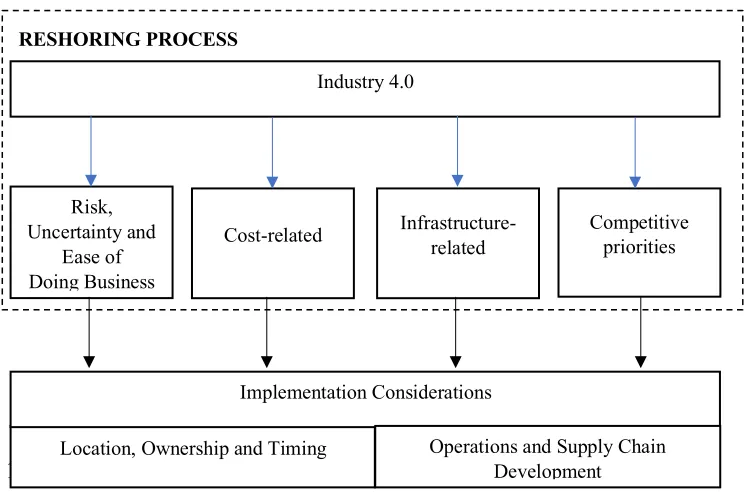
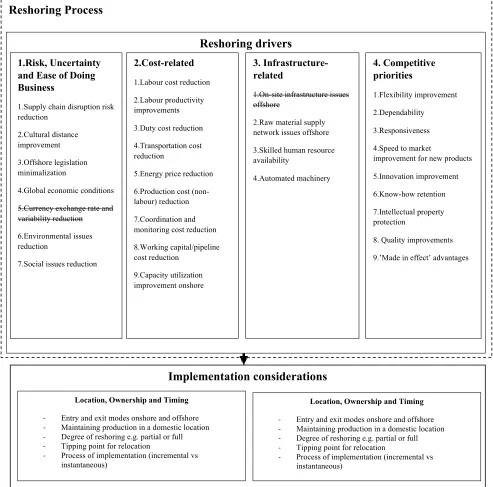
The purpose of the study is to investigate how Industry 4.0 impacts reshoring drivers in the manufacturing industry. Benstead, Stevenson and Hendry (2017) executed a case study and systematic literature review about reshoring. During their research they identified four reshoring categories, of which each consisted of several reshoring drivers. In the end, some of these drivers were supported by primary and/or secondary data. These drivers can be seen as relevant drivers, as they were supported by academic research. Their findings were summarized in a framework (see Figure 2), this will be the basis of the thesis, which means that the identified reshoring drivers are used as a guideline.
To achieve the research objective, the following research question should be answered: Which reshoring decisions regarding (a) Risk, Uncertainty and Ease of Doing business, (b)
The framework of Benstead, Stevenson and Hendry (2017) incorporated the effects of certain contingency factors such as company and industry related factors, product related factors and behavioral or individual related factors. In chapter 3, the relevant contingency factors for this research will be further elaborated. Following the original framework and since the implementation considerations are being influenced by the reshoring categories itself, the need for further research from Industry 4.0 and its influence on the implementation considerations itself will be left out.
Figure 2 – Conceptual Model
1.3 Managerial Relevance
This research will provide manufacturing companies with new points of view on relocation decisions within the context of Industry 4.0. It may help managers to truly understand why or why not take reshoring decisions. As the research will be qualitative, it aims to find foundations to build a theory about reshoring decisions within the context of Industry 4.0 (Mitchell and Cody, 1993). The decisions within the manufacturing industry have long-term effects a company’s competitiveness. Especially regarding reshoring impact management driven by relocation decisions (Dunning, 1980, p. 12, 14; Ferdows, 1997, p. 74; MacCarthy & Atthirawong, 2003, p. 794). It also impacts society, for instance more interest to reshoring has been shown in politics (Iozia & Leirião, 2014). This is explainable since a growing and healthy manufacturing sector
Industry 4.0
Risk, Uncertainty and
Ease of Doing Business
Infrastructure-related
Cost-related Competitive priorities
Location, Ownership and Timing
Implementation Considerations
Operations and Supply Chain Development
interpreted within the context of Industry 4.0, managers can act upon that by adjusting their strategy.
1.3 Academic Contribution
2. Literature review
2.1. Search process and the literature selection
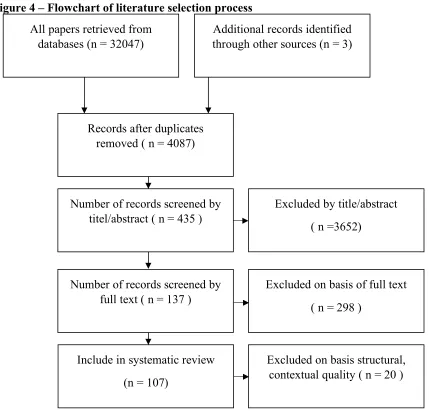
The search process provides a flowchart of the literature selection and gives an insight what literature exists concerning Industry 4.0 and its influence on reshoring decisions. Since the research focusses within the manufacturing it is important to understand how Industry 4.0 can be implemented for certain manufacturing techniques. When there is a clear understanding of Industry 4.0 in the manufacturing industry, the existing literature of reshoring has to be researched. When both phenomena are clear, inclusion criteria will be added to investigate a possible relationship between Industry 4.0 and reshoring. This has been done by adding each driver separately from the reshoring framework (Benstead, Stevenson & Hendry, 2017) to the keyword Industry 4.0. A search criteria for example was ‘Industry 4.0’ and ‘labour cost reduction’ (driver 2.1). The results of these are presented in chapter 2.4.1 to 2.4.4.
Figure 4 – Flowchart of literature selection process
All papers retrieved from databases (n = 32047)
Additional records identified through other sources (n = 3)
Records after duplicates removed ( n = 4087)
Number of records screened by titel/abstract ( n = 435 )
Number of records screened by full text ( n = 137 )
Include in systematic review (n = 107)
Excluded by title/abstract ( n =3652)
Excluded on basis of full text ( n = 298 )
2.2 Industry 4.0
Advanced digitalization within companies and by combining future-oriented technologies in the field of smart objects and new technologies with the internet have resulted in the fourth industrial revolution (Lasi et al., 2014). These developments have led to the prediction of experts whereby they mention that Industry 4.0 could lead to the relocation of activities that were once offshored (Blanchet, Thieulloy, Rinn & Thaden, 2014, p.22; Fraunhofer ISI, 2015, p.10), mostly due to cost-effectiveness (Handley and Benton, 2013). Making Industry 4.0 an important factor that could influence reshoring. The term Industry 4.0 made its debut in 2011 when it was first coined by Henning Kagermann, Wolf-Dieter Lukas and Wolfgang Wahlster and published in 2011 at the Hannover Messe (Kagermann, Lukas and Wahlster, 2011). However, the meaning of Industry 4.0 was initially rather vague than clear (Bauernhansl, Ten Hompel, & Vogel-Heuser, 2014). The term was adopted by the German Government as a high-tech strategy that promoted especially the computerization of manufacturing (BMBF, 2016). The number 4.0 is intended to relate to prior industrial revolutions and to underline that the change trough Industry 4.0 would have the same meaning. However the term Industry 4.0 is also criticized due to “the fact that for the first time an industrial revolution is proclaimed even before it took place” (Drath, 2015. p.3). This point of view is backed up by the argument that the current revolution is rather predicted than observed after as it was the case with previous industrial revolutions (Dratch, 2015 and Horch, 2014).
of these investments. Products and machines are coupled in a cloud with the help of integrated software, sensors and processors. From without the cloud, machine and product data is stored and analyzed in order to improve its performance and functionality (Porter & Heppelman, 2014).
Due to these rapid developments a consortium ‘smart industry’2 was formed in 2014 by FME-CWM (business association for the technology industry in the Netherlands), TNO (Dutch organization for applied scientific research), VNO-NCW (Dutch employers' organization), the Ministry of Economic Affairs (EZ) and the Dutch Chamber of Commerce to launch the initiative for the Smart Industry program (Smetsers, 2016). The consortium’s goal was to promote and to raise awareness for Industry 4.0 at companies. It therefore used the following definition for the fourth industrial revolution: “Smart Industry uses ICT and new technologies - such as 3D printing and robotics – smart by making products and machines interconnected and smart controlled. This does not only happen within one company, but also between companies and between companies and customers. Products, processes and services become smarter”. Other often mentioned definitions used for Industry 4.0 in the literature were “Industry 4.0 focuses on the establishment of intelligent products and production processes” (Brettel, Friederichsen, Keller, & Rosenberg, 2014, p.38). And “Industry 4.0 describes the organization of production processes based on technology and devices autonomously communicating with each other along the value chain: a model of the ‘smart’ factory of the future where computer-driven systems monitor physical processes, create a virtual copy of the physical world and make decentralized decisions based on self-organisation mechanisms” (Smit, Kreutzer, Moeller, & Carlberg, 2016).
One of the reasons for launch of the Duch consortium was the fact that the phenomenon Industry 4.0 was rather unknown by Small and Medium Enterprises (SME), only 15% of the companies mentioned ever hearing about it (Smetsers, 2016). From the 77% of SME’s that didn’t knew about Industry 4.0, 30% saw it as an opportunity, 23% as well as threat and opportunity and only 1% saw it just as a threat (Smetsers, 2016). From the SME’s that indicated to be familiar with Industry 4.0, 58% saw opportunities. This research (Smetsers, 2016) also mentioned that this fact is striking since a quarter of the people who initially indicated not to be familiar with the term, after explanation indeed saw opportunities for its own company.
phenomenon encompasses and what it will bring. This fact stresses the importance of increasing the knowledge and understanding of Industry 4.0. Especially as through Industry 4.0 a positive change of operational performances is expected even as a change in business models, products and services (Kagermann, Helbig & Wahlster, 2013).To get a better idea of what Industry 4.0 exactly is and to get a better understanding of the risks and its influences on reshoring, the basics
needed to be understood and learned. By forming a good understanding of the enablers of Industry 4.0 it is subsequently easier to research its influences on reshoring.
2.2.1 Major manufacturing techniques of Industry 4.0
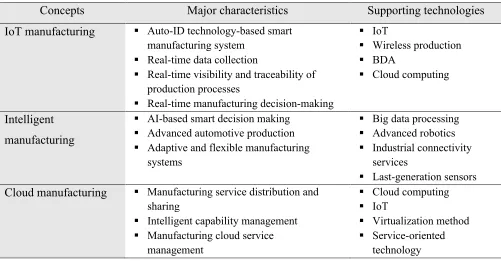
Since this paper focusses primarily on reshoring decisions within the manufacturing industry, it is of great importance to review what manufacturing concepts there are in Industry 4.0. Subsequently these techniques can be further identified at companies during the execution of the research. For example certain manufacturing techniques could lead to reshoring decisions and some not. Industry 4.0 has multiple characteristics in which it distinguishes itself from the other industrial revolutions. The manufacturing can be divided into three major advanced manufacturing concepts, namely IoT manufacturing, intelligent manufacturing and cloud manufacturing (Zhong et al., 2017) .
2.2.1.1Internet of Things manufacturing concept
et al., 2014). With these interactions efficient sharing of resources and on-demand use can be established through the application of IoT technologies in manufacturing.
“IoT is considered to be a modern manufacturing concept under Industry 4.0 and has adopted recent advances, such as cutting-edge information technology (IT) infrastructure for data acquisition and sharing, which greatly influence the performance of a manufacturing system” (Zhong et al., 2017. p.618). A good example of adapting IoT is by integrating this technology into garments and accessories. The global trend for smart garments already indicate that these techniques will be utilized on a much larger scale in the near future (European Commission, 2016).
2.1.1.2Intelligent manufacturing concept
Intelligent manufacturing is also known as the smart manufacturing principle that was first coined at the Department of Energy (DoE) and the National Institute of Standards and Technology (NIST) in the United States (Thoben, Wiesner and Wuest, 2017). Intelligent manufacturing includes multiple technologies, including but not limited to: CPS, IoT, robotics/automation, big data analytics, and cloud computing (Federov et al., 2015). This makes data intensive application of information technology possible at the shop floor level and above to enable intelligent, efficient, and responsive operations. One clear definition of intelligent manufacturing processes is that these have “the ability to self-regulate and/or self-control to manufacture the product within the design specifications” (Kumar, 2016). Especially artificial intelligence that has reasoning, learning and acting possibilities, play a major role in intelligent manufacturing. By incorporating artificial intelligence, human involvement in an intelligent manufacturing concept can be minimized as much as possible (Zhong et al., 2017). This is also one of the reasons why intelligent manufacturing concepts are seen as way to change textile production through flexibility in manufacturing and production process integration (Stylios, 1996).
2.1.1.3Cloud based manufacturing
temporary, reconfigurable production lines that will reduce product lifecycle costs and enhance efficiency that will allow for optimal resource allocation in response to variable-demand customer generated tasking (Wu et al. 2013). Production capacities and resources are being intelligently managed by one manufacturing system. The manufacturing cloud encompasses with design, simulation, manufacturing, testing and maintenance the entire life cycle of a product (Zhong et al., 2017). This technique is also increasingly being more looked into to ensure business survival in the textile industry (Damodaram and Racvindranath, 2010).
Table 1
Comparison of Industry 4.0 manufacturing concepts
Concepts Major characteristics Supporting technologies
IoT manufacturing § Auto-ID technology-based smart manufacturing system
§ Real-time data collection
§ Real-time visibility and traceability of production processes
§ Real-time manufacturing decision-making
§ IoT
§ Wireless production
§ BDA
§ Cloud computing
Intelligent manufacturing
§ AI-based smart decision making
§ Advanced automotive production
§ Adaptive and flexible manufacturing systems
§ Big data processing
§ Advanced robotics
§ Industrial connectivity services
§ Last-generation sensors Cloud manufacturing § Manufacturing service distribution and
sharing
§ Intelligent capability management
§ Manufacturing cloud service management
§ Cloud computing
§ IoT
§ Virtualization method
2.3 Current literature about reshoring
Reshoring is a development that already took place before any literature wrote about the concept (Fratocchi et al., 2013). As it was with Industry 4.0, also Germany was one of the first countries starting to research reshoring. For this reason, a large sum of the literature about reshoring finds its origins in Germany (Fratocchi et al., 2013).
One of the disadvantages is the polysemy that exists around the word reshoring. Since 2011 terms such as back-reshoring, backsourcing, backshoring, inshoring, onshoring are used to describe the same phenomenon. However the wide diversity of terms does not stop here since the definition of reshoring depends on the writer. For this very reason, this literature review pans out the variety of the definitions of reshoring in order to point out why the framework of Benstead, Stevenson and Hendry (2017) was chosen.
Reshoring is not always seen as bringing back the production, but also as the preservation of the production (Canham and Hamilton, 2013). Canham and Hamilton (2013) state that companies that choose to stay at their location, make the same considerations as companies that resent. However, this research will adopt the theoretical framework of Benstead, Stevenson and Hendry (2017) about reshoring.
2.3.1 Nearshoring
From the framework it becomes evident that there is a certain degree of reshoring (Benstead, Stevenson and Hendry, 2017). The concept of the reshoring framework can also be applied if nearshoring is the case. Nearshoring is applicable when a firm decides to find manufacturing locations closer to its headquarters to achieve a compromise between advantages of onshore and offshore locations. However an important aspect that needs to be stressed out is the fact that reshoring is only the case when a tipping point for relocation has been achieved. Benstead, Stevenson and Henry (2017, p.97) state ‘an important aspect of operationalizing the reshoring decision concerns timing, i.e. when to trigger the reversal process’.
The fact that since 2006 a lot of European locations have experienced reshoring trends can be explained because reshoring cases from Eastern European countries have been partially determined by the EU enlargements in 2004 and 2006. These enlargements facilitated location, ownership and internalization advantages (Dunning, 1995).
Multiple industrial sectors in Germany have been covered by research, but existing research stresses the need of more empirical evidence from other branches and countries (Kinkel, 2012). Therefore this paper aims to look forward and to systemically integrate scenarios of nearshoring of other companies as one of “the future development of the most influential environmental factors in future research frameworks for global production decisions and value chains” (Kinkel, 2012).
2.3.2 The Reshoring Framework
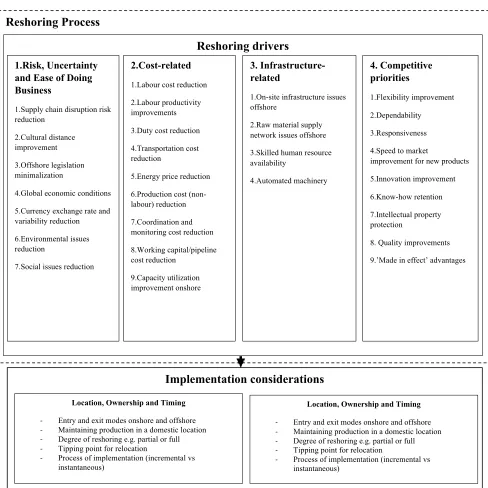
Reshoring Process
Figure 4 - Refined Conceptual Framework of the Reshoring Process
Source: Benstead, Stevenson & Hendry, 2017
Implementation considerations
Location, Ownership and Timing
- Entry and exit modes onshore and offshore
- Maintaining production in a domestic location
- Degree of reshoring e.g. partial or full
- Tipping point for relocation
- Process of implementation (incremental vs instantaneous)
Location, Ownership and Timing
- Entry and exit modes onshore and offshore
- Maintaining production in a domestic location
- Degree of reshoring e.g. partial or full
- Tipping point for relocation
- Process of implementation (incremental vs instantaneous)
Reshoring drivers
1.Risk, Uncertainty and Ease of Doing Business
1.Supply chain disruption risk reduction
2.Cultural distance improvement 3.Offshore legislation minimalization
4.Global economic conditions 5.Currency exchange rate and variability reduction 6.Environmental issues reduction
7.Social issues reduction
2.Cost-related
1.Labour cost reduction 2.Labour productivity improvements 3.Duty cost reduction 4.Transportation cost reduction
5.Energy price reduction 6.Production cost (non-labour) reduction 7.Coordination and monitoring cost reduction 8.Working capital/pipeline cost reduction 9.Capacity utilization improvement onshore 3. Infrastructure-related
1.On-site infrastructure issues offshore
2.Raw material supply network issues offshore 3.Skilled human resource availability 4.Automated machinery 4. Competitive priorities 1.Flexibility improvement 2.Dependability 3.Responsiveness 4.Speed to market
improvement for new products 5.Innovation improvement 6.Know-how retention 7.Intellectual property protection
2.4. Which enablers of Industry 4.0 influence which reshoring drivers
The amount of research about Industry 4.0 and its influence on reshoring is scarce. Therefore, and since recent research suggests that “there might be an intimate relationship between reshoring and the various forms of technological innovations applied to manufacturing – which has become popularly labeled as “Industry 4.0” (Barbieri et al., 2018 p.79), this paper tends to do a preliminary study of what factors of Industry 4.0 could drive reshoring decisions.
Some previous research shows that there could be a positive correlation between Industry 4.0 and reshoring. Focal point however is to find out on which factors Industry 4.0 could have any influence. From there on it is of great importance to further examine each of the drivers separately that are possibly influenced by Industry 4.0. First pointers were earlier research whereby it has been found that companies that reshore tend to have a higher degree of technological innovation in comparison with companies that offshore and the same is applicable for companies that remain domestic (Stentoft et al., 2016).
Another factor that drives companies to reshore are the fact that customers are prone to pay a premium price for goods manufactured in their home country (Grappi et al., 2015).
Also at a political and policy level there is an ongoing debate whether Industry 4.0 will result in the increase or loss of jobs. For example, whereby the president of the United States of America wants to increase the number of jobs by bringing the manufacturing industry back to the U.S.A (Murphy, 2017). Nonetheless the fourth industrial revolution will require a different and most likely higher and a sharper kind of worker skills. Governments are therefore enforcing policies in order to support the digital transformations of manufacturing and most probably favoring the repatriation of production activities and the employment of high skilled workers.
While the research about Industry 4.0 and reshoring is limited it gives some pointers to which drivers are influenced. Literature shows that Industry 4.0 is a technological disruptive innovation which increases automation and lowers the need for low cost labour. Therefore it can be argued that the cost-related drivers of the reshoring framework are influenced. Further on Industry 4.0 is encouraged by governments, as wells as on European level (Davies, 2015). Facilitating Industry 4.0 and thus lowering the risk and uncertainty for companies. Most probably therefore the reshoring drivers of risk, uncertainty and ease of doing business are also affected.
Lastly, the driver of competitive priorities of the framework is arguably influenced by Industry 4.0 since it contributes to a better product quality and system reliability (Lee, Bagheri, Kao, 2015). Additionally, as mentioned earlier, Industry 4.0 can also facilitate the added value of ‘made in’ brands, subsequently making reshoring an interesting development for companies (Canham and Hamilton, 2013).
2.4.1. Industry 4.0 and Risk, uncertainty and ease of doing business
As mentioned in chapter 2.1 and in order to get an answer on the research question each driver of the reshoring framework and its possible connection to Industry 4.0 will be researched. As shown in Figure 4, where the reshoring process is shown, there are multiple categories of drivers that influence reshoring decisions. In this and the following subchapters (chapter 2.4.1 – 2.4.4), it will be discussed whether from existing literature it becomes evident if Industry 4.0 influences this framework. In other words, which and how categories and its corresponding drivers for reshoring decisions of the framework are influenced by Industry 4.0; and therefore will be taken into consideration during this research.
The first category is Risk, uncertainty and ease of doing business. The drivers behind this category (labeled 1.1 – 1.7 in Figure 4) are embedded within the goal to reduce the exposure to risk, uncertainty through reshoring and subsequently to have the same or a more efficient operation in the domestic location of the firm (Benstead, Stevenson and Hendry, 2017).
Driver 1.1, 1.2, 1.3, 1.4, 1.6 and 1.7 are taken into consideration during this research for the following reasons:
chain for raw materials. It is yet unsure how this driver would be influenced, but it could be influenced especially since “technology diffusion enables new business models and the ease of doing business, ultimately fostering economic growth” (Berger, 2017, p.13). Making it also possible that this driver becomes relevant as Industry 4.0 minimizes the supply chain disruption. More and more manufacturers want to lower inventory and move to more just-in-time deliveries (Flynn et al. 1997). Mass customization is, for example, a trend that heavily benefits from a good supply chain management (Benstead, Stevenson and Hendry, 2017). Companies balance their supply chain strategy on the total risk-benefit-balance rather than only on cost analysis (Backhouse and Moradlou, 2016). For the mass-customization it is even not advisable for companies to have overseas production (Wohlers, 2011). Hence there it is a must to increase domestic manufacturing and employment. Because of pioneering customers it is thus important to reshore (Tavasoli, 201). A high level of synchronization between organizations and information sharing is paramount to ensure that customers’ needs can be satisfied (Brettel et al, 2014). Industry 4.0 can thus result in high agility for the inventory levels and lead times within the value chain will decrease (Brettel et al., 2014).
• Driver 1.2: Another factor that could be influenced and for reshoring needed to be overcome was cultural distance (Tate, 2014 and Gray et al. 2013). Physical and cultural distance could even reduce innovation and even contribute to the loss of tacit knowledge (Caniato et al., 2013). Cultural distances make it also more challenging to develop the needed levels of communication (Taylor, 1911), trustful and long-term relationships between firms and their suppliers (Bernardes, 2010). Besides, the increasing acceleration of digitalization reduces obstacles in communication and fosters an even stronger exchange of information (Berger, 2017).
facilitate the implementation of Industry 4.0. These incentives for innovation could also be legislation minimalization (driver 1.3) for companies. While this is a main driver to reshore, legislation is also been enforced by the European Parliament by developing an Action Plan for Industry 4.0 (Smit el al., 2016). Creating therefore in the EU a more friendly environment for certain companies to reshore and to invest in solutions related to Industry 4.0.
• Driver 1.6 and 1.7: Industry 4.0 also expands the opportunities of sustainable manufacturing. Research has for example shown that the allocation of resources can be realized in a more efficient way by using intelligent cross-linked models. Besides environmental issues, there is also value creation by Industry 4.0 for economic and social issues (Stock & Seliger, 2016). Whereby intrinsic and extrinsic motivations of employees can be influenced.
Driver 1.5 is the only factor that has no connection to Industry 4.0:
• Driver 1.5: Currency and exchange rate and variability reduction has been identified as the most significant driver for this category (Benstead, Stevenson and Hendry 2017; Martinez-Mora & Merino, 2014; Pearce, 2014; Gylling et al. 2015). However, this factor has not been found relevant with respect to Industry 4.0.
2.4.2 Industry 4.0 and Cost-related drivers
The second category (see Figure 4) is called Cost-related drivers. It consists of nine drivers, labeled 2.1 – 2.9, which are all linked to reshoring and Industry 4.0 influences these links in the following ways:
increased enormously. Also in other low-cost countries the cost of labor is continuously increasing (Fishman, 2012 and Anon, 2012).
• Driver 2.2: Besides there is a continuously improving ratio of labor output and productivity per labor dollar in the United States, thus therefore making it increasingly more interesting for U.S. firms to reshore (Fishman, 2012). This perspective is also backed by the Boston Consulting Group (2014), they found that between 2004 and 2014 the wages in China multiplied four times as fast in comparison to the productiveness of the workers. While Industry 4.0 requires high skilled workers, it decreases the number of workers due to automation. Subsequently firms could reshore since the advantages of low-cost countries would decrease by time.
• Driver 2.3: The increasing cost of labor in emerging markets, increased transportation and duty costs and high oil prices made homebased locations of manufacturers more attractive (Tate, 2014). The increasing awareness of global supply chain risk have accumulated to make homebased manufacturing for U.S. companies also a more attractive location (Tate, 2014). Also customers satisfaction improved due to companies reducing the length of the supply chain and therefore also reducing the risk (Nelson, Moody and Stegner, 2001). • Driver 2.4: Offshoring manufacturing became decreasingly interesting due to increasing
transportation costs and time. From the perspective of energy and sustainability a “sustainable-oriented decentralized organization in a smart factory focuses on the efficient allocation of products, materials, energy and water” (Stock and Seliger, 2016, p.540). The holistic resource efficiency is therefore being described as one of the primary advantages of Industry 4.0.
• Driver 2.5: Also energy is one of the costs related drivers that contribute to reshoring (Bossche et al. 2014). Electricity costs can be 40 to 70 percent lower in the U.S. than in Japan. Since Industry 4.0 will bring high efficiency and flexibility as well as lower energy consumption (Wang et al, 2016), the effect of Industry 4.0 on this driver is most likely. Especially since the total amount of employees needed lowers, while the total amount of automated inter-connected machines increases. Therefore it is more likely that the total amount of energy consumption will also increase, making this driver also relevant.
coordination and monitoring (driver 2.7) in order to be successful. Like the company in the case study from Benstead, Stevensen and Hendry (2017) the management team had to frequently travel to China to implement systems and to train employees. Earlier research has already shown that companies that feature intelligent logistics systems, thus Industry 4.0, facilitate enormously the control and management of manufacturing systems over the internet in real time (Mendes, Osaki & Da Costa, 2018).
• Driver 2.8: Working capital and pipeline costs can be higher due to high inventories in transit or distribution centers (Tate et al., 2014). Industry 4.0 enables that “manufacturers can lower their inventory costs and reduce the amount of capital required” (Löffler & Tschiesner, p6, 2013), making this driver also relevant to the research.
• Driver 2.9: The capacity utilization can be important to lower overhead related costs, making reshoring a great advantage (Kinkel and Zanker, 2013). Industry 4.0 can increase capacity utilization since it facilitates domestic production and is especially relevant for companies that have retained domestic presence (Benstead, Stevenson and Hendry, 2017). Making it therefore the driver of increasing capacity utilization also relevant (Kessler & Brüll, 2015).
2.4.3 Industry 4.0 and infrastructure related drivers
The third category, shown in Figure 4, is named Infrastructure related drivers. The corresponding drivers are numbered 3.1 – 3.4. The case study of Benstead, Stevenson and Hendry (2017) on reshoring showed little to none significant drivers related to infrastructure considerations. While these drivers are not seen as direct driven, they do facilitate reshoring. More research is needed concerning the effectiveness of investments in infrastructure and its impact on reshoring decisions (Babieri et al., 2018).
Driver 3.1 will be eliminated from this research as this first driver is on-site infrastructure issues offshore, while these have an effect on reshoring decisions, it is unlikely that these are impacted by Industry 4.0. Especially because companies have most likely already sorted out infrastructural issues in their homebased country.
• Driver 3.2: Studies refer to the Industrial Internet of Things (IIoT) when industrial machines are connected to the enterprise cloud storage area for data storage and data retrieval. Industry 4.0, along with IIoT, could cause a large revolution in the management of supply chains (Jayaram, 2016). Combining Industry 4.0 and reshoring could result in a faster and more seamless supply of raw materials (driver 3.2) in comparison with global supply chains (Caniato et al. 2013). Especially as reshoring can extensively improve speed, simplicity and flexibility to enable a leaner and more responsive supply chains (Chicksand et al., 2012). The infrastructure perspective on reshoring from an interactive network approach has also been viewed and showed that reshoring affects the nature and the interaction of local resources (Lavissiere, Mandjak and Fedi, 2016).
• Driver 3.3: Industry 4.0 focusses on digitalization processes and would therefore also need new technical skills (Koch & Schlaepfer, 2015). The implementation of new process-dependent systems that make greater use of the latest technology could therefore prove a challenge for existing employees. Making the driver of skilled human resource availability of great importance.
• Driver 3.4: Since Industry 4.0 also uses automated machinery, it is not unimaginable that “Industry 4.0 and the unstoppable rise of automation (driver 3.4) is redefining manufacturing processes once and for all” (Szweczyk, Zieliński & Kaliczyńsja, 2018). Therefore, this driver (automated machinery) should also be taken into account.
2.4.4 Industry 4.0 and Competitive Priorities
The last category shown in Figure 4 is named Competitive Priorities. Nine drivers are part of this category, labeled as driver 4.1 – 4.9. All these drivers are taken into consideration during this research for the following reasons:
to more proximity to the customer (Pearce, 2014). A reduction in time-to-market (driver 4.4) of personalized products require shorter and leaner supply chains (Vyass et al., 2016). Speed to market improvement for new products are also one of the factors of the conceptual framework (Pearce, 2014). In order to keep up with the competitor’s speed of innovations it is essential for a company to radically compress its product development process. Industry 4.0 could influence the reshoring framework as this concept, for example new tool machining concepts, can help to minimize the length of time to develop products (Brecher et al., 2010).
• Driver 4.5: Industry 4.0 means the basis for the adoption of innovations and new production processes (Rüßmann et al., 2015). Therefore Industry 4.0 is an important driver of innovation improvement.
• Driver 4.6 and 4.7: Almost no research could be found about knowledge retention (driver 4.6) and intellectual property protection (driver 4.7) due to Industry 4.0. However, it is imaginable that is easier to retain know-how and intellectual property, with regard to Industry 4.0, as it is closer to home. For that reason these drivers will also be included in the methods part. However it is possible that there is not an influence of Industry 4.0 on this reshoring driver.
• Driver 4.8: Reshoring of firms in the U.K. were more driven by quality and outweighed the cost-related drivers (Groom and Poweley, 2014). Quality improvements and its impact on reshoring was researched and a positive correlation was found (Uluskan et al., 2016). Industry 4.0 will improve product quality and decrease time-to market (Brettel, 2014), making it also a factor that could influence this category.
2.5 Summarizing the literature review
The literature review showed that most reshoring drivers are likely to be influenced by Industry 4.0. Literature shows that Industry 4.0 could have an influence on the drivers of (i) risk, uncertainty
and ease of doing business, (ii) cost related drivers,
(iii) competitive priorities and Infrastructure-related drivers (iv). However some drivers of these categories seem less relevant and some of them are therefore not likely to be affected by Industry 4.0.
Reshoring Process
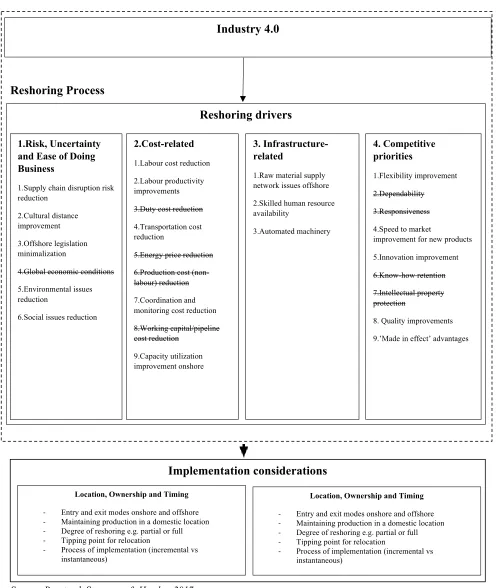
Figure 5 - Refined Conceptual Framework of the Reshoring Process with Possible Links to Industry 4.0
Source: Benstead, Stevenson & Hendry, 2017
Implementation considerations
Location, Ownership and Timing
- Entry and exit modes onshore and offshore
- Maintaining production in a domestic location
- Degree of reshoring e.g. partial or full
- Tipping point for relocation
- Process of implementation (incremental vs instantaneous)
Location, Ownership and Timing
- Entry and exit modes onshore and offshore
- Maintaining production in a domestic location
- Degree of reshoring e.g. partial or full
- Tipping point for relocation
- Process of implementation (incremental vs instantaneous)
Reshoring drivers
1.Risk, Uncertainty and Ease of Doing Business
1.Supply chain disruption risk reduction
2.Cultural distance improvement 3.Offshore legislation minimalization
4.Global economic conditions 5.Currency exchange rate and variability reduction 6.Environmental issues reduction
7.Social issues reduction
2.Cost-related
1.Labour cost reduction 2.Labour productivity improvements 3.Duty cost reduction 4.Transportation cost reduction
5.Energy price reduction 6.Production cost (non-labour) reduction 7.Coordination and monitoring cost reduction 8.Working capital/pipeline cost reduction 9.Capacity utilization improvement onshore 3. Infrastructure-related
1.On-site infrastructure issues offshore
2.Raw material supply network issues offshore 3.Skilled human resource availability 4.Automated machinery 4. Competitive priorities 1.Flexibility improvement 2.Dependability 3.Responsiveness 4.Speed to market
improvement for new products 5.Innovation improvement 6.Know-how retention 7.Intellectual property protection
3. Methods
3.1Qualitative research
There a is a quantitative and qualitative way for doing research. Firstly, a problem can be quantified through the use of generating numerical data or data that was transformed into statistics. This approach uses measurable data to formulate facts in order to uncover patterns and is therefore called quantitative research. This is rather usedto quantify attitudes, behaviors, opinions and other defined variables. The goal of quantitative research is to confirm hypotheses about a specific phenomenon and to generalize the results from the study sample to the general population (or specific groups). However, this research aims at understanding and to find possible underlying reasons of Industry 4.0 and reshoring. Therefore qualitative research is more appropriate. Qualitative research could provide insights and new theories of a phenomenon and could even develop a theory for potential future quantitative research.
Thanks to a step-by-step model the systematic analysis of data of qualitative research is possible (Boeije, 2014). This method allows to develop a theory and to make sense of certain phenomena like Industry 4.0 and reshoring. Qualitative research is especially suitable to describe and clarify new phenomena (Boeije, 2014). The phenomenon of Industry 4.0 and reshoring have been observed, but however not yet been fully understood (Algozzine and Hancock, 2006). Qualitative research is therefore the best approach to research Industry 4.0 and its possible influence on reshoring in the manufacturing industry.
The research question is being researched by the means of the flexible methods that allows contact with the involved participants to an extent that is necessary to understand what is going on in practice. Flexible methods encompass certain decisions that are not taken in advance but rather during the investigation. The qualitative research design has therefore a developing nature and the methods for data collection that are used allow for a close approach with the research field. This flexible approach also applies to the analysis. Because of this approach one does not know in advance which data will be generated and what the framework of the analysis will look like. The results and the focus of the analysis will slowly develop during the research process. Research is collected through semi-structured interviews.
involved with reshoring and Industry 4.0 are being interviewed. These companies are mainly Dutch manufacturing companies that have already reshored or want to reshore. Companies within the textile industry were approached, whereby size was not taken into account. Additionally, companies that are nearshoring are included, as described in paragraph 2.3.1 nearshoring resembles to the phenomenon of reshoring. Research is conducted by studying primary data with interviews of the parties concerned, therefore the findings will primarily consist of data from the interviews.
3.2 Constraints and Criteria
For the sampling criteria the companies that will be interviewed have to be at the intersection of Industry 4.0 and reshoring in the textile industry. These companies will have similar contingency factors in terms of age, size, type of industry, revenue in order to control for these factors. A sample size of eight companies will be used for this study. This sample size will allow this research to investigate companies within the textile industry however with marginally different sizes and structures.
(Wyman, 2015). Zara for example manufactures, distributes and sells clothing within two weeks after its original design appearing on catwalks (Wyman, 2015).
Also due to increasing risks of sustainability in low-cost countries, increased wages in Asia, quality issues, lack of flexibility, longer lead times and counterfeits textile companies are extensively considering to reshore (Hasan, 2018). Besides to stay competitive as homebased textile manufacturing company, the sector is heavily focused on manufacturing innovations (Hasan, 2018). Earlier manufacturing in the textile industry was centralized for better manageability and quality control, however thanks to Industry 4.0 is possible to control a lot more over the complete value and supply chains. Therefore it is a must for textile companies that want to compete in the latest industrial revolution to adapt or to copy the speed of business model of the fast-fashion. This means that the distribution channels will need to be redesigned and factories will need to be located closer to markets (Smithers and Gray, 2017).
The eight cases from the textile industry will provide this research with sufficient samples to make a good and thorough statement.
3.3. Data collection
The results of the case studies are compared with each other to identify the current and future status of Industry 4.0 and its influence on reshoring activities. Therefore, a multiple-case study will be done. A single case study is particularly useful to challenge or to confirm a theory while multiple cases allow a replication logic (Tellis, 1997). Especially since reshoring is a contemporary phenomenon, therefore a multiple-case study is useful (Yin, 1994).
interview process (Boeije 2010). This method of interviewing is most often selected as the main method for collecting empirical data of the relevant practices. The interview stages encompass all stages from designing the questions for the interview, subsequently developing the interview guides until the process of the interview itself.
A semi-structured interview is also known as a non-standardized or qualitative interview method (Saunders, Lewis and Thornhill, 2009). These kind of interviews are a compromise of two types of interviewing, those are structured interviews and in depth interviews combined. For that reason, it provides the advantage of using a list of predetermined themes and questions as in a structured interview. However, a semi-structured interview keeps enough flexibility to enable the respondent that is being interviewed to talk more about any kind of topics that could be raised during the process of the interview. An in-depth qualitative interview is a more appropriate format for case study research due to the fact that in-depth questions cannot be answered very briefly. The anticipation therefore is that the interviewer will need to ask for examples or some more explanation on the answer given in order to gain a deep understanding of the issues. This approach will ensure that the research design and method of questioning is flexible and adaptive in order to facilitate new information to emerge or to adapt to an unexpected direction (Rubin and Rubin, 2011).
Industry 4.0 and reshoring are relatively new concepts and a company might not initially want to share all the necessary information because it is part of their strategy to remain competitive on the market. The informed consent will provide clear agreements with the interviewee of the company so that it prevents prejudices and withholding information. In addition, Industry 4.0 is a relatively new topic and it is not clearly defined in concepts and its future statuses are unclear. That is why a pre-test will be done to find out whether the definition concerning Industry 4.0 and reshoring and the questions are clear enough. Overall the goal is that this research approach can examine Industry 4.0 and its influences on relocation decisions of a company.
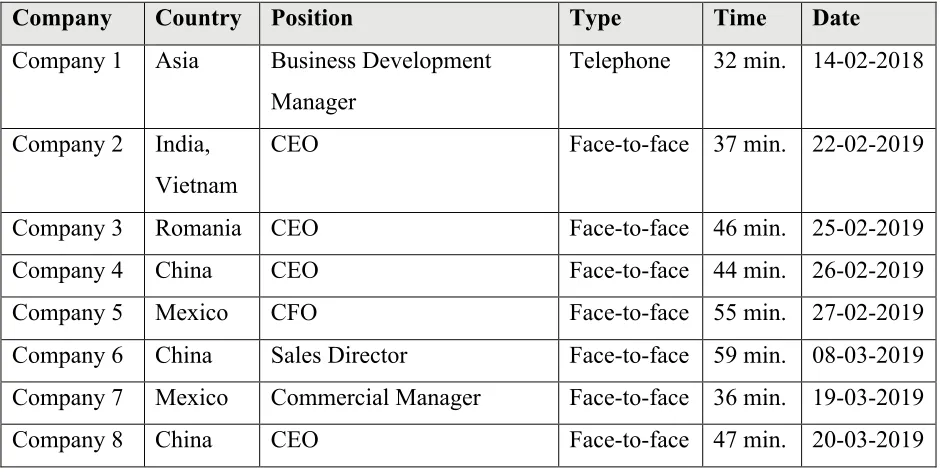
Table 1 – List with conducted interviews
Company Country Position Type Time Date
Company 1 Asia Business Development Manager
Telephone 32 min. 14-02-2018
Company 2 India, Vietnam
CEO Face-to-face 37 min. 22-02-2019
Company 3 Romania CEO Face-to-face 46 min. 25-02-2019
Company 4 China CEO Face-to-face 44 min. 26-02-2019
Company 5 Mexico CFO Face-to-face 55 min. 27-02-2019
Company 6 China Sales Director Face-to-face 59 min. 08-03-2019 Company 7 Mexico Commercial Manager Face-to-face 36 min. 19-03-2019
Company 8 China CEO Face-to-face 47 min. 20-03-2019
The semi-structured interviews are divided into categories with several questions. These categories will contribute to get a fuller understanding of the Industry 4.0 process and its aspects regarding reshoring. These categories will help to analyze the collected data better. The categories or blocks will be further elaborated in chapter 3.2.2.
The interview will start with general information questions to get a general idea of the companies’ characteristics and current state of affairs. Further the goal is to know what the current knowledge and state is of the Industry 4.0 at the interviewed company. The primary information will also provide an insight on whether the company is currently offshoring or has reshored already. Here it is also the goal to see if Industry 4.0 also had an impact on the companies’ decision and if the implementation of Industry 4.0 brought any improvement or complications. At the end of the interview the respondents are asked to provide their own opinions concerning Industry 4.0 and reshoring and whether they would have acted differently in the implementation process considering their gained knowledge after the process.
This step is of great importance to have a good processing of the collected data (Patel and Davidson, 2011).
3.3.1 Preparation of the semi-structured interviews
First a desk-research will be conducted for the following reasons; to learn about the subject and to know more about the company. Background information about the company acquired will be applied in order to be able to have a better understanding of the company and that can be used in the interview.
A pilot study is constructed concerning the understanding of Industry 4.0, reshoring and the questions of the semi-structured interview. This pilot study aims at what the best way is to test the understanding and the knowledge of the respondents about Industry 4.0 and reshoring. This is especially needed in order to do an accurate and dependable research on Industry 4.0 and its possible influence on reshoring. The semi-structured interview with its qualitative aspects will refer to current states and desired future states of Industry 4.0 even as what companies’ representatives will think of Industry 4.0.
The goal is to interview several Chief Executive Officers (CEO) of textile companies that have reshored, or other firms, organizations that are affected by reshoring. The interviewees that will be interviewed are asked open questions about their general views, experiences, and concerns on Industry 4.0 and reshoring, as well as, what they base this knowledge on. Data is also gathered by researching the websites of the interviewed firms. As mentioned in the informed consent all of the gathered data will be anonymized to ensure full confidentiality and to prevent the spread of competition sensitive data.
3.3.2 The semi-structured interview
After obtaining the informed consent the interview will start. Background information about this research is included on the information sheet of the informed consent. Before starting the interview, the purpose of this research will be explained. Subsequently the interview guide will be followed. By using a well prepared interview guide a high level of unnecessary information will be reduced and the data within the areas of interest will emerge (Morse & Field, 1996).
reliability reasons and to guarantee a similar understanding about the research subjects, a clear definition of Industry 4.0 and reshoring will be provided first. Then, each block will be introduced with a lead question.
The first themed box provides general background information about the respondent and its position within the firm. The second box investigates the respondents’ view on Industry 4.0 and reshoring. Subsequently the definitions from this research will be provided to ensure that there is a consensus between the interviewer and the respondent about the definitions used in further questions. The goal of the third box is to obtain an overview and a starting point for further questions about reshoring and Industry 4.0 of the company involved. This is of great importance since the company should have had or has a project at the intersection of both industry 4.0 and reshoring. This is important in order to find a clear answer on the research question. Overall this box will provide a so called ‘reshoring vignette’ that contains overall information.
The fourth and fifth box are somewhat intertwined. If some of the drivers of the conceptual model are mentioned by the respondent here, they will be excluded at the next block.
However there is a clear distinction between the goals of these two boxes. The main purpose of the fourth box is to identify strengths or problems of the reshoring project. To have a better understanding of the motives to reshore it is also important to understand what the initial motives were to offshore. The first question is a relative open question and will allow the respondent to speak freely concerning the issues involved of Industry 4.0 and their reshoring project. The choice for this open question has been done deliberately to prevent putting any terms of interest in the mouth of the respondent. This has been done to enhance the objectiveness of the interviewer and therefore the interview.
3.3.3 Data Analysis
From the collected interviews the data shall be stored, categorized, named and connected. This process actively involved interpretations from the researcher (Boeije, 2010). Through coding techniques it is possible to organize the data and to reduce it in relevant themes to represent the data (Creswell, 2017).
3.4 Describing the case companies
A short description of the interviewed companies shall be provided. Followed by the overall findings from the performed interviews.
3.4.1 Company 1
First to be interviewed was a business development manager at the textile branch organization of the Netherlands. This organization provides innovation sessions where they share their vision on developments in the textile industry. During these sessions they discuss many topics, among reshoring and Industry 4.0. Except for these sessions, the business development manager also assists companies in implementing Industry 4.0, that sometimes are followed by reshoring activities. The branch organization supports also a business network of manufacturers, importers, agents and wholesalers in clothing, fashion accessories, carpet and (interior) textiles that could provide a lot of information. Within this network there is a lot of knowledge about textile companies and their latest trends. Especially what the current challenges are and how they view this from a perspective of Industry 4.0. While this is not a sole SME, the manager however has been involved in a lot of Industry 4.0 and reshoring projects at SME’s. Therefore, the first interview was able to provide a unique overall insight that was valuable for this research.
4.1.2 Company 2
4.1.3 Company 3
This company was founded in the beginning of the 20th century. The company started with the production of hair cloth, horsehair and tie linings with wool, cotton, polyester, viscose etcetera. A large part of the products they manufacture go abroad where the company is known for their quality and reliable delivery times. In addition, they have the option to quickly produce any desired quality to meet the specific wishes of the customer. It was vital for the company to move more and more towards tailor made solutions for their customers. Nonetheless to do this for a big market Industry 4.0 is of great importance. The company had to consider the implementation of a digital roadmap for their processes. Through the maximal use of data the company hopes to take its production company to the next level. This development transforms a old-fashioned factory to a more Smart Factory. This means that all relevant data are aggregated and analyzed and that based on that data the necessary correct actions are taken. In the Smart Factory, sensors, machines, employees and processes are part of a connected ecosystem that improves the production process in the following areas: Less downtime, less surplus and dropout and better insights. The whole process can be monitored from start to finish.
4.1.4 Company 4
4.1.5 Company 5
The fifth company is also located in the Netherlands. They have several locations in Mexico, U.S.A. and a large facility in the Netherlands. The company heavily invested in high-tech warping machines in order to gain a lead and to have better highly innovated fabrics. As a ground breaking company it is constantly trying to innovate and improve its products. Currently they are involved in expanding their activities in Mexico. Mexico will have to serve the local and North-American market. They will realize this by means of research and development and through combining the unique features of circular knittings, elasticity, yarns and finishing. Currently the company offers flexibility as well as the highest quality. This is possible because of the mutual exchange of knowledge, techniques, processes as well as creativity. Therefore it is well-known for its innovated fabrics.
4.1.6 Company 6
4.1.7 Company 7
The seventh company has had some of their products outsourced in China. Subsequently they wanted to produce in-house closer to their home market (Europe). Nowadays it is active in the automotive industry for technical textiles. The company is not the oldest textile factories, but it is one of the few companies that has survived. Especially due to the turbulence of the market in the textile industry. One of their key strategies was to immediately invest every earned penny in new machines and techniques. A healthy policy which has, in combination with a choice for diversification that led to successful growth. The company wants to move to a production location closer to their sales office in the United States. The new facility will be in Mexico to serve the local and North-American market. The company there will be provided with state-of-the-art techniques for production areas and logistics. These techniques will provide a major insight since Industry 4.0 has enables a company to remain very competitive.
4.1.8 Company 8
4. Results
4.1 Pretest
As mentioned earlier a pretest has been executed in order to test the internal validity of the questions of the semi-structured interview. The initial goal was to do the pretest in a real-time environment, thus a company with experience on reshoring and Industry 4.0. The general manager of a consulting company was willing to cooperate with the pretest. The consulting company provides project management and consultancy services for Dutch companies with international activities. These activities can be offshoring, reshoring and any further kind of financial services. The pretest has been recorded, however further analysis through coding techniques has not been applied, since the goal was to test the drafted questions and not to develop a theory based on the acquired answers. Overall the pretest has shown multiple insights that provided a solid base to change one and other.
4.2 Transcripts
The interviews were in Dutch and therefore all of the transcripts are in Dutch as well. No translations have been made in order to prevent the loss of key information. The translation could impact the overall quality and have a significant implication on the conceptual equivalence and accuracy of the study findings (Temple & Young, 2004). For example, the translator will not only translate the texts literally, but also adds cultural or interpretive insights.
Overall there are 47 pages in total of the transcripts and the interviews took 44,5 minutes in average. First the transcripts were browsed through as a whole and notes about first impressions have been made. Then the transcripts of the interviews were read carefully one by one and line by line. All relevant words, sentences or sections relating to Industry 4.0 and reshoring have been labeled. These labels were about opinions, differences, actions or anything else that was relevant to this research. The relevancy was determined by the fact that it was repeated several times, the interviewee stated that it was important, or it had a close connection to the topic of this research. After coding the transcripts, the most important codes were brought together by grouping them into conceptualized categories. Not all of the codes that were created have been used for these categories as these labels turned out to be not relevant. By following the previously mentioned actions the data is being conceptualized. In the next chapter the categories are being described and how they are connected with Industry 4.0.
4.3. Labeled categories
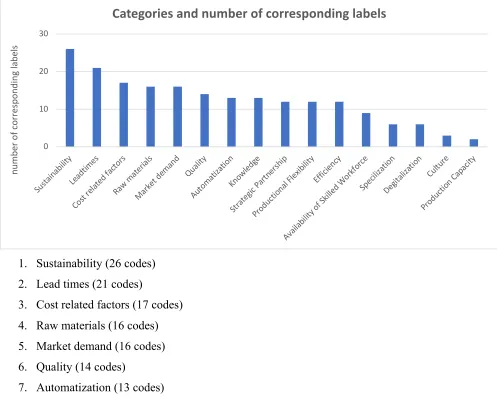
Figure 6 - Categories and number of corresponding labels
1. Sustainability (26 codes) 2. Lead times (21 codes)
3. Cost related factors (17 codes) 4. Raw materials (16 codes) 5. Market demand (16 codes) 6. Quality (14 codes)
7. Automatization (13 codes) 8. Knowledge (13 codes)
9. Strategic partnership (12 codes)
10.Productional flexibility (12 codes) Flexibility of production and low production volumes 11.Efficiency (12 codes) Less faults in production
12.Available skilled workforce (9 codes)
13.Specialization (6 codes) More complicated products 14.Digitalization (6 codes)
15.Culture (3 codes)
16.Production capacity (2 codes) 0 10 20 30 Susta inabil ity Leadt imes Cost relate
d fac tors
Raw mater
ials
Marke t dem
and Quali ty Auto matiza tion Know ledge Strate gic Pa
rtners hip
Produ ction
al Fle xibilit y Effici ency Avail abilit
y of S killed Wor kforce Spec ilizati on Degit alizat ion Cultu re Produ ction Capa city num be r of corre spondi ng labe ls
Sometimes a code was only mentioned one time, however for this research is has been deemed as relevant to the investigated topics. These codes are not included in the overview above but are being mentioned in the following paragraphs in quotes. The interrelationships within and between the themes Industry 4.0 and reshoring drivers are presented below.
4.3.1 Industry 4.0 and Risk, uncertainty and ease of doing business
As shown in Figure 2, where the conceptual framework for this research is shown, there are multiple categories of drivers of the reshoring process that could be influenced by Industry 4.0. In this and the following subchapters (chapter 4.3.1 – 4.3.4), the findings will be discussed how Industry 4.0 influences each of the reshoring drivers separately. In other words, which categories and corresponding drivers are influenced by Industry 4.0; and therefore, will be taken into the new framework or have been left out.
The first category is Risk, uncertainty and ease of doing business. The drivers behind this category (labeled 1.1 – 1.6 in Figure 5) are embedded within the goal to reduce the exposure to risk, uncertainty through reshoring and subsequently to have the same or a more efficient operation in the domestic location of the firm (Benstead, Stevenson and Hendry, 2017).
Driver 1.1, 1.2, 1.3, 1.5 and 1.6 are being influenced by Industry 4.0 for the following reasons: • Driver 1.1: A connection between Industry 4.0 and the drive to reduce the risk of supply
• Driver 1.2: Another driver that is being influenced by Industry 4.0 is cultural distance improvement (Tate, 2014 and Gray et al. 2013). As company 4 stated; “you have to deal with character traits, with culture so all issues we have to deal with…the entire culture of Africa (that part) is a mentality hard to work with. There is no drive there, there is no ambition… There is also a lot of corruption from the government”. Company 8 complements this with; “I look at corruption, I look at what the people are like; culture”. All the above indicates that cultural distances make it challenging to develop the needed levels for the implementation of Industry 4.0.
• Driver 1.3: Offshore legislation minimalization, while this is a driver to reshore it however works in this case the other way around. Company 8 states that the implementation of Industry 4.0 is being hindered because “a lot of rules are imposed; How is it possible with import duties, anti-dumping, yarn purchases, the currency, etc.?”. Thus the increase of offshore legislation and the minimalization onshore increases the need to implement Industry 4.0 with reshoring or nearshoring. Driven by legislation that is been enforced by the European Parliament to develop an Action Plan for Industry 4.0 (Smit el al., 2016). Creating therefore the EU a more friendly environment for certain companies to reshore and to invest in solutions relevant to Industry 4.0.
• Driver 1.5 and 1.6: Environmental issues reduction and social issues reduction, as seen in Figure 6 sustainability is a topic that has been coded many times. Driver 1.5 and