MASTER THESIS
TRUSTING FITNESS TRACKING SYSTEMS
HOW AN INTERFACE AFFECTS PERCEPTIONS
OF TRUST, RISK AND INTENTION TO USE
Gerbrich Jongbloed
Faculty of Behavioral, Management and Social Sciences
Master of Science in Communication Studies
Specialization:
Technical Communication
Supervisors:
Dr. A. Beldad, University of Twente,
Dr. I. van Ooijen, University of Twente
Date: April 8 2019
ABSTRACT
Purpose: Fitness tracking technologies are rapidly gaining popularity. It can be theorized that intention to use digital technologies gets affected by different interface antecedents through the mediating effect of trust and risk perceptions. Simple navigation as well as embedded instructions can lead to higher trust perceptions and lower risk perceptions, where bigger screen sizes make these relationship stronger because they can present more navigation cues and instructions at once. Also, instructions embeddedness can lead to a stronger relationship between navigation complexity and trust and risk perceptions, because they provide information relevant to the page, hence affecting navigation activities. The current study aimed to measure how intention to use a fitness tracking system gets affected by the main effect and the interaction effect of interface antecedents (i.e. navigation complexity, instructions embeddedness and screen size) on the mediating variables (i.e. character-based trust, competence-based trust, performance risk and privacy risk) by conducting a case study on Caren.
Method: A 2x2x2 quantitative research was conducted in which the navigation complexity (simple vs complex), the instructions embeddedness (unembedded vs. embedded), and the screen size (small vs. large) of a prototype were manipulated. These prototypes were presented to participants during an online experiment in which the main effects and interaction effects of the prototype manipulations on the mediators (i.e. competence-based trust, character-based trust, performance risk, privacy risk) and the dependent variable (i.e. intention to use) were measured. For this study, 219 Dutch respondents participated in the online experiment, where they worked with the Caren prototype and reacted to statements regarding the Caren fitness tracking system.
Findings: The results showed that there only was a main effect of navigation complexity on competence-based trust and performance risk, and that this relationship was not moderated by screen size or instructions embeddedness. It appeared that simple navigation resulted in higher levels of competence-based trust and lower levels of performance risks as opposed to complex navigation. There also appeared to be a main effect of competence-based trust and performance risk on intention to use, making competence-based trust and performance risk mediators between navigation complexity and intention to use, where low navigation complexity leads to higher intention to use because of higher levels of competence-based trust and lower levels of performance-risk as opposed to high navigation complexity. There was no main effect of instructions embeddedness on any of the dependent variables.
Conclusion: The results of this study show that the interface of a fitness tracking system can affect trust and risk perceptions, and through these perceptions can increase intention to use this system. In this study, a main effect of navigation complexity on competence-based trust and performance risk was found, where competence-based trust and performance risk affected intention to use. The lack of support for the other hypotheses might be due to the high experience of the experimental group with apps. Further research on the subject of this study is recommended in order to discover antecedents of fitness tracking systems that affect perceptions of trust, risk and intention to use.
TABLE OF CONTENTS
1. Introduction ……….……. 4
2. Theoretical framework ………..…. 6
2.1 What are fitness tracking systems? ……… 6
2.2 Trust, risk and intention to use ………... 6
2.3 Navigation complexity ……….. 7
2.4 Instructions embeddedness ……… 7
2.5 Screen size ………..………...……….. 9
2.6 Trust and risk perceptions as mediators ……… 9
2.7 Research model ………. 10
3. Method ...………..……….. 11
3.1 The case of Caren ..………..……….. 11
3.2 Demographic characteristics of the participants ...……….. 11
3.3 Research design ………..……… 12
3.4 Materials ………..………... 12
3.4.1 Stimuli design ……….………..……….. 12
3.4.2 Manipulation check ……… 14
3.5 Measures ………..……….. 14
3.5.1 Competence-based trust and character-based trust instrument ………. 15
3.5.2 General trust instrument ………,……… 15
3.5.3 Perceived risks and intention to use instrument ……….……… 15
3.5.4 Validity and reliability of final instrument ……….…….……… 15
3.6 Procedure ………..………. 17
4. Results ………..……….. 18
4.1 General results ………..………. 18
4.2 Significant difference of sample means from scale means ………. 18
4.3 Mean difference between conditions ……….. 18
4.3.1 Main effect of navigation complexity on dependent variables ……….. 20
4.3.2 Main effect of instructions embeddedness on dependent variables ………... 20
4.3.3 Interaction effect of navigation complexity and instructions embeddedness …… 20
4.3.4 Interaction effect of navigation complexity and screen size ……… 20
4.3.5 Interaction effect of instructions embeddedness and screen size ………. 20
4.3.6 Interaction effect of navigation complexity, instructions embeddedness and screen size ………..………..………... 20
4.4 Mediation analysis ………..………... 21
4.4.1 Competence-based trust as mediator …….……… 21
4.4.2 Performance risk as mediator ………….……….. 21
5. Discussion ………..……… 24
5.1 General discussion ………..……….. 24
5.2 Implications and future research ………. 25
5.3 Conclusion ………..……… 26
6. References ………..………... 27
7. Appendices ………..……….. 31
Appendix 1 – Caren interfaces ……….……….. 31
Appendix 2 – Changes to instruments ………. 36
Appendix 3 – Final questionnaire ……….. 38
Appendix 4 – Factor analysis app constructs and fitness tracker constructs ………. 56
1. INTRODUCTION
The days to consult a doctor in order to get a health check are long gone. Commercial health apps and fitness tracking devices like the FitBit and the Apple Watch enable people to track all kinds of data from their own bodies, like their heartbeat, sleep activity and their fitness level. In a society where people in general are concerned with their own well-being (Steel, Taras, Uggerslev & Bosco, 2018), it is not surprising that these fitness tracking technologies are rapidly gaining popularity. As of 2016, 39% to 41% of the global population aged between 20 and 39 used mobile apps or fitness trackers to monitor their own health (Statista, 2019a). The number of users of fitness apps and fitness trackers is only expected to increase, with an expectation of a total of 972.4 million fitness apps users and 367.2 fitness tracker users in 2023 (as opposed to a total of 668.3 million app users, and 330.6 fitness tracker users in 2017) (Statista 2019b). Often, fitness apps and fitness trackers work together as one system (in this study called ‘fitness tracking system), where the fitness tracker tracks data from the user whenever the user wears this device, and displays this data on another smart device, like a smartphone or a tablet. These fitness tracking systems make it possible for consumers to monitor their own health at all time.
Studying the effectiveness of fitness tracking systems has been gaining popularity in the academic field over the past few years (for example, see: Chen & Pu, 2014; Gui, Chen, Caldeura, Xiao & Chen, 2017; Koo & Fallon, 2018; Motti & Caine, 2015). However, there is still little academic focus on what affects the intention to use fitness tracking technologies. In this study, the focus will be on two predictors of intention to use a technology: (1) trust perceptions, and (2) risk perceptions (Chen & Dibb, 2010; Jarvenpaa, Tractinsky & Vitale, 1999; Pavlou, 2003; van Velsen, Tabak & Hermes 2017). When it comes to fitness tracking systems, the user has no face to face contact with the vendor, and therefore makes trust- and risk-inferences through direct experience with the technology (Reichheld & Schefter, 2000). This makes optimizing the interface design of the fitness tracking app an important way to enhance perceptions of trust, risk and intention to use regarding the fitness tracking system. Research into the effect of interface antecedents on trust and risk perceptions in economic exchange contexts, shows that trust in websites can increase when navigation complexity is reduced and information provision is optimized (for reference, see: Beldad, de Jong & Steehouder, 2010; Ganguly, Dash & Cyr, 2009). These effects can be theorized to be stronger as screen size increases, since a larger screens often means a better overview of required information (Chae & Kim, 2004). Also, the effect between navigation complexity and trust and risk perceptions can become stronger as instructions become more embedded, since embedded instructions can give navigation cues on relevant pages (Pirolli, 2005).
This research will investigate whether the effect of interfaces on perceptions of trust, risk and intention to use that can be found in economic exchange contexts, can also be found in the context of fitness tracking systems. Therefore, a 2x2x2 research will be conducted in which the effect of navigation complexity and instructions embeddedness on intention to use through the mediating effect of trust and risk perceptions will be investigated. Also two moderators will be studied: (1) the moderating effect of screen size on the relationship between the two independent variables and the trust and risk perceptions, and (2) the moderating effect of instructions embeddedness on the relationship between navigation complexity and trust and risk perceptions. Studying these main- and interaction effects can create a clearer picture of what interface antecedents of a fitness tracking app can affect intention to use a fitness tracking system through the mediating effect of trust and risk perceptions. The research questions central to this study, are:
RQ1: “To what extent do navigation complexity and instructions embeddedness in a fitness tracking app have an effect on intention to use the fitness tracking system through the mediation effect of trust and risk perceptions regarding the fitness tracking app?”.
RQ2: “To what extent do screen size and instructions embeddedness moderate the relationship between navigation complexity (and, in the case of screen size as moderator, instructions embeddedness), and trust and risk perceptions regarding the fitness tracking app?”.
current and future fitness tracking systems. Third, since fitness tracking technologies can be expected to become more and more advanced and integrated in the everyday life of people, it is important to fully understand the way people perceive these life-altering technologies.
2. THEORETICAL FRAMEWORK
2.1 What are fitness tracking systems?
Self-monitoring technologies like wearable fitness trackers are being developed rapidly, and their implementations are broad. According to Lupton (2013), part of these self-monitoring technologies, is “the employment of wireless mobile digital devices and wearable, implanted or inserted biosensors for lay people to monitor their health, wellbeing and physical function” (p. 257). With the emergence of systems like the Apple smartwatch and the FitBit, self-monitoring through mobile devices and wearable fitness tracking technologies becomes available to the wider public. Often wearable fitness tracking technologies are connected to mobile devices in order to reduce the power consumption of the wearable fitness tracker by performing computing tasks while simultaneously extending the interface of the wearable fitness tracker by providing a larger screen (Rawassizadeh, Price & Petre, 2015). This connection between a wearable fitness tracker and a mobile device will be referred to as ‘fitness tracking system’ in this study.
The use of fitness tracking systems comes with a few risks. First, fitness tracking systems track personal data that are transmitted and stored. The user can decide to share these data on social media platforms, but these data also might be shared to, and sometimes misused by, third parties, potentially without the user being aware of this (Motti & Caine, 2015). This creates a privacy risk for the user (Lee, 2009). Second, since fitness tracking technologies are complex advanced devices, there always is a chance of (temporary) hardware or software failure. These failures can lead to unexpected losses, hence creating a performance risk of the fitness tracking technology (Kuisma, Laukanen & Hiltunen, 2007; Lee, 2009). The presence of these two types of risks when using fitness tracking technologies puts users in a vulnerable position, where the user is not always in control of what is happening with their fitness tracking system or the data it collects. Therefore, when using a fitness tracking system, vulnerability is high and hence, trust and risk perceptions are important indicators of whether the technology will be used by the consumer (Chen & Dibb, 2010; Jarvenpaa, Tractinsky & Vitale, 1999; Pavlou, 2003; van Velsen, Tabak & Hermes 2017).
2.2 Trust, risk and intention to use
Trust is a widely researched topic in academic literature, throughout many fields. Because of the versatility and abstractness of the trust concept, there are many definitions of trust that all cover this subject well. According to Mayer, Davis & Schoorman (1995), trust can be defined as: “the willingness of a party to be vulnerable to the actions of another party based on the expectation that the other party will perform a particular action important to the trustor, irrespective of the ability to monitor or control that other party” (p. 712), whereas Moorman, Zaltman and Deshpande (1992) defined trust as “a willingness to rely on an exchange partner in whom one has confidence” (p. 315). The definition of Sirdeshmukh, Singh, & Sabol (2002) shows that the trustee not necessarily needs to be a human entity, they describe trust as: “the expectations held by the consumer that the service provider is dependable and can be relied on to deliver on its promise” (p. 17).
According to McLain and Hackman (1999), there are two dimensions that “truly represent rather than influence trust” (p. 155). These dimensions are: (1) ability, and (2) willingness. Here, ability (or competence-based trust) means the extent to which a trustee has the knowledge and resources to create positive outcomes for the trustor. Willingness (or character-based trust) means the desire of the trustee to perform actions that lead to a positive outcome for the trustor (Beldad & Kusumadewi, 2015; McLain & Hackman, 1999). This study focusses on these two types of trust: (1) competence-based trust, and (2) character-based trust.
users regard the presence of these risks to be, because only when risk is present, trust is a relevant predictor of intention to use a system (Jarvenpaa, Tractinsky & Vitale, 1999; Rousseau et al., 1998).
When looking at fitness tracking systems, the app that is connected to fitness tracker provides the user with multiple trust cues. In order to gain more insight into the effect of these trust cues on trust and risk perceptions of the user, this study will evaluate the effect of ease of use of the app on perceptions of trust, risk and intention to use regarding the fitness tracking system. This will be done by examining three trust antecedents that influence how the app is being used: (1) navigation complexity, (2) instructions embeddedness, and (3) screen size.
2.3 Navigation complexity
Generally, perceived usefulness and perceived ease of use of a technology are believed to affect the attitude towards the technology (Davis, 1985). Especially perceived ease of use has been be connected to trust in online environments (Beldad, de Jong & Steehouder, 2010). Perceived ease of use of an online (web-)application, is affected by the navigation complexity of this application, where easier to navigate (web-)applications evoke stronger feelings of trust, especially during first encounters (Chau, Hu, Lee & Au, 2007). Two factors that can influence navigation complexity, are: (1) menu complexity, and (2) navigation path complexity (Melguizo, Vidya & van Oostendorp, 2012).
First, menu complexity refers how simple it is to retrieve information from the hierarchical organization of the menu (Melguizo, Vidya & van Oostendorp, 2012). Second, according to Gwizdka and Spence (2006), navigation path complexity can be divided into different factors: (1) page complexity, which refers to how complex it is to make navigation choices, (2) page information assessment, which refers to how easy it is to assess whether the provided information is related to the task, and (3) navigation path length, which refers to the amount of navigation choices that have to be made in order to perform the task successfully. Thus, simple navigation means a clear menu combined with low page complexity, easy page information assessment and short navigation path lengths (e.g. a low amount of navigation choices that have to be made).
It can be expected that simple navigation will lead to higher perceptions of trust and lower perceptions of risks. First, previous studies focusing on the impact of navigation complexity on trust already showed that a higher ease of navigation leads to more positive evaluations regarding competence-based trust in digital context as opposed to navigation lower in ease (Roy, Dewit & Aubert, 2001). Second, easier navigation can show consideration of the developer towards the interests of the user. This consideration can lead to users being convinced that the developer does not merely has a selfish motive (Ganesan & Hess, 1997; Jarvenpaa, Tractinsky & Saarinen, 1999). Therefore, easier navigation can lead to more positive evaluations regarding character-based trust. Third, higher navigation complexity can lead to higher uncertainty when using the fitness tracking system because it becomes less clear of how goals can be reached. This increase in uncertainty can decrease trust while increasing risk perceptions towards the system (Jarvenpaa, Tractinsky & Saarinen, 1999).
H1. (a) Character-based trust and (b) competence-based trust regarding the fitness tracking app are evaluated higher for simple navigation conditions than for complex navigation conditions.
H2. (a) Performance risk and (b) privacy risk regarding the fitness tracking app are evaluated lower for simple navigation conditions than for complex navigation conditions.
2.4 Instructions embeddedness
(Miller, 1954), for a limited amount of time (Brown, 1958). The more embedded the instructions, the lower the cognitive load, and therefore, the less complex the learning process (Kalyuga, Chandler & Sweller, 1999).
There are three types of cognitive load that can affect the learning process: (1) intrinsic load, (2) extraneous load, and (3) germane load (Sweller, van Merriënboer, & Paas, 1998). Intrinsic load refers to how previous experience makes instructions more or less difficult for the learner, while extraneous load refers to how the design of instructions hinders or optimizes the learning experience. Germane load refers to how instructions provide elements directly related to learning (e.g. feedback elements) (van Merriënboer, Kester & Paas, 2006). According to Reedy (2015), “[t]he central idea of cognitive load theory is to optimize intrinsic and germane load such that a task is appropriately challenging for a learner, while optimizing the learning environment or task by minimizing unnecessary extraneous load” (pp. 356-357).
In the context of fitness tracking systems, the interface of the app that is connected to the wearable fitness tracker is the learning environment. Therefore, reducing the extraneous load of instructions can be expected to make the learning process less complex. Providing users with instructions right at the moment they need them, instead of before the first use of the app, can decrease extraneous cognitive load because this prevents the user from having to store instructions in the working memory while working with the app (Chandler & Sweller, 1991; Kalyuga, Chandler & Sweller, 1999). This decrease in cognitive workload can increase both perceptions of benevolence and perceptions of ability, or in other words, embedded instructions can positively impact character-based trust and competence-based trust (Roy, Dewit & Aubert, 2001). Also, embedded instructions can provide more guidance to the user, providing an opportunity to decrease uncertainty and with it decrease negative risk perceptions (Jarvenpaa, Tractinsky & Saarinen, 1999).
H3. (a) Character-based trust and (b) competence-based trust regarding the fitness tracking app are evaluated higher for embedded instructions conditions than for unembedded instructions conditions.
H4. (a) Performance risk and (b) privacy risk regarding the fitness tracking app are evaluated lower for embedded instructions conditions than for unembedded instructions conditions.
Page information not only can affect trust and risk inferences, it can also be theorized to have an effect on the relationship between navigation complexity and trust and risk perceptions. Page information seems to affect inferences about navigation complexity (Gwizdka & Spence, 2006), because this information can give navigation cues relevant to the page or task, making navigation less complex (Pirolli, 2005). As mentioned earlier, complex navigation can negatively affect trust and risk inferences (Chau et al., 2007). Therefore, a moderating effect of instructions embeddedness on the relationship between navigation complexity on the trust and risk perceptions can be expected. More specifically, embedded instructions can give the user information cues relevant to the current page or task, potentially making the relationship between simple navigation and trust and risk perceptions stronger. Unembedded instructions do not provide any support, potentially making the relationship between simple navigation and trust and risk perceptions weaker.
H5. Instructions embeddedness moderates the relationship between navigation complexity and trust and risk perceptions, where simple navigation leads to (a) higher positive trust evaluations and (b) lower negative risk evaluations for embedded instructions conditions as opposed to unembedded instructions conditions.
2.5 Screen size
A third variable connected to ease of use of an app, is screen size. Raptis, Tselios, Kjeldskov and Skov (2013) found that larger screens enabled the user to execute information-related tasks more efficiently than when working with a smaller screen. A smaller screen leads to users being tempted to go back and forth between pages more often, as well as increase scrolling and clicking activities on one page, because smaller screens often contain less information (Chae & Kim, 2004). Also, smaller screens decrease the ability of the user to execute a task successfully because smaller screens can increase frustration (Albers & Kim, 2000). It, appears that screen size can affect the followed navigation path and the navigation choices that are being made by increasing or decreasing navigation activities (e.g. clicking or scrolling behavior). Here, navigation activities decrease and become more efficient when using larger screen. Therefore, a moderating effect can be expected of screen size on the relation between navigation and trust and risk perceptions. More specifically, larger screens can decrease navigation complexity, while smaller screens can increase navigation complexity. This means that screen size has the potential to make the effect of navigation complexity on trust and risk perceptions stronger.
H6. Screen size moderates the relationship between navigation complexity and trust and risk perceptions, where simple navigation leads to (a) higher positive trust evaluations and (b) lower negative risk evaluations for large screen conditions as opposed to small screen conditions.
H6. Screen size moderates the relationship between navigation complexity and trust and risk perceptions, where complex navigation leads to (c) lower positive trust evaluations and (d) higher negative risk evaluations for small screen conditions as opposed to large screen conditions
According to Kim and Sunda (2016) larger screens appear to enhance heuristic processing (i.e. processing information with minimal cognitive effort), because they present more information cues, while smaller screens enhance systematic processing (i.e. processing information in an analytical way). This means larger screens create an opportunity to further decrease the cognitive load when presenting instructions. Therefore, the positive effect of embedded instructions on trust and risk perceptions can be expected to be stronger when these instructions are presented on a larger screen.
H7. Screen size moderates the relationship between instructions embeddedness and trust and risk perceptions, where embedded instructions lead to (a) higher positive trust evaluations and (b) lower negative risk evaluations for large screen conditions as opposed to small screen conditions.
H7. Screen size moderates the relationship between instructions embeddedness and trust and risk perceptions, where unembedded instructions lead to (c) lower positive trust evaluations and (d) higher negative risk evaluations for small screen conditions as opposed to large screen conditions
2.6 Trust and risk perceptions as mediators
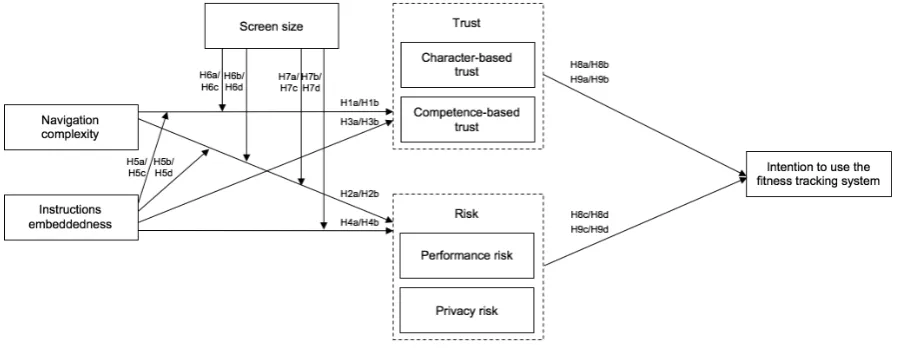
Both trust and risk perceptions can act as mediators between system antecedents and intention to use a system. Trust perceptions as well as risk perceptions can be expected to influence intention to use a system, because they affect expectations regarding positive outcomes when engaging in trusting behavior (Gefen, Karahanna & Straub, 2003; Nicolaou & McKnight, 2006). As discussed in the previous paragraphs, trust and risk perceptions in turn can be theorized to be influenced by navigation complexity and instructions embeddedness of the fitness tracking system, making trust and risk perceptions a mediator in the research model (see figure 1).
H9. (a) Character-based trust, (b) competence-based trust, (c) performance risk, and (d) privacy risk mediate the relationship between instructions embeddedness and intention to use the fitness tracking system.
2.7 Research model
[image:10.595.76.525.193.367.2]An overview of the relations between the independent variables (i.e. navigation complexity, instructions embeddedness, and screen size), the mediators (i.e. character-based trust, competence-based trust, performance risk, and privacy risk), and the dependent variable (i.e. intention to use the system), can be found in figure 1.
3. METHOD
3.1 The case of Caren
The research model, that can be found in Figure 1, was tested with the use of Caren. Caren is a healthcare network created by the Dutch organization ‘Nedap Healthcare’ in which care givers and care takers can manage their appointments, tasks, and contact with other users or the healthcare organization. There have been ideas about implementing fitness tracker data from the client in the Caren app, in order to give the care givers extra information on the current physical health of the client. When these ideas are implemented, Caren handles different types of personal data (e.g. sleep activity and heartbeat evaluations). Therefore, users are being placed in a position where they do not know exactly how the personal data collected by the Caren fitness tracking system will be handled, mostly because understanding the whole system requires a high level of technical knowledge. Besides this privacy risk, there is also the risk of the Caren app or fitness tracker malfunctioning that is present in every technology, hence creating a performance risk. Because of these two risks, users are placed in a vulnerable position. Therefore trust and risk perceptions can be expected to be important predictors of intention to use Caren, while these trust and risk perceptions in turn can be influenced by the interface of Caren.
3.2 Demographic characteristics of the participants
3.3 Research design
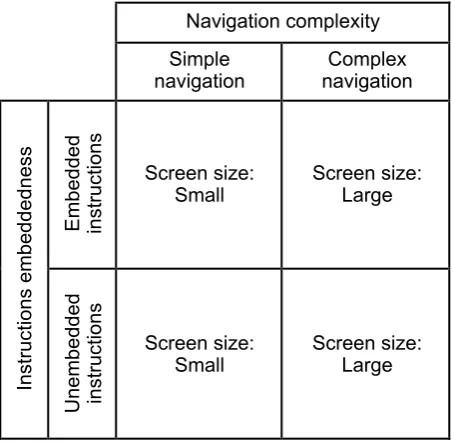
[image:12.595.185.413.244.466.2]The 2x2x2 experiment focused on the independent variables ‘navigation complexity’, ‘instructions embeddedness’, and ‘screen size’. Therefore, eight types of interfaces were designed for Caren: (1) large screen, simple (uncomplex) navigation, embedded instructions (LS/UN/EI), (2) large screen, simple (uncomplex) navigation, unembedded instructions (LS/UN/US), (3) large screen, complex navigation, embedded instructions (LS/CN/EI), (4) large screen, complex navigation, unembedded instructions (LS/CN/US), (5) small screen, simple (uncomplex) navigation, embedded instructions (SS/UN/EI), (6) small screen, simple (uncomplex) navigation, unembedded instructions (SS/UN/US), (7) small screen, complex navigation, embedded instructions (SS/CN/EI), and (8) small screen, complex navigation, unembedded instructions (SS/CN/US). The dependent mediating variables in this experiment, were: (1) character-based trust, (2) competence-based trust, (3) performance risk, and (4) privacy risk. The dependent variable in this experiment was intention to use the Caren system. The 2x2x2 research model can be found in figure 2.
Figure 2: 2x2x2 research design with navigation complexity, instructions embeddedness and screen size as independent variables.
3.4 Materials
3.4.1 Stimuli design
To examine the effect of navigation complexity, information embeddedness, and screen size on perceptions of trust, risk and intention to use regarding the fitness tracking system, eight types of stimuli were designed. The style of these stimuli was derived from the existing Caren web-application. Samples of the stimuli can be found in figure 3, the final stimuli designs can be found in Appendix 1.
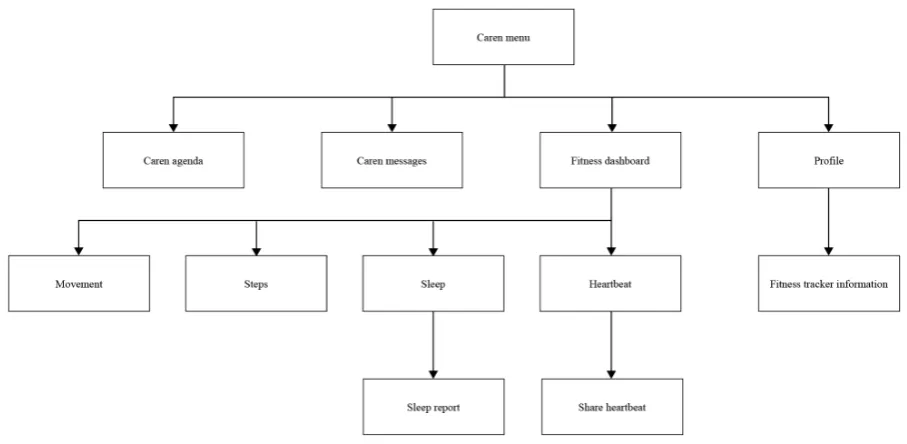
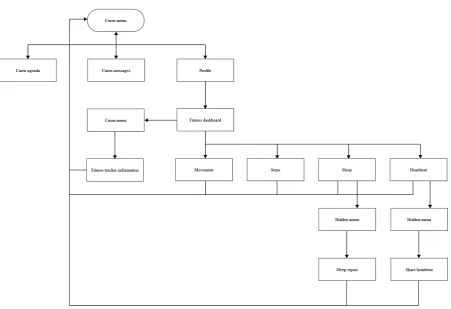
Within the stimuli, navigation complexity was manipulated by increasing or decreasing the following two constructs: (1) menu complexity, and (2) navigation path complexity. The simple navigation conditions displayed a visible menu on each page. This menu showed text combined with icons to indicate what page was currently displayed to the user. The menu used colors to display what page the user was currently on, and to show what pages the user could navigate to. The complex navigation used a hidden menu, that displayed only icons once the menu button was clicked. This menu did not use any color or text. Special features like sharing data, were either hidden under a separate button, or added as extra icon to the menu on relevant pages. The flowchart of the simple navigation can be found in figure 4, and the flowchart of the complex navigation can be found in figure 5. These flowcharts show that there is a difference in navigation path, where the navigation path of the simple navigation was shorter and less complex than the complex navigation path. Also, in the simple navigation condition, less navigation decisions had to be made in order to execute the task successfully than in the complex navigation condition.
Navigation complexity
Simple
navigation navigation Complex
In st ru ct io ns emb ed de dn ess E mb ed de d in st ru ct io ns Screen size:
Small Screen size: Large
Une mb ed de d in st ru ct io ns Screen size:
Information embeddedness was manipulated by providing the user with instructions either before working with the Caren system (i.e. unembedded instructions), or once the user started working with the Caren system (embedded instructions). Both times, the user got some information when the app was launched, but where the users with un-embedded instructions got all relevant information at once, the users with embedded instructions only got some information on the tasks they had to execute. The second group got all other information presented in pop-ups on the relevant pages.
[image:13.595.73.523.210.338.2]For screen size, navigation complexity and instructions embeddedness was the same for both sizes. The difference was that the tablet sized screen presented more information at once, making scrolling through information unnecessary and creating the possibility to present more information or instructions at once.
Figure 3: Samples of the Caren interfaces, as viewed by participants
[image:13.595.69.523.382.604.2]Figure 5: Flowchart of the complex navigation through Caren
3.4.2 Manipulation check
Before starting the data analysis, the effectiveness of the prototypes was checked by performing a manipulation check. The factor analysis of all manipulation check statements showed that only two constructs were measured and that most statements fell under the same construct. This shows a problem regarding the validity of the manipulation check. The decision was made to use the four constructs statements that covered the three conditions best. Although this does not solve the validity issues of the instrument, it does provide a workable, but not optimal, indication of whether the manipulations worked or not. The final manipulation check was performed with two statements regarding navigation complexity (one on menu complexity and one on navigation path complexity), one statement regarding instructions embeddedness, and one statement regarding screen size. All reactions were measured on a 5 point Likert scale ranging from completely disagree (1) to completely agree (5). The means of the manipulation check scale-questions were compared across conditions.
For navigation complexity, the mean of two statements regarding perceptions of menu complexity and navigation path complexity, is significantly higher for the complex navigation condition conditions (M = 3.072, SD = .945), as opposed to the simple navigation conditions (M = 2.055, SD = .929) with F(1,211) = 63.857, p < .001. For instructions embeddedness, the mean of the manipulation check statement regarding the extent to which the participant felt like embedded instructions were presented, is significantly higher for embedded instructions condition (M = 3.600, SD = 1.044), as opposed to the unembedded instructions condition (M = 3.210, SD = 1.085) with F(1,211) = 8.859, p = .003. Last, the mean of the manipulation check statement regarding to extent to which the participant felt like the app was presented on a small screen, is significantly higher for the small screen condition (M = 2.580, SD = 1.161), as opposed to the large screen conditions (M = 2.150, SD = 1.215) with F(1,211) = 6.836, p = .010. The manipulation check indicates that the manipulations worked across conditions. However, results should be interpreted with caution because of the invalidity of the manipulation check instrument.
3.5 Measures
overview of the adaptations that have been made to the instruments, can be found in Appendix 2. Appendix 3 shows the final questionnaire that, after the pre-test was performed and the survey was improved, was distributed among the participants.
3.5.1 Competence-based trust and character-based trust instrument
Competence-based trust and character-based trust were measured with statements formulated by Beldad, Hegner, and Hoppen (2016), inspired by McKnight, Choudhury, and Kacmar (2002). The original instrument measured: (1) product advice credibility, (2) character-based trust, (3) ability-based trust, (4) trust in the online vendor, (5) purchase intention. Only the character-based trust and ability- based trust (competence-based trust in this study) were used in the final questionnaire because of their relevancy to this study. Some examples of statements that are used in the original instrument, are: “The company’s VSA does business with my interest in mind”, and “The company’s VSA is competent and effective in giving advice” (Beldad, Hegner & Hoppen, 2016, p. 68).
3.5.2 General trust instrument
General trust was measured with an adaptation of a trust model that focused on consumer internet shopping, created by Lee and Turban (2001). The statements of the general trust construct in this instrument combined statements from Chow and Holden (1997) with new statements into one validated construct. An adaption of these statements was added to instrument in order to create an opportunity to treat general trust as a covariate. However, this construct was not used in the final model (see figure 1), because this covariate could not be manipulated, and therefore made the model unnecessarily complex. Some examples of statements that are used in the original instrument, are: “Internet shopping is unreliable” and “In general, I cannot rely on Internet vendors to keep the promises that they make” (Lee & Turban, 2001, p. 84).
3.5.3 Perceived risks and intention to use instrument
Perceived risks and intention to use were measured by with an instrument created by Lee (2009). In this instrument, the statements regarding risk and intention to use were derived from Cheng, Lam and Yeung (2006), and Featherman and Pavlou (2003). Out of the five constructs provided by the instrument, the following risk constructs were used: (1) performance risk, (2) time risk, and (3) security/privacy risk. The constructs ‘social risk’ and ‘financial risk’ from the original instrument were not used due to irrelevancy to study. After the factor analysis, the decision was made to make time risk part of the performance risk construct, creating two types of risks for the final model (see figure 1). Some examples of statements that are used in the original instrument, are: “I would use the online banking for my banking needs”, and “I’m worried to use online banking because other people may be able to access my account” (Lee, 2009, p. 140).
3.5.4 Validity and reliability of final instrument
At the start of the data analysis, a factor analysis was performed to ensure the validity and reliability of the used instruments. Initially, this study had as aim to examine trust and risk perceptions regarding both the Caren app and the Caren fitness tracker. However, the results of the factor analysis showed that there were some problems regarding the validity of these constructs (see Appendix 4). Therefore, the decision was made to focus only on perceptions of trust, risk and intention to use regarding the Caren app, since this was the technology the participants gained hand-on experience with.
3.6 Procedure
After adapting the survey based on the pretest results, the survey was finalized using Qualtrics. In order to generate data in a time-efficient and low-cost manner, a snowball sample was used. Although a probability sample in general is preferred, using a snowball sample created the opportunity to conduct the research within a reasonable timeframe. The target group of this experiment was Dutch speaking people aged between 18 and 30. This target group was chosen for three reasons: (1) by focusing on Dutch people, there was a control for cultural bias, (2) this target group made gathering participants at universities possible, hence creating an opportunity to find a large sample relatively quick, and (3) this age group seem to be active users of fitness tracking systems, with 39% of the global population falling in this age category using fitness tracking systems to track their health as of 2016 (Statista 2019a), making this a relevant target group for this research.
When starting the survey, the respondent first was exposed to information regarding both the survey objective, as information about confidentiality and privacy regarding the participation in the survey. After reading this, the respondent was asked to give informed consent, when the respondent refused to give this consent, the survey would end. When the respondent agreed on participating in the experiment, a question was asked about the age of the respondent. When the respondent was not between the age of 18 and 30, he or she would be taken to the end of the questionnaire.
Before being randomly exposed to one of the eight Caren prototypes, the user got some questions regarding demographics (e.g. age, gender, education level). After answering these questions, the respondent received instructions on how to use the prototype, and on how to continue with the questionnaire after working with the prototype. Next, one of the eight prototypes was randomly assigned to the respondent. During the interaction with the prototype, the respondent would have to try to fulfill the following tasks: (1) “Find the article number of the fitness tracker”, (2) “Share your heartbeat with Janneke de Vries”, and (3) “Create a sleep report”. After trying to complete these tasks, the respondent got to react to the manipulation check statements regarding perceptions of navigation complexity, instruction embeddedness, and screen size. Next, the respondent had to react to the scales regarding trust and risks in the Caren app, as well as indicate how trustworthy they regarded to be health-apps in general. After reacting to these statements, the same statements were displayed, only now regarding perceived trust and risks in the Caren fitness tracker and general trust in fitness trackers. Finally, the respondent had to answer to some statements about the intention to use the Caren fitness tracking system. The final questionnaire can be found in Appendix 3.
4. RESULTS
4.1 General results
All dependent variables were measured on a seven point Likert scale. Therefore, the means of these results can be compared with each other across prototypes and across conditions. These means, together with the sample size and standard deviation are presented in Table 3, and Table 4
4.2 Significant difference of sample means from scale means
To test whether the means of the different perceptions regarding trust, risk, and intention to use are significantly higher or lower than the neutral stance of the Likert scale (i.e. M = 4.0), a one sample t-test was performed for all six conditions (i.e. simple navigation, complex navigation, unembedded instructions, embedded instructions, small screen, large screen). The results of this analysis can be found in Table 5. Based on the one sample t-test, it can be stated that for all conditions, participants in general rated the character-based and competence-based trust to be higher than the neutral stance (M
= 4.0) (see table 5). Participant rated the two types of risks of the prototypes to be significantly lower than the neutral stance (M = 4.0). For all conditions, intention to use appeared not to be significantly different than the neutral stance of the Likert scale (M = 4.0).
4.3 Mean differences between conditions
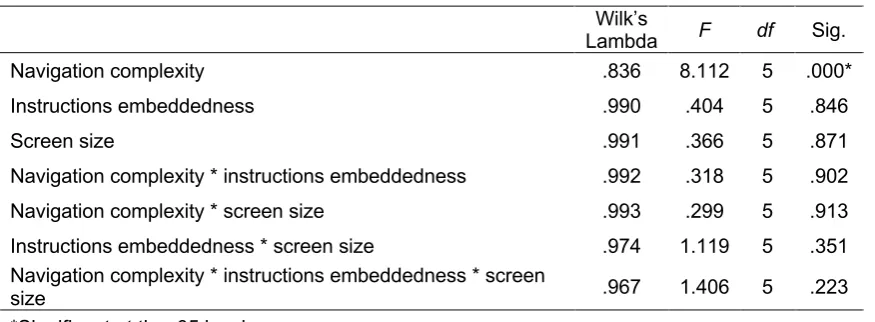
[image:18.595.72.510.454.615.2]A multivariate analysis of variance (MANOVA) was carried out to study whether there were significant differences in the means of the dependent variables between the different conditions. First, a Wilk’s Lambda test was conducted out to check whether difference in means of the dependent variables were significantly different across conditions, and to find out whether any interaction effects had occurred. The results of the Wilk’s Lambda test (see Table 6), show with F(5, 207) = 8.112, p < .001 that the only significant effect at the a = 0.05 level happened in the navigation complexity condition. The next sections further discuss the results of the MANOVA.
Table 6
Multivariate test for variance (GLM/MANOVA)
Wilk’s
Lambda F df Sig.
Navigation complexity .836 8.112 5 .000*
Instructions embeddedness .990 .404 5 .846
Screen size .991 .366 5 .871
Navigation complexity * instructions embeddedness .992 .318 5 .902
Navigation complexity * screen size .993 .299 5 .913
Instructions embeddedness * screen size .974 1.119 5 .351
Navigation complexity * instructions embeddedness * screen
size .967 1.406 5 .223
*Significant at the .05 level
4.3.1 Main effect of navigation complexity on dependent variables
The MANOVA with navigation complexity as independent variable showed that there was a significant effect of navigation complexity on competence-based trust, where simple navigation (M = 5.087, SD = .984) resulted in higher competence-based trust than complex navigation (M = 4.686, SD = .937) with F(1,211) = 9.504, p = .002. There also was a significant effect of navigation complexity on performance risk, where complex navigation (M = 3.386, SD = 1.001) resulted in higher performance risk perceptions than simple navigation (M= 2.716, SD = .980) with F(1,211) = 26.878, p < .001. Not significant was the difference in means for simple navigation compared to complex navigation for the dependent variables: (1) character-based trust (M = 5.115, SD = .888, versus M = 5.002, SD = .874) with F(1,211) = 1.024, p = .313, (2) privacy risk (M = 3.336, SD = 1.334, versus M = 3.209, SD = 1.199) with F(1,211) = .625, p = .430, and (3) intention to use (M = 4.171, SD = 1.564, versus M = 4.188, SD = 1.318) with F(1,211) = .003, p = .953. These results mean that hypotheses 1b and 2a are supported, whereas hypotheses 1a and 2b are not supported. Since there is no main effect of navigation complexity on character-based trust and privacy risk, hypotheses 8a and 8d are also not supported.
4.3.2 Main effect of instructions embeddedness on dependent variables
The MANOVA with instructions embeddedness as independent variable, showed that no significant differences in means for embedded instructions compared to unembedded instructions for the dependent variables: (1) character-based trust (M = 5.027, SD = .828, versus M = 5.095, SD= .942) with F(1,211) = .249, p = .618, (2) competence-based trust (M = 4.876, SD = .974, versus M = 4.898, SD = .991) with F(1,211) = .001, p = .972, (3) performance risk (M = 3.103, SD = .999, versus M = 2.993, SD = 1.097) with F(1,211) = .567, p = .452, (4) privacy risk (M= 3.359, SD = 1.302, versus M = 3.170, SD = 1.221) with F(1,211) = 1.433, p = .223, and (5) intention to use (M = 4.098, SD = 1.447, M = 4.227, SD = 1.439) with F(1,211) = .684, p = .409. This means hypotheses 3a, 3b, 4a and 4b are not supported. Since there is no main effect of instructions embeddedness on character-based trust, competence-based trust, performance risk, and privacy risk, hypotheses 9a to 9d are also not supported.
4.3.3 Interaction effect of navigation complexity and instructions embeddedness
No two way interaction effect was found between navigation complexity and instructions embeddedness for character-based trust (F(1,211) = .329, p = .567), competence-based trust (F(1,211) = .053, p = .819), performance risk (F(1,211) = 1.016, p = .315), privacy risk (F(1,211) = .802, p = .371), and intention to use (F(1,211) = .002, p = .960) (see Appendix 5, table 1 for the mean scores and standard deviation of this interaction). This means that hypotheses 5a to 5d are not supported.
4.3.4 Interaction effect of navigation complexity and screen size
No two way interaction effect was found between navigation complexity and screen size for character-based trust (F(1,211) = .784, p = .377), competence-based trust (F(1,211) = .522, p = .471), performance risk (F(1,211) = .430, p = .513), privacy risk (F(1,211) = .002, p = .962), and intention to use (F(1,211) = 1.029, p = .312) (see Appendix 5, table 2 for the mean scores and standard deviation of this interaction). This means that hypotheses 6a to 6d are not supported.
4.3.5 Interaction effect of instructions embeddedness and screen size
No two way interaction effect was found between instructions embeddedness and screen size for character-based trust (F(1,211) = 1.542, p = .216), competence-based trust (F(1,211) = .441, p = .507), performance risk (F(1,211) = .050, p = .824), privacy risk (F(1,211) = 3.265, p = .072), and intention to use (F(1,211) = .200, p = .665) (see Appendix 5, table 3 for the mean scores and standard deviation of this interaction). This means that hypotheses 7a to 7d are not supported.
4.3.6 Interaction effect of navigation complexity, instructions embeddedness and screen size
4.4 Mediation analysis
The MANOVA results indicated a significant effect of navigation complexity on competence-based trust and on performance risk. With the help of the Hayes PROCESS SPSS macro (Hayes, 2019), the potential mediating effect of competence-based trust and performance risk between navigation complexity and intention to use were studied by calculating the significance of the unstandardized coefficients.
[image:21.595.105.515.184.289.2]4.4.1Competence-based trust as a mediator
Figure 6: Mediation model competence-based trust
To analyze whether competence-based trust acted as a mediator between navigation complexity and intention to use, PROCESS Model 4 was used. In order to control for instructions embeddedness and screen size, these two variables were added as covariates. In this model, the effect of navigation complexity on competence-based trust (a path) is significant with B = .-401, t(215) = -3.070, and p = .002. The effect of navigation complexity on intention to use (c’ path) is insignificant with B = .216, t(214) = 1.138, p = .267. The effect of competence-based trust on intention to use (b path) is significant with B = .488, t(214) = 5.020, p < .001. Last the effects of instructions embeddedness (B = -.173, t(214) = -.927, p = .355), and screen size (B = .005, t(214) = .026, p = .979) on intention to use are not significant.
As can be seen in Figure 6, there is a significant effect of navigation complexity on competence-based trust (a path), as well as a significant effect of competence-based trust on intention to use (b path). No significant effect for navigation complexity on intention to use (c’ path). Since both the a path, and b path are significant, and the direct effect of navigation complexity (c path) with an effect size of .216 is further from zero than the effect size of -.195 of the c’ path, there is an indication that mediation happened (Baron & Kenny, 1986; Hayes, 2009). A second indicator of mediation is the confidence interval of the indirect effect. According to Hayes (2009), when the bootstrap confidence interval of the indirect effect does not cross zero, it can be assumed that the indirect effect is significantly greater or smaller than zero, and that therefore the assumption can be made that mediation happened. With 95% CI [.356, -.064] of the indirect effect, it again is indicated that mediation happened. This means hypothesis 8b is supported.
4.4.2 Performance risk as mediator
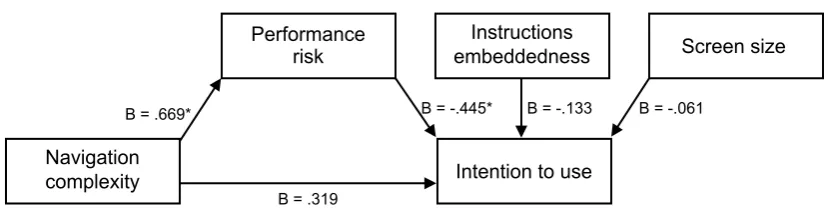
Figure 7: Mediation model performance risk
PROCESS Model 4 also was used to analyze the mediating effect of performance risk on navigation complexity and intention to use. Here too, instructions embeddedness and screen size were added as
B = .005
Navigation
complexity Intention to use
Competence trust
Instructions
embeddedness Screen size
B = -.407* B = .488*
B = .216
B = -.173
B = -.061
Navigation
complexity Intention to use
Performance risk
Instructions
embeddedness Screen size
B = .669* B = -.445*
B = .319
[image:21.595.102.517.583.691.2]is in this model significant with B = .669, t(215) = 4.992, and p < .001. Navigation complexity had no significant effect on intention to use (c’ path) with B = .319, t(214) = 1.611, p = .109. The effect of performance risk on intention to use is significant with B = -.445, t(214) = -4.674, p < .001. The effects of instructions embeddedness (B = -.133, t(214) = -.703, p = .483), and screen size (B = -.061, t(214) = -.325, p = .746) on intention to use again are not significant.
Table 7
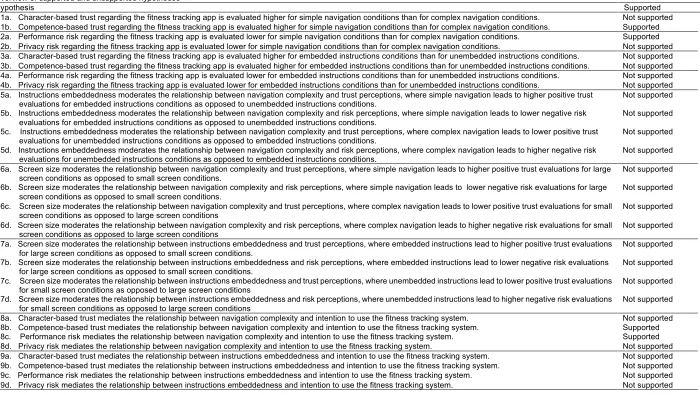
Overview of supported and unsupported hypotheses
Hypothesis Supported
H1a. Character-based trust regarding the fitness tracking app is evaluated higher for simple navigation conditions than for complex navigation conditions. Not supported
H1b. Competence-based trust regarding the fitness tracking app is evaluated higher for simple navigation conditions than for complex navigation conditions. Supported
H2a. Performance risk regarding the fitness tracking app is evaluated lower for simple navigation conditions than for complex navigation conditions. Supported
H2b. Privacy risk regarding the fitness tracking app is evaluated lower for simple navigation conditions than for complex navigation conditions. Not supported
H3a. Character-based trust regarding the fitness tracking app is evaluated higher for embedded instructions conditions than for unembedded instructions conditions. Not supported
H3b. Competence-based trust regarding the fitness tracking app is evaluated higher for embedded instructions conditions than for unembedded instructions conditions. Not supported
H4a. Performance risk regarding the fitness tracking app is evaluated lower for embedded instructions conditions than for unembedded instructions conditions. Not supported
H4b. Privacy risk regarding the fitness tracking app is evaluated lower for embedded instructions conditions than for unembedded instructions conditions. Not supported
H5a. Instructions embeddedness moderates the relationship between navigation complexity and trust perceptions, where simple navigation leads to higher positive trust evaluations for embedded instructions conditions as opposed to unembedded instructions conditions.
Not supported
H5b. Instructions embeddedness moderates the relationship between navigation complexity and risk perceptions, where simple navigation leads to lower negative risk evaluations for embedded instructions conditions as opposed to unembedded instructions conditions.
Not supported
H5c. Instructions embeddedness moderates the relationship between navigation complexity and trust perceptions, where complex navigation leads to lower positive trust evaluations for unembedded instructions conditions as opposed to embedded instructions conditions.
Not supported
H5d. Instructions embeddedness moderates the relationship between navigation complexity and risk perceptions, where complex navigation leads to higher negative risk evaluations for unembedded instructions conditions as opposed to embedded instructions conditions.
Not supported
H6a. Screen size moderates the relationship between navigation complexity and trust perceptions, where simple navigation leads to higher positive trust evaluations for large
screen conditions as opposed to small screen conditions. Not supported
H6b. Screen size moderates the relationship between navigation complexity and risk perceptions, where simple navigation leads to lower negative risk evaluations for large screen conditions as opposed to small screen conditions.
Not supported
H6c. Screen size moderates the relationship between navigation complexity and trust perceptions, where complex navigation leads to lower positive trust evaluations for small screen conditions as opposed to large screen conditions
Not supported
H6d. Screen size moderates the relationship between navigation complexity and risk perceptions, where complex navigation leads to higher negative risk evaluations for small
screen conditions as opposed to large screen conditions Not supported
H7a. Screen size moderates the relationship between instructions embeddedness and trust perceptions, where embedded instructions lead to higher positive trust evaluations for large screen conditions as opposed to small screen conditions.
Not supported
H7b. Screen size moderates the relationship between instructions embeddedness and risk perceptions, where embedded instructions lead to lower negative risk evaluations
for large screen conditions as opposed to small screen conditions. Not supported
H7c. Screen size moderates the relationship between instructions embeddedness and trust perceptions, where unembedded instructions lead to lower positive trust evaluations for small screen conditions as opposed to large screen conditions
Not supported
H7d. Screen size moderates the relationship between instructions embeddedness and risk perceptions, where unembedded instructions lead to higher negative risk evaluations for small screen conditions as opposed to large screen conditions
Not supported
H8a. Character-based trust mediates the relationship between navigation complexity and intention to use the fitness tracking system. Not supported
H8b. Competence-based trust mediates the relationship between navigation complexity and intention to use the fitness tracking system. Supported
H8c. Performance risk mediates the relationship between navigation complexity and intention to use the fitness tracking system. Supported
H8d. Privacy risk mediates the relationship between navigation complexity and intention to use the fitness tracking system. Not supported
H9a. Character-based trust mediates the relationship between instructions embeddedness and intention to use the fitness tracking system. Not supported
H9b. Competence-based trust mediates the relationship between instructions embeddedness and intention to use the fitness tracking system. Not supported
H9c. Performance risk mediates the relationship between instructions embeddedness and intention to use the fitness tracking system. Not supported
5. DISCUSSION
5.1 General discussion
This study had as aim to examine the effect of different interface elements (i.e. navigation complexity, instructions embeddedness, and screen size) on intention to use a fitness tracking system through the mediating effect of character-based trust, competence-based trust, performance risk and privacy risk. As can be seen in Table 7, several conclusions can be drawn based on the results.
Only two direct main effects of the independent variables on the dependent mediating variables were found. It appears that only navigation complexity had a significant effect on competence-based trust, and performance risk. In contrast to what was hypothesized, navigation complexity had no direct main effect on character-based trust and privacy risk perceptions. An explanation of the lack of support for the effect of navigation complexity on character-based trust can be found in an important characteristic of the target group.The target group is highly familiar with mobile internet technologies, with over 96% of the Dutch population aged between 18 and 35 being users of these technologies as of 2018 (Statista, 2019c). According to Obal and Kunz (2013), this familiarity leads to this generation “[expecting] websites to be responsive, efficient, and fast, which may explain their preference for websites with strong navigation capabilities” (p. 18), while they seem to be more trusting towards technology in general.
The target group seems to be capable to make inferences about navigation complexity and has the expectation that interfaces have a strong navigation. Since competence-based trust is assessed based on knowledge, ability and expertise of the trustee (Beldad et al., 2016), and an interface low in complexity can be an indication that the developer possesses this knowledge, ability or expertise in the domain, navigation complexity can be a direct cue towards competence-based trust. However, character-based trust is assessed through inferences on goodwill, honesty and sincerity (Beldad et al., 2016), and the target group might not have used navigation cues to make these inferences. Instead they potentially relied on their previous experience and their general trust towards technologies to assess character-based trust. This can explain why character-based trust is rated high throughout all conditions despite a lack of main effect of the independent variables on this type of trust.
Performance risk can be defined as “[t]he possibility of the product malfunctioning and not performing as it was designed and advertised and therefore failing to deliver the desired benefits” (Featherman & Pavlou, 2003, p. 1036). A more complex navigation makes goals more difficult to reach, hence increasing the probability of the app not functioning as expected. Therefore, it is not a surprise that navigation complexity had a main effect on performance risk. Privacy risk on the other hand, can be defined as “[p]otential loss of control over personal information, such as when information about you is used without your knowledge or permission” (Featherman & Pavlou, 2003, p. 1036). Since the respondents knew they were participating in an experiment, and since the Caren simulation handled fictitious data, there was not a real threat for these respondents to lose control over private information. This might have led to the lack of main effect of navigation complexity on privacy risk.
No direct main effects of instructions embeddedness on the dependent mediating variables were found. It was theorized that providing embedded instructions as opposed to unembedded instructions would decrease cognitive load, hence increasing trust perceptions while simultaneously decreasing risk perceptions. However, this study proved no main effect of instructions embeddedness on the trust and riskvariables. This again can be explained by the tech savviness of the experimental group. According to Kalyuga (2007) ‘experts use available well-learned [long term memory] knowledge structures in their area of expertise’ (p. 390). Since they can rely on general knowledge on apps and mobile technologies they have stored in their long term memory, working with fitness tracking technologies does not necessarily lead to a big strain on the working memory. Therefore, instructions embeddedness might not have had a significant effect on the experienced cognitive load, and hence did have a main effect the dependent variables, or the a moderating effect on the relationship between navigation complexity and the dependent variables.
these devices is high. This prior experience might have led to users not having difficulty with navigation on either smaller or larger screens, and therefore the moderating effect of screen size on navigation complexity and the trust and risk variables was not found. Also, since prior experience can decrease cognitive load (Kalyuga, 2007), this prior experience might have diminished the moderating effect of screen size on instructions embeddedness.
Although the mediating effect of trust and risk on intention to use has been proved in past researches (Gefen et al., 2003; Nicolaou & McKnight, 2006), no supporting results were found for the mediation of the relationship between navigation complexity and intention to use through character-based trust, and privacy risk. Also, no supporting results were found for the mediation of the relationship between instructions embeddedness and intention to use through character-based trust, competence-based trust, performance risk, or privacy risk. This lack of supporting results does not necessarily imply that character-based trust, competence-based trust, performance risk, and privacy risk lack potential to act as mediators. In this particular study, there only was a main effect of navigation complexity on competence-based trust and performance risk. This made it possible to prove the mediating effect of these two variables. The lack of main effects on character-based trust and privacy risk hindered the opportunity to examine their mediating effect and therefore no conclusion can be drawn on the mediating effect of these two variables.
5.2 Implications and future research
This study shows how competence-based trust and performance risk mediate the relationship between perceived navigation complexity of an app and intention to use this app. In future research, a probability sample should be used instead of a snowball sample in order to generate a sample that is a truer representation of thepopulation. Also, since there were several problems with the initial factor analysis (see Appendix 4), the decision was made to focus on trust and risk perceptions of the app and not on those of the fitness tracker. Future studies can overcome this problem by validating the trust and risk constructs and the validity of the manipulations more in-depth to make sure the participants can distinguish their perceptions towards the two types of technology more easily. There was a near significant effect for the three way interaction of the independent variables on performance risk. A focus for a future study could be to explain this three way interaction.
An interesting elaboration of the current study would be to measure trust and risk perceptions, and intention to use over a longer period of time. For this type of experiment, it would be recommended to let the participant use a real app and fitness tracker instead of a simulation. A second elaboration on this study could be to focus on older people instead of younger people during the data collection, this because that would lead to a truer representation of the real Caren system user. Third, despite the lack of main effect of the independent variables on character-based trust and privacy risk, these types of trust and risk appeared to be significantly different than the average of the Likert scale. In future research, an attempt could be made to determine what aspects of the Caren system led to this high character-based trust and low privacy risk.
Another elaboration on the current study could be to research what other hardware and software design features of the fitness system (e.g. color of app interface, type of information provided by either the app or fitness tracker, type of alert messages) influence intention to adopt through trust and risk perceptions. Other studies already showed the versatility of these features. For example, Chen and Pu (2014) showed how gamification can increase the use of a fitness tracking app, Gui et al. (2016) found that social presence also increases use of a fitness tracking plugin, and Koo and Fellon (2018) indicated that the color, size, and weight of the fitness tracker affected the acceptance level of the wearable fitness tracker. The fast developing field of fitness tracking systems provides many new opportunities to measure user perceptions of these advanced systems, and therefore future research into the trust and risk antecedents of fitness tracking systems is encouraged.
Although trust and risks perceptions are complex constructs that get affected by many antecedents, this study shows that the interface of the fitness tracking system can have a significant impact on these perceptions, and that this impact needs to be considered by the developing organization.
5.3 Conclusion