Executive Order 13514
Federal Leadership in
Environmental, Energy,
and Economic Performance
Comprehensive Federal Fleet
Management Handbook
July 2011
Visit femp.energy.gov/pdfs/eo13514_fleethandbook.pdf
Contacts
Mark ReichhardtFederal Energy Management Program (FEMP) U.S. Department of Energy (DOE)
202-586-4788
FEMP General Contact Information EE-2L
1000 Independence Avenue, SW Washington, DC 20585-0121 202-586-5772
DOE’s Office of Energy Efficiency and Renewable Energy (EERE) Information Center
877-337-3463
www.eere.energy.gov/informationcenter/
Acknowledgements
This document was prepared by Julian Bentley of LMI in McLean, Virginia, and Ryan Daley of the National Renewable Energy Laboratory (NREL) in Golden, Colorado, on behalf of DOE’s FEMP. FEMP acknowledges the following organizations for supporting the development of this document:
• U.S. General Services Administration (GSA)
• Office of the Federal Environmental Executive (OFEE) • Office of Management and Budget (OMB)
• NREL
• Idaho National Laboratory (INL)
This document would not be possible without the valuable input received from throughout the Federal Government, including:
• U.S. Department of Agriculture (USDA)
• U.S. Department of Defense (DOD), including: Office of the Secretary of Defense (OSD), Acquisition, Technology & Logistics (AT&L); Department of the Air Force; Defense Energy Support Center (DESC); and Department of the Navy
• U.S. Environmental Protection Agency (EPA)
• U.S. Department of Transportation (DOT), including the Federal Aviation Administration (FAA) • National Aeronautics and Space Administration (NASA)
• U.S. Postal Service (USPS)
• Agency members of the Interagency Committee on Alternative Fuels and Low Emission Vehicles (INTERFUEL) working group
Executive Summary
On April 5, 2010, DOE issued “Guidance for Federal Agencies on E.O. 13514 Section 12—Federal Fleet Management” [referred to here as “the Guidance”], fulfilling the Section 12 requirement of Executive Order (E.O.) 13514 for DOE to issue comprehensive guidance on Federal fleet management.
How does this Handbook relate to the Guidance and Interactive Training?
This Comprehensive Federal Fleet Management Handbook [referred to here as “the Handbook”] supplements the Guidance. It helps headquarters and site location Federal fleet managers identify and decide how to meet and exceed the Federal fleet requirements outlined in the Guidance. The Interactive Training walks you through the contents of this Handbook and the Guidance so that you can return here for more in-depth reading and for reference.
DOE has developed this Handbook as a supplement to the Guidance to help fleet managers: • Select optimal greenhouse gas (GHG) and petroleum reduction strategies for each fleet location • Meet or exceed Federal fleet GHG and petroleum reduction requirements outlined in the Guidance • Acquire vehicles to support these strategies while minimizing fleet size and vehicle miles traveled (VMT) • Refine strategies based on agency performance.
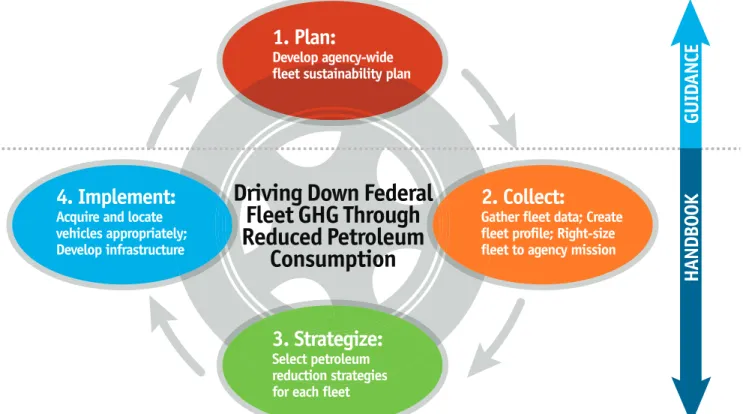
The Guidance and Handbook are organized around a cyclical fleet management framework—plan, collect, strategize, and implement (see Figure ES-1). The Guidance focuses on the first stage of this process—planning. The Handbook emphasizes the collect, strategize, and implement process stages. This process framework is provided as a tool for agency fleet managers to select optimal petroleum reduction strategies for each fleet location, based on an evalua-tion of site-specific characteristics, including availability of alternative fuel, fleet size, and fleet vehicle composievalua-tion.
Table of Contents
Chapter 1 Introduction . . . .1
1.1 Executive Order 13514: Leading by Example . . . .1
1.2 Federal Fleet Management Toolkit . . . .1
1.3 Federal Fleet Management Toolkit Target Audiences . . . .2
1.4 Summary of Federal Fleet Requirements. . . .2
1.5 Driving Principles of Petroleum Reduction. . . .3
1.6 Handbook Organization . . . .4
Chapter 2 PLAN: Creating an Agency-Specific Fleet Greenhouse Gas and Petroleum Reduction Plan. . . .6
2.1 Overview of Fleet Plan Requirements (EISA Section 142 and E.O. 13514) . . . .6
2.2 Required Plan Components. . . .6
2.3 Integrating Fleet Plans into Agencies’ Strategic Planning and Budget Process . . . .9
2.4 Developing and Submitting Fleet Plans. . . .10
Chapter 3 COLLECT: Developing an Agency Fleet Profile and Optimizing Fleets to the Agency Mission . . . .11
3.1 Federal Fleet Data Requirements. . . .11
3.2 Right-Sizing Fleets with a VAM. . . .14
3.3 Optimizing Fleets to the Agency Mission. . . .18
Chapter 4 STRATEGIZE: Reducing Vehicle Miles Traveled. . . .19
4.1 Overview of Strategies to Reduce VMT. . . .19
4.2 Consolidating Trips. . . .19
4.3 Eliminating Trips. . . .20
4.4 Using Mass Transportation . . . .20
4.5 Using Agency Shuttles. . . 20
4.6 Improving Scheduling and Routing . . . .20
Chapter 5 STRATEGIZE: Increasing Fleet Fuel Efficiency. . . .21
5.1 Acquisition of Higher Fuel Economy Vehicles. . . .21
5.2 Acquisition of Hybrid Electric Vehicles. . . .23
5.3 Maintaining Vehicles To Improve Vehicle Fuel Economy . . . .24
5.4 Driving More Efficiently. . . .24
Chapter 6 STRATEGIZE: Implementing Alternative Fuel, Biodiesel Blend,
and Electric Vehicle Strategies. . . .26
6.1 Overview of Requirements. . . .27
6.2 Framework: Identifying Optimal Alternative Fuel and Biodiesel Blend Strategies . . . .28
6.3 Framework: Identifying Optimal Electric Vehicle Strategies. . . .30
6.4 Summary of Alternative Fuel, Biodiesel, and Electric Vehicle Requirements . . . .32
6.5 Alternative Fuel Use Increase Requirements (E.O. 13423 and EISA Section 142). . . .32
6.6 Alternative Fuel Use in Dual-Fueled AFVs (Section 701 of EPAct 2005) . . . .34
6.7 Renewable Fuel Infrastructure Requirements (EISA Section 246) . . . .38
6.8 Developing Alternative Fuel, Biodiesel, and Electricity Infrastructure. . . .41
6.9 Putting it All Together . . . .43
Chapter 7 IMPLEMENT: Acquiring Vehicles. . . .44
7.1 Overview of Requirements. . . 46
7.2 Framework for Identifying Optimal Vehicle Acquisition Strategies . . . .47
7.3 AFV Acquisition Requirements (EPAct 1992, ECRA 1998, NDAA 2008). . . .48
7.4 Low GHG-Emitting Vehicle Acquisition Requirements (EISA Section 141) . . . .52
7.5 Plug-In Hybrid Electric Vehicle Acquisition Requirements (E.O. 13423). . . .54
7.6 Implementing Vehicle Acquisition Strategies . . . .54
Chapter 8 IMPLEMENT: Reporting and Monitoring Progress . . . .60
8.1 Annual Federal Fleet Reporting Requirements . . . .61
8.2 Reducing Your Reporting Workload . . . .65
Chapter 9 IMPLEMENT: Refining Strategies Based on Performance. . . .66
9.1 Evaluating the Effectiveness of Petroleum Reduction Strategies . . . .66
9.2 Refining Your Petroleum Reduction Strategies . . . .67
Chapter 10 Complementary Resources. . . .68
Appendices Appendix A. Glossary . . . .71
Appendix B. Definitions. . . .72
Figures
Figure 1-1. Federal Fleet Requirements . . . .3
Figure 1-2. The Driving Principles of GHG and Petroleum Reduction . . . .4
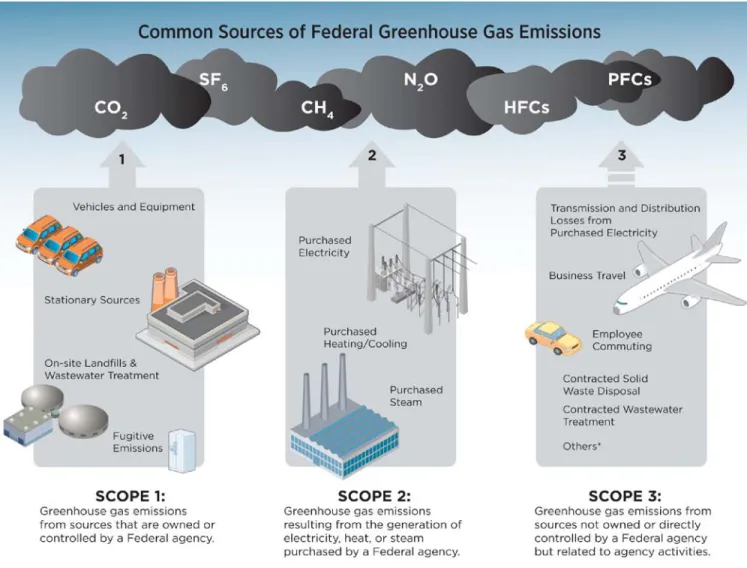
Figure 2-1. Scope 1, 2, and 3 Federal GHG Emissions . . . .8
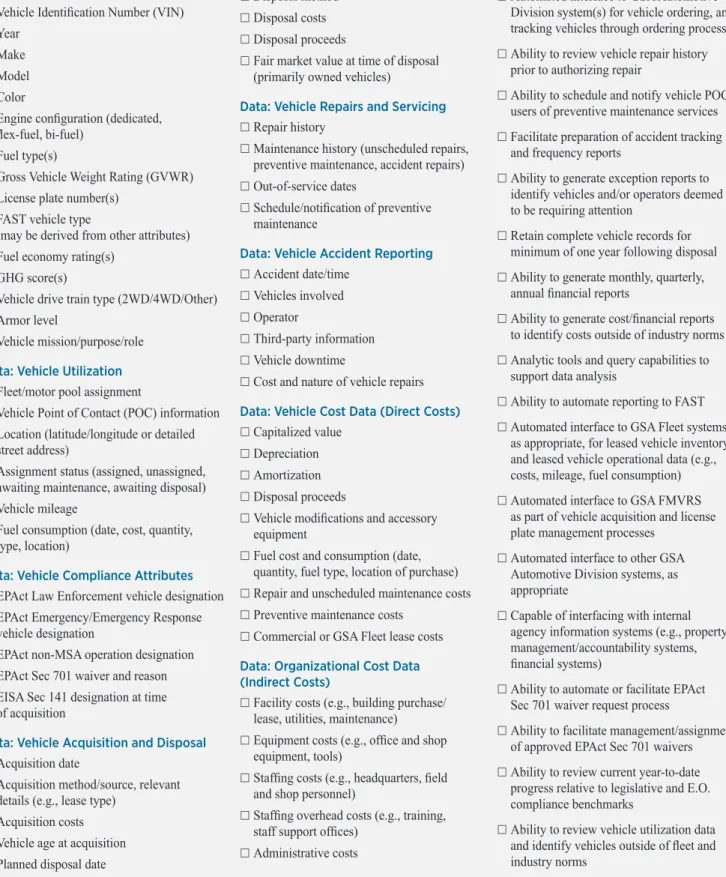
Figure 3-1. Vehicle Management Information System Data Fields Checklist . . . .13
Figure 5-1. Annual Fuel Use by Fuel Economy . . . .22
Figure 6-1. Determining Alternative Fuel and Biodiesel Strategies . . . .28
Figure 6-2. Determining the FY 2005 Alternative Fuel Baseline for an Agency . . . .34
Figure 6-3. Determining Federal Fleet Fueling Centers Subject to the EISA Section 246 Requirements . . . .40
Figure 6-4. Level 1 plug-in hybrid electric vehicle charging port . . . .42
Figure 6-5. Spc. Dean Kalogris from Headquarters Company, Fort Bliss, Texas, charges the installation’s command sergeant major’s electric car using Level 1 charging equipment . . . .42
Figure 6-6. EVSE Level 2 charging equipment with a SAE 1772J connector . . . .42
Figure 6-7. EVSE Level 2 charging station . . . .42
Figure 7-1. Determining Compliance with EPAct 1992 AFV Acquisition Requirements . . . .51
Figure 8-1. Annual Federal Fleet Reporting Requirements Timeline . . . .61
Tables Table 1-1. Target Audiences for E.O. 13514 Section 12 Federal Fleet Management Toolkit . . . .2
Table 1-2. GHG and Petroleum Reduction Strategies and Fleet Requirements in this Document . . . .5
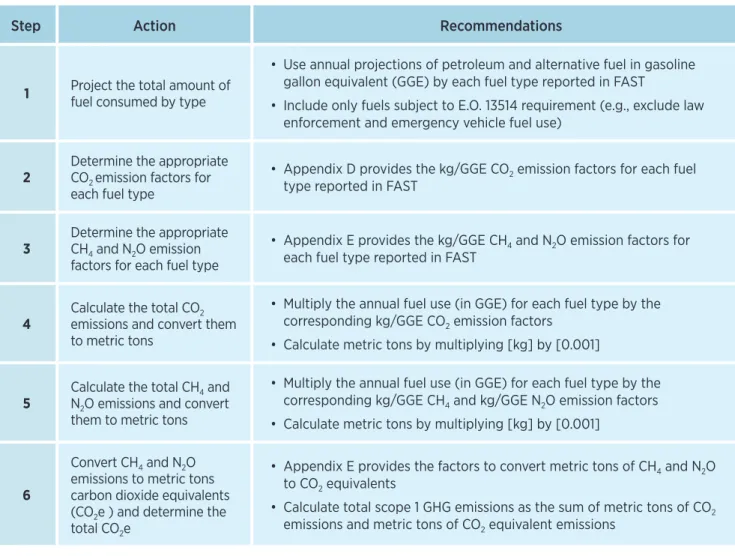
Table 2-1. Steps to Calculate Projected Scope 1 GHG Emissions From Federal Fleet Vehicles . . . .9
Table 2-2. Required Procedures for Developing and Submitting Fleet Plans . . . .10
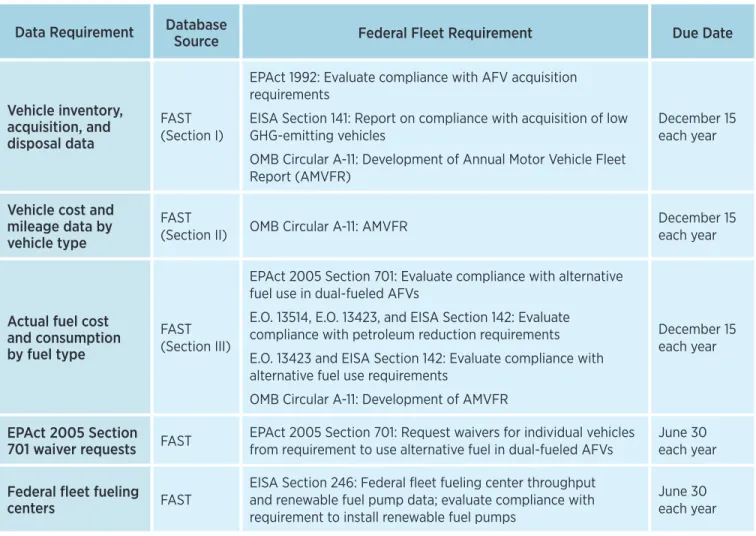
Table 3-1. Federal Fleet Data Requirements . . . .12
Table 3-2. General Vehicle Allocation Methodology Process . . . .15
Table 5-1. Example Annual Fuel Reductions from Improving Fuel Economy . . . .23
Table 5-2. Estimated GHG and Petroleum Reduction for Hybrid Version of 2011 Ford Fusion . . . .23
Table 6-1. Alternative Fuel, Biodiesel Blend, and Electric Vehicle Federal Fleet Requirements . . . .27
Table 6-2. Descriptions of Alternative Fuel and Biodiesel Strategies . . . .29
Table 6-3. Recommended Framework for Identifying Optimal Electric Vehicle Strategies . . . .31
Table 6-4. Potential Electric Vehicle Strategies Based on Fleet Location and Characteristics . . . .32
Table 6-5. Methodology for Establishing the FY 2005 Alternative Fuel Baseline . . . 33
Table 6-6. Example Alternative Fuel Baseline Calculations (GGEs) . . . .33
Table 6-7. Process for Appealing Denied Section 701 Waiver Requests . . . .37
Table 7-1. Vehicle Acquisition Strategy Considerations . . . .45
Table 7-2. Federal Fleet Vehicle Acquisition Requirements . . . .46
Table 7-3. Framework for Identifying Optimal Vehicle Acquisition Strategies . . . .47
Table 7-4. Vehicles Exempt from the EPAct 1992 AFV Acquisition Requirements . . . .49
Table 7-5. Current Vehicles Defined as AFVs in the Federal Fleet . . . .50
Table 7-6. Vehicles Not Subject to the Low GHG-Emitting Vehicle Acquisition Requirements . . . .53
Chapter 1 Introduction
Purpose of this chapter• Introduce Executive Order 13514 and its impact on Federal fleet management • Explain how this Handbook is organized and how the following chapters can help
Federal fleet managers address Executive Order 13514 Section 12 requirements
Target audience Agency headquarters fleet managers and fleet location managers
This Handbook builds upon the “Guidance for Federal Agencies on E.O. 13514 Section 12 – Federal Fleet Manage-ment”1 [referred to here as “the Guidance”] by providing additional detail to help fleet managers implement the Guidance. It supplements the Guidance to help Federal agencies select optimal greenhouse gas (GHG) and petroleum reduction strategies for each fleet location, meeting or exceeding related fleet requirements, acquiring vehicles to support these strategies while minimizing fleet size and vehicle miles traveled (VMT), and refining strategies based on agency performance. The Handbook serves as one component of the U.S. Department of Energy’s (DOE) Executive Order (E.O.) 13514 Section 12 fleet management toolkit, which also includes the Guidance and supporting resources, such as an NREL Optimal Vehicle Acquisition (NOVA) Analysis.
1.1 Executive Order 13514: Leading by Example
E.O. 13514, Federal Leadership in Environmental, Energy, and Economic Performance, signed on October 5, 2009, establishes “an integrated strategy towards sustainability in the Federal Government and makes reduction of green-house gas emissions a priority for Federal agencies.”
The Vision
Federal fleets will lead by example to help “create a clean energy economy that will increase our Nation’s prosperity, promote energy security, protect the interests of taxpayers, and safeguard the health of our environment.” Federal fleets will reach this vision by reducing fleet GHG emissions through reduced petroleum consumption.
1.2 Federal Fleet Management Toolkit
DOE’s Federal Energy Management Program (FEMP) has constructed a toolkit to assist Federal
agen-cies in implementing the Guidance. The four components of this toolkit are:
• E.O. 13514 Section 12 Guidance Document. This document helps agencies develop an overall fleet GHG emission and petroleum reduction strategy (and executable plan). It focuses on the first stage of the cyclical fleet management framework: planning.
• E.O. 13514 Comprehensive Fleet Management Handbook. The Handbook complements the E.O. 13514 Guidance by helping fleet managers select and implement appropriate GHG and petroleum reduction strategies for each fleet location. It focuses on the collect, strategize, and implement stages of the cyclical fleet management framework.
• Interactive Federal Fleet Management Training. DOE’s FEMP has developed an interactive version of the Guidance and Handbook, which is available online at http://apps1.eere.energy.gov/femp/training/course_detail_ ondemand.cfm/CourseId=65.
• Federal Fleet Management Supporting Resources. DOE’s FEMP provides many helpful resources to assist Federal fleet managers in reducing GHG emissions and petroleum use and increasing the use of alternative fuels.
1.3 Federal Fleet Management Toolkit Target Audiences
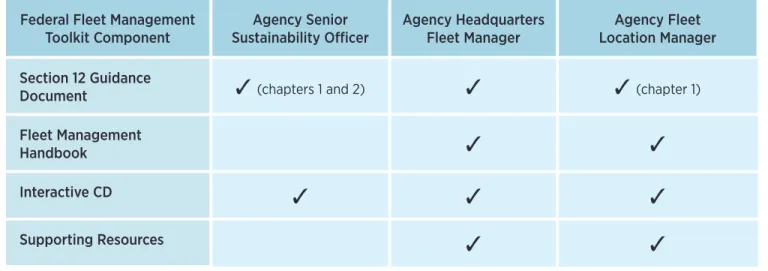
The three primary audiences for the E.O. 13514 Section 12 Federal fleet management toolkit are agency senior sustain-ability officers, agency headquarters fleet managers, and agency fleet location managers. Table 1-4 of the Guidance outlines the general responsibilities for the target audiences related to implementation of E.O. 13514 Section 12. Table 1-1 below will help you determine which portions of the Federal fleet management toolkit are most applicable to you.
Table 1-1. Target Audiences for E.O. 13514 Section 12 Federal Fleet Management Toolkit
Federal Fleet Management
Toolkit Component Sustainability Officer Agency Senior Agency Headquarters Fleet Manager Location ManagerAgency Fleet Section 12 Guidance
Document
3
(chapters 1 and 2)3
3
(chapter 1)Fleet Management
Handbook
3
3
Interactive CD
3
3
3
Supporting Resources
3
3
1.4 Summary of Federal Fleet Requirements
Federal fleets must reduce GHG emissions while meeting mission-critical needs and complying with all Federal goals and mandates. Congress and the White House have established Federal fleet regulatory requirements though the following statutes and executive orders:
• E.O. 13514, Federal Leadership in Environmental, Energy, and Economic Performance
• E.O. 13423, Strengthening Federal Environmental, Energy, and Transportation Management
• Energy Policy Act (EPAct) of 1992, as amended by the Energy Conservation Reauthorization Act (ECRA) of 1998, and Section 2862 of National Defense Authorization Act (NDAA) of 2008
• EPAct 2005 Section 701
“Petroleum reduction is a familiar goal to Federal fleet managers, as are the strategies to achieve petroleum reduction: increasing the fleet’s
economy, reducing VMT, and using alternative fuels in place of petroleum.”
— Section 12 Guidance
Figure 1-1. Federal Fleet Requirements
Acquire Low Emitting GHG Vehicles
EISA Sec. 141
Report Annually EPAct 1992, EPAct 2005 Acquire
PHEVs E.O. 13423 Create Agency
Strategic Plan EISA Sec. 142,
E.O. 13514
Implement
• Acquire AFVs(EPAct 1992) • Use AF in AFVs(EPAct 2005 Sec. 701) • Install Renewable Fuel Pumps(EISA Sec. 246)
Increase Alternative Fuel Use EISA Sec. 142,
E.O. 13423
Reduce GHG Emissions
E.O. 13514, EISA Sec. 141Reduce Petroleum Consumption
E.O. 13514, E.O. 13423, EISA Sec. 142Table 1-2 and figure 1-2 in the Guidance summarize the Federal fleet management, alternative fuel use, and petroleum reduction requirements and provide a flowchart to help Federal agencies determine which of these requirements apply to their fleet.
1.5 Driving Principles of Petroleum Reduction
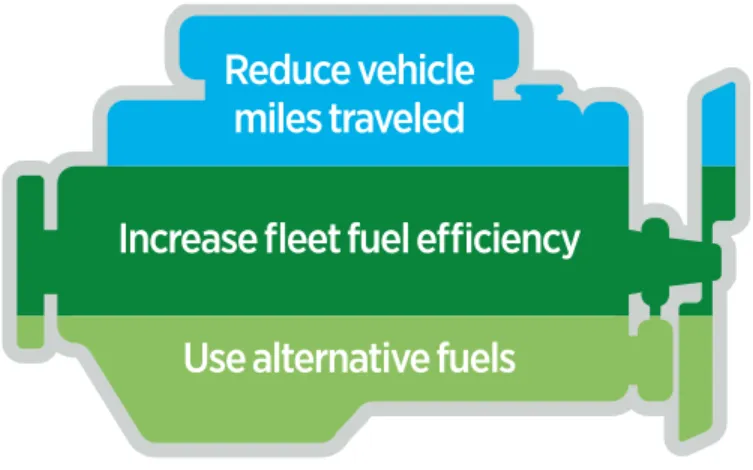
In order to achieve the vision of E.O. 13514, meet mission-critical needs, and comply with all Federal goals and mandates, an agency must reduce its GHG emissions and petroleum consumption through the appropriate combination of the three driving principles, which were introduced in the Guidance and are summarized below. This Handbook will provide greater detail on the driving principles to help agency fleet managers develop a strategic plan that can be specifically tailored to match the agency’s fleet profile and meet its mission. Agency fleet managers should evaluate petroleum reduction strategies and tactics for each fleet location, based on an evaluation of site-specific characteristics, including availability of alternative fuel, fleet size, and fleet vehicle composition.
Figure 1-2. The Driving Principles of GHG and Petroleum Reduction
Increase fleet fuel efficiency
Reduce vehicle
miles traveled
Use alternative fuels
The three driving principles of GHG emission and petroleum reduction are:
• Reducing VMT. Further discussion on strategies to reduce VMT is provided in chapter 4 of this Handbook.
• Increasing fleet fuel economy. Strategies to increase fleet fuel economy are discussed in more detail in chapter 5 of this Handbook.
• Increasing alternative fuel use. More detail on implementing strategies to increase alternative fuel use is provided in chapter 6 of this Handbook.
1.6 Handbook Organization
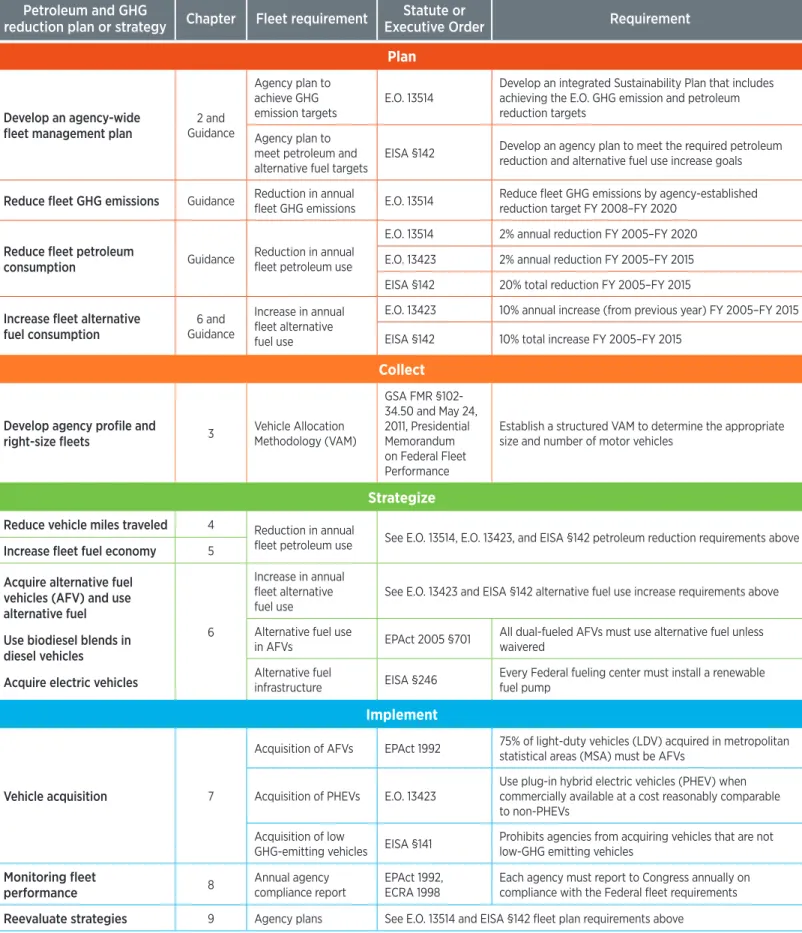
Table 1-2 shows where the chapters of the Guidance and Handbook fit into the framework, how GHG and petroleum reduction strategies fit into each chapter, and how each chapter and the Guidance relate to Federal fleet requirements. Relevant regulatory requirements are explained in each chapter, helping an agency determine whether the requirements are applicable to its fleet and, if so, how to measure, reach, and exceed performance goals.
Table 1-2. GHG and Petroleum Reduction Strategies and Fleet Requirements in this Document
Petroleum and GHG
reduction plan or strategy Chapter Fleet requirement Executive OrderStatute or Requirement
Plan
Develop an agency-wide
fleet management plan Guidance2 and
Agency plan to achieve GHG
emission targets E.O. 13514
Develop an integrated Sustainability Plan that includes achieving the E.O. GHG emission and petroleum reduction targets
Agency plan to meet petroleum and
alternative fuel targets EISA §142
Develop an agency plan to meet the required petroleum reduction and alternative fuel use increase goals
Reduce fleet GHG emissions Guidance Reduction in annual fleet GHG emissions E.O. 13514 Reduce fleet GHG emissions by agency-established reduction target FY 2008–FY 2020
Reduce fleet petroleum
consumption Guidance Reduction in annual fleet petroleum use
E.O. 13514 2% annual reduction FY 2005–FY 2020
E.O. 13423 2% annual reduction FY 2005–FY 2015
EISA §142 20% total reduction FY 2005–FY 2015
Increase fleet alternative
fuel consumption Guidance6 and
Increase in annual fleet alternative fuel use
E.O. 13423 10% annual increase (from previous year) FY 2005–FY 2015
EISA §142 10% total increase FY 2005–FY 2015
Collect
Develop agency profile and
right-size fleets 3 Vehicle Allocation Methodology (VAM)
GSA FMR §102-34.50 and May 24, 2011, Presidential Memorandum on Federal Fleet Performance
Establish a structured VAM to determine the appropriate size and number of motor vehicles
Strategize
Reduce vehicle miles traveled 4 Reduction in annual
fleet petroleum use See E.O. 13514, E.O. 13423, and EISA §142 petroleum reduction requirements above
Increase fleet fuel economy 5
Acquire alternative fuel vehicles (AFV) and use alternative fuel Use biodiesel blends in diesel vehicles
Acquire electric vehicles
6
Increase in annual fleet alternative
fuel use See E.O. 13423 and EISA §142 alternative fuel use increase requirements above
Alternative fuel use
in AFVs EPAct 2005 §701 All dual-fueled AFVs must use alternative fuel unless waivered
Alternative fuel
infrastructure EISA §246 Every Federal fueling center must install a renewable fuel pump
Implement
Vehicle acquisition 7
Acquisition of AFVs EPAct 1992 75% of light-duty vehicles (LDV) acquired in metropolitan statistical areas (MSA) must be AFVs
Acquisition of PHEVs E.O. 13423 Use plug-in hybrid electric vehicles (PHEV) when commercially available at a cost reasonably comparable to non-PHEVs
Acquisition of low
GHG-emitting vehicles EISA §141 Prohibits agencies from acquiring vehicles that are not low-GHG emitting vehicles
Chapter 2 PLAN: Creating an Agency-Specific Fleet Greenhouse Gas
and Petroleum Reduction Plan
Purpose of this chapter
• Present the strategies available to fleet managers to reduce fleet GHG emissions and petroleum consumption
• Provide a framework to assist fleet managers in meeting E.O. 13514 and other Federal fleet requirements
Target audience • Agency headquarters fleet managers
2.1 Overview of Fleet Plan Requirements (EISA Section 142 and E.O. 13514)
Chapter 2 of the Guidance introduced the fleet management plans required by EISA Section 142 and E.O. 13514. This Handbook explains in greater detail what a model plan should contain, including the steps agencies can take to produce an effective plan that meets both requirements. Agency fleets have two planning requirements related to GHG and petroleum reduction:
• EISA Section 142 requires each agency to develop a plan to meet required petroleum reduction levels and alterna-tive fuel consumption increases. The plan must identify the measures the agency will use and quantify projections for petroleum and alternative fuel consumption in future years.
• Section 8 of E.O. 13514 requires agencies to develop and annually update a Sustainability Plan. The plan must explain how the agency will achieve the sustainability goals and GHG reduction targets (including fleet GHG reduction targets) established under Section 2 of E.O. 13514, and prioritize agency actions based on life-cycle return on investment. It is important to note that fleets represent only one component of the Sustainability Plan— agencies must include an explanation of how their fleet will achieve the GHG emissions reduction goals within the Sustainability Plan, including a schedule, milestones, and approaches for achieving results. More information on agency Sustainability Plan requirements is available from the Council on Environmental Quality (CEQ), Office of the Federal Environmental Executive (OFEE) at www.whitehouse.gov/administration/eop/ceq/sustainability. The fleet component of an agency’s Sustainability Plan can satisfy the EISA Section 142 planning requirement, provided the fleet portion of the agency Sustainability Plan satisfies the Section 142 plan requirements.
2.2 Required Plan Components
Under EISA Section 142 and Section 8 of E.O. 13514, each Federal agency subject to the fleet planning requirements (see section 1.5 of the Guidance) must develop a written plan, including implementation dates, to meet the required GHG emission reduction, petroleum reduction, and alternative fuel increase levels. This section describes the plan components needed to satisfy both fleet planning requirements in a single annual plan (or contained within the agency’s annual Sustainability Plan as discussed above in section 2.1).
The agency must quantify the reductions in GHG emissions and petroleum consumption and increases in alternative fuel consumption projected to be achieved by each specific measure used to meet the fleet requirements and interim milestones. Required plan components are outlined below and explained in greater detail later in this chapter.
1. Fleet Inventory Projections. Projections should illustrate how the agency will reach or maintain a “right-sized” fleet. In other words, agencies should identify and create a plan for reaching the appropriate number of fuel-efficient vehicles required to meet the agency’s mission. Federal agencies should identify opportunities to reduce fleet size by reducing VMT and utilize their Vehicle Allocation Methodology (VAM)2 to: (1) ensure that AFVs are acquired and located where alternative fuel is available; (2) increase overall fleet fuel economy through the acquisition of smaller-sized vehicles and/or hybrid, electric, or other advanced technology vehicles; and (3) ensure that the most fuel-efficient vehicle is used for the required task. Chapter 3 of this Handbook provides more detailed guidance on how to right-size fleets to agency mission. Chapters 4 and 5 discuss strategies to reduce VMT and increase fleet fuel economy, respectively.
2 VAM is described in chapter 3 and required by GSA. In addition, see the May 24, 2011, Presidential Memorandum on Federal Fleet Performance at
2. Petroleum Reduction Projections. Agencies should use the Guidance and this Handbook to select optimal petro-leum reduction strategies for each fleet location. Agencies’ fleet plans must identify these specific petropetro-leum reduc-tion measures and include projecreduc-tions of the amount by which they expect each measure to reduce their petroleum consumption each year. Three driving principles of petroleum reduction—reducing VMT, increasing fleet fuel ef-ficiency, and increasing alternative fuel use—are introduced in section 2.5 of the Guidance and detailed in chapters 4, 5, and 6, respectively, of this Handbook.
3. Alternative Fuel Use Increase Projections. Within their fleet plans, agencies must identify the specific measures they will implement to increase alternative fuel use and project the amount by which they expect each measure to increase their alternative fuel use each year. Chapter 6 of this Handbook is designed to assist agencies in evaluat-ing and selectevaluat-ing strategies to increase alternative fuel use and meet or exceed regulatory requirements. Agencies should use this analysis to: (1) create and describe their alternative fueling infrastructure development plans and actions, including collaboration with other Federal, state, and local agencies and other entities; and, (2) address ac-tions to reduce the deployment of AFVs in locaac-tions where the appropriate alternative fuel is not available. 4. GHG Emissions Reduction Projections. The petroleum reduction and alternative fuel use increase projections
above will help agencies project and reduce the GHG emissions associated with their fleets. Guidance to assist Federal agencies in calculating and reporting GHG emissions associated with fleet operations is provided in the Federal Greenhouse Gas Accounting and Reporting Guidance (Section 9 of E.O. 13514) and summarized below in this section.
Fleet plans must also illustrate the agency’s process for effective implementation of the fleet goals. This includes the following fleet-specific Sustainability Plan requirements:
1. Leadership and Accountability. Agency plans should identify the agency lead(s) for meeting fleet goals, with responsibility for fleet implementation and oversight.
2. Implementation Methods. Agencies should identify and describe the method for implementation of the cost, schedule, and performance toward achieving the fleet goals. This should include a discussion of implementation in both the central office and in the field, including how workforce training and education will be used to implement the plan.
All data used in an agency’s fleet plan must match the data reported in the Federal Automotive Statistical Tool (FAST) fleet data system (https://fastweb.inl.gov). If DOE is unable to confirm data used in an annual report through FAST, the EISA Section 142 portion of the plan will be returned to the agency for resubmission. Each Federal agency plan must be approved by senior agency management, clearly assign responsibility for implementation, put forth assumptions made in developing projections, and address resource requirements necessary for success. CEQ may issue additional instructions for agencies’ Sustainability Plans, and fleet managers should seek and refer to any CEQ guid-ance on E.O. 13514 Sustainability Plans.
GHG Emissions Scopes
E.O. 13514 identifies the following six GHGs: carbon dioxide (CO2); methane (CH4); nitrous oxide (N2O); sulfur hexa-fluoride (SF6); hydrofluorocarbons (HFCs); and perfluorocarbons (PFCs). Sources of these GHG emissions in Federal facilities are categorized by one of three scopes as presented in Figure 2-1.
• Scope 1 includes GHG emissions from sources that are owned or controlled by a Federal agency, including vehicles and equipment.
• Scope 2 includes GHG emissions resulting from the generation of electricity, heat, or steam purchased by a Federal agency.
• Scope 3 includes GHG emissions from sources not owned or directly controlled by a Federal agency but as a result of agency activities, such as business travel and employee commuting.
Figure 2-1. Scope 1, 2, and 3 Federal GHG Emissions
GHG Emissions Reduction Projections
Guidance to assist Federal agencies in calculating and reporting GHG emissions associated with fleet operations was released in October 2010 in the Guidance on Federal Greenhouse Gas Accounting and Reporting3 (Section 9 of E.O. 13514). This guidance is accompanied by a Technical Support Document,4 which provides detailed information on inventory reporting requirements and calculation methodologies.
As discussed above, reducing petroleum consumption is the principal means to reduce GHG emissions from Federal fleets, because this consumption generates scope 1 GHG emissions—a key component of an agency’s fleet GHG foot-print. Therefore, the strategies and executable actions the agency will include in the fleet plan to reduce GHG emissions are the same as those to achieve or exceed the required annual reductions in petroleum consumption.
3www.whitehouse.gov/sites/default/files/microsites/ceq/ghg_guidance_document_0.pdf 4www.whitehouse.gov/sites/default/files/microsites/ceq/technical_support_document_1.pdf
The recommended methodology for calculating scope 1 GHG emissions, which include emissions of carbon dioxide (CO2), methane (CH4), and nitrous oxide (N2O) for the Federal fleet, is based on the amount and type of fuel burned in Federal fleet vehicles. The methodology to calculate projected scope 1 CO2, CH4, and N2O GHG emissions from the combustion of fuels in Federal fleet vehicles is summarized below:
Table 2-1. Steps to Calculate Projected Scope 1 GHG Emissions From Federal Fleet Vehicles
Step Action Recommendations
1 Project the total amount of fuel consumed by type
• Use annual projections of petroleum and alternative fuel in gasoline gallon equivalent (GGE) by each fuel type reported in FAST
• Include only fuels subject to E.O. 13514 requirement (e.g., exclude law enforcement and emergency vehicle fuel use)
2 Determine the appropriate CO2 emission factors for each fuel type
• Appendix D provides the kg/GGE CO2 emission factors for each fuel
type reported in FAST
3 Determine the appropriate CH4 and N2O emission
factors for each fuel type
• Appendix E provides the kg/GGE CH4 and N2O emission factors for
each fuel type reported in FAST
4 Calculate the total COemissions and convert them 2 to metric tons
• Multiply the annual fuel use (in GGE) for each fuel type by the corresponding kg/GGE CO2 emission factors
• Calculate metric tons by multiplying [kg] by [0.001]
5 Calculate the total CHN2O emissions and convert 4 and
them to metric tons
• Multiply the annual fuel use (in GGE) for each fuel type by the corresponding kg/GGE CH4 and kg/GGE N2O emission factors
• Calculate metric tons by multiplying [kg] by [0.001]
6
Convert CH4 and N2O
emissions to metric tons carbon dioxide equivalents (CO2e ) and determine the
total CO2e
• Appendix E provides the factors to convert metric tons of CH4 and N2O
to CO2 equivalents
• Calculate total scope 1 GHG emissions as the sum of metric tons of CO2
emissions and metric tons of CO2 equivalent emissions
2.3 Integrating Fleet Plans into Agencies’ Strategic Planning and Budget Process
Section 8 of E.O. 13514 requires that Sustainability Plans be integrated with the agency’s strategic planning and budget process. Agencies must address the budget requirements necessary to meet the fleet GHG emission reduction, petro-leum reduction, and alternative fuel use increase targets. This includes estimating the actual and projected investment required to meet E.O. 13514 fleet management goals. Agencies should distinguish additional funding required to meet E.O. 13514 goals from existing budget lines. It is only necessary to include cost projections for the current fiscal year and the next 2 years within the Sustainability Plan.
Projects, initiatives, and efforts should be prioritized based on the life-cycle return on investment to the agency while taking into account economic, environmental, social, and mission related costs and benefits. Agencies should describe how they take into account both monetary and non-monetary factors when prioritizing projects and initiatives. This should
2.4 Developing and Submitting Fleet Plans
Table 2-2 provides the required procedures for developing and submitting fleet plans. Agencies subject to the fleet planning requirements (see section 1.5 of the Guidance) are required to develop an initial plan and update and resubmit plans as necessary each year, as outlined below.
Table 2-2. Required Procedures for Developing and Submitting Fleet Plans Federal agencies subject to the E.O. 13514 Sustainability Plan requirements must:
• Update and resubmit the Sustainability Plan to CEQ each year
• Include in the plan how the agency will achieve the sustainability goals and GHG reduction targets (including fleet GHG reduction targets) established under Section 2 of E.O. 13514 and prioritize agency actions based on life-cycle return on investment
Due Date: June 30 each year
Federal agencies subject to the EISA Section 142 fleet planning requirements must: • Develop and submit to DOE a fleet plan by December 31, 2011
• Revise and resubmit fleet plans to DOE when the agency failed to meet an interim petroleum reduction or alternative fuel use milestone
Due Date: December 31, 2011
Due Date: August 15 of the FY after missing interim
milestone
Updates to the Fleet Plan
E.O. 13514 requires Federal agencies to update and resubmit the Sustainability Plans by June 30 of each year. EISA Section 142, however, only requires agencies to revise and resubmit fleet plans when the agency failed to meet an interim petroleum reduction or alternative fuel use milestone (as established under EISA Section 142). If applicable, revised EISA Section 142 fleet plans must be resubmitted within 180 days of submission of the end of fiscal year annual report, or by August 15 of the fiscal year following the missed milestone.
Again, agencies may resubmit to DOE a single plan in the form of the Sustainability Plan if the fleet portion of this plan fulfills the EISA Section 142 plan requirements. In updated fleet plans, the agency should identify the specific and quantifiable means by which they will remedy the current shortfall and “catch-up” to meet the next year’s milestone. Plans shall be sent to the U.S. Department of Energy, Office of Energy Efficiency and Renewable Energy, Federal Energy Management Program (EE-2L), 1000 Independence Avenue, S.W., Washington, D.C. 20585, or such other address as DOE may provide by notice in the Federal Register.
Chapter 3 COLLECT: Developing an Agency Fleet Profile and Optimizing
Fleets to the Agency Mission
Purpose of this chapter
• Provide an overview of Federal fleet data management requirements • Assist agencies in developing a baseline fleet profile
• Provide guidance for using a VAM to ensure that the fleet is optimized to the agency’s mission
Target audience • Agency headquarters fleet managers and agency fleet location managers
This chapter provides:
• An overview of Federal Fleet data management and reporting requirements. The collection, management, and analysis of comprehensive fleet data will enable agencies to optimize fleet decision making.
• Guidance to assist agencies in employing a VAM as required by the GSA Federal Management Regulation (FMR) and the May 24, 2011, Presidential Memorandum on Federal Fleet Performance, including:
– Developing a fleet baseline profile to identify current vehicle assets and how they match with agency mission needs.
– Ensuring that future agency vehicle fleets are not over-costly, are correctly sized in terms of numbers, and are of the appropriate type for accomplishing agency missions.
3.1 Federal Fleet Data Requirements
Collecting and managing high-quality data are critical to effective fleet management and to developing strategies to meet the numerous requirements for which Federal fleets are responsible. However, collecting comprehensive and accurate database information can be time-consuming, and the manpower burden that this can create is a very real constraint for many agencies.
Still, the importance of comprehensive and accurate data collection cannot be overstated. Top-down support for data collection and management is vital to communicate the importance of quality data through all levels of an orga-nization. Accordingly, the following sections of this chapter provide guidance on actions that can be taken to improve data collection and management.
Federal Automotive Statistical Tool
Federal agencies are required to enter fleet data into FAST (https://fastweb.inl.gov), which was developed to assist fleets in meeting the data reporting requirements of E.O.13514, E.O.13423, EPAct 1992 and 2005, EISA, GSA’s SF82 “Agency Report of Motor Vehicle Data,” and the Office of Management and Budget’s Circular A-11 “Preparation, Submission and Execution of the Budget.” Data collected through FAST will satisfy all of these requirements. Fleet data reporting requirements are summarized in table 3-1.
Table 3-1. Federal Fleet Data Requirements
Data Requirement Database Source Federal Fleet Requirement Due Date
Vehicle inventory, acquisition, and disposal data
FAST (Section I)
EPAct 1992: Evaluate compliance with AFV acquisition requirements
EISA Section 141: Report on compliance with acquisition of low GHG-emitting vehicles
OMB Circular A-11: Development of Annual Motor Vehicle Fleet Report (AMVFR)
December 15 each year
Vehicle cost and mileage data by vehicle type
FAST
(Section II) OMB Circular A-11: AMVFR
December 15 each year
Actual fuel cost and consumption by fuel type
FAST (Section III)
EPAct 2005 Section 701: Evaluate compliance with alternative fuel use in dual-fueled AFVs
E.O. 13514, E.O. 13423, and EISA Section 142: Evaluate compliance with petroleum reduction requirements E.O. 13423 and EISA Section 142: Evaluate compliance with alternative fuel use requirements
OMB Circular A-11: Development of AMVFR
December 15 each year
EPAct 2005 Section
701 waiver requests FAST EPAct 2005 Section 701: Request waivers for individual vehicles from requirement to use alternative fuel in dual-fueled AFVs June 30 each year
Federal fleet fueling
centers FAST
EISA Section 246: Federal fleet fueling center throughput and renewable fuel pump data; evaluate compliance with requirement to install renewable fuel pumps
June 30 each year
For detailed instructions on FAST data entry, please refer to the FAST Guidelines for Entering Fleet Data, available at https://fastweb.inel.gov/joint/FY2009_FAST_Guidelines_for_Entering_Data.pdf.
Vehicle Management Information System
A comprehensive Vehicle Management Information System (VMIS) is a fundamental tool for fleet management. A VMIS serves as a centralized system to identify, collect, and analyze vehicle data with respect to a particular fleet’s capabilities and enables agencies to easily report all costs incurred for the operation, maintenance, acquisition, and disposal of its vehicles. GSA’s Office of Governmentwide Policy can offer guidance and suggestions for developing and implementing a VMIS. In fact, their FMR Bulletin B-155 provides key recommendations. Many agencies have employed such a system that manages some combination of their agency-owned, commercially leased, and GSA leased vehicles. For agencies with only GSA leased vehicles, the GSA Fleet Drive-Thru6 is an innovative mileage reporting and fleet analysis tool that provides important applications, including reports for inventory, fuel use, mileage data, and accidents.
For many agencies, the primary barrier to implementing a VMIS is cost. DOE recommends that each agency articulate their particular data collection and management needs prior to initializing an extensive data call. By internally defining your agency’s needs at the outset, you can control costs and avoid an outside entity framing these needs for you. The precise fields of data to be collected will differ for each agency (see example checklist in Figure 3-1); however, agencies are encouraged to use GSA’s Reports Carryout and Fuel Use Reports as a guide. Using the same data fields as are available in the GSA database will allow for a smooth integration of the two inventories and easier data manage-ment for the entire fleet. With an initial investmanage-ment cost, agencies can make notable ROI with a VMIS by improving the process of data collection and reporting.
5www.gsa.gov/graphics/ogp/GSAFMRBulletinB15_92107.doc 6www.gsa.gov/fleetdrivethrue
Figure 3-1. Vehicle Management Information System Data Fields Checklist Data: Vehicle Identification and
Configuration
Vehicle Identification Number (VIN) Year
Make Model Color
Engine configuration (dedicated,
flex-fuel, bi-fuel)
Fuel type(s)
Gross Vehicle Weight Rating (GVWR) License plate number(s)
FAST vehicle type
(may be derived from other attributes)
Fuel economy rating(s) GHG score(s)
Vehicle drive train type (2WD/4WD/Other) Armor level
Vehicle mission/purpose/role
Data: Vehicle Utilization
Fleet/motor pool assignment
Vehicle Point of Contact (POC) information Location (latitude/longitude or detailed
street address)
Assignment status (assigned, unassigned,
awaiting maintenance, awaiting disposal)
Vehicle mileage
Fuel consumption (date, cost, quantity,
type, location)
Data: Vehicle Compliance Attributes
EPAct Law Enforcement vehicle designation EPAct Emergency/Emergency Response
vehicle designation
EPAct non-MSA operation designation EPAct Sec 701 waiver and reason EISA Sec 141 designation at time
of acquisition
Data: Vehicle Acquisition and Disposal
Acquisition date
Acquisition method/source, relevant
details (e.g., lease type)
Acquisition costs Vehicle age at acquisition
Disposal date Disposal method Disposal costs Disposal proceeds
Fair market value at time of disposal
(primarily owned vehicles)
Data: Vehicle Repairs and Servicing
Repair history
Maintenance history (unscheduled repairs,
preventive maintenance, accident repairs)
Out-of-service dates
Schedule/notification of preventive
maintenance
Data: Vehicle Accident Reporting
Accident date/time Vehicles involved Operator
Third-party information Vehicle downtime
Cost and nature of vehicle repairs
Data: Vehicle Cost Data (Direct Costs)
Capitalized value Depreciation Amortization Disposal proceeds
Vehicle modifications and accessory
equipment
Fuel cost and consumption (date,
quantity, fuel type, location of purchase)
Repair and unscheduled maintenance costs Preventive maintenance costs
Commercial or GSA Fleet lease costs
Data: Organizational Cost Data (Indirect Costs)
Facility costs (e.g., building purchase/
lease, utilities, maintenance)
Equipment costs (e.g., office and shop
equipment, tools)
Staffing costs (e.g., headquarters, field
and shop personnel)
Staffing overhead costs (e.g., training,
staff support offices)
Administrative costs
Capabilities:
Automated interface to GSA Automotive
Division system(s) for vehicle ordering, and tracking vehicles through ordering process
Ability to review vehicle repair history
prior to authorizing repair
Ability to schedule and notify vehicle POCs/
users of preventive maintenance services
Facilitate preparation of accident tracking
and frequency reports
Ability to generate exception reports to
identify vehicles and/or operators deemed to be requiring attention
Retain complete vehicle records for
minimum of one year following disposal
Ability to generate monthly, quarterly,
annual financial reports
Ability to generate cost/financial reports
to identify costs outside of industry norms
Analytic tools and query capabilities to
support data analysis
Ability to automate reporting to FAST Automated interface to GSA Fleet systems,
as appropriate, for leased vehicle inventory and leased vehicle operational data (e.g., costs, mileage, fuel consumption)
Automated interface to GSA FMVRS
as part of vehicle acquisition and license plate management processes
Automated interface to other GSA
Automotive Division systems, as appropriate
Capable of interfacing with internal
agency information systems (e.g., property management/accountability systems, financial systems)
Ability to automate or facilitate EPAct
Sec 701 waiver request process
Ability to facilitate management/assignment
of approved EPAct Sec 701 waivers
Ability to review current year-to-date
progress relative to legislative and E.O. compliance benchmarks
Ability to review vehicle utilization data
3.2 Right-Sizing Fleets with a VAM
Right-sizing is a critical element of good fleet management that helps agencies reduce fleet fuel use and operating costs. To right-size its fleet an agency must (1) compile its vehicle inventory and understand how its vehicles are used (e.g., mileage, purpose, etc.) and (2) analyze the fleets’ operational (or mission) needs, while identifying opportunities to reduce VMT. This includes identifying vehicles without a demonstrated mission need that are therefore candidates for reassignment or disposal.
Right-sizing means matching an agency’s vehicle needs to its mission requirements.
Section 102-34.50 of the GSA FMR— and the May 24, 2011, Presidential Memorandum on Federal Fleet Performance—requires all Federal executive agencies operating domestic fleets to establish and document a structured VAM to determine the appropriate size and number of motor vehicles (i.e., optimize fleets to agency mission).
A VAM provides a framework for right-sizing an agency’s fleet. It is not only required by Section 102-34.50 of the GSA FMR—and the May 24, 2011, Presidential Memorandum on Federal Fleet Performance—but will also help your agency develop a vehicle acquisition and manage-ment plan that supports petroleum reduction through the acquisition and appropriate placement of higher efficiency and alternative fuel vehicles. This plan should be a component of the overall fleet plan and should include fleet inventory size (by vehicle class and fuel type), such that fleet size corresponds with agency mission requirements. A VAM helps ensure that agency vehicle fleets are not over-costly, are correctly sized in terms of numbers, and are of the appropriate type for accomplishing agency missions.
Sections 2 and 3 of the May 24, 2011, Presidential Memo set requirements for optimum fleet size and fleet management. GSA shall develop and distribute a VAM to agencies. Agencies shall determine their optimal fleet inventory using the VAM, and shall post their optimal fleet inventory targets on agency websites. At the same time, agencies shall submit to the Administrator of General Services (Administrator) fleet management plans to achieve these targets no later than December 31, 2015. Characteristics of a VAM
GSA Bulletin FMR B-9 provides guidance to assist agencies in estab-lishing and documenting a structured VAM. Development of a VAM provides agency fleet managers with a standard way to document the objective characteristics of a vehicle fleet for (1) a specific bureau or department and/or (2) a generic (where there are common characteris-tics) office/facility, program, occupational group, or other entity within an agency.
Objective characteristics should include, but are not limited to: • Number of vehicle users at a given site
• User to vehicle ratios (where applicable) • Per vehicle mileage
• Trips per vehicle • Vehicle mission • Terrain and climate
• Fleet condition and down time.
The data for the VAM is typically obtained by surveys and/or in-person interviews of stakeholders. However, much of this data could be collected and maintained while an agency is collecting vehicle inventory data for their annual data submission requirements.
Please refer to GSA Bulletin FMR B-9 (www.gsa.gov/graphics/ogp/FMR_Bulletin-B-9_R24T4F_0Z5RDZ-i34K- pR.doc), the presentation Right-Sizing Your Fleet: Vehicle Allocation Methodology (www.govenergy.com/2008/pdfs/ transportation/AaronTransoprt3.pdf), and the May 24, 2011, Presidential Memorandum on Federal Fleet Performance (www.whitehouse.gov/the-press-office/2011/05/24/presidential-memorandum-federal-fleet-performance) for additional information.
Overview of VAM Process
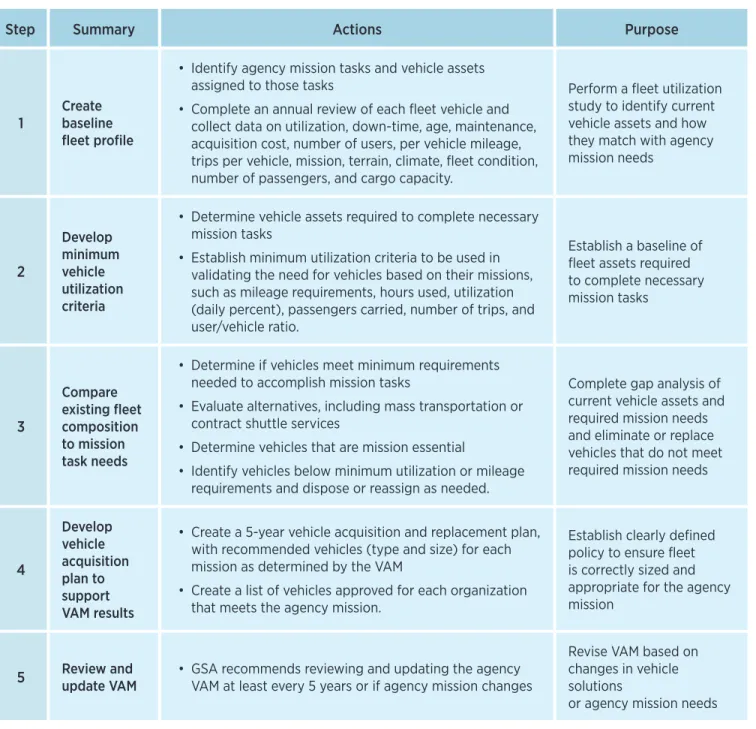
Typically, the first step in implementing a VAM is completing a detailed vehicle utilization study, which allows each agency to establish a baseline fleet profile. Agency fleet managers can then use the results of the baseline fleet profile to create a list of vehicles approved for each organization that meets the agency mission and establish policies and procedures for the allocation of fleet vehicles. Ultimately, the VAM will guide the agency’s vehicle acquisition and replacement plan to ensure the fleet is correctly sized and mission appropriate. GSA Fleet can help your agency throughout this process and should be consulted when assessing the need for GSA leased vehicles. Table 3-2 outlines the general VAM process and the sections that follow describe each step in detail.
Table 3-2. General Vehicle Allocation Methodology Process
Step Summary Actions Purpose
1 Create baseline fleet profile
• Identify agency mission tasks and vehicle assets assigned to those tasks
• Complete an annual review of each fleet vehicle and collect data on utilization, down-time, age, maintenance, acquisition cost, number of users, per vehicle mileage, trips per vehicle, mission, terrain, climate, fleet condition, number of passengers, and cargo capacity.
Perform a fleet utilization study to identify current vehicle assets and how they match with agency mission needs 2 Develop minimum vehicle utilization criteria
• Determine vehicle assets required to complete necessary mission tasks
• Establish minimum utilization criteria to be used in validating the need for vehicles based on their missions, such as mileage requirements, hours used, utilization (daily percent), passengers carried, number of trips, and user/vehicle ratio.
Establish a baseline of fleet assets required to complete necessary mission tasks 3 Compare existing fleet composition to mission task needs
• Determine if vehicles meet minimum requirements needed to accomplish mission tasks
• Evaluate alternatives, including mass transportation or contract shuttle services
• Determine vehicles that are mission essential
• Identify vehicles below minimum utilization or mileage requirements and dispose or reassign as needed.
Complete gap analysis of current vehicle assets and required mission needs and eliminate or replace vehicles that do not meet required mission needs
4 Develop vehicle acquisition plan to support VAM results
• Create a 5-year vehicle acquisition and replacement plan, with recommended vehicles (type and size) for each mission as determined by the VAM
• Create a list of vehicles approved for each organization that meets the agency mission.
Establish clearly defined policy to ensure fleet is correctly sized and appropriate for the agency mission
5 Review and update VAM • GSA recommends reviewing and updating the agency VAM at least every 5 years or if agency mission changes
Revise VAM based on changes in vehicle solutions
Creating a Baseline Fleet Profile
Prior to determining agency-specific petroleum reduction strategies, agency fleet managers should work with their regional and local fleet managers to create a baseline fleet profile. Typically a fleet profile begins with a detailed fleet utilization study, which entails identifying agency mission tasks and vehicle assets assigned to those tasks. A complete utilization study should include an annual review of each fleet vehicle and annual collection of data on utiliza-tion, down-time, age, maintenance, acquisition cost, number of users, per vehicle mileage, trips per vehicle, mission, terrain, climate, fleet condition, number of passengers, and cargo capacity.
Next, agency fleet managers should compile the detailed fleet utilization study data to establish and document a full description of an agency’s fleet composition together with its unique mission requirements. This profile, preferably managed in a database, provides a snapshot of each vehicle asset in the fleet. Typical data captured include vehicle category, fuel type, model, condition (e.g., age and total mileage), functionality, capacity, ownership, replacement status, operation (e.g., utilization rate and annual mileage), and mission need. The ultimate goals of this profile are to (1) assist the fleet manager in evaluating whether the characteristics and utilization of each vehicle is best aligned with the agency mission requirements, and (2) determine opportunities for optimizing the utilization of each vehicle, including replacement, acquisition, or disposal based on mission needs.
The basic framework for this fleet profile should identify the following components on a site-by-site basis, and should be supported by average utilization rates: mission requirements, the right-size vehicles for the tasks at hand, and fuel use needs. Utilization rates change regularly and fleet profiles should be updated on an ongoing basis to reflect changes in mission requirements and the regulatory climate, as well as vehicle and fuel availability.
Developing Minimum Vehicle Utilization Criteria
As previously mentioned, quality data collection and management is critical to effective fleet management; the process to establish vehicle utilization criteria is no different. The objective of this step is to determine the minimum vehicle requirements required to complete each mission task. These requirements, or minimum vehicle utilization criteria, may be expressed in per vehicle mileage, hours in service, user/vehicle ratios, trips per vehicle, utilization (daily percent), or passengers carried.
Vehicle utilization is most easily measured in terms of mileage or hours in service, although which utilization criteria you choose will depend on your agency fleet needs:
• Mileage is most typically used to measure utilization of passenger or cargo transportation vehicles where the vehicle’s primary purpose involves travel. Mileage can be collected manually from the odometer or automatically through on-board vehicle monitoring systems. Odometer readings can be included with the driver’s report (if used), input when refueling (this option is available for GSA leased vehicles and may also be available through your fuel card provider), or collected as a separate task. However mileage data is collected, it should be done at regular intervals over a long period of time to be most effective in determining vehicle utilization. The collection of mile-age data over time should also allow mile-agencies to identify slower and busier periods of usmile-age as well as time needed for maintenance and repairs. For passenger or cargo transportation vehicles it may also be useful to collect data on passengers or cargo transported.
• Hours in service is most typically used to measure utilization of vehicles for tradesmen, utility repair, or emergency response where the vehicle supports a mission while remaining mostly stationary (such as plumbers, electricians, high voltage linemen, and fire fighters). Utilization should be measured by the hours the vehicle is in service supporting the mission, which can be determined from the driver’s labor reports (where used), dispatch records, and automatically from on-board vehicle monitoring systems. Utilization of fire apparatus and other vehicles that stand by waiting for an emergency response are considered to be in service whenever they are avail-able for use. For example, a plumber’s vehicle is in service from the time the plumber has left the shop to perform mission work until returning to the shop, while a fire truck in a fire station is in service whenever it is manned and ready for dispatch. Spare vehicles are not in service.
Once an accurate measure of vehicle utilization has been made for all vehicles in the fleet, vehicles doing similar missions should be compared and an average utilization calculated. Vehicles falling far below average should be examined to determine the reason(s) for underutilization. In time, the lowest acceptable utilization rate for vehicles completing a particular mission will become apparent, but even this baseline should be continuously reviewed and
steps should be taken to move the utilization rate higher. Vehicles with the lowest average utilization rate should be considered for disposal as appropriate. Short-term leases, while more expensive than other options, may be cost effec-tive replacements for vehicles needed only during certain portions of the year.
Comparing Existing Fleet Composition to Mission Task Needs
Once an agency has completed a utilization study, created a baseline fleet profile, and established minimum vehicle utilization criteria, it should compare its existing fleet composition to its mission task needs. The point of this step in the VAM process is to determine which vehicles in the current fleet are well suited to their current assignment, and which ones are not, as a precursor to the vehicle acquisition, disposal, and reassignment process. Some of the questions that should be asked during this process include:
• Is the vehicle mission essential?
• Does the vehicle meet the minimum requirements needed to accomplish mission tasks? • Can an existing asset fulfill new mission requirements?
• Is the vehicle utilization below the minimum baseline?
• Can an alternative form of transportation such as mass transportation or shuttle services be used instead? • What vehicles can be disposed or reassigned (work with GSA Fleet for GSA leased vehicles)?
The fleet manager’s challenge is to determine the correct vehicle for each mission. The following pointers may be helpful in this process:
• Employee transportation. Vehicles used to transport a single person should be the smallest possible size sedan. Pickup trucks and sport utility vehicles (SUV) are not the most cost-effective means to transport a single passenger from point to point, but might be needed for working in rough terrain. Agencies should also consider the use of existing public transportation or the consolidation of transportation requirements with other agencies to form a single cost-saving solution.
• Cargo vehicles. The transportation of cargo should also use the smallest possible vehicle to accomplish the mission, especially where the existing vehicle is never operated at full capacity. Acquiring a single larger vehicle when it could replace several smaller vehicles may also increase vehicle efficiency.
• Seasonal vehicles. For vehicles used seasonally (snow removal equipment, brush-fire-fighting vehicles, etc.) and for vehicles with a single purpose that is not also a regular need (trucks with a mounted crane, water distributors, equipment transporters, etc.), the use of multipurpose vehicles, vehicles equipped with quick change bodies, short-term leased vehicles, vehicles used jointly by more than one agency—or even contracting out the service—could provide savings while still meeting mission needs.
• Spare vehicles. Some of the most expensive, least fuel-efficient and most unsuitable vehicles for the mission can be “free” vehicles picked up as surplus and maintained as “spares.” Spare vehicles significantly increase maintenance cost, redirecting maintenance that should be invested in first line vehicles, and often do not perform well when needed. A well maintained fleet will have few requirements for spares that cannot be met through redistribution of existing assets or a short term rental. Fleets with large numbers of spares should be avoided.
• Law enforcement and emergency response vehicles. Though these vehicles are largely exempt from the statutory and executive order requirements detailed in the Guidance and this Handbook, agencies should make every effort to ensure that the most efficient vehicles are used to meet their law enforcement and emergency response needs. Perhaps the easiest way to improve the effi-ciency of these vehicles without compromising their mission is to replace older vehicles with newer vehicles, which tend to be more efficient.
Maximize vehicle utilization by pooling vehicles or assigning multiple drivers per vehicle where possible.
• Vehicle assignment. Each driver has vacation, sick, and other days off the job equal to 1 month or more per year, meaning that vehicles assigned to a single driver will sit idle at least 1 month per year. Avoiding the assignment of a single driver to a vehicle whenever possible will improve fleet vehicle utilization, reduce costs, and decrease vehicle requirements. Pooling vehicles or using assigned vehicles for other uses when the driver is absent will increase utilization and reduce the total number of vehicles needed to accomplish the same mission. Very effective vehicle pooling can be accomplished using dispatching/reservation software or a car sharing service provider.
Develop a Vehicle Acquisition Plan to Support the VAM
The point of these VAM steps is to develop a standardized methodology by which an agency’s fleet is evaluated each year. As a result, agencies should establish clearly defined policies and procedures to ensure that the entire fleet is correctly sized and each vehicle is appropriately assigned based on mission needs. This may include creating a list of vehicles that are approved for each organization within an agency and are critical to meeting that organization’s mission. At the end of the VAM process, agencies should create a 5-year vehicle acquisition and replacement plan7 with recommended vehicles (type and size) for each mission as determined by the VAM. This plan should be clearly communicated through all levels of the agency. GSA recommends reviewing and updating the agency VAM at least every 5 years or if the agency mission changes. For more detail on vehicle acquisitions, see chapter 7.
3.3 Optimizing Fleets to the Agency Mission
A recurring theme of E.O. 13514 fleet management is to align (or optimize) the composition of an agencies’ fleet with its mission. In the end, this means far more than simply right-sizing a fleet or selecting a set of petroleum reduction strategies. In the planning phase of the fleet management cycle, agencies should have developed a clear set of goals and objectives for the management of their fleet.
The goal for agencies in optimizing their fleet is to ensure every vehicle is (1) as fuel efficient and cost effective as possible, (2) meets the mission to which it is assigned, and (3) allows the agency to meet regulatory require-ments and achieve its overarching fleet management goals. Evolving missions, vehicle funding shortfalls, and better automotive technology make this an ever-changing target, which means that every possible cost-/fuel-saving solution must remain on the table for consideration whenever that solution could meet actual mission needs. The challenge for the fleet manager is to regularly compare the existing fleet to the optimal fleet and ensure that the agency is working to acquire and utilize the best possible vehicles.
7 This acquisition and replacement plan should be part of the fleet portion of your agency’s Sustainability Plan and your agency’s EISA Section 142 fleet plan, as well as acquisition plans reported in FAST.
Chapter 4 STRATEGIZE: Reducing Vehicle Miles Traveled
Purpose of this chapter • Provide guidance to assist agencies in evaluating opportunities to reduce VMT along with fleet GHG emissions and petroleum use Target audience • Agency headquarters fleet managers and agency fleet location managers
The initial step in developing an agency-wide GHG emissions and petroleum reduction strategy is to evaluate oppor-tunities to reduce the miles your fleet travels. Taking actions that result in driving fewer miles can substantially reduce your fleet’s consumption of conventional petroleum fuel. Reducing VMT has other benefits as well, including reduced vehicle operational and maintenance costs and longer vehicle life before replacement. Reducing VMT can also enable a reduction in the number of vehicles required to accomplish the fleet’s mission, and therefore is directly related to actions taken to right-size fleets, which is covered in chapter 3. Whenever possible, fleet managers should first mini-mize VMT—a no-cost solution—and then proceed to increasing fleet efficiency and alternative fuel use.
There are no specific mandates to reduce VMT. However, success in doing so contributes to achieving GHG emission and petroleum reduction goals mandated by legislation and executive orders, as discussed in the Guidance. The signifi-cant benefit of this approach, relative to other GHG emissions and petroleum reduction strategies, is the opportunity for immediate and sustained reduction of total fleet management costs.
4.1 Overview of Strategies to Reduce VMT
The strategies to reduce VMT discussed in this chapter should be applied to all fleet vehicles, regardless of vehicle type (light-duty, medium-duty, or heavy-duty) or vehicle fuel type (AFV, electric vehicle, or conventional-fueled vehicle). A variety of options for VMT reduction are available for consideration and implementation. Some of these measures can be implemented independently by fleet managers while others may require collaborating with other facility or agency management. Measures to reduce VMT include:
• Consolidating trips. Consolidate routes to eliminate duplication of trips and car pooling.
• Eliminating trips. Use video and Web conferencing tools for meetings and transportation on demand (TOD)—changing a fixed route, fixed schedule shuttle to a demand-responsive system.
• Using mass transportation. Use mass transportation alternatives to eliminate fleet vehicle transportation needs. • Using agency shuttles. Provide a shuttle service for high-use routes to consolidate trips.
• Improving scheduling and routing. Optimize travel time and distance for delivery of services by using global positioning system (GPS) technology to improve routing and efficiency of fleet vehicles.
4.2 Consolidating Trips
Fleet managers can reduce trips and therefore VMT by consolidating trips. This may be accomplished by either: (1) combining multiple trips into a single trip and/or (2) carpooling.
Fleet managers can combine trips by identifying regular or occasional trips that involve similar routes. They may accomplish this by evaluating trip scheduling and by seeking fleet operators’ input and collaboration. Fleet managers and operators should determine if trips on multiple days or times can be consolidated into a single day or time. Carpooling is similar to combining trips as discussed above, but instead of evaluating similar routes, fleet managers and operators should evaluate opportunities for staff with similar destinations and schedules to share fleet vehicles and combine their individual trips into a single vehicle trip. This may be accomplished through formalized ride share boards (physical or virtual) or through informal networking. Trip consolidation and scheduling can significantly