Amulya Vechalapu et al JMSCR Volume 08 Issue 02 February 2020 Page 177
Study of Serum Macronutrients – Calcium, Magnesium, and Phosphorus
along with Lactate Dehydrogenase and Uric Acid in Prenatal Women with
Pre-Eclampsia
Authors
Amulya Vechalapu
1, Raj Kumari D.M.M
2Abstract
Introduction: Serum calcium, serum phosphorus and serum magnesium decrease in preeclampsia, serum LDH and Uric acid increase. The present study on these parameters is essential in clinically diagnosed patients of hypertensive disorders to show their role in pathogenesis and diagnosis.
Patients and Methods: 42 pre eclamptic women and 42 normotensive women are included in this study.
Results: Serum calcium, magnesium and phosphorus are decreased, serum LDH and Uric acid are increased in pre-eclampsia.
Conclusion: Macronutrients have role in pathogenesis of pre-eclampsia and there is correlation with serum LDH and serum uric acid.
Introduction
Hypertensive disorders of pregnancy are the most significant and unsolved problems in obstetrics. These disorders, together with haemorrhage and infection, form the deadly triad, which contributes significantly to maternal morbidity and mortality rates. The preeclampsia syndrome, either alone or superimposed on chronic hypertension, is the most dangerous, new-onset hypertension during pregnancy termed gestational hypertension is followed by signs and symptoms of preeclampsia almost half the time. More than half of these hypertension-related deaths can be prevented. Multiorgan involvement includes thrombocytopenia, renal dysfunction, hepatocellular necrosis, central nervous system perturbations, or pulmonary edema. Although preeclampsia is much more than merely gestational hypertension with proteinuria, the appearance of proteinuria remains an essential
diagnostic criterion. Excretion of calcium and phosphate by kidney increases during pregnancy. Proteinuria and alterations of phosphate and, most notably, calcium excretion are characteristic findings of hypertension. The levels of calcium and magnesium in pregnancy mayimplicate their possible role in pregnancy-induced hypertension. Serum calcium and serum phosphorus decrease inpreeclampsia. Based on thetherapeutic effects of magnesium salts and the known vasodilating properties of magnesium, they suggested that a deficiency in magnesium contributed to the development of vasoconstriction in preeclampsia. The intracellular or membrane magnesium concentrations in preeclampsia are of more interest. Serum magnesium is found to decrease in preeclampsia. LDH rises in preeclampsia. UA is the end product of purine metabolism. It is filtrated through the glomeruli and almost completely
http://jmscr.igmpublication.org/home/ ISSN (e)-2347-176x ISSN (p) 2455-0450
Amulya Vechalapu et al JMSCR Volume 08 Issue 02 February 2020 Page 178 reabsorbed in the PCT and is also actively secreted
into the tubules. Increased Uric acid is found to be one of the earliest laboratory manifestations of preeclampsia. The present study on these parametersis essential in clinically diagnosed patients of hypertensive disorders to show their role in pathogenesis and to ascertain their role as biochemical markers of the disease for prevention, early diagnosis, and to monitor the prognosis of hypertensive disorders of pregnancy.
Patients and Methods
Cross sectional study was conducted between June 2017 to September 2019 in the Department of Biochemistry, King George Hospital, Visakhapatnam. 84 patients with age group 19 to 35 years were selected. Patients with pre-eclampsia attending OP or admitted in the department of obstetrics and Gynaecology. Subjects are divided into two groups, fulfilling inclusion and exclusion criteria.
GROUP A: 42 Normotensive women GROUP B: 42 Preeclampsia women
Data Collection: After proper Institutional Ethical Clearance and informed written consent from the participants. Every effort was made not to disclose the identity of participants. A detailed family and medical history of all the childbearing women with gestational age 24 weeks or more admitted with the features of HDP was recorded followed by a thorough clinical examination. Systolic and diastolic blood pressure of all the participants was carefully recorded every four hours. Blood pressure was measured in both arms and one with higher value was taken as the blood pressure of record. Korotkoff phase V readings were used for diastolic readings. Urine analysis was done in all subjects to measure the degree of proteinuria and to differentiate patients with gestational hypertension from preeclampsia. The degree of proteinuria was measured by dipstick and graded as Trace to 4+ (Trace, 0.1gm/L;1+, 0.3gm/L;2+, 1gm/L;3+, 3.0gm/L;4+, 10gm/L). At the same time blood was taken from the ante-cubital vein using a sterile needle and syringe early in the morning after
overnight fasting for serum calcium measurement. Blood samples were allowed to clot and then centrifuged at 3000 revolutions per minute for 10 minutes. Serum calcium levels were measured by the Arsenazo method, serum Magnesium by Xylidyl blue method, Serum phosphorus by Phosphomolybdate method, serum LDH by kinetic method and serum uric acid by uricase method.
Inclusion Criteria
1) Pregnant women at or beyond 24 weeks of gestation.
2) Pregnant women with pre-eclampsia, criteria are Systolic blood pressure of ≥140 mmHg, diastolic blood pressure of 90 mmHg and presence of significant proteinuria. (3+) 3) Age between 19 to 35 years.
4) The healthy pregnant women are taken as controls.
Exclusion Criteria
1) Patients in active labour.
2) Patients with essential hypertension.
3) Patients with acute or chronic liver diseases. 4) Patients with DM and Gout.
Results
The [mean ± SD] serum calcium levels in cases where 8.29±0.69 mg/ dl and in controls 8.94±0.26 mg/dl. There is a high statistical significance in the serum calcium levels between the two groups.
Graph 1: Serum Calcium levels in cases and controls
7.8 8 8.2 8.4 8.6 8.8 9
se
ru
m
cal
ci
u
m
(mg
/d
l)
cases and controls
serum calcium in cases and
controls
Amulya Vechalapu et al JMSCR Volume 08 Issue 02 February 2020 Page 179
Graph 2: Serum magnesium levels of cases and controls
The [mean ± SD] serum magnesium levels in cases was 1.61 ±0.33 mg/ dl and in controls 2.05±0.28mg/dl. There is a high statistical significance in the serum magnesium levels between the two groups.
Graph 3: Serum phosphorus levels of cases and controls
The [mean ± SD] serum phosphorus levels in cases were 3.68 ±0.42mg/ dl and in controls 4.24±0.53mg/dl. There is a high statistical significance in the serum phosphorus levels between the two groups.
The [mean ± SD] serum LDH levels in cases was 1019 ±640.03U/L and in controls 482.85±153.07U/L. There is a high statistical significance in the serum LDH levels between the two groups.
Graph 4: Serum LDH levels of cases and controls
Graph 5: Serum Uric acid levels of cases and controls
The [mean ± SD] serum uric acid levels in cases were 7.74 ±1.48mg/dl and in controls 3.44±0.64mg/dl. There is a high statistical significance in the serum uric acid levels between the two groups.
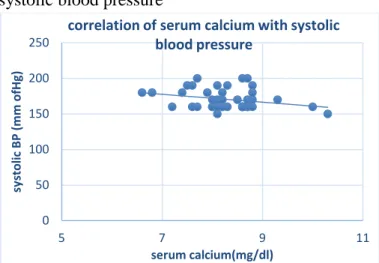
Table1: Correlation of serum calcium with blood pressure.
There is a highly statistically significant correlation between systolic blood pressure and serum calcium levels at a 90% confidence interval. (r=-0.279)r- Karl Pearson correlation Co-efficient.
0 1 2 3
se
ru
m
mg
(
mg
/d
l)
cases and controls
serum magnesium in cases and
controls
cases controls
3 3.5 4 4.5
ser
u
m
p
h
o
sp
h
o
ru
s(
mg/d
l)
cases and controls
serum phosphorus in cases and
controls
cases controls
0 200 400 600 800 1000 1200
LD
H
(
U/L)
CASES AND CONTROLS
LDH levels in cases and controls
cases controls
0 5 10
u
ri
c ac
id
(
mg
/d
l)
cases and controls
Uric acid levels in cases and
controls
cases controls
Parameter ‘r’
value
‘p’ value Statistical Significance
Systolic blood pressure (mm Hg)
-0.279 <0.001 High
Diastolic blood pressure (mm Hg)
Amulya Vechalapu et al JMSCR Volume 08 Issue 02 February 2020 Page 180 There is a highly statistically significant correlation
between systolic blood pressure and serum uric acid levels. (r=0.3128). There is no statistically significant correlation between diastolic blood pressure and serum uric acid levels.
(r = -0.023, r- Karl Pearson correlation Co-efficient)
Graph 6: Correlation of serum calcium with systolic blood pressure
Table 2: Correlation of serum uric acid with blood pressure
Graph 7: Correlation of serum uric acid with systolic blood pressure
There is a highly statistically significant correlation between systolic blood pressure and serum LDH levels. (r=0.4879)
Table 3: Correlation of serum LDH with blood pressure.
Graph 8: Correlation of serum LDH with systolic blood pressure
Discussion
The [mean ± SD] systolic blood pressure in cases was170.47 ± 13.79 mm Hg and in controls 112.38 ± 10.19 mm Hg. The [mean ± SD] diastolic blood pressure in cases was 111.42± 7.09 mm Hg and in controls 73.57 ± 6.83 mm Hg. There is a high statistical significance in the blood pressure, both systolic and diastolic, between the two groups. The results in the present study are in accordance with the studies of Naser et al,[1] Idougoun et al,[2] chanvitya et al,[3] Sukopan et al,[4] where the p-value is <0.001.
The [mean ± SD] serum calcium levels in cases were 8.29±0.69 mg/ dl and in controls 8.94±0.26 mg/dl. Results of the present study show that there is a statistically significant difference between the two groups, and calcium levels were lower in patients with preeclampsia than that of the normal pregnant ladies. Results of the present study are in accordance with the studies of sukonpan et al, Naser et al and Idougon et al where the p-value is <0.001. The [mean ± SD] serum magnesium levels in cases were 1.61 ±0.33 mg/dl mg/ dl and in controls 2.05±0.28mg/dl. The results show that there is a
0 50 100 150 200 250
5 7 9 11
sy
sto
lic
BP (
mm o
fH
g)
serum calcium(mg/dl)
correlation of serum calcium with systolic blood pressure
0 50 100 150 200 250
4 5 6 7 8 9 10 11
sy
sto
lic
b
lo
o
d
p
re
ssur
e
(mm o
f H
g)
serum uric acid(mg/dl)
correlation of serum uric acid with systolic blood pressure
0 50 100 150 200 250
0 500 1000 1500 2000 2500 3000 3500
sy
sto
lic
b
lo
o
d
p
re
ssur
e
(
mm o
f H
g)
serum LDH(U/L)
Correlation of serum LDH with systolic blood pressure
Parameter ‘r’ value ‘p’
value
Statistical Significance
Systolic blood pressure (mm Hg)
0.3128 <0.001 High
Diastolic blood pressure (mm Hg)
-0.0235 >0.001 low
Parameter ‘r’
value
‘p’ value Statistical Significance
Systolic blood pressure (mm Hg)
0.4879 <0.001 High
Diastolic blood pressure (mm Hg)
Amulya Vechalapu et al JMSCR Volume 08 Issue 02 February 2020 Page 181 statistically significant difference between the two
groups, and magnesium levels were lower in a patient with preeclampsia than that of normal pregnant women. Like serum calcium, the mean serum magnesium level in preeclampsia was lower than in normal pregnancy. The results of the present study are in accordance with the results of the study done by Seema et al., Sukonpan et al., Akinloye et al,[6] and Fatemeh et al where the p-value is <0.001. The [mean ± SD] serum phosphorus levels in cases were 3.68±0.42mg/ dl and in controls 4.24±0.53mg/dl. The results of the present study show that there is a statistically significant difference between the two groups. Recent studies by Ikaraoha et al report a relationship between phosphorus deficiency and preeclampsia, but this result is contradictory to studies done by Abdrabo et al[7] and Bhowal et al where they showed that there is no difference in serum phosphorus levels in normal pregnant women and women with pre-eclampsia.
The [mean ± SD] serum LDH levels in cases were 1019.3±640.03IU/l and in controls 482.85±153.07 IU/l. The results of the present study show that there is a statistically significant difference between the two groups, and LDH levels were significantly higher in a patient with preeclampsia than that of normal pregnant women. Qublan et al,[8] found in their study that the mean LDH levels in normal controls were 299 ± 79 IU/l, in patients with severe preeclampsia was 774 ± 69.61 IU/l. Thus, they demonstrated a significant association of serum LDH levels with severe preeclampsia (P<0.001). The [mean ± SD] serum uric acid levels in cases were 7.74±1.48 mg/ dl and in controls 3.44± 0.64mg/dl. The results of the present study show that there is a statistically significant difference between the two groups, and uric acid levels are significantly higher in women with pre-eclampsia as compared with normal women.The results of the present study areinaccordance with the studies done by Saldhana CL et al,[9] Mansi Gandhi et al. [10] It is found that as the systolic blood pressure increase, there is a decrease in the serum calcium values, which correlates more with the systolic
blood pressure than diastolic blood pressure indicating that the severe the preeclampsia lower are the values of serumcalcium. These results are in accordance with the studies of Chanvitya et al. LDH increases with an increase in blood pressure. There is a positive correlation between blood pressure and serum LDH levels. There is more correlation with the systolic blood pressure than the diastolic blood pressure. The results are in accordance with previous studies. Uric acid has a strong positive correlation with the systolic blood pressure as compared with the diastolic blood pressure. As the systolic blood pressure increases, serum uric acid also increases.
Limitations of the study
The present study was conducted on a small group of childbearing women with hypertensive disorder of pregnancy. In future we can think of conducting the study on larger group and also we can give supplemental calcium, magnesium and phosphorus either through diet or tablets to all childbearing women from the first trimester onwards till delivery and can look for development, severity of HDP and overall maternal and perinatal outcome.
Conclusion
1) The etiology of preeclampsia is very complex, involving many factors. Nutrition is one of the etiological factors.
2) This study estimated the serum levels of calcium, magnesium, and phosphorus in 42 patients who are diagnosed with severe preeclampsia to know their role in causing preeclampsia.
3) This study also estimated the serum levels of LDH and Uric acid. LDH and uric acid are to measure the severity of the disease.
Amulya Vechalapu et al JMSCR Volume 08 Issue 02 February 2020 Page 182 magnesium might be deficient in women
with pre-eclampsia.
5) LDH and Uric acid are significantly elevated in diagnosed cases of preeclampsia.
6) These findings support the hypothesis that hypocalcemia, hypomagnesemia and hypo-phosphatemia are possible etiologies of preeclampsia. In light of the reduction in the concentration of these elements, dietary supplementation with these elements should be done in susceptible women atleast in developing countries like India.
7) The increase in levels of LDH and uric acid correlates with an increase in blood pressure and also correlates with the decrease in serum calcium levels. This further strengthens the hypothesis that macronutrient deficiency is a risk factor in developing preeclampsia and the progression of preeclampsia into eclampsia.
References
1. Naser O. Malas, MD, JMCB, Ziad M. Shurideh, MD, JMCB Does serum calcium in pre-eclampsia and normal pregnancy differ? Saudi Med J 2001; Vol. 22 (10): 868- 871.
2. Idogun ES, Imarengiaye CO, Momoh SM. Extracellular calcium and magnesium in preeclampsia and eclampsia. Afr J Reprod Health.2007; 11(2): 89-94.
3. Chanvitya Punthumapol MD, Boonsri Kittichotpanich. Serum Calcium, Magnesium and Uric Acid in Preeclampsia and Normal Pregnancy J Med Assoc Thai 2008; 91 (7): 968-73.
4. Sukonpan K, Phupong V. Serum calcium and serum magnesium in normal and preeclamptic pregnancy. Arch Gynecol Obstet 2005; 273:12-6.
5. Seema Jain, Priyamvada Sharma, Shobha Kulshreshtha, Govind Mohan, Saroj Singh. The Role of Calcium, Magnesium, and Zinc in Pre-Eclampsia. Biological Trace Element Research. 2010;133(2):162-170.
6. O. Akinloye1, O. J. Oyewale2 and O. O. Oguntibeju. Evaluation of trace elements in pregnant women with pre-eclampsia. African Journal of Biotechnology .2010; 9(32): 5196-5202.
7. Abdrabo. A, Madani. F, Modawe. G. Serum Lead and Phosphorus Levels in Sudanese Pregnant Woman with Preeclampsia. British Journal of medical and health research.2014;2(4):2394-2967.
8. Qublan HS, Amarun V, Bateinen O, et al. LDH as biochemical marker of adverse pregnancy outcome in severe preeclampsia. Med Sci Monit. 2005;11:393–7.
9. Saldhana CL, Malik. S, Quraishi AUN. Serum Uric acid levels as a risk stratification tool in hypertensive pregnancy. International journal of reproduction, contraception, obstetrics and Gynecology. 2018;7(12):4804-4807.