THEORETICAL REVIEW
Managing fatigue: It’s about sleep
Drew Dawson*, Kirsty McCulloch
Centre for Sleep Research, University of South Australia, Basil Hetzel Institute, The Queen Elizabeth Hospital, Woodville Road, Woodville, SA 5011, Australia
KEYWORDS
Fatigue; Prior sleep; Wakefulness; Safety; Management; Prescriptive rules; Hours of service
Summary Fatigue has increasingly been viewed by society as a safety hazard. This has lead to increased regulation of fatigue by governments. The most common control process has been compliance with prescriptive hours of service (HOS) rule sets. Despite the frequent use of prescriptive rule sets, there is an emerging consensus that they are an ineffective hazard control, based on poor scientific defensibility and lack of operational flexibility. In exploring potential alternatives, we propose a shift from prescriptive HOS limitations toward a broader Safety management system (SMS) approach. Rather than limiting HOS, this approach provides multiple layers of defence, whereby fatigue-related incidents are the final layer of many in an error trajectory.
This review presents a conceptual basis for managing the first two levels of an error trajectory for fatigue. The concept is based upon a prior sleep/wake model, which determines fatigue-risk thresholds by the amount of sleep individuals have acquired in the prior 24 and 48 h. In doing so, managing level 1 of the error trajectory involves the implementation of systems that determine probabilistic sleep opportunity, such as prescriptive HOS rules or fatigue modelling. Managing level 2, requires individuals to be responsible for monitoring their own prior sleep and wake to determine individual fitness for duty. Existing subjective, neurobehavioral and electrophysio-logical research is reviewed to make preliminary recommendations for sleep and wake thresholds. However, given the lack of task- and industry-specific data, any definitive conclusions will rely in post-implementation research to refine the thresholds.
Q2005 Elsevier Ltd. All rights reserved.
Background
Mental fatigue associated with working conditions has been identified as a major occupational health and safety (OH & S) risk in most developed nations.
In part, this has been driven by scientific evidence, indicating an association between increasing fati-gue and decrements in cognitive function,1,2 impaired performance,3,4 increasing error rates5,6 and ultimately, reduced safety.7,8 Accordingly, governments and safety professionals have argued that mental fatigue is an identifiable work place hazard that warrants regulatory attention.
Traditionally, efforts in fatigue-risk management have attempted to reduce fatigue-related risk through compliance with an agreed set of rules governing hours of work. In the US, these are generally referred to as hours of service (HOS)
www.elsevier.com/locate/smrv
1087-0792/$ - see front matterQ2005 Elsevier Ltd. All rights reserved.
doi:10.1016/j.smrv.2005.03.002
* Corresponding author. Tel.:C61 88 222 6624; fax:C61 8222
6623.
E-mail addresses:[email protected] (D. Dawson), [email protected] (K. McCulloch).
rules. At the most fundamental level, regulation has involved the prescription of maximum shift and minimum break durations for individual shifts or work periods. In addition, some industries and organizations have supplemented individual shift rules with supra-shift rules that further restrict the total number of sequential shifts or cumulative hours worked in a given period (e.g. week, month or year).9,10 These limitations have typically been imposed coercively via a regulatory body or ‘voluntarily’ through a labor contract.11,12
The traditional prescriptive HOS approach most probably derives from earlier regulatory models for managing physical rather than mental fatigue. In the early part of the 20th century, OH&S hazards related to physical fatigue were managed primarily by regulating the duration of work and non-work periods. Previous research had indicated that physical fatigue accumulates and discharges in a broadly monotonic manner with respect to time.13 As such, managing physical fatigue by limiting work hours and break periods was both scientifically defensible and operationally practical.
While the application of prescriptive duty limi-tations may have been an appropriate control for physical fatigue, we do not believe the same can be assumed for mental fatigue. It is common to use analogous approaches for the regulation of a new hazard. However, in the case of mental fatigue, this approach incorrectly assumes that the determi-nants of mental fatigue are similar to those for physical fatigue.14 While it is true that mental fatigue does, in part, accumulate in a relatively linear manner,15 there are significant additional nonlinearities driving the dynamics of fatigue and recovery processes for mental fatigue.
Circadian biology, for example, influences the dynamics of fatigue accumulation and recovery in a way that produces significant nonlinearities.16 For example, prescriptive limitations on shift duration generally assume that a break of a given length has a uniform recovery value with respect to mental fatigue. While this may be relatively true with respect to physical fatigue, it is demonstrably not the case with respect to mental fatigue. Indeed,
providing the same length of time off during the subjective day, as opposed to subjective night, will result in a significantly reduced amount of recovery sleep.17
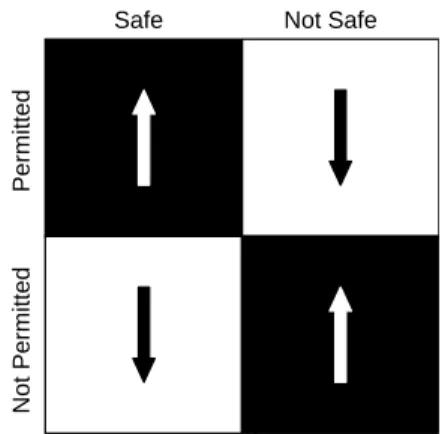
In our opinion, estimating the level of mental fatigue associated with a given pattern of work is linked more to the timing and duration of sleep and wake within the break, rather than the duration of the break alone. Although, there is clear scientific evidence to support this notion, few regulatory models acknowledge it explicitly. As depicted in Fig. 1, it is our view that regulatory models based only on shift duration are unlikely to produce congruence between what is safe and what is permitted and what is unsafe and not permitted.
The relationship between the recovery value of non-work periods (vis-a`-vis mental fatigue) and the actual amount of sleep obtained has become increasingly complex in recent years. In addition to the biological limitations of this approach, increases in total working hours, lengthening of shift durations from 8 to 12 h, and concomitant reductions in breaks from 16 to 12 h18 have significantly restricted the opportunity for sleep. Furthermore, changes in workforce demographics and the social use of time in and outside the
Permitted
Not Safe Safe
Not Permitted
Figure 1 Depicts the types of control involved with most regulatory models. Effective models should provide congruence between what is safe, and permitted as well as what is unsafe, and not permitted. This is often not the reality with traditional prescriptive HOS regulatory modeles.
Nomenclature
Fatigue for the purposes of this review all references to fatigue imply mental fatigue unless specifically indicated otherwise
FRE fatigue-related error FRI fatigue-related incident
FRMS fatigue risk management system
HOS hours of service
OH&S occupational health and safety
OHSAS occupational health and safety manage-ment systems
PSWM prior sleep/wake model SMS safety management system
workplace have exerted additional downward pressure on the amount of time individuals choose to allocate for sleep.19
Recent trends in fatigue management
As outlined above, many traditional approaches to fatigue management have focused on hours-of-service. However, these approaches may be of limited value in the systematic management of fatigue-related risk. This has been particularly highlighted by recent research and policy initiatives in the US,11 Australia,20–22 Canada23 and New Zealand.24,25 In these jurisdictions, there is an emerging, albeit controversial, view that we might more usefully explore alternatives to prescriptive models of fatigue management. Moreover, relative to traditional prescriptive approaches, alternative approaches may hold significant potential for improved safety and greater operational flexibility. To date, most alternative approaches to pre-scriptive HOS embed fatigue management within the general context of a Safety Management System (SMS) and arguably provide a more defensible conceptual and scientific basis for managing fati-gue-related risk as well as the potential for greater operational flexibility.26,27 This is in marked con-trast to current HOS models whose roots are inextricably bound up in the history of their labor relations process where the primacy of short-term financial factors has frequently distorted safety outcomes.28,29Despite the theoretical attraction of alternative SMS based approaches to prescriptive HOS, many commentators have, with good reason, expressed reservations about their actual benefits in practice. For example, an increase in the flexibility of HOS regulation has often been interpreted (by employ-ees and their representatives) as a disingenuous attempt to deregulate or subvert current or proposed HOS rules. Conversely, tightening of HOS regulation to reduce fatigue has sometimes been interpreted (by employer groups and their advo-cates) as a disingenuous attempt to leverage better pay and conditions, rather than improve safety.27
For the last few years, our research group has conducted extensive consultation with industry stakeholders and regulators in several countries and in a variety of industries, to understand how fatigue might best be managed using alternative approaches. In doing so, we have canvassed two broad approaches. First, the modification of tra-ditional prescriptive HOS regulations to ensure they address matters related to legal and scientific
defensibility as well as operational flexibility. Second, we have considered alternative regulatory models that might be used as the basis of a new approach that meets the previously mentioned goals of scientific defensibility and flexibility.
Our objective was to establish a well-structured view of how fatigue might best be regulated, as well as the most appropriate way in which such reform might be achieved at the practical level.
On the basis of discussions with industry, we believe there is an emerging consensual view that: † Given the diversity of modern organizational practice, a traditional prescriptive HOS approach may not be the most appropriate or only way to manage fatigue-related risk;
† Alternative approaches to prescriptive HOS for fatigue management have significant potential to improve operational flexibility and safety; † Alternative approaches also hold significant
potential to be abused by organizations or individuals for whom regulatory enforcement is a low probability event and/or the consequences of non-compliance are trivial;
† Alternative approaches will require a significant maturation in organizational and regulatory culture if they are to be successful in reducing fatigue-related risks to the community; and † There should be a standard methodology of
measuring outcomes and program efficacy.
An alternative approach to prescriptive
regulations
On the basis of discussions with key industry and regulatory stakeholders, it is our view that the most appropriate solution for effective fatigue manage-ment, is to expand the regulatory framework from a prescriptive HOS approach and to permit certain organizations to use a SMS approach. This would be based on existing OH&S standards, practices and principles (e.g. Canadian OH&S act; the Occu-pational Health and Safety Management Systems (OHSAS) 18001; the Australia/New Zealand standard for OH&S management systems Australia/New Zeal-and 4801:2001).30–32From this perspective, fatigue would be managed as an ‘identifiable OH&S hazard’ and would be one part of a more general organiz-ational SMS.
It may also be useful to expand our use of a prescription/compliance perspective to include approaches that emphasize outcomes. That is, rather than prescribing one universal rule set, the management of safety risks could be effectively
achieved in a variety of organization- or industry-specific ways. In doing so, it would be the respon-sibility of each organization or industry to develop a fatigue-risk management code-of-practice, and through formal review processes, continue to refine and improve the safety environment vis-a`-vis fati-gue. According to this view, the role of regulation would be to legislate for an outcome (e.g. a reduction in fatigue-related risk) rather than assume that compliance with a prescriptive HOS standard implies, and ensures, a given level of safety.
To date, most examples of SMS based systems for fatigue-risk management have been developed within the transportation sector. These include the Transitional Fatigue Management Program, devel-oped by Queensland Transport;33the Australian Civil Aviation Safety Authority (CASA) Fatigue risk man-agement system (FRMS);22–27 Fatigue-Risk Manage-ment Programs of a number of Australian rail organizations;21 and the North American Federal Railroad Administration.11 In addition, air traffic controllers in both Australia and New Zealand have
used hybrid prescription/ outcome-based
approaches for several years.24
Initial pilot studies or projects using outcome-based fatigue-risk management have had mixed results with early evaluations suggesting the approach has considerable potential but significant risks associated with poor enforcement and assess-ment.27Furthermore, there has been minimal work assessing their longer-term efficacy or enforceabil-ity. Until such projects mature and evaluative research is published, the scientific safety commu-nity should continue to develop and refine the conceptual framework that underlies such systems. Traditionally, and particularly within Europe, it has been common for policy makers (often in conjunction with relevant researchers) to develop recommendations on what are considered accepta-ble shifts and/or patterns of work. Some examples include, forward rotating shifts;34maximum number of sequential working days;35length of shift (8, 10 or 12 h);36,37and minimum number of days off required for adequate recovery.16These, in turn, have been published and subsequently held up as de facto standard. Using these standards, shifts are con-structed as either stable roster patterns, or flexible rosters that are constructed from pre-approved scheduling features (e.g. no more than four night shifts in a row, or no break less than 8 h). Using this approach, a roster or schedule is deemed acceptable if it does not contain any unapproved features.
The advantage of this approach is that it treats the roster as an integrated whole. The disadvantage is that it makes it difficult to generalize to novel or innovative rosters or schedules. Furthermore, it
fails to identify individual differences in fatigue-related risk. This approach assumes, at least implicitly, that the effects of a given shift system are similar for all individuals. That is, it fails to address potential interactions between the shift system and employee demographics. A final criticism is that it fails to distinguish between work-related causes of fatigue and fatigue due to non-work related causes. That is, it is possible for an individual to arrive at work fatigued due to inappropriate use of an adequate recovery period.
To gain the generalisability and flexibility of a SMS approach, without the disadvantages of inad-vertent interaction between features, we would propose a novel methodology for defining the degree of fatigue likely to be associated with a particular roster or schedule. Before we address that approach in detail, it is essential to place the discussion in context. It is particularly important to
understand the way we have traditionally
approached fatigue management. Notably, that it has been addressed primarily as a labor relations, rather than safety management, issue.
Developing a conceptual framework
for fatigue management
Most regulatory frameworks to date have not considered fatigue as a hazard to be managed as part of a SMS. Instead, fatigue has been managed through compliance with a set of externally imposed prescriptive rules. While this is under-standable, there is no reason, other than historical bias, that precludes the use of the same SMS principles that would apply for any other identifi-able safety hazard.
Furthermore, we would suggest that a SMS framework provides a sounder conceptual basis for managing fatigue-related risk. In addition, it could easily sit within the pre-existing and emerging SMS frameworks currently advocated by regulators and safety professionals.
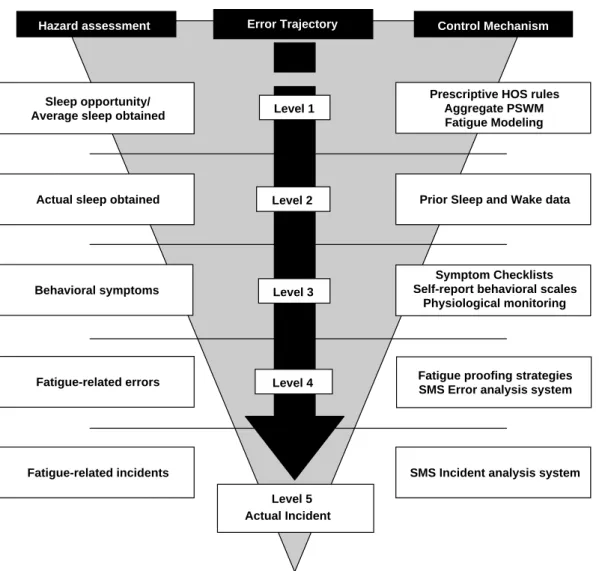
The SMS methodology for fatigue risk manage-ment can be represented using Reason’s (1997)38 hazard control framework. A fatigue-related acci-dent or inciacci-dent (FRI) is seen as only the final point of a longer causal chain of events or ‘error trajectory’. An examination of the error trajectory associated with a FRI will indicate that there are four levels of antecedent event common to any FRI.
From Fig. 2, a FRI is merely the end point of a causal chain of events or ‘error trajectory’ and is always preceded by a common sequence of event classifications that lead to the actual incident. Thus, a FRI is always preceded by a fatigue-related
error (FRE). Each FRE, in turn, will be associated with an individual in a fatigued state, exhibiting fatigue-related symptomology or behaviors. The fatigued state in the individual will, in turn, be preceded by insufficient recovery sleep or exces-sive wakefulness. Insufficient sleep or excesexces-sive wakefulness will be caused by either: (a) insuffi-cient recovery sleep during an adequate break (e.g. failure to obtain sufficient sleep for reasons beyond their control, choosing to engage in non-sleep activities or a non-sleep disorder), or (b) by an inadequate break (e.g. the roster or schedule did not provide an adequate opportunity for sufficient sleep).
The development of appropriate control pro-cedures at level 3 and above is beyond the scope of this paper. These will be addressed in subsequent publications. In this review, we will focus on levels 1 and 2. In particular, we will propose a novel conceptual framework for the design, and
implementation of control procedures at levels 1 and 2 of the error trajectory outlined inFig. 2. That is, control methods for determining whether: † a roster or schedule provides, on average, an
adequate opportunity to obtain sufficient sleep and
† if so, whether an individual has actually obtained sufficient sleep
Each of the four steps in the general error trajectory for a FRI provides the opportunity to identify potential incidents and, more importantly the presence (or absence) of appropriate control mechanisms in the system. It is also often the case that many more potential incidents (i.e. ‘near misses’) will occur than actual incidents and that these could, if monitored, provide a significant opportunity to identify fatigue-related risk and to modify organizational process prior to an actual FRI. Sleep opportunity/
Average sleep obtained
Actual sleep obtained
Behavioral symptoms
Fatigue-related errors
Fatigue-related incidents
Prescriptive HOS rules Aggregate PSWM Fatigue Modeling
Hazard assessment Control Mechanism
Prior Sleep and Wake data
Symptom Checklists Self-report behavioral scales
Physiological monitoring
Fatigue proofing strategies SMS Error analysis system
SMS Incident analysis system Level 4
Level 5 Actual Incident
Error Trajectory
Level 1
Level 2
Level 3
Figure 2 Fatigue-risk trajectory. There are multiple layers that precede a fatigue-related incident, for which there are identifiable hazards and controls. An effective Fatigue risk management system (FRMS) should attempt to manage each layer of risk HOS, hours of service; SMS, safety management system.
Potentially, this framework would enable us to identify the root causes of many potential FRIs in a logical and consistent manner. In addition, we can systematically organize and implement effective hazard control measures for fatigue-related risk at each ‘level’ of control using a systems-based approach. The figure also implies that we can reduce the incidence of fatigue-related incidents by more coordinated or integrated control of the antecedent events or behaviors that constitute potential or ‘latent’ failures of the safety system.38 Effective management of fatigue-related risk requires a FRMS that implements task and organi-zationally appropriate control mechanisms for each point in the theoretical error trajectory. Where an organization fails to develop appropriate controls at each level of the hierarchy, it is unlikely that, overall, the system will be well-defended against fatigue-related incidents.
The figure also provides a useful way of under-standing: (1) the piecemeal and uncoordinated nature of many regulatory approaches to fatigue management to date; and (2) why unintegrated approaches to managing fatigue related risk (such as sole use of prescriptive HOS rules) may not be entirely successful.
In general, accident investigations have focused primarily on later segments of the error trajectory when trying to identify whether fatigue was a contributing factor. Conversely, when framing regulatory responses to fatigue-related incidents (as a control measure), there have rarely been systematic attempts to address all levels and few, if any, directed to lower levels of the error trajec-tory. In doing so, policy makers have assumed that compliance with prescriptive HOS rule sets and other relevant labor agreements, constitutes an effective control measure for fatigue-related risk. As such, even if individual organizations were to achieve explicit compliance (admittedly a farcical assumption in many industries), they implicitly (and erroneously) assume that:
† A rule set can determine reliably whether an individual will be fatigued (or not); and
† Individual employees always use an ostensibly adequate opportunity for sleep appropriately and obtain sufficient sleep.
Since, in many situations, these two assumptions are demonstrably untrue, an effective FRMS must provide additional levels of control for those occasions when the preceding levels of control might be ineffective.
As can be seen from recent alternative, systems-approach initiatives, there can be very different
intellectual and emotional perspectives on the appropriateness and relative merits of different control mechanisms at a single level of the diagram. For example, in recent years there has been considerable discussion as to the relative merits of fatigue-modelling39and the more traditional HOS approaches.34,37 From the perspective in Fig. 2, both are only level 1 control strategies that attempt to ensure that employees are given, on average, an adequate opportunity to gain sufficient sleep. Since, this is only a probabilistic determination and no hazard control mechanism is perfect, neither will prevent all error trajectories in Fig. 2 projecting beyond level 1. Thus, a system with little or no hazard controls at level 2 or beyond may be quite poorly defended against FREs. Similarly, in a system that has very effective hazard control strategies at levels 2–4, debates about the relative merits of different level 1 strategies could arguably be considered moot.
The following sections of this paper will focus on describing a novel conceptual basis for the devel-opment of appropriate control mechanisms for fatigue-related hazards and the scientific justifica-tion for such an approach.
As can be seen fromFig. 2, an effective approach to fatigue management will require a variety of control measures applied at each of the four points on the error trajectory. Thus, an effective FRMS would require control procedures at level 1 of the error trajectory, on average, ensure that employ-ees are provided with an adequate opportunity for sleep. It would also require control procedures at level 2 that ensure that employees who are given an adequate opportunity for sleep actually obtain it. At level 3 we need to ensure that employees who obtained what is considered, on average, sufficient sleep are not experiencing actual fatigue-related behaviors (e.g. due to sleep disorders, non-work demands or individual differences in sleep need). The use of symptom checklists or subjective fatigue scales is an example of control procedures at this level. Similarly, we would need control procedures at level 4 to identify the occurrence of FRE that did not lead to a FRI. Finally, an effective FRMS would require an incident analysis and investigation procedure to identify those occasions when all the control mechanisms failed to prevent an FRI.
Existing efforts of higher-order
fatigue-risk management
Historically, the principal level 1 control mechan-ism has been the development of prescriptive HOS
rule systems that purport to provide adequate opportunity for sleep. In recent years, there has been an emerging scientific and regulatory con-sensus that many of our prescriptive shift work rules do not provide a reliable control mechanism that prevents fatigued individuals from unsafe working practices.11,40 This is primarily due to a failure to distinguish between non-work and sleep time in determining the recovery value of time-off; and the failure to take into account the time-of-day at which shifts or breaks occur.41
As a consequence, there has been a strong move toward developing different approaches to ensure an adequate average opportunity to obtain sleep for fatigue risk management. Broadly speaking these can be divided into two groups: modified prescrip-tion; and fatigue modelling.
From a practical perspective, it is important to determine whether a given shift system, on average, enables an individual to report fit-for-duty. That is, whether the particular pattern of work provides adequate opportunity for sleep. Recently, fatigue modelling has provided an appeal-ing alternative to traditional prescriptive approaches in that it appears more ‘scientific’ and it provides a reliable method to determine whether a pattern of work adequately limits waking time and provides adequate opportunity for sleep. For a comprehensive review of existing models, see the 2004 issue of Aviation, Space, and Environmental Medicine.42
While some of the models are extremely useful for predicting average levels of fatigue at the organizational level, they are not particularly useful for determining whether a given individual is fit-for-duty on a given occasion. Specifically, such approaches are unlikely to provide conclus-ive indications of whether an accident or incident was due to fatigue, because they can tell us nothing about individual behavior on a given day. Thus, while modelling approaches to fatigue-risk management represent a significant potential improvement in our capacity to assess general aspects of a schedule, they do not provide controls any higher than level 1 in the error trajectory. Most importantly, they provide little or no guidance for determining the likelihood of fatigue, and, therefore, fatigue-related risk on a day-to-day basis for individuals within the organization.
There have been some attempts to develop control mechanisms for fatigue at higher levels in the ‘error trajectory’. For example, in some regulatory environments individuals have been assigned the right and/or responsibility to override prescriptive guidelines where they believe it is
appropriate (e.g. Civil Aviation Order 4810). The difficulty with this requirement is the reliability of self-assessment of fatigue. That is, although people can estimate their level of fatigue or alertness with some degree of reliability, we have very little scientific evidence to support the notion that individuals can use this information to make reliable subjective judgements about the concomi-tant level of risk or safety and relative fitness-for-duty.43,44It also ignores the very real potential for coercive financial, social and operational pressures to distort effective decision making in this area.
In other jurisdictions, we have seen enthusiastic attempts to introduce the requirement to train and educate employees about fatigue. These initiat-ives, while well intentioned, assume that training and education in itself will produce beneficial changes in individual and organizational safety behavior with respect to fatigue-related risk. Despite significant spending in this area, to date, there is little or no published evidence to support the hypothesis that improved knowledge of the determinants of fatigue and potential counter-measures leads to improved hazard control.45
Given the shortcomings of fatigue modelling and subjective self-estimations of fatigue, we propose a behaviorally-based methodology for assessing fati-gue. The model proposed in the remainder of this paper outlines methods for predicting average levels of fatigue at the organizational level, as well as control mechanisms for the more specific, day-to-day risk of fatigue at the individual level within organizations.
The prior sleep and wake model
for assessing fatigue
The first point we would make is that we do not yet have a detailed understanding of the relationship between increasing fatigue and risk for many industries and occupations. There is a significant body of laboratory research indicating that increas-ing fatigue is associated with increases in the probability and/or frequency of certain types of performance degradation on standard measures of neurobehavioral performance.3,4,46–48 However, the best that can be said with particular regard to safety is that increasing fatigue is typically thought to be associated with increasing likelihood of error.5,49 Thus, we are not yet at a point where research can be used to clearly articulate the likelihood or typology of errors for specific tasks and/or workplace settings.
At best, we can suggest that based on the published literature:
† Error rates increase exponentially with linear increases in psychometric measures of fatigue;4 † Errors are broadly comparable in nature and frequency with other forms of impairment (e.g. alcohol intoxication);50,51and
† We can make only general predications about the susceptibility of certain types of tasks to fatigue-related error.
In view of our lack of a detailed understanding of workplace or task specific risk associated with fatigue, any set of guidelines should be considered provisional, tentative and subject to ongoing refinement on the basis of post-implementation evaluation.
With this caveat in mind, we would suggest that knowledge of the frequency distribution of prior sleep and wake could form a rational basis for determining the level of fatigue an individual is likely to experience within a given shift. Furthermore, there is potential for both individuals and organiz-ations to use this information as the basis for rational decision making with respect to fatigue-related risk. Within this framework, there are two main questions that should be asked. First, is the individual fit-for-duty and acceptably rested to commence work? The second question is predicated on the answer to the first. That is, if an individual is acceptably alert to commence work, for what period of time can they be reasonably expected to work before fatigue sub-sequently creates an unacceptable level of risk?
As a starting point for this decision, we suggest that a rational FRMS should be based on prior sleep and wake rules, linked to an evaluation of the adequacy of prior sleep and wake. The reasons for this are straightforward:
† Unlike subjective estimates of fatigue, prior sleep and wake are observable and potentially verifiable determinants of fatigue;
† Prior sleep and wake provide a way of integrating individual and organizational measures of fatigue (levels 1 and 2) since systems-based approaches can deal with probabilistic estimates of sleep and wakefulness, and individual employees can make clear determinations of individual amounts of actual prior sleep and wakefulness; and
† Prior sleep and wake measures can be set or modified according to the risk profile associated with specific tasks or workgroups.
In order to determine whether an employee is likely to be fatigued and the required degree of
hazard control, we propose a simple algorithm based on the amount of sleep and wake experienced in the 48 h period prior to commencing work.
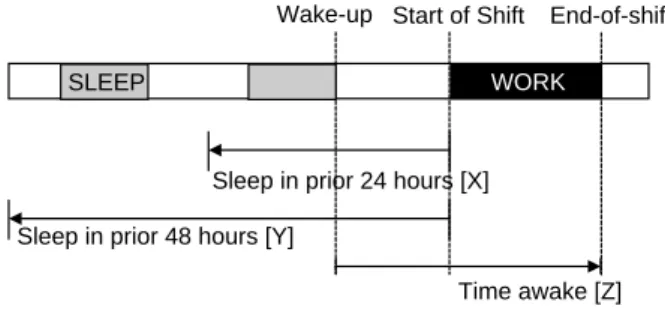
As can be seen above in Fig. 3, the algorithm is comprised of three simple calculations. That is:
Prior sleep threshold—prior to commencing work, an employee should determine whether they have obtained:
(a) Xhours sleep in the prior 24 h; and (b) Yhours sleep in the prior 48 h.
Prior wake threshold—prior to commencing work an employee should determine whether the period from wake-up to the end of shift exceeds the amount of sleep obtained in the 48 h prior to commencing the shift.
Hazard control principle—where obtained sleep or wake does not meet the criteria above, then there is significant increase in the likelihood of a fatigue-related error and the organization should implement appropriate hazard control procedures for the individual.
A critical aspect of the rules defined above is to create appropriate threshold values for the mini-mum sleep values for the prior 24 and 48 h to commencing work and the amount of wakefulness that would be considered acceptable. It is import-ant to note that the thresholds could potentially vary as a function of fatigue-related risk within a workplace. For example, if a given task has either a greater susceptibility of fatigue-related error, or there are significantly greater consequences of a fatigue-related error, the threshold values may be adjusted to a more conservative level.
To our knowledge, there is currently no pub-lished data that would enable us to determine appropriate thresholds for specific tasks or indus-tries. However, there is significant literature
WORK
Sleep in prior 48 hours [Y] Sleep
Wake-up End-of-shift
Sleep in prior 24 hours [X] SLEEP
Start of Shift
Sleep
Time awake [Z]
Figure 3 Prior sleep wake model (PSWM). Fitness for work at levels 1 and 2 of effective fatigue-risk manage-ment can be determined by an algorithm that is comprised of three simple calculations: prior sleep in the last 24- and 48-h; and length of wakefulness from awakening to end of work.
addressing the consequences of various levels of sleep restriction and the subsequent effects on standardized measures of sleepiness, neurobeha-vioral performance, and to a lesser extent, error rates.
As a starting point, we think it is worth examining the literature to try and establish some tentative values for the rules outlined above. It is important to note that these are only starting points for a discussion, and that lab-based studies can only ever provide indicative (as opposed to absolute) values. Over time, data collected in the workplace, with real tasks and actual employees, must be assigned primacy. Until that data exists, however, we believe it is reasonable to look to the published scientific literature for initial guidance.
If we examine the research literature addressing minimum sleep and maximum wake thresholds, two broad classes of research study emerge. The first are studies that examine a single night of sleep loss, and the second, studies examining sleep loss over a sequence of nights. These studies typically measure the effect through changes in subjective, neurobe-havioral or electrophysiological indices of fatigue, alertness or sleepiness.19,52
This distinction is based on the idea that the consequences of sleep loss can accumulate. That is, over sequential nights of sleep loss, relatively small non-significant effects associated with a single sleep loss event may accumulate to produce a significant level of cumulative impairment. Indeed, the chronic partial sleep loss studies reported in recent years clearly confirm this observation.4,53
Single night sleep deprivation studies
One of the first studies examining the effect of a single night’s sleep loss on neurobehavioral per-formance and alertness was Wilkinson and col-leagues in 1966.54In this initial study subjects’ time in bed (TIB) was restricted to one of six different conditions. Subjects were either given 7.5, 5, 3, 2, 1 or 0 h TIB. Neurobehavioral and vigilance perform-ance were assessed using a 30-min vigilperform-ance task and a standard serial addition task. The results indicated significant impairment for vigilance below 5 h TIB and neurobehavioral performance below 3 h TIB.A subsequent study by Taub and Berger (1973) used a single condition of 5 h TIB.55 Compared to baseline, this study essentially replicated the ear-lier results of Wilkinson et al. That is, vigilance was significantly impaired once TIB fell below 5 h but there was no significant effect reported on the
neurobehavioral performance task. This probably reflects the use of a single 5-h condition and no greater restriction of TIB as cited above.
Perhaps due to the similarity of results, there was no additional work in this area for nearly 20 years. In 1993, Rosenthal et al. decided to use a similar experimental design but to use electro-physiological rather than behavioral measures to determine fatigue levels.56They studied the effect of systematic reductions in TIB on electroencepha-lographic (EEG) measures of sleepiness/alertness.
In their study, subjects were given 8, 6, 4, or 0 h TIB. Multiple Sleep Latency Tests (MSLT) carried out across the next day showed that after TIB fell below 6 h, subjects experienced a significant decrease in subsequent sleep onset latency and, by inference, sleepiness. Indeed, after TIB fell below 6 h, the mean latency to sleep onset was in the range 2–7 min.
Unfortunately, there were no neurobehavioral performance or standard vigilance measures reported in this study so it is difficult to compare with the previous two studies. To date, only one published single night study has simultaneously reported EEG defined sleepiness along with neuro-behavioral data.58 In this study, Gillberg and A
˚kerstedt combined neurobehavioral performance measures and EEG measures of sleepiness with TIB restricted to 4 h.57Their study broadly confirmed the previous studies using similar subjects. That is, with TIB restricted to 4 h there was significant impairment of simple reaction times and significant decreases in mean sleep onset latencies during the MSLT.
The only other data addressing this area is the chronic partial sleep deprivation studies reported by several authors.4,45,53,58 It is possible to infer single night sleep loss effects by looking at the data from the first night only. While these studies will be addressed in detail in the section examining the neurobehavioral performance effects of multiple nights of sleep loss, the results from the first night of sleep loss can be added to our discussion of single night studies.
In the first night of these studies we see much the same result as that observed in the other studies reported above. That is, following a single night of sleep loss, there is not a significant level of neurobehavioral deficit until TIB falls below 4 h per night.
Taken together these studies suggest that the effects of sleep loss depend to some extent on the dependent measure used. In general, EEG measures of sleepiness obtained using sleep onset latency during the MSLT appear the most sensitive measure and cognitively demanding and engaging tasks (e.g.
serial addition) the most refractory. Vigilance tasks appear to have an intermediate sensitivity to sleep loss.
Following a single night of sleep loss, it would appear that there is little evidence of a clinically significant reduction in any measure of sleepiness/ alertness until TIB is reduced below 6 h. Most measures show significant clinical levels of sleepi-ness once TIB is reduced to 4 h. Between 6 and 4 h there is some debate based on the measure used (i.e. psychomotor vigilance, reaction time or more complex cognitive tasks); and the degree to which the task is engaging or boring (e.g. serial addition is more engaging than simple reaction time which is, in turn, more engaging than the psychomotor vigilance tasks). Finally, the number of subjects included in the study and the concomitant effect on the statistical power of the experimental design in question fuels the debate on the relative validity of findings.
Given the distinction between TIB, sleep obtained and the need to not be carrying an accumulated sleep debt, it is unlikely that individ-uals would be significantly impaired at most common work tasks until obtained sleep fell below 5 h in the preceding 24. There are a number of caveats to this conclusion and they will be addressed in the next section.
Multiple night sleep deprivation studies
Hamilton and colleagues conducted one of the first studies examining the effect of multiple nights of sleep loss on neurobehavioral performance and alertness in 1972.59 In their study, TIB was restricted over four sequential nights and daytime performance was monitored for the effects on standardized tests of vigilance and neurobehavioral performance task of serial addition. The results indicated that neurobehavioral performance and vigilance were maintained until TIB fell below 6 h. In the 4-h TIB condition both neurobehavioral performance and vigilance were significantly impaired after 4 days. It is worth noting that the relative sensitivity of vigilance and neurobehavioral tasks was similar to that observed in the single night studies with vigilance measures declining more rapidly than neurobehavioral performance.A further study addressing this issue was reported by Carskadon and Dement in 1981.53 In this study, TIB was restricted to 5 h for 7 days. Using the Stanford Sleepiness Scale, self-reported mean sleepiness was statistically greater after one night, although not to a point that would be considered
clinically significant. Using sleep onset latencies during daytime MSLT as an index of sleepiness they observed clinically significant increases in EEG measures of sleepiness (sleep onset latencies less than 10 min) after two nights. After seven nights all measures were in the ‘pathological’ level of sleepiness.
A similar experimental design using neurobeha-vioral measures was reported by Tilley and Wilkinson (1984).60 Using mean simple reaction time as an index of neurobehavioral performance, they observed a statistically and clinically significant decline after the first night and an even greater effect after the second night.
Herscovitch and Broughton (1981) looked at the effects of restricting TIB to 5 h for five nights on a vigilance task.58 Subjects’ performance on a vigi-lance task was assessed at baseline then after five nights. Subjects reported mean sleep durations of 4.6 h across the five nights of the study and the authors reported a significant decline in vigilance after the 5 days of TIB/sleep restriction. There were no measures reported for the intervening days so it is not possible to interpret the time course of changes across the 5 days of the study.
Blagrove et al. (1995) restricted TIB to 5 h for six nights and measured neurobehavioral performance using a battery of four cognitive tasks as well as subjective measures.45 They reported that mean sleep duration was 4.3 h and that neurobehavioral performance was significantly impaired after three nights on all cognitive tasks except for vigilance. Vigilance did not show a significant decline across the six nights of the study. In general, this study is divergent with the majority of studies cited above. It shows a lower level of sensitivity to restricted TIB and sleep. The reasons for this are not clear but may reflect the measures used or low statistical power in the design.
Dinges et al. (1997) restricted TIB to 5 h for seven nights and measured neurobehavioral performance and sleepiness.4In their study they reported a significant reduction in psychomotor vigilance performance after the second night and a significant increase in MSLT-determined sleepiness after five nights.
More recently Belenky and colleagues (2003) restricted TIB to 3, 5, 7 and 9 h over 7 days.46 Psychomotor vigilance and MSLT measures were reported. In this study, there were no significant reductions in neurobehavioral performance or slee-piness until TIB fell below 7 h. When TIB fell to 5 h there was a significant decline in psychomotor vigilance after the third night and significantly increased sleepiness toward the end of the week. When TIB fell to 3 h, neurobehavioral performance declined significantly after the second night and
sleepiness increased significantly from the fourth night.
Using a similar experimental design by Van Dongen and colleagues (2003) restricted TIB to 8, 6 and 4 h but extended the period during which sleep debt accumulated to 14 days.61In this study, the authors only reported a single neurobehavioral performance measure, PVT lapses.
It is difficult to interpret this study in detail since the published figures do not include variance estimates. Nevertheless, clinically significant declines in mean neurobehavioral performance appear to exist by the end of the study for the 6 and 4-h groups but the 8-h group maintained performance across the study. The rate at which sleep debt accumulated and mean neurobehavioral performance declined were greatest for the group restricted to 4-h TIB. The 6-h group also showed a significant decline in performance across the study but at a lower rate. The 4-h group showed clinically significant declines in psychomotor vigilance per-formance after 2 days. On the other hand, the 6-h TIB group maintained performance until the middle of the study (6–8 days) but by the end of the study mean psychomotor vigilance lapses had declined to a point that was approaching clinical significance.
The studies cited above indicate that there is not a clear or definitive answer to the question of how much sleep is sufficient. It would appear that clinically significant declines in neurobehavioral performance and increases in sleepiness appear once TIB for a single night decreases much below 5/6 h. If TIB is restricted over multiple nights (up to seven), we see clinical impairment once the longer-term average declines below w6 h. When sleep is restricted over 14 nights there is some evidence that more sensitive measures of neurobehavioral performance (e.g. psychomotor vigilance lapses) show a clinically significant reduction.
There are, however, a number of caveats to this interpretation. The first is related to the distinction between TIB and obtained sleep. In the prior sleep and wake model (PSWM), we articulated an approach in which we counted the amount of sleep obtained rather than TIB. The majority of the studies considered above reported manipulated TIB rather than sleep. On the other hand, most of the studies reported mean values for sleep obtained that were very similar to TIB. Broadly speaking obtained sleep in most of the studies was less than but very close to TIB since sleep was restricted, it occurred at night and sleep debt had frequently accumulated. As a consequence, sleep efficiency was high and TIB and sleep were similar. In addition, there was little or no competing social activities that we are aware of.
In view of this, and the need, at least initially, to be conservative from a regulatory perspective, we would suggest that any guidelines derived from the studies above could reasonably substitute minimum sleep required for the TIB values cited in the studies above since, in most cases, these values were within 5–10% of each other.
The second caveat is related to the time of day at which the sleep (or sleep loss) occurs. In all of the studies cited, TIB and, therefore, sleep loss occurred during subjective night. It is possible that the recovery value of sleep may show circadian variation. At present there is no good data to support or refute this. While it is true that when sleep is attempted at an inappropriate circadian time it is typically reported as more disrupted and shorter and subjects report the sleep to be less satisfying, the relationship between neurobehavioral performance recovery and sleep duration and quality are typically confounded. There is no doubt that anecdotal and lay percep-tions of sleep suggest that sleep of a given duration has less neurobehavioral recovery value per unit time when it occurs at an inappropriate circadian time. On the other hand, while there is good empirical evidence to suggest that sleep duration and architecture are altered when sleep occurs at an inappropriate circadian phase, there is little, if any, evidence to indicate that the neurobehavioral recovery value of sleep is altered by changes in sleep architecture independent of sleep duration.
It is worth noting that the lack of such evidence reflects the dearth of studies addressing the question rather than a failure of previous studies to identify a difference. Indeed, future research should attempt to answer this, as it is, in our opinion, an important theoretical question. We are not suggesting that changes in the circadian timing of sleep do not alter the neurobehavioral perform-ance recovery value of a given sleep duration. We are merely suggesting that until there is data to address this question it would be inappropriate to develop guidelines that implied an effect.
A third caveat is related to the link between the performance decrement measured in laboratory studies and the subsequent inference that a given level of performance impairment or sleepiness is related to safety in some simplistic linear manner. Laboratory studies control for many outside vari-ables (such as work stress, self-paced work, social/domestic demands, etc.). Thus, in real life settings, additional factors that also impact either directly or indirectly upon safety, may make the relationship between fatigue, performance and safety more complex.
The final caveat is that neurobehavioral per-formance or sleepiness is typically reported as a
mean for the subsequent day. In fact, neurobeha-vioral performance and sleepiness were measured at multiple time points across the day and then averaged to provide a more stable estimate. In practice, sleep restriction produces a reduction in mean values of neurobehavioral performance and sleepiness but these variables show a non-random time course across the day. Typically, performance across the subsequent day shows a monotonic change such that fatigue increases as a function of the initial level of fatigue (due to sleep loss) and then its subsequent trajectory increases over the waking period. In general, this will increase as a function of wake duration period and the circadian time at which wake occurs.
Extended wakefulness studies
The section above detailed the scientific evidence supporting the idea of a minimum sleep threshold consistent with the requirement for a safe system of work. In this section, we will address the methodology for limiting prior wake to ensure fatigue levels are not above a given threshold. As a starting point for this discussion we would like to put forward the following argument.
First, that the fatigue ‘clock’ starts ‘ticking’ from the moment of wake and continues ‘ticking’ until the next sleep period.61It does not, as is often implied in prescriptive regulatory systems, start ‘ticking’ at the point that an individual employee starts work.
As a consequence, the point at which fatigue is likely to become problematic is more directly related to the duration of wakefulness and only indirectly to the length of the work period. HOS only mediates fatigue via alterations to prior sleep and wake durations. Relative to shifts occurring late in the wake period (e.g. afternoon and night), shifts starting early in the wake period (morning) can go for longer before fatigue becomes a problem. Hence, our view that assessing the likelihood of fatigue should focus on prior wake rather than HOS. Second, sleep is a ‘recovery process’ for wake. That is, during sleep we recover from fatigue and, as a corollary, sleep enables us to ‘buy’ a certain amount of subsequent wakefulness above a given threshold.58 This implies a linear relationship between sleep and alertness; that alertness increases as a function of prior sleep. Based on the theoretical modelling work of Van Dongen and colleagues (2003), it would appear that under normal entrained circumstances a nominal 8 h of
sleep will typically ‘buy’ about 16 h of
wakefulness.61 That is, each hour of sleep ‘buys’ about 2 h of wakefulness.
The theory of ‘sleep buys wakefulness’ is further supported by an earlier study by Bonnet (1991), which examined the usefulness of prophylactic naps in operational settings.62Nap lengths of 0, 2, 4 and 8 h were tested to determine subsequent effects on alertness and performance. The results indicated that on average, the benefits of a given nap period positively impact alertness and performance for approximately double the length of the nap taken. Furthermore, such benefits continue to accumulate in a linear fashion for naps as long as 8 h.
It is important to note that this is an average value and that this may vary according to: (a) elapsed time (i.e. it varies in a monotonic but nonlinear manner), and (b) the time of day at which the wake period occurs. For example, a period of extended wakefulness occurring in the mid after-noon may be associated with less sleepiness than the same period of wakefulness occurring in the early hours of the morning. It is also important to note that a neurobehavioral performance recovery half life for sleep has been estimated at approxi-mately 2 h59so it may be the case that the initial hours of sleep may actually ‘buy’ more than two for one and that the last 4 h may buy proportionately less. However, since real world shift systems rarely restrict sleep to less than 3–4 h this simplification may not create a significant problem in practice.
If, however, an individual has less than the nominal 6 h sleep then the previous section indi-cates that their average subsequent fatigue (inferred from neurobehavioral performance and sleepiness) will be increased. With a reduction in sleep, an individual will start the next work period with a residual sleep debt and, on average, be more tired. In addition, we would suggest, that, relative to a given threshold, they would be able to sustain alertness for less time compared to the individual who had their nominal 8 h.
Using the general (and admittedly simplistic) principle that each hour of sleep ‘buys’ 2 h of subsequent wakefulness we would suggest that the ability to ‘sustain alertness’ is decreased by 2 h for each hour of sleep loss. Thus, the individual who has reduced their sleep by 2 h could maintain alertness above a given threshold for a period of only 12 h (i.e. 16K(2!2)Z12). In view of the potential to carry a residual sleep debt into a subsequent work period, we have suggested that there be a one-to-one relationship relative to sleep in the preceding 48 h. That is that we set the wake threshold relative to the total hours of sleep in the 48 h prior to commencing work rather than a two-to-one relationship for the prior night.
It is acknowledged that scientific evidence to support, or refute, our parameterization of this rule is limited. We would, nevertheless, suggest that the general principle is probably sound (i.e. that sleep loss reduced the duration that one can sustain alertness) and is unlikely to be considered con-troversial. That is, less sleep will reduce the time that one can sustain alertness.
On the other hand, unpublished data reported by Balkin’s group (Balkin, private communication) suggests that the rate at which fatigue accumulates across the day does vary as a function of prior sleep loss and in a manner consistent with the principles outlined above. That is, increasing prior sleep loss: (a) increases average fatigue levels, and (b) the rate at which fatigue accumulates across the day.
Discussion of the wake threshold is more likely to focus on the parameterization of the rule rather than the rule per se. Thus, it may be the case we need an additional offset value for wake based on factors related to the individual risk profile of the work task. For example:
Wake thresholdZsleep in prior 48 h Ghours determined by task risk profile
Therefore, we would suggest that the principles underlying the rule are sound and that appropriate experimental studies could provide data that would enable the rule to be parameterized in detail.
In its current format the rule suggests that fatigue is likely to be a problem from the time that prior wake exceeds the amount of sleep in the 48 h prior to commencing work. Thus, in an individual who has obtained 16 h of sleep in the 48 h prior to commen-cing work, fatigue would be considered a potential hazard after 16 h of wakefulness. In practice, this would suggest that fatigue is likely to become a problem after up to 12–14 h for shifts commencing very close to the time of wakeup. However, for shifts finishing close to the normal sleep onset time, the rule would indicate that fatigue is a potential problem after 8 h. In the case of a night shift with 14–16 h of prior wakefulness the rule would suggest that fatigue is a potential problem across the entire shift.
Aggregating prior sleep wake model data
The PSWM rules have been conceptualized initially as a method of insuring personal responsibility for fatigue-risk management at the individual level. However, it is also possible for data obtained from these rules to be collected systemically by workgroups and or organiz-ation as a whole. The benefit of the PSWM is that itrelies on relatively objective behavioral measures that are meaningful, observable and easily determined at the individual level and, where appropriate systems exist, across an entire group or organization. Further-more, these measures could potentially be aggregated across an organization to provide the basis of a sound statistically based approach to estimating the amount of sleep and wakefulness associated with an actual or proposed schedule.
Moreover, this would provide the basis for integrating much of the fatigue-modelling work that has been developed in recent years. Since most of these models estimate fatigue based, at least in part, on the timing of work and/or sleep, the PSWM would provide statistical measures on average timing and duration of sleep in actual workplaces on specific tasks. Using this data, it would be possible to use the collection of prior sleep wake data to develop statistical models on the distribution and timing of sleep (and therefore statistical distri-butions of prior sleep and wake) and to estimate the amount of sleep obtained by people working a particular type or class of schedules. This in turn could be used to estimate statistical distributions of estimated fatigue in workplace populations.
Summary and conclusions
In recent years, community perceptions of related risk have changed. Increasingly, fatigue-related incidents are viewed as unacceptable. As a consequence, there is greater, albeit inconsistent, reactive political pressure to regulate HOS as a means to reduce the likelihood and consequence of FREs. This pressure is often antithetical to parallel econ-omic and social imperatives driving work intensifica-tion and improvements in income and productivity.
While prescriptive HOS limits to shift and break durations have traditionally been used to prevent fatigue-related incidents, there is an emerging consensus that they are an inappropriate hazard control mechanism because they are not scientifi-cally defensible, expensive to enforce, and the short-term costs associated with their implemen-tation can produce compliance disincentives for both employees and employers.
These disincentives have made it difficult to get political consensus on the best way for the com-munity to manage fatigue-related risk. In an attempt to address this stand-off, there has been increasing pressure to propose more focused con-trol mechanisms that minimize the subsequent impact on income and operational flexibility.
It is our view that this impasse can best be resolved by a shift away from prescriptive HOS
approaches to one in which fatigue is no longer managed as an industrial or labor relations issue but rather, as part of an organization’s overall SMS.
From this perspective, fatigue related accidents or incidents are seen as the final segment in a causal chain of events or error trajectory. Within the error trajectory there are four identifiable segments com-mon to all fatigue-related incidents. At the earliest levels of the error trajectory are segments related to: (1) the provision of an adequate opportunity to sleep, and (2) appropriate utilization of a sleep opportunity (break period). In this review, we have proposed a novel methodology that enables organizations to take an integrated approach to determining whether they have appropriate control procedures at level 1 or 2 of the proposed fatigue-related error trajectory.
The basis to this methodology is the PSWM. The conceptual basis to this model is that fatigue is better estimated from prior sleep/wake behavior than from patterns of work. Using this model, an organization can define task specific thresholds for sleep and wakefulness based on the amount of sleep obtained in the 24 and 48 h prior to commencing work. Where aggregate or individual sleep/wake values fail to reach pre-designated thresholds, the increased likelihood of fatigue would require a greater level of hazard control to prevent an actual incident from occurring (levels 3 and 4).
At level 1 of the error trajectory organizations are required to manage the opportunity for sleep probabilistically. In general, prescriptive rule sets or fatigue modelling are the most common ways in which an organization can determine prospectively whether a pattern of work is likely to provide employees with an adequate opportunity to obtain sufficient sleep (vis-a`-vis the defined threshold). Using this approach, an acceptable roster or schedule is one that is associated with a certain percentage of people on average (e.g.O95%) having an adequate opportunity to gain the requisite amount of sleep.
At level 2 of the error trajectory, individuals use the PSWM to determine whether they have had sufficient sleep. Since, level 1 control mechanisms will allow a pre-determined percentage of employ-ees insufficient sleep (e.g. 5%) the personal PSW calculation will allow them to identify themselves, report this information and the organization can engage in appropriate control procedures at level 3 and above in the error trajectory.
In determining appropriate threshold values for sufficient sleep this review acknowledges that cur-rently, there is a dearth of organization- and/or task-specific data sufficient to answer this question definitively. Indeed it is our view that such data will be collected by organizations in the post-implemen-tation phase.
On the other hand, there is a significant amount of published literature on the subjective, neurobeha-vioral and electrophysiological effects of sleep loss over a single or multiple nights. We can extrapolate from this data to conclude that it is unlikely that prior to commencing work an individual obtaining less than 5 h sleep in the prior 24 and 12 h sleep in the prior 48 h and who is awake for longer than the amount of sleep in the prior 48 h is likely to be unimpaired at a level consistent with a safe system of work.
In defining this threshold we caution readers that particular occupational tasks may well be more susceptible to fatigue-related error or the conse-quences of fatigue-related error are so severe as to require threshold values greater than we have specified. Furthermore, these initial values should be viewed as a starting point and subject to revision in the light of actual workplace experience. However, where these thresholds are inappropri-ate, we should see the systematic projection of error trajectories beyond level 2. That is, despite achieving the requisite threshold levels of sleep the FRMS would continue to observe either
† level 3 factors indicating the occurrence of fatigue-related behaviors or symptoms;
† level 4 factors related to the occurrence of fatigue-related errors; or
† level 5 issues related to the occurrence of actual fatigue-related incidents.
Acknowledgements
We would like to thank Dr Angela Baker, Dr Sally Ferguson and Dr Adam Fletcher for their comments and input on this paper.
Research agenda
† The efficacy and viability of existing FRMSs should be evaluated and discussed in terms of future development.
† Knowledge of the circadian effects on timing of sleep is essential to determine the neurobehavioral performance recovery values of given sleep durations.
† Experimental studies and applied workplace research designs should be conducted, to enable the prior sleep/wake rule to be parameterized in detail, and refine the appropriateness of the recommended thresholds.
References
1. Beaumont M, Batejat D, Pierard C, Coste O, Doireau P, Van Beers P, et al. Slow release caffeine and prolonged (64-h) continuous wakefulness: effects on vigilance and cognitive performance.J Sleep Res2001;10(4):265–76.
2. Lieberman HR, Tharion WJ, Shukitt-Hale B, Speckman KL, Tulley R. Effects of caffeine, sleep loss, and stress on cognitive performance and mood during U.S. Navy SEAL training. Sea–air–land. Psychopharmacology (Berl) 2002; 164(3):250–61.
*3. Harrison Y, Horne JA. The impact of sleep deprivation on decision making: a review.J Exp Psychol Appl2000;6(3):236–49. *4. Dinges DF, Pack F, Williams K, Gillen KA, Powell JW, Ott GE, et al.
Cumulative sleepiness, mood disturbance, and psychomotor vigilance performance decrements during a week of sleep restricted to 4–5 hours per night.Sleep1997;20(4):267–77.
5. Gander PH, Merry A, Millar MM, Weller J. Hours of work and fatigue-related error: a survey of New Zealand anaesthe-tists.Anaesth Intensive Care2000;28(2):178–83.
6. Neri DF, Shappell SA, DeJohn CA. Simulated sustained flight operations and performance. Part 1. Effects of fatigue.Mil Psychol1992;4(3):137–55.
7. A˚kerstedt T. Consensus statement: fatigue and accidents in transport operations.J Sleep Res2000;9:395.
8. Folkard S. Black times: temporal determinants of transport safety.Accid Anal Prev1997;29(4):417–30.
9. Carey JC, Fishburne JI. A method to limit working hours and reduce sleep deprivation in an obstetrics and gynecology residency program.Obstet Gynecol1989;74(4): 668–72.
10. Civil Aviation Safety Authority.CAO 48: flight crew flight and duty limits. CASA; 1993.
11. Coplen M, Sussman D.Fatigue and alertness in the United Sates railroad industry. Part II. Fatigue research in the office of research and development at the Federal Railroad Administration.: US DOT, Volpe Centre, Operator Perform-ance and Safety Analysis Division; 2001.
12. Clark LD. The politics of regulation: a comparative-historical study of occupational health and safety regulation in Australia and the United States. Aust J Public Adm1999; 58(2):94–104.
13. Smith DJ. A framework for understanding the training process leading to elite performance. Sports Med 2003; 33(15):1103–26.
14. Gawron VJ, French J, Funke D. In: Hancock PA, Desmond PA, editors.An overview of fatigue, in stress, workload, and fatigue. NJ: Lawrence Erlbaum Associates; 2001. p. 581–95.
*15. Van Dongen HP, Baynard MD, Maislin G, Dinges DF. Systema-tic individual differences in neurobehavioral impairment from sleep loss: evidence of trait-like differential vulner-ability.Sleep2004;27(3):423–33.
16. Akerstedt T, Kecklund G, Lowden A, Axelsson J. Sleepiness and days of recovery.Transport Res Part F2000;3:251–61. 17. Dawson D, Fletcher A. A quantitative model of work-related
fatigue: background and definition.Ergonomics2001;44(2): 144–63.
18. Heiler K. The ‘petty pilfering of minutes’ of what has happened to the length of the working day in Australia?Int J Manpower1998;19(4):266–80.
*19. Ferrara M, De Gennaro L. How much sleep do we need?Sleep Med Rev2001;5(2):155–79.
20. Mahon G, Cross T. The fatigue management program: alternatives to prescription. Queensland, Australia: Queens-land Transport; 1999.
21. Baker A.Freight corp: fatigue management program report. Adelaide, Australia: Centre for Sleep Research; 2000. 22. Civil Aviation Safety Authority.Fatigue management system
trial,2000.
23. Rhodes W, Gil V.Development of a fatigue management program for Canadian marine pilots. Montreal: Transpor-tation Development Centre; 2002. p. 90.
24. Gander PH. Fatigue management in air traffic control: the New Zealand approach. Unpublished; 2000.
25. Gander P, Waite D, McKay A, Seal T, Millar MM. An integrated fatigue management programme for tanker drivers. In: Hartley L, editor. Managing fatigue in transportation: proceedings of the third fatigue in transportation confer-ence. Freemantle, Western Australia: Pergamon; 1998. 26. Burgess-Limerick R, Bowen-Rotsaert D. Fatigue
manage-ment program pilot evaluation: phase 2 wave 3 report. Queensland: Global Institute of Learning and Development Consortium; 2002. p. 48.
Practice points
† Fatigue-related risk and errors are
increasingly being viewed as unacceptable by society.
† The most common methodology employed to date for fatigue-risk management has been prescriptive HOS limitations. Recently, the appropriateness of traditional
prescriptive rule sets has been found lacking in terms of scientific defensibility and operational viability.
† An alternative to traditional prescriptive HOS limitations is a PSWM. The model first requires that organizations provide
employees with sufficient opportunity to obtain adequate sleep; and second, that individuals utilize sleep opportunity appropriately to obtain adequate sleep. † Due to lack of task- and industry-specific
data, it is difficult to definitively determine appropriate sleep and wake thresholds. However, we can make broad assumptions from existing literature that obtaining less than 5 h sleep in the prior 24 h, and 12 h sleep in the prior 48 h would be inconsistent with a safe system of work. Furthermore, wakefulness should not exceed the total amount of sleep obtained in the prior 48 h. † Individual organizations can determine
appropriateness of sleep and wake
thresholds through observations of higher-level fatigue symptomology. For example, the presence of fatigue-related behaviors, fatigue-related errors or ultimately,
fatigue-related incidents, would be a strong indicator that sleep and wake thresholds require revision.