Scientia Iranica A (2014) 21(5), 1591{1607
Sharif University of Technology
Scientia IranicaTransactions A: Civil Engineering www.scientiairanica.com
An improved rey algorithm with harmony search
scheme for optimization of water distribution systems
A. Tahershamsi
a, A. Kaveh
b;, R. Sheikholeslami
aand S. Kazemzadeh Azad
a a. Department of Civil and Environmental Engineering, Amirkabir University of Technology, 424 Hafez Ave., Tehran, Iran. b. Centre of Excellence for Fundamental Studies in Structural Engineering, Iran University of Science and Technology, Narmak,Tehran, P.O. Box 16846-13114, Iran.
Received 1 October 2013; received in revised form 17 December 2013; accepted 5 February 2014
KEYWORDS Meta-heuristics; Firey algorithm; Harmony search; Optimum design; Water distribution systems.
Abstract. In this study, a new hybrid method based on Firey Algorithm (FA) and Harmony Search (HS) techniques is presented for solving the least-cost design problem of Water Distribution Systems (WDS). This algorithm is designed to improve the performance of the FA as a recently developed meta-heuristic that mimics the natural behaviour of reies. The use of such a nature-inspired optimization method to solve the optimal design problem of WDS needs particular modications to produce high quality solutions. Therefore, a modication is proposed to the movement stage of articial reies, and based on the HS strategy a memory is utilized to save a number of the best solutions. Another improvement in this algorithm includes the addition of pitch adjustment operation in the FA as a mutation operator. The presented method is applied to the optimal design of some well-known benchmark problems taken from literature, and the results conrm its validity. In addition, a sensitivity analysis is performed on the parameters of the algorithm. © 2014 Sharif University of Technology. All rights reserved.
1. Introduction
The term meta-heuristic, rst introduced by Glover [1], is a set of concepts that can be used to dene heuristic methods applicable to a wide set of dierent problems with relatively few modications to adapt them to a specic problem. These meta-heuristic algorithms are mainly based on natural phenomena comprising stochastic search techniques [2]. Design and implemen-tation of such optimization methods is the origin of a multitude of contributions to the literature over the last 50 years.
For example, in 1966, Fogel et al. [3] proposed evo-lutionary programming. Holland [4] proposed the rst Genetic Algorithm (GA) in 1975. Smith [5] described genetic programming. Kirkpatrick et al. [6] conceived
*. Corresponding author. Tel.: +98 21 77240104; Fax: +98 21 77240398
E-mail address: [email protected] (A. Kaveh)
Simulated Annealing (SA). Cerny [7] proposed a sim-ilar algorithm for another problem considering it a thermo-dynamical approach. Glover [1] proposed Tabu Search algorithm (TS). Farmer et al. [8] worked on Articial Immune systems (AI). Reynolds [9] intro-duced the ocking algorithm and the three ocking rules of Reynolds: ock centering (cohesion), collision avoidance (separation) and velocity matching (align-ment). Moyson and Manderick [10] worked on the collective behaviour of ants and found an application in articial intelligence. Moscato [11] proposed the term memetic algorithm. Koza [12] registered his rst patent on genetic programming. Dorigo [13] proposed ant colony algorithms (ACO) in his PhD thesis. Kennedy and Eberhart [14] conceived the Par-ticle Swarm Optimization algorithm (PSO). Storn and Price [15] proposed a Dierential Evolution algorithm (DE). Rubinstein [16] worked on the Cross Entropy (CE) method. Geem et al. [17] proposed Harmony Search (HS). Abbass [18] proposed Marriage in the
Honey Bee Optimization algorithm (MHBO). Nakrani and Tovey [19] described the Honey Bee Algorithm (HBA). Karaboga [20] described the Articial Bee Colony algorithm (ABC). In 2006, Erol and Eksin [21] proposed a novel optimization algorithm, the so-called big Bang-Big Crunch (BB-BC), as an ecient meta-heuristic optimization method based on the BB-BC theory of the universe evolution.Yang [22] developed the Firey Algorithm (FA). Recently, Kaveh and Khay-atazad [23] developed a new meta-heuristic, so-called, Ray Optimization (RO), and examined its capability through some well-known benchmark problems. Kaveh and Zolgadr [24] improved the PSO and presented the democratic PSO. In 2011, a general model was presented to unify the explanation of dierent meta-heuristic algorithms by Kaveh and Talatahari [25]. This model is based on the concept of elds of forces from physics and is called the Fields Of Forces (FOF) model. The FOF model covers many meta-heuristic algorithms and provides ecient means to improve, expand, modify and hybridize the meta-heuristics. The advantage of such a model consists of an easy explanation of dierent algorithms. The FOF model can easily predict the deciency of some existing meta-heuristics, and can suggest ways for their improvement. Unlike exact methods, these meta-heuristics allow one to tackle large-size problems by delivering satis-factory solutions in a reasonable time. Application of meta-heuristics falls into a large number of real-world problems; one of them is the cost optimization of Water Distribution Systems (WDS). Optimal design of WDS has been the focus of many researchers over the past three decades. In the WDS design problems, it is usually assumed that the pipe layout, nodal elevations, and demands are known in advance and the task is to nd the combination of pipe sizes that can satisfy the required hydraulic head value at the demand nodes with least-cost. Obtaining the least-cost design of a WDS is a combinatorial problem. A set of solutions must be selected from a discrete set of feasible solu-tions where the funcsolu-tions representing the hydraulic behaviour of the network are nonlinear [26]. The solution process involves simultaneous consideration of the continuity equation, energy conservation, and head-loss function that makes the analytical solution of the problem rather complicated. From a mathematical point of view, signicant diculties are involved due to the discrete nature of the pipe diameters and the nonlinearity of the head-loss relationship. These lead to a large-scale, mixed integer, and nonlinear problem, corresponding to the NP-hard class.
In the present study, the cost optimization of dierent types of WDS are carried out using a new hybrid meta-heuristic, so-called, improved, rey algo-rithm with the harmony search scheme (IFA-HS). The IFA-HS can be considered an improved version of the
recently developed FA algorithm. The improvements consist of utilizing a memory (HM) that contains some information extracted online during the search, adding of the pitch adjustment operation in FA, serving as the mutation operator during the process of the rey updating, and modifying the movement phase of the FA. As mentioned before, in this study, the WDS de-sign is formulated as a least-cost optimization problem with a selection of pipe diameters as the decision vari-ables, while network layout and its connectivity, nodal demand, and minimum requirements are imposed. Since the literature on the optimization of WDSs has traditionally dealt with an idealized problem, this form of the optimization of WDSs is used in this paper. The above formulation results in a mixed integer nonlinear programming problem (MINLP), which is non-convex, because of the existence of integer variables and the nature of the continuity equations. On the other hand, the problem constraints are not smooth and, hence, the application of smooth algorithms cannot be appropriate. Therefore, using new meta-heuristic optimization techniques is an interesting, if not the best, way of treating this problem. Historically, as a result of comprehensive analyses performed by many authors in recent decades, starting from the 1970s, a large number of methods have been applied to solving this optimization problem, including linear programming techniques, non-linear optimization mod-els, global optimization methods and meta-heuristic algorithms. The main contribution of this study is to develop a new hybrid algorithm for minimum-cost design of WDSs, in which some components of HS are incorporated into an improved version of the FA. The detailed implementation procedure of this hybrid meta-heuristic method is also presented.
The hybridization of HS with other meta-heuristic has been carried out previously in dierent forms which can be grouped into two types. The rst approach is the integration of some components of other meta-heuristic algorithms into HS, while the second approach is the integration of some HS components into other meta-heuristic algorithms. In Ref [27], the authors improved the performance of PSO, which is used in the designing of optimal pin-connected structures, by handling the particles that y outside the variables' boundary. This improvement was based on the use of the HM concept. Kaveh and Talatahari [28] proposed a new framework based on a modied version of PSO, ACO and the HS scheme. In this framework, the HS was used to control the variable constraints. Li et al. [29] proposed a modied version of GA using HS. Their proposed modication mimics the HS improvisa-tion method, where the new generated vector is selected from all vectors stored in the HM, which is contrary to the GA method of generating new vectors. Moeinzadeh et al. [30] used HS to improve the performance of
A. Tahershamsi et al./Scientia Iranica, Transactions A: Civil Engineering 21 (2014) 1591{1607 1593
the Linear Discriminate Analysis (LDA) classication algorithm. Lee and Zomaya [31] proposed a parallel algorithm, where HS was considered its key component. In this method, three meta-heuristics, GA, SA, and AI, were utilized to enhance the solutions stored in the HM as an extra step to speed up the convergence and, at the same time, to avoid being trapped in local optima.
The remaining sections of this article are orga-nized as follows: A review of FA and HS is presented in Section 2, and then the proposed method is introduced in Section 3. In Section 4, optimal design of WDS is described in detail using the proposed method, and, in Section 5, the performance of the algorithm is evaluated utilizing typical design examples. The sensitivity analysis is also carried out in this section. Finally, Section 6 concludes the paper.
2. A review on FA and HS
In order to make the paper self-explanatory, before proposing the new hybrid algorithm, the characteristics of FA and HS are briey explained in the following two subsections.
2.1. Firey algorithm
Among the phenomenon-mimicking methods, algo-rithms inspired from the collective behavior of species such as ants, bees, wasps, termite, sh, and birds are referred to as swarm intelligence algorithms [32]. Recently, Yang [22] proposed the Firey Algorithm (FA) as a new swarm intelligence algorithm which mimics the natural behaviour of reies. In some articles, [33,34] the eciency of FA based optimization methods is compared to that of the PSO and GA based approaches, through dierent test functions. Recently, various applications of the FA in dierent research areas are reported. In the eld of optimal structural design, there is limited work available in the literature based on the application of FA. Gandomi et al. [35] used a FA based approach for solving mixed contin-uous/discrete structural optimization problems. This study revealed the eciency of the FA algorithm in structural optimization. Gomez [36] employed the FA for the sizing and shape optimization of truss structures with dynamic constraints. Also, Kazemzadeh Azad and Kazemzadeh Azad [37] employed an Improved FA (IFA) algorithm for optimum design of planar and spatial truss structures with both sizing and shape design variables, and reported promising results.
As mentioned before, the FA is a nature-inspired heuristic search technique based on the natural be-haviour of reies. According to [33] who developed the FA, the natural ashing characteristics of reies can be idealized using the following three rules:
Rule 1. All reies are unisex; therefore, one rey
will be attracted to other reies regardless of their gender.
Rule 2. The attractiveness of each rey is proportional to its brightness. Thus, for any two ashing reies, the less bright rey will move towards the brighter one. The attractiveness is proportional to brightness and they both decrease as their distance increases. If there is no brighter one than a particular rey, it will move randomly.
Rule 3. The brightness of a rey is determined according to the nature of the objective function.
The attractiveness of a rey is determined by its brightness or light intensity which is obtained from the objective function of the optimization problem. However, the attractiveness, , which is related to the judgment of the beholder, varies with the distance between two reies. The attractiveness, , is dened by [38]:
= 0exp( r2); (1)
where r is the distance of two reies, 0 is the
attractiveness at r = 0, and is the light absorption coecient. The distance between two reies, i and j, at xi and xj, respectively, is determined using the
following equation:
rij= jjxi xjjj =
v u u tk=dX
k=1
(xi;k xj;k)2; (2)
where xi;k is the kth parameter of the spatial
coor-dinate, xi, of the ith rey. In the rey algorithm,
the movement of a rey, i, towards a more attractive (brighter) rey, j, is determined by the following equation [38]:
xi= xi+ 0exp( rij2)(xj xi) + "i; (3)
where the second term is related to the attraction, while the third term is randomization with the vector of random variables, "i, using a normal distribution.
The performance of the IFA was investigated using optimal design of truss structures, and satisfac-tory results were reported. In the present study, the IFA is employed for optimum design of WDS. Here, considering the nature of the optimization problem, the following equation is utilized for the movement stage of the FA:
xi= xj+ 0exp( rij2)(xj xi) + "i: (4)
In the original FA, the movement of rey i towards brighter rey j was determined by Eq. (3). Since xj
is brighter than xi, in Eq. (4) instead of moving rey
a morereliable area, is proposed to update the position of rey i, based on the current position of rey j. To do this, xi is replaced by xj and the above equation is
employed for the movement stage of the FA. In Eq. (4), "i is a randomly generated number using a normal
distribution and is a scaling parameter. Normal distribution has two parameters: a mean value and a standard deviation. In this study, the mean value of the normal distribution is set to zero and the standard deviation is taken as the standard deviation of the kth parameter of all reies in each generation.
In the IFA, to avoid missing the brighter reies of the population, the position of a rey is updated only if the new position found is better than the old one. Therefore, in the process of optimization, each candidate design is replaced only with a better design. It is apparent that Eq. (3) may generate reies outside the bounds of design variables. In order to remove this diculty, the parameters of reies that are not created within the bounds of design variables are rounded into the boundary values [37].
2.2. Harmony search technique
When musicians improvise a harmony, they usually try various possible combinations of the music pitches stored in their memory. This kind of eective search for a perfect harmony is analogous to the procedure of nding an optimal solution in engineering problems. The HS method is inspired by the working principles of harmony improvisation. Similar to the GA and PSO, the HS method is a random search technique. It does not require any prior domain knowledge, such as the gradient information of the objective function. However, dierent from those population-based ap-proaches, it only utilizes a single search memory to evolve. Therefore, the HS method has the distin-guished feature of algorithmic simplicity [39]. HS is a meta-heuristic search technique without the need for derivative information, and with reduced memory requirements. In comparison with other meta-heuristic methods, HS is computationally eective and easy to implement for solving various kinds of engineering optimization problems. There are four principal steps in this algorithm [40].
Step 1. Initialize a Harmony Memory (HM). The initial HM consists of a certain number of randomly generated solutions for the optimization problem under consideration. For an n dimensional problem, a HM with the size of HMS can be represented as follows:
HM = 2 6 6 6 6 6 4
x1
1 x12 ::: x1n
x2
1 x22 ::: x2n
::: ::: ::: ::: xHMS
1 xHMS2 ::: xHMSn
3 7 7 7 7 7
5; (5)
where xi
1; xi2; ::; xin (i = 1; 2,...,HMS) is a candidate
solution. HMS is typically set to be between 10 and 100.
Step 2. Improvise a new solution (x0
1; x02; ::; x0n) from
the HM. Each component of this solution, x0 j, is
obtained based on the Harmony Memory Considering Rate (HMCR). The HMCR is dened as the probability of selecting a component from the HM members, and 1-HMCR is, therefore, the probability of generating it randomly. If x0
j comes from the HM, it can further be
mutated according to the Pitching Adjust Rate (PAR). The PAR determines the probability of a candidate from the HM to be mutated.
Step 3. Update the HM. First, the new solution from Step 2 is evaluated. If it yields a better tness than that of the worst member in the HM, it will replace it. Otherwise, it is eliminated.
Step 4. Repeat Steps 2 and 3 until a termination criterion (e.g., maximal number of iterations) is met.
The usage of harmony memory (HM) is im-portant because it ensures that good harmonies are considered as elements of the new solution vectors. In order to use this memory eectively, the HS algorithm adopts a parameter, HMCR2 (0,1), called the harmony memory considering (or accepting) rate. If this rate is too low, only few elite harmonies are selected and it may converge too slowly. If this rate is extremely high, near 1, the pitches in the harmony memory are mostly used, and others are not explored well, leading not into good solutions. Therefore, typically, we use HMCR = 0:7 0:95 [40]. Note that a low PAR with a narrow bandwidth (bw) can slow down the convergence of HS because of the limitation in the exploration of only a small subspace of the whole search space. On the other hand, a very high PAR with a wide bw may cause the solution to scatter around some potential optima as in a random search. Furthermore large PAR values with small bw values usually cause the improvement of best solutions in nal generations in which the algorithm is converged to an optimal solution vector.
3. The present algorithm
In this section, we propose a new version of the rey algorithm called the IFA-HS algorithm. The hybrid IFA-HS algorithm combines the optimization capabil-ities of HS and IFA. There are various hybrid models of HS with other meta-heuristics in the literature. Alia and Mandava [41] categorized this hybridization into two types. The rst type consists of algorithms which are an integration of some components of the
A. Tahershamsi et al./Scientia Iranica, Transactions A: Civil Engineering 21 (2014) 1591{1607 1595
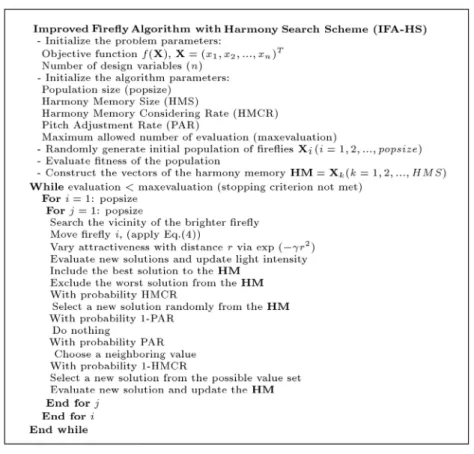
Figure 1. The outline of the proposed IFA-HS method.
other meta-heuristic algorithms within HS, while the second type consists of methods that integrate some HS components within other meta-heuristic algorithms, such as the IFA-HS algorithm.
In the HS algorithm, the diversication is con-trolled by random selection. Random selection explores global search space more widely and eciently, while pitch adjustment makes the new solution good enough and near existing good solutions. The intensication in the HS algorithm is controlled by memory con-sideration, leading the searching process toward the searching space of good solutions [42]. Also, the use of the HM in HS allows the selection of the best vectors that may represent dierent regions in the search space. On the other hand, the disadvantages of the basic FA algorithm are premature convergence and sometimes ecacious experiences between solutions in a population are not obtained. In order to obtain a high quality solution, we combine the above mentioned strategies. Since FA algorithms are memory less, there is no information extracted dynamically during the search, while the hybrid IFA-HS uses a memory that contains some information extracted online during the search. In other words, some history of the search stored in a memory can be used in the generation of the candidate list of solutions and in selection of the new solution. Using the original conguration of the IFA, we generate the new harmonies based on the newly generated rey each iteration after rey's
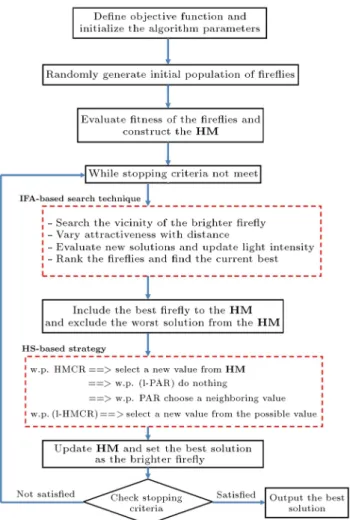
position has been updated. The updated harmony vector substitutes the newly generated rey only if it has better tness. This selection scheme is rather greedy which often overtakes original HS and FA. The proposed IFA-HS algorithm involves two phases of optimization: (a) The IFA algorithm using the heuristic search technique, (b) The HS algorithm using memory consideration, random selection and pitch adjustment. Figure 1 shows the outline of the proposed IFA-HS method.
The hybrid IFA-HS algorithm has another bene-cial feature; it iteratively explores the search space by combining multi-search space regions to visit a single search space region. The IFA-HS iteratively recombines the characteristics of many solutions in order to make one solution. It is able to ne-tune this solution, to which the algorithm converges, using neighbourhood structures. Throughout the process, recombination is represented by memory consideration, randomness by random consideration, and neighbourhood structures by pitch adjustment and variation of the rey's at-tractiveness. Therefore, the IFA-HS algorithm has the advantage of combining key components of population-based and local search-population-based methods in a simple optimization model. The framework of the algorithm is illustrated in Figure 2.
In order to further clarify how the IFA-HS can solve optimization problems, let us consider the follow-ing mathematical minimization problem:
Figure 2. Flowchart of the IFA-HS algorithm developed in this research.
f(x) =14x4
1 12x21+101 x1+12x22: (6)
The objective function is the Alu-Pentiny function, which is one of the standard test functions in op-timization. This function has global optima with a corresponding function value equal to 0:352386. Possible value bounds between 10:0 and 10.0 are used for the two decision variables, x1 and x2, shown
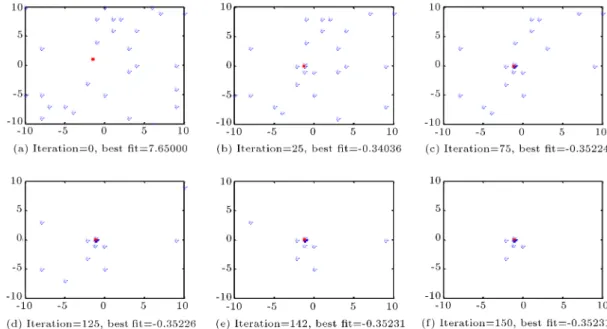
in Eq. (6). The total number of reies is 30, and the HMS is equal to 15. Also, PAR = 0.40 and HMCR = 0.98. Figure 3 is prepared to show the positions of the reies during the optimization for this problem. The proposed method is similar to other meta-heuristics in respect to creating an initial population randomly where the candidate solutions are spread all over the search space in a stochastic manner. Figure 3(a) is plotted to give an idea of how the candidate solutions are spread in the optimization problem of the Alu-Pentiny function. It can be seen that in the rst iterations, the re-ies investigate the entire search space to discover a promising region (exploration). When this promising region containing a global optimum is discovered, the
movements of the reies are limited to this space in order to provide more local search (exploitation). In Figure 3(f), nearly all 30 reies lie on the optimal point, but there still exist some reies far beyond the optimal solution. In Eq. (4), the third term ("i)
will reach zero as iterations go to innity. Thus, we can conclude that there will always be an o-spring that will be located far from the best rey with decreasing probability but never equal to zero, bearing the potential to aect the so-found best rey towards itself if it has a higher tness value than the remaining reies. This is one of the key features of the IFA-HS that promises the global convergence of the algorithm.
4. Statement of WDS design optimization problems
A hydraulic network is a system containing pipes, reservoirs, pumps, and valves of dierent types, which are connected to each other to provide water to con-sumers. It is an important component of an urban infrastructure or agricultural landscape as an irrigation project and requires signicant investment. Therefore, researchers are constantly searching for new ways to create more economical and ecient designs. A general strategy for solving the optimal design problem of a WDS involves the balancing of several factors: nding the lowest costs for layout and sizing using new com-ponents, reusing or substituting existing comcom-ponents, creating a working system conguration that fulls all water demands, adhering to design constraints, and guaranteeing a certain degree of reliability for the system [43]. On the other hand, water network dimen-sioning is mathematically undetermined, thus, allowing for innumerable solutions. A typical design problem of a hydraulic network consists of sizing, i.e. determining the size of as many of the pipes as the equations allow to meet the specied pressures and discharges throughout the network. From a mathematical point of view, signicant diculties are involved due to the discrete nature of the pipe diameters and the nonlinearity of the head-loss relationship. Here, the WDS design is formulated as a least-cost optimization problem with a selection of pipe sizes as the decision variables, while network layout and its connectivity, nodal demand, and minimum head requirements are imposed. The optimization problem can be stated mathematically as [44]:
Minimizefcost= np
X
i=1
C(D1) Li; (7)
where fcostis the cost of the design; C(Di) is the cost
per unit length of pipe diameter, Di; Li is the length
A. Tahershamsi et al./Scientia Iranica, Transactions A: Civil Engineering 21 (2014) 1591{1607 1597
Figure 3. Collection of the reies around the global optima after the 150th iteration.
The above objective function is subjected to the following constraints,
8 > > > > > > < > > > > > > :
1 Mass conservation constraint: PQin PQout=PQe
2 Energy conservation constraint: PHf PEp=0
3 Minimum pressure constraint: Hj Hjmin
4 Pipe size availability constraint: Di 2 D; 8i 2 np
(8)
In the continuity constraint, Qin is the ow rate to
the node; Qout is the ow rate out of the node;
and Qe is the external inow rate at the node. In
the energy constraint, hf is the head loss computed
by the Hazen-Williams or Darcy-Weisbach nonlinear formulae; and Ep is the energy added to the water by
a pump. Also, Hjis the pressure head and Hjminis the
minimum required pressure head at node j in which j = 1; 2; :::; nn, with nn being the number of nodes in
the network. In the pipe size availability constraint, Di is the diameter of pipe i; and Ddenotes the set of
commercially available pipe diameters.
The constraints of the optimal design problem of WDS can be grouped into the following: size limitation, minimum required pressure head, and hydrodynamic constraints. Size limitation constraints reduce the parameter space to a discrete one. The IFA-HS based model has an alternative to x the resolution of the parameter space to be searched. This can be adjusted to the number of commercially available pipe diameters and each parameter can take values from one to the number of commercial pipe sizes. This number is used as an index for the choice of diameters. Therefore, the IFA-HS algorithm will search for the optimal set of pipe indices instead of the optimal set of diameters. In order
to handle minimum nodal head constraints, a penalty approach is utilized. If the constraints are between the allowable limits, the penalty is zero; otherwise, the amount of penalty is obtained by dividing the violation of the allowable limit to the limit itself. After analyzing a model, the pressure of each node is obtained, then, these values are compared to the allowable limits to calculate the penalty functions as:
8 < :
Hmin
j Hj =) j= 0
Hmin
j > Hj =) j= H
min j Hj
Hmin
j j =1; 2; :::; nn(9)
In this method, the aim of the optimization is redened by introducing the cost function as:
Fcost="1:fcost+"2:
X
(j)"3; j =1; 2; :::; nn: (10)
The penalty function method has certain drawbacks. For example, penalty parameters are problem depen-dent and require proper parameter tuning to converge to the feasible domain. Here, for better control of the parameters, "1 is set to 1. Investigations have shown
that when the magnitudes of the second term of the above function (penalty function with coecients) are in balance with the rst term (cost function), better results are obtained. Therefore, the coecient, "2, is
taken as the cost of the WDS and the coecient, "3,
is set in such a way that the penalties decrease. The values of the penalty function, dened for infeasible designs, increase as the exponent "3 increases. The
value of the penalty function exponent is important because it governs the rate of increase in the cost of infeasible designs, which directly eects exploration of the reies by adjusting the brightness or light
intensity values, and, thus, selection probabilities. In the rst iterations, if "3 has a large value, the reies
tend to narrow the search space to designs that, while feasible, are more expensive than the optimal design and reduce the exploration of the solution space. However, within the last iterations, if "3 has a small
value, the reies have an undesirable tendency to converge to least-cost, but infeasible, designs that have a very small penalty. Setting a large value for "3 in the last iterations may help to prevent
convergence to infeasible designs by increasing the applied penalty. Therefore, in the rst iterations of the search process, "3 is set to 1.05 but is gradually
increased to 1.5. Then, Eq. (10) can be redened as:
Fcost= fcost+ fcost:
X (j)"3
= (1 +X(j)") fcost; j = 1; 2; :::; nn: (11)
In other words, this approach has the property of allowing highly infeasible solutions early in the search, while continually increasing the penalty imposed to eventually move the nal solution to the feasible re-gion.
The hydrodynamic constraints are handled by the network simulation model. Water network simulation models have become everyday tools for planners, de-signers, maintainers and operators. Due to accurate hydraulic analysis calculation methods, WDS models have found applicability in design, optimization, per-formance evaluation, rehabilitation, risk management, and operation, among others. In this study, the IFA-HS is coupled with the widely used water distribu-tion network software, EPANET 2 [45], and applied to WDS designs. Here, the IFA-HS optimization model is the outer driver model and simulation is the inner model. The EPANET programmer's toolkit was provided by the United States Environmental Protection Agency (USEPA) that is a Dynamic Link Library (DLL) of functions that allow developers to customize EPANET's computational engine for the user's specic needs. Thus, a computer program-ming code is written for IFA-HS in MATLAB, and EPANET2 is linked using the EPANET toolkit. A brief description of the steps in the implementation of the IFA-HS optimization model can be outlined as follows:
Step 1. Generate N (N=popsize) population of points randomly in the solution space. Each of the N populations represents a possible combination of pipe indices.
Step 2. Compute the network cost (fcost) for each
of the N solutions after converting the randomly
generated pipe indices to the pipe sizes available on the market.
Step 3. Update the input le of the simulator (only the diameters are changed).
Step 4. Perform hydraulic analysis of each network. EPANET2 is used to analyze the network and check the pressure at some nodes which are required to meet certain nodal pressures.
Step 5. Compute penalty function (P), if the nodal head at any node is less than the required minimum. Step 6. Calculate the total cost of the network (Fcost)
using the network cost and the penalty found in Steps 2 and 5, respectively.
Step 7. The total cost found in Step 6 is utilized as the tness value for each of the trial networks.
5. Test problems
In this section, the IFA-HS algorithm is applied to four well-known networks: GoYang (small size), Hanoi (small size), double Hanoi (medium size), and Balerma network (large size). On the other hand, any meta-heuristic algorithm involves a set of parameters. In many cases, we would be interested in knowing the sensitivities or derivatives of the optimum design with respect to these parameters, because it is very useful to the designer to know which data values are more inuential on the design. The sensitivity of optimal responses to these parameters is an important issue in the optimum cost design of WDS. As a result, here, a sensitivity analysis is performed for the pa-rameters of the IFA-HS algorithm. The algorithm parameters used in this study include HMS, HMCR, PAR, and popsize (population size). In order to avoid the possible randomness of the search process due to the use of dierent initial solutions, the GoYang problem is solved 10 times for dierent parameter congurations. Due to the large computational time, the sensitivity analyses of the other networks are not carried out for this reason; the best parameter conguration obtained for the GoYang network is used for them.
After the sensitivity analysis described in subsec-tion 5.1, for each of the above problems, a populasubsec-tion size of 200 and harmony memory size of 70 are utilized. The HS parameters are set to HMCR = 0.95, and PAR = 0.35 for all the examples. The maximum number of evaluations is taken as 20,000 for GoYang, Hanoi, and double Hanoi problems, and 100,000 for the Balerma network. Note that for these parameters, the IFA-HS algorithms exhibited good performance in solution
A. Tahershamsi et al./Scientia Iranica, Transactions A: Civil Engineering 21 (2014) 1591{1607 1599
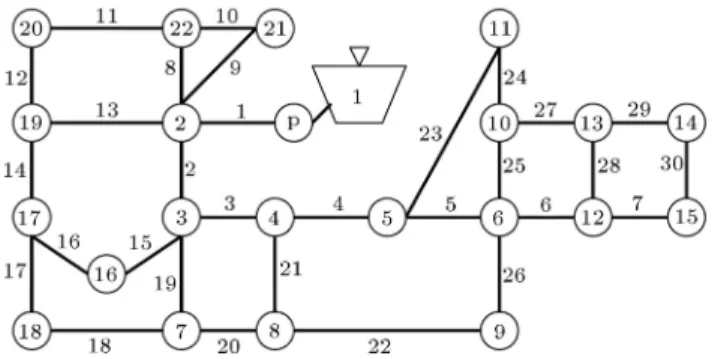
Figure 4. Network layout for the GoYang problem.
quality and required a reasonably small amount of computational overhead.
5.1. GoYang water distribution network
The optimum design problem of the GoYang network was presented by Kim et al. [46] in South Korea. It consists of 22 nodes, 30 pipes, and 9 loops, and is fed by a pump (4.52 kW) from a reservoir with a 71 m xed head. The pipeline deployment of the GoYang network, shown in Figure 4, is derived from a water distribution network in South Korea. The data of nodes and pipes, also, IFA-HS optimal diameters, are shown in Table 1. The cost of commercially available pipe sizes f80, 100, 125, 150, 200, 250, 300, 350; in mmg is f37,890; 38,933; 40,563; 42,554; 47,624; 54,125; 62,109; 71,524; in won/meterg respectively, which have a Hazen-Williams coecient of 100. Therefore, the search space of this optimization problem is 830 = 1:24 1027 possible
designs. The minimum head limitation is 15 m above ground level.
In order to tune the utilized parameters for the proposed IFA-HS, a sensitive study on two parameters of the algorithm is performed while xing other param-eters (HMS = 50 and HMCR = 0.9). For various values of popsize and PAR, this example is solved several times (10 times for each value of popsize and PAR) and the average cost of the designs is shown in Table 2. This table shows that when the values of PAR and popsize increase, the optimum cost of WDS decreases. From Table 2, it can be concluded that small PAR and popsize values can cause the poor performance of the algorithm and a considerable increase in the iterations needed to nd an optimum solution. On the other hand, a very large PAR may cause the solution to scatter around some potential optima, as in a random search. As shown in the table, PAR = 0.35 and popsize = 200 are suitable values for the IFA-HS algorithm. These parameter values are used for all other presented examples.
The result of sensitivity analysis of HMS and HMCR (HMS = f30, 40, 50, 60, 70g, and HMCR = f0.80, 0.85, 0.90, 0.93, 0.95g) while xing other param-eters (popsize = 200 and PAR = 0.35) are shown in Table 3. The original cost of the GoYang network was
Table 1. GoYang network data. Node
& pipe
Demand (m3/day)
Ground level
(m)
Length (m)
IFA-HS optimal diameter
(mm)
01 Reservoir 71.0 165.0 200
02 153.0 56.4 124.0 125
03 70.5 53.8 118.0 125
04 58.5 54.9 81.0 100
05 75.0 56.0 134.0 80
06 67.5 57.0 135.0 80
07 63.0 53.9 202.0 80
08 48.0 54.5 135.0 80
09 42.0 57.9 170.0 80
10 30.0 62.1 113.0 80
11 42.0 62.8 335.0 80
12 37.5 58.6 115.0 80
13 37.5 59.3 345.0 80
14 63.0 59.8 114.0 80
15 445.5 59.2 103.0 80
16 108.0 53.6 261.0 80
17 79.5 54.8 72.0 80
18 55.5 55.1 373.0 80
19 118.5 54.2 98.0 80
20 124.5 54.5 110.0 80
21 31.5 62.9 98.0 80
22 799.5 61.8 246.0 80
23 71.0 174.0 80
24 56.4 102.0 80
25 53.8 92.0 80
26 54.9 100.0 80
27 56.0 130.0 80
28 57.0 90.0 80
29 53.9 185.0 80
30 54.5 90.0 80
Table 2. Results from various PAR and popsize values. PAR Popsize Cost (won) Number of
analyses 0.10 50 179,832,124 16,200 0.20 100 179,100,561 12,000 0.25 150 178,050,300 10,820 0.35 200 177,015,450 8,450 0.45 250 177,093,324 6,000 0.55 300 177,100,025 4,200 0.85 350 177,075,020 3,800
Table 3. Sensitivity analysis of HS parameters (HMS and HMCR).
HMS HMCR Cost (won) Number of analyses 30 0.80 177,783,950 10,400 40 0.85 177,072,511 9,800 50 0.90 177,014,772 6,371 60 0.93 177,010,359 4,961 70 0.95 177,010,359 3,631
Figure 5. Convergence rate comparison for each parameter congurations (GoYang problem).
179,428,600 won. Kim et al. [46] solved this problem us-ing a projected Lagrangian algorithm (NLP) supported by GAMS/MINOS, and then converted the continuous diameters to discrete commercial diameters. They obtained the optimal cost of 179,142,700 won. Also Geem [47] found a solution of 177,135,800 won using the Harmony Search algorithm (HS) after 10,000 func-tion evaluafunc-tions, which is the current best known solu-tion for the GoYang network. The best solusolu-tion found by the proposed IFA-HS for the GoYang case study was 177,010,359 won, spending 3,631 function evaluations when the HMS = 70 and HMCR = 0.95, which is less than the original cost, NLP and HS based-models.
As shown in Table 3, the IFA-HS algorithm with a larger HMS and HMCR performed better for this case study. The best cost of 177,010,359 won was obtained when HMS = f60, 70g and HMCR = f0.93, 0.95g. However, they require dierent computational overheads to reach the same nal solution. Figure 5 displays the convergence history of each parameter con-guration. This gure shows that it takes about 10,400, 9,800, 6,371, 4,961, and 3,631 function evaluations for fHMS = 30, HMCR = 0.80g, fHMS = 40, HMCR = 0.85g, fHMS = 50, HMCR = 0.90g, fHMS = 60, HMCR = 0.93g, and fHMS = 70, HMCR = 0.95g In considering both solution quality and eciency, the HMS of 70 and HMCR of 0.95 were selected as the best conguration.
5.2. Hanoi water distribution network
The second problem is proposed by Fujiwara and Khang [48]. This network consists of 32 nodes, 34 pipes
Figure 6. Network layout for the Hanoi problem.
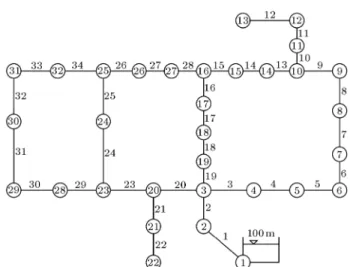
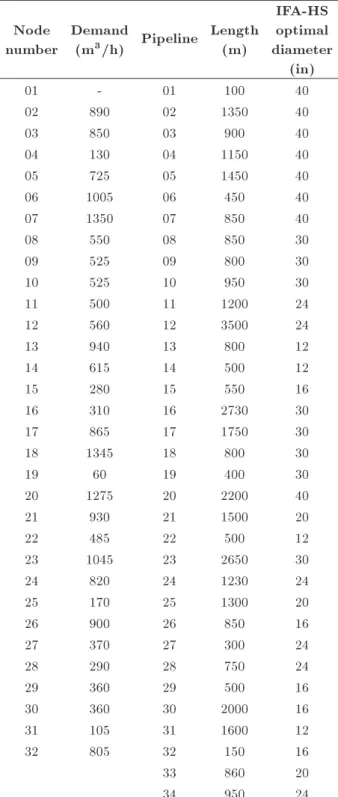
and 3 loops. The network has no pumping station as it is fed by gravity from a reservoir with a 100 m xed head. For this example, the system data are presented in Table 4. The Hanoi network (Figure 6) requires the optimal design of 34 pipes, allowing a minimum hydraulic head of 30 m, for all its 32 nodes, by means of 6 available diameters. The total solution space is then equal to 634 = 2:87 1026. The cost of commercially
available pipe sizes f12, 16, 20, 24, 30 and 40 in inchesg is f45.73, 70.40, 98.38, 129.30, 180.80 and 278.30 in dollar/meterg, respectively.
Table 5 reports the best results and the required number of evaluation for convergence in the present algorithm and some of the other heuristic methods. The IFA-HS found the best feasible solution of 6:2237 106 $ after 15,200 function evaluations while the IFA
found the best solution of 6:580 106 $ spending
17,800 evaluations, which is a 5.41% more expensive design. Also, the best cost of the BLIP (Binary Lin-ear Integer Pogramming), MSATS (Mixed Simulated Annealing and Tabu Search), SSSA (Scatter Search using Simulated Annealing as local searcher), [49], SCE (Shued Complex Evolution) [50], BB-BC (Big Bang-Big Crunch algorithm) [26], HBA (Heuristic Based Approach) [51], and MGA (Modied GA) [52] is 6.363, 6.352, 6.273, 6.220, 6.224, 6.232, and 6.190 million dollars, respectively. In addition the BLIP, MSATS, and SSSE found the best feasible solution after 26,457 and BB-BC, HBA, and MGA after 26,000, 259, and 18,000 function evaluations, respectively. A compar-ison with the hybrid meta-heuristics, such as BLIP, MSATS, and SSSA, demonstrates the eectiveness and eciency of the proposed method. Also, the optimal design obtained using the IFA-HS algorithm showed good agreement with the previous designs reported in the literature.
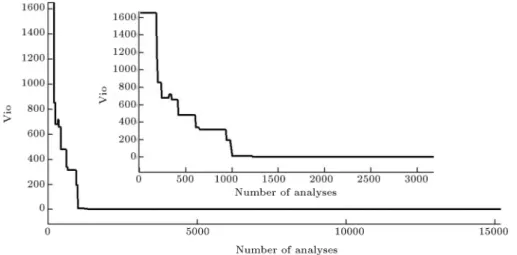
In order to illustrate the performance of the constraint handling approach, Figure 7 is plotted, which shows the rate of reduction on infeasibilities
A. Tahershamsi et al./Scientia Iranica, Transactions A: Civil Engineering 21 (2014) 1591{1607 1601
Table 4. Hanoi network data. Node
number
Demand
(m3/h) Pipeline Length(m)
IFA-HS optimal diameter
(in)
01 - 01 100 40
02 890 02 1350 40
03 850 03 900 40
04 130 04 1150 40
05 725 05 1450 40
06 1005 06 450 40
07 1350 07 850 40
08 550 08 850 30
09 525 09 800 30
10 525 10 950 30
11 500 11 1200 24
12 560 12 3500 24
13 940 13 800 12
14 615 14 500 12
15 280 15 550 16
16 310 16 2730 30
17 865 17 1750 30
18 1345 18 800 30
19 60 19 400 30
20 1275 20 2200 40
21 930 21 1500 20
22 485 22 500 12
23 1045 23 2650 30
24 820 24 1230 24
25 170 25 1300 20
26 900 26 850 16
27 370 27 300 24
28 290 28 750 24
29 360 29 500 16
30 360 30 2000 16
31 105 31 1600 12
32 805 32 150 16
33 860 20
34 950 24
with the number of analyses. As it is clear from this gure, after about 1,200 function evaluations, the reies are forced to y-back to feasible space. In this gure, the Vio (constraint violation) parameter is dened as:
Vio =Xmax [0; (Hmin Hj)] ;
j = 1; 2; :::; nn: (12)
Table 5. Performance comparison for the Hanoi network. Method Cost (106$) Number of
analyses
BLIP [49] 6.363 26,457
MSATS [49] 6.352 26,457
SSSA [49] 6.273 26,457
SCE [50] 6.220 25,402
BB-BC [26] 6.224 26,000
HBA [51] 6.232 259
MGA [52] 6.190 18,000
IFA-HS (present work) 6.224 15,200
5.3. Double Hanoi network
The third design example is the double Hanoi network. Because this network is derived from the basic Hanoi network, its optimal cost is known. All the parameters for the reservoir, nodes and lines in the double Hanoi water distribution network are the same as in the original Hanoi network on both mirrored parts, except for the rst pipe (from the reservoir to node 2), which is shortened from the original 100 to 28.9 m. This change was made for the sake of obtaining the same head in node 2 (with a diameter of 40 in, which will certainly be proposed here by any optimization method) as in the original Hanoi network. The total solution space is then equal to 667= 1:371052. Network layout for this
problem is shown in Figure 8. The reference optimal solution (global) could be evaluated as follows [53]:
CDH= 2CH 2L1C1+ 28:9C1; (13)
in which CDH is the optimal cost of the double Hanoi
network; CHis the reference optimal cost of the Hanoi
network; L1is the length of the rst pipe on the original
network (100 m); and C1 is the unit price of diameter
40 in (278.28 $).
For our solution described in the previous example (6:2237 106 $), according to Eq. (13), the global
optimum solution of the double Hanoi network should be 12:400 106 $. The best results obtained with
the IFA-HS, BB-BC [26], GA, OptiDesigner, and the HS [53] are summarized in Table 6. The reference optimal cost of the Hanoi network for the GA and HS is 6:081 106 $ and it is 6:115 106 $ for the
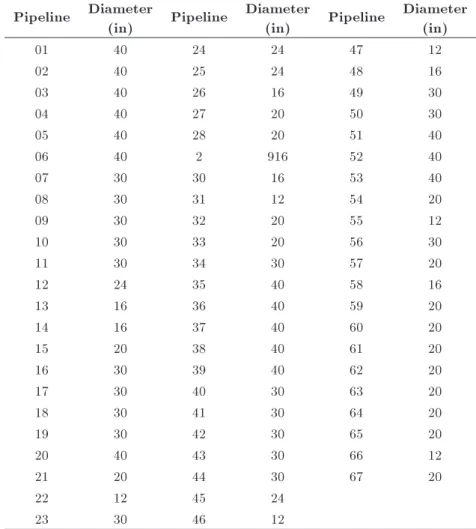
OptiDesigner. The IFA-HS found the best feasible solution of 12:611106$ after 18,000 analyses, as given
in Table 7, while the best cost for the IFA, HS, GA, and OptiDesigner are 14.118, 12.405, 12.601 and 12.795 million dollars, respectively. Therefore, deviation from the reference optimal solution for the IFA-HS algorithm is 1.70%, and it is 2.00%, 2.39%, 4.01%, 5.62% and 7.27% for the BB-BC, HS, GA, OptiDesigner and IFA, respectively. This result demonstrates that the IFA-HS algorithm is better in terms of closeness to the global
Figure 7. Variation of constraint violation (Vio) with the number of function evaluations (Hanoi problem).
Figure 8. Network layout for the double Hanoi problem.
minimum. The hydraulic head for each node is shown in Figure 9. As shown in this gure, the minimum value for the pressure head is equal to 30.0179 m (in node 60).
5.4. Balerma irrigation network
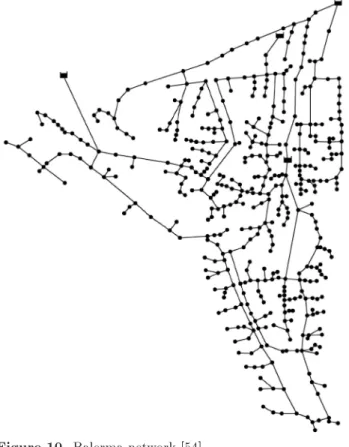
Balerma is a water irrigation distribution network in the Sol-Poniente County in Almeria Province, Spain (Figure 10). There are 454 pipes, arranged in 8 loops, which are to be designed using a set of 10 PVC pipes with diameters between 125 and 600 mm, and an absolute roughness coecient of k = 0:0025 mm.
A. Tahershamsi et al./Scientia Iranica, Transactions A: Civil Engineering 21 (2014) 1591{1607 1603
Table 6. Performance comparison for the double Hanoi network.
Method Hanoi network
(106$) network (10Double Hanoi6$)
Deviation from reference global
optimum (%)
OptiDesigner [53] 6.1150 12,795,541 5.62
GA [53] 6.0811 12,600,624 4.01
HS [53] 6.0811 12,404,680 2.39
BB-BC [26] 6.2240 12,647,789 2.00
IFA-HS (present work) 6.2237 12,611,176 1.70 Table 7. The optimum design of IFA-HS for the double Hanoi network. Pipeline Diameter
(in) Pipeline
Diameter
(in) Pipeline
Diameter (in)
01 40 24 24 47 12
02 40 25 24 48 16
03 40 26 16 49 30
04 40 27 20 50 30
05 40 28 20 51 40
06 40 2 916 52 40
07 30 30 16 53 40
08 30 31 12 54 20
09 30 32 20 55 12
10 30 33 20 56 30
11 30 34 30 57 20
12 24 35 40 58 16
13 16 36 40 59 20
14 16 37 40 60 20
15 20 38 40 61 20
16 30 39 40 62 20
17 30 40 30 63 20
18 30 41 30 64 20
19 30 42 30 65 20
20 40 43 30 66 12
21 20 44 30 67 20
22 12 45 24
23 30 46 12
impressive amount of 10454. Also, the Darcy-Weisbach
equation has been adapted to calculate the head losses, using EPANET 2. The minimum required pressure head is 20 m for each node.
Table 8 shows the best cost and the required number of analyses for convergence of the present algo-rithm and some other meta-heuristics. For this large-size network, Reca and Martinez [54] (GA) reached a best feasible solution of 2:302 106 ¿ spending 107
EPANET 2 calls, while Geem [55] (HS) found a solution of 2:018 106 ¿ with 107 calls. The best feasible
solution obtained by Bolognesi et al. [56] (GHEST)
is 2:002 106 ¿, spending 290,500 evaluations, and
Cisty et al. [57] (DEPSO) found the best solution of 1:934 106 ¿ after 500,000 calls. The best solution
found by Zheng et al. [58] (SADE) for the Balerma network case study was 1:983 106 ¿, which is
higher than the best solution (1:940 106 ¿) reported
by Tolson et al. [59] (DDS). However, the HD-DDS yielded the best solution requiring 30 million evaluations, while the SADE algorithm used only 1.3 million average evaluations to nally converge. The IFA-HS based method obtained the new best solution of 1:969 106 ¿ after 90,800 function evaluations. It
Figure 10. Balerma network [54].
Table 8. Performance comparison for the Balerma network.
Method Cost (106 ¿) Number of
analyses
GA [54] 2.302 10 106
SA [60] 3.476 45,400
MSATS [60] 3.298 45,400
PSHS [55] 2.633 45,400
HS [55] 2.018 10 106
GHEST [56] 2.002 290,500
HD-DDS [59] 1.940 30 106
SADE [58] 1.983 1:3 106
DEPSO [57] 1.934 550,000
IFA-HS (present work) 1.869 90,800
means that the IFA-HS algorithm performed really fast, since the required number of analyses is the best performance published to date. The convergence history for the Balerma network using the IFA-HS algorithm and the hydraulic head for each node is shown in Figures 11 and 12, respectively. As shown in Figure 12, the minimum value for the pressure head is equal to 22.9577 m (in node 295). The table of diameters is not specied here because it is too lengthy, and can be obtained from the au-thors.
Figure 11. The convergence for the Balerma network obtained by the IFA-HS.
Figure 12. Existing hydraulic head for the nodes of the Balerma network using IFA-HS.
6. Conclusions
In this paper, a new hybrid swarm intelligence algo-rithm, namely; the improved rey algorithm with the harmony search scheme (IFA-HS), is proposed to solve the design problems of water distribution systems based on the combined concepts of the Firey algorithm and Harmony Search technique. It is found that the proposed algorithm is a promising method for solving pipe network design problems as it outperforms some advanced algorithms previously presented in the literature for the case studies considered. The main idea of the hybrid IFA-HS algorithm is to integrate the HS operators into the FA algorithm, and, thus, increase the diversity of the population and the ability to have the FA to escape the local minima. Here, an improved FA is used for ne-tuning of the vectors stored in the harmony memory. Actually, harmony memory vectors become as the FA population, and then the evolving process is performed as the usual improved FA procedure. Another improvement in this algorithm is adding a pitch adjustment operation in the FA as a mutation operator with the aim of speeding up the convergence of the algorithm, thus, making the approach applicable to a wider range of practical applications, while preserving the attractive characteristics of the basic FA.
The performance of the proposed IFA-HS is demonstrated using four well-known case studies and
A. Tahershamsi et al./Scientia Iranica, Transactions A: Civil Engineering 21 (2014) 1591{1607 1605
the results are compared to those of the standard and previously applied optimization methods consisting of GA, HS, BB-BC, FA, SCE and some hybrid methods such as BLIP, MSATS, SSSA, DEPSO, and PSHS. The IFA-HS algorithm found the best feasible solutions of 1.969 ¿ (90,800 analyses), 12.611 $ (18,000 analyses), 6.224 $ (15,200 analyses) million and 177,010,359 won (3,631 analyses) for the Balerma, double Hanoi, Hanoi and GoYang network, respectively. Also, a sensitivity analysis is performed for the IFA-HS algorithm pa-rameters in which population size, pitch adjustment rate, harmony memory size, and harmony memory considering rate are concerned.
As can be observed from the results, the proposed algorithm exhibits good performance in terms of so-lution quality, and for almost all examples, the IFA-HS method found the best solution in fewer numbers of function evaluation than the other nature-inspired algorithms. This means that the proposed method can nd good results in a shorter time. For the third design example, the numerical results demonstrate that the IFA-HS algorithm is better in term of closeness to the global minimum. The IFA-HS eciency can be valuable in large-scale optimization problems as evidenced by results on the optimization of the Balerma network, where a new optimal cost has (1:869 106¿)
been set by 90,800 function evaluations, since the optimal cost and required number of analyses are the best between other methods up to date.
Acknowledgement
The second author is grateful to the Iran National Science Foundation for its support.
References
1. Glover, F. \Future paths for integer programming and links to articial intelligence", Computers & Opera-tions Research, 13(5), pp. 533-549 (1986).
2. Ruiz-Vanoye, J.A. and Da-Parra, O. \Similarities between meta-heuristics algorithms and the science of life", Central European Journal of Operations Re-search, 19, pp. 445-466 (2011).
3. Fogel, L., Owens, A.J. and Walsh, M.J., Articial Intelligence Through Simulated Evolution, Wiley, New York (1966)
4. Holland, J.H., Adaptation in Natural and Articial Systems, University of Michigan Press, Ann Arbor (1975).
5. Smith, S.F. \A learning system based on genetic adaptive algorithms", Ph.D. Thesis, University of Pittsburgh (1980).
6. Kirkpatrick, S., Gelatt, C.D. and Vecchi, M.P. \Op-timization by simulated annealing", Science, New Series, 220(4598), pp. 671-680 (1983).
7. Cerny, V. \A thermodynamical approach to the trav-elling salesman problem: An ecient simulation algo-rithm", Journal of Optimization Theory and Applica-tions, 45, pp. 41-51 (1985).
8. Farmer, J.D., Packard, N. and Perelson, A. \The immune system, adaptation and machine learning", Physica D: Nonlinear Phenomena, 22(1-3), pp. 187-204 (1986).
9. Reynolds, C.W. \Flocks, herds, and schools: A dis-tributed behavioral model", Computer Graphics (ACM SIG- GRAPH `87 Conf Proc), 21(4), pp. 25-34 (1987).
10. Moyson, F. and Manderick, B. \The collective be-haviour of ants: An example of self-organization in massive parallelism", Actes de AAAI Spring Sym-posium on Parallel Models of Intelligence, Stanford, California (1988).
11. Moscato, P. \On evolution, search, optimization, ge-netic algorithms and martial arts: Towards memetic algorithms", Caltech Concurrent Computation Pro-gram, C3P Report 826 (1989).
12. Koza, J.R. \Non-linear genetic algorithms for solving problems", United States Patent 4, 935,877, Filed May 20, 1988 Issued June 19 (1990.).
13. Dorigo, M. \Optimization, learning and natural al-gorithms", Ph.D. Thesis, Politecnico di Milano, Italy (1992).
14. Kennedy, J. and Eberhart, R.C. \Particle swarm opti-mization", IEEE International Conference on Neural Networks, Piscataway, NJ, pp. 1942-1948 (1995).
15. Storn, R. and Price, K. \Dierential evolution-a simple and ecient heuristic for global optimization over continuous spaces", Journal of Global Optimization, 11(4), pp. 341-359 (1997).
16. Rubinstein, R.Y. \Optimization of computer simula-tion models with rare events", European Journal of Operational Research, 99, pp. 89-112 (1997).
17. Geem, Z.W., Kim, J.H. and Loganathan, G.V. \A new heuristic optimization algorithm: Harmony search", Simulation, 76(2), pp. 60-68 (2001).
18. Abbass, H.A. \MBO: Marriage in honey bees optimiza-tion a haplometrosis polygynous swarming approach", IEEE Congress on Evolutionary Computation, pp. 207-214 (2001).
19. Nakrani, S. and Tovey, S. \On honey bees and dynamic server allocation in internet hosting centers", Adaptive Behavior, 12(1-3), pp. 223-240 (2004).
20. Karaboga, D. \An idea based on honey bee swarm for numerical optimization", Technical Report-TR06, Erciyes University, Engineering Faculty, Computer Engineering Department (2005).
21. Erol, O.K. and Eksin, I. \A new optimization method: Big bang-big crunch", Advances in Engineering Soft-ware, 37, pp. 106-111 (2006).
22. Yang, X.S., Firey Algorithm (Chapter 8), Nature-Inspired Metaheuristic Algorithms, Luniver Press, Beckington (2008).
23. Kaveh, A. and Khayatazad, M. \A novel meta-heuristic method: Ray optimization", Computers and Structures, 112(113), pp. 283-294 (2012).
24. Kaveh, A. and Zolghadr, A. \Democratic PSO for truss layout and size optimization with frequency constraints", Computers and Structures, 130, pp. 10-24 (2014).
25. Kaveh, A. and Talatahari, S. \A general model for meta-heuristic algorithms using the concept of elds of forces", Acta Mechanica, 221(1-2), pp. 99-118 (2011).
26. Tahershamsi, A., Kaveh, A., Sheikholeslami, R. and Talatahari, S. \Big bang-big crunch algorithm for least-cost design of water distribution systems", Inter-national Journal of Optimization in Civil Engineering, 2(1), pp. 71-80 (2012).
27. Li, L.J., Huang, Z.B., Liu, F. and Wu, Q.H. \A heuristic particle swarm optimizer for optimization of pin connected structures", Computers & Structures, 85(7-8), pp. 340-349 (2007).
28. Kaveh, A. and Talatahari, S. \Particle swarm opti-mizer, ant colony strategy and harmony search scheme hybridized for optimization of truss structures", Com-puters & Structures, 87(5-6), pp. 267-283 (2009).
29. Li, M.J., Ng, M.K., Cheung, Y.M. and Huang, J.Z. \Agglomerative fuzzy k-means clustering algorithm with selection of number of clusters", IEEE Transac-tions on Knowledge and Data Engineering, 20(11), pp. 1519-1534 (2008).
30. Moeinzadeh, H., Asgarian, E., Zanjani, M., Rezaee, A. and Seidi, M. \Combination of harmony search and linear discriminate analysis to improve classication", 3rd Asia International Conference on Modelling & Simulation, AMS'09, pp. 131-135 (2009).
31. Lee, Y.C. and Zomaya, A.Y. \Interweaving heteroge-neous meta-heuristics using harmony search", IEEE International Symposium on Parallel & Distributed Processing, 2 IPDPS 2009, pp. 1-8 (2009).
32. Talbi, E.G., Metaheuristics: From Design to Imple-mentation, John Wiley & Sons, New Jersey (2009).
33. Yang, X.S. \Firey algorithms for multimodal op-timization", In: Watanabe, O. and Zeugmann, T. (Eds.), Stochastic Algorithms: Foundations and Ap-plications, SAGA, Lecture Notes in Computer Science, 5792, Springer-Verlag, Berlin (2009).
34. Yang, X.S. \Firey algorithm, Levy ights and global optimization", In: Bramer, M., Ellis, R. and Petridis, M. (Eds.), Research and Development in Intelligent Systems XXVI, Springer, London (2010).
35. Gandomi, A.H., Yang, X.S. and Alavi, A.H. \Mixed variable structural optimization using rey algo-rithm", Computers and Structures, 89, pp. 2325-2336 (2011).
36. Gomez, H.M. \A rey metaheuristic algorithm for structural size and shape optimization with dynamic constraints", Mecanica Computacional, 30(26), pp. 2059-2074 (2011).
37. Kazemzadeh Azad, S. and Kazemzadeh Azad, S. \Op-timum design of structures using an improved rey algorithm", International Journal of Optimization in Civil Engineering, 1(2), pp. 327-340 (2011).
38. Yang, X.S. \Firey algorithm, stochastic test functions and design optimization", International Journal of Bio-Inspired Computation, 2, pp. 78-84 (2010).
39. Geem, Z.W., Recent Advances in Harmony Search Algorithm, Springer-Verlag, Berlin Heidelberg (2010).
40. Geem, Z.W., Music-Inspired Harmony Search Algo-rithm, Springer-Verlag, Berlin Heidelberg (2009).
41. Alia, O.M. and Mandava, R. \The variants of the harmony search algorithm: An overview", Articial Intelligence Review, 36, pp. 49-68 (2011).
42. Nguyen, K., Nguyen, P. and Tran, N. \A hybrid algorithm of harmony search and bees algorithm for a university course timetabling problem", International Journal of Computer Science Issues, 9(1), pp. 12-17 (2012).
43. Montalvo, I., Izquierdo, J., Perez-Garca, R. and Herrera, M. \Improved performance of PSO with self-adaptive parameters for computing the optimal design of water supply systems", Engineering Applications of Articial Intelligence, 23, pp. 727-735 (2010).
44. Sedki, A. and Ouazar, D. \Hybrid particle swarm op-timization and dierential evolution for optimal design of water distribution systems", Advanced Engineering Informatics, 26(3), pp. 582-591 (2012).
45. Rossman, L.A. EPANET2 User's Manual. Reports EPA/600/R-00/057, US Environ. Prot. Agency, Cincinnati, Ohio (2000).
46. Kim, J.H., Kim, T.G., Kim, J.H. and Yoon, Y.N. \A study on the pipe network system design using non-linear programming", Journal of Korean Water Resources Association, 27(4), pp. 59-67 (1994).
47. Geem, Z.W. \Optimal cost design of water distribution networks using harmony search", Engineering Opti-mization, 38(3), pp. 259-280 (2006).
48. Fujiwara, O. and Khang, D.B. \A two phase decom-position method for optimal design of looped water distribution networks", Water Resources Research, 26(4), pp. 539-549 (1990).
49. Banos, R., Gil, C., Reca, J. and Montoya, F.G. \A memetic algorithm applied to the design of water distribution networks", Applied Soft Computing, 10, pp. 261-266 (2010).
50. Liong, S.Y. and Atiquzzaman, M.D. \Optimal design of water distribution network using shued complex evolution", Journal of the Institution of Engineers, Singapore, 44(1), pp. 93-107 (2004).
51. Suribabu, C. \Heuristic-based pipe dimensioning model for water distribution networks", Journal of Pipeline Systems Engineering and Practice, 3(4), pp. 115-124 (2012).
A. Tahershamsi et al./Scientia Iranica, Transactions A: Civil Engineering 21 (2014) 1591{1607 1607
52. Kadu, M.S., Gupta, R. and Bhave, P.R. \Optimal design of water networks using a modied genetic algorithm with reduction in search space", Journal of Water Resources Planning and Management, 134(2), pp. 147-160 (2008).
53. Cisty, M. \Hybrid genetic algorithm and linear pro-gramming method for least-cost design of water distri-bution systems", Water Resources Management, 24, pp. 1-24 (2010).
54. Reca, J. and Martinez, J. \Genetic algorithms for the design of looped irrigation water distribution net-works", Water Resources Research, 42, pp. 1-9 (2006), W05416, doi:10.1029/2005WR004383.
55. Geem, Z.W. \Particle-swarm harmony search for water networks design", Engineerin Optimization, 41(4), pp. 297-311 (2009).
56. Bolognesi, A., Bragalli, C., Marchi, A. and Artina, S. \Genetic heritage evolution by stochastic transmission in the optimal design of water distribution networks", Advances in Engineering Software, 41, pp. 792-801 (2010).
57. Cisty, M., Bajtek, Z. and Bezak, J. \Pipe network de-sign by dierential evolution and particle swarm opti-mization", 2nd International Conference on Soft Com-puting Technology in Civil, Structural and Environ-mental Engineering, Civil-Comp Press, Stirlingshire, Scotland, Paper 47, doi:10.4203/ccp.97.47 (2011).
58. Zheng, F., Zecchin, A. and Simpson, A. \Self-adaptive dierential evolution algorithm applied to water distri-bution system optimization", Journal of Computing in Civil Engineering, 27(2), pp. 148-158 (2013).
59. Tolson, B.A., Asadzadeh, M., Maier, H.R. and Zecchin, A. \Hybrid discrete dynamically dimensioned search (HD-DDS) algorithm for water distribution system de-sign optimization", Water Resources Research, 45, pp. 1-15 (2009), W12416, doi:10.1029/2008WR007673.
60. Reca, J., Martinez, J., Gil, C. and Banos, R. \Ap-plication of several meta-heuristic techniques to the optimization of real looped water distribution net-works", Water Resources Management, 22, pp. 1367-1379 (2008).
Bilographies
Ahmad Tahershamsi was born in 1951 in Qom, Iran. He graduated in Civil Engineering, in 1976, from Amirkabir University of Technology, Iran, and, in 1988, received his PhD degree from the Department of Civil and Structural Engineering at the Institute of Science and Technology, University of Manchester (UMIST), UK. From 2000-2001. He also attended San Diego State University, California, USA, as Adjunct
Professor. Currently, Dr. Tahershamsi is Associate Professor of Hydraulic Engineering at Amirkabir Uni-versity of Technology, Tehran, Iran. His scientic interests include hydraulic structures, dam breaks, en-vironmental hydraulics and ground water engineering. Dr. Tahershamsi is the author of 40 papers published in national and international journals and 100 papers presented at national and international conferences. He is also author of a book entitled \Computational Hydraulics" in Persian.
Ali Kaveh was born in 1948 in Tabriz, Iran. After receiving his BS degree from the Department of Civil Engineering at the University of Tabriz in 1969, he obtained MS, DIC and PhD degrees in Civil Engineer-ing (Structures), in 1970 and 1974, respectively, from Imperial College of Science and Technology, London University, UK. He is presently Professor of Structural Engineering at Iran University of Science and Technol-ogy, Tehran, Iran.
Professor Kaveh is the author of 280 papers published in international journals and 135 papers pre-sented at international conferences. He has authored 23 books in Farsi and 7 books in English published by Wiley, the American Mechanical Society, Research Studies Press and Springer.
Razi Sheikholeslami was born in Tabriz, Iran, in 1989. He received his BS degree in Structural Engineer-ing, in 2011, from the Department of Civil Engineering at the University of Tabriz, and his MS degree in Hydraulic Structures from Amirkabir University of Technology, Tehran, Iran, in 2013. His main research interests lie in the application of advanced optimization methods, particularly meta-heuristics, to dicult real-world problems in a variety of application areas, and in the eective exploitation and integration of optimi-sation methods within the engineering design process. He also has interests in chaos theory and nonlinear time series analysis.
Sina Kazemzadeh Azad was born in Tabriz, Iran, in 1988. He obtained a BS degree in Structural Engineering from the University of Tabriz in 2010, and his MS degree in the same subject from Amirkabir University of Technology, Tehran, Iran, in 2012. He is currently working as Structural Designer in Par-disan Consulting Engineers and also as organizer of the International Student Competition in Structural Optimization (ISCSO). His research interests include computational mechanics, design and behaviour of steel structures, and engineering optimization.