ISSN-L: 2501 - 1235 Available on-line at: www.oapub.org/edu
doi: 10.5281/zenodo.1464813 Volume 4 │ Issue 12 │ 2018
ANTHROPOMETRIC AND PHYSIOLOGICAL
CHARACTERISTICS OF INSTITUTION-BASED
SECURITY PERSONNEL IN NIGERIA
O. O. Akinbiolai,
S. A. Adeniran, O. Ogunlade
Department of Kinesiology, Health Education and Recreation, Obafemi Awolowo University, Ile-Ife, Nigeria
Abstract:
This study investigated the anthropometric and physiological characteristics of institution-based security personnel in Nigeria. The study adopted a descriptive survey research design. The population for the study were the male security personnel of the Obafemi Awolowo University (OAU), Ile-Ife, Obafemi Awolowo University Teaching Hospitals Complex (OAUTHC), Ile-Ife and Wesley-Guild Hospital (WGH), Ilesa, Osun State. Sample comprised sixty middle-aged volunteers drawn from the Security Departments of the three institutions. Inclusion criteria for the study was passing a preliminary health screening for cardiovascular disease risk factors. Anthropometric parameters were measured in line with the International Society for the Advancement of Kinanthropometry (ISAK)’s protocol. Participants’ weight and height were measured with an Electronic BMI scale and blood pressure was recorded using Aneroid sphygmomanometer. Participants’ VO2 max was estimated from the Cooper 12-minutes
run/walk test. Data was recorded in a structured data sheet. Descriptive statistics of mean and standard deviations was used to analyse data. The results showed that the mean age of security personnel in the study was 41.7 ± 5.749, while their mean height and weight were 171.0 ± 7.353 and 69.2 ± 7.322 respectively. The mean of personnel’s waist and hip circumferences were 40.68 ± 3.968 and 46.68 ± 2.813 respectively. The mean of skinfolds (Ʃ4 Skf), percent body fat, waist-to-hip ratio, and BMI of security personnel were 50.03 ± 15.797, 22.37 ± 5.175, 0.87 ± 0.062 and 23.66 ± 2.386 respectively. Their mean resting heart rate, systolic blood pressure, diastolic blood pressure and VO2
max were 63.77 ± 8.77, 119.42 ± 9.30, 80.17 ± 8.54 and 43.95 ± 43.95 respectively. The study concluded that institution-based security personnel are similar to the civilian population in terms of anthropometric and physiological characteristics.
Keywords: anthropometry, physiological characteristics, institutional-based, security personnel
1. Introduction
Obesity and overweight as two indices of cardiovascular disease (CVD) reported to have witnessed a steady increase over the past three decades, with race and sex differences in rate and pattern of prevalence (ACSM, 2014). The association further reported that android obesity characterized by more fat on the trunk (abdominal fat) increases the risk of hypertension, metabolic syndrome, type-2 diabetes mellitus, dyslipidemia, CVD, and premature death. Several studies have suggested that cardiovascular disease is no longer restricted to any particular population, but is particularly rampant among populations such as athletes, non-athletes, aged, military, police and paramilitary. According to Vavarigou, Farioli, Korre, Sato, Dahabreh & Kale (2014) there are evidences suggesting that cardiovascular morbidity is greater among law enforcement agents than the general population. The authors further asserted that stressful law enforcement duties are associated with a risk of sudden cardiac death that is markedly higher than the risk during routine/non-emergency duties.
In a recent study involving paramilitary, Lane, (2014) reported that majority of police officers (89.2%) were considered overweight or obese while 70.3% of firefighters were considered overweight or obese. He also reported that police officers’ weight increased since they were hired and increased over the years. Soteriades, Hauser, Kawachi, Christiani and Kales, (2008) opined that being categorized as overweight or obese, (BMI ≥ 25 kg/m² and ≥30 kg/m² respectively) is significantly related to rates of mortality and morbidity from CVD. According to Tharkar, Kumpatla, Muthukumaran, and Viswanathan (2010) police officers have higher BMI’s and waist circumference than individuals in the general public. Nabeel, Baker, and McGrail (2007) also found that a significant amount of police officers was obese and that overweight and obese officers had higher total cholesterol, low density lipoprotein cholesterol (LDL-c), triglycerides, random glucose, blood pressure, and lower HDL-c, all of which are cardiovascular disease risk factors. Guffey, Larson and Lasely (2014) reported that overweight officers were more likely to be injured than officers who were not overweigh and that heavier officers incurred more injuries than officers whose weight was in balance with height and age.
Basic body composition can be expressed as the relative percentage of body mass that is fat and fat-free tissue using a two-compartment model (ACSM, 2014). Body composition can be estimated with laboratory and field techniques that vary in terms of complexity, cost, and accuracy. BMI or the Quetelet index is used to assess weight relative to height and is calculated by dividing the weight of the body in kilograms by height in meters squared (kg/m2). For most individuals, obesity-related health problems
increase beyond a BMI of 25.0 kg. m2. ACSM (2014) posited that a BMI of 25.0 – 29.9 kg.
body composition determined from skinfold thickness measurements correlates well (r = 0.70- 0.90) with body composition determined by hydro densitometry.
Security officers engage in physical challenges on a regular basis and are therefore expected to possess a relatively high level of fitness to cope with their routine daily tasks. Standing, walking and pacing for long periods are few of the daily routines of security guards. For security guards to be able to confront emerging security challenges such as, cultism, kidnapping and terrorism, security personnel in any organisation or setting should possess above sedentary levels of strength and endurance. The sophistication of the modern day criminals have also imposed greater fitness demands on security personnel who until recently were chosen without any professional considerations and were poorly trained. Security guard companies were paid very little for their services because such contracts were awarded through a competition process, with less consideration given to experience or professionalism of the security personnel. The trend has however changed with the global menace of terrorist’s attacks. Wiatrowski, (2012) reported that in 2009 alone, security guards suffered 63 fatal work injuries and an estimated 8,920 nonfatal workplace injuries or illnesses that led to at least one day absence from work in the United States. The increase in waves of terrorist and insurgent’s activities has redefined corporate threat concerns, making professionalism the basis for awards of security guard contracts to security companies and organizations.
Accurate measurement of fitness parameters in a population may help in determining health status and help prognosticate later risks to health. Security personnel share some similarities with police officers and other paramilitary outfits in terms of training requirements and job schedules. Few studies have however focused on the anthropometric and physiological characteristics of institution-based security personnel.
2. Methods
2.1 Participants
The study adopted a descriptive survey research design. The study population was the male security personnel of Obafemi Awolowo University, Ile-Ife, Obafemi Awolowo University Teaching Hospitals Complex (OAUTHC) Ile-Ife and Wesley Guild Hospital, Ilesa. Twenty middle-aged (35-50 yrs.) male security personnel were purposively selected from each of the study areas making a total of 60 participants. Inclusion criteria for the study was having no history of cardiovascular diseases.
2.2 Data Collection
sphygmomanometer (ADC 450D). A Stopwatch (Philip Fitness PC808) was used to record participant’s performance in the Cooper’s 12 minute run/walk test and during other exercise regimes. A digital BMI stadiometer (Seca 220) was used to measure height and weight of participants. The Borg’s Rating of Perceived Exertion scale was used for gauging the intensity of exercise and a structured proforma sheet was used to record data. The cardio- respiratory endurance (VO2max) of participants in the
intermittent exercise group was estimated using the Cooper 12 min Run/Walk test.
2.3 Anthropometric Measurements
Anthropometric measurements were carried out in line with the protocol of the International Society for the Advancement of Kinanthropometry (ISAK). Participants’ weight and height were measured while standing erect on an electronic BMI stadiometer scale bare footed with minimum clothing. The stadiometer rod was adjusted for the board to touch the head at the vertex position. Height and weight readings were recorded to the nearest kilogram and centimeter respectively and body mass index was derived from the measurements. Skinfold measurements were taken at four sites as described by ISAK (2001): abdomen, 5cm to the right hand side of the navel; thigh, mid-point between the inguinal fold and anterior patella on the midline of the thigh; triceps, most posterior part of the Triceps viewed from the side at the mid-acromiale-radiale level; and suprailliac, the intersection of Illiospinale and Illiocristale. All measurements were taken on the right side of participant’s body and were recorded to the nearest millimetre. Percent body fat was estimated from ∑4 skinfolds using the equation of Jackson and Pollock (1985). Waist to hip ratio was estimated from measurements of waist and hip circumferences.
2.4 Test of Maximal Oxygen Uptake (VO2 max)
The Cooper 12- Minute run/ walk was used to estimate VO2max of participants in the
study. Participants run/walk continuously for 12-minutes. They were encouraged to pace rather than walk or run at full speed and to maintain the pacing till the end of the test period. At the completion of the test, they walked slowly for 3 to 5 minutes to prevent venous pooling. The total distance covered in 12 min was recorded for individual participant. The Borg’s rating of perceived exertion was administered to participants to gauge individual participant’s rating of the intensity of the test. The total distance covered was recorded to the nearest meter. VO2 max was estimated using
3. Results and Discussion
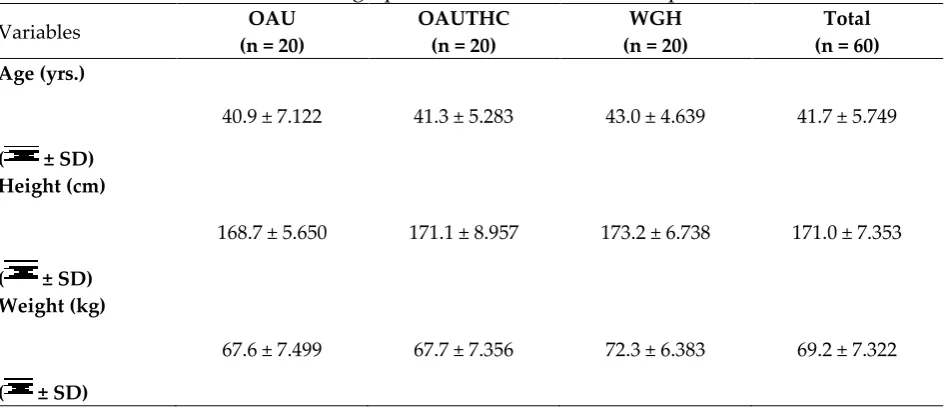
Table 1: Demographic Characteristics of Participants
Variables OAU
(n = 20)
OAUTHC (n = 20)
WGH (n = 20)
Total (n = 60) Age (yrs.)
( ± SD)
40.9 ± 7.122 41.3 ± 5.283 43.0 ± 4.639 41.7 ± 5.749
Height (cm)
( ± SD)
168.7 ± 5.650 171.1 ± 8.957 173.2 ± 6.738 171.0 ± 7.353
Weight (kg)
( ± SD)
67.6 ± 7.499 67.7 ± 7.356 72.3 ± 6.383 69.2 ± 7.322
The mean and standard deviation of age, height and weight of participants in the study were 41.7 ± 5.749 yrs., 171.0 ± 7.353 cm and 69.2 ± 7.322 kg respectively. Pourtaghi, Valipour, Sadeghialavi and Lahmi (2014) had reported a mean stature of 174.1 ± 6.3 cm and a mean weight of 70.0 kg among Iranian military personnel aged 18 and 30 years. In a recent study, Pongen, Shumayla, Dhall and Kapoor (2016) reported mean age of 36.86 ± 8.72 yrs, mean stature 165.0 ± 9.35 cm and mean weight of 67.8 ± 14.66 kg among a cohort of security guards in India. Table two presents a summary of security personnel’s anthropometric characteristics.
Table 2: Summary of Participants’ Anthropometric Characteristics
Variables OAU (n = 20)
OAUTHC (n = 20)
WGH
(n = 20) df F p W.C. (cm) 39.65 ± 4.870 40.55 ± 3.456 41.85 ± 3.265 2 1.59 0.21 H.C. (cm) 46.25 ± 3.432 46.25 ± 2.099 47.55 ± 2.685 2 1.45 0.24
Ʃ4 Skf (mm) 48.97 ± 13.577 49.72 ± 16.600 51.41 ± 17.657 2 0.12 0.89 B. F (%) 20.47 ± 5.859 23.03 ± 4.547 23.61 ± 4.724 2 2.16 0.13 WHR 0.86 ± 0.751 0.88 ± 0.052 0.88 ± 0.056 2 0.80 0.46 BMI (kg/m2) 23.74 ± 2.368 23.20 ± 2.422 24.05 ± 2.411 2 0.64 0.53 W.C. = Waist circumference, H.C. = Hip circumference, Ʃ4 Skf = Sum of four Skinfolds, BF = Body Fat, WHR = Waist to Hip Ratio, BMI = Body Mass Index
3 study areas while their mean waist-to-hip ratio were 0.86 ± 0.751, 0.88 ± 0.052 and 0.88 ± 0.056 respectively. Participants in the study have mean BMI of 23.74 ± 2.368 kg/m2,
23.20 ± 2.422 kg/m2 and 24.05 ± 2.411 kg/m2 respectively. ANOVA statistics showed that
there were no significant differences in the anthropometric characteristics of security personnel in the three institutions; waist circumference (F = 1.59; p > 0.05), hip circumference (F = 1.45; p > 0.05), Ʃ4 Skf (F = 0.12; p > 0.05), percent body fat (F = 2.16; p > 0.05), waist-to-hip ratio (F = 0.80; p > 0.05) and BMI (F = 0.64; p > 0.05). The results of this study on anthropometric characteristics did not agree with the findings of Pourtaghi et al. (2014) that reported means of 83.8 ± 9.2 cm, 97.2 ± 6.5 cm and 23.3 kg/m2
for waist circumference, hip circumference and BMI respectively among Iranian military personnel. The current study also differed from the findings of Pongen et al. (2016) who reported means of 83.5 ± 11.42 cm, 95.5 ± 8.46 cm, 25.8 ± 9.77 %, 25.1 ± 4.94 kg/m2 for waist circumference, hip circumference, % fat and BMI of military personnel
in Iran. Security personnel in this study were neither overweight nor obsessed as their BMI, percent fat and waist-to hip ratio were within normal limits when compared with the norms.
Table 3: Summary of Participants’ Physiological Characteristics
Variables OAU (20) OAUTHC (20) WGH (20) df F p HR (bpm) 62.30 ± 9.65 64.15 ± 9.18 64.85 ± 7.60 2 0.44 0.64 SBP (mmHg) 115.75 ± 11.84 119.50 ± 8.26 123.00 ± 5.71 2 3.27 0.45 DBP (mmHg) 80.00 ± 10.76 78.50 ± 6.71 82.00 ± 7.68 2 0.84 0.44 VO2 max (ml.kg-1min-1) 38.10 ± 5.72 39.29 ± 6.68 38.47 ± 75.05 2 1.33 0.27
Results in Table 3 showed that the mean of heart rate of security personnel in OAU, OAUTHC and the Wesley Guild Hospital, Ilesa were 62.30 ± 9.65 bpm, 64.15 ± 9.18 bpm and 64.85 ± 7.60 bpm respectively. Participants’ mean systolic blood pressure were 115.75 ± 11.84 mmHg, 119.50 ± 8.26 mmHg and 123.00 ± 5.71 mmHg respectively in the three institutions. Participants in the Study have mean diastolic blood pressure of 80.00 ± 10.76 mmHg, 78.50 ± 6.71 mmHg and 82.00 ± 7.68 mmHg for OAU, OAUTHC and WGH respectively. The mean of VO2 max of participants in the study areas were 38.10 ±
5.72 ml.kg-1min-1, 39.29 ± 6.68 ml.kg-1min-1 and 38.47 ± 75.05 ml.kg-1min-1 for OAU,
OAUTHC and WGH respectively. Anova statistics showed that there were no significant differences in the physiological characteristics of security personnel from the three institutions, Heart rate (F = 0.44; p > 0.05), Systolic blood pressure (F = 3.27; p > 0.05), Diastolic blood pressure (F = 0, 84; p > 0.05) and VO2 max (F = 1.33; p > 0.05). The
findings of this study with regards to physiological parameters differed from that of Adedugbe, Moses and Abass (2014) which reported mean heart rate of 68.60 ± 10.11 bpm, mean resting systolic blood pressure 122.30 ± 7.08 mmHg, mean diastolic blood pressure 78.15 ± 4.24 mmHg and mean VO2 max 59.43 ± 8.82 ml.kg-1min-1 respectively
rigorous training and routine physical drills performed by members of the armed forces. Though the superiority of the armed forces personnel in the area of VO2 max
seem to lend credence to this assumption, institutional security personnel in the current study however recorded lower heart rate, systolic blood pressure and diastolic blood pressure than their military counterparts. The disparity observed in results may have come from the instruments and procedures employed for measuring physiological parameters in the two studies.
Acknowledgements
This investigation was supported in part by the Tertiary Education Trust Fund (TETFUND), through an Institutional Research Grant released in 2014 for a Doctoral Research.
About the Authors
Oluwabusayo Odunayo Akinbiola (B.Ed., M.A., M.P.A., PhD.) is an Exercise Physiologist whose research interests are, cardiovascular exercise physiology, resting and stress ECG, anthropometry and body composition, physical fitness and biomechanics. His current research activities focus on effects of various exercise training modalities on electrocardiogram of elite and non-elite athletes. Dr Akinbiola teaches exercise physiology to undergraduate and postgraduate students in the Department of Kinesiology, Health Education and Recreation, Obafemi Awolowo University, Nigeria. Samuel Adebisi Adeniran (BSc. MSc., PhD.) is a Professor of Exercise Physiology and Biomechanics with a lecturing career spanning an upward of 40 years, in the Department of Kinesiology, Health Education and Recreation, Obafemi Awolowo University, Ile-Ife, Nigeria. He teaches exercise physiology, kinesiology, biomechanics, human biodynamics, research and statistical methods in kinesiology, to students at undergraduate and postgraduate levels. He has supervised scores of masters and doctoral theses and dissertations in areas of exercise physiology and biomechanics. Professor Adeniran established the Human Performance Laboratory of the Department of Kinesiology, Health Education and Recreation, Obafemi Awolowo University, Ile-Ife, Nigeria, where he worked from 1974 till date.
References
American College of Sports Medicine (2014). ACSM's Guidelines for Exercise Testing and Prescription: Ninth Edition. Philadelphia (PA), Wolters Kluwer Lippincott Williams & Wilkins, pp. 19-137
Adedugbe, B. O., Moses, M. O. & Abass, A. O. (2014). Physiological profiles of officers and Men of the Nigerian Armed Forces in Lagos, Nigeria. Scholars Journal of Applied Medical Sciences (SJAMS); 2(1A):96-103
Cooper, K. H. (1968). A means of assessing maximal oxygen uptake. JAMA; 203: 201-4. Guffey J. E., Larson J. G. & Lasley G. (2014). Police officer fitness, diet, lifestyle and its
relationship to duty performance and injury. Journal of Legal Issues and Cases in Business, 1-17. Retrieved on May 24, 2015, from EBSCOhost
Heymsfield S. (2005). Human Body Composition. 2nd ed. Champaign (IL), Human Kinetics, p. 523
International Society for the Advancement of Kinanthropometry, ISAK (2001). International standard for anthropometric assessment. ISAK: 57-107.
Jackson A. W, Pollock M. L. (1985). Practical assessment of body composition. Phys Sportsmed. 13(5), 76: 82–90.
Lane, M. (2014). Health problems within law enforcement: How strength training can be the solution. Unpublished PhD. Thesis. Http://www.elsevier.com/locate/jsams Nabeel, I., Baker, B. A., McGrail, M. P. & Flottemesch, T. J. (2007). Correlation between
physical activity, fitness and musculoskeletal injuries in police officers. Minn Med. Sep; 90(9):40-3
Pourtaghi, G., Valipour, F., Sadeghialavi, H. & Lahmi, M. A. (2014). Anthropometric characteristics of Iranian military personnel and their changes over recent years. Int J Occup Environ Med. 5(3): 115-24.
Pongen, I., Shumayla, Dhall, M. & Kapoor, S. (2016). Occupation, physical fitness and adiposity markers among security guards and students of Delhi University. Health, 8, 978-985.
Soteriades, E. S., Hauser, R., Kawachi, I., Christiani, D. C., & Kales, S. N. (2008). Obesity and risk of job disability in male firefighters. Occupational Medicine, 1(153).
Tharkar, S., Kumpatla, S., Muthukumaran, P. & Viswanathan, V. (2010). High prevalence of metabolic syndrome and cardiovascular risk among police personnel compared to general population in India. The Journal of the Association of Physicians in India. 56:845-849.
Vavarigou, V., Farioli, A., Korre, M., Sato, S., Dahabreh, I. J. & Kales, S. N. (2014). Law enforcement duties and sudden cardiac death among police officers in United States: case distribution study. BMJ, 349: 6534, Doi: 10.1136/bmj.g6534
Creative Commons licensing terms