Biochemical and Biophysical Investigation of
Surfactant in Neonatal Gastric Aspirate at Birth
Investigação Bioquímica e Biofísica do Surfactante em Aspirado Gástrico
Neonatal ao Nascimento
1. Faculty of Biology. University of Sofia. Sofia. Bulgaria.
2. Institute of Biophysics and biomedical engineering. Bulgarian Academy of Sciences. Sofia. Bulgaria. 3. Faculty of Medicine. University of Sofia. Sofia. Bulgaria.
4. Medical University Sofia. University Maternity hospital Maichin dom Sofia. Bulgaria. 5. Maternity hospital Sheinovo. Sofia. Bulgaria.
6. Faculty of Public Health. Medical University of Sofia. Sofia. Bulgaria.
Recebido: 20 de Junho de 2012 - Aceite: 25 de Agosto de 2012 | Copyright © Ordem dos Médicos 2013
Maya BANGYOZOVA1, Albena JORDANOVA2, Asya TSANOVA3, Neli JEKOVA4, Decho CHAKAROV5, Jordan DOUMANOV1, Emilia CHRISTOVA6, Zdravko LALCHEV1
Acta Med Port 2013 Jan-Feb;26(1):33-38
RESUMO
Introdução: A melhor abordagem para detecção de deficiência de surfactante em recém-nascidos prematuros no nascimento per-manece pouco clara e a decisão de aplicar surfactante exógeno é baseada principalmente no desenvolvimento de sinais clínicos e radiológicos da síndrome de angústia respiratória neonatal (NRDS).
Objetivos: Estudamos as propriedades bioquímicas e biofísicas do aspirado gástrico (GA) de crianças nascidas prematuramente com NRDS e saudáveis nascidos a termo, com o objetivo de encontrar um método acessível para avaliação da maturidade do surfactante no nascimento.
Material e Métodos: Quarenta e sete recém-nascidos, divididos em dois grupos foram incluídos no estudo. O primeiro grupo com-posto por 34 crianças saudáveis nascidas a termo (após 37 semanas de gestação). O segundo grupo incluiu 13 recém-nascidos prematuros (idade entre 26 - 32 semanas de gestação) desenvolveram sinais clínicos de NRDS para os quais foram tratados por ventilação assistida e surfactante exógeno. A análise bioquímica da proteína e lipídio da GA coletado no nascimento foi realizado. A composição de ácidos graxos das amostras GA foi determinada pelo detector de cromatografia de massa seletiva (GS-MSD) análise. As características da superfície (de equilíbrio, os valores máximo e mínimo de tensão de superfície) das amostras de AG foram me-didos utilizando o método de gota pendente. Os dados foram comparados entre os grupos, utilizando o teste t de Student ou teste de Mann-Whitney análise. Os valores foram considerados significativamente diferentes se o valor de p ≤ 0,05.
Resultados: A concentração média de fosfolipídeos em GA dos prematuros foi menor (295,7 g / ml vs 374,5 mg / ml) do que em cri-anças a termo e do conteúdo médio de proteína foi menor no GA dos bebês prematuros que o termo recém-nascidos (574,5 ng / ml
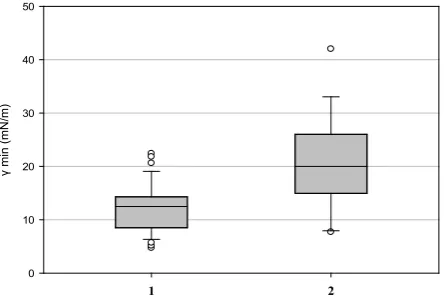
vs 641,5 ug / ml). A medição das características de superfície dinâmicas da GA mostraram significativamente maiores valores médios da tensão superficial mínima (γmin) nos bebés prematuros - 20,5 m / Nm em comparação com as crianças a termo - 12,3 mN / m (p <
ABSTRACT
Background: The optimal approach to detection of surfactant deficiency in the prematurely born infants at birth remains unclear and the decision to apply exogenous surfactant is based mainly on the development of clinical and radiological signs of neonatal respiratory distress syndrome (NRDS).
Objectives: We studied the biochemical and biophysical properties of gastric aspirates (GA) from prematurely born infants with NRDS and healthy full term infants with an aim to find an approachable method for assessment of surfactant maturity at birth.
Material and Methods: Forty-seven newborn infants divided into two groups were enrolled in the study. The first group comprised 34 healthy infants born at term (after 37 weeks of gestation). The second group included 13 premature infants (aged from 26 to 32 weeks of gestation) developing clinical signs of NRDS for which they were treated by assisted ventilation and exogenous surfactant. A biochemical analysis of the protein and lipid content of GA collected at birth was performed. The fatty acid composition of the GA samples was determined by Gas Chromatography-Mass Selective Detector (GS-MSD) analysis. The surface characteristics (equilib-rium, maximal and minimal surface tension values) of the GA samples were measured by using the pending drop method. Data were compared between the groups by using Student’s t test or Mann-Whitney analysis. Values were considered significantly different if the p value was ≤ 0.05.
Results: The mean phospholipids’ concentration in GA of the premature infants was lower (295.7 µg / ml vs. 374.5 µg / ml) than in the term infants and the mean protein content was less in GA of the premature babies than the term newborns (574.5 µg / ml vs. 641.5 µg / ml). The measurement of dynamic surface characteristics of GA showed significantly higher mean values of the minimal surface tension (γmin) in the premature infants – 20.5 m / Nm compared to the term babies - 12.3 mN/m (p < 0,01). There was no difference between the equilibrium surface tensions (38 mN/m vs. 38 mN/m) of both groups; The mean values of maximal surface tension (γmax) in GA did not differ significantly between the groups (50.1 mN/m vs. 48.5 mN/m).
Conclusion: Our findings revealed lower phospholipids’ and protein concentrations in the GA at birth from premature infants as com-pared to the healthy term infants. The dynamic surface characteristics of GA had significant differences between the two groups, the minimal surface tension being the most important parameter for evaluation of surfactant maturity. It could be used in the clinical practice for fast surfactant’s assessment in the premature infants in regard to administration of exogenous surfactant.
Keywords: Gastric Lavage; Infant, Newborn; Infant, Small for Gestational Age; Pulmonary Surfactants; Respiratory Distress Syn-drome, Newborn.
ARTIGO ORIGINAL
0,01). Não houve diferença entre as tensões superficiais de equilíbrio (38 mN / m contra 38 mN / m) de ambos os grupos, os valores médios de tensão de superfície máxima (γmax) em GA não diferiram significativamente entre os grupos (50,1 mN / m vs 48,5 mN / m).
Conclusão: Os achados revelaram fosfolipídios inferiores e concentrações de proteína na IG ao nascimento de bebês prematuros em comparação com os lactentes saudáveis a longo prazo. As características da superfície dinâmicas da GA apresentaram diferenças significativas entre os dois grupos, a tensão de superfície mínima sendo o parâmetro mais importante para a avaliação da maturidade surfactante. Ele pode ser utilizado na prática clínica para a avaliação rápida de surfactante em recém-nascidos prematuros com res-peito à administração de surfactante.
Palavras-chave: Aspirado Gástrico; Recém-Nascido; Recém-Nascido Prematuro; Síndrome de Angústia Respiratória Neonatal; Sur-factante Pulmonar.
INTRODUCTION
Alveolar surfactant (AS) is a complex lipoprotein mixture that covers the lung alveoli at the air-liquid interface. Its main function is to reduce the surface tension in exhalation thus preventing the alveolar colapse.1-3 AS components
provide alveolar stability by maintaining low surface tension during alveolar area change in the respiration process. The surfactant consists mainly of phospholipids (PL) and proteins. Some of the proteins are specific for AS and play an important role in alveolar stabilization during exhalation as well as in the lung immune defense.4-6 AS insufficiency
as well as changes in its optimal biochemical composition result in respiratory activity impairment, most severe of which is the neonatal respiratory distress syndrome (NRDS).
The extreme immaturity including NRDS is a leading cause of the neonatal morbidity and mortality in the devel-oped countries. For this reason a lot of biochemical and biophysical methods and models for investigation of the al-veolar surfactant’s (AS) structure and properties have been widely developed in the recent decades.
So far the neonatal lung maturity was diagnosed by tests using amniotic fluid, tracheal aspirate, nasopharyn-geal aspirate, etc. Some of these methods are traumatic and invasive, others can provide samples with too small quantities, which significantly complicate their analyses. Therefore, it is necessary to look for new diagnostic meth-ods for assessment of surfactant maturity at birth that would be less invasive and painless and that would provide suffi-cient sample quantity. In search for solution of this problem, we performed a number of biochemical and biophysical analyses of gastric aspirates collected at birth from new-born infants with an aim to find a correlation between the parameters tested and the neonatal surfactant maturity.
MATERIALS AND METHODS
Gastric aspirates: The gastric aspirates were collected in the first minutes after birth by a routine suction of the stomach through a gastric tube and were stored in sterile test-tubes at -20ºС. The quantity of each sample was be-tween 2 and 5 ml that sufficed for all biochemical and bio-physical analyzes described below.
Biochemical analyzes of gastric aspirates: For determi-nation of protein content in GA Lowry protein assay (Peter-son’s modification) was used.7 The PL’ concentration was
determined via extraction by the method of Blight and Dyer.8
After the extraction, the total PL’ content was measured ac-cording to the quantity of inorganic phosphorus.9
Determination of the fatty acid composition of gas-tric aspirates by Gas Chromatography-Mass Selective Detector (GS-MSD) analysis: GA samples for the GS-MSD analysis were prepared by the procedure described by W. Christie.10 The samples dissolved in hexane were analyzed
by GC 7890А MS 7000А QQQ Agilent Technologies, USA. A column ‘HP Innowax’ ЗО m, 250 μm х 250 μm was used. The gas phase was helium with constant steam 0.8 ml/min. The analysis was made at temperature of the injector 260°С and mode splitless. The temperature program used was as follows: initial temperature, 150°С without retention, and gradient 4°С/min up to 250°С; retention at 250°С for 25 min.
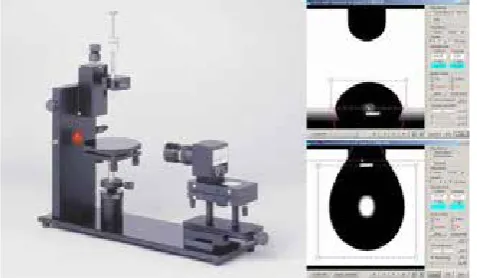
Measurements of equilibrium and dynamic surface characteristics of gastric aspirates by the pending drop method: The pending drop method allows analysis of the surface behavior of small amounts (50 μl) of the tested gastric aspirates. Tensiometer KSV CAM 101 (KSV Instru-ments Ltd., Finland) was used. The surface tension was de-termined by using the Axisymmetric Drop Shape Analysis (ADSA). The setup was computer-controlled by a Windows-integrated program, including the ADSA surface tension calculation algorithm. Fifteen minutes were allowed after the symmetric drop of GA formation for adsorption of sur-face-active molecules at the air-water interface and reach-ing an equilibrium value of the surface tension, γequilibrium (γeq, mN/m). By a camera connected to the apparatus series of pictures with different speed (from 60to 300 pictures per minute) were taken and by ADSA γeqwere determined. After recording this value the drop was subjected to 10-fold com-pression and decomcom-pression by specialized apparatus that imitate the inspiration/exhalation of the lung alveoli during respiration. Thus, its surface changed 5 times, from 100% to 20%. In these dynamic conditions the following surface
ARTIGO ORIGINAL
parameters were detected: maximal value of the surface tension at 100% drop surface (γmax, mN/m) and minimal value of surface tension at 20% drop surface (γmin, mN/m).
Data analysis
Data were analysed using Student’s t test and Mann-Whitney analysis. Descriptive results are expressed as numbers and proportions (%). A p value < 0.05 was considered significant.
RESULTS AND DISCUSSION
The GA studied were distributed into two groups: I group – consisted of GA taken from healthy full term infants (34 samples); II group comprised GA of premature infants with NRDS (13 samples).
The protein content of each sample was determined, and the results obtained were summarized for each of the two studied groups (Fig. 2). The median protein content was lower in the premature neonates with NRDS (574.5 µg/ml), as compared to the healthy full term infants (641.5 µg/ml). However, the difference between the mean protein concen-trations of the two groups was not statistically significant (p = 0.12).
The mean PL’ concentration in GA of the premature infants was lower (295.7 µg/ml) than the full term infants (375.5 µg/ml), (Fig. 3). However, the difference between the medians was not significant (p > 0.05).
It is known that AS consists of approximately 10% pro-teins. A part of them originates from serum, i.e. albumin and immunoglobulin G (IgG), presented as nonspecific pro-teins. However, the major part of the AS protein consists of specific surfactant-proteins. Nevertheless, we consider that the protein concentration of neonatal GA can be easily influenced by different factors associated with swallowing of amniotic fluid, meconium, blood etc. during the delivery. Consequently, this parameter is not reliable for assessment of surfactant maturity at birth.
Although the specific surfactant proteins contribute ex-tremely well to the establishing of AS functions, the phos-pholipids are the responsible for achievement of low sur-face tension at the end of expiration. It makes impression that the AS isolated from different kinds of mammalian have
similar lipid composition.11 The phospholipids prevail and they play a major role for optimal functioning of the AS.12-16
The main component among them is phosphatydilcholine – 72 - 80%, followed by phosphatydilglycerol – 8 - 12%. Phospholipids as phosphatydilserine, phosphatydilethanol-amine and sphingomieline, which are the main components of the cellular membranes, are present in minor quantities in the AS.17,18 The neutral lipids make as high as 7 - 10% of
the lipids in AS,11 the largest proportion – 80 - 90% consist-ing of cholesterol. In most mammalian are established small quantities of mono-, bi- and tri-acylglycerols, as well as of free fatty acids, the main of which being the palmitine acid. It is obvious that with the advance of fetal development the PL’ concentrationis increasing, which is a physiologi-cal result of the raising PL’ secretion in the fetal lung. Our previous results from analysesof tracheal aspirates of pre-mature infants with NRDS showed that the mean PL con-centration in them was around 500 µg/ml,19which is much
higher than the PL’ content in GA. However, unlike the tra-cheal aspirates the present study of GA did not show a sig-nificant difference of PL’ content between the two groups. We need more data to be able to find out whether the lower concentration of PL in GA is associated with a risk of devel-opment of NRDS.
In this study for first time was performed a fatty acid analysis of the lipids in GA from healthy newborns and pre-mature infants with NRDS (Fig. 4). The palmitine fatty acid (С16:0) has the highest content in GA of the term infants – up to 40% from the total fatty-acid content.
However this value is significantly lower in comparison with the values found in the alveolar surfactant from healthy adults – around 80%.13 The decreased content of С16:0 in GA from healthy newborn infants may be due to the pres-ence of amniotic fluid and gastric secretion in addition to the swallowed lung fluid at birth.
The mean percentage of palmitine fatty acid in GA of the premature infants was lower – about 27%, compared to that of healthy term infants (Fig. 4). Besides, the total content of saturated fatty acids with different number of carbon atoms in GA was lower in the premature infants with NRDS, which can explain the lower concentration of PL and respectively the functional deficiency of AS associated with the
respira-1 2
Pro
te
in
(
g/m
l)
0 500 1000 1500 2000 2500
Figure 2 - Protein content (µg/ml) in gastric aspirates from:
1. healthy full term infants; 2.premature infants with NRDS.
1 2
Pho
spho
lipi
d
(
g/
m
l)
0 200 400 600 800 1000 1200 1400
Figure 3 - Phospholipid content (µg/ml) in gastric aspirates from: 1.
healthy full term infants; 2. premature infants with NRDS.
Protein (µg/ml)
ARTIGO ORIGINAL tory disease.Theinvestigationsonfatty-acidcompositionofthe
par-ticular phospholipids’ components of AS show a certain correlation between the fatty-acid profile and the normal biophysical function of surfactant.20,21There is plenty of evi-dence in the literature that in AS the saturated fatty acids have a larger quantity than the unsaturated ones. The pal-mitine acid (С16:0) is the prevalent among the saturated fatty acids as its quantity is growing in all phospholipids studied with the increasing of gestational age.20,22 Signifi-cantly lower content of palmitine acid (С16:0) was observed in premature infants with NRDS or interstitial lung disease compared to healthy infants.20-22 It has to be emphasized
that the cited data is about the fatty acid profile of AS only and the results are related to the particular phospholipids’ components.
In addition to the biochemical analyses, the surface characteristics of the GA samples were determined by the pending drop method. We measured the following surface parameters: equilibrium, maximal and minimal surface tension.
The mean values of equilibrium surface tension in both groups were 38 mN/m (Fig. 5). Obviously the equilibrium surface tension, which was registered in static conditions, is not significant for AS’ behaviour in vivo, as the physiological
function of alveoli is associated with a permanent change of thesurfactant monolayer surface.
In contrast to the equilibrium surface tension the mean values of the dynamic surface characteristics of GA were significantly different between the two groups (Fig.s 6 and 7).
The mean value of minimal surface tension (γmin) in GA from the healthy term infants was 12.3 mN/m, while in the group of premature infants with NRDS the median γmin was significantly higher – 20.5 mN / m, p < 0.01 (Fig.6). The minimal surface tension has been proved to be a sensible and informative parameter for evaluation of fe-tal and neonafe-tal lung maturity.12-14 It is well known that in
conditions of compression in vivo, theAS can achieve very low values of γmin - less than 5mN / m,23 which is of impor-tant significance for prevention of alveolar collapse at the end of exhalation. Our results have also shown, that this parameter can be used as well as with GA samples for a rapid assessment of lung maturity immediately after birth. Besides that, its measurement takes a short time and can be easily fulfilled.
The main property of AS is to reduce the surface tension at the air-liquid interface in the alveoli. The mono- and multilayer films of AS, existing in vivo, are characterized with a rapid adsorption by the hypophase, an equilibrium
1 2
m
ax
(m
N
/m
)
10 20 30 40 50 60 70
Figure 7 -Maximal surface tension values (γmax, mN/m) in GA from:
1.healthy full term infants; 2. premature infants with NRD.
1 2
m
in
(m
N
/m
)
0 10 20 30 40 50
Figure 6 - Minimal surface tension values (γmin, mN/m) in GA
from: 1. healthy full term infants; 2. premature infants with NRDS
(p < 0.01). 0 5 10 15 20 25 30 35 40
C12:0 C14:0 С16:0 C18:0 C20:0 C22:0 C24:0 %
Fatty acids
Healthy full term infants
Prematurely born with NRDS
Figure 4 - Content of saturated fatty acids with different number of
carbon atoms in GA samples.
1 2
e
q
(m
N
/m
)
25
30
35
40
45
50
Figure 5 -Equilibrium surface tension values (γeq, mN/m)in GA
from: 1. healthy full term infants; 2. prematurely born with NRDS.
γ eq (mN/m)
ARTIGO ORIGINAL
value of the surface tension around 25 mN/m in a volume concentration of PL higher than 50 mg /ml and high stability at surface compression.14-16 Different biophysical and
physicochemical techniques and models have been used for investigation of the role of particular surfactant components in the different stages of AS functioning. In the current study we used a relatively new technique for assessment of the biophysical characteristics of AS. It allows to analyze small sample volumes of GA immediately after birth without any additional processing. In addition, it takes relatively short time and its performance is feasible. Our results have shown that the measurement of minimal surface tension in GA could be used as a method for assessment of neonatal lung maturity at birth.
The results obtained have shown that the mean maxi-mal surface tension ( γmax ) in GA ofthe control group – 50.1 mN / m was not significantly different from the mean γmax in the group of preterm infants with NRDS – 48.5 mN / m (Fig. 7). Unlike the minimal surface tension, we did not observe a similar tendency between γmax and the development of NRDS.
However, further research is needed to establish wheth-er this parametwheth-er is reliable for distinction of surfactant defi-ciency, respectively NRDS.
CONCLUSION
The biochemical analysis of GA from newborn infants has shown that the differences of the protein as well as the phospholipids’ concentration between healthy term and preterm infants with NRDS are not statistically significant. For this reason, at this stage of our knowledge, they may not be used as diagnostic markers for NRDS.
A qualitative and semi-quantitative fatty acids analysis of the lipids containing in the GA samples has been per-formed by Gas Chromatography-Mass Selective Detector (GS-MSD). Our results have shown that the palmitine fatty acid (С16:0) which is typical of the AS, is detected in highest quantity from total fatty-acids composition. Its proportion is significantly lower in the premature infants with NRDS in
comparison with the healthy neonates born at term. The biophysical analysis of GA has demonstrated that the values of the equilibrium and maximal surface tension have not shown a correlation with the presence of NRDS. In the same time, the values of minimal surface tension were significantly higher in premature infants with NRDS, com-pared to the healthy term babies, and were statistically reli-able. As with the tracheal aspirates, as well as with the GA studied, this parameter could be successfully used for fast evaluation of surfactant deficiency in the prematureinfants in regard to administration of exogenous surfactant treat-ment. However, further analyses of GA samples from new-born infants are needed to implement this method in the clinical practice.
What to expect on this topic in future?
Further research on GA from premature and term newborn infants is expected to create a fast, approachable and pre-cise method for diagnostics of respiratory disorders associ-ated with surfactant deficiency. In addition, the implementa-tion of such method could limit the use of much more in-vasive techniques for diagnostics of surfactant pathologies performed so far.
ACKNOWLEDGMENTS
The authors thank the neonatal units in the following hospitals and centres for providing samples ofgastric aspi-rates from newborns and data for the study: University Ma-ternity hospital ‘Maichin dom’ in Sofia, Bulgaria; MaMa-ternity hospital ”Sheinovo”, Sofia, Bulgaria
FUNDING SOURCES
The biochemical and biophysical investigations in this study were supported by a grant for project D002-107/08 of the Ministry of education and science of Bulgaria.
CONFLICT OF INTERESTS
None stated.
REFERENCES
1. Perelman RH, Engle MJ, Farrell PM. Perspectives on fetal lung
development. Lung. 1981;159:53-80.
2. Scarpelli EM. The alveolar surface network: a new anatomy and its
physiological significance. Anat Rec. 1998;251:491-527.
3. Schürch S, Bachofenb H, Possmayer F. Pulmonary surfactant: Surface
properties and function of alveolar and airway surfactant. Pure Appl
Chem. 1992;64:1745–50.
4. Hawgood S, Clements JA. Pulmonary surfactant and its apoproteins. J
Clin Invest. 1990;86:1–6.
5. JohanssonJ, Curstedt T, Robertson B, JornvalH. Size and structure
of the hydrophobic low molecular weight surfactant-associated polypeptide. Biochemistry. 1988;27:3544-7
6. Creuwels LA, van Golde LM, Haagsman HP. The pulmonary surfactant
system: biochemical and clinical aspects. Lung. 1997;175:1–39. 7. Peterson GL. Determination of total protein. Methods Enzymol.
1983;91:95-121.
8. Bligh EG, Dyer WJ. A rapid method for total lipid extraction and
purification Can.JBiochemPhysiol. 1959;37:911-7.
9. Kahovkova J, Odavic R. A simple method of analysis of phospholipids separated on thin-layer chromatography. J Chromatography. 1969;40:90-5.
10. Christie W. Gas Chromatography and Lipids: A Practical Guide. Bridgwater: Oily Press Ltd;1989.
11. Veldhuizen R, Nag K, Orgeig S, Possmayer F. The role of lipids in
pulmonary surfactant. Biochim Biophys Acta. 1998;1408:90-108
12. Scarpelli EM, David E, Cordova M, Mautone AJ. Surface tension of
therapeutic surfactants (exosurf neonatal, infasurf, and survanta) as evaluated by standard methods and criteria. Am J Perinatol. 1992;9:414–9.
13. Seeger W, Günther A, Walmrath HD, Grimminger F, Lasch HG. Alveolar
surfactant and adult respiratory distress syndrome. Clin Investig. 1993;71:177-90.
14. Birdi KS, editor. Handbook of surface and colloid chemistry. Boca Raton:
CRC Press; 1997.
15. Lalchev Z, Todorov R, Exerowa D. Thin liquid films as a model to study
surfactant layers on the alveolar surface. Curr Opin Colloid Interface Sci. 2008;13:183-93.
16. Lalchev H, Hristova E. Surfactante alveolar e síndrome da angústia
respiratória neonatal - da fisiologia pulmonar para tratamento avançado savremenno. University Press. St. Kliment Ohridski. Sofia 2010 16. 17. Frosolono MF, Charms BL, Pawlowski R, Slivka S. Isolation,
ARTIGO ORIGINAL
dog lung. J Lipid Res. 1977;11:439-57.
18. Kuroki Y, Voelker DR. Pulmonary surfactant proteins. J Biol Chem. 1994; 269:25943–6.
19. Jordanova A, Tsanova A, Doumanov J, Chakarov D, Georgiev G,
Christova E, et al. Effect of administration of surfactant therapy in
newborns with neonatal respiratory distress syndrome. Аcta Med
Bulgarica. 2011;2:32-9.
20. Parkinson CE, Harvey DR, Pryse-Davies J. Fatty acids of phospholipids in human neonatal lung surfactant. Pediatr Res. 1977;11:723-7.
21. Schmidt R, Meier U, Yabut-Perez M, Walmrath D, Grimminger F,
Seeger W, et al. Alteration of Fatty Acid Profiles in Different Pulmonary Surfactant Phospholipids in Acute Respiratory Distress Syndrome and Severe Pneumonia. Am J Respir Crit Care Med. 2001;163:95-100.
22. Schmidt R, Meier U, Markart P, Grimminger F, Velcovsky HG, Moor H,
et al. Altered fatty acid composition of lung surfactant phospholipids in interstitial disease. Am J Physiol Lung Cell Mol Physiol. 2002;283:L1079-85.
23. Zuo YY, Possmayer F. How does pulmonary surfactant reduce surface