ISSN-L: 2501 - 1235 Available on-line at: www.oapub.org/edu
Copyright © The Author(s). All Rights Reserved.
doi: 10.5281/zenodo.3265922 Volume 5 │ Issue 10 │ 2019
SOLUTIONS TO IMPROVE THE QUALITY OF BACHELOR
OF PHYSICAL EDUCATION TRAINING PROGRAM
IN HO CHI MINH CITY UNIVERSITY OF PEDAGOGY, VIETNAM
Pham Thi Le Hang
PhD, Head of Physical Education Department, Ho Chi Minh City University of Pedagogy, Vietnam
Abstract:
Training management is an important function of universities, giving recommendations to the principal when developing the training development strategies; organizing training courses, recruitment; examination and assuring the quality according to the regulations of the Ministry of Education and Training. This can be considered as a "backbone" in education, which is the basis of school development. In particular, doing research and proposing solutions to improve the quality of the training programs in the school regularly are necessary. This article introduces some achievements and limitations in the Bachelor of physical education training program in Ho Chi Minh City University of Pedagogy. Consequently, some effective solutions to improve the training program are also proposed.
Keywords: assessment, curriculum, physical education, university of education,
students
1. Introduction
In order to meet the requirements of the national industrialization and modernization, the training and physical education teacher usages need to be more diverse and quality. This is an urgent task, also is an essential requirement for universities in training human resources. Besides, constantly improve the quality of young scientific staff in a comprehensive way: good morality, physical education expertise, intellectual, and good physical; master the basic knowledge, techniques and modern teaching methods; be autonomous, dynamic and creative to apply knowledge into reality.
To well fulfill the task of completing the training program, careful checking and evaluation the effectiveness of the bachelor of physical education training now become urgent and needs more attention from the school. Especially, the assessment from the students will provide information about scientific basis more objective and suitable. Based on those information, the school can assessments, provides measures and solutions effectively. In addition, the development in training of university in general and improving the quality of bachelor of Physical Education training in particular. Therefore, the study "Solutions to improve the quality of Bachelor of physical education training program in Ho Chi Minh City University of Pedagogy" is necessary to be implemented.
2. Methodology
2.1. Research methods
Analyzing and synthesizing materials, interviews, pedagogical tests, and statistical mathematics.
2.2. Object of research
50 from Faculty of Physical Education, 5 experts, 37 management staffs and physical education teacher of Ho Chi Minh University of Education.
3. Results
3.1. Assessing the situation of bachelor of physical education training program in Ho Chi Minh City University of Pedagogy
Training results are always considered as an important content when considering the quality or effectiveness of training.
From the results of theoretical analysis on the viewpoint of evaluation of training programs, which is presented in the overview of selected topics and determined the contents that need to be considered when evaluating training results:
Student learning outcomes; Graduation rate of students.
3.1.1. Statistics on learning outcomes of graduated students
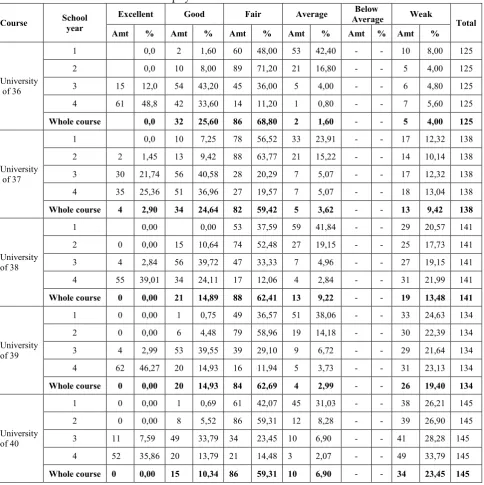
Table 1: Classification table for learning outcomes of 5 graduated courses, physical education students
Course School year Excellent Good Fair Average
Below
Average Weak Total Amt % Amt % Amt % Amt % Amt % Amt %
University of 36
1 0,0 2 1,60 60 48,00 53 42,40 - - 10 8,00 125
2 0,0 10 8,00 89 71,20 21 16,80 - - 5 4,00 125
3 15 12,0 54 43,20 45 36,00 5 4,00 - - 6 4,80 125
4 61 48,8 42 33,60 14 11,20 1 0,80 - - 7 5,60 125
Whole course 0,0 32 25,60 86 68,80 2 1,60 - - 5 4,00 125
University of 37
1 0,0 10 7,25 78 56,52 33 23,91 - - 17 12,32 138
2 2 1,45 13 9,42 88 63,77 21 15,22 - - 14 10,14 138
3 30 21,74 56 40,58 28 20,29 7 5,07 - - 17 12,32 138
4 35 25,36 51 36,96 27 19,57 7 5,07 - - 18 13,04 138
Whole course 4 2,90 34 24,64 82 59,42 5 3,62 - - 13 9,42 138
University of 38
1 0,00 0,00 53 37,59 59 41,84 - - 29 20,57 141
2 0 0,00 15 10,64 74 52,48 27 19,15 - - 25 17,73 141
3 4 2,84 56 39,72 47 33,33 7 4,96 - - 27 19,15 141
4 55 39,01 34 24,11 17 12,06 4 2,84 - - 31 21,99 141
Whole course 0 0,00 21 14,89 88 62,41 13 9,22 - - 19 13,48 141
University of 39
1 0 0,00 1 0,75 49 36,57 51 38,06 - - 33 24,63 134
2 0 0,00 6 4,48 79 58,96 19 14,18 - - 30 22,39 134
3 4 2,99 53 39,55 39 29,10 9 6,72 - - 29 21,64 134
4 62 46,27 20 14,93 16 11,94 5 3,73 - - 31 23,13 134
Whole course 0 0,00 20 14,93 84 62,69 4 2,99 - - 26 19,40 134
University of 40
1 0 0,00 1 0,69 61 42,07 45 31,03 - - 38 26,21 145
2 0 0,00 8 5,52 86 59,31 12 8,28 - - 39 26,90 145
3 11 7,59 49 33,79 34 23,45 10 6,90 - - 41 28,28 145
4 52 35,86 20 13,79 21 14,48 3 2,07 - - 49 33,79 145
Whole course 0 0,00 15 10,34 86 59,31 10 6,90 - - 34 23,45 145
Source: Department of Studies, Faculty of Physical Education, Ho Chi Minh City University of Pedagogy.
From the above results, we find that the learning outcomes of graduated students are not high, especially the percentage of excellent and fair students is 68% and only 04 students, hold 2.9%, is excellent. The learning outcomes of students of courses are different: the ĐH 37 course has 4 excellent students, while the others do not have.
3.1.2. Statistics on graduation rates of graduated students
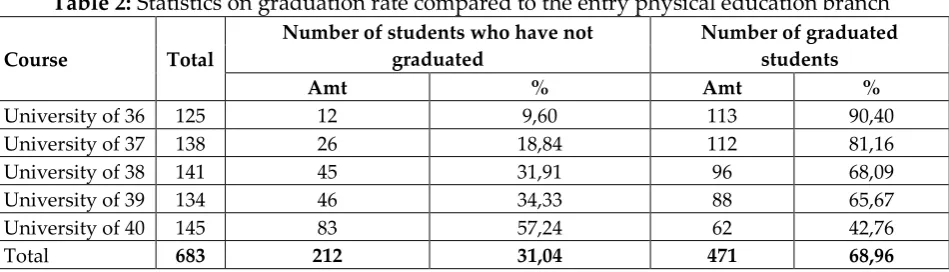
Table 2: Statistics on graduation rate compared to the entry physical education branch
Course Total
Number of students who have not graduated
Number of graduated students
Amt % Amt %
University of 36 125 12 9,60 113 90,40
University of 37 138 26 18,84 112 81,16
University of 38 141 45 31,91 96 68,09
University of 39 134 46 34,33 88 65,67
University of 40 145 83 57,24 62 42,76
Total 683 212 31,04 471 68,96
Source: Department of Studies, Faculty of Physical Education, Ho Chi Minh City University of Pedagogy.
Through Table 2, the percentage of students who have not graduated compared to the entry of the course is still high, the highest is the ĐH 40 course with 57.24%. This is the reference data for improving the quality of training courses in the future. Moreover, developing the innovation program based on this study.
3.1.3. Evaluation results of bachelor of physical education training programs in Ho Chi Minh City University of Pedagogy
The research synthesizes, analyzes strengths and weaknesses and determines the standards and criteria of the Bachelor of Physical Education training program in Ho Chi Minh City University of Pedagogy. According to the evaluation council, standards are divided into:
Standard 1 Outcome standards: Bachelor of Physical Education training program has shown quite clearly the requirements of the outcome standards for learners. However, the development of the outcome standards has not yet consulted opinions of employers and experts. Therefore, there is still lacking of practicality when developing outcome standards for students when they graduate.
Standard 2 Detailed training program: Bachelor of Physical Education training program has been developed in detail to help the learners know the knowledge content that is obtained over time, and help the faculty to prepare the amount of knowledge for learners. However, in this standard, it also shows the limited side. That is the training program is in yearly form (learners must complete the planned curriculum for the school year of the course), therefore, learners are not proactive in terms of time to accumulate knowledge, but depend on the training plan.
Standard 3 Content of the structure of the program: Training program has not been updated periodically, and does not show flexibility to help learners update knowledge, select knowledge and arrange suitable time. However, criteria 3.1 and 3.4 show the evaluation results got 5 points, showing the training program has shown the vision and mission of the school, especially demonstrated the basic. It proves that the training program has shown quite clearly which knowledge equipped for learners. The overall evaluation results got 3 points, indicating that the program needs to be improved to meet the requirements.
to be improved to meet the requirements.
Standard 5 Quality of teaching staff: The evaluation results from the council show that Standard 5 has a rating score of 3 points in the 7-point scale, this result reflects the quality assurance for the teaching staff does not guarantee. Thus, this standard is needs to be improved and innovate to meet the requirements.
Standard 6 The quality of learners: The evaluation results from the council show that Standard 8 has a rating score of 5 points in the 7-point scale, this result reflects the quality of learners is satisfied by the training program of the school.
Standard 7 Equipment and facilities: The evaluation results from the council show that Standard 7 has a rating score of 3 points in the 7-point scale, the analysis process and the evidence obtained show that the school has good facilities in quantity and quality. However, the maintenance and efficiency of facilities are limited.
Standard 8 Quality assurance of teaching and learning process: The evaluation results from the council show that Standard 8 has a rating score of 2 points in the 7-point scale, this result reflects the quality assurance of the program has not ensured. Thus, this standard is needs to be improved and innovated to meet the requirements.
Standard 9 Outcome results: The evaluation results from the council show that Standard 9 has a rating score of 4 points in the 7-point scale, this result reflects the quality of learners is relatively satisfied by the training program of the school.
Standard 10 The satisfaction of related parties: The evaluation results from the council show that Standard 10 has a rating score of 4 points in the 7-point scale, this result reflects that the school always pays attention to attitudes of learners, ex-students...
From the evaluation results of the council on 10 standard and 53 criteria, the study comes to conclusions:
The Bachelor of Physical Education training program in Ho Chi Minh City University of Pedagogy basically meets the requirements that have been selected, showing some achievements such as: The content of training program provides enough professional knowledge and practical skills for learners. General knowledge, base knowledge is enough for students to study at higher levels, the standard of student satisfaction has been partly satisfied by the support, advices from school, and facilities for training. However, there are still weak aspects of the training program. There is no contact with the employer, or the consult with employers when developing the training program.
The evaluation results using the scale show that there are some criteria below average, some criteria are at a good level, the overall assessment process of the whole program is at the average level. Therefore, the Bachelor of Physical Education training program has shown its superiority in training. Graduated students have contributed significantly to the sport and physical education sector, especially provided quality teaching staffs the high schools. However, the evaluation results from the council show that some standard and criteria are also underestimated:
o Criterion 3.5 shows that the training program has not been regularly updated and has a rating score of 2 points in the 7-point scale.
according to their abilities and interests, this criterion is has a rating score of 2 points in the 7-point scale.
o Criterion 8.2 shows that learners have not been involved in the development of training program, so the program does not have the assessment from learners, reducing the practicality of the program.
o Criterion 8.3. Employers have not participated in the development of training programs, thus affecting the goal of meeting the social demands.
Standard 10 shows that the criteria do not have the feedback or the opinions of the employers made it lack of practicality in training, and the basis to adjust or update the training program.
Overall assessment of the training program has a rating score of 3.8 points, meaning that the training program is needs to improve to meet the practical demands of the society.
2.2. Proposing solutions to improve the quality of the Bachelor of Physical Education training program in Ho Chi Minh City University of Pedagogy
Through the evaluation results of Bachelor of Physical Education training programs of Ho Chi Minh City University of Pedagogy, together with some factors such as: learning outcomes of graduated students, and the graduation rate of graduated students of previous courses. The research propose some solutions to improve the quality of the Bachelor of Physical Education training programs of Ho Chi Minh City University of Pedagogy, including:
A. Select solutions based on the following principle
Principle 1:
Comprehensiveness
Fully reflect the theoretical and practical aspects, comprehensive and specific.
Principle 2: Practicality
Solutions should be from practical demands, directly or indirectly solve the difficulties that the situation is facing to motivate the development and overcome problems.
Principle 3: Possibility
The solutions are practical and effective in training.
Principle 4: Rationality
The proposed solutions are consistent with the ability to execute, not too unclear.
Principle 5: Diversity and synchronization
Solutions to solve problems are not only one-way, but also have an overall structure that reflects different aspects to improve results and solve the unsolved problems.
Based on the above principles, the study has developed 06 solutions to improve the quality of the Bachelor of Physical Education training program which are:
Solution 1 Develop a physical education training program using the credit system. Solution 2 Improving professional practice.
Solution 3 Improve the quality of soft skills training.
Solution 4 Improve knowledge of law about coaching human resources. Solution 5 Develop facilities for training.
B.Assessing the possibility and practicality of proposed solutions
In order to assess the possibility and practicality of solutions to ensure the focus and objectivity, the study interviewed 05 experts, 37 management staffs and physical education teachers of Ho Chi Minh City University of Pedagogy. The solutions are surveyed with a scale of 3 levels: Very possible = 2 points; Possible = 1 point; Impossible = 0 points. The study determined the value of solutions by calculating the percentage corresponding to the answers, the solutions must have 80% or more of the agreed opinions, shown in Table 3.
Results show that 6/6 solutions, are evaluated by experts and management staffs, are very possible and hold for 83.3% or more. Thus 06 solutions that we propose are possible, practical and can be applied to improve the quality of the Bachelor of Physical Education training program. This is an urgent and topical issue in improving training program to meet social demands.
Table 3: Possibility and practicality of solutions improve the quality of the Bachelor of Physical Education training program (n = 42)
Index Solutions
Results (n=42) Total
Very
possible Possible Impossible Point %
n n n
1 Develop a physical education training
program using the credit system 38 4 0 80 95,2
2 Improving professional practice 29 12 1 70 83,3
3 Improve the quality of soft skills training 32 8 2 72 85,7
4 Improve knowledge of law about
coaching human resources 35 6 1 76 90,4
5 Develop facilities for training 38 4 0 80 95,2
6 Get feedback from ex-students and
employers 35 6 1 76 90,4
3. Conclusions
Through research results, 06 basic solutions have been proposed to improve the quality of the Bachelor of Physical Education training program, including: Solution 1. Develop a physical education training program using the credit system; Solution 2. Improving professional practice; Solution 3. Improve the quality of soft skills training; Solution 4. Improve knowledge of law about coaching human resources; Solution 5. Develop facilities for training; Solution 6. Get feedback from ex-students and employers.
University of Pedagogy, also improve the quality of teaching and training of Ho Chi City University of Education in the future.
References
Ministry of Education and Training, Regulation on regular university and college training. Issued together with Decision No. 25/2006/QD-BGDDT dated June 26, 2006, Education Publishing House, Hanoi.
Ministry of Education and Training, Regulations on standards for assessing the quality of higher education. Issued together with Decision No. 65/2007/QD-BGDDT dated November 1, 2007, Hanoi.
Ministry of Education and Training, Action Program of Education sector to implement Vietnam Education Development Strategy 2011-2020. Conclusion No. 51-KL/TW dated October 29, 2012 of the 6th Plenum of the 11th Party Central Committee on the Project "Basic and comprehensive innovation of education and training, meeting public requirements industrialization and modernization in the context of socialist-oriented market economy and international integration”, issued together with Decision No. 1215/QD-BGDDT, Ministry of Education and Training, Hanoi.
Nguyen Kim Dung (2006), “Evaluation of curriculum and some suggestions for program accreditation at Vietnamese universities”. Proceedings of building credit-based training programs with Internet use. Educational Research Institute of Ho Chi Minh City University of Pedagogy, Ho Chi Minh City.
Nguyen Dai Duong, (2015), Solutions to improve the quality of higher education of Bac Ninh University of Sports and Physical Education, Grassroots level project, Bac Ninh Sports and Physical University, Bac Ninh.
Bui Quang Hai (2014), Assessing the quality of training of the formal education system of the education sector at the Bac Ninh University of Sports in the period of 2008-2013, Project at the grassroots level, Bac Ninh Sports University.
Le Truong Son Tran Hai (2012), Renovating the Physical Education program for students of pedagogical universities in the North Central region in the direction of fostering professional activities of organizing school physical training and sports activities, Doctoral thesis in Education, Institute of Sports Science and Education, Hanoi. Nguyen Van Hoa (2016), Evaluate the bachelor's training program in sports training
university of Bac Ninh sport, Doctoral thesis in science, Bac Ninh University of Sports and Science.
Ho Chi Minh City University of Pedagogy (2016), “40 years of construction, development and integration 1976 – 2016”, Ho Chi Minh City University of Pedagogy Publishing House.
Creative Commons licensing terms