International Journal of Advances in Management, Economics and Entrepreneurship
Available online at: www.ijamee.info
RESEARCH ARTICLE
The Impact of Corporate Social Responsibility on Strategic
Management of Reputation Risk: The Case of the Petroleum
Industry
Evangelia Fragouli, Sasa Seidu
University of Dundee, UK.
Abstract
The petroleum industry is institutionally complex and its operations are integrated across the entire supply chain. In case of accidents, there are always major economic losses and serious environmental consequences which can damage the reputation of the companies. This makes reputation risk management very important and a major priority for the petroleum industry as it has the potential of erasing the business of any company in the industry. As a policy strategy, CSR plays significant role in shaping the perceptions of stakeholders about the activities of companies, hence has the potential of protecting companies against reputational crises. This study aims to critically examine the role CSR plays in Reputation Risk Management in the petroleum industry. It investigates and critically analyses Reputation Risk Management policies and the influence CSR initiatives have on stakeholders. After a general background introduction to the petroleum industry, it discusses the nature of reputation and reputation risk management, highlighting the existence of policy issues and the approach adopted in managing reputation risk in the petroleum industry. The study combined both quantitative and qualitative research methodologies. The findings reveal that reputation is driven by regulatory compliance, strong financial performance, employees and customer satisfaction, good corp orate governance and leadership. It findings also show that being corporate responsible and insuring effective communication can drive reputation. A further investigation reveals that CSR programs implementation lead to the generation of these driving factors. However, analyses of responses show that reputation management depends on these benefits indicating that CSR as a policy strategy plays a significant role in RRM. In this regard, the study concluded that CSR initiatives can positively influence the desire to manage the reputation of companies in the petroleum industry. The study in it capacity as an empirical research recommends CSR as a holistic approach capable of building an everlasting reputation for companies within and outside the petroleum industry and therefore calls on companies to fully adopt CSR as a risk management strategy.
Introduction
Background to the Study
The business environment is ever changing and competition is taking centre stage. It is important for every organization or company to identify their competitors, understand the driving forces and device strategies towards enhancing its competitive advantage [ 1 ] . According to reputation is the only intangible asset that creates competitive advantage for a company and the loss of it could be the biggest threat to its success in the world of business. Risk to reputation could come from any part of the organization or company. Therefore, Reputation Risk Management (RRM) is about getting everything else right. The petroleum industry is one of the largest and most complex global industries in the world. It remain the most
modern and concerted approach to analyzing and managing risk in the industry. The concept of Corporate Social Responsibility (CSR) has well been noted to play a significant role in organizations attempt to meet their stakeholder obligations [5-6-7]. According to Whetten et al [8] cited by Adam Lind green and Valérie Swaen, [9] CSRs are the ―societal expectations of corporate behaviour; a behaviour that is alleged by a stakeholder to be expected by society or morally required and is therefore justifiably demanded of a business‖ (p. 2).
Also indicated by and Christensen et al [10] independent of whether an organization has strategic motives for acting responsibly, it is morally obliged on their parts to favors the needs of social goods, hence the need for CSR initiative to go beyond legal requirement. In a highly competitive business environment, it is crucial to link corporate reputation to CSR as stakeholders make their decisions based on the reputational statues of companies [11].
However, early scholars who introduced the concept into management literature only sort to encourage corporations to embark on activities capable of solving societal problems since their activities helped create those problems. They failed to highlight the importance of CSR to the image of such organization argued that businesses were responsible for producing ―social goods‖
(p.44) as well as goods and services for sale. He further opined that every single business either big or small had an obligation to give back to the communities the needed support. CSR in recent times has received much attention both from academia and business. This has ―moved CSR from a mere ideology to a reality‖ which many organizations and stakeholders consider important to the survival of businesses.
However, literature has remained silent on the role CSR plays in lifting the reputation of organizations within the petroleum industry. The fact that CSR is an important initiative capable of shaping the ethical behavior of organizations and contributing significantly to the economic development of society as a whole is vital to the management process of reputation risk. It is the task of management to formulate policies and devise strategies to
ensure successful operations in their companies. They are also blamed for any damage to the image of their companies. But here lies the problem; do management and their companies develop policies for managing such risky circumstances. Even if there are such policies, are they effective enough to protect the image of the company and its stakeholders? These and many other issues seem not to be well addressed in the petroleum industry.
Statement of Research Problem
Since its inception, the petroleum industry has been characterized by various degrees of complexities arising from mergers and acquisitions, oil spillages, managerial lapses, issues of corporate governance, regulatory compliance and other human and environmental related issues as its activities in one way affect the socio-economic, political and the natural environment. Consequences emanating from these activities adversely affect the operations and image of companies and their partners, lives and property of employees as well as the natural environment.
Companies are normally considered to be responsible for any undesirable situation that will occur. But it appears that, they (companies) do not develop risk management policies towards addressing these issues and this creates the opportunity for CSR programs to be defined; hence the role of CSR in reputation risks management. The foregoing problems regarding decision making, cogent need for reputation risk management strategy and the rising attention given to CSR are the pillars behind the conceptual and policy questions necessary for this piece of work.
Research Objectives
Broadly, the objective of this study is to critically investigate and analyses the concept of reputation risk and its management in the petroleum industry. Corporate Social Responsibility as a strategy for managing reputation risk will be examined. Based on these, the necessary recommendations would be made. To achieve this, the following specific objectives are stated:
the various policies usually formulated towards managing reputation in the petroleum industry.
To examine the effectiveness of these policies and processes used in managing reputation.
To investigate into the adoption of Corporate Social Responsibility by some companies such as BP, Shell, Tullow, Dana Petroleum and Nexen Petroleum in the petroleum industry in UK.
To examine the role and contributions of CSR in building a protected reputation for Organizations in the petroleum industry. The Research Questions
The role of reputation in the petroleum industry cannot be over emphasized. In the past decades, risk controls were directed towards capital losses arising from credit risk, trading and market operations [4]. Businesses after paying so much attention to these risks are not still able to achieve their aim in terms of financial performance, communication commitments and crisis management.
Reputation as a perceived threat has been identified to be to be the reason behind the poor performance of these businesses despite tremendous efforts to succeed [12-13-14]. This provides the impetus for companies to strategically develop policies towards managing their reputation. By extension, companies take responsibility for any damage to their reputation if they fail to develop effective policies and strategies to ensure its management.
From This Background, the General Research Question the Study Seeks to Answer is
Do companies in Petroleum Industry have policies in place for managing reputation risk? What role does Corporate Social Responsibility (CSR) play in Reputation Risk Management (RRM)?
To ensure wider scope coverage of other research and experiences, the study endeavors to provide answers to the following specific questions since they will enhance the credibility of the study.
What does Reputation Risk Management
mean to companies in the petroleum industry? Do they apply RRM policies?
What are the policies and processes used to manage Reputation Risk in the Petroleum Industry?
Does the Petroleum industry engage in Corporate Social Responsibility initiatives?
Can Corporate Social Responsibility build a strong foundation for Reputation Risk Management?
Justification for the Research
The role of reputation in the petroleum industry cannot be over emphasized as organizations consider it to be the greatest threat to the company‘s market value. But how do companies in the petroleum industry manage their reputation to maintain their market position? What processes do they follow in managing it? Do they accept CSR as a way of managing their reputation? These issues are worth cross-examining because most companies in the industry are exposed to reputation damage. It is important to indicate that, considering the complex nature of business environments in recent times, the profound risk which must be identified, mitigated, controlled and monitored is reputation risk.
This is because a good reputation has the capability of strengthening a company‘s market position and increasing shareholder value, hence offers great reward if it is management properly [15-16]. Also, CSR as a perception of stakeholders plays significant role in lifting the reputation of companies especially those in the petroleum industry. CSR has the capability of shaping the ethical behavior of organizations and contributing significantly to the economic development of society and as such remains vital to the process of managing reputation risk [10- 17]).
there are some current attempts to investigate the effect that a company‘s perceived CSR initiative has on its corporate reputation .This research as an independent piece of work that provides an examination on a wider scale, the endorsement of CSR policies by companies in the petroleum industry and the role these policies play in Reputation Risk Management (RRM).
Research Methodology
To insure that adequate answers are provided to the research questions, the study employed both primary and secondary sources of data collection on Reputation Risk Management and the concept of CSR. It considered the extensive literature on both concepts with the objective of gaining insight into the approach adopted in managing reputation and the rationale behind the implementation of CSR policy initiatives. It combines both quantitative and qualitative techniques in it analysis.
On the part of the quantitative analysis it will employ the Reputation Quotient (RQ) model developed by and been used in many other studies. This model provides a five-point scale for analyzing the importance of some influential factor on reputation. The benefits emanating from the implementation of CSR policies will also be identified and scaled using the same method upon which the linkage will be drawn. This result is to show how beneficial CSR policy implementation is to RRM in the petroleum industry. The results will provide useful information to companies which wish to manage their reputation on long-term basis and further give relevant information to subsequent studies.
For the qualitative aspect, the study will collect data through semi- structured and unstructured questionnaires. The questionnaires are two but very related; one for senior managers and the other for other employees and customers. It will administer them based on accidental and purposive sampling of some employees within the petroleum industry. This is to obtain the response of these stakeholders on the endorsement of CSR and the role CSR plays in building a much stronger reputation for companies in the petroleum industry. This methodology is adopted in order to provide
empirical evidence to the research even though its focus will be based on synresearching secondary data as there is much research already done on CSR and RRM.
Research Structure
This research is structured into three main parts I, II and III which are further divided into chapters. These chapters are structured in such a manner that, they look independent, but they are closely linked to each other. This is to make this piece of work easy to read and understand. Part I contains chapter one. Chapter one as an introductory chapter, gives the background to the study. It explicates the logic behind the study. It also explains the objectives, the research questions, and the justification of the study. It provides a brief description of the methodology adopted for a successful completion.
Part II deals with the literature review. It is divided into two chapters. Chapter two focuses on the relevant literature available on Reputation Risk Management (RRM). It presents an overview of the activities in the petroleum industry. It also outlines the various drivers facilitating reputation risk management; investigating into the existence of various policy issues and strategies adopted in managing reputation risk in the petroleum industry.
Chapter three on the other hand deals with the concept of Corporate Social Responsibility (CSR) in the petroleum industry. This chapter cross-examined the various CSR initiatives pointing out clearly the stakeholders involved, CSR benefits to implementing companies, driving forces behind these initiatives and the linkage between CSR as a concept and RRM as a management process. It does not only aim at discussing the process and policy issues, but also critically examined the effectiveness of the process.
responses gathered through the use of the questionnaires and graphically depicts these responses. In essence, chapter four shows the purpose of the data collection, sample size and selection, data collection methods taken, the instrumentation and the graphical representation of the responses. Chapter five presents the analysis of the data obtained and the interpretation of the results. It discusses the findings in relation to existing literature and finally justifies the limitations that counteract the success of this piece of work. Chapter six as the final chapter of this research contains the conclusions and recommendations. This conclusion is drawn based on the research findings as well as the literature sources consulted for it completion.
Literature Review
Reputation Risk Management
Introduction
This chapter examines existing literature available on Reputation Risk Management (RRM) in the petroleum industry. It outlines the various policy issues affecting the image of companies, the processes followed in addressing those policy issues and how effective these policies are in terms of managing reputation.
Overview of the Petroleum Industry The petroleum industry is institutionally complex. It is usually divided into two basic sectors; upstream and downstream sectors. The upstream sector includes all activities necessary to extract oil from the earth- exploration, geological assessment of potential oil fields, and the drilling and operation of wells to produce a flow of crude oil. The downstream sector on the other hand includes activities ranging from transportation of the crude oil to the refineries, refining crude oil into finished products, transporting the finished products from refineries to storage terminals and marketing by wholesalers and retailers [3-20-21-22].
Every project has its own inherent risks that must be considered at every stage of development. As a matter of fact, the petroleum industry is so complex that its risks are often separated into pre completion, post-completion and market risks. But the management of these risk is considered to be the task of management and
as such must be part of the general decision making process [3]. Companies try to assess their resource base, the needed and available technology, partnership or stakeholder relationships, market issues, geopolitical issues and environmental issues as they pose serious challenges to their existence. Also, the nature of operations in the industry is more integrated making it very difficult if not impossible for traditional risk analysis and management approaches to address the challenges emanating from these issues as they affect the image of companies [12-16-4-23].
The industry has faced various policy issues arising from partnership (mergers & acquisitions), oil spillages, corporate responsibility, issues of corporate governance and leadership, regulatory compliance, workplace talent and culture, communication and other human and environmental related issues as its activities in one way or the other affect the socio-economic, political and the natural environment. For instance, the multitude of tasks, processes and technology needed for a successful exploration, drilling, development production, refining, transportation and distribution is so intimidating that no single company wishes to do it all. This therefore requires working with many other companies, hence the need for joint ventures, mergers or contracts [3].
To ensure success and reliability in the supply chain, companies within the industry develop collaborative relationship between its operators, contractors and other stakeholders. Also, petroleum operations have an impact on the quality of breathing air, ground water, vegetation, the life of human and aquatic habitats, hence the development of policies that will mitigate these risk [3-24-25].
obligations requirements [22-26-21]. This implies that companies with the aim of achieving sustainability in their risk management must adopt a holistic and systematic integrated s t r a t e g y w h i c h i n v o l v e s corporate r i s k f a c t o r s , s o c i o e c o n o m i c i s s u e s a n d ecological factors, thus the development/design of CSR initiatives that will encapsulate all related issues.
The Concept of Reputation
In recent times, organizations consider reputation to be the ―greatest threat to a company’s market value‖ [15]. This is because it can affect every part of the organization ranging from its products to its relationship with stakeholders. Reputation is considered to be an intangible asset capable of creating competitive advantage for most organizations [27-28-29].
According to reputation is ―the accumulation of perceptions and opinions about an organization that resides in the consciousness of its stakeholders‖. These stakeholders give their loyalty to organizations and do business with them based on their perceptions. Therefore, gaining and retaining the confidence and trust of these stakeholders is the bed rock for successful business. As theorized by Brown, [15] and Davies, [29] any company without good reputation has no business in today‘s complex and competitive business environment. Also, indicated that, reputation forms the immune system of every business objective and as such, ―having a positive reputation is like establishing a healthy immune system or
having a comprehensive insurance in case of crisis‖ Reputation risk is regarded as a generic term which embraces the risks emanating from any source, and as such, has the potential of impacting on the reputation, image or integrity of an organization. It is not a category of risk in its own right but a combination of threats from every part of the operations of a company. Reputation risk is defined as those risks related to
―integrity-associated with core character and exercise of judgment—and―people risks‖-associated with risk of ethical lapses, misconduct, and/or behavior contrary to law [30].
It is not only about downside threats, but also about upside opportunities, thus any action, event or situation that could harmfully or beneficially impact an organization‘s reputation could be regarded as reputational risk. Reputation risk includes the loss of shareholder value resulting from lack of public and customer trust and confidence in the company. It can manifest itself in the financial performance of the company, value of brand or in the relationships established with other business partners [12-13-14].
Reputation risk is often difficult if not impossible to identify and quantify due to the fact that, it is based on subjective assessment rather than an objective process. However, organizations have identified seven drivers of reputation as a useful starting point to understanding what reputation and its risks are about. Figure 1 illustrates the seven drivers of reputation.
Most organizations spend a lot of money and time in building assets, establishing relationships and preserving them as well. Just like any other asset, reputation can be built and preserve over time. But, it can also be destroyed within the shortest possible time [29]. Any organization that demonstrates strong ethical behaviour and consistently performs and meets or exceeds the expectations of shareholders, customers and the general public is likely to enjoy a good reputation. However, regulatory noncompliance, loss of customer data, unethical employee behaviour, or an unexpected profit warning can reduce stakeholder confidence and as such damage the company‘s reputation in the industry [12-16].
Reputation Risk Management (RRM) in the Petroleum Industry
Reputation Risk Management (RRM) has gained importance in management practice and in academic literature [15-31-32]. Also, building and maintaining a strong reputation is crucial for all organisations in today‘s business environment [15], but is it more important to companies in the petroleum industry and as such remains the most significant risk to manage. However, its management has always been a serious challenge to managers and their board of directors. Whenever challenged with such a situation (Reputation risk management) especially in financial institutions and other service companies, most organisations take false comfort from the fact that they have a public relations department.
This is because reputation risk management in such organisations is perceived to be synonymous to media management [29]. As theorized by Scandizzo, [16] these organizations assume that customers and members of the general public form their perceptions based on information from the media, regulators and auditors since they have limited knowledge concerning the inner workings of the organisation. Hence spend substantial amount of time on the media and financial reports neglecting their own behaviour and responsibility to their customers and the society at large. Reputation risk management is completely different in the petroleum industry due to its segmentation,
the integrated nature of operations and large number of stakeholders involved [3-4-23] According to the Integrated Operations Centre cited by the integrated operations involve ―the integration of people, work processes and technology to make smarter decisions and better execution. It is enabled by the use of ubiquitous real - time data, collaborative techniques and multiple expertise’s’ across disciples, organisations and geographical locations‖.
However, the integrated operations enable the industry to achieve better safety working conditions, extended operational life, reduced cost, increase production and recovery rates upon which reputation is built. It is argued that reputation risk management is directly tied to ensuring safety working conditions, higher production level, good corporate governance practises, sound financial achievements and environmental friendliness. This recognition is due to the fact that these elements of success are benefits emanating from policy initiatives such as Corporate Social Responsibility (CSR), corporate governance and leadership, regulatory compliance, workplace talent, safety and culture and effective communication.
Management in their quest to achieve higher financial performance whiles maintaining good relationships with external stakeholders initiate policies that have the potential of reconciling the interests of all its stakeholders which in most cases are always conflicting. It is also important to indicate that management faces various challenges in the execution of these policy initiatives. The costs involved in meeting corporate responsibility, ensuring workplace talent and safety and delivering effective communication are always high and as such hinder the fulfillment of these responsibilities.
The petroleum industry is also subjected to special regulations and supervision by state agencies and environmentally-concerned organisations. Proposed regulations in most cases are counterproductive and hence, lead management into the adoption of unethical behaviours which increases the risk portfolio of the company.
within and outside the industry. In the petroleum industry, ensuring integrated activities from the upstream to the downstream is like developing the strongest approach for managing reputation risk. All companies recognise that their operations are integrated, but few of them in the industry have risk reduction methodologies in place across all areas of potential risk source.
This lope hole created is an indication that reputation risk remains at stake. Evidence from researches ‘[33-34] show that, even the finest organisation‘s reputation such as Exxon Mobil, and BP had suffered serious and to some extent irreparable damage from their operations. For instance, the Gulf of Mexico oil spill which occurred in 2010 has landed the reputation of BP in disrepute till date . This incident left the life of human and cherished marine animals such as the sea turtles and dolphin in danger. This incident has been attributed to the negligence of management and non-compliance of federal regulations by BP management.
According to the Bureau of Ocean Energy Management Regulation and Enforcement cited by Broder [35], the incident was as a result of poor risk management, unnecessary changes of plans by management, failure to observe and respond to critical indicators and inadequate well control response and training of operators. BP is still standing trial in the US court and which could lead the company to huge fine despite its agreement in 2012 to pay £2.9 billion for criminal charges. It has also call for stringent rules on the exploration and dependence on fossil fuels which is dangerous to the increasing demand for petroleum products worldwide [36].
Also, the Exxon Valdez oil spill that occurred in 1989 caused severe damage to an all- important ecological area (Gulf of Alaska) [37] which serves as a home to many species of wild life. The images that the world saw on television and descriptions they heard on the radio were of heavily oiled shorelines, dead and dying wildlife and thousands of workers mobilized to clean up the beaches.
This incident still remained one of the largest oil spills in the history oil spill in U.S. and becomes fresh in the minds of people any time an incidence of this nature happens in any part of the World .Even today, scientists
continue to study the affected shorelines to understand how an ecosystem like Prince William Sound responds to, and recover from, an incident like the Exxon Valdez oil spill [38]. In the decision making process, management together with the board of directors consider the impact various policy initiatives will have on the reputation of the company.
They in most cases give preference to programs and initiatives that will ensure regulatory compliance, sound financial performance, friendly employee working conditions and sound environmental conditions [34-29]. It is important to emphasize that, it is the interest and powers of all the stakeholders that mostly drive the activities of the petroleum industry as they are responsible for both the success and failure of the industry. Shareholders as title owners are interested in their profits, business stakeholders as supplier’s conce rn themselves with the business strategy and provision of goods and services while customers turned to be interested in deriving maximum satisfaction from their purchases.
Government and social stakeholders
(communities, Non-governmental
organisations and environmental interest groups) seems a bit distant from the actual operations and transactions of the firm, but have a significant influence in the activities of the industry. It is therefore necessary to reconcile the expectations of all these interested parties in a holistic matter as a way of managing reputation risk [12].
Contrary to use of specific risk management strategy by financial institutions and insurance companies, reputation risk management in the petroleum industry involves a holistic approach across the entire company. In the petroleum industry, the risk governance framework developed by the International Risk Governance Council (IRGC) is always the guiding principle upon which every risk management process, including reputation risk points at.
As a comprehensive framework, it integrates scientific, economic, social, cultural aspects and full engagement of all stakeholders in the risk management process [34]. To further reiterate the significance of this risk management approach in the petrol eum industry, Yanting and Xing, [2] emphasized that, ―the risk analysis of international petroleum enterprise has grown from a simple risk analysis method to risk evaluation system or management‖. This is because; the simple risk analysis approach was limited to just the identification of the various risks and their consequences on the operations of the industry.
However, the risk evaluation approach widens the scope to include strategies and measures of controlling and mitigating the identified risk. Indeed, good reputational risk management can actually be achieved by managing all other risk satisfactory. As a management strategy capable of ensuring sanity in the petroleum industry, RRM must be seen as a vital element of an Enterprise Risk Management program, thus a corporate responsibility initiative worth adopting by any company hoping to holistically manage its reputation [42].
How effective are these policies?
The risks associated with most businesses are highly interdependent and cannot be manage by any fragmented approach hence the need for a comprehensive and integrated framework. Effective reputation risk management in the petroleum industry depends on identifying and controlling all the risk at each point across the entire supply chain [42-2-3 4 ] . Reputation is best managed through strong corporate governance and leadership, ensuring regulatory compliance, meeting stakeholder‘s expectations and fulfilling corporate responsibilities.
Also, preserving a strong reputation revolves around effective communication and establishment of strong and solid relationships between the company and its stakeholders. The effectiveness of most risk management policies depends on their ability to identify the individual risks, quantify them and manage them collectively since they are related. During assessment of the risk, the approach should be able to determine the
―level of inherent risk—high, moderate, or low, the adequacy of the risk management—strong, acceptable, or weak and the trend or direction of risk- decreasing, stable, or increasing‖ [34].
The risk governance framework considers a comprehensive and integrated approach to managing reputation risk as it assesses the various risks and provides adequate knowledge for further evaluation. Most of the policies are within the governance framework and are considered as part of their CSR initiatives. To the companies, the policies are meant to ensure that appropriate organisational processes and corporate control measures are adequate enough to cater for all the risks and concerns of stakeholders across the company. Most of these policies are designed to address strategic management issues.
They set the legal framework aimed at protecting the company‘s shareholders and stakeholders, extend the legal requirement to promote good ethics and ensure effective risk communication. These to larger extent, increase transparency in management, improve corporate governance which rebuilds public trust and investor confidence and finally delivers wider societal value capable of balancing the concerns of all the major stakeholders [18]. All these policies work together within the governance framework and CSR initiatives implementation which aims to ensure strategy management and adequate risk management process, thus a testimony to the effectiveness of the policies in managing reputation risk [34-29-12].
Corporate Social Responsibility (CSR) Introduction
Every business has the duty to be responsible towards its society. This gives businesses the obligation to make decisions and pursue policies that will inure desirable benefits to both the business and its society. This chapter presents CSR as a concept and its benefits that can help build a strong reputation for companies in the petroleum industry.
Definition and Scope of CSR
attracted different views on its conceptualisation. Nonetheless, there seems to be a general recognition that CSR plays a significant role in RRM [43-44] Corporate Social Responsibility (CSR) generally represents a continuing commitment by an organization to behave ethically and contribute to economic development, while also improving the quality of life of its employees, the local community, and the society at larg .defined CSR as ―a discretionary allocation of corporate resources towards improving social welfare that serves as a means to enhancing the relationship with key stakeholders‖.
As indicated earlier, cited by Adam Lindgreen and Valérie Swaen, 2010, contended that CSR is the societal expectations of corporate behaviour; a behaviour that is alleged by a stakeholder to be expected by society or morally required and is therefore justifiably demanded of a business. There is a general well-accepted belief that CSR enables organizations to meet their stakeholder o b l i g a t i o n s . Early s c h o l a r s w h o i n t r o d u c e d t h e c o n c e p t i n t o m a n a g e m e n t literature sort to encourage corporations to embark on activities capable of solving societal problems since their activities helped create those problems.
Argued that businesses were responsible for producing ―social goods‖ as well as goods and services for sale. He further opined that every single business either big or small had an obligation to give back to the communities the needed support. CSR in recent times has received much attention both from academia and businesses and as such moved it from been an ideology to a reality which many organisations and stakeholders consider as important. The fact that CSR is an important initiative capable of shaping ethical behaviour of organisations and contributing significantly to economic development of the society as a whole makes it vital to the management process of reputation risk.
Motivational factors for the engagement of CSR Initiatives
CSR as a strategic policy instrument is gaining inspiring attention from most companies with support and encouragement from governments and the investment community [45].
CSR even though embrace by many, some companies still consider it as a costly exercise, hence affordable for only large companies. The companies which adopt CSR as a policy option try to clarify the motivational elements and the business benefits that can be generated. It is largely recognised that companies are now performing extremely well in terms of their social and environmental responsibilities, governance and financial transparency and are becoming more accountable to their stakeholders in general.
Indicated that companies are motivated to undertake CSR programs because of their wish for future development of their corporate responsibility and their desire of ensure sustainability in their activities [46]. These motivational factors are however expressed in the company‘s objectives. But it is often argued that only large companies include CSR programs in their objectives since they have the resources. Commonly, four basic objectives have been identified as the factors that easily motivate companies to adopt CSR programs. These objectives include the following;
To increase transparency and improve the governance system of the company with the aim to rebuilding public trust and uplifting investor confidence. In this regard, companies ensure that they become open in terms reporting, remain fair to all their stakeholders and ensure employees live by their code of conduct.
To ensure efficient delivery of extensive societal value through the provision of healthcare and educational facilities. They design policies and programs to support human rights and protect the environment.
To contribute to the overall regional development and facilitate global partnership for sustainable development purposes.
CSR and Reputation: A stakeholder Perspective
The RRM process is complex and has compelled companies to adopt comprehensive and holistic approaches towards ensuring a successful management process. More recently, t h e p e r c e p t i o n o f s t a k e h o l d e r s ( investors, e m p l o y e e s , customers and communities) about company‘s ethics, values and social responsiveness play significant role in their risk management process especially RRM. As indicated by Helm [47] and Hansen et al [48], most positive results associated with reputation are due to the perceptions and attitudes of individuals.
These perceptions and attitudes influence their behavioural intentions and outcomes which can either increase or decrease their loyalty. Customers are noted to attribute high quality to products from companies with good reputation. They feel highly satisfied with products bought from those companies and stay with such companies for long periods of time. According to social identity theory, individuals associate themselves with particular groups as ―social categories‖.
They give loyalty and trust to those social groups since they work with them and these social categories strongly influence their self-concepts. Most individuals feel self-actualised when they are affiliated with reputable groups.
Thus employees affiliated with reputable companies are motivated and have strong feelings of self-esteem [49]. They feel committed to those companies and sometimes even recommend them to other potential employees. Investors as stakeholders also perceive companies with fine reputation to be less risky and hence have no fears investing enormous funds in such companies. Also, CSR as an important initiative has the ability to influence the ethical behaviour of organisations and contribute significantly to the economic development of society. Recent corporate experience in the petroleum industry has emphasized the important role CSR initiatives play on the reputation of companies. This experience indicated that the influence of these perceptions on the reputation and the ability of CSR to influence these same perceptions have made the relationship between RRM and CSR
more direct. Therefore, CSR engagement remains vital to the management process of reputation risk [50-51].
Reputation as a Consequence of CSR Engagement
There is a general consensus that reputation is a valuable intangible asset to companies [52]. Reputation as matter of fact is seen as a solution for dealing with asymmetric information problem that confront most companies. In most cases, stakeholders rely on a firm‘s reputation to judge its products and services especially when there is lack of information on a product or company‘s initiatives.
Reputation serves as a constant reminder of the firm‘s most important features. Most people believe that reputation creates competitive advantage for companies, but the source of this competitive advantage lies in the ability of the companies to act consistently not only with its past performances but also with a conscious effort of meeting public expectations. cited by the public scans and choose firms to do business with based on its past behaviour. They expect these same firms to behave accordingly in that same manner over future years. Companies engage in CSR initiatives due to the benefits they can derive. CSR as a concept is aimed at achieving commercial success in a way that does not compromise the wellbeing of employees and the local community.
Therefore engaging in both internal and external CSR programs provides a better opportunity for building a stronger reputation. Most companies embark on RRM because of the importance of reputation to survival of the company. However, the
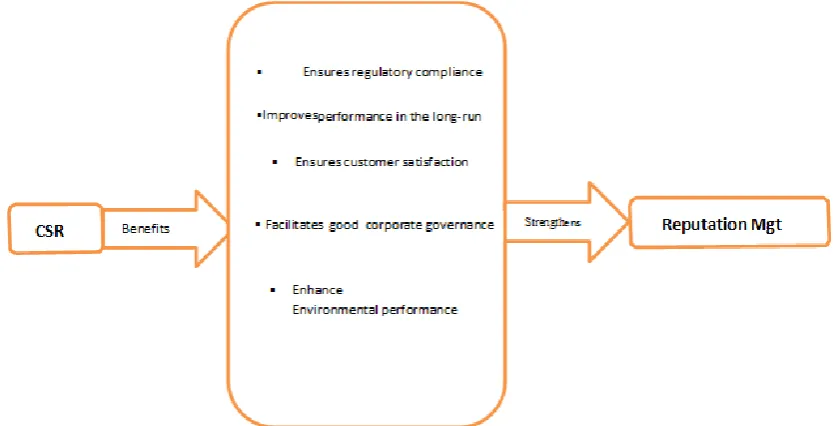
benefits emanating from the implementation of CSR initiatives are presumed to be the driving forces strengthening the reputation of most companies hence facilitate the RRM process as illustrated in Figure 2.
Figure 2: Link between CSR and Reputation Source: Author‘s Construct
CSR as a Factor of Dealing with Reputational Crisis in the Petroleum Industry
The desire to increase market value, improve financial performance, recruit and maintain efficient work force and communicate effectively with all stakeholders drives most companies to deal with their reputational crisis. According to Gupta, CSR is a strategy which demonstrates the way companies achieve their ethical standards, economic balance, environmental and social imperatives which addresses the concerns and expectations of stakeholders and legal responsibilities.
Most companies are quick to recognise early signs of reputational damage even though it may come to others as a surprise. Upon recognising the influence of CSR in Reputational Crisis Management (RCM), companies design and implement various CSR programs that are capable of changing any bad perception that stakeholders may have developed due to the reputational damage. As inspirational talk, CSR initiatives remain critical to reputational crisis management. Most companies in the petroleum industry in their quest to
maximise shareholder returns, often take advantage of absent or inadequate laws and regulatory standards, pollute and exploit local people and their resources so long as they can avoid liability in the process.
better societies. They also build strong partnerships with global regulatory and governmental bodies and work with them as a way of fulfilling their social responsibilities. They make every effort to earn employee and customer trust by creating conducive environment, quality products and services as way of maximising their satisfaction. Meeting the expectations of shareholders, investors and suppliers also become important as they try to maximise the company‘s value and adequately disseminate information for transparency purposes. As a risk management factor, CSR initiatives are believed to have the potential of mitigating operational impacts and providing the necessary support for building stronger internal and external relationships, thus CSR as a factor for dealing with reputational crisis.
To make the relationship between CSR and reputation clearer, different researchers have formulated various hypo research involving reputation and dimensions of CSR. Chun and Davies [53] studied the effect of corporate reputation on customer and employee satisfaction in an organisation. The results showed that components of corporate reputation strongly correlate with employee satisfaction.
Their study indicated that employees are satisfied when they are associated with organisations with recognised reputation. They further demonstrated that CSR as an initiative can also drive employee satisfaction. The general conclusion i n d i c a t e s t h a t t h e r e i s l i n k a g e b e t w e e n c o r p o r a t e r e p u t a t i o n , e m p l o y e e ‘ s satisfaction and CSR. Also analyses the influence of CSR on behavioural intentions of both customers and non-customers. They found positive relationships between behavioural intentions of both customers and non-customers and corporate reputation also delved into the social discourse. Their research revealed that corporate reputation is best managed by companies through the implementation of CSR programs. The result showed that there is a positive relationship between customers‘evaluation of CSR and corporate reputation; hence any company that places importance on it CSR initiatives is in a better
position to manage its corporate reputation exceptionally well.
And also analyse the effect of behavioural intentions, customer loyalty and affective commitment on corporate reputation. These studies indicated that behavioural intentions, customer loyalty and affective commitment are perceptions influenced by CSR programs. As influential as they are, their collective effect has the potential to build or damage the corporate reputation of companies. The findings from these works showed that behavioural intentions, customer loyalty and affective commitment play important roles on corporate reputation, hence positive relationships between CSR and Corporate reputation.
Methodology and Data Analysis
Methodology and Research Findings IntroductionThis chapter presents the method employed in gathering data for the analysis of this research. It describes the sample, the instrumentation used and the reasons why the sample size and technique are being chosen. It also presents the findings in the form of tables and figures.
Research Methodology
The study is a primary and secondary research as it employs both primary and secondary sources of collecting data. The study adopts primary research option in order to ensure consistency in the perspective of the responses. It is also adopted as a way of checking biases and limiting the number of inaccuracies that might arise from the responses.
size, quantitative analysis is necessary. The study employs a quantitative option because of the large number of respondents it targeted. The quantitative analysis is to ensure that the researcher has no influence in the responses that would be gathered from the respondents, hence ensure objectivity in the analysis [55]. The study also adopted the quantitative approach in order to ensure that the finding it will generate will have an acceptable degree of accuracy, hence be statistically valid. In any human endeavour, statistical figures are not entirely reliable as they may not reflect the real situation on the ground.
The researcher has the option to observe, analyse and interpret the data from the statistical numbers. This creates the opportunity for this study to adopt the quality option of analysing data. This option allows the researcher to interview some respondents, probe into issues that are not captured by the questionnaire and opens the doors for the researcher to explore the responses in order to identify and clearly define the perceptions, opinions and feelings expressed by these respondents regarding the subject matter [54].
The study is an empirical research where respondents are interviewed either through interactions or questionnaires. In this case senior managers and other employees are given the opportunity to either answer the questionnaire or provide information relevant to the study. This is to widen the scope of the sources of information and ensure reliability in the findings from the study.
Sample
The emphases for the study were samples of senior managers, line managers, employees and customers in the UK petroleum industry. Different companies are chosen randomly due to difficulty in accessing some preferred companies. For customers, the study assumed that every citizen is a consumer of a petroleum product. It is based on this assumption that the study accidently chooses its respondents thus a total sample size of 30 respondents. This technique gives the opportunity to every manager, employee and customer to participate in the study.
The sample of 30 respondents consisting of 5 senior managers and 25 randomly chosen line
managers, employees and customers were interviewed and asked to fill in the accompanying questionnaire. Two different questionnaires were given out. One version purposely designed for senior managers and the other version for line managers, employees and customers.
However, these two questionnaires are interrelated and carry the same information providing the opportunity for a combined analysis of the responses from the two questionnaires. Senior managers are considered as a credible source of information that can provide relevant information on issues or policies relating to reputation risk management and the various CSR initiatives their companies do undertake. These senior managers were interviewed through this short questionnaire which contains questions relating to both RRM and CSR in the petroleum industry. Similarly, line managers, employees and customers were given the opportunity through the second questionnaire to give their views on the role CSR plays in managing reputation among companies in the petroleum industry.
As individuals whose perceptions about a company‘s activities have the potential to affect the image and operations of companies are considered important in understanding the relationship between the two concepts. The questionnaire which is in a printed format is given personally to some employees and customers.
But others who prefer to answer the questionnaire through their emails were given the opportunity to do so. The responses from senior managers, line managers, other employees and customers through the interviews provides the study, the chance to draw it conclusion on the role CSR play in Reputation Risk Management in the petroleum industry.
Instrumentation
parts with a maximum of 18 questions. The first part contains 4 questions and its aim is to gather data regarding the demographic characteristics of the respondent. Part two contains 3 scaled-based questions put in a form of a table and 3 multiple-choice questions whiles the third section contains 6 close-ended questions (Yes or No).
The last section contains 2 open-ended questions whose aim is to allow the respondents express their opinion on the subject matter. The variety of questions is to give the respondents a chance to independently express their views. This helped to prevent the researcher from directing the responses and to remain unbiased.
The distribution of the questionnaires and interviews took place in the months of June, 2013 and July 2013. Most of the interviews are conducted on a face-to-face basis. During this time, some relevant notes were taken, but most respondents declined for their responses to be recorded electronically. Even though the study is open to everyone interested in the activities of the petroleum industry, it targeted special groups and organisations, companies and professional individuals who have prior knowledge regarding the activities of companies in the petroleum industry.
Some of these professionals were interviewed during conferences such as the Global Energy Career Expo held in Aberdeen, through institutional membership such as Energy institute, SPE and AIPN in the UK. Some companies such as Tullow, BP and Shell were contacted and visited. But, most of them declined to be granted interviews due to their company‘s policies.
However, they provided their annual reports and other relevant materials which contain answers to some of the questions in the questionnaires. Customers on the other hand are presented with the questionnaire and they are required to respond accordingly by completing the questionnaire themselves from which the study would make it analysis. Research Findings
The research findings are obtained from the responses given by respondents through the questionnaire. These findings include the socio-demographic characteristics of all the respondents and views regarding RRM and CSR from senior managers, employees and customers as the respondents.
Socio-demographic Characteristics
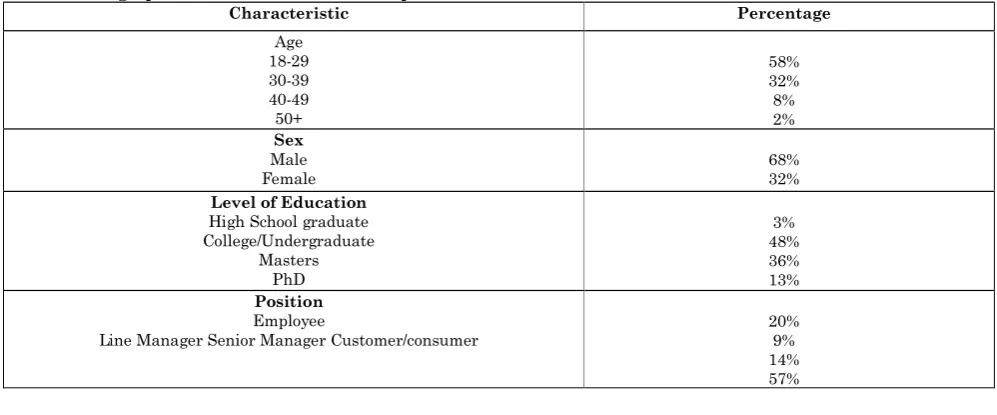
This part deals with the age, sex, level of education and position of all the respondents. Table 5.1 provides a description of the sample characteristics.
Table 1: Demographic characteristics of the sample
Characteristic Percentage
Age 18-29 30-39 40-49 50+
58% 32% 8% 2% Sex
Male
Female 68% 32%
Level of Education High School graduate College/Undergraduate
Masters PhD
3% 48% 36% 13% Position
Employee
Line Manager Senior Manager Customer/consumer 20% 9%
14% 57%
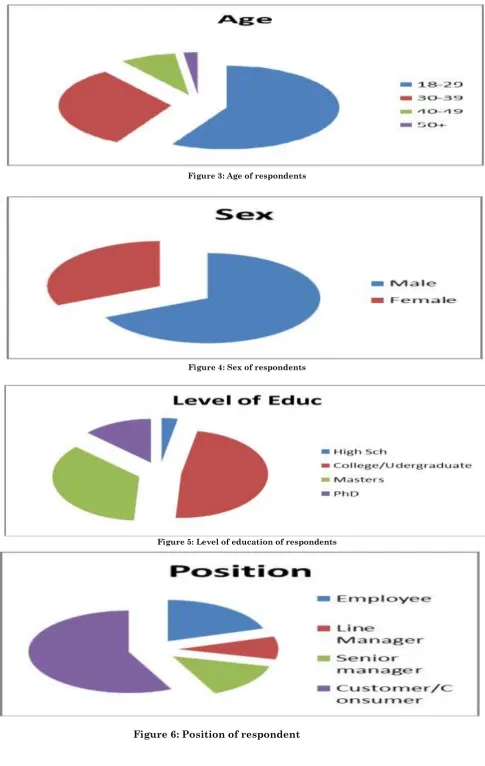
The above information is individually represented graphically in Figures 1, 2,
Figure 3: Age of respondents
Figure 4: Sex of respondents
Figure 5: Level of education of respondents
From Table 4.3.1, 68% of the respondents are males and 32% are females and their age ranges from 18 years to 50+ years. Also, 48% of the respondents have completed College or University with a diploma or a bachelor degree respectively whiles 36% had their graduate degrees. 13% of the respondents had a PhD and an insignificant percentage of 3 had completed high school. Of the respondents, approximately 57% are customers, 29% made up of line managers and other staff whiles 14% are senior managers.
Responses from interviews and questionnaire
These responses are from 5 senior managers, 9 employees and 16 customers.
Out of the 5 managers, 2 were interviewed and the other 3 answered the questionnaire through emails. 9 and 16 employees and customers responded to the questionnaires respectively. In total, 50 questionnaires were distributed. However, only 30 respondents answered the questionnaire. Question 1: Please indicate by ticking the appropriate box from 0 to 4 the importance of the list below in managing the reputation of companies? This question is aimed at investigating the importance of some element in RRM. Table 4.3.2 illustrates the percentage of the responses.
Note: 0=NI-Not Important; 1
=SI-Somehow I m p o r t a n t ; 2 =I-Important;
3 =VI-Very Important; 4=EI-Exceptionally
Important
Table 2: Percentages of responses on the importance of drivers in RRM
NI SI I VI EI
Regulatory Compliance (RC) 0 0 0 0 100%
Financial Performance (FP) 0 0 0 40% 60%
Product Delivery (PD) 0 0 20% 40% 40%
Corporate Responsibility (CR) 0 0 20% 60% 20%
Work place talent and culture (WT) 0 0 20% 60% 20%
Communication (C) 0 0 0 40% 60%
Corporate Governance and Leadership (CGL) 0 0 20% 20% 60%
Delivering Customer promises (DC) 0 0 20% 60% 20%
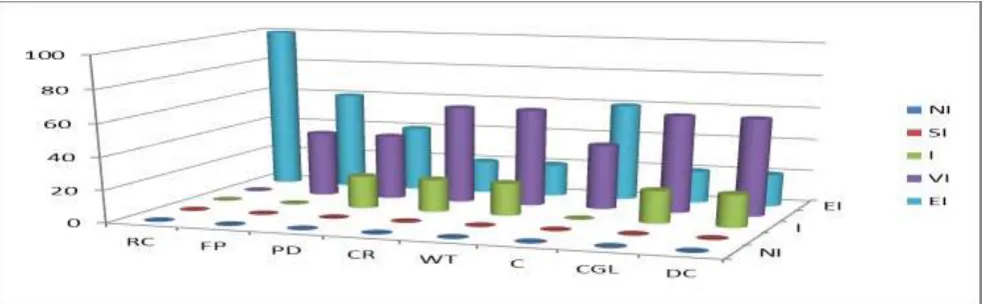
Figure 7 shows the graphical representation of the data in the table above.
Figure 7: Frequency of Importance of some elements in RRM
From Table 4.3.2, 100% of the respondents attest to that fact regulatory compliance exceptionally important to RRM, 40% and 60% answered very important and exceptionally important to financial performance respectively, whiles 40% answered either very important or exceptionally important to product delivery
elements. This second question was directed to only senior managers. They were asked about their agreement to following statements as they relate to their companies
in terms of RRM. This is aimed at obtaining information regarding the existence of RRM policies.
Table 3: illustrates their responses.
Note: 0=SD-Strongly D i s a g r e e , 1=D-Disagree,
2=PD-Partially Disagree, 3=Agree, 4=SA-Strongly Agree
Table 4: Percentage of responses on agreement to RRM policies
SD D PD A SA
A set of policies are designed and implemented towards managing reputation risk
A 0 0 0 0 100%
Our risk policies are incorporated within our corporate
strategy B 0 0 0 0 100%
A more integrated and holistic approach/process is required
for managing reputation risk C 0 0 0 20% 80%
Our concern is the social needs of our stakeholders,
therefore we initiate programmes to meet those demands D 0 0 20% 40% 40%
We include CSR initiatives in the reputation risk
management process E 0 0 0 30% 70%
The above responses are graphically represented in figure 8
Figure 8: Frequency of agreement to RRM policies
From the Table 4.3.3, 100% of managers strongly agree that there exist a set of policies for managing reputation which are incorporated within their corporate strategy. Also, 70% strongly agree that, they include CSR initiatives in their reputation management process and30% just agree they do same. 80% and 20% strongly agreed and agreed respectively that a more holistic approach is required for managing reputation
risk. 80% both strongly agreed and agreed that, the social needs of their stakeholders are important, thus they initiate programs to meet those needs. However, 20% partially agreed to that assertion. None of them either strongly disagree or disagree to any of the statements as indicated in table 4.3.3. The third question aims at investigating the importance of CSR initiatives to stakeholders in the petroleum industry.
Table 5: Percentage of response on the importance of CSR to Stakeholders
Response Percentage
Not Important 0
Somehow Important 0
Important 0
Very Important 40%
exceptionally Important 60%
Figure 9 shows the graphical illustration of the above responses
Figure 9: Pie Chart showing the importance of CSR initiative to Stakeholders
From Table 4.3.4, 60% of the managers responds to the fact the CSR initiatives remain exceptionally important to stakeholders while 40% response shows that CSR initiatives are very important. However, none of them answered; not important, somehow important or important as indicated
in the table above. The fourth question is aim at investigating the factors which drive companies to get involve in CSR initiatives. This was also directed to only managers, but a related question is being posed to customers as well. Summary of the responses are illustrated in Table 4.3.5.
Table 6: Percentage of responses of factors driving CSR in initiative in the petroleum industry (Managers responses)
Factors percentage
A Improving stakeholder management and relationships 100%
B Improving economic performance 80%
C Meeting client's requirements & expectations 80%
D Improving environmental performance 100%
E Enhancing company's reputation 100%
F Increased efficiency and productivity 60%
G Gaining a competitive advantage 80%
H Improving relationship with the community 100%
The above is graphically illustrated in figure 10.
From the Table 4.3.5, 100% of the responses indicate that improving stakeholder management and relationship with communities, environmental performance and enhancing company's reputation drives companies into CSR initiatives. 80% indicate that improving economic performance, meeting client's requirements & expectations and gaining a competitive advantage drives CSR initiatives whiles 60% indicated increased
efficiency and productivity as a driver. In a related question 5, employees and customers are asked the extent to which they agree to the following benefits emanating from the implementation of CSR initiatives. The responses are summarized in table 4.3.6.
Note: 0=SD-Strongly Disagree, 1=D-Disagree, 2=PD-Partially Disagree, 3=Agree, 4=SA- Strongly Agree
Table7 : Percentage of response of the extent to which employees and customers agree with benefits of CSR initiatives to companies
SD D PD A SA
Enhanced company reputation 0 8% 0 40% 52%
Improved financial performance in the future 0 12% 0 24% 64%
Improve customer satisfaction 0 20% 0 40% 40%
Better risk management 0 40% 0 44% 16%
Established better relationship with stakeholders 0 0 0 40% 60%
Improved environmental performance 0 0 0 60% 40%
From Table 4.3.6, 52% of the respondents strongly agree that a company can enhance its reputation through CSR implementation and 40% agree to the same assertion. 8% turn to disagree. 60% also strong agree that CSR initiatives can establish better relationship with stakeholders while 40% agree and no respondent either strongly disagree, disagree or partially disagree. 40% either
strongly agree or agree that a company can achieve customer satisfaction through CSR implementation whiles 20% however disagrees as shown on the table above. The following Yes or No questions were asked. The aim is to investigate whether CSR initiatives forms part of the risk management process of companies. The responses are summarized in Table 4.3.6
Table 8: Percentage of Yes or No questions regarding CSR and RRM
Questions Yes No
A Are there policies in your company for managing reputation risk? 100% 0%
B Are these policies effective in managing the reputation of your
Company?
100% 0%
C Does your company currently have any CSR commitments? 100% 0%
D In your opinion, do you think CSR commitments play any role in
Managing the reputation of your company? 100% 0%
E Do you think having CSR programme(s) gives your company any
Competitive advantage over other companies in your industry?
80% 20%
F Do you think this competitive advantage can enhance the reputation of
your company
60% 40%
The above responses are graphically illustrated in figure 11.
From the Table, 100% of the respondents answered yes to show that there are effective policies for managing reputation risk. The responses also show that companies have CSR initiatives in place and they play an important role in RRM. 80% also answered yes to indicate that having CSR programs in place gives a company competitive advantage and 60% answered yes to show that the competitive advantage gain can enhance reputation. However, 40% and 20% answered no to show that having CSR programs does not necessarily give a company competitive advantage or the enhance reputation of their companies.
Data Analysis Introduction
This chapter seeks to present quantitative and qualitative analysis of the data gathered on the role CSR plays in managing reputation risk. To achieve this, it adopts and draws insight from the use of the Reputation Quotient (RQ) and the benefits of corporate social performance dimensions.
Analysis and Results
In order to understand the role CSR plays in RRM, it is important to treat reputation as a separate concept on one hand and CSR on the other hand. A simple linear regression is expressed to show the relationship between the two concepts. This method has been used by Davies, Chun, da Silva, and Roper [56]. However, they expressed reputation as a function of image and identity. Drawing insight from their literature, reputation is expressed as follows:
Reputation= f (benefits of CSR
implementation)
Where the benefits of implementing CSR programs include
Ensures regulatory compliance (ER)
Improves financial performance (IFP)
Establishes better relationship with
stakeholders (EBR)
Enhances corporate responsibility (ECR)
Improves customer satisfaction (ICS)
Promotes effective communication (PEC)
Improves environmental performance (IEP)
Promotes good corporate governance and leadership (PGCGL)
Ensures work place talent, culture and safety (EWTCS)
Promotes product delivery (PPD)
Hence Reputation (R) = f (ER, IFP, EBR, ECR, ICS, PEC, IEP, PGCGL, EWTCS, PPD) Therefore, managing reputation depends on the above mentioned items (regulatory compliance, financial performance, better relationship with stakeholders, corporate responsibility, customer satisfaction, effective communication, environmental performance, corporate governance and leadership, work place talent, culture and safety and product delivery).
These elements are chosen in the sense that both reputation and CSR are perceptual, hence considering these elements caters for the aggregate perceptions of employees, customers and the community as they are the major stakeholders. However reputation is measured by Reputation Quotient (RQ) [57].
This is because RQ as a framework, reflects the aggregate perception of multiple stakeholders about the activities of the company, hence the most suitable to be considered. To measure these items, a four-point scales (0=Not important at all, 1=somehow important, 2=important, 3=very important, 5= exceptionally important) is been developed based on the responses received from stakeholders. Table 5.1 illustrates the results.
Table 9: Analysis of responses based on RQ scale rating for the drivers of reputation
Drivers of reputation No. of
stakeholders rating Scale Weight
Regulatory compliance 30 4 Exceptionally import.
Financial performance 30 4 Exceptionally import.