Polysubstance Use Associated with Lower Distress Tolerance Compared to Single-Substance Use
Elizabeth Jones
University of North Carolina at Chapel Hill Spring 2015
A thesis presented to the faculty of The University of North Carolina at Chapel Hill in partial fulfillment of the requirements for the Bachelor of Arts degree with Honors in Psychology.
______________________________
Advisor: Reader:
Acknowledgments
Abstract
Polysubstance users face a number of severe outcomes in comparison to single-substance users. In line with negative reinforcement theory, it has been postulated that polysubstance use occurs as a result of the desire to avoid unwanted effects that come from using either a stimulant or depressant alone. The current study examined a proxy for negative reinforcement behavior, distress tolerance (DT), among single-substance and depressant-stimulant polysubstance users. DT is defined as the ability to persist in a goal-directed behavior while experiencing
Polysubstance Use Associated with Lower Distress Tolerance Compared to Single-Substance Use
Background on Polysubstance Use
Polysubstance users are at a high risk for many negative outcomes. Mixing drugs may produce unique, more detrimental effects compared to using one drug alone (Leri, Bruneau & Stewart, 2003). Polysubstance users have a higher rate of both non-fatal and fatal drug overdose compared to single-drug users (Coffin et al, 2003), and 58.8% of illicit drug-related emergency room visits involve two or more drugs (SAMHSA, 2012). Polysubstance users are also more likely to engage in injection drug use, be incarcerated, and attempt suicide (Martinotti, Tedeschi, Giannantonio, Roy, Janiri & Sarchiapone, 2009; SAMHSA, 2012; Trenz, Scherer, Harrell, Zur, Sinha & Latimer, 2012). These findings indicate a more severe clinical profile in comparison to single-drug use.
Polysubstance use has been conceptualized varyingly throughout the literature. While some studies have defined it as using more than one drug (Branson, et al., 2012; Florsheim et al., 2007; Oakland & McChargue, 2014), others use three or more drugs as the criteria (Trenz, Scherer, Harrell, Zur, Sinha & Latimer, 2012). In addition, some studies refer to polysubstance use as meeting dependence criteria for one drug while also using another (Bierut, Strickland, Thompson, Afful & Cottler, 2008; Combs, Soares, O’Connell & D’Angelo, 2004), while others use the term to mean any use of multiple drugs in a given period of time (Moss, Chen & Yi, 2014). There are currently no diagnostic criteria in the Diagnostic and Statistical Manual Fifth Edition (DSM-V) for polysubstance abuse or dependence, as it was removed due to an effort to focus on individuals’ drugs of choice (American Psychological Association, 2013). In the current
in a 12-month period. Using this definition allows us to include more drug users than using criteria of three or more drugs, and also prevents potential bias that may come from only examining individuals who meet criteria for dependence.
In addition to the varying definitions of polysubstance use in the literature, there are multiple theories behind polysubstance use. One theory suggests substance users combine drugs in order to produce a “synergistic” effect, such that multiple drugs produce a better high than one alone. In addition, using one drug may lower individual’s inhibitions and prompt initiation of
other drugs, resulting in polysubstance use (Leri, Bruneau, & Stewart, 2003). In the current study, we will examine a particular pattern of polysubstance use involving the combination of stimulants and depressants, and the role distress tolerance (DT) may play in potentiating this pattern of use. In this introduction, we will first discuss how the negative reinforcement model can be applied to this pattern of stimulant-depressant polysubstance use. We will then discuss how distress tolerance will be used as a measure of negative reinforcement behavior, and specifically how low DT may be implicated in polysubstance users.
Negative Reinforcement Model Classical Theory
In order to understand the mechanisms underlying polysubstance use, it is helpful to examine the theory behind substance use in general. One classical theory of addiction is the negative reinforcement model. This model originally proposed that individuals use drugs in order to escape withdrawal symptoms, and the relief of these symptoms reinforces the drug use
The feelings enter individuals’ consciousness, causing an increase of “hot processing” and
decrease in cognitive control, and eventually leads to renewed drug use. Drug use becomes more incentivized due to increasing levels of negative affect and the desire to get rid of this negative internal state. Along with this model, Koob and Le Moal (1997) proposed drug addiction may result from and potentiate “spiraling distress”, a consistent failure in self-regulation leading to
negative affect and distress. The authors propose that drug use returns individuals to homeostasis through alleviating this negative state, thereby returning the body to a state of equilibrium. Taken together, these theories suggest drugs are used to relieve negative internal states, which in turn reinforces the pattern of use. In the current study, we seek to examine negative
reinforcement behavior in polysubstance use. Literature on Polysubstance Use
Although not directly linked in the literature, much of the existing data and theory on polysubstance use supports the negative reinforcement model. A consistent finding among studies examining patterns of polysubstance use is that individuals intentionally pair drugs based on their differing effects on the body. Subsequent drugs may be used to counterbalance and alleviate negative, unwanted effects of a first drug. For example, primary cocaine users may use heroin to ease the “over-excitability” caused by cocaine, whereas primary heroin users may use
counteract one another, whereas a chronic heroin user may concurrently use cocaine to counteract unpleasant symptoms (Hopper et al, 2006; Leri, Bruneau & Stewart, 2003). On a survey examining the functions of different drugs, individuals most commonly reported using alcohol in order to “ease after effects” of other drugs such as cocaine (Boys, Marsden and Strang,
2001). In another study involving qualitative interviews with college students, individuals reported strategically choosing combinations of drugs in order to manage one another, such as smoking marijuana in order to fall asleep after taking an Adderall pill (Quintero, 2009). These findings support the theory that polysubstance users choose to use additional substances in order to alleviate potential negative effects of a primary drug of choice. In line with the negative reinforcement model, the relief of negative affect may reinforce the use of a subsequent drug. Functional Uses of Stimulants and Depressants
(Hartwell et al., 2012; Rigg & Ibañez, 2010; Witteveen, van Ameijden, Prins, & Schippers, 2007).
Stimulants, by contrast, elevate blood pressure and heart rate by acting on the brain’s
monoamine neurotransmitters, increasing alertness and energy levels (NIDA, 2014c). Motives for cocaine use are most often reported as to increase energy and to enhance experience (Hartwell et al., 2012). Individuals also report using cocaine and prescription stimulants
whenever drinking alcohol in order to be mentally clear (Low & Gendaszek, 2002; van der Poel, Rodenburk, Dijkstra, Stoele, & van de Mheen, 2009). Motivations for using methamphetamine were also reported to increase energy, as well as to lower inhibitions in sexual situations (Kurtz, 2005).
Examining the effects of stimulants and depressants demonstrates the two’s opposite functions for drug users. Given the current literature on polysubstance use, users may deliberately choose certain drug combinations in order to avoid the negative effects of a
particular drug, and in line with this theory, the most effective combinations would be therefore drugs whose effects counterbalance one another. For this reason, the current study will
specifically look at polysubstance users who combine stimulants and depressants. Distress Tolerance and Polysubstance Use
consider negative affective states unacceptable and engage in behaviors to quickly relieve them. Distress tolerance has been studied among substance users and is associated with an increased frequency of substance use (Brandon et al., 2003), as well as poor treatment outcomes, including shorter length of abstinence attempts and early treatment drop out (Brown et al, 2009; Daughters et al, 2005a; Daughters et al., 2005b.) In addition, distress tolerance moderates the association between depressive symptoms and alcohol use, such that individuals with depressive symptoms who are low in distress tolerance were more likely to abuse alcohol (Gorka, Ali & Daughters, 2012). Distress tolerance also serves as a moderator in relationships between personality traits and substance abuse, such as those involving impulsivity and trait aggression (Ali et al, 2013; Marshall-Berenz, Vujanovic, & MacPherson, 2011; Tull & Gratz, 2013). It is associated with coping motives for substance use, suggesting substances are used to escape intolerable negative feelings (Simons & Gaher, 2005; Zvolensky et al, 2009). These findings support the use of DT as an indicator of negative reinforcement behavior and implicate low DT as a unique risk factor in substance abuse and dependence.
Drawing from the negative reinforcement model, we hypothesize that individuals with low distress tolerance may be especially likely to engage in polysubstance use upon experiencing any unwanted effects or from their primary drug of choice that induce a negative affective state. Individuals who are unable to tolerate such a negative internal state may seek out more
studies have examined this relationship using a behavioral measure of distress tolerance or by examining certain drug class combinations.
Risk Factors for Polysubstance Use
Given the current investigation will test distress tolerance as a potential risk factor for polysubstance use, it is lastly important to examine other known risk factors and correlates influencing polysubstance use. Polysubstance use is associated with certain personality traits. Individuals scored high on impulsivity, aggression, and sensation seeking, and low on
conscientiousness and aggression (Conway et al., 2003; Hakansson, Schlyter & Berglund, 2011; Kelly & Parsons, 2008). It is also is associated with childhood abuse and maltreatment (Armour, Shorter, Elahi, Alklit & Christofferson, 2014; Martinotti et al, 2009; Hakansson, Schlyter & Berglund, 2011). Early drug use may be an additional risk factor polysubstance use, as earlier age of initiation was associated with a higher number of drugs used later in life (Darke, Kaye, & Torok, 2012).
reasoning among polysubstance users compared to controls, scoring lower on both descriptive and social contract rules using the Wason selection task. Polysubstance users also performed worse than controls on tasks related to working memory, decision-making, and inhibitory control (Verdejo-García & Pérez-García, 2006). There is also evidence from studies of the brain to support these findings. Polysubstance users showed metabolic abnormalities in the dorsolateral prefrontal cortex and lower GABA levels in the anterior cingulate cortex compared to alcoholics alone while performing a series of working memory tasks, indicating neural dysfunction and deficits in cognition (Abé et al., 2012). Polysubstance users’ prefrontal cortex was also found to be smaller in volume compared to controls, implicating possible deficits in executive functioning (Liu, Matochik, Cadet & London, 1998).
These findings demonstrate a number of risk factors and negative outcomes unique to polysubstance users in comparison to both single-substance and non-substance using individuals. This literature corroborates the current study’s aims to examine distress tolerance as another potential risk factor for polysubstance use.
Current Aims
The current study will examine the relationship between distress tolerance and
polysubstance use. Specifically, it is hypothesized that a) polysubstance users will have lower distress tolerance compared to single-substance users; and b) polysubstance users who combine stimulants and depressants will have lower distress tolerance compared to single drug users or stimulant-only and depressant-only polysubstance use combinations.
This study used data collected as part of a larger randomized control trial, which examined the effectiveness of a behavioral activation treatment among substance users. The current study originally included 185 participants. Seventeen participants’ data were not included due to either having technical difficulties with the distress tolerance task (n = 9) or meeting criteria for depressant-only polysubstance use (n = 8; see “Substance Use and Sample
Exclusions” in Results section for a description of drug use exclusion criteria). The final sample
included 176 participants. The sample aged from 19 to 72, the average age being 43.56 (SD = 10.89). The sample was predominantly male (67.6%, n = 119) and African-American (92.0%, n = 162). Less than half of participants (46.6%) had a high school education or an equivalent. Fifty four percent (n = 95) of participants earned less than 10,000 a year in household income, and 79.5% (n = 140) were unemployed. The majority of the sample was single (65.3%, n = 115). Lastly, 68.8% (n = 121) of participants’ treatment was court-mandated.
Procedure
Participants were recruited from a residential treatment center located in Washington D.C. All interested individuals were invited for an interview to confirm their eligibility. Participants had to be between ages 18-65. Exclusion criteria were based on having limited mental competency (scoring <23 on the Mini Mental State Examination), psychosis, or having used psychotropic medication for 3 or less months. If eligible, participants were included in the study where they completed the assessment during the first week of their treatment. This
current proposal, namely a substance use history questionnaire, the Beck Depression Inventory (BDI-II; Beck, Steer & Ball, 1996), Beck Anxiety Inventory (BAI; Beck, Epstein, Brown & Steer, 1988), and the Eysenck I7 Impulsivity Questionnaire (I7; Eysenck. & Eysenck, 1985). They then completed a computerized behavioral distress tolerance task, the Paced Auditory Serial Addition Task (PASAT-C; Lejuez, Kahler, & Brown, 2003). Participants received $25 for completing the assessment. Participants were then randomized to a treatment condition, however all procedures for the current study occurred during the first assessment, prior to randomization. Measures
Demographics and Screening
Participants provided sociodemographic information on their age, race/ethnicity, education level, marital status, employment status, and annual household income.
The Mini- Mental State Examination (MMSE; Folstein, Folstein & McGufh, 1975) was administered to test patients’ mental competency. This is a 30-item measure, scored from 0-30, with a score of 24 or less signifying impaired cognitive functioning. It takes 5-10 minutes to complete. The MMSE has been validated using a range of populations, including in clinical settings. A Use of Medications form was administered, where participants indicated the type, frequency, and dose of any medications they used along with the reason for taking it.
Substance Use
times a month”, “2 to 3 times a week” and “4 or more times a week”. The questionnaire covered
11 substances: cannabis, alcohol, cocaine, ecstasy, stimulants, sedatives, opiates, hallucinogens, PCP, inhalants, and nicotine. Specifically, the question “About how often did you use [drug name] in the past 12 months?” was used to determined drug use status. A cutoff score of ≥3 on
the Likert scale, indicating at least biweekly use, was used to categorize individuals as users or non-users.
Individuals were only included in the sample if they used at least one stimulant or depressant. Cocaine and methamphetamine were categorized as stimulants (NIDA, 2014b), and alcohol, opioids, and sedatives were categorized as depressants (NIDA, 2014a; NIDA, 2014c). Polysubstance use was defined as meeting criteria for use of two or more drugs. These
individuals were then divided into three categories: depressants only, defined as having used two or more depressants and no stimulants; stimulants only, defined as having used two or more stimulants and no depressants; and depressant-stimulant, defined as having used at least one stimulant and at least one depressant.
Distress Tolerance
The Computerized Paced Auditory Serial Addition Task (PASAT-C; Lejuez, Kahler, & Brown, 2003) is a computerized task designed to measure distress tolerance by eliciting
latency is titrated based on individuals’ performance. It is then halved in the last minute of the phase, becoming extremely difficult. The last level is the Quit phase, where the latency continues at this difficulty, eliciting forced failure and distress. Participants are told they can quit at any time during this phase. Distress tolerance is measured as quit (low DT) or no quit (high DT). During the task, participants are also asked to self-report their level of distress on a 100-point Likert scale, with 0 being none and 100 extreme. The ratings occurred during the tasks in between level-difficulty changes, providing momentary assessments of anxiety and discomfort levels.
Potential Covariates
Because polysubstance users were found to have higher rates of Axis I and II disorders in comparison to single-substance users (Preti, Prinnas, Ravera & Madeddu, 2010; Martinotti et al, 2009), comorbid diagnoses were assessed to ensure that any differences between the two groups were not due to differences in psychopathology. The Structured Clinical Interview for DSM-IV Axis I disorders I; First, Spitzer, Gibbon & Williams, 1997) and Axis II disorders (SCID-II; First, Spritzer, Gibbon, Williams & Benjamin, 1994) were used to assess current
psychopathology. Both measures have been utilized extensively in clinical research and shows good internal consistency across diagnoses (α = .71-.94; Maffei et al, 1997).
Depression was specifically found to be higher in polysubstance users compared to single-substance users (Daniulaityte, Falk, Wang & Carlson, 2009; Masloawky, Schlenberg & Kloska, 2013), and thus depressive symptoms were included as a covariate. The Beck
severe depression. The BDI-II has excellent internal consistency in community samples (α =.92; Beck, Steer & Ball, 1996) and among substance users (α = .92; Magidson et al, 2013). Anxiety
symptoms were also found to be higher in polysubstance users compared to single-substance users (Oakland & McChargue, 2014) and will be included as a potential covariate. The Beck Anxiety Inventory (BAI; Beck, Epstein, Brown & Steer, 1988) was use to assess anxiety symptoms Developed after the BDI-II in order to minimize its overlap with depressive
symptoms, the BAI is also a 21-item self-report questionnaire with scores ranging from 0-62. A score of 0-7 indicates a normal mood, 8-15 mild anxiety, 16-25 moderate anxiety, and 26-63 severe anxiety. The BAI has shown strong internal consistency in community and substance using samples (α=.92; Beck, Epstein, Brown & Steer, 1988; α=.91; Steer, 1995).
In addition, impulsive personality traits were found to be prevalent among polysubstance users (Hakansson, Schlyter & Berglund, 2011). To assess impulsivity as a potential covariate, the I.7 Impulsiveness Questionnaire (I.7; Eysenck. & Eysenck, 1978) was used. It is a 54-item, self-report questionnaire in a yes/no format. The scale assesses impulsivity using either a total score or among three subscales: impulsiveness, venturesomeness, and empathy. The current study used the total score as a measure of impulsivity. The I7 has shown good internal consistency in
community and substance using samples (α=.82; Hayaki, Anderson & Stein, 2006). Analytic Plan
analyses. Logistic regression analyses were utilized to examine the unique effect of DT on substance use group, with covariates entered in Step 1, and DT entered in Step 2.
Results Substance Use and Sample Exclusions
In Table 1, the sample was categorized into polysubstance users and single-substance users. Because only eight participants met criteria for depressant-only polysubstance use, and zero participants for stimulant-only polysubstance use in the original sample, we only used depressant-stimulant polysubstance users in our analyses. Overall, 40.3% (n = 71) of the sample met criteria for depressant-stimulant polysubstance use. Table 2 indicates frequencies of use of each drug in the sample using the cut-off score of ≥3 on the substance use questionnaire. Alcohol and cocaine were the most widely used drugs in the sample.
Identification of Covariates
Potential covariates were analyzed for their relation with substance use category (single or poly) and reported in Tables 3 and 4. Age was significantly related to substance use group, such that polysubstance users were older (M = 47.22; SD = 8.62) than single-substance users (M = 41.44; SD = 11.75). Neither additional demographic characteristics, psychiatric comorbidities, marijuana use, depressive and anxiety symptoms, nor impulsivity were related to substance use category.
Distress Tolerance
Using participants’ data from the PASAT-C, several relationships were analyzed in order
25.91, SD = 23.36) to post (M = 31.33; SD = 25.73) task [F(1, 174) = 24.39, p<.001], indicating the task was psychologically stressful. Change in reported distress pre to post task was related to distress tolerance [F(1, 174) = 3.88, p = .05], such that participants who showed low DT
experienced a higher increase in negative mood (M = 9.65; SD = 18.12) compared to those with high DT (M = 4.15; SD = 14.85). The number of correct responses during the first two levels of the task measured skill (M = 5.49, SD = 3.15). Skill level was not related to DT [F(1, 175) = 1.45, p = .231], demonstrating participants’ distress tolerance did not depend on how well they performed during the task.
Distress Tolerance and Polysubstance Use
As displayed in Table 5, a logistic regression was conducted to examine the hypothesis that depressant-stimulant polysubstance users have significantly lower distress tolerance than single substance users. Variables that were significantly related to substance use category (i.e., age) were entered into Step 1. Distress tolerance was entered in Step 2 to determine its unique effect on polysubstance use. Step 1 was significant, where age predicted substance use group such that for every one year increase in age, individuals were 5% more likely to be a
polysubstance user. In Step 2, DT emerged as a significant predictor of substance use group above and beyond age, and the complete model remained significant, χ 2
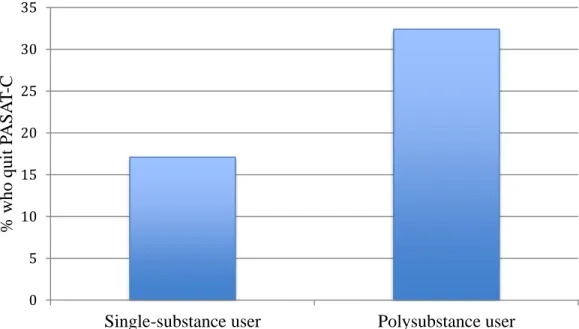
(2) = 15.53, p < .001. Specifically, those who demonstrated low DT were 2.4 times more likely to be a polysubstance user compared to those with high DT (Wald = 5.46, p < .05; OR = 2.40, 95% CI = .1.15-5.01). As illustrated in Figure 1, 17.1% of single-substance users compared to 32.4% of polysubstance users demonstrated low distress tolerance on the PASAT-C. Given the sample limitations, we were not able the address the study’s second aim of examining distress tolerance between
Discussion
In the current study, data from drug users in a residential treatment center were used to examine the relation between polysubstance use and distress tolerance. As predicted, depressant-stimulant polysubstance users evidenced significantly lower distress tolerance on the PASAT-C compared to single substance users, which was significant above and beyond the covariate age. The second aim of the study was to examine DT among different groups of polysubstance users. However, due to sample limitations, depressant-stimulant polysubstance use was the only category that could be formed, and no meaningful analyses could be completed.
The study’s findings provide support for the hypothesis that polysubstance users have
decreased tolerance to experiencing psychological distress, and may be likely to engage in behaviors (e.g., reinitiating drug use) to alleviate such negative affective states. Given the known associations between distress tolerance and relapse behaviors, we specifically used distress tolerance in this study as a measure of this negative reinforcement behavior commonly seen in addiction (Baker et al., 2004; Wikler, 1948). Based on existing literature that polysubstance users use drugs to counteract unwanted effects of a first drug (Boys, Marsden, & Strang, 2001; Leri et al., 2001; Quintero, 2009), one potential explanation for polysubstance users’ observed low DT could be the inability to tolerate psychological distress resulting from a primary drug of choice. In an effort to rid this distress, subsequent drugs may be taken whose effects can alleviate
negative state (e.g., alcohol to relieve irritability resulting from a cocaine high), which negatively reinforces this pattern of use. Single substance users may be less affected by low distress
“comedown”, better than a polysubstance user who needs additional substances to alleviate this
distress. While our results support this hypothesis and are in line with qualitative data from drug users who report these processes (Quintero, 2009), the findings are merely suggestive, as we did not directly examine this theory.
In regard to the study’s second aim of comparing different polysubstance use groups, the
lack of individuals in the stimulant-only (n = 0) and depressant-only categories (n = 8) is corroborative of the study’s hypothesized theory of polysubstance use. We hypothesized that
those two groups would have lower DT compared to depressant-stimulant users (n = 76). However, the overwhelming majority belonging to the latter category supports the study’s proposed theory that polysubstance use centers on the combination of drugs with opposing effects. Stimulants’ and depressants’ opposing effects may lend themselves to be used together
when the effect of one alone causes distress or discomfort. Based on this theory, we should expect polysubstance use involving two or more of the same drug class to be less common because it would serve no functional purpose, nor be reflective of negative reinforcement behavior because both drugs would provide the same effect. This was indeed the case in the current sample. Much of the polysubstance use literature examines depressant-stimulant combinations, specifically cocaine and depressant combinations (Brache, Stockwell &
Macdonald, 2012; Leri & Stewart, 2001; Lightowlers & Sumnall, 2014; Macdonald et al., 2015). Specifically, cocaine and alcohol combinations have been found to be especially common among polysubstance users and common in treatment populations (Pakula, Macdonald, and Stockwell, 2009). Despite not addressing our original hypothesis, our sample ultimately was in line with the literature in examining common patterns of drug use. In addition, using only
drug use, which we would not be able to do if we had grouped together all polysubstance users in comparing them to single-substance users.
There were several limitations to the study. First, multiple drug classes (marijuana, PCP, and ecstasy) were not used for categorization purposes, which may have limited the sample. Marijuana is a noteworthy exclusion because of its common use in the population. However, because marijuana does not clearly fit into the stimulant or depressant category, it was not used as inclusion criteria for stimulant or depressant polysubstance use. There were no significant group differences in weekly marijuana use between polysubstance and single-substance users, but weekly users who used other substances may have been left out of the polysubstance use category. There is consequently the potential that not all polysubstance users were captured in our results. In addition, the sample did not allow us to address the study’s second aim of
comparing distress tolerance across polysubstance use categories. The sample being primary depressant-stimulant polysubstance use is consistent with our hypothesis, but without being able to compare to other groups, we are not able to make any conclusions on potential differences among polysubstance users. Being able to compare these different groups would strengthen the study’s conclusion that there is a specific pattern of depressant-stimulant polysubstance use that
is different from other drug use patterns. A final limitation of the study is the demographic characteristics of the sample. The study used primarily middle-aged, low-income, African-American males from a residential treatment center. This may limit the generalizability of the study’s results to all substance users. Specifically, there are bodies of literature on young adult’s
2006; Sumnall & Cole, 2005). While our study adds to the polysubstance use body of literature, it is important to note that different drug use patterns and outcomes exist depending on the sample. Nevertheless, the current sample is generally underrepresented in the literature and merits research attention.
Despite these limitations, a number of implications can be drawn from the current study. First, these findings are relevant in the treatment of substance use disorders. Due to the known associations between distress tolerance and relapse or drug-seeking behaviors (Brandon et al., 2003; Brown et al, 2009; Daughters et al, 2005), polysubstance users may be especially likely to relapse after receiving treatment and may warrant special clinical attention. Because
polysubstance use may be the result of a negative reinforcement from specific drug
combinations, clinicians should seek to understand patient’s specific patterns of drug use. They should identify the patient’s specific drugs of choice and the functions of their interaction. This
could inform how a clinician intervenes with the individual. Psychoeducation could also be used to make individuals aware of their pattern of drug use, and that using multiple drugs may be serving to regulate their internal states. The American Psychiatric Association (APA) removed the diagnosis of polysubstance use disorder in the DSM-5 in an effort to promote clinicians having an in-depth understanding of all the patients’ drug of choice (APA, 2013). Polysubstance use disorder was used to diagnose individuals whose use of three or more drugs collectively impaired them, but no single drug’s use could account for their problems (APA, 1994). Based on these potential clinical implications, our findings may be in line with the APA’s new
individuals engaging in this pattern. Our findings thus have important clinical implications, as identifying the functions of specific drug combinations may be an essential part of treatment.
Further research should continue the current study’s attempt to theorize patterns of
polysubstance use. The current literature is consistent in its findings (i.e., that users combine stimulants and depressants based on the unwanted effects of one), yet lacks a consistent framework and language to make inferences on why this pattern of use occurs, and how these individuals are different from other types of substance users. Because we could not compare different types of polysubstance use due to sample restrictions, further research should
References
Abé, C., Mon, A., Durazzo, T. C., Pennington, D. L., Schmidt, T. P., & Meyerhoff, D. J. (2013). Polysubstance and alcohol dependence: unique abnormalities of magnetic resonance derived brain metabolite levels. Drug and Alcohol Dependence, 130(1), 30-37.
Adams Z.W., Kaiser A.J., Lynam D.R., Charnigo R.J., & Milich R. (2012). Drinking motives as mediators of the impulsivity-substance use relation: pathways for negative urgency, lack of premeditation, and sensation seeking. Addictive Behaviors, 37(7):848–55. doi:
10.1016/j.addbeh.2012.03.016
Ali, B., Ryan, J. S., Beck, K. H., & Daughters, S. B. (2013). Trait aggression and problematic alcohol use among college students: The moderating effect of distress tolerance. Alcoholism: Clinical and Experimental Research, 37(12), 2138-2144.
doi:10.1111/acer.12198
American Psychiatric Association. (2013). Diagnostic and statistical manual of mental disorders: DSM-5. Washington, D.C: American Psychiatric Association.
American Psychiatric Association. (2000). Diagnostic and statistical manual of mental disorders (4th ed., text rev.). Washington, DC: American Psychiatric Association.
Armour, C., Shorter, G. W., Elhai, J. D., Elklit, A., & Christoffersen, M. N. (2014). Polydrug use typologies and childhood maltreatment in a nationally representative survey of
Danish young adults. Journal of Studies on Alcohol And Drugs, 75(1), 170-178.
Baker, T. B., Piper, M. E., McCarthy, D. E., Majeskie, M. R., & Fiore, M. C. (2004). Addiction Motivation Reformulated: An Affective Processing Model of Negative Reinforcement. Psychological Review, 111(1), 33-51. doi:10.1037/0033-295X.111.1.33
measuring clinical anxiety: psychometric properties. Journal of Consulting and Clinical Psychology, 56(6), 893.
Bierut, L. J., Strickland, J. R., Thompson, J. R., Afful, S. E., & Cottler, L. B. (2008). Drug use and dependence in cocaine dependent subjects, community-based individuals, and their siblings. Drug and Alcohol Dependence, 95(1-2), 14-22.
doi:10.1016/j.drugalcdep.2007.11.023
Barrett, S., Darredau, C., & Pihl, R (2006). Patterns of simultaneous polysubstance use in drug using university students. Human Psychopharmacology 21(4), 255-263. doi:
10.1002/hup.766
Barrett, S. P., Gross, S. R., Garand, I., & Pihl, R. O. (2005). Patterns of
simultaneous polysubstance use in Canadian rave attendees. Substance use & misuse, 40(9-10), 1525-1537.
Boys, A., Marsden, J., & Strang, J. (2001) Understanding reasons for drug use amongst young people: a functional perspective. Health Education Research, 16(4), 457-469
doi: 10.1093/her/16.4.457
Brache, K., Stockwell, T., & Macdonald, S. (2012). Functions and harms associated with simultaneous polysubstance use involving alcohol and cocaine. Journal Of Substance Use, 17(5-6), 399-416. doi:10.3109/14659891.2011.583313
Brandon, T. H., Herzog, T. A., Juliano, L. M., Irvin, J. E., Lazev, A. B., & Simmons, N. V. (2003). Pretreatment task persistence predicts smoking cessation outcome. Journal of Abnormal Psychology, 112, 448–456
Branson, C. E., Clemmey, P., Harrell, P., Subramaniam, G., & Fishman, M. (2012).
Journal of Child & Adolescent Substance Abuse, 21(3), 204-221. doi:10.1080/1067828X.2012.689803
Brown, R. A., Lejuez, C. W., Kahler, C. W., Strong, D. R., & Zvolensky, M. J. (2005). Distress
toleranceand early smoking lapse. Clinical Psychology Review, 25(6), 713-733.
Brown, R. A., Lejuez, C. W., Strong, D. R., Kahler, C. W., Zvolensky, M. J., Carpenter, L. L., Niaura, R., & Price, L. H. (2009). A prospective examination of distress tolerance and early smoking lapse in adult self-quitters. Nicotine & Tobacco Research, 11(5), 493-502. doi: 10.1093/ntr/ntp041
Coffin, et al (2003). Opiates, cocaine and alcohol combinations in accidental drug overdose deaths in New York City, 1990-1998. Addiction, 98(6), 739-747. doi:10.1046/j.1360 0443.2003.00376.x
Colzato LS, Huizinga M, Hommel B (2009) Recreational cocaine polydrug use impairs cognitive
flexibility but not working memory. Psychopharmacology (Berl), 207(2), 225-234.
Combs, C. M., Soares, J. J., O'Connell, J. V., D'Angelo, L. J., & Pugatch, D. L. (2004). Sexual Risk Behaviors and Polysubstance use in Young Intranasal Heroin users. Substance Abuse, 25(1), 61-62. doi:10.1300/J465v25n01_09
Conway, K. P., Kane, R. J., Ball, S. A., Poling, J. C., & Rounsaville, B. J. (2003). Personality, substance of choice, and polysubstance involvement among substance dependent patients. Drug and Alcohol Dependence, 71(1), 65-75.
Daniulaityte, R. R., Falck, R. S., Wang, J. J., & Carlson, R. G. (2009). Illicit use of
pharmaceutical opioids among young polydrug users in Ohio. Addictive Behaviors, 34(8), 649653. doi:10.1016/j.addbeh.2009.03.037
polydrug using regular psychostimulant users. Drug And Alcohol Review, 31(6), 784 789. doi:10.1111/j.14653362.2012.00436.x
Daughters, S. B., Lejuez, C. W., Bornovalova, M. A., Kahler, C. W., Strong, D.R., & Brown, R. A. (2005). Distress tolerance as a predictor of early treatment dropout in residential substance abuse treatment facility. Journal of Abnormal Psychology, 114(4), 729. Daughters, S. B., Lejuez, C. W., Kahler, C. W., Strong, D. R., & Brown, R. A. (2005).
Psychological distress tolerance and duration of most recent abstinence attempt among residential treatment-seeking substance abusers. Psychology of Addictive Behaviors, 19(2), 208.
Dvorak, R. D., Pearson, M. R., & Day, A. M. (2014). Ecological momentary assessment of acute alcohol use disorder symptoms: Associations with mood, motives, and use on planned drinking days. Experimental and Clinical Psychopharmacology, 22(4), 285 297. doi:10.1037/a0037157
Eysenck, S. B., & Eysenck, H. J. (1978). Impulsiveness and venturesomeness: Their position in a dimensional system of personality description. Psychological Reports, 43(3f), 1247-1255. First, M. B., Spitzer, R. L., Gibbon, M., & Williams, J. B. (2012). Structured Clinical Interview
or DSM-IV® Axis I Disorders (SCID-I), Clinician Version, Administration Booklet. American Psychiatric Pub.
Florsheim, P., Shiozaki, T., Hiraoka, R., Tiffany, S. T., Heavin, S., Hall, S., & ... Clegg, C. (2007). Craving among polysubstance-using adolescents. Journal of Child & Adolescent Substance Abuse, 17(2), 101-124. doi:10.1300/J029v17n02_07
Behaviors, 26(3), 621-626. doi:10.1037/a0026386
Gouzoulis-Mayfrank, E., & Daumann, J. (2006). The confounding problem of polydrug use in recreational ecstasy/MDMA users: a brief overview. Journal of Psychopharmacology, 20(2), 188-193.
Grant, S., Contoreggi, C., & London, E. D. (2000). Drug abusers show impaired performance in a laboratory test of decision making. Neuropsychologia, 38(8), 1180-1187.
Hakansson, A., Schlyter, F., & Berglund, M. (2008). Factors associated with history of non-fatal overdose among opioid users in the Swedish criminal justice system. Drug and Alcohol Dependence, 94(1), 48-55.
Hartwell, K. J., Back, S. E., McRae-Clark, A. L., Shaftman, S. R., & Brady, K. T. (2012). Motives for using: A comparison of prescription opioid, marijuana and cocaine dependent individuals. Addictive Behaviors, 37(4), 373-378.
doi:10.1016/j.addbeh.2011.11.014
Hayaki, Jumi; Anderson, Bradley; Stein, Michael (2006). Sexual risk behaviors among
substance users: Relationship to impulsivity. Psychology of Addictive Behaviors, 20(3), 328-332. http://dx.doi.org/10.1037/0893-164X.20.3.328
Hopper, J. W., Su, Z., Looby, A. R., Ryan, E. T., Penetar, D. M., Palmer, C. M., & Lukas, S. E. (2006). Incidence and patterns of polydrug use and craving for ecstasy in regular ecstasy users: An ecological momentary assessment study. Drug and Alcohol Dependence, 85(3), 221-235. doi:10.1016/j.drugalcdep.2006.04.012
Ives, R., & Ghelani, P. (2006). Polydrug use (the use of drugs in combination): A brief review. Drugs: Education, Prevention & Policy, 13(3), 225-232.
Jones, J. D., Mogali, S., & Comer, S. D. (2012). Polydrug abuse: A review of opioid and benzodiazepine combination use. Drug and Alcohol Dependence, 125(1-2), 8-18. doi:10.1016/j.drugalcdep.2012.07.004
Kaiser, A. J., Milich, R., Lynam, D. R., & Charnigo, R. J. (2012). Negative urgency, distress
tolerance, and substance abuse among college students. Addictive Behaviors, 37(10),
1075-1083.
Kelly, B. C., & Parsons, J. T. (2008). Predictors and comparisons of polydrug and non-polydrug cocaine use in club subcultures. The American Journal of Drug and Alcohol abuse, 34(6), 774-781.
Koob, G. F., & Le Moal, M. (1997). Drug abuse: hedonic homeostatic dysregulation. Science, 278(5335), 52-58.
Kornreich, C., Delle-Vigne, D., Campanella, S., Noël, X., Papageorgiou, C., Brown, O., ... & Ermer, E. (2012). Conditional reasoning difficulties in polysubstance-dependent patients. Psychology of Addictive Behaviors, 26(3), 665.
Kurtz, S. P. (2005). Post-circuit blues: motivations and consequences of crystal meth use among gay men in Miami. AIDS And Behavior, 9(1), 63-72. doi:10.1007/s10461-005 1682-3
Lejuez, C. W., Kahler, C. W., & Brown, R. A. (2003). A modified computer version of the Paced Auditory Serial Addition Task (PASAT) as a laboratory-based stressor. The Behavior Therapist, 26(4), 290-293.
Leri, Bruneau & Stewart (2002). Understanding polydrug use: review of heroin and cocaine co-use. Addiction, 98(1), 8-18. doi: 10.1046/j.1360-0443.2003.00236.
seeking: A rodent model of relapse in polydrug use. Experimental And Clinical Psychopharmacology, 9(3), 297-306. doi:10.1037/1064-1297.9.3.297
Lightowlers, C., & Sumnall, H. (2014). A violent mix? The association between concurrent alcohol and cocaine use and violence amongst young people in England and Wales. Drugs: Education, Prevention & Policy, 21(2), 131-139. doi:10.3109/09687637.2013.861799
Linehan, M. M. (1993). Cognitive-behavioral treatment of borderline personality disorder. New York, NY, US: Guilford Press.
Liu, X., Matochik, J. A., Cadet, J. L., & London, E. D. (1998). Smaller volume of prefrontal lobe in polysubstance abusers: a magnetic resonance imaging study.
Neuropsychopharmacology, 18(4), 243-252.
Low, K. G., & Gendaszek, A. E. (2002). Illicit use of psychostimulants among college students: A preliminary study. Psychology, Health and Medicine, 7(3), 283-287.
doi:10.1080/13548500220139386
Macdonald, S., Pakula, B., Martin, G., Wells, S., Borges, G., Roth, E., Salmon, A., Stockwell, T., & Callaghan, R. C. (2014). Health profiles of clients in substance abuse treatment: A comparison of clients dependent on alcohol or cocaine with those concurrently dependent. Substance Use & Misuse, 49(14), 1899-1907. doi:10.3109/10826084.2014.935791
Marshall-Berenz, E. C., Vujanovic, A. A., & MacPherson, L. (2011). Impulsivity and alcohol use coping motives in a trauma-exposed sample: The mediating role of distress tolerance. Personality And Individual Differences, 50(5), 588-592.
doi:10.1016/j.paid.2010.11.033
Martinotti, G. G., Carli, V. V., Tedeschi, D. D., Di Giannantonio, M. M., Roy, A. A., Janiri, L. L., & Sarchiapone, M. M. (2009). Mono- and polysubstance dependent subjects differ on social factors, childhood trauma, personality, suicidal behaviour, and comorbid
Axis diagnoses. Addictive Behaviors, 34(9), 790-793. doi:10.1016/j.addbeh.2009.04.012 Maslowsky, J., Schulenberg, J. E., O'Malley, P. M., & Kloska, D. D. (2014). Depressive
symptoms, conduct problems, and risk for polysubstance use among adolescents: Results from US national surveys. Mental Health and Substance Use, 7(2), 157-169.
Merrill, J. E., Wardell, J. D., & Read, J. P. (2014). Drinking motives in the prospective prediction of unique alcohol-related consequences in college students. Journal of Studies On Alcohol And Drugs, 75(1), 93-102.
Moss, H. B., Chen, C. M., & Yi, H. (2014). Early adolescent patterns of alcohol, cigarettes, and marijuana polysubstance use and young adult substance use outcomes in a nationally representative sample. Drug and Alcohol Dependence, 13651-62. doi:10.1016/j.drugalcdep.2013.12.011
National Institute of Drug Abuse (2014, Nov.) CNS Depressants. Retrieved from:
http://www.drugabuse.gov/publications/research-reports/prescription-drugs/depressants National Institute of Drug Abuse (2014, Nov.) Opioids. Retrieved from:
National Institute of Drug Abuse (2014, Nov.) Stimulants. Retrieved from:
http://www.drugabuse.gov/publications/research-reports/prescription-drugs/stimulants Oakland, A., & McChargue, D. (2014). Polysubstance use, social anxiety, and length of
reatment for alcohol use disorders. Journal of Dual Diagnosis, 10(1), 3-8. doi:10.1080/15504263.2013.866799
Olthius, J. V., Darredeau, C., & Barrett, S. P. (2013). Substance use initiation: The role of simultaneous polysubstance use. Drug & Alcohol Review, 32(1), 67-71.
Pakula, B., Macdonald, S., & Stockwell, T. (2009a). Settings and functions related to
simultaneous use of alcohol with marijuana or cocaine among clients in treatment for
ubstance abuse. Substance Use and Misuse, 44(2), 212–226.
Preti, E., Prunas, A., Ravera, F., & Madeddu, F. (2011). Polydrug abuse and personality
disorders in a sample of substance-abusing inpatients. Mental Health And Substance Use, 4(3), 256-266.
Quintero, G. (2009). Controlled release: A cultural analysis of collegiate polydrug use. Journal of Psychoactive Drugs, 41(1), 39-47. doi:10.1080/02791072.2009.10400673
Ray, S., Pandina, R., & Bates, M. E. (2014). Memory for drug-related visual stimuli in young adult, cocaine-dependent polydrug users. The American Journal Of Drug and Alcohol Abuse, 40(2), 170-175. doi:10.3109/00952990.2013.875552
Redonnet, B., Chollet, A., Fombonne, E., Bowes, L., & Melchior, M. (2012). Tobacco, alcohol, cannabis and other illegal drug use among young adults: The
socioeconomic context. Drug And Alcohol Dependence, 121(3), 231-239. doi:10.1016/j.drugalcdep.2011.09.002
mixed methods analysis. Journal of Substance Abuse Treatment 39(3), 236-247. doi: http://dx.doi.org.libproxy.lib.unc.edu/10.1016/j.jsat.2010.06.004
Simons, J. S., & Gaher, R. M. (2005). The Distress Tolerance Scale:
Development and validation of a self-report measure. Motivation and Emotion, 29(2), 83-102.
Steer, R. (1995) Use of the Beck Anxiety Inventory with adolescent psychiatric outpatients. Psychological Reports, 76(2), 459-465.
Sumnall, H. R., & Cole, J. C. (2005). Self-reported depressive symptomatology in community samples of polysubstance misusers who report Ecstasy use: a meta-analysis. Journal of Psychopharmacology, 19(1), 84-92.
Substance Abuse and Mental Health Services Administration (2012).Drug Abuse Warning Network, 2010: National Estimates of Drug-Related Emergency Department Visits. HHS Publication No. (SMA) 12-4733, DAWN Series D-38. Rockville, MD: Substance Abuse and Mental Health Services Administration.
Trenz, R. C., Scherer, M., Harrell, P., Zur, J., Sinha, A., & Latimer, W. (2012). Early onset of drug and polysubstance use as predictors of injection drug use among adult drug users. Addictive Behaviors, 37(4), 367-372. doi:10.1016/j.addbeh.2011.11.011
Tull, M. T., & Gratz, K. L. (2013). Major depression and risky sexual behavior among substance dependent patients: The moderating roles of distress tolerance and gender. Cognitive Therapy and Research, 37(3), 483-497. doi:10.1007/s10608-012-9490-3
doi:10.1016/j.drugpo.2008.02.005
Verdejo-García, A., & Pérez-García, M. (2007). Profile of executive deficits in cocaine and heroin polysubstance users: common and differential effects on separate executive components. Psychopharmacology, 190(4), 517-530.
Wikler, A. (1948). Recent progress in research on the neurophysiological basis of morphine addiction. American Journal of Psychiatry, 105, 329–338.
Witteveen, E., van Ameijden, E. J. C., Prins, M. & Schippers, G. M. (2007). Factors associated with the initiation of cocaine and heroin among problem drug users: Reflections on interventions. Substance Abuse and Misuse, 42, 933-947.
Table 1
Categorized sample by drug use group
User category n % of sample
Single substance 105 59.7
Stimulant-depressant polysubstance 71 40.3
Table 2
Frequency of drug use in the sample
Substance n % of sample
Alcohol 130 73.9
Cocaine 99 56.3
Marijuana 49 27.8
PCP 35 19.9
Opioids 26 14.8
Ecstasy 4 2.3
Sedatives 3 1.7
Table 3
Relation between potential categorical covariates and substance use group
Potential Covariate
% Single-substance (n = 105)
%
Depressant-Stimulant Polysubstance
(n = 71)
Statistic
Demographics
Gender (% female) 31.4 33.8 χ 2(1) = .11, p = .74 Ethnicity (% African American) 92.4 95.8 χ 2(1) = .83, p = .36 Education (% less than high
school) 25.5 24.3
χ 2
(2) = 1.04, p = .60 Marital Status (% Single) 68.6 60.6 χ 2(1) = 1.20, p = .27 Psychiatric Comorbidity
Major Depressive Disorder 24.8 18.3 χ 2(1) = 1.02, p = .31
Bipolar Disorder 5.7 1.4 χ 2(1) = 2.01, p = .16
PTSD 6.9 12.9 χ 2(1) = 1.77, p = .18
Psychosis 5.7 7.0 χ 2(1) = .13, p = .72
Generalized Anxiety Disorder 9.8 12.7 χ 2(1) = .35, p = .55
Panic Disorder 2.9 1.4 χ 2(1) = .42, p = .52
Table 4
Relation between potential continuous covariates and substance use group
Single-substance
M (SD)
Depressant-Stimulant Polysubstance
M (SD)
df F η p
BDI 10.47
(9.64) 11.32 (10.81)
Between 1
Within 170 .37 .002 .54
BAI 9.08
(12.11) 8.23 (10.69)
Between 1
Within 166 .22 .001 .64 Eysenck I7 9.35
(4.31) 9.66 (4.56)
Between 1
Within 173 .20 .001 .66
Age** 41.47
(11.81) 46.65 (8.55)
Between 1
Within 174 10.08 .055 .002 Note: BDI = Beck Depression Inventory II; BAI = Beck Anxiety Inventory; Eysenck I7 = I7 Impulsiveness Questionnaire
Table 5
Binary logistic regression using covariates and distress tolerance to predict substance use group
Predictor B SE Wald/ χ 2 Odds Ratio 95% CI
Step 1** χ 2(1) = 9.98, p = .002
Age** .05 .02 9.16 1.05 [1.02, 1.08]
Step 2* χ 2
(1) = 5.55, p = .018
Age** .05 .02 9.31 1.05 [1.02, 1.08]
Distress Tolerance* .88 .38 5.46 2.40 [1.15, 5.01]
Figure Captions
Figure 1: Percentages of single-substance and polysubstance users who quit the PASAT-C
0 5 10 15 20 25 30 35
Single-substance user Polysubstance user
%
who quit P
ASA
T