Perception of Airborne Chemosensory Cues by Sea Turtles
Courtney Stanton Endres
A dissertation submitted to the faculty of the University of North Carolina at Chapel Hill in partial fulfillment of the requirements for the degree of Doctor of Philosophy in the
Department of Biology.
Chapel Hill 2013
Approved by
Dr. Kenneth J Lohmann
Dr. Catherine Lohmann
Dr. William Kier
Dr. Sönke Johnsen
ii ©2013
iii ABSTRACT
COURTNEY STANTON ENDRES: Perception of Airborne Chemosensory Cues by Sea Turtles
(Under the direction of Kenneth J. Lohmann, Ph.D.)
For sea turtles, an ability to locate nesting regions and foraging areas is vital. Turtles probably rely on several sensory cues to find these areas, some of which may be chemical in nature. Sea turtles can detect chemical cues in water, and because they surface to breathe, they potentially also have access to olfactory cues in air. To determine whether sea turtles can detect airborne chemical cues, loggerhead turtles (Caretta caretta) were exposed to air that had passed across a cup containing their food or distilled water. Food odors elicited increased searching behavior only after turtles surfaced to breathe, implying that turtles could detect airborne food cues.
During long-distance migrations, many sea turtles feed on invertebrates that are abundant in productive ocean regions. An ability to distinguish these regions from other areas might be adaptive. The volatile compound dimethyl sulfide (DMS) accumulates in the air above productive areas, and might serve as an indicator of high prey density for turtles. To determine whether turtles perceive DMS, loggerheads were exposed to air scented with DMS, distilled water, or several non-oceanic odors. Turtles exposed to DMS spent more time at the water surface than did turtles exposed to other odors, implying that turtles can detect DMS and might use this odor as a foraging cue.
iv
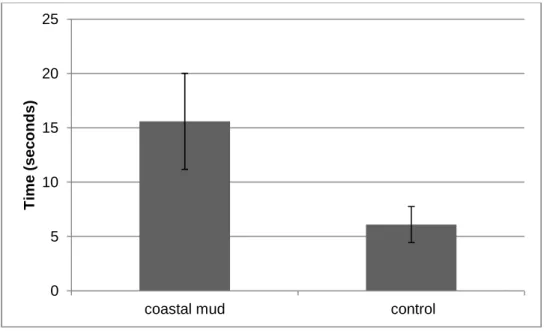
water surface than did control turtles, suggesting that they can perceive an odor associated with land.
Turtles navigating to natal areas have been hypothesized to rely on a
combination of magnetic and olfactory cues. To determine whether such a strategy is plausible for turtles that nest on islands, I modeled airborne and waterborne odor plumes emanating from Ascension Island (a remote island in the South Atlantic) and overlaid these on maps of magnetic intensity. Results indicated that turtles can plausibly reach the vicinity of the island using magnetic cues, then locate the island using chemical cues.
v
vi
ACKNOWLEDGEMENTS
First, I would like to thank Ken Lohmann for his guidance through the years. I am greatly appreciative of the patience he has had with me, particularly for the first several years when I couldn’t decide on a project, and also more recently in reading and revising manuscripts. He has taught me to be a better writer, presenter, thinker and scientist, and for that I am most grateful.
I am grateful to the other members of the Lohmann lab, Nathan Putman, Dave Ernst and Roger Brothers for their helpful suggestions on manuscripts, and for making the lab an ever-entertaining place.
Thank you to my fiancé Josh, who is my best friend and never doubted that I would finish this thing.
I am grateful for the support of my parents, Cheryl and Ray, and my brothers, Raymond and Michael.
vii
TABLE OF CONTENTS
LIST OF TABLES..……….x
LIST OF FIGURES…….………..xi
Chapter I. INTRODUCTION….………1
References………….………..7
II. PERCEPTION OF AIRBORNE ODORS BY LOGGERHEAD SEA TURTLES Abstract…..……….………12
Introduction……….………13
Materials and Methods……….………15
Results……….………...20
Discussion……….……….21
Acknowledgements……….………...………..24
Tables………..25
Figures………...……….…26
References……….………29
III. PERCEPTION OF DIMETHYL SULFIDE (DMS) BY LOGGERHEAD SEA TURTLES: A POSSIBLE
viii
Abstract………...33
Introduction……….34
Materials and Methods……….35
Results……….………...……40
Discussion………..40
Acknowledgements……….………..……43
Figures………44
References……….………47
IV. OLFACTORY SENSITIVITY TO COASTAL MUD BY LOGGERHEAD SEA TURTLES: A POSSIBLE MECHANISM FOR SENSING NEARBY LAND Abstract………...51
Introduction……….52
Materials and Methods……….53
Results……….…...56
Discussion……….…...57
Acknowledgements………...60
Figures………61
References……….……63
V. POSSIBLE MULTI-MODAL HOMING IN SEA TURTLES: MAGNETIC AND CHEMICAL CUES MAY PERMIT ISLAND-FINDING AT ASCENSION ISLAND Abstract……….…..66
ix
Materials and Methods……….69
Results……….72
Discussion………..73
Acknowledgements………...75
Figures………....76
References……….85
IV. CONCLUSIONS……….90
x
LIST OF TABLES
Table
xi
LIST OF FIGURES
Figure
2.1 Diagram of Experimental set-up………...….…26
2.2 Summary of turtle traversal rates………....………..27
2.3 Number of traversals versus time after first breath………...…...…28
3.1 Diagram of Experimental set-up………....……...44
3.2 Average number of seconds spent breathing……….…….………..…...45
3.3 Average difference in the number of seconds spent breathing…...46
4.1 Average number of seconds spent breathing………...…....61
4.2 Average difference in the number of seconds spent breathing....……....62
5.1 Maps of intensity isoline and Ascension Island………...76
5.2 Maps of waterborne and airborne odor plumes and magnetic intensity..77
5.3 Proportion of time that waterborne particles intersect the 25-yr isoline (yearly average)………...79
5.4 Proportion of time that waterborne particles intersect the 25-yr isoline (average 2004-2007)…..………...80
5.5 Proportion of time that airborne particles intersect 5-yr isoline…..……...81
5.6 Proportion of time that airborne particles intersect 25-yr isoline…..…...82
5.7 Proportion of time that waterborne particles intersect the 25-yr isoline (4-year average) over the last century…………..…...83
CHAPTER ONE: INTRODUCTION
Numerous marine species undertake long-distance migrations. For example, tuna (Rooker et al., 2008), salmon (Dittman and Quinn, 1996), great white sharks (Bonfil et al., 2005), sea turtles (Carr et al., 1982; Allard et al., 1994; Encalada et al., 1998), and elephant seals (Stewart and DeLong, 1994; 1995) migrate extraordinary distances, particularly when they reach maturity and return to their natal regions to reproduce. The cues these animals use to navigate to natal areas remain largely enigmatic, but research over the last several decades has begun to illuminate some of the sensory abilities that may be involved. Similarly, little is known about how marine animals locate foraging areas during their migrations. Because all oceanic regions are not equally favorable in terms of foraging, an ability to rapidly identify favorable areas, and to concentrate foraging in such locations, might be adaptive. Thus, for migratory marine animals, the ability to home to natal sites, as well as the ability to locate productive oceanic foraging areas, are vital to survival and likely depend on several sensory cues.
2
migration, which may take them across entire ocean basins (Carr, 1987; Bolten et al., 1998; Bowen et al., 1995; Lohmann et al., 2012).
Young loggerhead turtles from the east coast of the United States spend a number of years in the North Atlantic Gyre system, the circular current system that flows around the Sargasso Sea, before eventually returning to North America (Carr, 1987; Bolten et al., 1998). Previous experiments have shown that young turtles are able to remain within the North Atlantic Gyre by exploiting positional information in the earth’s magnetic field (Lohmann and Lohmann, 1994; 1996; Lohmann et al., 2001; 2012; Putman et al., 2011).
Magnetic field lines intersect the earth at a specific angle of inclination that varies with latitude. In addition, the intensity or strength of the earth’s field also varies
predictably over the surface of the globe. Distinct combinations of inclination angle and intensity exist along the turtles’ migratory route. Hatchling turtles have shown an ability to detect both magnetic intensity (Lohmann and Lohmann, 1996) and inclination angle (Lohmann and Lohmann, 1994), and thus might use these to derive positional
information during their migration around the gyre. Hatchlings subjected to magnetic fields that exist at the edges of the gyre were shown to swim in directions that enabled them to remain within the gyre (Lohmann et al., 2001; 2012; Putman et al., 2011), implying that hatchling turtles have a ‘magnetic map’, in which specific magnetic fields initiate changes in swimming direction at particular locations.
Older turtles are also known to use the earth’s magnetic field to navigate
3
the island than did turtles without magnets (Luschi et al., 2007), suggesting that an inability to use magnetic cues made homing difficult for these turtles.
After up to several decades in distant oceanic locations, most sea turtles return to their natal region to reproduce (Meylan et al., 1990; Bowen et al., 1993; 1994; 1995). The cues female turtles use to return to their natal beach are not fully understood, but it has been hypothesized that as hatchlings, they imprint on some feature of the beach in order to return to it later (Lohmann et al., 1999; 2008c; 2013). Olfactory cues and the magnetic field that exist at a turtles’ natal site are the most likely candidates for this purpose (Owens et al., 1982; Lohmann et al., 2008c; 2013). After the initial migration to breeding areas, turtles make regular trips between these and foraging areas throughout their lives.
4
The ability of turtles to detect waterborne chemical cues has been studied to some degree. Turtles have demonstrated an ability to perceive a number of underwater chemical cues (Manton et al., 1972), including prey items such as jellyfish (Constantino and Salmon, 2003). Turtles have also been shown to detect chemical cues from sand and water obtained from areas to which they had been ‘artificially imprinted’ (Grassman and Owens, 1987; Grassman et al., 1984), although whether this response was
attributable to imprinting remains unresolved (Lohmann et al., 1997; 2013).
The ability of turtles to perceive airborne chemical cues, however, has not been previously studied. There are at least three good reasons to suspect that turtles possess this ability. First, while sea turtles spend most of their lives in water, they require air to breathe. Thus they are semi-aquatic and might be expected to detect both waterborne and airborne chemical cues. This is true for the American alligator (Alligator
mississipiensis), which is able to detect chemicals under water (Weldon et al., 1990;
Hansen, 2007), and the odor of meat in the air (Weldon et al., 1990; 1992). Harbor seals (Phoca vitulina) can also detect chemical cues under water (Sticken and Dehnhardt, 2000), and in the air (Kowalewsky et al., 2006). The African clawed frog (Xenopus laevis), primarily aquatic but also seen on land, has been shown anatomically to have some olfactory epithelia that come into contact with only air, and others that contact only water, suggesting that these frogs have the ability to detect chemicals in both air and water (Frietag et al., 1995). Similarly, anatomical studies of sea turtles indicate that they may also have separate olfactory epithelia for waterborne and airborne chemical cues (Schwenk, 2008).
5
secondarily-adapted marine animals, this large number of functional OR genes suggest that turtles have retained the ability to detect airborne odors; this may, in part, reflect the importance of the terrestrial habitat to turtles, as they must return to land to lay their eggs (Kishida et al., 2007).
The second chapter of my dissertation explores whether sea turtles are able to detect airborne odors. I demonstrate that they can in fact perceive the airborne odor of their food. This ability may be important to turtles in two major ways – foraging and navigation.
As sea turtles migrate through the open ocean, they must find food. Not all oceanic areas are equally favorable in terms of foraging, and an ability to locate
favorable foraging areas quickly might be adaptive. The third chapter of my dissertation investigates whether an airborne odor, dimethyl sulfide (DMS), might be a chemical cue that turtles could use to locate productive foraging areas at sea. DMS is produced by phytoplankton and is present in the air above productive areas of the ocean (Andreae, 1990). I demonstrate for the first time that sea turtles can perceive DMS in the air, and it is thus possible that they use this chemical to locate foraging areas at sea.
6
The use of magnetic or olfactory cues alone probably does not allow turtles to locate specific destinations, but together, these cues might permit a turtle to locate a small island or specific nesting beach. The fifth chapter of my dissertation explores the concept of dual-cue navigation by examining how a combination of olfactory and
7 References
Akesson S., Broderick A. C., Glen F., Godley B. J., Luschi P., Papi F. and Hays G. C. (2003). Navigation by green sea turtles: which strategy do displaced adults use to find Ascension Island? Oikos 103, 363-372.
Allard, M. W., Miyamoto, M. M., Bjorndal, K. A., Bolten, A. B. and Bowen, B. W. (1994). Support for natal homing in green turtles from mitochondrial DNA sequences. Copeia 1994, 34-41.
Andreae, M. O. (1990). Ocean-atmosphere interactions in the global biogeochemical sulfur cycle. Mar. Chem. 30, 1-29.
Bolten, A. B., Bjorndal, K. A., Martins, H. R., Dellinger, T., Biscoito, M. J., Encalada, S. E. and Bowen, B. W. (1998). Transatlantic developmental migrations of
loggerhead sea turtles demonstrated by mtDNA sequence analysis. Ecol. App. 8, 1-7.
Bonfil, R., Meyer, M., Scholl, M. C., Johnson, R., O’Brien, S., Oosthuizen, H., Swanson, S., Kotze, D. and Paterson, M. (2005). Transoceanic migration, spatial dynamics, and population linkages of white sharks. Science 310, 100-103.
Carr, A. (1987). New perspectives on the pelagic stage of sea turtle development. Cons. Biol. 1, 103-121.
Constantino, M. A. and Salmon, M. (2003). Role of chemical and visual cues in food recognition by leatherback posthatchlings (Dermochelys coriacea L). Zoology 106, 173-181.
Dittman, A. H. and Quinn, T. P. (1996). Homing in Pacific salmon: mechanisms and ecological basis. J. Exp. Biol. 199, 83-91.
Encalada, S. E., Bjorndal, K. A., Bolten, A. B., Zurita, J. C., Schroeder, B., Possardt, E., Sears, C. J. and Bowen, B. W. (1998). Population structure of loggerhead turtle (Caretta caretta) nesting colonies in the Atlantic and Mediterranean as inferred from mitochondrial DNA control region sequences. Mar. Biol. 130, 567-575.
Frazer, N. B. and Ehrhart, L. M. (1985). Preliminary growth models for green, Chelonia mydas, and Loggerhead, Caretta caretta, turtles in the wild. Copeia 1, 73-79.
Freitag, J., Krieger, J., Strotmann, J. and Breer, H. (1995). Two classes of olfactory receptors in Xenopus laevis. Neuron 15, 1383-1392.
8
Grassman, M. A. and Owens, D. W. (1982). Development and extinction of food preferences in the loggerhead turtle, Caretta caretta. Copeia 4, 965-969. Grassman, M. A., Owens, D. W., McVey, J. P. and Mauquez, M. (1984).
Olfactory-based orientation in artificially imprinted sea turtles. Science 224, 83-84. Hansen, A. (2007). Olfactory and solitary chemosensory cells: two different
chemosensory systems in the nasal cavity of the American Alligator, Alligator mississippiensis. BMC Neurosci. 8, 64.
Hays, G. C., Akesson, S., Broderick, A. C., Glen, F., Godley, B. J., Papi, F. and Luschi, P. (2003). Island-finding ability of marine turtles. Proc. R. Soc. Lond. B. 270, s5-s7.
Kishida, T., Kubota, S., Shirayama, Y. and Fukami, H. (2007). The olfactory receptor gene repertoires in secondary-adapted marine vertebrates: evidence for reduction of the functional proportions in cetaceans. Biol. Lett. 3, 428-430. Koch, A. L., Carr, A. and Ehrenfeld, D. W. (1969). The problem of open-sea navigation:
the migration of the green turtle to Ascension Island. J. Theor. Biol. 22, 163-179. Kowalewsky, S., Dambach, M., Mauck, B. and Dehnhardt, G. (2006). High olfactory
sensitivity for dimethyl sulphide in harbour seals. Biol. Lett. 2, 106-109. Lohmann, K. J. and Lohmann, C. M. F. (1992). Orientation to oceanic waves by
hatchling green turtles. J. Exp. Biol. 171, 1-13.
Lohmann, K. J., and Lohmann, C. M. F. (1994). Detection of magnetic inclination angle by sea turtles: a possible mechanism for determining latitude. J. Exp. Biol. 194, 23-32.
Lohmann, K. J., and Lohmann, C. M. F. (1996). Detection of magnetic field intensity by sea turtles. Nature. 380, 59-61.
Lohmann, K. J., Salmon, M. and Wyneken, J. (1990). Functional autonomy of land and sea orientation systems in sea turtle hatchlings. Biol. Bull. 179, 214-218.
Lohmann, K. J., Witherington, B. E., Lohmann, C. M. F. and Salmon, M. (1997). Orientation, navigation and natal beach homing in sea turtles. In: Lutz, P. and Musick, J. (eds) The Biology of Sea Turtles. CRC Press, Boca Raton, pp. 107-135.
Lohmann, K. J., Hester, J. T. and Lohmann, C. M. F. (1999). Long-distance navigation in sea turtles. Ethol. Ecol. Evol. 11, 1-23.
9
Lohmann, K. J., Lohmann, C. M. F., Ehrhart, L. M., Bagley, D. A. and Swing, T. (2004). Geomagnetic map used in sea turtle navigation. Nature 428, 909-910.
Lohmann, K. J., Lohmann, C. M. F. and Putman, N. F. (2007). Magnetic maps in animals: nature’s GPS. J. Exp. Biol. 210, 3697-3705.
Lohmann, K. J., Lohmann, C. M. F. and Endres, C. S. (2008a). The sensory ecology of ocean navigation. J. Exp. Biol. 211,1719-1728. doi: 10.1242/jeb.015792.
Lohmann, K. J., Luschi, P. and Hays, G. C. (2008b). Goal navigation and island-finding in sea turtles. J. Exp. Mar. Biol. Ecol. 356, 83-95. doi:
10.1016/j.jembe.2007.12.017.
Lohmann, K. J., Putman, N. F., Lohmann, C. M. F. (2008c). Geomagnetic imprinting: a unifying hypothesis of long-distance natal homing in salmon and sea turtles. Proc. Nat. Acad. Sci. 105, 19096-19101.
Lohmann, K. J., Putman, N. F. and Lohmann, C. M. F. (2012). The magnetic map of hatchling loggerhead sea turtles. Curr. Opin. Neurobiol. 22, 336-342.
Lohmann, K. J., Lohmann, C. M. F., Rogers, J. R. and Putman, N. F. (2013). Natal homing and imprinting in sea turtles. In: Wyneken J, Lohmann KJ, Musick J (eds) Biology of Sea Turtles, volume 3. CRC Press, Boca Raton, pp 59-77. Luschi, P., Papi, F., Liew, H. C., Chan, E. H. and Bonadonna, F. (1996). Long-distance
migration and homing after displacement in the green turtle (Chelonia mydas): a satellite tracking study. J. Comp. Physiol. A. 178, 447-452.
Luschi, P., Benhamou, S., Girard, C., Ciccione, S., Roos, D., Sudre, J. and Benvenuti, S. (2007). Marine turtles use geomagnetic cues during open-sea homing. Curr. Biol. 17, 126-133.
Manton, M., Karr, A. and Ehrenfeld, D. W. (1972). Chemoreception in the migratory sea turtle, Chelonia mydas. Biol. Bull. 143, 184-195.
Meylan, A. B., Bowen, B. W. and Avise, J. C. (1990). A genetic test of the natal homing versus social facilitation models for green turtle migration. Science 248, 724-727.
Mrosovsky, N. (1972). Spectrographs of the sounds of leatherback turtles. Herpetologica 28, 256-258.
Owens, D. W., Grassman, M. A. and Hendrickson, J. R. (1982). The imprinting hypothesis and sea turtle reproduction. Herpetologica 38, 124-135.
10
Rooker, J. R., Secor, D. H., De Metrio, G., Schloesser, R., Block, B. A. & Neilson, J. D. (2008). Natal Homing and Connectivity in Atlantic Bluefin Tuna populations. Science 31, 742-744.
Saito, K., Shoji, T., Uchida, I. and Ueda, H. (2000). Structure of the olfactory and vomeronasal epithelia in the loggerhead turtles Caretta caretta. Fish. Sci. 66, 409-411.
Salmon, M. and Lohmann, K. J. (1989). Orientation cues used by hatchling loggerhead sea turtles (Caretta caretta) during their offshore migration. Ethology 83, 215-228.
Salmon, M. and Wyneken, J. (1990). Do swimming loggerhead sea turtles (Caretta caretta) use light cues for offshore orientation? Mar. Behav. Physiol. 17, 233-246.
Salmon, M. and Wyneken, J. (1994). Orientation by hatchling sea turtles: mechanisms and implications. Herpetological Natural History 2, 13-24.
Salmon, M., Wyneken, J., Fritz, E. and Lucas, M. (1992). Seafinding by hatchling sea turtles: role of brightness, silhouette and beach slope as orientation cues. Behavior 122, 56-77
Schwenk, K. (2008). Comparative anatomy and physiology of chemical senses in nonavian aquatic reptiles. In: Thewissen, J. G. M. and Nummela, S. (eds) Sensory Evolution on the Threshold: adaptation in secondarily aquatic vertebrates. University of California Press, Berkeley. Pp.
Stewart, B. S. and Delong, R. L. (1994). Post-breeding foraging migrations of northern elephant seals. In: Le Bouef, B. J. and Laws, R. M. (eds) Elephant Seals. University of California Press, Los Angeles. Pp. 290-309.
Stewart, B. S. and Delong, R. L. (1995). Double migrations of the northern elephant seal, Mirounga angustirostris. J. Mammalogy 76, 196-205.
Sticken, J. and Dehnhardt, G. (2000). Salinity discrimination in harbour seals: a sensory basis for spatial orientation in the marine environment? Naturwissenschaften 87, 499-502.
Weldon, P. J., Swenson, D. J., Olson, J. K. and Brinkmeier, W. G. (1990). The American alligator detects food chemicals in aquatic and terrestrial environments. Ethology 85, 191-198.
11
Wyneken, J., Salmon, M. and Lohmann, K. J. (1990). Orientation by hatchling
1This chapter has been published as:
Endres, C. S., Putman, N. F., and Lohmann, K. J. (2009). Perception of airborne odors by loggerhead sea turtles. Journal of Experimental Biology 212, 3823-3827.
CHAPTER TWO:
PERCEPTION OF AIRBORNE ODORS BY LOGGERHEAD SEA TURTLES1
Abstract
13 Introduction
Chemoreception is ubiquitous among animals and is used for diverse purposes, including foraging (Nevitt et al., 1995; Derby et al., 2001; Clark, 2004), predator
detection (Dielenberg and McGregor, 2001; Lukowiak et al., 2008), kin recognition (Todrank et al., 1998; Mateo, 2003), communication (Waldman and Bishop, 2004), and navigation (Hasler et al., 1978; Vickers, 2000; Lohmann et al., 2008a). Chemical cues may be particularly important to aquatic species, which often inhabit environments where visibility is poor and the availability of other sensory cues is limited (Wisenden, 2000; Lohmann et al., 2008a).
Most fish and many aquatic invertebrates spend their lives submerged in water and are rarely if ever above the air-water interface. As a consequence, the chemical senses of these animals have evolved to detect chemicals in water, the only medium that they normally encounter. In contrast, some aquatic and semi-aquatic animals surface to breathe and thus have access to chemical cues that exist not only in water, but also in air.
At least a few species are known to detect chemical cues both in water and air. For example, American alligators (Alligator mississippiensis) can detect chemical cues while swimming under water (Weldon et al., 1990; Hansen, 2007) and can also perceive airborne odors from meat (Weldon et al., 1990; 1992). Similarly, harbour seals (Phoca vitulina vitulina) can detect chemical cues related to salinity while submerged (Sticken
and Dehnhardt, 2000), and can also detect airborne odorants potentially useful in foraging (Kowalewsky et al., 2006).
14
abilities (reviews by Bartol and Musick, 2003; Southwood et al., 2008; Schwenk, 2008). For example, electrophysiological recordings from cells in the olfactory and vomeronasal epithelia of several turtle species have revealed cells that respond to chemical cues (Shoji et al., 1993; Hatanaka and Matsuzaki, 1993; Brann and Fadool, 2006). Anatomical studies have indicated that aquatic turtles, including the loggerhead sea turtle (Caretta caretta), have well-developed olfactory and vomeronasal organs
(Parsons, 1971; Saito et al., 2001). Sea turtles are also known to open their nostrils and engage in a rhythmic “throat-pumping” behavior while underwater, a process which floods the nasal cavities and may move water over the chemoreceptive organs (Walker, 1959; Manton, 1979; Schwenk, 2008). Several behavioral studies have provided evidence that sea turtles can perceive chemical cues (Manton et al., 1972; Grassman and Owens, 1982; Grassman et al., 1984; Constantino and Salmon 2003; Piovano et al. 2004).
Despite this considerable body of work, an unanswered question is whether sea turtles detect chemical signals carried by water, air, or both. The behavioral experiments conducted so far have all involved presenting chemical cues to turtles while they were swimming in water, but such studies do not resolve the matter because turtles were free to surface and some or all of the chemicals might have partitioned into air.
15
1995); thus, turtles might also be able to exploit such cues as markers of promising foraging grounds. At present, however, whether sea turtles are able to exploit chemical signals transmitted through air has not been studied. Here I report the first direct experimental evidence that sea turtles can detect airborne odors. Under natural conditions, this ability may play a role in navigation, foraging, or both.
Materials and Methods
Animals
The 8 loggerhead turtles used in the study were obtained as hatchlings from nests deposited on beaches at Bald Head Island and Cape Lookout, North Carolina, U.S.A. Turtles were taken to the North Carolina Aquarium at Pine Knoll Shores, where they were raised for 4 months before being transferred to the University of North Carolina at Chapel Hill. In Chapel Hill, each turtle was maintained in a separate tank in re-circulating artificial seawater maintained at a temperature of 26° to 30°C. Lights in the facility were on for 12 h and off for 12 h each day. At the time of the experiment, turtles were between 25.3 and 31.6 cm curved carapace length (ccl) and approximately 1.5 years of age.
At both locations where the turtles were raised, they were fed the Mazuri Omnivore Aquatic Gel-based diet (www.mazuri.com). During the time of the
experiments, turtles were fed every other day. Experiments were conducted on days when the turtles were not fed.
Preliminary Observations
16
observed that within about 60 seconds after food was dropped into the aquarium, the turtles typically began to dive and crisscross the bottom of the tank repeatedly. When a piece of food was encountered, a turtle paused briefly to eat it, then quickly resumed crisscrossing the tank. This elevated level of activity often continued for a period of minutes even after all food in the aquarium had been consumed. Although little is known about this behavior, it seems likely that chemical cues from the food (dissolved in water under these conditions) elicited increased activity and searching behavior in the turtles. I reasoned that if loggerhead turtles detect airborne food odors, then such odors might elicit searching behavior similar to that which normally occurs when food is introduced into the home aquarium. My experiment was designed to investigate this possibility.
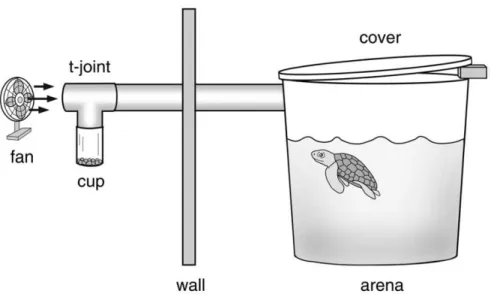
Experimental set-up
17
moved steadily into the t-joint, past the top of the cup and into the arena, presumably picking up airborne odors from the contents of the cup along the way.
The top of the arena was covered with a transparent Plexiglas lid. A small gap was left between the Plexiglas and the top of the arena on the side away from the odor portal. Thus, air entered the arena on one side, flowed across the surface of the water, and escaped on the opposite side. A video camera was mounted on the ceiling and positioned above the arena, permitting the behavior of the turtle to be observed and videotaped from the adjacent room.
Experimental protocol
The behavioral responses of each turtle were monitored under 2 different conditions: (1) following exposure to airborne food odors; (2) following exposure to air that had passed over a cup of distilled water (as a control). The two test conditions were presented one after the other, separated by an interval in which airborne odors
presented in the first trial were allowed to dissipate from the arena. To ensure that the order in which the odorants were presented did not affect the outcome, half of the turtles were subjected to the food odor first, while the other half were subjected first to distilled water trials.
18
stimulus or control cup was affixed to the PVC pipe by gently pressing it onto the downward opening of the t-joint.
Once the cup had been put in place, observers recorded when the turtle surfaced and took its first breath; this moment presumably represented the point at which the turtle first had an opportunity to detect airborne odorants. For all turtles tested, this occurred between 3 and 202 sec after a stimulus cup was presented (mean = 104 sec). Videotaping continued for an additional 5 min after the time when a turtle took its first breath.
At the conclusion of the trial, the turtle remained in the arena while the stimulus cup was replaced with the empty cup. To disperse lingering odorants from the arena, the fan was left on to blow air continuously through the PVC pipe over the empty cup and into the arena. To further facilitate odor dispersal, the Plexiglas cover was removed from the arena and the door to the room was opened for at least 10 min to allow the test area to air out. A fan in the ceiling of the room connected to vents further enhanced air exchange.
After the arena and room were aired out for at least 10 min, the Plexiglas cover was replaced, all observers left the room, and the turtle was given several min to resume its normal swimming behavior. Once it did, videotaping resumed and the turtle was presented with the second stimulus.
Measurement of Activity
19
observers recorded the quadrant in which the turtle’s nose broke the surface of the water. Activity was measured in terms of traversals of the arena (i.e., the number of times that a turtle moved from one side of the circular arena to the other). Thus, when the turtle moved around the arena so that its nose reached the quadrant opposite the one in which it had surfaced, this was considered one traversal. Every subsequent time the location of the turtle’s nose moved from one of these two quadrants to the other, an additional traversal was counted. Each traversal signified that the turtle had actively moved a considerable distance around the arena, an action consistent with the increased movement previously observed when turtles are searching for food (see “Preliminary Observations”).
20 Statistical Analysis
For each turtle, the total number of traversals that occurred during the control and food odor trials was determined. Results in the two treatments were compared using the Wilcoxon signed-ranks test.
To determine whether traversal rates changed after turtles took their first breath (as would be expected if turtles detected airborne odors), traversal rates (traversals per min) were calculated for the control and food odor trials and for the corresponding pre-breath intervals. The traversal rates for pre-pre-breath and post-pre-breath intervals for food odor trials were then compared using the Wilcoxon signed-ranks test. The same analysis was done for pre-breath and post-breath intervals in control trials.
If turtles detect airborne odors, then traversals would be expected to increase immediately after turtles first surface to breathe; in contrast, if airborne odors slowly diffuse into water and are detected below the surface, then responses would be expected to increase over time as the concentration of odorants in the water gradually increases. To investigate the time course of the response of turtles during the period after the first breath, the number of traversals by each turtle was determined for each minute during the course of each trial.
Results
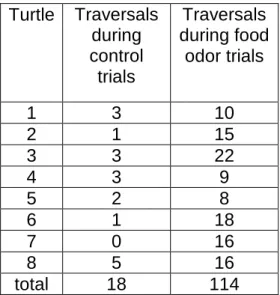
All 8 turtles crossed the arena more times when exposed to the food odor than they did when exposed to the odor of distilled water alone (Table 2.1). The difference in responses to the two treatments was significant (Wilcoxon test, T=0, p=0.005, one-tailed), implying that turtles increase activity in the presence of air that has passed across food.
21
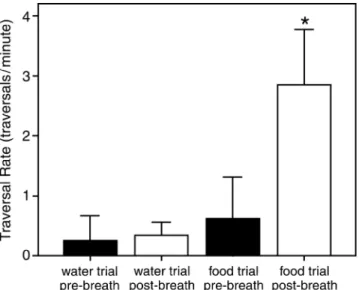
the post-breath period (Fig 2.2). No significant difference existed between the traversal rate during pre-breath and post-breath periods (Wilcoxon test, T=9, not significant).
For trials involving food odors, the mean traversal rate during the pre-breath period was 0.62 traversals/min and 2.85 traversals/min for the post-breath period (Fig 2.2). The traversal rate for the post-breath period of the food odor trials was significantly higher than that of the corresponding pre-breath period (Wilcoxon test, T=0, p=0.005, one-tailed).
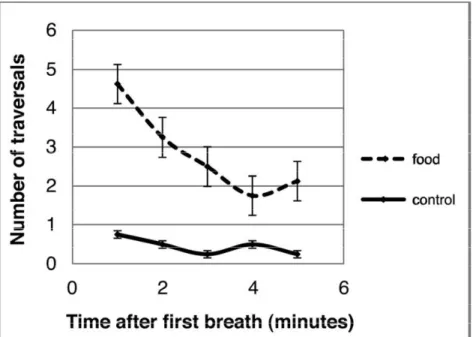
Analysis of traversals over the course of the 5-min trials indicated that, for turtles exposed to the food odors, the number of traversals peaked in the first minute after the first breath and then subsequently declined (Fig 2.3). In contrast, the traversal rates of control turtles remained relatively constant throughout the 5-min trial period (Fig. 2.3).
Discussion
The activity of juvenile loggerhead turtles, as measured by the number of times they traversed the arena, increased significantly in the presence of air that had passed over a cup containing food submerged in distilled water (Table 2.1; Fig 2.2). No such increases in activity occurred during control trials in which turtles were exposed to air that had passed over a cup containing distilled water alone. These results imply that loggerhead turtles can perceive food odors carried through the air and respond to them by increasing activity that is normally associated with searching for food.
22
An analysis of behavior before and after turtles breathed provides evidence consistent with detection of airborne odors. In trials involving food odors, traversal rates did not increase until turtles first surfaced to breathe (Fig 2.2), implying that turtles had to sample the air to perceive the odor. Moreover, the peak number of traversals occurred in the minute immediately after the first breath and then declined in subsequent minutes (Fig. 2.3). This pattern of behavior is consistent with aerial olfaction but difficult to reconcile with detection of chemical cues underwater. In the latter case, the
concentration of chemicals in the water should have steadily increased over the entire trial, and the first breath (which occurred at variable times between 3 and 202 sec after the food odor was presented) should not have been followed by an immediate increase in activity.
The behavior elicited by the airborne food odor closely resembled behavior observed when food was added to the home aquaria of the turtles. All turtles used in this study had been raised in captivity and received the gel food at least several times a week throughout their lives. During feeding sessions, food was typically brought into the turtle facility and kept there for several minutes before it was placed in the aquaria. Thus, one possibility is that the captive turtles used in these experiments learned to associate airborne odors of their food with the experience of being fed. An alternative possibility, however, is that all loggerhead turtles respond with increased activity to the odors that emanate from the gel food, regardless of whether they have encountered the food before. Additional experiments with wild-caught turtles unfamiliar with the gel food will be needed to resolve this issue. Regardless, the results imply that sea turtles can detect airborne odorants.
23
dimethyl sulfide (DMS), a scented compound that has been studied in the context of global climate change (Kettle et al., 1999). DMS is the hydrolysis product of
dimethylsulfoniopropionate (DMSP), a compound produced by phytoplankton (Kirst et al., 1991; Karsten et al., 1992). High concentrations of DMS are often associated with coastal upwelling areas and other oceanic regions with high productivity (Andreae and Raemdonck, 1983; Kettle et al. 1999). Some seabirds detect DMS and use it to identify areas that are likely to be favorable for foraging (Nevitt et al., 1995; 2008). Harbour seals are also capable of detecting DMS (Kowalewsky et al., 2006). If sea turtles can perceive DMS (or any other airborne chemical associated with food), then this ability might function in helping them locate productive oceanic areas for foraging.
Additionally or alternatively, airborne odors might play a role in the navigation of sea turtles under some conditions. Sea turtles of many populations and species migrate long distances and are thought to rely at least partly on the Earth’s magnetic field for guidance (e.g., Lohmann et al., 2004; 2007; 2008a; Luschi et al., 2007). Additional cues are also likely to be involved, however, especially when turtles have arrived in the
general vicinity of target areas and need to pinpoint islands, nesting areas, or other specific locations (Lohmann et al., 1999; Putman and Lohmann, 2008). Airborne
24
The finding that sea turtles can detect chemical cues in air extends the growing list of environmental cues that these animals are known to perceive, but also raises many additional questions. Further studies will be needed to determine the sensitivity of sea turtles to airborne odorants, which chemical cues can be detected, the physiological mechanisms that underlie aerial olfaction, and the purpose or purposes for which this sensory ability is used under natural conditions.
Acknowledgements
25 Tables
Table 2.1: Summary of the total number of traversals for control trials (trials with distilled
water alone) and food odor trials. Each turtle was tested under both conditions (see text for details). Each trial lasted 5 min. Turtles 1, 2, 4, and 6 were exposed to the control treatment first, whereas turtles 3, 5, 7, and 8 were exposed to the food odor first.
Turtle Traversals
during
control
trials
Traversals
during food
odor trials
1
3
10
2
1
15
3
3
22
4
3
9
5
2
8
6
1
18
7
0
16
8
5
16
26 Figures
Figure 2.1: Diagram of the experimental set-up (not to scale). The fan gently moved air
27
Figure 2.2: Summary of turtle traversal rates. For the control trials (those involving a
28
Figure 2.3: Number of traversals in relation to time after first breath. Each data point
29 References
Andreae, M. O. and Raemdonck, H. (1983). Dimethyl sulfide in the surface ocean and the marine atmosphere: a global view. Science 221, 744-747.
Bartol, S. M. and Musick, J. A. (2003). Sensory Biology of Sea Turtles. In The Biology of Sea Turtles, volume 1 (ed. P. L. Lutz, J. A. Musick, J. Wyneken), pp. 79-102. CRC Press, Boca Raton.
Brann, J. H. and Fadool, D. A. (2006). Vomeronasal sensory neurons from Sternotherus odoratus (stinkpot/musk turtle) respond to chemosignals via the phopholipase C system. J. Exp. Biol. 209, 1914-1927.
Clark, R. W. (2004). Timber rattlesnakes (Crotalus horridus) use chemical cues to select ambush sites. J. Chem. Ecol. 30, 607-617.
Constantino, M. A. and Salmon, M. (2003). Role of chemical and visual cues in food recognition by leatherback posthatchlings (Dermochelys coriacea L). Zoology 106, 173-181.
Derby, C. D., Steullet, P., Horner, A. J. and Cate, H. S. (2001). The sensory basis of feeding behavior in the Caribbean spiny lobster Panulirus argus. Mar. Freshwater Res. 52, 1339-1350.
Dielenberg, R. A. and McGregor, I. S. (2001). Defensive behavior in rats towards predatory odors: a review. Neurosci. Biobehav. R. 25, 597-609.
Grassman, M. A. and Owens, D. W. (1982). Development and extinction of food preferences in the loggerhead turtle, Caretta caretta. Copeia 4, 965-969. Grassman, M. A., Owens, D. W., McVey, J. P. and Mauquez, M. (1984).
Olfactory-based orientation in artificially imprinted sea turtles. Science 224, 83-84. Hansen, A. (2007). Olfactory and solitary chemosensory cells: two different
chemosensory systems in the nasal cavity of the American Alligator, Alligator mississippiensis. BMC Neurosci. 8, 64.
Hasler, A. D., Scholz, A. T. and Horrall, R. M. (1978). Olfactory imprinting and homing in salmon. Amer. Sci. 66, 347-355.
Hatanaka, T. and Matsuzaki, O. (1993). Odor responses of the vomeronasal system in Reeve’s turtle, Geoclemys reevesii. Brain Behav. Evol. 41, 183-186.
Hays, G. C., Akesson, S., Broderick, A. C., Glen, F., Godley, B. J., Papi, F. and Luschi, P. (2003). Island-finding ability of marine turtles. Proc. Roy. Soc. B. 270, S5-S7. Karsten, U., Wiencke, C. and Kirst, G. O. (1992). Dimethylsulphiopropionate (DMSP)
accumulation in green macroalgae from polar to temperate regions: Interactive effects of light versus salinity and light versus temperature. Polar Biol. 12,
30
Kettle, A. J., Andreae, M. O., Amouroux, D., Andreae, T. W., Bates, T. S., Berresheim, H., Bingemer, H., Boniforti, R., Curran, M. A. J., DiTullio, G. R. et al. (1999). A global database of sea surface dimethylsulfide (DMS) measurements and a procedure to predict sea surface DMS as a function of latitude, longitude, and month. Global Biogeochem. Cycles 13, 399-444.
Kirst, G. O., Thiel, C., Wolff, H., Nothnagel, J., Wanzek, M. and Ulmke, R. (1991). Dimethylsulfoniopropionate (DMSP) in ice-algae and its possible biological role. Mar. Chem. 35, 381-388.
Kowalewsky, S., Dambach, M., Mauck, B. and Dehnhardt, G. (2006). High olfactory sensitivity for dimethyl sulphide in harbour seals. Biol. Letters 2, 106-109.
Lohmann, K. J., Hester, J. T. and Lohmann, C. M. F. (1999). Long-distance navigation in sea turtles. Ethol. Ecol. Evol. 11, 1-23.
Lohmann, K. J., Lohmann, C. M. F., Ehrhart, L. M., Bagley, D. A. and Swing, T. (2004). Geomagnetic map used in sea turtle navigation. Nature 428, 909-910.
Lohmann, K. J., Lohmann, C. M. F. and Putman, N. F. (2007). Magnetic maps in animals: nature’s GPS. J. Exp. Biol. 210, 3697-3705.
Lohmann, K. J., Lohmann, C. M. F. and Endres, C. S. (2008a). The sensory ecology of ocean navigation. J. Exp. Biol. 211, 1719-1728.
Lohmann, K. J., Luschi, P. and Hays, G. C. (2008b). Goal navigation and island-finding in sea turtles. J. Exp. Mar. Biol. Ecol. 356, 83-95.
Lukowiak, K., Martens, K., Rosenegger, D., Browning, K., de Caigny, P. and Orr, D. (2008). The perception of stress alters adaptive behaviours in Lymnaea stagnalis. J. Exp. Biol. 211, 1747-1756.
Luschi, P., Akesson, S., Broderick, A. C., Glen, F., Godley, B. J., Papi, F. and Hays, G. C. (2001). Testing the navigational abilities of ocean migrants: displacement experiments on green sea turtles (Chelonia mydas). Behav. Ecol. Sociobiol. 50, 528-534.
Luschi, P., Benhamou, C., Girard, S., Ciccione, D., Roos, J. and Benvenuti, S. (2007). Marine turtle use geomagnetic cues during open-sea homing. Curr. Biol. 17, 126-133.
Manton, M. L. (1979). Olfaction and behavior. In Turtles: Perspectives and Research (eds. M. Harless and H. Morlock), pp 289-301. John Wiley and Sons, New York. Manton, M., Karr, A. and Ehrenfeld, D. W. (1972). Chemoreception in the migratory sea
turtle, Chelonia mydas. Biol. Bull. 143, 184-195.
31
Nevitt, G. A., Veit, R. R. and Kareiva, P. (1995). Dimethyl sulphide as a foraging cue for Antarctic Procellariiform seabirds. Nature 376, 680-682.
Nevitt, G. A. (2008). Sensory ecology on the high seas: the odor world of the procellariiform seabirds. J. Exp. Biol. 211, 1706-1713.
Parsons, T. S. (1971). Nasal anatomy of trionychid turtles. J. Morphol. 135, 323-334. Piovano, S., Balletto, E., Di Marco, S., Dominici, A., Giacoma, C. and Zanetti, A. (2004).
Loggerhead turtle (Caretta caretta) bycatches on long-lines: The importance of olfactory stimuli. Italian J. Zoology 71, 213-216.
Putman, N. F. and Lohmann, K. J. (2008). Compatibility of magnetic imprinting and secular variation. Curr. Biol. 18, R598-R597.
Saito, K., Shoji, T., Uchida, I. and Ueda, H. (2000). Structure of the olfactory and vomeronasal epithelia in the loggerhead turtles Caretta caretta. Fish. Sci. 66, 409-411.
Schwenk, K. (2008). Comparative anatomy and physiology of chemical senses in nonavian aquatic reptiles. In Sensory evolution on the Threshold. Adaptations in Secondarily Aquatic Verterbrates (eds. J. G. M. Thewissen and S. Nummels). Univ. of California Press, Berkeley.
Shoji, T., Enomoto, S., Taniguchi, M. and Kurihara, K. (1993). Transduction mechanisms in the olfactory and vomeronasal organs of turtles. Brain Behav. Evol. 41, 192-197.
Southwood, A., Fritsches, K., Brill, R. and Swimmer, Y. (2008). Sound, chemical, and light detection in sea turtles and pelagic fishes: sensory-based approaches to bycatch reduction in longline fisheries. Endang. Species Res. 5, 225-238.
Sticken, J. and Dehnhardt, G. (2000). Salinity discrimination in harbour seals: a sensory basis for spatial orientation in the marine environment? Naturwissenschaften 87, 499-502.
Todrank, J., Heth, G. and Johnston, R. E. (1998). Kin recognition in golden hamsters: evidence for kinship odours. Anim. Behav. 55, 377-386.
Vickers, N. J. (2000). Mechanisms of animal navigation in odor plumes. Biol. Bull. 198, 203-212.
Waldman, B. and Bishop, P. J. (2004). Chemical communication in an archaic anuran amphibian. Behav. Ecol. 15, 88-93.
Walker, W. F. (1959). Closure of the nostrils in the Atlantic loggerhead and other sea turtles. Copeia 3, 257-259.
32
Weldon, P. J., Brinkmeier, W. G. and Fortunato, H. (1992). Gular pumping responses by juvenile American alligators (Alligator mississippiensis) to meat scents. Chem. Senses 17, 79-83.
2This chapter has been published as:
Endres, C. S. and Lohmann, K. J. (2012). Perception of dimethyl sulfide (DMS) by loggerhead sea turtles: a possible mechanism for locating high-productivity oceanic areas for foraging. Journal of Experimental Biology 215, 3535-3538.
CHAPTER THREE:
PERCEPTION OF DIMETHYL SULFIDE (DMS) BY LOGGERHEAD SEA TURTLES: A POSSIBLE MECHANISM FOR LOCATING HIGH-PRODUCTIVITY OCEANIC AREAS
FOR FORAGING2
Abstract
34 Introduction
Numerous marine animals that migrate long distances, including fishes, sea turtles, seabirds, and marine mammals, periodically forage in unfamiliar oceanic regions along the migratory route. Because all oceanic regions are not equally favorable in terms of foraging, an ability to rapidly identify favorable areas, and to concentrate foraging in such locations, might be adaptive.
The loggerhead sea turtle (Caretta caretta) undergoes one of the longest and most spectacular marine migrations. Young loggerheads leave their nesting beaches and embark on transoceanic migrations that last a period of years and span entire ocean basins (Carr, 1987; Bolten et al., 1998; Bowen et al., 1995; Lohmann et al., 2012). During these migrations, juvenile turtles spend considerable time foraging in the open sea, particularly near fronts and upwelling areas (Carr, 1986; Polovina et al., 2000, 2001, 2004; Cardona et al., 2005; Etnoyer et al., 2006). Adult marine turtles of several species have also been observed foraging near fronts and other productive locations (Luschi et al., 2003, 2006; Lambardi et al., 2008; James et al., 2005; Eckert, 2006; Troeng et al., 2005).
35
the open sea tend to be found in high-productivity areas with abundant prey that can be exploited by large, mobile predators.
Several such predators, including procellariiform seabirds (Nevitt et al., 1995), African penguins (Spheniscus demersus) (Cunningham et al., 2008; Wright et al., 2011), chinstrap penguins (Pygoscelis antarctica) (Amo et al., 2013) and harbor seals (Phoca vitulinis) (Kowalewsky et al., 2006), can detect DMS. At least some of these animals
appear to use the presence of DMS to identify areas with abundant prey (reviewed by Nevitt, 2008). Given that sea turtles can detect airborne odors (Endres et al., 2009), the possibility that they might also use DMS to locate favorable oceanic foraging areas appears plausible.
I investigated whether loggerhead sea turtles are capable of detecting DMS by presenting captive turtles with this compound, as well as with several other odors, and observing their behavior. I report that concentrations of DMS comparable to those found in high-productivity oceanic regions elicited an increase in the amount of time that turtles spent at the surface with their noses out of the water; no such change in behavior was elicited by the scent of distilled water or by several other odorants that do not occur in the ocean. These results demonstrate for the first time that loggerhead turtles can perceive DMS, giving credence to the possibility that turtles might use this volatile chemical as a foraging cue at sea.
Materials and Methods
Animals
36
were raised for 2 months before being transferred to the University of North Carolina at Chapel Hill. In Chapel Hill, each turtle was maintained in a separate tank in
re-circulating artificial sea water maintained at a temperature of 26° to 30°C. Lights in the facility were on for 12 h and off for 12 h each day. At the time of the experiment, turtles were between 11.3 and 12.6 cm straight carapace length (scl) and approximately 5 months of age.
At both locations where the turtles were raised, they were fed Mazuri Omnivore Aquatic Gel-based diet (www.mazuri.com). During the time of the experiments, turtles were fed every day.
Experimental set-up
Experiments were conducted at the University of North Carolina in a laboratory located near to where the turtles were housed. Trials took place in a fiberglass arena identical to those in which the turtles were kept. The arena measured 99 x 53 x 46 cm. One of the short sides contained a clear Plexiglas® window (43 x 36 cm) (Fig 3.1). During all experiments the arena was filled with artificial sea water (Crystal Sea®) to a depth of about 30 cm. The salinity of the water was approximately 28 ppt. The top of the arena was open to the air.
37
curtain prevented turtles from seeing when an observer approached to present an odorant.
Odorants
Although the primary focus of our study was to determine whether turtles perceive DMS, an additional question was whether behavioral responses elicited by DMS are specific to this chemical or instead reflect generalized responses to any novel, airborne odor. For this reason I used 5 different odorant presentations: DMS at a naturally occurring concentration (Nevitt et al., 1995) and essential oils of lemon, jasmine, and cinnamon (in 2 concentrations described below). The essential oils were chosen because they were likely to be completely novel; these odorants are not associated with food nor were turtles likely to have encountered them during their brief history in the wild before capture. Additionally, it is probable that the turtles could detect these odorants given that loggerheads have a large suite of functional olfactory receptor (OR) genes, suggesting that they have retained many of the olfactory capabilities of their terrestrial ancestors and can detect diverse odorants (Kishida et al., 2007).
The 5 odorants were prepared for the experimental apparatus as follows: (i) DMS: 3-4 drops of a solution of 10 nM DMS (Sigma-Aldrich, Milwaukee, WI, USA) mixed with 50 mL dH2O; (ii) Cinnamon: 3-4 drops of cinnamon essential oil (Now Foods,
Bloomingdale, IL, USA) in 50 ml dH2O; (iii) Jasmine: 3-4 drops of jasmine oil (Now
Foods, Bloomingdale, IL, USA) in 50 ml dH2O; (iv) Lemon: 3-4 drops of lemon oil (Now
Foods, Bloomingdale, IL, USA) in 50 ml dH2O; (v) Concentrated Cinnamon: 25 drops of
cinnamon oil (Now Foods, Bloomingdale, IL, USA) in 50 mL dH2O.
38
substances; all of these odorants, however, were easily detectable by human observers at the concentrations used in the study. To reduce the likelihood that any failure of turtles to respond to the non-DMS odorants (see Results) would be due to the use of concentrations below the detection threshold, an elevated concentration of one of these odorants (25 drops of cinnamon oil) was also tested.
Experimental protocol
For each odorant, paired trials were used to monitor the behavioral response of each turtle to: (1) the odorant itself; and (2) the odor of distilled water (as a control). To begin a trial, an empty plastic cup was affixed to the t-joint and the fan was turned on. A turtle was then placed into the arena and allowed to acclimate until it ceased rapid movements (characteristic of escape behavior) and began to swim steadily, a process that usually took about 10-20 min (Endres et al., 2009). Occasionally, a turtle failed to swim and instead floated motionless at the surface of the arena for the entire acclimation period. When this happened, the turtle was excluded from trials for that day but was subsequently tested again the next day. Those few turtles that failed to swim on two consecutive days were eliminated from the experiment.
Once a turtle was swimming steadily, the recording equipment was turned on and the empty plastic cup was replaced with one containing either dH2O or the
experimental odorant. A trial began after the turtle surfaced to take its first breath, which was presumably when it first had an opportunity to detect airborne odorants. The trial was videotaped for an additional 2 minutes after the first breath.
39
least 10 minutes, the door to the room was shut and the turtle was allowed to acclimate for another 10 minutes before it was presented with the second stimulus. Half of the turtles were exposed to the experimental odorant first; the other half were exposed to distilled water first.
Several days were usually required to subject all turtles to the same odorant. Once trials with each odorant had been completed, turtles remained undisturbed in their home aquaria for a minimum of 2 days before a new experiment involving a different odorant was begun. The sequence of odorants presented was DMS, cinnamon, jasmine, lemon, and concentrated cinnamon.
Data analysis and statistics
The videotape of each trial was analyzed by two observers who had no knowledge of the purpose of the study or which stimulus had been presented to the turtles. Observers recorded the total number of seconds each turtle spent with its head above the surface of the water during each trial. Surface time was selected as a metric because preliminary observations suggested that turtles spend more time at the surface when odors associated with food are present. Although the reason for this behavior is not known, one possibility is that turtles sample the air more when they encounter olfactory stimuli that may be biologically meaningful.
The Wilcoxon signed-ranks test was used to compare responses of turtles to each odorant with responses to corresponding dH2O controls. The Kruskal-Wallis test
40 Results
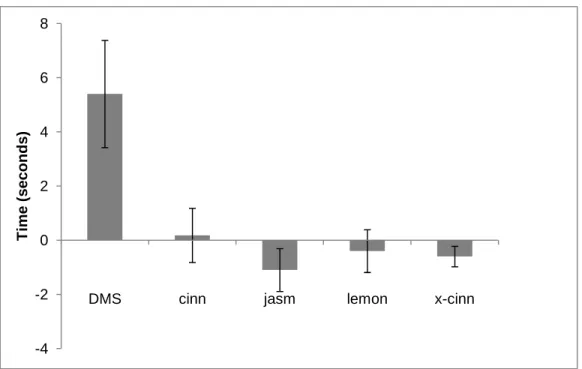
Turtles spent more than twice as much time at the surface when DMS was present (mean = 10.0 sec) than they did during dH2O control trials (mean = 4.5 sec)
(Figs 3.2, 3.3). The difference in responses to these two treatments was significant (Wilcoxon signed-ranks test, T=10, p<0.05, two-tailed). By contrast, turtles did not show any difference in responses to any of the other odorants (cinnamon, jasmine, lemon, or concentrated cinnamon) relative to dH2O controls (Wilcoxon tests, P>0.1 in all cases)
(Figs 3.2, 3.3).
The amount of time turtles spent at the surface in the presence of the 5 odorants tested was significantly different (Kruskal-Wallis test, H=13.50, p<0.01). Pairwise
comparisons (Mann-Whitney U-test) indicated that time spent at the surface during DMS trials was significantly greater than surface time during cinnamon trials (p<0.01), jasmine trials (p<0.01), lemon trials (p<0.01), and concentrated cinnamon trials (p<0.001) (Fig 3.2). These comparisons remain significant if the Bonferroni correction for multiple comparisons is applied (adjusted α = 0.0125), a practice recommended by some, but not all, statisticians (Perneger, 1998).
Discussion
When DMS was present in the air, turtles spent significantly more time with their heads above water than they did when the air was scented with the odor of dH2O. By
contrast, air scented with cinnamon, jasmine, lemon, or concentrated cinnamon failed to elicit more surface time than did corresponding dH2O controls. These data demonstrate
that loggerhead turtles can perceive DMS.
41
importance, such as those associated with favorable foraging areas, attract the attention of turtles, leading them to linger at the surface while sampling the air more extensively than normal. This interpretation is consistent with preliminary observations suggesting that similar increases in surface time can be elicited in captive turtles by odors
associated with their food (C. Endres, unpublished observations).
The failure of turtles to respond to cinnamon, jasmine, and lemon odors implies that the response elicited by DMS is not a generalized response to all novel airborne odorants. One possibility is that turtles detected some or all of these odors but failed to respond to them behaviorally, just as the chicks of some seabird species perceive diverse olfactory cues but respond with searching behavior only when presented with odors associated with food (Cunningham et al., 2003; 2006). Alternatively, because cinnamon, jasmine, and lemon are not odors that turtles are likely to encounter in the marine environment, turtles might not have evolved the olfactory receptors necessary to detect these odors, or might have lost the appropriate receptors if they were once present in terrestrial ancestors.
In principle, the ability of turtles to detect DMS might allow them to use this odor to identify favorable oceanic foraging areas in much the same way that procellariiform seabirds do (Nevitt et al., 1995). For seabirds, experiments have demonstrated that birds approach ocean areas to which DMS had been added (Nevitt et al., 1995); foraging in areas with high concentrations of DMS is presumably advantageous because such areas are likely to be high-productivity locations with abundant prey (Nevitt, 2008). For similar reasons, turtles might forage preferentially in oceanic areas with high
concentrations of DMS.
42
through the North Pacific Transition Zone, an area of convergent fronts and high productivity (Olson et al. 1994). Turtles frequently remain within these fronts,
presumably to feed as they migrate (Polovina et al., 2000, 2001, 2004). Because these high-productivity areas are likely to have elevated concentrations of DMS, turtles might plausibly use DMS to help them remain in areas of high prey density.
Although my study was limited to loggerhead turtles, the close similarities in sensory abilities that exist among different species of marine turtles (e.g., Lohmann et al., 1990; Lohmann, 1991; Lohmann and Lohmann, 1993; Bartol and Musick, 2003; Southwood and Avens, 2010) suggest that other species might also have this ability. In principle, perception of DMS might be particularly useful for the leatherback turtle (Dermochelys coriacea), a species in which adults routinely forage in high-productivity areas such as frontal zones and upwelling areas (Luschi et al., 2003, 2006; Benson et al. 2007; Saba et al. 2008; Lambardi et al., 2008). Such areas frequently have elevated levels of DMS (Andreae et al., 1990) as well as high concentrations of jellyfish upon which leatherbacks feed. Leatherbacks are also commonly observed near shelf breaks (James et al., 2005; Eckert 2006), another topographic feature associated with elevated DMS (Andreae, 1990). The possibility that leatherbacks exploit DMS as a foraging cue thus appears plausible.
Finally, because coastal waters often have elevated concentrations of DMS (Andreae et al., 1990), turtles might be able to use DMS to detect nearby islands under some circumstances. A role of airborne odorants in island-finding has been suggested (Luschi et al., 2001; Hays et al., 2003), although no unequivocal evidence for this presently exists (Lohmann et al., 2008).
43
examine whether turtles are attracted to DMS in the open ocean, and whether they can perceive other airborne chemical cues that may play a role in their long-distance migrations.
Acknowledgments
I thank Stacy Zhang and Julie Gassmann for analyzing videotapes. Catherine Lohmann, Dave Ernst, and Roger Brothers provided helpful comments on manuscript drafts.
44 Figures
Figure 3.1: Diagram of the experimental set-up. Turtles swam in a fiberglass arena with
45
Figure 3.2: Time (in seconds) that turtles spent with their noses out of the water in
response to airborne odorants. Values indicate group means; error bars represent standard error. Dark grey bars represent results from trials involving the odorant indicated below each set of bars. Light grey bars indicate the corresponding control trials involving air scented with dH2O. ‘DMS’ indicates dimethyl sulfide, ‘cinn’ indicates
cinnamon, ‘jasm’ indicates jasmine, and ‘x-cinn’ indicates concentrated cinnamon. Sample sizes were n = 11 turtles for DMS trials and controls and n = 10 for all other odors and controls. The asterisk denotes the only statistically significant pairwise comparison (see Results for details).
0 2 4 6 8 10 12
DMS cinn jasm lemon x-cinn
T
im
e
(
s
e
c
o
n
d
s
46
Figure 3.3: Mean change in surface time elicited by each odorant. Bars for each odor
indicate differences in surface time observed in experimental trials (in the presence of the odor) versus the corresponding dH2O controls. Error bars represent standard error.
Conventions as in Fig. 2.
-4 -2 0 2 4 6 8
DMS cinn jasm lemon x-cinn
T
im
e
(
s
e
c
o
n
d
s
47 References
Amo, L., Rodriguez-Girones, M. A. and Barbosa, A. (2013). Olfactory detection of dimethyl sulphide in a krill-eating Antarctic penguin. Mar. Ecol. Prog. Ser. 474, 277-185.
Andreae, M. O. (1990). Ocean-atmosphere interactions in the global biogeochemical sulfur cycle. Mar. Chem. 30, 1-29.
Bartol, S. M. and Musick, J. A. (2003). Sensory Biology of Sea Turtles. In The Biology of Sea Turtles, volume 1 (ed. P. L. Lutz, J. A. Musick and J. Wyneken), pp. 79-102. Boca Raton: CRC Press.
Belkin, I. M., Cornillon, P. C. and Sherman, K. (2009). Fronts in large marine ecosystems. Prog. Oceanogr. 81, 223-336.
Benson, S. R., Forney, K. A., Harvey, J. T., Carretta, J. V. and Dutton, P. H. (2007). Abundance, distribution, and habitat of leatherback turtles (Dermochelys coriacea) off California, 1990-2003. Fish. Bull. 105, 337-347.
Bolten, A. B., Bjorndal, K. A., Martins, H. R., Dellinger, T., Biscoito, M. J., Encalada, S. E. and Bowen, B. W. (1998). Transatlantic developmental migrations of
loggerhead sea turtles demonstrated by mtDNA sequence analysis. Ecol. App. 8, 1-7.
Bowen, B. W., Abreu-Grobois, F. A., Balazs, G. H., Kamezaki, N., Limpus, C. J. and Ferl, R. J. (1995). Trans-Pacific migration of the loggerhead turtle (Caretta caretta) demonstrated with mitochondrial DNA markers. Proc. Natl. Acad. Sci. 92, 3731-3734.
Cardona, L., Revelles, M., Carreras, C., San Felix, M., Gazo, M. and Aguilar, A. (2005). Western Mediterranean immature loggerhead turtles: habitat use in spring and summer assessed through satellite tracking and aerial surveys. Mar. Biol. 147, 583-591.
Carr, A. (1986). Rips, FADS and little loggerheads. Biosci. 36, 92-100.
Carr, A. (1987). New Perspectives on the pelagic state of sea turtle development. Conserv. Biol. 1. 103-121.
Cunningham, G. B., Van Buskirk, R. W., Bonadonna, F., Weimerskirch, H. and Nevitt, G. A. (2003). A comparison of the olfactory abilities of three species of
48
Cunningham, G. B., Van Buskirk, R. W., Hodges, M. J., Weimerskirch, H. and Nevitt, G. A. (2006). Behavioural responses of blue petrel chicks (Halobaena caerulea) to food-related and novel odours in a simple wind tunnel. Antarctic Sci. 18, 345-352.
Cunningham, G. B., Strauss, V. and Ryan, P. G. (2008). African penguins (Spheniscus demersus) can detect dimethyl sulphide, a prey-related odor. J. Exp. Biol. 211, 3123-3127.
Dacey, J. W. H. and Wakeham, S. G. (1986). Oceanic Dimethylsulfide: production during zooplankton grazing on phytoplankton. Science 233, 1314-1316.
DeBose, J. L., Lema, S. C. and Nevitt, G. A. (2008). Dimethylsulphoniopropionate as a foraging cue for reef fishes. Science 319, 1356.
Eckert, S. A. (2006). High-use oceanic areas for Atlantic leatherback sea turtles
(Dermochelys coriacea) as identified using satellite telemetered location and dive information. Mar. Biol. 149, 1257-1267/
Endres, C. S., Putman, N. F. and Lohmann, K. J. (2009). Perception of airborne odors by loggerhead sea turtles. J. Exp. Bio.212, 3823-3827.
Etnoyer, P., Canny, D., Mate, B. R., Morgan, L. E., Ortega-Ortiz, J. G. and Nichols, W. J. (2006). Sea-surface temperature gradients across blue whale and sea turtle foraging trajectories off the Baja California Peninsula, Mexico. Deep Sea Res. Part II 53, 340-358.
Hays, G. C., Akesson, S., Broderick, A. C., Glen, F., Godley, B. J., Papi, F. and Luschi, P. (2003). Island-finding ability of marine turtles. Proc. R. Soc. Lond. B. 270, s5-s7.
James, M. C., Myers, R. A. and Ottensmeyer, C. A. (2005). Behaviour of leatherback sea turtles, Dermochelys coriacea, during the migratory cycle. Proc. R. Soc. London, Ser. B. 272, 1547-1555.
Kettle, A. J., Andreae, M. O., Amouroux, D., Andreae, T. W., Bates, T. S., Berresheim, H., Bingemer, H., Boniforti, R., Curran, M. A. J., DiTullio, F. R. et al. (1999). A global database of sea surface dimethylsulfide (DMS) measurements and a procedure to predict sea surface DMS as a function of latitude, longitude, and month. Global Biogeochem. Cycles 13, 399-444.