Anesthesia-Assisted vs
Buprenorphine-or Clonidine-Assisted Heroin Detoxification
and Naltrexone Induction
A Randomized Trial
Eric D. Collins, MD Herbert D. Kleber, MD Robert A. Whittington, MD Nicole E. Heitler, MAH
E R O I N D E P E N D E N C E R E -mains a significant public health problem in the United States. Most of the approxi-mately 1 million1herodependentin-dividuals in the United States are not in treatment. Their main initial con-tact with the treatment system is often detoxification,2partially because the
prevailing societal view favors drug-free approaches and because re-stricted access to and inconvenience (eg, daily clinic visits) of methadone maintenance programs may outweigh their better outcomes.3-5
Throughout the 20th century, many methods of opioid detoxification, including insulin-induced seizures,6
artificial hibernation,7and
electrocon-vulsive therapy,8have been proposed.
These approaches at times produced greater morbidity and mortality than
untreated withdrawal.9,10 However,
despite improvements in recent decades, medically supervised heroin with-drawal remains plagued by patient dis-comfort and high dropout rates.11Many
patients fear the physical discomfort of withdrawal and either avoid treatment or leave it prematurely. Even those who complete the detoxification process For editorial comment see p 961.
Author Affiliationsare listed at the end of this article.
Corresponding Author:Eric D. Collins, MD, Division
on Substance Abuse, College of Physicians and Sur-geons of Columbia University, 1051 Riverside Dr, Unit 120, New York, NY 10032 ([email protected]). Context Rapid opioid detoxification with opioid antagonist induction using general anesthesia has emerged as an expensive, potentially dangerous, unproven approach to treat opioid dependence.
Objective To determine how anesthesia-assisted detoxification with rapid antago-nist induction for heroin dependence compared with 2 alternative detoxification and antagonist induction methods.
Design, Setting, and Patients A total of 106 treatment-seeking herodependent patients, aged 21 through 50 years, were randomly assigned to 1 of 3 in-patient withdrawal treatments over 72 hours followed by 12 weeks of outin-patient nal-trexone maintenance with relapse prevention psychotherapy. This randomized trial was conducted between 2000 and 2003 at Columbia University Medical Center’s Clinical Research Center. Outpatient treatment occurred at the Columbia University research service for substance use disorders. Patients were included if they had an American Society of Anesthesiologists physical status of I or II, were without major comorbid psychiatric illness, and were not dependent on other drugs or alcohol.
Interventions Anesthesia-assisted rapid opioid detoxification with naltrexone in-duction, buprenorphine-assisted rapid opioid detoxification with naltrexone induc-tion, and clonidine-assisted opioid detoxification with delayed naltrexone induction. Main Outcome Measures Withdrawal severity scores on objective and subjective scales; proportions of patients receiving naltrexone, completing inpatient detoxifica-tion, and retained in treatment; proportion of opioid-positive urine specimens. Results Mean withdrawal severities were comparable across the 3 treatments. Com-pared with clonidine-assisted detoxification, the anesthesia- and buprenorphine-assisted detoxification interventions had significantly greater rates of naltrexone in-duction (94% anesthesia, 97% buprenorphine, and 21% clonidine), but the groups did not differ in rates of completion of inpatient detoxification. Treatment retention over 12 weeks was not significantly different among groups with 7 of 35 (20%) re-tained in the anesthesia-assisted group, 9 of 37 (24%) in the buprenorphine-assisted group, and 3 of 34 (9%) in the clonidine-assisted group. Induction with 50 mg of nal-trexone significantly reduced the risk of dropping out (odds ratio, 0.28; 95% confi-dence interval, 0.15-0.51). There were no significant group differences in proportions of opioid-positive urine specimens. The anesthesia procedure was associated with 3 potentially life-threatening adverse events.
Conclusion These data do not support the use of general anesthesia for heroin de-toxification and rapid opioid antagonist induction.
have high relapse rates,11partly due to
the absence of continuing treatment, such as antagonist maintenance. These problems have given rise, in the past 15 years, to ultra-rapid, or anesthesia-assisted opioid withdrawal and antago-nist induction procedures, which have been publicized as a fast, painless way to withdraw from opioids. However, these treatments are expensive (up to
$7500 in 1997,12 and as much as
$15 000 in 2005), are not covered by insurance, and lack good evidence to support efficacy.13There are also
sig-nificant concerns about risk, includ-ing marked increases in plasma corti-cotropin,14cortisol,14 respiration,15,16
sympathetic activity,16 and
catechol-amines17,18; suppression of thyroid
hor-mones19; pulmonary distress14,20;
pul-monary edema19; acute renal failure19;
ventricular bigeminy21; psychosis21,22;
delirium23,24; suicide attempts21,25; and
deaths associated with the proce-dure.26-29In addition, several reports
describe persistent, marked with-drawal symptoms following the proce-dure.14,25,30,31The eagerness with which
both patients and the public have accepted claims of success highlights the desperation many patients and fami-lies feel about treating opioid depen-dence. Their vulnerability to unproven promises of success, combined with the expanding problem of prescription opi-oid dependence, increased the need for well-controlled research to test anes-thesia-assisted withdrawal.32
Physi-cians in general practice need such evi-dence to advise patients seeking treatment for opioid dependence.
Virtually all published reports on an-esthesia-assisted opioid withdrawal come from nonrandomized, uncon-trolled series or trials.*An early double-blind study42described methohexitone
anesthesia in 18 individuals randomly assigned to receive naloxone or pla-cebo. But the study only compared with-drawal induced by naloxone vs pla-cebo and included only a week of follow-up. A single prior randomized controlled study43compared outpatient
anesthe-sia with an inpatient alternative, but only 54% of the anesthesia group received naltrexone induction under anesthe-sia, making the procedure unrepresen-tative, and there were no systematic withdrawal severity measures, preclud-ing comparison of the course and sever-ity of withdrawal symptoms. All other reports on anesthesia have been weak-ened by selection bias or lack of ran-domized control groups, increasing the need for a comprehensive randomized trial of the procedure.12,32,44,45
General anesthesia has been offered as a mechanism for rapid induction of an opioid antagonist at higher dosages than opioid-dependent patients can usu-ally tolerate. Opioid antagonists (eg, nal-trexone, nalmefene) block opioid ef-fects without themselves producing tolerance, dependence, or psychic ef-fects. Although maintenance on opioid antagonists typically yields low treat-ment retention in unselected samples,46
it fares better in selected populations.47
A fair study of the general anesthesia pro-cedure required that comparison treat-ments use naltrexone induction proce-dures. Given the anticipated advent of depot naltrexone formulations, which could improve the typically poor com-pliance with oral naltrexone, proce-dures for opioid antagonist induction should take on greater importance.
We conducted a randomized con-trolled trial to evaluate the safety, tol-erability, and efficacy of anesthesia-assisted rapid opioid detoxification compared with 2 inpatient withdrawal and naltrexone induction procedures: a positive control of rapid naltrexone in-duction, using a bridging dose of the partial µ opioid agonist, buprenor-phine48-50; and a control treatment
us-ing clonidine49,51,52with delayed
naltrex-one induction. The choice of the positive control, buprenorphine-assisted rapid opioid detoxification, was based on suc-cesses with bridging doses of buprenor-phine for naltrexone induction.48-50
Bu-prenorphine has a longer duration of action and decreased withdrawal symp-toms compared with heroin. The bu-prenorphine-assisted rapid opioid de-toxification procedure included a single
facilitating dose of buprenorphine to minimize the time required for naltrex-one induction and to make it nearly as rapid as the anesthesia procedure. The other control procedure, clonidine-assisted opioid detoxification, used the ␣2-adrenergic agonist, clonidine, which
had previously shown efficacy in
out-patient naltrexone induction49 and
which has been a standard of care in treating opioid withdrawal symp-toms.51,52Clonidine ameliorates
symp-toms of opioid withdrawal by acting on the locus coeruleus to decrease norepi-nephrine secretion.
METHODS
Protocol
Individuals seeking heroin detoxifica-tion were enrolled between April 2000 and July 2003. To achieve a power of 0.80, the study aimed to enroll 53 pa-tients in each of the 3 groups to ob-serve a predicted 25% absolute differ-ence (45% vs 20%) in the 12-week treatment retention between anesthesia-assisted antagonist induction and cloni-dine-assisted antagonist induction. The data and safety monitoring board sug-gested that enrollment stop in July 2003 with a total of 106 participants be-cause actual differences in withdrawal severity scores and treatment reten-tion were smaller than anticipated, lead-ing to an impractically large recalcu-lated sample size (N⬎400) needed to show significant withdrawal severity or treatment retention differences.
The institutional review boards of the Columbia University Medical Center and the New York State Psychiatric In-stitute approved this protocol. All par-ticipants provided voluntary oral and written informed consent. They pro-vided baseline demographic informa-tion, including open-ended, self-identified race or ethnicity to allow comparison with results of prior stud-ies. Participants were reimbursed $3 at each screening visit to defray travel costs and $15 at subsequent clinic visits to encourage attendance.
During screening, psychological and psychiatric assessments, a medical his-tory, physical examination, and anes-*References 14-19, 21, 23-25, 27, 30, 33-41.
thesia preprocedure assessment were performed. Screening tests for all pa-tients included complete blood cell count, chemistries, liver profile, thy-roid functions, urinalysis, urine cul-ture, coagulation profile, chest x-ray, electrocardiogram, and echocardio-gram. Patients were administered or completed the following baseline as-sessment instruments: Structured Clini-cal Interview for theDiagnostic and Sta-tistical Manual of Mental Disorders, Fourth Edition, Addiction Severity In-dex,53Beck Depression Inventory II,54
and Hamilton Depression Scale.55 In
addition, opioid dependence was con-firmed in all patients by use of a nal-oxone challenge test.56The inclusion
and exclusion criteria are shown in theBOX.
Participant Flow
FIGURE1shows the patient flow for the
169 individuals assessed for eligibility for the study. One hundred six partici-pants were randomly assigned. Of those, 2 individuals (1 in the anesthesia-assisted and 1 in the clonidine-assisted groups) were treated but de-veloped a mixed manic mood syndrome during detoxification and subse-quently revealed a previously con-cealed history of bipolar disorder. Those patients were removed from the study. One patient in the anesthesia-assisted group refused the procedure immedi-ately after learning of the randomiza-tion assignment, and another patient in the anesthesia-assisted group left the hospital several hours after admission and after receiving clonidine the night before planned anesthesia. A patient in the buprenorphine-assisted group left the hospital approximately 28 hours af-ter admission and before naltrexone in-duction. Another patient in the anes-thesia-assisted group developed pulmonary edema following anesthe-sia and was removed from the study.
Randomization to the 3 inpatient procedure groups was accomplished in blocks of 12, using random, computer-generated assignments, with stratifica-tion by sex. All staff remained un-aware of the randomization sequence
throughout the study. In addition, the Berger-Exner test57was used to
con-firm that no selection bias in enroll-ment occurred. Patients were not blinded to treatment. Blinding would have required sham anesthesia and raised practical concerns about the ad-equacy of blinding a sham procedure
and safety issues related to potential opi-oid overdose for individuals who might challenge expected opioid blockade (initially absent in clonidine arm) with high doses of heroin. All patients were admitted to a National Institutes of Health–funded general clinical re-search center at Columbia University Box.Study Inclusion and Exclusion Criteria
Inclusion Criteria
Diagnostic and Statistical Manual of Mental Disorders, Fourth Edition(DSM-IV) cri-teria for opioid dependence of at least 6 months’ duration and seeking treatment for opioid dependence*†‡
In general good health§㛳¶ 21 to 50 years of age㛳
Able to give informed consent and comply with study procedures*
American Society of Anesthesiologists physical classification status I or II (“oth-erwise healthy, no other medical problems” for class I, or “a chronic medical con-dition that is well-controlled,” eg, hypertension, diabetes, asthma, for class II)*§¶
Exclusion Criteria
DSM-IVcriteria for dependence on alcohol or drugs other than opiates, nicotine, and/or caffeine*†
Pregnancy or lactation or failure to use adequate means of birth control§㛳 History of significant violent behavior*
Diagnosis of schizophrenia and/or major mood disorder*
Significant suicide risk*
Current use of prescribed psychotropic medication (except for benzodiazepines, which may be prescribed for sleep; must not be taking other psychotropic medi-cations for a minimum of 2 weeks)*㛳
Use of monoamine oxidase inhibitor medication within 2 weeks of study start*㛳
History of food or drug allergy, adverse reaction or sensitivity to any study medi-cation (including malignant hyperthermia, history of egg allergy)*
Active medical illness, including coronary artery disease, acute hepatitis, renal fail-ure, insulin-dependent or unstable diabetes, AIDS dementia or active human immu-nodeficiency virus or related infection, tuberculosis, severe thyroid abnormalities†㛳¶ Currently taking protease inhibitors㛳
Positive urine toxicology result for cocaine on the day of admission to the hospital† Body mass index of 40 or higher¶
Inability to provide urine samples free of methadone during screening† Blood glucose concentration greater than 160 mg/dL (8.8 mmol/L)§
Either multiple prior pneumonias or history of a complicated pneumonia (eg, pneu-monia requiring intubation or pneupneu-monia with empyema)*㛳
*Clinical interview. †Urine toxicology. ‡Naloxone challenge test.
§Laboratory tests (urinalysis, thyroid function tests, coagulation profile, 12-lead electrocar-diograph, serum and or urine-human chorionic gonadotropin).
㛳Self-report.
Medical Center, with single rooms and medical-surgical nursing care, on Mon-day (Mon-day 0) and discharged on Thurs-day (Thurs-day 3), with a few exceptions: some patients seemed unable to ambu-late or care adequately for themselves due to fatigue or sedation; the team needed to rule out adverse cardiac con-sequences (none occurred); the pa-tient asked to stay an extra night in the hospital.
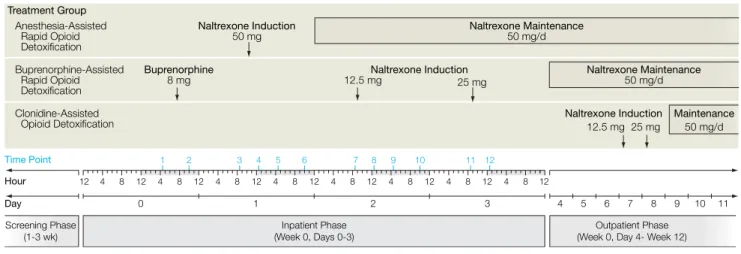
FIGURE2provides a schematic
time-line for the screening, inpatient, and outpatient phases of the study. Dur-ing the inpatient phase, withdrawal se-verity was assessed 4 times daily, at 8:30
AMand 12:30, 4:30, and 10PM. With-drawal assessment time point 1 oc-curred on day 0 at 4:30PM, with sub-sequent assessment time points numbered sequentially. The with-drawal measures used were the Sub-jective Opiate Withdrawal Scale,58
Ob-jective Opiate Withdrawal Scale,58and
Clinical Institute Narcotic Assessment.59
All patients were administered cloni-dine, as needed, up to 0.2 mg every 4 hours (maximum 1.2 mg/d); cloni-dine was withheld if heart rate and blood pressure did not remain in the normal range (heart rate⬎55/min, sys-tolic blood pressure⬎90 mm Hg,
dia-stolic blood pressure ⬎55 mm Hg).
Clonazepam was also administered, up to 2 mg every 8 hours, with additional dosing available for severe persistent withdrawal. Other adjuvant medica-tions were administered as needed: ketorolac, 30 mg intramuscularly ev-ery 6 hours for myalgias, bone pain, cramping; ondansetron, 8 mg orally ev-ery 8 hours or prochlorperazine, 10 mg orally or intramuscularly every 8 hours for nausea and vomiting; octreotide, 100 µg every 8 hours subcutaneously for diarrhea; and acetaminophen, mag-nesium hydroxide, and aluminum hydroxide/magnesium hydroxide/ simethicone for dyspepsia.
Anesthesia Protocol
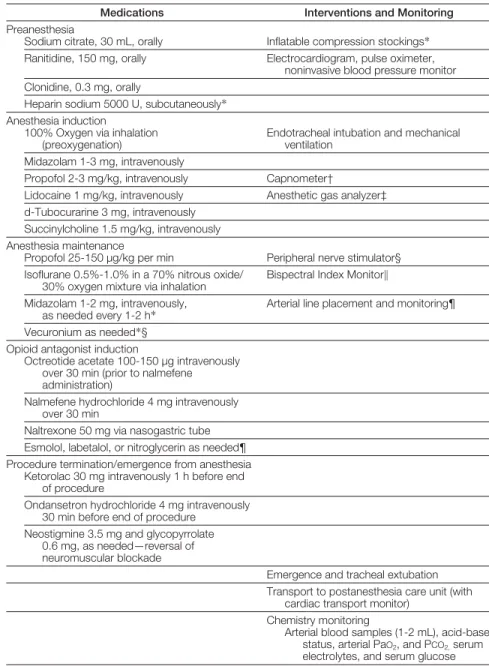
A board-certified anesthesiologist (R.A.W.), assisted by a certified regis-tered nurse anesthetist, performed an-esthesia. Patients received nothing orally after midnight before the proce-dure, which always occurred on Tues-day (Tues-day 1) at approximately 8:30AM. Medications, interventions, and moni-tors used before and during anesthe-sia are shown inTABLE1. Anesthesia was maintained for 4 to 6 hours, fol-lowed by approximately 2 hours in the postanesthesia care unit.
Given reports of sudden death27
fol-lowing rapid opioid detoxification, pa-tients were monitored with telemetry and continuous pulse oximetry through-out the inpatient hospitalization. To rule
Figure 1.Participant Flow Chart
35 Included in Analysis 37 Included in Analysis 34 Included in Analysis 25 Lost to Follow-up 21 Missing 4 Withdrew Participation 28 Lost to Follow-up 13 Missing 6 Withdrew Participation 9 Relapsed and Referred
30 Lost to Follow-up 20 Missing
3 Withdrew Participation 7 Relapsed and Referred 63 Excluded
28 Medical Exclusion 7 Psychiatric Exclusion 28 Lost to Follow-up or Refused
35 Assigned to Receive Anesthesia-Assisted Rapid Opioid Detoxification 33 Received Treatment
as Assigned
2 Refused Assigned Treatment
37 Assigned to Receive Buprenorphine-Assisted Rapid Opioid Detoxification 36 Received Treatment
as Assigned
1 Refused Naltrexone Induction
34 Assigned to Receive Clonidine-Assisted Opioid Detoxification 33 Received Treatment
as Assigned
1 Refused Assigned Treatment 169 Patients Assessed for Eligibility
106 Randomized
Figure 2.Timeline of Study Procedures
Anesthesia-Assisted Rapid Opioid Detoxification Buprenorphine-Assisted Rapid Opioid Detoxification Clonidine-Assisted Opioid Detoxification Day Time Point Treatment Group Hour Buprenorphine 8 mg Naltrexone Maintenance 50 mg/d Naltrexone Induction 50 mg 12.5 mg Naltrexone Induction Naltrexone Induction 12.5 mg 4 1 2 3 4 5 6 7 8 9 10 11 12 8 12 4 8 12 4 12 4 8 12 8 12 4 8 12 4 8 12 0 1 2 4 8 12 4 8 12 3 4 5 6 7 8 9 10 11 25 mg Naltrexone Maintenance 50 mg/d 25 mg Maintenance 50 mg/d Inpatient Phase (Week 0, Days 0-3) Screening Phase (1-3 wk) Outpatient Phase (Week 0, Day 4- Week 12)
out occult myocardial ischemia during anesthesia, troponin and serial cardio-grams were performed. Serum chemis-tries, including calcium and magne-sium, were also checked on day 2. Buprenorphine Protocol
Unlike the usual use of buprenorphine for maintenance or detoxification, this procedure used a single facilitating bu-prenorphine dose to enable more rapid and comfortable naltrexone induction. The buprenorphine group received 8 mg of sublingual buprenorphine in the evening of day 0. Naltrexone induction occurred on day 2, with an initial dose of 12.5 mg. Patients received 25 mg of naltrexone on day 3, and the dosage was increased to 50 mg/d on subsequent days. Clonidine, clonazepam, and an-cillary medications were administered as described above.
Clonidine Protocol
In this group, patients received no an-esthetic agents, no buprenorphine, and no naltrexone during the inpatient phase. Clonidine, clonazepam, ketoro-lac, ondansetron, octreotide, prochlo-perazine, and over-the-counter medi-cations were given as needed as described above. Naltrexone induc-tion was scheduled a week following hospital admission. Patients with opi-oid-negative urine, reporting little or no opioid use and demonstrating mini-mal opioid withdrawal on a naloxone challenge test,56received naltrexone on
day 7 with an initial dose of 12.5 mg, followed by 25 mg the next day and 50 mg on subsequent days.
Standardized Outpatient Phase Following hospital discharge, all pa-tients were treated for 12 weeks with 50 mg of naltrexone daily and twice weekly manual-guided relapse preven-tion psychotherapy61provided by
mas-ter’s- and doctoral-level psychothera-pists. Patients met with the study psychiatrist weekly during the first month and monthly thereafter. In the first 2 weeks after discharge from the hospital, patients with residual with-drawal symptoms received up to 0.1 mg
of clonidine 3 times a day and 10 mg of zolpidem tartrate and/or 50 mg of tra-zodone taken orally every night as needed for sleep. At all outpatient vis-its, which were scheduled twice weekly, patients met with their therapist, nurs-ing staff, and the research assistant, and urine was collected for toxicology. Nal-trexone maintenance was strongly
en-couraged but not required. Patients still receiving naltrexone at study end were continued on it, if desired, and re-ferred for additional aftercare. Indi-viduals who relapsed during out-patient treatment were referred for alternative treatment. For the evalua-tion of treatment retenevalua-tion,dropoutwas defined as relapse to opioid
depen-Table 1.Anesthesia Medications and Interventions
Medications Interventions and Monitoring
Preanesthesia
Sodium citrate, 30 mL, orally Inflatable compression stockings* Ranitidine, 150 mg, orally Electrocardiogram, pulse oximeter,
noninvasive blood pressure monitor Clonidine, 0.3 mg, orally
Heparin sodium 5000 U, subcutaneously* Anesthesia induction
100% Oxygen via inhalation (preoxygenation)
Endotracheal intubation and mechanical ventilation
Midazolam 1-3 mg, intravenously
Propofol 2-3 mg/kg, intravenously Capnometer†
Lidocaine 1 mg/kg, intravenously Anesthetic gas analyzer‡ d-Tubocurarine 3 mg, intravenously
Succinylcholine 1.5 mg/kg, intravenously Anesthesia maintenance
Propofol 25-150 µg/kg per min Peripheral nerve stimulator§ Isoflurane 0.5%-1.0% in a 70% nitrous oxide/
30% oxygen mixture via inhalation
Bispectral Index Monitor㛳 Midazolam 1-2 mg, intravenously,
as needed every 1-2 h*
Arterial line placement and monitoring¶ Vecuronium as needed*§
Opioid antagonist induction
Octreotide acetate 100-150 µg intravenously over 30 min (prior to nalmefene administration)
Nalmefene hydrochloride 4 mg intravenously over 30 min
Naltrexone 50 mg via nasogastric tube Esmolol, labetalol, or nitroglycerin as needed¶ Procedure termination/emergence from anesthesia
Ketorolac 30 mg intravenously 1 h before end of procedure
Ondansetron hydrochloride 4 mg intravenously 30 min before end of procedure
Neostigmine 3.5 mg and glycopyrrolate 0.6 mg, as needed—reversal of neuromuscular blockade
Emergence and tracheal extubation Transport to postanesthesia care unit (with
cardiac transport monitor) Chemistry monitoring
Arterial blood samples (1-2 mL), acid-base status, arterial PaO2, and PCO2,serum
electrolytes, and serum glucose
*Lower risk of deep venous thromboembolism. Monitoring occurred continuously throughout the procedure. †Monitor end-tidal carbon dioxide concentration (target between 25 and 35 mm Hg).
‡Monitor nitrous oxide and isoflurane concentration. §Maintain muscle relaxation.
㛳Monitor patient awareness (Bispectral Index score target: 40-60).36,60
dence requiring referral to alternative treatment (another detoxification or agonist maintenance therapy) or miss-ing outpatient visits for 2 consecutive weeks. Patients who dropped out of treatment were counted as retained in treatment through the end of the week of their last outpatient visit.
Outcome Measures
The primary outcome measures for this study were (1) opioid withdrawal se-verity (assessed using the Subjective Opiate Withdrawal Scale, Objective Opiate Withdrawal Scale, and Clinical Institute Narcotic Assessment) during the 4-day inpatient phase of the trial, (2) the proportion of patients complet-ing inpatient detoxification, (3) the pro-portion of patients receiving naltrex-one induction (at any dose and at 50 mg), and (4) the number of weeks com-pleted in treatment. Drug use over the course of the 12-week outpatient treat-ment was assessed by examining the proportions of urine specimens that tested positive for opiates and any drug, defined as positive if any of mari-juana, phencyclidine, benzodiaz-epine, methadone, cocaine, barbitu-rate, or amphetamine were present. Data Analysis
All analyses were carried out on the in-tent-to-treat population and all tests were 2-tailed with the␣significance level set at .05. Baseline demographic variables and clinical characteristics were compared across groups using2
tests for categorical variables and a 1-factor (treatment) analysis of vari-ance for continuous variables. The Berger-Exner test was conducted on each outcome measure to test for se-lection bias in enrollment that might not have been captured by baseline com-parisons of the sample.
Retention in treatment was com-pared using Kaplan-Meier curves and the log-rank statistic. Cox regression was used to examine the effect of nal-trexone induction on retention. Aggre-gate measures of drug use during the outpatient phase (proportions of posi-tive urine specimens) were compared
using Kruskal-Wallis 1-way analysis of variance by ranks.
To examine time trends during the inpatient phase, models were fitted on the (postnaltrexone induction) log-transformed withdrawal scores on days 2 and 3 using general estimating equa-tions as implemented by PROC GENMOD (SAS Institute Inc; Cary, NC). The outcome was modeled as a function of time, treatment
assign-ment, and time⫻treatment
interac-tion. Given significant baseline differ-ences in current marijuana use, days using marijuana was explored as a co-variate in the model but was found not to be a significant factor (P⬎.20) and therefore excluded from the model. RESULTS
Patient Characteristics
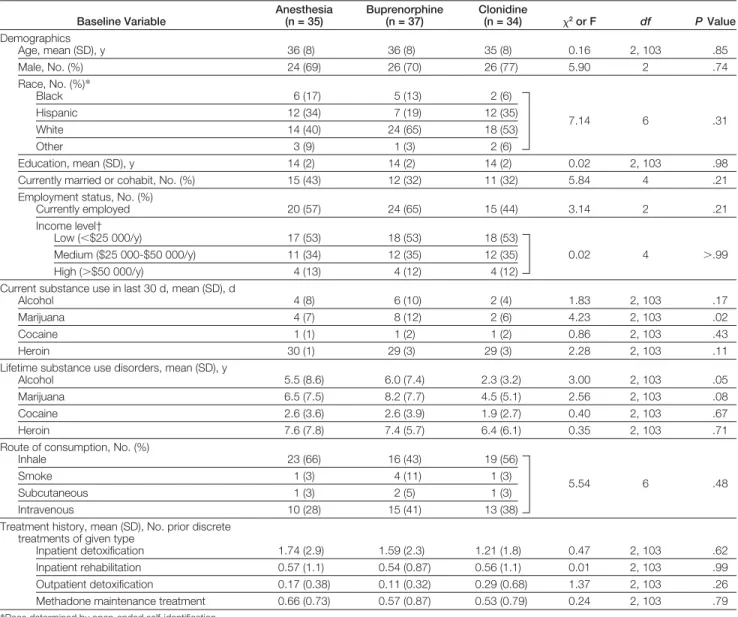
Demographic and clinical characteris-tics of the 106 participants were com-parable (TABLE2). The Berger-Exner test for selection bias was performed on all response measures and was found to be nonsignificant for all outcomes (P⬎.10). Fifty-three percent of the participants were white and 72% were men, with a mean (SD) age of 36 (8) years (range, 21-50 years) and an average 14 (2) years of education. With respect to baseline drug use, the groups differed signifi-cantly only in marijuana use, with more use among those in the buprenorphine-assisted group, which used a mean (SD) of 8 (12) days in the month before screening vs 4 (7) days among those in the anesthesia-assisted and 2 (6) days among those in the clonidine-assisted groups (F2,103=4.23,P=.02). The groups
did not differ on any of the Addiction Severity Index subscales.
Opioid Withdrawal Scores
Mean opioid withdrawal scores are pre-sented inFIGURE3. Withdrawal sever-ity for the anesthesia group was great-est on day 1, immediately before receiving the anesthesia treatment, and differed significantly from withdrawal severity in the buprenorphine-assisted and clonidine-buprenorphine-assisted groups (P⬍.001; withdrawal assessment time point, 3). This greater severity was
at-tributed to anticipatory anxiety about anesthesia and perhaps less use of the available clonazepam before receiving anesthesia. Following anesthesia treat-ment, withdrawal scores among those in the anesthesia-assisted group de-creased, although not below pretreat-ment levels. For those receiving bu-prenorphine, withdrawal severity decreased on both the Clinical Insti-tute Narcotic Assessment and the Ob-jective Opiate Withdrawal Scale on the day after receiving buprenorphine, but severity increased (on all 3 with-drawal assessment instruments) fol-lowing naltrexone induction on the morning of day 2. Subjective Opiate Withdrawal Scale mean scores were lower for all groups on measurements taken at night (10PM). This pattern was not replicated on the Objective Opiate Withdrawal Scale or Clinical Institute Narcotic Assessment. Longitudinal analyses on log-transformed with-drawal scores on days 2 and 3 (with-drawal assessment time points 7 through 12) did not reveal significant differences in withdrawal severity. Other Detoxification Outcomes
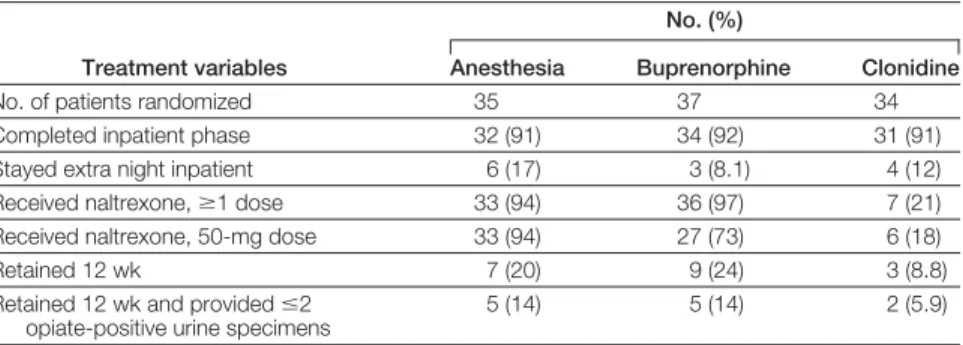
TABLE3shows the number of patients in each group completing various study milestones. During outpatient treat-ment, no group differences occurred in the proportions, mean (SDs), of urine samples positive for opiates (anesthe-sia, 0.54 [0.39]; buprenorphine, 0.62 [0.39]; clonidine, 0.73 [0.41];2
2=3.18, P= .20) or for “any drug use” (anesthe-sia, 0.50 [0.41]; buprenorphine, 0.65 [0.35]; clonidine, 0.50 [0.42];2
2=2.36, P= .31). Five patients (14%) in each of the anesthesia-assisted and buprenor-phine-assisted groups and 2 (5.9%) in the clonidine-assisted group were re-tained 12 weeks and provided no more than 2 opiate-positive urine speci-mens during the outpatient phase (2
2= 1.49,P= .48). Naltrexone Induction
As shown in Table 3, rates of naltrex-one induction, defined as taking any dose of naltrexone, differed signifi-cantly across groups, with 33 (94%) of 908 JAMA,August 24/31, 2005—Vol 294, No. 8(Reprinted) ©2005 American Medical Association. All rights reserved.
35 patients in the anesthesia-assisted group and 36 (97%) of 37 in the bu-prenorphine-assisted group achieving higher rates of naltrexone induction than the 7 (21%) of 34 in the clonidine-assisted group(2
2= 64.52, P⬍.001).
Thirty-three (94%) of 35 patients in the anesthesia-assisted, 27 (73%) of 37 in the buprenorphine-assisted, and 6 (18%) of 34 in the clonidine-assisted groups received the full 50-mg main-tenance dose of naltrexone (2
2= 45.89, P⬍.001). A significant relationship ex-isted between naltrexone induction at the full 50-mg maintenance dose and
attrition, with those achieving full-dose induction at lower risk of drop-ping out (odds ratio, 0.28; 95% confi-dence interval, 0.15- 0.51).
Treatment Retention
Treatment retention (FIGURE4) over the course of the study did not differ sig-nificantly across intervention groups (mean [SE] weeks in treatment, anes-thesia 2.83 [0.47] weeks; buprenor-phine, 3 [0.45]; and clonidine, 2.47 [0.58]; log-rank2=3.57,P=.17). By week
3, more than 50% of the patients had dropped out of each treatment arm.
Although the differences were not sig-nificant overall, 7 (20%) of 35 in the anesthesia, 9 (24%) of 37 in the buprenorphine, and 3 (9%) of 34 in the clonidine groups remained in treat-ment for 12 weeks.
Adverse Events
Three patients in the anesthesia group experienced serious adverse events. One developed severe pulmonary edema and aspiration pneumonia approximately 14 hours after extubation, necessitating re-intubation and admission to the inten-sive care unit for 5 days. The patient’s
Table 2.Demographic and Clinical Characteristics of Randomized Sample Baseline Variable Anesthesia (n = 35) Buprenorphine (n = 37) Clonidine (n = 34) 2or F df PValue Demographics Age, mean (SD), y 36 (8) 36 (8) 35 (8) 0.16 2, 103 .85 Male, No. (%) 24 (69) 26 (70) 26 (77) 5.90 2 .74 Race, No. (%)* Black 6 (17) 5 (13) 2 (6) Hispanic 12 (34) 7 (19) 12 (35) White 14 (40) 24 (65) 18 (53) 7.14 6 .31 Other 3 (9) 1 (3) 2 (6) Education, mean (SD), y 14 (2) 14 (2) 14 (2) 0.02 2, 103 .98 Currently married or cohabit, No. (%) 15 (43) 12 (32) 11 (32) 5.84 4 .21 Employment status, No. (%)
Currently employed 20 (57) 24 (65) 15 (44) 3.14 2 .21
Income level†
Low (⬍$25 000/y) 17 (53) 18 (53) 18 (53)
Medium ($25 000-$50 000/y) 11 (34) 12 (35) 12 (35) 0.02 4 ⬎.99 High (⬎$50 000/y) 4 (13) 4 (12) 4 (12)
Current substance use in last 30 d, mean (SD), d
Alcohol 4 (8) 6 (10) 2 (4) 1.83 2, 103 .17
Marijuana 4 (7) 8 (12) 2 (6) 4.23 2, 103 .02
Cocaine 1 (1) 1 (2) 1 (2) 0.86 2, 103 .43
Heroin 30 (1) 29 (3) 29 (3) 2.28 2, 103 .11
Lifetime substance use disorders, mean (SD), y
Alcohol 5.5 (8.6) 6.0 (7.4) 2.3 (3.2) 3.00 2, 103 .05
Marijuana 6.5 (7.5) 8.2 (7.7) 4.5 (5.1) 2.56 2, 103 .08
Cocaine 2.6 (3.6) 2.6 (3.9) 1.9 (2.7) 0.40 2, 103 .67
Heroin 7.6 (7.8) 7.4 (5.7) 6.4 (6.1) 0.35 2, 103 .71
Route of consumption, No. (%)
Inhale 23 (66) 16 (43) 19 (56)
Smoke 1 (3) 4 (11) 1 (3)
5.54 6 .48
Subcutaneous 1 (3) 2 (5) 1 (3)
Intravenous 10 (28) 15 (41) 13 (38)
Treatment history, mean (SD), No. prior discrete treatments of given type
Inpatient detoxification 1.74 (2.9) 1.59 (2.3) 1.21 (1.8) 0.47 2, 103 .62 Inpatient rehabilitation 0.57 (1.1) 0.54 (0.87) 0.56 (1.1) 0.01 2, 103 .99 Outpatient detoxification 0.17 (0.38) 0.11 (0.32) 0.29 (0.68) 1.37 2, 103 .26 Methadone maintenance treatment 0.66 (0.73) 0.57 (0.87) 0.53 (0.79) 0.24 2, 103 .79
*Race determined by open-ended self-identification.
condition was complicated by upper air-way edema requiring aggressive gluco-corticoid treatment. The patient was
dis-charged home in good condition a week after anesthesia treatment but quickly re-lapsed to heroin dependence. The
inves-tigators believed that this episode of pul-monary edema was postobstructive (negative pressure) pulmonary edema. The patient had concealed but subse-quently admitted a history both of sev-eral prior complicated pneumonias and of possible obstructive sleep apnea. These conditions were subsequently exclusion-ary. The second patient, who had con-cealed a history of bipolar illness dur-ing the screendur-ing process, developed a mixed bipolar state about 5 days after an-esthesia, with suicidal ideation requir-ing hospitalization. The third patient had reportedly stable insulin-dependent dia-betes mellitus but concealed a prior epi-sode of diabetic ketoacidosis. The pa-tient’s glucose level was difficult to manage following anesthesia, and the in-patient phase of the study was pro-longed by a day. Two days after dis-charge, the patient developed diabetic ketoacidosis, resulting in a 3-day read-mission to the hospital. Rapid relapse to heroin dependence followed discharge. Subsequently, patients with a glucose level greater than 160 mg/dL (8.8 mmol/L) or with insulin-dependent dia-betes were excluded from the study. COMMENT
This is the first randomized controlled trial of anesthesia detoxification with a positive control group (buprenorphine-assisted detoxification) and systematic documentation of postdetoxification withdrawal symptoms. Anesthesia-assisted treatment was associated with a high rate of naltrexone induction but also with significant opioid withdrawal symptoms comparable with the alterna-tive procedures. The buprenorphine-assisted procedure produced naltrex-one induction and 12-week treatment retention comparable with the anesthe-sia-assisted intervention. The clonidine intervention produced a low rate of
nal-trexone induction (21% vs ⬎90%,
P⬍.001) and nonsignificantly lower rates of treatment retention (9% vs 20% for an-esthesia-assisted group and 24% for bu-prenorphine-assisted group) over 3 months. Furthermore, 3 serious, poten-tially life-threatening adverse events oc-curred with the anesthesia procedure.
Figure 3.Mean Opioid Withdrawal Scores
Subjective Opiate Withdrawal Scale Scores
Anesthesia-Assisted Opioid Detoxification
Clonidine-Assisted Opioid Detoxification Buprenorphine-Assisted Opioid Detoxification
Naltrexone Induction, 50 mg Naltrexone Induction, 12.5 mg Day Mean Scor e (Maximum = 31) 7 5 6 4 3 2 1 0 4 8 12 4 8 12 4 8 12 4 8 12 4 8 12
Clinical Institute Narcotic Assessment Scores
4 8 12 12 11 10 9 8 7 6 5 4 3 2 1 Time Point 0 1 2 3 Mean Scor e (Maximum = 13) 6 4 5 3 2 1 0 4 8 12 4 8 12 4 8 12 4 8 12 4 8 12
Objective Opiate Withdrawal Scale Scores
4 8 12 12 11 10 9 8 7 6 5 4 3 2 1 Time Point 0 1 2 3 12 11 10 9 8 7 6 5 4 3 2 1 Mean Scor e (Maximum = 64) 30 20 25 15 10 5 0 4 8 12 4 8 12 4 8 12 4 8 12 4 8 12 Time Point 4 8 12 0 1 2 3
Error bars represent ±1 SEM. Some error bars omitted for clarity. Arrows indicate administration of naltrexone in the anesthesia-assisted intervention (after time point 3) and buprenorphine-assisted intervention (after time point 7). No withdrawal assessments were made in the anesthesia-assisted group during general anesthesia and the immediate postprocedure recovery phase (time points 4 and 5). Withdrawal assessment time points were numbered sequentially starting on Monday (day 0) at 4:30PM, and so on, with assessments made daily at 8:30AM, 12:30PM, 4:30PM, and 10PM.
In the earlier Australian random-ized trial,43anesthesia was also
com-pared with inpatient clonidine detoxi-fication. However, naltrexone induction was sometimes delayed for a few days following anesthesia, so that 40 (83%) of 48 participants actually received nal-trexone (only 54% during anesthesia) compared with 14 (28%) of 50 in the clonidine group. Also, as a result of vari-able postprocedure levels of care, no sys-tematic measures of withdrawal sever-ity were made in the days following anesthesia, leaving unanswered the question62 of whether the procedure
shortens and diminishes the with-drawal process. No adverse events were reported, and treatment retention appeared even lower than our own at 3 months, with 15% of the anesthesia group vs 2% of the clonidine group remaining in treatment. By 6 months, heroin use in each cohort was similar. Uncontrolled reports on the experi-ence with anesthesia for opioid with-drawal have shown somewhat mixed results. Many argue for the safety and effi-cacy of the procedure21,38,40,41,63,64and
report high rates of naltrexone induc-tion and sustained opioid absti-nence.21,35,38,65Selection bias and the lack
of controls, however, limit the validity and generalizability of these reports. Anesthesia advocates41,63,66-68 have
claimed minimal withdrawal symp-toms following anesthesia. Such reports lent weight to claims that the severe dis-comfort of opioid withdrawal could be avoided, contributing to the willing-ness of individuals or families to pay large sums for this unproven approach. How-ever, other studies14,30,31have reported
significant, sometimes prolonged, with-drawal symptoms in patients detoxi-fied under general anesthesia. In an open case series of 7 patients,14persistent and
clinically significant withdrawal was observed for nearly 3 weeks following the procedure, a result that was consis-tent with a laboratory study in which continuous naloxone infusion and anes-thesia in rats lengthened and worsened opioid withdrawal signs.69
Two nonrandomized comparison studies merit mention. The first
com-pared 15 patients detoxified under an-esthesia with 15 patients receiving 1 to 2 weeks of inpatient methadone taper, with all offered supervised naltrexone
maintenance.65Withdrawal symptoms
were greater in the anesthesia group im-mediately following the procedure. Ab-stinence rates at 1 month (100%) and 2 months (93%) were extraordinarily high in the anesthesia group, compared with 40% and 33%, respectively, for the methadone taper, but statistical signifi-cance for treatment retention was lost af-ter 3 months. The second study retro-spectively compared 139 anesthesia patients with 87 inpatients detoxified
with methadone over a month.70The
methadone taper group reported nearly twice the rate of sustained opioid absti-nence (42% vs 22%) in telephone fol-low-up after 12 to 18 months.
In our study, we took many precau-tions to screen individuals for preexist-ing conditions that increase anesthesia risk. Because pretreatment chest x-rays and echocardiograms significantly raise costs, they would potentially be omit-ted in clinical practice, further increas-ing risk. Despite these precautions, 1 in-dividual in our study experienced pulmonary edema and aspiration pneu-monia. Careful inpatient monitoring of pulmonary function, which enabled rapid tracheal intubation and transfer to intensive care, may have saved this tient’s life. Indeed, in a study of 20 pa-tients treated with anesthesia,27an
un-monitored patient died in the hospital of unknown causes between 34 and 41 hours after anesthesia treatment.28
The other 2 serious adverse events, an episode of diabetic ketoacidosis and a
bipolar mixed state requiring hospital-ization (the patient in the clonidine-assisted group who had the mixed bipolar reaction did not require hospi-talization), could have occurred with other opioid detoxification approaches, although the risk of each may have been greater as a result of increased physi-ological stress imposed by rapid antago-nist exposure and precipitated with-drawal with anesthesia.17
Given the large doses of opioid an-tagonists typically used during anesthe-sia detoxification procedures, most prac-titioners have seen anesthesia as a means principally to achieve rapid antagonist in-duction. Some believe that rapid strip-ping of agonist from opioid receptors may itself be therapeutic,40,62,64
promot-ing long-term abstinence. Although the results from our study do not support this thesis, receptor agonist stripping can nev-ertheless occur with naltrexone induc-tion following a single dose of
buprenor-Table 3.Treatment Milestones Attained
Treatment variables
No. (%)
Anesthesia Buprenorphine Clonidine
No. of patients randomized 35 37 34
Completed inpatient phase 32 (91) 34 (92) 31 (91) Stayed extra night inpatient 6 (17) 3 (8.1) 4 (12) Received naltrexone,ⱖ1 dose 33 (94) 36 (97) 7 (21) Received naltrexone, 50-mg dose 33 (94) 27 (73) 6 (18)
Retained 12 wk 7 (20) 9 (24) 3 (8.8)
Retained 12 wk and providedⱕ2 opiate-positive urine specimens
5 (14) 5 (14) 2 (5.9)
Figure 4.Treatment Retention
Per
cent Subjects in Study
1.0 0.8 0.6 0.4 0.2 0 No. at Risk 0 2 4 6 8 10 12 Anesthesia 35 17 13 9 7 7 7 Buprenorphine 37 24 13 10 9 9 9 Clonidine 34 14 7 4 4 4 3 Week
Buprenorphine-Assisted Opioid Detoxification Anesthesia-Assisted Opioid Detoxification Clonidine-Assisted Opioid Detoxification
phine. Some have pointed out that anesthesia could be offered electively to patients who desire it, because it will bring more individuals into treatment, especially those who intensely fear opi-oid withdrawal.71Advocates compare this
to offering anesthesia to individuals with dental phobia or for cosmetic surgery.29
However, this argument relies on the usually false promise that anesthesia eliminates the severe discomfort of opi-oid withdrawal. This expectation prob-ably contributed powerfully to patients’ lying about their medical or psychiatric histories, as occurred with all 3 patients who experienced serious adverse events in our study.
Treatment retention and abstinence from illicit opioids are important goals of treatment, but specific detoxification methods, per se, do not appear to lead to either. Two previous studies43,65
showedthatintermediate-termtreatment outcomes at 3 months65and at 6 months43
do not differ as a function of the detoxi-fication approach used. Our results at 3 months, while demonstrating low rates of sustained abstinence and treatment retention, corroborate these earlier find-ings. Physicians must recognize that the method used to achieve opioid absti-nence does not appear to affect the course of this chronic relapsing disease.
Although a formal cost-efficacy analy-sis is beyond the scope of this report, it appears that the cost per successful pa-tient undergoing the anesthesia proce-dure is considerably greater than the cost per successful patient undergoing the bu-prenorphine procedure. Anesthesia en-tails major costs not associated with bu-prenorphine: obligatory preprocedure testing, physician anesthesiologist charges, anesthetic medications, oper-ating rooms and possible intensive care unit beds, postprocedure monitoring, and the cost of treating adverse events that appear more likely with anesthe-sia. Considering the lower cost, greater safety, and equivalent withdrawal severity profile of the assisted approach, a buprenorphine-mediated procedure appears preferable to anesthesia for initiation of opioid an-tagonist maintenance.
There are a number of limitations to this study. First, the total sample size of 106 patients for a 3-treatment trial made it difficult to show statistically signifi-cant differences in some important vari-ables, including overall withdrawal se-verity and treatment retention. A larger sample might have shown anesthesia or buprenorphine superior to the other, but it appears this would have required a sample with more than 4 times the num-ber of participants in the present study. Second, the sample size limited the abil-ity to find patient subgroups that might selectivelybenefitfromanesthesia.Third, follow-up data on the many individuals who dropped out of the study or were referred for additional treatment were not available, making it difficult to ap-preciate potential distal effects of the withdrawal methods used. Fourth, be-cause prescription analgesic use was neg-ligible and recent methadone use exclu-sionary, the inclusion only of patients dependent on heroin may limit gener-alizability of our findings to all opioid-dependent individuals. Earlier studies, however, have suggested that depen-dence on methadone made anesthesia-assisted withdrawal more difficult24,35and
produced lower subsequent treatment retention.24 Methadone use also
pre-dicted poor retention in a series of heroin-dependent patients inducted onto nal-trexoneusingabuprenorphine-mediated procedure similar to buprenorphine-assisted rapid opioid detoxification.72
These prior results suggest that naltrex-one induction is complicated by metha-done and that anesthesia would not likely
fare comparatively better among
methadone-maintained patients. In summary, this randomized trial of general anesthesia for opioid with-drawal and naltrexone induction dem-onstrates no benefit of anesthesia over a safer, cheaper, and potentially outpa-tient alternative using buprenorphine as a bridge to naltrexone treatment. Taken together with the results of earlier stud-ies,31,43,65,70our findings suggest that
gen-eral anesthesia for rapid antagonist induction does not currently have a meaningful role to play in the treat-ment of opioid dependence.
Author Affiliations:Division on Substance Abuse, New York State Psychiatric Institute and Department of Psy-chiatry, College of Physicians and Surgeons of Co-lumbia University (Drs Collins and Kleber and Ms Heitler); Department of Anesthesiology, College of Physicians and Surgeons of Columbia University (Dr Whittington).
Author Contributions:Dr Collins had full access to all of the data in the study and takes responsibility for the integrity of the data and the accuracy of the data analysis.
Study concept and design:Collins, Kleber, Whitting-ton, Heitler.
Acquisition of data:Collins, Kleber, Whittington, Heitler.
Analysis and interpretation of data:Collins, Kleber. Drafting of the manuscript:Collins, Kleber, Whitting-ton, Heitler.
Critical revision of the manuscript for important in-tellectual content:Collins, Kleber, Whittington. Obtained funding:Collins, Kleber.
Administrative, technical, or material support:Collins, Kleber, Whittington, Heitler.
Study supervision:Collins, Kleber, Whittington.
Financial Disclosures:Dr Kleber has served as con-sultant for and has received an unrestricted grant from Reckitt Benckiser, the manufacturer of buprenor-phine, for issues unrelated to this article. No other au-thors reported disclosures.
Funding/Support:This study was supported by grants DA-12644, DA-00317, and DA-14284 from the Na-tional Institute on Drug Abuse (NIDA) and grant MOI-RR-00645 from the National Institutes of Health (NIH). The present study was funded entirely by NIH grants.
Role of the Sponsor:The study was reviewed by the Investigational Review Group at the National Insti-tute on Drug Abuse when it recommended funding for this project. Beyond the review process, neither the NIH nor the NIDA had a role in the design, conduct, analysis, or writing of this study.
Acknowledgment:We wish to thank the following in-dividuals for their work in support of this research: Marty L. Hill, CRNA, and Jody Davis, CRNA, Depart-ment of Anesthesiology; Edward Nunes, MD, Divi-sion of Substance Abuse, and Dan Bloomfield, MD, Department of Medicine; and Maria Sullivan, MD, and Jay Mott, MD, Division of Substance Abuse, Depart-ment of Psychiatry, Columbia University Medical Cen-ter; Randi Adelman, RN; Research Assistants Chaim Kozlovsky and Michael Song; and Fatima Garawi, MA, for statistical support.
REFERENCES
1.National Drug Control Strategy National Data Tables. Washington, DC: Office of National Drug Control Policy; March 2004.
2.National Survey of Substance Abuse Treatment Ser-vices (N-SSATS). Rockville, Md: Substance Abuse and Mental Health Services Administration Office of Ap-plied Studies; 2004.
3.Amato L, Davoli M. A Perucci C, Ferri M, Faggiano F, P Mattick R. An overview of systematic reviews of the effectiveness of opiate maintenance therapies: avail-able evidence to inform clinical practice and research. J Subst Abuse Treat. 2005;28:321-329.
4.Gossop M, Johns A, Green L. Opiate withdrawal: in-patient vs outin-patient programmes and preferred vs ran-dom assignment to treatment.BMJ. 1986;293:103-104.
5.Metzger DS, Woody GE, McLellan AT, et al. Hu-man immunodeficiency virus seroconversion among in-travenous drug users in- and out-of-treatment: an 18-month prospective follow-up.J Acquir Immune Defic Syndr. 1993;6:1049-1056.
6. Tillim SJ. Opiate withdrawal treated with induced hy-poglycemic reactions.Am J Psychiatry. 1942;99:84-89.
7.Newman MK, Berris JM. Artificial hibernation therapy. Arch Physiol Ther. 1941;22:161-167.
8.Kelman H. Narcotic withdrawal syndrome: suppres-sion of by means of electric convulsive therapy.Minn Med. 1964;47:525-527.
9.Kolb L, Himmelsbach CK. Clinical studies of drug ad-diction, III: a critical review of the withdrawal treat-ment with method of evaluating abstinence syndromes. Am J Psychiatry. 1938;94:759-799.
10.Kleber HD, Riordan CE. The treatment of narcotic withdrawal: a historical review.J Clin Psychiatry. 1982; 43:30-34.
11.Amato L, Davoli M, Ferri M, Gowing L, Perucci CA. Effectiveness of interventions on opiate withdrawal treat-ment: an overview of systematic reviews.Drug Alco-hol Depend. 2004;73:219-226.
12.Stephenson J. Experts debate merits of 1-day opi-ate detoxification under anesthesia.JAMA. 1997;277: 363-364.
13.Kleber H. Ultrarapid opiate detoxification.Addiction. 1998;93:1629-1633.
14.Elman I, D’Ambra MN, Krause S, et al. Ultrarapid opioid detoxification: effects on cardiopulmonary physi-ology, stress hormones and clinical outcomes.Drug Al-cohol Depend. 2001;61:163-172.
15.Hoffman WE, Berkowitz R, McDonald T, Hass F. Ultra-rapid opioid detoxification increases spontane-ous ventilation.J Clin Anesth. 1998;10:372-376.
16.Hoffman WE, McDonald T, Berkowitz R. Simulta-neous increases in respiration and sympathetic func-tion during opiate detoxificafunc-tion.J Neurosurg Anesthesiol. 1998;10:205-210.
17.Kienbaum P, Thurauf N, Michel MC, Scherbaum N, Gastpar M, Peters J. Profound increase in epineph-rine concentration in plasma and cardiovascular stimu-lation after mu-opioid receptor blockade in opioid-addicted patients during barbiturate-induced anesthesia for acute detoxification.Anesthesiology. 1998;88:1154-1161.
18.Kienbaum P, Scherbaum N, Thurauf N, Michel MC, Gastpar M, Peters J. Acute detoxification of opioid-addicted patients with naloxone during propofol or methohexital anesthesia: a comparison of with-drawal symptoms, neuroendocrine, metabolic, and cardiovascular patterns.Crit Care Med. 2000;28:969-976.
19.Pfab R, Hirtl C, Zilker T. Opiate detoxification un-der anesthesia: no apparent benefit but suppresion of thyroid hormones and risk of pulmonary and renal failure. J Toxicol Clin Toxicol. 1999;37:43-50.
20.San L, Puig M, Bulbena A, Farre M. High risk of ul-trashort noninvasive opiate detoxification.Am J Psychiatry. 1995;152:956.
21.Albanese AP, Gevirtz C, Oppenheim B, Field JM, Abels I, Eustace JC. Outcome and six-month follow up of patients after ultra rapid opiate detoxification (UROD). J Addict Dis. 2000;19:11-28.
22.Shreeram SS, McDonald T, Dennison S. Psychosis after ultrarapid opiate detoxification.Am J Psychiatry. 2001;158:970.
23.Golden SA, Sakhrani DL. Unexpected delirium dur-ing rapid opioid detoxification (ROD).J Addict Dis. 2004; 23:65-75.
24.Bell JR, Young MR, Masterman SC, Morris A, Mattick RP, Bammer G. A pilot study of naltrexone-accelerated detoxification in opioid dependence.Med J Aust. 1999; 171:26-30.
25.Cucchia AT, Monnat M, Spagnoli J, Ferrero F, Bertschy G. Ultra-rapid opiate detoxification using deep sedation with oral midazolam: short and long-term results.Drug Alcohol Depend. 1998;52:243-250.
26.Hamilton RJ, Olmedo RE, Shah S, et al. Complica-tions of ultrarapid opioid detoxification with subcuta-neous naltrexone pellets.Acad Emerg Med. 2002;9: 63-68.
27.Gold CG, Cullen DJ, Gonzales S, Houtmeyers D, Dw-yer MJ. Rapid opioid detoxification during general an-esthesia: a review of 20 patients.Anesthesiology. 1999; 91:1639-1647.
28.Whittington RA, Collins ED, Kleber HD. Rapid opi-oid detoxification during general anesthesia: is death not
a significant outcome?Anesthesiology. 2000;93:1363-1364.
29. Brewer C. Rapid opiate detoxification under anaesthesia.Hosp Med. 1999;60:70.
30.Tretter F, Burkhardt D, Bussello-Spieth B, Reiss J, Walcher S, Buchele W. Clinical experience with antago-nist-induced opiate withdrawal under anaesthesia. Addiction. 1998;93:269-275.
31. Ali R, Thomas P, White J, et al. Antagonist-precipitated heroin withdrawal under anaesthetic prior to maintenance naltrexone treatment: determinants of withdrawal severity.Drug Alcohol Rev. 2003;22: 425-431.
32.O’Connor PG, Kosten TR. Rapid and ultrarapid opi-oid detoxification techniques.JAMA. 1998;279:229-234.
33.Carreno JE, Bobes J, Brewer C, et al. 24-Hour opi-ate detoxification and antagonist induction at home— the “Asturian method”: a report on 1368 procedures. Addict Biol. 2002;7:243-250.
34.Brewer C, Rezae H, Bailey C. Opioid withdrawal and naltrexone induction in 48-72 hours with minimal drop-out, using a modification of the naltrexone-clonidine technique.Br J Psychiatry. 1988;153:340-343.
35.Hensel M, Kox WJ. Safety, efficacy, and long-term results of a modified version of rapid opiate de-toxification under general anaesthesia: a prospective study in methadone, heroin, codeine and morphine addicts.Acta Anaesthesiol Scand. 2000;44:326-333.
36.Hensel M, Wolter S, Kox WJ. EEG controlled rapid opioid withdrawal under general anaesthesia.Br J Anaesth. 2000;84:236-238.
37.Rabinowitz J, Cohen H, Atias S. Outcomes of nal-trexone maintenance following ultra rapid opiate de-toxification vs intensive inpatient dede-toxification.Am J Addict. 2002;11:52-56.
38.Rabinowitz J, Cohen H, Kotler M. Outcomes of ultra-rapid opiate detoxification combined with naltrexone maintenance and counseling.Psychiatr Serv. 1998;49: 831-833.
39.Rabinowitz J, Cohen H, Tarrasch R, Kotler M. Com-pliance to naltrexone treatment after ultra-rapid opi-ate detoxification: an open label naturalistic study.Drug Alcohol Depend. 1997;47:77-86.
40. Bartter T, Gooberman LL. Rapid opiate detoxification.Am J Drug Alcohol Abuse. 1996;22:489-495.
41.Bochud Tornay C, Favrat B, Monnat M, et al. Ultra-rapid opiate detoxification using deep sedation and prior oral buprenorphine preparation: long-term results.Drug Alcohol Depend. 2003;69:283-288.
42.Loimer N, Schmid R, Lenz K, Presslich O, Grun-berger J. Acute blocking of naloxone-precipitated opi-ate withdrawal symptoms by methohexitone.Br J Psychiatry. 1990;157:748-752.
43.McGregor C, Ali R, White JM, Thomas P, Gowing L. A comparison of antagonist-precipitated drawal under anesthesia to standard inpatient with-drawal as a precursor to maintenance naltrexone treat-ment in heroin users: outcomes at 6 and 12 months. Drug Alcohol Depend. 2002;68:5-14.
44.American Society of Addiction Medicine (ASAM). Public policy statement on opioid antagonist agent de-toxification under sedation or anesthesia (OADUSA). J Addict Dis. 2000;19:109-112.
45. Justins D. Rapid opioid detoxification under anaesthesia.Hosp Med. 1998;59:180.
46.Gonzalez JP, Brogden RN. Naltrexone: a review of its pharmacodynamic and pharmacokinetic properties and therapeutic efficacy in the management of opioid dependence.Drugs. 1988;35:192-213.
47.O’Brien CP, Kampman KM. Opioids: antagonists and partial agonists. In: Galanter M, Kleber HD, eds. Text-book of Substance Abuse Treatment. 3rd ed. Wash-ington, DC: American Psychiatric Publishing Inc; 2004.
48.Umbricht A, Montoya ID, Hoover DR, Demuth KL, Chiang CT, Preston KL. Naltrexone shortened opioid de-toxification with buprenorphine.Drug Alcohol Depend. 1999;56:181-190.
49.O’Connor PG, Carroll KM, Shi JM, Schottenfeld RS,
Kosten TR, Rounsaville BJ. Three methods of opioid de-toxification in a primary care setting: a randomized trial. Ann Intern Med. 1997;127:526-530.
50. Comer SD, Collins ED, Fischman MW. Buprenor-phine sublingual tablets: effects on IV heroin self-administration by humans.Psychopharmacology (Berl). 2001;154:28-37.
51. Kleber HD, Riordan CE, Rounsaville B, et al. Cloni-dine in outpatient detoxification from methadone maintenance.Arch Gen Psychiatry. 1985;42:391-394.
52. Carnwath T, Hardman J. Randomised double-blind comparison of lofexidine and clonidine in the out-patient treatment of opiate withdrawal.Drug Alcohol Depend. 1998;50:251-254.
53.McLellan AT, Kushner H, Metzger D, et al. The fifth edition of the Addiction Severity Index.J Subst Abuse Treat. 1992;9:199-213.
54. Beck AT, Steer RA, Ball R, Ranieri W. Comparison of Beck Depression Inventories-IA and -II in psychiatric outpatients.J Pers Assess. 1996;67:588-597.
55. Hamilton M. A rating scale for depression.J Neu-rol Neurosurg Psychiatry. 1960;23:56-62.
56. Wang RI, Wiesen RL, Lamid S, Roh BL. Rating the presence and severity of opiate dependence.Clin Phar-macol Ther. 1974;16:653-658.
57. Berger VW, Exner DV. Detecting selection bias in randomized clinical trials.Control Clin Trials. 1999;20: 319-327.
58. Handelsman L, Cochrane KJ, Aronson MJ, Ness R, Rubinstein KJ, Kanof PD. Two new rating scales for opi-ate withdrawal.Am J Drug Alcohol Abuse. 1987;13:293-308.
59. Peachey JE, Lei H. Assessment of opioid depen-dence with naloxone.Br J Addict. 1988;83:193-201.
60. Liu J, Singh H, White PF. Electroencephalographic bispectral index correlates with intraoperative recall and depth of propofol-induced sedation.Anesth Analg. 1997; 84:185-189.
61. Carroll KM, Rounsaville BJ, Keller DS. Relapse pre-vention strategies for the treatment of cocaine abuse. Am J Drug Alcohol Abuse. 1991;17:249-265.
62. Spanagel R. Is there a pharmacological basis for therapy with rapid opioid detoxification?Lancet. 1999; 354:2017-2018.
63. Presslich O, Loimer N, Lenz K, Schmid R. Opiate detoxification under general anesthesia by large doses of naloxone.J Toxicol Clin Toxicol. 1989;27:263-270.
64. Simon DL. Rapid opioid detoxification using opi-oid antagonists: history, theory and the state of the art. J Addict Dis. 1997;16:103-122.
65. Krabbe PF, Koning JP, Heinen N, Laheij RJ, van Cauter RM, De Jong CA. Rapid detoxification from opioid dependence under general anaesthesia vs standard methadone tapering: abstinence rates and withdrawal distress experiences.Addict Biol. 2003;8:351-358.
66. Kaye AD, Gevirtz C, Bosscher HA, et al. Ultrarapid opiate detoxification: a review.Can J Anaesth. 2003;50: 663-671.
67. Brewer C. Ultra-rapid, antagonist-precipitated opi-ate detoxification under general anaesthesia or sedation. Addict Biol. 1997;2:291-302.
68. Brewer C. The case for rapid detoxification under anaesthesia (RODA): a reply to Gossop and Strang.Br J Intens Care.1997:138-143.
69.Spanagel R, Kirschke C, Tretter F, Holsboer F. Forced opiate withdrawal under anaesthesia augments and pro-longs the occurrence of withdrawal signs in rats.Drug Alcohol Depend. 1998;52:251-256.
70.Lawental E. Ultra rapid opiate detoxification as com-pared to 30-day inpatient detoxification program—a ret-rospective follow-up study.J Subst Abuse. 2000;11:173-181.
71. Strang J, Bearn J, Gossop M. Opiate detoxification under anaesthesia.BMJ. 1997;315:1249-1250.
72. Rothenberg JL, Sullivan MA, Church SH, et al. Be-havioral naltrexone therapy: an integrated treatment for opiate dependence.J Subst Abuse Treat. 2002;23:351-360.