Wilfrid Laurier University Wilfrid Laurier University
Scholars Commons @ Laurier
Scholars Commons @ Laurier
Theses and Dissertations (Comprehensive) 2008Multi-Method Assessment of Newcomer Settlement Experiences
Multi-Method Assessment of Newcomer Settlement Experiences
in Kitchener-Waterloo
in Kitchener-Waterloo
Qaseem LudinWilfrid Laurier University
Follow this and additional works at: https://scholars.wlu.ca/etd
Part of the Human Geography Commons
Recommended Citation Recommended Citation
Ludin, Qaseem, "Multi-Method Assessment of Newcomer Settlement Experiences in Kitchener-Waterloo" (2008). Theses and Dissertations (Comprehensive). 895.
https://scholars.wlu.ca/etd/895
This Thesis is brought to you for free and open access by Scholars Commons @ Laurier. It has been accepted for inclusion in Theses and Dissertations (Comprehensive) by an authorized administrator of Scholars Commons @
1*1
Library and Archives Canada Published Heritage Branch 395 Wellington Street Ottawa ON K1A0N4 Canada Bibliotheque et Archives Canada Direction du Patrimoine de I'edition 395, rue Wellington Ottawa ON K1A0N4 CanadaYour file Votre reference ISBN: 978-0-494-46136-5 Our file Notre reference ISBN: 978-0-494-46136-5
NOTICE:
The author has granted a non-exclusive license allowing Library and Archives Canada to reproduce, publish, archive, preserve, conserve, communicate to the public by
telecommunication or on the Internet, loan, distribute and sell theses
worldwide, for commercial or non-commercial purposes, in microform, paper, electronic and/or any other formats.
AVIS:
L'auteur a accorde une licence non exclusive permettant a la Bibliotheque et Archives Canada de reproduire, publier, archiver,
sauvegarder, conserver, transmettre au public par telecommunication ou par Plntemet, prefer, distribuer et vendre des theses partout dans le monde, a des fins commerciales ou autres, sur support microforme, papier, electronique et/ou autres formats.
The author retains copyright ownership and moral rights in this thesis. Neither the thesis nor substantial extracts from it may be printed or otherwise reproduced without the author's permission.
L'auteur conserve la propriete du droit d'auteur et des droits moraux qui protege cette these. Ni la these ni des extraits substantiels de celle-ci ne doivent etre imprimes ou autrement reproduits sans son autorisation.
In compliance with the Canadian Privacy Act some supporting forms may have been removed from this thesis.
Conformement a la loi canadienne sur la protection de la vie privee, quelques formulaires secondaires ont ete enleves de cette these. While these forms may be included
in the document page count, their removal does not represent any loss of content from the thesis.
Bien que ces formulaires
aient inclus dans la pagination, il n'y aura aucun contenu manquant.
Multi-method Assessment of Newcomer Settlement
Experiences in Kitchener-Waterloo
By
Qaseem Ludin
A thesis
presented to the Wilfrid Laurier University
in partial fulfillment of the
requirements for the degree of
Master of Arts
In
Geography and Environmental Studies
Waterloo, Ontario, Canada, 2008
ABSTRACT
Every day hundreds of newcomers begin a new life in Canada. Some are refugees fleeing persecution, others come to join family, and yet others (mostly the economic and independent categories) are seeking to make a better life for themselves. In all, since 2000 around 250,000 people have settled in Canada each year. Their backgrounds and personal histories may be widely different and each one's experience on arrival is unique. The communities across Canada into which they integrate differ too in their character and in the manner in which they receive newcomers. For many new Canadians, there are, nevertheless, certain shared experiences, as they make a home for themselves in this country. They must find somewhere to live and a job, familiarize themselves with a different society and culture, make a new network of friends and acquaintances and often learn a new language. In the process, they may experience success ~ but also alienation, loneliness, frustration, xenophobia and racism. Refugees often face particular challenges in adapting partly because their arrival was not planned or a matter of choice, but a matter of survival. They may be deeply traumatized by their past experiences. They often arrive separated from their immediate families whom they have had to leave behind, perhaps in the country of origin or in a refugee camp elsewhere.
This thesis is based on research on Afghan newcomer refugees in two second-tier Ontario cities - Kitchener and Waterloo. The study involves assessing the settlement challenges of a sub-population that I refer to as one the most vulnerable groups for they share characteristics that render them vulnerable - refugee newcomers from smaller ethnic groups that are visible and linguistic minorities. This research followed their everyday activity patterns for one week utilizing a novel form of passive tracking based on GPS technology and an internet based prompted recall diary system. The main question this thesis examines is how effective the service provision and social network systems in KW are in assisting refugee newcomers with their immediate and long term needs. This includes how the daily activity patterns of newcomers are influenced by the social system in which they interact with both strong ties - families, friends, ethnic groups, and weak ties - co-ethnic service providers, community and municipal services. It also provides an assessment of the specific barriers Afghan newcomer refugees face in their efforts to make their settlement a successful experience, and the alternatives they seek in an attempt to overcome these barriers. The research finds that for a number of reasons, such as language difficulty and issues related to using transportation, access to settlement services continues to be a key concern of this group of newcomers. The research reveals how various service barriers become interrelated; this is particularly evident in relation to the challenges posed by transportation and how this compounds problems with access to medical services.
ACKNOWLEDGEMENT
The development of this thesis wouldn't be possible without the support and contribution of several people.
I owe sincere thanks to:
Dr. Margaret Walton-Roberts - my supervisor, for her unending support throughout the entire process. Your patience to read this thesis in rough (very rough) form and your wisdom to provide constructive critiques is truly admirable. It gives me a profound pleasure to have worked with you.
Dr. Sean Doherty - Research Director and Committee member, for his insightful
comments and valuable suggestions not only during writing of this thesis, but also during the entire data collection process. Given my limited knowledge of the novel technology employed in this research, this work could not have been completed, without your expert advice and continuing support.
Dr. Barbara Carmichael and Dr. Jenna Hennebry - Committee members, for accepting to be on my committee and for their critical review of this thesis and valuable comments. And to Luke Cwik and Andrew Clark, for providing technical support - a crucial component of this study.
I gratefully acknowledge the time and contribution of Dr. Brice Balmer, Fauzia Mazhar and Mira Malidzanovic to this thesis by sharing their most insightful views and
experiences.
I would also like to recognize the support of Doris Martin, Barbara Brownell and Linda Kruger for introducing me to research participants and their encouragement.
Special thanks to my brother Jawed for his support and thoughtful suggestions throughout this work and for his endless motivation to return to graduate school. You have truly been an inspiration.
And I owe a debt of gratitude to my family - my wife and my wonderful son who, from the first day of school to the completion of this thesis, has accompanied me on this journey in ways beyond the power of words to describe or repay.
Table of Contents
ABSTRACT II ACKNOWLEDGEMENT Ill TABLE OF CONTENTS IV FIGURES vi TABLES vi CHAPTER ONE 1 1.1 RESEARCH CONTEXT 11.2 AIMS AND OBJECTIVES 2 1.3 THESIS ORGANIZATION 3
1.4 DEFINITIONS 4
CHAPTER TWO - LITERATURE REVIEW 6
SECTION 1 7
2.1 POPULATION AND DEMOGRAPHIC TRENDS 7 2.2 HOW DO DEMOGRAPHIC PATTERNS IMPACT LABOUR MARKET INTEGRATION? 8
2.3 REGIONALIZATION AND IMMIGRANT DISPERSAL 11 a) Attracting and keeping Immigrants in Second Tier Cities 16
2.4 DIVERSITY AND CANADA'S VISIBLE MINORITY POPULATION-A CHALLENGE 19
2.5 MULTICULTURALISM-DOES IT WORK? 20 a) Responsibilities of Newcomers 21 b) Responsibilities of Canadians and Canadian Institutions 24
SECTION II - IMMIGRANT SETTLEMENT AND SOCIAL NETWORKS 27
2.6 IMMIGRANT SETTLEMENT 27
a) A Conceptual Framework 27 b) The Spheres of Settlement/Integration 29
c) Immigrant Settlement Support System 30 d) Challenges in the Settlement and Integration Process 31
e) Policies, Programs and Funding 33 f) Nonprofit Organizations and Neoliberal Ideology 38
2.7 SOCIAL NETWORKS AND THEIR ROLE IN THE SETTLEMENT PROCESS 40
a) The notion of Strong and Weak Ties 41 b) Immigrant Women and Weak ties 43
CHAPTER THREE K-W AREA AND THE AFGHAN COMMUNITY 45
SECTION 1 46
3.1 DEMOGRAPHIC PROFILE 46 3.2 KITCHENER WATERLOO JOPWT SERVICES INITIATIVE 53
SECTION II 55
3.3 AFGHAN COMMUNITY IN K-W 55
CHAPTER FOUR - RESEARCH METHODOLOGY 70
4.1 DESIGN AND METHODOLOGY 71 4.2 RESPONDENT RECRUITMENT 73 4.3 METHODOLOGICAL FRAMEWORK 75
a) Stage One - Pre-study information meeting 75 b) Stage two - Internet Based Prompted Recall System (IBPRD) 76
c) Stage three - Post-study interview 81
4.4 THE APPROACH TO DATA ANALYSIS 83 4.5 CHALLENGES AND LIMITATIONS WITH DATA COLLECTION 84
CHAPTER FIVE - RESEARCH FINDINGS 89
5.1 CHARACTERISTICS OF RESEARCH PARTICIPANTS 89 5.2 SETTLEMENT ISSUES FACING AFGHAN NEWCOMERS 91
a) Housing and accommodation 96
b) Health 98 c) Transportation and Mobility 100
d) An Analysis of Language as a Barrier 102
e) Concerns about Employment 106
5.3 COPING STRATEGIES 108 5.4 THE ROLE OF SOCIAL NETWORKS 115
a) Strong ties vs. Weak ties 115 b) Social and Community Organizations 117
c) The Mosque as a Network Hub 120 5.5 THE USE OF TECHNOLOGY IN RESEARCH WORK-HOW HAS IT WORKED? 122
5.6 PERSPECTIVES ON THE USE OF GEOSPATIAL TECHNOLOGIES IN RESEARCH 124
CHAPTER SIX - DISCUSSION AND CONCLUSION 126
6.1 DISCUSSION 126 6.2 CONCLUSION 133
6.3 SUMMARY OF RECOMMENDATIONS 136
APPENDIX 1 138
FIGURES
Figure 2.1 Population Estimates, Ages 15 and Over, by Immigrant Type, 2006 Figure 2.2 Share of Population by Age and Immigrant Type, 2006
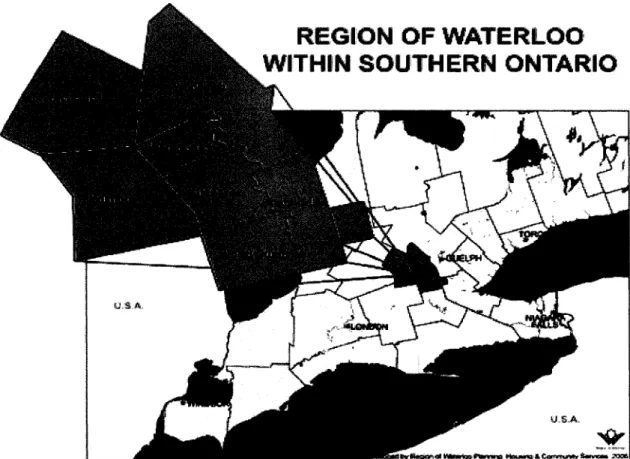
Figure 2.3 The Immigration Settlement Continuum Figure 3.1 Map of Waterloo Region
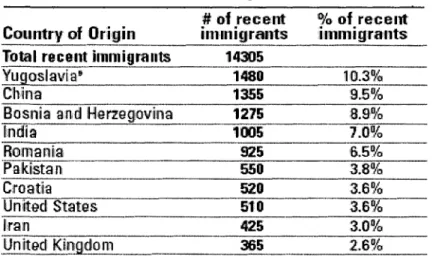
Figure 3.2 Countries of Origin of Recent Immigrants to Waterloo Region, 2005 Figure 3.3 Kitchener CMA - Population Change, 2001 - 2006
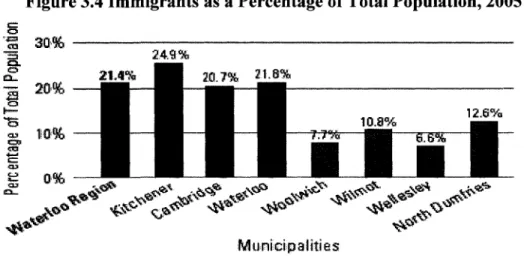
Figure 3.4 Immigrants as a percentage of total population, 2005
Figure 3.5 Recent Immigrants as a percentage of total population, 2005
Figure 3.6 Immigrants as a proportion of the population, Waterloo Region, 1981-2031 Figure 3.7 Immigrant Categories, 1996 - 2005 Arrivals
Figure 3.8 Population Profile, Waterloo, 2005 Figure 3.9 Afghanistan Map
Figure 4.1 GPS, Blackberry and the BES
Figure 4.2 Internet Based Prompted Recall Diary (IBPRD) - Before data collection Figure 4.3 Internet Based Prompted Recall Diary (IBPRD) - Actual Data
Figure 4.4 GPS-Assisted Daily Activity Diary developed by Dr. S. Doherty Figure 4.5 Device Monitoring Software developed by Dr. S. Doherty Figure 4.6 Web Diary Data converted into excel data format
TABLES
Table 3.1 Afghan Immigrants in Canada (1980-2005) Table 3.2 All Refugees to Canada from 1996 - 2005
Table 3.3 Landed Immigrants from Afghanistan to K-W (1981-2005 Table 5.1 Top Seven priority areas of Afghan Newcomers in K-W
Table 5.2 Service Providers' ranking of priority areas of Afghan newcomers in K-W Table 5.3 Major Barriers to Successful Settlement
Table 5.4 Level of difficulties in specific areas of settlement Table 5.5 Barriers to delivery of health-related services Table 5.6 Activities/situations and coping strategies
Chapter One
1.1 RESEARCH CONTEXT
Immigration has been fundamental to the growth of Canada and to its history of achievement. From the earliest days through to the transformations of recent years, hardworking people and their families have come to Canada from all over the world. Collectively, they have made a significant contribution to the development of Canada's economy, society and culture. In addition, hundreds of newcomers begin a new life in Canada every day. Some are refugees fleeing persecution, others come to join family, and yet others (mostly the economic and independent categories) are seeking to make a better life for themselves. In all, since 2000 around 250,000 people have settled in Canada each year. Their backgrounds and personal histories may be widely different and each one's experience on arrival is unique. The communities across Canada into which they
integrate differ too in their character and in the manner in which they receive newcomers.
For many new Canadians, there are, nevertheless, certain shared experiences, as they make a home for themselves in this country. They must find somewhere to live and a job, familiarize themselves with a different society and culture, make a new network of friends and acquaintances and often learn a new language. In the process, they may experience success, but also alienation, loneliness, frustration, xenophobia and racism (Alexander 1994). Newcomer refugees often face particular challenges in adapting partly because their arrival was not planned or a matter of choice, but a matter of survival. They may also be deeply traumatized by their past experiences and often arrive separated from their immediate families whom they have had to leave behind, perhaps in the country of origin or in a refugee camp elsewhere.
Despite Canada's rich history of immigration and the strategic role it plays in future nation building, the issue of newcomer settlement and adaptation is still prominent. Researchers, policy makers, and practitioners in this field, are still grappling with many important questions such as: How do new immigrants adapt to a society very different from their own, with a different language, culture, and tradition? Where do they go for assistance? Where do new migrants get the services and programs they need to
effectively settle, integrate and become new citizens? What is the role of voluntary organizations concerning immigrants' settlement and adaptation? How do newcomers cope with the ruptures that accompany their settlement experiences?
1.2 Aims and Objectives
This thesis explores how newcomer refugees negotiate the service landscape of Kitchener-Waterloo, and the coping strategies they develop in order to manage the everyday uncertainties and challenges resettlement demands of them. The research location is Kitchener-Waterloo (a second tier city) and the context is informed by immigrant regionalization and neo-liberal state restructuring. The research examines the service provision landscape in order to assess how it contributes to the formation of social networks for recent immigrants and refugees, and how effective these networks are in assisting refugee newcomers with their immediate and long term needs. This includes how the daily activity patterns of newcomers are influenced by the social system in which they interact with both strong ties (families, friends, ethnic groups), and weak ties ( service providers and community services). The process of settlement is complex and is linked and affected by a number of issues such as cultural and ethnic diversity of
newcomers, language needs, their distribution in Canadian cities and government policies, and devolution of responsibilities for immigrant settlement and integration. As such, key issues that dominate the current discourse on migration will be explored. Moreover, I discuss the specific barriers newcomer immigrants and refugees face in their efforts to make their settlement a successful experience, and the strategies they employ in an attempt to overcome barriers they face on the way.
The following constitutes the main research questions:
1) How well are services offered for newcomers utilized by the target population? 2) How are daily patterns of travel and activity shaped by the social networks (weak and strong ties) newcomers are embedded within?
3) How are the daily activity patterns linked to social networks and social network formation and how are they differentiated in terms of gender, generation, class and ethnicity within the immigrant sample population?
1.3 Thesis Organization
This thesis is organized into six chapters including this chapter that presents the research context and objectives. A summary of relevant literature on population and demographic trends including demographic transformation, Canadian visible minority population, immigrant regionalization and Canada's multiculturalism policy is offered in chapter two. This chapter also includes a review of the relevant settlement support systems for immigrants and refugees in K-W including current policy, programs,
challenges and constraints. It will offer an analysis of social networks and their role in the process of newcomer settlement. Chapter three is divided into two different sections.
Section one, offers an overview of the geography and population trends in K-W area. It will include a review of the current demographic trends, socioeconomic as well as cultural characteristics of current and future immigrant populations in KW. Section two will provide a background of the researched sub-population which will include their demographic information in K-W based on recent immigration data. It will begin with a brief discussion on the geopolitical and socioeconomic conditions in Afghanistan and some of the push factors which have caused a large and often unregulated emigration to neighboring countries as well as to far remote industrialized countries in Europe and North America. Chapter four includes research methodology. Chapter five presents key findings of the research. Chapter six - Discussion and Conclusion - summarizes the major findings and offers an analysis and discussion of the research findings. In addition to personal reflections, it highlights key gaps in the settlement sector and offers some recommendations for key policy actions in second tier cities and future research. And finally, it discusses the significance of the study for the literature in both immigration and GPS tracking technology.
1.4 Definitions
• Newcomer - in this context, refers to both recent refugees and immigrants who are in Canada for less than a year
• Visible Minority - all individuals, apart from Aboriginals, who identify as non-white in colour or non-Caucasian in race. Today visible minorities make up 13% of the Canadian population.
• Integration - a process whereby the immigrant, or immigrant group, becomes an active member of the host society
• Assimilation - can be understood as a process of adaptation whereby the migrant, or migrant group, takes on the customs, values, and social attributes of the host society to the extent that the immigrant becomes indistinguishable from the majority • Separation - occurs when ethnic minorities seek to maintain distinct identities,
refusing (or being refused) active participation in the larger society, and;
• marginalization - takes place when one neither identifies with his or her original cultural background, nor with that of the host society
• Ethnic Enclave - A model of ethnic settlement where dense clustering of residential settlement of a single ethnic group occurs, accompanied by economic and social activity.
• Neo-liberalism - A view of the world that emphasizes economic growth, efficiency, and the benefits of free markets. A state system emphasizing individualized
Chapter Two
LITERATURE REVIEW
There are three issues that largely dominate the contemporary immigration debate in Canada each accompanied by varying implications. Firstly, the increasing demographic transformation of the nation as the 'visible minority' proportion of the population increases due to immigration from predominantly non-European countries in Asia, Middle East, Latin America and Africa. Secondly, concern with immigrant settlement concentration in the largest urban centres has directed attention to regionalization or immigrant regional dispersal. This debate is motivated by two factors: a) the perception that the immigrant concentration in the gateway cities of Montreal, Toronto and
Vancouver (that receive over 70% of all immigrants to Canada annually) is threatening the ability of local municipalities to manage integration and affecting quality of life; b) the argument that Canada's ageing population and low rate of natural increase creates a necessity for immigration to replenish the population in the regions (Walton-Roberts 2005). Thirdly, these general demographic shifts are occurring during a period of neo-liberal state restructuring, which is defined as a shift from the collective/redistributive state to an individualized model of advancement (Arat Koc 1999).
This chapter is divided into two main sections. Section one provides 1) an overview of the current demographic trends and their impact on population and labour market, 2) various views on the current immigrant dispersal policy and challenges for second tier cities, 3) a conceptual framework to contextualize visible minority generational
challenges and opportunities across the life course, 4) overview of selected research on Canada's multicultural policy and its challenges. Section two will offer a discussion of
immigrant settlement in Canada. It will include a conceptual framework and current challenges in the settlement sector. It will also include a discussion on the role and impact of social networks on settlement.
Section I
2.1 Population and Demographic Trends
Immigration has played an important role in transforming Canada into an ethno-culturally diverse and economically prosperous nation. The 2006 Census enumerated 6,186,950 foreign-born people in Canada. They accounted for one in five (19.8%) of the total population, the highest proportion in 75 years. Between 2001 and 2006, Canada's foreign-born population increased by 13.6%. This was four times higher than the growth rate of 3.3% for the Canadian-born population during the same period. The census estimated that 1,110,000 immigrants came to Canada between January 1, 2001 and May 16, 2006. These newcomers made up 17.9% of the total foreign-born population or 3.6% of Canada's total population of 31.2 million (Census Canada 2006).
Recent immigrants born in Asia (including the Middle East) made up the largest proportion (58.3%) of newcomers to Canada. This was virtually unchanged from 59.4% in 2001. In contrast, in 1971, only 12.1% of recent immigrants for this period were born in Asia (Census Canada 2006).
As demographers and media commentators frequently remind us, immigration is responsible for the lion's share of population growth (Hiebert 2005). It is interesting to note that this balance only arose recently - in the early 1990s. Before that, at every point since formal statistics have been collected, domestic births were the key determinant of
population growth (Hiebert 2005). According to the latest figures, the number of births in Canada exceeded the number of deaths( in the year ending on June 30, 2004), by around 97,000 persons; net international migration, during the same period, added twice that number to Canada, (approximately 193,000 people) (Hiebert 2005: 36). Demographic projections demonstrate that the contribution of migration to net population growth is projected to reach 100 percent some time between now and 2025 (Statistics Canada 2005, cited in Zietsma, D. 2007). There are two dimensions to this demographic shift that are already well known: the cultural composition of immigrants to Canada has become remarkably globalized in the past few decades; and the process of immigrant settlement in Canada is geographically uneven, and highly concentrated in the largest metropolitan centres, especially Montreal, Toronto and Vancouver. Metropolitan regions in general, and these three in particular, are therefore at the forefront of Canadian population change, and are becoming more diverse every day. Given the pervasive sense that relatively high rates of immigration will continue into the foreseeable future, increasing diversity will be a fact of life for many Canadian communities in the years to come (Hiebert 2005).
2.2 How do demographic patterns impact labour market integration?
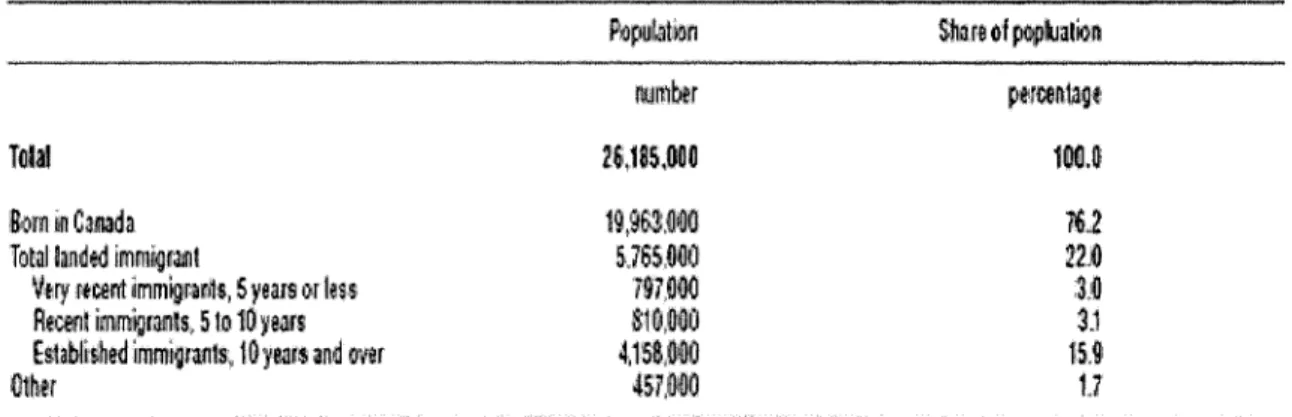
According to the Labour Force Survey, in 2006 there were roughly 26.2 million people aged 15 and over in Canada (Figure 2.1). Of this, an estimated 6 million, or 22%, were landed immigrants to Canada. Out of the total population, one in six (16%) were immigrants who had been in Canada for more than 10 years, while those landing in Canada between 5 and 10 years ago and in the last five years were roughly equal in their share of the population 15 and over (3% each) (Statistics Canada 2006).
Figure 2.1 Population Estimates Ages 15 and Over, by Immigrant Type, 2006
Population Stare of poptualiM
•orn tn Canada otal landed irnm;gfi;i!
Vtryr*ttrtimmigrM,iU,6yeara&rlm F t a l immigianls, S lo 10 ) « s Established immiflfarfs, 10 years md o w Hhtr 1M63MQ S76SM0 ?§?.« 810,000 4,15t,N0 aim wiiibM ptrceitlagt Total 26J8S.OSfl 100.0 « i 22J0 lfl 3.1 1SI 17 (Source: Labour Force Survey, 2006, cited in Zietsma, D. 2007)
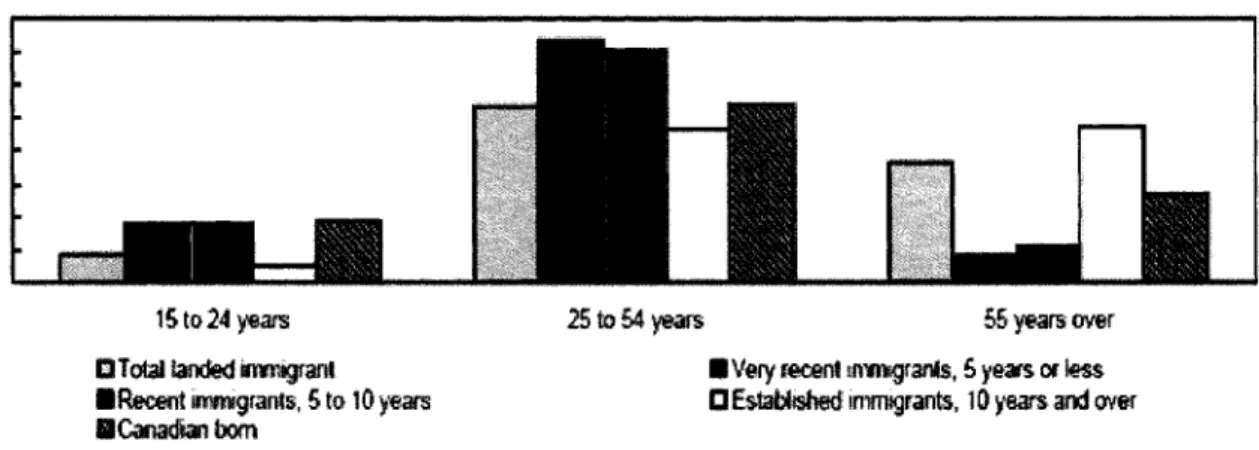
As would be expected, very recent and recent immigrants to Canada were a much younger group than those born in Canada and those who landed in Canada more than 10 years ago (see figure 2.2). Nearly three out of four (73.2%) very recent immigrants and seven out often (70.4%) recent immigrants were between the ages of 25 and 54, compared to just over half of Canadian born (54.3%) and just under half of established immigrants (46.9%). Nearly half of established immigrants were in the 55 and older age group compared to just over a quarter of Canadian born. Less than one-tenth of very recent immigrants and just over one-tenth (11%) of recent immigrants were in this age group in 2006 (Labour Market Survey 2006, cited in Zietsma, D. 2007).
The point to make here is that differences in the age structure will have an impact on the labour market outcomes of these groups. Since the three types of immigrants and Canadian born have very different age distributions, analysis of the labour market
outcomes has been largely restricted to the core working-age group; those aged 25 to 54
years of age. As this group is the most likely to be actively participating in the labour market, their labour market outcomes indicate how well immigrants have integrated into the Canadian labour market.
In 2006, Ontario (31%) and British Columbia (28%) had the highest share of immigrants in their respective core working age populations. These were the only two provinces where landed immigrants, as a percentage of the core working-age population, exceeded the national average (22%). In Alberta, immigrants made up 17% of the core working age population. Newfoundland and Labrador had the lowest concentration of landed immigrants of all provinces, estimated at just over 1% of its core working-age population (Labour Market Survey 2006, cited in Zietsma, D. 2007).
Figure 2.2 Share of Population by Age and Population Type, 2006
pwwtage 80 r 70 • 60 • SO • 40 • 30 -20 • 10 • o L
15to24y8ara 25 to 54 years 65years over O Total and«J HtYi'igram BVery fecen! miwparte, 5 years or less • R e e e r t immigrants, StolOyeare DEstefctehed immigrants, 10 years and w e r HGanadtanbom
(Source: Labour Force Survey, 2006, cited in Zietsma, D. 2007)
In 2006, 60.5% of the Canadian-born core working-age population lived in urban areas (CMAs). Landed immigrants, however, were far more likely to settle in urban areas, with an estimated nine out often (91.6%) core working-age landed immigrants residing in a CMA. In fact, the three largest urban destinations for immigrants (Toronto,
Vancouver and Montreal) accounted for nearly two-thirds (67.9%) of all Canada's core working-age immigrants; Ottawa-Gatineau and Calgary were the next most popular
2.3 Regionalization and Immigrant Dispersal
In recent years, the federal government has become increasingly involved in public policy discussions and promotion of increased settlement of new immigrants in smaller towns and communities. One of the biggest proponents of this policy was the former Minister of Citizenship and Immigration, Denis Coderre. For Coderre, achieving a higher degree of regional equity in the settlement of new immigrants, especially skilled
immigrants to Canada, was of utmost importance. As a result, the former Minister proposed a "dispersion" strategy to help spread immigrants more evenly across communities throughout Canada.
By all indications, the issue of dispersion, and especially the need to balance the distribution of skilled workers to smaller towns and remote regions will continue to be a key concern of the federal government (Kahn 2003). Taking into account reduced birth rates and an aging population, it is recognized that immigration is now and will likely be for the next 25 years - the primary source of population growth in Canada (Kahn 2003). According to the Conference Board of Canada (2003), demographic patterns are a key driver of production, consumption, and the underlying demand of housing. For this reason, immigration will continue to be an even more important part of the discourse on labour force growth and economic development in Canada - especially in regions with rapidly declining populations and acute labour shortages e.g. agricultural sectors.
The discussion on dispersion and regional settlement of immigrants has received attention not only from the federal government, but also from key policymakers at the municipal and provincial levels. Walton-Roberts (2005) asserts that although it is
recognized that immigration brings many benefits to the national economy, there are concerns about the fact that the majority of immigrants to Canada settle in one of the three largest metropolitan areas of Canada: Montreal, Toronto or Vancouver (Walton-Roberts 2005). Public debate has focused on how immigration can cause stress and service overloads at the local level in key areas such as health, housing and education, but Walton-Roberts (2005), maintains that the more accurate cause of the current fiscal stress at the municipal level is to a large extent due to a downloading of services to cities without the necessary financial resources traditionally provided by higher tier
governments (Mwarigha 2002, WaltonRoberts 2005). As a result, local policymakers -especially in larger cities - have been putting pressure on senior levels of government to make up for the growing immigrant service gap. The Canada-Ontario Immigration Agreement (COIA) signed in November 2005, has been an attempt to address this concern. Since then, there has been a great deal of activity on several fronts. During the summer of 2006, for example, extensive consultations concerning additional funding under COIA were held throughout Ontario with organizations and newcomers, including those representing francophone minority communities. The three main needs expressed in the consultations were employment, language training and better information and
guidance (CIC 2006).
According to a report by PROMPT (2005), the dispersion of immigrants has been presented as a liberal government's counter to pressure from conservative politicians and policymakers who argue that Canada should not continue to depend on immigration to make up for its demographic and labour force deficit (PROMPT 2005). According to Stoffman (2002), Canada lets too many of the "wrong" people into the country. He feels
that we are saddling Toronto and Vancouver with too many of these (wrong) immigrants, and that this is producing many adverse effects. Stoffman's viewpoint underlies the approach taken by Ontario's former Conservative government and, at the federal level, the Canadian Alliance (now the Conservative Party of Canada). The current conservative government however, seems to be promoting the dispersion of immigrants vigorously. The support of immigrant dispersion policies by liberal policymakers, however, especially during Jean Chretien's tenure as prime minister, thus, appears to have had three primary motives:
• to address labour shortages and population declines in the regions,
• to counter claims of service overload by municipalities due to federal and provincial government downloading to major urban centres, and
• to counter populist opposition to the Liberal government's immigration policies (PROMPT 2005)
According to the literature on regionalization/immigrant dispersal, there are two kinds of dispersion policies. Firstly, demand side policies, which compel the re-distribution of immigrants to smaller urban communities or regional settlements. Secondly, supply-side dispersion policies which focus on creating appropriate local conditions in order to influence long term settlement decisions. Typically, in Europe, coercion-based demand side dispersion policies are used to redistribute the so-called 'load' or 'burden' of refugees to different regions within countries. Similar coercive demand side policies are used in Canada to redistribute non-resident migrant labour such as the temporary agricultural workers to different parts of Canada (Devortez 2003). Another example is the concept of
Denis Coderre that tie people to a community for an initial period with the assumption that they will stay on at the end of their term of contract (Walton-Roberts 2005).
Canada's federal government's primary dispersion initiative is the Provincial Nominee Program (PNP). Under the PNP, provinces can enter into agreements with the federal government giving them a greater role in selecting immigrants to settle in their province. The program permits provinces to assess skill shortages, set up categories for prospective immigrants and recruit and select immigrants with skills that meet the specific labour needs of the province (Walton-Roberts 2005). For immigrant participants, the PNP has the appeal of faster application processing times and the potential to be matched with appropriate occupations (SCCI2003; Kahn et al 2003). Currently, British Columbia, Alberta, Saskatchewan, Manitoba, Newfoundland/Labrador, New Brunswick, PEI, Nova Scotia and the Yukon have PNP agreements. Manitoba has by far made the greatest use of the PNP accounting for about 75% of all nominees in the program (SCCI 2003). As part of its PNP, the provincial government of Manitoba has formed partnerships with a number of smaller municipalities, allowing them to actively recruit newcomers to fill their particular labour needs. The Manitoba government treats the program as a success both in terms of increasing the number of immigrants to the province and as a way of distributing newcomers to different regions in the province. However, it is important to note that the numbers are still small - less than 2000 nominees have been placed up to 2005 (PROMPT 2005).
The PROMPT report (2005) also asserts that evidence from Quebec's experience suggests that despite early successes, such regional dispersion programs do not result in retention of immigrants in smaller cities and non-metropolitan regions (PROMPT 2005).
Despite Quebec's substantial investment in regionalization, the programs have had limited success. Of the 35,000 immigrants who arrived in Quebec in 2000, only 13% settled outside of Montreal (CIC 2001). Many other similar medium sized cities that receive significant numbers of newcomers continue to voice concern about the growing out-migration of new immigrants, especially after the first few years of the settlement process. It appears that for the most part, Canadian strategies have been directed at immigrants, rather than the communities seeking immigrants. These approaches have been based on providing incentives to immigrants, such as speedier processing of applications or reduced entry requirements. The ongoing interest in immigrant dispersal suggests further research in second tier cities such as K-W will be important in order to assess their capacities in ensuring the recruitment and successful integration of new immigrants.
Moreover, incentive-based demand side approaches such as the Provincial Nominee Program clearly have value for many individual recent immigrants. Such programs open up new opportunities, speed up the immigration process, and link immigrants to
appropriate services and starter jobs (Walton-Roberts 2005). However, it is evident that demand side policies and interventions - even when laced with incentives - do not
produce long-term sustainable outcomes for settlement and regional development. This is because, as the PROMPT report (2005) also emphasizes, most immigrants move as soon as they have served the stipulated term. Hence this does not result in sustainable
settlement and long term benefits to the host community.
In brief, recent studies and research on regionalization have indicated that current dispersion policies do not result in sustainable settlement of immigrants or significant
regional development impact because they are narrowly focused on meeting immediate labour shortages in small and medium cities. Current demand side policies consider immigrants as only "labour force inputs" (PROMPT 2005) and do not consider
immigrants' potential and desire to be active contributors to and joint architects of their new communities.
a) Attracting and keeping Immigrants in Second Tier Cities
A very different approach to regionalization/dispersion takes the focus off the immigrants themselves, and places it on the communities wishing to attract them. These approaches recognize that it is not good enough to get someone to a particular city - there has to be a reason to stay. No one is surprised that immigrants overwhelmingly choose large cities, and in particular Toronto, Vancouver and Montreal, as their home. These regions have extensive and diverse employment and educational opportunities, far-reaching settlement programs, well-established communities that share a similar culture and language, and an acceptance of difference (Broadbent 2003). They have all of the necessary ingredients to facilitate newcomers integrating and becoming full participants in the community. For many policy-thinkers, sustainable regional development requires a focus on building a number of key local attributes. It is local communities (in the case of this research Kitchener and Waterloo) not the federal or provincial governments that need to take the lead in promoting regionalization and long term settlement. As a result,
increasing numbers of people are calling for investments in local community social infrastructure. A report by Metropolis (2003), based on feedback from researchers and experts, identified the main determining factors for immigrant settlement choice.
According to this report, the characteristics of the receiving community include: a critical mass of already established immigrants from a similar background; a welcoming
community; services provided by the community especially immigrant services; and, educational, cultural and economic opportunities. Although all of these characteristics are important, a critical mass of 10 to 50 families was emphasized.
There is growing evidence that the best approach to promoting sustainable settlement in second tier cities involves focusing on community-driven interventions rather than top-down measures (Bradford 2005). This recognition has prompted a number of versions of supply side immigrant settlement policies. One good example is the Small Centre
Strategy, an initiative of a working group of settlement agencies established at the First National Settlement Conference in 2002.
This strategy advocates for the need to create a local environment that is conducive to attracting and keeping immigrants. It calls for second tier cities to provide services through settlement agencies to enhance 'newcomers' access to employment, housing, income supports, language training and cross cultural training.
The Small Centre Strategy (2002) calls for provincial action to: • end barriers to accessing professions and trades for immigrants
• offer a range of services that create hospitable communities, such as supports for finding short and medium term housing,
• provide second language capability in schools and special 'triage' services to assess the initial medical needs of newcomers,
• facilitate free admission to recreational, cultural and arts services, and local volunteer-based host programs to build relationships with the local population.
The Small Centre Strategy points out that the Canadian settlement sector is skilled in this area, and has experience and knowledge to offer the wider community as challenges are identified and strategies developed (Small Centre 2002: 9). Without a doubt, the services called for by the Small Centre Strategy paper are very important in meeting the needs of newcomers, and in enabling satisfactory settlement in the initial phases. The problem with this service focus, however, is that it is heavily premised on the service 'deficit' of immigrants, and resorts to traditional paternalistic government programs as the backbone of incentives to attract desired cohorts and classes of immigrants (PROMPT 2005). The logical end point of this narrow perspective is that it leads to policies and programs that are largely relevant to providing assistance to vulnerable immigrants and refugees. This service focus is not an effective way of meeting the medium and long term goals and objectives of immigrants of accessing regulated professions and trades and connecting to a vast array of social and economic opportunities (PROMPT 2005). In order for the current settlement service sector to be fully effective as an agent of
sustainable settlement, it has to move towards providing services and supports beyond the initial phases of the immigrant settlement cycle (Wayland 2006), and viewing immigrants as active contributors and partners in community building (PROMPT 2005). Hence, the future of settlement services is in providing supports that enable the effective and meaningful participation of immigrants in community building, and in mobilizing multi-stakeholder partnerships for inclusion at local level (PROMPT 2005).
2.4 Diversity and Canada's Visible Minority Population - A challenge
As partly indicated earlier, over the past several decades, Canadian society has
become increasingly ethnically and culturally diverse as a growing number of immigrants and refugees arrive from Asia, Latin America, Africa and the Middle East. Indeed, as Mitchell (2005) notes, the majority of these individuals (approximately 73%) belong to what is euphemistically known as the visible minority population, and is defined by the Employment Equity Act as "persons, other than Aboriginal peoples who are
non-Caucasian in race or non-white in colour." It is noteworthy that between 1981 and 2001, the visible minority population almost quadrupled from 1.1 million to nearly 4.0 million. This represents a change from 5% to 13% of the population in 20 years (Statistics Canada, 2003a). Yet, not all visible minorities are foreign-born. According to the 2001 Census, two-thirds of visible minorities are foreign-born, and one third is Canadian born.
As findings from this research also confirm, it is widely recognized that visible
minority families frequently struggle to maintain their family life in the face of numerous obstacles and challenges. Common problems include discrimination and racism (e.g. Henry et al 2006), language difficulties, constricted employment and housing choices, poverty and social exclusion (e.g. Omidvar and Richmond 2003). These systemic issues can place generational strains on visible minority family members with respect to patterns of family support, exchanges, and the care of children and the elderly (Mitchell 2005). At the same time, visible minority families living in Canada can experience many
opportunities, such as the enjoyment of a relatively good standard of living, work and educational opportunities, and the chance to retain and maintain aspects of their cultural heritage. This can have a positive effect on family relationships and bring the generations
closer together. For example, children of foreign-born visible minority parents can benefit from a strong educational and health-care system, and this can have a number of advantages to them and their families over time (Mitchell 2005).
2.5 Multiculturalism - Does it work?
Canada (as well as Australia) is distinguished by a multiculturalism policy. Although a contested term whose meanings have shifted over time, multiculturalism broadly means the state sanctioning of a right to express and maintain cultural identity and diversity, with a superficial emphasis on 'tolerance' or celebration of differences giving way to a more structural model of Multiculturalism based on equity legislation and enforcement (Kobayashil993). In Canada, multiculturalism has alternatively been criticised for
fragmenting national unity (Bibby, 1990), as a form of containment that ought to focus on anti-racism (Bannerji,1996) and as a potentially progressive space to redefine a more inclusive national discourse (Abu-Laban and Stasiulis, 1992). There have also been important critiques of multiculturalism from the perspective of gender. Martin et al (2000) argue, for example, that Australian multiculturalism privileges ethnicity to the extent that the concerns of immigrant women as women are either ignored or
marginalized. This is so because multiculturalism focuses on the expression of ethnic identities but does not acknowledge that these identities are also gendered. The concept of citizenship that underpins Australian civil society and hence multiculturalism is also based on a number of sexist assumptions. In particular, the domestic or private sphere, more commonly associated with women, is ignored (Vasta 1993).
Despite the apparent success of the Canadian model, there are some worrying signs that it may be threatened. One such threat is challenges to the two-way street approach (Biles, Ibrahim and Tolley, 2005). The two-way street approach sets out responsibilities on the part of newcomers as well as on the part of Canadians and Canadian institutions. Challenges to the approach arise on both sides. In the following, I provide some
perspectives on this issue based on the literature review.
a) Responsibilities of Newcomers
There is a perception among some that newcomers are not living up to their responsibilities. Much of this is borne out in a discourse of shared values, limits of diversity and an eventual and unavoidable "Clash of civilizations." Generally, the thinking goes like this: In a country, such as Canada, where there is no single culture, religion, or language, something is needed to hold it all together. In the absence of homogeneity, values are the only thing that we have. We can see, however, that newcomers' values are radically different than our own. We need to set some ground rules because if we don't put some limits on all of this, it's going to go 'too far.' Our values will conflict. There will be, in Huntington's words, a 'Clash of civilizations' (Biles, Ibrahim and Tolley, 2005).
Forced marriages, female genital mutilation, and even dog-eating are, for example,
held up as practices supported by minority cultures, but which conflict with Canadian
values and our limits (Stoffman 2002). It can be argued, however, that what is often ignored is that a minority of immigrants subscribes to these so-called "cultural practices," and many immigrants come to Canada because they are escaping from or disagree with
such practices and beliefs. Nevertheless, there is still a popular perception that we are importing illiberal practices and ideas that threaten Canadian society.
This discourse has been the subject of much criticism and three objections are particularly worth mentioning here. First, critics argue that the argument is based on a false premise: that Canada, or any country for that matter, actually has a set of shared values. Many argue that this is simply untrue. Indeed, many of Canada's so-called shared values do not differ from those of other countries, such as equality, democracy or mutual respect. Moreover, this fear that immigrants threaten some perceived set of share values is unfounded; research suggests that within one generation, the children of immigrants and the children of native-born Canadians share the same values and sense of Canadian identity (Mendelsohn 2003). This can be seen by the active involvement of immigrants and minorities in achieving broader social justice goals. Thus, to the extent that some set of shared values does exist, immigrants and native-born Canadians alike share these values.
Moreover, the values and limits discourse implicitly assumes that there are no limits in society, which as Biles et al. (2005) suggest is also simply untrue, "the Canadian
approach already outlines the "rules of the game" and these set the framework by which we live (Biles, Ibrahim and Tolley 2005: 8). The Charter of rights and freedoms, for example, notes in its preamble that the rights and freedoms set out in it are subject only to "such reasonable limits as can be demonstrably justified in a free and democratic
society." Moreover, the Criminal Code protects against many of the practices that critics fear. Similarly, Canada is a signatory of many international conventions like the
further codify the limits (Biles, Ibrahim and Tolley, 2005). In other words, there are already well-defined limits.
The second criticism is that the values and limits discourse conflicts with the "two-way street approach" that is the basis of Canada's approach to accommodating diversity. The discourse presumes that there is some existing set of Canadian values and some finite limits to which Canadians - newcomer and native-born alike adhere. There is no
framework for discussion (Biles, Ibrahim and Tolley, 2005). This flies in the face of the two-way street approach, upon which Canada's approach to accommodating diversity is founded. The multiculturalism policy marked a shift from straightforward assimilation to a negotiated integration. The two-way street approach works, for the most part, because of this and because there is some expectation that Canadian society will adapt to this newfound diversity. Moreover, it allows immigrants to integrate by respecting the basic principles that structure society, not necessarily by abandoning their values or coming to share the values of other Canadians (Heath, 2003, cited in Biles et al 2005). The values and limits discourse views conflict as inherently problematic, rather than as an
opportunity for discussion to renegotiate and reconcile our differences. As a result, it undermines the two-way street approach. The third criticism of the values and limits discourse, and perhaps the most disquieting, is that it tends to single out particular groups of immigrants. It frequently points to immigrants from the Middle East or with Muslim backgrounds as being the source of our problems because their values are perceived to be so much different than our own. This leads neatly into a feared "clash of civilizations," alluded to earlier, which is the almost predictable outcome of the values and limits discourse.
While the fears expressed by the proponents of the values and limits discourse may be overstated, Biles et al (2005) argue that newcomers can, nonetheless, be legitimately expected to live up to certain responsibilities. These include making a contribution to Canadian society, speaking one of Canada's official languages, having some sense of attachment to the country, participating in politics and Canadian institutions, and learning about its history.
b) Responsibilities of Canadians and Canadian Institutions
On the other side of the two-way street are the responsibilities of Canadians and Canadian institutions. These responsibilities include facilitating the integration of newcomers, adapting to this new diversity, and welcoming newcomers as full and equal participants in all aspects of Canadian society. Although public opinion data suggest that Canadians view the inclusion of newcomers as important, belief does not necessarily translate into action. I provide two examples of increasing disparities between native born and majority Canadians and newcomer and minority populations. The first concerns labour market outcomes, while the second concerns educational attainment. These disparities suggest that despite the rhetoric behind the two way street multiculturalism approach, Canadians and Canadian institutions are not living up to their responsibilities.
The disparity that has garnered the most media attention of late, concerns the
increasing incidence of low-income among newcomers to Canada. Although the revised points system in the Immigration and Refugee Protection Act (2002) focuses more on human capital (including education, language, experience and adaptability factors), economic outcomes for recent newcomers to Canada are disturbingly low. A recent study
by Statistics Canada found that 47% of recent newcomers live below the Canadian poverty line, which Statistics Canada calls the "low-income cut-off (Picot and Hou 2003). The decline in earnings among immigrants may be the result of several factors including the under-valuing of foreign experience, accreditation issues, language barriers and discrimination (Grant and Sweetman 2004; Biles and Burstein 2003). Moreover, research that looks specifically at the labour market outcomes of visible minorities suggests that race is important too. Some studies such as Pendakur and Pendakur (1995) as well as those stated above have found a wage gap between visible minority Canadians (Canadian and foreign-born) and others. Others have looked at unemployment and have found that visible minorities in general, but Black Canadians in particular, experience nearly double the unemployment rate of others (Mensah 2002: 144). Another set of research considers representation of particular groups in positions of power; here
researchers found that Black Canadians were three and a half times less likely to be found in senior management positions in the labour force in 1996 than other Canadians
(Mensah 2002: 145). This is cause for concern.
Muslim Canadians are also not faring very well in the Canadian labour market.
Indeed, in 2001, less than one half of Muslim women in Canada (49%) participated in the labour market, while the rate for all Canadian women was 61% (Persad and Lukas 2002: 24). The unemployment rate for Muslim women was nearly double the national rate, and Muslim women who are employed full-time earn 10% less than the national average for women with similar employment. Moreover, Muslim women are under-represented in particular fields even when they possess the required education (Hamdani 2004: 16-22). Muslim women, who wear the Hijab, face additional challenges. In a survey of Canadian
Muslim women in the manufacturing, sales and service sectors, 41% of those who wore the Hijab were told they would need to remove it if they wanted a job (Persad and Lukas 2002).
Although some researchers suggest that the influence of discrimination on labour market outcomes has, in the past, been overstated, results from the Ethnic Diversity Survey suggest that discrimination remains a concern for visible minorities. Twenty percent of visible minorities reported they had experienced discrimination often over the previous five years, while 15% said they had experienced discrimination, but only rarely (Statistics Canada 2003: 21). Incidents of discrimination are higher among some visible minority groups, including Blacks and South Asians. Discrimination is most likely to occur in the workplace with 56% of incidents occurring there (Hamdani 2004).
Section II
IMMIGRANT SETTLEMENT AND SOCIAL NETWORKS
In this section, I examine two important concepts 1) immigrant settlement and 2) social networks. Drawing largely on recent literature, part one will focus on; a) various dynamics involved in the settlement process, b) existing settlement support system and service delivery models, and c) settlement challenges and failures and their implications for policy. As part of the potential service delivery flaws in the current settlement model, I will show how the settlement system has transformed in recent years under the
influence of certain forces and ideologies such as neoliberalism. In part two, I will review the conceptual framework related to social networks. This will include the types of network ties and the role of each in the settlement of newcomers in Canada.
I will begin with a conceptual analysis of the settlement process. This will include operational definitions of some key relevant terms as well as an analysis of the various phases involved in the settlement of newcomers to Canada.
2.6 Immigrant Settlement
a) A Conceptual Framework
As a country with a long and formative history of immigration, Canada has extensive experience with the process through which newcomers become an integral part of our society. Much has been said and written about this often-complex process. There is not even a single word to describe the process. Many different terms are used, including: resettlement, settlement, adaptation, adjustment and integration. The settlement process
can be viewed as a continuum, as newcomers move from acclimatization, to adaptation, to integration (see the diagram below).
Figure 2.3 The Settlement/Integration Continuum
m
a
Acclimatization | j | j B Adaptation mmmmil
IntegrationAs such, settlement generally refers to acclimatization and the early stages of adaptation, when newcomers make the basic adjustments to life in a new country, including finding somewhere to live, beginning to learn the local language, getting a job, and learning to find their way around an unfamiliar society. In contrast, integration is the longer term process through which newcomers become full and equal participants in all the various dimensions of society (Mclsaac 2003b). Within these processes, each individual newcomer's experiences are multifaceted and unique. Nevertheless we can explore the general characteristics of these processes - characteristics that can be taken into account in developing "best practices" in settlement services.
As also indicated in the previous chapter, settlement involves a mutual adaptation (two way street) of newcomers and members of the host society. The demands of adjustment tend to be focused on newcomers, who usually must make significant adaptations. Any society that receives new members is also changed in the process, whether willingly or unwillingly (CCR 1998). However, society (people and institutions) has an active and not merely a passive role in the process: it has a positive responsibility to adapt itself to its new members and offer them full opportunity to contribute the resources they bring with
them (CCR 1998). This involves all of the institutions of the host society. Canada, through its official policy of multiculturalism, recognizes the legitimacy and value of the diverse cultures of its inhabitants, new, old and aboriginal (Hiebert 2003).
b) The Spheres of Settlement/Integration
Settlement and integration are multi-dimensional concepts (CIC 2003). Ervin (1994) explores these processes within four main spheres: the social sphere; the economic sphere; the cultural sphere; the political sphere. Within each sphere, the speed and degree of integration can vary, and what happens in one sphere affects the outcome in the other spheres. For example, Ervin goes on to explain that those who succeed in integrating economically will more easily integrate socially and culturally (Ervin 1994). As is
apparent, these complex processes are also very abstract and cannot be measured directly, but through "certain traits which we believe are indicative of, or indicators o f integration (Neuwirth 1997). Indicators - measurable, specific, simple outcomes - are only one way to assess or determine the degree of integration and it can, therefore, still be insufficient to ensure full integration has occurred. As Neuwirth (1997) argues, to measure an individual's integration is to measure it against an ideal, and we also must question who, in fact, attains this ideal. For, as Neuwirth (1997) also indicates that we can talk about everyone - immigrants and non-immigrants alike, being in a process of integration all their lives. Even among Canadian-born individuals, there are those whose skills remain under-utilized, or who refrain from political participation - indicators clearly showing that full integration has not been achieved. There is a far greater likelihood that indicators will hold resonance if immigrants themselves identify them. In a 1993-1994 research
project sponsored by the Saskatchewan Association of Immigrant Settlement and
Integration Agencies (SAISIA), immigrants proposed a number of indicators. Five of the top ten indicators, including the top rated one, related to employment. Other important indicators related to good mental health, language skills, the safety and well-being of the children while parents work, and a harmonious family life (cited in CCR 1998).
c) Immigrant Settlement Support System
Settlement policy consists of a "variety of programs and services designed to help newcomers become participating members of Canadian society as quickly as possible" (CIC 2002). Different levels of government assume primary responsibility for programs in these areas. Traditionally, federal-level programs have been the most visible, but federal funding for settlement and language services has not increased over the past decade and in fact, there have been significant cutbacks (Wayland 2006). Since 1995, the federal government has attempted to devolve responsibility for immigrant settlement to the private sector as well as to provincial governments, calling this "settlement renewal" (Wayland 2006). Manitoba, Alberta, British Columbia, and now Ontario have negotiated their own agreements with the federal government. Quebec assumed responsibility for its own settlement services in 1991. A comparative overview of current immigrant
settlement programs across Canada documented the wide funding discrepancies between provinces (Friesen and Hyndman 2005). Settlement services differ not only between provinces, but also from city to city. Municipal governments do not have a voice in the major settlement policy decisions, but services may vary due to local priorities and programming funded by agencies such as the United Way and private foundations
(Wayland 2006). Settlement services are predominantly delivered by immigrant serving agencies that rely heavily on government funding to provide these services. Their
numbers reduced by funding cutbacks and increased competition for contracts (Wayland 2006) today immigrant-serving agencies tend to be large multi-ethnic agencies that lack the resources to engage in policy advocacy.
d) Challenges in the Settlement and Integration Process
There are many factors, which affect an individual's life chances, and ultimately the degree to which they integrate into the different spheres of Canadian society. Some of these factors are personal, individual attributes such as their gender, age, skill level, education, and past experiences. Other factors are external and encountered in the host country, such as the bureaucratic processes associated with immigration or asylum (refugee determination, accreditation, etc.) and racism or discrimination (CCR 1998). While the time taken for integration varies from individual to individual, as this research finds, some groups particularly refugees fleeing civil strife and violence have particular needs and challenges. Rates of integration depend on how quickly the needs specific to their experiences can be met and the challenges to their integration overcome. Regardless of how these persons are labelled under the Canadian Immigration Act or by international humanitarian organizations, such as the United Nations High Commissioner for
Refugees, they share the experiences of forced migration (Mwarigha 2002). They must deal with significant personal losses, often including the violent deaths of family and friends. They frequently bear the scars of traumatic experiences; many are survivors of torture (Mwarigha 2002). As chapter four and five will show, refugees are also more
likely than other immigrants to arrive without their immediate families, having been forced to separate in flight from persecution. Torn from their social support network, uprooted from cultural familiarity, possibly survivors of torture and trauma (CCR 2000), and often fearing for the safety of those left behind, their mental health may be
particularly precarious, they may suffer depression, sleeping disorders, nightmares, fatigue, inability to concentrate in addition to health infections such as HIV, Tuberculosis or other chronic diseases.
Moreover, unlike those who freely and deliberately choose to start a new life in Canada, their thoughts on arrival may be focused more on what they have left behind than on their future here. The external challenges, such as the refugee process for those who make a refugee claim on arrival, often leave them in a state of stress, impermanence and uncertainty until they have been able to regularize their immigration status. This insecurity further slows their integration process.
Recent literature on newcomer settlement, suggests that the existing supports for newcomers attempting to settle in Canada are grossly inadequate (Wayland 2006). Newcomers' requirements include not only housing, employment, and income supports fundamental to social and economic stability, but also an accepting, even welcoming environment, and the opportunity to become active, contributing community members socially and culturally as well as politically and economically. As such, the current settlement support system is not adequately equipped to respond to these requirements in a comprehensive, adaptive, and sustainable manner (Wayland 2006). Moreover, there is a disjuncture between federal immigration policy that recruits and attracts immigrants with the promise of an improved quality of life, and the mobilization of the system resources
to fulfill that promise. The structure and organization of immigrant settlement supports are highly bureaucratized and remain relatively mono-cultural with a Euro-centric bias (PROMPT 2005), despite the fact, as we saw in chapter one, that the flow and
composition of immigration in terms of geographic and racial-cultural origins have changed dramatically in the last twenty years. Rose (2004) shows, that although there are many players in the immigrant support field (governmental, institutional, community-based), there are major barriers to effective coordination or integration of effort ranging from varying mandates, to inequitable access to resources, to mistrust especially of the smaller, and community-based groups towards the larger institutional and "mainstream" organizations (Rose 2004).
The overall effect is to create a major disconnect between the supports available and the needs of the immigrant population. In what follows, I will present specific findings and reports highlighting pitfalls in service capacity and delivery.
e) Policies, Programs and Funding
Under the Immigration Act, immigration policy is implemented through settlement programs. Canada has identified services and the delivery of such services to be its mandate to help newcomers achieve successful settlement (Beyene et al., 1996: 171). These settlement services include general orientation, language training, information and referral services, and employment training. Citizenship and Immigration Canada (CIC) provides funding to settlement services through three major programs: Immigrant Settlement and Adaptation Program (ISAP), Language Instruction for Newcomers (LINC); and the HOST Program. Other voluntary organizations such as United Way and
the Ontario Trillium Foundation also fund a great variety of community services that immigrants use and some settlement supports specifically for newcomers. A number of agencies are involved in administering these programs: mainstream service agencies, multi-ethnic agencies, ethno-specific service agencies (especially in larger cities like Toronto), federal, provincial and municipal departments and agencies (United Way of Greater Toronto, 1999:21).
According to a report prepared by Wallis et al (2000), since 1995, there have been major budget cuts at the federal and provincial levels. For example, the Ontario Welcome House, which provided general settlement services, including translation and
interpretation services, was eliminated in 1995. Also eliminated in 1995 were the provincial Multilingual Access to Social Assistance Program (MASAP) and the
provincial Newcomer Language Orientation Classes (NLOC) (Wallis, M., et al 2000). At the national level, the federal Multiculturalism Program/Canadian Heritage has been restructured into project grants, away from core funding to community settlement
agencies. The major funding for language training is the federal Language Instruction for Newcomers (LINC) program. School boards are now accessing these funds since LINC is the only language training funding available to schools. Eligibility criteria make LINC programs inaccessible to refugee claimants and newcomers who have become Canadian citizens but may not have a strong English or French language facility (Wallis, M., et al 2000).
The report also reveals that employment programs are going through similar
upheavals. Most federal funding for employment training targeted to newcomers has been eliminated (OCASI2005). The Ontario Ministry of Education and Training ended an