Florida International University
FIU Digital Commons
FIU Electronic Theses and Dissertations University Graduate School
4-1-2016
An Examination of Workplace Aggression, Job
Performance, and Flow-States
John P. Sayn-Wittgenstein
Follow this and additional works at:http://digitalcommons.fiu.edu/etd
This work is brought to you for free and open access by the University Graduate School at FIU Digital Commons. It has been accepted for inclusion in FIU Electronic Theses and Dissertations by an authorized administrator of FIU Digital Commons. For more information, please [email protected]. Recommended Citation
Sayn-Wittgenstein, John P., "An Examination of Workplace Aggression, Job Performance, and Flow-States" (2016).FIU Electronic Theses and Dissertations.Paper 2499.
FLORIDA INTERNATIONAL UNIVERSITY Miami, Florida
AN EXAMINATION OF WORKPLACE AGGRESSION, JOB PERFORMANCE, AND FLOW-STATES
A dissertation submitted in partial fulfillment of the requirements of the degree of
DOCTOR OF PHILOSOPHY in PSYCHOLOGY by John P. Sayn-Wittgenstein 2016
ii To: Dean Michael R. Heithaus
College of Arts, Sciences, and Education
This dissertation, written by John P. Sayn-Wittgenstein, and entitled An Examination Of Workplace Aggression, Job Performance, and Flow-States, having been approved in respect to style and intellectual content, is referred to you for judgment.
We have read this dissertation and recommend that it be approved.
___________________________________________ Chockalingam Viswesvaran ___________________________________________ Thomas Reio ___________________________________________ Stefany Coxe ___________________________________________ Valentina Bruk-Lee, Major Professor
Date of Defense: April 1, 2016
The dissertation of John P. Sayn-Wittgenstein is approved.
___________________________________________ Dean Michael R. Heithaus College of Arts, Sciences, and Education
___________________________________________ Andrés G. Gil Vice President for Research and Economic Development and Dean of the University Graduate School
iii DEDICATION
iv
ACKNOWLEDGMENTS
First and foremost I would like to thank my Major Professor and mentor here at Florida International University, Valentina Bruk-Lee. She has been a true guide and resource for myself and been invaluable in my personal and professional growth during my time here. I am truly honored to count her as a friend and colleague. Secondly I would like to thank my committee for being flexible and helping me fulfill the
requirements of my dissertation. Given the crushing nature of FIUs bureaucracy, it was always stress reducing knowing that I had the full support of my committee members. I would also like to thank my family for their love and supports. Beginning with my lovely fiancé’ Jerriann Sullivan, her love, patience and support were instrumental in helping me achieve not only my goal of finishing my degree, but pushing me to also complete the goals I had set out to reach after this degree. Simply put, she is amazing. I would also like to thanks my Mother (Luisa De La Lama), Step Mother (Anne-Marie Reger), and Sister (Ariana Wittgenstein) for their support and understanding. The Ph.D. process is a slow one and it is always nice to have a support system to draw strength and warmth from. Would also like to thank my leaders from my time in the Army, both the good and the bad, as they helped push my own personal boundaries and helped me understand what I was capable of. Finally, I would like to thank the poets Christopher Wallace, Clifford Joseph Harris, Jr, Shawn Carter, and Kendrick Lamar for their words of inspiration, messages of hope, and the value they place on hard work.
v
ABSTRACT OF THE DISSERTATION
AN EXAMINATION OF WORKPLACE AGGRESSION, JOB PERFORMANCE, AND FLOW-STATES
by
John P. Sayn-Wittgenstein Florida International University, 2016
Miami, Florida
Professor Valentina Bruk-Lee, Major Professor
This dissertation addresses both the terminological diversity problem raised in the workplace aggression literature and the mechanism by which workplace aggression may impact job performance in a series of studies. In addressing the first question, the factor structure of incivility, interpersonal conflict, bullying, abusive supervision, and social undermining was investigated using a single factor model and a second order model. . Data was collected across two studies consisting of samples of 410 students and 247 working adults, respectively. The results indicated relatively better fit for the second order model, showing all of the workplace aggression constructs items loading on their original construct. The unique variance contributed by workplace aggression constructs was also tested in study two using self-rated performance ratings and the experience of flow-states. The results indicated that there were no tangible differences in the variance explained between the five aggression construct. Together, these findings suggest that there is a terminological diversity problem in the workplace aggression literature as each construct may be tapping into the same latent workplace aggression variable. Further, the
vi
indirect effect of workplace aggression through the experience of flow states was supported using multi-wave data. This dissertation highlight the current state of the literature, supporting our understanding that the experience of workplace aggression is both detrimental to work related performance and impacts the mechanisms individuals use in engaging with the world around them.
vii
TABLE OF CONTENTS
CHAPTER PAGE
CHAPTER I: INTRODUCTION ... 1
The terminological diversity problem ... 4
Defining the workplace aggression constructs ... 5
Purpose of the Dissertation ... 8
Study One ... 9
Study Two... 9
CHAPTER II: LITERATURE REVIEW ... 11
Study One ... 11
Similarities and differences between workplace aggression constructs ... 11
Conceptual Perspective ... 11
Empirical Perspective ... 14
Study Two ... 17
The workplace aggression and job performance relationship ... 17
Defining and conceptualizing flow and flow-states ... 22
Flow at work ... 28
CHAPTER III: METHOD ... 37
Study One ... 37
Participants & Procedures ... 37
Measures ... 37
Analyses... 39
Study Two ... 41
Participants and Procedures ... 41
Measures ... 42
Analyses... 43
CHAPTER IV: RESULTS ... 44
Study One ... 44
The factor structure of workplace aggression ... 44
viii
CFA Replication ... 45
Mediation ... 47
Secondary Analysis ... 52
CHAPTER V: DISCUSSION ... 55
The terminological diversity problem ... 55
Workplace aggression, flow-states, and performance, ... 58
Theoretical Implications ... 67 Practical Implications ... 71 Future Research ... 76 Limitations ... 80 Conclusion ... 81 REFERENCES ... 84 APPENDICES ... 128 VITA ... 132
ix
LIST OF TABLES
NAME PAGE
Table 1: Workplace aggression item overlap. ……….101
Table 2: Flow components, definitions, and Bakker’s conceptualization ... ………….102
Table 3: Descriptive Statistics and Correlations – Study 1………..103
Table 4: Fit Indices for CFA models – Study 1 ... 104
Table 5: Descriptive Statistics and Correlations – Study 2………...105
Table 6: Workplace Aggression constructs and Performance……….106
Table 7: Workplace Aggression constructs and Absorption.…………... ………...107
Table 8: Workplace Aggression constructs and Enjoyment………108
Table 9: Workplace Aggression constructs and Motivation………109
Table 10: Workplace Aggression constructs and Flow-States………..……..110
Table 11: Flow on the Workplace Aggression to Performance Relationship………….111
Table 12: Fit Indices for CFA models – Study 2……….113
Table 13: Secondary Mediation Analysis Unstandardized Path Coefficients……...…..114
Table 14: Correlations between Undermining Subscales and Performance………115
x
LIST OF FIGURES
NAME PAGE
Figure 1: Single Factor Model of Workplace Aggression………...117 Figure 2: Second Order Factor Model of Workplace Aggression .……….…118 Figure 3: Factor Loadings for the Study One Second Order Factor Model of WPA..…119 Figure 4: Factor Loadings for the Study Two Second Order Factor Model of WPA..…120 Figure 5: SEM Mediation Model with a Latent Workplace Aggression Variable.….…121 Figure 6: SEM Mediation Model with Estimates for the Structural Coefficients...……122 Figure 7: Flow-states Mediating Incivility to Performance……….………123 Figure 8: Flow-states Mediating Interpersonal Conflict to Performance………124 Figure 9: Flow-states Mediating Abusive Supervision to Performance...………...……125 Figure 10: Flow-states Mediating Bullying to Performance………126 Figure 11: Flow-states Mediating Social Undermining to Performance.………127
1
CHAPTER I: INTRODUCTION
Workplace aggression has been a topic of interest since the early days of industrial organizational psychology (e.g., Boulding, 1963; Guetzkow & Gry, 1954; Kahn & Boulding, 1964), beginning in earnest in the first half of the 20th century. As our understanding of workplace aggression grew, research examining its impact on the well-being, health, and safety of workers grew as well, becoming a major topic of interests within the psychological community. However, it was not until recent times that the national agencies like the CDC (the Centers for Disease Control) and NIOSH (the
National Institute of Occupational Safety and Health) made workplace aggression a topic of focus. The NIOSH and CDC (2004) view the workplace and aggression through its typology, which categorizes it across four distinct types of interaction. Type I refers to criminal intent or to those with no legitimate relationship to the business or its employee (e.g., robbery, shoplifting and trespassing). Type II refers to customer or client hostility and generally occurs when the perpetrator has a legitimate relationship with the business. Type III is defined by aggression or violence that occurs between employees (e.g., threats or attacks by an employee towards another employee). Type IV refers to aggressive or violent acts by a perpetrator who does not have a relationship with the business or organization but does have a relationship with the victim. Although all of the
aforementioned types are topics of interest within the occupational health psychology (OHP) community, the present dissertation will focus solely on the aggression portion of Type III (hereinafter referred to as workplace aggression). The purpose of not including physical violence in the scope of this dissertation is twofold. First is that workplace
2
violence, unlike workplace aggression, has a much broader and scope of impact, ranging from threats of violence to physical assaults and even homicide. Workplace aggression at its most extreme falls short of reaching a physical confrontation. The second reason that there are currently a number of state and federal laws aimed at addressing and preventing workplace violence. These laws require employers to make reasonable efforts to provide a safe workplace and are evaluated and enforced by the federal Occupational Safety and Health Administration (OSHA). For workplace aggression, the prevalence and number of laws are few, with only three states in the U.S. having workplace aggression specific laws currently in place (California, Tennessee, and Utah).
The OHP literature has defined general workplace aggression as behaviors involving “efforts by individuals to harm others at work, or the organizations in which this work occurs” (Nueman & Baron, 2005; p. 13). In the past 20 years, there has been a groundswell in the breadth and scope of workplace aggression research. The increased research has led to a number of revelations demonstrating the impact of workplace aggression. Findings show workplace aggression to be the most frequently experienced type of mistreatment in the workplace (Goldberg & Grandey, 2007; Von Dierendonck & Mevissen, 2002), with studies reporting that between 71% and 96% of employees have experienced aggression (Cortina, Magley, Williams, & Langhout, 2001; Porath & Pearson, 2010). The effects of workplace aggression are not limited to the individuals engaged or experiencing the aggression. Farkas and Johnson (2002) reported that 62% of individuals who witnessed an act of workplace aggression reported being bothered or
3
feeling uncomfortable while 52% reported dwelling over the workplace aggression interaction they witnessed.
Research on the effects of workplace aggression has been prolific, showing it to be negatively related to job satisfaction (Frone, 2000; Harvey, Blouin, & Stout, 2006), performance (Jehn et al., 2001), team productivity (Van Vainen & De Dreu, 2001; Jehn, 1995), commitment (Frone, 2000; Lankau et al, 2007), well-being (Lazuras, Rodafinos, Matsiggos, & Stamatoulakis, 2009; Bowling & Eschleman, 2010), time loss and
slowdown (Skarlicke & Folger, 1997; Pearson, Andersson & Porath, 2000), and
supervisor misbehavior (Hornstein, 1996). Furthermore, workplace aggression has been positively linked to a host of negative outcomes such as turnover (Liu, Spector, & Shi, 2008; Bayazit, & Mannix 2003; Jehn, Northcraft, & Neale, 1999), counterproductive work behaviors (Penney & Spector, 2005), burnout (Giebels & Janssen, 2005; Harvey et al, 2006; Dijkstra, De Dreu, Evers, van Dierendonck, 2009) and depression (e.g., Frone, 1998, 2000). The impact of workplace aggression on the workforce reported that the cost of a severe case of workplace aggression can cost an organization up to $24,000 per employee because of losses in productivity, absence, medical costs, and turnover (Giga, Hoel, & Lewis, 2008;Sheehan, McCarthy, Barker, & Henderson, 2001; Tepper, Duffy, Henle, & Lambert, 2006; Yeung & Griffin, 2008).
As research into workplace aggression and its impact grew, so did the number of constructs used to investigate it. These included but are not limited to abuse, abusive supervision, supervisor abuse, aggression, bullying, harassment, incivility, interpersonal conflict, mistreatment, mobbing, petty tyranny, and social undermining (e.g., Bowling &
4
Beehr, 2006). Of these constructs, research has predominantly focused on five-workplace aggression constructs: incivility, interpersonal conflict, abusive supervisor, bullying, and social undermining (Hershcovis, 2011). However, occupational health researchers have expressed concerns regarding the level of definitional and statistical overlap these constructs share. The overlap has become colloquially known among scholars as the terminological diversity problem (Bies & Tripp, 2005; Wang, Sinclair & Tetrick, 2012).
The terminological diversity problem
The terminological diversity problem, which can arise from the creation of a number of highly similar or identical constructs, occurs when relevant historical
knowledge of the subject matter is absent or goes unconsidered (Block, 1995). The lack of proper historical context of the research can waste time, resources, and energy as it leads researchers to rediscover the same basic phenomena ad nauseam (the old wine in a new bottle problem). The identification of a possible terminological diversity problem within the workplace aggression literature spurred on statements of concern and calls for action by Bowling and Beehr (2006), Neuman and Baron (2005), Raver and Barling (2008), and Hershcovis and Barling (2010). These calls identified construct
fragmentation as a key issue in the advancement of the workplace aggression literature and called on the OHP community to address these concerns (Barclay & Aquino, 2011; Wang, Sinclair & Tetrick, 2012).
In response, Hershcovis (2011) conducted a meta-analysis that highlighted the distinguishing characteristics between the workplace aggression constructs and their shared definitional overlap. The results suggested that overlap between some of the
5
constructs does exist. However, Hershcovis concluded that while there were similarities between the constructs, the differences between them were varied and statistically
significant. These findings highlighted the need for researchers to examine the constructs in context with one another. Wang, Sinclair, and Tetrick (2012) furthered this rhetoric, calling upon the OHP field to move past a definitional examination and present evidence of the structural distinctiveness between the workplace aggression constructs.
Specifically, they urged researchers to focus on two areas, emphasizing the importance of demonstrating further construct validity and incremental predictive validity between the workplace aggression constructs. Thus, before discussing these constructs within the context of the terminological diversity problem, it is imperative to understand and define what they are.
Defining the workplace aggression constructs
Incivility
Andersson and Pearson (1999) defined incivility as “low-intensity deviant behavior with ambiguous intent to harm the target in violation of workplace norms for mutual respect” (pg. 457). There are two key components that are key to understanding incivility (e.g., Andersson & Pearson, 1999; Hershcovis, 2011). The first is its focus on low-intensity behavior. However, low intensity does not mean low impact, as research has shown low-intensity forms of mistreatment to have a significant impact on employee and organizational outcomes and attitudes (e.g., Hershcovis, 2011). The second
component is the ambiguous intent of the uncivil act. As Lim and Cortina (2005) stated “incivility differs from psychological aggression when behaviors lack clear
6
intentionality…it can often be attributed to other factors, such as the instigator’s
ignorance, oversight, or personality; intent, whether present or not, is ambiguous to one or more of the parties involved” (pp. 483 – 484).
Interpersonal conflict
Interpersonal conflict is defined as an interaction involving disagreement or incompatibilities between employees in relation to personal or workplace activities, duties, functions, tasks, or opinions (e.g., Boulding, 1963; Guetzkow & Gry, 1954; Jehn, 1995; Spector & Jex, 1998). Interpersonal conflict may be broken down into two types, task and relationship conflict (Jehn, 1995). Task conflict is defined as “disagreements among group members about the content of the tasks being performed, including differences in viewpoints, ideas, and opinions” (p. 258), while relationship conflict is defined as the “interpersonal incompatibilities among group members, which typically includes tension, animosity, and annoyance among members within a group” (p. 258). Examples of these conflict types may be a disagreement over the proper steps needed to complete a work task (task conflict) or a disagreement about a personal or political opinion in the workplace (relationship conflict).
Abusive supervision
Tepper (2000) defined abusive supervision as ‘‘sustained display of hostile verbal and nonverbal behaviors, excluding physical contact’’ (p. 178), and said it is manifested through behaviors such as hostility, public criticisms, temper tantrums, inconsiderate actions, rudeness, and coercion (Ashforth, 1994; Bies, 2000; Bies & Tripp, 1998; Neuman & Baron, 1997). Abusive supervision is unique when compared to other
7
workplace aggression constructs for three reasons. The first reason is that it does not include physical acts under its definition, as it was conceptualized as non-physical abuse (Tepper, 2000). The second reason is that the behavior is sustained, meaning that an experience or two of abuse from a supervisor does not constitute abusive supervision. The third reason is that abusive supervision is the only form of workplace aggression that directly names the perpetrator in its definition.
Bullying
Bullying is defined as repeated instances in which an employee is exposed to negative acts, such as abuse (both physical and verbal), offensive statements, ridicule, or harassment from a third party (Einarsen, 2000). Unlike other forms of workplace
aggression (such as abusive supervision), the perpetrator of workplace bullying can come from any member of the organization (e.g., co-worker, supervisor, subordinate). For clarification, this removes customer-driven bullying from the scope of workplace bullying (Hershcovis, 2011). Bullying clearly emphasizes that its aggressive behaviors are sustained, persistent, and at times even systematic. Bullying research has shown a trend of power imbalance between the victim and the perpetrator, suggesting that bullying may be more prevalent when the perpetrator is in a position of power over the victim (Matthiesen & Einarsen, 2001; Mikkelsen & Einarsen, 2001). However, these findings are currently being debated, as research has shown victims of bullying to report that they did not consider power differences as a defining characteristic of their bullying experience (Benson, 2013; Saunders, Huynh, & Goodman-Delahunty, 2001). Finally, it should be noted that while workplace bullying does include one example of physical
8
abuse (e.g., violence), it makes no differentiation between threats of violence and actual physical violence, nor does it differentiate between the nature of the violence or the type of the violence experienced.
Social Undermining
Social undermining is defined as ‘‘behavior intended to hinder, over time, the ability to establish and maintain positive interpersonal relationships, work-related success, and favorable reputation’’ (Duffy, Ganster, & Pagon, 2002; p. 332) and focuses on how perpetrators can harm or damage the victim’s relationships and hinder their successes (e.g. Hershcovis, 2011). There are three key components crucial to
understanding social undermining and its place within the workplace aggression literature (Duffy et al., 2002; Hershcovis, 2011). The first is that social undermining behavior is deliberate, with the intent being present within the perpetrator. The second component is the perpetrator’s belief that the undermining acts will produce certain outcomes involving negative effects on the victim’s reputation, interpersonal relationships, and work-related successes. The third component is that social undermining can affect those outside of the perpetrator and victim relationship as a goal of social undermining is to influence the attitudes and behaviors of those surrounding the victim.
Purpose of the Dissertation
This dissertation consists of two studies designed to clarify the terminological diversity problem across the incivility, interpersonal conflict, abusive supervision, bullying, and social undermining constructs. This dissertations design followed the recommendations made by Wang, Sinclair, and Tetrick (2012). Specifically, study one
9
focused on investigating the construct validity between the five constructs, while study two focused on assessing the incremental predictive validity between the workplace aggression constructs.
Study One
Study one focused on the construct validity between the five constructs and investigated the factor structure of the constructs through a single factor model and a higher-order model of the constructs. Given that these constructs have been defined, study one focused on the arguments contrasting and comparing the workplace aggression constructs similarities and differences as they are currently conceptualized and
understood.
Study Two
Study two focused on the investigation of the incremental validity of incivility, interpersonal conflict, abusive supervision, bullying, and social undermining in predicting job performance. Job performance has been one of the most thoroughly researched
outcomes within the field of industrial and organizational psychology, with some going as far as calling it the ultimate criterion (Thorndike, 1949). However, within the
workplace aggression literature, there has been a distinct absence of research in regards to the effects of workplace aggression on individual job performance. Study two addressed the gap in the literature by directly examining the impact of workplace aggression on individual job performance.
In addition, study two examined the impact workplace aggression has on the job performance process through its influence on the experience of work related flow-states.
10
Flow-states create the conditions that immerse an individual in their work, allowing them to become fully engrossed in their task. Flow-states are considered to be the ‘optimal experience’ at work (e.g., Bakker, 2008). The experiences of flow-states at work have been shown to be directly related to higher levels of both individual and team
performance levels (e.g., Bakker, Demerouti & Euwema, 2005; Demerouti, 2006; Engeser & Rheinberg, 2008; Landhäußer & Keller, 2012). However, to date, there has been no research examining the relationship between workplace aggression and the experience of flow-state in the workplace.
11
CHAPTER II: LITERATURE REVIEW
Study One
Similarities and differences between workplace aggression constructs
Calls to address the terminological diversity problem in the workplace aggression literature stem from concerns that a number of workplace aggression constructs may be too similar in nature and thereby capturing many of the same instances of workplace aggression. To properly understand these concerns it is critical to review the similarities and differences between the five constructs from a conceptual (examining both the definitional and theoretical aspects of the construct) and empirical perspective (item overlap and statistical overlap/multicollinearity).
Conceptual Perspective
One of the most established taxonomies used in understanding aggression is Buss’s (1961) aggression typology, which differentiates aggression across three
dichotomies: the direct / indirect, the active / passive, and the physical / verbal. While the distinctions between physical and verbal aggression are clear, the other two dichotomies need to be clarified. Direct forms of aggression encompass harm being committed directly by the perpetrator on the victim; while indirect forms see the perpetrator
targeting something of value to the victim, but not the victim themselves (e.g., a protégé or professional colleague). Active aggression requires the perpetrator to engage in an action that directs harm at their target, where passive aggression involves the perpetrator withholding things the victim needs (e.g., resources, knowledge, materials, etc.).
12
However, none of the five workplace aggression constructs fall neatly into a single type across these dichotomies. Thus, previous attempts to contrast and compare the theoretical and definitional similarities across workplace aggression constructs have organized them through similarities derived from an interpretation of the literature (e.g., Neuman & Baron, 2005).
Neuman and Baron (2005) argued that the bullying, abusive supervision, social undermining, incivility, and interpersonal conflict differentiate themselves from one another (and other workplace aggression constructs) through their focus on unique manifestations of workplace aggression. Specifically, each of the five workplace aggression constructs is designed to capture a unique element of the workplace
aggression experienced. Thus, bullying is defined through its goal-directed nature (i.e., that it is intentional), its persistence, and an underlying notion of intent to cause harm by the perpetrator. Of the five constructs, bullying alone acknowledges the possibility of physical violence and investigates the presence of physical abuse or the threat of physical abuse as a component of workplace aggression (Einarsen & Rakes, 1997). Abusive supervision is unique as it focuses solely on workplace aggression perpetrated by those in a supervision role, going so far as to preface every item on the scale with the phrase “my boss” (Tepper, 2000). Like bullying, a key element of abusive supervision is the
persistent nature of the negative and aggressive behaviors. However, the manner in which it is manifested is different from bullying, as can be seen not only in whom the
perpetrator is but also in regards to the scope of workplace aggression behaviors they investigate (e.g., bullying includes violent behavior within its scope of investigation). The
13
distinctive feature of social undermining is that it is focused on hindering work-related success by damaging the victim’s relationships, reputation, and opportunities for success in a targeted, malicious, and hidden manner (Duffy, Ganster, & Pagon, 2002). Social undermining is defined by the insidious intent of its perpetrator towards the victim, regardless of the victim’s awareness of the aggressive act. Social undermining to progress much slower, making it less obvious to its victims at first but not less impactful in its effects (e.g., Nueman & Baron, 2005). Incivility and interpersonal conflict are different from the other workplace aggression constructs, as they generally do not violate standard workplace operating procedures or the official standards of workplace conduct. Both of these workplace aggression constructs place an emphasis on the experience of rude or disrespectful treatment and the violation of the established informal social and workplace norms that govern workplace interactions. Incivility distinguishes itself through its ambiguous nature. Specifically, incivility is defined by the fact that the intent to harm, as interpreted by the perpetrator, the victim, and by any witnesses, is ambiguous (Andersson & Pearson, 1999). The ambiguous nature of the intent of the interaction differentiates it from all other workplace aggression constructs. Finally, interpersonal conflict is defined by its direct reference assessment of conflict involving the interaction of the individual and anyone in their entire work unit, making no assumptions about established
relationships (e.g., peer-to-peer, supervisor-to-subordinate, or subordinate-to-supervisor; Jehn, 1995). Interpersonal conflict focuses on violations of non-written or unofficial expectations of workplace behaviors. Specifically, interpersonal conflict focuses on the negative outcomes that occur when individuals perceive incompatibilities or perceptions between themselves and another party. These incompatibilities or disagreements can then
14
lead to either (or both) party believing that they have interpersonal incompatibilities or hold conflicting points of view.
Empirical Perspective
A simple review of the five workplace aggression constructs scales reveals that there are a number of similarities between the individual items in the scales. The overlap across the constructs serves as a key concern in the terminological diversity discussion (Wang, Sinclair, & Tetrick, 2012). Item overlap occurs in three ways (e.g., Burns, 2000). The first is that the different scales have identical items, the second is that one item on a scale may be represented by a number of items on another scale, and third that the items are phrased in such an ambiguous nature that they can resemble one another. As can be seen in Table 1, a number of trends exist across the five workplace aggression constructs. Each construct contains items that overlap with at least two of the other four constructs, with items “relating to the experience of being doubted” or “having your judgment questioned” being present in each construct. Given that each scale is thought to provide unique information on the experience of workplace aggression, the purpose of the scales may be diminished because of their item overlap, as item overlap can cause issues in a number of ways (Fields, 2010). In the statistical sense, scales with significant item overlap can suffer from multicollinearity and violate statistical assumptions regarding independence and variables. Similar measures can increase the standard errors in the beta (b) coefficient. Specifically, if both measures are accounting for the same variance in an outcome of interest, then the second variable is adding very little unique variance of its own. Both of these issues can be further exacerbated, as it can be difficult to parse out
15
which of the overlapping variables is more important, clouding the researcher’s ability to make meaningful distinctions between the two constructs’ true effects.
Although empirical evidence specifically examining item overlap in the workplace aggression constructs is limited, existing research suggests that there are significant statistical differences between the constructs. Benson (2013) examined the factor structure and item overlap in bullying, social undermining, and abusive supervision using confirmatory factor analysis techniques. The results showed support for a second-order factor model, with each construct loading independently and rejected a single factor model comprised of all three constructs. These findings demonstrated that while bullying, social undermining, and abusive supervision do share variance, they were not so similar as to load on a single factor under the higher-order aggression construct. Benson’s model showed that the constructs do have some overlap, as represented by the higher order construct. However, each construct was unique enough to necessitate its own factor, demonstrating that while related, each construct should account for a significant portion of the non-shared variance.
Benson (2013) also showed bullying, social undermining, and abusive supervision influenced workplace and individual outcomes in different manners. Bullying, social undermining, and abusive supervision all reported statically equivalent effect sizes in relation to job-related attitudes and burnout. However, after controlling for negative affect and organizational constraints, social undermining became a non-significant predictor of both the job-related attitudes and burnout outcomes, while bullying only remained significant as a predictor of supervisor satisfaction. These findings suggest that
16
workplace aggression constructs respond differently to mediating and moderating variables and adds utility to the existence of these constructs.
Shifting focus from a factor analysis perspective to a correlational one, three studies have examined at least two of the five workplace aggression constructs in relation to one another. Currently, a correlation above 0.70 is considered the cutoff mark for multicollinearity (Lehmann, Gupta, & Steckle; 1988). Nixon (2011) reported correlations for each of the five workplace aggression constructs and found six of the fourteen
correlations exceeded the .7 correlation cutoff point. Of those six correlations that were above .70, bullying accounted for four of them, overlapping with incivility, undermining (supervisor and coworker), and abusive supervision. Two other studies have examined the correlational relationship between interpersonal conflict and incivility, Penney and Spector (2005) reported a correlation of r = .49 (p < .01) while Wittgenstein (2014) reported correlations of r = .68 (p < .01) with relationship conflict and r = .66 (p < .01) with task conflict, both of which are interpersonal conflict subscales.
As proposed by Wang, Sinclair, and Tetrick (2012), a key to understanding the distinctiveness between the various workplace aggressions constructs is a firm
understanding of the construct validity between constructs. While there is cause for concern over a terminological diversity problem from definitional, conceptual, and item overlap perspective, the current limited empirical evidence does not support this notion. Given that additional empirical research is needed, the following research question is proposed:
Research Question 1: In light of the terminological diversity problem, what is a better representation of the factor structure of the five workplace aggression constructs
17
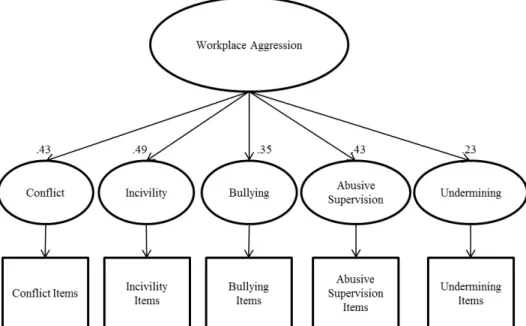
in relation to one another: a single factor model comprised of incivility, interpersonal conflict, abusive supervision, undermining, and bullying (Figure 1) or a five-factor model of incivility, interpersonal conflict, abusive supervision, undermining, and bullying with a higher-order aggression construct (Figure 2)?
Study Two
To address the distinctiveness between the various workplace aggression constructs, one must examine each construct’s unique variance, or in other words, their incremental validity (Wang, Sinclair & Tetrick; 2012). Incremental validity refers to “the degree to which a construct (or variable) significantly adds unique variance to the
prediction of some construct or criterion above and beyond what is predicted by some other measure” (Lounsbury, Gibson, & Saudargas, 2006, p. 139). Given that study one addressed the structural distinctiveness between the five workplace aggression constructs, the aim of study twowill be to evaluate the incremental predictive validity of the five workplace aggression constructs on job performance.
The workplace aggression and job performance relationship
Job performance has always been an outcome of interest within the workplace literature, so much so that scholars such as Thorndike (1949) declared job performance to be “the ultimate criterion” (p. 121). The workplace aggression literature on job
performance is limited, in both general aggression and specific aggression construct analyses. To understand how the workplace aggression and job performance relationship operates, it is crucial to understand how workplace aggression and job performance interact. For this, the present study utilizes the conservation of resources theory (Hobfoll,
18
1989) and the job-demand resource model (Bakker & Demerouti, 2007) to frame the interaction between workplace aggression and job performance.
The conservation of resources theory (COR; Hobfoll, 1989; Hobfoll & Freedy, 1993) states that within the workplace, “resources are objects, personality characteristics, conditions, or energies that are valued by the individual or that serve as a means for attainment of these objects, personal characteristics, or energies” (Hobfoll, 1989 p. 516). Individuals will seek to build, retain, and protect their resources, as they understand that the resources are limited. Environmental stressors such as workplace aggression deplete the resources and their reserves. In the COR, workplace aggression acts as demands, which are factors associated with mental, physical, or physiological costs of the job (Ito & Brotheridge, 2012; Maslach, Jackson & Leiter, 1986; Medina, Munduate, Dorado, Martinez, & Guerra, 2005). The impact of workplace aggression as a demand is exacerbated as individuals view the expenditure of resources as strains when applied towards tasks deemed unnecessary or where the outcomes are uncertain (Boswell, Olson-Buchanan, & LePine, 2004; Hobfoll, 1989; Hobfoll & Freedy, 1993; LePine, Podsakoff, & LePine, 2005). Using this framework, COR has a history of serving as a blueprint for understanding how workplace aggression can affect the work-related outcomes, such as job performance (e.g., Harris, Kacmar & Zivnuska, 2007; Lee & Brothridge, 2007; Oore, LeBlanc, Day, Leiter, Laschinger, Price & Latimer; 2010; Wheeler, Halbesleben & Shanine, 2010).
Hobfoll (1989) outlined how COR identifies the four paths that workplace aggression can take in negatively affecting job performance. These include when the
19
individual perceives a threat to their resources when they experience a loss in resources, when they perceive their work demands or responsibilities to exceed their resources, or when invested resources fall short of expected returns (Hobfoll, 2001; Hochwarter, Witt, Treadway, & Ferris, 2006). Under these guidelines, researchers have argued that
workplace aggression creates and promotes any or even all of these conditions (Oore, LeBlanc, Day, Leiter, Laschinger, Price & Latimer; 2010). Specifically, COR states that workplace aggression will negatively affect an individual’s ability to complete their goals and thereby hinder performance.
Drawing from COR, the job demand – resources model (JDR) states that job resources play a critical component in employee motivation (e.g., Bakker & Demerouti, 2007; Demerouti, Bakker, Nachreiner, & Schaufeli, 2001; Hackman & Oldham, 1980; Makikangas, Bakker, Aunola, & Demerouti, 2010). Hackman and Oldham demonstrated that job resources could facilitate a number of important job-related functions including holding the employee responsible for their work processes and outcomes, providing motivational reinforcement through perceived value, and providing information and feedback on the employee’s work activities. Central to the JDR model is the assumption that every job comes with its own inherent job resources and job demands (Bakker & Demerouti, 2007). As with COR, the JDR model views resources as the components of the job that may be called upon to aid in completing work goals, furthering personal development, or in reducing the level of physiological and psychological strains suffered from workplace stressors (Bakker & Demeroud, 2007; Bakker, Demeroud, & Euwema, 2005; Demerouti, Bakker, Nachreiner, & Schaufeli, 2001; Salanova, Bakker & Llorens,
20
2006; Van der Heijden & Bakker, 2011). Furthermore, job resources are used by the individual to help in the reduction of the effects of job demands (Bakker & Demerouti, 2007). Job demands are the physical, psychological, social, or organizational components of the job needed to sustain the work effort and include, but are not limited to, high-pressure work situations, unfavorable work environments, and emotionally demanding interactions with coworkers, supervisors, or clients. Research using the JDR model as a framework has shown workplace aggression to act as a job demand, due to the
emotionally stressful situations it places the individual in (Bakker, Demerouti, &
Verbeke, 2004; Ilies, Johnson, Judge, & Keeney, 2011; Peeters, Montgomery, Bakker, & Schaufeli, 2005). As with COR, the JDR model has a tradition of use in framing how and why workplace aggression can influence individual and organizational outcomes (e.g., De Cuypur, Bailien & De Witte, 2009; Tuckey, Dollard, Hosking & Winefield, 2009; Van den Broeeck, Bailien & de Witte, 2011).
Shifting focus to the empirical evidence of the workplace aggression and job performance relationship, Bowling & Beehrs (2006) conducted one of the
largest workplace aggression meta-analyses. In the meta-analysis, they combined 11 different types of workplace aggression constructs to assess the impact of aggression on the workplace. The meta-analysis only reported five studies that examined the effect of workplace aggression on job performance (other meta-analyses of note examining the workplace aggression and job performance relationship: Neilsen & Einarsen, 2012, k = 3; Schyns & Schilling, 2013, k = 7; Spector & Jex, 1998, k = 2). Although the number of empirical studies examining the relationship between workplace aggression and job
21
performance are limited, the results are consistent. Interpersonal conflict is by far the most researched type of workplace aggression in terms of its effects on job performance. Meta-analytic work by Spector and Jex (1998), De Dreu and Weingart (2003), and De Wit, Greer, and Jehn (2012) all examined the relationship between interpersonal conflict and performance and reported a consistent small to moderate negative relationship. The body of research on incivility and performance is limited, but consistent, with studies reporting a significant moderate negative relationship between the two (Sliter, Jex, Wolford, & McInnerney, 2010; Sliter, Pui, Sliter, & Jex, 2011; Sliter, Sliter, & Jex, 2012). Abusive supervision was found to be negatively related to supervisor rated job performance and to the formal appraisal processes in general (Harris, Kacmar, &
Zivnuska, 2007). Furthermore, in their generalized leadership meta-analysis Schyns and Schilling (2013) found destructive leadership negatively affected individual performance. Their meta-analysis also examined abusive supervision as a subset of destructive
leadership, reporting a negative relationship between abusive supervision and individual performance.
As one can see, the research is consistent but limited, prompting a need for further exploration of the workplace aggression to performance relationship. Given the
similarities and consistency in the strengths of the relationships reported across each of the workplace aggression constructs with job performance, study two proposes that workplace aggression will be negatively related to job performance. Furthermore, an aim of study two is to examine the incremental (unique) variance of each of the five
22
Hypothesis 1: The five-workplace aggression constructs (incivility, interpersonal conflict, bullying, social undermining, and abusive supervision) will be negatively related to self-reported task performance.
Research Question 2: Will each of the five workplace aggression constructs (incivility, interpersonal conflict, bullying, social undermining, and abusive supervision) explain significant incremental (unique) variance in job performance?
Finally, psychological research has been criticized for placing an emphasis on the negative side of psychology, suggesting time and resources should be targeted at
understanding the creative, positive, and emotionally fulfilling aspects of human behavior (e.g., Fullagar & Kelloway, 2009; Seligman & Csikszentmihalyi, 2000). These criticisms have sparked a resurgence in positive organizational research, focusing on such topics as flow, optimal experiences, positive deviance, and transcendent performance (e.g.,
Bakker, 2008; Cameron, Dutton, & Quinn, 2003; Luthans, 2001). However, throughout this resurgence, there has been a lack of integration between these positive psychological constructs and established workplace constructs. Of particular interest to workplace aggression research is the concept of flow-states. The present study seeks to bridge a gap in the literature through an examination of the impact of workplace aggression on flow-states at work and their impact on job performance.
Defining and conceptualizing flow and flow-states
Flow is defined as a state in which “people are so intensely involved in an activity that nothing else seems to matter; the experience itself is so enjoyable that people will do it even at cost, for the sheer sake of doing it” (Csikszentmihalyi, 1990, p. 4). Building on
23
this research, Fullagar, Knight, and Sovern (2013) proposed that flow-states (i.e. a state manifestation of the flow experience) are characterized by “an exclusive and intense concentration on the task at hand, where there is an absence of distraction, a perception of time being distorted, and where action and awareness merge in the performance of the activity” (p. 237). Research has shown flow to be positively related to positive
performance, increased creativity, and higher well-being (Clark & Haworth, 1994; Csikszentmihalyi, 1997; Csikszentmihalyi & LeFevre, 1989; Massimi & Carli, 1988; Shernoff, Csikszentmihalyi, Schneider, & Shernoff, 2003; Schüler, 2007). This has led to the conceptualization of flow being an ‘optimal experience’ for work and productivity (e.g., Fullagar & Kelloway, 2009; Nakamura & Csikszentmihalyi, 2002).
Drawing on the COR theory, flow-state research has established the need for the presence and availability of job resources as a prerequisite for the attainment of flow-states (e.g., Bakker & Demerouti, 2007; Demerouti, Bakker, Nachreiner, & Schaufeli, 2001; Nakamura & Csikszentmihalyi, 2009). These resources include, but are not limited to organizational support, a positive workplace culture, developmental resources,
leadership, performance feedback practices, and the just allocation of job-related resources. Theoretically, if an organization is lacking the proper resources to allow an employee to fulfill these prerequisites, then individuals will be unable to experience a flow-state. Following this line of reasoning, studies have demonstrated that individuals with access to high levels of autonomy, social support, supervisory coaching, and feedback were found to be the most likely to enter a flow-state at work (e.g., Bakker, 2008). In a longitudinal study, Salanova, Bakker, and Llorens (2006) found that the
24
availability of organizational resources (e.g., social support and clear goals) were predictive of flow-state experiences up to eight months after those resources were made available. In a related longitudinal study, Houkes (2002) found organizational, personal, and job-related resources (including skill variety, task identity and significance,
autonomy, and job feedback) had a causal relationship with intrinsic work motivation. Similar research has shown the availability of job resources to be positively related to intrinsic motivation, work engagement, job performance, and organizational citizenship behavior (Bakker, Demerouti, & Verbeke, 2004; Salanova, Agut, & Peiro; 2005;
Salanova, Llorens, Cifre, Martinez & Schaufeli, 2003). Furthermore, research has shown the opposite to be true, reporting employee motivation and performance to be negatively impacted by actions seen as undermining learning opportunities and the accomplishment of established goals (e.g., Wong, Hui, & Law, 1998). These results suggest that
workplace aggression may directly affect one’s ability to enter a flow-state. However, to date, no research has examined how workplace aggression would affect or impede the experience of a flow-state in the workplace.
In its infancy, flow theory placed a heavy focus on the balance between
challenges and skills (Csikszentmihalyi, 1975). However, as the understanding of flow grew, the emphasis on the challenge-skill balance was re-conceptualized from the major component of flow-state theory to one of nine components relevant to the flow-state experience, see Table 2 (e.g., Csikszentmihalyi, 1990, 1993; Jackson, 1996). The nine flow components have been established through both qualitative and quantitative research and have provided a guide for understanding and measuring flow (e.g., Csikszentmihalyi,
25
1990,1993; Jackson, 1996: Jackson & Ecklund, 2004; Jackson & Marsh, 1996). Through these nine components researchers are able to examine and measure flow-states either as a global construct (e.g. Demerouti, 2006) or through the assessment of flow-state
component specific research, such as focusing solely on the skill vs. challenge
(component one) of flow (e.g. Eisenberger, Jones, Stinglhamber, Shanock, & Randall, 2005). Research has also established what prerequisite characteristics must be inherent to the task or activity in order to elicit a flow-state. They are that (1) the perceived
challenges of the task are equal to the individual’s skills, (2) that the task has clearly defined and attainable goals, and (3) that the task provides feedback in such a manner that the individual is capable of monitoring their performance and progress towards the task goals (Nakamura & Csikszentmihalyi, 2009).
It should be noted that these concepts of flow do share some conceptual overlap with employee engagement, which is defined as the “harnessing of organization
members’ selves to their work roles by which they employ and express themselves physically, cognitively, and emotionally during role performances” (Kahn, 1990; p. 694). However, scholars investigating the topic of employee engagement have noted that “employee engagement has been defined in many different ways and the definitions and measures often sound like other better known and established constructs” (Saks, 2005, p. 601). In numerous reviews and meta-analyses of the employee engagement literature, scholars have found that employee engagement has grown to include an employee’s psychological state (e.g., mood or commitment), their disposition (e.g., positive affect towards work), and has operationalized engagement both as a performance construct
26
(e.g., organizational citizenship behaviors as evidence of engagement) and as the level of personal expendable resources employees commit to their work (e.g., Macey &
Schneider, 2008; Saks, 2005). Furthermore, Saks states that
“…although the definition and meaning of engagement in the practitioner literature often overlaps with other constructs… engagement is distinguishable from several related constructs, most notably organizational commitment, organizational citizenship behavior, and job involvement.” (p. 602).
In their review, Macey and Schneider (2008) emphasized the current lack of a uniformed definition of employee engagement across the literature, stating that “the use of engagement as a psychological construct in the research literature is no more precise; it is commonly used to refer to both role performance and an affective state, even within the same research context” (p. 5). The breadth of the engagement research is further
confounded when including a number of “non-engagement” or “antithesis engagement” variables under the employee engagement umbrella that addresses how unengaged an employee is (e.g., burnout, disengagement, emotional exhaustion). In response to this, Macey and Schneider (2008) focused their review of employee engagement solely on the positive aspects of employee engagement as they thought it was “crucial to developing conceptual precision in that it maintains a clear intentional focus on benefits that inure to the organization” (p. 4). Due to this, employee engagement is often presented as being both attitudinal and behavioral, which has resulted in the literature defining employee engagement as a state (e.g., satisfaction, involvement), a trait (e.g., conscientiousness, proactive personality), and as a behavior (e.g., organizational citizenship behaviors,
27
proactive/personal initiative). This led to assertion that engagement may not be a single concept but instead a “profile model of a multidimensional construct, we see engagement as not only a set of constructs but also a tightly integrated set, interrelated in known ways, comprising clearly identifiable constructs with relationships to a common outcome” (p. 24).
When viewed from this perspective it is clear that while flow-state research does share elements found within the employee engagement literature, the current definition of employee engagement is so broad that it is almost a meaningless distinction, as the type of engagement being referred to must be immediately defined. When employee
engagement does focus specifically on how an employee is engaged in their work, the focus is on vigor, dedication, and absorption (Schaufeli et al., 2002; Sliter, 2012). However, even these concepts are themselves broad and focus on a number of non-flow related points. Specifically, absorption is cast as being fully focused and engrossed in one’s job. Dedication is characterized as taking pride in one’s work and feeling that one’s work inspires the worker and creates and environment of enthusiasm and the perception that the work itself if meaningful and significant. Vigor refers to one’s cognitive
resilience and energy levels at work, their willingness to invest their time and self into their work, and their desire to persevere through any work related challenges that may occur. In this regard flow has been considered to fall outside the broader generalization of engagement, functioning as an extreme form of engagement (Britt & Bliese, 1999; Sliter, 2012).
28
However, unlike some of the more traditional employee engagement constructs, such as organizational commitment, job satisfaction, job involvement, and positive affectivity, flow-states specifically emphasize and focus on the specific work tasks an employee is engaged in (which again, separates it from the conceptually similar framing of employee engagement discussed in the previous paragraph). This definition is outside the scope of the traditional employee engagement variables, such as an employee’s engagement to their overall job (job involvement), to their organization (organizational commitment), their overall level of satisfaction with their job (job satisfaction), or their current mood/state of mind (positive affectivity). Thus, flow and flow-state research, while falling under the employee engagement umbrella (for it is a large and
encompassing umbrella), focuses specifically on how engaged an employee is in their workflow specific to their work tasks (and flows impact in that engagement), rather than how an employee feels about their job, workplace, or organization.
Flow at work
In order to operationalize the concept of general flow-states into flow-states focused on workplace performance, Bakker (2005, 2008) collapsed the nine flow-state components into three core elements focused on the experience of flow and how flow-states occur in the workplace, see Table 2. The three elements are the individual’s level of absorption in the task, their level of enjoyment attained from the task, and the intrinsic motivation the individual has in engaging in the task. Absorption refers to a state of intense or total concentration in which an individual loses awareness of their
29
hand (e.g., Csikszentmihalyi, 1990). Enjoyment refers to employees who associate
positive judgments or experience regarding the conditions and quality of their work tasks. This can be seen as the outcome of the affective and cognitive perceptions influenced by the flow experience (e.g., flow is a pleasurable state to reach, the paradox of control; e.g. Diener, 2000; Diener & Diener, 1996; Veenhoven, 1984). Intrinsic motivation refers to a continued self-driven motivation emphasized by an interest and engagement in the tasks the individual is performing (Csikszentmihalyi, 1997; Deci & Ryan, 1985; Harackiewicz, Barron, & Elliot, 1998). As discussed, the engagement literature conceptualizes these concepts in a different manner, focusing on a much broader sense of engagement such as how motivating one’s job is (in its entirety), how committed one is to their job (in its entirety) or organization, or what type of moods their workplace generally elicits. All of this focuses on a more generalized vision of engagement that attempts to include a number of generalized engagement markers. Running counter to that, flow-states focus specifically on how the individual interprets the experience of flow concerning their specific work tasks (not the job as a whole) and is defined by an exclusive and intense concentration on those work tasks (Fullagar, Knight, & Sovern, 2013).
Scholars have posited flow-states to be positively associated with performance (e.g., Engeser & Rheinberg, 2008; Landhäußer & Keller, 2012). There are two reasons for this. The first is that flow-states are highly functional states that enable performance through increased levels of concentration and perceptions of control. The second is that intrinsic motivation toward the task being engaged in is a core element of flow, and as such, individuals in a flow-state will be motivated to engage in further tasks in order to
30
attain the experience of additional flow-states. When these two aspects of flow exist, individuals may enter a flow-state, motivating them to maintain the optimal challenge to skill balance, prompting engagement in more progressively complex tasks, which in turn will prompt them to learn or develop more complex abilities and skills (e.g.,
Csikszentmihalyi 1975; Nakamura & Csikszentmihalyi 2009; Shernoff,
Csikszentmihalyi, Schneider, & Shernoff, 2003). This suggests that the experience of flow itself can become a motivating force in increasing performance.
Research examining flow and performance is a new area of study, and current research focuses on performance inside and outside of the workplace (e.g., Aube,
Brunelle & Rousseau; 2013; Bakker 2005; Demerouti 2006; Fullagar & Kelloway 2009; Nielsen & Cleal, 2010). Research from sports psychology literature has shown a
moderate positive relationship between the experience of flow-states in team members and the overall team performance (Aube, Brunelle, & Rousseau, 2013). At the individual level, Bakker, Oerlemans, Demerouti, Slot, and Ali (2011) reported flow-states to
correlate strongly with both self-reported measures of performance and coach-rated performance levels. In research specific to the workplace, a two-study paper by Kopperud (2012) reported similar findings to those from the sports literature, showing that the components of flow–states (absorption, enjoyment, and intrinsic motivation) were positively related to performance across both samples.
Although researchers have not directly investigated the influence workplace aggression has on the attainment of a flow-state, researchers have investigated how workplace aggression affects absorption, enjoyment, and intrinsic motivation. However,
31
it should be noted that this research cast these variables (absorption, enjoyment, and intrinsic motivation) not as they are presented in flow-state research (as brief mental states related to specific work or job tasks), but as larger antecedents or outcomes within the workplace engagement process that relate to a generalized assessment of the job, context, or environment as a whole (e.g., Saks, 2005).
Beginning with absorption, research has shown negative relationships between it and both incivility and abusive supervision to have with absorption (Sulea, Fischmann, & Filipescu, 2012). Reio and Sanders-Reio (2011) operationalized a component of
workplace engagement as ‘availability engagement’, which is defined as the “physical, emotional, and psychological resources to invest one’s self in a work role” (p. 13). When assessed with workplace aggression, availability engagement reported a moderate
negative relationship with both supervisor and coworker driven incivility. Research examining a more generalized workplace absorption, as defined by the employee engagement literature, has shown negative social interactions to be disruptive to one’s ability to focus as it impacts one’s task-focused cognitive resources, (Porath & Erez, 2007) and can induce negative attitudes that elicit ruminative thoughts (Cortina et al., 2001; Wittgenstein, 2013). In the same vein, research has shown that unlike the experience of positive emotions, which causes individuals to engage in behaviors that attempt to prolong the experience of positive emotions (Lazarus, 1991), the experience of negative emotions prompts a response focused on dealing with and removing the
emotions (Brief & Weiss, 2002). Building upon this, research assessing the impact of workplace aggression on the experience of engagement has examined how absorption (or
32
work dedication) is influenced. Specifically, across the incivility, interpersonal conflict, and bullying research, workplace aggression has reported a small but consistent effect on one’s ability to be absorbed in one’s work (e.g., Suela, Vigra, Maricutoiu & Schaufeli, 2012). Given that research has shown that even the lowest form of workplace aggression can significantly impact the experience of work absorption in a general sense, it is believed that workplace aggression will impact the experience of absorption in the task specific sense. Furthermore, this relationship is likely to hold across aggression types.
Hypothesis 2: The five-workplace aggression constructs (incivility, interpersonal conflict, bullying, social undermining, and abusive supervision) will all be negatively related to the experience of the flow component of absorption.
To date, there has been no published literature examining how workplace aggression affects the enjoyment of work specific to an individual’s work tasks or
specific responsibilities. However, a body of research examining concepts similar to how an individual experiences enjoyment or happiness with their work does exist. As with absorption, these studies have focused on broader assessments of work focused
enjoyment and were not specific to the state-enjoyment of work tasks. The results have been consistent in their findings, reporting a negative relationship of moderate strength between the workplace aggression and a general enjoyment of work (e.g., Felblinger, 2008; Frone, 2000; Hershcovis, 2011; Sulea, Fischmann, Filipescu, 2012; Wittgenstein; 2013). Approaching the relationship of workplace aggression and enjoyment from another angle, research that investigates unhappiness caused by work and workplace aggression is prolific. In this line of research, scholars have demonstrated depression to
33
function as one of the primary manifestations of unhappiness, showing that happiness and depression are in fact two sides of the same coin and represent the different end states of psychological, mental, or subjective well-being (e.g., Hills & Argyle, 2001; Beck, 1967; Cheng & Furnham, 2002; Diener, 1984; Diener & Lucas,1999; Eysenck, 1990; Myers, 1993; Seligman & Csikszentmihalyi, 1975; Veenhoven, 1984). Research has shown workplace aggression to have a positive relationship with the experience of depression, showing that the experience of workplace aggression and feelings of unhappiness or depression are positively linked (e.g., Bowling & Beehr, 2006; Cortina, Magley, Williams, & Langhout, 2001; Estes & Wang, 2008; Frone, 2000; Hershcovis, 2011; Wittgenstein, 2013). These findings demonstrate the negative effect workplace
aggression can have on the individual’s psychological state of well-being by weakening or damaging it to the point where depression is experienced. Furthermore, as with absorption, the experiences of these negative emotional and mental responses hinder the individual’s ability to engage positively with their environment, as they are forced to utilize their cognitive resources to mitigate the impact of experiencing workplace aggression. Thus, like absorption, we believe that workplace aggression will uniformly report a negative relationship with the experience of enjoyment as conceptualized by the flow construct.
Hypothesis 3: the five workplace aggression constructs (incivility, interpersonal conflict, bullying, social undermining, and abusive supervision) will all be negatively related to the experience of the flow component of enjoyment.
34
Generally, when motivation is discussed in combination with workplace aggression, the focus is on what motivated the perpetrator of the aggression to commit workplace aggression. There is currently a limited amount of research examining the effects of workplace aggression on the experience of intrinsic motivation (state or otherwise) within the workplace. When motivation is examined, broader intrinsic motivation research has shown both work climate, job context, and social interactions have a profound effect on an individual’s experience of intrinsic motivation (e.g., Deci, Nezlek, & Sheinman, 1981; Deci & Ryan, 1980; Gagne & Deci, 2005). This
susceptibility to external influences creates plasticity in intrinsic motivation, as negative social interactions (such as workplace aggression) can directly affect feelings of
motivation. Along these lines of reasoning, researchers have shown that the experience of social stressors causes individuals to withdraw or “check out” from their work (Colbert et al., 2004). Further withdrawal occurs when the individual perceives the stressors as negatively impacting the support, encouragement or professional challenges they receive from their co-workers and supervisors. Furthermore, researchers have suggested that experiencing or even witnessing workplace aggression leads to feelings of
disempowerment, which can hinder an individual’s task motivation (Hornstein, 1996; Kane & Montgomery, 1998). Furthermore, Hornstein (1996) and Tepper (2000) showed that witnessing workplace aggression at either end of the spectrum (incivility and abusive supervision, respectively) were perceived as emotionally traumatizing events in the workplace (e.g., events that elicited strong negative emotions) and left the witness feeling as though they could also be the victim of workplace aggression. However, to date, only one study has directly assessed the impact of workplace aggression on the experience of
35
intrinsic motivation in the workplace, and the results were non-significant (Luo, 1999). However, the study suffered from a number of identified limitations. Given that
researchers have posited and examined the idea that workplace aggression, ranging across types, can influence the experience of task related intrinsic motivation, it is proposed that workplace aggression will inhibit the experience of work related intrinsic motivation.
Hypothesis 4: The five-workplace aggression constructs (incivility, interpersonal conflict, bullying, social undermining, and abusive supervision) will all be negatively related to the experience of the flow component of intrinsic motivation.
Given that the evidence posits workplace aggression to be negatively related to the experience of both states and job performance, and that the experience of flow-states have been shown to be positively related to performance (e.g., Kopperud; 2012); this study proposes that the experience of flow-states at work will mediate the workplace aggression and job performance relationship. Given that the experience of a flow-state has been shown to be a key element in understanding performance understanding the role of the flow-state experience within the workplace aggression and job performance
context may be crucial to understanding how workplace aggression affects performance.
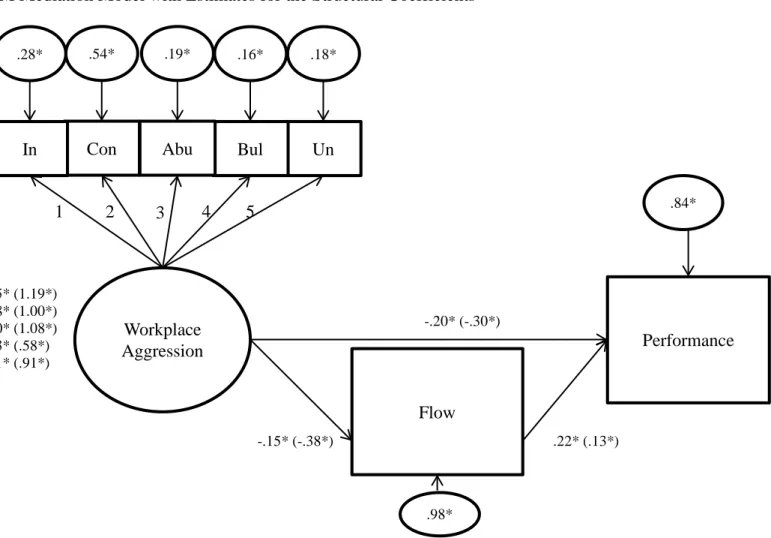
Hypothesis 5: Flow-states will at least partially mediate the relationship between workplace aggression (incivility, interpersonal conflict, bullying, social undermining, and abusive supervision) and job performance.
Finally, the purpose of this dissertation is to address two overarching questions: Does the workplace aggression literature have a terminological diversity problem, and
36
how does workplace aggression impact performance? The first question will be addressed through an examination of the construct and incremental validity of the five workplace aggression measures. The second question will be addressed through an investigation on not only workplace aggression's direct impact on performance ratings, but also on the mechanisms used by individuals to perform at their best (e.g., flow-states). This research will help to contextualize how workplace aggression impacts job performance.