ScholarWorks
Walden Dissertations and Doctoral Studies Walden Dissertations and Doctoral StudiesCollection
2018
Applying UTAUT to Determine Intent to Use
Cloud Computing in K-12 Classrooms
Dorothy Cortez Kropf Walden University
Follow this and additional works at:https://scholarworks.waldenu.edu/dissertations
Part of theEducational Administration and Supervision Commons, and theInstructional Media Design Commons
This Dissertation is brought to you for free and open access by the Walden Dissertations and Doctoral Studies Collection at ScholarWorks. It has been accepted for inclusion in Walden Dissertations and Doctoral Studies by an authorized administrator of ScholarWorks. For more information, please [email protected].
Walden University
College of Education
This is to certify that the doctoral dissertation by
Dorothy Cortez Kropf
has been found to be complete and satisfactory in all respects, and that any and all revisions required by
the review committee have been made.
Review Committee
Dr. Wellesley Foshay, Committee Chairperson, Education Faculty Dr. Michael Marrapodi, Committee Member, Education Faculty
Dr. Gerald Giraud, University Reviewer, Education Faculty
Chief Academic Officer Eric Riedel, Ph.D.
Walden University 2018
Abstract
Applying UTAUT to Determine Intent to Use Cloud Computing in K-12 Classrooms by
Dorothy Cortez Kropf
MA, Liberty University, 2011 BS, Liberty University, 2009
Dissertation Submitted in Partial Fulfillment of the Requirements for the Degree of
Doctor of Philosophy Education
Walden University May 2018
Although school districts provide collaborative cloud computing tools such as OneDrive and Google Drive for students and teachers, the use of these tools for grading and feed-back purposes remains largely unexplored. Therefore, it is difficult for school districts to make informed decisions on the use of cloud applications for collaboration. This quanti-tative, nonexperimental study utilized Venkatesh et al.’s unified theory of acceptance and use of technology (UTAUT) to determine teachers’ intent to use collaborative cloud com-puting tools. Online surveys with questions pertaining to UTAUT’s predictor variables of performance expectancy (PE), effort expectancy (EE), social influence (SI), facilitat-ing conditions (FC) and UTAUT’s criterion variable of behavioral intent (BI) were ad-ministered to a convenience sample of 129 teachers who responded to an email solicita-tion. Pearson correlation results of r= 0.781, r = 0.646, r = 0.569, and r = 0.570 indi-cated strong, positive correlations between BI and PE, EE, SI, and FC respectively. Spearman rho correlations results of rs = 0.746, rs = 0.587, rs = 0.569, and rs = 0.613
in-dicated strong, positive correlations between BI and PE, EE, SI, and FC respectively. Simple linear regression results indicated that PE and EE are strong predictors of BI when moderated by age, gender, experience, and voluntariness of use (VU). SI is a strong predictor of BI when moderated by gender, but not by age, experience, and VU. This study’s application of the UTAUT model to determine teachers’ BI to use collabora-tive cloud computing tools could transform how administrators and educational technolo-gists introduce these tools for grading and feedback purposes. This study contributes to the growing body of literature on technology integration among K-12 teachers.
Applying UTAUT to Determine Intent to Use Cloud Computing in K-12 Classrooms by
Dorothy Cortez Kropf
MA, Liberty University, 2011 BS, Liberty University, 2009
Dissertation Submitted in Partial Fulfillment of the Requirements for the Degree of
Doctor of Philosophy Education
Walden University May 2018
“The journey matters as much as the goal.” Kalpana Chawla
I thank God for giving me the strength and perseverance to complete this incredible journey and for blessing me with these wonderful people:
My deepest gratitude to my husband and my best friend, René, for his steadfast love, support, and sacrifice. I thank my sons, Miles and Grant, for believing in me. Special thanks to Dr. Rob Foshay for his patience and guidance and for teaching me to search for the strength of evidence behind every claim. I thank Dr. Michael Marrapodi for his positive feedback and encouragement. Finally, special thanks to my friends for cheering me on every step of the way.
i
Table of Contents
List of Tables... v
Table of Figures... viii
Chapter 1: Introduction to the Study ... 1
Background ... 3
Problem Statement ... 6
Purpose of the Study ... 8
Research Questions and Hypotheses... 8
Theoretical Framework ... 16
Nature of Study ... 17
Principal Component Analysis (PCA) ... 17
Correlational Research Design ... 18
Simple Linear Regression ... 18
Sample and Location ... 18
Sources of Data ... 19
Definition of Terms ... 20
Assumptions ... 22
Scope and Delimitations... 23
Limitations ... 23
Significance of this Study... 24
ii
Summary ... 26
Chapter 2: Literature Review ... 27
Introduction ... 27
Literature Search Strategy ... 27
Cloud Computing ... 28
Summary ... 121
Chapter 3: Research Method ... 124
Introduction ... 124
Variables and Moderators ... 124
Research Design ... 125
Cross-Sectional Survey Design ... 125
Population ... 126
Recruitment Procedures ... 126
Survey Dissemination ... 127
Sampling and Sampling Procedures ... 127
Instrumentation and Operationalization of Constructs ... 135
Reliability and Validity of the Instrument ... 135
Data Source ... 140
Recruitment ... 140
UTAUT Questionnaire ... 141
iii
Missing Data ... 145
Statistical Tests ... 146
Principal Component Analysis (PCA) ... 146
Kaiser-Meyer-Olkin and Bartlett’s Test ... 147
Potential Time and Resource Constraints ... 147
Threats to Validity ... 148 Ethical Considerations ... 149 Summary ... 151 Chapter 4: Results... 152 Introduction ... 152 Survey Administration ... 152 Data Preparation ... 153 Data Screening ... 153 Descriptive Statistics ... 154
Statistical Test Results ... 158
Reliability Test... 165
Principal Component Analysis ... 169
Non-Parametric and Parametric Tests ... 174
Path Analysis ... 203
Summary ... 204
iv
UTAUT Model ... 206
Study Findings ... 209
Interpretations ... 227
Scope and Delimitations... 236
Recommendations ... 237
Social Change and Implications for the U.S. K-12 Teaching Population ... 238
Conclusion ... 240
References ... 243
Appendix A: Permission to Use the UTAUT Model and Instrument ... 275
Appendix B. UTAUT Survey Items Developed by Venkatesh et al. (2003) ... 276
Appendix C: Email Invitation (IRB-Approved)... 277
Appendix D: Initial Phone Script (IRB Approved) ... 278
Appendix E: Follow-Up Phone Script ... 279
Appendix F: Consent Form ... 280
Appendix G: Survey Template through Survey Monkey ... 281
Appendix H: SPSS Codebook ... 287
v List of Tables
Table 1. Synthesis of Primary Research on Cloud Computing ... 41
Table 2. Definitions of Collaboration Across Time ... 44
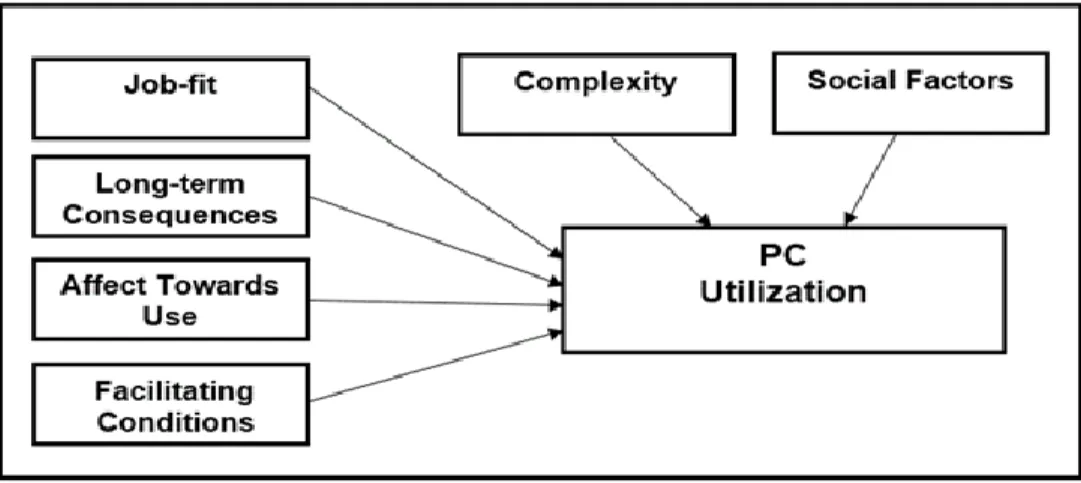
Table 3. Model of PC Utilization Constructs and Definitions ... 67
Table 4. Literature Review on UTAUT Used in Field of Healthcare ... 86
Table 5. Primary Research on UTAUT in Business and Information Systems ... 95
Table 6. Synthesis of Primary Research on UTAUT in Online Banking ... 101
Table 7. Synthesis of Primary Research on UTAUT in Education ... 115
Table 8. Synthesis of Primary Research on UTAUT ... 119
Table 9. Coding Gender in SPSS ... 143
Table 10. Coding Age in SPSS ... 144
Table 11. Coding Years of Experience in SPSS ... 144
Table 12. Coding Voluntariness of Use in SPSS ... 145
Table 13. Percentage of Participants by Age Group ... 156
Table 14. Participants' Experience with Collaborative Cloud Computing ... 157
Table 15. Distribution of Participants’ Voluntariness of Use ... 158
Table 16. Scales and Items of the UTAUT Survey for this Study ... 166
Table 17. Cronbach’s alpha Reliability Statistics Results ... 169
Table 18. Eigenvalues with Percent of Variance from PCA ... 172
Table 19. Rotated Component Matrix from PCA with Varimax Rotation ... 173
vi
Table 21. Spearman Correlation for Performance Expectancy and Behavioral Intent ... 178
Table 22. Pearson Correlation for Effort Expectancy and Behavioral Intent ... 179
Table 23. Spearman Correlations for Effort Expectancy and Behavioral Intent ... 180
Table 24. Pearson Correlation for Social Influence and Behavioral Intent ... 181
Table 25. Spearman Correlation for Social Influence and Behavioral Intent ... 181
Table 26. Pearson Correlation for Facilitating Conditions and Behavioral Intent ... 182
Table 27. Spearman Correlation for Facilitating Conditions and Behavioral Intent... 183
Table 28. Durbin-Watson: BI and UTAUT Predictors with UTAUT Moderators ... 184
Table 29. Linear Regression for BI and UTAUT Predictors with UTAUT Moderators . 185 Table 30. Linear Regression or BI and UTAUT Predictors when Moderated by Age ... 187
Table 31. Durbin Watson: for BI and UTAUT Predictors when Moderated by Age. .... 188
Table 32. Linear Regression for BI and UTAUT Predictors with Moderator Gender .... 191
Table 33. Durbin Watson: BI and UTAUT Predictors when Moderated by Gender ... 192
Table 34. Regression Results for BI and UTAUT Predictors with Experience ... 196
Table 35. Durbin Watson: BI and UTAUT Predictors with Moderator Experience ... 197
Table 36. Linear Regression for BI and UTAUT Predictors with Moderator VU... 200
Table 37. Durbin-Watson: BI and UTAUT Predictors when Moderated by VU ... 201
Table 38 PCA Results with Varimax Rotation ... 208
Table 39. California Public School Teachers’ Age Group Distribution 2015-16 ... 210
Table 40. Responses to the PE1 Item of the Survey... 212
vii
Table 42. Responses to the PE3 Item of the Survey... 213
Table 43. Responses to the EE1 Item of the Survey ... 215
Table 44. Responses to the EE2 Item of the Survey ... 216
Table 45. Responses to the EE3 Items of the Survey ... 217
Table 46. Responses to SI1 Item of the Survey ... 219
Table 47. Responses to the SI2 Items of the Survey ... 220
Table 48. Responses to the SI3 Items of the Survey ... 221
Table 49. Responses to the FC1 Items of the Survey ... 223
Table 50. Responses to the FC2 Items of the Survey ... 224
Table 51. Responses to the FC3 Items of the Survey ... 225
viii Table of Figures
Figure 1. UTAUT Model ...5
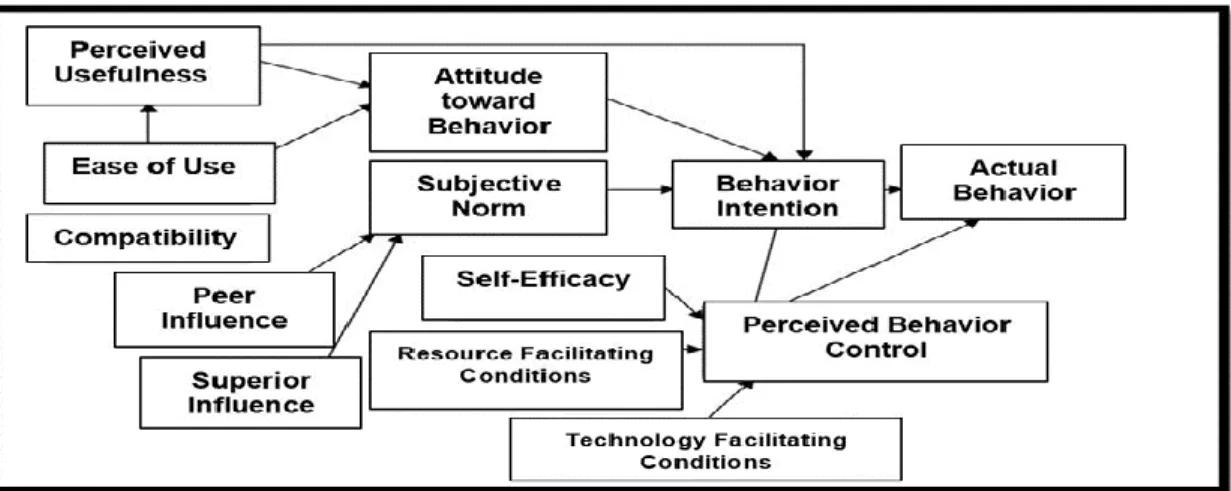
Figure 2. Positive and Negative Outputs of Collaboration ... 60
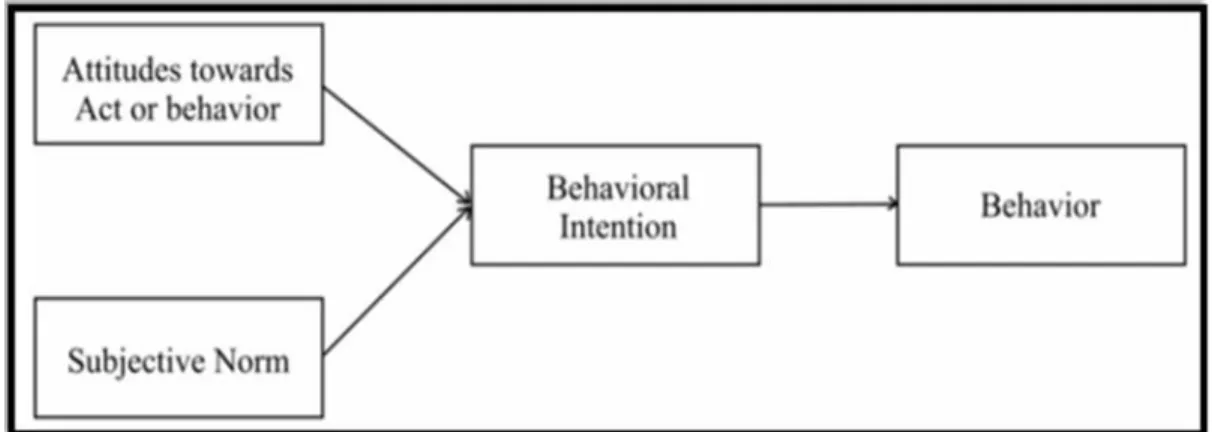
Figure 3. Theory of Reasoned Action... 61
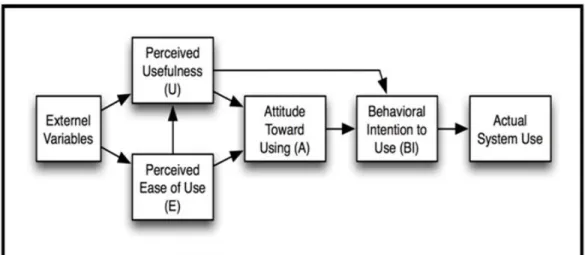
Figure 4. Technology Acceptance Model ... 62
Figure 5. Theory of Planned Behavior ... 63
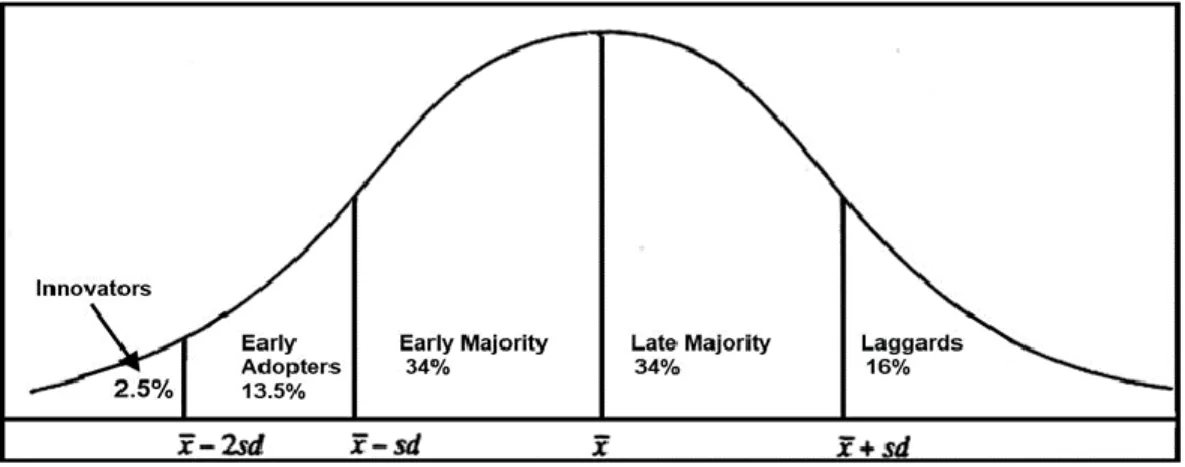
Figure 6. Diffusion of Innovation ... 64
Figure 7. Motivational Model ... 65
Figure 8. C-TAM-TPB Model ... 65
Figure 9. Model of PC Utilization ... 68
Figure 10. Social Cognitive Theory ... 69
Figure 11. UTAUT Model ... 70
Figure 12. UTAUT Model ... 118
Figure 13. Gender Distribution ... 155
Figure 14. Principal Component Analysis Scree Plot ... 171
Figure 15. Scatterplot: Correlation of BI with PE ... 175
Figure 16. Scatterplot: Correlation of BI with EE... 175
Figure 17. Scatterplot: Correlation of BI with SI ... 176
Figure 18. Scatterplot: Correlation of BI with FC... 176
Chapter 1: Introduction to the Study
This study addresses the use of cloud computing for collaboration among K-12 teachers in the United States. Research studies (e.g., Udoh, 2012) indicated that cloud computing is a promising technology for collaboration. Management Association (2016) refers to cloud computing as an “on-demand network of shared pool” of resources
wherein individuals collaborate while engaging in a “dynamic information updating” process (p. 22). This information updating process is characterized by the sharing of an online space to virtually create and edit files while giving and receiving feedback (Grant & Basye, 2014). Cloud computing is a computing model centered on a network platform which “establishes a bridge for data flow and exchange” (Management Association, 2016, p. 23).
In education, collaborative cloud computing, or the use of cloud computing applications to facilitate collaboration, encompasses student-participatory activities including peer-to-peer editing, group work, and teacher-to-student interactions including discussion forums and online grading and feedback. As a technology paradigm,
collaborative cloud computing facilitates “collection and annotation of learning materials, organization of knowledge in a useful way, retrieval, and discovery of useful learning materials from the knowledge space, and delivery of adaptive and personalized learning materials” (Apalla, Kuthadi, & Marwala, 2017, p. 1011). To successfully connect collaborators with real-time data, a virtual on-demand repository of shared resources must be used. Chen, Ta-Tao, and Kazuo (2016) referred to this “large pool of computing
resources” as a “shared IT infrastructure” wherein “scattered resources are linked
together through the Internet” (p. 102). Zhang, Zhang, Chen, and Huo (2010) referred to the cloud drive as a virtual application that can “deploy, allocate, or reallocate” resources dynamically for file management and collaboration” (p. 94).
Research on collaborative cloud computing has been well documented in higher education where opportunities for peer-to-peer and student-to-instructor collaboration and support inquiry has also increased (Donna & Miller, 2017) but research on collaborative cloud computing in K-12 education is severely lacking (Soobin, Warschauer, & Binbin, 2016). There has been an increased number of school districts that provide collaborative cloud computing tools (cloud drives) for their students, faculty, and staff (Johnson, Levine, Smith, & Haywood, 2010; Nagel, 2013), but efforts to investigate how collaborative cloud computing can benefit teachers and students in K-12 learning environments are scarce (Soobin et al., 2016). Cloud computing for collaboration remains unexplored in K-12 classrooms and teachers use cloud drives to store classroom files including syllabi, assignments, assessments, and other classroom handouts. Despite the availability of collaborative cloud computing tools such as Google Drive and
OneDrive, K-12 teachers have not used these tools extensively. Therefore, teachers’ behavioral intent to use collaborative cloud computing for grading and feedback purposes remains largely unexplored. The results of this study may significantly influence
K-12 teachers and factors that are crucial when integrating new technologies into K-12 classrooms.
This chapter includes the background of this study as well as its problem
statement, purpose, research questions and hypotheses, and theoretical framework. This chapter also includes the nature of this study, sample population, and the sources of my data, as well as the limitations and delimitations, the significance of this study, and its potential positive social implications. Finally, I will close this chapter with a summary.
Background
Verma, Dubey, and Rizvi (2012) explained that the use of collaborative cloud computing applications is common in many organizations. Accessing collaborative cloud computing applications is easier and more cost-efficient than “purchasing licenses and downloading software” (Lahiri & Mosely, 2013, p. 20). In education, Verma et al. (2012) “envisioned cloud computing’s impact to be significant” while enabling teachers to provide detailed feedback during the different stages of their students’ learning processes (p. 93). Its “enhanced collaboration possibilities contributed to the arguments for the use of collaborative cloud computing” (Meske, Stieglitz, Vogl, Rudolfph, & Ӧksϋ, 2014, p. 161). Alsufyani, Safdari, and Chang (2015) indicated that postsecondary
institutions are experiencing the benefits of collaborative cloud computing including work efficiency, low cost, and sharing features that further promote scholarly research.
Educators and students currently use collaborative cloud computing applications such as cloud drives for simultaneous and asynchronous collaboration. Hartmann,
Nygaard Braae, Pederson, and Khalid (2016) further explained the potential role of collaborative cloud computing in education:
The prominent advantage of cloud computing is it enhances student collaboration, which promotes motivation and helps keep the students responsible for their own work within the community. The universal access to data across time, space, and devices allows the teaching, learning, and collaboration to take place anywhere and at any time. (p. 200)
There is a lack of scholarly research on collaborative cloud computing among K-12 teachers (Soobin et al., 2016; Yim, Warschauer, Zheng, & Lawrence, 2014; Zheng, Lawrence, Warschauer, & Lin, 2013). Although many K-12 institutions provide cloud computing applications to teachers and students (Nagel, 2013; Johnson, 2013), it is unclear if teachers are using these technologies for grading and feedback purposes. Soobin et al. (2016) explained that “the lack of relevant educational research on this topic makes it difficult for school districts to make informed decisions about adopting
applications for instruction” (p. 3).
In any type of teacher training, Jager and Lokman (2000) suggested a bottom-up approach wherein the perspectives of the teachers are taken into consideration first before changes are implemented rather than institution-wide mandates on several aspects of teaching. Therefore, before any research on the potential benefits of collaborative cloud computing applications for K-12 schools can be conducted, a study to determine K-12 teachers’ behavioral intent to perform collaborative cloud computing for grading and
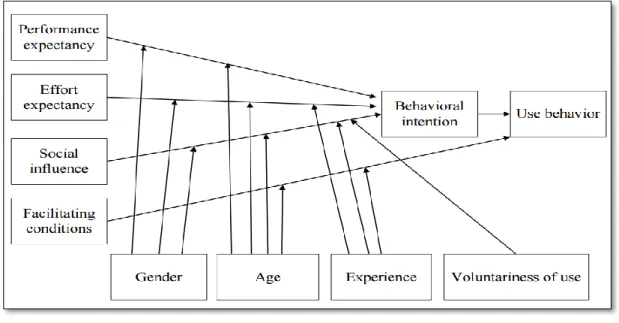
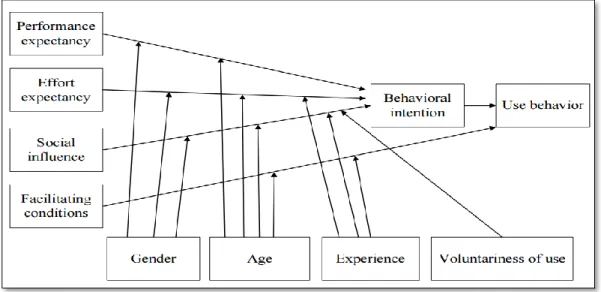
feedback purposes with a theoretical framework that measures the teachers’ intrinsic and extrinsic needs and their perceptions of the technology is necessary. Therefore, I used Venkatesh, Morris, Davis, and Davis’ (2003) unified theory of acceptance and use of technology (UTAUT; see Figure 1) as the theoretical framework for this study.
According to the UTAUT model, an individual’s behavioral intent to use technology and actual use of technology depend on his or her perspectives about the technology and can vary according to the individual’s age, gender, experience with similar technology, and voluntariness of use.
Figure 1. Unified theory of acceptance and use of technology (UTAUT). From “User Acceptance of
Infor-mation Technology: Toward a Unified View,” by V. Venkatesh, M.G. Morris, G.B. Davis, & F.D. Davis, 2003, Management Information Systems Quarterly, 27, p. 447.
Using Venkatesh et al.’s (2003) UTAUT model to predict K-12 teachers’
behavioral intent to use collaborative cloud computing for grading and feedback purposes is necessary. Previous studies using the UTAUT model indicated that performance expectancy (PE), effort expectancy (EE), and social influence (SI) can predict behavioral
intent (BI) to adopt new technologies while facilitating conditions (FC) can predict actual technology use. Akbar (2013) reported that Venkatesh et al.’s (2003) UTAUT model and instrument have been applied to multidisciplinary research with emphases on varying cultural contexts. UTAUT studies conducted outside of the United States include
Mbrokoh’s (2016) study on the factors that influence consumers to use online banking in Ghana and research on Chinese family caregivers’ BI to use e-health intervention in Canada by Chiu and Eysenbach (2010).
UTAUT studies conducted in the United States, including Anderson et al.’s (2006) study on the determinants of the use of PC tablets among university professors and Eckhardt, Laumer, and Weitzel’s (2009) study on the BI of information technology (IT) leaders to use curriculum vitae (CV) databases, are fewer than those conducted outside of the United States. Moreover, UTAUT studies conducted in the United States, specifically in education, remain scarce. To fill this research gap, I sought to determine if UTAUT’s constructs can predict the BI to use collaborative cloud computing for grading and feedback purposes among K-12 teachers in the United States. This study may be the first conducted in the United States using the UTAUT model to determine the factors that can influence K-12 teachers’ BI to use collaborative cloud computing for grading and feedback purposes.
Problem Statement
One of the reasons school districts have not successfully deployed new
research (Thomas, Menon, Boruff, Rodriguez, & Ahmed, 2014). Therefore, it is difficult for school districts to make informed decisions about adopting new technologies (Soobin et al., 2016). Mulvaney (2016) indicated that while web-based cloud computing
applications may be accessible to teachers, these applications are not often used in daily instruction. Shotlekov and Charkova (2014) reported:
Educating students in the cloud is something relatively new to teaching practices, however it opens many perspectives and allows students to work collaboratively, share experience and accumulate skills which will be tremendously important in the technologically advanced times we live in. Despite all the contribution to education and learning, cloud computing poses a great challenge to many teachers who not only have to be creative educators, but ICT-skilled instructors as well. (p. 291)
Reidenberg, Russell, Kovnot, Norton, and Cloutier (2013) suggested that school district administrators must enact policies and implementation plans the moment they offer cloud computing applications to their teachers, students, and staff. Although school districts offer their teachers, students, and staff access to cloud drives such as OneDrive or Google Drive, most teachers use these collaborative cloud computing tools to convert their printed materials into electronic versions but still preserve their traditional teaching methods. This study contributes to the growing amount of literature on collaborative cloud computing in K-12 classrooms. Identifying a theoretical framework to determine the factors that can predict the use of collaborative cloud computing for grading and
feedback purposes is critical for school administrators before they can invest more time and resources to introduce, reintroduce, train, and retrain teachers to use collaborative cloud computing applications beyond their storage and file management capacities. Since Venkatesh et al.’s (2003) UTAUT, a technology acceptance model, is extensively used in healthcare, business, IS, and higher education, I decided to apply UTAUT’s constructs in this study.
Purpose of the Study
The purpose of this quantitative study was to determine if Venkatesh et al.’s (2003) UTAUT constructs are strong predictors of K-12 teachers’ behavioral intent to use collaborative cloud computing for grading and feedback purposes. Using UTAUT’s survey questionnaire, this correlational study examined if the independent variables, performance expectancy, effort expectancy, social influence, and facilitating conditions, are strong predictors of the dependent variable, behavioral intent to use collaborative cloud computing for grading and feedback purposes. The UTAUT model has four moderating variables: age, gender, experience, and voluntariness of use. This study may contribute to the growing body of literature in which researchers explore the determinants of technology adoption among K-12 teachers.
Research Questions and Hypotheses
This study addressed the following research questions and hypotheses:
Questions and Hypotheses 1-4
relationships between each of the UTAUT variables:
RQ1: What is the relationship between PE and BI to use collaborative cloud computing applications for grading and feedback purposes?
H01: There is no relationship between PE and BI to use collaborative cloud
computing applications for grading and feedback purposes.
Ha1: There is a relationship between PE and BI to use collaborative cloud
computing applications for grading and feedback purposes.
RQ2: What is the relationship between EE and BI to use collaborative cloud computing applications for grading and feedback purposes?
H02: There is no relationship between EE and BI to use collaborative cloud
computing applications for grading and feedback purposes.
Ha2: There is a relationship between EE and BI to use collaborative cloud
computing applications for grading and feedback purposes.
RQ3: What is the relationship between SI and BI to use collaborative cloud computing applications for grading and feedback purposes?
H03: There is no relationship between SI and BI to use collaborative cloud
computing applications for grading and feedback purposes.
Ha3: There is a relationship between SI and BI to use collaborative cloud
computing applications for grading and feedback purposes.
RQ4: What is the relationship between FC and BI to use collaborative cloud computing applications for grading and feedback purposes?
H04: There is no relationship between FC and BI to use collaborative cloud
computing applications for grading and feedback purposes.
Ha4: There is a relationship between FC and BI to use collaborative cloud
computing applications for grading and feedback purposes.
Questions 5 to 8 pertain to the relationships between UTAUT’s predictor variables and UTAUT’s criterion variable when moderated by age:
Questions and Hypotheses 5-8
Questions 5 to 8 pertain to the relationships between UTAUT’s predictor varia-bles and UTAUT’s criterion variable when moderated by age:
RQ5: To what extent does the moderator age moderate the relationship between K-12 teachers’ PE and BI to use collaborative cloud computing for grading and feedback purposes?
H05: Age does not moderate the relationship between K-12 teachers’ PE and BI to
use collaborative cloud computing for grading and feedback purposes.
Ha5: Age moderates the relationship between K-12 teachers’ PE and BI to use
collaborative cloud computing for grading and feedback purposes.
RQ6: To what extent does moderator age moderate the relationship between K-12 teachers’ EE and BI to use collaborative cloud computing for grading and feedback purposes?
H06: Age does not moderate the relationship between K-12 teachers’ EE and BI to
Ha6: Age moderates the relationship between K-12 teachers’ EE and BI to use
collaborative cloud computing for grading and feedback purposes.
RQ7: To what extent does moderator age moderate the relationship between K-12 teachers’ SI and BI to use collaborative cloud computing for grading and feedback purposes?
H07: Age does not moderate the relationship between K-12 teachers’ SI and BI to
use collaborative cloud computing for grading and feedback purposes.
Ha7: Age moderates the relationship between K-12 teachers’ SI and BI to use
collaborative cloud computing for grading and feedback purposes.
RQ8: To what extent does moderator age moderate the relationship between K-12 teachers’ FC and BI to use collaborative cloud computing for grading and feedback purposes?
H08: Age does not moderate the relationship between K-12 teachers’ FC and BI to
use collaborative cloud computing for grading and feedback purposes.
Ha8: Age moderates the relationship between K-12 teachers’ FC and BI to use
collaborative cloud computing for grading and feedback purposes.
Questions and Hypotheses 9-12
Questions 9-12 pertain to potential relationships between UTAUT’s predictor variables and UTAUT’s criterion variable when moderated by gender:
RQ9: To what extent does moderator gender moderate the relationship between K-12 teachers’ PE and BI to use collaborative cloud computing for grading and feedback purposes?
H09:Gender does not moderate the relationship between K-12 teachers’ PE and
BI to use collaborative cloud computing for grading and feedback purposes.
Ha9: Gender moderates the relationship between K-12 teachers’ PE and BI to use
collaborative cloud computing for grading and feedback purposes.
RQ10: To what extent does moderator gender moderate the relationship between K-12 teachers’ EE and BI to use collaborative cloud computing for grading and feedback purposes?
H010:Gender does not moderate the relationship between K-12 teachers’ EE and
BI to use collaborative cloud computing for grading and feedback purposes.
Ha10: Gender moderates the relationship between K-12 teachers’ EE and BI to
use collaborative cloud computing for grading and feedback purposes.
RQ11: To what extent does moderator gender moderate the relationship between K-12 teachers’ SI and BI to use collaborative cloud computing for grading and feedback purposes?
H011: Gender does not moderate the relationship between K-12 teachers’ SI and
BI to use collaborative cloud computing for grading and feedback purposes.
Ha11: Gender moderates the relationship between K-12 teachers’ SI and BI to use
RQ12: To what extent does moderator gender moderate the relationship between K-12 teachers’ FC and BI to use collaborative cloud computing for grading and feedback purposes?
H012: Gender does not moderate the relationship between K-12 teachers’ FC and
BI to use collaborative cloud computing for grading and feedback purposes.
Ha12: Gender moderates the relationship between K-12 teachers’ FC and BI to
use collaborative cloud computing for grading and feedback purposes.
Questions and Hypotheses 13-16
Questions 13-16 pertain to potential relationships between the UTAUT’s predictor variables and UTAUT’s criterion variable when moderated by experience (number of years of experience using collaborative cloud computing tools):
RQ13: To what extent does moderator experience moderate the relationship between K-12 teachers’ PE and BI to use collaborative cloud computing for grading and feedback purposes?
H013:Experience does not moderate the relationship between K-12 teachers’ PE
and BI to use collaborative cloud computing for grading and feedback purposes.
Ha13: Experience moderates the relationship between K-12 teachers’ PE and BI to
use collaborative cloud computing for grading and feedback purposes.
RQ14: To what extent does moderator experience moderate the relationship between K-12 teachers’ EE and BI to use collaborative cloud computing for grading and feedback purposes?
H014:Experience does not moderate the relationship between K-12 teachers’ EE
and BI to use collaborative cloud computing for grading and feedback purposes.
Ha14:Experience moderates the relationship between K-12 EE and BI to use
collaborative cloud computing for grading and feedback purposes.
RQ15: To what extent does moderator experience moderate the relationship between K-12 teachers’ SI and BI to use collaborative cloud computing for grading and feedback purposes?
H015:Experience does not moderate the relationship between K-12 teachers’ SI
and BI to use collaborative cloud computing for grading and feedback purposes.
Ha15:Experience moderates the relationship between K-12 teachers’ SI and BI to
use collaborative cloud computing for grading and feedback purposes.
RQ16: To what extent does moderator experience moderate the relationship between K-12 teachers’ FC and BI to use collaborative cloud computing for grading and feedback purposes?
H016: Experience does not moderate the relationship between K-12 teachers’ FC
and BI to use collaborative cloud computing for grading and feedback purposes.
Ha16: Experience moderates the relationship between K-12 teachers’ FC and BI
to use collaborative cloud computing for grading and feedback purposes.
Questions and Hypotheses 17-20
Questions 17-20 pertain to potential relationships between UTAUT’s predictor variables and UTAUT’s criterion variable when moderated by VU:
RQ17: To what extent does moderator VU moderate the relationship between K-12 teachers’ PE and BI to use collaborative cloud computing for grading and feedback purposes?
H017: VU does not moderate the relationship between K-12 teachers’ PE and BI
to use collaborative cloud computing for grading and feedback purposes.
Ha17: VU moderates the relationship between K-12 teachers’ PE and BI to use
collaborative cloud computing for grading and feedback purposes.
RQ18: To what extent does moderator VU moderate the relationship between K-12 teachers’ EE and BI to use collaborative cloud computing for grading and feedback purposes?
H018: VU does not moderate the relationship between K-12 teachers’ EE and BI
to use collaborative cloud computing for grading and feedback purposes.
Ha18: VU moderates the relationship between K-12 teachers’ EE and BI to use
collaborative cloud computing for grading and feedback purposes.
RQ19: To what extent does moderator VU moderate the relationship between K-12 teachers’ SI and BI to use collaborative cloud computing for grading and feedback purposes?
H019: VU does not moderate the relationship between K-12 teachers’ SI and BI to
use collaborative cloud computing for grading and feedback purposes.
Ha19: VU moderates the relationship between K-12 teachers’ SI and BI to use
RQ20: To what extent does moderator VU moderate the relationship between K-12 teachers’ FC and BI to use collaborative cloud computing for grading and feedback purposes?
H020: VU does not moderate the relationship between K-12 teachers’ FC and BI
to use collaborative cloud computing for grading and feedback purposes.
Ha20: VU moderates the relationship between K-12 teachers’ FC and BI to use
collaborative cloud computing for grading and feedback purposes.
Theoretical Framework
This quantitative study was guided by Venkatesh et al.’s (2003) UTAUT.
Venkatesh et al. posited that performance expectancy, effort expectancy, social influence, and facilitating conditions are strong predictors of behavioral intent to use certain
technologies, facilitating conditions is a strong predictor of use behavior, and that age, gender, experience, and voluntariness of use moderate these constructs. UTAUT was developed based on eight technology acceptance theories which are further discussed in Chapter 2.
Researchers have used Venkatesh et al.’s (2003) UTAUT model in healthcare, business and information systems, and higher education studies to explore the factors that can predict people’s behavioral intent to use certain technologies. UTAUT’s independent variables are a) performance expectancy, b) effort expectancy, c) social influence, and d) facilitating conditions. UTAUT’s moderators are a) age, b) gender, c) experience, and d) voluntariness of use. The dependent variable is behavioral intent to use collaborative
cloud computing for grading and feedback purposes (from Figure 1). The validity of each of the constructs and moderators of UTAUT and the reliability and validity of the UTAUT questionnaire will be discussed in Chapter 3.
Nature of Study
This is a quantitative correlational research study, guided by hypotheses, and designed to observe whether there are correlations among the independent variables and the dependent variable and to what extent the moderating variables affected the
relationships between the independent variables and the dependent variable. In this study, I investigated whether Venkatesh et al.’s (2003) UTAUT independent variables (see Figure 1) were strong predictors of K-12 teachers’ behavioral intent to use
collaborative cloud computing applications for grading and feedback purposes.
UTAUT’s variables of PE, EE, SI, and FC were the independent variables and BI to use was the dependent variable for this study. Age, gender, experience, and voluntariness of use (VU), as established by Venkatesh et al. were the moderators I used for this study.
Principal Component Analysis (PCA)
I performed a principal component analysis (PCA) to examine whether I can reduce the 16 survey items based on the UTAUT model to fewer factor loadings. This statistical test helped me transform several potential variables that are correlated into smaller number of uncorrelated variables, as suggested in Laerd Statistics (2012a).
Correlational Research Design
In this study, I employed a correlational research design to determine whether there were relationships between each of the UTAUT’s constructs and K-12 teachers’ BI to use collaborative cloud computing for grading and feedback purposes. Creswell (2008) indicated that correlational research studies can explain relationships between variables and can indicate which variables are strong predictors of a certain phenomenon. Gabbiadini and Greitmeyer (2007) indicated that correlational analysis can pinpoint “how variables differ from one another and how these differences can also relate to each other” (p. 134).
Simple Linear Regression
I performed a simple linear regression to determine if the relationships between UTAUT’s independent variables (PE, EE, SI, and FC) and UTAUT’s dependent variable (BI) are statistically significant when moderated by UTAUT’s moderators of age, gender, experience, and VU.
Sample and Location
The population from which the samples were drawn included K-12 public school teachers in the Pacific Coast region of the United States. There were no specific groups or types of teachers excluded in this sampling frame. I used Faul et al.’s (2009) G*Power 3.1.9.2. software with the developers’ recommended effect size of .20 for a small sample size, .05 probability error, .80 power, and 4 predictors, resulting to this study’s total required sample size of 65. My target sample size was 100.
I employed a convenience sampling method to collect data from K-12 teachers as the unit of analysis. Based on the California Common Core State Standards, students as young as kindergarteners should use technology to write, edit, and publish their written assignments:
With guidance and support from adults, students explore a variety of digital applications to produce and publish writing, including in collaboration with peers and participate in shared research and writing projects. (National Governors Association Center for Best Practices and Council of Chief State School Officers, 2010, pp. 21-22)
Sources of Data
In this study, I employed a cross-sectional survey design. Field (2009) indicated that cross-sectional designs can be used to measure multiple variables at one point in time. Using Venkatesh et al.’s (2003) UTAUT questionnaire, I observed the extent of the correlation of UTAUT’s constructs or independent variables (PE, EE, SI, and FC) with the dependent variable (BI) to use collaborative cloud computing for grading and feedback purposes. I received permission to use the UTAUT model and the UTAUT instrument (see Appendix A). Permission to use the survey included modifications I made to the survey such as replacing the word system with collaborative cloud computing for grading and feedback purposes and the omission of use behavior (UB) as a dependent variable. By using the UTAUT survey, I was able to determine if UTAUT’s moderators
of age, gender, experience, and VU affected the strength of correlations between the independent variables and the dependent variable.
Definition of Terms
Defining specific terms adds “precision” to a scientific study (Firestone, 1987, p. 16). Throughout this study, I used the following terms:
• Administrators: K-12 school leaders including principals, vice-principals, superintendents, board members, and heads of schools.
• Behavioral intent (BI): “A person’s relative strength of intention to perform a
behavior” (Coffman, 2014, p. 41). Venkatesh (2013) described BI as a
person’s conscious decision to do something or to implement something in his or her future behavior.
• Cloud computing: The storing and managing of data through utilization of cloud-based remote servers instead of local area networks and the facilitating of online collaborations by making documents available to specific
individuals (Grant & Basye, 2014). Examples of cloud-based remote servers are Google Drive, One Drive, and Dropbox.
• Collaboration: The term “collaboration” has been defined by several
researchers. This study will utilize Morel’s (2014) definition: Collaboration is a form of learning characterized by mutual respect and trust wherein
individuals are receptive to other people’s ideas, can share and defend points of view, and can reflect on the feedback they receive to achieve their goals.
• Effort expectancy (EE): The basis to which “individuals decide to use technology if they believe that using it is easy” (Ghandalari, 2012, p. 802). According to Venkatesh et al., (2003), individuals are more likely to use a technology if they see it as easy to use.
• Experience: The number of years that a person claims to use a similar technology. “Users often employ the knowledge they gained from prior experience with similar technologies to form the basis of their intentions” (Coffman, 2014, p. 54).
• Facilitating conditions (FC): The basis to which individuals decide to use technology if they believe that “technical and organizational infrastructures are available for them to use it (Ghandalari, 2012, p. 803). According to Venkatesh et al., (2003), individuals are more likely to use technology if they perceive that they will get sufficient support to learn and to use the technology
• Feedback: “Comments, questions, or error corrections written on students’ assignments” (Mack, 2009, p. 34).
• Performance expectancy (PE): The basis to which individuals decide to use technology if they believe that using it can positively affect their “job performance” (Ghandalari, 2012, p. 803). According to Venkatesh et al., (2003), individuals are more likely to use technology if they see it as something that can improve their job performance.
if they believe that the people who are important to them are already using it or will support them in using it (Ghandalari, 2012). According to Venkatesh et al., (2003), individuals are more likely to use technology if they perceive that people who are important to them approve their use of this technology.
• Use behavior (UB): Self-reported construct that explains one’s use of certain technology (Venkatesh, 2013).
• Voluntariness of use: The extent to which the use of certain technology is not mandated (Agarwal & Prasad, 1997).
Assumptions
Lewis-Beck et al. (2004) stated that “assumptions are ubiquitous in social science and are the starting axioms and postulates that yield testable implications spanning broad domains” (p. 33). The assumptions for this study include the following:
1. Participants will answer the questions truthfully.
2. UTAUT variables will predict BI to use collaborative cloud computing among K-12 teachers.
3. UTAUT moderators will be accurately assessed with the UTAUT survey questionnaire.
4. Data collected for this study will yield results to specific group of K-12 teachers and therefore cannot be generalized to all K-12 teachers.
Scope and Delimitations
Scope and delimitations for this study were as follows:
1. The study was limited to K-12 teachers in various public-school districts in the Pacific Coast area of the United States and therefore, results cannot be generalized. The decision to limit this study to one region was based on feasibility and cost-efficiency.
2. Using the convenience sampling method, participants of this study self-reported after receiving email invitations from school districts to voluntarily participate in this study. One of the disadvantages of convenience sampling method is that it could yield bias effects such as overrepresentation or underrepresentation of groups of people (Laerd Statistics, 2012e).
3. Because this was not a longitudinal study, it was limited to measuring the participants’ BI to use one specific technology at one specific time. The participants’ responses could change over time.
4. Because the purpose of this study was to examine whether UTAUT variables can predict BI, I examined only the variables and moderators of UTAUT. 5. Because UB, one of UTAUT’s dependent variables, is a self-reported
variable, I did not include it in this study.
Limitations
This nonexperimental study had certain limitations. First, nonexperimental designs have no cause and effect inferences made to “describe, differentiate, or examine
relationships, as opposed to direct relationships between or among variables, groups, or situations” (Sousa, Driessnack, Mendes, & Costa, 2007, p. 502). Sousa et al. (2007) also explained that nonexperimental studies are used for observations only, therefore,
researchers lack the ability to randomize control groups and manipulate variables.
Correlational research is also a “systematic investigation” of relationships or associations between the variables and do not yield “direct cause-effect relationships” (Sousa et al., 2007, p. 503). However, correlational designs are used to determine if changes in one or more variables can influence the changes in the other variable(s). Finally, this study was not longitudinal and was not designed to record how and to what extent the participants’ viewpoints will change over time.
Significance of this Study
Transforming the way teachers teach with meaningful feedback and the way students engage with their teachers is the significance of this study. Findings of this study may contribute to the growing body of literature that aims to identify the
determinants of BI to use technology among K-12 teachers. School districts across the United States have provided cloud computing applications such as Google Drive and OneDrive for their students and teachers (Johnson et al., 2013) but it is unclear whether teachers intend to use these applications for grading and feedback purposes. Therefore, to fill the research gap, I sought to determine whether there were relationships between K-12 teachers’ PE, EE, SI, FC and their BI to use collaborative cloud computing
applications for grading and feedback purposes and if the moderators of age, gender, experience, and VU impact these variables.
This study demonstrated its potential to gain new ground in understanding
teachers’ BI to use certain technologies. Educational researchers, educational technology providers, school administrators, and educational technologists can benefit from
understanding the different and complex factors that affect teachers’ BI to use certain technologies. Ultimately, by providing greater understanding of the factors that drive teachers to continuously use efficient technologies for teaching and learning, this study can help administrators and educational technologists transform the design and
implementation of teachers’ professional development programs.
Social Change
The use or nonuse of certain technologies by teachers consistently interests many educational researchers (Friedman, Bolick, Berson, & Porfeli, 2009). In this study, I examined the strength of UTAUT’s constructs in U.S. school districts. This examination was necessary and a worthwhile contribution to the growing number of studies on teachers’ behavioral intent to use certain technologies. In this study, I delved into the potential benefits of collaborative cloud computing applications in K-12 classrooms. The results are pivotal in determining the significant factors that school administrators need to be aware of when introducing or integrating collaborative cloud computing for
instructional purposes in K-12 classrooms. Finally, when applied to K-12 professional development programs for K-12 teachers, the extent to which K-12 schools use
collaborative cloud computing applications may significantly impact the way teachers and students collaborate with one another and the way teachers grade and provide feedback for their students.
Summary
In this quantitative correlational research study, guided by Venkatesh et al.’s (2003) UTAUT model, I sought to determine whether PE, EE, SI, and FC are strong predictors of K-12 teachers’ BI to use cloud computing for grading and feedback purposes and whether this intent differs when UTAUT’s moderators of age, gender, experience, and VU are applied. This chapter covered the background of this study, the nature of this study, its sampling population, and source of data. The chapter also
included the instrumentation, research questions, and the hypotheses of this study as well as its significance and its social change. A literature review on collaboration, cloud computing, and technology acceptance models including UTAUT is discussed in Chapter 2.
Chapter 2: Literature Review
Introduction
This chapter is comprised of a review of literature relevant to this study. Guided by Venkatesh et al.’s (2003) UTAUT model, this study addressed the need for scholarly research on the use of collaborative cloud computing for grading and feedback purposes among K-12 teachers in the United States. The chapter begins with literature review on collaboration, cloud computing, collaborative cloud computing, and their applications and benefits in the areas of healthcare, business and information systems, and higher education. The chapter also covers the history and critical reviews on UTAUT and other technology acceptance models and the models’ major theoretical propositions and
applications to studies in healthcare, business and information systems, and higher education and their relevance to this study. A rationale for selecting UTAUT as the theoretical framework for this study is also provided in this chapter. This chapter closes with a summary.
Literature Search Strategy
The literary search strategy for this literature review consisted of searches in academic online databases of scholarly research such as JSTOR, EBSCO, Academic Search Complete, and ProQuest. Literature search for this study involved searching for scholarly materials on the topics of cloud computing and the applications of cloud computing in education including collaboration and the application of Venkatesh et al.’s (2003) UTAUT model. The search for scholarly materials on cloud computing in the
field of education yielded 508 empirical studies, meta-analyses, and theoretical commentaries published from 2008 to 2017, of which only 191 were conducted in the United States. The search for scholarly materials on Venkatesh et al.’s UTAUT model resulted to 758 empirical studies, meta-analyses, and theoretical commentaries published from 2006 to 2017, of which 103 studies relate to healthcare, 19 studies relate to finance including online banking, 295 studies relate to business and information systems, and 309 studies relate to education. In education, out of 309 empirical studies, meta-analyses, and theoretical commentaries, only a handful of studies pertained to secondary schools. Of the total 758 studies on UTAUT, only 14 empirical studies, meta-analyses, and
theoretical commentaries were conducted in the United States. The remaining empirical studies, meta-analyses, and theoretical commentaries were relevant to understanding the behavioral intent to use and use of certain technologies among consumers.
Cloud Computing
“Cloud computing is the promising technology for collaborative and participatory approach” (Udoh, 2012, p. 113). Management Association (2016) referred to cloud computing as an on-demand network or “shared pool” of resources in which individuals collaborate while engaging in a “dynamic information updating” (p. 22). The author added that cloud computing has changed the way people work. Cloud computing is the storing and managing of data through the utilization of cloud-based remote servers
instead of local area networks and facilitating online collaborations by making documents available to specific individuals (Grant & Basye, 2014). Yadav (2014) referred to cloud
computing as an “internet-based computing in which shared resources, software, and information are delivered as a service that computers or mobile devices can access on demand” (p. 3109). The on-demand feature of cloud computing has made it ubiquitous for many organizations and institutions, including healthcare, business and information systems, and education. However, Zheng et al. (2013) indicated that there is a paucity of empirical research on cloud computing for collaborative activities in K-12 classrooms, specifically, wherein cloud storage applications are used to provide feedback to students.
In healthcare, researchers from the Cloud Standards Customer Council (2012) explained that “patient centricity has become the key trend, leading to the steady growth in the adoption of electronic medical records (EMR), electronic health records (EHR), personal health records (PHR), and other technologies related to integrated care, patient safety, point-of-care access to demographic and clinical decision support” (p. 11). In business and information systems, cloud computing has been accepted as effective and cost efficient (Devasena, 2014). Devasena added that cloud computing has provided small- and medium-sized businesses “increased collaboration, allowing employees to synchronize and work on documents and shared applications simultaneously from their own place” (p. 3).
Cloud computing has also increased productivity while helping employees create a healthy balance between personal and professional lives (Devasena, 2014). Cloud services include “automatic software upgrades and security updates” (Devasena, 2014, p. 3). In education, Yadav (2014) added that “free or low-cost cloud-based services are
used by learners and educators to support learning, social interaction, content creation, publishing, and collaboration” (p. 3109). Cloud drives can be accessed remotely through web-based servers instead of local area networks while giving teachers and students the ability to access their files from anywhere, 24/7. Examples of web-based cloud drives used in education are Google Drive and OneDrive. These cloud-computing applications also provide teachers and students computer application suites that include email,
calendar, word processing, spreadsheet, and slide presentation applications. Administrators, faculty, and staff of educational institutions realized the advantages of using cloud-computing applications (Misevičienė, Budnikas, & Ambrazienė, 2011). “The most important features of cloud computing are social
communication and the collaborative processing of documenting by using the integrated office and file storage and sharing” (Misevičienė et al., 2011, p. 268). Cloud computing in education can be as elaborate as teachers providing meaningful feedback for their students. Yadav (2014) outlined some of the potential benefits of cloud computing for educational institutions, described in the following subsections:
• Personalized Learning: Cloud computing “affords opportunities for greater student choice in learning” (Yadav, 2014, p. 3111). Students can access online resources that interest them.
• Cost-effectiveness or Reduced Costs: Many institutions provide free-of-charge cloud drives to their students, faculty, and staff. Some cloud drives
have office applications for word-processing, presentation, and email pro-grams while the others can provide pay-per-use propro-grams for their custom-ers.
• Accessibility: Students and teachers can access class materials, 24/7 and from any location and device.
• Elimination of Additional Infrastructure: Maintaining large networks for educational institutions can be costly. Schools face the risks of corrupt and compromised files that are harmful to their networks and computer systems. Cloud computing provides a low-cost and secure alternative without the need for costly upgrades and maintenance.
• Reduced Carbon Footprint: Printing hundreds of handouts for teachers and students can get very expensive quickly, and schools are spending hundreds of dollars purchasing and maintaining printing machines or copi-ers. Cloud drives can reduce the schools’ carbon footprints.
• User-Friendly Technology: Many teachers avoid complex technologies due to time limitations. Cloud drives may be easier for teachers to use and operate. Although Yadav (2014) identified potential benefits of cloud computing, many organizations identified some concerns about this tech-nology. For instance, Venkatesh (2013) posited that “since collaborative cloud computing technologies are either packaged by a single vendor or are meshed and sold as integrated solutions sandbox consisting of several vendors, the primary concern of organizations is the vendor trustworthi-ness” (p. 3). Guided by the UTAUT developers’ own technology ac-ceptance model, and Davis’ (1989) Technology Acac-ceptance Model
(TAM), Venkatesh et al. (2013) aimed to “identify backgrounds and be-havioral intentions of organizations that resulted to the implicit trust of cloud computing architectures” (p. 14) and to “comprehend the back-grounds and behavior that cause individuals and organizations to implic-itly trust cloud computing environments” (p. 15).
Venkatesh (2013) indicated that the UTAUT provides a “holistic model to capture people’s attitudes and intentions to adopt cloud computing solutions” (p. 63). The
participants in Venkatesh’ study were IT professionals from organizations representing different types of industries. There were 430 respondents to the UTAUT survey but only 42% of the surveys were completely answered. The effect size was “0.15 with 5
predictors and a response probability of 0.05” (p. 15). Venkatesh explained that “no specific tests for validity were conducted because the instrument scales were based on both TAM and UTAUT models which were already proven to be reliable and valid” (p. 87).
Cronbach’s alpha test was performed and confirmed UTAUT’s high internal reliability. Data analyses also included the application of (Analysis of Variance) ANOVA, Multiple Regression, Factorial Analysis, and Chi-Square Tests” (Venkatesh, 2013, p. 59). UTAUT and TAM variables (independent variables) were examined with “intent to implicitly trust or adopt cloud computing solutions, technology use and application, and security apprehension (dependent variables) (Venkatesh, 2013, pp. 119-120). Study findings indicated that perceived use (PU) and perceived ease of use
(PEOU) were strong predictors of trust in cloud computing providers and the reliability of cloud computing providers. UTAUT variables of PE, EE, SI, and FC were strong predictors of BI.
The strength of evidence in Venkatesh’ (2013) study is high. Previous studies confirmed the reliability and validity of Venkatesh, Morris, Davis, and Davis’ (2003) UTAUT model and Davis’ (1989) TAM model. The study was purposely framed on identifying the correlations between the independent and dependent variables. Venkatesh was self-critical, ensuring that all assumptions were addressed. As both small and large organizations are vulnerable to network security breach from computer viruses and hackers, the primary concern of IT professionals in Venkatesh’ study was trustworthiness and reliability of cloud providers. However, in Paquet’s (2013), study, the main concern for participating consumers was their vulnerability to security breach.
Paquet (2013) conducted a quantitative study that provided information about consumer perceptions on “the level of security in cloud computing and if security is the main deterrent for clouds computing adoption” (p. 3). The study was based on “security themes from IBM information security capability reference model to help identify security areas” (p. 1). Paquet’s (2013) study’s theoretical framework was Davis’ TAM. Paquet determined the study’s sample size by using “Bartlett, Kotrlik, and Higgins’ (2001) recommendations for regression and factor analysis” (p. 66). The study’s minimum sample size of 250 was based on a 5% margin of error and 95% confidence interval with 3% anticipated response rate. Paquet (2013) acquired 317 participants
which increased the response rate by 2% and the completion rate by 3%.
Study findings in Paquet’s (2013) study indicated that perceived usefulness was a strong predictor of the use of cloud computing. Paquet posited that “when perceived ease of use increases, the adoption of cloud computing increases” (p. 100) and when cloud security certification increases, the adoption of cloud computing tends to increase” (p. 102). The author explained that consumers feel more secure using cloud computing applications if part of their purchases include “cloud security certificates” (p. 110). Finally, participants in Paquet’s (2013) study who were employed in “educational, banking, financial, health services, retails, and transportation organizations rated security with cloud computing certification from above neutral to very much” (p. 110).
The strength of evidence for Paquet’s (2013) study is moderate. Although the participants in the study were categorized as members of different industries, Paquet did not fully explain the “other” category. The author also assumed that each participant was the primary decision maker for each organization and this assumption was considered a limitation. Finally, Paquet (2013) admitted that the study’s “data may be skewed due to lack of familiarity of the participants with the different security issues, regulations, and/or IT governance” (p. 112). Although Paquet’s study consisted of participants who were believed to be primary decision makers in the purchase and adoption of cloud computing, Dawson’s (2015) study comprised of IT leaders from different higher education
institutions.
perceived usefulness, perceived ease of use, perceived security, perceived reliability, perceived benefits (the independent variables) and cloud computing adoption (the
dependent variable) among university IT decision makers (p. 5.). Institutional leaders use cloud computing to enhance teaching and learning (Gutiérrez-Carreón, Daradoumis, & Jorba, 2015). For example, integrating cloud technology within a learning platform is more efficient than using the two technologies separately. This integration contributed to higher student and teacher satisfaction. Dawson’s quantitative correlational study was framed with Davis’ (1989) TAM model to measure attitudes towards technology and to identify the reasons why individuals choose to use specific technologies. Although the study’s recommended size was 116, 217 participants completed the survey. Study findings indicated that IT decision-makers in higher education showed “significant levels of perceived usefulness, perceived ease of use, perceived security, perceived reliability, and perceived benefits” (p. 92). These significant levels of positive perceptions towards technology influenced the participants’ decisions to adopt cloud computing for their institutions. Dawson (2015) explained that the advantages of using cloud computing technologies in education were further confirmed in this study.
The strength of evidence in Dawson’s (2015) study is high. The results of the study confirmed Davis’ (1989) argument that “perceived usefulness and perceived ease of use are strong indicators of a person’s willingness to adopt or use technology” (p. 92). Dawson also had a sufficient sample size of 217 which was a much higher participation rate from the recommended sample size of 116. The researcher used rigorous methods
when defining reliability and validity of measures and provided extensive literature review which contributed to definitive recommendations for future studies.
In both Paquet’s (2013) and Dawson’s (2015) studies, individual positions and professional roles affect people’s decisions to adopt cloud computing technologies. In Joglekar’s (2014) correlational research study, consumers’ age, gender, and education were examined in relation to their decisions to adopt cloud computing technologies. Based on the premise that cloud computing providers must examine the demographics of cloud drive users, Joglekar indicated that “by gaining an understanding of the types of consumers who are willing to adopt the technology, the study can help marketing managers of cloud service providers create effective marketing collateral needed to promote their services” (p. 2). Davis’ (1989) TAM was the theoretical framework for this study. Joglekar (2014) used Paquet’s (2013) study as the a priori study needed to validate the TAM survey.
The sample size recommendation for Joglekar’s (2014) study was 108. The number of completed responses collected was 128. The participants’ education (in years) yielded a positive relationship with the use of cloud computing, however, the relationship was not significant. Neither gender nor was age a significant factor that can influence consumers to use cloud computing. However, the impact of gender and age on the independent variables were not evaluated. One of the limitations of Joglekar’s study was the researcher’s failure to evaluate various marketing materials that organizations use to target their consumers. Marketing collateral varies depending on the age, gender, and
education of the target population. The strength of evidence of Joglekar’s (2014) study was low. Literature review was limited to a few studies that may help readers understand the connection between consumers and their perceptions of cloud computing but there was no indication as to how the framework can explain perceptions of consumers towards advertising and if the advertising method is a deterrent to their use of cloud computing.
Although the TAM model has been used extensively to determine the factors that influence adoption of cloud computing in higher education institutions, Klug (2014) took a different approach by using the “Technology Organization-Environment (TOE)
Framework” (p. 5). The study was based on the premise that since higher education showed trends of increasing use of cloud computing, it was important to conduct a study that can help understand the determining factors of the adoption of cloud computing in various colleges and universities. Klug’s purpose was to determine if relative advantage, complexity, and compatibility, organizational and environmental contexts will have significant relationships with the use of cloud computing. The recommended sample size for the study through power analysis was 118. A total of 119 Chief Information Officers (CIO) and IT/IS managers of American and Canadian colleges and universities
completed the survey. Study findings indicated that there was no significant relationship between relative advantage and use of cloud computing. Complexity’s relationship with the use of cloud computing was also not significant. Klug (2014) was aware that these study’s findings contradicted Powelson’s (2011) findings wherein complexity had a significant relationship with the use of cloud computing.
In Alqallaf’s (2016) study, one country that was “striving to develop its educational system to work abreast of all other sectors of the country to face the rapid changes taking place in the rest of the world is Kuwait” (p. 16). The premise of
Alqallaf’s study was based on the need to help Kuwaiti students gain technological skills. The purpose of the study was to examine Kuwaiti mathematical elementary teachers’ perceptions on their ability to use mobile learning or m-learning and to determine the barriers that could discourage them from it. The study’s theoretical frameworks were Constructivism and Technological Pedagogical Content Knowledge (TPACK). Constructivism posits that learning emerges from social activities. TPACK “provides ways to show educators’ understanding of and skills to integrate technology when combined with the pedagogy and content knowledge needed in the classrooms” (Parr, Bellis, & Buffin, 2013, p. 11). There were 562 participants in this mixed methods study.
Alqallaf’s (2016) study findings indicated that budget constraints, IT limitations, time constraints, and administrative support were the influencing factors that can result to teachers’ use or nonuse of cloud computing. Alqallaf explained a disconnect between teachers’ perceptions about cloud computing and the support available from their schools, districts, or the ministry of education. The study indicated that teachers of Mathematics had the highest self-perceptions of how knowledgeable they are in their pedagogy, content, and technical proficiency.
The strength of evidence in Alqallaf’s (2016) study is low. Tests for validity and reliability of the instruments were not identified. The literature review strategy was not