Digital Divide: An Econometric Study of the
Determinants in Information-poor Countries
TASNEEM ZAFAR and KHALID AFTAB
*There can not be two opinions on the importance of Information and Communication Technology (ICT) for economic development. However, real disparities exist in access to and use of ICT across countries. The digital divide is a complicated matter of varying levels of access, basic usage, and applications of ICT among countries and peoples. Using the Gompertz Technology Diffusion model, this paper attempts to measure the contribution of factors such as affordability, knowledge, infrastructure, human capital, trade openness, and economic and social environment in the technology diffusion process, specially in the case of information-poor countries.
JEL classification: O33, L96
Keywords: Digital Divide, Information and Communication Technologies, ICT,
Gompertz Model, ICT Diffusion, Economic Development, ICT
Infrastructure
I. INTRODUCTION
The need for access to Information and Communication Technology (ICT) for
accelerated economic development has increased manifold in the information age. Not
only are the new technologies considered a key to unlocking economic growth, they
impinge on and can impact virtually all aspects of development. In this regard, a number
of well-known declarations concerning developmental applications of Information and
Communication Technology (ICT) rest on the experiences of high- or middle-income
countries, and are simply assumed to be valid in other settings as well.
With its power to influence profoundly every sector of the economy, improved
access to information and communications is central to improving the lives of people in
the third world. And institutions in these countries, ranging from public bureaucracies
and large enterprises, to small businesses and NGOs have the obvious need to improve
their efficiency and effectiveness through access to modern means of communication i.e.
computers, basic software and internet. All of this and much more, would be done if there
were no constraints (or relatively malleable constraints) on governments, communities
and individuals attempting to improve the quality of life in the developing world—just as
it has been done in the advanced industrial world. However, there are extremely serious
constraints on using ICT to improve the lot of most people in the Third World. These
constraints are only partially technical and to a greater extent, they are economic, social
and political. They flow not only from unresolved problems of poverty and economic
inequality in particular countries and regions, but also from the structure and dynamics of
Tasneem Zafar <[email protected]> is Lecturer in Economics and Khalid Aftab <[email protected]> is Professor of Economics at GC University, Lahore.the global economic system. Furthermore, whatever efforts are made to improve access to
ICT in these countries, these take place within extremely varied cultures and social
structures which shape the outcome of technological change in particular ways. Both the
need for certain ICT products and their use may, thus, differ markedly from what might
be expected in advanced industrial societies.
Thus far the gains of the digital revolution have been confined to a comparatively
small group of countries, mainly in the industrialised world. The unequal distribution of
the new and old the ICT across countries and associated efficiency gains go by the name
of Digital Divide. It is the logical consequence of the social and economic imbalances
that already exist within and across the countries. Although broadening of physical access
to information and communication technologies is often a necessary step in reducing the
digital divide, it is almost never sufficient to do so because the problem goes beyond the
physical access and is related to real access. Physical access is determined by the
availability of ICT related to infrastructure and its quality. But ‘Real Access’ is
determined by: affordability; knowledge; IT training; its usage; human capital;
sociopolitical conditions; and economic infrastructure available in a country.
Section I introduces the problem and gives the analytical framework used in the
papers. Section II details the methodology. Section III describes the variables included in
the study in the light of the literature review. This section also analyses the data sources.
Section IV reports empirical findings of the study, and Section V summarises the findings
of the study.
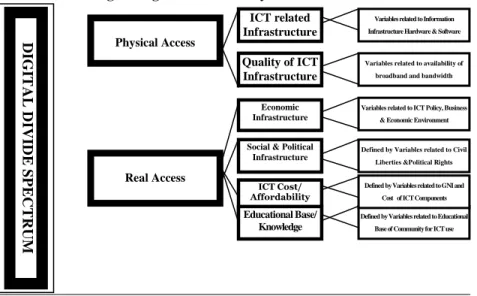
Figure 1 below throws light on the digital divide spectrum.
Fig. 1. Digital Divide Analytical Framework
A glance at Figure 1 shows the presence of two sets of physical and real factors
which influence countries access to ICT. We use this framework to place different
information poor countries along Digital Access Index (DAI) ranking scale across
countries. This is shown in Table 1.
Physical Access
Quality of ICT Infrastructure
Economic Infrastructure
Social & Political Infrastructure ICT Cost/ Affordability Educational Base/ Knowledge Real Access
D
IG
IT
A
L
D
IV
ID
E
S
P
E
C
T
R
U
M
Variables related to availability of broadband and bandwidth
Variables related to ICT Policy, Business & Economic Environment
Defined by Variables related to Educational Base of Community for ICT use Defined by Variables related to GNI and
Cost of ICT Components Defined by Variables related to Civil
Liberties &Political Rights ICT related
Infrastructure
Variables related to Information Infrastructure Hardware & Software
Table 1
‘Information-poor Countries’ included in Analysis with Digital Access Index (DAI) Score
Less than or Equal to 0.37 out of 1
African Countries
Country Score Country Score Country Score Country Score Algeria 0.37 Djibouti 0.15 Madagascar 0.15 Sudan 0.13
Benin 0.12 Egypt 0.40 Malawi 0.15 Tanzania 0.15
Burkina Faso 0.08 Equatorial Guinea 0.20 Mali 0.09 Uganda 0.17 Burundi 0.10 Ethiopia 0.10 Mauritania 0.14 Zambia 0.17 Cameroon 0.16 Gambia 0.13 Mozambique 0.12 Zimbabwe 0.29 Central African Rep. 0.10 Ghana 0.16 Nepal 0.19
Chad 0.10 Guinea 0.10 Niger 0.04
Comoros 0.13 Guinea-Bissau 0.10 Nigeria 0.15
Congo 0.17 Kenya 0.19 Rwanda 0.15
Côte d'Ivoire 0.13 Lesotho 0.19 Senegal 0.14
Asian Countries Armenia 0.30 Pakistan 0.24 Azerbaijan 0.24 Syria 0.28 Bangladesh 0.18 Tajikistan 0.21 Bhutan 0.13 Turkmenistan 0.37 Cambodia 0.17 Uzbekistan 0.31 Georgia 0.37 Viet Nam 0.31
India 0.32 Indonesia 0.34 Kyrgyzstan 0.32 Lao P.D.R. 0.15 American Countries Haiti 0.15 Honduras 0.29 Nicaragua 0.19 European Country Moldova 0.37 Oceania
Papua New Guinea 0.26
Source: International Telecommunication Indicators 1998–2003.
Note: Scores are on a scale of 0 to 1 where 1 = highest access and 0 = lowest score. DAI values are shown to
hundreds of a decimal point. Countries with the same DAI value are ranked by thousands of a decimal point by ITI.
Because of considerable differences in physical and real access across countries, it
would be important to estimate the relative significance of various determinants of digital
divide. This should help in identifying the factors that shape the environment in which
modern ICT get diffused into the economies and what makes particular applications and
services useful, especially in the case of information poor countries.
II. METHODOLOGY
Using Gompertz Technology Diffusion model, this study estimates factors that are
responsible for the slow technology diffusion process in the information poor countries. This
kind of model was used by [Stoneman (1983)] for modeling spread of computers. The
specifications of the model are as follows:
T
itis an indicator of Information and Communication Technology (ICT) in a
country
iin year ‘t’ and
T be its post diffusion or equilibrium level or value (
i*T or
i*equilibrium level of ICT in country ‘i’ will be a function of exogenous demand side
variables).
Most of the models of technology of technology adoption assume that over time
it
T tends to
T along an S-shaped path i.e. this model assumes that spread between the
i*value of the ICT indicator in year ‘t’ and its value in year ‘t–1 ‘is a function of the spread
between a target value (or post diffusion value)
T
*and value in year t–1.
1 *
1
(ln
ln
ln
ln
T
it−
T
it−=
α
iT
i−
T
it−)
…
…
…
(1)
Where
α
iis the speed of adjustment taken to be constant in our analysis.
Moreover we assume that most of the explanatory variables change over time. We
may say that T
i*is time dependent and express it as:
it it i io it
Y
Z
T
=
β
+
β
ln
+
γ′
ln
1 *…
…
…
…
(2)
where post diffusion level of technology is a function of
Y
it, i.e. the national income of
the country ‘i’ in year ‘t’ and
Z
it, which is the vector of other possible variables
describing the demand or supply conditions e.g. infrastructure, openness to international
trade, economic freedom, knowledge or educational base of country ‘
i
’ in year ‘t’.
The estimable equation is obtained by inserting (2) in to (1).
ε
+
α
−
γ′
α
+
β
α
+
β
α
=
−
ln
−1 1ln
ln
−1ln
T
itT
it i o i iY
it iZ
it iT
it…
(3)
where
ε
is a white noise i.e. where the error terms are uncorrelated with zero mean and
σ
2variance.
III. DESCRIPTION OF THE VARIABLES
AND DATA SOURCES
The estimates of Gompertz Technology Diffusion model are reported in Section
IV of this research paper for four ICT indicators i.e. cellular mobile subscribers per 100
inhabitants, personal computers per 100 inhabitants, internet hosts per 10,000 inhabitants,
and internet users per 10,000 inhabitants. The data on these variables are for the period
1998–2003. The first three variables are taken as indicators of the state of the ICT
infrastructure, so they will help to study the diffusion process of ICT infrastructure, while
the fourth indicator, internet users, measures access to the internet. It is worth noting that
the difference between communication technology and information technology has
become blurred. For example, mobile phones are primarily tools of communication, but
with the advent of wireless applications, consumers can access data and information via
cellular phone. The internet is mainly an indicator of information technology, yet, many
internet users communicate with other users from their personal computers. Thus, all
three information indicators: internet hosts, internet users and personal computers have
also become tools of communication.
The first explanatory variable in estimable equation is Gross National Income
(GNI) per capita measured in international dollars. This variable is included to capture
affordability. GNI is converted to international dollars using purchasing power parity
rates. An international dollar has the same purchasing power over GNI as a U.S. dollar
has in United States. Purchasing power parity (PPP) rates provide a standard measure
allowing comparison of real price levels between countries, just as conventional price
indices allow comparison of real values over time. Data for GNI is taken from world
development indicators database, 2003. Historical data from developed nations indicate
that adoption and diffusion of ICT is highly correlated with income. Countries with
higher per capita income invest more in research and development and, hence, are more
able to discover and use advanced information technologies. Prior to the spread of the
internet, fixed telephones Hardy (1980) and telephone infrastructure Norton (1992) were
used to model communication effects on economic growth. Since mid-1990s however
other indicators of ICT began to be emphasised and more robust econometric tests are
being employed. In general, the association between ICT and income is expected to be
strong and positive.
The first variable in vector ‘Z’ is education. Low levels of education and literacy
are expected to hinder both real accessibility and dissemination of ICT. Since the use of
knowledge-based products requires a basic level of literacy, we would expect to see
higher education causing higher ICT use and its consumption. Diffusion of ICT may
require higher or tertiary education, and scientific research. Kiiski and Pohjola (2002)
showed that, in a sample including developing and OECD countries, tertiary education
had a positive and statistically significant influence on ICT diffusion. In contrast,
Hargittai (1999), and Kiiski and Pohjola (2002) have found that in the case of industrial
countries, education did not seem to influence ICT diffusion. These conflicting results
suggest that this can be an important explanatory variable and need to be empirically
tested. Also, in a sample that included both developed and developing countries, Norris
(2000) shows that education did not have a significant influence on ICT diffusion.
Consistent data on tertiary education are not available for all the countries in the sample.
This study uses adult literacy and the education index instead. This index is also used by
UNDP in generating the human development index (HDI).
This study uses three freedom indicators, which in fact represent the economic,
social and political infrastructure in the economy that create an environment conducive
for the spread of modern technologies i.e. ICT. The first indicator is the index of
economic freedom published by the Heritage Foundation. This index is an average score
of 10 indexes measured on a one-to-five scale, with 5 indicating the highest level of
economic freedom. The 10 indexes assess trade policy, monetary policy, capital flows
and foreign investment, wage and price control, banking and financial regulations,
intellectual property and black markets, property rights, regulation, transparency and
bureaucracy, government intervention in the economy, and the fiscal burden of the
government (taxes and government expenditure). At least in cross-sectional analyses,
greater (higher index) economic freedom is expected to be associated with higher GDP,
higher levels of education or literacy rates, and stronger ICT indicators.
The other freedom indicators are the index of political rights and the index of civil
liberties. By including these indices, we follow the work of Norris (2000) and try to
explore whether countries with higher levels of civil and political freedom could also
have greater ICT diffusion. These two indexes are measured on a one-to-seven scale,
with 7 indicating the highest degree of freedom. The correlation between these indices
and income is expected to be positive.
The other variables included in vector ‘Z’ are trade policy indicators. Openness to
international trade is one of two trade policy indicators used in this study. It is measured
as the ratio of the sum of exports and imports to GDP in world prices. The role of trade
policy is important. For example, Jussawalla (1999) claims that East Asian nations
fostered ICT production through openness and export-oriented investments. Both exports
and imports may offer a channel for increased adoption and diffusion of ICT. Some
imported goods and services require the existence of specific ICT to be operational. In
some cases, ICT may be embodied in the imported products. Similarly, to enhance their
exports, firms find it increasingly necessary to make use of ICT. Mobile phones, internet
use, computerized operations are all tools used to improve the efficiency of conducting
business in the global market. These tools tend to reduce the level of imperfect
information and incomplete markets. As argued by Stiglitz (1989), imperfect information
results in less trade. Thus, we would expect a positive and significant correlation between
ICT and openness to international trade. The second international trade variable is
foreign direct investment (FDI). Inward FDI usually allows recipient economies’ access
to advanced technologies, managerial skills and higher level of know-how. Transnational
corporations tend to standardise their operations around the world and train workers in
host countries according to their skill standards, including the use of ICT. Moreover, FDI
may replace ICT as a medium for information and knowledge diffusion in cases where
information and knowledge associated with ICT have a proprietary feature. As
emphasised by Bedi (1999), ‘...in such cases, the role of ICT in enabling access is
limited, and other measures such as trade and foreign direct investment may be
appropriate conduits for disseminating information and knowledge’. Thus, it is
reasonable to expect higher inward FDI to contribute to ICT diffusion.
Other variables which have been emphasised in the literature as potential
determinants of ICT diffusion include knowledge of English language Kiiski and Pohjola
(2002), income distribution [Bedi (1999); Hargittai (1999) and Pohjola (2000)], and
competition in the telecommunication industry [Hargittai (1999); Jayakar (1999); and
Kiiski and Pohjola (2002)]. The empirical evidence on the impact of these variables,
particularly in developing countries, is ambiguous or more in support of their
insignificance. So, they are not included as explanatory variables.
IV. EMPIRICAL RESULTS
The results from the linear estimation of Gompertz Technology Diffusion model
exploring the factors that influence ICT diffusion are reported in Tables 2–5. To test the
robustness of the model, four equations were estimated. As mentioned earlier, the use of
ICT in an economy can be seen through four indicators i.e. internet users, internet hosts,
number of personal computers and mobile phone subscribers. Table 2 displays the
statistical results from estimating the model with internet use as the relevant ICT variable.
Table 3 reports the findings when personal computers were the relevant ICT indicator.
Tables 4 and 5 report the results associated with internet hosts, and mobile phones,
respectively.
Equations /columns (1) and (2) in each table differ in terms of right hand side
variables because in each table (except internet hosts) the first equation reports the
findings about those right hand side variables selected as a result of stepwise model
selection procedure from all entered variables. Here one thing is worth mentioning that
the selected model in above mentioned three cases as a result of stepwise
selection
Table 2
Estimates of the Gompertz Technology Diffusion Model
Cross-section Results for Countries with DRI Score Less than or Equal to 0.4
Dependent Variable (Internet Users) ln U2 – ln U98
(1) (2)
Speed of Diffusion 0.718*** 0.780***
(0.070) (0.072)
Constant αβ0 –3.918** –4.267**
(1.943) (1.947)
GNI per Capita αβ1 0.549*** 0.491***
(0.200) (0.202) Adult Literacy
Secondary and Tertiary Education
Education Index 1.097** (0.573) Civil Liberties 0.06347 (0.057) Economic Freedom 0.08149 (0.071) Foreign Direct Investment
Openness to International Trade 0.567*** 0.383**
(0.172) (0.185)
Personal Computers -98 0.163*
(0.097)
Internet Access Cost –0.295*** –0.230**
(0.109) (0.113) F-Test 32.163*** 18.450*** R 0.879 0.902 R2 0.772 0.813 Adjusted R2 0.748 0.769 Number of Observations 42 42
Note: Standard errors are in parentheses.* =Significant at (0.10), i.e., at 10 percent, **=Significant at (0.05),
Table 3
Estimates of the Gompertz Technology Diffusion Model
Cross-section Results for Countries with DRI Score Less than or Equal to 0.4
Dependent Variable (Personal Computers) lnPCs02−lnPCs98
(1) (2) Speed of Diffusion α 0.810*** (0.115) 0.804*** (0.118) Constant αβ0 –4.734*** (1.526) –3.991*** (1.507)
GNI per Capita αβ0 0.561***
(0.184) 0.537*** (0.189 Adult Literacy 0.01483*** (0.005) 0.01311*** (0.005) Secondary and Tertiary Education
Education Index Political Rights Civil Liberties
Economic Freedom 0.155**
(0.088) Foreign Direct Investment
Openness to International Trade
Personal Computers -98 0.334***
(0.087) Internet Access Cost
F- Test 13.935*** 15.748***
R 0.812 0.794
R2 0.659 0.630
Adjusted R2 0.612 0.600
Number of Observations 41 41
Note: Standard errors are in parentheses.* =Significant at (0.10), i.e., at 10 percent, **=Significant at (0.05),
i.e., at 5 percent and ***=Significant at (0.o1, i.e., at 1 percent.
Table 4
Estimates of the Gompertz Technology Diffusion Model
Cross-section Results for Countries with DRI Scores Less than or Equal to 0.4
Dependent Variable Internet Hosts (lnH02−lnH98)
Speed of Diffusion α 0.379***
(0.139)
Constant αβ0 –6.659***
(2.484)
GNI per Capita αβ1 0.889***
(0.291) Economic Freedom 0.295*** (0.166) F- Test 4.068*** R 0.508 R2 0.259 Adjusted R2 0.200 Number of Observations 38
Note: Standard errors are in parentheses.* =Significant at (0.10), i.e., at 10 percent, **=Significant at (0.05),
Table 5
Estimates of the Gompertz Technology Diffusion Model
Cross-section Results for Countries with Low DRI Scores Less than or Equal to 0.4
Dependent Variable Mobile Phones (lnM02−lnM98)
(1) (2) Speed of Diffusionα –0.330 (0.908) –1.958 (1.768) Constant αβo 0.400*** (0.086) 0.455*** (0.099)
GNI per Capita αβ1
0.217 (0.203)
Openness to International Trade 0.573**
(0.264) 0.549** (0.265 F- Test 11.677*** 8.191*** R 0.560 0.574 2 R 0.314 0.330 AdjustedR 2 0.287 0.289 Number of Observations 53 53
Note: Standard errors are in parentheses.* =Significant at (0.10), i.e., at 10 percent, **=Significant at (0.05), i.e., at
5 percent and ***=Significant at (0.01), i.e., at 1 percent. (This should be cleared.)
procedure is also consistent with the model selected through forward selection procedure
i.e. the both methods select the same explanatory variables. Equation (2) provides the
estimates of the model including those explanatory variables selected as a result of
backward model selection procedure. Moreover all the four estimated equations satisfy
the basic assumptions of linear models as all have been duly checked (checking includes
co-linearity diagnostic through VIF(variance inflate factor), and autocorrelation through
Durbin-Watson test.
The underlying assumption here is that the diffusion process is the same in all countries
i.e. the parameter values of Gompertz Technology Diffusion model take the same value for all
‘i’ or countries, moreover the speed of diffusion is assumed to be constant over time. However
it would be more appropriate to make it time dependent as suggested by Kiiski and Pohjola
(2002), but in order to make the analysis simple it is assumed so.
Table 2 displays the statistical results of internet use as the relevant ICT indicator.
The empirical results indicate that in case of internet users both of the equations show
that model adequately captures the diffusion process since the speed of diffusion or
adjustment (coefficient on the lagged value of this variable) is highly significant in both
cases. Speed of diffusion is 0.718 in case of Equation (1) and 0.780 in case of Equation
(2) and in both cases significant at 99 percent confidence level. Moreover income,
education, openness to international trade, stock of personal computers and internet
access cost turn out to be highly significant i.e. at 99 percent confidence level in both
equations. However civil liberties and economic freedom come up with correct signs, but
are not as significant explanatory variables. If we make a comparison of two selected
models, the model selected through backward selection procedure (Equation 2) is a little
better than one selected through stepwise procedure (Equation 1) as it slightly improves
the value of adjusted R-squared i.e. from 0.75 in Equation (1) to 0.77 in Equation (2).
Table 3 displays the results of the model where ICT is represented by the number
of personal computers per 100 inhabitants. Again in this case the speed of diffusion (
α
) is
highly significant in both the selected models as it is 0.180 in case of Equation (1), and
0.804 in the case of Equation (2) and is significant at 99 percent confidence level. In the
case of internet users income, adult literacy, economic freedom, internet users turn out to
be highly significant at 99 percent confidence level. Moreover out of the two models
selected through two different selection procedures, Equation (1) is more appropriate i.e.
selected through stepwise and forward selection procedures as it gives slightly improved
value of R-square (i.e. 0.612) as compared to 0.6 in the case of Equation (1).
Table 4 displays the results when internet hosts was the ICT indicator in an
economy or dependent variable. Although the speed of diffusion is significant at 99
percent confidence level in the selected model but the value of R-square is very low.
However the results suggest that income and economic freedom are other important
significant explanatory variables that too are significant at 99 percent confidence level.
Moreover model fails to provide support for the influence of education or literacy on
internet host diffusion.
Finally, Table 5 reports the findings when mobile phone is an indicator of ICT.
Again in this case speed of diffusion adjustment is significant at 99 percent level of
confidence, but model captures weakly the diffusion process because here again the value
of adjusted R-square is low. Moreover, this is the only ICT indicator where income does
not come out to be significant. The only significant variable is openness to international
trade which is significant at 95 percent level of confidence.
In summary, the empirical results provide support for the role of income as a
major determinant of ICT diffusion because it comes out to be significant at 99 percent
confidence level in the case of internet use, internet hosts and personal computers. This is
consistent with the conclusions in Niininen (2001), Hargittai (1999), Quah (2001), Norris
(2000), and Kiiski and Pohjola (2002). Thus showing that adoption and diffusion of
modern information and communication technology is highly correlated with income
level. Countries with higher per capita income invest more in research and development
therefore are able to acquire and use advanced information technologies.
In addition, education and literacy, especially adult literacy, appears to have direct
impact on dissemination and personal computers, thus showing that education influences
technology adoption. However we do not find evidence that education is a significant
explanatory variable of mobile phone use. This may be due to the reason that use of
mobile phones does not need as much educational or training skills as it is required in
case of computer or internet use. Undoubtedly education must have a role in diffusion of
information and communication technologies for at least two reasons. Firstly, education
directly contributes to basic literacy and reading and writing skills which are essential in
use of modern ICT as knowledge-based products. More educated people are likely to be
quicker to adopt new innovations than people with less education. Secondly, based on the
facts that the early users of the internet were people working in higher education and
research academic institutions may play an important role in spreading of ICT. However,
our findings that education is important in technology dissemination is consistent with the
earlier findings of Barrow and Lee (2000) and Duncombe (2000), Caselli and Coleman
(2001) and Wong (2001) and is in sharp contrast with the findings of Hargittai (1999) and
Norris(2000), as they concluded that education is not important in technology
dissemination.
It is surprising to find that there is no support for the influence of FDI on ICT
diffusion. As mentioned earlier, FDI is an important channel through which technology
enters a country and gets disseminated. Perhaps, there is a threshold that most developing
countries in the sample have not yet reached or that FDI in the countries under study
targets labour-intensive sectors that require negligible levels of ICT. In fact, since FDI is
accounted for in the index of economic freedom, the findings do not necessarily imply
that this variable has no impact on ICT diffusion.
Moreover, the estimation yields values for the speed of diffusion adjustment (
α
)
that are consistent with the increased adoption of ICT. In a cross-sectional model
including 75 developed and developing countries, Kiiski and Pohjola (2002) report values
for the speed of diffusion that range from 0.186 to 0.527. However the empirical results
in this research paper find that the speed of diffusion can vary from 0.400 to 0.455 for
mobile phones, from 0.804 to 0.810 for personal computers and from 0.718 to 0.780 for
internet use. However, given that the RHS variables are not the same, it is difficult to
make a more meaningful comparison of the results derived in the two studies.
V. SUMMARY
This study has six important findings. First, income is a major determinant of ICT
diffusion. Income influences both ICT infrastructure as it is shown to cause higher
internet use, use of personal computers and internet hosts and access to ICT since it has
an effect on internet use. Second, there is a positive impact of government trade policies
on ICT. Openness fosters the adopting and adapting of technology. Third, at least in the
case of two ICT indicators (mobile phones and internet hosts) political rights and civil
liberties have a strong influence. Fourth, there is evidence supporting that education
(literacy) has a positive impact on ICT diffusion. Moreover, the above conclusions
highlight the role of demand in the market for knowledge-based products, and are
consistent with the propositions in Quah (2001). It is important to note that for mobile
phones openness to international trade and for internet hosts, economic freedom are
important factors, while GNI does not seem to have an effect on mobile phones.
In addition, the speed of diffusion in the case of Internet users and Personal
computers is shown to be much higher than in the case of internet hosts and mobile
phones. This finding may reflect the recent trend in large cities where cyber cafés are
mushrooming. However, it is feared that a faster diffusion of internet users (relative to
internet hosts) may lead to saturation and poor access to information. The present
findings seem to provide elements for hope and concern at the same time. On the one
hand, there is evidence through earlier researches that ICT enhances income, and hence,
it can provide an additional source of economic growth. Due to its pervasive nature, ICT
diffusion may allow a leapfrogging process to occur. On the other hand, the finding that
trade policies and social development variables are important determinants of ICT
diffusion, as well as economic development, implies that countries with poor
performance in these variables may sink even further in the information-poor and
non-communicating side of the digital divide.
Notes: Information-poor countries considered in this research paper for the
purpose of analysis are low-access economies, i.e., the countries have a score value of
less than 0.37 according to the Digital Access Index (DAI) of ITU, 2002-03. A complete
list of these countries along with their scores can be seen in Table 1. Countries in this
category are the poorest in the world and most are LDCs. They have a minimal level of
access to the information society. The Digital Access Index (DAI) measures the overall
ability of individuals in a country to access and use information and communication
technologies. The DAI combines eight variables, covering five areas, to provide an
overall country score. The results of the Index point to potential stumbling blocks in ICT
adoption.
APPENDIX
Mathematical Derivation of Results
Details of Model Selection Procedure When Internet Users Are the Relevant
n ICT Indicator
Variables Entered / Removed (a)
Model Variables
Entered
Variables Removed
Method
1 LN-USERS-98 . Stepwise (Criteria: Probability-of-F-to-enter <=
.050, Probability-of-F-to-remove >= .100).
2 LN-Avg GNI . Stepwise (Criteria: Probability-of-F-to-enter <=
.050, Probability-of-F-to-remove >= .100).
3 ln-OPEN . Stepwise (Criteria: Probability-of-F-to-enter <=
.050, Probability-of-F-to-remove >= .100).
4 ln_internet tariff . Stepwise (Criteria: Probability-of-F-to-enter <=
.050, Probability-of-F-to-remove >= .100). (a) Dependent Variable: USERs (LN02-98).
Model Summary
Model R R Square Adjusted R Square Std. Error of the Estimate
1 .525(a) .276 .258 .89848688218940
2 .818(b) .669 .652 .61554392824644
3 .853(c) .728 .707 .56438514885354
4 .879(d) .772 .748 .52380532999675
(a) Predictors: (Constant), LN-USERS-98.
(b) Predictors: (Constant), LN-USERS-98, LN-Avg GNI.
(c) Predictors: (Constant), LN-USERS-98, LN-Avg GNI, ln-OPEN.
(d) Predictors: (Constant), LN-USERS-98, LN-Avg GNI, ln-OPEN, ln_internet tariff.
ANOVA(e)
Model
Sum of Squares
df
Mean Square
F
Sig.
Regression
12.626
1
12.626
15.640
.000(a)
Residual
33.098
41
.807
1
Total
45.724
42
Regression
30.569
2
15.284
40.339
.000(b)
Residual
15.156
40
.379
2
Total
45.724
42
Regression
33.302
3
11.101
34.849
.000(c)
Residual
12.423
39
.319
3
Total
45.724
42
Regression
35.298
4
8.825
32.163
.000(d)
Residual
10.426
38
.274
4
Total
45.724
42
(a) Predictors: (Constant), LN-USERS-98.
(b) Predictors: (Constant), LN-USERS-98, LN-Avg GNI. (c) Predictors: (Constant), LN-USERS-98, LN-Avg GNI, ln-OPEN.
(d) Predictors: (Constant), LN-USERS-98, LN-Avg GNI, ln-OPEN, ln_internet tariff. (e) Dependent Variable: USERs (LN02-98).
Coefficients (a) Unstandardised
Coefficients
Standardised Coefficients
Model B Std. Error Beta t Sig.
(Constant) 1.708 .351 4.869 .000 1 LN-USERS-98 –.411 .104 –.525 –3.955 .000 (Constant) –6.780 1.257 –5.396 .000 LN-USERS-98 –.671 .081 –.858 –8.323 .000 2 LN-Avg GNI 1.022 .149 .709 6.882 .000 (Constant) –8.138 1.242 –6.553 .000 LN-USERS-98 –.679 .074 –.868 –9.186 .000 LN-Avg GNI .963 .138 .668 6.997 .000 3 ln-OPEN .541 .185 .249 2.929 .006 (Constant) –3.918 1.943 –2.016 .051 LN-USERS-98 –.718 .070 –.918 –10.241 .000 LN-Avg GNI .549 .200 .381 2.745 .009 ln-OPEN .567 .172 .261 3.307 .002 4 ln_internet tariff –.295 .109 –.376 –2.698 .010
(a) Dependent Variable: USERs (LN02-98).
Excluded Variables (e)
Collinearity Statistics
Model Beta In t Sig.
Partial
Correlation Tolerance
LN-PCs-98 .533(a) 4.388 .000 .570 .827
LN-Avg GNI .709(a) 6.882 .000 .736 .781
CL-c –.196(a) –1.494 .143 –.230 1.000
ECF-c –.079(a) –.589 .559 –.093 .991
ln-fdi .378(a) 2.996 .005 .428 .928
ln-OPEN .336(a) 2.693 .010 .392 .985
ln_internet tariff –.694(a) –6.423 .000 –.713 .762
1
Education index .520(a) 4.212 .000 .554 .823
LN-PCs-98 .274(b) 2.592 .013 .383 .651 CL-c .048(b) .487 .629 .078 .857 ECF-c .011(b) .117 .908 .019 .970 ln-fdi .120(b) 1.147 .259 .181 .755 ln-OPEN .249(b) 2.929 .006 .425 .964 ln_internet tariff –.349(b) –2.240 .031 –.338 .311 2 Education index .265(b) 2.520 .016 .374 .660 LN-PCs-98 .225(c) 2.242 .031 .342 .628 CL-c .037(c) .410 .684 .066 .855 ECF-c .039(c) .451 .655 .073 .959 ln-fdi .124(c) 1.299 .202 .206 .755 ln_internet tariff –.376(c) –2.698 .010 –.401 .310 3 Education index .177(c) 1.632 .111 .256 .567 LN-PCs-98 .160(d) 1.588 .121 .253 .571 CL-c .030(d) .357 .723 .059 .854 ECF-c .075(d) .931 .358 .151 .934 ln-fdi .065(d) .693 .493 .113 .702 4 Education index .148(d) 1.448 .156 .232 .560
(a) Predictors in the Model: (Constant), LN-USERS-98.
(b) Predictors in the Model: (Constant), LN-USERS-98, LN-Avg GNI. (c) Predictors in the Model: (Constant), LN-USERS-98, LN-Avg GNI, ln-OPEN.
(d) Predictors in the Model: (Constant), LN-USERS-98, LN-Avg GNI, ln-OPEN, ln_internet tariff. (e) Dependent Variable: USERs (LN02-98).
Variables Entered / Removed (b)
Model Variables Entered
Variables
Removed Method
1 Education index, ECF-c, CL-c, ln-fdi,
ln-OPEN, LN-PCs-98, LN-USERS-98, LN-Avg GNI, ln_internet tariff(a)
. Enter
2 . ln-fdi Backward (criterion: Probability of
F-to-remove >= .100).
3 . CL-c Backward (criterion: Probability of
F-to-remove >= .100).
4 . ECF-c Backward (criterion: Probability of
F-to-remove >= .100).
5 . Education
Index
Backward (criterion: Probability of F-to-remove >= .100).
6 . LN-PCs-98 Backward (criterion: Probability of
F-to-remove >= .100). (a) All requested variables entered.
(b) Dependent Variable: USERs (LN02-98).
Model Summary
Model R R-Square Adjusted R Square Std. Error of the Estimate
1 .904(a) .816 .766 .50435849610735 2 .902(b) .813 .769 .50178824801358 3 .898(c) .806 .767 .50357515882357 4 .894(d) .798 .765 .50591094508067 5 .887(e) .787 .758 .51361817779732 6 .879(f) .772 .748 .52380532999675
(a) Predictors: (Constant), Education index, ECF-c, CL-c, ln-fdi, ln-OPEN, PCs-98, USERS-98, LN-Avg GNI, ln_internet tariff.
(b) Predictors: (Constant), Education index, ECF-c, CL-c, ln-OPEN, LN-PCs-98, LN-USERS-98, LN-Avg GNI, ln_internet tariff.
(c) Predictors: (Constant), Education index, ECF-c, ln-OPEN, LN-PCs-98, LN-USERS-98, LN-Avg GNI, ln_internet tariff.
(d) Predictors: (Constant), Education index, ln-OPEN, LN-PCs-98, LN-USERS-98, LN-Avg GNI, ln_internet tariff.
(e) Predictors: (Constant), ln-OPEN, LN-PCs-98, LN-USERS-98, LN-Avg GNI, ln_internet tariff. (f) Predictors: (Constant), ln-OPEN, LN-USERS-98, LN-Avg GNI, ln_internet tariff.
ANOVA (g)
Model
Sum of
Squares
df
Mean
Square
F
Sig.
Regression
37.330
9
4.148
16.306
.000(a)
Residual
8.394
33
.254
1
Total
45.724
42
Regression
37.163
8
4.645
18.450
.000(b)
Residual
8.561
34
.252
2
Total
45.724
42
Regression
36.849
7
5.264
20.759
.000(c)
Residual
8.876
35
.254
3
Total
45.724
42
Regression
36.510
6
6.085
23.775
.000(d)
Residual
9.214
36
.256
4
Total
45.724
42
Regression
35.964
5
7.193
27.265
.000(e)
Residual
9.761
37
.264
5
Total
45.724
42
Regression
35.298
4
8.825
32.163
.000(f)
Residual
10.426
38
.274
6
Total
45.724
42
(a) Predictors: (Constant), Education index, ECF-c, CL-c, ln-fdi, ln-OPEN, PCs-98, USERS-98, LN-Avg GNI, ln_internet tariff.
(b) Predictors: (Constant), Education index, ECF-c, CL-c, ln-OPEN, LN-PCs-98, LN-USERS-98, LN-Avg GNI, ln_internet tariff.
(c) Predictors: (Constant), Education index, ECF-c, ln-OPEN, LN-PCs-98, LN-USERS-98, LN-Avg GNI, ln_internet tariff.
(d) Predictors: (Constant), Education index, ln-OPEN, LN-PCs-98, LN-USERS-98, LN-Avg GNI, ln_internet tariff.
(e) Predictors: (Constant), ln-OPEN, LN-PCs-98, LN-USERS-98, LN-Avg GNI, ln_internet tariff. (f) Predictors: (Constant), ln-OPEN, LN-USERS-98, LN-Avg GNI, ln_internet tariff.
Coefficients (a)
Unstandardised Coefficients
Standardised Coefficients
Model B Std. Error Beta t Sig.
(Constant) -4.366 1.961 –2.227 .033 LN-PCs-98 .183 .101 .188 1.811 .079 LN-Avg GNI .472 .204 .327 2.309 .027 CL-c 5.910E-02 .057 .088 1.031 .310 ECF-c 7.594E-02 .071 .085 1.066 .294 ln-fdi 4.281E-02 .053 .075 .809 .424 ln-OPEN .383 .186 .176 2.063 .047 ln_internet tariff –.199 .119 –.254 –1.668 .105 LN-USERS-98 –.779 .072 –.995 –10.755 .000 1 Education index 1.034 .581 .190 1.781 .084 (Constant) –4.267 1.947 –2.192 .035 LN-PCs-98 .163 .097 .168 1.676 .103 LN-Avg GNI .491 .202 .341 2.433 .020 CL-c 6.347E-02 .057 .095 1.118 .271 ECF-c 8.149E-02 .071 .091 1.155 .256 ln-OPEN .383 .185 .177 2.076 .046 ln_internet tariff –.230 .113 –.293 –2.042 .049 LN-USERS-98 –.780 .072 –.997 –10.828 .000 2 Education index 1.097 .573 .202 1.917 .064 (Constant) –3.680 1.881 –1.956 .058 LN-PCs-98 .144 .096 .148 1.495 .144 LN-Avg GNI .443 .198 .307 2.238 .032 ECF-c 8.180E-02 .071 .091 1.155 .256 ln-OPEN .421 .182 .194 2.311 .027 ln_internet tariff –.244 .112 –.312 –2.178 .036 LN-USERS-98 –.758 .070 –.969 –10.898 .000 3 Education index .925 .553 .170 1.671 .104 (Constant) –3.531 1.886 –1.873 .069 LN-PCs-98 .154 .096 .158 1.597 .119 LN-Avg GNI .460 .198 .319 2.323 .026 ln-OPEN .410 .183 .189 2.242 .031 ln_internet tariff –.224 .111 –.285 –2.010 .052 LN-USERS-98 –.754 .070 –.964 –10.806 .000 4 Education index .796 .544 .146 1.461 .153 (Constant) –3.670 1.912 –1.919 .063 LN-PCs-98 .155 .098 .160 1.588 .121 LN-Avg GNI .521 .197 .361 2.648 .012 ln-OPEN .509 .172 .235 2.958 .005 ln_internet tariff –.241 .112 –.307 –2.142 .039 5 LN-USERS-98 –.735 .070 –.939 –10.564 .000 (Constant) –3.918 1.943 –2.016 .051 LN-Avg GNI .549 .200 .381 2.745 .009 ln-OPEN .567 .172 .261 3.307 .002 ln_internet tariff –.295 .109 –.376 –2.698 .010 6 LN-USERS-98 –.718 .070 –.918 –10.241 .000
Excluded Variables (f)
Collinearity Statistics
Model Beta In t Sig.
Partial Correlation Tolerance 2 ln-fdi .075(a) .809 .424 .139 .643 ln-fdi .084(b) .909 .370 .154 .648 3 CL-c .095(b) 1.118 .271 .188 .765 ln-fdi .094(c) 1.014 .317 .169 .655 CL-c .095(c) 1.117 .272 .186 .765 4 ECF-c .091(c) 1.155 .256 .192 .890 ln-fdi .106(d) 1.136 .264 .186 .661 CL-c .055(d) .652 .518 .108 .828 ECF-c .065(d) .815 .420 .135 .927 5 Education index .146(d) 1.461 .153 .237 .560 ln-fdi .065(e) .693 .493 .113 .702 CL-c .030(e) .357 .723 .059 .854 ECF-c .075(e) .931 .358 .151 .934
Education index .148(e) 1.448 .156 .232 .560
6
LN-PCs-98 .160(e) 1.588 .121 .253 .571
(a) Predictors in the Model: (Constant), Education index, ECF-c, CL-c, ln-OPEN, LN-PCs-98, LN-USERS-98, LN-Avg GNI, ln_internet tariff.
(b) Predictors in the Model: (Constant), Education index, ECF-c, ln-OPEN, PCs-98, USERS-98, LN-Avg GNI, ln_internet tariff.
(c) Predictors in the Model: (Constant), Education index, ln-OPEN, LN-PCs-98, LN-USERS-98, LN-Avg GNI, ln_internet tariff.
(d) Predictors in the Model: (Constant), ln-OPEN, LN-PCs-98, LN-USERS-98, LN-Avg GNI, ln_internet tariff. (e) Predictors in the Model: (Constant), ln-OPEN, LN-USERS-98, LN-Avg GNI, ln_internet tariff.
(f) Dependent Variable: USERs (LN02-98).
*Details of Model Selection Procedure When Personal Computers Are the Relevant n
ICT Indicator
Variables Entered / Removed (b)
Model Variables Entered
Variables
Removed Method
1 LN-USERS-98, CL-c, ln-OPEN, ECF-c,
ln-fdi, PCs-98, Adult literacy, LN-Avg GNI, ln_internet tariff(a)
. Enter
2 . ln-OPEN Backward (criterion: Probability of
F-to-remove >= .100).
3 . CL-c Backward (criterion: Probability of
F-to-remove >= .100).
4 . ln_internet
tariff
Backward (criterion: Probability of F-to-remove >= .100).
5 . ln-fdi Backward (criterion: Probability of
F-to-remove >= .100). (a) All requested variables entered.
Model Summary
Model
R
R Square
Adjusted R Square
Std. Error of the Estimate
1
.816(a)
.666
.573
.66636793146906
2
.816(b)
.666
.584
.65712443521351
3
.815(c)
.664
.595
.64888374965131
4
.814(d)
.662
.604
.64129107982249
5
.812(e)
.659
.612
.63495693384361
(a) Predictors: (Constant), LN-USERS-98, CL-c, ln-OPEN, ECF-c, ln-fdi, LN-PCs-98, Adult literacy, LN-Avg GNI, ln_internet tariff.
(b) Predictors: (Constant), LN-USERS-98, CL-c, ECF-c, ln-fdi, LN-PCs-98, Adult literacy, LN-Avg GNI, ln_internet tariff.
(c) Predictors: (Constant), LN-USERS-98, ECF-c, ln-fdi, LN-PCs-98, Adult literacy, LN-Avg GNI, ln_internet tariff.
(d) Predictors: (Constant), LN-USERS-98, ECF-c, ln-fdi, LN-PCs-98, Adult literacy, LN-Avg GNI . (e) Predictors: (Constant), LN-USERS-98, ECF-c, LN-PCs-98, Adult literacy, LN-Avg GNI.
ANOVA (f)
Model
Sum of
Squares
df
Mean
Square
F
Sig.
Regression
28.396
9
3.155
7.105
.000(a)
Residual
14.209
32
.444
1
Total
42.605
41
Regression
28.355
8
3.544
8.208
.000(b)
Residual
14.250
33
.432
2
Total
42.605
41
Regression
28.290
7
4.041
9.598
.000(c)
Residual
14.316
34
.421
3
Total
42.605
41
Regression
28.211
6
4.702
11.433
.000(d)
Residual
14.394
35
.411
4
Total
42.605
41
Regression
28.091
5
5.618
13.935
.000(e)
Residual
14.514
36
.403
5
Total
42.605
41
(a) Predictors: (Constant), LN-USERS-98, CL-c, ln-OPEN, ECF-c, ln-fdi, LN-PCs-98, Adult literacy, LN-Avg GNI, ln_internet tariff.
(b) Predictors: (Constant), LN-USERS-98, CL-c, ECF-c, ln-fdi, LN-PCs-98, Adult literacy, LN-Avg GNI, ln_internet tariff.
(c) Predictors: (Constant), LN-USERS-98, ECF-c, ln-fdi, LN-PCs-98, Adult literacy, LN-Avg GNI, ln_internet tariff.
(d) Predictors: (Constant), LN-USERS-98, ECF-c, ln-fdi, LN-PCs-98, Adult literacy, LN-Avg GNI. (e) Predictors: (Constant), LN-USERS-98, ECF-c, LN-PCs-98, Adult literacy, LN-Avg GNI. (f) Dependent Variable: PCs (LN-02-LN98).
Coefficients (a)
Unstandardised Coefficients
Standardised Coefficients
Model B Std. Error Beta t Sig.
(Constant) –4.567 2.621 –1.742 .091 LN-PCs-98 –.842 .135 –.887 –6.244 .000 LN-Avg GNI .554 .273 .393 2.027 .051 CL-c 2.519E-02 .076 .039 .332 .742 ECF-c .166 .094 .190 1.762 .088 ln-fdi –4.733E-02 .071 –.085 –.666 .510 ln-OPEN 7.357E-02 .244 .035 .301 .765
Adult Literacy 1.528E-02 .006 .327 2.451 .020
ln_internet tariff –7.059E-02 .160 –.092 –.442 .661
1 LN-USERS-98 .324 .096 .424 3.394 .002 (Constant) –4.442 2.553 –1.740 .091 LN-PCs-98 –.834 .130 –.878 –6.411 .000 LN-Avg GNI .560 .269 .398 2.084 .045 CL-c 2.887E-02 .074 .044 .391 .699 ECF-c .164 .093 .187 1.768 .086 ln-fdi –4.734E-02 .070 –.085 –.676 .504
Adult Literacy 1.592E-02 .006 .340 2.754 .009
ln_internet tariff –6.409E-02 .156 –.084 –.411 .684
2 LN-USERS-98 .322 .094 .422 3.429 .002 (Constant) –4.161 2.418 –1.721 .094 LN-PCs-98 –.840 .128 –.884 –6.581 .000 LN-Avg GNI .537 .259 .381 2.074 .046 ECF-c .164 .092 .187 1.791 .082 ln-fdi –4.466E-02 .069 –.080 –.649 .521
Adult Literacy 1.546E-02 .006 .331 2.767 .009
ln_internet tariff –6.630E-02 .154 –.086 –.431 .669
3 LN-USERS-98 .331 .090 .434 3.685 .001 (Constant) –4.939 1.587 –3.112 .004 LN-PCs-98 –.820 .118 –.863 –6.958 .000 LN-Avg GNI .605 .203 .429 2.978 .005 ECF-c .157 .089 .179 1.761 .087 ln-fdi –3.462E-02 .064 –.062 –.541 .592
Adult literacy 1.522E-02 .005 .325 2.770 .009
4 LN-USERS-98 .337 .088 .441 3.830 .001 (Constant) –4.734 1.526 –3.103 .004 LN-PCs-98 –.810 .115 –.853 –7.029 .000 LN-Avg GNI .561 .184 .398 3.045 .004 ECF-c .155 .088 .177 1.762 .087
Adult literacy 1.483E-02 .005 .317 2.750 .009
5
LN-USERS-98 .334 .087 .437 3.843 .000
Excluded Variables (e)
Collinearity Statistics
Model Beta In T Sig.
Partial Correlation Tolerance 2 ln-OPEN .035(a) .301 .765 .053 .787 ln-OPEN .041(b) .364 .718 .063 .808 3 CL-c .044(b) .391 .699 .068 .793 ln-OPEN .034(c) .311 .758 .053 .821 CL-c .046(c) .411 .684 .070 .794 4 ln_internet tariff –.086(c) –.431 .669 –.074 .245 ln-OPEN .036(d) .330 .744 .056 .822 CL-c .038(d) .349 .729 .059 .805 ln_internet tariff –.042(d) –.226 .822 –.038 .277 5 ln-fdi –.062(d) –.541 .592 –.091 .727
(a) Predictors in the Model: (Constant), USERS-98, CL-c, ECF-c, ln-fdi, PCs-98, Adult literacy, LN-Avg GNI, ln_internet tariff.
(b) Predictors in the Model: (Constant), LN-USERS-98, ECF-c, ln-fdi, LN-PCs-98, Adult literacy, LN-Avg GNI, ln_internet tariff .
(c) Predictors in the Model: (Constant), LN-USERS-98, ECF-c, ln-fdi, LN-PCs-98, Adult literacy, LN-Avg GNI .
(d) Predictors in the Model: (Constant), LN-USERS-98, ECF-c, LN-PCs-98, Adult literacy, LN-Avg GNI . (e) Dependent Variable: PCs (LN-02-LN98).
Regression
Variables Entered / Removed (a)
Model Variables Entered
Variables
Removed Method
1 LN-USERS-98 . Stepwise (Criteria: Probability-of-F-to-enter <= .050,
Probability-of-F-to-remove >= .100).
2 LN-PCs-98 . Stepwise (Criteria: Probability-of-F-to-enter <= .050,
Probability-of-F-to-remove >= .100).
3 LN-Avg GNI . Stepwise (Criteria: Probability-of-F-to-enter <= .050,
Probability-of-F-to-remove >= .100).
4 Adult Literacy . Stepwise (Criteria: Probability-of-F-to-enter <= .050,
Probability-of-F-to-remove >= .100). (a) Dependent Variable: PCs(LN-02-LN98).
Model Summary
Model R R Square Adjusted R Square Std. Error of the Estimate
1 .365(a) .133 .112 .96071574101738
2 .656(b) .431 .401 .78867872347214
3 .756(c) .572 .538 .69261008796680
4 .794(d) .630 .590 .65275801844985
(a) Predictors: (Constant), LN-USERS-98.
(b) Predictors: (Constant), LN-USERS-98, LN-PCs-98.
(c) Predictors: (Constant), LN-USERS-98, LN-PCs-98, LN-Avg GNI.
ANOVA (e)
Model Sum of Squares df Mean Square F Sig.
Regression 5.686 1 5.686 6.161 .017(a) Residual 36.919 40 .923 1 Total 42.605 41 Regression 18.347 2 9.173 14.748 .000(b) Residual 24.259 39 .622 2 Total 42.605 41 Regression 24.376 3 8.125 16.938 .000(c) Residual 18.229 38 .480 3 Total 42.605 41 Regression 26.840 4 6.710 15.748 .000(d) Residual 15.765 37 .426 4 Total 42.605 41
(a) Predictors: (Constant), LN-USERS-98.
(b) Predictors: (Constant), LN-USERS-98, LN-PCs-98.
(c) Predictors: (Constant), LN-USERS-98, LN-PCs-98, LN-Avg GNI.
(d) Predictors: (Constant), LN-USERS-98, LN-PCs-98, LN-Avg GNI, Adult literacy. (e) Dependent Variable: PCs (LN-02-LN98).
Coefficients (a)
Unstandardised Coefficients
Standardised Coefficients
Model B Std. Error Beta t Sig.
(Constant) 1.489 .379 3.929 .000 1 LN-USERS-98 .279 .112 .365 2.482 .017 (Constant) 1.565 .312 5.023 .000 LN-USERS-98 .470 .102 .615 4.626 .000 2 LN-PCs-98 –.569 .126 –.599 –4.512 .000 (Constant) –4.021 1.599 –2.514 .016 LN-USERS-98 .366 .094 .479 3.906 .000 LN-PCs-98 –.774 .125 –.815 –6.194 .000 3 LN-Avg GNI .676 .191 .480 3.545 .001 (Constant) –3.991 1.507 –2.647 .012 LN-USERS-98 .335 .089 .438 3.748 .001 LN-PCs-98 –.804 .118 –.846 –6.789 .000 LN-Avg GNI .537 .189 .381 2.846 .007 4
Adult literacy 1.311E-02 .005 .280 2.404 .021
Excluded Variables (e)
Collinearity Statistics
Model Beta In t Sig.
Partial
Correlation Tolerance
LN-PCs-98 –.599(a) –4.512 .000 –.586 .827
LN-Avg GNI .093(a) .552 .584 .088 .781
CL-c .045(a) .304 .763 .049 1.000
ECF-c .105(a) .708 .483 .113 .991
ln-fdi .109(a) .711 .481 .113 .928
ln-OPEN –.010(a) –.067 .947 –.011 .985
Adult literacy .202(a) 1.290 .205 .202 .872
1
ln_internet tariff .073(a) .430 .670 .069 .762
LN-Avg GNI .480(b) 3.545 .001 .499 .614 CL-c –.127(b) –1.003 .322 –.161 .912 ECF-c .075(b) .609 .546 .098 .988 ln-fdi .158(b) 1.267 .213 .201 .921 ln-OPEN .124(b) .987 .330 .158 .933 Adult literacy .382(b) 3.158 .003 .456 .811 2 ln_internet tariff –.341(b) –2.211 .033 –.338 .558 CL-c –.016(c) –.133 .895 –.022 .838 ECF-c .127(c) 1.184 .244 .191 .970 ln-fdi –.020(c) –.158 .876 –.026 .740 ln-OPEN .106(c) .964 .342 .156 .931 Adult literacy .280(c) 2.404 .021 .368 .735 3 ln_internet tariff .022(c) .109 .914 .018 .285 CL-c .038(d) .337 .738 .056 .805 ECF-c .177(d) 1.762 .087 .282 .938 ln-fdi –.056(d) –.469 .642 –.078 .728 ln-OPEN .025(d) .222 .825 .037 .825 4 ln_internet tariff .013(d) .067 .947 .011 .285
(a) Predictors in the Model: (Constant), LN-USERS-98.
(b) Predictors in the Model: (Constant), LN-USERS-98, LN-PCs-98.
(c) Predictors in the Model: (Constant), LN-USERS-98, LN-PCs-98, LN-Avg GNI.
(d) Predictors in the Model: (Constant), LN-USERS-98, LN-PCs-98, LN-Avg GNI, Adult literacy. (e) Dependent Variable: PCs (LN-02-LN98).
Regression
Variables Entered / Removed (a)
Model
Variables Entered
Variables
Removed Method
1 LN-USERS-98 . Forward (Criterion: Probability-of-F-to-enter <= .050)
2 LN-PCs-98 . Forward (Criterion: Probability-of-F-to-enter <= .050)
3 LN-Avg GNI . Forward (Criterion: Probability-of-F-to-enter <= .050)
4 Adult literacy . Forward (Criterion: Probability-of-F-to-enter <= .050)
Model Summary
Model R R-Square Adjusted R-Square Std. Error of the Estimate
1 .365(a) .133 .112 .96071574101738
2 .656(b) .431 .401 .78867872347214
3 .756(c) .572 .538 .69261008796680
4 .794(d) .630 .590 .65275801844985
(a) Predictors: (Constant), LN-USERS-98.
(b) Predictors: (Constant), LN-USERS-98, LN-PCs-98.
(c) Predictors: (Constant), LN-USERS-98, LN-PCs-98, LN-Avg GNI.
(d) Predictors: (Constant), LN-USERS-98, LN-PCs-98, LN-Avg GNI, Adult literacy.
ANOVA (e)
Model Sum of Squares df Mean Square F Sig.
Regression 5.686 1 5.686 6.161 .017(a) Residual 36.919 40 .923 1 Total 42.605 41 Regression 18.347 2 9.173 14.748 .000(b) Residual 24.259 39 .622 2 Total 42.605 41 Regression 24.376 3 8.125 16.938 .000(c) Residual 18.229 38 .480 3 Total 42.605 41 Regression 26.840 4 6.710 15.748 .000(d) Residual 15.765 37 .426 4 Total 42.605 41
(a) Predictors: (Constant), LN-USERS-98.
(b) Predictors: (Constant), LN-USERS-98, LN-PCs-98.
(c) Predictors: (Constant), LN-USERS-98, LN-PCs-98, LN-Avg GNI.
(d) Predictors: (Constant), LN-USERS-98, LN-PCs-98, LN-Avg GNI, Adult literacy. (e) Dependent Variable: PCs (LN-02-LN98).
Coefficients (a)
Unstandardised Coefficients
Standardised Coefficients
Model B Std. Error Beta t Sig.
(Constant) 1.489 .379 3.929 .000 1 LN-USERS-98 .279 .112 .365 2.482 .017 (Constant) 1.565 .312 5.023 .000 LN-USERS-98 .470 .102 .615 4.626 .000 2 LN-PCs-98 –.569 .126 –.599 –4.512 .000 (Constant) –4.021 1.599 –2.514 .016 LN-USERS-98 .366 .094 .479 3.906 .000 LN-PCs-98 –.774 .125 –.815 –6.194 .000 3 LN-Avg GNI .676 .191 .480 3.545 .001 (Constant) –3.991 1.507 –2.647 .012 LN-USERS-98 .335 .089 .438 3.748 .001 LN-PCs-98 –.804 .118 –.846 –6.789 .000 LN-Avg GNI .537 .189 .381 2.846 .007 4
Adult literacy 1.311E-02 .005 .280 2.404 .021
Excluded Variables (e)
Collinearity Statistics
Model Beta In t Sig. Partial Correlation Tolerance
LN-PCs-98 –.599(a) –4.512 .000 –.586 .827
LN-Avg GNI .093(a) .552 .584 .088 .781
CL-c .045(a) .304 .763 .049 1.000
ECF-c .105(a) .708 .483 .113 .991
ln-fdi .109(a) .711 .481 .113 .928
ln-OPEN –.010(a) –.067 .947 –.011 .985
Adult literacy .202(a) 1.290 .205 .202 .872
1
ln_internet tariff .073(a) .430 .670 .069 .762
LN-Avg GNI .480(b) 3.545 .001 .499 .614 CL-c –.127(b) –1.003 .322 –.161 .912 ECF-c .075(b) .609 .546 .098 .988 ln-fdi .158(b) 1.267 .213 .201 .921 ln-OPEN .124(b) .987 .330 .158 .933 Adult literacy .382(b) 3.158 .003 .456 .811 2 ln_internet tariff –.341(b) –2.211 .033 –.338 .558 CL-c –.016(c) –.133 .895 –.022 .838 ECF-c .127(c) 1.184 .244 .191 .970 ln-fdi –.020(c) –.158 .876 –.026 .740 ln-OPEN .106(c) .964 .342 .156 .931 Adult literacy .280(c) 2.404 .021 .368 .735 3 ln_internet tariff .022(c) .109 .914 .018 .285 CL-c .038(d) .337 .738 .056 .805 ECF-c .177(d) 1.762 .087 .282 .938 ln-fdi –.056(d) –.469 .642 –.078 .728 ln-OPEN .025(d) .222 .825 .037 .825 4 ln_internet tariff .013(d) .067 .947 .011 .285
(a) Predictors in the Model: (Constant), LN-USERS-98.
(b) Predictors in the Model: (Constant), LN-USERS-98, LN-PCs-98.
(c) Predictors in the Model: (Constant), LN-USERS-98, LN-PCs-98, LN-Avg GNI.
(d) Predictors in the Model: (Constant), LN-USERS-98, LN-PCs-98, LN-Avg GNI, Adult literacy. (e) Dependent Variable: PCs (LN-02-LN98).
Details of Model Selection Procedure When Internet Hosts Are the
Relevant n ICT Indicator
Variables Entered / Removed (b)
Model Variables Entered Variables Removed Method
1 LN-HOSTS-98, FDI-Avg, OPEN-Avg, CL-c, ECF-CL-c, LN-PCs-98, LN-Avg GNI, Education index(a)
. Enter
2 . Education index Backward (criterion: Probability of
F-to-remove >= .100).
3 . FDI-Avg Backward (criterion: Probability of
F-to-remove >= .100).
4 . CL-c Backward (criterion: Probability of
F-to-remove >= .100).
5 . LN-PCs-98 Backward (criterion: Probability of
F-to-remove >= .100).
6 . OPEN-Avg Backward (criterion: Probability of
F-to-remove >= .100). (a) All requested variables entered.
Model Summary
Model R R Square Adjusted R Square Std. Error of the Estimate
1 .543(a) .294 .106 1.19706115760003 2 .541(b) .293 .133 1.17892490645525 3 .538(c) .290 .157 1.16271328411677 4 .532(d) .283 .174 1.15089924013000 5 .522(e) .273 .187 1.14159443945720 6 .508(f) .259 .195 1.13605956508465
(a) Predictors: (Constant), LN-HOSTS-98, FDI-Avg, OPEN-Avg, CL-c, ECF-c, LN-PCs-98, LN-Avg GNI, Education index.
(b) Predictors: (Constant), LN-HOSTS-98, FDI-Avg, OPEN-Avg, CL-c, ECF-c, LN-PCs-98, LN-Avg GNI. (c) Predictors: (Constant), LN-HOSTS-98, OPEN-Avg, CL-c, ECF-c, LN-PCs-98, LN-Avg GNI . (d) Predictors: (Constant), LN-HOSTS-98, OPEN-Avg, ECF-c, LN-PCs-98, LN-Avg GNI. (e) Predictors: (Constant), LN-HOSTS-98, OPEN-Avg, ECF-c, LN-Avg GNI .
(f) Predictors: (Constant), LN-HOSTS-98, ECF-c, LN-Avg GNI.
ANOVA (g)
Model Sum of Squares df Mean Square F Sig.
Regression 17.932 8 2.242 1.564 .178(a) Residual 42.989 30 1.433 1 Total 60.921 38 Regression 17.835 7 2.548 1.833 .116(b) Residual 43.086 31 1.390 2 Total 60.921 38 Regression 17.660 6 2.943 2.177 .071(c) Residual 43.261 32 1.352 3 Total 60.921 38 Regression 17.210 5 3.442 2.599 .043(d) Residual 43.711 33 1.325 4 Total 60.921 38 Regression 16.611 4 4.153 3.186 .025(e) Residual 44.310 34 1.303 5 Total 60.921 38 Regression 15.749 3 5.250 4.068 .014(f) Residual 45.172 35 1.291 6 Total 60.921 38
(a) Predictors: (Constant), LN-HOSTS-98, FDI-Avg, OPEN-Avg, CL-c, ECF-c, LN-PCs-98, LN-Avg GNI, Education index .
(b) Predictors: (Constant), LN-HOSTS-98, FDI-Avg, OPEN-Avg, CL-c, ECF-c, LN-PCs-98, LN-Avg GNI . (c) Predictors: (Constant), LN-HOSTS-98, OPEN-Avg, CL-c, ECF-c, LN-PCs-98, LN-Avg GNI . (d) Predictors: (Constant), LN-HOSTS-98, OPEN-Avg, ECF-c, LN-PCs-98, LN-Avg GNI. (e) Predictors: (Constant), LN-HOSTS-98, OPEN-Avg, ECF-c, LN-Avg GNI .
(f) Predictors: (Constant), LN-HOSTS-98, ECF-c, LN-Avg GNI . (g) Dependent Variable: HOSTA (LN02-98).
Coefficients (a)
Unstandardised Coefficients
Standardised Coefficients
Model B Std. Error Beta t Sig.
(Constant) –5.542 3.355 –1.652 .109 LN-PCs-98 .129 .225 .109 .573 .571 LN-Avg GNI .699 .383 .399 1.825 .078 ECF-c .326 .188 .300 1.733 .093 CL-c –7.102E-02 .141 –.087 –.505 .617 FDI-Avg –1.385E-05 .000 –.058 –.368 .716 OPEN-Avg 6.690E-03 .014 .085 .494 .625 Education index .401 1.540 .061 .260 .796 1 LN-HOSTS-98 –.398 .166 –.476 –2.407 .022 (Constant) –5.390 3.253 –1.657 .108 LN-PCs-98 .134 .220 .114 .610 .546 LN-Avg GNI .721 .368 .412 1.962 .059 ECF-c .310 .175 .285 1.774 .086 CL-c –8.097E-02 .133 –.100 –.607 .548 FDI-Avg –1.314E-05 .000 –.055 –.355 .725 OPEN-Avg 8.004E-03 .012 .102 .646 .523 2 LN-HOSTS-98 –.380 .147 –.454 –2.578 .015 (Constant) –5.329 3.204 –1.663 .106 LN-PCs-98 .131 .217 .111 .603 .551 LN-Avg GNI .708 .361 .405 1.963 .058 ECF-c .310 .172 .285 1.803 .081 CL-c –7.534E-02 .131 –.093 –.577 .568 OPEN-Avg 8.479E-03 .012 .108 .698 .490 3 LN-HOSTS-98 –.378 .145 –.452 –2.601 .014 (Constant) –5.902 3.015 –1.957 .059 LN-PCs-98 .144 .214 .122 .673 .506 LN-Avg GNI .763 .344 .436 2.217 .034 ECF-c .312 .170 .286 1.830 .076 OPEN-Avg 8.330E-03 .012 .106 .693 .493 4 LN-HOSTS-98 –.392 .142 –.468 –2.765 .009 (Constant) –6.986 2.529 –2.763 .009 LN-Avg GNI .883 .292 .505 3.023 .005 ECF-c .315 .169 .289 1.865 .071 OPEN-Avg 9.582E-03 .012 .122 .813 .422 5 LN-HOSTS-98 –.394 .141 –.471 –2.801 .008 (Constant) –6.659 2.484 –2.680 .011 LN-Avg GNI .889 .291 .508 3.058 .004 ECF-c .295 .166 .271 1.775 .085 6 LN-HOSTS-98 –.379 .139 –.453 –2.732 .010
Excluded Variables (f)
Collinearity Statistics
Model Beta In t Sig.
Partial
Correlation Tolerance
2 Education index .061(a) .260 .796 .047 .433
Education index .054(b) .238 .814 .043 .435 3 FDI-Avg –.055(b) –.355 .725 –.064 .937 Education index .085(c) .392 .697 .069 .472 FDI-Avg –.044(c) –.288 .776 –.051 .950 4 CL-c –.093(c) –.577 .568 –.101 .858 Education index .102(d) .476 .638 .083 .480 FDI-Avg –.038(d) –.252 .802 –.044 .953 CL–c –.103(d) –.648 .521 –.112 .867 5 LN-PCs-98 .122(d) .673 .506 .116 .664
Education index .147(e) .744 .462 .127 .554
FDI-Avg –.050(e) –.335 .740 –.057 .963
CL-c –.102(e) –.647 .522 .110 .867
LN-PCs-98 .141(e) .796 .432 .135 .680
6
OPEN-Avg .122(e) .813 .422 .138 .958
(a) Predictors in the Model: (Constant), HOSTS-98, FDI-Avg, OPEN-Avg, CL-c, ECF-c, PCs-98, LN-Avg GNI.
(b) Predictors in the Model: (Constant), LN-HOSTS-98, OPEN-Avg, CL-c, ECF-c, LN-PCs-98, LN-Avg GNI. (c) Predictors in the Model: (Constant), LN-HOSTS-98, OPEN-Avg, ECF-c, LN-PCs-98, LN-Avg GNI. (d) Predictors in the Model: (Constant), LN-HOSTS-98, OPEN-Avg, ECF-c, LN-Avg GNI.
(e) Predictors in the Model: (Constant), LN-HOSTS-98, ECF-c, LN-Avg GNI . (f) Dependent Variable: HOSTA (LN02-98).
Details of Model Selection Procedure When Mobile
Phones Are the Relevant n ICT Indicator
Variables Entered / Removed (b)
Model Variables Entered
Variables
Removed Method
1 LN-M-98, CL-c, ECF-c, ln-OPEN,
ln-fdi, Adult literacy, LN-Avg GNI, Education index(a)
. Enter
2 . CL-c Backward (criterion: Probability of
F-to-remove >= .100).
3 . ECF-c Backward (criterion: Probability of
F-to-remove >= .100).
4 . ln-fdi Backward (criterion: Probability of
F-to-remove >= .100).
5 . Adult literacy Backward (criterion: Probability of
F-to-remove >= .100).
6 . Education
index
Backward (criterion: Probability of F-to-remove >= .100).
7 . LN-Avg GNI Backward (criterion: Probability of
F-to-remove >= .100). (a) All requested variables entered.
Model Summary
Model R R-Square Adjusted R-Square Std. Error of the Estimate
1 .602(a) .362 .248 .92768648860601 2 .601(b) .361 .264 .91825546325226 3 .598(c) .358 .276 .91034613791259 4 .594(d) .352 .285 .90485855365053 5 .577(e) .333 .279 .90866499916275 6 .574(f) .330 .289 .90210549580296 7 .560(g) .314 .287 .90343596063431
(a) Predictors: (Constant), LN-M-98, CL-c, ECF-c, ln-OPEN, ln-fdi, Adult literacy, LN-Avg GNI, Education index.
(b) Predictors: (Constant), LN-M-98, ECF-c, ln-OPEN, ln-fdi, Adult literacy, LN-Avg GNI, Education index. (c) Predictors: (Constant), LN-M-98, ln-OPEN, ln-fdi, Adult literacy, LN-Avg GNI, Education index.
(d) Predictors: (Constant), LN-M-98, ln-OPEN, Adult literacy, LN-Avg GNI, Education index. (e) Predictors: (Constant), LN-M-98, ln-OPEN, LN-Avg GNI, Education index.
(f) Predictors: (Constant), LN-M-98, ln-OPEN, LN-Avg GNI. (g) Predictors: (Constant), LN-M-98, ln-OPEN.
ANOVA (h)
Model Sum of Squares df Mean Square F Sig.
Regression 21.960 8 2.745 3.190 .006(a) Residual 38.727 45 .861 1 Total 60.687 53 Regression 21.900 7 3.129 3.710 .003(b) Residual 38.787 46 .843 2 Total 60.687 53 Regression 21.737 6 3.623 4.371 .001(c) Residual 38.950 47 .829 3 Total 60.687 53 Regression 21.386 5 4.277 5.224 .001(d) Residual 39.301 48 .819 4