5-2016
Encouraging Teachers to Design Their Own
Professional Learning Through Inquiry : An
Elementary Principal Conducts Practitioner Action
Research
Michael G. Ryan
Montclair State University
Follow this and additional works at:https://digitalcommons.montclair.edu/etd Part of theTeacher Education and Professional Development Commons
This Dissertation is brought to you for free and open access by Montclair State University Digital Commons. It has been accepted for inclusion in Theses, Dissertations and Culminating Projects by an authorized administrator of Montclair State University Digital Commons. For more information, please [email protected].
Recommended Citation
Ryan, Michael G., "Encouraging Teachers to Design Their Own Professional Learning Through Inquiry : An Elementary Principal Conducts Practitioner Action Research" (2016).Theses, Dissertations and Culminating Projects. 192.
PRACTITIONER ACTION RESEARCH
A DISSERTATION
Submitted to the Faculty of
Montclair State University in partial fulfillment of the requirements
for the degree of Doctor of Philosophy
by
MICHAEL G. RYAN Montclair State University
Upper Montclair, NJ 2016
iv
LEARNING THROUGH INQUIRY: AN ELEMENTARY PRINCIPAL CONDUCTS PRACTITIONER ACTION RESEARCH
by Michael G. Ryan
Imagine school-based meetings that encourage faculty to design and direct their own professional learning during the course of a school year. This is the type of structure I implemented at Lakeside Elementary School during the 2013-2014 school year. With this practitioner action research study, I seek to add to the research related to the ways inquiry is presented and used as a professional learning structure within schools. I examine the way I, an elementary school principal, established a series of faculty meetings called “Design Your Own Learning” in which teachers were responsible for planning and carrying out professional learning based upon their own inquiry into their daily practices with students. Using a framework that defined inquiry as the many professional interactions within a school that promote processing and questioning of student and school needs, professional knowledge and understanding, as well practices that open a dialogue about ways to address and learn from each, I investigated the core question, “What happens when I (the building principal) implement an inquiry based professional learning structure (Design Your Own Learning) in my school?”
I found that the Design Your Own Learning structure provided dedicated time and space for teachers to direct their own learning and reimagine the way a “meeting”
v
principal) “understood” about being a principal or educational leader and my emerging conception of a principal as teacher educator. Additionally, I found that the teachers who engaged in Design Your Own Learning gained useful inquiry skills that helped them think critically about their teaching, learn with and from colleagues, and challenge school norms to ask meaningful questions about their practices. This study made clear that teachers do have the willingness and capacity to engage in meaningful and practical inquiry.
vi
a village to make this happen. I feel so lucky to have had such a caring, dedicated, and supportive community cheering me on and working with me along the way.
First, I thank my family, Kevin, Noah, Mom, and Dad. Each of them has been so
supportive in different ways, giving the time, space, and strength to finish this endeavor. I love them all so much! Kevin, you kept things going in our house and family while I went to class, spent hours reading, and worked on endless projects. Mom, you were
always there to help out with a smile, a Sunday meal, or just a hug when I really needed it. Dad, although you are not here to see the finished project, I know that you have been watching over me, pushing me forward, and giving me that extra drive and fight during the times when I thought I could not move forward. Noah, thank you for doing
homework next me to and playing around me as I worked on my big assignment. I can say that my “night work” and “homework” are finished, for now.
I also am so grateful for the support of my Montclair State University family. Monica, you not only helped to light the path for me during this journey, but also helped me identify my voice as a teacher educator and an intellectual. Thank you for putting up with my cranky e-mails and crazy texts, but always reading everything I wrote. Emily, thank you for helping me find my research interest. It was in your class that the first seeds of this study were born, leading in many ways to the birth of Design Your Own
vii
Natalie, my study buddy and good friend, thank you for always listening to me, working with me, and putting up with me through this process.
Finally, I must thank the faculty of the “real” Lakeside Elementary School. Working with you will forever be such a special part of my career. You are all so smart, talented, and dedicated to teaching. Thank you for teaching me and allowing me to be part of your learning community.
viii
ix
List of Figures xiv
Chapter One: Introduction 1
Teacher as Intellectual 4
Professional Development and Professional Learning in Today’s Schools 7
Origins of My Practitioner Action Research 13
Organization of the Dissertation 17
Chapter Two: Conceptual Framework and Review of the Literature 18
Inquiry and Professional Learning 20
Schools as Communities of Inquiry 21
Professional Interactions Frame and Support Inquiry Communities
23
Review of the Literature 27
Inquiry, Professional Learning, Professional Development, and Schools
30 Community, conversations and relationships 30 Making teaching an intellectual practice 35
Balance of power 39
Professional Learning Communities (PLCs), Inquiry and Professional Learning
43
A focus on learning 44
School structures and culture 46
Going public with professional learning 50
Action Research and Professional Learning in Schools 53
Capacity, culture and structures 54
Empowering teachers 56
Continuous professional learning 57
Teacher’s Questions About Their Practices 60
Teaching as a profession 61
Schools as professional learning communities 64
Teacher learning and development 70
Chapter Three: Methodology 76
Practitioner Action Research 77
x
Analytic reflection and critical incident memos 91
Artifacts 92
Open-ended feedback surveys 92
Focus groups 93
Data Analysis and Trustworthiness 94
Chapter Four: I Implement Design Your Own Learning: My Findings and Analysis
99
My Practitioner Action Research 104
Getting Started: Taking Stock of Professional Learning at Lakeside School
104
Planning: Testing New Ideas and Structures 107
Acting: Introducing and Implementing Design Your Own Learning
110 Personal struggles with challenging school structure 110 Why are we doing this? Defining the concept and goals 115 Learning to learn together: Identifying inquiry topics and
establishing teams
118 Observing the Action: Design Your Own Learning –
Implementing Year 1
121 Inviting the faculty to engage in inquiry 121 Struggling to spark and support inquiry: What’s my role
as the principal?
123 Managing and supporting teachers engaged in inquiry:
Tensions between being principal and facilitator
128 Learning to differentiate expectations for different groups 134
Action research within action research 135
Monitoring implementation and struggling to find a purpose
139 Coming to the end of the first action cycle: Inviting my
teachers to make their learning public
142 Reflecting on the Action: Looking Back on Design Your Own
Learning 2013-2014
146 Asking teachers: What happened? What should change?
Why?
146 Member checking: My attempt at making the learning and
change process open to the faculty
151 Where do we go from here? New actions suggested 153
xi
attempting to “teach” teachers about professional inquiry Learning to foster and support differentiated professional learning
169 Constructing a New Role for the Principal: Grappling with
Hierarchy and Power
171
My struggles with teaching teachers 175
Chapter Five: Learning from Design Your Learning: A Discussion of Findings Across the Data
179
Reimagining Faculty Meetings 183
Learning With and From Colleagues 187
A Negotiable Non-Negotiable 193
Structuring Authentic Inquiry is Messy 195
Authentic and Organic Teacher Inquiry 204
Structuring a Shift in Power 219
Inquiry Promoting Practical Research 221
Chapter Six: Conclusion 229
Design Your Own Learning a Structure that Promotes Organic Inquiry, Professional Learning and Growth for All Educators in a Public
Elementary School
231
Learning From Design Your Own Learning: Implications for Further Research
243 Defining Emerging and Changing Roles for Administrators who
Support and Engage in Inquiry with their Faculty
243 A Principal Learns the Tensions of “Participating” in Practitioner
Action Research
246 Making Time for Organic Inquiry and Authentic Professional
Learning
247 How Do Cultures that Support Professional Learning Emerge? 249 Exploring Connections Between Teacher Inquiry and Student
Learning
250
Concluding Thoughts 251
xii
Appendix B: Introduction of the Concept of Design Your Own Learning 276 Appendix C: Using a Google Doc the faculty co-created a definition of
“professional inquiry.”
277
Appendix D: Using a Google Doc the Faculty Began to Brainstorm Areas of Inquiry as well as Possible Collaborators
278
Appendix E: September 16, 2013 Faculty Meeting Agenda outlining how to create the learning plan for their Design Your Own Learning group
279
Appendix F: Sample of a Design Your Own Learning Group Proposal from September 16, 2013 Faculty Meeting.
280
Appendix G1: November 2013 Feedback Survey Used with the Faculty 281 Appendix G2: March 2014 Feedback Survey used with the Faculty 282 Appendix H: Invitation to Participate in Design Your Own Learning 283
Appendix I: Design Your Own Learning Data Sources 284
Appendix J: Reflection Memo Sample 288
Appendix K: Sample Design Your Own Learning Meeting Plan from March 2014.
291
Appendix L: Teacher-Focus Group Interview Protocol 292
Appendix M: Data Themes 294
Appendix N: Looking across the Design Your Own Learning Group Learning Plans for 2013-2014
308
Appendix O: June 2014 Design Your Own Learning Agenda Outlining the Parameters for the Group Share
xiii
Table 2. Generating Topics and Groups for Design Your Own Learning 119
Table 3. Comparing Year 1 and Year 2 Inquiry 166
Table 4. Examples of Group Meeting Goals During Year 1 199
Table 5. Comparing a Year 1 and Year 2 Design Your Own Learning Group Inquiry Proposal
xiv
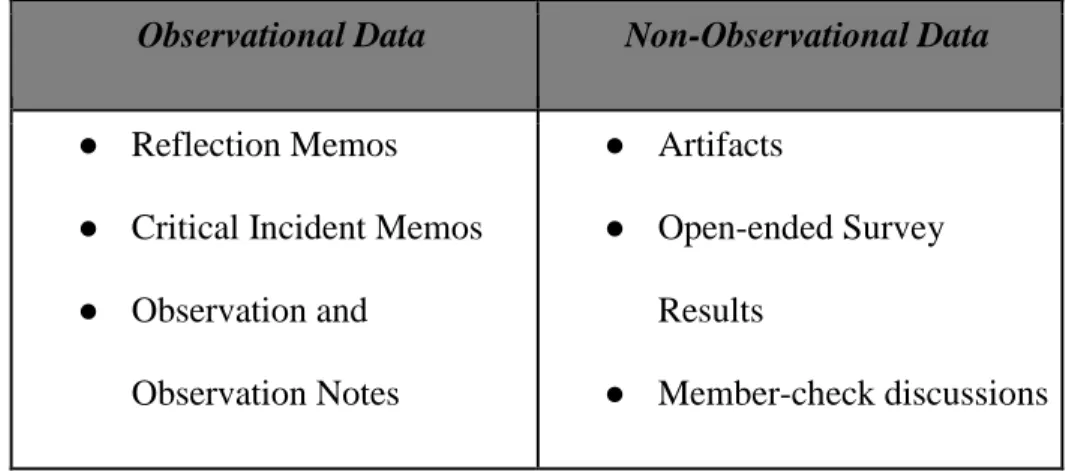
Figure 2. A review of the data collected and processed as part of this action research
82
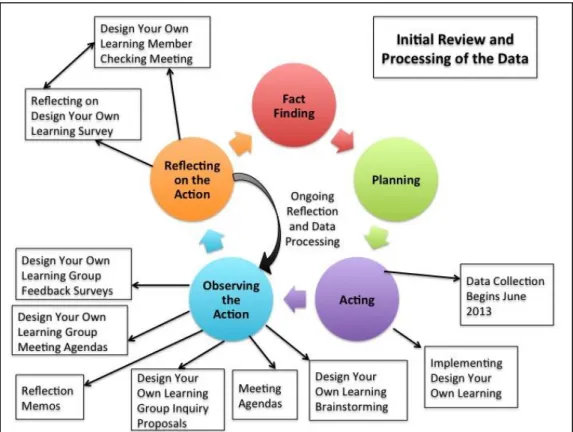
Figure 3. Continuous review of the data during the action research cycle 85
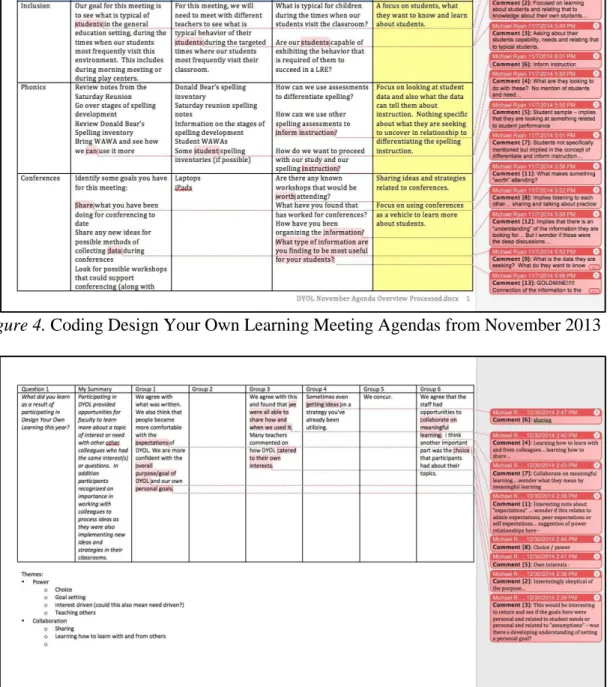
Figure 4. Coding Design Your Own Learning Meeting Agendas from November 2013
96
Figure 5. Coding Survey Data from the Year 1 Reflections on Design Your Own Learning Survey
96
Figure 6. Coding a Focus Group Transcript 97
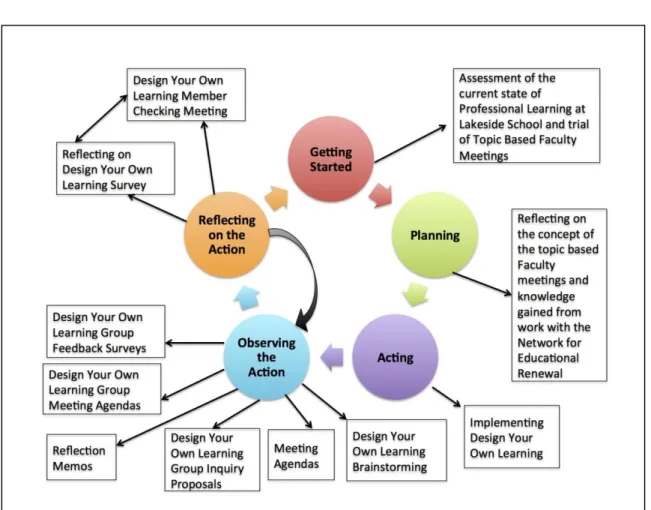
Figure 7. The action research cycle used to evaluate Year 1 of Design Your Own Learning
102
Figure 8. Questioning the Principal’s Role in Interactions that Promote Teachers’ Professional Inquiry
112
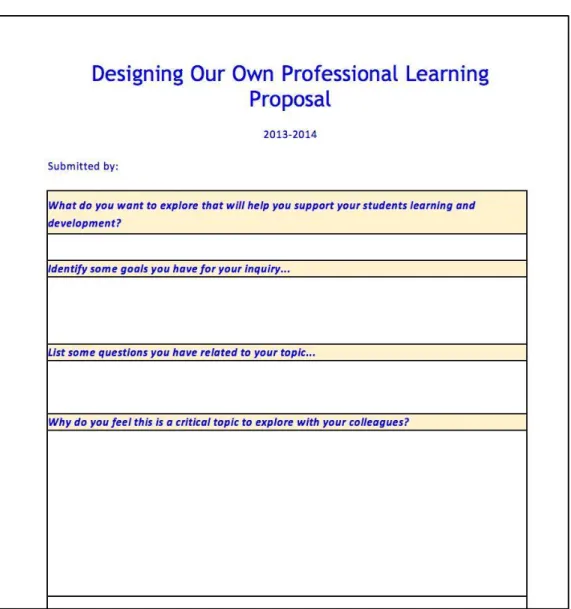
Figure 9. Design Your Own Learning Group Proposal Template (September 2013)
124
Figure 10. Design Your Own Learning Meeting Agenda Template (November 2013)
132
Figure 11. Reflections on Design Your Own Learning 2013-2014 Survey Questions (June 2014)
xv
Figure 13. Engaging in Professional Inquiry (September 2014) 163
Figure 14. What is your wondering? Explaining ways to come to an inquiry question. (September 2014)
164
Figure 15. What do you do with your wondering? Explaining how to establish a learning plan based upon an inquiry question.
165
Figure 16. Using the data from the Focus Groups to highlight themes from the whole data set.
Chapter One: Introduction
I no longer think of myself as just a teacher of children; I believe that I am part of a larger learning community that requires me to wear several hats. As a teacher, I try to facilitate discussions and provide opportunities for discoveries for my students. Simultaneously, I learn with my students, answering my questions and theirs as we move along together. As a teacher leader, I open up forums for discussions and encourage others to teach and learn together and from each other …providing an open and encouraging environment. (Ryan, 1997)
These words, from the introduction to my portfolio for the completion of my Masters degree, ring true seventeen years later. As an elementary school principal, I was still trying to foster discovery for the students in my school, as well as open those forums that encourage others to teach and learn together and from each other. Those spaces for dialogue and open inquiry are difficult to create and foster in schools, especially among faculty. However, picture a professional learning structure that turns typical faculty meetings into opportunities for professional inquiry. Imagine school-based meetings that encourage faculty to design and direct their own professional learning during the course of a school year. After nine years as the principal of Lakeside Elementary School, I began to employ this type of structure during the 2013-2014 school year in an effort to reimagine the way faculty meetings were structured and used to promote professional learning and school development.
While much has been written and suggested about the changes that should take place in schools, the professional culture of schools has remained static. Too often,
because of the fixed nature of schools and the dominant existence of high stakes testing, professional learning for teachers tends to be determined by policy or administrators alone and is facilitated by those who are not necessarily part of the school community and use pre-packaged programs (Cochran-Smith & Lytle, 2009; Elmore & Burney, 1999; Lieberman & Mace, 2008; Lieberman & Miller, 2011; Stigler & Hiebert, 1999). These initiatives run counter to authentic teacher inquiry in which teachers enhance their understanding of students and learning and, ideally, develop new teaching practices (Borko, 2004; Cochran-Smith & Lytle, 1999, 2009; Darling-Hammond, 1997).
Authentic inquiry offers teachers opportunities to enhance their understanding of students and learning, to intellectualize their practices and, ideally, to develop new teaching practices (Borko, 2004; Cochran-Smith & Lytle, 1999, 2009; Darling-Hammond, 1997; Lieberman, 1986, 1992). It encourages teachers to problematize their work (Cochran-Smith & Lytle, 1999, 2009; Dewey, 1904) and casts teachers as active learners who tend to their professional lives by reflecting upon their work with students and teachers (Cochran-Smith & Lytle, 1999, 2009; Grossman, et. al. 2009, Opfer, & Pedder, 2011).
School cultures create scripts for the way things “should be”, and a change in beliefs is required to promote a change in practice (Darling-Hammond et. al, 2009; Kennedy, 2005; Lieberman, 1992; Stigler & Hiebert, 1999). This suggests that schools must wholly conceptualize teaching and learning differently as part of professional learning and development in order to impact classroom practice. Inquiry is a powerful form of professional development that can encourage meaningful, collegial interactions within schools (Blase & Blase, 2000; Darling-Hammond et. al., 2009; Lieberman, 1986;
Muijs & Harris, 2003; Zeichner, 2003). This type of inquiry enables teachers to become involved in practitioner action research in which all who participate are invested in developing meaningful knowledge and enhancements of their daily practices (Anderson et. al., 2007; Bradbury & Reason, 2001; Herr & Anderson, 2005; Newton & Burgess, 2008; Ozanne & Saatcioglu, 2008). Teachers who engage in action research develop close relationships that foster mutual learning (Harris, 2003). This, in turn, helps teachers make sense of teaching and learning within their own settings (Lieberman, 1986;
Richardson, 1994). They demonstrate an interest in scholarly activity that improves their practices as well as a willingness to make their learning and practices public to support professional growth (Blase & Blase, 2009; Lieberman, 1992, Lieberman & Mace, 2010; Somekh & Zeichner, 2009, Zeichner, 2003).
Changes do happen within schools, often prompted by small groups of teacher leaders (Lieberman, 1986; Lieberman & Mace, 2010) who seek to take charge of their careers and work to intellectualize their work through inquiry and/or participation in action research projects. Over the last ten years or so, much has been written about the work of these teacher leaders (Darling-Hammond et. al., 2009; Lieberman & Mace, 2008, 2010; Lieberman & Miller, 2005; Lieberman, 2000; Somekh & Zeichner, 2009; Taylor et. al., 2010). While this work is critical, it still impacts a small pocket of select few
teachers who are engaging in this type of professional learning.
More needs to be done in order to make inquiry an integral part of professional learning within schools. Across the country, school administrators and school faculties like mine are working together to make the structural changes necessary to make inquiry
a key element of professional learning within schools. At this time there is very little written about grassroots efforts to make meaningful changes to professional learning structures in schools, the way they came to be, and the impact these types of efforts have had on establishing inquiry as a tool used to promote professional learning for all teachers. It is time to make these types of efforts public and to learn from these experiences in order to foster meaningful changes within the professional cultures in schools. With this practitioner action research study, I seek to add to the body of research related to the ways inquiry is presented and used as a professional learning structure within schools by examining the way I, an elementary school principal, established an inquiry- based series of faculty meetings called “Design Your Own Learning” where teachers were responsible for planning and carrying out professional learning based upon their own inquiry into their daily practices with students in an elementary school. My research is guided by the following questions:
What happens when I (the building principal) implement an inquiry- based professional learning structure (Design Your Own Learning) in my school?
● How did teachers describe their emerging practice of inquiry? ● How did their learning affect their professional practices?
● What did I, as the principal, learn about implementing an inquiry-based form of professional development?
Teacher as Intellectual
Since the publication of A Nation at Risk (Gardner, 1983) the “professionalization” of teaching and teacher development has been highlighted as a means of reforming and
improving the work of public schools in the United States (Lieberman, 1995). This has raised awareness of the need to improve teachers' knowledge, skills, and dispositions in order to take steps toward improving student achievement (King & Newmann, 2001). A Nation at Risk (Gardner, 1983) issued a call to educators and citizens to better understand learning and teaching, in hopes that such knowledge would inform school practices in useful ways. However, this report lacked specific strategies for meeting goals as well as for funding to support changes (Cohen-Vogel, 2005), resulting, as with other change initiatives, in few concepts making it past the classroom door to make any change in teaching practices (Cuban, 1993).
With the publication of What Matters Most: Teaching for America’s Future (1996), the National Commission on Teaching and America’s Future focused on
encouraging schools to think systematically about encouraging and rewarding efforts to investigate and promote excellent teaching within schools. Professional development was positioned as an opportunity to connect teachers in various communities to tackle understanding, problems, challenges, and practice over time (What Matters Most, 1996). This affirmed Dewey’s (1910) claim that problematizing practices and concepts helps make learning experiences intellectually effective. As such, teachers were being challenged to intellectualize their work and take responsibility for questioning their teaching (Cochran-Smith & Lytle, 1999; Cohen, 1988; Giroux, 1988; Lieberman, 1991; What Matters Most, 1996).
This movement toward the professionalization and intellectualization of teaching led to the creation of the National Board for Professional Teaching Standards
(Darling-Hammond, 1999). The Board developed a set of standards that encouraged a broadened view of teachers, one that moved from individuals simply responsible for curriculum delivery and assessment of student performance, to include their development of curriculum, their learning with and from colleagues, as well their collaboration with families and community agencies (Darling-Hammond, 1999). Value was placed on the concept of practitioner knowledge, making schools sites of rich learning for students and
teachers (Lieberman, 1991). Teachers were encouraged to intellectualize their work by questioning their practices and making their work public by learning from and with each other (Cochran-Smith & Lytle, 2009; Darling-Hammond, 1999; Lieberman & Mace, 2010; Zeichner & Liston, 1996). For this study I use the term intellectualize to describe the way I envision teachers engagement in open inquiry: processing and evaluating their daily work in order to become “students of their own practice” (Lieberman & Mace, 2010, p. 78).
As educators worked to professionalize their work, there was a push from educational researchers to identify specifics about what educators do and what they should know to help them better perform in each of these new and revised roles (Cochran-Smith & Lytle, 2009; Munby, Russell, & Martin, 2001; Shulman, 1987). However, despite people’s best efforts, it was challenging to identify a common knowledge base (Cochran-Smith & Lytle, 2009; Munby, Russell, & Martin, 2001; Shulman, 1987) as well as to develop a cohesive and coordinated approach to enhancing teacher learning within schools (Eun, 2008; Opfer & Pedder, 2011; Stigler & Hiebert, 1999). Since it is understood that “good teaching can come in many forms” (Zeichner &
Liston, 1996, p. 53), this quest to codify teacher knowledge is certainly a challenge we as educators continue to face today.
Professional Development and Professional Learning in Today’s Schools
Despite a relatively long history focused on trying to professionalize educators, the bulk of current professional development opportunities in schools typically comprises the use of a pre-packaged program or system and its implementation using directed lessons or presentations for teachers rather than focusing on changing teaching practices in contextualized and meaningful ways or by allowing educators to self-identify ways in which they themselves could change teaching practices to best meet the needs of students (Cochran-Smith & Lytle, 2009; Elmore & Burney, 1999; Lieberman & Mace, 2008; Lieberman & Miller, 2011; Stigler & Hiebert, 1999). For example, administrators and teachers continue to look outside the school community for training or support in the form of videos, professional workshops, or work with outside consultants, seeking “instant” ways to improve classroom practices (Lieberman & Miller, 2011; Talbert, 2010). There is a hope that teachers will learn to follow a particular script that will allow them to raise student scores on standardized assessments (Lieberman & Mace, 2008). These scripts are often used in relation to existing school “structures,” such as faculty meetings, professional development days, and professional release time (Cohen, 1988; Elmore, 1996; Lieberman & Mace, 2008; Talbert, 2010).
Clearly there has been slow progress toward the goals outlined for professional learning by the National Board for Professional Teaching Standards. Stigler and Hiebert (1999) present one reason for such slow progress, noting that since teaching is such a
constant in our culture, we fail to imagine how it might be changed, much less to truly believe that it should. School cultures create scripts for the way things “should be”, and a change in beliefs is required to promote a change in practice (Kennedy, 2005; Lieberman, 1992; Stigler & Hiebert, 1999). The basic culture of schools must be changed in order reap the benefit of any “new curricula or pedagogical techniques - even though they might be better” (Lieberman, 1992, p. 7). This suggests schools must wholly embrace different concepts presented as part of professional learning and development. A community must be fostered that supports a culture of professional learning in which teachers teach, learn from, and share with one another (Cochran-Smith & Lytle, 2009; Lieberman & Mace, 2008; Zeichner & Liston, 1996). Another probable cause is the No Child Left Behind Act of 2001, which shifted the lens from learning (that of both student and teacher) to “training and testing as the bottom lines of the educational process” (Cochran-Smith & Lytle, 2009, p. 63). No Child Left Behind downplayed the
importance of “knowledge of” and “knowledge in” practice, instead pushing assessment and content knowledge and promoting “scientifically based” practices as keys to
improving learning for students as well as for teachers (Cochran-Smith & Lytle, 2009; Elmore, 2004; United States Department of Education, 2004).
Many “professional development” providers present information in a linear fashion with the expectation that teachers will implement these new practices “as is” in classrooms (Cochran-Smith & Lytle, 2009; Elmore & Burney, 1999; Lieberman & Mace, 2008; Lieberman & Miller, 2011; Richardson & Placier, 2001). This form of
Behind Act and is also a result of an absence of a coherent approach to professional learning within many schools, namely one that might help to focus goals, gain investment from practitioners, and promote the problematizing of practices within schools (Cochran-Smith & Lytle, 2009; Lieberman & Miller, 2011; Opfer & Pedder, 2011). Rather than on promoting a community of learners among school faculty members, the emphasis is on promoting a best practices approach to be followed without question or discussion by all (Lieberman & Mace, 2008). Despite the suggestion of research findings promoting the contrary, school cultures in the U.S., in general, still do not promote dialogue about practice among teachers and administrators, nor do they seem to overtly value the wealth of knowledge and learning embedded in the daily work of teaching (Elmore, 2004; Lieberman & Miller, 2011; Opfer & Pedder, 2011).
This creates a split in the meaning and conception of professional learning and professional development. Indeed, the two are very different. Cochran-Smith and Lytle (1999), for example, define professional development as learning that accrues “when wholesale participation in teacher learning initiatives is mandated at the school or school system level or when teacher learning is scripted in certain ways it becomes a substitute for grass roots change efforts” (p. 293). This suggests, and resonates with ideas
promoted by the No Child Left Behind Act, that professional development guides
teachers’ actions but not necessarily their “understandings,” thus helping to identify “best practices” that teachers can use, while not necessarily helping them to learn when to use those practices (Lampbert, 2010; Lieberman & Mace, 2008; Lieberman & Miller, 2011; Opfer & Pedder 2011; Richardson & Placier, 2001). Practitioners, within this framework,
lack choice, control, and voice in their own professional development. Typical
professional development opportunities tend to be driven by bureaucratic systems within a school district and to focus on quick fixes in response to data such as test scores or ratings based upon “school report cards” (Cochran-Smith & Lytle, 2009; Lieberman & Miller, 2011; Opfer, & Pedder 2011). As Hargreaves (as cited in Lieberman & Mace, 2008) notes, policies tend to hinder the development of a learning community by placing too many specific restrictions upon practitioners and not providing them with the
supports necessary to develop the structures and relationships needed to intellectualize their practices. Ironically, who is better able to identify ways to improve student learning and performance than the practitioners who work with the children and know the
particular challenges of their own setting (Anderson, Herr, & Nihlen, 2007)? Professional learning, by contrast, involves an active stance that encourages educators to take responsibility for their professional lives as well as for reflecting upon and rethinking the work they do each day with students (Cochran-Smith, & Lytle 1999, 2009; Giroux, 1988; Grossman, et. al. 2009, Opfer & Pedder, 2011; Zeichner & Liston, 1996). Professional learning, in this sense then, describes learning that takes place as a result of personal or collective inquiry that supports educators in problematizing their knowledge and understanding of teaching, learning, and students (Anderson, Herr, & Nihlen, 2007; Cochran-Smith & Lytle, 1999, 2009; Dewey, 1904; Giroux, 1988; Shulman, 1998). This position argues that professional learning is a thoughtful and collaborative experience in which all involved are responsible for their learning as well as for enhancing learning experiences for others (Cochran-Smith & Lytle, 2009; Lieberman
& Miller, 2011; Talbert, 2010). Professional learning involves the opportunity to also make teaching practices and reflection on practices public, thus allowing for a new type of conversation about teaching and learning (Lieberman & Mace, 2010).
The principle difference between professional development and professional learning is located in the ways in which each promotes or challenges typical school structures. While educators may work together during professional development opportunities, the work typically is focused on learning specific strategies and/ or
implementing or mastering curriculum programs (Cochran-Smith & Lytle, 1999; Elmore, 1996, 2004; Lieberman & Miller, 2011). For example, Lieberman and Miller (2011) report that for years, the assumption was that professional development should be delivered by external sources to better help the practitioner; that is, the “outside source” was considered to be an expert who could help the teacher improve his or her practices. This suggests that the work teachers “do” together within these contexts is simply related to the execution of “Program X.” That is, the “expert” taught the teachers how to teach something so that their students can be more successful (Cochran-Smith & Lytle, 1999; Elmore, 1996, 2004; Lieberman & Mace, 2008; Lieberman & Miller, 2011). Within this model, a teacher may be shown student scores and provided with an “off the shelf solution” to raise student performance, which would not require practitioners to think about or respond to the academic development of their students (Cochran-Smith & Lytle, 1999; Elmore, 2004; Lieberman & Miller, 2011, Opfer & Pedder, 2011).
By contrast, professional learning’s focus on inquiry requires the development of a culture of learning that engages all members of the school community and is based on
the work educators are doing with their students within their school contexts (Anderson, Herr, & Nihlen, 2007; Cochran-Smith & Lytle, 1999; Eun, 2008; Kennedy & Kennedy, 2011; Lieberman, 1991; Lieberman & Mace 2008; Zeichner & Liston, 1996). These types of communities are grounded in the idea that professionals can learn from and with each other within an environment of true collaboration; this orientation underscores the importance of talk and fosters a commitment from practitioners and promotes an understanding of the students’ and practitioners’ learning development (Cochran-Smith & Lytle, 1999, 2009; Dewey, 1904; Elmore, 2004; Giroux, 1988; Lieberman & Miller, 2011; Shulman, 1998; Zeichner & Liston, 1996). Kennedy and Kennedy (2011), for example, note that the varied assemblage of ideas in a community of inquiry can influence and be influenced through dialogue, which helps individuals build on each other’s ideas, suggesting that professional learning is more focused on learning and understanding. Lieberman and Mace (2008) note that the communities that develop when teachers have a chance to engage in inquiry, discussion, and reflection about their practices provide spaces to break away from pedagogical loneliness and develop
professional collaboration. Thus, it seems critical to examine the ways that a culture of professional inquiry develops at a school and the ways in which engaging in inquiry may encourage practitioners to problematize their teaching in order to become students of their own practices.
Origins of My Practitioner Action Research to the Professionalization of Teaching
There is continuity in inquiry. The conclusions reached in one inquiry become means, material and procedural of carrying on further inquiries. (Dewey, 1938, p. 140)
This practitioner action research study really began over twenty years ago when I was an undergraduate studying to become a teacher. As part of my methods courses I had to do “field work” in “real” classrooms and was fortunate enough to work with an advisor who sought to place me with an amazing mentor teacher. “You really need to see her,” Libby would say, “She’s just dynamite.” And she was. There were no textbooks in Jill’s classroom; students were engaged in project-based learning and authentic reading and writing throughout the day. I was introduced to the concept of “professional reading” and developed a passion for professional texts that still exists today - my copy of
Transitions by Regie Routman (1988) remains one of my most prized possessions. I loved learning about teaching and learning.
After graduating from college I was fortunate to get a teaching job almost immediately. My world was turned upside down when I was handed sets of teachers’ manuals for everything from math to spelling. There were three different basal readers from which I was supposed to teach “for on level, below level and above level,” my principal told me. This, after I had invested so much money in trade books for my classroom? Hadn’t she read Transitions too? My confusion must have been obvious to one of my new colleagues who invited me to come to a TAWL (Teachers Applying Whole Language) group meeting that was held at the other elementary school across
town. Here I found a group with whom I could learn to question my practices, listen to ways that other people were teaching, and share what I was experiencing in my own classroom. Thus I learned the importance of a supportive community as well as the value and power of inquiry into my own teaching practices.
Eleven years and two degree programs later I became the principal at Lakeside Elementary School, a school for students in preschool through second grade. By this point in my career my “professional library” could barely fit in my house, much less my new “office.” I just knew that I was going to connect with my faculty because I was one of “them”: I was a teacher. It was a short honeymoon. There are many reasons for this, but foremost the reality that not every teacher thought thinking through, and about, his or her practices was necessary, let alone fun and exciting. In addition, I had to face the reality that there was a good deal of “bad teaching” happening in classrooms. Each room was a model of “sit, spit, and get.” What had I gotten myself into? It was really the first time that I realized I needed to be a teacher of teachers.
The nine and a half years I served as principal were not easy, but they certainly were exciting and educative. I learned that I needed to learn with my faculty; I learned to be a facilitator rather than a “teacher.” There was a transition from a focus on what Lieberman (2000) would call “one size fits all” professional learning solutions to the creation of professional learning spaces that Lieberman might describe as sensitive to “individual and collective development” (p. 221). This transition led me to become a doctoral student, which helped me to identify my position within the educational
community as well as recognize that what I had been talking about and doing for the past twenty years was inquiry.
While the seed of this practitioner action research study may have been planted over twenty years ago, it really sprouted into something real about four years ago, as I was working on a project for a doctoral course entitled, “The Practice of Teacher
Education and Teacher Development.” During this course, I read Stigler’s and Hiebert’s (1999) book The teaching gap: Best ideas from the world’s teachers for improving
education in the classroom. This book was a game changer for me, by helping me understand how school cultures and school structures inhibited the type of professional learning that I believed was so impactful. As I worked on the final project for this course, a paper I called, “Using Time and Space to Foster Professional Learning: Listening to Three Voices from Within a K-8 School District,” the thought occurred to me that while I was talking about the importance of teacher choice in relationship to professional
learning, I was not really doing anything to change the structures that support this type of learning within my own school. Thus, the topic- specific faculty meeting was born.
The topic- specific faculty meeting was, in theory, supposed to be my answer to challenging the school structures that Stigler and Hiebert (1999) noted inhibit teacher development. I would try to get a consensus on some topics, and then during set times of the year, teachers themselves would select the meetings they would attend. I was so proud of myself, until I shared the concept with my advisor Monica. “Who sets the agenda?” she asked. “I do,” was my reply. “What if they don’t like the topics?” she asked. “Well…” I tried to come up with something. “You know, this really isn’t inquiry,”
Monica said. I was devastated, but she was right. While this was a step in the right direction, it was not the leap needed to empower the faculty and help them engage in scholarly inquiry about their practices.
In a way, I feel as if I have been involved in action research on teacher development and professional learning structures since my first day on the job as an elementary school principal. However, this study focuses on a new faculty meeting structure I created and introduced to the faculty in June of 2013 called “Design Your Own Learning.” Using a Google Doc to facilitate whole group collaboration, I
encouraged the teachers to identify possible areas of inquiry and others who might share those interests. This allowed teachers to make their questions public and helped to create what Lieberman (2000) might call networks of interest within the faculty. This set the stage for what would become a series of teacher- designed meetings that would replace “typical” faculty meetings during the 2013-2014 school year. These meetings, for some of the groups, essentially became mini action research projects based upon the common interests and inquiry of the participants.
Taking the time to investigate the Design Your Own Learning structure employed at Lakeside Elementary School helped me to reflect on and improve the ways in which I worked with teachers and ensured that the Design Your Own Learning structure provided the faculty and other groups of teachers with meaningful and authentic learning
experiences as part of their daily work. With this practitioner action research I worked to analyze, understand, and improve the Design Your Own Learning structure and what it did to promote inquiry, reflection, and professional learning related to daily teaching. I
have gained insights into ways that I can better foster teacher development and inquiry through the use of such a structure as well as suggest ways that other school
administrators and schools may learn to implement a professional learning structure focused on inquiry and action research.
Organization of the Dissertation
This dissertation is organized into six chapters. This first chapter gives a broad introduction to the study and research questions, situating this study within the context of what is known about meaningful professional learning and the current state of
professional learning in today’s public schools. Chapter two provides an overview of my conceptual framework focused on the collaborative interactions that promote professional inquiry, as well as a thorough review of the literature that helps to frame and support this research. In chapter three, I explain the methodology I used to complete my practitioner action research, including an overview of the context, participants, data collection, and data analysis. Chapters four and five present the main findings from this study. I use chapter four as a vehicle to describe what I learned about myself as the principal and practitioner involved in this research. Chapter five presents findings synthesized by looking across all data sources collected and identifying key themes that represent new learning. Finally, in chapter six I provide a summary of my data analysis in relationship to the research questions, and I conclude with implications for further research suggested by my findings.
Chapter Two: Conceptual Framework and Review of the Literature
Due to the fixed nature of school cultures and structures, as well as the dominant existence of high stakes testing, professional learning for teachers tends to be determined by policy decisions, program implementation, or administrators working in isolation from classroom practitioners (Cochran-Smith & Lytle, 2009; Darling-Hammond, 1997; Elmore, 2004; Stigler & Hiebert, 1999; Zeichner & Liston, 1996). Often the professional
development offered is facilitated by those who are not typically part of the school community and relies on pre-packaged programs or scripts that "teach" best practices to resolve classroom issues and improve test performance (Elmore, 2004; Lieberman & Miller, 2011; Stigler & Hiebert, 1999; Talbert, 2010; Zeichner & Liston, 1996). In these scenarios, teachers are typically treated more like performers than professionals with a deep understanding of their work with students (Lieberman & Mace, 2008; Somekh & Zeichner, 2009). This leaves teachers feeling as if professional learning opportunities within their schools are random and disconnected from their needs as practitioners
(Lieberman & Mace, 2008). Much has been written and suggested about the changes that should take place in schools in order to promote professional learning; however, the professional culture of schools has remained static.
With this practitioner action research study, I hope to dig deeper into ways new types of professional learning structures can impact a school and its professional culture. Authentic inquiry provides teachers with vehicles to strengthen their understanding of their students, to intellectualize their teaching and, ideally, to develop new and better practices (Borko, 2004; Cochran-Smith & Lytle, 1999, 2009; Darling-Hammond, 1997;
Lieberman, 1986, 1992). It encourages teachers to problematize their teaching (Cochran-Smith & Lytle, 1999, 2009; Dewey, 1904) and positions teachers as dynamic and
continuous learners who reflect upon their daily work with students and colleagues (Cochran-Smith & Lytle, 1999, 2009; Grossman, et. al. 2009, Opfer, & Pedder, 2011). This is what inspired me to develop an inquiry- based series of faculty meetings called “Design Your Own Learning” in which teachers were responsible for planning and implementing professional learning based upon their own inquiry into their daily practices with their students. I seek to add to the research related to the ways inquiry is presented and used as a professional learning structure within schools by examining the way I, an elementary school principal, established and implemented Design Your Own Learning. My research is guided by the overarching question:What happens when I (the building principal) implement an inquiry- based professional learning structure (Design Your Own Learning) in my school?
I believe that professional learning describes the learning that occurs as a result of personal or collective inquiry and supports practitioners in problematizing their
knowledge and understanding of teaching, learning, and students (Anderson, Herr, & Nihlen, 2007; Cochran-Smith & Lytle, 1999, 2009; Dewey, 1904; Giroux, 1988;
Shulman, 1998). It is a thoughtful and collaborative process in which all involved share responsibility for learning as well as allowing colleagues to make teaching practices and reflection on those practices public (Cochran-Smith & Lytle, 2009; Lieberman & Mace, 2010; Lieberman & Miller, 2011; Talbert, 2010). Thus, I frame my work through the lens of the interactions that occur through an inquiry stance toward professional learning
in schools. This chapter begins with a description of my conceptual framework and provides an explanation of the interactions and forces that work together to create and support professional learning through inquiry. I conclude this chapter with a review of the literature that grounds this study in works that help to frame the ways that inquiry has been used as a vehicle for professional learning within schools.
Inquiry and Professional Learning
Professional learning as inquiry into practice is not a new concept; it can be traced back to Dewey’s (1904, 1910, 1916, 1929, 1938) writings on inquiry and reflective thinking. In his work, Dewey (1910) notes the importance of problematizing practices and concepts in order to make learning experiences intellectually effective. For Dewey (1910), “problematizing” describes the process of reflective thought whereby an individual actively questions any belief or knowledge in relation to known facts and circumstances. As mentioned earlier, professional learning is defined here as the problematization of practices and understandings that occurs as teachers and
administrators engage together in inquiry and reflective thinking related to their daily work in schools. This process of inquiry allows teachers to form meaningful ideas and theories about their practices (Dewey, 1938). Cochran-Smith and Lytle (2009) illustrate this, noting “inquiry as stance is grounded in the problems and contexts of practice in the first place and in the ways practitioners collaboratively theorize, study and act on those problems in the best interests of the learning and life chances of students and their
communities” (p. 123). Schools supporting inquiry encourage practitioners to assess and identify needs for their students and themselves and develop questions that will help them
research and intellectualize their daily work with children (Cochran-Smith & Lytle, 1999, 2009; Giroux, 1988). This conception has its roots firmly in Dewey’s (1904) emphasis on the need for professionals to intellectualize the work of teaching rather than to master a practice.
Quite simply, inquiry involves an individual’s attempt to come to know more about a particular topic or concept by questioning, thinking about, and processing information or situations related to the topic (Dewey, 1910). In relation to this study, a teacher engages in thoughtful action that allows him or her to carefully consider a topic from a variety of perspectives, which enables him or her to develop a deeper
understanding and new knowledge about the concept (Cochran-Smith & Lytle, 2009; Dewey, 1910, 1938; Zeichner & Liston, 1996). The focus of inquiry is typically
“prompted by a sense of uncertainty” that causes individuals to pause and “analyze their experiences” (Zeichner & Liston, 1996, p. 9). This is an iterative process that involves reflection and observation that supports an individual as he or she constructs a theory or idea related to his or her inquiry (Dewey, 1910, 1938).
Schools as Communities of Inquiry
Inquiry and reflective thinking alone are not sufficient to produce meaningful professional learning for educators. Schulman (1998) expounds on this by explaining that Dewey (1904) views this type of professional learning as a laboratory that allows professionals to experiment with new practices, concepts, and understandings. Inquiry, in this sense, centers and reinforces professional learning within the school and provides all stakeholders with an opportunity to “talk back” to traditional practices, school
bureaucracy, and educational policies (Cochran-Smith & Lytle, 2009). Teachers and administrators must engage in inquiry that is situated within the context of a variety of experiences that promote interaction between internal and external conditions related to their practices and school environment (Dewey, 1938; Lave & Wenger, 1991). For example, teachers engaged in inquiry look beyond test scores or “what works” and seek to work together to question their own assumptions about teaching, learning, and the role of the school within their own school context and community (Cochran-Smith & Lytle, 2009). I explore this in relation to the Design Your Own Learning structure as part of this research.
Dewey (1938) notes that quality interactive experiences serve as moving forces: they arouse curiosity, strengthen initiative, and set desires and purposes to carry a person into the future in a different way. Schön (1983, 1987) enables us to build usefully on this by means of his concepts of “reflection in action” and “reflection on action,” which encourages practitioners to engage in reflection that focuses on the parts of and outcomes of practices, both during and after their work with students. Practitioners, according to Schön (1983), define and construct the problems within the context of their daily practices. As teachers engage in the process of reflection, they must also be open to exploring various viewpoints and possibilities related to their inquiry, which may often challenge the validity of personal beliefs and philosophies as well as what is essential in relationship to a particular inquiry (Dewey, 1910, 1938; Zeichner & Liston, 1996). This becomes a meaningful and interactive process that supports and challenges educators to
expand and construct professional knowledge that is directly related to their contexts and students (Cochran-Smith & Lytle, 2009; Schulman, 1998).
Professional learning occurs as teachers engage with each other in inquiry that provides them with opportunities to transform and theorize information from their environment (Cochran-Smith & Lytle, 2009; Lawton, Saunders, & Muhs, 1980). Learning through communal engagement is framed by the work of such sociocultural theorists as Vygotsky (1978), Wells, (2001) and Engestrӧm (1987). As teachers work together in inquiry communities, they engage in Vygotsky’s (in McCaslin, 2004) claim that in order to develop deeper levels of knowledge, individuals must go beyond themselves and develop social relations with their external world, using language as a mediating and knowledge building tool (Lave & Wenger, 1991). Teachers in these communities are engaged in inquiry that is embedded in what Engestrӧm (in Lave & Wenger, 1991) names “everyday actions.” These actions and interactions involve a transformation of roles and understanding between what Lave and Wenger (1991) call “newcomers and old-timers in the context of a changing shared practice” (p. 49). Learning is determined by an individual’s increased participation in a community of practice: a person taking on an active role in her or his world (Lave & Wenger, 1991). Lave and Wenger (1991) identify this as legitimate peripheral participation.
Professional Interactions Frame and Support Inquiry Communities
Vygotsky (1978) considered language an essential device in transforming individuals as well as communities. The interactive language experiences within a professional learning community provide teachers with opportunities to raise questions
about their practices, student needs, and school culture, all of which have an impact on classroom teaching (Giroux, 1988; Lave & Wenger, 1991). I believe that language, reflection, and action promote questioning about curriculum and pedagogy and create learning communities in which all members grow and learn in a continuous and iterative process (Cochran-Smith & Lytle, 2009; Dewey, 1910, 1938; Lave & Wenger, 1991; Zeichner & Liston, 1996). Building on this belief, I will refer to professional learning experiences within this study as those interactions that allow educators to develop and enhance professional knowledge and practices through collaborative inquiry
opportunities.
Quality interactions and experiences help to construct a collaborative school inquiry network that is focused on its work with students (Cochran-Smith & Lytle, 2009; Dewey, 1938; Elmore, 2004; Zeichner & Liston, 1996). These networks provide
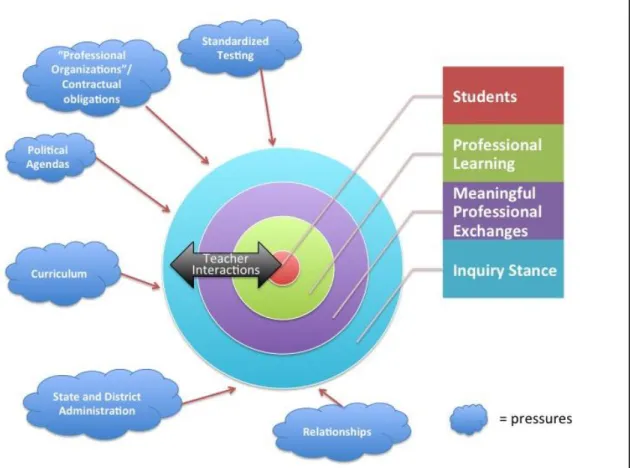
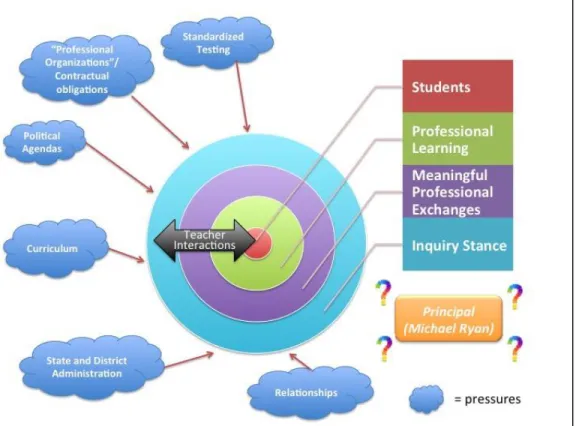
opportunities to develop communities of practice, as described by Wenger (1998), where professionals work collaboratively to construct a shared professional identity and to enhance their professional knowledge. Wenger (1998) notes that interactions within these communities promote common understandings within the group, ultimately enabling all members of the community to be more effective in their workplace: “All of this takes place in a social world, dialectically constituted in social practices that are in the process of reproduction, transformation and change” (Lave & Wenger, 1991, p. 123). Figure 1 provides a graphic representation of the ongoing interactions that I believe must occur within a school community to support the definition of professional learning that frames
this research: ultimately, that which promotes meaningful and effective learning for teachers and students within a school.
Figure 1. Interactions and Pressures that Shape Professional Learning Through Inquiry Cochran-Smith and Lytle (2009) champion interactions in which educators are positioned as researchers, and are focused on and knowledgeable about, the needs, context, and culture of the school. It is my opinion that these types of interactions promote inquiry within a school community. Inquiry centers and reinforces professional learning within the school and provides all stakeholders with an opportunity to test hypotheses, challenge each other, and “talk back” to educational policies (Dewey, 1938; Cochran-Smith & Lytle, 2009; Lave & Wenger, 1991). I intend to use this study to explore ways that inquiry allows school faculty to research their practices and develop a
deeper understanding of how children in a school or classroom learn (Cochran-Smith & Lytle, 2009). As Cochran-Smith and Lytle (2009) note, “inquiry as stance is the idea that educational practice is not simply instrumental in the sense of figuring out how to get things done, but also and more importantly it is social and political in the sense of deliberating about what to get done, who to get it done, who decides and whose interests are served” (p. 121). Significant changes can only be brought about in schools if those involved in the daily work of teaching and learning are actively involved in questioning, reflecting on, and changing their work (Cochran-Smith & Lytle, 2009; Elmore & Burney, 1999; Stigler & Hiebert, 1999). This allows for a continual process of reconstruction that will best serve the needs of the students (Cochran-Smith & Lytle, 2009; Dewey, 1910; Kennedy & Kennedy, 2011; Lave & Wenger, 1991). As school faculty members interact with each other, they may begin to derive greater meaning about their practices through interactions with students (Dewey, 1910). I use this framework as a means to define inquiry for this project as the many professional interactions within a school that promote processing and questioning of student and school needs, professional knowledge and understanding, and practices that open dialogue about ways to address and learn from each.
School inquiry communities are spaces where practitioners are viewed as-and believe they are-knowledge generators (Cochran-Smith & Lytle, 2009; Dewey, 1910; Lieberman & Miller, 2011). In these communities, agency and intelligence are distributed among the members and all participants are regarded as knowers, learners, and researchers (Cochran-Smith & Lytle, 2009; Cohen, 1988; Freire, 1998; Kennedy &
Kennedy, 2011; Lave & Wenger, 1991). Inquiry communities require a culture and community that support interactive and collaborative relationships between professionals (Cochran-Smith & Lytle, 2009; Cohen; 1988; Elmore & Burney, 1999; Lave & Wenger, 1991; Stigler & Hiebert, 1999). This is the lens through which I reviewed the data collected as part of this research and the literature I use to support a rationale for this study.
Review of the Literature
My lens on professional learning promotes a focus on inquiry. This view of professional learning casts teachers as active learners and encourages educators to take responsibility for their professional lives by reflecting upon and learning from the work they do with students and other teachers (Cochran-Smith & Lytle, 1999; Cochran-Smith & Lytle, 2009; Giroux, 1988; Grossman, et. al. 2009, Opfer, & Pedder, 2011). It requires the development of a culture of learning in which all members of the school community are engaged learners exploring and investigating their practices (Anderson, Herr, & Nihlen, 2007; Cochran-Smith & Lytle, 1999; Eun, 2008; Kennedy & Kennedy, 2011; Lieberman, 1991; Lieberman & Mace 2008; Zeichner & Liston, 1996). These types of communities rest on the belief that professionals can learn from and with each other within a collaborative environment; this highlights the importance of collaborative discourse and promotes an understanding of the students’ and practitioners’ learning development (Cochran-Smith & Lytle, 1999, 2009; Dewey, 1904; Elmore, 2004; Giroux, 1988; Lieberman & Miller, 2011; Shulman, 1998; Zeichner & Liston, 1996). In this section I present an analysis and discussion of the literature that I believe provides a
sufficient background to support this view of professional learning and inform the goals of this research. As Herr and Anderson (2005) suggest, I used this review of the
literature to help establish a dialogue between the data collected and reviewed for this study and the findings others have reported about inquiry- based professional learning structures.
I explored four sets of literature related to inquiry and professional learning using the following categories: “inquiry, professional learning, professional development, and schools;” “professional learning communities;” “action research and professional learning in schools;” and “teachers questions about their practices.” The first category, “inquiry, professional learning, professional development, and schools,” was
intentionally broad and best described what I was thinking and wondering about in relation to making changes in the way professional learning is structured in schools. While this review revealed substantial information about inquiry as professional learning in schools, it left me with more questions about a particular structure often used:
professional learning communities. Thus, I needed to investigate the literature related to professional learning communities. After reviewing the literature in this category, I learned that while many schools used professional learning communities as vehicles to foster professional inquiry, this structure was not always used in this way. I continued to wonder about ways that teachers engaged in inquiry as professional learning; that led me to explore a corpus related to action research and professional learning. My personal experiences of working with action research groups informed this connection as well as the creation of the Design Your Own Learning Structure, which made a review of this
literature an important part of this research. Ultimately, after reflecting on the literature in all of the categories explored, I realized I was still wondering about teachers and their questions about their own practice. These questions are what drive personal professional inquiry; therefore the final category of literature I reviewed was the research related to “teachers’ questions about their practices.” It is important to note that I also wondered about the literature related to the principal and the principal’s role in fostering
professional inquiry within a school, and while I did look for this research, there was none that applied to the focus of this study. This is one reason I believe this research study can add to the field. In sum, the literature reviewed from all of the categories best represents the type of information necessary to frame and conduct my research.
In order to make sense of the literature in relation to the research questions, I sought to identify broad themes that emerged within each group. While reading, I noted certain keywords or themes that emerged in relation to the findings of the study,
practicing a form of basic open coding (Merriam, 2009). Initial codes were ideas and concepts that came to mind after I had completed an initial close read of each study. As I reviewed the corpus for each search category, I looked at the themes and codes that I had identified in total and used them to identify larger categories (See Appendix A for more detail) that cut across the codes for each search category (Merriam, 2009). I present this review by search category using the broad themes to present the literature related to each. Together the literature helps to frame an understanding of what is currently understood about inquiry and professional learning within schools and provides the background and understanding needed to support my work throughout the study.
Inquiry, Professional Learning, Professional Development, and Schools
Given the static nature of typical school cultures (Kennedy, 2005; Opfer & Pedder, 2011; Stigler & Hiebert, 1999) and the known importance of actively involving teachers in intellectualizing their teaching (Cochran-Smith & Lytle, 1999; Cohen, 1988; Giroux, 1988; What Matters Most, 1996), it is important to investigate literature related to the ways inquiry has been used to support professional learning in schools. Inquiry
encourages teachers to problematize their work (Smith & Lytle, 1999; Cochran-Smith & Lytle, 2009; Dewey, 1904; Giroux, 1988) by actively reflecting on and
questioning student needs, teaching practices and instructional resources. Inquiry- based professional learning requires the development of a culture that engages all practitioners (Anderson, Herr, & Nihlen, 2007; Cochran-Smith & Lytle, 1999; Eun, 2008; Kennedy & Kennedy, 2011; Lieberman, 1991; Lieberman & Mace 2008; Zeichner & Liston, 1996). This places teachers and their work with students in the classroom at the center of professional learning opportunities. My analysis of the literature related to Inquiry, Professional Learning, Professional Development, and Schools is presented using three broad themes: community, conversations, and relationships;making teaching an intellectual practice; and balance of power.
Community, conversations, and relationships. “Community, Conversations and
Relationships” emerged as the dominant theme across the literature: one that was evident in all but one of the studies in this set of literature (i.e., Austin & Harkins, 2008;
Cuddapah & Clayton, 2011; Crockett, 2002; Hipp, Huffman, Pankake & Oliver, 2008; Huffman & Moss, 2008; Nelson, 2008; Nelson & Slavit, 2007; Norman, Golian, &
Hooker, 2005; O’Donnell-Allen, 2001; Paugh, 2006; Scriber, Cockrell, Cockrell, & Valentine, 1999; Slavit, Nelson, & Deuel, 2013; Smith-Maddox, 1999; Wood, 2007). The literature in this category suggested that in order for inquiry to have an impact on
professional learning, educators needed to develop a sense of trust and community that promoted an open relationship between all those involved. For example, Nelson and Slavit (2007) found that as collaborative inquiry groups met, the professional
relationships they formed with one another was more conducive to individuals' opening up their classroom practices to group examination. The importance of communal
interaction suggests that interactions are supported best by meaningful dialogue among the members of the inquiry community.
Maintaining an inquiry stance as an educator requires the ability to question one’s own practices and understandings as well as to engage in an open dialogue with others about teaching and learning. Meaningful dialogues are the focused and interactive conversations practitioners have about their practices and interactions with students within their school contexts (Crockett, 2002; Cuddapah & Clayton, 2011; Huffman & Moss, 2008; Nelson, 2008; Nelson & Slavit, 2007; Norman, Golian, & Hooker, 2005; O’Donnell-Allen, 2001; Paugh, 2006; Smith-Maddox, 1999; Wood, 2007).
Conversations provided teachers and administrators with opportunities to question and share ideas, opinions, and beliefs with one another related to their work with students (Cuddapah & Clayton, 2011; Huffman & Moss, 2008; Nelson & Slavit, 2007; Paugh, 2006; Smith-Maddox 1999). For example, Nelson and Slavit (2007) found the members of inquiry groups valued the opportunity to have focused conversations with colleagues
and noted that conversations supported explorations into specific relationships among teachers and their curricula. Likewise, Cuddapah and Clayton (2011) found that dialogues within a new teacher cohort allowed the teachers to identify and discuss understandings about themselves in relation to their teaching. These opportunities to share openly appeared to help teachers to move beyond the four walls of their classrooms by creating a space where a community built on professional relationships and a language of sharing could be established. This allowed for the creation of a space that was free from traditional roles and positions framing practitioners as producers of knowledge and understanding (Cuddapah & Clayton, 2011; Huffman & Moss, 2008; Norman, Golian, & Hooker, 2005; Paugh, 2006; Smith-Maddox, 1999).
A number of studies’ findings suggest that dialogue also opened the participating school community up to questions and conflict related to teaching practices and student learning (Crockett, 2002; Nelson, 2008; Norman, Golian, & Hooker, 2005; Paugh, 2006). Conflict served as a catalyst for members of a community to question their practices and beliefs, face dilemmas, as well as challenge colleagues to explain concepts or ideas related to their work in schools (see especially Nelson, 2008; Paugh, 2006). Conflict in this sense provided a sense of disequilibrium for teachers, which, in turn, enabled them to challenge their thinking and practices (Nelson, 2008; Paugh, 2006). While conflict was not an objective of dialogue, an inquiry stance does promote a challenging dialogue within individuals and between teachers in order to effect change. Crockett (2002) does note that conflict alone does not prompt a teacher to reconsider his or her current thinking. Thus, it appears that current research suggests there is a need for the give and take of a
dialogue where one is defending or closely examining different positions and developing knowledge and working to cultivate understanding in order to bring about change
(Crockett, 2002; Cuddapah & Clayton, 2011; Nelson, 2008; Paugh, 2006).
The surveyed literature suggests there is a need to develop an understanding of norms and routines related to open dialogue (Cuddapah & Clayton, 2011, Huffman & Moss, 2008; Norman, Golian, & Hooker, 2005; O’Donnell-Allen, 2001; Smith-Maddox, 1999). Schools, these studies suggest, must establish a culture that supports the type of trusting and honest atmosphere needed for inquiry groups to engage in an open dialogue about teaching and learning (Huffman & Moss, 2008; Smith-Maddox, 1999). Typical school cultures are seen to promote isolation between teachers. Structural changes that encourage and enable teachers to interact with each other, while seemingly positive for relationship building, can create a dissonance as teachers weigh this opportunity as another pull on their time (Smith-Maddox, 1999). For example, Smith-Maddox (1999) found that providing the time and space for inquiry discussions alleviated teachers’ guilt about taking time during the day to talk with colleagues, while also validating the importance of these types of professional conversations. The opportunity to talk with others, argues Norman and colleagues, also creates a situation in which teachers need to learn to pause, question, think, and listen to others as they seek to learn more about themselves as teachers (Norman, Golian, & Hooker, 2005). Time and space provided for dialogue is reported as enabling for a new type of forum that challenges established linguistic norms within schools, creating a stronger, more flexible dialogic community (Huffman & Moss, 2008; O’Donnell-Allen, 2001; Paugh, 2006).