UNIVERSITA’ DEGLI STUDI DI PADOVA
DIPARTIMENTO DI SCIENZE ECONOMICHE ED AZIENDALI
“M.FANNO”
CORSO DI LAUREA MAGISTRALE / SPECIALISTICA IN
BUSINESS ADMINISTRATION
TESI DI LAUREA
“AN ANALYSIS OF UNDERPRICING OF INTERNET-RELATED IPOs
AND THE FACEBOOK IPO CASE”
RELATORE:
CH.MO PROF. ELENA SAPIENZA
LAUREANDO: MARCO MARTINELLO
MATRICOLA N. 1130327
Il candidato dichiara che il presente lavoro è originale e non è già stato sottoposto, in tutto o in parte, per il conseguimento di un titolo accademico in altre Università italiane o straniere.
Il candidato dichiara altresì che tutti i materiali utilizzati durante la preparazione dell’elaborato sono stati indicati nel testo e nella sezione “Riferimenti bibliografici” e che le eventuali citazioni testuali sono individuabili attraverso l’esplicito richiamo alla pubblicazione originale.
Firma dello studente
INDEX
INTRODUCTION ... 4
CHAPTER 1 - HOW TO GO PUBLIC ... 8
1.1 - WHAT IS AN IPO?... 8
1.2 - WHY DO PRIVATE COMPANY DECIDE TO GO PUBLIC?... 8
1.3 - THE IPO PROCESS ... 9
1.4 - THE COST OF AN IPO ... 20
CHAPTER 2 - IPO UNDERPRICING ... 22
2.1 - UNDERPRICING PHENOMENON ... 22
2.2 - REASONS AND THEORIES FOR IPO UNDERPRICING ... 23
2.3 - FACTORS THAT AFFECT THE LEVEL OF UNDERPRICING ... 34
2.4 - MARKET TIMING OF IPO AND THE IMPACT ON THE LEVEL OF UNDERPRICING ... 37
2.5 - UNDERPRICING IN DIFFERENT COUNTRIES AND IN DIFFERENT ECONOMIC SECTORS ... 39
2.6 - THE LONG-RUN PERFORMANCE OF INITIAL PUBLIC OFFERINGS ... 41
CHAPTER 3 – EMPIRICAL RESEARCH ON INTERNET IPOs ... 44
3.1 - INTRODUCTION ... 44
3.2 - DATA AND DATA SOURCES ... 46
3.3 - VARIABLES DESCRIPTION ... 47
3.4 - DESCRIPTIVE ANALYSIS ... 48
3.5 - RESULTS ... 60
CHAPTER 4 – THE FACEBOOK IPO CASE ... 63
4.1 - INTRODUCTION ... 63
4.2 - FACEBOOK BEFORE THE IPO ... 64
4.3 - THE FACEBOOK IPO PROCESS ... 76
4.4 - THE VALUATION OF FACEBOOK ... 81
4.5 - THE REASONS BEHIND THE “FAILURE” OF THE IPO ... 86
CHAPTER 5 - CONCLUSION ... 93 APPENDICES ... 95 APPENDIX A ... 95 APPENDIX B ... 97 APPENDIX C ... 99 BIBLIOGRAPHY ... 100
INTRODUCTION
An initial public offering (IPO) is the process through which an unlisted company (a privately held company) sells for the first time its shares to the public and becomes listed on a stock exchange. It is one of the most important events in the life of a company: as stated by Zingales (1995), the IPO is generally the largest equity issue that a company ever makes. An initial public offering allows firms to raise new equity capital necessary to finance their growth plans and permits pre-IPO owners to monetize part of their investments in the firm, using the offering as an exit strategy. Going public also guarantees significant intangible benefits to the companies: better reputation, increased visibility and higher prestige that can provide marketing and commercial advantages, strengthen the relationships with costumers and suppliers, and facilitate the recruitment of more qualified manager and employees. Nevertheless, the process of going public is complex and time-consuming; the transition from private to publicly traded company is not easy and generates several changes: the transformation of the firm’s ownership structure, a loss of management control, an increase in the disclosure requirements and in regulatory oversights. IPO requires a long preparation and its success strictly depends on the planning of the whole process and on the decisions taken by the issuing firm and by the underwriter.
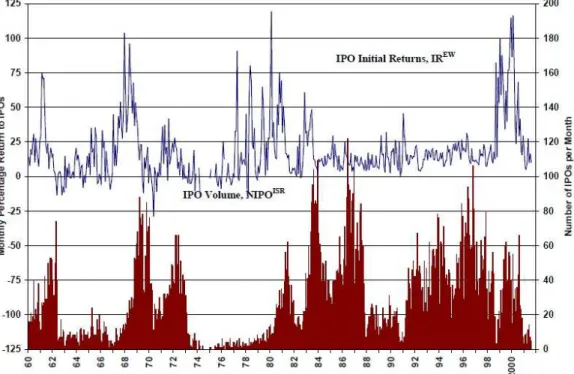
The existence of IPO underpricing phenomenon has been well-documented by literature. IPOs are underpriced when shares are offered to investors at prices that are below the prices at which shares trade on the stock exchange the first day of listing. Underpricing is considered an opportunity costs for firms going public since issuers selling shares at an offer price lower than their potential market value, are “leaving money on the table”. The first to analyse this phenomenon related to initial public offerings were Reilly (1973) and Ibbotson (1975); in the last forty years, IPO underpricing has been discussed in several scientific papers and different theories have been developed to understand and explain its causes. Most studies have described and analysed underpricing in the US stock market, but, although the level of underpricing varies from country to country and from sector to sector, the presence of this phenomenon has been confirmed also in every other studied market. Ritter and Welch (2002) showed that US IPOs conducted in the period from 1980 to 2001 had an average first-day return of 18.8%; while Loughran and Ritter (2004) demonstrated that the level of underpricing is cyclical: they found that the average first day return was 7% in the 1980s, 15% in the years 1990-1998, 65% during the “Dot-com bubble” (1999-2000) and 12% in the period 2001-2003. Additionally, Jenkinson
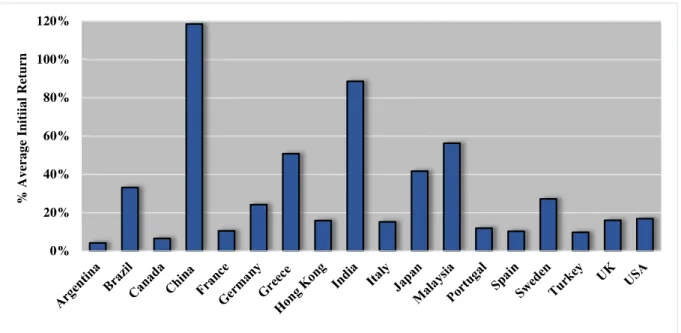
and Ljungqvist (2001) concluded that the IPO first day return is approximately 15% in industrialized countries and, on average, 60% in emerging markets.
It is not possible to identify a single theory able to provide an exhaustive explanation of this phenomenon; past researches have offered different models that study IPO underpricing and that examine the factors influencing the level of first day return. The most important theories are focused on asymmetric information between issuing firms, underwriters and investors. The best-known model that studies information asymmetries between investors is Rock’s (1986) “winner’s curse”. Investors can be classified into “informed” and “uninformed” and, according to Rock, issuing firms need to underprice their shares to attract uninformed investors to participate in the IPO, because underpricing ensures them a reasonable return for their ex-ante uncertainty. Indeed, ex-ante uncertainty about the value of the firm is related with the degree of underpricing and, as shown by Beatty and Ritter (1986), the greater the ex-ante uncertainty, the greater the expected underpricing. Baron (1982), instead, analysed information asymmetries between issuing firms and underwriters; Baron’s model assumes that investment banks have superior information and that issuing firms rationally allow underwriters to underprice, to compensate them for the use of their superior information about the demand level for the shares offered in the IPO.
According to “Information Revelation theories”, institutional investors have superior information than the issuer and the investment banks: Benveniste and Spindt (1989) introduced “information gathering theories” and showed that book-building is an appropriate mechanism to reduce uncertainty and information asymmetries and that issuing firms deliberately underprice because, in the absence of underpricing, investors would not have interests in revealing their private positive information. Cornelli and Goldreich’s (1999) and Hanley’s (1993) findings supported “information gathering theory”; they demonstrated that underwriters allocate large fractions of shares to investors that reveal information and that new positive information collected is only partially incorporated in the final offer price. Instead, “Signaling theory” assumes that companies have better information about firms’ prospects and value than investors. Signaling theory was introduced by Spence (1973) and Ibbotson (1975) and then developed by Allen and Faulhaber (1989), Grinblatt and Hwang (1989) and Welch (1989). They all concluded that underpricing is used by good quality firms to signal their value and convince potential subscribers of their high quality: this is a credible signal because only high-quality firms can recoup the initial loss associated with IPO underpricing.
Other different categories of theories built to explain the underpricing phenomenon are the following: “Ownership Dispersion theories” were developed by Zingales (1995), Booth and
Chua (1996), Brennan and Franks (1997) and investigate the relation between ownership’s structure changes and IPO underpricing; “Lawsuit Avoidance theories” were introduced by Logue (1973) and Ibbotson (1975) and supported by Tinic (1988), Hughes and Takhor (1992), Lowry and Shu (2002) and state that IPO underpricing is used as a mean of insurance against legal liability and reputation damage, and that litigation risks induce firms and investment banks to underprice; finally, “Behavioural theories” were built by Welch (1992) and Ritter (1998) and assert that underpricing is the result of investors’ behavioural biases. In addition to the theories regarding the reasons why companies leave money on the table, there are also other studies that analyses the main variables that affect the level of first day return: Beatty and Ritter (1986) examined the relation between the degree of underpricing and the ex-ante uncertainty about company’s value, Logue (1973) and Titman and Trueman (1986) studied the relation between underpricing and the reputation of the underwriter, while Sindelar, Ritter and Ibbotson (1994) analysed the IPO market cycles and their impact on the level of underpricing.
Some of the most important and largest IPOs occurred in recent years are internet-related IPOs. Among the most important and relevant IPOs of the last 15 years, the following are internet-IPOs: Google IPO (2004), Facebook IPO (2012), Alibaba IPO (2014), Twitter IPO (2013), Groupon (2013), Snapchat (2017). In this thesis, I decided to analyse IPOs in the internet sector, since the available literature on internet-related IPOs is mainly focused on the period of the Internet Bubble (1999-2001) and on the comparison between internet and non-internet IPOs. Ljungqvist and Wilhelm (2002) studied the causes of the extremely high first day returns reached during “Dot-com bubble” by internet IPOs and all IPOs in general; Ritter and Welch (2002) examined the increase in the percentage of tech and internet IPOs over time, while Loughran and Ritter (2004) demonstrated that the increase in the average level of underpricing is also related to the increase in the portion of IPOs conducted by young tech and internet companies. Finally, Lowry and Schwert (2002) and several other authors showed that, on average, technology and internet IPOs are more underpriced than technology and non-internet IPOs.
The aim of this thesis is not to compare the performance of IPOs in different economic sectors and observe how internet-related IPOs perform with respect to other IPOs. The research objective is, instead, to study only IPOs in the internet sector and find out which are the most important internet firms’ characteristics and factors which influence their IPO initial returns. I focused my research on US internet IPOs conducted in the period from 2000 to 2013 and listed on NASDAQ and on NYSE; I used several variables (which include IPO first-day return, age of issuing companies, firms’ market capitalization, ratio of shares offered in the IPO,
underwriter reputation and period of the IPO) to describe the principal characteristics of IPOs in the sample and to highlight the potential relationships between the level of IPO initial returns and the variables analysed. Then, I decided to examine the Facebook IPO case because, after having analysed almost the whole population of internet-IPOs conducted in the years 2000-2013, Facebook’s IPO seemed to be an outlier IPO: it was the largest, most anticipated and hyped internet IPO of that period and, contrary to expectations, was not characterized by high initial return but by poor stock performance for at least the first three months after the listing. I tried to study all the different causes and reasons of Facebook’s IPO failure because, only considering the specific problems and the unique characteristics of Facebook’s IPO, it is possible to explain its negative stock market debut.
The rest of the thesis is organized as follows. Chapter 1 provides an overview of IPOs, describing the main steps involved in the IPO process, the different pricing mechanisms and the services provided by underwriters; it also summarizes the advantages of going public and all the costs that issuing firms must incur.
Chapter 2 presents the literature review of underpricing phenomenon and reports which are, according to past empirical researches, the variables that affect the level of IPO underpricing. In the last paragraph, it is also briefly described the long-run underperformance of initial public offerings.
Chapter 3 shows the empirical research performed on internet IPOs. After having described the data used, the data sources and the most important variables studied, the chapter presents all the descriptive statistics analysed, the most relevant results obtained in the research in comparison with literature findings and the differences between Facebook’s IPO and the other internet IPOs.
Chapter 4 reports the Facebook’ IPO case: it is analysed the business and the economic performance of the company before the IPO, it is described the IPO process and the problems arisen the last days before the offering, and it is performed a valuation of the company using DCF methodology. In the final part of the chapter, it is discussed the causes of Facebook’s IPO failure and the reasons behind the bad stock performance.
The final chapter, Chapter 5, presents the main results of the thesis and the limitations of the analysis performed.
CHAPTER 1 - HOW TO GO PUBLIC
1.1 - WHAT IS AN IPO?
“Few events in the life of a company are as great in magnitude and consequence as initial public offering (IPO)” (Draho, 2004, p.1). An initial public offering is the first time that stocks issued by a company are sold to public investors. So, companies go public via an IPO and their shares become quoted on a stock exchange. “The initial public offering (IPO) is frequently the largest equity issue a corporation ever makes” (Zingales, 1995, p. 425).
The process of going public is a milestone for private company but it is complex, complicated and time-consuming. It involves different specific steps and requires important decisions to be made. Firms need to accurately take into consideration not only the trade-off between the advantages and disadvantages of going public, but also the implications of this decision and the problems that will arise. The decision to go public, in fact, generates substantial changes in the everyday life of a company: there is a change in the firm’s ownership structure, a loss of management control, an increase in information disclosure requirements and an increase in regulatory oversight. Other important issues that need to be analysed before starting the IPO process are: the check of substantial, formal and listing requirements, the choice of the stock market, the path leading to the listing and the relationship with investors. The success of the IPO strictly depends on the decisions taken, on the planning of the whole process and on the management of the relations with the market.
1.2 - WHY DO PRIVATE COMPANY DECIDE TO GO PUBLIC?
Which are the benefits of going public? There is not a unique answer to this question; there are different and various beneficial reasons. Going public allows firms to raise new equity capital necessary to finance the growth of the company. As stated by Dessy and Vender (2001), stock market is one of the most important financing channels for firms: it permits firms to pursue their development plans without creating any further debt. The funds received from the stocks sold in an IPO provide huge amount of liquidity (e.g. in 2014, Alibaba was able to raise $25bn in its IPO, which is today considered the world’s biggest IPO in history) that can be used to balance the company’s financial structure, to support the rapid expansion of firm’s operations, to enhance research and development activities or to finance the acquisition of other companies for external growth purpose. Public companies have also easier access to debt markets thanks to the transparency of their financial and economic situation with respect to private firms.
Another important motivation to go public is the fact that the stock exchange listing permits firm’s founders and pre-IPO investors to monetize part of their investments in open-market transactions or to totally liquidate their position using the listing as an exit strategy. Zingales (1995, p.425) affirmed that “the IPO is also an important channel through which an entrepreneur or venture capitalist gets rewarded for his initial effort”.
Going public guarantees significant intangible benefits: public companies obtain an increased visibility with respect to private companies through their ongoing information disclosures to the stock market. In addition, as sustained by Geddes (2003), listed companies can attract and recruit more qualified manager and higher quality employees thanks to the visibility and prestige that often characterize this kind of companies. There are also marketing and commercial advantages: a firm become better known during the IPO process and, generally, a listed firm is considered stronger and more stable. The better reputation, that companies can gain for being listed, can facilitate and encourage relationships with suppliers and customers.
Public firms have the possibility to use their stocks as a payment method in the acquisition of other business reducing, in this way, cash needs of the acquiring firms. Taulli (2000) said that using stocks as consideration is a common practice for mergers and acquisitions. Moreover, listed companies have the possibility to compensate and motivate their manager using stock options.
Another benefit of being a listed company can be linked to the existence of the daily market valuation determined by investors and expressed by means of stock prices. Stock prices daily change to reflect and value management choices and company’s results; Dessy and Vender (2001) affirmed that this kind of valuation can be considered a good benchmark for the firm’s real value (at least in the medium-term).
1.3 - THE IPO PROCESS
Going public is a complex and time-consuming process. Draho (2004, p.182) showed that “internal preparations for the IPO can begin up to two years prior to the offer date”. A company must choose the stock exchange for the listing of its shares, select the underwriter (the investment bank) and the auditor, decide the type of the offering: preparation activities and these decisions are fundamental to the success of the IPO. Once the process is started, a company must work closely with the investment bank, produce the information required by regulatory authorities, run the marketing phase, undertake road shows, manage the relationship
with the market. The various steps involved in an IPO are described and analysed in the following paragraphs.
The Choice of the Stock Market
Before issuing shares to the public, a company must choose which stock exchange to list its shares on. Firms going public often choose their domestic stock exchange but, in recent years, as described by Jenkinson and Ljungqvist (2001), with the increasing irrelevance of national boundaries, thanks to the spread of electronic trading, and the increasing competition between stock exchanges, companies have become more and more free to choose where to have their shares listed.
In the US, the major markets are: the New York Stock Exchange (NYSE), the NASDAQ Stock Market and the American Stock Exchange (AMEX). The London Stock Exchange comprehends: the Official List (the main market), the Alternative Investment Market (AIM, the market for small and growing companies) and techMARK (the market designed for high-technology firms). In Italy, stock market is divided between: the main list on Mercato Telematico Azionario (MTA), the STAR segment (“Segmento per Titoli ad Alti Requisiti”) and the segment for small, innovative and high growth firms (“Nuovo Mercato”).
Each market has different and specific listing requirements. For example, the NYSE has more stringent requirements and standards with respect to the NASDAQ (in terms of offering size, firm’s total assets, revenue and profitability); while in UK, companies listed in the AIM segment or techMARK are subject to less regulation than the ones listed on the Official List. Firms going public must respect and satisfy the listing requirements and the regulations imposed by the market in which they seek the admission. After verifying the compliance with the requirements, companies must submit an application to the stock exchange. Generally, as described in detail by Bagley and Dauchy (2012), the application is made the same day or shortly thereafter the registration statement1 is filed.
The choice of the stock market not only depends on the specific financial requirements and on the minimum listing standards imposed by the regulatory body of each stock exchange. Indeed, it is also important to consider the costs associated with the listing and, above all, the effects that the different market can have on the image and visibility of the firm. The market’s reputation can have a relevant influence on the final choice. The most prestigious market is the
New York Stock Exchange: the listing on NYSE can guarantee the firm immediate visibility between investors. Nevertheless, Taulli (2000) argued that the NASDAQ is today the market preferred by the most important high-tech companies in the world.
The Selection of the Underwriter
“The investment bank is a vital cog in a successful IPO. […] Consequently, the issuer/underwriter relationship is of paramount importance and must be structured wisely.” (Draho, 2004, p.187). Generally, the management of a private company has never started an IPO process before and so lacks detailed knowledge of the stock market. Investment banks can then offer the possibility to exploit their experience in the stock exchange listing, their network of knowledge between investors (above all institutional investors), their reputation on the market and their competencies, in order to increase the firm’s visibility and help in making the necessary changes that a company going public must fulfil.
Initial public offerings are managed and controlled by investment banks that provide different services: first of all, banks have to perform a “due diligence” investigation in which they analyse the financial situations of the company and verify that capital requirements are satisfied, then they have to collaborate with the company to prepare and drawn up the prospectus, in addition they have to underwrite the stock offering assuming part of the risk associated with the issue proceeds and, finally, they have to sell the shares to the public and allocate them to investors. Investment banks play also a relevant role in determining the pricing of the shares and the timing of the listing, and in supporting the marketing phase of the IPO.
Before analysing the services provided by the investment bank, it is helpful to examine how the process of selecting an underwriter is articulated. In the underwriting market for IPOs there are several investment banks that are ranked using total IPO proceeds and market share. The most important are Goldman Sachs, Morgan Stanley, Citigroup, UBS, Merrill Lynch.2 Firms start the selection with a “beauty contest” (or “bake-off”) in which each participating bank makes a formal presentation to the board of directors. According to Bagley and Dauchy (2012), banks in their presentation emphasize their expertise in the IPO process and their reputation, and show their recent relevant IPOs, the post-IPO price performance of the companies they have taken public and their preliminary views on the market value of the company. After the “beauty contest”, the firm chooses the investment bank that will be the lead manager of the IPO process (a company can also select two or more banks that will act as co-lead managers). To evaluate
the potential lead managers, a company can use different combined criteria: cost minimization (the choice of underwriter influences the IPO costs, in particular underpricing and compensation costs), bank’s reputation and, moreover, the reputation of bank’s analysts who will follow the listing, information specialization (the quality of information that the bank has collected about the firm and potential investors) and monitoring services (the level of external underwriter monitoring).
The “Underwriting Agreement” is a formal contract that acts as a purchasing contract between the issuer and the underwriter. There are three principal forms of the contract: “firm commitment”, “best efforts” and “all-or-none”. In the firm commitment contract, the underwriter guarantees to purchase all the shares issued and to absorb the eventual loss generated by unsold shares; in the best effort contract, instead, the underwriter makes an effort to sell firm’s stocks but does not guarantee the proceeds and unsold shares return to the issuer. In an all-or-none underwriting, if the entire issue is not sold, then the issue is cancelled, and investors’ money collected will be returned.
Another aspect to take into consideration in the relationship between the issuer and the underwriter is the underwriter compensation. The primary form of compensation is represented by the spread: the difference, expressed as a percentage, between net price (the price at which the underwriter buys shares from the issuer) and offer price (the price at which the underwriter sells the shares to the public); in other words, it is the percentage of the offer price retained by the investment bank. The spread comprehends management fee, underwriting fee and selling concession. In recent years, a 7 percent spread is the most common spread charged by underwriters (for very large IPOs, lower spreads are charged). Chen and Ritter (2000), in their paper entitled “The Seven Percent Solution”, showed that, in the period between 1995 and 1998, more than 90 percent of US IPOs raising between $20 million and $80 million had spreads of exactly 7 percent. High spreads represent a relevant cost for a firm going public but the convergence to a common spread eliminates, totally or in part, compensation cost as an underwriter selection criterion. In some cases, especially in best efforts agreement, investment banks receive an additional compensation in the form of warrants. A warrant grants the underwriter the right to buy firm’s shares at a fixed price (exercise price) that is lower than the offer price.
The Due Diligence Process
At the beginning of the issuer-underwriter relationship, there is an initial information-gathering phase. The bank chosen as the lead manager performs the due diligence investigation which includes: financial, business, legal and accounting due diligence. In this phase, the underwriter works closely with the firm; generally, due diligence consists of company inspections and meetings, interviews, question-and-answer sessions with senior and operational managers of the firm. Due diligence is needed to ensure that all necessary and relevant information about the company is accurate and complete. As stated by Espinasse (2014), an appropriate due diligence investigation is fundamental for any due diligence defence against prospectus liability.
In the business due diligence, the underwriter examines the company’s activities and business operations; in the financial due diligence, instead, it analyses firm’s capital structure, business plan and financial forecasts. In addition, in the legal and accounting due diligence, the underwriter inspects contracts (for example, contracts with main customers and suppliers), legal documents and accounts ledgers. Finally, the underwriter also verifies managers’ qualifications and experience to run the firm.
Figure 1 - Key steps of the IPO process. Source: IANNOTTA, G., 2010.
The Drafting of the Prospectus
As it is possible to observe in Figure 1, the preparation of the prospectus is performed in parallel to the due diligence investigation. All the information gathered in the due diligence phase is used to draft an initial (or preliminary) prospectus that, in the US, is also known as “red herring” prospectus because it has a legal disclaimer printed in red in the front page. In fact, the information contained in this preliminary document are usually not complete and subject to change.
“The prospectus is, legally, the only publication that investors should use in order to make an investment decision to buy shares […] in an IPO” (Espinasse, 2014, p.102) and, so, the initial prospectus is the primary source of information accessible to all investors. It contains information regarding the issuer, the firm’s business and strategy, the company’s competitive advantage and potential risk factors, the quality of the management, the use of proceeds and, also, information about principal shareholders and the investment bank chosen as underwriter. The prospectus “is a key marketing and protection tool for retail investors” (Iannotta, 2010, p.53). The “offering circular” is, instead, used to indicate a different version of the prospectus that contains all the information necessary for institutional investors.
The final prospectus includes also detailed information about the issue, with the specification of the final price and the number of shares offered. The document must be approved by the market authority (e.g., in the US, by the SEC, “Securities and Exchange Commission”); the investment bank and the issuer are liable for its content.
In the US, the final prospectus is the most important document in the registration statement, which is filed with the SEC for the registration of initial public offerings. The registration statement must conform to SEC rules which specifies both the amount and the format of information required. Companies, in general, submit the registration statement on Form S-1 which is composed by: (a) the prospectus3; (b) all supplemental information (e.g., the company’s charter and bylaw, the underwriting agreement…). Form S-1 requires several documents and detailed data; for this reason, small issuers can use Form SB-1 and Form SB-2 (that require less specific information and a less complex procedure than Form S-1) to register their offerings. Once received the registration statement, the SEC’s Division of Corporate Finance must verify its accuracy and conformance to disclosure requirements and it can always refuse to render the registration statement effective if information is incomplete or some documents are missing.After the approval of the prospectus and all the other documents, the
registration statement becomes effective and the final prospectus becomes available to investors. A company is not allowed to sell its shares until the registration filed with the SEC is effective.
Marketing Phase
The IPO marketing phase starts with important pre-marketing activities, which are also known as pre-deal investor education (PDIE). The investment bank’s analysts prepare a Pre-IPO Research Report about the company, which is used to educate institutional investors on the firm’s investment case. The Research Report contains the analysts’ valuation and company’s financial projections. Pre-deal investor education is important because it permits to collect investors’ feedbacks and their interest in participating in the IPO, so as to help the underwriter in determining a price range for the issue.
In the last couple of weeks (in general 2 or 3 weeks) prior to the listing, companies undertake the “roadshow”. Roadshows are a series of short meetings in which the management of the issuing company and the investment bank present the issue to potential investors (both retail and institutional investors). Meetings can take place in different financial centre (including the city in which the stocks will be listed); they can include presentations to a large audience and “one-on-one session” with the most important investors. Roadshows presentations do not add new information about the firm and “merely reiterate fairly general information already contained in the prospectus. Perhaps surprisingly, road shows may instead be a way for the investment banker to gather information from investors, about their views of the company and its valuation. […] The marketing phase thus generates a lot of additional information regarding the reaction of the potential investors to the offer, which can be fed into the next stage of the process when the final price is set” (Jenkinson and Ljungqvist, 2001, pp.14-15). These meetings are, indeed, “a key tool in testing the market appetite for the IPO” (Yates and Hinchliffe, 2010, p.383): in this phase, investors are solicited to make non-binding bids4 and it is created a book of orders useful to determine the final price of the issue (the Book-building process5).
In addition to the roadshow, there are also other forms of marketing for an IPO, like press briefings and advertising. Marketing campaign is critical and, as stated by Kuhn (1990, p.269),
4 “In some cases the bids received during the marketing stage are legally binding (for example those from retail
investors), but in the case of institutional investors the bids are more normally not. However, in practice, even though such institutional bids may not be legally binding, there is a strong presumption that investors should be prepared to honour their bids”. (Jenkinson and Ljungqvist, 2001, p.14)
it “will determine the success or failure of the IPO. The key is to stimulate investor demand for the stock so that, as in basic economics, the demand will exceed the supply.”
According to Cook, Kieschnick and Van Ness (2006), who analysed a sample of US IPOs from 1993 to 2000, marketing is also critical for the aftermarket performance of the IPO; in their paper entitled “On the marketing of IPOs” (2006, p.59), they reported that there is “a positive and significant correlation between retail trading activity during the first day of trading in an IPO and the IPO’s pre-issue publicity, […], pre-issue publicity is positively correlated with upward revisions in IPO offer prices and offer price valuations that are above comparable firms in their industry, […], insider wealth exceed their dilution losses when more pre-issue publicity is associated with their IPO, […], initial IPO returns are positively correlated with pre-issue publicity, and […], investment banker compensation is positively and significantly correlated with pre-issue publicity.”
IPO Pricing (Book-Building Mechanism, Fixed-price Offerings and Auctions)
The final steps of the IPO process involve the pricing and the allocation of firm’s shares. As sustained by Espinasse (2014, p.193): “pricing and allocating an IPO is really more of an art than a science. It needs to take into account the priorities of the issuer, of the selling shareholders (if any) and of the investors so as to encourage aftermarket buying and a steady increase in the share price”.
According to Sindelar, Ritter and Ibbotson (1994), the pricing of IPOs is a difficult process because it is not possible to observe market price prior to the offering and also because issuing firms are, generally, young companies with little operating history. The offer price must reflect the fundamental value of the company and must be aligned with the valuation of comparable firms (“peer comparison”). At the same time, it must also take into consideration issuer’s and underwriter’s interests, investors’ feedbacks and financial market conjuncture. Sindelar, Ritter and Ibbotson (1994, p.66) stated that “if the price is set too low, the issuer does not get the full advantage of its ability to raise capital. If it is priced too high, then the investor would get an inferior return and consequently might reject the offering”.
There are three different IPO pricing mechanisms: book-building, fixed-price offering and auction. Nowadays, the most popular mechanism worldwide is building. The use of book-building has been growing rapidly over the last two decades and its growing popularity has come, above all, at the expense of auctions. Draho (2004, p.219) asserted that “issuers, underwriters and institutional investors appear to universally favour book-building when given
the choice”, but he added that “by and large, issuers do not get to choose their IPO mechanism. Either regulatory constraints limit the choice or market forces dictate that certain types of issuers must use a particular method”.
In fixed-price mechanism, the issue’s final price is already specified in the preliminary prospectus and is chosen prior to collecting orders from investors; so, it is not influenced by market’s demand and cannot be adjusted in response to excess supply or demand. Normally, fixed-price offerings are used when the underwriting agreement is a best-effort contract; the underwriter does not actively sell the shares but it only distributes the prospectus, collects orders and performs share allocation6 with limited discretion.
The book-building mechanism is, instead, typical of firm commitment contract and it is characterized by more discretion permitted to the underwriter and to the issuer in pricing and allocating the shares. It can be divided in three main steps. In the first one, the underwriter, after having distributed the preliminary prospectus which contains a preliminary share price range, determines which investors are invited to participate in the book-building process. In general, investment banks consider only institutional investors in this process and exclude retail ones7.
Retail investors are not invited, as discussed by Jenkinson and Ljungqvist (2001, p.17) given “the infeasibility of inviting and discussing the issue with a large number of small investors”, and because they “may typically be less informed as to the value of the company than professional investors”. In the second step, investors communicate their interest and submit their bids. Bids can be strike bid (in which the investor accepts to buy a given number of share at whatever price is set within the preliminary range) or limit bids (in which the investor divides its bid in different price-quantity combination and communicates a price above which he does not consider the purchase). This step is usually performed during the road show and it is a dynamic process, “with the investors and investment bank both getting a feel for the state of demand and with investors revising their bids as the process evolves” (Jenkinson and Ljungqvist, 2001, p.17). Indeed, if during the book-building process it results that the demand is very strong (or very weak), underwriters can revise the range of the offer price and investors can submit new bids. In the final step, the investment bank determines the final price and allocates shares. Despite knowing investors’ demand curve, the final price is not determined only by matching demand and supply, but the investment bank maintains a significant discretion in setting the price and allocating the shares.
6 See next paragraph “Allocation of the Shares”
7 “The book-building method is often criticized because, in contrast to the other methods, underwriters generally
The last alternative mechanism that underwriter and issuing firm have, to price the issue, is auction; even if, in practice, they can also use hybrid offerings mechanisms which combine book-building and fixed price or book-building and auction. “Auctions afford the issuer and underwriter the least amount of control in determining the IPO outcome” (Draho, 2004, p.218). Investors specify the limit price of their offer and the number of shares they are willing to buy. The aggregate demand curve is formed by all the individual orders and the final price is determined by the matching of demand and fixed supply. All investors who bid a price above the offer price receive firm’s shares. There are two main auction models: single-price auctions (in which all investors pay the same price) and discriminatory-price auctions (in which investors pay what they bid). Unlike book-building, auction can “be conducted as entirely disintermediated processes” (Jenkinson and Ljungqvist, 2001, p.19).
Allocation of the Shares
Ljungqvist and Wilhelm (2002) showed that IPO allocation policies generally favour institutional investors. In their paper entitled “IPO allocations: discriminatory or discretionary?”, after having analysed 1.032 IPOs between 1990 and 2000 across 37 different countries, they concluded that share allocated to institutional investors are almost double than those received by retail ones. They demonstrated that this happens both in US, where underwriters have full discretion in most IPOs, and outside US, where investment banks’ allocation discretion is more constrained.
In general, there is no pricing and allocation discretion provided by auction mechanism. Once decided the model of the auction, the underwriter has a passive role. “The bids are effectively anonymous, as shares are allocated in a non-discriminatory basis to institutional and retail investors”(Draho, 2004, p.218).
In fixed-price offerings, several allocation mechanisms reflecting the market’s regulations are used in different countries. The most common is “fair allocation system”, in which share allocation is performed pro rata when the issue is oversubscribed. Many countries allow some kind of discrimination based on order size or in favour of particular types of investor, but, generally, “fixed-price offerings provide underwriters with no discretion because shares are simply allocated on a pro rata basis” (Ljungqvist and Wilhelm, 2002, p.16).
As described by Jenkinson and Ljungqvist (2001, pp.18-19), “the sorts of non-discriminatory rules that often apply to fixed price offerings do not apply to book-building efforts: the investment bank, in consultation with the issuing company, will have complete discretion over
who is allocated shares. This discretion over allocation is one of the controversial aspects of book-building, in part because not all investors are able to take part in the book-building in the first place”. Allocation discretion is used to reward investors that reveal positive information during book-building process and, as stated by Iannotta (2010), the empirical evidence confirms the fact that more informed investors receive larger allocations. Investment bank’s discretion induces investors to reveal their information before the final pricing of the IPO and the reward for investors providing information is underpricing. In general, “the institutional allocation increases with the amount of underpricing because the two are jointly determined by the positive information revealed by the institutions” (Draho, 2004, pp.222-223).
Listing and Trading
Once the IPO pricing and allocation have been performed, secondary market trading starts shortly after (usually after a couple of days). Generally, the first days are characterized by volatility and a trading volume extraordinary high as some investors continue to buy shares and others flip8 their allocations to obtain a short-term profit. The underwriter plays an important
role in stabilizing the price of the shares. Price stabilization activity is aimed at absorbing the excess supply of shares and avoid excessive price fall in order to protect investors against downside risk in the first trading period. The investment bank starts “to buy shares in the after-market in the event of pressure for the share price to fall (in particular below the issue price) and to sell more shares (either at the time of the IPO or in the after-market) in the event of high levels of excess demand for the shares” (Jenkinson and Ljungqvist, 2001, p.21). Stabilization activities last usually for two weeks after the first day of listing and the possibility to perform price stabilization must be disclosed in the IPO final prospectus.
The underwriter can also provide analyst coverage of the company after its IPO and help to develop an effective communication program, with which it is possible to ensure a steady flow of information to new investors. All the services provided by the underwriter are essential to ensure the company’s smooth transition from private to public ownership.
8 “Investors who receive an IPO allocation are said to flip their shares if they sell them immediately in the
aftermarket. Flipping could be motivated by the desire to lock in quick profits or to dump shares before price stabilization ends”. (Draho, 2004, p.263)
1.4 - THE COST OF AN IPO
Undertaking an IPO is a time-consuming and costly process. Companies must consider not only the costs associated with the IPO process (the costs of listing) but also the ongoing costs of being a public company (the costs of maintaining a public company structure). According to Dessy and Vender (2001), rather than costs, it would be more appropriate to talk about “investments” needed to go public, as the decision of becoming a public company brings several benefits that help the firm to create value in the long-term.
All the key decisions made by the issuer during the IPO process affect the direct and indirect costs of going public. The most important decisions influencing the price are: the choice of the underwriter, the proportion of equity sold to new investors, the amount of money to raise, the price of the issue, the pricing and allocation mechanism. In addition, as shown by Menyah and Paudyal (2002), the costs depend also, on firm characteristics and market conditions: firm size (market capitalisation), pre-IPO ownership of the company, the book to market ratio and the market volatility at the time of the IPO.
The most relevant cost of the IPO is the underwriter’s compensation: the gross spread that is expressed as a percentage of total IPO proceeds. In US, medium-size IPOs tend to have a gross spread equal to 7% while, in Europe, this percentage is generally lower. Gross spread comprehends management fee, selling fee and underwriting fee, which are negotiated between the issuer and the investment bank and, generally, revealed in the prospectus.
Marketing campaign and road show expenses, legal and accounting fees, printing expenses for the prospectus and registration (or listing) fees are the main fixed costs. According to Heim (2002, p.28), “attorneys’ fees, accounting fees and other expenses can easily add up to $400,000 to $500,000 for a typical IPO”. Moreover, it must be also considered the opportunity cost of management time: the time that senior managers spend working with investment bank’s analysts in preparing the prospectus and other documents for the IPO. “Each hour that the management and employees of a company spend in providing information to the lawyers and investment bankers is an hour that is lost in running the operations of the company” (Heim, 2002, p.29).
The pricing mechanism influences also the cost of an IPO. In general, pricing the IPO using book-building process is more costly than using fixed-price or auction mechanism. After having studied a sample of 2,143 IPOs by issuers from 65 countries during the period from 1992 to 1999, Ljungqvist, Jenkinson and Wilhelm (2003, p.2), found that “the direct costs of bookbuilding are, in our sample, around twice as high as in fixed-price offerings”.
Regarding the ongoing costs of being public, the company has to incur expenses linked with reporting requirements (quarterly and annual reports), mandatory stockholder meetings and investor relations. Being public entails also incremental staff and board costs, professional fees for accounting advice, audit, legal and annual listing fees. These are all substantial and ongoing expenses that a company must consider before undertaking an initial public offering.
Finally, also the underpricing is generally considered an indirect cost of an IPO. It is defined as the percentage difference between the offer price and the first day closing price. It is an opportunity cost since issuers, selling shares at a price below their potential market value, are “leaving money on the table”.9
CHAPTER 2 - IPO UNDERPRICING
2.1 - UNDERPRICING PHENOMENON
The existence of the underpricing phenomenon has been well-documented by literature. Several researches and studies examining the underpricing of initial public offerings have been carried out since the early ‘70s. As reported by Pazarzi (2014, p.281), “for the 40-year period between 1969 and 2010 there have been conducted more than 150 empirical studies regarding the underpricing of the IPOs”. Reilly (1973) and Ibbotson (1975) were among the first to analyse this phenomenon; since then, different theories and models have been built to explain the reasons and factors that cause and influence IPO underpricing.
Ritter and Welch (2002), studying a sample of 6,249 US IPOs from 1980 to 2001, found that the average first-day return was 18.8%; while Smith (1986), after having summarized the results and studies of other authors, concluded that the average underpricing exceeded 15%. However, the level of underpricing is cyclical; Loughran and Ritter (2004, p.5) described that: “in the 1980s, the average day return on initial public offerings (IPOs) was 7%. The average first-day return doubled to almost 15% during 1990-1998, before jumping to 65% during the internet bubble years of 1999-2000 and then reverting to 12% during 2001-2003”. The degree of underpricing varies also from country to country; Jenkinson and Ljungqvist (2001, p.37) stated that: “the first-day premium that investors experience is positive in virtually every country, and typically averages more than 15 per cent in industrialized countries and around 60 per cent in emerging markets, measured between subscription and the first day of trading”.
Underpricing can be calculated using the “Raw Initial Return (RIR)” formula, which simply is the percentage difference between the first day closing price ( , ) and the IPO offer price ( , ):
, = , − ,
,
Otherwise, it can be calculated using the “Market Adjusted Initial Return (MAIR)” formula, which also takes into consideration the general performance of the stock market in the time lag between the closing date of the subscription of the shares and the first day of trading:
, = , − ,
, −
, − ,
,
Where , is the market index at the end of the first trading day, while , is the market index at the end of the shares subscription period. It is more accurate to use the “Market
Adjusted Initial Return” formula, since the first day closing price may be high with respect to the offer price only because the whole stock market has risen after the closing date of the subscription.
Underpricing is an opportunity cost for a firm going public; Loughran and Ritter (2002, p.413) showed that “during 1990-1998, companies going public in the United States left more than $27 billion on the table, where the money left on the table is defined as the first-day price gain multiplied by the number of shares sold. […] The $27 billion left on the table is twice as large as the $13 billion in investment banker fees paid by the issuing companies”. In a perfect capital market, underpricing should not be so high and firms should not “leave money on the table” or, at least, not a large amount.
Underpricing is an ongoing phenomenon that has been documented and studied almost in all countries, which are characterized by different company population and, above all, by different institutional, legal, and regulatory frameworks. Several authors have offered various theoretical explanations to explain IPO underpricing in any country and in any different framework. This chapter deals with presenting and analysing the most relevant models and theories of the existing literature about IPO underpricing.
2.2 - REASONS AND THEORIES FOR IPO UNDERPRICING
Underpricing has been discussed in several scientific papers and different models have been developed to understand the causes and reasons of this phenomenon. It is not possible to identify a single theory able to provide an exhaustive explanation of IPO underpricing. However, the most important theoretical studies are based and focused on asymmetric information; there are models based on information revelation, on firm’s quality signalling and on the information asymmetry existing between various classes of investors or between the issuer and the underwriter. Other possible explanations are discussed in ownership and control theories, in lawsuit avoidance theory and, more recently, also in behavioural theories.
In addition to the theories trying to explain the reasons of IPO underpricing, there are also empirical researches that examine the factors influencing the level of underpricing, like the reputation of the underwriter, the market timing of the initial public offering, the pricing mechanism adopted, firm and economy specific factors.
Information Asymmetry
Among the different asymmetric information theories, the best-known model is represented by Rock’s (1986) winner’s curse. This model is based on the assumption that it is possible to categorize investors into “informed” and “uninformed” investors. In addition, it assumes that the investment bank and the issuing firm are not completely informed about the “true value” of the shares: the investment banker and the firm are in informational disadvantage because they must reveal to the market all the information included in the prospectus, but, they are not able to obtain all the information possessed by informed investors (usually institutional investors). According to Rock (1986, p.190), “even though the firm and its agent know more than any single individual in the market, they know less than all the individuals in the market combined. While the investment banker is the one agent suited to price the offering, his information and expertise are inferior to the pooled talents and knowledge of all the agents. Some individuals may have inside information about a competitor that could have a significant impact upon the firm’s product. Others may know better than the firm or the investment banker the appropriate rate to discount the firm’s cash flows in the capital market”. Informed investors, taking advantage of their additional information, apply only for underpriced shares, while uninformed investors are not able to discriminate between underpriced and overpriced shares. Uninformed investors face a winner’s curse: they get only a small fraction of underpriced issues due to the high demand from informed investors, while they get full allocation of overpriced offerings because there is no competing demand. Consequently, knowing the winner’s curse phenomenon, the uninformed investors abstain from participating in the IPO, unless the investment bank and the issuing firm price the share at a discount. If informed demand is not sufficient to absorb all the shares offered, the participation of uninformed investors becomes essential to the success of the IPO. According to Rock, underpricing is therefore needed to attract uninformed investors because it ensures them, at least, a non-negative return.
Rock’s model is intuitive and can be considered an application of Akerlof’s (1970) theory, “The market for Lemons”, in which uninformed buyers are in informational disadvantage and cannot distinguish between good quality and bad quality products: asymmetric information causes adverse selection and lead to market failure. One implication of “winner’s course model” is that the degree of underpricing should be linked with ex-ante uncertainty about the value of the firm. Ex-ante uncertainty reduces the investor’s ability to correctly evaluate a firm going public, and so, as reported by Gregoriou (2006, p.195), “the greater the ex-ante uncertainty, the greater is the advantage of becoming an informed investor”. Beatty and Ritter (1986) concluded that
underpricing increases with ex-ante uncertainty, since an increase in the number of informed investors intensifies the winner’s curse phenomenon.10
Rock’s model assumptions and findings have been largely discussed in the literature. Jenkinson and Ljungqvist (2001) questioned the assumption that issuing firms must pay with the underpricing of the shares offered for the uninformed investors’ participation in the offering. Indeed, if the number of informed investors is not sufficient to absorb all the offering, the uninformed ones could invest through institutional-informed investors (for example using investment funds) in order to exploit their superior information (in exchange for a fee) and not subscribe overpriced shares.
Hanley and Wilhelm (1995), instead, studying a sample of 38 IPOs managed by a single underwriter, found that approximately 70% of shares of underpriced issues are allocated to institutional investors but also that “institutional investors take similar large position in overpriced offering” and that “institutional investors are allocated large proportion of issues for which pre-offer interest is weak and also of issues for which it is strong” (Hanley and Wilhelm, 1995, p.240). These findings can be interpreted as evidence against Rock’s model, according to which informed investors impose a winner’s curse on uninformed ones by bidding only for underpriced offerings.
In addition, Rock’s model assumes that it is costless for informed and institutional investors to abstain from participating in overpriced issues. Nevertheless, Benveniste and Spindt (1989) showed that this choice can cost an investor the opportunity to take part in future (underpriced) offerings and, consequently, also informed investors decide to participate in less attractive issues. Finally, it is important to take into consideration that Rock’s model can be used to explain underpricing only in fixed-price offering, where price is not determined by the bidding of investors. Indeed, winner’s curse phenomenon is not a problem in book-building mechanism, because the investment banks solicit investors feedbacks and information prior to the final pricing.
Information asymmetry can be also observed between the issuing firm and the investment bank. Baron’s (1982) model takes into consideration this information asymmetry and assumes that investment banks have superior information about the demand level for the shares offered and capital markets. According to Baron, issuing firms rationally allow underwriters to underprice in order to compensate them for the use of their superior information. In fact, when the underwriter is better informed than the issuer, the pricing and distribution decisions are
delegated to the investment bank. “The value to the issuer of the banker's distribution effort is an increasing function of the issuer's uncertainty, so greater uncertainty increases the demand for the advising and distribution services of the banker” (Baron, 1982, p.956). Investment banks choose the IPO price so as to optimize their unobservable distribution efforts and, so, they have an incentive to underprice. The greater the level of ex-ante uncertainty and the greater the asymmetry of information between issuer and underwriter, the greater the level of underpricing.
However, Muscarella and Vetsuypens (1989), testing the Baron’s model, found that the information asymmetry existing between the issuer and the underwriter is not useful to explain the underpricing phenomenon. They used a small sample of 38 IPOs of investment banks going public without referring to other intermediaries. In other words, they selected a sample of “self-marketed” or “self-underwritten” IPOs, in which investment banks participated in the distributions of their own shares. By doing so, there is no separation between the issuer and the underwriter and, therefore, there is no information asymmetry and there are no principal-agent problems. Muscarella and Vetsuypens showed that, in contrast to Baron’s findings, “self-marketed” IPOs present statistically significant underpricing and, above all, that these IPOs are no less underpriced compared to traditional IPOs.
Information asymmetry can be identified not only between investors or between issuers and underwriters, but also between underwriters and investors. This type of asymmetric information is described and used by “Information Revelation Theories”11 (or “Market Feedback Hypothesis”) to analyse the IPO underpricing phenomenon. Lastly, information asymmetry between issuers and investors is utilized by “Signaling Theory”12, in which the issuers are better informed about company’s present value and future cash flows and employ underpricing as a signal of the firm’s quality.
Information Revelation Theories (Market Feedback Hypothesis)
According to Information Revelation Theories, institutional investors have better knowledge than the issuer and the investment bank about the firm’s competitors, the industry and the economy as a whole. Investors are not incentivized to reveal positive information about their own demand for the shares, because this would lead to an increase in the final offer price (in informationally efficient market, prices reveal all available information), that is
11See next paragraph, “Information Revelation Theories” 12 See the paragraph “Signaling Theory”
disadvantageous for them. Since the disclosure of information is essential to avoid mispricing, underwriters must find a way to induce investors to truthfully reveal their private information.
Benveniste and Spindt (1989) were the first to introduce “information gathering theory” and they pointed out that book-building could be an appropriate mechanism to induce investors to reveal information about the demand for shares in the pre-selling phase. As described in Chapter 113, investors communicate their interest and submit bids (communicating the price and the number of shares they are willing to buy) during the road show, before the final price has been set. Book-building process permits the underwriter to reduce the incentive to mispresent positive information and to better evaluate the offerings. However, investors that truthfully reveal their private (positive) information and their expectations about the value of the listing company must be rewarded by underwriters with discretionary allocation of underpriced shares (book-building mechanism allows investment banks to have total discretion in allocating shares). “If the underwriter is doing his job well, each investor’s reward will just reflect the marginal value of her private information. It follows that underpricing increases in the marginal value of private information” (Jenkinson and Ljungqvist, 2001, p.91). Book-building permits to reduce uncertainty and information asymmetries. Issuers benefit from setting a final offering price higher than underwriter’s initial estimate (upward revision of the initial price range) and, deliberately, “leave some money on the table” because, in the absence of underpricing, investors would not have interest in revealing their positive information.
Cornelli and Goldreich (1999) findings support “information gathering theory”. They investigated 39 international equity issues conducted using book-building procedure and they found that underwriters allocate large fractions of shares to investors that reveal information in their bids. Specifically, Cornelli and Goldreich (1999, p.3) found that “bidders who reveal information through limit prices14 are awarded more shares than similar bidders who submit quantity bids without price limits. Similarly, bidders who revise their bids - which can be interpreted as providing information as it arises over time - are subject to more favourable treatment in the allocation of shares”, and that “bidders from the issuer’s country receive a favourable allocation, especially in issues with low oversubscription. Since local investors are typically viewed as better informed, this favourable treatment may be again seen as a remuneration for the revelation of information”.
13
See IPO Pricing (Book-Building Mechanism, Fixed-price Offerings and Auctions)
14
“The presence of limit prices provides additional information, which tells the investment banker how demand varies within the preannounced price range.” (Cornelli and Goldreich, 1999, p.2)
Another support to Benveniste and Spindt theory is provided by Hanley (1993). She showed that the new positive information collected during book-building process is only partially incorporated in the final offer price. Hanley (1993, p.249) demonstrated also that “underpricing is positively related to revisions in the offer price from the filing of the preliminary prospectus to the offer date. […] Issues that have positive revisions in the offer price and good information revealed are significantly more underpriced than other IPOs”.
A contribution to Information Revelation Theories is supplied also by Benveniste and Wilhelm (1990). They stated that the optimal mechanism to acquire information from informed investors is price discrimination and that underwriters need to use a combination of price and allocation discrimination to maximize proceeds. If investment banks could offer underprice shares only to well-informed investors, their incentive to truthfully reveal positive information would be stronger and issuers would leave less money on the table. As reported by Bennouri and Falconieri (2001, p.3), “the authors [Benveniste and Wilhelm] show that, the less discretion the intermediary has, the smaller the issuing firm’s profit is. They conclude that, the seller is better off when he can use both instruments, price and quantity discrimination. This however is not what we observe in practice”. Indeed, regulatory constraints generally forbid price discrimination among investors and, consequently, investment banks must underprice the issue to all IPO subscribers, without rewarding only informed ones.
In addition, Benveniste and Wilhelm also studied the interaction between Rock’s winner’s curse and information revelation. They demonstrated that, when underwriters are able to extract information from well-informed investors using book-building mechanism, both the information asymmetries among investors and between investors and underwriters are reduced. Consequently, it is reduced the winner’s curse problem for uninformed subscribers and then the level of underpricing.
In contrast with Information Revelation Theories and with Cornelli and Goldreich findings, Jenkinson and Jones (2004), after having analysed 27 European IPOs managed by different underwriters, concluded that there is no evidence that well-informed investors receive larger allocation. They found that underwriters discriminate only between long-term and short-term investors and that long-term shareholders are constantly preferred in allocation. Their “results cast doubt upon the extent of information production during the bookbuilding period” (Jenkinson and Jones, 2004, p.2309).
Signaling Theory
Unlike Information Revelation Theories and Rock’s assumptions, Signaling Theory supposes that companies (especially issuing companies’ managers) are the well-informed party and have better information about the firm’s value and future prospects than investors. Underpricing is seen as a signal of firm’s quality and it is used by high quality firms to convince potential subscribers of their true value.
The first to introduce the concept of “Market Signaling” was Spence (1973), who described and analysed the role of signalling in the job market. He assumed that there are different quality workers and that employers cannot verify workers’ quality before the hiring. According to Spence, “high-quality” prospective workers use education level as a signal of their high productivity.
The original intuition to IPO signalling theory came from Ibbotson (1975), who stated that issuers deliberately underprice to “leave a good taste in investors’ mouths so that future underwritings from the same issuers could be sold at attractive prices” (Ibbotson, 1975, p.264). Other applications of signalling models to explain IPO underpricing were provided by Allen and Faulhaber (1989), Grinblatt and Hwang (1989) and Welch (1989).
Allen and Faulhaber (1989) built a model in which there are only two types of firms: good and bad. The quality of the firm is defined in terms of expected dividend streams15. Only firms
know the type to which they belong, and issuers are risk-neutral: they want to maximize expected proceeds that are the sum of issuing proceeds from initial public offerings and subsequent seasoned offerings. Good firms signal their quality through the initial offering price: the level of underpricing is positively linked with the quality of the firm. Allen and Faulhaber (1989, p.304) affirmed that “underpricing the firm’s initial offerings (which is an immediate loss to the initial owners) is a credible signal that the firm is good to investors, because only good firms can be expected to recoup this loss after their performance is realized. […] The owners of bad firms know their expected performance and subsequent market valuation. They know they cannot recoup the initial loss from underpricing, and so cannot afford to signal”.
Grinblatt and Hwang model (1989) is similar to the one proposed by Allen and Faulhaber. Company’s managers are well-informed about firm’s future cash flow, while investors have little knowledge about project cash flow and their variance. Issuing firms use two different signals: the degree of underpricing and fractional holding (companies use a combination of retained shares and IPO underpricing). They showed that the decision to retain part of the shares