Volume 2010, Article ID 214393,8pages doi:10.1155/2010/214393
Research Article
Iterative Soft Decision Interference Cancellation for
DS-CDMA Employing the Distribution of Interference
J¨
urgen F. R¨oßler,
1Wolfgang H. Gerstacker,
2and Johannes B. Huber
11Institute for Information Transmission, University of Erlangen-Nuremberg, Cauerstraße 7, 91058 Erlangen, Germany 2Institute for Mobile Communications, University of Erlangen-Nuremberg, Cauerstraße 7, 91058 Erlangen, Germany
Correspondence should be addressed to J¨urgen F. R¨oßler,[email protected]
Received 20 June 2009; Revised 1 April 2010; Accepted 18 April 2010
Academic Editor: Tho Le-Ngoc
Copyright © 2010 J¨urgen F. R¨oßler et al. This is an open access article distributed under the Creative Commons Attribution License, which permits unrestricted use, distribution, and reproduction in any medium, provided the original work is properly cited.
A well-known receiver strategy for direct-sequence code-division multiple-access (DS-CDMA) transmission is iterative soft decision interference cancellation. For calculation of soft estimates used for cancellation, the distribution of residual interference is commonly assumed to be Gaussian. In this paper, we analyze matched filter-based iterative soft decision interference cancellation (MF ISDIC) when utilizing an approximation of the actual probability density function (pdf) of residual interference. In addition, a hybrid scheme is proposed, which reduces computational complexity by considering the strongest residual interferers according to their pdf while the Gaussian assumption is applied to the weak residual interferers. It turns out that the bit error ratio decreases already noticeably when only a small number of residual interferers is regarded according to their pdf. For the considered DS-CDMA transmission the bit error ratio decreases by 80% for high signal-to-noise ratios when modeling all residual interferers but the strongest three to be Gaussian distributed.
1. Introduction
The demands on the data rates provided by future mobile communications systems are further increasing especially for the downlink. Higher data rates in the downlink require for example, higher-order modulation schemes and more efficient receiver algorithms to overcome intersymbol interference (ISI) and, additionally for direct-sequence code-division multiple access (DS-CDMA) systems, multiple access interference (MAI).
In this paper we consider the downlink of a DS-CDMA system. Although the optimum solution for the receiver of a user terminal is known [1], its application is prohibitively complex, because the computational effort increases exponentially with the number of users. Therefore, when applying more powerful receiver algorithms than the standard Rake receiver [2], one has to consider suboptimum schemes.
A promising approach was presented in [3], where successive interference cancellation is proposed. This scheme was refined in for example, [4–7] by utilizing soft deci-sions for cancellation. For calculation of soft decideci-sions,
the distribution of residual interference is commonly assumed to be Gaussian. This assumption is accurate according to the central limit theorem [8], when a suc-cessive interference cancellation algorithm starts and the number of noteworthy residual interferers is high. But the Gaussian model gets inaccurate as the algorithm con-verges and the number of relevant residual interferers decreases.
In contrast to these approaches we derive an approxima-tion of the pdf of interference based on probabilities of inter-fering symbols calculated in the receiver. Our approach uses the matched filter-based iterative soft decision interference cancellation (MF ISDIC) algorithm which was introduced in [6] and extended in [15]. In [6], the algorithm is derived for synchronous DS-CDMA systems with random spreading sequences and binary phase-shift keying (BPSK) symbols considering transmission over an additive white Gaussian noise (AWGN) channel. In [15], MF ISDIC is designed for quadrature amplitude modulation (QAM) transmission over multipath channels. Extensions to the ISDIC algorithm for linear modulation are proposed in [16].
The paper is organized as follows. First, we introduce the system model inSection 2. We review the MF ISDIC receiver for transmission over multipath channels with general square QAM constellations using the Gaussian assumption according to [15] in Section 3.1 and extend it for use of an approximation of the actual pdf of residual interference
in Section 3.2. In Section 3.3, a graphical comparison of
the pdf calculated via the Gaussian assumption and the approximation of the actual interference distribution is given. A hybrid scheme is derived inSection 3.4. InSection 4, performance of the introduced algorithms is compared by means of simulations.
2. System Model
In the following, all signals and systems are represented by their complex-valued baseband equivalents. A DS-CDMA transmission with general square QAM constellations and Gray mapping is considered. The discrete-time transmit signale[l] at chip timelof a base station is expressed as
e[l]=
K
k=1
L
l=1
sl,k[l−(l−1)N]·ak[l], (1)
whereK is the number of served users,Lis the number of transmitted QAM symbols per user during the considered time interval, andNis the spreading factor which is assumed to be identical for all users. sl,k[l] denotes the spreading
sequence of user k ∈ {1,. . .,K} at symbol time l ∈ {1,. . .,L} which is nonzero for 0 ≤ l ≤ N−1. ak[l] ∈
{x1 = xI,1+ j xQ,1,. . .,xi = xI,i + j xQ,i,. . .,xM = xI,M + j xQ,M} is the transmitted QAM coefficient of user k at
symbol time l which is taken from a square QAM set of cardinality M. The average power of the transmitted coefficientsE{|ak[l]|2}(E{·}: expectation) is denoted byσa2.
The coefficientsxi=xI,i+j xQ,iof the QAM set are assumed
to be equiprobable and the values xI,iandxQ,iare taken from
the set{c1,. . .,cj,. . . cMx}of cardinalityMx =
√
M. If a user is served with several spreading sequences simultaneously we denote this as multicode transmission. Obviously, this case is also covered by the system model because one user may comprise several virtual users which are served with one spreading sequence each.
The discrete-time received signal is given by
r[l]=
qh
κ=0
h[κ]e[l−κ] +n[l], (2)
whereh[·] denotes the causal discrete-time channel impulse response of orderqhincluding the effects of transmit
filter-ing, channel, and continuous-time receiver input filtering.
n[l] is additive complex white Gaussian noise with variance
σ2
n.
For the ISDIC algorithm we use a matrix vector notation for simplicity, which is introduced in the following. First, we define a convolution matrixHof size (LN+qh)×LNwhose
entries in theith row and jth column areH(i,j) =h[i−j]. The received signal vectorr= [r[1],. . .,r[LN+qh]]T((·)T:
transposition) can be expressed as
r=H·S·a+n=T·a+n, (3)
wherea = [a1[1],. . .,aK[1],. . .,ak[l],. . .,a1[L],. . .,aK[L]]T
which may also be written asa=[a1,. . .,aν,. . .,aKL]Twith
ν=k+ (l−1)K (4)
and n = [n[1],. . .,n[LN+qh]]T. The matrix S contains
the accordingly stacked spreading sequences and HS is abbreviated byT.
Furthermore, a truncated version of the model according to (3) is used to derive the sliding window filters of MF ISDIC. For the truncated system model we consider a time interval of the received signal in vector rν0 which exactly matches the influence of a transmitted symbol ak0[l0], aν0, respectively, according to (4),
rν0=Tν0·aν0+nν0, (5)
with rν0 = [r[(l0−1)N],. . .,r[l0N−1 +qh]] T
, and nν0 = [n[(l0−1)N],. . .,n[l0N−1 +qh]]T.Tν0andaν0=[aαν0,. . .,
aν0,. . .,aβν0] T
denote the according parts of the matrixTand the vectora, respectively. Asγν0we denote the index of the entryaν0 in the vectoraν0. Therefore, the γν0th column of matrixTν0 is equivalent to the effective spreading sequence of the symbolaν0. The indicesαν0 andβν0 lead to the first symbolaαν0 and the last symbolaβν0, respectively, in vector awhich has any influence on the time interval covered by the effective spreading sequence of the symbolaν0. Note that this system model also comprises transmission with linear modulation for one user (K=1) employing spreading factor
N =1. Hence, the algorithm analyzed in the following can also be utilized as a receiver for transmission with linear modulation over dispersive channels.
3. Matched Filter-Based Iterative Soft Decision
Interference Cancellation (MF ISDIC)
μ ∈ {0,. . .,μmax}is the index of the current iteration and
as
ν,μ, cf. (4), denotes the soft decision on aν calculated in
iterationμ.
The soft decisions as
ν,μ are initialized according to
asν,0 = 0 for ν ∈ {1,. . .,KL}. For derivation of MF ISDIC, we introduce the vector as
ν,μ = [asαν,μ,. . .,
asν−1,μ, 0,asν+1,μ−1,. . .,asβν,μ−1] T
, which is used for calculation of the soft estimateas
ν,μ.
In each iterationμ and for each ν ∈ {1,. . .,KL} the following steps have to be done. In order to obtain an estimate for the desired coefficientaν, ISI and MAI caused by other coefficients are removed from the vectorrνin the best possible way using the latest soft estimates in vectorasν,μ
rν,μ=rν−Tν·asν,μ=Tν·
The resulting vectorrν,μ contains significantly less
interfer-ence compared torνwhen the soft estimates inas
ν,μget better
from iteration to iteration.
Subsequently, the vectorrν,μis filtered with a vectorwνH
((·)H: Hermitian transposition) acting as a matched filter adjusted to the effective spreading sequence of symbolaν
wνH= 1 energy of the effective spreading sequence of symbolaν. The output of the matched filter is, compare with (6) and (7),
where we have used
nν,μis an abbreviation for residual ISI and MAI and noise.
After the current iteration has been finished with pro-cessing of the last data symbol aKL, a new iteration starts. The algorithm stops if soft decisions remain essentially unchanged from one iteration to the next, that is,
max
with a small constant, or the iteration number exceeds a prescribed limitμmax.
3.1. MF ISDIC with Gaussian Assumption. For MF ISDIC
with Gaussian assumption, we model the residual ISI and MAI and noise nν,μ as a random variable with a complex
Gaussian pdf [8] with zero mean and variance σ2
ν,μ/2 in
real and imaginary part and zero correlation coefficient between them. The powerσ2
ν,μ ofnν,μ can be calculated via
conditioned expectations of the latest matched filter outputs for refinement of estimation as
where we have used
assumption we can evaluate the expectation values in (12). E{|aν|2|aν,μ} = E{(Re{aν})2|aν,μ}+E{(Im{aν})2|aν,μ} is
valid, where Re{·}and Im{·}denote the real part and the imaginary part of a complex number, respectively. The first term can be calculated to
Similarly we get
Finally, using the mentioned assumptions, the soft estimate
The calculation of soft estimates for general complex-valued symbol alphabets according to (16) is also given in [7]. When assuming symbols of a general phase-shift keying (PSK) or cross QAM constellation for transmission instead of a square QAM constellation, only (14)-(15) have to be modified.
For 4QAM transmission with aν ∈ {±1 ± j} the
which was also utilized in [18].
For the Gaussian assumption, the pdffnν,μ(n) of residual
ISI and MAI and noise is
fnν,μ(n)=
3.2. MF ISDIC Employing an Approximation of the Actual
Interference Distribution. Assuming the residual interference
to be Gaussian distributed is well justified according to the central limit theorem [8], when a successive interference cancellation algorithm starts and the number of relevant residual interferers is high. However, the assumption gets inaccurate as the algorithm converges in course of the iterations and the number of relevant residual interferers decreases. In this subsection, we modify MF ISDIC for employment of an approximation of the actual pdf of residual interference which has to be derived first.
Hence, the pdf fnν,μ(n) of residual ISI and MAI and
noise nν,μ in (9) which was assumed to be a complex
Gaussian pdf with zero mean and powerσ2
ν,μ inSection 3.1
is now calculated approximately, resulting in a more accurate expression. For this, we first derive the pdf of a term
ρξ,ν/ρν,ν(aξ −asξ,μ) in the first sum in (8), keeping in mind
that the pdf fnν,μ(n) is the convolution of several such pdfs
and a normal pdf. We assume that aξ,μ and fnξ,μ(n) are
already available and calculate the conditional probability of all symbolsxigivenaξ,μusing Bayes’ theorem [8]
Dirac pulse in the complex plane for a complex variablezin dependence of the Dirac pulseδ(·) for real numbers
δc(z) :=δ(Re{z})·δ(Im{z}). (20)
Because the transmitted symbols are equally probable, any transmitted symbolaξhas the pdf
faξ(x)=
conditional expectation value for the symbolaξis obtained
The subtraction of the corresponding expectation value in (8) leads to a modified symbol
aξ=aξ−asξ,μ, (24)
whose pdf is given by
fa
with a factorρξ,ν := ρξ,ν/ρν,ν according to (8) yieldsaξ =
the fact that the considered random variables are complex-valued, cf. for example, (20). Therefore, the pdf fnν,μ(n) of
residual ISI and MAI and noisenν,μin (9) is the convolution
(symbol “”) of a complex Gaussian pdf and pdfs according to (27) (the convolution of two pdfs of complex-valued random variables, fn1(n) and fn2(n) with n = nR+ j nI, assumed independence of random variables corresponding to the pdfs to keep mathematical tractability. The latter assumption is an approximation which is fulfilled perfectly only for the a priori pdfs of different symbols but not for their a posteriori pdfs conditioned on the computed soft symbols. With help of the pdf fnν,μ(n) a new soft estimatea
s
ν,μ
according to (23) can be calculated utilizing (19).
0
Figure1: Pdf of ISI, MAI, and noise with Gaussian assumption for
10 log10(Eb/N0)=25 dB.
Figure2: Approximation of actual pdf of ISI, MAI, and noise for
10 log10(Eb/N0)=25 dB.
3.3. Comparison of the Gaussian Model with the
Approxima-tion of the Actual Interference DistribuApproxima-tion. To visualize the
difference between the pdf with Gaussian assumption, cf. (18), and the approximation of the actual distribution of interference according to (29), some graphs are given in the following. We assume that no prior knowledge is available, that is, MF ISDIC starts with all prior estimates being zero,
aν,μ = 0, for allν, for allμand asν,μ = 0, for allν, for allμ.
The crosscorrelation values according to (10) are selected to (Tν(:,γν))
H ·
Tν = [−0.0563 − 0.0734j,−0.0843 − 0.4293j, 1,−0.0843+0.4293j,−0.0563+0.0734j] and 4QAM (aν∈ {±1±j}) is used.
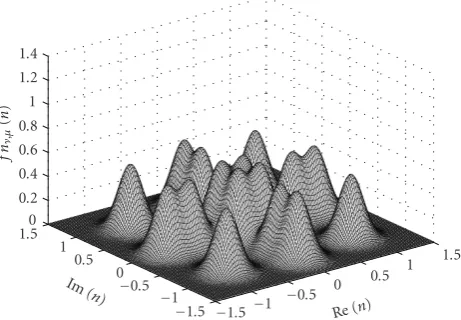
Figure 1 gives the pdf of interference and noise with
Gaussian assumption, cf. (18), and inFigure 2the approx-imation of the actual pdf of interference and noise, cf. (29), is shown. For both figures, the assumed signal-to-noise ratio (SNR) is 10 log10(Eb/N0) = 25 dB. Here, Eb is the
0 0.05 0.1 0.15 0.2 0.25 0.3 0.35 0.4 0.45
1.5 1
0.5 0
−0.5 −1
−1.5
fnν
,
μ
(
n
)
−1.5−1
−0.5 0
0.5 1 1.5
Im (n)
Re (n)
Figure3: Pdf of ISI, MAI, and noise with Gaussian assumption for
10 log10(Eb/N0)=10 dB.
0 0.05 0.1 0.15 0.2 0.25 0.3 0.35 0.4 0.45
1.5 1
0.5 0
−0.5 −1
−1.5
fnν
,
μ
(
n
)
−1.5−1
−0.5 0
0.5 1 1.5
Im (n)
Re (n)
Figure4: Approximation of actual pdf of ISI, MAI, and noise for
10 log10(Eb/N0)=10 dB.
However, the approximation of the actual pdf gets closer to a Gaussian pdf for lower SNR as can be seen from Figures3
and4for 10 log10(Eb/N0)=10 dB. The Gaussian assumption
is also justified for a higher number of interfering symbols because in this case the number of convolved pdfs according to (28) increases. However, in MF ISDIC the number of residually interfering symbols is supposed to be low with increasing number of iterationsμ.
3.4. Hybrid MF ISDIC. Calculation of fnν,μ(n) according to
(29) is very complex. To reduce complexity we propose a hybrid scheme, where the approximation of the pdf is simplified by considering only the strongest t residual interferers according to their pdf and applying the Gaussian assumption to the weak residual interferers. Obviously, for the hybrid scheme, the number of terms in (29) decreases andσ2
nadditionally includes the power of the weak residual
interferers. The strongest interferer is defined as the one that has the highest value|ρξ,ν|2.
0 0.2 0.4 0.6 0.8 1 1.2 1.4
1.5 1
0.5 0
−0.5 −1
−1.5
fnν
,
μ
(
n
)
−1.5−1
−0.5 0
0.5 1 1.5
Im (n)
Re (n)
Figure 5: Hybrid pdf approximation of ISI, MAI, and noise for
10 log10(Eb/N0)=25 dB witht=2.
First, the powerσ2
ξ,μ,νof each pdf according to (27) in (28) has to be calculated for eachξ∈ {αν,. . .,ν−1,ν+ 1,. . .,βν}
σ2
ξ,μ,ν=
M
i=1
as
ξ,μ−xi
ρξ,ν2·Praξ =xi|aξ,μ
. (30)
It is sufficient to approximate the pdfs faξ|aξ,μ(x) which
have the weakest power with Gaussian pdfs. As all of these pdfs have zero mean, the Gaussian approximation can be performed in (28) by substituting the corresponding pdf
faξ|aξ,μ(n) by a Dirac pulse δc(n) and incrementing σ
2
n by
σξ2,μ,ν. The number of pdfs faξ|aξ,μ(x) which are taken into
account according to their pdf is denoted witht.
The resulting pdf fnν,μ(n) for hybrid MF ISDIC consists
of a sum of Gaussian densities and therefore has the same form like the pdfs in [12–14]. But in contrast to these approaches the resulting pdf of interference is derived based on probabilities of interfering symbols calculated in the receiver. Thus, a better approximation is expected.
Figure 5shows the hybrid pdf approximation of the pdf
inFigure 2. Here, the strongestt = 2 interfering symbols
have been taken into account. It gets apparent that the complex pdf ofFigure 2is approximated quite well by that
of Figure 5. The hybrid pdf approximation of the pdf in
Figure 4is shown in Figure 6. Again, the strongest t = 2
interfering symbols have been taken into account. In this case the complex pdf ofFigure 4is approximated almost perfectly by that ofFigure 6. In both cases the scenario ofSection 3.3
has been considered.
To judge the accuracy of the hybrid scheme in compari-son to the scheme with the Gaussian assumption, an analysis according to the Kullback Leibler distance (KLD) [19] is conducted in the following. The KLD is a measure for the similarity of two pdfs, where a value of KLD=0 corresponds to a perfect match. First, 10 log10(Eb/N0) = 25 dB is
0 0.05 0.1 0.15 0.2 0.25 0.3 0.35 0.4 0.45
1.5 1
0.5 0
−0.5 −1
−1.5
fnν
,
μ
(
n
)
−1.5−1
−0.5 0
0.5 1 1.5
Im (n)
Re (n)
Figure 6: Hybrid pdf approximation of ISI, MAI, and noise for
10 log10(Eb/N0)=10 dB witht=2.
corresponding pdf with hybrid approximation in Figure 5
is 0.4290. Obviously, the approximation of the actual pdf is matched more accurately by the hybrid approach than by the Gaussian assumption. For 10 log10(Eb/N0) = 10 dB,
the following observations can be made. The KLD of the approximation of the actual pdf in Figure 4 and the corresponding pdf with Gaussian assumption in Figure 3
is 0.1557. In contrast, the KLD of the approximation of the actual pdf in Figure 4and the corresponding pdf with hybrid approximation inFigure 6is 2.6575·10−4. Here, the approximation of the actual pdf is matched almost perfectly by the hybrid scheme—much better than with the Gaussian assumption.
4. Numerical Results and Discussion
MF ISDIC employing the common Gaussian assumption and hybrid MF ISDIC as introduced in Sections 3.1 and
3.4, respectively, are compared in the following by means of simulations. The results are shown in Figure 7. We consider a Rayleigh multipath channel consisting of ten chip-spaced paths with decreasing average powers according to E{|h[0]|2} = 0.4850, E{|h[1]|2} = 0.2813,E{|h[2]|2} = 0.1095, E{|h[3]|2} = 0.0555, E{|h[4]|2} = 0.0260, E{|h[5]|2} = 0.0225, E{|h[6]|2} = 0.0140,E{|h[7]|2} = 0.0013,E{|h[8]|2} =0.0035, andE{|h[9]|2} =0.0014.
This power delay profile is an approximation of the power delay profile of the vehicular A test channel [20] for chip-spaced paths. An ideal power control algorithm is assumed resulting in a normalization of the sum of all instantaneous tap powers to one. Uncoded multicode transmission is applied usingK = 10 spreading sequences with spreading factorN = 16, representing the whole load of the base station. The channel is constant during the transmission of one block, that is, a block fading channel model is used. For simulations, L has been chosen to 48, the number of iterations maximally tolerated toμmax =40, and = 0.05 (σ2
a = 2 for 4QAM). Note that this scenario
10−6
10−5
10−4
10−3
10−2
10−1
10
BER
0 2 4 6 8 10 12 14 16
10 log10(Eb/N0) (dB)
MF ISDIC, Gaussian assumption Hybrid MF ISDIC,t=1
Hybrid MF ISDIC,t=2 Hybrid MF ISDIC,t=3 Single user bound
Figure7: BER versusEb/N0for MF ISDIC employing the Gaussian
assumption and hybrid MF ISDIC.μmax=40,=0.05, 4QAM with
σ2
a =2, uncoded DS-CDMA downlink transmission withK =10
spreading sequences having spreading factorN=16 over a Rayleigh multipath channel, ideal power control.
is related to a high speed downlink packet access (HSDPA) transmission with UMTS.
InFigure 7simulation results for MF ISDIC employing
the common Gaussian assumption and hybrid MF ISDIC are shown for 4QAM transmission. For hybrid MF ISDIC, all but the t ∈ {1, 2, 3} strongest residual interferers are modeled to be Gaussian distributed. Obviously, the bit error ratio (BER) can be lowered by 80 for highEb/N0by applying the proposed hybrid MF ISDIC, assuming that all residual interferers but the strongest three are Gaussian distributed.
5. Concluding Remarks
ratios when modeling all residual interferers but the strongest three to be Gaussian distributed.
Acknowledgment
This work has been presented in part at the Vehicular Technology Conference (VTC Spring 2003), Jeju, Korea.
References
[1] S. Verd ´u, “Minimum probability of error for asynchronous Gaussian multiple-access channels,” IEEE Transactions on Information Theory, vol. 32, no. 1, pp. 85–96, 1986.
[2] J. Proakis,Digital Communications, McGraw–Hill, New York, NY, USA, 3rd edition, 1995.
[3] P. Patel and J. Holtzman, “Analysis of a simple successive interference cancellation scheme in a DS/CDMA system,” IEEE Journal on Selected Areas in Communications, vol. 12, no. 5, pp. 796–807, 1994.
[4] T. Frey and M. Reinhardt, “Signal estimation for interference cancellation and decision feedback equalization,” in Proceed-ings of Vehicular Technology Conference (VTC ’97), pp. 155– 159, Phoenix, Ariz, USA, May 1997.
[5] D. Divsalar, M. K. Simon, and D. Raphaeli, “Improved parallel interference cancellation for CDMA,” IEEE Transactions on Communications, vol. 46, no. 2, pp. 258–268, 1998.
[6] R. M¨uller and J. Huber, “Iterated soft–decision interference cancellation for CDMA,” inBroadband Wireless Communica-tions, M. Luise and S. Pupolin, Eds., pp. 110–115, Springer, London, UK, 1998.
[7] C. Sgraja, W. Teich, A. Engelhart, and J. Lindner, “Mul-tiuser/multisubchannel detection based on recurrent neural network structures for linear modulation schemes with gen-eral complex–valued symbol alphabet,” in COST Workshop 262, Technical Report ITUU-TR-2001/01, pp. 45–52, Ulm, Germany,, January 2001.
[8] A. Papoulis, Probability, Random Variables, and Stochastic Processes, McGraw–Hill, New York, NY, USA, 3rd edition, 1991.
[9] P. van Rooyen and F. Solms, “Maximum entropy investigation of the inter user interference distribution in a DS/SSMA system,” inProceedings of the 6th IEEE International Sympo-sium on Personal, Indoor and Mobile Radio Communications (PIMRC ’95), pp. 1308–1312, Toronto, Canada, September 1995.
[10] H. Poor and S. Verd ´u, “Probability of error in MMSE mul-tiuser detection,” IEEE Transactions on Information Theory, vol. 43, no. 3, pp. 858–871, 1997.
[11] L. Mailaender, “Non-linear detectors for multiuser CDMA exploiting non-Gaussianity,” inProceedings of the 31st Asilo-mar Conference on Signals, Systems & Computers, pp. 1410– 1414, Pacific Grove, Calif, USA, November 1997.
[12] Y. Li and K. H. Li, “Iterative PDF estimation and turbo-decoding scheme for DS-CDMA systems with non-Gaussian global noise,” in Proceedings of the IEEE Global Telecom-munication Conference (Globecom ’01), pp. 3262–3266, San Antonio, Tex, USA, November 2001.
[13] C. Luschi and B. Mulgrew, “Nonparametric trellis equalization in the presence of non-Gaussian interference,”IEEE Transac-tions on CommunicaTransac-tions, vol. 51, no. 2, pp. 229–239, 2003.
[14] Y. Zhang and R. S. Blum, “Iterative multiuser detection for turbo-coded synchronous CDMA in Gaussian and non-Gaussian impulsive noise,”IEEE Transactions on Communica-tions, vol. 49, no. 3, pp. 397–400, 2001.
[15] J. R¨oßler and J. Huber, “Iterative soft decision interference cancellation receivers for DS–CDMA downlink employing 4QAM and 16QAM,” inProceedings of the Asilomar Conference on Signals, Systems and Computers, Pacific Grove, Calif, USA, 2002.
[16] J. F. R¨oßler, W. H. Gerstacker, and J. B. Huber, “Iterative equalization with soft feedback with a subsequent stage employing error search and correction,”IEEE Transactions on Vehicular Technology, vol. 57, no. 1, pp. 335–344, 2008. [17] F. Tark¨oy, “MMSE-optimal feedback and its applications,” in
Proceedings of the IEEE International Symposium on Informa-tion Theory (ISIT ’95), p. 334, Whistler, Canada, September 1995.
[18] J. R¨oßler, W. Gerstacker, A. Lampe, and J. Huber, “Matched– filter– and MMSE–based iterative equalization with soft feedback for QPSK transmission,” inProceedings of the Zurich Seminar, pp. 191–196, Zurich, Switzerland, February 2002. [19] T. Cover and J. Thomas,Elements of Information Theory, John
Wiley & Sons, New York, NY, USA, 1991.