Western University Western University
Scholarship@Western
Scholarship@Western
Electronic Thesis and Dissertation Repository
8-20-2014 12:00 AM
International Service-Learning: Transformational Learning
International Service-Learning: Transformational Learning
Through Experience
Through Experience
Shannan Lee Crowder
The University of Western Ontario
Supervisor
Professor Goli Rezai-Rashti The University of Western Ontario Graduate Program in Education
A thesis submitted in partial fulfillment of the requirements for the degree in Master of Education
© Shannan Lee Crowder 2014
Follow this and additional works at: https://ir.lib.uwo.ca/etd
Part of the International and Comparative Education Commons
Recommended Citation Recommended Citation
Crowder, Shannan Lee, "International Service-Learning: Transformational Learning Through Experience" (2014). Electronic Thesis and Dissertation Repository. 2304.
https://ir.lib.uwo.ca/etd/2304
INTERNATIONAL SERVICE-LEARNING: TRANSFORMATIONAL LEARNING THROUGH EXPERIENCE
(Thesis format: Monograph)
by
Shannan Crowder
Graduate Program in Educational Studies
A thesis submitted in partial fulfillment of the requirements for the degree of
Masters of Education
The School of Graduate and Postdoctoral Studies The University of Western Ontario
London, Ontario, Canada
Abstract
This study applies the Experiential Learning Theory and the Transformational Learning Theory
to International Service-Learning (ISL) in post-secondary education. International engagement
in post-secondary institutions has become an important element in education. Developing global
citizenship is a significant focus for many students and institutions. Higher educational
institutions are increasingly being challenged to meet the demands of international connectivity
and enhance the quality of learning for prospective students (Garrison & Kanuka, 2004, p. 95).
ISL provides the opportunity for students to experience perspective transformation. In order for
institutions to foster transformational learning, it is important for educators and researchers to
have the capability to measure what is being learned, how the learning occurs, and how to
support learning. This study sought to investigate how international learning experiences
transformed the lives of students who participated in an ISL program, what the participants
learned, and how they applied what they learned once they returned to their home country. A
qualitative case study was conducted to investigate the perspective of students who participated
in an ISL experience in East Africa between seven weeks to four months. Participant
recommendations’ regarding ISL were also provided as a means to assist the learning potential of
ISL experiences for future students. Findings for this study suggest that areas of
transformational learning did occur; however, increased preparation and support throughout the
experience would have enhanced their learning.
Keywords
:
International Service-Learning, Service-Learning, Global Citizenship, CivicEngagement, Experiential Learning Theory, Transformational Learning Theory, Reciprocal
Dedication
This paper is dedicated to my parents, Sandy and Dave Crowder. They have been my biggest
supporters throughout my education and I would never be where I am without their love and
encouragement. I would also like to dedicate this to my Grandfather, Arnold Ivan Crowder. He
has inspired me throughout my entire life to learn and taught me the importance of education.
Before leaving for Tanzania the second time, I watched as my Grandfather became very ill.
Only weeks before I departed for Tanzania he passed away in his home. Thank you Papa for
Acknowledgments
Thank you to my friends and family who have supported me throughout my academic years. I
appreciate all of your support. Your friendships have stayed with me no matter where my
academic life has taken me. A special thanks to my thesis supervisor, Professor Goli
Rezai-Rashti. Over the past two years, you have motivated and inspired me. It has been a pleasure
working with you and getting to know you. I would also like to thank Professor Wayne Martino
Table of Contents
Abstract ... ii
Dedication ... ivii
Acknowledgments ... iv
Table of Contents ... v
List of Tables ... viii
List of Appendices ... ix
CHAPTER ONE: Introduction ... 1
1.1 Positioning of Researcher ... 2
1.2 Context ... 3
1.3 Framing the Research Question ... 4
1.4 The Research Question ... 5
1.5 Gaps in Literature ... 5
1.6 Theoretical and Conceptural Framework... 8
1.7 Experiential Learning Theory ... 9
1.8 Transformational Learning Theory ... 11
1.9 Chapter Summary ... 14
CHAPTER TWO: Literature Review ... 15
2.1 Introduction to Literature Review and Background ... 16
2.2 Perspective of International Service-Learning ... 17
2.3 Transfromational Learning through Experience ... 21
2.4 Fostering Transformaitonal Learning ... 23
2.5 Synthesis of Literature ... 26
2.6 Chapter Summary ... 27
3.1 Research Design... 28
3.2 Pariticpant Selection ... 29
3.3 Introducation of Participants ... 30
3.4 Method of Data Collection... 33
3.5 Data Analysis ... 34
3.6 Limitations of Study ... 36
3.7 Ethical Considerations ... 36
3.8 Chapter Summary ... 37
CHAPTER FOUR: Findings from the Interview Data Analysis ... 37
4.1 Theme 1: Perceptions of International Service-Learning ... 38
4.1.1 Motivations and Expectations ... 40
4.1.2 Preparation for International Service-Learning ... 44
4.2 Theme 2: Transformational Learning through Experience ... 53
4.2.1 Psychological Transfromaiton ... 54
4.2.2 Convictional Tranformation ... 67
4.2.3 Behavioural Transformation ... 70
4.3 Theme 3: Fostering Transformational Learning ... 77
4.3.1 Recommendations ... 86
4.4 Chapter Summary ... 88
CHAPTER FIVE: Conclusion ... 89
5.1 The Research Question ... 89
5.2 Conecting Data to the Conceptual Frameworks ... 91
5.3 Summary of Themes ... 93
5.4 Summary ... 96
Appendices ... 103
List of Tables
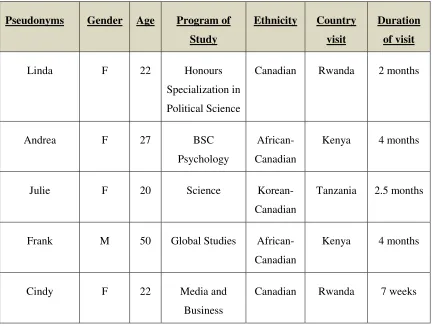
Table 3.1: Participant Introduction ... 31
Table 4.1: Jack Mezirow’s Ten Phases related to Transformational Learning Applied ... 78
List of Appendices
Appendix A: Advertisement and Recruitment ... 104
Appendix B: Interview Questions ... 105
Appendix C: Letter of Information ... 106
CHAPTER ONE
Introduction
International engagement in post-secondary institutions has become an important element in
education. Developing global citizenship is a significant focus for many students and educators.
The need for developing global citizenship is being fostered through exchange programs and
International Service-Learning (ISL). ISL provides the opportunity for students to experience a
perspective transformation. In order for institutions to foster transformational learning, it is
important for educators and researchers to have the capability to measure what is being learned,
how learning occurs, and how to support what is learned. Even though many ISL programs claim
to be supporting students and communities abroad in a reciprocal learning arrangement, it is
critical to define what reciprocal learning entails, who is benefiting from the services being
provided, and the main goal and purpose for engaging in ISL activities. As globalization
continues to transform education, the emphasis on sending more students abroad continues to
grow. With this increase, it is essential that organizations and institutions re-evaluate the
foundation of ISL programs to ensure that critical measures are being taken to maximize learning
opportunities.
By evaluating learning through the experiential and transformational learning processes within
ISL, it is hoped that valuable insight will be gained that will assist in the progress of program
design and foster transformational learning. Gaining information regarding recommendations
for ISL programs will attempt to benefit organizations and institutions in developing a strategic
method for optimal learning experiences. Through extensive evaluation and reconfiguration of
existing programs that focus on enhancing the learning experience for students, ISL will better
serve communities at home and abroad. ISL has the ability to enhance transformational learning
and can be an effective addition to experiential learning if it promotes sustainable benefits for
1.1 Positioning the Researcher
I have had many opportunities in my life to work as a teacher and volunteer in international
communities. I worked extensively and volunteered in South Korea, India, New Zealand, and
East Africa. I believe I am very fortunate and enjoyed learning from all of my experiences.
When I decided to travel to Tanzania in East Africa for the first time, to complete my Bachelors
of Education international teaching placement, I noticed that my friends, family, and people
within my local community had more questions and concerns than I had previously experienced
when travelling to other international destinations. These questions and concerns led me to
contemplate ISL, my intentions, and the intentions of the institutions I was working with.
During my first experience in East Africa, I taught at schools and volunteered at an orphanage
for three weeks; it was my first ISL experience. The experience was transformative in many
ways. I believed it furthered my understanding of self and my convictions. I was also able to
apply what I had learned in communities at home. Upon returning to Canada I was able to
implement the teaching skills I learned, support relationships between Canadian and Tanzanian
students, and raise awareness and funds for educational resources for students in Tanzania. My
experience in East Africa increased my global awareness, intercultural connectedness, and desire
for social justice. It also brought forward many questions that I had never addressed. I began to
consider the positive and negative impact our work was having on the local communities in East
Africa. I re-evaluated the purpose and benefit of this type of service, and I questioned my own
intentions and expectations. I knew I had an amazing experience, but I wondered if that was
enough.
When I decided to enter a Masters of Education program, I was anxious to learn more about East
Africa and to further develop my understanding of the reciprocal learning process between
Canada and African nations. Fortunately, I found an opportunity at my University that offered
an ISL program. I was very excited and thought that I would be able to address many of my ISL
questions and concerns. I applied for an internship where I would be staying in Tanzania for the
duration of three months. I would be working with undergraduate students as we attempted to
apply our academic knowledge in a foreign environment with local community members. My
role was to work with an emerging organization on their marketing and business development
Preceding my departure to East Africa the second time, I decided to take a more critical approach
and really understand the purpose, motives, and intentions behind ISL. I believed that it was not
only important to examine my questions and concerns but to understand the experiences of other
students who embark on an ISL program.
During my second experience in East Africa, I realized that ISL experiences are of great benefit
for many reasons, although opportunities for enhanced learning could be lost without having the
proper supports in place. In addition, I realized developing a deeper understanding of ISL and
the impact it can have on students who participate in these programs is essential. Considering
this, I decided to interview students who were able to reflect upon their ISL experience once they
returned to Canada in hope of contributing to future development and understanding of ISL
programs.
1.2
Context
As globalization and international mobility increases, the interconnectedness within the global
community has become a part of academic life. International mobility in higher education has
ranged from 3-5 million staff and students who travel internationally annually for academic
related reasons. Higher educational institutes are being challenged more frequently to meet the
demands of international connectivity and increased quality of learning for prospective students
(Garrison & Kanuka, 2004, p. 95). Coordinating policies and programs for expanding initiatives
in international education is essential.
Internationalization in higher education is viewed as a necessary element of education today
(Altbach & Teichler, 2001, p. 8-10). The demand for researching international exchanges and
experiences is important if students are to reach their learning potential. Since travel and global
communication has expanded rapidly, it has become valuable for students to have firsthand
experiences with other cultures and environments (Chieffo & Griffiths, 2004).
With the focus on international connectivity and opportunities for prospective students who will
attend University or College, institutions need to be prepared with a strategic method of
achieving ultimate learning success. Humphries, Rauh, & McDine (2013) explains that defining
program has been difficult (p. 41-42). Ron Faris (1999) believes that standard policies and
practices for Service-Learning (SL) programs should be in partnership with the federal and
provincial government as well as the voluntary sector (p. 5). The variance in ISL, SL, and
exchange programs across Canadian Universities has proved to be challenging when
course-credit, learning outcomes, and volunteer expectations are inconsistent.
The learning obtained from ISL is largely tied with Kolb’s Experiential Learning Theory (ELT)
(1984), which has also gained great attention from forward-thinking educators. Kolb & Kolb
(2005) believe that experiential learning is a new scientific way of learning (p. 193).
Experiential learning empowers students to actualize their knowledge, gain practical experience,
and further apply knowledge in the field. This type of learning enhances global citizenship, civic
engagement, and can provide valuable insight for future academic and professional decisions
made by the student. By understanding the importance of experiential learning, educators are
also able to appreciate the value in transformative learning that is obtainable through the
experience (Kolb & Kolb, 2005).
In addition to using the ELT as an academic tool, it is also important to grasp an understanding
of the Transformational Learning Theory (TLT) and how these two frameworks co-exist. Both
frameworks define the possible learning experience gained in Service-Learning (SL) and ISL.
Increasing learning quality by reforming the concept of traditional learning will promote
institutions in meeting the demand of prospective students and the globalized world.
Understanding how to support the increased demand of cross-cultural education, global
awareness, and social justice in a practical form will service new generations of students. Using
the world as a classroom can be an effective tool for learning success. Through the development
of ISL, students will be able to excel in the globalized future.
1.3
Framing the Research Question
International education has the possibility of encouraging students to learn about other cultures,
social and political institutions, languages, art, and literature. Intercultural education teaches
students the subjective meaning that individuals ascribe to relationships, events, people and
experiential and transformational learning through international and intercultural education that
occurs during ISL.
Bennett (2008) argues that being globally minded and being a part of a global community
requires the ability to engage in an intercultural experience that creates transformational learning
(p. 13). International opportunities in education sectors continue to grow and the demand to
develop greater global and cultural awareness remains. Although being a global citizen is
critical for students in the age of international connectedness, there are still gaps in fully
understanding how to educate students to obtain the best learning outcome. Considering
research in the area of ISL and transformational learning is limited, this area of research needs to
expand for institutions and students to optimize their learning potential.
1.4
The Research Question
In this research study, the main objective is to investigate what students are learning from
participating in ISL programs, how transferable and sustainable those skills are once they return
to Canada, and to hear recommendations from the participants for future ISL programs and
students. Even though each participant in this study brings a different perspective of ISL,
similarities and common themes were found amongst the data collected. These themes will be
used to answer the research question.
The research questions for this study aim to investigate:
1. How international learning experiences transform the lives of students who participated
in an ISL program?
2. What the participants learned from the experience and how they plan on applying what
they have learned?
3. What recommendations can be made to increase the learning potential of an ISL
experience for students in the future?
1.5
Gaps in Literature
When looking at SL, despite the fact it could potentially create benefits such as global and social
nature of SL. Transformational learning from SL has demonstrated there is no direct way of
defining how the transformation occurs (Deeley, 2010, p. 50). Despite this, Mitchell (2008)
explains that researchers have suggested SL is an effective tool to aid students in expanding their
learning and development. It is also important to take a critical approach to understanding SL
and the possibility of adverse outcomes occurring if students are not properly supported (p. 51).
SL can affect students and communities in different ways. It is difficult to support an enhanced
world view experience that will be equal for all those involved. There are too many variables
associated with the experience, program, and individuals. In his research of transformational
learning in ISL, Richard Kiely (2005) argues that the common belief that sustainable
transformational learning is achieved by undergraduate students should not be assumed: “As the
study findings presented in this article illustrate, the long-term impact of students’ perspective
transformation on their ability to change their lifestyle habits, resist cultural norms, and engage
in social action is often ambiguous and problematic” (p. 5). Kiely’s findings indicate that future
research to understand a student’s ability to change their lifestyle through perception
transformation is necessary.
Mitchell (2008) recommends how thinking critically and analyzing the roles of the SL and SL
programs is essential to communities. Service activities need to engage students and promote
projects that focus on overcoming social justice issues, understanding diversity, and enhancing
civic engagement. (p. 53). Without critically evaluating the role of the student and ISL
programs, it is possible that the experience will create different outcomes than desired.
Understanding the impact SL has on students will support future literature on improving the
educational design of ISL.
While ISL is considered by many researchers to be an effective tool for international learning,
challenges associated with ISL need to be addressed before ultimate learning success is gained.
Disregarding essential components that lead to a negative ISL experience are detrimental to
students, programs, and communities. Without critically evaluating ISL programs through
extensive research on how to support experiential and transformative learning, students are not
able to gain as much from the experience as they potentially could and unfortunate consequences
conducted, students may not be able to complete the duration of their stay, may have inaccurate
expectations, not understand their purpose once they arrive, encounter situations that they are not
prepared for, and may feel alienated and/or unproductive towards reaching their goals. Their
cultural biases and ethnocentric worldview could increase without support during challenging
situations (Mezirow, 1997, p.6).
Developing research in the area of ISL will maximize the potential of learning from the
experience (Tonkin, 2011, p. 209). Research has the possibility to inform and assist the entire
practice of ISL and help place students and program developers in a position to really make the
most out of their experiences (Tonkin, 2011, p. 213). Research regarding the long-term effects
of ISL on communities and individual students is also minimal and should be documented
(Crabtree, 2008, p. 18).
Investigating the Transformational Learning Theory (TLT) in relation to ISL programs can foster
greater experiences and is an important element of ISL to consider. Taylor (1998) explains that
the practice of transformational learning has not been investigated extensively or adequately
(Executive summary). By viewing the ISL experience through the lens of the TLT, it is hoped
that students will be able to draw meaning through critical reflection processes The fact that the
critical reflection process may potentially challenge their prior interpretations of how they
viewed the world is vitally important to capture and is critical for the development of research in
this area (Mezirow, 1997, p7).
Currently, there is limited research regarding the sustainable impact of transformational learning
in ISL (Kiely, 2011, p. 261). Richard Kiely (2004) reports how domestic SL has been
extensively documented, illustrating the positive impact it has had on students in many areas of
their personal, professional, and academic life. However, Kiely (2004) mentions that ISL has
not been as closely examined and that research that has been done is very limited on the
perspective of students learning and overall development (p. 5). Keily (2011) explains, “because
there have been relatively few longitudinal studies looking at the process of transformation in
service-learning and intercultural learning, there is very little empirical evidence to support the
critical assumption that cognitive transformation leads to subsequent personal and/or social
international learning experience. Institutions are often bound to goals, credits, and how to
define the experience (Humphries, et. at., 2013, p. 44-45). Gaining the perspective of students
who have participated in ISL programs may help institutions better understand the experience,
further develop insight into ISL, the impact it can have, and whether the desired outcome of
programs has actually occurred as planned.
1.6
Theoretical and Conceptual Framework
There were two theoretical frameworks chosen for this study. SL has been connected to David
Kolb’s (1984) ELT. Kolb (1984) believes that learning is a holistic process in adapting to the
world (p.21). Kolb (1984) explains “experiential learning is not a molecular educational concept
but rather is a molar concept describing the central process of human adaptation to the social and
physical environment” (p. 31). Within Kolb’s ELT, the process of reflective observation can
co-exist with Jack Mezirow’s TLT. Although both involve reflective practices, Jack Mezirow
(1990) makes it very clear that there is a difference between reflection and critical reflection:
Although reflection may be an integral part of making action decisions as well
as an ex post facto critique of the process, critical reflection cannot become an
integral element in the immediate action process. It requires a hiatus in which
to reassess one’s meaning perspectives and, if necessary, to transform them.
Critical reflection is not concerned with the how or the how-to of action but
with the why, the reasons for and consequences of what we do. (Mezirow,
1990, p. 13)
Mezirow constructed the TLT from Paulo Freire’s (1970) theory of transformational learning
that supported critical reflection in adult education (Dirkx, 1998, p. 3).
Mezirow furthered Freire’s theory by looking at adult learning from the cognitive and
developmental psychology position. Freire`s theory was similar to Mezirow`s because they both
viewed “knowledge as something that is constructed by the individual in relation with others”
(Dirkx, 1998, p. 3). Both theorists believed that “reflection and dialogue are key elements of the
learning process, but Mezirow goes further in attempting to articulate the psychological and
process” (Dirkx, 1998, p. 4). For the purpose of this study, the ELT and Mezirow’s TLT are
used to understand the experiences of the five participants. The ten phases mentioned in
Mezirow’s process will be identified and applied to the emerging themes illustrated in the data.
These ten phases will also correspond to psychological, convictional, and behavioural changes
perceived of the participants.
1.7
Experiential Learning Theory
Service-learning theorists and practitioners can readily adapt Kolb’s learning
cycle of concrete experience, cognitive reflection, abstract theorization, and
experimentation to generate knowledge and facilitate learning in diverse
contexts. Along with physically situating students in authentic environment,
service-learning programs simplify the Kolb model further by encouraging
some form of structured reflection to connect experience with concepts, ideas,
and theories and generate new and applicable knowledge in concrete ‘real-life’
situations. (Kiely, 2005, p. 6)
This research will draw on the framework of experiential learning used in ISL in Kolb's
Experiential Learning Cycle. Savicki (2008) believes that experiential education is the
foundation of all learning (pg. 75). Through understanding the process of ISL and the
sustainability of what is serviced and learned, it is hoped that a further understanding of how and
to what extent students learn through experience will develop.
There are four stages in the ELT. The first stage is the Concrete Experience (CE); this is when
lessons are learned through adaptability and open mindedness. The second stage is Reflective
Observation (RO); this occurs when a student learns from their experience and articulates why
and how it happened. The third stage is the Abstract Conceptualization (AC); during this stage
logic and ideas overtake feelings in understanding situations. Finally, Active Experimentation
(AE); during this stage, students are able to test their theories and make predictions (Akella,
2010, p. 102). Theoretically, experiential learning has been reinforced by constructivist
principles. Students are able to construct meaning and take an active role in learning when
Historically, people have been involved in experiential learning well before formal education
strategies were implemented. People learned to use life experiences to solve daily problems that
they encountered (Savicki, 2008, p. 75). Akella (2010) defines the ELT model as a method to
understand various stages and forms of learning. Akella believes ELT as essential in furthering
an understanding of the different ways people process and receive new information. The ELT
model can be used to explore issues related to adult education and participant centered learning
(p. 100). Kolb has explained that all learners use the experiential learning cycle differently.
Some learners focus on certain stages longer than others. The learning styles used often reflect
the individual’s learning ability and learning history (p. 102). Although each stage is equally
important, critical reflection enables the construction of meaning and transformation of
perceptions.
The understanding of ELT was adopted by educators because of the direct interaction between
experiences and subject matter. Wurdinger & Carlson (2010) explain that it is imperative that
students test their understanding through experience (p. 9). Wurdinger & Carlson also state that
“students need to experience things firsthand by creating, designing, building, and testing ideas
in order to determine their worth” (p. 9). Experiential learning can occur either by taking a
step-by-step process that distinctly leads to learning something or is derived from the real world
environment (Wurdinger & Carlson , 2010, p. 11).
When experiential learning is applied to learning internationally, a different type of emotional
flexibility and resiliency is needed. Students who participate in an ISL program have habitual
ways of thinking and feeling that may not correspond with the host country they are visiting.
The feelings and emotions they experience can be challenging. Students may feel the need to
reject the culture if they are not prepared (Savicki, 2008, p. 74). Consequently, it is essential that
students critically reflect after the ISL experience to develop an understanding of their position
and to become self-aware. Critical reflection will support them in constructing meaning from
what they experience (Mezirow, 1990, p. 1).
Deeley (2010) describes critical reflection as a form of critical thinking and is an essential
element of SL (p. 44). This type of reflection enables students to construct meaning from their
(Kelshaw, Lazarus, & Minier, 2009, p. 120). The literature that has looked at the impact of
experiential learning has primarily been conducted via qualitative studies that use personal
reflections and observations that document the learning process, feelings, and critical moments
experienced by a student (Akella, 2010, p. 104). By understanding the stages of ELT, a
researcher is able to gain an in-depth perspective of the participants’ position. Reflective
Observation “is the second stage in Kolb’s learning cycle. It is the stage where the learner
critically reflects on his/her performance, thinks about techniques to improve his/her previous
actions and experiences” (Akella, 2010, p. 107). Reflective observation and critical reflection
are both essential in ELT and TLT.
By reflecting upon an ISL experience, a student should be able to gain more intercultural
awareness and cultural responsiveness. By cultivating and applying a more culturally responsive
pedagogy, educators and students will be able to use this information to better respond to
globalization and interconnectedness (Mbugua, 2010, p. 87).
1.8
Transformational Learning Theory
A defining condition of being human is that we have to understand the
meaning of our experience. For some, any uncritically assimilated explanation
by an authority figure will suffice. But in contemporary society we must learn
to make our own interpretations rather than act on the purpose, beliefs,
judgments, and feelings of others. Facilitating such understanding is the
cardinal goal of adult education. Transformative learning develops
autonomous thinking. (Mezirow, 1997, p. 5)
TLT is also known as “perspective transformation” (Mezirow, 1990, p.13). TLT was actualized
by Jack Mezirow and is known as a constructivist theory. It enables an individual to construct
meaning from an experience (Mezirow, 1990, p.1). Mezriow expanded upon Freire’s focus on
social justice and transformational learning by viewing perspective transformation through a
cognitive development and psychological position (Baumgartner, 2001, p. 17). Kitchenham
(2010) outlines Mezirow’s (1978a, 1978b) Ten Phases of Transformative Learning (p.105):
2. A self-examination with feelings of guilt, shame, anger, or frustration
3. A critical assessment of epistemic, sociocultural, or psychic assumptions
4. Recognition that one’s discontent and the process of transformation are shared and that
others have negotiated a similar change
5. Exploration of options for new roles, relationships, and actions
6. Planning of a course of action
7. Acquisition of knowledge and skills for implementing one’s plans
8. Provisional trying of new roles
9. Building of competence and self-confidence in new roles and relationships
10. A reintegration into one’s life on the basis of conditions dictated by one’s perspective
The ten phases listed are the result of Mezirow’s research in 1975 where he investigated women
in the United States who were returning to school or work after an extended time period.
Mezirow’s research discovered the importance of critical reflection and critical self-reflection.
Mezirow learned that the participants in this study had gone through a “personal transformation.”
Understanding the personal transformation that took place, Mezirow was able to identify the ten
phases that contributed to transformational learning (Kitchenham, 2010, p. 105).
In addition to identifying with the ten phases outlined above, Mezirow also discovered that an
individual must undergo critical reflection. Critical reflection will challenge an individual’s
presuppositions in prior learning:
Critical reflection addresses the question of the justification for the very
premises on which problems are posed or defined in the first place. We very
commonly check our prior learning to confirm that we have correctly
proceeded to solve problems, but becoming critically aware of our own
presuppositions involves challenging our established and habitual patterns of
expectations, the meaning perspective with which we have made sense out of
our encounters with the world, others, and ourselves. (Mezirow, 1990, p. 12)
In order to make sense of an experience, it is important for an individual to create an
Richard Kiely (2005) explains how Mezirow’s transformational learning model is a framework
that is used in SL. It is a model that focuses on how meaning is constructed from experiences
and how learning and behavioural changes can be made through critical incidents (pg. 6). The
interpretation an individual has of the experience will direct decisions and actions. Making
meaning from an experience is the process of learning (Mezirow, 1990, p. 1). Taylor (1998) also
explains that drawing meaning out of an experience is the process of transformative learning (p.
1). Transformational learning is a unique strategy that is abstract and grounded in human
communication. The TLT describes learning as a process of using prior interpretations as a tool
to construe a revised interpretation. The new interpretation is a result of an experience and will
be used in actions taken in the future (Taylor, 1998, p. 5; Mezirow, 1996, p. 162).
Adults acquire experience throughout their lives. The experiences shape their frame of
reference. A frame of reference often includes their values, feelings, and conditioned responses.
It also restricts the ability to embrace ideas or beliefs that do not fit into our preconceptions.
Through transformative learning, learners are able to move towards a more inclusive and
self-reflective frame of reference (Mezirow, 1997, p. 5). Reflection is a process that enables an
individual to correct distorted beliefs and exercise a problem-solving strategy (Mezirow, 1990, p.
1). Without going through the transformational learning process, adults become victims of
habits of their mind. Mezirow (1997) describes habits of the mind as ethnocentric.
Ethnocentrism is defined as the predispositions that “others” (outside of one’s group) are inferior
to the individual and/or the group in which the individual identifies with (i.e. cultural, religious,
racial, gender). This can lead to labeling and judging of things that are not understood (pg. 6).
Looking at revising interpretations of meaning through experience is an effective way of
fostering transformation. Fostering transformational learning is essential considering
experiential learning does not always lead to transformative learning. Hunter (2008) explains
how it should not be assumed that bringing students to a foreign country will automatically result
in the type of learning intended from study abroad experiences (p. 93). As explained by Mezirow
(1997) we transform our frame of reference through critical reflection. This reflection is based
on assumptions which have become interpretation and habits of the mind. Critical reflection
Transformational learning is difficult to separate from normative development. It has been stated
that learning and servicing abroad creates a transformative opportunity and is more valuable than
that of a classroom (Hunter, 2008, p. 94). Promoting opportunities for students abroad to learn
and service is effective yet, proving the extent of its impact can be challenging. Researchers
have found that it is difficult to measure the degree to which a student is transformed through
ISL. Kiely (2004) describes how the long-term impact and transformation of student
perspectives, following an ISL experience, is often ambiguous. An individual’s ability to change
habits, engage is social action, and resist cultural norms is unclear (p. 5). For transformational
learning to be considered successful, it should ignite a deep structural change in basic thoughts,
feelings, and actions (Hunter, 2008, p. 94).
Jack Mezirow believes that there are two dimensions of making meanin: making meaning
schemes, such as attitudes, beliefs, and feelings; and meaning perspective, which is a
philosophical world view (Hunter, 2008, p. 94). In ISL a student will demonstrate their
transformation through increasing their intercultural competence through new meaning schemes
and perspectives. Critically reflecting from an experience enables an individual to reorganize the
way they construct meaning and eventually restructure their interpretation or perspective.
1.9
Summary
This chapter outlined the research problem which explained the importance of understanding
what is learned during and after a student participates in an ISL program, and how the
information learned is carried forward in the communities. This chapter also explained gaps in
the literature which describe the current shortage of information regarding ISL and
transformational learning. The research question introduced in this chapter intends to investigate
(1) how international learning experiences transform the lives of students who participated in an
ISL program. In addition, two sub-questions that will be analyzed include (2) what the
participants learned from the experience and how they plan on applying what they have learned,
and (3) what recommendations can be made to increase the learning potential of an ISL
This chapter clarified the conceptual frameworks that will be used to investigate and assist in
understanding the learning associated with ISL. Looking at ISL through the framework of ELT
and TLT should increase an understanding of the learning experienced by the participants in this
study. Understanding the relationship between ELT, TLT, and ISL will assist in program
strategies that can improve upon learning opportunities for students. It is critical to understand
methods that will increase the productive learning gained during ISL and how to ensure a
positive outcome is obtained. As the world continues to become a global community it is
important that students are able to use ISL experiences to enhance their world view. To make
this possible, many questions must be addressed surrounding the purpose and goals of sending
students abroad.
The next four chapters will review literature related to ISL, describe the methodology that will be
used in this study, illustrate the themes and data, and conclude the research study. The literature
review will focus on three main themes: Perceptions of ISL, Transformation Learning through
Experience, and how to Foster Transformational Learning. Chapter three will describe the
methodology being used by outlining the research design, participant selection, introduction of
participants, the method for data collection, data analysis, limitations to research, and ethical
considerations. Chapter four will describe the data related to the themes illustrated in the
literature review.
CHAPTER TWO
Literature Review
2.1 Introduction to Literature Review and Background
This chapter provides a literature review that will discuss the relevant literature in the field as it
relates to my topic and is organized around three main themes: Perspective of ISL,
Transformational Learning through Experience, and Fostering Transformational Learning. The
purpose of the review is to provide knowledge and understanding of the relevant ISL literature
Study abroad programs in Canadian Universities have continued intensification. With this
“Canada attempted to emulate the European model of exchange — albeit with fewer resources
and less governmental oversight — while the US put more resources into group study abroad
programs” (Humphries, et al., 2013, p. 41). As interest in studying abroad began to increase
and institutions began to notice an absence of policies and risk management procedures
associated with international learning. In response to this, each institution established their own
policies and procedures that coincided with their institutional philosophy and existing processes.
The results illustrated similarities and differences towards exchange programs (Humphries, et al.,
2013, p. 41).
The exchange programs offered by American institutions were seen as the ideal model for other
parts of the world. Higher education continued to grow and with this so did mobility. There has
not been a time in history when higher education has been more international than the 21st
century (Altbach & Teichler, 2001, p. 11). Altback & Teichler referred this era as the new
“international era.” Altbach and Teichler claimed that internationalization of education was
inevitable. The 21st century is expected to be titled the century of education and with the
increase of mobility students are able to study abroad at a higher rate. UNESCO statistics (as
stated in Altback & Teichler, 2001) reported that 1.6 million students were studying abroad
during the years 1993 – 1995. In 2000 this increased and it was estimated that two million
students were studying abroad (Altbach & Teichler, 2001, p. 5-7).
International mobility has become a normal part of life for many students and staff. Exchange
agencies have also played an important role in increasing the rate of international exchange.
Exchange agencies assist in making institutions and individuals more aware of the importance of
international education and being mobile. The increase of international education has encouraged
further research regarding study exchanges and study abroad experiences (Altbach & Teichler,
2001, p. 5-7). Experiences in international education were thought to promote an international
understanding and support the ideology of world peace. Initially, international experiences were
primarily one year and enjoyed by more affluent students. Currently, international education
experiences have proliferated and the duration of the experience is often a semester or less
2.2 Perspective of International Service-Learning
Globalization has transformed the way the world functions in almost every aspect. It has enabled
international integration through the interchange of culture, information, products, politics,
global networking, and intercommunications. It has introduced the world to a new era of
unprecedented potential and possibilities, both publicly and privately. The impact of
globalization has forced institutions to restructure the framework in which they were designed
(Altbach & Teichler, 2001, p. 5).
To be successful in an ever expanding global community, institutions actively seek out global
prospects. Institutions that do not address international demand and global connectedness may
not achieve comparable success to their counterparts. More effective methods of teaching and
access to equitable education are an international priority. Institutions need to find a way to
adapt to the rapid transformation of the world while the needs of all students are met (Sahlberg,
2011).
The arrival of the new millennium globalized academic systems abroad (Altbach & Teichler,
2001, p. 6). Globalization has continued to change the original context of study abroad
programs. Multinational businesses have contributed to the reduction of authenticity in various
countries. When students are abroad, they are able to meet in familiar food restaurants and
stores. As a consequence, globalization has removed some of the authenticity and immersion of
an international education experience (Crabtree, 2008, p. 19). Although this will alter the
authenticity of the experience, it will also provide the opportunity to standardize expectations
within ISL and how to achieve program goals.
The 21st century has provided opportunities for educators to use the global village as their
classroom. Higher educational institutes are faced with positioning themselves to meet the
demand of international connectedness and growing expectations of prospective students.
Increased quality of learning experiences and outcomes have taken precedence in education
(Garrison & Kanuka, 2004, p. 95). International interconnectedness has had a large impact on
demographics and has brought cultural complexity and diversity (Mbuga, 2010, p. 87). To
increase cultural understanding, educational institutions have been taking a service-learning
Culturally relevant teaching was described by Ladson-Billing (as cited in Mbuga, 2010) as “a
pedagogy that empowers students intellectually, socially, emotionally, and politically by using
cultural referents to impart knowledge, skills, and attitudes” (p. 88). The internationalization of
programs within institutions is driven by the need to cope with international demands. During
the past two decades, the international activities of higher educational institutions have increased
drastically:
These activities range from traditional study-abroad program, allowing students
to learning about other cultures, to providing access to higher education in
countries where local institutions cannot meet the demand. Other activities
stress upgrading the international perspective and skills of students enhancing
foreign language programs, and providing cross-cultural understanding
(Altbach &Knight, 2007, p. 290).
Many Universities have implemented internationalized programs which aim to improve and
develop a cross-cultural perspective for students. The traditional method of internationalization
is not driven by financial gain. International education can increase the prestigious status of the
College or University (Altbach &Knight, 2007, p.293). International education has required
Universities and Colleges to promote civic engagement, enhance intercultural development,
expand global awareness, and increase human value (Crabtree, 2008, p. 18).
SL has been described as pedagogy (Deeley, 2010, p. 43). It has been linked to philosophers
such as John Dewey and Jean Piaget who believed that students will learn the best when they are
involved and active in learning, when learning seems to serve a direct purpose (Billing, 2000, p.
659). SL generally involves three phases: planning of how to fulfill the needs in the community,
the action taken, and the reflection process (Wurdinger & Carlson, 2010, p. 67). Mbugua (2010)
states, “the National Service Learning Clearinghouse defines service-learning as a teaching and
learning strategy that integrates meaningful community service with instruction and reflection to
enrich the learning experience, teach civic responsibility, and strengthen communities” (p. 89).
For SL to occur, both the service and learning must mutually be emphasized (Wurdinger &
assists students in making connections to coursework and experiences they have had in the field
(Deeley, 2010 p. 41).
Kiely (2005) explains that SL education has been criticized for its lack of research methods that
define the process, agenda, and how to improve upon practices. Once a student has become
motivated to participate in the SL experience, many questions are brought forward. The
integration of service and learning is more challenging than the concept itself (Howard, 1998, p.
21). Understanding the immersion of service and learning has become a priority for many
institutions (Kiely, 2005, p. 5).
SL applies experiential learning by allowing student the opportunity to implement their
knowledge and skills within communities:
Eyler and Giles (1999) [stated], service-learning is a form of experiential
education where learning occurs through a cycle of action and reflection as
students work with others through a process of applying what they are learning
to community problems and, at the same time, reflecting upon their experience
as they see to achieve real objective for the community and deeper
understanding and skills for themselves. (Mbugua, 2010, p. 89)
There have been many claims that SL enhances a student’s intellectual skills by developing their
ability to think critically. By developing the ability to think critically, students are furthering
their personal growth (Deeley, 2010, p. 44). Wurdinger & Carlson (2010) suggest that the
learning that occurs is equally or sometimes more important than the actual service being
conducted (p. 67). SL aims at benefiting students, the recipients of the service, and the
community (Deeley, 2010, p. 43).
As research in SL expands, it continues to be an effective avenue of learning for students. SL
provides the opportunity for students to:
1) Actively participate in a service experience and civic engagement 2) Provides an opportunity for reflection and discussion
Preparing students for a global community is vitally important with the continuous and rapid
changes in global demographics. It is imperative that students are responsive to advanced levels
of advanced human interaction (Mbugua, 2010, p. 87). By implementing programs, such as ISL,
students are given an opportunity to become world citizens. Crabtree (2008) explains how,
“international service-learning (ISL) combines academic instruction and community-based
service in an international context” (p. 18). It is essential that students are engaged in learning
that supports their development of socio-political and critical thinking skills. It is also important
that these skills can be used to address social inequalities (Mbugua, 2010, p. 87).
Kiely (2004) reports that ISL has proven to improve intercultural competence, language ability,
increase appreciation for different cultures, and intensify a deeper understanding of global issues
that are relevant to their academic studies (p 5). Bringle, Hatcher, & Jones (2011) conceptualize
ISL as involving 3 main components. They describe ISL as the intersection between SL,
studying abroad, and international education. Each domain borrows elements from the other
which creates a unique pedagogy (p. 4). Mbugua (2010) supports this idea by stating that
service-learning is a “multi-tiered pedagogy” (p. 89).
Another impetus for the increase in ISL programs has been the escalation of institutional support
and encouragement of students’ civic engagement. The goal of ISL programs is to connect
international travel to education and community service. It is hoped that this will raise students’
global awareness, their ability to develop an intercultural understanding, and their humane
values. ISL should also teach students valuable leadership skills (Crabtree, 2008, p.18).
There are several factors that have influenced the direction of ISL and study abroad programs.
The development of institutional programs, such as internships and placements, has attracted
undergraduate students from various areas of study (Zachrisson, 2004, p. 29).
Internationalization in the academic world has also attracted the interest of community colleges.
It is important to understand what motives a student has for participating in ISL.
Students travelling abroad may have unrealistic expectations of what they will experience.
Chambers & Chambers (2008) discuss an ethnographic study in a Siena study abroad program.
The students were asked about their goals and perspectives of travelling to Siena. The
Students generally displayed a personal narrative connecting all of their expectation to their
needs, desires, fears, and objectives. Chambers & Chambers (2008) explain how students were
minimally interested in political or economic issues and were not motivated by understanding
sociocultural differences or Italian life (p. 146). The students believed that the study abroad
program would give them a cultural experience, meet new people, develop independence and
self-confidence, provide them with learning opportunities and personal challenges, and support
their self-growth (Chambers & Chambers, 2008, p. 140-150).
Many of the expectations and motivations that the students had about participating in a study
abroad program were generally centered on achieving a personal transformation which has been
considered to be an aspect of American culture (Chambers & Chambers, 2008, p.140-150). The
highly personalized orientation to going abroad and the idea of investing time and energy into
personal development seems to coincide with individualism and the American culture. This
illustrates a need for further research and development in this area if students are going to have
an optimal learning opportunity during an ISL experience that goes beyond self-serving motives.
Students’ studying abroad expands to almost all regions of the world. The participants in
Chambers and Chambers’ (2008) research study resided in East Africa for the duration of their
ISL experience. “Africa (3,672) is the fifth most frequented world region, having more than
doubled its portion of U.S. study abroad students in the past decade. Its numbers of study
abroad students grew by 19.6% over the previous year, and 149% since 1993-94”
(Zachrisson, 2004, p. 29). International programs are often driven by the increase of student
interest and the international opportunities that are now available to them. Many students have
developed a strong interest in understanding their personal roots and have demonstrated an
interest towards exploring places like Latin America or Africa over Western European countries.
To learn about a country and culture, experience outside of the classroom is irreplaceable.
Knowledge gained through experience has the ability to create a perspective transformation.
2.3
Transformational Learning through Experience
Continuing education has promoted transformational learning for the past twenty-five years and
learning is a large area of focus for researchers interested in ISL. The challenge that researchers
need to address is how to promote students’ ability to find purpose and meaning from the
experience (Howard, 1998, p. 22).
Crabtree (2008) explains how ISL was designed to promote an international understanding and
enhance the possibility of having world peace. After WWII, the interest in international
education began to grow and many students participated in a year abroad as a learning
experience. Although the average duration of an abroad experience has decreased, international
experiences have continued to gain popularity (pg. 19). Educators are still encouraged to support
students in ISL, promoting the potential of global citizenship and inspiring individuals to
appreciate cultures, differences, ethnicity, and religion (Crabtree, 2008, p. 19). ISL programs
promote global citizenship through experiential learning activities in the hope of enhancing
international understanding and connectedness (p. 29).
Many qualitative research designs have combined creative elements to understand
transformational learning associated with ISL (Taylor, 2007, p. 173). Kiely (2004) conducted a
longitudinal investigation to explore how students transform through participating in ISL. Kiely
facilitated a ten yearlong ISL program that sent students to Nicaragua. Kiely explained
witnessing the transformative impact that it had on the US undergraduate students. Kiely
reported that every student was “deeply transformed” by the learning experience and the
“findings indicate that each student experienced profound changes in their world-view in at least
one of six dimensions: political, moral, intellectual, personal, spiritual, and cultural” (p. 5).
Kiely describes SL as a transformational process that is not about obtaining knowledge but about
seeing the world in a different way.
Sutton and Rubin (2004) looked at the difference between students who had studied abroad
compared to a control group who did not go abroad. They discovered that “in four of the factors,
functional knowledge, knowledge of global interdependence, knowledge of cultural relativism,
and knowledge of world geography, there was a statistical difference in favour of the study
abroad participants” (Hoff, 2008, p.58). The study also showed significant correlations between
personal and intellectual growth, career development, language skills, and academic performance
Mezirow (1997) explains four processes of learning through experience that lead to
transformation. The first process is when an individual is able to elaborate upon their existing
point of view. This can often lead to an individual seeking out further information to support
their initial biases. Secondly, through transformation from an experience, an individual can
establish a new point of view. Consequently, this could create a negative meaning scheme that
further supports their pre-existing conceptions. The third way of learning is to transform our
point of view. This is explained by an experience in another culture that promotes the individual
to critically reflect upon their own misperceptions. This may lead to a changed point of view.
An individual may become more accepting and transform the overall habit of the mind. Finally,
Mezirow explains the transformation of our ethnocentric habit of the mind. This happens when
an individual expands their critical reflection and biases. This has been defined as an “epochal
transformation” and seems to be less common because the transformative learning might already
fit within our frame of reference (p. 7). For a student to achieve perspective transformation, it is
important to understand the role program leaders and organization play in fostering the
transformation.
2.4
Fostering Transformational Learning
This research study attempts to understand the experience of students who participate in ISL and
how they are transformed through their experience. With the knowledge gained from this study,
it is important to identify how to foster and facilitate transformational learning. Crabtree (2008)
believes that we must fully understand the potential of international education and design
methods within ISL that will promote optimal learning.
There are three critical elements that need to be taken into consideration when designing an ISL
program to help students succeed. The initial element is the pre-departure preparation that
should be applied to all students. As this research will show, providing students with formal
information sessions and orientation regarding their program, country, culture, and expectations
upon arrival will increase their success. Students need to know exactly what to expect and
organizations need to know what the students’ expectations are. For this to occur, Crabtree
(2008) believes that a proficiency in cross-cultural psychology and communication is needed.
awareness, and intercultural communication skills. These are important elements that will
enhance the experience of an individual which could foster transformational learning.
Not only is the pre-departure process important, support throughout the entire duration of the
program should be practiced. Culture shock, reverse culture shock, and intercultural adjustment
were first described by Lysgaard (1955), Oberg (1960), and Gullahorn and Gullahorn (1963)
(Gaw, 2000, p.85). Understanding the U- Curve Adjustment Model and the W-Curve Theory of
Adjustment related to cross-cultural adaptation is important when sending students on an ISL
program. The U-Curve Adjustment Model was originally theorized by Lysgaard in 1955. This
model can be used to describe the experience an individual has during ISL. There are four stages
in this model that attempt to depict how adjustment to a new environment and culture occurs.
The stages of the U-Curve Adjustment Model are as followed:
1. Honeymoon Stage: A euphoric state, an individual is excited by the new environment and culture
2. Culture Shock/Crisis: Unsure of the new cultural environment, they may try various coping skills. This stage usually displays home sickness, frustration, and loneliness
3. Adjustment: Begin to understand the new culture and environment and attempts to adopt to the values, beliefs, and culture of those in the local community
4. Mastery: Stable, adjusted, and master of new environment
(Gautam & Vishwakarma, 2012, p. 3-4)
The U-Curve Adjustment Model is a tool that can be used to understand the experience of a
student during an ISL experience and to develop strategies for providing support during each
stage of the process. The W-Curve Theory Adjustment is similar to the U-Curve Adaptation
Model. The W-Curve further developed the U-Curve by adding the re-entry process in which
Gullahorn and Gullahorn (as cited in Gaw, 2000) “theoretically accounted for reverse culture
shock, the experience of returning to one's home culture. The cognitive dissonance experienced
at reentry was perceived as the primary root to the syndrome of reverse culture shock, causing
Understanding both models and being aware of the stages students may be experiencing when in
a new environment is essential for providing support. The models can be used as a tool but
cannot be generalized to every ISL experience and person. The two models include stages that
illustrate the psychological disruption, gradual adjustment, and adaptation that takes place over a
period of time (Gaw, 2000, p. 86). These models explain how an individual can recover from the
initial culture shock and become normalized within their new environment.
Supporting a student through every phase they are experiencing during an ISL placement will
help them process the experience more effectively. This involves regular communication with
the individuals during the entire duration of their stay. Having students critically reflect upon
their experience and supporting them through the challenges will assist them in overcoming
obstacles more effectively and encourage them to think critically without increasing their
stereotypes or biases.
When considering education as it moves forward in an international community, educators
should “foster critically reflective thought, imaginative problem posing”, and discourse should
be “learner-centered, participatory, and interactive, and it involves group deliberation and group
problem solving” (Mezirow, 1997, p. 10). Even though the student may be in a foreign
environment, the educators or program organizers can continue to encourage critical thought and
problem-solving strategies to adapt and accommodate students in their new roles.
The University of Scranton is an example of an institution that issues a “travel” credit-bearing
course. In the summer of 2010, pre-service teachers were taught a course in Kenya. The teacher
candidates were immersed in the community by interacting with Kenyan teachers and students.
Kenya was chosen as a means to necessitate concerns regarding limited knowledge about the
African continent (Mbugua, 2010, p. 91). Mbugua (2010) outlines the important course
objectives that supported the learning needs of students. One of the first objects was for students
to examine how teachers and schools prepare students to participate in a culturally diverse
environment. Secondly, students investigate cultural similarities and differences, human needs,
and social injustices. Third, they interpret patterns of behaviour by reflecting on attitudes and
values that create challenges towards a cross-cultural understanding. Fourth, students apply
communication while interacting with diverse individuals. Finally, students must demonstrate
cultural competence in basic Swahili while engaging in services (p. 91).
These objects are an example of important elements that should merge into ISL programs to
support learning success. Following clear objectives and relating it to social justice, global
awareness, and course content is pivotal for a successful learning experience. The learning
experienced in the “travel” credit- bearing course enhanced the world view of the students and
they were able to transform their perspectives personally and professionally (Mbugua, 2010, p.
91).
Not only should the support be prevalent for the entire duration, programs also need to
implement a re-entry process so students are able to use and apply what they have learned.
Effective strategies for this could be: “follow-up research and advocacy projects, identifying
alternative study-abroad options or post-graduation service placement.” [In addition to this,
institutions should be involved in] “creating campus and community speaking opportunities
about the ISL experience and context, and assisting students’ exploration of complex intellectual
and ethical issues that are bound to emerge after an ISL experience” (Kiely, 2004; Crabtree,
2008, pg. 22). Addressing these issues will help students process what they have learned.
All elements of the ISL experience are important for a student to reach the highest potential of
learning. Commitment to the program must be ensured from all parties involved. If a student is
“integrated into a well-developed program, international service-learning can fulfill its potential
as a transformational learning experience for students informing subsequent study and career
choices” (Grusky, 2000, abstract; Kiley, 2004, pg. 6). Considering the potential an ISL
experience can provide, researchers and educators must design methods that support student
success.
2.5
Synthesis of Literature
Creating an international learning experience that enriches the perspective and world view of
students can be pivotal to enhancing and transforming a cultural understanding that can be used
at home and abroad. Reviewing literature related to ISL demonstrates that there are many areas