A Thesis submitted to the University of London
for the degree of Doctor of Philosophy
by
Sabine M. Agena, M.Sc., Dipl.-Ing.
Department of Chemical & Biochemical Engineering
University College London
London, UK
Abstract
The research pursued in this work concentrates on modelling two protein solution
properties: activity coefficients and solubility. While modelling protein solubility
was the prime objective activity coefficients were considered first as deviation from
ideal solution behaviour was expected to occur for protein containing systems.
Activity coefficients of protein related compounds, amino acids and peptides, were
studied first hypothesising that these compounds represent proteins and because
activity coefficient data is documented for those compounds but not for proteins. The
predictive UNIFAC model was studied but failed, which led to examination of the
related UNIQUAC model. The objective of the work was the creation of a model
base, which was achieved. This model base was then utilised for protein containing systems.
modelled using the established framework. Furthermore, the activity coefficient data
was examined over different pH and temperature ranges, salt types and
concentrations. A qualitative comparison of the data to protein solubility results of
other researchers was pursued and used to confirm the model approach.
Having demonstrated that protein solubility was qualitatively represented through
protein activity coefficients a quantitative solubility approach was addressed next.
For two protein systems the solubility behaviour was modelled successfully as a
function of salt concentration and temperature. Findings of other researchers were
integrated into the discussion of the model results while also the calculated protein
activity coefficients were examined and a qualitative confirmation of the model was achieved.
The models used in this study for the description of two protein solution properties,
when applied to six different proteins over various pH and temperature ranges, salt
types and concentrations showed qualitative and quantitative success. They should
Acknowledgements
I would like to express my sincere gratitude to all those who provided support
throughout my work at University College London, UK and at National Aeronautics
and Space Administration, USA.
Special thanks go to Dr. D. Bogle at U.C.L. and to Dr. M. Pusey at NASA for
supporting me and my work. I would like to thank Dr. D. Bogle for advising me
during my Ph.D. program and for arranging a European research project in which I
participated for two years. Furthermore, I am very grateful to Dr. M. Pusey who
invited me to join his Biophysics research team and supported the final year of this
work.
Furthermore, I would like to thank the team members of our European Union Project
in the United Kingdom, Denmark, Austria and Spain for their co-operation and
Rasmussen in Denmark for inviting me to their department and for their support.
Special thanks go also to Prof. F. Pessoa from Brazil for many interesting
discussions. Last, I like to thank Prof. D. Winzor, Prof. P. Wills, Prof. A. Lenhoff
and Prof. H. Blanch who took the time to discuss my work.
Furthermore, I am very grateful to the European Union who granted me a personal
Table of Contents
Abstract 3
Acknowledgements 5
Table of Contents 7
List of Tables 11
List of Figures 16
Chapter 1 Modelling of Protein Solution Properties 19
1.1 Introduction 19
Chapter 2 Theoretical Background 32
2.1 Introduction 32
2.2 Characterisation of Proteins 33
2.3 Activity Coefficients and Standard States 43
2.5 The Original UNIFAC Model 52
2.6 The Modified Model ______ 56
2.7 Appraisal of the Models ____ 58
2.8 Summary _______________ 62
2.9 Nomenclature - 63
Chapter 3 Calculation of Amino Acid and Peptide Activity Coefficients___________ 66
3.1 Introduction 66 3.2 Activity Coefficient Data_______________________________________________ 68 3.3 Study of the UNIFAC and UNIQUAC Models ___________________________ 70
3.3.1 Study of the UNIFAC Model _______________________________________ 71
3.3.2 Study of the UNIQUAC Model___________________________________ 83
3.4 Summary 89
3.5 Nomenclature __________________________________________ 90
Chapter 4 Calculation of Protein Activity Coefficients 92
4.1 Introduction ________________________________ 92
4.2 Activity Coefficient Data____________________ 94
4.2.1 Virial Expansion _____________________ 96
4.4 Summary 119
4.5 Nomenclature 120
Chapter 5 Calculation of Protein Solubility 123
5.1 Introduction ________________________ 123
5.2 Experimental Solubility Data________ 125
5.3 Solid - Liquid Equilibrium Model 130
5.4 Study of the Solubility Model _______ 136
5.5 Summary _____________________ 147
5.6 Nomenclature 148
Chapter 6 Conclusions 150
Chapter 7 Future Research Objectives 168
Appendix A Activity Coefficient Data of Amino Acids and Peptides 180
Appendix B FORTRAN Code of the IJNIQUAC Model (unsymmetric) 183
Appendix D Solubility Data of Proteins 220
Appendix E FORTRAN Code of the Solubility Model 227
List of Tables
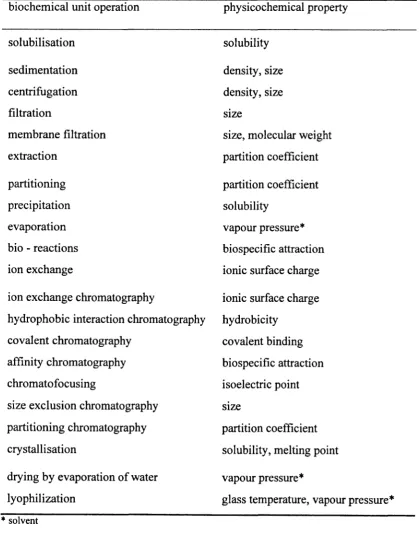
Table 1.1: Biochemical unit operations and the exploited protein properties _________ 23
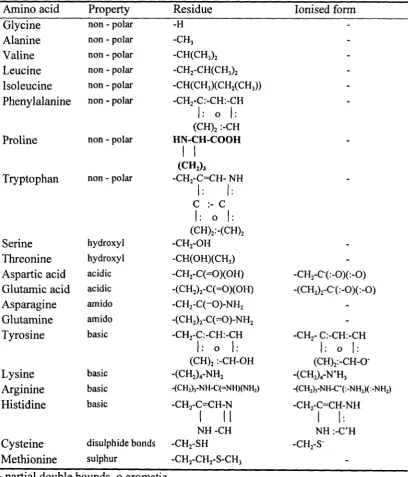
Table 2.2.1.: Molecular structure and characterisation of the twenty amino acid
residues 34
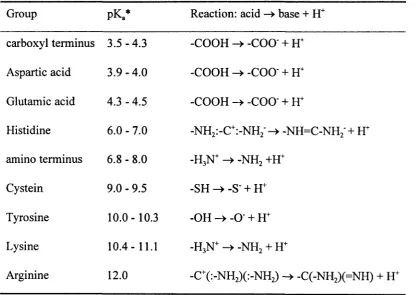
Table 2.2.2: lonised amino acid groups and their P'a and reaction_________________ 37
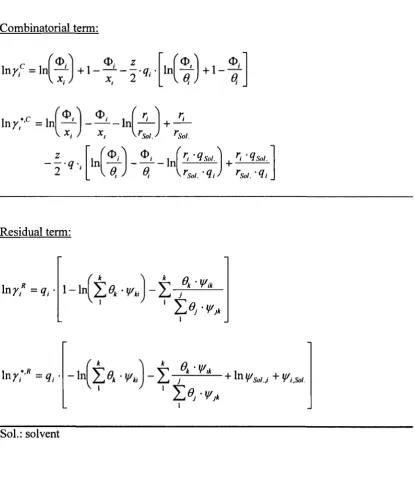
Table 2.4.1: The combinatorial term and residual term expressions for activity
coefficient calculations using the original UNIQUAC model _____________________ 51
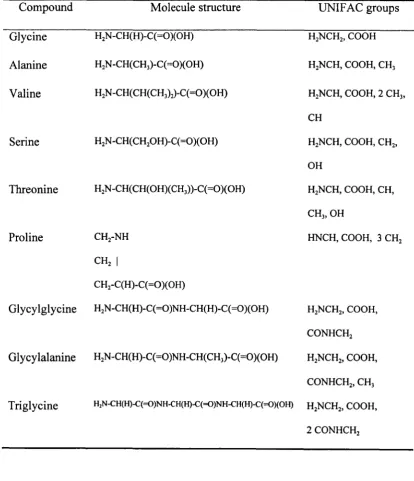
Table 3.3.1.1: Molecular structures of amino acids and peptides and their UNIFAC
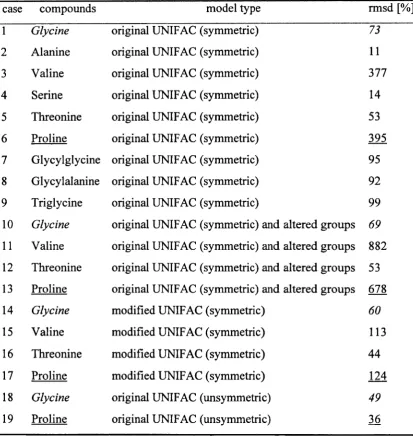
Table 3.3.1.2: Performance of the activity coefficient calculations for amino acids
and peptides using various IJNIFAC model versions 74
Table 3.3.2.1: Structural parameters and binary interaction parameters for glycine,
proline, glycylglycine and water 85
Table 3.3.2.2: Performance of the activity coefficient calculations for glycine, proline
and glycylglycine using the original UNIQUAC model (unsymmetric) ____________ 85
&4i&&
Table 3.3.2.3: Experirncntation error evaluation using two sets of experimentally
determined activity coefficient data for glycine, proline and glycylglycine __________ 87
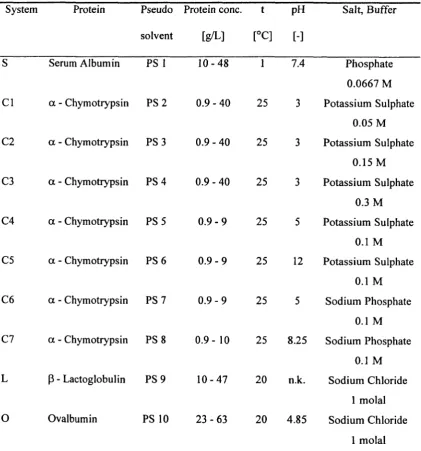
Table 4.2.1: Protein systems and system conditions investigated ____________________ 95
Table 4.2.1.1: Virial expansion data of protein systems 99
Table 4.3.1: Calculated van der Waals volumes and surface areas of proteins _______ 103
Table 4.3.3: Performance of protein activity coefficient calculations using the
original UNIQUAC model (unsymmetric) 112
Table 5.2.1: Protein systems and system conditions investigated ________________ 126
Table 5.3.1: Structural parameters of proteins, salt ions and pseudo solvents_______ 134
Table 5.4.1: Parameters of the thermodynamic solubility product for lysozyme and
concanavalin A 137
Table 5.4.2: Binary interaction parameters for the lysozyme system _____________ 139
Table 5.4.3: Binary interaction parameters for the concanavalin A system__________ 139
Table 5.4.4: Performance of solubility calculations for lysozyme and concanavalin A
using the solid - liquid equilibrium model 145
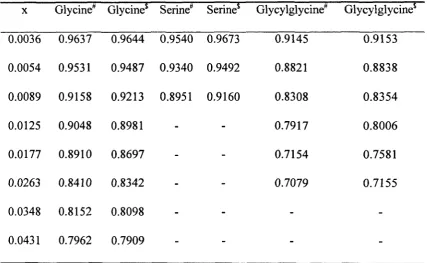
Table A. 1: Experimentally determined activity coefficients of amino acids as a
Table A.2: Experimentally determined activity coefficients of peptides as a function of
composition 182
Table C. 1: Experimentally determined activity coefficients of serum albumin, S, as a
function of composition 214
Table C.2: Experimentally determined activity coefficients of a - chymotrypsin, Cl, as
a function of composition 215
Table C.3: Experimentally determined activity coefficients of a - chymotrypsin, C2, as
afunction of composition __________________________________________________ 215
Table C.4: Experimentally determined activity coefficients of a - chymotrypsin, C3, as
a function of composition 216
Table C.5: Experimentally determined activity coefficients of a - chymotrypsin, C4, as
a function of composition 216
Table C.6: Experimentally determined activity coefficients of a - chymotrypsin, CS, as
Table C.7: Experimentally determined activity coefficients of a - chymotrypsin, C6, as
a function of composition 217
Table C.8: Experimentally determined activity coefficients of a - chymotrypsin, C7, as
afunction of composition _________________________________________________ 218
Table C.9: Experimentally determined activity coefficients of J3 - lactoglobulin, L, as a
function of composition 218
Table C.1O: Experimentally determined activity coefficients of ovalbumin, 0, as a
function of composition 219
Table D. 1: Experimental solubility data of lysozyme, LYS, as a function of
composition and temperature 221
Table D.2: Experimental solubility data of concanavalin A, CON, as a function of
List of Figures
Figure 3.3.1 .1: Experimentally determined and modelled (original IINTFAC
unsymmetric) activity coefficients of glycine and proline against the amino acid and
peptide mole fraction 79
Figure 3.3.2.1: Experimentally determined and modelled (original UNIQUAC
unsymmetric) activity coefficients of glycine, proline and glycyiglycine against
theamino acid and peptide mole fraction _____________________________________ 86
Figure 4.2.1 .1: Reduced osmotic pressure of the serum albumin system against
protein concentration 98
Figure 4.3.1: The structural parameters of lysozyme, serum albumin, a
Figure 4.3.2: Programming structure used to determine interaction parameters _____ 110
Figure 4.3.3: Experimentally determined and modelled (original UNIQUAC
unsymmetric) activity coefficients of a - chymotrypsin with varying ionic strength of
potassium sulphate against protein mole fraction 114
Figure 4.3.4: Experimentally determined and modelled (original UNIQUAC
unsymmetric) activity coefficients of a - chymotrypsin with varying pH and salt
types against protein mole fraction 115
Figure 4.3.5: Experimentally determined and modelled (original UNIQUAC
imsymmetric) activity coefficients for a - chymotrypsin at different temperatures
against protein mole fraction 116
Figure 5.2.1: Experimental solubility of lysozyme at various sodium chloride
concentrations against temperature 128
Figure 5.2.2: Experimental solubility of concanavalin A at various ammonium
Figure 5.3.1: Structure of the solubility model 131
Figure 5.4.1: Experimental and modelled solubility of lysozyme at five different
sodium chloride concentrations against temperature 142
Figure 5.4.2: Experimental and modelled solubility of concanavalin A at different
ammonium sulphate concentrations against temperature 143
Figure 5.4.3: Modelled activity coefficients of lysozyme at different sodium chloride
Chapter 1
Modelling of Protein Solution Properties
The motivation for this work is presented and the development and pursuit of the
research project is described while the relevant publications are reviewed
1.1 Introduction
This work concentrates on the modelling of protein solution properties. Proteins were
the targeted compounds as they are a main product range in the rapidly developing
biochemical industry. From biochemical processes various proteins are produced e.g.
enzymes used in washing powders, hormones such as insulin used for medical
Two kinds of solution properties were studied for different proteins: activity
coefficients and solubility. The process of selecting these protein properties in order
to study and model them are presented in this chapter, chapter one, while also the
overall significance of this work is elaborated.
This work was pursued due to the fact that knowledge of protein solution properties,
either from experiment or from models, is of importance in a variety of areas such as
biochemical process development, protein crystal growth and medical research. The
area of optimal process development, where e.g. product quality, processing cost and
process controllability determine an optimal process, was the main focus for this
work [Bogle et al.,1996] and guided this work. In order to develop optimal biochemical processes, which is becoming increasingly important due to rising
industrial competition, the properties of the different compounds, i.e., product and
impurities, have to be evaluated. Already the first step towards the optimal process
development, which deals with the selection and arrangement of process units, i.e.,
process synthesis, requires extensive assessment of compound properties. Process
synthesis concepts have been discussed and applied with success for chemical
engineering purposes [Siirola and Rudd, 1971; Barnicki and James, 1990; Jaksland et
Wheelwright (1987) discussed applications of process synthesis concepts for
biochemical processes. He introduced heuristics based on physicochemical
compound properties. Key properties of the product, e.g. protein, and the impurities have to be screened, and those properties that demonstrate greatest difference for
product and impurities determine, which separation and purification processes are
chosen. Asenjo (1990) introduced an expert system that allows for computer aided
synthesis of biochemical processes. He also introduced a set of heuristic rules to
select process units as a function of physicochemical properties of the different
compounds or systems, e.g. bacterial cells, occurring during processing. In 1996 Wai
et al. studied a related concept using a property ratio matrix to create initial process
alternatives that are likely to lead to the optimal process.
All the mentioned synthesis methodologies require a diverse range of compound
properties as do any of the other process development stages such as process design
and process simulation. The properties needed for these methodologies are most
conveniently obtained from models and it is the aim of this research project to study
models that estimate compound properties over system conditions and predict
properties over different compound types.
process synthesis, towards the development of optimal biochemical processes, the
major process units and the relating compound properties exploited in these units
were examined. This was pursued in an attempt to screen the properties for their
importance. Protein production units used in the downstream processing from
homogenisation, solubilisation to freeze - dying were viewed with respect to the
exploited physicochemical properties and are listed in table 1 .1. Depending on the
unit operation different properties are exploited e g. an ion exchange unit is applied when differences in the ionic surface charges are found at given system conditions
for product and impurities. Likewise, e.g. sedimentation is applied as a separation
step if density and size differences are encountered for product and impurities. The
main physiochemical properties exploited in the most commonly used biochemical
unit operations are: solubility, density, size, molecular weight, partition coefficient,
biospecific attraction, ionic surface charge, hydrophopicity, covalent binding,
isoelectric point, melting point and glass temperature [Wheelwright, 1987; Burgess,
1988; Asenjo, 19901.
The decision to focus on protein solubility followed various reasons: occurrence of
solubility related unit operations in the downstream processing, the availability of
experimental data, and the non availability of an estimation or prediction method.
Table 1.1: Biochemical unit operations and the exploited protein properties
biochemical unit operation physicochemical property
solubilisation sedimentation centrifugation filtration membrane filtration extraction partitioning precipitation evaporation bio - reactions ion exchange
ion exchange chromatography
hydrophobic interaction chromatography covalent chromatography
affinity chromatography chromatofocusing
size exclusion chromatography partitioning chromatography crystallisation solubility density, size density, size size
size, molecular weight partition coefficient partition coefficient solubility
vapour pressure* biospecific attraction ionic surface charge ionic surface charge hydrobicity covalent binding biospecific attraction isoelectric point size partition coefficient solubility, melting point drying by evaporation of water vapour pressure*
[Hofmeister, 1888, and references within; Ducruix and Giege, 1992, and references
within] until today emphasises its importance. The importance to model a protein's
solubility is further demonstrated by the fact that solubility differences of compounds
are exploited in 80 % of the applied isolation procedures [Scopes, 19871 and in 57 %
of the large scale processes [Bonnerjea et al., 1986]. Furthermore, only recently
useful experimental data for protein solubility as a function of salt concentration,
temperature and p1-I [Cacioppo et al., 1991; Ewing Ct at., 1994] was made available,
which therefore allows for comprehensive modelling to be undertaken. Moreover, a
model for protein solubility, that is applicable for process development purposes, is
not yet available.
This work was motivated by the requirements for optimal biochemical process
development where e.g. a solubility model supports the design of a crystallisation
unit or can clarify if a solid and liquid phase are encountered for a certain unit
operation. However, not only engineering and production purposes link up to this
work but also studies aiming at the protein crystal growth process and at medical
research. For the protein crystal process a protein's solubility is a major property
which once it can be modelled or predicted will support the creation of crystals. To
understand a protein's crystallisation process, which is directly related to a protein's
various teams [Ducruix and Giege, 1992, and references within]. Crystals are needed
to determine a protein's three dimensional structure. Knowledge of a protein's three
dimensional structure not only enlightens our understanding of a protein's function
and biological purpose but also guides us when designing drugs.
The three dimensional description for human serum albumin [Carter et al., 1989; He
and Carter, 1992] was established as a result of such crystallisation work. Human
serum albumin carries important drugs such as aspirin in the blood and its structural
information will allow for further and enhanced drug creations and especially for
those drugs that need to be transported via the blood. Creation of the three
dimensional model of canavalin [McPherson and Rich, 1973; McPherson and
Spencer, 1975], a protein found in the jack bean and a major source of protein for
humans and domestic animals, will allow us to produce plants that are more
nutritional arid resistant to pest. Furthermore, protein crystal growth research is
applied to learn how elastase damages lung tissue while general research towards the
medical treatment for cancer, AIDS, diabetes, sickle cell anaemia and rheumatoid
arthritis is supported.
However, a precondition for this kind of work is that protein crystals are obtained but
experimental trials are encountered due to long periods of nucleation and growth
[Blundell and Johnson, 1976; McPherson, 1982], which might last over months. For
the enzyme lysozyme crystallisation periods of well above a month are encountered
when e.g. hexagonal crystals are produced [communication with Pusey, 1997]. A
method to model or even predict crystallisation conditions and therefore a model that describes protein solubility, is therefore also of great interest in this research area.
This work aims at a model for protein solubility. Models that describe protein
solubility are few. The most well known empirical description of protein solubility
with respect to salts as precipitant agents was introduced by Cohn in 1925 and has been extensively used and studied by others till today [Green, 1931; Dixon and
Webb, 1961; Foster et al., 1971; Niktari et al., 1989]. In 1977 a theoretically based
model followed. Melander and Horvath (1977) described protein solubility as a
function of salt concentration by relating the solubility behaviour to hydrophobic
effects. But Przybycien and Bailey (1989) showed that this model was not consistent
with their experimental solubility results. Further theoretical models were recently
presented by Chiew et al. (1995) and Kuehner et a!. (1996), who used molecular
thermodynamics to describe salt induced protein precipitation. The models
incorporate different interaction potentials to represent protein solubility and they
However, a solubility model is needed that computes quantitatively correctly the
protein solid - liquid equilibrium for a variety of protein systems and has a predictive
potential. Therefore, a semi - empirical model was approached, which had been used
with slight variations for the modelling of the solid - liquid equilibrium of organic
[Gmehling et al., 1978; Nass, 1988; Peres and Marcedo, 1994] and inorganic
compounds [Nicolaisen et al., 1993] but not for proteins. The theoretical framework
adapted for our systems of interest, protein - salt - water, uses the solubility product
to represent the equilibrium of liquid and crystal protein, while a protein's deviation
from ideal solution behaviour is also accounted for.
Proteins have been demonstrated to show high deviations from ideal solution
behaviour [Ross and Minton, 1977], which is expected due to the size difference
encountered between e.g. the protein and solvent molecule, i.e., water. Furthermore,
various different interactions occur for protein molecules, salt ions and water
molecules and create deviation from ideal solution behaviour. Therefore, the
modelling of protein activity coefficients representing the deviation from ideal
solution behaviour due to size difference and interactions was studied here. The only
previous studies aiming at protein activity coefficients are those of Ross and Minton
(1977), who studied sickle cell anaemia by means of activity coefficient examination,
proteins by interpreting the deduced virial coefficients which also led to activity
coefficient studies. Both teams based their work on the virial expansion, which gives
protein activity coefficients as a function of system composition at constant
temperature and pH. For this work another activity coefficient model was aimed at as
not only activity coefficients over system composition but also over system
temperature had to be expressed while additionally a predictive potential of the
model was an objective.
Activity coefficient models have been derived from Wilsons concept [Wilson, 1964]
to describe solution behaviour by means of local composition, which was developed from molecular thermodynamic theories [Smith and van Ness, 1987]. For a solution,
local compositions, different from the overall mixture composition, are assumed,
accounting for the short - range order and non - random orientation that result from
differences in molecular size and intermolecular forces. Three local composition
models are notable: the Wilson equation [Wilson, 1964], the Non Random Two
Liquid equation (NRTL) [Renon and Prausnitz, 1968] and UNiversal QUAsi
-Chemical model (UNIQUAC) [Abrams and Prausnitz, 1975].
The third local composition model, UNIQUAC model, was chosen for this work as it
UNIQUAC Functional - group Activity Coefficient model (UNIFAC) [Fredenslund
et al., 1975] was developed from it. The UNIFAC model is used to calculate activity
coefficients from contributions of defined structural molecular groups, which make
up the molecules in solution. This method creates a predictive tool not only over
system conditions as given with the UNIQUAC model but also over different but
related systems, i.e., compounds. The UNIQUAC and UNIFAC methods were
additionally chosen because they describe system composition and temperature.
While proteins had never been studied with local composition models, systems,
mainly hydrocarbons, that bear similarities with the protein - salt ions - water
systems studied here, were examined and have been described with some success
using these approaches.
Various small organic compounds, which share some of the polar properties with
proteins, were described via local composition models including compounds such as
amino acids and peptides [Nass, 1988; Gupta and Heidemann, 1990; Phino et al.,
1994; Peres and Marcedo, 1994], which are the structural building blocks of proteins.
Furthermore, polymers which share size and hydrophobic features with proteins have
been examined with UNIQUAC and UNIFAC related models [Kontogeorgis et al.,
1997, and references within], where the description of the solution behaviour focused
with proteins, were modelled describing activity coefficients and solubility
[Nicolaisen et al., 1993] using additionally the Debye Htickel law [Debye and
Hückel, 1923; HUckel, 1925, Debye, 19271 to describe the long range interactions of
ions at low salt concentrations. This modelling approach for simple electrolytes is
also of interest as salt ions are compounds occurring in the systems studied here.
Following these facts the IINIQUAC and UNIFAC models and their different
versions were studied here for protein containing systems.
In this work first of all amino acid and peptide systems, which are the building
blocks of proteins, were studied. In a systematic manner different UNIFAC and
UNIQUAC models were applied to model activity coefficients for amino acids and
peptides. This part of the work was used, to clarify if the predictive UNIFAC model
is applicable for protein related compounds and to establish which model version
would be appropriate if at all for proteins. This first part of this work is presented in
chapter three.
In the second part of this work protein activity coefficients were addressed. A
method to obtain protein activity coefficients from osmotic pressure measurements
was studied and the determined activity coefficient data was modelled using a local
examined. The model performance for protein activity coefficients over salt
concentration, pH and temperature was studied, while also a qualitative examination
of protein solubility was pursued. This second part of the work is documented in
chapter four.
In the third and final part of this work the directly measurable solution property,
solubility, was investigated. Protein solubility over salt concentration and
temperature was approached and described via the modelling of protein activity
coefficients. This part of the research is presented in chapter five.
Results and discussions are presented and summarised for these three parts. The
relevant theoretical background for this work is presented in the next chapter, chapter
two. Final chapters discuss the overall conclusions and future research projects,
Chapter 2
Theoretical Background
This chapter discusses proteins and their characteristics. Furthermore, it introduces
the major definitions and models that were studied in this work
2.1 Introduction
The modelling of a protein solution property, protein solubility, was aimed at in this
work using activity coefficients. Consequently first of all proteins and their
characteristics are discussed. This is followed by the definitions for activity
coefficients and their two different standard states, the symmetric and unsynimetric
Gibbs energy is introduced leading to the UNIQUAC [Abrams and Prausnitz, 1975]
and UNIFAC [Fredenslund et al., 1975] expressions, which are models used to
describe activity coefficients and solution behaviour as a function of system
composition and temperature. The UNIQUAC and UNIFAC models are introduced
in detail, including the different UNIQUAC and UNIFAC versions examined in this
work. The presented theories are found to some extent in various references
[Prausnitz et a!., 1986; Smith and van Ness, 1987; Nicolaisen, 1994]. The discussion
relating to proteins is found in references such as Creighton (1984) and Lehninger
(1982).
2.2 Characterisation of Proteins
Proteins are macromolecules built from twenty natural occurring amino acids. Table
2.2.1 shows the structures of the different amino acid residues that build a particular
amino acid and are also found in proteins as amino acids are the building blocks of
proteins. These amino acid residues, R, are situated on the following structure to
configure an amino acid:
Table 2.2.1: Molecular structure and characterisation of the twenty amino acid residues
Amino acid Property Residue lonised form
Glycine non - polar -H
-Alanine non - polar -CH3
-Valine non - polar -CH(CH3)2
-Leucine non - polar -CH2-CH(CH3)2
-Isoleucine non - polar -CH(CH3)(CH2(CH3)) -Phenylalanine non - polar -CH2-C:-CH:-C1-I
-I:
oI:
(CH)2 :-CHProline non - polar HN-CH-COOH
-(CH2)3
Tryptophan non - polar -CH2-CCH- NH
-C :- -C
I:
oI:
(CH)2:-(CH)2Serine hydroxyl -CH2-OH
-Threonine hydroxyl -CH(OH)(CH3)
-Aspartic acid acidic -CH2-C(=O)(OH) -CH2-C(:-O)(:-O) Glutamic acid acidic -(CH2)2-C(=O)(OH)
Asparagine amido -CH2-C(—O)-NH2
-Glutamine amido -(CH2)2-C(0)-NH2
-Tyrosine basic -C112-C:-CH:-CH -CH2- C:-CH:-CH
I:
oI:
I:
o(CH)2 :-CH-OH (CFI)2:-CH-0
Lysine basic -(CH2)4-NH2 -(CH2)4-WH3
Arginine basic -(CH2)3-NH-C(=NH)(NH2) -(CH2),-NH-C(:-NH2)(:-NH2)
Histidine basic -CH2-C=CH-N -CH2-C=CH-NH
I
II
I
I:
NH -CII NH :-CH
Cysteine disuiphide bonds -CH2-SH -CH2-S
Methionine sulphur -CH2-CH2-S-CH3
For proline the whole structure is given in table 2.2.1 because proline is an imino
acid as opposed to an amino acid.
A protein is created from a number of amino acids which bind under a condensation
reaction resulting in a sequential arrangement:
(-NH-CH(R,j-CO-) (2.2.2)
Following these reactions a peptide or protein is created, which consists of the
backbone as given above, 2.2.2. This backbone is build of units consisting of a planar
peptide bond (-CO-NH-) and a carbon, the a - carbon, from which the particular
amino acid residue sets off. Following the condensation reactions a chain molecule is
created and its left end is defined as the amino terminus:
H2N-CH(R)-CO-... (2.2.3)
while on the other end the carboxyl terminus is found:
-NH-CH(RJ-COOH (2.2.4)
The twenty amino acids that build proteins contribute to the characteristics of
proteins. Therefore the twenty amino acids and their characteristics are discussed
next. However, amino acids do not describe matters of molecule size which have to
be additionally considered for proteins. The amino acids or amino acid residues are
Some amino acids residues have been demonstrated to accept and release protons and
the ionised forms of these residues are given in table 2.2.1 while the acid base
reaction is documented in table 2.2.2. For six residues ionisation occurs depending
on the environment. Aspartic acid and glutamic acid release protons in the acidic pH
region and are referred to as acidic. Argine, lysine, tyrosine, cystein and histidine
(weaker base) are basic. Moreover, the termini are involved in acid base reactions.
The documented ranges for the pK., values for the different ionised groups indicate in
which pH region ionisation occurs e.g. at a pH of five the carboxyl terminus, aspartic
acid and glutamic acid are found predominantly in their base form while all other
residues are predominantly in their acid form. Following these ionisation reactions
proteins are found to be charged molecules, i.e., polyelectrolytes. In strongly acid
solution proteins are positively charged and in strongly alkaline solution they are
negatively charged. Due to this property proteins migrate in an electric field. At a net
charge of zero no migration occurs and the prevailing pH is defined as a protein's
characteristic p1 (isoelectric point).
Following the formation of ionised groups a strong hydrophilic character is observed
while the aliphatic residues participate in hydrophobic interactions. Residues such as
glycine, alanine, valine, leucine and isoleucine, table 2.2.1, exhibit a hydrophobic
Table 2.2.2: lonised amino acid groups and their pK. and reaction
Group pKa* Reaction: acid - base + H
carboxyl terminus 3.5 - 4.3
Aspartic acid 3.9 - 4.0
Glutamic acid 4.3 - 4.5
Histidine 6.0 - 7.0
amino terminus 6.8 - 8.0
-COOH -* -000 + H
-COOH - -000 + H
-COOH -^ -000 + W
-NH2 : -C:-NH2 - -NH=C-NH2 + H
-H3N -* -NH2 +W
Cystein 9.0-9.5
Tyrosine 10.0- 10.3 -OH—-O+H
Lysine 10.4-11.1 -H3N—-NH2+H
Arginine 12.0 -C(:-NH2)(:-NH2) -* -C(-NH2)(=NH) +W
* Creighton, 1984
exhibits a non - polar and relatively non - reactive character. The amino acid residues
serine, threonine and tyrosine have hydroxyl groups and support hydrogen bonds.
Asparagine and glutamine, build hydrogen bonds due to their amido groups.
flexible and is often found in the bends of proteins while the steric hindered proline
limits protein flexibility. Aromatic groups found in phenylalanine, tyrosine and
tryptophan contribute to hydrophobic behaviour and steric hindrance. For cystein a very typical characteristic is the creation of disuiphide bonds, which are responsible
for strong intra- and interstrand interactions.
The interactions, which contribute mainly to the specific characteristics and structure
of a protein are the covalent bindings. Covalent linkage of atoms is established by
sharing of electrons. With covalent bonds such as the peptide bonds and the
disuiphide bonds the major characteristics of a protein's structure and therefore
characteristics are settled. An example are disuiphide bindings, which lead with increasing number to a decrease of a protein's solubility.
London dispersion forces describe short range non - covalent interactions, which also
contribute to a protein's properties. Between all atoms weak interactions occur due to
the distribution of electronic charges and their location. Their movements create
fluctuating dipoles which result in attractive forces between atoms. Repulsion occurs
when the electron orbitals are forced to overlap.
dipoles. These can lead to hydrogen bonding. Hydrogen bonding occurs for proteins
between hydrogen atoms and nitrogen atoms or hydrogen atoms and oxygen atoms.
These atoms are involved in dipole moments due to great differences in the electron density of covalent bonds. Where opposite dipole charges are found attraction occurs,
otherwise repulsion is found.
The ionic bonds, which are established between differently charged groups tend to
bring together parts over large distances while repulsion occurs between ionic groups
of same charge. Ionic bonds are the strongest non - covalent forces but do depend on
the dielectric constant of the solvent as electrostatic interactions are reduced in
solvents with high dielectric constants such as water.
When dealing with proteins another form of interaction has to be considered.
Hydrophobic interactions describe the behaviour of groups not being attracted by
water or polar substances. While polar molecule groups form hydrogen bonds with
water, non - polar groups are not soluble and tend to form hydrophobic clusters
minimising the contact area with polar solvents e.g. water, which is the solvent
proteins are most commonly exposed to. The hydrophobic parts of a protein are
accumulated in the centre while the hydrophilic parts are exposed at the surface to
for some proteins and those are referred to as globular proteins. In this work globular
proteins were studied.
Furthermore, aggregation of protein monomers occurs. Dimers or higher order
aggregates are held together by non - covalent forces as described above. During the
course of this work two proteins that occur as dimers were examined for the protein
activity coefficient and solubility modelling work, - lactoglobulin and concanavalin
A.
The described properties and interactions, which result from the molecular structure,
imply the solution behaviour that might occur between proteins and other system
compounds such as water or salt ions. Moreover, the interactions within a protein are
pictured which lead to a protein's very specific three dimensional structure unlike the
random coiling observed for aliphatic polymers.
The described structures, interactions and properties of proteins lead to certain
classifications. The most common classification is achieved by means of molecular
weights which divides the group of proteins into two groups. The low molecular
weight proteins, which are built from only a few amino acids, are referred to as
classes are defined differently with respect to the reference. One definition uses the
number of peptide bonds where a polypeptide with more than fifteen peptide bonds is
considered a protein [Freifelder, 1986]. Other references are found, which give a
definition according to the number of amino acids incorporated or the molecular
weight. Typically proteins have molecular weights of 5000 Da to 200000 Da
[Lehninger, 1982] and the average molecular weight of the amino acid, which is
incorporated into a protein and constitutes the building block of a protein, is about
120 Da [Creighton, 1984].
Furthermore, proteins are classified according to their composition [Elmore, 1986].
Unconjugated and conjugated proteins are referred to. The first class is composed of only amino acids as discussed here, while the second one has additional molecular
structures which are not amino acids. The group of conjugate proteins is divided into
nucleoproteins, lipoproteins, glycoproteins, chromoproteins in accordance to their prosthetic groups.
Moreover, certain properties are used to define proteins. A protein's solubility
behaviour allows for yet another categorisation. Albumins (soluble in water and
dilute solutions of salt), globulins (few soluble in water but soluble in dilute salt
glutelins (insoluble in the mentioned solvents but soluble in dilute solutions of acids
or bases) and scleroproteins (insoluble in most solvents) were defined over the years.
Another widely applied method of classification was established using a protein's
biological function. Such categories are hormones, enzymes, antibodies, structural
proteins etc. Since the first creation of recombinant proteins at around 1972 another
classification evolved differentiating between recombinant and non - recombinant
proteins. Furthermore, classification due to molecular size, amino acid composition,
conformation (helix content), origin and many other factors are known.
In this work six different proteins, serum albumin (horse blood), a - chymotrypsin
(bovine pancreas), - lactoglobulin (bovine milk), ovalbumin (chicken egg),
lysozyme (chicken egg) and concanavalin A (jack bean), were studied. These
proteins originate from a variety of sources as indicated above and have very
different biological functions. The protein a - chymotrypsin is a protease and its
biological function is to hydrolyse peptide bonds of proteins. The protein lysozyme,
which is the smallest protein (14600 Da) studied during the course of this work,
cleaves bacterial cell walls. Lysozyme therefore prevents infections while it is also
applied on the biochemical processing scale as a biochemical tool to disrupt bacterial
blood and regulates its osmotic pressure while it also is a transport vehicle that
delivers other compounds and drugs through the blood stream. Not only the
biological function of the studied proteins differs but also the examined system
conditions differ e.g. pH and temperature ranges. However, all these proteins have in
common that they are globular proteins, i.e., of a compact structure. Furthermore,
they all originate from natural sources that produce them at high amounts, which
makes them available at the quantities and qualities needed for biophysical studies.
Therefore, these six proteins could be studied here in the first place. The two
proteins, 3 - lactoglobulin and concanavalin A, were studied to represent proteins
that are dimers. The protein concanavalin A is the biggest protein studied here with a
molecular weight 102668 Da.
2.3 Activity Coefficients and Standard States
To model a protein's solution properties such as solubility the activity coefficients
have to be addressed. A description of a solution property has to consider the
deviation from ideal solution behaviour which is expressed through activity
is expected as demonstrated by Ross and Minton (1977) for haemoglobin.
Activity coefficients are used to describe a compound's deviation from ideal
behaviour while referring to ideal solution behaviour. Two means of referring to the
ideal solution behaviour are known and the fugacity, f, is used to define these. The
fligacity of a compound, i, in solution is represented by a product of activity, a, and
the reference fugacity:
(2.3.1)
The reference fugacity, f', is defined independently for different solution
compounds and two reference states are used: Raoult's law behaviour and Henry's
law behaviour. For Raoult's law behaviour = f (T, P, pure i) refers to the fact that
the partial pressure, p. is proportional to a compound's vapour pressure, pS:
(2.3.2)
where x is the mole fraction. The reference fugacity for Henry's law behaviour is
f ref
= H 1 and the Henry constant, H, is proportional to the partial pressure:
p1 =x1 . H1 (2.3.3)
Both laws refer to ideal solution behaviour and were found to describe the ideal
solution behaviour of different systems satisfactorily, e.g. benzene - toluene is
behaviour is only observed for mixtures of similar compounds, which are of the same
molecular size and exhibit the same interactions. Other systems exhibit deviation
from ideal solution behaviour, which has to be accounted for with reference to ideal
behaviour.
For a compound for which the standard state is the pure liquid, the activity, a, in the
standard state is equal to unity. In these cases the standard fugacity, fD, is equal to:
Jo
fref pS
(2.3.4-5)
It follows for the chemical potential, .t, that:
u,(T,P)=,u,°(T,P)+R• T . ln(a,) (2.3.6)
where a —+ 1 and .t —+ as x —+ 1 which refers to Raoult's law and introduces the
symmetric reference system. For Henry's law a hypothetical standard state is created
where the compound's activity is equal to one in pure solvent, which introduces the
unsymmetric reference state with a 1 —+ 1 as x 1 —* 0.
The activity is defined as the product of a compound's concentration and activity
coefficient, y. Different concentration scales lead to different activity and activity
a u(x) =x. 'Y ()I
a. (rn) =m 7i(m) I (2.3.7-9) aI(C) =Cj Yi(c)
where x is the mole fraction, m the molal and c the molar concentration scale.
Deviations from ideal solution behaviour are described by the activity coefficients,
which are a function of the specified standard state and the concentration scale. The
activity coefficients are denoted differently with respect to the standard state chosen.
For Henry's law behaviour, i.e., the unsymmetric convention, a special notation is
made: *• Otherwise Raoult's law behaviour, i.e., the symmetric convention, is
applied. The explicit activity coefficient expressions studied in this work are
introduced in the following chapters and the symmetric and unsymmetric activity coefficient equations are presented.
2.4. The Original UNIQUAC Model
The original UNIQUAC model [Abrams and Prausnitz, 1975] links the microscopic
and the macroscopic solution scale, creating a thermodynamic framework to describe
solution activity coefficients of pure or mixture systems over temperature. The three
dimensional arrangements and interactions of molecules as represented by lattice
means of the molar excess Gibbs energy, gE, deviation from ideal solution behaviour is described:
lny, = [(nio1 .
gE
/ R
T)1 (2.4.1)
JP,T,nj(j^i)
The activity coefficient, ', of a compound, i, is obtained by differentiating an
expression for the molar excess Gibbs energy with respect to that compound's moles,
n, while temperature, T, pressure, P. and the moles of other system compounds, j, are constant.
Exploiting the relationship given in equation 2.4.1, and aiming at the description of
phase equilibrium and furthermore equilibrium and compound properties, an excess Gibbs energy expression was introduced by Abrams and Prausnitz (1975). They
expressed the molar excess Gibbs energy as two additive terms:
gE -
g +
(2.4.2)
R•TR•T R•T
The two terms contributing to the molar excess Gibbs energy are the combinatorial
term, g, and the residual term, g.
The combinatorial term or entropy term for multi - component mixtures is given by:
E j
g c1. z
r..x q.x
and e,= 1 ' (2.4.4-5)
where
The combinatorial term accounts for deviation from ideal solution behaviour due to
differences in size and shape of the mixture compounds. The mole fraction, x, refers to
the mixture composition for all compounds, i, while the parameters (J) and 0 represent
the volume and surface fraction of the different compounds, respectively. The structural
parameters r and q refer to the volume and surface area of each compound, i.e.,
molecule, and z indicates the number of nearest neighbours, i.e., the co - ordination
number. The value, z, is generally set equal to 10 but ranges from 6 - 12 representing
the unit cell configuration of the lattice, e.g. z = 6 for the regular cubic lattice and z =
12 for the hexagonal lattice [Tanlord, 1961]. To compute the combinatorial
contribution the structural parameters, r and q, have to be determined for each system
compound. These are derived from a compound's van der Waals volume, V,, and
surface area, A, while being normalised with respect to the methylene molecular
group in polyethylene, which was an arbitrary choice by Abrams and Prausnitz
(1975):
r
= 1517 (2.4.6)
A q
To obtain a compound's van der Waals volume and surface area the group
contribution method by Bondi (1968) is generally applied. However, depending on
the compound Bondi's method might not be adequate and ways to obtain this data for
proteins were developed. These are described when relevant.
The residual term or enthalpy term is given by:
g (j
R =_q,.x,.lnIoJ .vfJI"I J (2.4.8)
( [u..—u..1
= exp— [
T (2.4.9)
With the residual term short - range interactions of a centre molecule with its ten (z)
surrounding next neighbours are introduced using binary interaction parameters, u.
Interaction parameters describe the sum of interactions between a nearest neighbour
and a centre molecule over the various binary interactions occurring per compound
pair. The interactions between identical and different molecule pairs are described by
a number of binary interaction parameters. Three interaction parameters describe for
two compounds, i and j, the binary interactions between identical, u 1 and u, and
different, u with u = ui,, compound types. The total number of binary interaction
parameters, b, needed per system is a function of the number of system compounds, i,
b = (i) + (i - l)+...+(i - i) (2.4.10)
These interaction parameters are available from previous modelling attempts for some
compounds. However, they are a function of the studied model version and might
therefore not apply. Following these facts the interaction parameters have to be
established for some compounds and this was the case for this work as proteins had not
been studied before. A programming procedure was designed and FORTRAN
programs were developed during the course of this work in order to obtain these
parameters. These procedures are explained where relevant, while the programs are
printed in the appendices.
Partial molar differentiation of the given g' expressions leads to the activity
coefficient, y, for a compound, i, over the two possible reference states, the
symmetric and unsymmetric reference states:
lny1 =lnyf+lny,' (2.4.11)
lny,* = lnr*,c + lnr* R (2.4.12)
where is the combinatorial and yR is the residual activity coefficient. In table 2.4.1
the resulting expressions are given with respect to the two terms, combinatorial and
residual term, and the two reference states, symmetric and unsymmetric conventions.
The unsymmetric activity coefficient, y, is obtained from the symmetric activity
Table 2.4.1: The combinatorial term and residual term expressions for activity
coefficient calculations using the original UNIQUAC model
Combinatorial term:
1ny14' = lnJ +1— - • q. [in-)
+1-Sc
('\ Cj. r r.
in y,' = in' L _! in +
x1 ) - x1 - r 01 ) rsoi
- q• [ln-'-J - - 1n"
q0j\ +
q01•
1
r0, .q1) r 0, •q1j
Residual term:
1ny1'=q1• 1_lfl
f
O
kWkiJ -°k VIk
1
JWJk
1 [ _________
(k k
Jj
my
1'
=q [_ifll ki - + lnsoI.,i+i.I.1
"I(2.4.13) V
where y defines the infinite dilution activity coefficient of a compound in pure
solvent.
2.5 The Original UNIFAC Model
Different group contribution models have been developed [Lydersen, 1955; Hoshino
et aL, 1982; Klincewicz and Reid, 1984; Mavrovouniotis et al., 1988; Mavrovouniotis,
1990; Elbro et al., 1991; Constantinou and Gani, 1994] and demonstrated that
compound properties relate not only to the molecule type but also to the molecular
groups, which build a molecule. A great variety of compounds, mainly hydrocarbons
[Lyman et aL, 1982; Reid et a!., 1987], were represented by a limited number of
molecular groups and these were successfiully correlated to a compound's molecular
structure and properties, either pure or mixture properties. These model types, group
contribution models, are able to describe properties not only of previously modelled
compounds or systems but also new and unexamined systems as the molecular
groups allow the creation of any kind of compound and therefore system. This makes
extensive and good experimental data over various conditions and systems has to be
available to develop satisfactory group contribution models, which should make the
models applicable for systems and system conditions related to the originally used
systems, i.e., systems of the database used to train the model and to obtain the needed
parameters.
Fredenslund et al. (1975) integrated such a group contribution concept into the
previously presented UNIQUAC model, chapter 2.4, and created the UNTFAC model.
The group contribution approach of the UNIFAC model uses also molecular groups, which combine to build a compound and lead to that compound's properties using the
properties of the molecular groups that build that compound. For calculations with the
UNIFAC model, as in the case of the UNIQUAC model, the structural parameters, r
and q, of a compound, i, are needed. In the case of the UNILFAC model these are
obtained from the structural parameters, R and Q, of the defmed molecular groups, p, as a function of their occurrence, v, in that same compound:
(2.5.1)
q=v . Q (2.5.2)
Two sets of structural parameters are introduced. One for the compound, r and q, and
P®.tIJ qipq)_ _/ P
I o,tIIqp
(2.5.4)
the van der Waals volume and surface area of either a compound or a molecular group
as discussed before. By means of these molecular groups and their parameters the
group contribution approach was introduced into the UNIFAC model. For the
combinatorial term of the UNIFAC model the same equations apply as for the
UNIQUAC model, equations 2.4.3 - 2.4.5, and the same theory applies as described before, chapter 2.4.
A different set of equations was derived for the residual term of the UNIFAC model.
The interaction parameters of the molecular groups, F, were integrated into the residual
term, which leads to the residual activity coefficient, y':
lny1R =v;.(lnr'-1nr';) (2.5.3)
where [ is the activity coefficient of a molecular group and F 1, is the residual activity
coefficient of group p in a reference solution containing only molecules of type i while
v refers to the number a group occurs per compound. The activity coefficient of a
molecular group is given by:
lnF
=QP{1_1n(®P
is the area fraction of a molecular group and is calculated by:
®p= qQP•XP
(2.5.5) Qq•Xq
where X is the mole fraction of a molecular group. The interaction parameter, w is
given by:
'pq
exp[
[Upq_Uqq
T j) (2.5.6)
where U is a binary interaction parameter for molecular groups and T is the system
temperature. The UNIFAC model takes the same basic approach as the UNIQUAC
model and its parameters and variables bear the same physical meaning as presented in
the previous chapter 2.4. However, for the UNIFAC model molecular groups, which
configure the different system compounds, are used as opposed to a description of the
compounds as an entity, which is done with the UNIQUAC model.
The molecular groups that are used to build a compound have been defmed and are
found in the most extensive and recent publication by Hansen et al. (1991), which also
aims at biotechnology compounds and is therefore of particular interest to this work.
Hansen et a!. (1991) defmed the molecular groups and related almost all of these
groups to the structural parameters, R and Q, and interaction parameters, U, which are a
However, reconstruction of a system's compounds using the defined molecular groups
allows for activity coefficient predictions applying the determined parameters and
introduced UNIFAC equations.
2.6 The Modified Model
In 1987 a modified model [Larsen Ct al., 19871 was developed. The combinatorial term was changed compared to the original one and was since widely used for polymers
[Kontogeorgis et a!., 1997, and references within]. Additionally, a temperature
dependence was introduced by Larsen et a!. (1987) for the residual term and its
interaction parameters. These alterations improved excess enthalpy estimations from
deviation of around 50 % to around 10 % [Fredenslund, 1989]. Consequently,
modelling of systems that span a certain temperature range can be improved using the
modified residual term. Therefore, the modified residual term was studied for this work
when temperature ranges of up to 30 K had to be described for protein solubility.
For the modified model the combinatorial activity coefficients, y, of a compound, i, is
inr,c 1J
(0.
= - +1__i (2.6.1) xi
where
2
x •r,3
= j 2 (2.6.2)
x .rJ
The modified combinatorial term is a function of the volume fraction, co, and the mole
fraction, x, and resembles closely the original combinatorial term, equation 2.4.3 and
table 2.4.1. However, the second part of the original combinatorial term is eliminated.
Due to this the entropy state of solution is described only by means of compound sizes
and reflects the originally suggested expression of Flory - Huggins [Larsen et al.,
1987].
The volume fraction of the modified model, equation 2.6.2, is determined from the
mole fractions of compounds, i and j, and relates closely to the definition given for the
original model, equation 2.4.4. However, the volume parameter, r, was assigned a
smaller contribution as examined and discussed by Kikic et a!. (1980). The introduced
exponent, which is generally and for this work set equal to 2/3, lowers the volume
contribution. The value of the exponent might vary with the type of molecule. The
structural volume parameter, r, is obtained in the manner described before, equations
The residual term of the modified model is derived in the same manner as for the
original model, chapter 2.4, but a higher order temperature dependence is added for the
binary interaction parameters, u. This results in up to three parameters per binary
interaction parameter instead of one when compared to the original model:
u = u; +u .
(T_7')+u .(T.1n-+T_7)
(2.6.3)
However, in this work the temperature, T, dependence was terminated after the second
term in order to introduce as few parameters as necessary into the solubility model. The temperature, T0, is an arbitrary reference temperature which is fixed to 300 K for this
work.
2.7 Appraisal of the Models
The basic model concepts introduced in this work are those of the UNIFAC and
UNIQUAC models. Both models refer to the same theoretical approach but vary with
the extent of their applicability. The UNIQUAC model allows for predictions over
systems conditions such as temperature and composition. The UNIFAC model
allows additionally for predictions over different but related compounds as a function
Both models have been applied to study phase equilibria and compound properties.
Pure and mixture compound properties were described for a variety of compounds by
various authors [Abrams and Prausnitz, 1975; Fredenslund et a!., 1975; Prausnitz et
at., 1986; Smith and van Ness, 1987]. The compounds investigated were mainly
hydrocarbons and small organic compounds. These relate to some degree to proteins
as discussed earlier, chapter 2.2, and therefore these models were approached.
However, some limitations are indicated for the original models as presented in 1975.
Compounds that bear an electrolyte character just like proteins, which are
polyelectrolytes, were not considered. Likewise, macromolecules such as polymers
and proteins were not included in the early examinations. However, attempts were made to overcome these limitations and since then polymers and simple electrolytes
were studied with these local composition models while this work is the first
dedicated to proteins.
For polymers it was found that a description of the entropy state of solution alone is
pursued as hardly any interactions are encountered for polymer mixtures built from
aliphatic polymers. Ways to express the entropy state of solution for polymer
mixtures were pursued using the Flory - Huggins combinatorial term as introduced
term bears also the Flory Huggins expression, it also carries a Staverman
-Guggenheim correction, which in most cases is often quite small [Larsen et al.,
1987]. For the modelling of polymer properties also variations for the definition of
the volume fraction are noted [Couthinho et al., 1994] and differences in the
definition of the volume term and the magnitude of its contribution are introduced.
These works are of relevance for protein containing systems due to the fact that they
have the macromolecular character in common with polymers. Consequently, they encouraged the study of the original models and their consecutive versions for
proteins. However, the original model and its entropy term were addressed first as
this term already introduces the size impact of the different compounds into the
model as discussed before. While for polymer solutions athermal behaviour is expected the same cannot be assumed for proteins. Having examined the
characteristics of proteins in chapter 2.2, it is for certain that interactions occur
between proteins and other system compounds. Therefore, the enthalpy state of
solution needs to be described for protein containing systems as done in this work.
Referring to the fact that proteins are polyelectrolytes, studies pursued for simple
electrolytes were of interest. Various research works have been pursued to deal with
electrolyte systems for the UNTQUAC and UNIFAC models since 1986 [Sander et
between charged groups the Debye HUckel law [Debye and I-IUckel, 1923; Huckel,
1925, Debye, 1927] was introduced. Interactions between charged groups are
observed at low ionic strength in electrolyte solutions. However, high ionic strength
solutions do not encounter charge - charge forces as these are screened off. Dealing
with protein systems that additionally constitute of buffer and salt ions, high ionic
strengths are observed and a screening of the ionic long range interactions is noted
[Kuebner et a!., 1996]. Therefore, this approach was not adapted for the studied
systems and only short - range forces such as dispersion and dipole forces were
accounted for.
Furthermore, it was of interest for this work that recently a new database of
molecular groups and their parameters [Hansen et al., 19911 was published for the
UNIFAC model, which was documented to have been extended to compounds
relevant in biotechnology applications. Success of these parameters for the prediction
of protein activity coefficients or those of related compounds is certainly of interest
for this work. The determination of parameters for the target systems would not be
required, which is a work intensive process depending on the number of parameters
that need to be determined. For the establishment of e.g. a solubility model about
twenty parameters were determined by Nicolaisen (1994) for a system of five
biotechnology compounds, was introduced for the predictive UNIFAC model
encouraged the use of the discussed modelling frameworks for biotechnology
compounds: proteins.
Consequently, first the UNIFAC model and the new database was examined. The
approaches and results of that work are discussed in the next chapter, chapter three.
This work is then followed by two further result sections which deal with additional
model approach examinations for proteins and lead to the modelling of protein
solubility.
2.8 Summary
The characteristics of proteins, major definitions and models for this work were
introduced and discussed. However, this introduction was limited to the theory
needed throughout this work and for the next chapter, chapter three. Further
a A b C Da f E g gE E gR H m n p P PT plc pS q Q R r R R
2.9 Nomenclature
activity
Van der Waals surface area
total number of binary interaction parameters molar concentration
dalton [g!molJ fugacity
combinatorial term of the molar excess Gibbs energy molar excess Gibbs energy
residual term of the molar excess Gibbs energy Henry's constant
compound
molal concentration number of moles partial pressure pressure
isoelectric point
dissociation constant on the pH scale vapour pressure
structural surface area parameter of a compound structural surface area parameter of a group gas constant
T temperature
u UNIQUAC binary interaction parameters of a compound U UNIQUAC binary interaction parameters of a group UNIFAC model UNIQUAC Functional Activity Coefficients model UNIQUAC model UNIversal QUAsi Chemical model
V Van der Waals volume
x compound mole fraction
X group mole fraction
z lattice co - ordination number
Greek letters 1' 0 '-I' 7 Il V 0 (0 '4' Subscript 0 c J
volume fraction (org.) group activity coefficient group area fraction
group interaction parameter compound activity coefficient chemical potential
molecular group occurrence per compound compound area fraction
volume fraction (mod.)
molecule interaction parameter
standard
molar concentration compound
k compound
molecular group
m molal concentration
p molecular group
q molecular group
tot total
x mole fraction
Superscript
J) infinite dilution
standard
* unsymmetric convention
C combinatorial term
i compound
R residual term
ref reference
t' temperature (third term)
Chapter 3
Calculation of Amino Acid and Peptide Activity Coefficients
It was the objective of this part to evaluate which model approach describes a
solution and mixture property, activity coefficients, of amino acids and peptides.
3.1 Introduction
Aiming at the description of protein solubility by means of protein activity
coefficients required first the examination of the various activity coefficient models.
The UNIFAC [Fredenslund et a!., 1975] and UNIQUAC [Abrams and Prausnitz,
1975] models and their consecutive versions were investigated for their ability to
describe activity coefficients using binary systems of amino acids arid peptides in