Scheme against Smart Card Security Breach
⋆Ding Wang1,2⋆⋆, Ping Wang2, Chun-guang Ma3, and Zhong Chen1
1 College of Electronics Engineering and Computer Science, Peking University, Beijing 100871, China
2
National Engineering Research Center for Software Engineering, Beijing 100871, China
3 College of Computer Science, Harbin Engineering University, Harbin 150001, China
Abstract. As the most prevailing two-factor authentication mechanism, smart card based password authentication has been a subject of intensive research in the past decade and hundreds of this type of schemes have been proposed. However, most of them were found severely flawed, especially prone to the smart card security breach problem, shortly after they were first put forward, no matter the security is heuristically analyzed or formally proved. In SEC’12, Wang pointed out that, the main cause of this issue is attributed to the lack of an appropriate security model to fully identify the practical threats. To address the issue, Wang presented three kinds of security models, namely Type I, II and III, and further proposed four concrete schemes, only two of which, i.e. PSCAV and PSCAb, are claimed to be secure under the Type III model, i.e. the harshest security model. However, in this paper, we demonstrate that PSCAV still cannot achieve the claimed security goals and is vulnerable to an offline password guessing attack and other attacks in the Type III security mode, while PSCAb has several practical pitfalls. As our main contribution, a robust scheme is presented to cope with the aforementioned defects and it is proven to be secure in the random oracle model. Moreover, the analysis demonstrates that our scheme meets all the proposed criteria and eliminates several hard security threats that are difficult to be tackled at the same time in previous scholarship, which highly indicates the settlement of an open problem raised by Madhusudhan and Mittal in 2012. Beyond our cryptanalysis of current schemes and our proposal of the new scheme, the proposed adversary model and criteria set provide a benchmark for the systematic evaluation of future two-factor authentication proposals.
Keywords: Cryptanalysis, Authentication protocol, Smart card, Non-tamper resistant, Dynamic ID, Offline password guessing attack.
Revision. In http://eprint.iacr.org/2012/527 [66], Prof. M. Scott conducted a cryptanalysis of the original scheme and mainly four points are presented: 1) a determined adversary should be allowed to somehow learn a client’s identity, which is not explicitly stated in our original adversary model; 2) an offline password guessing attack can be successfully launched under the assumption that a “powerful” attacker is equipped with the ability of breaching a legitimate user’s smart card and the ability of determining this user’s identity; 3) “If password derived data should not be stored on the server, and if identities are to be used as a kind of extra
⋆This is a revised version in response to [66], Sep 25, 2012.In this version, we correct the flaw in our
scheme and have sent the paper to Prof. Michael Scott for a review before making it public, and we sincerely thank him for his insightful observations and constructive comments on improving this study. Since then, only slightly modifications are made to Section 2: Adversary model and evaluation criteria, while the other parts remain unchanged.
password, then identity-derived information should also not be stored by the server, and this should form one of the desirable attributes of such a scheme.”; 4) “the use of identities as a kind of surrogate password is not a viable strategy for the development of such schemes. ”
We are grateful to Scott for his insightful observations, and acknowledge that the first two points are correct and invaluable. As we shall see later, in the extended adversary model, a determined adversary is explicitly allowed to learn a client’s identity and the enhanced scheme is still provably secure in the random oracle model provided that the CDH problem is intractable.
The remedy is rather simple: to thwart Scott’s attack, the key parameterk=H0(x∥IDi∥Treg)
is included into the calculation ofCIDiin the login phase, which is the only essential difference
as compared to the original scheme.
However, the latter two points are not so reasonable yet, maybe due to the ambiguities in our original paper. We think a misunderstanding occurs here. In the original paper, we did agree with the idea that the security of a scheme shall only rely on the secrecy of the password and the possession of the smart card, which can be confirmed by our affirmation that:
“ Yang et al.’s formal adversary model does capture the exact two-factor authentication: only with both the smart card and the correct password can a user carry out the smart-card-based password authentication scheme successfully with the remote authentication server.”
In the original paper, we never stated that user’s identity should be “considered as a kind of
surrogate extra password”,0 and actually we favored the opposite. The point here is, it is our
implicit assumption that an attacker who is equipped with the capability of C-2(ii) shall not be able to learn the victim user’s identity that leads to Scott’s successful cryptanalysis, but not the strategy that “user’s identity could be considered as a kind of surrogate extra password” that does. In this regard, the preconditions for Point 3 and Point 4 don’t hold up and thus these two points may not be necessary, although they are no doubt correct. Nevertheless, they do underline the following consensus: it is more reasonable and practical to not consider user identity as a kind of surrogate extra password. In a word, the attribute that identity-derived information should also not be stored by the server is meaningless and thus it is unreasonable to incorporate it into the criteria set.
It is also worth noting that: 1) user’s identity directly relates to user privacy and it is desirable to have it well protected from eavesdropping attackers (passive attackers), i.e. to provide user anonymity, which means the provision of identity protection and user un-traceability against an eavesdropping attacker; 2) although the security of a protocol should not rely on the secrecy of user’s identity, preserving user anonymity does help to safeguard protocol security in reality. Notion 1 is obvious, while notion 2 is seemingly quite paradoxical. When we evaluate the security of a protocol, we always assume an extremely powerful adversary with all the reasonable capabilities allowed to her (except for the ones or the combination of the ones that enable her to trivially break any of this type of protocols); but in specific scenarios, if user anonymity is preserved, an eavesdropping attacker is kept away from user’s identity and an active attacker still needs to make some efforts (e.g., by shoulder-surfing or gaining temporary access to the smart card) to learn user’s identity, because it can no longer be trivially learnt by wiretapping, while the efforts to learn a user’s identity is often more costly (difficult) than by wiretapping. From this point of view, it is appropriate to say that preserving user anonymity does safeguard (increase) protocol security. This explains the paradox.
0
1
Introduction
Password authentication with smart card is one of the most convenient and effective two-factor authentication mechanisms for remote systems to assure one communicating party of the legitimacy of the corresponding party by acquisition of corroborative evidence. This technique has been widely deployed for various kinds of authentication applications, such as remote host login, online banking, e-commerence and e-health [14]. In addition, it constitutes the basis of three-factor authentication [28]. However, there still exists challenges in both security and performance aspects due to the stringent security requirements and resource-strained characteristics of the clients.
Since Chang and Wu [10] introduced the first remote user authentication scheme using smart cards in 1993, there have been many of such schemes proposed [15, 17, 33, 44, 46, 51, 69, 81, 83, 84, 87, 92]. One prominent issue in this type of schemes is security against offline guessing attack, which is the severest threat that a sound and practical scheme must be able to thwart. Traditionally, to prevent an adversary from launching offline guessing attack, one need to make sure that the scheme is not going to leak any information useful about the client’s password to the adversary in the protocol run, even though the password is considered to be weak and low-entropy. By observing this, many schemes employed some techniques similar to Bellovin and Merritt’s Encrypted Key Exchange protocol. A common feature of such schemes is that the smart card is assumed to be tamper-resistant, i.e., the secret parameters stored in the smart card cannot be revealed. However, recent research results have demonstrated that the secret data stored in the smart card could be extracted by some means, such as monitoring the power consumption [5, 37, 39, 58] or analyzing the leaked information [32, 55]. Therefore, such schemes [15, 33, 49, 83] based on the tamper resistance assumption of the smart card are vulnerable to offline password guessing attacks, user impersonation attack, etc, once an adversary has obtained the secret data stored in a user’s smart card and/or just some intermediate computational results in the smart card [13,44,75,85,89]. Consequently, a stronger notion of security against offline guessing attack is developed to require that compromising a client’s smart card should do not help the adversary launch offline guessing attack against the client’s password.
In 2008, seeing that most of the previous schemes have been found inconsistent with this strong notion of security due to the lack of formal security analysis, Yang et al. [93] presented a formal adversarial model for analyzing the security of this type of schemes and a generic
construction framework with a new scheme to demonstrate its effectiveness. Although Yanget
al.’s scheme suffers from some security vulnerabilities like smart card loss attack (as shown in
AppendixA) and privileged insider attack, and fails to provide many desirable features such as
repairability and user anonymity, Yang et al.’s formal adversary model does capture the exact two-factor authentication of smart-card-based password authentication schemes: only with both the smart card and the correct password can a user carry out the smart-card-based password authentication scheme successfully with the remote authentication server.
[27] demonstrated several attacks against Hsiang-Shih’s scheme [26] and further proposed an enhanced version by “exploiting hash functions”. They claimed that the improved scheme can withstand offline password guessing attack even if the sensitive parameters are extracted by the adversary. However, we found Hsieh-Leu’s scheme still cannot achieve its claimed main
security goal by demonstrating an offline password guessing attack in Appendix B. Through
the security analysis of Hsieh-Leu’s scheme and Yang et al.’s scheme, some subtleties and
challenges in designing this type of schemes, different from the traditional password-based (i.e., one-factor) authentication, are uncovered.
In SEC’12, Wang [84] observed that the previous papers in this area present attacks on protocols in previous papers and propose new protocols without proper security justification (or even a security model to fully identify the practical threats), which contributes to the main cause of the above failure. Accordingly, Wang presented three kinds of security models, namely Type I, II and III, and further proposed four concrete schemes, only two of which, i.e. PSCAb and PSCAV, are claimed to be secure under the harshest model, i.e. Type III security model. The type III model will be reviewed later in Section 2. However, PSCAb requires Weil or Tate pairing operations to defend against offline guessing attack and may not be suitable for systems where pairing operations are considered to be too expensive or infeasible to implement. Moreover, PSCAb suffers from the well-known key escrow problem and lacks some desirable features such as local password update, repairability and user anonymity. As for PSCAV, in
AppendixC, we will demonstrate that it still cannot achieve the claimed security goals and is
vulnerable to an offline password guessing attack and other attacks under the Type III security model. As our main contribution, a robust and efficient scheme is presented to cope with the identified defects and it is formally proven to be secure in the Type III model.
The remainder of this paper is organized as follows: in Section 2, we elaborate on the adversary model and evaluation criteria. Our proposed scheme is presented in Section 3, and its security analysis is given in Section 4. The comparison of the performance of our scheme with the other
related schemes is shown in Section 5. Section 6 concludes the paper. Yanget al.’s scheme [93]
is investigated in AppendixA. An offline password guessing attack against the scheme proposed
by Hsieh-Leu [27] is uncovered in AppendixB. The demonstration of offline password guessing
attack on Wang’s PSCAV protocol [84] is given in AppendixC.
2
Adversary model and evaluation criteria
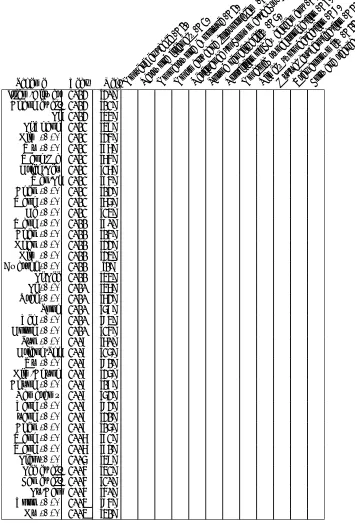
There have been several papers dealing with smart-card-based password authentication schemes in recent years (see, e.g., [17, 25, 33, 47, 48, 73, 83, 90]). However, in most of these studies, the authors present attacks on previous schemes and propose new protocols with assertions of the superior aspects of their schemes, while ignoring benefits that their scheme doesn’t attempt (or fail) to provide, thus overlooking dimensions on which it fares poorly. Despite the lack of evaluation criteria, another common feature of these studies is that, there is no proper security justification (or even an explicit security model) presented, which explains why these protocols previously claimed to be secure turn out to be vulnerable. The research history of this area can be summarized in the following diagram (For a more telling picture, see Fig.1):
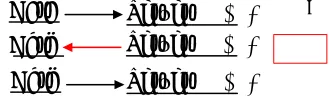
New protocol→ broken→ improved protocol →broken again → further improved protocol → · · ·
1991 Chang-Wu(smart card)
2000 Hwang-Li(no verifier-table)
2002 Chen et al. (Single-server architecture) 2000 Sun(hash)
2004 Ku et al.
2005 Lee et al. 2004 Yoon et al.
2007 Wang et al.
2011 Sood 2011 Chen et al.
2011 Wang RC (ECC)
2012 Wu-Zhu 2011 Pu Q
2011 Li et al. 2009 Hsiang-Shih
2011 Kim-Choi 2009 Wang
2011 Khan
2011 He et al.
2012 Ma et al. 2004 Das et al. (user anonymity)
2005 Chien-Chen
2007 Hu et al.
2009 Xu et al. (provable security)
2010 Song
2010 Horng et al.
2010 Yeh et al.
2011 Roy 2010 Wu et al.
2012 Chen et al. 2012 Wei et al. 2009
Chung et al.
2005 Yoon et al.
2011 Li et al. 2009 Kim-Chung
1981 Lamport( password)
2012 Wang-Ma 2012 Wang et al. 2012 Wang et al.
2010 Tsai
2012 Chen et al. 2012 Wen-Li
2012 Tang et al. 2011 Fang et al.
2012 Wang et al.
Undertamp
erresistance
assumption of the card
Under
non-tamperresis
tance
assumption of the car
d
2012 Zhu
2008 Lee et al. (DLP) 2009 Liao-Wang
2011 Sood et al. 2010 Shao-Chin
2011 Lee et al.
2013 Li et al. 2012 Li et al.
2012 Xue et al. 2005 Choi et al.
2008 Tsai et al. (hash)
2009 Hsiang-Shih
2012 Shao-Chin 2010 Yeh-Lo 2003 Lin et al.
(Multi-server architecture)
2013 Tsai et al.
2013 Li et al.
2013 Jiang et al.2013 Cao-Zhai 2013 Liao-Hsiao 2012 Hsieh-Leu
2012 Tsaur et al.
Fig. 1.The history of “break-fix-break-fix”
2.1 Adversary model
In the conventional password authenticated key exchange protocols, the attacker is modeled to have full control of the communication channel between the communicating parties [3], such as eavesdropping, intercepting, inserting, deleting, and modifying any transmitted messages over the public channel. Though this assumption is reasonable for password-based authentication situations, it is not sufficient for password-based remote authentication using smart cards.
Recent studies have reported that, the secret parameters stored in common smart cards could be extracted (or partially extracted) by power analysis attacks [37, 58, 74], the software loophole exploiting attacks (launched on software-supported card, e.g., Java Card) [43] or reverse engineering techniques [60]. Consequently, the leakage of sensitive parameters stored in the smart card may lead the original secure schemes vulnerable to the smart card loss problem, such as offline password guessing attack and impersonation attack [41,52,54,68,77,91]. Accordingly, it is more prudent and desirable to design password authentication schemes using smart cards under the assumption that the secret keys stored in the smart card could be revealed by some means. What’s more, as observed and in-deep investigated by Wang [84] quite recently, malicious card readers also contribute to the security failures of such schemes. Once the card reader is under the control of the attacker, e.g. the card reader is infected with viruses and/or Trojans, the card owner’s input password may be intercepted.
special instruments and attack platforms); (2) the attacker is unlikely to succeed in revealing the sensitive data on the card within a short period of time. However, if a memory USB stick is used in such an un-trusted terminal, both the parameters stored in the memory and the user’s password will be exposed easily and without any abnormality. This well explains the essential advantage of using smart cards over employing common memory sticks, even if non-tamper resistance assumption of the smart cards are made.
In reality, previous session key(s) or materials used to construct the session key may be lost for a variety of reasons [40], ranging from the malicious action of an insider to a temporary break-in into a computer system or the prescribed-release of that session key when the session
is torn down. Adding this ability toAallows our model to capture the threat of the known key
attack. To evaluate the damage of leakage of server’s long-term private key, the capability of learning server’s long-time private key is equipped with our adversary. This allows us to deal with forward secrecy.
Furthermore, it is worth noting that, in remote user authentication schemes, for the sake of
user-friendliness, a user is often allowed to select her own identityID at will (maybe confined
to a predefined format) during the registration phase; the user usually tends to choose an identity which is easily remembered for her convenience. Consequently, these easy-to-remember
identities are of low entropy and thus can also be offline enumerated by an adversaryAwithin
polynomial time in the same way with the passwords. Hence, in practice, it is reasonable and
realistic to assume thatAcan offline enumerate all the (ID, P W) pairs in the Cartesian product
Did∗ Dpwwithin polynomial time. In contrast, most of the proposed dynamic-ID schemes (i.e.
user’s identity is concealed in session-variant pseudo-identities to provide the property of user
anonymity), e.g. [76, 80, 87], explicitly assume A cannot guess both ID and P W correctly at
the same time. In other words, such dynamic-ID schemes may be vulnerable to offline password guessing attack under our assumption.
Last but not the least, it is reasonable and practical to assume that a determined adversary may somehow learn this victim user’s identity. Firstly, user’s identity is static and often confined to a predefined format, and it is more easily guessed than the password [7]. Secondly, in practice, imprudent users tend to write their identities directly on the card, and after all, the attacker can know more or less about the personal information of the card holder when she gets access to the card. Lastly, the input identity is usually displayed in plain on the screen and is susceptible to shoulder-surfing.
Table 1.Capabilities of the adversary
C-00
The adversary A can offline enumerate all the elements in the Cartesian
product Did× Dpw within a reasonable amount of time, whereDpwand Did
denote the password space and the identity space, respectively.
C-01 The (active) adversary A has the capability of determining the victim’s
identity.
C-1
The adversary A has full control of the communication channel between
the communicating parties, such as eavesdropping, intercepting, inserting, deleting, and modifying any transmitted messages over the public channel.
C-2
The adversaryAmay either (i) learn the password of a victim via malicious
card reader, or (ii) extract the secret data in the lost smart card by
side-channel attacks, but cannot achieve both. Otherwise, it is a trivial case.
C-3 The adversaryAcan learn the previous session key(s).
C-4 The adversaryAhas the capability of learning server’s long-time private key(s)
The capabilities of the adversary in our model are summarized in Table1. As far as we know, our work, following Li-Lee’s [44] and Wang’s [84] work, is one of the few ones that explicitly specify the capabilities of the adversary. In [84], Wang presented three kinds of security models, namely Type I, II and III, and further proposed four concrete schemes, only two of which are claimed to be secure under the harshest model, i.e. Type III security model. In Wang’s Type III model, three assumptions are made:
(1) an adversary A is allowed to have full control of the communication channel between
the user and the server, which is consistent with C-1;
(2) the smart card is assumed to be non-tamper resistant and the user’s password may be
intercepted byAusing a malicious smart card reader, but not both, which is consistent
with C-2;
(3) there is no counter protection in the smart card, i.e.Acan issue a large amount of queries
to the smart card using a malicious card reader to learn some useful information.
With regard to assumption 3, we argue that this assumption may not be of much practical significance, because whether assumption 3 is valid or not in practice has little relevance with protocol security under assumption 2. On the one hand, if there is no verification of the input
password before the function (the run mode) of the smart card, the only way thatAcan learn
some useful information (except the static data stored in the card, which can be learnt by A
under assumption 2) is to interact with the remote server, which can be effectively thwarted by the server, e.g., locking the corresponding user account after a few failed login attempts.
On the other hand, if this verification exists, A can always find the password that passes the
verification by exhaustively inputting her guessing passwords into the malicious card reader( and with assumption 2, secret data stored in the card can also be extracted out), which is explicitly not allowed in the Type III model. Hence, assumption 3 is not incorporated into our model. As with some other studies [76, 84], we may simply assume that there is counter protection in the smart card, i.e., the smart card will be self-destroyed or locked for a time period if the query number exceeds a certain threshold (e.g., the GSM SIM card V2 or later has this capability).
According to the above analysis, our model is in much similarity with the Type III model (the
most powerful one) introduced in [84], and the major difference is thatAin Type III model is
not provided with the capabilities of C-3 and C-4. Hence, Type III may fail to deal with some important security features, such as forward secrecy and resistance to known key attack. As compared to Li-Lee’s model [44] and Yang et al.’s model [93], our model has explicitly taken the
malicious card reader into consideration, andAis further armed with the capabilities of C-3 and
C-4. Moreover, Ain our model is assumed to be able to offline enumerated all the (ID, P W)
pairs in the Cartesian product Did∗ Dpw within polynomial time, which enables our model
to deal with the special security issues such as resistance to offline password (more precisely, (ID, P W) pair) guessing attack and undetectable online password guessing attack, in dynamic-ID schemes. Note that, C-01 has also been but implicitly made in [44,84,93], all of which do not concern the feature of user anonymity, for the emphasis of C-01 (e.g., we deliberately separate it from C-00 and list it as an independent item) is meaningful only when this admired feature is considered. Consequently, our model is stronger and indeed reasonable as it incorporates
the previous assumptions as well as other new practical (i.e., the computational power of A
2.2 Evaluation criteria
As pointed out in [92], although the construction and security analysis of password-based authentication schemes with smart cards have a long history, there is no common set of desirable security properties that has been widely adopted for the construction of this type of schemes. In 2006, Liao et al. [49] made an attempt to consolidate a large set of ten desirable properties, including six security requirements, for evaluating the goodness of a password-based authentication scheme using smart card. Later on, Yang et al. [92] argued that Liao et al.’s criteria set has some redundancies and proposed a new set of only five criteria for rating the schemes. Yang et al.’s criterion set is too conceptual (and thus ambiguous, not specific) to be adopted in real applications. Almost at the same time, Tsai et al. [72] also presented another list of nine security requirements and ten desirable features that an ideal password authentication scheme should achieve. A common feature of both Liao et al.’s and Tsai et al.’s criteria is that, the security requirements are based on the temper-resistance assumption of the smart cards, which may be inconsistent with the reality when taking into account the state-of-the-art techniques of side-channel cryptanalysis.
More recently, Madhusudhan and Mittal [54] pointed out that earlier criteria sets have redundancies and ambiguities and also proposed a new criteria set of nine security requirements and ten desirable features to evaluate this type of schemes. Since the security requirements of their criteria are based the non-temper resistance assumption of the smart cards, their criteria set is superior to other proposed sets. However, it fails to include some important security requirements for an authentication protocol with key agreement, i.e., resistance to known key attack, key compromise impersonation attack and unknown key share attack [4, 40].
By summarizing these earlier studies, we put forward a comprehensive list of twelve independent criteria in terms of user friendliness and security that a password-based remote user authentication scheme with smart card should satisfy:
C1. the server needs not to maintain a database for storing the passwords or some derived values of the passwords of its clients [49, 54, 72, 93];
C2. the password is memorable, and can be chosen freely and changed locally by the user [49, 54, 72, 93];
C3. the password cannot be derived by the privileged administrator of the server [49, 54, 72, 93];
C4. the scheme is free from smart card loss attack, i.e., unauthorized users should not be able to easily change the password of the smart card, guess the password of the user by using password guessing attacks, or impersonate the user to login to the system, even if the smart card is obtained and/or secret data in the smart card is revealed [51, 54, 69, 72, 81, 89];
C5. the scheme can resist various kinds of sophisticated attacks, such as offline password guessing attack, replay attack, parallel session attack, denial of service attack, stolen verifier attack, impersonation attack, key compromise impersonation attack, known key attack [46, 51, 54, 72, 81];
C6. the scheme provides smart card revocation with good repairability, i.e., the client can revoke the smart card without changing her identity [18, 46, 54, 80, 81];;
C7. the client and the server can establish a common session key during the authentication process [46, 51, 54, 69, 72];
C8. the scheme is not prone to the problems of clock synchronization and time-delay [11, 44, 80, 81, 87];
Table 2.A comparative evaluation of two-factor authentication schemes
Scheme Year Ref. No
verifier table (C1) Passw ord friendly (C2) No passw ord exp osure (C3) No smart card loss problem (C4) Resistance tokno wn attac ks (C5) Sound repairabilit y(C6) Pro vision ofkey agreemen t(C7) No clock sync hronization (C8) Timely typ odetection (C9) Mutual authen tication (C10) User anon ymit y(C11) Forw ard secrecy (C12)
Islam-Biswas 2013 [30] · · · X · X X X · X · X
Chang et al. 2013 [12] X · · · · · · · · X · ·
Li 2013 [45] X · X · · X X X · X X X
Li-Zhang 2012 [48] X · · X · X X · · X X X
Kimet al. 2012 [35] X · · X · X X X · X X · Wuet al. 2012 [87] X X X · X X X X · X X X
Wang-Ma 2012 [75] X X X · X X X · X X X X
Hsieh-Leu 2012 [27] X · · · X X · · · X · ·
Wen-Li 2012 [85] X · · · · X X · · X · ·
Chenet al. 2012 [13] X · · · X · X · · X · · Wanget al. 2012 [76] X X X · X · X X X X X X
Heet al. 2012 [24] X · X X X · X · · X · · Wanget al. 2011 [80] X X · · · X X X · X X X
Chenet al. 2011 [15] X X X · · · X · · X · · Khanet al. 2011 [33] X X X · X X X · X X · · Kimet al. 2011 [34] X · · X X X X · · X · ·
Awasthiet al. 2011 [1] X · · · · · · · · X · ·
Li-Lee 2011 [44] X · X · · X X X · X · ·
Liet al. 2010 [47] X X X X · X X X · X X · Tsaiet al. 2010 [73] X X · · X · X · · X X ·
Song 2010 [68] X · · · X · X · · X · ·
Yehet al. 2010 [94] X X · · X X X · · X · ·
Hornget al. 2010 [25] X · X X · · X X · X X X
Sunet al. 2009 [70] X X X · X X X X · X · X
Hsiang-Shi 2009 [26] X X · · X X · · · X · ·
Xuet al. 2009 [91] X · · · · · X · · X · X
Kim-Chung 2009 [36] X X · · · · · · X X · ·
Chunget al. 2009 [18] X · X X X X X X · X · X
Ramasamy 2009 [63] X · · X X X · · · X · ·
Yanget al. 2008 [93] X X X · X · X X · X · X
Juanget al. 2008 [31] X · X X · X X X · X · ·
Chenet al. 2008 [16] X · X · · · · X · X · · Wanget al. 2007 [82] · X X · · · X · X X · · Wanget al. 2007 [81] X · X · · X X X · X · · Liaoet al. 2006 [49] X X X · · · X · · X · X
Lee et al. 2005 [42] X · · · · · · · · X · ·
Fan et al. 2005 [20] X · · X X X · X · X · ·
Lu-Cao 2005 [50] X · · X X · · · · · · ·
C10. the scheme can achieve mutual authentication [49, 54, 72, 93];
C11. the scheme preserves user anonymity1 to avoid partial information leakage. [51, 54, 69,
72, 79];
C12. the scheme provides the property of forward secrecy [18, 53, 54, 72, 87].
Our criteria set is a refinement and an extension of some previously proposed requirement sets, it not only eliminates the redundancies and ambiguities of the old requirement sets, but also facilitates cryptanalysis due to its concreteness. It is not difficult to check that Madhusudhan and Mittal’s criteria set is entirely included into our set. And it is also worth noting that, unlike the criteria sets proposed by Tsai et al. [72] and Liao et al. [49], the criterion concerning with performance, which says “The scheme must be efficient and practical”, is not incorporated into our set. The main reason is that, it does not seem to be measurable without referring to other related schemes, in other words, isolating it from the criteria set can make our set more concrete and decidable. Furthermore, the efficiency of a scheme may depend on the implementation environment, while practicality is largely related to the target applications [93]. Except this criterion, all the other criteria in [72] and [49] are included into our set. However, as one could argue that there is the probability that someone else claims tomorrow that a list they come up with is better, we maintain focus on criteria that have been discussed in the past literature, for a criteria that has drawn little or no attention probably can not be considered essential. Though not cast in stone, our criteria set is more comprehensive and concrete than other ones. Having said that, we expect it is the systematic evaluation framework, as a whole, that constitutes the main long-term scientific value, but neither our criteria set nor our adversary model alone does. The effectiveness of this framework is demonstrated and tested by rating
40 two-factor authentication schemes without hidden agenda4, as summarized in a carefully
constructed comparative table (see Table2). Both the rating criteria and their definitions were
iteratively refined over the evaluation of these schemes. It is also worth noting that, in selecting a particular scheme for inclusion in the comparison table, we do not necessarily endorse it as better than alternatives that are not included in the table—merely that it is reasonably representative, or illuminates in some way what the category (from a point view of the development tree where a specific scheme lies, see Fig.1) it belongs to can achieve.
3
Our proposed scheme
In this section, we present a robust and efficient smart card based password authentication scheme that provides all of the twelve criteria introduced in Section 2.2. Our scheme
(summarized in Fig.4, in AppendixD) is based on one of our previous works [76] and consists
of four phases: the registration phase, the login phase, the verification phase and the password change phase. For ease of presentation, we employ some intuitive abbreviations and notations
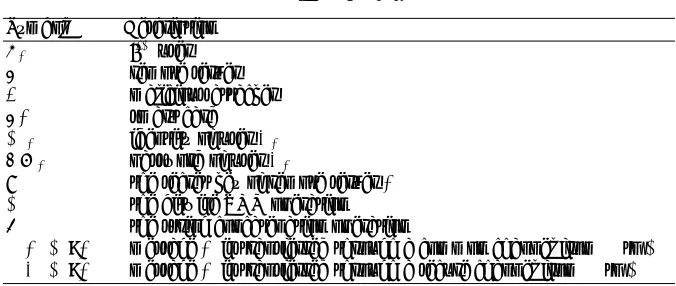
listed in Table 3.
1 Note that, in the scenario of remote user authentication, user anonymity includes two aspects, i.e.
the identity protection and the user un-traceability, it is defined against the public (eavesdropping attackers) rather than the server because the server has to first identify the legitimacy of the user and then obtain the user’s real identity for accounting and billing purposes. [56]
4 The present authors have examined more than one hundred such schemes (some quite recent
Table 3.Notations
Symbol Description
Ui ithuser
S remote server
A malicious attacker
SC smart card
IDi identity of userUi
P Wi password of userUi
x the secret key of remote serverS
⊕ the bitwise XOR operation
∥ the string concatenation operation
A→B:C messageC is transferred through a common channel fromAtoB
A⇒B:C messageC is transferred through a secure channel fromAtoB
3.1 Registration phase
The protocol is defined over a finite cyclic group G=< g > of order aℓ-bit prime numberq.
This group could be G=Zq∗, whereZq∗ = 1,2,· · ·q−1, or it could be a subgroup of GF(p),
or it could be an elliptic curve group. We denote the group operation multiplicatively. In this
paper, we assume G is a prime order subgroup of Fp, wherep also is a large prime number
such that q|p−1. Hash functions from {0,1}∗ → {0,1}li are denoted by H
i(i = 0,1,2,3),
whereli is the bit length of function output, e.g.li= 160. We also define a medium integer n,
28≤n <216, which determines the capacity of the pool of the (ID, P W) pair against offline
guessing attack. Let (x, y=gxmodp) denote the serverS’s private key and its corresponding
public key, where x is kept secret by S and y is stored inside each user’s smart card. The
registration phase involves the following operations:
Step R1. Ui chooses her identityIDi, passwordP Wi and a random numberb.
Step R2. Ui⇒S:{IDi,H0(b∥P Wi)}.
Step R3. On receiving the registration message from Ui at time T, S first checks whether
Ui is a registered user. If it is Ui’s initial registration, S creates an entry for Ui
in the account-database and stores (IDi, Treg = T) in this entry.2 Otherwise, S
updates the value of Treg with T in the existing entry for Ui. Next, S computes
Ni =H0(b ∥ P Wi)⊕ H0(x ∥ IDi ∥ Treg) and Ai =H0((H0(IDi)⊕ H0(b ∥ P Wi))
modn).
Step R4. S ⇒ Ui: A smart card containing security parameters {Ni, Ai, q, g, y, n,
H0(·),H1(·),H2(·),H3(·)}.
Step R5. Upon receiving the smart cardSC,Ui entersbinto SC.
3.2 Login phase
WhenUi wants to login to the system, the following operations will be performed:
Step L1. Ui inserts her smart card into the card reader and inputsID∗i,P Wi∗.
Step L2. SCcomputesA∗i =H0((H0(IDi∗)⊕ H0(b∥P Wi∗)) mod n) and verifies the validity of
ID∗i andP Wi∗by checking whetherA∗i equals the storedAi. If the verification holds,
it implies ID∗i = IDi and P Wi∗ = P Wi with a probability of n−n1(≈ 99.90100 , when
n= 210) . Otherwise, the session is terminated.
2
For the mere sake of achieving provable security, in Section IV we assume another parameterPi=
Step L3. SC chooses a random number u and computes C1 = gu mod p, Y1 = yu mod p,
k = H0(x ∥ IDi ∥ Treg) = Ni ⊕ H0(b ∥ P Wi), CIDi = IDi⊕ H0(C1 ∥ Y1) and
Mi=H0(Y1∥k∥CIDi).
Step L4. Ui→S:{C1, CIDi, Mi}.
3.3 Verification phase
After receiving the login request, the serverS performs the following operations:
Step V1. S computes Y1 = (C1)x mod p using its private key x. Then, S derives IDi =
CIDi⊕ H0(C1∥ Y1) and checks whether IDi is in the correct format. IfIDi is not
valid, the session is terminated. Then, S computes k = H0(x ∥ IDi ∥ Treg) and
Mi∗ =H0(Y1 ∥k ∥CIDi), whereTreg is extracted from the entry corresponding to
IDi. IfMi∗ is not equal to the received Mi, the session is terminated. Otherwise, S
generates a random numberv and computes the temporary keyKS = (C1)v modp,
C2=gv modpandC3=H1(IDi∥IDS ∥Y1∥C2∥k∥KS).
Step V2. S→Ui:{C2, C3}.
Step V3. On receiving the reply message from the server S, SC computesKU = (C2)u mod
p, C3∗ =H1(IDi ∥ IDS ∥ Y1 ∥ C2 ∥ k ∥ KU), and compares C3∗ with the received
C3. This equivalency authenticates the legitimacy of the serverS, andUi goes on to
computeC4=H2(IDi∥IDS∥Y1∥C2∥k∥KU).
Step V4. Ui→S:{C4}
Step V5. Upon receiving {C4} from Ui, the server S first computes C4∗ = H2(IDi ∥ IDS ∥
Y1 ∥ C2 ∥ k ∥ KS) and then checks if C4∗ equals the received value of C4. If this
verification holds,S authenticates the userUi and the login request is accepted else
the connection is terminated.
Step V6. The user Ui and the server S agree on the common session key skU =
H3(IDi∥IDS∥Y1∥C2∥k∥ KU) = H3(IDi∥IDS∥Y1∥C2∥k∥KS) = skS for securing
future data communications.
3.4 Password change phase
For the sake of security, user friendliness and communication efficiency, this phase is performed locally without the hassle of interaction with the remote authentication server, and it involves the following steps:
Step P1. Ui inserts her smart card into the card reader and inputs IDi and the original
passwordP Wi.
Step P2. The smart card computes A∗i =H0((H0(IDi)⊕ H0(b ∥ P Wi)) mod n) and verifies
the validity ofA∗i by checking whetherA∗i equals to the storedAi. If the verification
holds, it implies the inputIDi andP Wiare valid. Otherwise, the smart card rejects.
Step P3. The smart card asks the cardholder to resubmit a new passwordP Winewand computes
Ninew=Ni⊕H0(b∥P Wi)⊕H0(b∥P Winew),A new
i =H0((H0(IDi)⊕H0(b∥P Winew)
modn). Then, smart card updates the values ofNiandAistored in its memory with
Nnew
i andAnewi , respectively.
Notes and Rationales.To achieve criteria C2 and C4 at the same time, a verification of the
authenticity of the original password before updating the value ofNi in the memory of smart
card is essential. And thus, besides Ni, some additional parameter(s) should be stored in the
impersonation attack. To gain a better insight into this issue, now let’s assume an additional
parameterAi=H0(IDi∥ H0(P Wi)) is stored in the smart card. WheneverUiwants to change
her password, first she must submit her identity IDi∗ and password P Wi∗, then the smart
card checks whether H0(ID∗i ∥ H0(P Wi∗)) equals the stored Ai. One can easily find that an
adversaryAcan exhaustively search the correct (IDi, P Wi) pair in an offline manner once the
parameterAi is obtained, which definitely leads to an offline guessing attack, resulting in the
violation of C4. What we have just described directly applies to one of our earlier works [76],
the parameterAiin [76] is exactly computed in this insecure manner and thusAcan obtain the
exactly correct (IDi, P Wi) pair once the parameterAi is revealed under our adversary model
illustrated in Table1 3.
However, if the parameterAiis computed asAi=H0(H0(IDi)⊕H0(P Wi)) modn), one can
be assured that there exists |Did|∗|Dpw|
n ≈2
30candidates of (ID, P W) pair to frustrateAwhen
|Did|=|Dpw|= 106[6,38,88] andn= 210, where|Did|and|Dpw|denote the size of the identity
space and password space, respectively. Even with the capability of C-01 (i.e., the victim user’s
identity has already been learnt),Awill still be frustrated for there exists|Dpw|
n ≈2
10candidates
of (ID, P W) pair, and there is no other way than launching an online password guessing attack
to determine the exactly correct one. In this manner, we preventAfrom obtaining the exactly
correct (ID, P W) pair and we call the parameterAi calculated through this new method “a
fuzzy verifier”. An obvious “side effect” of this “fuzzy verifier” is that it can be used to fulfill
criterion C9. One may argue that what ifUi happens to submit a wrong (ID∗i, P Wi∗) pair such
that H0((H0(IDi∗)⊕ H0(P Wi∗)) modn) = Ai, while (IDi∗, P Wi∗)̸= (IDi, P Wi)? The reality
is that, this possibility is n1 <10001 , which is too small to significantly degrade the effectiveness
of C9, and we conjecture that there is an unavoidable trade-off when fulfilling C4 and C9.
To achieve C3, H0(b∥P Wi) instead ofP Wi orh(P Wi) is submitted to serverS, whereb is
a random number unknown to the serverS; to achieve C6, an entry (IDi, Treg) corresponding
to Ui is stored in S’s database,4 only Treg needs to be updated when user Ui revokes her
smart card; to achieve C8, a nonce based mechanism instead of the timestamp based design is preferred to provide the freshness of the messages; to achieve user anonymity (C11), user’s
real identity IDi is concealed in the session-variant pseudo-identity CIDi, by employing an
analogous Elgamal encryption; to achieve forward secrecy (C12), Diffie-Hellman key exchange technique is adopted.
4
Security analysis
In the following, we first describe a formal security model for smart card based password authentication schemes, and then show that our scheme is secure in this model under the assumptions that the hash function closely behaves like a random oracle and that the computational Diffie-Hellman problem is difficult. In particular, our protocol achieves forward secrecy property and security against known key attack, key compromise impersonation attack.
3 In [76], the authors claimed that their scheme can withstand offline guessing attack even if the smart
card security is breached. Why we get quite contradictory results? The reason is that the claim made
in [76] is based on the assumption thatA cannot guess bothIDi andP Wi correctly at the same
time in polynomial time. In other words,Ain [76] is not equipped with the capability C-00 in Table
1. This explicates the paradox.
4.1 Formal security model
We define some notions and recall the BPR2000 security model [3] where the adversary’s capabilities are modelled through queries. However, we do not use the original model directly, but adopt the reified version proposed by Bresson et al. [9] with a few changes so that we can define the special security requirements for password authentication schemes using smart cards. We refer the reader to the original papers for more details.
Players.We denote a serverSand a user, or client,Uthat can participate in the authentication
protocolP. Each of them may have several instances called oracles involved in distinct, possibly
concurrent, executions ofP. We denote client instances and server instances byUi andSj, i, j
∈Z, and denote any kind of instance by I.
According to our scheme, the server has a long-term private/public key pair (x, y = gx).
UserUi holds a passwordP Wi, which is uniformly drawn from a small dictionaryDof size|D|.
Additionally, when the user Ui enrolls in the server S, S stores Ni and Ai into a smart card
and issues it to the userUi, whereNiandAi are (injective) transformations ofP Wiandx. The
assumption of the uniform distribution for the password is just to make notations simpler, but
everything would work with any other distribution, replacing the probability |D|λ by the sum of
the probabilities of theλmost probable passwords.
Queries. The interaction between an adversary Aand the protocol participants occurs only via oracle queries, which model the adversary capabilities in a real attack. The query types
available toAare defined as follows.
– Execute(Ui, Sj): This oracle query is used to model passive (eavesdropping) attacks of the
adversary. The output of this query consists of the messages that were exchanged during the honest execution of the protocol.
– Send(I, m): This query models an active attack, in which the adversary A may send a
message to instanceI and get back the response I generates in processing the messagem
according to the protocolP. A query Send(Ui, Start) initializes the key exchange protocol.
Start is a message, and thus the adversary receives the flow the client should send out to the server.
– Test(I): This oracle query is not used to simulate the adversary’s attack, but to define
session key’s semantic security. If no session key for instanceI is defined, then undefined
symbol⊥is returned. Otherwise, a private coin c is flipped. If c= 1 then the session key
skis returned to A, otherwise a random key of the same size is returned. This query can
be called only once during its execution.
– Reveal(I): This query models the misuse of session keys (i.e. C-3 in Table1). It returns to
the adversary the session keyskof participant instanceI, if the targeted instance actually
“holds” a session key, andI and its partner were not asked by a Test query. Otherwise the
⊥is returned.
– Corrupt(I, a): This query models corruption capability of the adversary (i.e. C-2 and C-4
in Table1).Acan indeed steal/break either one of the two authentication factors of clients,
but not both:
• Ifa= 1, it outputs the passwordP Wi ofU.
• Ifa= 2, it outputs parameters, i.e.{Ni, Ai, b}, stored in the smart card.
• Ifa= 3, it outputs the private keyxofS.
It is easy to see that, the above oracle queries indeed can model all the adversary capabilities
listed in Table 1.
Partnering. We define partnering by using the notion of session identifier sid. Let Ui and
conditions are satisfied:ÀBoth instances have accepted;ÁBoth instances shared the samesid;
ÂThe partner identifier (pid) ofUi isS and vice-versa. In general, we let sidbe the ordered
concatenation of all messages sent and received by the instanceUi (orSj).
Freshness. The freshness notion captures the intuitive fact that a session key can not be
trivially known to the adversary. We say that an instance I is fresh if: ÀI has accepted and
computed a session key;ÁNeitherI nor its partner have been asked for a Reveal-query;ÂAt
most one kind of Corrupt-query is made to the client involved (eitherI or its partner) and no
Corrupt-query is made to the server involved (either I or its partner), since the beginning of
the game.
Correctness.If Ui andSj are partnered and they are accepted, then they end up with the
same session keyski
U =sk j S.
Authentication.A fundamental goal of the authentication schemes is to prevent the adversary
from impersonating the client or the server. We denote by AdvauthP (A) the probability thatA
successfully impersonates a participant as an instance of either U or S in an execution of P ,
which means thatS (resp.U) agrees on a key, while the latter is shared with no instance ofU
(resp.S).
Semantic security.Another major concern of authentication schemes with key agreement is
to protect the privacy of the session key. In a protocol execution ofP, an adversaryAcan ask a
polynomial number of Execute-query, Reveal-query, Corrupt-query and Send-query. It can also
ask a single Test query to a fresh instance. In the end of the game, Aoutputs a guess bit c′
for the bitc involved in the Test-query. We say thatAwins the game ifc′ =c, and this event
is denoted by Succ. Accordingly, the advantage ofA in breaking the semantic security of the
protocolP is defined to be
AdvakeP (A) = 2Pr[Succ(A)]−1 = 2Pr[c′= c]−1
where the probability space is over all the random coins of the adversary and all the oracles.
The protocolP is said to be semantically secure if any polynomial time (PPT) adversaryA’s
advantage is negligible in the security parameter l.
4.2 Formal security proof
Before stating the security results, we recall the computational assumption on which the formal security proof relies.
Computational Diffie–Hellman (CDH) Assumption. Let G be a finite cyclic group of
prime order q generated by an elementg, where the operation is denoted multiplicatively. A
(t, ϵ)-CDH attacker inGis a probabilistic machine∆running in timet such that
AdvCDHg,G (∆) = Pr x,y[∆(g
x, gy) =gxy],
AdvCDHg,G (t) = max ∆ {Adv
CDH g,G (∆)},
where the probability is taken over the random values xand y. The CDH-Assumption states
that AdvCDHg,G (t)≤ϵfor anyt/ϵnot too large.
AdvakeP,G(A) = 2Pr[Succ7]−1 + 2(Pr[Succ0]−Pr[Succ7]) ≤ 2qsend
|D| + 12qhAdvCDHP (t′) +
q2
h+6qsend
2l +
(qsend+qexe)2
p ,
where t′ ≤ t+ (qs+qp+ 1)τe, τe is the computational time for an exponentiation in G, and l=min{li}, i= 0,1,2,3.
Proof. Let beAan adversary against the semantic security of our scheme. The idea is to employ
Ato construct adversaries for each of the underlying primitives in such a way that ifAsucceeds
in breaking the semantic security, then at least one of these adversaries manages to breach the security of an underlying primitive. We prove Theorem 1 through a series of hybrid games,
starting with the real attack and ending up with a game where A’s advantage is 0, and for
which we can bound the difference inA’s advantage between any two consecutive games. And
the details of the proof can be found in AppendixD.
Theorem 2. Let G be a represent group and let D be a uniformly distributed dictionary of size |D|. Let P be the improved proposed authentication scheme stated in Section 3. Let A be an adversary against mutual authentication within a time bound t, with less than qsend Send-queries and qexe Execution-queries, and making less than qh random oracle queries. Then we have
AdvauthP,G(A)≤ qsend
|D| + 5qhAdvCDHP (t′) +
q2h+6qsend
2l+1 +
(qsend+qexe)2
2p ,
where t′ ≤ t+ (qs+qp+ 1)τe, τe is the computational time for an exponentiation in G and l=min{li}, i= 0,1,2,3.
Proof. The proof is similar to the previous one. But one can find more details in AppendixD.2.
4.3 Withstand possible attacks
As stated by Menezes [57], a formal security proof isn’t an absolute guarantee of security and the old-fashioned cryptanalysis still plays an important (even indispensible) role in establishing and maintaining confidence in the security of a cryptographic protocol. Accordingly, in the following, we discuss some possible attacks presented in related schemes and perform the heuristic security analysis for these attacks on the proposed scheme to verify whether the security requirements mentioned in Section 2 have been satisfied under our adversary model. The security of our proposed authentication scheme is based on the secure hash function and the discrete logarithm problem. To facilitate the analysis, we define two adversaries:
– A1: with the capabilities of C-00, C-01, C-1, C-2(i), C-3 and C-4.
– A2: with the capabilities of C-00, C-01, C-1, C-2(ii), C-3 and C-4.
One can easily see that all the adversaries under our adversary model are eitherA1 or A2.
Since some high entropy parameters, such as Ni and b, are involved in the authentication
process, without them an adversary poses no threat to our scheme. Hence, in the following we
only focus on the adversary with capability C-2(ii), that is the adversaryA2.
In particular, with the ability of C-2(ii), the secret information stored in the smart card can
be revealed by the adversaryA2, i.e., the security parametersNi,Ai,bandy can be obtained
by a malicious privileged attacker. It is obvious to see that: 1) our scheme can resist against
replay attack as fresh nonces are included in the message Mi, C3 and C4; 2) our scheme can
resist reflection attack and parallel session attack as the message structures ofMi, C3 andC4
are inherently different; 3)our scheme is free from known key attack as neither the session key
SK =H3(IDi ∥IDS ∥Y1∥ C2∥ k∥KU) is of any part of the transmitted messages norA2
our scheme is free from stolen-verifier attack as the user-specific information (IDi, Treg) stored
on the server are not password-involved verifiers; 5)our scheme can achieve forward secrecy as the Diffie-Hellman key exchange technique is employed.
(1) User anonymity:Suppose that the attacker has interceptedUi’s authentication messages
{CIDi, Mi, C1, C2, C3, C4}. Then, the attacker may try to retrieve any static parameter
from these messages, but these messages are all session-variant and indeed random strings
due to the randomness ofuand/orv. Accordingly, without knowing the random number
u, the adversary (an eavesdropping adversary) will face to solve the discrete logarithm
problem to retrieve the correct value of IDi from CIDi, while IDi is the only static
element corresponding to Ui in the transmitted messages. Hence, the proposed scheme
can preserve identity-protection and user un-linkability.
(2) Password disclosure to server:WithH0(b∥P Wi) instead of plaintext passwordP Wi
submitted to serverS, it is computationally infeasible to derive P Wi from h(b ∥ P Wi)
without knowing the random numberb due to the one-way property of the secure hash
function.
(3) User impersonation attack: As Mi and C4 are protected by secure one-way hash
function, any modification to the legitimate user Ui’s authentication messages will be
detected by the serverSif the attacker cannot fabricate these two validMiandC4. Even
with the smart card security breached, withoutUi’s password the attacker has no way to
obtain the correct value of H0(x∥ IDi ∥ Treg), and thus she cannot fabricate the valid
Mi andC4. Therefore, the proposed protocol is secure against user impersonation attack.
(4) Server masquerading attack:On the one hand, in the proposed protocol, a malicious
server M S cannot compute the correct Y1 = (C1)x mod n because she does not know
the value of S’s private key x. On the other hand, without knowing the valud of Ui’s
registration timestampTreg andS’s private key x, M S has to break the secure one-way
hash function to retrievek=H0(x∥IDi∥Treg). As a result, without the correct value of
Y1 andk, it is impossible forM Sto fabricate the properC3=H1(IDi∥IDS ∥Y1∥C2∥
k∥KU) to pass the verification ofUi in Step V3 of the verification phase. Therefore, the
proposed protocol is secure against server masquerading attack.
(5) Smart card loss attack(offline password guessing attack): Generally, the attacker
A2has two potential ways to launch an offline password guessing attack: one by interacting
with server S (e.g, the attack introduced in [66]) and the other by not interaction with
S. We show that these two ways are infeasible evenA2 has learntUi’s identityIDi and
gathered the secret informationb, Ni, Ai,n andy stored in the card. On the one hand,
since both Mi and C3 are computed with the contribution of the key parameter k, the
receiver will detect the abnormality and reject the session ifA2(the sender) cannot obtain
the correct value ofk, and thus the former way will not be viable. On the other hand, if
A2adopts the latter approach, as there is no transcripts over the public channel involving
user password, the only way forA2to learn some information aboutP Wiis to find out the
correct pair (ID∗i, P Wi∗) such thatH0((H0(ID∗i)⊕ H0(P Wi∗)) modn) =Ai. In Section
3, we have shown that this strategy ofA2is infeasible asAi is a “fuzzy verifier”. Without
the knowledge of P Wi, the password change procedure will not function; without the
knowledge ofP Wi, the correct value of H0(x∥IDi ∥Treg) cannot be obtained and thus
user impersonation attack will not succeed. In conclusion, the proposed scheme can resist smart card loss attack.
(6) Mutual authentication:In our dynamic ID-based scheme, the server authenticates the
user by checking the validity ofMiandC4in the access request. To pass the authentication
of serverS, the smart card first needsUi’s identityIDiand passwordP Wito get through
scheme can resist offline password guessing attack. Therefore, only the legal userUi who
owns correctIDi andP Wi can compute the correct value ofH0(x∥IDi∥Treg) to pass
the authentication of serverS. On the other hand, the userUi authenticates server S by
explicitly checking whether the other party communicated with can compute the validC3
or not. Since the malicious server does not know the correct value ofxcorresponding to
serverS, only the legitimate server can compute the correctC3 =H1(IDi ∥IDS ∥Y1∥
C2∥k∥KU) . From the above analysis, we conclude that our scheme can achieve mutual
authentication.
(7) Denial of service attack:Assume that an adversary has got a legitimate userUi’s smart
card. However, in our scheme, the user-specific security parameters stored in the server
S do not need to be updated during the authentication phase, the risk of in-consistence
is eliminated. Furthermore, the smart card checks the validity of user input identityID∗i
and passwordP Wi∗ before the password update process. Since the smart card computes
A∗i =H0((H0ID∗i⊕H0(b∥P Wi∗) modn) and compares it with the stored value ofAiin its
memory to verify the legality of the user before the smart card accepts the password update request. Accordingly, once the number of login failure exceeds the predefined system value, the smart card will be locked immediately. Therefore, denial of service attack is thwarted. (8) Key compromise impersonation attack:Assume that an adversaryAhas got server
S’s private keyx. However,Acannot compute the correct value ofH0(x∥IDi∥Treg) as
she has no knowledge of a legitimate userUi’s registration timeTreg. Without the correct
value ofH0(x∥IDi∥Treg),Acannot impersonateUi.
(9) Undetectable online password guessing attack:Assume an adversary Ahas got a
legitimate userUi’s smart card and managed to obtain the security parameters Ni, Ai
andy. Based on this strong assumption, this type of attack is still infeasible. Malicious
actions will be detected byS ifAguesses the password online, asS can computeA’s ID
in Step V1 of the verification phase and lock the corresponding account after a predefined number of failures. Hence, this type of attack can be effectively thwarted.
5
Performance analysis
To evaluate our scheme, we compare the performance and the satisfaction of the criteria among relevant authentication schemes and our proposed scheme in this section. The reason why the schemes presented in [17, 18, 25, 76, 90, 91], instead of other works mentioned earlier in this paper, are selected to compare with is that, these four schemes are the few ones that can achieve forward secrecy. The criteria of a secure and practical remote user authentication scheme are
introduced in Section II, and the comparison results of performance are depicted in Table4.
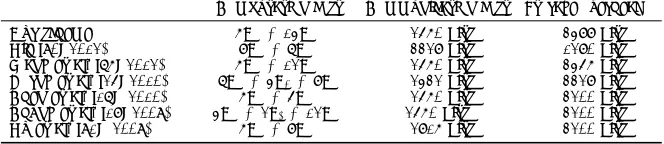
Table 4.Performance comparison among relevant authentication schemes
Computation cost Communication cost Storage overhead
Our scheme 6TE+ 14TH 2560 bits 3488 bits
Xie [90](2012) 8TE+ 7TH 3328 bits 1280 bits
Wang et al. [76](2012) 6TE+ 12TH 2560 bits 3456 bits
Horng et al. [25](2010) 7TE+ 4TS+ 8TH 2432 bits 3328 bits
Chen et al. [17] (2010) 6TE+ 5TH 2560 bits 3200 bits
Chung et al. [18](2009) 4TE+ 2TI+ 12TH 2560 bits 3200 bits
Xu et al. [91] (2009) 6TE+ 8TH 2816 bits 3200 bits