Face Processing in Turner syndrome
Kate Louise Elgar
Thesis submitted for the degree of Doctor of Philosophy
September 2002
ProQuest Number: 10015080
All rights reserved
INFORMATION TO ALL USERS
The quality of this reproduction is dependent upon the quality of the copy submitted.
In the unlikely event that the author did not send a complete manuscript and there are missing pages, these will be noted. Also, if material had to be removed,
a note will indicate the deletion.
uest.
ProQuest 10015080
Published by ProQuest LLC(2016). Copyright of the Dissertation is held by the Author.
All rights reserved.
This work is protected against unauthorized copying under Title 17, United States Code. Microform Edition © ProQuest LLC.
ProQuest LLC
789 East Eisenhower Parkway P.O. Box 1346
Abstract
This thesis explored the influence of X-linked genes on the development of
face-processing abilities. It assessed face-face-processing abilities in women with Turner
syndrome (TS) who have just one, instead of two, X-chromosomes. Study One
assessed the nature and severity of face processing deficits by applying a
diverse battery of neuropsychological tests to 45,X"’ and control females. Women
with TS performed at below average levels in terms of face and emotion
recognition (particularly fearful faces) despite processing faces in a typical
configurai manner. Study Two found equivalent deficits in 45,X*^ women. Using
Voxel Based Morphometry, Study Three found evidence for increased volume of
the amygdalae and orbito-frontal cortices in women with TS. Because males, like
45,X females, have a single X-chromosome, Study Four sought to identify
whether there was any sexual dimorphism in face processing abilities - there
was not. However, differences were found between normal males and females in
terms of correlations between face and emotion recognition task performance.
These differences were similar to those seen in 45,X"'compared with 45,X'^
females and are consistent with the hypothesis that imprinted X-linked genes
influence functional mechanisms that are relevant to social cognition. Together,
the results of these studies suggest a role for X-linked genes in the typical
development of face processing abilities. This role might involve the development
of structures involved in social and emotional processing, including the amygdala
and orbito-frontal cortices. It is suggested that affective responses to faces may
have an important role in our subsequent memory for them. Ways in which
ACKNOWLEDGEMENTS
Many thanks to:
Ruth Campbell and David Skuse for their support and supervision. Thanks for
your enthusiasm, endless patience and always having (or finding) the time!
All the participants and their families for the time and information they generously
gave and for welcoming me into their homes.
Grace Adlam, Beckie Akers, Mike Coleman, Tina Good, Alice Jones, Jonna
Kuntsi, Elena Morris, John Morris, Elinore Percy, Emily Prince, Becky Shah and
Janneke Terstegge for their invaluable contributions to the ongoing project and
great friendship.
Everyone at the BBSU for making it such a great place to work.
My family for their support and encouragement, always.
Table of Contents
1
CHAPTER ONE - INTRODUCTION... 17
1.1 STUDYING GENETIC INFLUENCES ON COGNITIVE DEVELOPMENT... 17
1 2 TURNER SYNDROME - OUTLINE... 19
1.2.1 Historical Perspective...20
1.2.2 Diagnosis...21
1.2.3 Cytogenetic variants... 22
1.2.4 Life expectancy...24
1.2.5 Physical abnormalities...24
1.2.5.1 Short stature... 24
1.2.5.2 Ovarian Dysgenesis...26
1.2.5.3 Other physical characteristics... 27
1.2.6 Turner syndrome - psychological diaracteristics...28
1.2.6.1 Cognitive functioning...28
1.2.6.2 Behavioural and Psycho-social characteristics...30
1.2.6.3 Psychopathology...31
1.2.6.4 Social dysfunction... 32
1.2.7 Turner syndrome - Neuropsychology... 33
1.2.7.1 Right hemisphere dysfunction...33
1.2.7.2 Occipital/Parietal dysfunction...34
1.2.7.3 Neuropathology and neuroimaging...35
1.2.7.4 Neural correlates of sœial adjustment drfticutties ?... 36
1.2.8 Insights into social cognitive impairments...37
1.2.8.1 Autistic symptomatology... 37
1.2.9 Face Processing in Turner syndrome...42
1.2.9.1 Face perception and face matching...43
1.2.9.2 Interpreting social information from faces... 44
1.3 FROM GENES TO BEHAVIOUR...45
1.3.2 Genomic imprinting...48
1.3.3 Oestrogen...51
1.4 CHAPTER SUM M ARY... 53
2
CHAPTER TWO - FACE PROCESSING SYSTEMS... 56
2.1 O VER VIEW ... 56
2.2 HISTORICAL PERSPECTIVE... 59
2.3 CONFIGURAL PROCESSING IN FACE RECOGNITION... 60
2.3.1 Sensitivity to first order relations...61
2.3.2 Holistic processhg...62
2.3.3 Sensitivity to second order relations...64
2.4 FACE PERCEPTION...68
2.4.1 The fusiform face are a...69
2.4.1.1 Intra-class discrimination...70
2.4.1.2 Expertise...71
2.4.1.3 Damage to the fusifonn... 73
2.4.1.4 Developmental prosopagnosia...74
2.4.1.5 Face processing in developmental disorders...77
2.4.1.6 Beyond the Fusiform face area...79
2.4.2 Face Perception (œntinued)...79
2.4.2.1 Parietal lobe...79
2.5 FACE RECOGNITION AND FACE MEMORY...80
2.5.1 Fusiform Gyrus...80
2.5.2 Hippocampus...81
2.5.3 Amygdala...82
2.5.3.1 Damage to the amygdala...84
2.5.3.2 The amygdala and autism...87
2.5.4 Orbito-frontal cortex...87
2.5.4.1 The orbito-frontal cortex and autism...89
2.5.5 Anterior middle temporal gyms & other regions...89
2.6 FACIAL EXPRESSIONS OF E M O T IO N ... 90
2.6.1 The amygdala... 9 f 2.6.1.1 The amygdala and autism...94
2.6.2 The insula and basal ganglia...95
2.6.3 Orbito-frontal cortex...98
2.7 INTERPRETING SOCIAL INFORMATION FROM THE FA C E ... 99
2.7.1 Superior Temporal Sulcus...99
2 .7.1.1 Mouth movements...100
2.7.1.2 Eye gaze...101
2.7.2 Intra-parietal sulcus...103
2.7.3 Orbito-frontal cortex...103
2.7.4 Amygdala...104
2.8 A DISTRIBUTED FACE PROCESSING NETW ORK...104
2.9 PREDICTIONS ABOUT FACE PROCESSING IN TURNER SYNDROME 105 2.9.1 HYPOTHESES... 106
2.10 CHAPTER SUM M ARY... 107
3
CHAPTER THREE - METHODOLOGY... 110
3.1 GROUP SELECTION CONSIDERATIONS & CHARACTERISTICS... 110
3.2 KARYOTYPE SPECIFICITY...110
3.3 SAMPLE RECRUITMENT... 111
3.3.1 Response rates...112
3.4 GROUP CHARACTERISTICS... 113
3.4.1 Age...113
3.4.2 Ethnicity...113
3.4.3 Educational level....114
3.4.4 Social class...115
3.4.5 IQ...117
3.5.1 Performance IQ (PIQ)...118
3.5.2 VerballQ (V IQ )...118
3.5.3 Verbal memory...118
3.6 TESTS OF FACE RECO G NITIO N ... 119
3.5.1 The Benton Test of Facial RecognMon - short form...119
3.6.2 Warrington face recognition task...119
3.6.3 Familiar face reco^ition...120
3.6.4 Incidental face recognition...123
3.7 TESTS OF CONFIGURAL FACE PROCESSING...123
3 .7.1 Mooney Face recognition (Sensitivity to Urst-order relations)...124
3.7.2 Whole and part-face matching. (Holistic processing)...125
3.7.3 Upright and inverted face matching (Sensitivity to second-order relations) 126 3.8 FACIAL EXPRESSION CATEGORISATION... 129
3.8.1 The Ekman-Friesen Test of Affect Recognition...129
3.9 OVERALL PROCEDURE...131
4
CHAPTER FOUR - RESULTS - STUDY O N E... 132
4.1 STATISTICAL PROCEDURES...132
4.2 IQ RESULTS...132
4.3 TESTS OF FACE RECOGNITION...133
4.3.1 Benton test efface recognition...133
4.3.2 Warrington test of recognition memory for words and faces...135
4.3.3 Test of familiar face recognition...136
4.3.4 Incidental face recognition test...137
4.3.5 Face recognition tests summary....138
4.4 TESTS OF CONFIGURAL FACE PROCESSING... 141
4.4.1 Mooney faces test (Sensitivity to first-order relations)...141
4.4.2 Whole/part face matching (Holistic processing)...142
4.4.3 Facial inversbn test (Sensitrvrty to second-order relations)...143
4.5 FACIAL EXPRESSION RECOGNITION... 145
4.6 CORRELATIONAL ANALYSES... 146
4.6.1 Face proœsshg and IQ...146
4.6.2 Face proœsshg and social ûinction...147
4.6.3 Face proœsshg and oestrogen supplementation...151
4.6.4 Correlations between faœ reco^ition and configurai face proœssing...151
4.6.5 Face memory and emotion reœgnition...156
4.7 CHAPTER SUM M ARY...160
5
CHAPTER FIVE - STUDY TWO - TESTING THE IMPRINTING
HYPOTHESIS... 163
5.1.1 O VER VIEW ... 163
5.2 METHODOLOGY...165
5.2.1 Sample recruitment...165
5.2.2 Sample characteristics...166
5.2.2.1 A ge...166
5.2.2.2 Ethnicity....166
5 .2 2 .3 Educational level...167
5.2 2.4 Social class...168
5.2.2.5 IQ...170
5.2.3 Materials...170
5.2.4 Statistical proœdures...171
5.3 R ESU LTS... 172
5.3.1 Face recognition tests...172
5.3.2 Tests o f face processing style...176
5.3.2. f Mooney faœ s...176
5.3.2 2 Face inversion test...176
5 .3 .2 3 \A4iole/part face matching...177
5.3.3 Facial emotion reœgnition...178
5.4 CHAPTER SUMMARY... 187
6
CHAPTER SIX - DISCUSSION - STUDIES ONE AND TWO
189
6.1 FACE PROCESSING IMPAIRMENTS IN TURNER SYNDROME... 1896.1.1 FACE M ATCHING... 191
6.1.2 Face recognition memory....192
6.1.3 Facial emotion recognition...195
6.1.4 Confgural Face Processing...197
6.2 NEURO BIOLOGICAL BASIS...202
6.2.1 Face perception and configurai processing - occipito-temporal cortex....202
6.2.2 Visuo-spatial - Parietal tot)es...203
6.2.3 Generalised memory impairment - Hippocampus...206
6.2.4 Socb-affective processing - amygdala and related circuitry...207
6.2.4.1 Patients with amygdala damage...212
6.2.4.1.1 Face matching...216
6.2.4.1.2 Face memory...217
6.2.4.1.3 Recognising facial expressions o f fear...218
6.2.4.2 Social skills and face recognition...220
6.3 CHAPTER SUM M ARY...221
7
CHAPTER SEVEN - STRUCTURAL BRAIN IMAGING... 222
7.1 RATIONALE... 222
7.2 METHODS... 224
7.2.1 Participants...224
7.2.2 Scanning techniques and analyses (from Good et al, submitted)...225
7.3 RESULTS... 226
7.3.1 Voxel Based Morphometry....226
7.3.2 Estimates o f regional brain volumes for individual participants...229
7.3.2.1 Amygdala...229
7.3.2.2 Orbito-frontal cortex...231
7.3.23 Occipito-pahetal cortex... 233
7.3.3 CorTBlations between brain structure and behaviour...236
7.3.3.1 Amygdala and emotion recognition and face recognition memory...236
7.3.3 2 Orbito-trontai cortex & emotion recognition and face recognition memory..240
7.3.3.3 Occipito-parietal cortex and Perfonmance IQ...240
7.3.3.4 Oestrogen and regional brain volumes.... 242
7.4 DISCUSSION...242
7.4.1 Behavioural correlations...248
7.4.2 Mechanisms...252
7.4.2.1 Oestrogen...252
7.4.2 2 Genetic mechanisms... 255
7.4.2.2.1 Haptoinsufficiency for non-inactivated genes... 255
7.4 .2 .2 2 imprinting...256
7.6 CHAPTER SUMMARY... 258
8 CHAPTER EIGHT - SEXUAL DIMORPHISM?...260
8.1 TESTING FOR SEXUAL DIMORPHISM... 260
8.2 GENDER DIFFERENCES IN FACE PROCESSING & SOCIAL ADJUSTMENT...261
8.3 AIM ...265
8.4 METHODOLOGY... 265
8.4.1 Sample recruitment....265
8.4.2 Sample characteristics...266
8.4.2.1 Age...266
8 .4 .2 2 Ethnicity....267
8.4.2.3 Educatbnal level...267
8.4.2.4 Social class...268
8.4.2.5 IQ...270
8.4.3 Sta^stical procedures...270
8.5 RESULTS... 271
8.5.2 Tests ofcon^guml face processing...273
8.5.2.1 Mooney face recognition...273
8.5.2.2 Facial inversbn test...274
8.5.2.3 Whole/part face matching...275
8.5.3 Facial expressbn classiticatbn...276
8.5.4 Correlational analyses... 277
8.6 D ISC U SSIO N ... 284
8.7 CHAPTER SUM M ARY... 292
9
CHAPTER NINE - GENERAL DISCUSSION... 293
9.1 O V E R V I E W ... 293
9.2 IMPLICATIONS... 296
9.3 FUTURE DIRECTIONS... 300
9.3.1 Identifying a candidate gene...300
9.3.2 Imprinted genes, emotion processing and memory...302
9.3.3 Other aspects of face processing...304
9.3.3.1 Monitoring of eye gaze... 304
9 .3 .3 2 Implicit processing effaces... 305
9.3.4 Understanding developmental aspects o f emotion recognition...307
9.3.5 How do we explain behavioural variability within Tamer syn&ome ?...309
References...314
List of Figures
Page Figure 1.1 Mean total scores for control (XX) and 39
Turner syndrome (XO) individuals on the Autism Quotient Self-report Questionnaire.
Figure 1.2 Possible mechanisms mediating causal 46 links between the genetic anomaly in TS
and the behavioural phenotype.
Figure 2.1 Lateral (A) and medial (B) diagrammatic 58 views of the human brain to show the lateral
and medial flows of face-identity information.
Figure 2.2 An example of a Mooney face 62
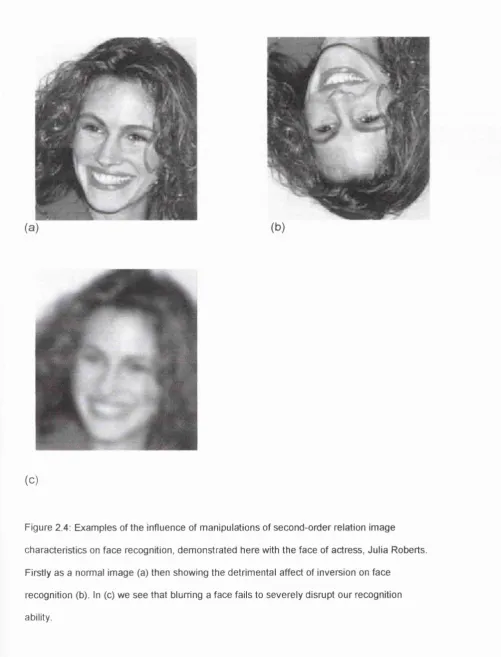
Figure 2.3 An example of the ‘chimeric’ face effect 63 Figure 2.4 Examples of the effects of manipulations of 66
second-order relation image characteristics on face recognition
Figure 3.1 Examples of uncropped (George Clooney) 122 and cropped (Paddy Ashdown) faces used
in the famous face recognition test
Figure 3.2 A Mooney face (on the left) and a foil (on 124 the right)
Figure 3.3 Examples of a whole, lower and upper face 126 stimulus set.
Figure 3.4 Example of a trial from inversion 128 experiment.
Figure 3.5 Examples of the six basic’ facial 130 expressions of emotion used in the
Ekman-Friesen task.
Figure 4.1 Distribution of Benton long-form face 134 recognition scores for women with Tumer
syndrome and control females.
Figure 4.2 Warrington recognition memory task for 135 words and faces.
Figure 4.3 Famous face recognition naming accuracy 137 for cropped and uncropped faces.
Figure 4.4 Incidental face recognition Pri scores for 138 accuracy and false hits.
Figure 4.5 Recognition Prime scores for Mooney face 141 recognition accuracy and false hits.
Figure 4.6 Whole, upper and lower face recognition 143 accuracy.
Figure 4.7 Recognition accuracy for upright and 144 inverted faces.
Figure 5.1 Accuracy for matching whole faces and 177 parts of faces.
Figure 5.2 Facial emotion recognition accuracy for the 178 six ‘basic’ emotions.
Figure 5.3 Scatter plot of the correlation between fear 185 recognition and Warrington recognition
memory for faces in 45,X"’ TS women.
Figure 5.4 Scatter plot of the correlation between fear 185 recognition and famous face recognition in
45,X"" TS women.
Figure 5.5 Scatter plot of the correlation between fear 186 recognition and Warrington recognition
memory for faces in 45,X'^ TS women.
Figure 5.6 Scatter plot of the correlation between fear 186 recognition and Famous face recognition in
45,X^’ TS women.
Figure 7.1 Increased bilateral amygdala and orbito- 227 frontal cortex volume in females with TS
(45,X) compared with control females (46,XX).
Figure 7.2 Decreased right occipito-parietal volume in 228 females with TS (45,X) compared with
controls females (46,XX).
Figure 7.3 Cubic mm of grey matter within voxel -34, 231 -6, -25 of left amygdala. Distribution for
control and TS females.
Figure 7.4 Cubic mm of grey matter within voxel -26, 231 28, -7 of left OFC. Distribution for control
and TS females.
Figure 7.5 Cubic mm of grey matter within voxel 18, 233 -61.5, 25.5 of right occipito-parietal cortex.
Distribution for control and TS females.
Figure 7.6 Correlations between amygdala volume and 238 fear recognition for 45,X^TS women
Figure 7.7 Scatter plot showing the correlation between 241 estimated right occipital/parietal cortex
volume with Performance IQ for all participants.
Figure 8.1 Matching of upright and inverted faces. 274 Figure 8.2 Accuracy for matching whole, upper and 275
lower face parts.
Figure 8.3 Emotion recognition accuracy for six basic 276 emotions.
Figure 8.4 Scatter plot showing the correlation between 280 fear recognition and Warrington recognition
memory for faces in females
Figure 8.5 Scatter plot showing the correlation between 281 fear recognition and famous face
recognition in females
Figure 8.6 Scatterplot showing the lack of correlation 283 between fear recognition and recognition
memory for faces in the male participants
Figure 8.7 Scatterplot showing the lack of correlation 284 between fear recognition and famous face
List of Tables
Table 1.1
Table 2.1 Table 3.1 Table 3.2: Table 3.3 Table 3.4 Table 3.5 Table 4.1 Table 4.2 Table 4.3 Table 4.4 Table 4.5 Table 4.6 Table 4.7 Table 4.8 Table 4.9 Table 5.1 Table 5.2 Table 5.3 Table 5.4 Table 5.5 Table 5.6
Autism selfreport questionnaire -response rates for items comprising the ‘social’ subscale
Three types of configurai processing as conceptualised by (Maurer, Le Grand, & Mondloch, 2002)
Age in years of study participants
Maximum level of educational qualification achieved
Social group classification Mean WAIS IQ scores
Identification rates of the famous people from the initial standardisation experiment. IQ results
Group comparisons for tests efface recognition accuracy, showing ANCOVA results.
Comparison of individual participant scores for fear recognition dependent on whether they indicated they found it easy to tell what someone was feeling by looking at their face.
Pearson correlations between tests of face recognition - TS females
Pearson correlations between tests of face recognition - Control females
Correlations between measures of configurai face processing - TS women Correlations between measures of configurai face processing - Control females
Correlations between emotion recognition scores and face recognition and configurai processing measures - TS females
Correlations between emotion recognition scores and face recognition and configurai processing measures - Control females Age in years of study participants
Maximum level of educational qualification achieved
Social group classification Mean WAIS IQ scores
Group comparisons for tests efface recognition accuracy
Face recognition in 4 5 , women
Table 5.7 Table 5.8 Table 5.9 Table 6.1 Table 6.2 Table 7.1 Table 7.2 Table 7.3 Table 7.4 Table 7.5 Table 8.1 Table 8.2 Table 8.3 Table 8.4 Table 8.5 Table 8.6 Table 8.7 Table 8.8
Ekman-Friesen facial affect recognition for 4 5 , women compared to control females from Study One
Correlations between emotion recognition scores and face recognition and configurai processing measures - 45,X"’ TS females Correlations between emotion recognition scores and face recognition and configurai processing measures - 45,X^ TS females Summary of characteristics of patients with amygdala damage
Summary of face processing impairments in patients with amygdala damage
Age in years of study participants
Summary Table of descriptive statistics for grey matter indices
Correlations between cubic mm of grey matter within one voxel of left amygdala and emotion recognition scores - 46,XX control females
Correlations between cubic mm of grey matter within one voxel of left amygdala and emotion recognition scores - 45,X"' TS females
Correlations between cubic mm of grey matter within one voxel of left amygdala and emotion recognition scores - 45,X^ TS females
Age in years of study participants.
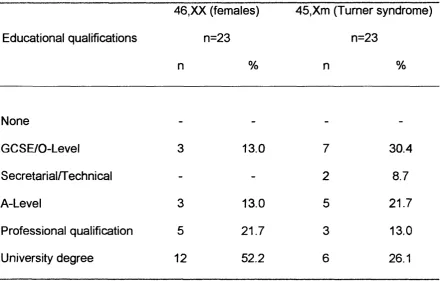
Maximum level of educational qualification achieved
Social group classification Mean WAIS IQ scores
Group comparisons for tests of face recognition accuracy
Mooney face recognition
Correlations between emotion recognition scores and face recognition and configurai processing measures - 46,XX females Correlations between emotion recognition scores and face recognition and configurai processing measures - 46,XY (males)
1
CHAPTER ONE - INTRODUCTION
1.1 STUDYING GENETIC INFLUENCES ON COGNITIVE DEVELOPMENT
There has been a genetics of behaviour since 1909 when anthropologist
Francis Galton, the cousin of Charles Darwin, wrote at length about his
conviction that intelligence, and in particular pre-eminence in various fields,
was almost entirely due to genetic factors (Darwin, 1968). However, the study
of genetics in relation to behaviour became politically tainted from 1925 to
1990 with the emergence of eugenics, first because of fascism in Europe and
then due to Soviet State socialism
Even as genetics came to be better understood in the twentieth century it was
still believed that, “Genes...could set up the scaffold of the brain, but would
have a limited influence on the mind" (Flint, 1999). In recent years, however, it
has become widely accepted that the actions of genes influence the
development and operations of the brain and consequently behaviour. In fact,
it is estimated that at least half of the human genome is expressed in the brain
although we still know relatively little about how these influences operate. The
proteins that genes produce are important determinants of the pattern and
nature of interconnections between neurons but behaviours are not written
indelibly in our genes, fhey are not immutably pre-determined but rather can
Various different approaches can be taken to study genetic influences on the
brain and cognitive development, that is the links between genotype (the
actual genetic makeup of an individual) and behavioural phenotype (the
observable behaviour characteristics). The approaches can be broadly
categorised into those whose focus is on behavioural genetics and those
where the focus is on molecular genetics
Traditionally, behavioural genetics has studied individual differences within a
population for traits that are normally distributed. Familial and inheritance
patterns of this trait are studied to establish the proportion of the trait that is
thought to be due to heritability (genetic influences). The ultimate aim would
be to identify the gene(s) responsible for this heritability by the use of linkage
studies This could be seen as a bottom-up approach - trying to work one’s
way from a complex behaviour back to the genes that may be influencing it.
molecular genetics conversely adopts a top-down approach, working its way
from an identified gene to the behaviour that may be associated with it. There
is a vast amount of overlap in the two approaches and both molecular and
behavioural studies are critical to the advancement of any work trying to
identify gene influences on the brain and cognitive development. Behavioural
neuroscience is concerned with “the neural and endocrine basis of behaviour
and their genetic substrates” (Skuse, 2000) and this terminology could be
seen to better conceptualise modern approaches to understanding the genetic
underpinnings of the brain and mind that combine both behavioural and
This study could therefore be seen to adopt a behavioural neuroscience
approach, exploring the neuropsychological phenotype in individuals with
Turner syndrome. These individuals are lacking either all or part of their
second X-chromosome; meaning that they have an insufficient dose of X-
linked genes for which there would be two expressed copies in typically
developing females. Therefore the starting point of the study is individuals
who are lacking numerous X-chromosome genes, from this, the behavioural
characteristics (phenotype) associated with the genetic deletion will be
considered. Taking this one step further, the studies in this thesis will attempt
to define an endophenotype, which will be a trait (or traits) that are much
closer to the underlying genetic defect than the original behavioural
characteristics that were described. Studying such a syndrome allows us not
only to gain an understanding of the implications of missing genes on the X-
chromosome for development but it can also inform our understanding of the
importance of these genes in typical development.
1.2 TURNER SYNDROME — OUTLINE
Turner syndrome (TS) is a seX-chromosome disorder occurring in 1 in 2,500
live female births. Normal males and females have 23 pairs of chromosomes,
with one chromosome in each pair being inherited from the mother and one
from the father, fvlales possess an X and a Y sex-chromosome, while females
have two X-chromosomes. In Turner syndrome, all or part of the second sex-
chromosome is missing due to a problem in sex-chromosome segregation in
OnS intSCt X-ChrO: : iOSO: ! iB With the SSCOfid X-ChfO! s sOSCm s sG bSIHQ GithSf
entirely deleted or structurally abnormal. Where the entire second sex-
chromosome is deleted the condition is karyotypically defined as X monosomy
or 45,.X and is the sole example of a human disorder in which an entire
chromosome can be missing without lethal consequences. However, the
incidence of TS is markedly higher at conception with as few as 1 % of all
conceived cases surviving to birth (Hook & Warburton, 1983). In fact, of all the
chromosomal abnormalities that result in spontaneous abortion or
miscarriage. Turner syndrome is the most common, accounting for as many
as 20% of all miscarriages (White, 1994).
1.2.1 Historical Perspective
The clinical symptoms of Turner syndrome were first noted many years before
the underlying genetic aetiology was discovered. In 1805, Dr Charles Pears
described a patient who had short stature alongside ovarian deficiency and a
lack of secondary sexual characteristics (Pears, 1805). A more systematic
description came from Otto Ullrich (Ullrich, 1930) who published an account of
an 8 year old girl with a variety of physical anomalies that seemed to indicate
a possible underlying syndrome. The phenotypic anomalies included short
stature, lymphedema of the neck, hands and feet, and an increased carrying
It W3S not until tho Isto 1930 s thst s profsssor of 'ssGdicins st ths Univsrsity of
Oklahoma, Henry Turner, described a series of seven young women who had
the features that we now associate with the syndrome which bears his name
(Turner, 1938). He noted the unusual co-occurrence of a triad of features in
these women, namely infantilism (stunted growth and sexual immaturity),
webbing of the skin of the neck and cubitus valgus.
The first suggestion that an X-chromosome deletion may underlie the
phenotype described by Turner came from Polani et al (Polani, Lessof, &
Bishop, 1956) who noticed that the incidence of colour-blindness was as
common in women with Turner syndrome as it w'as in males. They postulated
that since males possess only one X-chromosome, women with Turner
syndrome too might just have a single X-chromosome. Charles Ford and his
colleagues (Ford, Jones, Polani, De Al-fVleida, & Briggs, 1959) cytogenetically
confirmed that a female with Turner syndrome had the karyotype XO (now
known as 45,X or X monosomy), and 45 rather than the normal 46
chromosomes. Since this date many different types of cytogenetic anomaly of
the X-chromosome have been identified and Turner syndrome is used to refer
to any of a number of different karyotypes that result in the triad of features
1.2.2 DiSQncsis
Ths diSQHOSiS Of TU T ilS r S yT idrO niS iS fifS t m s d s 3 i d iffs rS H Î StSQSS Of
development. The criteria that draw attention to the diagnosis at each age are
associated, broadly speaking, with different presenting symptoms. Although
there are many physical manifestations of X-monosomy, the diagnosis can be
established only by chromosome analysis, which reveals that either all or part
of one X-chromosome is missing in a proportion of cells analysed. Turner
syndrome can be detected prenatally by amniocentesis, although false
positive diagnoses have been made (Fejgin, Arbel-DeRowe, Shul, & Amiel,
1997, Griffiths, Miller, & Stibbe, 1996). A significant proportion of cases are
detected at birth or in early infancy, usually due to an investigation
precipitated by the occurrence of lymphedema of hands and feet, small size
and excessive skin at the nape of the neck (Hall & Gilchrist, 1990). Cases that
are diagnosed in later life will frequently have had defining physical features of
the syndrome present at birth, such as lymphedema of the extremities
(Savendahl & Davenport, 2000) that were not further investigated at the time.
In childhood and adolescence, short stature is the primary reason that girls
with the syndrome are picked up (Savendahl et al., 2000) although a failure to
enter spontaneous puberty can also be an alerting factor. Finally, diagnosis
has been known to occur in adulthood when females may be investigated
after difficulties conceiving. Diagnosis has even been known to be made in
1.2.3 Cytogenetic variants
Advances in DNA technology have facilitated the analysis of sex
chromosomal anomalies at the molecular level (Connor & Loughlin, 1989). A
number of different karyotypes, all involving X-chromosome anomalies, can
result in the phenotype of Turner syndrome. The most common karyotype is X
monosomy, which is found in approximately 50% of all cases with Turner
syndrome (Pearce, 1992). This is where there is a complete absence of the
second seX-chromosome, so affected individuals will have 45, as opposed to
the normal 46 chromosomes. An isochromosome X occurs where one arm of
the second X-chromosome is missing and the other arm is duplicated and this
can occur in approximately 20% of cases (Pearce, 1992). In the case of a ring
chromosome, which is present in about 15% of diagnosed cases (Jacobs et
al., 1997) the second X loops round to form a ring shape with varying sized
portions from both arms of the chromosome missing. In a minority of cases
(approximately 6%), the single X may occur together with a fragment of Y
chromosome. Individuals may also be missing just a portion of their second X-
chromosome in the form of a straightforward deletion. In these cases, a
segment of X-chromosome, which may be tiny or substantial, is missing from
one arm of the X-chromosome.
Many studies that consider both the physical and psychological aspects of TS
treat the condition as homogeneous, considering all these different karyotypes
as being equal. Such methodology cannot aid the quest to identify the genetic
any group of heterogeneous karyotypes, some women will possess genes, in
multiple copies, that the others are missing.
1.2.4 Life expectancy
In a prospective study of 156 female patients with Turner syndrome, that had
survived infancy and been followed up for an average of 17 years, there were
15 deaths (Price, Clayton, Coilyer, De Mey, & Wilson, 1936). The reduction in
life expectation was 12.5 years at age 1 year, 11 years at age 20, and 10
years at age 40. In this study, deaths were due to a broad spectrum of
diseases although women with Turner syndrome have a reduced life
expectancy primarily because of cardiovascular disease (Elsheikh, Conway, &
Wass, 1999). An increased risk of death from diseases of the nervous,
respiratory, digestive and genitourinary systems (Swerdlow et al., 2001) may
also affect mortality rates.
1.2.5 Physical abnormalities
Since Henry Turner first described the triad of features that gave rise to the
definition of the syndrome, our knowledge has advanced to provide a fuller
1.2.5.1 Short stature
The cardinal physical feature of Turner syndrome is short stature with a mean
adult height of approximately 20-cm less than peers (Sylven, Magnusson,
Hagenfeldt, & von Schoultz, 1993). Women with Turner syndrome are on
average around 2 standard deviations shorter than their peers, which in real
terms translates to an adult height of approximately 140cm (4 feet 7 inches).
Short stature is not due to growth hormone deficiency per se. It is associated
with the deletion of one copy of the SHOX (short stature homeobox-
containing) gene on the distal (pseudo-autosomal) portion of the short arm of
the X-chromosome, which is important for normal growth in stature This gene
is needed in two copies for normal growth in stature (Rao et al., 1997b). The
importance of this gene to the short stature outcome in this condition has
been supported by more recent studies (Ogata et al., 2001).
Short stature in Turner syndrome does not simply reflect the absence of a
pubertal growth spurt. Rather it results from a generalised growth defect that
is first manifest in utero and then continues with postnatal growth failure which
is most marked after the second year of life (Ranke et al., 1983). In order to
enhance growth potential most children are now treated with synthetic growth
hormone. Accurate estimates of the potential growth increase afforded by
growth hormone treatment are not readily available. However most studies
suggest an average gain of approximately 5cm (Bramswig, 2001). The dose
of growth hormone and the age at which treatment commences may be
1.2.5.2 Ovarian Dysgenesis
Individuals with TS have abnormal ovarian development whereby the ovaries
appear to degenerate prematurely. In the first 12 weeks of intrauterine life the
ovaries appear to have a normal complement of oocytes (Pearce, 1992).
However, past this period of pre-natal development, oocyte degeneration is
rapid and the ovaries soon become fibrous streaks. The ovaries are incapable
of producing normal levels of oestrogen, resulting in depleted levels of
endogenous oestrogen. Women with Turner syndrome are also infertile,
although with ovum donation and intrauterine embryo transfer, becoming
pregnant is now possible (Gutierrez Gutierrez, Grimait, Remohi, & Pellicer,
1994).
The majority of adolescents with Turner syndrome do not spontaneously enter
puberty although exceptions do exist (Paoloni-Giacobino et al., 2000).
Therefore, to mimic sexual maturation, hormone replacement therapy is
administered. The doses given and age of administration can vary widely, but
treatment often begins with oestrogen being given alone before progressing
on to an oestrogen/progesterone combination such as the contraceptive pill.
Administration of exogenous oestrogen can cause the growing points at the
end of bones (the epiphyses) to fuse and this may cause a slow down or
ultimately a halt in growth in terms of height. Therefore the trade off between
eliciting early secondary sexual characteristics and achieving a maximum
timing of oestrogen therapy commencement (Chernausek, Attie, Cara,
Rosenfeld, & Frane, 2000).
1.2.5.3 Other physical characteristics
Short stature and ovarian Dysgenesis are almost invariably seen in individuals
with Turner syndrome. Other congenital malformations associated with the
syndrome are not present in all cases In any sample of individuals with the
condition, some may not possess any obvious malformations while others
may have one or two, with others still being affected by a large number of
these sequelae.
The skeletal dysmorphisms associated with Turner syndrome are thought,
along with short stature, to be linked to haploinsufficiency of the SHOX gene
(Clement-Jones et al., 2000). Individuals with TS may have any of the
following: a short neck, short metacarpals, Madelung deformity, Scolisosis,
Genu valgus. Micrognathia and a high arched palate. Cubitus valgus (a wide
carrying angle of the elbow) may be linked to SHOX deficiency but may also
be linked to oedema.
Approximately one third of individuals with TS are thought to have
cardiovascular anomalies, most commonly coarctation of the aorta, where the
A number of the physical features that may be present seem to be associated
with lymphatic obstruction. These include, webbing of the neck, a low
posterior hairline, rotated ears, oedema of the hands and feet, nail dysplasia,
ptosis and a shield chest.
In addition to these physical manifestations, renal abnormalities, including
horseshoe kidneys, multiple pigmented nevi and stabismus may occur (Lippe,
1989).
1.2.6 Turner syndrome - psychological characteristics
Since the syndrome was first described on the basis of a cluster of physical
anomalies, many observations have been made regarding particular
behavioural or psychological traits that may be associated with the syndrome.
1.2.6.1 Cognitive functioning
Despite early reports suggesting that Turner syndrome was associated with
pervasive learning difficulties (Haddad & Wilkins, 1959) and mental
retardation (Polani, 1960), it is now widely thought that verbal abilities are
within the normal range. However, specific cognitive difficulties may exist,
particularly with regard to visuo-spatial functioning (Pennington et al., 1985;
1977a; Temple & Carney, 1995). Schaffer (Schaffer, 1962) was the first to
suggest that a particular profile of cognitive deficits may exist in Turner
syndrome Verbal comprehension was found to be at normal levels, being
significantly higher than performance on tasks that required perceptual
organisation or freedom from distractibility.
Money and Alexander (Money & Alexander, 1966), describe what they term
‘space-form blindness’ as being characteristic of the condition A wide body of
research supports their claims for a number of related deficits in visuo-spatial
functioning. These deficits include difficulty identifying positions in space
(Money et al., 1966), mental rotation of geometric shapes (Rovet & Netley,
1980) and visual memory (Ross, Stefanatos, Roeltgen, Kushner, & Cutler, Jr.,
1995).
Motor function is often described as being sub-optimal in individuals with
Turner syndrome. Difficulties have been noted in the drawing of human
figures and copying shapes and designs (Silbert, Wolff, & Lilienthal, 1977b;
Waber, 1979), visual-motor integration (Lewandowski, Costenbader, &
Richman, 1985), handwriting (Pennington, Bender, Puck, Salbenblatt, &
Robinson, 1982), construction (Murphy et al., 1994), and a recent study
describes a general motor impairment (Nijhuis-van der Sanden RW, Smits-
Alongside these difficulties, arithmetic is frequently reported as an additional
area of difficulty (Rovet, Szekely, & Hockenberry, 1994), with problems being
manifest at both school age and beyond.
1.2.6.2 Behaviourai and Psycho-social characteristics
Among the early descriptions of an adult behavioural phenotype in Turner
syndrome, Money and Mittenthal (Money & Mittenthal, 1970) suggested that
individuals with the syndrome are likely to have low initiative, inertia of arousal
and high acceptance and tolerance of personal adversity. These claims have
been supported and expanded upon by subsequent studies that have also
demonstrated psychosocial deficits primarily involving immaturity and
problems with social relations (McCauley, Ito, & Kay, 1986). Individuals with
the syndrome are consistently reported to have difficulties forming and
maintaining friendships (Swillen et al., 1993), a limited number of friends,
social isolation and a poor self concept (Ross et al., 1996; Sylven et al.,
1993). Girls have significant problems in terms of social relationships and are
reported to have fewer friends and spend less time with friends (McCauley,
Feuillan, Kushner, & Ross, 2001). In adulthood, too, women with TS
experience difficulties with social and partner relationships (Wide Boman,
Bryman, Hailing, & Moller, 2002).
Despite the lack of normal female hormones, it would appear that female
gender identity and gender role behaviour develop normally during childhood
heterosexual sexual orientation in adulthood (Hettmer, Hoepffner, Keller, &
Brahler, 1995). However, despite this, it is consistently found that a high
proportion of adult women with TS never marry or co-habit and many never
have sexual intercourse (McCauley, Sybert, & Ehrhardt, 1986; Nielsen,
Nyborg, & Dahl, 21977; Toublanc, Thibaud, & Lecointre, 1997).
1.2.6.3 Psychopathology
Early studies reported no increase in incidence of psychopathology amongst
women with TS. For example, (Money et al., 1970) reviewed interviews with
68 TS patients, finding only three with severe psychopathology and six more
with mild psychopathology. Furthermore, (Nielsen, Nyborg, & Dahl, 1977)
report only four out of 45 patients as having significant psychopathology. Both
studies sought to explain psychopathology in terms of stressful or
dysfunctional family environments. None of the 103 cases reviewed by
(Nielsen & Sillesen, 1981) had any history of psychiatric treatment.
However, more recent studies identify inflated levels of psychiatric disturbance
in childhood. In a parental questionnaire study by Skuse et al
(Skuse, Percy, & Stevenson, 1994), 23% of the girls with TS (but only 4% of
the short-stature controls) had a probable psychiatric disorder. More
specifically, despite reports of inertia of emotional arousal and low
spontaneity, at least a subgroup of children with Turner syndrome have
hyperactivity (Reiss et al., 1993; Rovet, 1993) although the difficulties tend to
decrease with age. An increased incidence of autism has also been noted in
females with Turner syndrome (Creswell & Skuse, 2000; Donnelly et al.,
2000). Even those cases who do not meet the full diagnostic criteria have
been noted to have autistic like behaviours including social difficulties and
obsessive compulsive behaviours (el Abd, Patton, Turk, Hoey, & Howlin,
1999). In addition, a number of case reports have described anorexia
nervosa, depression and schizophrenia in TS women (Darby, Garfinkel, Vale,
Kirwan, & Brown, 1981; Halmi & DeBault, 1974; McCauley, 1990; Raft,
Spencer, & Toomey, 1976; Sabbath, Morris, Menzer-Benaron, & Sturgus,
1961).
1.2.6.4 Social dysfunction
Among the behavioural and cognitive traits that have been associated with
Turner syndrome, difficulties with social functioning and development have
frequently been reported. These psychosocial difficulties were initially reported
to primarily relate to immaturity and problems with social relations (McCauley
et al., 1986), with difficulties forming and maintaining friendships (Swillen et
al., 1993). Girls and women with the condition may have a limited number of
friends, social isolation and a poor self-concept (Ross et al., 1996; Sylven et
al., 1993). In adulthood there is a reduced likelihood that the women will
cohabit or develop a lasting intimate relationship (Boman, Bryman, Hailing, &
that difficulties in social adjustment may stem from difficulties in social
cognition. Parents of children and adolescents with TS frequently reported
that their children had difficulties understanding social cues. For example,
questionnaire items such as ‘lacking an awareness of other people’s feelings’
and 'unaware of appropriate social behaviour’ were consistently endorsed.
Where appropriate control groups have been used, it becomes clear that
social difficulties in TS are not related to short stature, lack of sexual
development, physical anomalies or environmental factors. It is necessary to
postulate alternative mechanisms that may give rise to these difficulties.
1.2.7 Turner syndrome - Neuropsychology
1.2.7.1 Right hemisphere dysfunction
It has been noted by many researchers that the profile of cognitive strengths
and weaknesses in Turner syndrome is suggestive of right hemisphere
dysfunction (Rovet, 1990). Dichotic listening tasks designed to elucidate
hemispheric specialisation, have also revealed anomalous hemispheric
involvement in typically lateralised tasks. For example, TS individuals
demonstrate weaker left hemisphere involvement, sometimes accompanied
by increased right hemisphere involvement, during verbal information
Examination of brain activation patterns in TS supports the suggestion of
anomalous hemispheric specialisation. Individuals with TS produce
electroencephalogram maps that show greater right hemisphere activation for
reading and greater left hemisphere activation for arithmetic than controls
(Portellano-Perez, Bouthelier, & Monge, 1996). In addition, where structural
anomalies are identified, these are typically more evident within the right
hemisphere (Reiss, Eliez, Schmitt, Patwardhan, & Haberecht, 2000).
1.2.7.2 Occipital/Parietal dysfunction
Based on the cognitive profile observed in TS, researchers have also sought
to identify particular cerebral regions that may be affected. Money concluded
that space form dysgnosia, directional sense dysgnosia and impaired
numerical ability implicated right parietal involvement (Money, 1973). The right
temporo-parletal-occipital junction was suggested as a possible region for
impairment by (Christensen & Nielsen, 1981) who noted difficulty on tasks
requiring sequencing and on complex motor tasks. However, others suggest
that women with TS have a range of perceptual and motor difficulties that
cannot easily be localised to a particular region of one cerebral hemisphere
(Lewandowski et al., 1985). In addition, Pennington et al. (1985), who have
conducted one of the few studies that have attempted to control for karyotype
heterogeneity, found no evidence of anomalous latéralisation in a group of 10
participants with the 45,X karyotype. Other cortical regions suggested as
adjacent parietal cortex (McGIone, 1985), right cerebral cortex (Silbert et al.,
1977b), and the right and left parietal and frontal cortex (Waber, 1979).
1.2.7.3 Neuropathology and neuroimaging
A neuropathological study of a young TS woman (Reske-Nielsen,
Christensen, & Nielsen, 1982) revealed abnormally small gyri at the junction
of the right temporo-parietal and occipital lobes. More recent Positron
Emission Tomography (PET) and Magnetic Resonance Imaging (MRI)
techniques have also identified abnormalities in these neural regions. For
example, PET studies report a bilateral reduction of glucose uptake in parietal
and occipital lobes (Clark, Klonoff, & Hayden, 1990). While MRI studies report
reductions in grey and white matter in right temporal and parietal lobe and left
parietal perisylvian regions (Reiss, Mazzocco, Greenlaw, Freund, & Ross,
1995). Reductions are also reported in the cerebellum and pons (Reiss et al.,
1993), hippocampus, lenticular nucleus and thalamus (Murphy et al., 1993).
The most consistent finding are anomalies in (usually right-sided)
occipital-parietal regions, which would seem to fit with the visuo-spatial deficits that are
1.2.7.4 Neural correlates of social adjustment difficulties?
Although the consistent findings of occipital-parietal anomalies would seem to
provide a logical explanation for the pattern of visual-spatial deficits in TS,
they do not seem a good explanation for the social difficulties experienced by
many individuals with the syndrome. With respect to the neuropsychology of
social cognition, it has been proposed that there is functional neural circuitry
which subserves the process of evaluating mood, beliefs and desires in others
and even in oneself (Brothers, 1990; Brothers, 1992). This system, including
the amygdala, superior temporal sulcus and orbito-frontal cortex, is also
believed to mediate some aspects efface and emotion recognition that are
considered to be essential for successful social interaction (Broks et al.,
1998). However, there is no hint in the literature that these brain systems are
structurally or functionally anomalous in TS.
W e know little, even at the descriptive level, of the nature and severity of the
social difficulties experienced by this population. This is despite the fact that at
a clinical level these difficulties are a major concern for parents of children
with the condition (McCauley et al., 2001). Might social difficulties be related
to cognitive deficits, and might these cognitive deficits in turn reflect
dysfunction of specific neuro-cognitive systems? This is the central question
addressed by this thesis. By continuing this chapter with a focused
investigation into particular aspects of social cognition, the scene is set for the
Social cognition relates to the mechanisms by which we gauge the beliefs,
intentions and internal state of those around us. Recent developments in this
field allow us to explore this aspect of the syndrome more fully. In the first
instance, the social cognitive profile of women with TS was explored with view
to understanding more about the nature and severity of social difficulties in
this syndrome.
1.2.8 Insights into social cognitive impairments
From the literature on TS, it can be seen that children, adolescents and adult
women with TS experience a range of social adjustment difficulties. These
would appear NOT to be attributable to their short stature, odd physical
appearance or infertility (McCauley, Kay, Ito, & Trader, 1987; Skuse et al.,
1994). However, more needs to be understood about the nature of these
difficulties. Reviewing the data from the pre-existing TS study database at the
Institute of Child Health (see below) gave some valuable insights into the
ways in which the social difficulties are manifest.
1.2.8.1 Autistic symptomatology
The Turner syndrome database at the Institute of Child Health, London is a
nationwide record of children and adults with TS. It has been running since
1994 (Skuse et al., 1994) and now has data on almost 1,000 individuals with
women with monosomie TS (45,X) were compared to age and Verbal IQ
matched control women on the Autism Quotient Self-report Questionnaire
(Baron-Cohen, Wheelwright, Skinner, Martin, & Clubley, 2001).
The Autism Quotient Self-report Questionnaire assesses the extent to which
adults of normal intelligence possess traits that are characteristic of autism.
It’s validity in discriminating individuals with autism from non-autistic
individuals has been established (Baron-Cohen et al., 2001). Sixty-one
women with TS and twenty-six control females were assessed. Figure 1.1
shows that women with TS display significantly more autistic-like traits than a
control group of women, having elevated total scores (t (1, 85) = -3.17,
XX (controls) XD (TS)
Figure 1.1; Mean total scores for control (XX) and Turner syndrome (XO) individuals on the Autism Quotient Self-report Questionnaire. Bars show mean. Error bars show standard error.
The clinical cut-off for this scale is 32+, with three (5%) of the women with TS
obtaining scores above this criterion. None of the control females or the
females in the original standardisation study obtained scores above the
clinical cut-off (Baron-Cohen et al., 2001). Women with TS generally displayed
more autistic-like traits. Thirty three percent of the TS women endorsed twenty
or more of the fifty items compared to twelve percent of the females without
TS.
Analysis of the separate subscales revealed that these differences reached
significance in two domains; namely social skill (F (1,85) = 13.05, p< 001) and
most severely affected was in the domain of social skills. TS women endorsed
an average of nearly three out of ten items while control women endorsed less
than one.
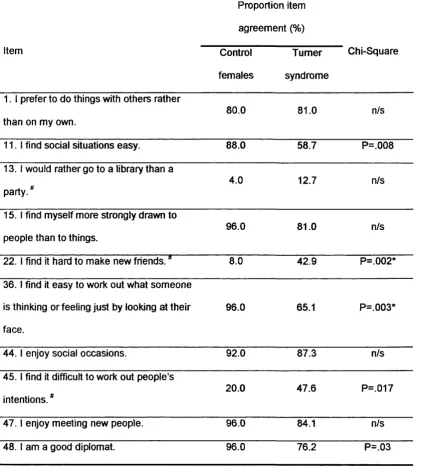
The individual items comprising the social skills subscale were analysed using
Chi-square statistics, revealing that half of the items were more significantly
endorsed (indicating an autistic-like trait) by the women with TS than by the
control group (see table 1.1). Of these, the proportion of each group agreeing
with the Items remained significantly different (after Bonferroni corrections for
multiple comparisons) for two of the items. Forty two percent of the women
with TS indicated that they found it hard to make new friends compared to just
8 percent of the control group. A further item may provide an insight into the
precise nature of the social difficulties of the TS women. Nearly all (96%) of
the control women indicated that they found it easy to work out what someone
was thinking or feeling just by looking at their face compared to just 65% of
Table 1.1: Autism self-report questionnaire - response rates for items comprising the social' subscale.
Proportion item agreement (%)
Item Control
females
Turner syndrome
Chi-Square
1.1 prefer to do things with others rather than on my own.
80.0 81.0 n/s
11.1 find social situations easy. 88.0 58.7 P=.008 13.1 would rather go to a library than a
party.
4.0 12.7 n/s
15.1 find myself more strongly drawn to people than to things.
96.0 81.0 n/s
22.1 find it hard to make new friends. ' 8.0 42.9 P=.002* 36.1 find it easy to work out what someone
is thinking or feeling just by looking at their 96.0 65.1 P=.003* face.
44.1 enjoy social occasions. 92.0 87.3 n/s
45.1 find it difficult to work out people’s intentions. *
20.0 47.6 P=.017
47.1 enjoy meeting new people. 96.0 84.1 n/s
48.1 am a good diplomat. 96.0 76.2 P=.03
^Significant at p<.05 after bonferroni corrections for multiple comparisons.
^ For these items, agreement is indicative of an autistic-like trait. On all other
Women with TS report that they do not find it easy to work out what someone
Is thinking or feeling just by looking at their face. In clinical populations other
than Turner syndrome face and emotion recognition deficits have been known
to co-occur with difficulties in social functioning (Calder et al., 1996; Langdell,
1978; McConachie, 1976). Might there be something critical about the link
between understanding and interpreting faces and facial expressions and
typical social adjustment (Elgar & Campbell, 2001)? One of the hypotheses
derived from this literature review will be that face and emotion recognition will
be associated with poor social adjustment in women with TS.
Is there any evidence in the existing cognitive literature that women with
Turner syndrome may have difficulties in processing faces, particularly
concerning the emotional content of these facial displays?
1.2.9 Face Processing in Turner syndrome
There are several reports of defective face recognition in girls and women with
Turner syndrome. These reports have generally considered difficulties with
face processing to be a component of the generalised visuo-spatial deficits
that are frequently associated with Turner syndrome. However, I will now
consider these studies with respect to the notion that a deficit in face
processing may indicate dysfunction in a partially distinct area of functioning.