Association of a Multi-Gene Panel with Blood Pressure Medication Success in Patients with Hypertension: A Pilot Study
Eric M. Snyder1, Ryan Sprissler1,2, Micah Johnson3, Greg D. Beenken3, Timothy Curry4, Nicholas Cassuto5, Eli F. Kelley3, and Thomas P. Olson1,4.
1Geneticure, Inc., Minnetonka, MN, 2University of Arizona Genomics Core, Tucson, Arizona, 3University of Minnesota, Minneapolis, MN 4Mayo Clinic College of Medicine, 5Department of Radiology, University of Arizona, Tucson, AZ
Running Title: Multi-Gene Panel and Blood Pressure Response in Hypertension
Corresponding Author: Thomas P. Olson, MS, PhD Mayo Clinic College of Medicine 200 1st St. SW
Rochester, MN, 55905 [email protected] 507-255-1572
Author Contact Information: Eric M. Snyder, PhD
Geneticure Inc.
3019, 4 3rd St SW suite 305 Rochester, MN 55902 [email protected]
Ryan Sprissler, PhD
University of Arizona Genomics Core 1657 E Helen St Rm 124
Tucson, AZ 85721
Micah Johnson, BS
University of Minnesota College of Pharmacy 5-130 Weaver-Densford Hall
308 Harvard St. SE Minneapolis, MN 55455
Greg D. Beenken, MS
University of Minnesota College of Education and Human Development Burton Hall, 178 Pillsbury Dr. SE
Minneapolis, MN 55455 [email protected]
Timothy Curry, PhD, MD
Mayo Clinic College of Medicine 200 1st St. SW
Rochester, MN, 55905 [email protected]
Nicholas Cassuto, MD
University of Arizona College of Medicine 1501 N. Campbell Ave.
Tuscon, AZ, 85724 [email protected]
Eli F. Kelley, MS
University of Minnesota School of Kinesiology 1900 University Ave. SE
Abstract:
Several common and functional genes are known to contribute to responsiveness to blood
pressure (BP) therapy. BP therapy is typically guided by algorithms that do not include a
patient’s genetic information. This study aimed to determine the impact of a multi-organ genetic
panel on BP response to pharmacotherapy. Eighty-six patients completed one study visit
consisting of a buccal swab collection, measurement of office BP, and a medical chart review for
BP history. Genes analyzed included those that encode for one drug metabolizing enzyme, renal
Na+ handling, vascular, and cardiac function. Relationships between genotype and control of BP
(<140/<90), ∆ systolic BP, ∆ diastolic BP, and ∆ mean arterial BP were assessed. SLC12A3
resulted in a significant association between the target drug and the functional genotype for BP
control (<140/<90 cut off) (p<0.05). Conversely, three of five renal genotypes were associated
with BP control using 120/80 as a cut-off (p<0.05). Three of four cardiac genotypes were
associated with the BP control at <140/<90, with one being statistically significant (position 49
of ADRB1). Only one vascular genotype was predictive of blood pressure control at <140/<90.
We found a significant drop in mean BP from baseline in six genes, three important in the
diuretic response and three in β-blockade (p<0.05 on target drug vs. not). These results
demonstrate that a multi-gene panel for renal Na+ handling, vascular function, and cardiac output
may influence the BP response to therapy, but larger studies with more statistical power are
needed.
Clinicaltrials.gov identifier: NCT02524873
Introduction:
Hypertension (HTN) is one of the most important preventable contributors to disease and
death in the United States, and represents the most common condition seen in the primary care
setting[1,2]. Hypertension affects approximately 80 million individuals in the United States, with
more than 5 million new diagnoses made each year[3,4]. High blood pressure (BP) is responsible
for ~360,000 deaths annually and, in 2009, had a direct cost to the United States healthcare
system of approximately $51 billion dollars[5,6]. Rapid reductions in BP are important for
survival in hypertensive patients, as end organ damage occurs quickly, and even small (~5
mmHg) reductions in BP can dramatically improve survival[7]. Hypertension control rates are
generally poor, with approximately 50% of patients eventually reaching control[8]. This level of
control goes well beyond adherence rates, since 40% of patients who take their medication as
prescribed do not have their BP under control[9]. Further, each common class of BP medication
(diuretic, ACE-inhibitors, angiotensin-II receptor blockers) has an average effectiveness rate of
50%, suggesting that a genetic component plays a role in therapy efficacy[10]. Contrary to
conventional wisdom and clinical appreciation, there is a bell-curve response to most
hypertension therapies, such that a proportion of patients have a reduction in BP, but 10-20% of
patients have no change in BP, or even an increase in BP[11,12]. Despite this lack of general
effectiveness for BP response to therapy, the current standard of care is to “layer” BP drug
therapies in an effort to control HTN. Unfortunately, this layering approach has potential
consequences in the form of increased side effect profile, costs to the patient, increased health
care service utilization, and reduced quality of life[13,14].
Like many diseases, there is a heritable component to the development of HTN, which is
heritable as well[12,15-18]. The risk of developing HTN doubles for each first degree relative with
HTN, and sons of HTN patients have an average of 10 mmHg higher systolic and diastolic BP
when compared to sons of normotensive individuals, independent of Na+ intake[15,19]. Further,
there is a 55% correlation for susceptibility to HTN in monozygous twin siblings, up to 40%
correlation in dizygous twins, and as low as 20% for non-twin sibling pairs[20-22]. Collectively,
these data clearly demonstrate a heritable component to the development of HTN. The
heritability of the treatment for HTN is less clear. While it is clear that hypertension response
rates improve when genetic scoring is used to guide therapy[17], and monotherapy
responsiveness can be improved using genetics[16], few studies have explored the impact of
genotype on multiple drug classes simultaneously[11,17]. Much of the previous work to
determine the genetics of HTN therapy initially focused on genome-wide association studies
followed by elegant studies of response rates to thiazide diuretics, β -blockers, and
ACE-inhibitors, but each has typically been done in isolation (e.g. genotype for renal genes to
determine the response to a thiazide diuretic within one study)[11,12,23-25].
While the promise of using genetic information to guide medical therapy existed before
the human genome was fully sequenced, there is a general lack of genetically informed therapy
decisions in clinical practice today, particularly across multiple classes of drugs for a given
disease. Currently, no validated genetic panel has previously been studied to guide HTN therapy.
In contrast, and in support of precision medicine for HTN, use of an individual’s plasma renin
levels can improve BP control by approximately 40%[26]. This highlights the importance of
using an individual’s own clinical information to guide therapy. One shining star example of the
use of precision medicine to guide (and even develop new) therapies is in genotyping for the
(CF). In this model, patients are prescribed specific medications that are more effective
according to their CFTR genotype status[27-29]. Although CF is a monogenic disease, there are
over 1700 genotypes of CFTR which lead to distinct phenotypes within this disease, resulting in
a heterogeneous disease with distinct pathways for treatment. This model of pharmacogenetics in
CF demonstrates an appreciation for: a) the functionality of a protein (or channel), b) how
genetic variation can influence that protein, and c) how drug therapy can be altered to match that
genetic variation. Very few studies have utilized this type of approach outside of CF because of
pathways that are more complex and the integrative nature of diseases like hypertension.
Given the impetus for using genetics in understanding the risk of development of HTN,
coupled with the generally poor rates of control using the current standard of care, we sought to
determine the association between a multi-gene panel on BP response to HTN therapy in patients
with controlled HTN (<140/<90). We hypothesized that polymorphisms contained in genes
responsible for determining functionality of proteins within specific organ systems involved in
BP regulation (kidney, heart, and vasculature) would be associated with the effectiveness of a
patient’s BP therapy.
Methods:
Study design:
This pilot study was designed and performed as a retrospective study of patients with HTN, but
included only patients who had a history of BP control (<140/<90) (clinicaltrials.gov identifier:
NCT02524873). The study involved one clinic visit which consisted of collection of a buccal
swab, measurement of office BP, and completion of a medication history survey. The study visit
The primary outcome variable for analysis was office BP at time of buccal cell collection. From
this BP measurement, we were able to assess the level of BP control (percent of patients who had
a BP that was <140/<90) and the change in BP (with the change in BP defined as the difference
in BP from diagnosis to the office visit of the present study). From the chart review and the
office visit, we were able to assess the number of medications and office visits needed to attain
BP control, from the time of the initiation of therapy, the HTN medication side effect profile, as
well as HTN associated adverse events during the course of treatment. All subjects gave their
informed consent for inclusion before they participated in the study. The study was conducted in
accordance with the Declaration of Helsinki, and the protocol was approved by Clinicaltrials.gov
(identifier: NCT02524873).
Subjects:
All patients enrolled in the study were HTN patients who had their BP under control and
who had been diagnosed with HTN for at least one year. Patients provided written informed
consent prior to enrollment and data collection (Chesapeake IRB# 00011237). In addition to BP
history, demographic information collected included age, sex, height, weight, and self-identified
race, and ethnicity. Inclusion criteria for the study included: 20-85 years of age, patient on the
same class/classes of BP medication for a minimum of six months (a change in dosage,
frequency, or specific medication was accepted as long as there have been no changes to the
class/classes of medications prescribed), a body mass index (BMI) between 19 and 45kg/m2,
patient had to be prescribed and taking one of the following classes of medications alone or in
combination: diuretics (thiazide or thiazide-like), ACE inhibitors, angiotensin receptor blocker
(ARB), β-blockers. Subjects were excluded from participation in the research study if one or
pregnancy, currently prescribed and taking any additional class of medication(s) for high BP not
included in the inclusion criteria list, or systolic BP > 190 or diastolic BP > 120 documented
within the immediate six months prior to the study visit.
Cell collection and genotyping:
For this study, we collected two buccal swabs. The patient first collected cells via a
buccal brush by swabbing the inside of their right cheek repeatedly (for five seconds using
moderate pressure) (A-swab). The patient then deposited the swab in 750ul of lysis buffer
consisting of 50mM Tris pH 8.0, 50mM EDTA, 25mM Sucrose, 100mM NaCl and 1% SDS to
lysethe cells and stabilize DNA during transit prior to extraction. This process was repeated with
the left cheek (B-swab) to ensure adequate cell collection necessary to achieve a minimum yield
of 500ng total gDNA necessary for downstream genotyping. Subsequent lysate from buccal
swabs was used in DNA isolation via Qiagen DNeasy isolation kits according to manufacture
recommended specification (Qiagen). Patient isolated DNA was then assayed for, 14 functional
alleles in 11 genes selected for known functionality in the heart, kidney and vasculature from
previous peer-reviewed studies: (2) SNPs in ADRB1 (rs1801252 and rs1801253), (2) SNPS in
ADRB2 (rs1042713 and rs1042714), SCNN1A (rs2228576), alpha-adducin (ADD1, rs4961),
SLC12A3 (rs1529927), (2) in WNK1 (rs1159744 and rs2107614), angiotensin-converting
enzyme (ACE, rs1799752), angiotensin (AGT, rs699), angiotensin receptor (AGTR1, rs5186),
cytochrome P450 2D6 (CYP2D6*4, rs3892097), and renin (REN, rs12750834). With the
exception of the ACE insertion/deletion (indel) genotype, all genotype polymorphisms were
quantified using a two-step process beginning with a multiplex PCR as indicated in
Supplemental Table 1, directly followed by a single base extension (SBE) reaction provided in
a genomic mass spectrometer (Agena MassARRAY system) to generate individual genotypes.
The ACE indel status was assessed using a standard PCR primer set and protocol provided in
Supplemental Table 3, followed by 2% agarose sizing gel electrophoresis. Pre-characterized
Coriell cell line DNAs consisting of all possible genotype combinations were run in parallel for
each SNP as controls. All genotype data in aggregate was also used to compute population allele
frequencies which were then confirmed against known existing frequencies in publically
available databases (ExAC browser, 1000 Genomes project, GO-exome sequencing project, and
TOPMED.
Data analysis:
All data were coded for statistical analysis (i.e. drug classes and genotypes coded
numerically according to functionality) and were analyzed with SPSS v.21. Normality of the data
were assessed using Levene’s test prior to statistical analysis to assess equality of variance and
correct statistical tests accordingly. Descriptive statistics were computed (average time for BP
control, average number of visits to the clinician for BP control, age, height, weight, BMI, etc.).
Post-hoc correction for univariate analysis of variance was conducted using Bonferroni analysis.
Ordinary least squares regression via univariate modelling was used to estimate the magnitude of
linearity between drug classes that yielded the best BP control and genetic profile of the subject.
All statistical analyses were considered significant at an alpha level of 0.05. All data are
reported as mean ± SD.
Results:
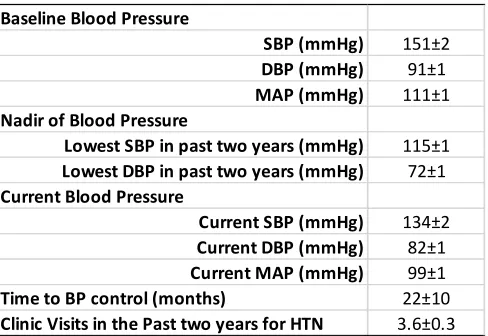
Eighty-six patients completed all aspects of the study and were included in the statistical analysis (subject
characteristics, table 1). Upon diagnosis with HTN, the mean BP was 151/91 mmHg and the final office visit BP
medication being an ACE inhibitor and the least common medication being a Ca+ channel blocker (table 3). There
was considerable variability in the time to control (in months) and the number of clinic visits before BP control was
attained according to drug class (table 3). On average, it took approximately one year to attain BP control, with the
quickest time to control being for a Ca+ channel blocker (although this required two additional clinic visits, when
compared to an ACE-inhibitor therapy). The average number of clinic visits needed to attain BP control was four,
which also varied according to drug class.
Table 1. Patient demographics.
BMI=body mass index (kg/m2).
Table 2. Blood pressure response to treatment.
SBP=systolic blood pressure, DBP=diastolic blood pressure, MAP=mean arterial blood pressure.
Age (yrs) 58±0.8
Sex (% female) 46
Diabetes (% with) 28±4
Weight (kg) 86±1.4
Height (cm) 169±1
BMI (kg/m2) 29.9±0.4
Number of Classes of Drugs for HTN 1.8±0.08
Baseline Blood Pressure
SBP (mmHg) 151±2
DBP (mmHg) 91±1
MAP (mmHg) 111±1
Nadir of Blood Pressure
Lowest SBP in past two years (mmHg) 115±1
Lowest DBP in past two years (mmHg) 72±1
Current Blood Pressure
Current SBP (mmHg) 134±2
Current DBP (mmHg) 82±1
Current MAP (mmHg) 99±1
Time to BP control (months) 22±10
Table 3. Time to control according to blood pressure therapy class.
ACE=angiotensin converting enzyme, angiotensin receptor blocker.
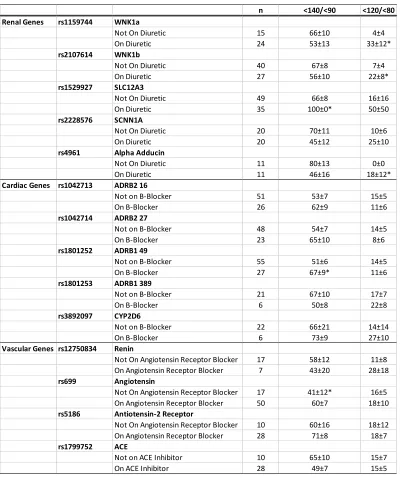
Genotype distribution is presented in table 4. The response to the level of BP control with target therapy
according to published functional genotypes yielded variable results which seemed to improve with more strict
limits set for BP control (<120/<80, but this also resulted in a smaller sample size for analysis) (table 5). Only one of
the alleles in the genes associated with renal activity (meaning renal Na+ handling, SLC12A3) resulted in a
significant association between the renal targeted drug, diuretic, and the functional genotype for BP control when
using <140/<90 as a cut off (P<0.05). In contrast, three out of five functional genotypes involved in renal Na+
handling (WNK, SLC12A3, and SCNN1A) were associated with BP control using the more strict 120/80 as a cut-off
(p<0.05). While the general functionality of all but one of the functional alleles in genes associated with cardiac
function were also associated with the BP control at the <140/<90 level, only one of these was statistically
significant (position 49 of the ADRB1, p<0.05). In contrast to the genotypes linked to renal Na+ handling, there was
no effect of the cardiac-linked genotypes in percent of patients under control at the more strict level of BP control
(<120/<80). Similar to the renal genotypes, within the vascular genotypes only one genotype was statistically
predictive of BP control at the <140/<90 level (ANG) (P<0.05), while none were statistically associated with control
at the stricter cut-off level.
Drug Class On the Drug Class (%) On the Drug Class Not on the Drug Class On the Drug Class Not on the Drug Class
Diuretic 42±5 19.5±20.4 7.9±4.2 4.5±0.6 3.0±0.4*
ACE Inhibitor 62±5 22.2±11.4 22.5±16.4 3.1±0.4 4.5±0.6*
Antiotensin Receptor Blocker 27±5 22.8±23.1 17.1±9.1 3.9±0.6 3.5±0.4
B-Blocker 33±5 24.5±16.9 21.2±12.0 4.9±0.7 3.1±0.4*
Ca+ Channel Blocker 16±4 9.9±4.5 25.0±11.7 5.1±0.7 3.3±0.4
Table 4. Genotype distribution.
Genotype (count)
Renal Genes rs1159744 WNK1a CC(10) CG(29) GG(42)
rs2107614 WNK1b CC(33) CT(36) TT(20)
rs1529927 SLC12A3 CC(1) CG(7) GG(77)
rs2228576 SCNN1A CC(41) CT(31) TT(10)
rs4961 Alpha Adducin GG(63) GT(21) TT(5)
Cardiac Genes rs1042713 ADRB2 16 CC(7) CG(41) GG(28)
rs1042714 ADRB2 27 CC(26) CG(46) GG(10)
rs1801252 ADRB1 49 AA(27) AG(36) GG(71)
rs1801253 ADRB1 389 CC(43) CG(30) GG(8)
rs3892097 CYP2D6 CC(56) CT(22) TT(11)
Vascular Genes rs12750834 Renin AA(4) AG(20) GG(66)
rs699 Angiotensin CC(19) CT(41) TT(29)
rs5186 Antiotensin-2 Receptor AA(49) AC(30) CC(9)
Table 5. Percent of patients with a functional genotype who have blood pressure under control taking the target drug
class vs. not on target drug class.
One limitation with assessing the percent of patients to attain BP control is that this does not account for a
patient’s starting point for their BP treatment upon diagnosis. When this is taken into account (through the
assessment of mean change in BP) we demonstrate a statistically significant effect in more than half of the
genotypes and a clinically meaningful (>4mmHg difference between on the target therapy vs. not) and statistically n <140/<90 <120/<80
Renal Genes rs1159744 WNK1a
Not On Diuretic 15 66±10 4±4
On Diuretic 24 53±13 33±12*
rs2107614 WNK1b
Not On Diuretic 40 67±8 7±4
On Diuretic 27 56±10 22±8*
rs1529927 SLC12A3
Not On Diuretic 49 66±8 16±16
On Diuretic 35 100±0* 50±50
rs2228576 SCNN1A
Not On Diuretic 20 70±11 10±6
On Diuretic 20 45±12 25±10
rs4961 Alpha Adducin
Not On Diuretic 11 80±13 0±0
On Diuretic 11 46±16 18±12*
Cardiac Genes rs1042713 ADRB2 16
Not on B-Blocker 51 53±7 15±5
On B-Blocker 26 62±9 11±6
rs1042714 ADRB2 27
Not on B-Blocker 48 54±7 14±5
On B-Blocker 23 65±10 8±6
rs1801252 ADRB1 49
Not on B-Blocker 55 51±6 14±5
On B-Blocker 27 67±9* 11±6
rs1801253 ADRB1 389
Not on B-Blocker 21 67±10 17±7
On B-Blocker 6 50±8 22±8
rs3892097 CYP2D6
Not on B-Blocker 22 66±21 14±14
On B-Blocker 6 73±9 27±10
Vascular Genes rs12750834 Renin
Not On Angiotensin Receptor Blocker 17 58±12 11±8
On Angiotensin Receptor Blocker 7 43±20 28±18
rs699 Angiotensin
Not On Angiotensin Receptor Blocker 17 41±12* 16±5
On Angiotensin Receptor Blocker 50 60±7 18±10
rs5186 Antiotensin-2 Receptor
Not On Angiotensin Receptor Blocker 10 60±16 18±12
On Angiotensin Receptor Blocker 28 71±8 18±7
rs1799752 ACE
Not on ACE Inhibitor 10 65±10 15±7
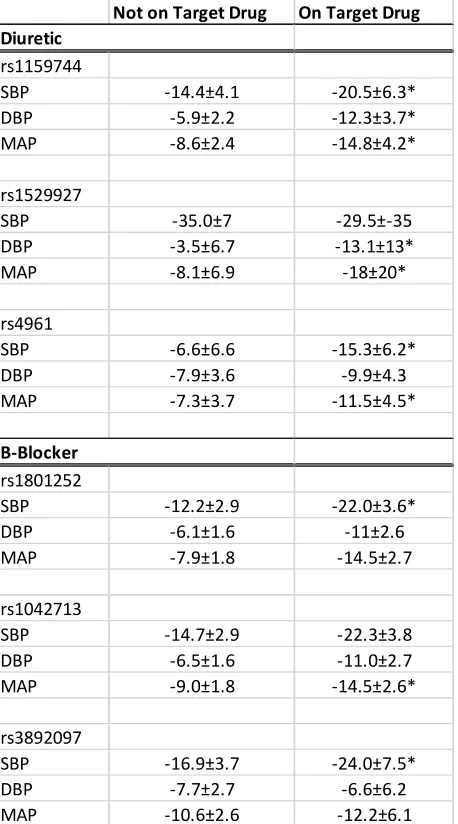
significant effect in six of the target genes, even in this small retrospective trial, three important in the diuretic
response and three important in β-blockade (WNK rs1159744, SLC12A3, alpha-adducin, ADRB2, and
CYP2D6)(P<0.05 on target drug vs. not)(table 6). Therefore, when combined, we find that a majority of the genes in
the present study result in differential functionality when looking at both BP control (<140<90) and delta BP. These
data help to explain the dramatic variability with respect to the percent of patients under control according to genetic
variation within the renal, vascular, and cardiac systems.
Table 6. Mean blood pressure change in genotypes that demonstrated a statistically significant change in blood
pressure.
*p<0.05 when compared to patients not on the target drug for that gene.
Not on Target Drug On Target Drug Diuretic
rs1159744
SBP -14.4±4.1 -20.5±6.3*
DBP -5.9±2.2 -12.3±3.7*
MAP -8.6±2.4 -14.8±4.2*
rs1529927
SBP -35.0±7 -29.5±-35
DBP -3.5±6.7 -13.1±13*
MAP -8.1±6.9 -18±20*
rs4961
SBP -6.6±6.6 -15.3±6.2*
DBP -7.9±3.6 -9.9±4.3
MAP -7.3±3.7 -11.5±4.5*
B-Blocker
rs1801252
SBP -12.2±2.9 -22.0±3.6*
DBP -6.1±1.6 -11±2.6
MAP -7.9±1.8 -14.5±2.7
rs1042713
SBP -14.7±2.9 -22.3±3.8
DBP -6.5±1.6 -11.0±2.7
MAP -9.0±1.8 -14.5±2.6*
rs3892097
SBP -16.9±3.7 -24.0±7.5*
DBP -7.7±2.7 -6.6±6.2
Discussion:
In this pilot study, we assessed the relationship between known, common, and functional
gene polymorphisms responsible for encoding proteins within the renal, vascular, and cardiac
organ systems on the BP response to HTN therapies in patients with HTN. Interestingly, very
little data exists on the time to BP control in patients with HTN and the number of clinic visits
needed to attain BP control within the US healthcare system. In the present study, we show that
HTN is controlled, on average, one year after initial diagnosis, with an average of four clinic
visits. Considering the magnitude of downstream consequences of HTN and the economic
burden HTN has on the healthcare system, it is imperative to improve this time to control. In
addition, we found that more than half of the genotypes selected for our multi-organ system
analysis influenced either BP control (<140/<90) or a delta BP (systolic, diastolic, or mean
arterial). It is likely that using these common genotypes to guide therapy will improve a patient’s
time to control, decrease the number of medications that a patient is taking, and improve
medication adherence (through improved effectiveness and decreasing the number of
medications used). While a great deal of literature exists on the genetics of HTN susceptibility
and treatment[11,18,30,31], no scientifically-validated and commercially available panel exists to
use genetics to guide therapy in these patients.
There is a well-described but clinically underappreciated bell-curve response to BP
therapy. Each of the common classes of HTN therapy (diuretic, ACE-inhibitor, angiotensin-II
receptor blocker, and Ca+ channel blocker) has a response rate of 40-50%, with placebo
demonstrating a 25% effectiveness rate[4,10,12]. This medication effectiveness rate in HTN
therapy goes beyond medication adherence, as the investigators in most previous studies reported
to common HTN therapy[23]. Importantly, while most patients demonstrate a drop in BP with
HTN therapy, some patients demonstrate no change, and approximately 10-20% of patients
demonstrate an increase in BP with drug treatment[4,12]. In particular, use of a diuretic and
β-blocker have both demonstrated this clear bell-curve response, with an increase of BP in ~20%
of patients, whether hydrochlorothiazide, metoprolol, or atenolol was used as a mono therapy, or
as an add-on therapy[12]. Even though a portion of patients (~50%) do not respond to a given
HTN therapy[11,32], and some may even experience an increase in BP, the current standard of
care is to increase dosage of a given pharmacologic therapy to maximally tolerated dose and then
layer a second HTN therapy upon the first drug which was not successful[14]. There are two very
clear concerns with layering BP therapies when the first therapy does not work. First, there is a
well-understood side-effect profile for each of the HTN therapies. For instance, long-term
diuretic therapy leads to a 45% increase in the risk of development of new-onset diabetes when
compared to ACE-inhibition[33,34]. In addition, previous work has demonstrated that β-blocker
therapy results in an increase in insulin resistance and dyslipidemia[34]. Beyond increased risk of
side effects, it has also been demonstrated that with each new HTN drug added as a therapy,
there is a 70% reduction in medication adherence[35]. For clinicians, there may be some concern
with removal of a drug that does not work, rather than layering on a new drug that may be
successful. Interestingly, large studies that have involved a wash-out of an HTN therapy for
research purposes find that more subjects in these studies (approximately 22-58% of patients)
have to be removed from the study because of a drop in BP, rather than from an increase (9-27%
of patients)[12,17].
Like most diseases, there is a genetic component to the development of HTN. The most
Several elegant studies have led to the estimate of the heritability of HTN by assessing the
incidence rate in families, specifically twin studies and sons of HTN patients. The risk of
developing HTN approximately doubles for each first degree relative who presents with
HTN[19]. Schwartz et al. explored BP levels in sons of normotensive individuals when compared
to sons of HTN patients[28]. Specifically, the work by Schwartz et al. demonstrated that sons of
HTN patients were more likely to be HTN than sons of normotensive individuals, and that sons
of HTN individuals had approximately 10 mmHg higher systolic and diastolic BPs when
compared to sons of normotensive individuals. What makes the study by Schwartz et al.
particularly compelling, is that 24-hr. holter data was used to assess ambulatory BP (rather than
office or at home BP measures), and the investigators exposed the subjects to both a low (10
mEq/day) and a high (200 mEq/day) salt diet (each for two weeks), which was confirmed with
urine Na+ analysis[28]. Under each of the Na+ intake conditions, the sons of HTN individuals
demonstrated higher BP levels when compared to sons of normotensive individuals, and,
interestingly, diet had very little statistical effect on BP. Additionally, previous work has
demonstrated the strongest relationship to the prevalence of HTN in monozygous twins (~55%)
when compared to dizygous twins (~40%), and both sets of twins were more likely to share the
prevalence of HTN when compared to non-twin sibling pairs (~20-30%)[24,33]. Although the
development of HTN clearly has a strong heritable component, like most disease states[18-20],
environment also plays a role. When education level is taken into account, the relationship
between the incidences of HTN in twins is significantly altered. Specifically, individuals with
less than 14 years of formal education have a 17% reduction in the relationship between HTN
incidence with their twin sibling (resulting in a 46% correlation coefficient), when compared to
the heritability of the development of HTN is relatively clear, the genetic consequence of
treatment is less clear.
Previous studies examining the genetic determinants to the response to HTN
monotherapy and adjunctive therapies have primarily centered on the genetic variation of
thiazide and thiazide-like diuretic response and include WNK1, alpha adducin, SLC12A3, and
SCNN1A (which are also included in the present study)[12,18,25]. Specifically, genetic variation
of WNK1 has demonstrated an approximately 5-6 mmHg difference in BP response to
hydrochlorothiazide (re2107614, rs1159744, and rs2277869)[35]. The T variant of alpha adducin
(rs4961) and C variant of SLC12A3 (rs1529927) have also been shown to be more responsive to
a diuretic[37]. Similarly, the response to β-blockade has been studied in some detail. Previous
studies in the heart and vasculature have demonstrated that the Gly16 (rs1042713) and Glu27
(rs1042714) variants of the ADRB2 and the AA49 (rs1801252) and CC389 (rs1801253) variants
of the ADRB1 have enhanced receptor function in the cardiovascular system[38-41]. Because of
this, pharmacogenetics specific studies have demonstrated that the GLy16/Glu27/Arg49/CC389
variants have an enhanced response to β-blockade, particularly when the genes are considered in
combination[42,43]. Finally, the response to vasodilation has primarily focused on genetic
variation of the ACE-inhibitor, angiotensin, and the angiotensin-II receptor. Specifically, the
deletion variant of ACE (rs7079), the C variant of Angiotensin (rs699), and the C variant of the
angiotensin-II receptor (rs5186) have shown enhanced response to ACE-inhibition and
angiotensin receptor antagonism[44-46]. Collectively, these data demonstrate genetic variation
may be partially responsible for the variability in effectiveness to HTN therapy and, possibly, the
One current area of focus for precision medicine is the pharmacogenetics of drug
metabolizing enzymes (DME). Previous research has demonstrated that the assessment of
genetic variation of DMEs alone does not significantly alter the BP response to β -blockade (one
of the only common anti-hypertensive therapies to go through the cytochrome P450 pathway).
Specifically, several previous studies have demonstrated that genetic variation of DMEs can
significantly influence the amount of β-blockers in the plasma, but this does not significantly
influence the BP response to these therapies[47-49]. Plasma levels in individuals who are slow
metabolizers of β-blocker drugs has been shown to be as high as 20-fold greater than those who
are fast metabolizers, but this difference did not influence the BP response to β-blockade[47].
These data further underscore the critical importance of receptor functionality and gene
polymorphism determination of these receptors. Despite this, one promising area in the previous
research is the coupling of the β1 and β2-adrenergic receptor functionality (the functional target
receptor for selective and non-selective β-blockers, respectively) polymorphisms with CYP2D6
genotypes that are important in β-blocker metabolism. When coupled, previous research has
demonstrated that Gly16 and Glu27 variants of the ADRB2 and Arg49 and Arg389 variants have
a dramatic effect on BP response to β-blockade, particularly when coupled with CYP2D6*4
genotype status[50]. Data within the present study seems to confirm this (figure 1). We found no
association between the CYP2D6 genotype and BP response to β-blockade in the present trial,
when considered alone. However, there was an approximately 6 mmHg difference in SBP, DBP,
and MAP between those patients who had a functional genotype of one of the adrenergic
receptors and who were also on a β-blocker. This difference in BP is clinically meaningful and
has previously been associated with a 40-50% reduction in myocardial infarction and
metabolizing enzyme may have a dramatic effect on BP reduction which is likely associated with
improved survival.
Figure 1. Change in Blood Pressure for Functional Genotypes of Cytochrome P450 2D6 and
the β1 and β2-Adrenergic Receptors for Patients on a blocker vs. Patients not on a
Limitations:
It is important to recognize potential limitations of this retrospective study. Despite the
fact that we found important effects of the functional genotypes studied within the renal,
vascular, and cardiac systems, and their target therapies, the sample size remains small due to the
pilot nature of this work.,. Further, because of the relatively small sample size, the response BP
as a function of gene polymorphism was variable and only statistically significant in about half
of the genes examined, despite significant known functionality of these genes from previous
much larger studies. In the present study, we only assessed the *4 variant because this has been
specifically shown to influence the response to β-blocker and is common[47-49]. Other variants of
CYP2D6 may also be significant, even if they occur in a smaller percentage of the population.
Additionally, in the present study we assessed a gene-by-gene approach to determine the
relationship between successful BP treatment and the genes of interest. This approach results in a
high number of statistical comparisons and a virtual reduction in alpha due to correcting for these
multiple comparisons. Additional studies need to be performed to expand the gene-by-gene
approach to one that considers multiple genes simultaneously (i.e. functionality in
angiotensin+ACE+A-II receptor should yield favorable A-II receptor response). In the present
study, each patient was on an average of ~2 hypertension therapies. Given these limitations,
future prospective randomized studies of larger scale (and use drug recommendations based on
the gene panel as a whole, to preserve alpha) are important and should be undertaken.
Conclusion:
Our data, while preliminary in nature, demonstrate the effect of using multiple genes
certainly needed, it is clear that this may help to alleviate some of the variability that exists in BP
treatment and the relatively low success rates in this patient population.
Supportive/Supplementary Material
Table S1 describes the multiplex PCR primer pools, reaction, and cycling condition for
step one of a two-step quantification of all gene polymorphisms with the exception of the ACE
indel genotype. Table S2 describes the single base extension reaction primer pool, reaction, and
cycling conditions for step two of the two-step quantification of gene polymorphisms. Table S3
describes the PCR primer, reaction, and cycling conditions for quantification of the ACE indel
gene polymorphism.
Acknowledgments:
This study was supported by funds from Geneticure, Inc. which has developed the
multi-gene panel for BP prescribing using pharmacomulti-genetics. Eric Snyder, Ryan Sprissler, and Thomas
Olson are co-founders of Geneticure. The study was completed in a blinded manner by a
third-party research organization (RCRI, Inc.).
Author Contributions:
Conceptualization, Eric M. Snyder, Thomas P. Olson, and Ryan Sprissler; Data Entry,
Greg D. Beenken and Micah Johnson; Data analysis, Eric M. Snyder, Thomas P. Olson, and
Ryan Sprissler; Manuscript drafting and submission, Timothy Curry, Nicholas Cassuto, and Eli
F. Kelley. No member from Geneticure was involved in data collection. The study was
Conflict of Interest:
The study was supported by funds from Geneticure Inc. which has developed multi-gene
panels for blood pressure prescribing using pharmacogenetics. Eric M. Snyder, Ryan Sprissler,
and Thomas P. Olson have significant financial interest in Geneticure Inc. Micah Johnson, Greg
D. Beenken, Timothy Curry, Nicholas Cassuto, and Eli F. Kelley declare they have no conflict of
References:
1. The sixth report of the Joint National Committee on prevention, detection, evaluation, and treatment of high blood pressure. Arch Intern Med 1997, 157, 2413-2446.
2. Chobanian, A.V.; Bakris, G.L.; Black, H.R.; Cushman, W.C.; Green, L.A.; Izzo, J.L., Jr.; Jones, D.W.; Materson, B.J.; Oparil, S.; Wright, J.T., Jr., et al. The Seventh Report of the Joint National Committee on Prevention, Detection, Evaluation, and Treatment of High Blood Pressure: the JNC 7 report. Jama 2003, 289, 2560-2572.
3. American Heart Association. Heart and Stroke Statistics - 2004 Update. In Proceedings of Dallas: American Heart Association.
4. Roger, V.L.; Go, A.S.; Lloyd-Jones, D.M.; Benjamin, E.J.; Berry, J.D.; Borden, W.B.; Bravata, D.M.; Dai, S.; Ford, E.S.; Fox, C.S., et al. Heart disease and stroke statistics--2012 update: a report from the American Heart Association. Circulation 2012, 125, e2-e220, doi:10.1161/CIR.0b013e31823ac046.
5. Kearney, P.M.; Whelton, M.; Reynolds, K.; Muntner, P.; Whelton, P.K.; He, J. Global burden of hypertension: analysis of worldwide data. Lancet 2005, 365, 217-223, doi:10.1016/S0140-6736(05)17741-1.
6. Cohen, J.D. Hypertension epidemiology and economic burden: refining risk assessment to lower costs. Managed care 2009, 18, 51-58.
7. Hopkins, A.L.; Lamm, M.G.; Funk, J.L.; Ritenbaugh, C. Hibiscus sabdariffa L. in the treatment of hypertension and hyperlipidemia: a comprehensive review of animal and human studies.
Fitoterapia 2013, 85, 84-94, doi:10.1016/j.fitote.2013.01.003.
8. Egan, B.M.; Zhao, Y.; Axon, R.N. US trends in prevalence, awareness, treatment, and control of hypertension, 1988-2008. JAMA 2010, 303, 2043-2050, doi:10.1001/jama.2010.650.
9. Gu, Q.; Burt, V.L.; Dillon, C.F.; Yoon, S. Trends in antihypertensive medication use and blood pressure control among United States adults with hypertension: the National Health And Nutrition Examination Survey, 2001 to 2010. Circulation 2012, 126, 2105-2114, doi:10.1161/CIRCULATIONAHA.112.096156.
10. Materson, B.J.; Reda, D.J.; Cushman, W.C.; Massie, B.M.; Freis, E.D.; Kochar, M.S.; Hamburger, R.J.; Fye, C.; Lakshman, R.; Gottdiener, J., et al. Single-drug therapy for hypertension in men. A comparison of six antihypertensive agents with placebo. The Department of Veterans Affairs Cooperative Study Group on Antihypertensive Agents. N Engl J Med 1993, 328, 914-921, doi:10.1056/NEJM199304013281303.
11. Gong, Y.; Wang, Z.; Beitelshees, A.L.; McDonough, C.W.; Langaee, T.Y.; Hall, K.; Schmidt, S.O.; Curry, R.W., Jr.; Gums, J.G.; Bailey, K.R., et al. Pharmacogenomic Genome-Wide Meta-Analysis of Blood Pressure Response to beta-Blockers in Hypertensive African Americans. Hypertension
2016, 67, 556-563, doi:10.1161/HYPERTENSIONAHA.115.06345.
12. Chapman, A.B.; Schwartz, G.L.; Boerwinkle, E.; Turner, S.T. Predictors of antihypertensive response to a standard dose of hydrochlorothiazide for essential hypertension. Kidney Int 2002,
61, 1047-1055, doi:10.1046/j.1523-1755.2002.00200.x.
13. Farooq, U.; Ray, S.G. 2014 Guideline for the Management of High Blood Pressure (Eighth Joint National Committee): Take-Home Messages. The Medical clinics of North America 2015, 99, 733-738, doi:10.1016/j.mcna.2015.02.004.
15. Hopkins, P.N.; Hunt, S.C. Genetics of hypertension. Genetics in medicine : official journal of the
American College of Medical Genetics 2003, 5, 413-429,
doi:10.109701.GIM.0000096375.88710.A6.
16. Johnson, J.A.; Turner, S.T. Hypertension pharmacogenomics: current status and future directions. Curr Opin Mol Ther 2005, 7, 218-225.
17. Gong, Y.; McDonough, C.W.; Wang, Z.; Hou, W.; Cooper-DeHoff, R.M.; Langaee, T.Y.; Beitelshees, A.L.; Chapman, A.B.; Gums, J.G.; Bailey, K.R., et al. Hypertension susceptibility loci and blood pressure response to antihypertensives: results from the pharmacogenomic evaluation of antihypertensive responses study. Circulation. Cardiovascular genetics 2012, 5, 686-691, doi:10.1161/CIRCGENETICS.112.964080.
18. Hiltunen, T.P.; Donner, K.M.; Sarin, A.P.; Saarela, J.; Ripatti, S.; Chapman, A.B.; Gums, J.G.; Gong, Y.; Cooper-DeHoff, R.M.; Frau, F., et al. Pharmacogenomics of hypertension: a genome-wide, placebo-controlled cross-over study, using four classes of antihypertensive drugs. Journal of the
American Heart Association 2015, 4, e001521, doi:10.1161/JAHA.115.001778.
19. Schwartz, G.L.; Turner, S.T.; Sing, C.F. Twenty-four-hour blood pressure profiles in normotensive sons of hypertensive parents. Hypertension 1992, 20, 834-840.
20. Snieder, H.; Hayward, C.S.; Perks, U.; Kelly, R.P.; Kelly, P.J.; Spector, T.D. Heritability of central systolic pressure augmentation: a twin study. Hypertension 2000, 35, 574-579.
21. Hottenga, J.J.; Boomsma, D.I.; Kupper, N.; Posthuma, D.; Snieder, H.; Willemsen, G.; de Geus, E.J. Heritability and stability of resting blood pressure. Twin Res Hum Genet 2005, 8, 499-508, doi:10.1375/183242705774310123.
22. Kupper, N.; Willemsen, G.; Riese, H.; Posthuma, D.; Boomsma, D.I.; de Geus, E.J. Heritability of daytime ambulatory blood pressure in an extended twin design. Hypertension 2005, 45, 80-85, doi:10.1161/01.HYP.0000149952.84391.54.
23. Canzanello, V.J.; Baranco-Pryor, E.; Rahbari-Oskoui, F.; Schwartz, G.L.; Boerwinkle, E.; Turner, S.T.; Chapman, A.B. Predictors of blood pressure response to the angiotensin receptor blocker candesartan in essential hypertension. American journal of hypertension 2008, 21, 61-66, doi:10.1038/ajh.2007.24.
24. Shahin, M.H.; Gong, Y.; McDonough, C.W.; Rotroff, D.M.; Beitelshees, A.L.; Garrett, T.J.; Gums, J.G.; Motsinger-Reif, A.; Chapman, A.B.; Turner, S.T., et al. A Genetic Response Score for Hydrochlorothiazide Use: Insights From Genomics and Metabolomics Integration. Hypertension
2016, 68, 621-629, doi:10.1161/HYPERTENSIONAHA.116.07328.
25. Turner, S.T.; Schwartz, G.L.; Chapman, A.B.; Boerwinkle, E. WNK1 kinase polymorphism and blood pressure response to a thiazide diuretic. Hypertension 2005, 46, 758-765, doi:10.1161/01.HYP.0000186240.81996.57.
26. Hiltunen, T.P.; Kontula, K. Clinical and molecular approaches to individualize antihypertensive drug therapy. Annals of medicine 2012, 44 Suppl 1, S23-29, doi:10.3109/07853890.2012.679960. 27. Char, J.E.; Wolfe, M.H.; Cho, H.J.; Park, I.H.; Jeong, J.H.; Frisbee, E.; Dunn, C.; Davies, Z.; Milla, C.; Moss, R.B., et al. A little CFTR goes a long way: CFTR-dependent sweat secretion from G551D and R117H-5T cystic fibrosis subjects taking ivacaftor. PLoS One 2014, 9, e88564, doi:10.1371/journal.pone.0088564.
28. Deeks, E.D. Ivacaftor: a review of its use in patients with cystic fibrosis. Drugs 2013, 73, 1595-1604, doi:10.1007/s40265-013-0115-2.
30. Ehret, G.B. Genome-wide association studies: contribution of genomics to understanding blood pressure and essential hypertension. Curr Hypertens Rep 2010, 12, 17-25, doi:10.1007/s11906-009-0086-6.
31. Rice, T.; Rankinen, T.; Province, M.A.; Chagnon, Y.C.; Perusse, L.; Borecki, I.B.; Bouchard, C.; Rao, D.C. Genome-Wide Linkage Analysis of Systolic and Diastolic Blood Pressure : The Quebec Family Study. Circulation 2000, 102, 1956-1963.
32. Smith, S.M.; Gong, Y.; Turner, S.T.; Cooper-DeHoff, R.M.; Beitelshees, A.L.; Chapman, A.B.; Boerwinkle, E.; Bailey, K.; Johnson, J.A.; Gums, J.G. Blood pressure responses and metabolic effects of hydrochlorothiazide and atenolol. American journal of hypertension 2012, 25, 359-365, doi:10.1038/ajh.2011.215.
33. Bakris, G.; Molitch, M.; Hewkin, A.; Kipnes, M.; Sarafidis, P.; Fakouhi, K.; Bacher, P.; Sowers, J.; Investigators, S. Differences in glucose tolerance between fixed-dose antihypertensive drug combinations in people with metabolic syndrome. Diabetes Care 2006, 29, 2592-2597, doi:10.2337/dc06-1373.
34. Sarafidis, P.A.; Bakris, G.L. Do the metabolic effects of beta blockers make them leading or supporting antihypertensive agents in the treatment of hypertension? J Clin Hypertens
(Greenwich) 2006, 8, 351-356; quiz 357-358.
35. Gupta, P.; Patel, P.; Strauch, B.; Lai, F.Y.; Akbarov, A.; Maresova, V.; White, C.M.J.; Petrak, O.; Gulsin, G.S.; Patel, V., et al. Risk Factors for Nonadherence to Antihypertensive Treatment.
Hypertension 2017, 69, 1113-1120, doi:10.1161/HYPERTENSIONAHA.116.08729.
36. McCaffery, J.M.; Papandonatos, G.D.; Lyons, M.J.; Niaura, R. Educational attainment and the heritability of self-reported hypertension among male Vietnam-era twins. Psychosomatic
medicine 2008, 70, 781-786, doi:10.1097/PSY.0b013e3181817be6.
37. Wang, L.; Dong, C.; Xi, Y.G.; Su, X. Thiazide-sensitive Na+-Cl- cotransporter: genetic polymorphisms and human diseases. Acta biochimica et biophysica Sinica 2015, 47, 325-334, doi:10.1093/abbs/gmv020.
38. Snyder, E.M.; Hulsebus, M.L.; Turner, S.T.; Joyner, M.J.; Johnson, B.D. Genotype Related Differences in beta2 Adrenergic Receptor Density and Cardiac Function. Med Sci Sports Exerc
2006, 38, 882-886.
39. Snyder, E.M.; Johnson, B.D.; Joyner, M.J. Genetics of beta2-adrenergic receptors and the cardiopulmonary response to exercise. Exerc Sport Sci Rev 2008, 36, 98-105, doi:10.1097/JES.0b013e318168f276
00003677-200804000-00009 [pii].
40. Snyder, E.M.; Joyner, M.J.; Turner, S.T.; Johnson, B.D. Blood pressure variation in healthy humans: a possible interaction with beta-2 adrenergic receptor genotype and renal epithelial sodium channels. Med Hypotheses 2005, 65, 296-299.
41. Snyder, E.M.; Turner, S.T.; Joyner, M.J.; Eisenach, J.H.; Johnson, B.D. The Arg16Gly polymorphism of the {beta}2-adrenergic receptor and the natriuretic response to rapid saline infusion in humans. J Physiol 2006, 574, 947-954.
42. Dungan, J.R.; Conley, Y.P.; Langaee, T.Y.; Johnson, J.A.; Kneipp, S.M.; Hess, P.J.; Yucha, C.B. Altered beta-2 adrenergic receptor gene expression in human clinical hypertension. Biological
research for nursing 2009, 11, 17-26, doi:10.1177/1099800409332538.
43. Pacanowski, M.A.; Gong, Y.; Cooper-Dehoff, R.M.; Schork, N.J.; Shriver, M.D.; Langaee, T.Y.; Pepine, C.J.; Johnson, J.A.; Investigators, I. beta-adrenergic receptor gene polymorphisms and beta-blocker treatment outcomes in hypertension. Clin Pharmacol Ther 2008, 84, 715-721, doi:10.1038/clpt.2008.139.
pressure in women at the end of pregnancy. Journal of the renin-angiotensin-aldosterone
system : JRAAS 2015, 16, 623-632, doi:10.1177/1470320313501217.
45. Julve, R.; Chaves, F.J.; Rovira, E.; Pascual, J.M.; Miralles, A.; Armengod, M.E.; Redon, J. Polymorphism insertion/deletion of the ACE gene and ambulatory blood pressure circadian variability in essential hypertension. Blood pressure monitoring 2001, 6, 27-32.
46. Goracy, I.; Dawid, G.; Loniewska, B.; Goracy, J.; Ciechanowicz, A. Genetics of the renin-angiotensin system with respect to cardiac and blood pressure phenotypes in healthy newborn infants. Journal of the renin-angiotensin-aldosterone system : JRAAS 2013, 14, 337-347, doi:10.1177/1470320312450531.
47. Lefebvre, J.; Poirier, L.; Poirier, P.; Turgeon, J.; Lacourciere, Y. The influence of CYP2D6 phenotype on the clinical response of nebivolol in patients with essential hypertension. Br J Clin
Pharmacol 2007, 63, 575-582, doi:10.1111/j.1365-2125.2006.02796.x.
48. Zineh, I.; Beitelshees, A.L.; Gaedigk, A.; Walker, J.R.; Pauly, D.F.; Eberst, K.; Leeder, J.S.; Phillips, M.S.; Gelfand, C.A.; Johnson, J.A. Pharmacokinetics and CYP2D6 genotypes do not predict metoprolol adverse events or efficacy in hypertension. Clin Pharmacol Ther 2004, 76, 536-544, doi:10.1016/j.clpt.2004.08.020.
49. Hamadeh, I.S.; Langaee, T.Y.; Dwivedi, R.; Garcia, S.; Burkley, B.M.; Skaar, T.C.; Chapman, A.B.; Gums, J.G.; Turner, S.T.; Gong, Y., et al. Impact of CYP2D6 polymorphisms on clinical efficacy and tolerability of metoprolol tartrate. Clin Pharmacol Ther 2014, 96, 175-181, doi:10.1038/clpt.2014.62.
50. Shin, J.; Johnson, J.A. Pharmacogenetics of beta-blockers. Pharmacotherapy 2007, 27, 874-887, doi:10.1592/phco.27.6.874.
51. Neaton, J.D.; Grimm, R.H., Jr.; Prineas, R.J.; Stamler, J.; Grandits, G.A.; Elmer, P.J.; Cutler, J.A.; Flack, J.M.; Schoenberger, J.A.; McDonald, R., et al. Treatment of Mild Hypertension Study. Final results. Treatment of Mild Hypertension Study Research Group. JAMA 1993, 270, 713-724. 52. Sleight, P. The HOPE Study (Heart Outcomes Prevention Evaluation). Journal of the
Figure Legends:
Figure 1. Mean change in blood pressure for the cardiac functional genotypes (CYP2D6,
ADRB1 49, ADRB1 389, ADRB2 16 and ADRB2 27) who are on a β-blocker (filled bars) vs.
not (open bars). Sample sizes are provided in Table 5. *p<0.05 when compared to patients who