ABSTRACT
IRVINE, CHRISTINA BODE. Mapping, Measuring, and Modeling Cultural Intelligence as the Capacity for Success in the Global Knowledge Economy: A Series of Meta-Analyses. (Under the direction of Dr. Mattie Fleener).
Cultural Intelligence (CQ) “captures a person’s capability to adapt effectively to new cultural contexts” (Earley, 2002, p. 274) which is of particular interest to employers in the Global Knowledge Economy (Drucker, 1969), wherein employees’ “intellectual capital” is a source of organizational wealth. CQ is comprised of four factors, each of which represents a different aspect of the “know-how” and “know-what” (Stewart, 2001) that lead to successful outcomes in cross-cultural settings—behavioral CQ reflects what a person does, cognitive CQ reflects what a person knows, metacognitive CQ reflects how a person thinks, and motivational CQ reflects how a person feels when interacting with culturally-different people. The Cultural Intelligence Scale (CQS, 2005) is a 20-item instrument that assesses individuals’ levels of each factor and has been empirically investigated by researchers from multiple disciplines as a predictor of outcomes, a moderator between antecedents and outcomes, and an outcome of training. Despite having been studied extensively, little is understood about the extent to which each of the four CQ factors relates to individual and contextual differences or outcomes; nor is it clear which factors of CQ may be developed after purposeful interventions such as those designed by Human Resource Development (HRD) professionals.
identified through a systematic literature review: cross-cultural training, international experience, participants’ role (worker or student), participants’ familiarity with the study context (native or expatriate), cultural distance of the study context (high or low power distance), task performance, and three adjustment outcomes (general, interactional, and work). This study also uses model-based meta-analysis to investigate the magnitude of the relationships between CQ factors to see the extent to which a person’s “know-what” and “know-how” are related.
Results showed that all four factors of CQ can be developed after cross-cultural training, with metacognitive and cognitive increasing the most. Results also showed that previous international experience has a very weak relationship with all four factors of CQ, though the relationship is stronger for students, natives, and those located in high power distance countries. Additionally, it was found that task performance is most strongly related to behavioral CQ and that adjustment outcomes are most strongly related to motivational and metacognitive CQ.
Results also showed that cognitive CQ is the weakest predictor of behavioral CQ, showing that “what you know” does not necessarily predict “what you do” in cross-cultural interactions; instead, “how you think” (metacognitive CQ) and “how you feel” (motivational CQ) are stronger predictors. Finally, it was discovered that the relationships between the know-how and know-what of CQ differ greatly based on individual and contextual
expatriates in high power distance settings have a significantly stronger relationship between motivation and behavior than expatriates in low power distance settings. These results are significant for HRD professionals who should take individual and contextual differences into account when assessing and developing people’s capacities for success in the Global
Mapping, Measuring, and Modeling Cultural Intelligence as the Capacity for Success in the Global Knowledge Economy: A Series of Meta-Analyses
by
Christina Bode Irvine
A dissertation submitted to the Graduate Faculty of North Carolina State University
in partial fulfillment of the requirements for the degree of
Doctor of Philosophy
Educational Research and Policy Analysis
Raleigh, North Carolina 2018
APPROVED BY:
_______________________________ _______________________________
Dr. Mattie Fleener Dr. James Bartlett
Committee Chair
_______________________________ _______________________________
BIOGRAPHY
Christina Irvine (Tina) was born November 12, 1971, in New York City. She earned a B.A. in English Lafayette College in 1993 and earned a M.A. in English from UNC
TABLE OF CONTENTS
LIST OF TABLES ... ix
LIST OF FIGURES ... x
CHAPTER 1: INTRODUCTION ... 1
1.1: Concept: Connecting Thinking and Doing ... 1
1.2: Context: Global Knowledge Economy ... 4
1.3: Disciplinary Framework: Human Resource Development ... 5
1.4: Statement of the Problem ... 7
1.5: Desired Outcomes in the GKE... 8
1.6: Overarching Conceptual Framework: Systems Theory ... 9
1.7: Construct of Interest: Cultural Intelligence ... 10
1.8: Purpose of the Study ... 12
1.9: Research Questions ... 12
1.10: Preliminary Research Model ... 13
1.11: Overview of Meta-Analysis ... 14
1.11.1: Why Conduct Meta-Analyses ... 15
1.11.2: How to Conduct Meta-Analyses ... 15
1.11.3: What to Meta-Analyze ... 16
1.12: Conclusion ... 17
CHAPTER 2: SYSTEMATIC LITERATURE REVIEW ... 18
2.1: Overview of Cultural Intelligence (CQ) ... 19
2.1.1: Cultural Intelligence as a Capability ... 20
2.1.2: Cultural Intelligence as a Construct ... 21
2.1.2.1: Cognitive CQ (What you know). ... 22
2.1.2.2: Metacognitive CQ (How you think). ... 23
2.1.2.3: Motivational CQ (How you feel). ... 23
2.1.2.4: Behavioral CQ (What you do). ... 24
2.1.3: Cultural Intelligence across the Disciplines... 25
2.1.4: The CQS: 20-item Cultural Intelligence Scale ... 26
2.1.4.1: Measuring COCQ (know-what)... 26
2.1.4.2: Measuring MCCQ (know-how). ... 27
2.1.4.4: Measuring BECQ (know-what). ... 28
2.2: Nomological Network of Cultural Intelligence ... 29
2.3: Methods of Locating and Selecting Empirical Studies using the CQS ... 32
2.3.1: Study Inclusion and Exclusion Criteria ... 32
2.3.2: Study Search Strategies and Results ... 34
2.3.3: Excluded Studies... 34
2.3.4: Selected Studies for Systematic Review and Meta-Analyses ... 35
2.3.5: Coding Study Characteristics... 36
2.4: Systematic Review of Empirical Studies of Constructs from Nomological Network ... 36
2.4.1: Antecedents of CQ ... 37
2.4.1.1: Big Five personality. ... 38
2.4.1.2: Emotional intelligence (EQ). ... 39
2.4.1.3: General mental ability (IQ). ... 40
2.4.1.4: Previous international experience (XP). ... 40
2.4.2: Intervening / Situational Factors and CQ ... 41
2.4.2.1: Anxiety and culture shock. ... 41
2.4.2.2: Cross-cultural activities / Training (TRN). ... 42
2.4.2.3: Situational factors. ... 43
2.4.3.2: Adjustment outcomes. ... 45
2.5: Identification of Variables and Studies for Meta-Analysis ... 46
2.5.1: Researcher-derived Variables for Meta-analysis ... 47
2.5.1.1: Context of study—home or host country. ... 47
2.5.1.2: Participants’ role—worker or student. ... 47
2.5.1.3: Cultural power distance. ... 47
2.5.2: Variables from Empirical Studies ... 50
2.6: Conclusion ... 53
CHAPTER 3: METHODS ... 54
3.1: Transforming, Weighing, and Adjusting Effect Sizes ... 55
3.1.1: Calculations from Correlational Data ... 55
3.1.1.1: Transforming r to Zr ... 56
3.1.1.2: Calculating standard error of Zr. ... 56
3.1.1.3: Calculating the inverse variance weights for Zr... 57
3.1.2.1: Calculating the standard error for mean gains. ... 57
3.1.2.2: Calculating the inverse weights for mean gains. ... 58
3.2: Calculating Mean Effect Sizes and Confidence Intervals ... 58
3.2.1: Calculating the Mean Effect Size and Standard Error ... 58
3.2.2: Calculating 95% Confidence Intervals around the Mean Effect Size ... 59
3.3: Interpreting Mean Effect Sizes ... 60
3.4: Significance Tests of Heterogeneous Effect Size Distribution ... 61
3.4.1: Methods to Identify and Model Sources of Heterogeneity ... 62
3.4.2: Calculating and Interpreting the Q-statistic ... 63
3.4.3: Calculating and Interpreting the I2 Statistic ... 63
3.5: Modeling Population Variance with the Random-Effects Model ... 65
3.5.1: Calculating the RE Variance Component (τ2) ... 66
3.5.2: Weighing and Calculating Effect Sizes and Confidence Intervals in RE Models 66 3.5.3: Analyzing Q and Population Variability (τ2) in RE Models ... 67
3.6: Explaining Heterogeneity Using Categorical Moderators: Analog to ANOVA ... 68
3.7: Model-Driven Meta-Analysis ... 69
3.8: Examining Potential Publication Bias ... 70
3.8.1: Acknowledging Limitations due to Study Selection ... 71
3.8.2: Reducing Bias through Effect Size Selection ... 72
3.9: Reporting Results ... 73
3.10: Methods Overview by Research Question and Chapter ... 73
3.10.1: Cross-Cultural Training and CQ (RQ 1, Chapter 4) ... 73
3.10.2: Previous International Experience and CQ (RQ 2, Chapter 5) ... 74
3.10.3: Outcomes and CQ (RQ 3, Chapter 6) ... 75
3.10.4: Relationships between Pairs of CQ Factors with Moderators (RQs 4 & 5, Chapter 7)... 75
3.11: Conclusion ... 76
CHAPTER 4: CAN CQ BE DEVELOPED WITH TRAINING? ... 78
4.1: Descriptions of Meta-Analyzed Interventions Designed to Improve CQ ... 79
4.1.1: International Exchange or Contact ... 79
4.1.2: Classroom Lectures and Role-Playing ... 80
4.2: Reported Statistics ... 81
4.4: Heterogeneity Tests ... 84
4.5: Discussion ... 84
4.6: Conclusion ... 85
CHAPTER 5: HOW DOES EXPERIENCE RELATE TO CQ? ... 87
5.1: Studies of the Relationship between CQ and XP ... 87
5.2: Coding Procedures ... 88
5.3: Reported Effect Sizes... 89
5.4: Effect Size Calculations—Mean Correlations (XP x CQ)... 90
5.5: Heterogeneity Analysis ... 91
5.5.1: Between-studies Variance (Q and τ2) ... 91
5.5.2: Ratio of True-to-Total Variance Explained (I2) ... 92
5.6: Identifying Sources of Variance—Moderator Analysis ... 92
5.6.1: Workers versus Students ... 93
5.6.2: Home (Natives) versus Host (Expatriates) ... 95
5.6.3: CQ x XP: High versus Low Power Distance ... 96
5.7: The Relationship between XP and Outcomes... 97
5.8: Discussion ... 98
5.9: Conclusion ... 99
CHAPTER 6: WHAT IS THE RELATIONSHIP BETWEEN CQ AND OUTCOMES? ... 101
6.1: The Relationship between CQ and Task Performance (TP) ... 102
6.1.1: Assessing Task Performance ... 103
6.1.2: 𝑬𝑺 and CI for Correlations between TP and CQ Factors ... 104
6.1.3: TP x CQ Heterogeneity Analysis... 106
6.1.4: TP x CQ—Home versus Host as Moderator ... 106
6.2: The Relationship between CQ and General Adjustment (GA)... 108
6.2.1: Assessing General Adjustment ... 108
6.2.2: 𝑬𝑺 and CI for Correlations between GA and CQ Factors ... 110
6.2.3: GA x CQ Heterogeneity Analysis ... 111
6.3: The Relationship between CQ and Interactional Adjustment (IA)... 112
6.3.1: Assessing Interactional Adjustment... 113
6.3.2: 𝑬𝑺 and CI for Correlations between IA and CQ Factors ... 114
6.4: The Relationship between CQ and Work Adjustment (WA) ... 116
6.4.1: Assessing Work Adjustment ... 117
6.4.2: 𝑬𝑺 and CI for Correlations between WA and CQ Factors ... 117
6.4.3: Heterogeneity Analysis ... 118
6.6: Conclusion ... 119
CHAPTER 7: HOW ARE THE FOUR FACTORS OF CQ RELATED? ... 121
7.1: Meta-Analyses of Bivariate Correlations between Pairs of CQ Factors ... 121
7.1.1: 𝑬𝑺 and CI for Correlations between Pairs of CQ Factors ... 122
7.1.2: Heterogeneity Analyses for Correlations between Pairs of CQ Factors ... 123
7.2: Moderators of Relationships between CQ Factors ... 124
7.2.1: Participants’ Role—Worker or Student ... 124
7.2.2: Context of Study—Participants’ Home or Host Country ... 125
7.2.3: Power Distance Score—Low or High ... 126
7.2.4: Further Moderator Analysis—High PD Context for Natives versus Expatriates... 128
7.3: Summary of Bivariate Meta-Analyses ... 130
7.3.1: Relationship between What You Know (COCQ) and What You Do (BECQ) ... 130
7.3.2: Relationship between How You Think (MCCQ) and What You Do (BECQ) ... 131
7.3.3: Relationship between What You Know (COCQ) and How You Think (MCCQ) ... 132
7.3.4: Relationship between How You Feel (MOCQ) and What You Do (BECQ) ... 133
7.3.5: Relationship between How You Think (MCCQ) and How You Feel (MOCQ) ... 133
7.3.6: Relationship between What You Know (COCQ) and How You Feel (MOCQ) ... 134
7.4: Publication Bias ... 135
7.5: Conclusion ... 138
CHAPTER 8: SUMMARY OF FINDINGS ... 140
8.1: Model-Based Synthesis of Meta-Analyzed Relationships... 140
8.2: Conclusion 1—CQ Can Be Developed ... 144
8.3: Conclusion 2—Previous Experience is Not A Significant Predictor ... 144
8.3.2: Expatriates Had Lower Correlations between XP and CQ ... 145
8.3.3: Power Distance Moderated the Relationship between XP and BECQ ... 146
8.4: Conclusion 3: CQ Predicts Performance and Adjustment Outcomes... 146
8.4.1: Behavioral CQ Predicts Task Performance ... 147
8.4.2: Motivational CQ Predicts Adjustment Outcomes ... 148
8.5: Cultural Intelligence =Intellectual Capital ... 150
8.5.1: Cognitive CQ is a Tangible, Easily-Assessed Capability (Know-What You Know)... 151
8.5.2: Behavioral CQ is a Tangible, Interpersonal Capability (Know-What You Do) ... 152
8.5.3: Metacognitive is an Intangible, Intrapersonal Capacity (Know-How You Think) ... 153
8.5.4: Motivation is an Intangible, Intrapersonal Capacity (Know-How You Feel) ... 154
8.6: Conclusion 5—Workers and Students use Metacognition Differently ... 155
8.7: Conclusion 6—Expatriates Leverage Know-How ... 156
8.8: Conclusion 7—CQ in High and Low PD Countries Differs Significantly ... 157
8.9: Refined Nomological Network ... 159
8.10: Implications and Recommendations ... 161
REFERENCES ... 163
APPENDICES ... 171
Appendix A: Selected Studies for Meta-Analysis (56-sample Pool) with Tags ... 172
Appendix B: Studies Rejected from Meta-Analysis with Exclusion Criteria... 177
Appendix C: Coding Sheet with Data for Meta-Analyses ... 180
Appendix D: Measurement Instruments for Non-CQ Variables ... 183
Appendix E: Meta-Analysis Reporting Standards (MARS) ... 184
Appendix F: Chapter 4 Data for Pre-Post Meta-Analyses ... 186
Appendix G: Chapter 5 Data for XP x CQ Meta-Analyses ... 188
Appendix H: Chapter 6 Data for TP x CQ ... 190
Appendix I: Chapter 6 Data for GA x CQ ... 192
Appendix J: Chapter 6 Data for IA x CQ ... 193
Appendix K: Chapter 6 Data for WA x CQ ... 195
Appendix L: Ch 7 Data for Correlations among CQ Factors ... 197
LIST OF TABLES
Table 2.1 Questions on the 20-item Cultural Intelligence Scale ... 28
Table 2.2 Electronic Search Strategies and Results for Studies Measuring Cultural Intelligence ... 35
Table 2.3 Total Number of Supported Hypotheses in 56-sample Pool by CQ Factor... 37
Table 2.4 Overview of Series of Meta-Analyses: Variables, Studies, and Chapters ... 52
Table 3.1 Cohen’s Rule of Thumb for Interpreting Magnitude of Effects ... 61
Table 4.1 Results of Meta-Analysis of Mean Gain Scores for CQ ... 83
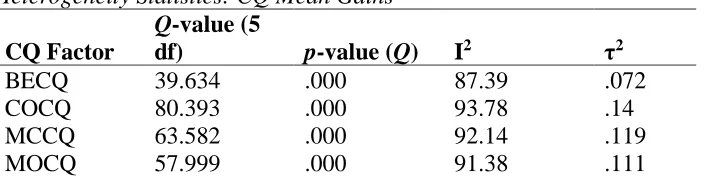
Table 4.2 Heterogeneity Statistics: CQ Mean Gains ... 84
Table 5.1 Mean Effect Sizes and Confidence Intervals Ranked: CQ x XP ... 91
Table 5.2 XP x CQ: Heterogeneity Statistics... 91
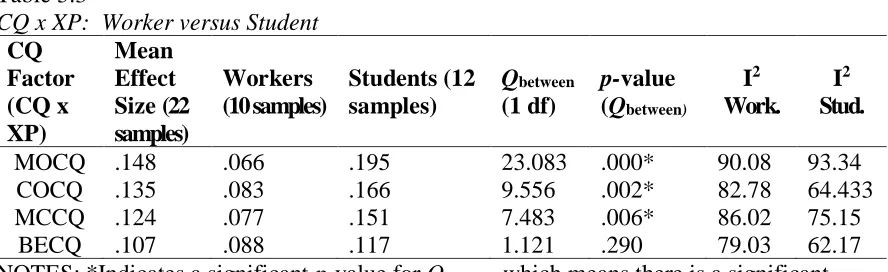
Table 5.3 CQ x XP: Worker versus Student ... 93
Table 5.4 CQ x XP: Home versus Host Country Context ... 95
Table 5.5 CQ x XP: High versus Low PD... 97
Table 5.6 Mean Effect Sizes, Confidence Intervals, Heterogeneity: XP x Outcomes ... 98
Table 6.1 TP x CQ: Mean Effect Sizes and CIs for Correlations... 105
Table 6.2 TP x CQ: Heterogeneity Statistics... 106
Table 6.3 TP x CQ: Home vs Host as Moderator Variable ... 107
Table 6.4 Mean Effect Sizes and Confidence Intervals Ranked: CQ x GA ... 110
Table 6.5 GA x CQ: Heterogeneity Statistics ... 112
Table 6.6 Mean Effect Sizes and Confidence Intervals Ranked: CQ x IA ... 114
Table 6.7 IA x CQ: Heterogeneity Statistics ... 116
Table 6.8 Mean Effect Sizes and Confidence Intervals Ranked: CQ x WA ... 118
Table 6.9 WA x CQ: Heterogeneity Statistics... 119
Table 7.1 Mean Effect Sizes and CIs for Correlations between CQ Factors ... 122
Table 7.2 Heterogeneity Statistics for Correlations between CQ Factors ... 123
Table 7.3 Workers versus Students as Moderator Variable ... 125
Table 7.4 Home versus Host Country as Moderator Variable ... 126
Table 7.5 Low and High Power Distance Study Contexts as Moderator ... 127
Table 7.6 High and Low PD Country Natives and Expatriate: Four Sets of Moderators... 129
LIST OF FIGURES
Figure 1.1. Basic Conceptual Model: Connecting Thoughts and Actions ... 2
Figure 1.2. Developing Knowledge Assets in the GKE ... 10
Figure 1.3. Cultural Intelligence as Individual Capacity for Success in GKE: Research Model... 13
Figure 2.1. CQ Factors and Influences Mapped onto Basic Conceptual Model... 22
Figure 2.2. The Nomological Network of Cultural Intelligence, from Ang & Van Dyne, 2008. ... 31
Figure 2.3. Countries in which 56-sample Pool were Conducted with Sample Size... 49
Figure 2.4. Empirically-Investigated Variables for Meta-Analysis in Chapters 4-7 ... 51
Figure 7.1. MOCQ x BECQ Funnel Plot ... 136
Figure 7.2. MOCQ x COCQ Funnel Plot ... 136
Figure 7.4. MCCQ x BECQ Funnel Plot ... 137
Figure 7.5. MCCQ x COCQ Funnel Plot ... 138
Figure 7.6. BECQ x COCQ Funnel Plot ... 138
Figure 8.1: Synthesized Concept Map and Empirical Model of Mean Correlations between Antecedents and Outcomes of CQ with Significant Moderators ... 143
CHAPTER 1: INTRODUCTION “Think and Do” (NC State University Brand).
The red flags are prominently hung on light poles throughout all of North Carolina State University’s campuses; the thin, white capital letters are oriented vertically, causing the reader to change their visual perspective to absorb the imperative: THINK AND DO. Those three words reflect the underlying purpose and value of an NC State education: “We invest in outcomes that serve the greater good. We pursue research with purpose. Our work results in clear, tangible, meaningful applications. We teach in order to make better thinkers who transform ideas into reality” (2017, https://brand.ncsu.edu/think-and-do/). Per the university’s dedicated website, “The NC State brand is the constant connection between thought and action. Each drives the other, always moving together” (2017,
https://brand.ncsu.edu/think-and-do/). Think-and-do captures this dynamic as an adaptive process.
1.1: Concept: Connecting Thinking and Doing
best when learning considers their previous experiences and when they feel like equal partners in the learning process; and they are only motivated to learn what they believe they need to learn and when they can connect the learning to their goals (Knowles, Swanson, & Holton, 2011). These assumptions have guided my practice as a college instructor,
instructional designer, and researcher for more than a decade.
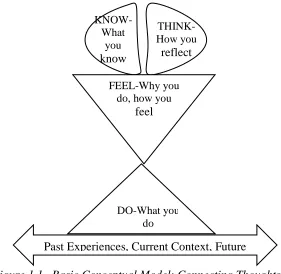
One way to conceptualize the gap between thinking and doing is to visually represent the idea. The figure below represents components of the interrelated concepts, constructs, and theories that I intend to parse out, investigate, and ultimately re-synthesize throughout the research study into what lies between thinking and doing, specifically in unfamiliar cultural contexts. The figure also stands upon the context, which represents the current unfamiliar situation in which individuals’ actions in the present are predicated upon their past actions, thoughts and feelings as well as their future goals.
Figure 1.1. Basic Conceptual Model: Connecting Thoughts and Actions
KNOW-What you
know
THINK-How you
reflect
FEEL-Why you do, how you
feel
DO-What you do
“Thinking and knowing” are represented by two halves of a circle, which, when anthropomorphized, becomes the brain, the locus of cognitive thought processes. Each half represents the logical left and the creative right brain which process and regulate different types of thoughts and ideas. “Doing” is represented by an equilateral triangle, a shape often used to represent skills-based competencies, psychological concepts, and hierarchical values. When anthropomorphized, it represents a human body from its center to its foundation, which exists on the horizontal plane that represents the context in which the individual must “do,” “act,” “behave,” “produce,” “adapt,” “be successful,” and “perform.” The missing piece between thinking and doing is represented by an inverted triangle with its pinnacle joined with that of the bottom triangle; the inverted base of the triangle represents another horizontal plane upon which the circle rests.
“Feeling” is represented as the anthropomorphized inverted triangle and is the human torso including the heart and guts, the seats of human desire, visceral responses, fear, love, and motivation. The inverted triangle is meant to represent that element which is very basic yet supremely important and may mediate between thought and action: desire. The figure evolves throughout the course of this dissertation in order to continue to represent how these three basic concepts (think, feel, do) are conceived in extant theories, constructs,
measurements, and variables that explain the ways in which adults learn how to be successful in their environment.
connections between thinking and doing as they navigate living, learning, and working in the Global Knowledge Economy. Through various methods, this study identifies the
mechanisms for producing the types of outcomes “that serve the greater good” (2017, https://brand.ncsu.edu/think-and-do/) by conducting research “with purpose” that can result in “tangible, meaningful applications,” thus transforming my own “ideas into reality” (as the NC State brand promises).
1.2: Context: Global Knowledge Economy
“The key component of a knowledge economy is a greater reliance on intellectual
capabilities than on physical inputs or natural resources”
(Powell & Snellman, 2004, p. 215).
In The Wealth of Knowledge: Intellectual Capital and the Twenty-first Century Organization, Thomas A. Stewart (2001) explains how employers can manage their
“knowledge assets,” defined as the “talent, skills, know-how, know-what, and relationships” that exist alongside financial and physical capital as tools “that can be used to create wealth” in organizations (p. 11). In the knowledge economy, each worker’s “intellectual capital” (Stewart, p. 11) is monetized and strategically managed alongside tangible resources. There is empirical evidence that organizations that invest in developing intellectual capital (also referred to as human capital) benefit financially, as shown in a meta-analysis of over 60 studies of the relationship between human capital development and firm performance (Crook, Todd, Combs, Woehr, & Ketchen, 2011). As with any form of capital, organizations must find ways to assess, predict, and enhance their intangible assets that take the form of the workers’ capacities and capabilities for producing successful outcomes. In addition to quantifying the intellectual capital, stakeholders in the global knowledge economy need help describing the “know-how” and “know-what” that comprise these knowledge assets. A key assumption for all stakeholders to embrace is that the locus of success in the Global
Knowledge Economy (GKE) is in individual adults, whether they be called workers, students, managers, expatriates, leaders—or, more simply, humans.
1.3: Disciplinary Framework: Human Resource Development
“HRD is a process of developing and unleashing expertise for the purpose of improving
individual, team, work process, and organizational system performance”
(Swanson & Holton, 2009, p. 4).
2009, p. 4). HRD scholars and practitioners assess, develop, design, and facilitate individual learning goals within organizational or societal contexts. HRD is a transdisciplinary applied field that is guided by philosophies and theories drawn from several previously-distinct fields: organization development (i.e., training needs assessment and implementation); adult education (i.e., experiential learning, andragogy, and social learning theories); developmental psychology (i.e., behavioral, cognitive, stage theories), and behavioral economics (i.e., goal orientation, human capital). Influenced heavily by systems theory and driven by a focus on ethics, the HRD profession includes from scholars who can blend different approaches to assessing and addressing individual and organizational needs (Swanson & Holton, 1997, 2009). In addition, HRD’s use of multiple theoretical lenses drives its scholars’ academic research in the interest of “thorough and systematic problem solving” as well as “working through the theory-research-development-practice cycle” expected in the field (Swanson & Holton, 2005, p. 7).
The context of learning is key for HRD professionals in that the organizational or societal performance goals drive the process of selecting appropriate ways to assess, develop, design, and implement appropriate interventions (such as training sessions, specific courses, relevant experiences) that will increase individual and organizational success. A “core theoretical assumption of the learning paradigm” of HRD is that “individual education, growth, learning and development are inherently good for the individual,” which is “drawn from humanistic psychology that stresses self-actualization of the individual” (Swanson & Holton, 2009, p. 147). As an HRD practitioner, my worldview sees the process of
meeting specific goals that add value at the individual, organizational, and even global levels. This worldview is reflected in my identification of the problem, purposes, and methods as well as my choice of constructs, measurements, and data reporting strategies for fulfilling this study’s purpose.
1.4: Statement of the Problem
Researchers from numerous disciplines such as management education, human resource management, cross-cultural relations, developmental psychology, and sociology have offered theories, constructs, and instruments to explain how seemingly intangible
intellectual and personal attributes can lead to measurable outcomes in the GKE. The field of HRD has yet to produce significant empirical research into how so-called soft skills can be assessed and harnessed to improve “system performance,” which is a central purpose of HRD practice (Swanson & Holton, 2009, p. 4).
One problem is the lack of consistent jargon or terminology to capture the constructs of interest. A construct, according to Crohnbach and Meehl, (1955) is “some postulated attribute of people, assumed to be reflected in test performance. In test validation the
construct such as “personality” that may refine the understanding of how to measure or predict outcomes. This distinction is important in this study investigating cultural intelligence as a construct that captures the concepts that reflect individual capabilities in the GKE.
1.5: Desired Outcomes in the GKE
In most organizational settings, success is quantified by analyzing observable output in various forms: number of widgets produced, supervisor observation and assessment, written exams, ability to replicate a process, number of clients procured, and so on. Essentially, what you do matters more than how you do it—even less important in these settings is why you do it. As long as the accepted performance measure shows success, most stakeholders perceive little need to delve into the process(es) that drove the widget-master to have such “high numbers” or the straight-A student to pull it off every time.
HRD theory and practice” conduct a thorough analysis of existing literature in order to synthesize findings into identifiable, relevant, and interrelated constructs.
1.6: Overarching Conceptual Framework: Systems Theory
Figure 1.2. Developing Knowledge Assets in the GKE
1.7: Construct of Interest: Cultural Intelligence
“Zen-like willingness to accept not knowing (confusion acceptance) that will then allow the sojourner to better evaluate the situation” (Brislin, Worthley, & MacNab, 2006, p. 49). In their quest for successful outcomes, the high-CQ person combines confusion acceptance with “a desire to eventually understand” so as to “become more effective” (Brislin, Worthley, & MacNab, p. 50).
The four measured variables that comprise the latent construct Cultural Intelligence each represent a different aspect of the process an individual undergoes when demonstrating successful outcomes in intercultural settings. CQ is comprised of four variables: behavioral cultural intelligence (BECQ), which demonstrates the ability to know what to do (i.e., demonstrate culturally-acceptable verbal and non-verbal behaviors); cognitive cultural intelligence (COCQ), which reflects the knowledge of what is important about the
intercultural context (i.e., customs, social cues); metacognitive cultural intelligence (MCCQ), which captures the ability to know how to think and use knowledge to enact purposeful behaviors (i.e., reflect on any mistakes to learn from them); and motivational cultural
intelligence (MOCQ), which reflects how feelings drive or inhibit people from learning how to demonstrate the capacity to succeed when called for in an intercultural interaction (i.e., a strong desire to engage in cross-cultural experiences versus an unsolicited expatriation for work). The last two variables—metacognition and motivation—suggest internally-driven processes (the “how”) that connect what is known with what is done.
These descriptions show the theoretical and practical promises of using CQ to represent intellectual capital and to identify and measure the soft skills valued by
thus, it is in the interest of employers, educators, and HRD professionals to find ways to assess and increase individuals’ CQ. While the theoretical roots of cultural intelligence (CQ) are deep and the resulting instrument (Cultural Intelligence Scale (CQS), 2005) has
explanatory as well as predictive power, researchers have yet to produce a unified model that shows how the four factors of CQ—cognition, motivation, metacognition, and behavior— describe the know-how and know-what that comprise human capital in the GKE.
1.8: Purpose of the Study
The purpose of the current study is to explain the extent to which the four factors of cultural intelligence lead to successful performance outcomes identified by other researchers. Another purpose is to identify how previous international experience and specific contextual differences that may influence these outcomes. In addition, this study will offer a useful vocabulary to define the know-how and know-what that comprise intellectual capital in the GKE. A final goal of this study is produce a series of research based visual models showing the relationships between the four factors of CQ and outcomes.
1.9: Research Questions
The following research questions are answered through a systematic literature review and a series of statistical meta-analyses:
1) Which of the CQ factors may be increased or decreased in participants after they undergo purposeful interventions such as training, education, or cross-cultural travel? 2) Which factors of cultural intelligence are most influenced by participants’ previous
international experience (XP)?
4) What is the strength of the relationships between and among the four factors of Cultural Intelligence (CQ)—cognitive cultural intelligence (COCQ), metacognitive cultural intelligence (MCCQ), motivational cultural intelligence (MOCQ), behavioral cultural intelligence (BECQ)?
5) In what ways do grouping differences such as location of study (participants’ home versus a host country), participants’ role (worker versus student), and power distance of the country in which the study took place explain variance in the relationships between XP and CQ, between CQ factors, and between CQ and outcomes?
1.10: Preliminary Research Model
Figure 1.3 is a visual model representing this study’s proposition that individual differences lead to varying levels of cultural intelligence, which is shown as an individual’s capacity to produce desired outcomes (tangible and intangible).
Figure 1.3. Cultural Intelligence as Individual Capacity for Success in GKE: Research Model
Individual Differences
•Past
experiences--What you've done
•Education /
Training--What you've learned
CQ as Capacity in Unfamiliar Contexts
•Metacognitive CQ--how you think
•Motivational CQ--how you feel
•Cognitive CQ--what you know
•Behavioral CQ--what you do
Desired Contextual Outcomes in GKE •Intangible Knowledge
Assets
(Adjustment)--How you feel in new context
1.11: Overview of Meta-Analysis
Social science research provides useful ways to explain and predict human behavior, but the overall utility of research results to interested stakeholders is often limited by the size of the sample under investigation. Such limits often lead to researchers’ conducting multiple studies of social phenomena to add power to the findings’ usefulness as a diagnostic or descriptive tool. Most researchers do not have the resources to study thousands of people, so they use statistical methods to convey reliability of the results in the form of confidence intervals and standard deviations (for example). One way to collect a large enough sample of participants to produce generalizable results is to employ a series of data collection and analysis methods collectively known as meta-analysis. Meta-analytic methods provide the tools and means to achieve the stated goals because they allow researchers to synthesize and generalize empirical studies’ findings in order to describe, measure, and model phenomena of interest (Card, 2012; Lipsey & Wilson, 2001; Littell, Corcoran, & Pallai, 2008; Wilson, 2001).
questions best answered by meta-analysis can cross “how” and “why” phenomena occur (Card, 2012).
1.11.1: Why Conduct Meta-Analyses
These techniques also allow researchers to conduct iterative analyses to build and test theoretical models. Card (2012) explains that the goals of meta-analysis extend beyond simple “integration” of theories and variables; rather, “meta-analysis is a powerful tool to evaluate variables and constructs to inform theoretical concepts” (p. 302). In meta-analyses, the researcher’s focus can include identifying “key directions for future conceptual,
methodological, and empirical work” (p. 17). The power of using meta-analytic methods is the capacity to calculate standard effect sizes representing the magnitude and direction of variables deemed worthy of meta-analysis through systematic literature review. The acceptable number of studies for a meta-analysis can range from two to hundreds (Card, 2012; Littell, Corcoran, & Pillai, 2008; Wilson, 2001). An array of meta-analytic data analysis methods also allows researchers to test the relationships between variables of interest and to create visual models of the findings. Ultimately, these can become useful instruments for future social science research of the phenomena of interest.
1.11.2: How to Conduct Meta-Analyses
associations such as the correlation coefficient (r); means and standard deviations; algebraic equivalency formulas (t-tests); and exact probability values for t-tests (Card, 2012; Lipsey & Wilson, 2001; Wilson, 2010). I used the computer software Comprehensive Meta-Analysis, which has tools to conduct numerous statistical procedures that include defining sets of covariates, testing multivariate models, investigating multiple outcomes, and plotting each study’s potential for publication bias. Chapter 3 includes more details about effect sizes and meta-analytic methods, including modeling mean effect sizes.
1.11.3: What to Meta-Analyze
In this study, I employ multiple meta-analytic methods for identifying, selecting, collecting, recording, coding, categorizing, transforming, analyzing, interpreting, and explaining relevant data to explain how experience and CQ lead to successful outcomes. These data can be located in studies that are empirical, study the same constructs, have findings that can be configured in a comparable statistical form, and are comparable given the research questions at hand (Card, 2012; Lipsey & Wilson, 2001; Wilson, 2010). Chapter 2 of this manuscript describes selection criteria for identifying relevant studies as well as search methods and variables identified for meta-analysis.
meta-analyses in all phases is following replicable steps that are published along with the analytic results.
1.12: Conclusion
Chapter 2 constructs the landscape of research on cultural intelligence and relevant factors identified and used in this study. First, I present and overview of the theory, concept, and construct of cultural intelligence before describing the four variables measured by the Cultural Intelligence Scale (behavioral CQ, cognitive CQ, metacognitive CQ, and
motivational CQ) (CQS, 2005). Next, I provide an overview of empirical literature that investigates the relationship between and among CQ factors. I describe the processes for identifying, selecting, and coding study and sample data before presenting a thorough systematic review of the number and nature of studies to include in the series of analyses reported in Chapters 4 through 7. Chapter 3 explains the methodology of meta-analysis, focusing on the overall purpose and value and providing an overview of research designs within the field of meta-analysis that are employed in this series. Chapter 3 also explains different meta-analytic models including fixed-effects and random-effects models of variance and building synthesized path models as they relate to this study. To answer the five research questions, Chapters 4 through 7 report a series of meta-analyses identified at the end of Chapter 2 following the MARS template. Chapter 8 synthesizes the findings
CHAPTER 2: SYSTEMATIC LITERATURE REVIEW
“A ‘synergy’ among existing studies may lead to a kind of Gestalt in which the synthesized model is greater than the sum of its separate parts”
(Becker & Schram, 1994, p. 360).
While a typical literature review presents a broad overview of extant theories and empirical results within a specific subfield of inquiry, a systematic review of the literature takes a more thorough approach to identifying and explicating extant literature with the goal of attaining full coverage (Card, 2012; Littell, Corcoran, & Pillai, 2008). Oftentimes, the goal of a systematic review is to serve as the first step in conducting statistical meta-analyses of variables identified in the review (Card; Littell, Corcoran, & Pillai). Then, the researcher parses out all significant results with the goal of “providing unbiased summaries of empirical research” and discovering if the systematic review should contain quantitative meta-analysis (Littell, Corcoran, & Pillai, p. 27). A systematic review of empirical findings is included in this chapter after a broader narrative review of CQ to explain how variables were selected for inclusion in the meta-analyses reported in Chapters 4 through 7.
Card (2012) explains the difference in the research contributions of narrative
• Greater transparency
• Detection and reduction of bias
• Better estimates of population parameters
• Ability to assess outcomes in multiple domains, and
• Systematic accounts for moderators (participant, treatment, or study design characteristics) that influence outcomes. (Littell, Corcoran, & Pillai, p. 27) For these reasons, I have used a qualitative systematic review of the literature on cultural intelligence to identify constructs for empirical investigation in this study.
2.1: Overview of Cultural Intelligence (CQ)
2.1.1: Cultural Intelligence as a Capability
By defining CQ as a “capability” to function in multiple cross-cultural settings rather than as a skill or attribute, Earley and Ang (Earley, 2002; Earley & Ang, 2003) emphasize “a person’s potential to be effective across a wide range of cultural contexts” rather than within “particular cultural and ecological contexts” (Ang, Rockstuhl, & Tan, 2014, p. 3). An individual’s “capability” to be effective at something reflects his or her possessing and demonstrating a necessary combination of technical skills (“functional competence”) and social abilities (for example, “to communicate a vision”), according to Smallwood and Ulrich (2004). CQ reflects an individual’s “ability to learn” how to call upon learned skills and accumulated social abilities during interactions with culturally-different others in order to minimize the probability of “intercultural misunderstandings, tensions, and conflicts” that negatively impact their adaptation, adjustment, and, ultimately, learning capability (Ang & Van Dyne, 2008, p. 4). Thus, cultural intelligence reflects an individual’s ability to not only know a range of culturally-appropriate skills, but also to select and utilize contextually-appropriate skills when interacting with culturally-different others, especially in the global workplace.
The culturally-intelligent global worker, for example, is comfortable interacting with colleagues from multiple countries and has the capacity to adapt to different expectations that arise in unfamiliar settings with a minimum of psychological discomfort that could
2012, p. 128). A key concept underlying cultural intelligence is “adjustment,” whether it refers to the psychological feeling of comfort in an unfamiliar setting or whether it means the behavioral adjustments that are expected to reflect the individual’s new cultural expectations rather than one’s own. Brislin, Worthley, and MacNab (2006) explain that cultural
intelligence can be “increased with experience, practice, and a positive attitude toward lifelong learning” (p. 42) that allows an individual to develop the capacity to function effectively and adapt to differences in cross-cultural settings. The development of the know-how and know-what of CQ is of particular interest to HRD professionals whose purpose is to design interventions meant to increase individuals’ capability to produce measurable
outcomes that reflect individual and organizational success in the GKE. When examining whether studying CQ as a capacity is “credible” or even ethical in a global climate wherein one culture’s values should not be seen as preferred to another, especially American values, Hampden-Turner and Trompenaars (2006) explain, “We grow more culturally intelligent as we study circumstances and cultural responses to these” (p. 62).
2.1.2: Cultural Intelligence as a Construct
Cultural intelligence (CQ) is a construct that is comprised of four factors as defined by Earley (2002)—behavioral (BECQ), cognitive (COCQ), metacognitive (MCCQ), and motivational (MOCQ)—that represents an individual’s overall acuity in negotiating
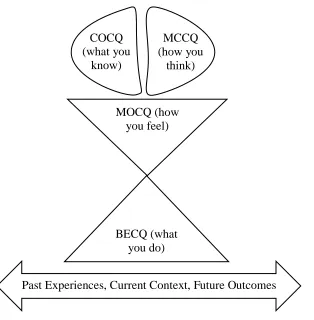
with the high-CQ individual. Figure 2.1 shows how the four factors align with the conceptual model (Figure 1.1) showing thinking and doing connected by feeling.
Figure 2.1. CQ Factors and Influences Mapped onto Basic Conceptual Model
2.1.2.1: Cognitive CQ (What you know). COCQ refers to a person’s culture-specific knowledge of behaviors, norms, customs, and expectations and can be developed through “educational and personal experiences” (Ng, Van Dyne, & Ang, 2009, p. 574). COCQ can be conceptualized as the “know-what” required for success—it reflects a person’s capacity to know what to “think and do.” Such knowledge “forms the basis for
comprehending and decoding the behavior of others” (Thomas et al., 2008, p. 128), which leads to effective cross-cultural interactions. Cultural intelligence is characterized by
COCQ (what you
know)
MCCQ (how you
think)
MOCQ (how you feel)
BECQ (what you do)
“cognitive flexibility” that “may require abandoning pre-existing conceptualizations of how and why people function as they do” (Earley, 2002, p. 275). Again, while cultural
intelligence as a construct is purposefully “culture-free” (Ang, Rockstuhl, & Tan, 2014, p. 3), having specific information about other cultures (including the specific cultural context in which they are interacting) improves global travelers’ and workers’ cross-cultural
understanding.
2.1.2.2: Metacognitive CQ (How you think). MCCQ requires the “cognitive processes of self-reflection and person perception or inference of mental states in culturally diverse others” (Ang, Rockstuhl, & Tan, 2014, p. 23) by the individual in order to develop the ability to interact effectively in new cultural contexts and “step beyond their existing knowledge in order to fully understand what is going on around them” (Earley, 2002, p. 277). MCCQ reflects the concept that successful adults connect how they think with what they do in the GKE through purposefully-planned actions. The culturally-intelligent individual has the potential to use “meta-strategies” (Earley, 2002, p. 276) to use existing knowledge as a means of anticipating and understanding cultural similarities and differences as well as having “accurate expectations” (Ng, Van Dyne, & Ang, 2009, p. 574) of intercultural interactions based on that knowledge. High metacognitive CQ is also characterized by an individual’s inductive reasoning abilities as part of the metacognitive capability “required in a new culture to [put] together patterns into a coherent picture even if one doesn’t know what this coherent picture might look like” (Earley, 2002, p. 277).
2.1.2.3: Motivational CQ (How you feel). MOCQ reflects an individual’s desire to learn about and function in culturally-different contexts while adjusting behavior
assist them with enacting the know-how and know-what required to connect thinking and doing in the GKE. The individual with high motivational CQ has the capacity to withstand difficult cross-cultural situations and to learn how to more effectively navigate them. It can be intuited that an individual who does not desire to interact with culturally-different others in a way that is perceived as “appropriate” or “effective” would be described as having low motivational CQ, even if the person has appropriate cultural knowledge and behaviors.
The culturally-intelligent individual expects some level of stress and confusion when entering new situations and accepts the challenge of learning how to function in an
unfamiliar context; this willingness to face potential adjustment problems is driven by “the motivation for eventual understanding” (Brislin, Worthley, & MacNab, 2006, p. 49) by the individual. It is argued that the culturally-intelligent “sojourner” combines confusion acceptance with “a desire to eventually understand” so as to “become more effective” (Brislin, Worthley, & MacNab, p. 50). The source and impact of such motivation are of particular interest to researchers who investigate the intrinsic and extrinsic indicators of individual successful outcomes.
Cultural Agility: Building a Pipeline of Successful Global Professionals, she describes “the process of becoming more culturally intelligent” (p. 128) as “changing one’s behavior to fit the host culture” and says performing a behavioral adjustment is “different from emotional adjustment and feeling of psychological comfort with the new behavior” (p. 128). She describes a Pakistani worker’s eventual adjustment to using the American handshake. First, he needed to cognitively understand the differences between his accustomed greeting and the context-appropriate handshake, and then he needed to practice physically enacting the new greeting when the situation arose; after “engaging mind, body and heart” (p. 128), as she describes it, the worker became more comfortable over time which resulted in better overall performance in the workplace.
2.1.3: Cultural Intelligence across the Disciplines
Within two years of Earley and Ang’s (2003) introduction of the theoretical concept of cultural intelligence into the academic and business worlds as a new way of understanding what can predict or increase global workers’ and students’ abilities to adapt and succeed in non-native cultures, two measures of CQ emerged: the 20-item Cultural Intelligence Scale Self-Report (see Table 2.2) and the 20-item Cultural Intelligence Scale Observer Report (CQS: Cultural Intelligence Center, 2005). Researchers soon began conducting medium and large scale empirical studies assessing CQ as an antecedent, outcome, and as a moderator and mediator between various antecedents and outcomes.
organization management who often focus on interventions to improve CQ (e.g., Group & Organization Management); cross-cultural management (e.g., International Journal of Cross-Cultural Management); organizational behavior (e.g., Organizational Behavior and Human Decision Processes); management education (e.g., Academy of Management Learning and Education); and general business (e.g., Journal of World Business). Researchers in the discipline of Psychology have studied CQ by most often linking personality types and psychological processes that lead to CQ; sub-disciplines that have contributed to the overall psychological understanding include applied psychology (in the journal Applied Psychology, for example); social psychology (e.g., Journal of Applied Social Psychology); cross-cultural psychology (e.g., Journal of Cross-Cultural Psychology); and a hybridized (or transdisciplinary) field called managerial psychology (e.g., Journal of Managerial Psychology). The third main discipline that has embraced CQ studies is
International Relations, which has investigated the ways in which people function in different cultural settings with an interest in predicting how intercultural exchanges can become more effective (i.e., International Journal of Intercultural Relations, Career Development
International). This dissertation hopes to provide information of use to other researchers and practitioners from the many fields that study CQ.
2.1.4: The CQS: 20-item Cultural Intelligence Scale
In the studies that have been conducted in various disciplines using the 20-item CQS (Table 2.1), all of them validated the four-factor structure, thereby reinforcing my choice of CQS as the central instrument for investigating the effect of CQ on successful outcomes.
norms, and taboos. The 20-item CQS Self-Report (Cultural Intelligence Center, 2005) contains questions that reflect the types of cultural knowledge (i.e., laws, religious beliefs, non-verbal behavior) the high-CQ individual utilizes in the process of selecting context-appropriate behaviors. The six questions assessing the cognitive CQ subscale provide a clearer understanding of what, theoretically, should be known by high CQ individuals about other cultures. They include understanding how cultural systems such as legal, economic, and marriage function in the context; understanding rules of appropriate language and nonverbal behavior; and being familiar with and ostensibly appreciative of culturally-local religions and arts.
2.1.4.2: Measuring MCCQ (know-how). By assessing metacognitive CQ,
researchers can get a clearer understanding of the ways individuals with high metacognitive CQ are conscious of how they utilize their knowledge in cross-cultural interactions. High CQ people adjust their knowledge and are conscious of how they use this knowledge when in the presence of culturally-different others. The CQS questions about metacognition reflect the general process of the ways the high-CQ individual uses cultural knowledge.
2.1.4.3: Measuring MOCQ (know-how). The motivational subscale of the 20-item CQS Self-Report (Cultural Intelligence Center, 2005) provides insight into how an
2.1.4.4: Measuring BECQ (know-what). The five-item behavioral CQ subscale of the CQS Self-Report (Cultural Intelligence Center, 2005) shows the expected behavioral adjustment reflective of the high-CQ individual’s interactions in different situations with culturally-different others. High CQ people are expected to change their verbal behavior in terms of tone, pauses, and rate of speaking as well as to change nonverbal behavior including using appropriate facial expressions. These statements highlight the expectation that an individual with high CQ be aware of “the situation” and be able to frequently call upon his/her cultural knowledge and motivations in order to enact purposefully-designed behaviors.
Table 2.1
Questions on the 20-item Cultural Intelligence Scale
CQ-Metacognitive Strategy:
MC1 I am conscious of the cultural knowledge I use when interacting with people with different cultural backgrounds.
MC2 I adjust my cultural knowledge as I interact with people from a culture that is unfamiliar. MC3 I am conscious of the cultural knowledge I apply to cross-cultural interactions.
MC4 I check the accuracy of my cultural knowledge as I interact with people from different cultures.
CQ-Cognitive Knowledge:
COG1 I know the legal and economic systems of other cultures. COG2 I know the rules (e.g., vocabulary, grammar) of other languages. COG3 I know the cultural values and religious beliefs of other cultures. COG4 I know the marriage systems of other cultures.
COG5 I know the arts and crafts of other cultures.
COG6 I know the rules for expressing non-verbal behaviors in other cultures.
CQ-Motivation:
MOT1 I enjoy interacting with people from different cultures.
MOT2 I am confident that I can socialize with locals in a culture that is unfamiliar to me. MOT3 I am sure I can deal with the stresses of adjusting to a culture that is new to me. MOT4 I enjoy living in cultures that are unfamiliar to me.
MOT5 I am confident that I can get accustomed to the shopping conditions in a different culture.
CQ-Behavior:
BEH1 I change my verbal behavior (e.g., accent, tone) when a cross-cultural interaction requires it. BEH2 I use pause and silence differently to suit different cross-cultural situations.
2.2: Nomological Network of Cultural Intelligence
In addition to having been studied by researchers from across the globe, many disciplines have embraced different aspects of investigating and explaining an individual’s CQ. Earley (2002) argues that previous research on effective cross-cultural interactions has failed to “capture the complexity of understanding arising from intercultural encounters and travels” (p. 272) that develops an individual’s effectiveness at adapting to and understanding culturally-different others with whom they interact. Further, it is essential to understand the “intrapersonal and interpersonal processes” (Earley, 2002, p. 275) underlying an individual’s development and demonstration of cultural intelligence.
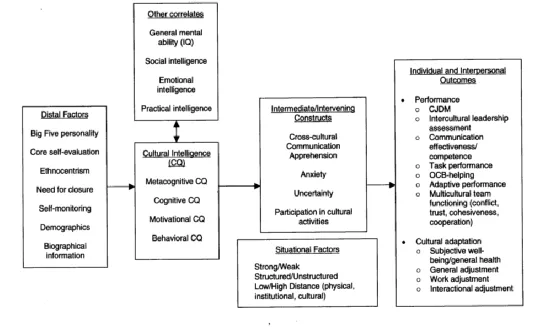
In their Handbook of Cultural Intelligence: Theory, Measurement, and Applications, a text that inspired a decade of follow-up studies analyzed in this series of meta-analyses, Ang, Van Dyne, and Koh (2008) published a nomological network (Figure 2.2) showing 37 constructs that had been shown to relate to CQ. Mapped onto a systems framework, the constructs are separated into distal factors (or antecedents) of CQ; situational factors (or contextual influences); intermediate or intervening constructs (or mediators); other correlates of CQ; and, finally, individual and interpersonal outcomes. Card (2012) explains that the “interplay between theories and meta-analytic results [can be understood] in terms of the metaphor of the ‘nomological net’ wherein the knots of the net represent constructs, and the webbing among the knots represents associations among the constructs” (p. 300). It is important to recognize that specific individual attributes may influence the four factors in different ways that are not explored in this series of meta-analyses.
dimensions of CQ represents a unique concept that explains different aspects of a person’s cultural intelligence, such as how they think (metacognition), how they feel (motivation), what they know (cognition), and what they do (behavior) in cross-cultural interactions. The lack of separation among the four factors of CQ is a concern for researchers who are
interested in a more tightly-woven, carefully-designed, empirically-tested nomological net rather than a broadly-cast, loose one. The fact that each of the four unique factors can be isolated and examined independently is one of the most salient aspects of Earley and Ang’s (2002, 2003) theory and serves as the basis of their widely-validated instrument, yet the nomological network fails to capture other researchers’ findings that tend to formulate hypotheses and report results about CQ by factor. To date, no researchers have modeled the relationships among the four factors to examine the contribution of each to overall CQ. This study is the first to model the relationships among factors as well as the
Note: General Permission for use granted by authors for research purposes per Ang & Van Dyne, 2008
2.3: Methods of Locating and Selecting Empirical Studies using the CQS To conduct a meta-analysis, the first step researchers take after posing research questions is to identify selection and exclusion criteria for the empirical studies they locate with the data needed for the statistical meta-analysis. The next section of this chapter provides details about the inclusion and exclusion criteria, the literature search strategy and results, and the final selection of 56 empirical studies to systematically review to determine which relationships are ripe for quantitative meta-analysis.
2.3.1: Study Inclusion and Exclusion Criteria
The selection of study eligibility criteria is guided by the research questions and can fall under broad categories suggested by Lipsey and Wilson (2001): distinguishing features of a study such as how specific constructs are defined or employed; research respondents, such as specific participant types or demographics; key variables such as covariates or outcomes; research methods such as pre- post-test comparisons; cultural and linguistic range such as site location; time frame; and publication type such as peer-reviewed academic journals or unpublished manuscripts. Of those seven suggested categories, my specific selection criteria fit into most as discussed below.
• Research respondents. One goal of the current study is to synthesize results from studies that surveyed a diverse range of population demographics, including country of origin, student versus worker status, and familiarity with cultural context (native versus expatriate or home versus host country).
representation has the potential to increase generalizability, to appeal to a wider range of stakeholders, and will serve as a grouping or moderator variable.
• Key variables. Because the study’s purposes are to examine the relationships between CQ factors and between CQ and outcomes, the first criterion for my initial selection of studies was that the study must report the variables for each of the four CQ factors measured with the 20-item Cultural Intelligence Scale (CQS, 2005). Other studies of interest include those that analyze variables listed on the refined nomological network summarized on Figure 2.2. Studies that include other variables of interest such as status (worker versus student), location of study (country), prior intercultural experience, and context of the study (home or host country) are also included in selection criteria.
• Research methods. This series of meta-analyses includes only those studies that have measured associations between the four factors of CQ using the 20-item CQS Scale and outcome variables. Selected studies included a correlation matrix and many included means, standard deviations, and Cronbach’s alphas for instrument reliability.
• Time frame. Because my primary selection criterion is studies that utilize a specific instrument that was published in 2005, selected studies all have been conducted and published after that date.
2.3.2: Study Search Strategies and Results
The following academic databases, each of which includes a collection of articles written by academics from diverse disciplines and applied fields, were searched: ERIC, Web of Science, Academic Search Complete, PsycINFO, PsycARTICLES, Business Source Complete, and JSTOR. Google Scholar was also searched. Using advanced search methods, I sought empirical sources with the exact phrase “cultural intelligence scale” and limited results to those published in English after 2005. I downloaded all citations into a spreadsheet and sorted my results, eliminating duplicates. I then read each abstract and made further refinements to the collection of studies eligible for inclusion in this series of meta-analyses of CQ. Table 2.2 summarizes the literature search process, including databases searched, keyword combinations, and the numbers of results returned. After the electronic search was completed, I conducted what Card (2012) calls a “backward search” (p. 49). Starting with the most recent publication, I searched the reference list in each of my pool of sources. 2.3.3: Excluded Studies
At the end of the thorough search process, I found 87 empirical studies that reported the results of the CQS and other variables. The full text of all 87 studies were downloaded into a folder and reviewed for adherence to selection criteria. Studies that did not include all four factors’ correlations, did not include a correlation matrix, or investigated replicated samples were eliminated. After reviewing the 87 studies’ reported data more closely, I rejected over 30 for various reasons (listed in Appendix B), including the following:
• Studies did not actually measure all four factors of CQ
• Studies utilized a modified version of the CQS, including truncated versions
• Studies were conducted by the same authors and reported data on the same population (sample size and means were assessed for identifying duplicate samples). In cases of duplication, I selected the study with the highest number of variables on the
correlation matrix.
Table 2.2
Electronic Search Strategies and Results for Studies Measuring Cultural Intelligence
Databases
Searched Keywords
Number of Relevant Results
Number of Unduplicated Results Web of Science “cultural
intelligence” and English language since 2005
371 47
Academic Search Complete—includes Business Source Complete, ERIC, PsycArticles, and PsychInfo “cultural intelligence” and English language since 2005
149 30
Google Scholar academic journals only “cultural intelligence” in article abstract
147 7
NCSU library Summon general article search
“cultural intelligence scale” found
anywhere in source
787 3
TOTAL: 87 empirical studies available for coding, review, and meta-analysis
2.3.4: Selected Studies for Systematic Review and Meta-Analyses
lists all studies that are analyzed in the qualitative systematic review reported in the balance of this chapter, the data from which are quantitatively analyzed using meta-analytic
techniques outlined in Chapter 3 and reported in Chapters 4-7. Each series of meta-analyses in this report is conducted with sets of studies from within the relevant pool of 56 samples. Each of the 56 samples was assigned an identifying “tag” which, as is typical in meta-analytic reports, is designated with the letter k and a number (e.g., k1 is Al-Dossary, 2016). Appendix A lists the studies in numerical order and publication information.
2.3.5: Coding Study Characteristics
Appendix C lists all coded aspects of the 56-sample pool identified for meta-analysis in Chapters 4 through 7. In addition to recording standard publication information, I encoded the following study characteristics for each selected source:
• Study location (country)
• Number of unique samples in each selected published study
• Sample sizes
• Participants’ role: Worker vs. Student
• Context of study (home vs. host country)
• Which other variables were reported, including measurement instruments
• Whether study investigated pre- and post-training CQ means
• Supported hypotheses
and its four measured variables—behavior, cognition, metacognition, and motivation—has the potential to serve researchers and practitioners as predictor and outcome is what adds theoretical power to the selection of CQ as a proxy for intellectual capital and empirical power to the selection of CQ for deeper analysis using meta-analytic methods.
A simple count of the number of supported hypotheses by CQ factor from the 56-sample pool shows that motivational CQ (MOCQ) had the highest number of empirically-supported hypotheses, followed by metacognitive CQ (MCCQ), then by behavioral CQ (BECQ), and, finally, by cognitive CQ (COCQ).
Table 2.3
Total Number of Supported Hypotheses in 56-sample Pool by CQ Factor CQ Factor Number of Supported
Hypotheses
MOCQ 69
MCCQ 45
BECQ 42
COCQ 39
Sections 2.4.1 through 2.4.3 summarize the hypotheses that support the factors that the model of the nomological network (Figure 2.2) postulates as antecedents (called distal factors and other correlates on the model), intervening factors (and situational factors per the model), and individual / interpersonal outcomes (divided into performance and adjustment outcomes on the model).
2.4.1: Antecedents of CQ
studied—Big Five personality (B5); general mental ability (IQ), emotional intelligence (EQ), and biographical information including previous international experience (XP).
2.4.1.2: Emotional intelligence (EQ). Of the 56 samples identified for inclusion in this series of meta-analyses of the four factors of CQ, 10 investigated the relationship between CQ and EQ. Emotional intelligence is a construct that reflects the ways an individual’s “social and cognitive functions [are] related to the expression, regulation and utilization of emotions” (Schutte, Malouff, Hall, Haggerty, Cooper, Golden, & Dornheim, 1998, p. 168). Unlike Big Five measurements, the different instruments to measure EQ name factors differently, which makes conducting a meta-analysis of this construct difficult. Schutte’s (1998) instrument measures appraisals of emotions, mood regulation, social skills, and utilization of emotions, whereas the ECI by Boyzatzis and Goleman (2002) measures self-management, relationship management, social awareness, and self-awareness. Lennox and Wolfe (1984) include self-monitoring as an EQ factor. Whatever the measurements are called, EQ is comprised of two categories: interpersonal intelligence, which is the “ability to understand other individuals’ emotions and intentions,” and intrapersonal intelligence, which is “the ability to know one’s own emotions” (Schutte, p. 168). Of the 10 studies that
investigated the relationship between CQ and EQ, only four reported significant findings: it was found that self-monitoring was significantly related to all four factors (Moon, Choi, & Jung, 2013), that self-awareness was positively related to BECQ and MCCQ (Moon, 2010), and that interpersonal competencies of CQ (social awareness and relationship management) have more explanatory power in predicting CQ than intrapersonal competencies of EQ (self-awareness and self-management) (Moon, 2010).
Song (2012) found that EQ positively moderated the relationship between CQ and cross-cultural adjustment—the higher the person’s EQ, the stronger were the effects of CQ on cross-cultural adjustment. The last two findings reinforce the choice of CQ as the construct that reflects an individual’s capability for successful outcomes and suggest that it is not necessary to conduct a statistical meta-analysis of EQ’s relationship with CQ.
2.4.1.3: General mental ability (IQ). Of the 56-sample pool, only three studies investigated the relationship between CQ and IQ, which is a measurement reflecting a person’s general mental ability (Ang et al., 2007; Ang, Van Dyne, & Koh, 2008; Oolders, Chernyshenko, & Stark, 2008). However, none of the studies found a significant relationship between CQ and IQ, thereby suggesting that IQ should be removed from the nomological network and certainly does not warrant investigation using meta-analytic methods.