1
MASTER THESIS
LEARNING
THROUGH WORK:
AN EXPLORATIVE
STUDY INTO
NURSES'
ON-THE-JOB LEARNING
BEHAVIOR
Freya Ernst
S1019104
FACULTY OF BEHAVIORAL SCIENCES COMMUNICATION STUDIES
Master track: Corporate Communication
EXAMINATION COMMITTEE
Prof. dr. M.D.T. de Jong P. Cornelissen, MSc.
2
Abstract
Lifelong learning is essential for nurses to provide quality patient care. Additionally, training and education is needed to be able to adjust to current societal changes, such as the cutbacks in health care and the ageing society. Learning on the job is thereby seen as a promising and more efficient alternative to formal training programs. Researchers are in agreement that the learning behavior of employees on their job, or in other words, their learning strategies, are influenced by both their individual learning styles as by the perceived learning situation (Berings et al., 2005; Honey & Mumford, 1986; Kolb, 1984). To support nurses, and integrate learning and work, a better
3
Preface
This report is my master thesis for the program Communication Studies at the University of Twente and forms the end of six years of college. Although writing my thesis was the most difficult and time consuming part of my studies, it is finally done! I am satisfied with the end product and can honestly say that I learned a lot from this process and also from my internship at Noordhoff Health. For the future, I hope to contribute to the learning of others and to also remain a „student‟ myself as long as I will live. For now, there are a couple of people I would like to thank for their support.
First, I would like to thank my two supervisors for their feedback and guidance throughout this project. Thanks to Prof. Dr. M.D.T. de Jong, I got back on track and was able to clearly define my subject. In addition, I would like to thank my second supervisor, P. Cornelissen, who provided feedback when I really needed it and gave practical tips to improve my thesis.
Besides my supervisors, I would like to thank all of the awesome nurses who participated in my study and were able to find time in their busy schedule for me.
A special thanks goes out to Marijke Broekhuis for reading and revising my report and being critical when necessary. Also, thanks for the continuous support during my project, the long talks and endless wine sessions. Furthermore, I would like to thank Symen-Sjoerd Hofman for his love,
friendship and his encouraging words and my family for their help, support and wisdom.
Last but not least, I‟d like to thank all the people whom I met during my time at the university. Without you, my student life wouldn‟t have been so amazing.
4
Table of Content
1. Introduction ... 5
2. Theoretical Framework ... 8
2.1. Defining learning on the job ... 8
2.2. Operationalizing learning on the job: learning style theories... 10
2.3. Individual factors influencing learning styles ... 14
2.4. The impact of situational factors on the learning strategy ... 18
2.5. Conclusion theoretical framework ... 19
3. Study 1: Questionnaire ... 21
3.1 Research Design ... 21
3.2. Results ... 26
3.3. Discussion Study 1 ... 38
3.4 Conclusion Study 1 ... 40
4. Study 2: Interviews ... 41
4.1. Research Design ... 41
4.2. Results ... 45
4.3 Discussion Study 2 ... 57
4.4 Conclusion Study 2 ... 59
5. General Discussion ... 60
References ... 63
Appendices ... 70
Appendix A - Control analyses SPSS ... 70
Appendix B - Original Scales Questionnaire ... 72
Appendix C - Complete questionnaire Study 1 ... 74
Appendix D - Introduction letter interviews Study 2 ... 83
Appendix E - Interview protocol Study 2 ... 84
5
1. Introduction
During the last ten years societal developments, such as the economic crisis and the ageing society, led to continual changes in the work environment of nurses (Van Woerkom & Poell, 2010). As a consequence of the economic crisis, the Dutch health care was obliged to make retrenchments, thereby making the health care profession more demanding. This resulted in a higher workload for nurses due to additional job tasks which were previously performed by physicians (Lambregts & Grotendorst, 2012). Mistiaen et al. (2011) examined the current and future demands and
developments for the nursing profession in The Netherlands as well as internationally. Their results indicate that the main problem is the ageing society which will lead to a growing number of elderly, and therefore an increase of elderly with comorbidity and a more complex need for care in the future. At the same time the health care of The Netherlands and other European countries face a shortage of nurses and caretakers which will only incur in the next years. In their study of retention strategies in health care, Jelfs et al. (2014) describe the future shortage of health care professionals, which is also affirmed by the European Commission (European Commission, 2012). It is predicted that this shortage will lead up to almost 1 million in the EU in the year 2020 and will have tremendous effects on the quality of prospective health care.
To be able to keep abreast of these changes, health care organizations need to develop and train internal human capital (Lammintakanen et al., 2008), in this specific case nurses.
Lammintakanen et al. (2008) explains this by stating that health care organizations are one of the most knowledge-intensive sectors in society. Health care organizations can thus be referred to as a part of the knowledge economy, where the ability of companies to survive depends on continuously creating and employing new knowledge in order to adjust to changes in the environment (Harrison & Kessels, 2004).They emphasize this by stating that knowledge is temporary and expires fast in today‟s society. Consequently, it is from utmost importance that nurses‟ knowledge remains up-to-date and that they have the possibility to learn during their career (Dee & Reynolds, 2013). Continual professional development (CPD) is therefore essential for nurses to be able to maintain and develop their knowledge, skills and competences. According to Pool, Poell and ten Cate (2013b) CPD results in a greater sense of organizational commitment, job satisfaction and reduces stress. They state that when nurses perceive a deficiency of CPD, this may lead to leaving their jobs or choosing for early
retirement. For this reason, CPD is seen as an important factor to retain nurses and minimize turnover (Jelfs et al., 2014). Hospitals already provide many learning opportunities in the form of internal or external training to ensure the professional development of their employees. A prevalent problem of these formal training programs however, is that they often have trouble conveying theoretical
knowledge to the work environment. Also, these programs are costly and frequently lead to insufficient results (Van Woerkom & Poell, 2010). Moreover, several researchers state that employees primarily learn on the job (Gijbels & Raemdonk, 2010; Poell et al., 2004; Tannenbaum, 2002).
6 seen as a promising alternative for organizations to educate their employees (Kessels, 2004). The quality of learning on the job depends on the employee as well as on the work environment (Billet, 2001). Because learning in health care is becoming increasingly self-directed, nurses can choose for themselves to participate in various learning opportunities during their work (Berings et al., 2007). But to encourage nurses to learn on the job, hospitals have to promote workplace learning by offering these learning opportunities and creating a strong learning environment (Billet, 2001). One of the major challenges for educational managers is to support nurses in employing more self-directed learning activities at work, while in the meantime taking the needs and predilections into account that exist between nurses (Pool et al., 2013a). Hence, to better support nurses, in their day to day learning at the workplace, more insight is needed in how nurses learn in their work environment.
Despite the vast amount of literature on workplace learning, little is known about the ways in which nurses actually learn on their jobs. Several researchers are in agreement that employees their personal learning preferences and capabilities, i.e. their learning styles, in combination with the perceived learning situation determine their actual learning behavior (Berings et al., 2005; Honey and Mumford, 1986; Kolb, 1984). Although there is already a small amount of research conducted about nurses and the way that they learn in the workplace, most of these studies did not explore the ways in which nurses differ in their on-the-job learning (Berings et al., 2005; Pool et al., 2013a). These
individual learning styles are important to address the personal needs and preferences of nurses (Pool et al, 2013b). In addition, more insight into general characteristics of the individual that affect on-the-job learning behavior could be beneficial for educational coordinators in order to tailor instructional designs to individual learners. Besides individual learning styles, the perceived learning situation is also regarded as a central aspect which influences the learning behavior of employees (Berings et al., 2007). A large share of research about the learning environment is concentrated on situational factors that empower or inhibit learning on the job. Nevertheless, studies examining the role of the learning situation remain scarce, have been mostly conducted in one hospital and reveal ambiguous results (Berings et al., 2006; Poel et al., 2004).
From the studies and findings described above, six insights were attained, namely: (1) To ensure the quality of patient care and adjust to societal developments, hospitals need to sustain their personnel and also be an attractive employer to work for; (2) In order to do so the enablement of lifelong learning opportunities for nurses are crucial; (3) Employees primarily learn in the workplace; (4) To support nurses, and integrate learning and work, more insight is needed how and why nurses learn on their job; (5) Few studies have focused on individual differences in on-the-job learning; (6) The role of the learning situation, and therefore the interrelation between learning styles and learning situations, is indistinct. These insights show that more knowledge is necessary about the factors that affect on-the-job-learning behavior of nurses. For this reason, this study aims to contribute to a better understanding on the way that nurses learn on the job, thereby taken into account their personal needs, motivations and preferences concerning workplace learning.
8
2. Theoretical Framework
2.1. Defining learning on the job
The nineties saw the advent of a rising attention in learning on the job from both practitioners as academics. Van Woerkom and Poell (2010) allocate this increase in interest partly to the growing costs in training of personnel which often led to disappointing results. During the last ten years interest in learning on the job further intensified, due to the emerging globalization, rapid technical innovations and earlier mentioned societal changes such as the economic crisis and the aging workforce (Van Woerkom & Poell, 2010). To be able to adjust to these changes, organizations saw learning on the job as the best solution to maintain and sustain their personnel (Kessels, 2004).
Because of the increasing attention towards this topic, many different disciplines (e.g. human resource development, psychology, sociology, organizational studies, management studies and so forth) studied learning on the job, leading to numerous variations in viewpoints and conceptualizations (Manuti et al., 2015). This is especially apparent when reviewing the abundance of terms which are used to describe learning that primarily takes place in a work context, including: workplace learning, on-the-job-learning, informal learning, non-formal learning and work-based learning (Berings, 2006). In general the term „on the job learning‟ is used for many forms of learning that occur before, during or after work, thus learning that is embedded in the ongoing work process (Streumer, 2001). To be able to study employees‟ learning behavior on the job, the concept of learning styles was developed. The basic principle of learning styles supposes that all individuals have a distinct preferred or habitual way to receive and process information (Kolb, 1984). Hence, the manner in which individuals respond to the learning environment constitutes their specific learning style (James & Gardner, 1995).
Despite the many different perspectives on this topic, literature reveals two central
characteristics of learning on the job. Discussions between disciplines about this topic mostly focus on the differentiation between formal and informal learning (Jacobs & Park, 2015) and the way that learning styles are perceived: as a state or trait (Riding & Cheema, 1991). In the following two paragraphs these defining features of learning on the job are further described. At the end of each paragraph the perspective on on-the-job-learning of this study is defined.
2.1.1. Formal versus informal learning
9 referred to as planned learning in an educational context, whereas informal or incidental learning is seen as learning that takes place in a workplace setting (Pool et al., 2013a).
The broad application of these concepts thus is cause for confusion. In general, learning at the workplace can offer both formal and informal learning activities. Jacobs and Park (2015) designed a framework of on the job learning based on the concept of formal and informal learning. In their review of the literature they summarize formal learning as planned, explicit learning activities that are designed to help employees gain knowledge and/or skills. These activities are provided by the organization, which could encompass training programs, workshops, symposia or lessons at the workplace or outside of the workplace. Informal learning occurs in situations that are not designed for learning, or were learning is not the main goal and can be for example learning from asking colleagues questions or solving a difficult problem they came across in their daily work. Therefore informal
learning is often unintended and employees are not always aware that they learn in these situations (Jacobs & Park, 2015). In the nursing profession, there are a lot of opportunities for learning organized by hospitals which do not necessarily take place outside the workplace (e.g. clinical lessons,
workshops or temporary evaluation programs). For that reason, all learning activities that are relevant for the daily work process are included in this study, which encompass both informal as formal learning activities that happen in or outside the workplace. This broad definition is also applied in the study of Berings, Poell and Simons (2005). They define learning on the job as: „‟all explicit or implicit mental and/or overt processes and activities, performed in the context of work, resulting in a fairly fixed alteration in knowledge, attitudes or skills‟‟. This study will also use the definition of Berings et al. (2005, p. 14) in order to include all work-related learning opportunities, activities and processes for nurses within the health care profession.
2.1.2. Learning styles: state or trait?
To be able to measure the various learning approaches, and thus make the ways in which employees learn more tangible, the concept „learning styles‟ became popular in the 1970‟s. Learning styles strive to clarify differences in employees‟ learning behavior (James & Gardner, 1995). Learning styles can contribute to employees‟ learning in two ways. First learning styles can make employees aware of how they learn, resulting in an increased insight into their personal strengths and weaknesses so that they can better select effective modes of instruction or education that fit their personal learning style. Second, educational coordinators have the opportunity to analyze the learning styles of their employees to better tailor educational means. (Hamada et al., 2011). Most theories about learning styles have their roots in the field of educational science or educational psychology and view learning styles as a determining factor of the learning process which facilitates learning for employees by providing them their personal optimal form of instruction (Hamada et al. 2011). An important
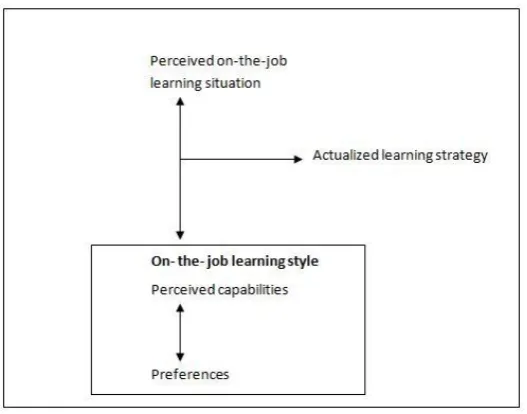
10 can change due to new events or environments which affect the learning style. Berings et al. (2008) share this last named notion and clarify this view in their interaction model (Figure 1). They argue that the learning individual with its own capabilities and preferences share a reciprocal relationship of action with the learning situation. Learning is hereby affected by both individual characteristics as well as by the perceived learning situation.
Figure 1: On-the-job learning styles model (Berings et al., 2005)
In this model learning styles are characterized as learning activities and learning strategies. Where learning activities are actual activities that nurses execute to learn. Learning strategies are a
combination of learning activities that mutually contribute to implicit or explicit learning goals (Berings et al., 2005). The on-the job learning style of nurses is influenced by the perceived situation, causing nurses to perform different learning strategies (e.g. mix of activities) in different learning situations. To summarize, learning styles are viewed as relatively fixed traits based upon personal preferences for learning activities and perceived capabilities. Learning strategies can be seen as a state, varying with every situation. Berings et al. (2005, p.18) conceptualized learning styles in the following definition: „‟a tendency to employ a specific combination of implicit and explicit learning activities that an individual likes, and is able to, execute. Individuals adjust the combination of learning activities to each situation. This specific combination is referred to as the actualized learning strategy‟‟ .In this study the last named definition is adhered, where the situation is expected to have an influential role on nurses their learning styles, assuming that nurses have a preference for certain learning activities which is stable, but perform them differently or maintain a distinct order per situation.
11 education (D‟Amore, James & Mitchell, 2012; Kolb et al., 2001; Rassool & Rawaf, 2008). In the next paragraph the theory of Kolb and other recognized learning style theories and measurements in nursing are described, with the restriction to theories who view learning as a structure and process.
2.2.1. Kolb’s experiential learning theory
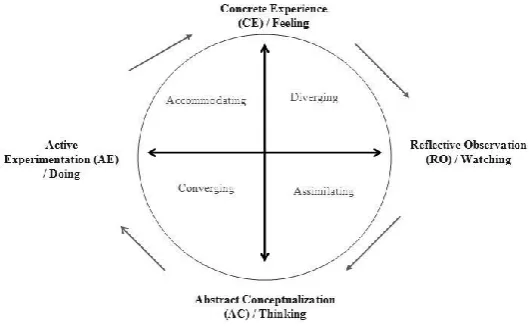
[image:11.595.78.343.384.547.2]One of the best known learning style theories is the experiential learning theory (ELT) developed by David Kolb. This theory considers experience to be a fundamental aspect of learning. According to Kolb (1984), learning should not be regarded in terms of outcomes, but as a process of gaining experience. In the ELT learning is seen as a cyclical process which takes place in daily situations. Kolb (1984) states that employees can enter the cycle at any phase. The experiential learning process consists of four phases, namely: (1) concrete experience (CE, feeling): the learner actively encounters a concrete experience by carrying out an activity,(2) reflective observation (RO, watching): the learner reflects on the gained experience, (3) abstract conceptualization (AC, thinking): the learner analyses the newly retrieved information, and (4) active experimentation (AE, doing): the learner applies the newly retrieved information in a prospective experience. In Kolb‟s Experiential Learning Cycle, knowledge is generated through a combination of grasping (CE & AC) and transforming (RO & AE) knowledge (Dochy et al., 2012).
Figure 2. Kolb’s (1984) Cycle of Experiential Learning
12 experience‟ and „reflective observation‟. Diverging learners can view a problem or situation from different angles. For this reason they are seen as creative learners which skills are especially convenient in situations that require problem solving and brainstorming. Third, the assimilating learning style requires skills in „reflective observation‟ and „abstract conceptualization‟. These learners are typified by their preference for theory and inductive reasoning, possessing qualities to understand abstract, complex information and rearranging it to a logical and accessible form. Lastly, the
converging style includes learners with the prevailing competencies „abstract conceptualization‟ and „active experimentation‟, learners with this style use theories to make efficient decisions and solve problems on a factual basis through their ability to reason deductively. They prefer technical tasks instead of socially related projects (Dochy et al., 2012). Honey and Mumford (1986) adapted the model of Kolb to better fit the learning styles to managers‟ perceptions instead of individuals in general. In comparison with the LSI of Kolb, the Learning Style Questionnaire (LSQ) of Honey and Mumford (1986) does not explicitly ask persons about the way they learn, but examine overall behavioral dispositions. This was done because employees are generally not aware that they learn and could then possibly only think about formal learning activities (Coffield et al., 2004).
2.2.2 Berings’ on-the-job learning styles questionnaire (OLSQ)
One of the more recent attempts to measure learning styles of nurses is from Berings et al. (2007). They argue that existing instruments which analyses employees‟ learning styles are frequently not suitable to be applied in a workplace context. For example, learning style instruments used in educational settings are often merely translated to work settings, without taking the differences between these two types of settings into account. One of the most fundamental differences is the way that learning is organized. In an educational context learning occurs through instruction by teachers, causing students to learn, for a large part, in a manner that is directed by the teacher. In the workplace employees have a more self-directed mode of learning, which means they have the opportunity to choose their own specific approaches to learn (Berings et al., 2007). Besides that, they state that the social dimension of learning, thus learning from others, does not receive proper attention in the current learning style instruments as well as the influence of the learning situation. Berings et al. (2007) describes that most questionnaires measure learning styles in general, without paying attention to the influence of the learning situation. Next to the under-exposed role of the learning situation, most of the instruments measuring employees‟ learning styles have weak psychometric values (Berings et al., 2007). Coffield et al. (2004) analyzed thirteen of the most frequently used learning style instruments, including the LSI of Kolb and the LSQ of Honey and Mumford. They concluded that, with the exception of the Hayes Cognitive Style Index (Allinson & Hayes, 1996), these instruments lacked reliability and validity. This study utilizes the OLSQ (Berings et al., 2007) because of the poor psychometric values of other instruments and this questionnaires‟ focus on learning situations.
13 style theories in order to differentiate dimensions that suit workplace settings. The criteria they applied were that the dimensions should be applicable to workplace settings, were uni-dimensional, could be changed by learners and regard behaviors and activities. Their literature review resulted in four core dimensions of on-the-job learning styles, which are; reproductive or developmental learners (Gregorc, 1982; Sternberg, 1997), learning alone or with others (Dunn et al., 1989; Sternberg, 1997), intuitive and analytical learning ( Allinson & Hayes, 1996) and forms of reflections (Kolb, 1984; Honey & Mumford, 1986; Jackson, 2002). These core dimensions are operationalized in learning activities and situations in the study of Berings, Poell and Gelissen (2008b). By conducting interviews and
observations they examined the actual learning behavior of nurses. Through inductive analysis of the data, various learning activities were uncovered. These activities were organized into seven categories (Berings et al., 2008b), namely:
1. Learning by doing one‟s regular job: examples are: taking care of patients, learning by doing, learning from success, learning from mistakes, contact with patients and family, watching colleagues and helping others learn.
2. Learning by applying something new in the job: broadening tasks or job rotation.
3. Learning by social interaction with colleagues: consulting colleagues, asking for and obtaining feedback, exchanging knowledge and experiences.
4. Learning by reflection with oneself: prospective (planning), concurrent (during) and retrospective (looking back) self-reflection.
5. Learning by reflecting with others: prospective (planning), concurrent (during) and retrospective (looking back) reflection with colleagues.
6. Learning by theory: checking media, visiting information meetings and educational instruction. 7. Learning by supervision: direct supervision and coaching.
In the validation of these activities by supervisors and educators, it became apparent that some of the categories were related to each other. For example the content of social interaction and reflection with others and oneself are situated in the other categories. Therefore the learning activities: learning by doing one‟s regular job, learning by applying something new in the job and learning by theory and supervision are viewed upon as first order learning activities which are followed by second order learning activities, such as learning by social interaction, reflecting with others and with oneself. These last named learning activities are employed to deepen the first learning experiences (Berings et al., 2008b). The learning situations were operationalized into six learning contents, which refer more to skills obtained in various domains than concrete situations. The several domains (situations) where learning activities could take place are: the technical practical domain (e.g. technical nursing skills), the organizational domain (e.g. planning patient care), the socio-emotional domain is split in two, namely towards others (e.g. supporting patients and family) and towards oneself (e.g. putting emotionally tough situations into perspective), the developmental domain (looking up theory) and a pro-active attitude to work (e.g. taking initiatives at work) (Berings et al., 2007).
14 Berings et al. (2008b) provided more insight into the way that nurses learn, there is still much
uncertainty about the role of the learning situation. Because the authors defined situations as learning contents in their study, the actual learning situations in which nurses mostly learn are still unknown. Even as the effect of certain learning situations on combinations made in learning activities. In other words, which learning situations provoke which learning strategies? Besides that, educational coordinators do not always have the financial means or time to analyze individual learning styles and adapt instructional designs to each nurse. For them it could be beneficial to know if there are general characteristics of the individual or situation that influence the preference for certain learning styles in order to adapt educational means to groups of employees. In the next paragraph individual factors that affect learning behaviors or participation in learning activities obtained from literature are reviewed. Thereafter situational factors that are found to have an influence on workplace learning are discussed.
2.3. Individual factors influencing learning styles
In literature certain individual characteristics, namely age and work experience were found to play an influential role in the type of learning activities that nurses employ. Despite the various studies conducted about differences in learning between older and younger workers, the results are
sometimes contradicting and the precise relationship between age, organizational tenure and learning remains indistinct. In addition, Onstenk (1994) differentiates two crucial requirements for employees to learn in the workplace: the 'ability to learn' (educational level and experience) and the desire to learn (motivation and willingness). Employees' motivation to learn is a much studied factor, which
supposedly has an impact on the matter of participation in learning activities of employees. In the following paragraphs studies examining the relationship between these individual factors and learning are further explored.
2.3.1 Influence of age-related factors on nurses' learning activities
15 indicated a decrease in the participation of older workers. The studies which made a distinction
between younger, middle-aged and older workers showed no significant differences between younger and middle-aged workers in their participation in learning activities, but displayed a significant lower participation of older workers, mostly above the age of 50 (Cully et al., 2000; Simpson et al., 2002; Taylor & Urwin, 2001; Wray et al., 2009). In addition Pool et al. (2013b) found a remarkable result which revealed that studies examining participation of formal CPD activities in relation to age found a negative relationship, where studies concentrating on informal learning activities found a positive relationship between age and participation in these activities. These results propose that older and younger workers learn in a different way. They conclude that workers in their late-career (>50/55 years) generally appear to participate less in formal learning activities and more in informal CPD activities. The studies of Lammintakanen and Kivinen (2012) and Berg and Chyung (2008) confirm these findings, while their results displayed a higher participation of older workers in CPD activities, above all in the more informal learning activities. They revealed that older workers did participate in formal learning activities, such as information meetings and assessments or evaluation moments. However, they showed a deviation in the participation in training courses/programs and in activities like mentoring in comparison with younger colleagues. For other career stages these influences were less apparent. Urwin (2006) agrees with these findings by stating that older employees do participate in formal learning activities, but that they prefer short training courses. In addition, Simpson et al. (2002) argue that these workers especially partake in such courses to develop or maintain their skills. According to Kanfer and Ackerman (2004), older workers are less likely to engage in activities where new information has to be processed in order to preserve their self-concept. Consequently they rely on their work memory and are more probable to pursue activities that are compatible with their former experience. Although the outcomes of these studies suggest that age influences the manner in which employees learn at their job, most of the findings are contradicting. To account for age-related influences in learning more knowledge about this subject is necessary.
2.3.2 Effect of nurses’ work experience on preferences for learning activities
16 interdependent. Results of the study of Daley (1999) point out the preference of experienced nurses for more work-placed learning activities and the predilection of less experienced nurses for formal training and education. These outcomes are in accordance with the focus group study conducted by Pool et al. (2013a) which revealed a variation in perspectives concerning the purpose of CPD between older nurses and younger nurses. Their results indicated that younger nurses had the ambition to increase their skills and knowledge and were more open to career opportunities, while older nurses were more focused on direct patient care and maintenance of their knowledge and skills. The findings of these studies suggest that employees‟ years of work experience affect their participation in
continual professional development and thus in learning activities.
2.3.3 Nurses’ educational level and learning competencies
Due to previous developments in health care the educational level of nurses became a topic for political debate (V&VN, 2012). According to this report nursing education in the future will merely be taught at a bachelor degree (HBO). Lambregts and Grotendorst (2012) call this project Bachelor 2020 which comprehends new occupational profiles that were created in The Netherlands to be prepared for the more complex need for care that is predicted in the upcoming years. This trend is also envisioned by studies in other countries, stating that the quality of health care will improve by commissioning a nursing staff with at least a bachelor degree (Mistiaen et al., 2011). Gloudemans, Schalk and Reynaert (2013) explain that the discussion about the differences between nurses with a HBO education or MBO education, also called bachelor degree or diploma degree originates from the introduction of the HBO degree in the 1970's. Differentiations between these educational levels are mostly based on the taxonomy of Romiszowsky (1988). According to Romiszowsky (1988) nurses with a diploma degree have factual knowledge (recall or recognize facts and procedures) and reproductive skills. In contrast, nurses who obtained a bachelor degree possess insightful knowledge (knowledge based on
17
2.3.4 Intrinsic motivation to learn
According to Onstenk (1994) employees‟ willingness or motivation to learn is an important factor to be able to successfully learn in the workplace. Greller (2006) agrees and supposes a relationship
between career motivation and time invested in professional development. Besides time, motivation affects learning goals and is a crucial predictor to explain the effect of workplace learning (Poortman (2007). The analysis of more than hundred studies of Colquit et al. (2000) into the factors that explain employees‟ training motivation also reveal intrinsic motivation as an influential factor. Research concentrating on motivation and workplace learning are often viewed from the perspective of
knowledge workers, because the need to continuously learn throughout their profession is considered a crucial aspect that typifies these workers (Drucker, 1999). The ability to create and employ new knowledge in order to improve services, products or processes is called „knowledge productivity‟ (Kessels, 2001). According to Kessels (2001) knowledge productivity requires the capacity to learn, creativity, persistence and commitment from employees. One of the crucial factors to be able to possess these behaviors, consistent with research about the Self- Determination Theory (SDT) of Deci and Ryan (2008) is intrinsic motivation. Intrinsic motivation is defined by Deci and Ryan (2008) as a person‟s interest in activities without considering external consequences.
The SDT explains that first three basic psychological needs have to be met before intrinsic motivation can take place. These needs concern autonomy, competence and relatedness. Variables of the work environment are related to intrinsic motivation. For example motivation can decrease due to a high workload or increase as a result of manager‟s support or perceived freedom of choice (Deci & Ryan, 2000). Autonomous decision making or in other words choice independence is the
preservation of a high responsibility and influence in the organization and a felt freedom in the employment of tasks (Kirby et al. 2003). This concept was found to be related to the need for
autonomy in the SDT and is closely linked to intrinsic motivation and knowledge workers (DeCharms, 1976; Deci & Ryan, 1985; Hackman & Oldham,1976). Intrinsic motivation can thus be enhanced by a climate that stimulates self-direction and freedom for individuals. Besides the effect on intrinsic motivation, Hackman and Oldham (1976) and Tampoe (1993) claim that knowledge workers have a preference for autonomy and self-regulation when performing their tasks. In conclusion, although no direct learning activities have been found to relate to intrinsic motivation this concept is seen as a strong predictor for the participation in workplace learning. Choice independence is thereby the most influential variable which supposedly has a direct effect on intrinsic motivation.
2.4. The impact of situational factors on the learning strategy
18
2.4.1. Task and job content
The specific content of work-related tasks is an important determinant for learning on the job. One of the factors which enable learning from work-related tasks is the degree of autonomy in work. Besides that, the variation in tasks and the complexity of work itself offer important learning opportunities. Finally, the perceived participation in organizational decision making is supposed to stimulate learning on the job (Onstenk, 1997). The variable „variation‟ comprises the richness of tasks that need to be performed and the degree of innovation that takes place in work. The autonomy or choice
independence can be seen as the perceived degree of freedom to decide when and how to perform tasks, to determine if others need to be involved and which criteria have to be met (Frieling, 2006). As previously stated autonomy is linked to intrinsic motivation. When learners are autonomously
motivated, they learn out of personal interest, enjoyment or attach personal value to learning (Deci and Ryan, 2000). The competence of problem solving is a third crucial aspect in on the job learning in order to obtain knowledge. Problem solving together with the amount of task feedback and challenge is linked to the complexity of tasks (Christis, 1998). At last, participation is regarded as an aspect of task and job content that possess learning opportunities. Via participation an employee has the possibility to contribute to organizational decision-making which increases the knowledge and insight in the organization and can therefore offer serious learning opportunities (Frieling, 2006). Van
Woerkom (2002) added task demands, such as the required work pace and the experienced workload, to the task and job content that form barriers for learning.
2.4.2 The information environment
The information environment refers to the physical resources that allow employees to learn in their work environment. These resources encompass the presence of computers, technology, manuals, media and other means to obtain information and support learning from theory. Also the opportunities to visit information meetings, professional networks, conferences and symposia are included in this group (Onstenk, 1994; Skule, 2004). The learning opportunities that organizations offer can vary between hospitals. When nurses do not have a lot of means to look up theory, it is presumed to affect the quality of learning on the job.
2.4.3. The social work environment
19 supervisors are goal-setting, assistance and giving feedback (Russ-Eft, 2002). A prerequisite for the social support of colleagues is the existence of good relationships with colleagues. Good work relationships are based upon trust and understanding, where help is given and correct information is shared (Johnson & Hall, 1988; Raemdonck et al., 2014). Social support of both supervisors and managers takes place in daily cooperation, communication, guidance and in organized meetings (Onstenk, 1997; Poell, 1998). Feedback is embedded in this social support, which is considered to be a crucial factor for successfully learning from others at the workplace (Van Woerkom, 2008). Eraut (2004) states that learning mostly occurs by obtaining feedback from actions and procedures which take place in daily practice, resulting in a better insight in the best way to handle these work tasks. The perceived feedback culture is a crucial component for employees to provide feedback to colleagues in their daily work. The feedback culture refers to the quality and amount of feedback that is given by supervisors and colleagues and the manner in which feedback is provided. In a strong feedback culture employees improve their performance by continuously receiving, giving and processing formal and informal feedback. A strong feedback culture is linked to effective continuous learning and career development and can only take place in combination with the existence of positive work relations and a good learning climate (London & Smither, 2002).
2.4.4. Learning climate
In the study of Berings et al. (2005) the learning climate is seen as an important determinant of the learning situation. In their study the learning culture is defined as the temporal manifestation of dominant norms, opinions and regulations with respect to shared learning in groups, departments or organizations which implicitly affect het participation in learning activities (Berings et al., 2005; Poell et al., 1998, p35). In addition, Stefen et al. (2014) highlight the role of emotional safety in nurses their learning. They state that nurses often learn from others, by observing colleagues or by being observed by supervisors. To be able to learn they need to feel safe to make mistakes and to practice their skills. Thus, creating a supportive environment that feels emotionally safe for employees is crucial to allow them to learn on the job.
2.5. Conclusion theoretical framework
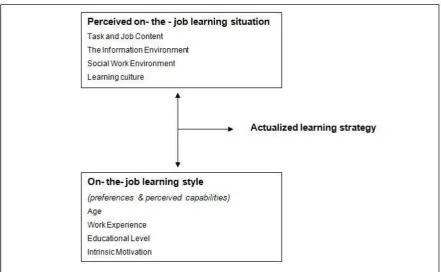
20 Figure 3. Conceptual model interrelation learning styles and learning situations
The conceptual model in Figure 3 was used as a starting point to empirically explore individual and situational characteristics that affect nurses‟ learning styles. In addition, this study focused on similarities in the learning process of nurses by examining possible patterns in the employment of learning styles in different situations. In the theoretical framework many studies were found which already investigated learning styles, resulting in a variety of instruments measuring this concept. The learning situation, on the contrary, is relatively unknown. To gain a better understanding of the interrelation between the perceived learning situation and the individual learning styles, these
concepts were studied in an explorative manner. This design was used for its possibility to investigate phenomena in their specific context, providing the researcher the option to examine on the job learning in the nursing profession (Dooley, 2009).In general, processes are often studied using a qualitative research design, while studies assessing the outcomes, mediators or moderators of these processes mostly employ a quantitative design (Tashakkori & Teddlie, 1998). Moreover, the OLSQ is especially designed for the nursing profession and distinguishes actual learning behavior of nurses in a variety of domains (Berings et al., 2007). Based upon these arguments, it was decided to measure learning styles (state) quantitatively and learning situations (process) in a qualitative manner.
21
3. Study 1: Questionnaire
3.1 Research Design
The theoretical framework showed that older workers are inclined to have specific learning
approaches and preferences. Previous studies about CPD and organizational learning points out that older workers tend to have a preference for more informal manners to learn rather than more formal ways of learning. In the literature about on-the-job-learning however, no clear indication is found how older workers vary in their learning approaches. As well as the influence of other individual factors such as nurses‟ work experience, educational level, intrinsic motivation to learn and perceived autonomy at work. With the use of a questionnaire the following question was explored:
“How do individual and situational factors affect the learning styles of nurses?”
In order to answer the main question two sub questions were developed which address the effect of individual factors on nurses their learning styles (e.g. personalized mix of learning activities). RQ1: “What is the influence of nurses‟ age, educational level and work experience on their
participation in learning activities?”
RQ2: “Which personal and situational factors (significantly) contribute to participation in learning activities of nurses?”
To gain more insight into the influence of the described factors on workplace learning behavior, nurses were asked to fill in a questionnaire. In this paragraph the procedure and respondents are going to be further described first. On account of missing values in the dataset, the chosen method dealing with this problem is addresses next. After which, the chosen instrument will be depicted. The results of the analyses will be reported in paragraph 3.2.
3.1.1 Procedure
22
3.1.2 Respondents
In order to obtain a representative sample population, hospitals from different regions were contacted, resulting in a sample consisting of nurses working in various hospitals across the Netherlands. Nurses of different age groups, gender, work experience and educational levels participated in this study. A total of 234 nurses filled in the online questionnaire (86% female and 14% male). The age of the respondents varied: 66 (28%) of the respondents were between 16 and 34 years old, 80 (34%) were between 35 and 49 years old, and 88 (38%) respondents were in the age category between 50 and 65 years old. The average amount of work experience in their profession ranged from 1 to 45 years (M= 15, SD= 11.98). Of the respondents 129 (55%) completed a MBO education and 105 (45%) finished a HBO education. In total 11 hospitals participated in the study and were situated in the regions:
Friesland, Overijssel,Utrecht, Zuid-Holland, Zeeland, Flevoland, Gelderland and Noord-Brabant.
3.1.3 Multiple imputation
23 each of the score on the five outputs were added up and divided through five to calculate the mean of the scores. These means are included in the result section in Table 2 till 6 and compared with the original results to check for possible bias. Due to technical deficiencies the reliability analysis could not be conducted with the multiple imputation dataset. The Cronbach alphas of the scales were therefore calculated using list wise deletion. Peng et al. (2006) argue that although list wise deletion leads to a loss in statistical power, it is a robust method when data is MAR. The number of valid cases and the Cronbach alphas of every scale are included in the description of the scales in the following
paragraph. Per variable less than 15% of the all cases were missing.
3.1.4 Instrument
Data was collected using a digital questionnaire consisting multiple choice questions. The measures that are going to be described below were combined into one survey. All the items were formulated in Dutch; the native language of the sample population. The questionnaire was used to measure the relationship between the variables: age, educational level, work experience, learning activities, intrinsic motivation and choice independence. The main goal was to better understand how nurses differ in their learning activities. In this study, existing scales of three questionnaires were combined. Some of the scales were already present in Dutch and other scales were translated. To obtain a valid
translation of the questions the translation-back-translation technique (Vermeulen, 2007) was used to achieve an optimal coincidence between the original and the translated items. Therefore the questions were translated twice. The researcher first translated the items from English into Dutch, after which the second translator rendered the questions back to English. In a pre-test the comprehensibility of the questions was tested. Four persons, of which two former nurses, completed the survey while reading the questions out loud and commenting when necessary. This was done to check if the questions were clearly formulated. The pre-test led to the removal of four items of the intrinsic motivation variable. Next to the short introduction the first question (measuring the different learning activities) was complemented by emphasizing that the research is about their own work environment and their learning experiences at the workplace. The internal consistency reliability of the scales was measured using Cronbach‟s (1951) alpha coefficient. The Cronbach‟s alpha of the used scales lied between 0.88 and 0.97. According to Cronbach (1951) a value from α> 0.70 is acceptable, between 0.80 >α <0.90 is good and α > 0.90 is excellent. Therefore, the overall Cronbach‟s alpha of this questionnaire is
24
Demographics
The demographic variables that were included in this study comprised the variables gender (male=1, female=2). Chronical age was measured by utilizing age groups (1=16–34, 2= 35-49, 3=50-65). Years of work experience was answered by an open question and the educational level was coded as 1=MBO and 2=HBO. The control variable was the name of the hospital; to check the type of hospitals and regions that participated in the study, respondents were asked to fill in the name of the hospital they worked for in the form of an open question.
Intrinsic motivation to learn (IM)
To measure nurses‟ intrinsic motivation to learn, sections of the Intrinsic Motivation Inventory (Ryan & Deci, 2000) were utilized. The Intrinsic Motivation Inventory (IMI) is a multi-dimensional measurement that has been used in many previous studies, in a wide variety of study domains, in order to determine the respondents subjective perception and experience of an activity or behavior (ex. McAuley, Duncan & Tammen, 1989; Plant & Ryan, 1985; Ryan & Connel, 1989); Ryan, Koestner & Deci, 1991;Tas et al., 2012). McAuley, Duncan and Tammen (1989) investigated the psychometric properties of the IMI and found satisfactory reliability and a strong support for the factorial validity. The IMI has seven subscales to assess the perceived competence, value/usefulness, effort/importance, interest/enjoyment,
perceived choice, relatedness and pressure/tension of respondents when carrying out an activity. For the purpose of this study only the subscales interest/enjoyment and value/usefulness were chosen. According to Ryan and Deci (2000) the interest/enjoyment subscale is regarded as the main self-report instrument that specifically measures intrinsic motivation. The other subscales are often used as positive or negative predictors of self-report measures of intrinsic motivation. The value/usefulness subscale is also incorporated in this study because it is the only other subscale which assesses respondent‟s significance and regard for the activity and behavior itself, which fits the purpose of this study. The other subscales merely measure the state of being while doing the activity. The questions were translated into English and were modified slightly by incorporating the activity, namely „learning‟ into the question. After that, the questions were checked by four persons using the thinking-out-loud method. The original scales of interest/enjoyment and value/usefulness consisted of seven questions. Two questions of each subscale were removed during the auditing phase. The items within the two subscales had a rather large overlap which would make the questions less salient and the different meanings unclear to respondents. Each subscale thus had five questions based on a five-point Likert scale (ranging from 1= strongly disagree to 5=strongly agree). An example statement of the
25
Choice independence (CI)
Because of the described link between intrinsic motivation and choice independence, a part of the Workplace Climate Questionnaire (WLQ) validated by Kirby et al. (2003) is incorporated to measure the perceived choice independence of nurses. The variable choice independence measures the perceived freedom of choice of the respondents along with the independence they believe to have when they execute tasks (Kirby et al., 2003). The reliability of the original WLQ which also included the variables workload and supervisor was quite high (0.74 >α <0.84) (Kirby et al., 2003). The subscale choice independence contained five items and had to be answered by a Likert scale from (1=strongly disagree till 5=strongly agree). A sample question is „We seem to be given a lot of choice here in the work we have to do‟. In total 228 cases were valid and included in the reliability analysis for this variable. The Cronbach‟s alpha for choice independence in this study is 0.88
Learning activities
26
3.2. Results
This research focused on the effect of individual characteristics on the participation in work-related learning activities. In this section the results of the analyses on the dataset are going to be explained. First off, the descriptive statistics are presented. The corresponding means and standard deviations are summarized in Table 1. After which the multivariate analysis reports the significant mean differences between the groups on their participation in the learning activities. The multivariate analysis is split up into a MANOVA and a MANCOVA analysis. First, the MANOVA examines the effect of nurses‟ age and educational level on the participation in learning activities. Second, the MANCOVA investigates if there are significant mean differences between nurses of different age groups and educational levels, while controlling for a third independent factor, namely work experience. The choice for a separate MANOVA analysis had two reasons; due to technical
deficiencies in SPSS, a post hoc test could not be executed in the MANCOVA analysis, which would make it impossible to determine which age groups differed from each other. Besides that, work experience is a numerical variable which could only be analyzed as a covariate. At last, the correlation and multiple hierarchical regression analysis depict the relationships between the learning activities and the independent variables: age, educational level, intrinsic motivation to learn, choice
independence and years of work experience.
3.2.1 Descriptive statistics
Table 1 shows some minor differences between the scores on the various learning activities. The variable learning by doing one‟s regular job (M=3.80, SD=0.81) and learning through critical reflection with oneself (M=3.69, SD=0.84) have the highest ratings. These scores are close to four, which means that in general nurses feel that they have often learned by doing their regular job or by critical self-reflection in various situations the past two years. Subsequent were the scores on the variables critical reflection with others (M=3.49, SD=0.80), learning through social interaction (M=3.46, SD=0.82) and learning by applying something new in the job (M=3.43, SD=0.86). These scores are all rated between three and four. This means that nurses participate in these activities on an incidental or regular basis. The variables learning by theory (M=3.30, SD=0.85) and participation in formal events (M=3.16, SD=0.90) have a score closer to three, which indicates that nurses occasionally learn from looking up theory or from participation in formal events. At last one work environment variable and one
27 Table 1
Descriptive statistics for all variables
Variables M STD
Intrinsic motivation to learn (five-point Likert scale)
3.92 0.49
Choice independence (five-point Likert scale)
3.04 0.69
Learning activities
(six-point Likert scale)
Learning by doing one‟s regular job 3.81 0.81
Learning through social interaction 3.46 0.82
Learning through critical reflection with oneself 3.69 0.84
Learning through critical reflection with others 3.49 0.80
Learning by applying something new in the job 3.43 0.86
Learning by theory 3.30 0.85
Participation in formal learning events 3.16 0.90
Overall learning styles 3.48 0.70
Note: Means (M) and standard deviatons (STD) are reported for 234 respondents.
3.2.2 The effects of nurses’ educational level and age on learning activities
28
Differences in level of education
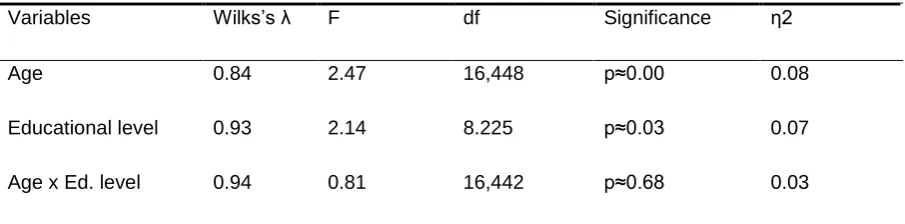
Table 2 shows a significant difference between nurses of different educational levels and their participation in learning activities. Surprisingly, the univariate test between subjects pointed out that the significant mean difference between these groups was only found on the learning activity: learning by applying something new in the job (F (1, 232) ≈ 5.10; p ≈ 0.03; partial η2 ≈ .02). The scores on the Bonferroni Post Hoc test revealed that nurses with a HBO education (M=3.75, SD=0.08) perceived to learn more often from engaging in new activities, tasks or procedures than do nurses with a MBO education (M=3.31, SD=0.08).
Age differences in learning activities
[image:28.595.67.520.296.408.2]By conducting a one-way MANOVA a statistically significant difference was found between nurses‟ age and their participation in learning activities (Wilks‟ Lambda ≈ .84, F(16, 448) ≈ 2.47, p ≈0.00, η2 ≈ .08) (See Table 2). The following univariate test demonstrated a significant mean difference between the age groups in the following activities: learning by doing one‟s regular job, learning through social interaction, learning through critical reflection with oneself and with others and on the overall learning styles (See Table 3).The only learning activities were no significant mean difference was found was in learning by theory and participation in formal events.
Table 2
Influences of Nurses’ Age and Educational level on Learning activities
Variables Wilks‟s λ F df Significance η2
Age 0.84 2.47 16,448 p≈0.00 0.08
Educational level 0.93 2.14 8.225 p≈0.03 0.07
Age x Ed. level 0.94 0.81 16,442 p≈0.68 0.03
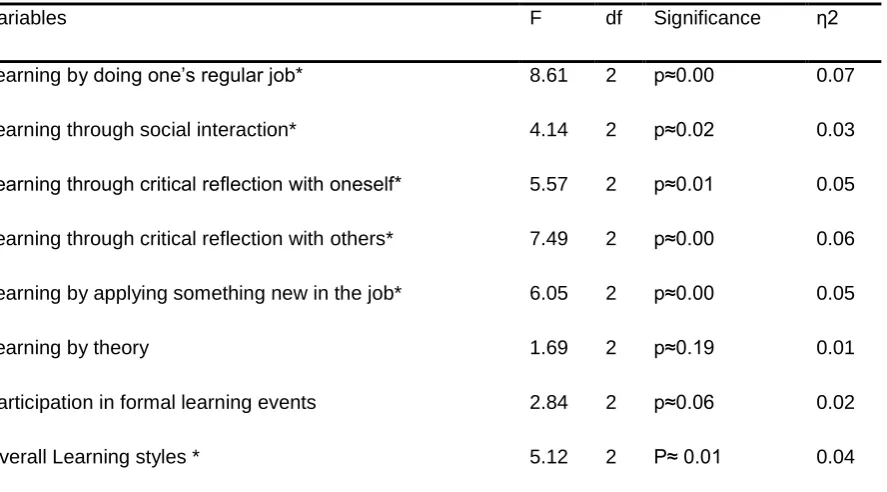
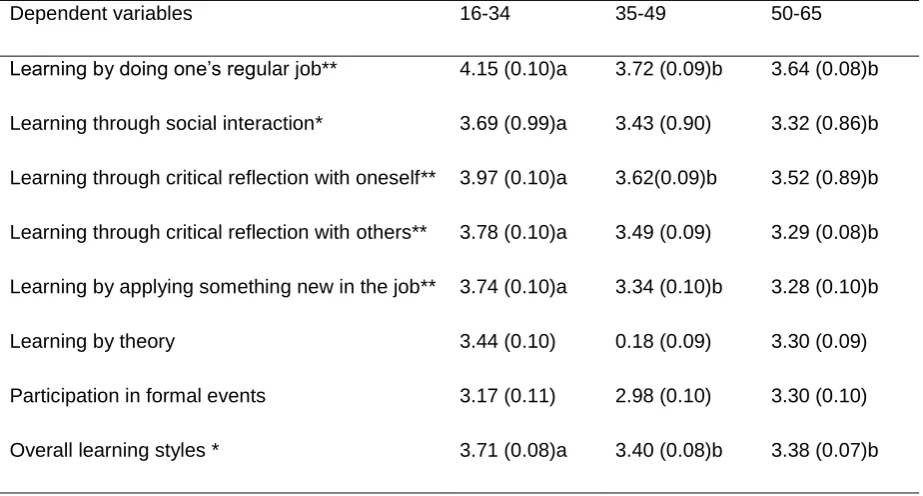
29 The Bonferroni Post Hoc test indicated that in general the youngest group differed the most from the other age groups in their participation in learning activities. The post hoc means comparisons are presented in Table 4 together with the standard deviations of the learning activities per age group. A relatively strong mean differences was found between the younger and middle-aged nurses on the activity learning by doing one‟s regular job. The dependent variables: learning through social interaction and learning through critical reflection with others displayedonly a significant mean differences between the youngest and oldest age group
Table 3
Between-Subjects Effects per Dependent Variable in relation to Age
Variables F df Significance η2
Learning by doing one‟s regular job* 8.61 2 p≈0.00 0.07
Learning through social interaction* 4.14 2 p≈0.02 0.03
Learning through critical reflection with oneself* 5.57 2 p≈0.01 0.05
Learning through critical reflection with others* 7.49 2 p≈0.00 0.06 Learning by applying something new in the job* 6.05 2 p≈0.00 0.05
Learning by theory 1.69 2 p≈0.19 0.01
Participation in formal learning events 2.84 2 p≈0.06 0.02
Overall Learning styles * 5.12 2 P≈ 0.01 0.04
Note. p ≤ 0.05 indicate a significant difference between age groups. Data was analyzed using a univariate test of the
30 Table 4
Mean Scores and Standard Deviations on Learning Activities per Age Group
Dependent variables 16-34 35-49 50-65
Learning by doing one‟s regular job** 4.15 (0.10)a 3.72 (0.09)b 3.64 (0.08)b
Learning through social interaction* 3.69 (0.99)a 3.43 (0.90) 3.32 (0.86)b Learning through critical reflection with oneself** 3.97 (0.10)a 3.62(0.09)b 3.52 (0.89)b Learning through critical reflection with others** 3.78 (0.10)a 3.49 (0.09) 3.29 (0.08)b Learning by applying something new in the job** 3.74 (0.10)a 3.34 (0.10)b 3.28 (0.10)b
Learning by theory 3.44 (0.10) 0.18 (0.09) 3.30 (0.09)
Participation in formal events 3.17 (0.11) 2.98 (0.10) 3.30 (0.10) Overall learning styles * 3.71 (0.08)a 3.40 (0.08)b 3.38 (0.07)b Note: Variables were measured on 6-point scales (1 = never; 6= always)
In the table first the means are displayed, after which the standard deviations are written in brackets.
*p < .05, **<0.01; a and b indicate significant differences between these groups in the Bonferroni post hoc test.
3.2.3 Effect of nurses’ work experience on participation in learning activities
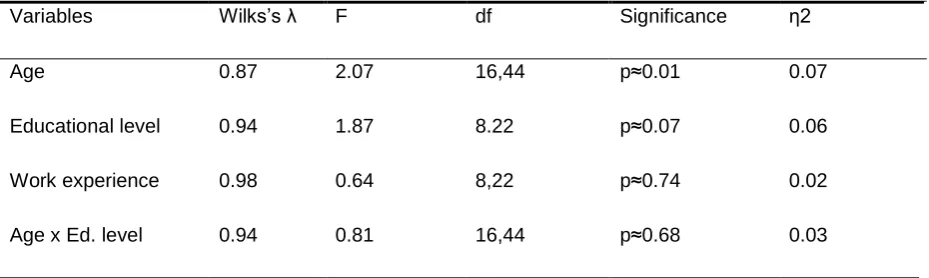
Years of work experience was added as a covariate in this research, since it was assumed that this factor would impact the relationship between age and the various learning activities. To account for possible effects of this variable a Multivariate Analysis of Covariance (MANCOVA) was performed with the seven learning activities and the overall learning styles as dependent variables, the variables age and educational level as independent variables and the years of work experience as covariate. In a MANCOVA the mean score differences between groups are analyzed after correction for the influence of the covariate. First, Box's Test of Equality of Covariance Matrices was checked and revealed that homogeneity of covariance assumption was considered to be satisfied. The main effects of every independent variable on the learning styles are displayed in Table 5. Next to the main effects, the two-way interaction effect of nurses‟ age in combination with their educational level is incorporated in Table 5. The results of the univariate tests between subjects are shown in Table 6.In the theoretical
31
Differences in work experience and age of nurses
[image:31.595.66.531.243.382.2]Table 5 shows that after correction by the covariant, there is only a significant main effect noticeable for the variable age on the learning activities, but this effect endured a loss in power. The results displayed no significant mean differences between the educational levels of nurses on the various learning activities after controlling for the effect of years of work experience. Again no interaction effect was found for nurses‟ age in combination with their educational level
Table 5
Influences of Demographics on Learning activities
Variables Wilks‟s λ F df Significance η2
Age 0.87 2.07 16,44 p≈0.01 0.07
Educational level 0.94 1.87 8.22 p≈0.07 0.06
Work experience 0.98 0.64 8,22 p≈0.74 0.02
Age x Ed. level 0.94 0.81 16,44 p≈0.68 0.03
Note. Data is analyzed by means of a Multivariate Analysis of Covariance and used years of „work experience‟ as covariate.
Before interpreting the results of the univariate test between subjects, Levene‟s F test was controlled for, which reported that homogeneity of variance assumption was considered to be satisfied. Table 6 presents the results of the univariate test and shows that there are less significant mean differences found between the age groups when corrected for by the covariate work experience. Only the activities: learning by doing one‟s regular job, learning through critical reflection with others and participation in formal events presented a significant mean difference between age groups. In general the found age effects on the earlier conducted MANOVA decreased by adding the covariate.
32 Table 6
Between-Subjects Effects per Dependent Variable in relation to Age
Variables F df Significance η2
Learning by doing one‟s regular job* 4.70 2 p≈0.01 0.04
Learning through social interaction 1.83 2 p≈0.17 0.02
Learning through critical reflection with oneself 2.74 2 p≈0.07 0.02
Learning through critical reflection with others* 4.09 2 p≈0.03 0.03 Learning by applying something new in the job 2.16 2 p≈0.12 0.02
Learning by theory 0.30 2 p≈0.28 0.01
Participation in formal learning events* 3.83 2 p≈0.02 0.03
Overall learning styles 2.15 2 p≈0.13 0.09
Note. * p≤0.05 indicate a significant difference between age groups.
Data is analyzed by means of a univariate test of the MANCOVA and used years of „work experience‟ as covariate.
Differences in intrinsic motivation to learn and perceived choice independence
33
3.2.4 Correlation and regression analysis
In this paragraph the variable learning activities is going to be further investigated by means of a Pearson correlation analysis and a hierarchical multiple regression analysis. Besides the effects of the demographic variables, nurses their perceived choice independence and intrinsic motivation to learn are going to be explored in more detail to research a possible mediation effect. The Pearson correlation analysis is used to explore which relationships exist between the independent variables: work experience, age, educational level, choice independence and intrinsic motivation to learn and the dependent variables, namely the learning activities. The hierarchical regression analysis examines if the independent variables have an effect on the several dependent variables and how much of the variance of the dependent variables can be explained by its predictors. This analysis is done in two stages. In the first step the effect of the demographic variables on the learning activities and on the overall learning style was measured. In the second stage the effects of these demographic variables together with the individual characteristic intrinsic motivation to learn and the work environment factor choice independence on all the learning activities and the overall learning style were calculated.
Pearson Correlation
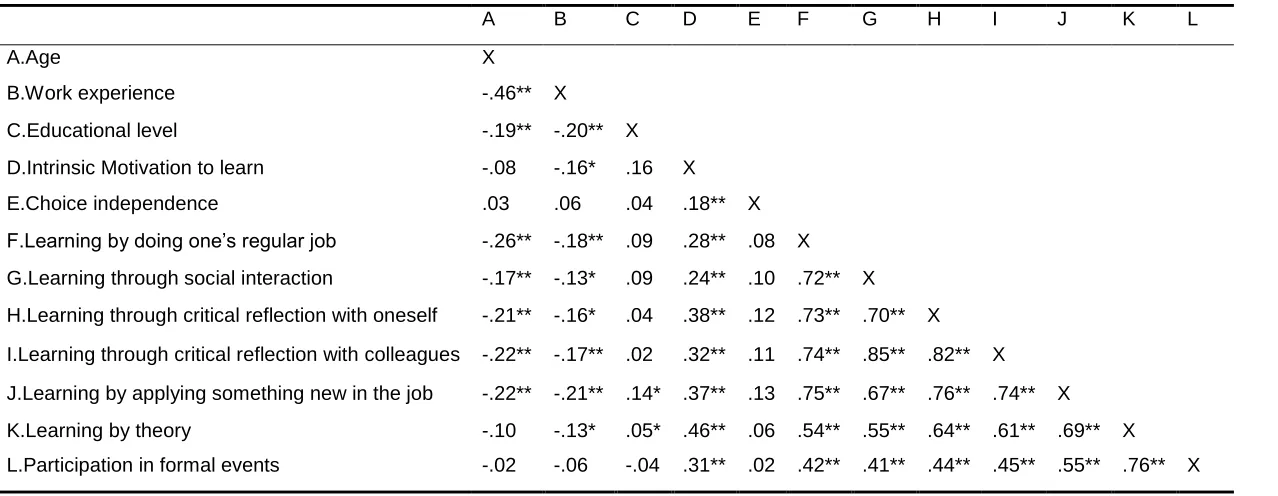
First of all, a Pearson correlation analysis was conducted between each independent variable and the various learning activities in order to determine the relationship between all variables. And if this was either a positive or negative relationship. The correlations and reliabilities of all the variables are presented in Table 7 on the next page. In general, highly positive correlations were found between the different learning activities. With the exception of participation in formal events and learning by theory, which displayed smaller correlations in relation to the other learning activities. Looking at the
independent variables, all learning activities have a significant, but small, positive correlation with intrinsic motivation to learn, thus the higher their intrinsic motivation to learn, the more nurses participated in the seven learning activities over the past two years. Intrinsic motivation to learn also has a significant positive correlation with choice independence. This means that higher levels of perceived choice independence are associated with a stronger intrinsic motivation to learn. There was no significant relationship found between nurses‟ age and educational level and their intrinsic
motivation to learn. For years of work experience on the other hand, a significant negative relationship was found. The perceived choice independence of nurses presented no significant relationship with the learning activities as well as with the demographic variables: age, work experience and
34 Table 7
Correlations and Reliabilities for all variables
A B C D E F G H I J K L
A.Age X
B.Work experience -.46** X
C.Educational level -.19** -.20** X
D.Intrinsic Motivation to learn -.08 -.16* .16 X
E.Choice independence .03 .06 .04 .18** X
F.Learning by doing one‟s regular job -.26** -.18** .09 .28** .08 X G.Learning through social interaction -.17** -.13* .09 .24** .10 .72** X H.Learning through critical reflection with oneself -.21** -.16* .04 .38** .12 .73** .70** X I.Learning through critical reflection with colleagues -.22** -.17** .02 .32** .11 .74** .85** .82** X J.Learning by applying something new in the job -.22** -.21** .14* .37** .13 .75** .67** .76** .74** X K.Learning by theory -.10 -.13* .05* .46** .06 .54** .55** .64** .61** .69** X L.Participation in formal events -.02 -.06 -.04 .31** .02 .42** .41** .44** .45** .55** .76** X ** Correlation is significant at the 0.01 level (p <0.01, 2-tailed)
35
Hierarchical Multiple Regression
A hierarchical multiple regression was conducted to examine the influence of respondents‟ age, educational level and years of work experience on the participation in specific learning activities. Also the role of intrinsic motivation to learn and perceived choice independence on the relationship
between the demographic factors and learning activities is explored. To be able to conduct a
regression analysis the variable age was split up in two groups. In the multivariate analysis it became clear that the differences in mean scores were almost exclusively between the older or middle-aged group and the younger age group. For the purpose of this analysis these groups were merged together to form one group (1= 16-34, 2= 35-65).Before the regression analysis could be used certain assumptions must be met. A set of control analyses were conducted on each of the independent variables per dependent variable. First off, an analysis of standard residuals was carried out to control for outliers, which resulted in the removal of 6 respondents .Because of the high correlation between some of the independent factors, all the data was checked to see if it met the assumption of
collinearity and independent errors. The scores of these tests are included in Tables 9 and 10 in appendix A. The results indicated that multicollinearity was not a concern and the data also met the assumption of independent errors. Furthermore the scatter plot of standardized residual values showed that the data met the assumptions of homogeneity of variance and linearity.
After the control analyses, a two stage hierarchical multiple regression was conducted eight times with each learning activity and the overall learning styles as dependent variables. The variables: age, educational level and work experience were entered at the first stage. The variables: intrinsic motivation to learn and choice independence were put in at stage two. The regression statistics of the first model and second model were reported in Table 8.Using the enter method it was found that model 1 explains a significant amount of the variance in the learning activities: learning by doing one‟s regular job, learning by social interaction, learning by critical reflection with oneself, learning by critical reflection with others, learning by applying something new in the job and learning by theory. With merely one exception; age, educational level and work experience combined do not clarify a significant amount of the variance in the learning activity participation in formal events. This result is in