SPECIALLY STRUCTURED N × 2 FLOW SHOP SCHEDULING PROBLEM WITH JOBS IN A STRING OF
DISJOINT JOB BLOCKS INCLUDING TRANSPORTATION
*1
Deepak Gupta,
1
Department of Mathematics,
2
Department of Mathematics, M. P. College for Women, Mandi Dabwali, India
3Department of Mathematics, G.C. Dabwali (Sirsa), India
ARTICLE INFO ABSTRACT
This paper provides a simple heuristic algorithm to minimize n-job and 2
which the processing times are associated with probabilities including transportation time. Usually in machine schedu
another without taking into account the transportation time involved therein. In this paper we study machine scheduling problems having jobs in a string of disjoint job
the explicit transportation considerations. Also, the processing times are not random but bear well defined relationship to one another. In flow shop scheduling the emphasis is on minimization of idle time/elapsed time bu
utilization time. Here, the objective is to find an algorithm to minimize the utilization time of machines. The proposed algorithm is validated with the help of a numerical example.
Copyright©2016, Deepak Gupta et al.This is an open access article distributed under the Creative Commons Att distribution, and reproduction in any medium, provided the original work is properly cited.
INTRODUCTION
In today’s manufacturing and distribution systems, scheduling have significant role to meet customer requirements as quickly as possible while maximizing the profits. Scheduling means the allocation of resources to tasks over given time with the objective to optimize some performance measure(s). In a shop scheduling problem n-jobs are processed on m
and the processing order i.e. the order in which various machines are required for completing the job is given. Johnson (1954) developed an algorithm for two stage production schedule for minimizing the makespan. In this model an optimal sequence of jobs is found with each job to be processed by the two machines, say M1, M2 in the prescribed order M
The study to minimize the makespan for two and three stage flow shop scheduling problem was further developed by Jackson (1956), Bellman (1956), Mitten
(1970), Baker (1974) and many other researchers. Gupta, J.N.D. (1975) developed an algorithm to find the optimal sequence for specially structured flow shop scheduling problem.
*Corresponding author: Deepak Gupta
Department of Mathematics, M.M.University, Mullana, Ambala, India
ISSN: 0975-833X
Article History:
Received 18th September, 2016
Received in revised form 10th October, 2016
Accepted 18th November, 2016 Published online 30th December,2016
Key words:
Disjoint Job Blocks, Elapsed time, Equivalent job, Jobs in a String, Processing time, Specially Structured Flow Shop Scheduling,
Transportation Time, Utilization Time.
Citation: Deepak Gupta, Shashi Bala and Pradeep Bishnoi
disjoint job blocks including transportation time”, International Journal of Current Research
RESEARCH ARTICLE
SPECIALLY STRUCTURED N × 2 FLOW SHOP SCHEDULING PROBLEM WITH JOBS IN A STRING OF
DISJOINT JOB BLOCKS INCLUDING TRANSPORTATION
Deepak Gupta,
2Shashi Bala and
3Pradeep Bishnoi
Department of Mathematics, M.M.University, Mullana, Ambala, India
Department of Mathematics, M. P. College for Women, Mandi Dabwali, India
Department of Mathematics, G.C. Dabwali (Sirsa), India
ABSTRACT
This paper provides a simple heuristic algorithm to minimize utilization time for specially structured job and 2-machine flow shop scheduling problem with jobs in a string of disjoint job blocks in which the processing times are associated with probabilities including transportation time. Usually in machine scheduling models it is assumed that the jobs are delivered instantaneously from one point to another without taking into account the transportation time involved therein. In this paper we study machine scheduling problems having jobs in a string of disjoint job
the explicit transportation considerations. Also, the processing times are not random but bear well defined relationship to one another. In flow shop scheduling the emphasis is on minimization of idle time/elapsed time but minimization of elapsed time may not always lead to minimization of utilization time. Here, the objective is to find an algorithm to minimize the utilization time of machines. The proposed algorithm is validated with the help of a numerical example.
is an open access article distributed under the Creative Commons Attribution License, which distribution, and reproduction in any medium, provided the original work is properly cited.
today’s manufacturing and distribution systems, scheduling have significant role to meet customer requirements as quickly as possible while maximizing the profits. Scheduling means the allocation of resources to tasks over given time with the optimize some performance measure(s). In a flow jobs are processed on m-machines and the processing order i.e. the order in which various machines are required for completing the job is given. Johnson developed an algorithm for two stage production schedule for minimizing the makespan. In this model an optimal sequence of jobs is found with each job to be processed in the prescribed order M1M2.
makespan for two and three stage flow shop scheduling problem was further developed by , Mitten (1959), Cambell and many other researchers. Gupta, developed an algorithm to find the optimal equence for specially structured flow shop scheduling
M.M.University, Mullana, Ambala, India
Gupta, D., Sharma, S., and Bala, S.
structured two stage flow shop problem to minimize the rental cost of machines under pre-defined rental policy in which the probabilities have been associated with processing time. The practical importance of scheduling models depends various factors such as job transportation time, weight of jobs, setup time, breakdown time, job block etc. In this paper we study two stage specially structured flow shop scheduling problem with explicit transportation considerations and having jobs in a string of disjoint job blocks. There are many practical situations where the transportation time are significant and cannot be simply neglected. However, most of the published literature on sequencing and scheduling up to the year 1980 does not take into consideration the transportation time i.e. the moving time for a job from one machine to another machine during the processing of jobs. The earliest scheduling paper that explicitly considers the transportation factor is probably the one by Maggu and Dass (1980
a two machine flow shop makespan problem with unlimited buffer spaces on both machines in which there are a sufficient number of transporters so that whenever a job is completed on the first machine so that it can b
dependent transportation time, to the second machine International Journal of Current Research
Vol. 8, Issue, 12, pp.44248-44253, December, 2016
INTERNATIONAL
Pradeep Bishnoi.2016. “Specially structured n × 2 flow shop scheduling problem with jobs in a string of
International Journal of Current Research, 8, (12), 44248-44253.
SPECIALLY STRUCTURED N × 2 FLOW SHOP SCHEDULING PROBLEM WITH JOBS IN A STRING OF
DISJOINT JOB BLOCKS INCLUDING TRANSPORTATION TIME
Pradeep Bishnoi
M.M.University, Mullana, Ambala, India
Department of Mathematics, M. P. College for Women, Mandi Dabwali, India
utilization time for specially structured machine flow shop scheduling problem with jobs in a string of disjoint job blocks in which the processing times are associated with probabilities including transportation time. Usually in ling models it is assumed that the jobs are delivered instantaneously from one point to another without taking into account the transportation time involved therein. In this paper we study machine scheduling problems having jobs in a string of disjoint job blocks and by taking into account the explicit transportation considerations. Also, the processing times are not random but bear well defined relationship to one another. In flow shop scheduling the emphasis is on minimization of idle t minimization of elapsed time may not always lead to minimization of utilization time. Here, the objective is to find an algorithm to minimize the utilization time of machines. The proposed algorithm is validated with the help of a numerical example.
ribution License, which permits unrestricted use,
Gupta, D., Sharma, S., and Bala, S. (2012) considered specially structured two stage flow shop problem to minimize the rental defined rental policy in which the probabilities have been associated with processing time. The practical importance of scheduling models depends upon various factors such as job transportation time, weight of jobs, setup time, breakdown time, job block etc. In this paper we study two stage specially structured flow shop scheduling problem with explicit transportation considerations and having in a string of disjoint job blocks. There are many practical situations where the transportation time are significant and cannot be simply neglected. However, most of the published literature on sequencing and scheduling up to the year 1980 into consideration the transportation time i.e. the moving time for a job from one machine to another machine during the processing of jobs. The earliest scheduling paper that explicitly considers the transportation factor is probably 1980). In this paper they consider a two machine flow shop makespan problem with unlimited buffer spaces on both machines in which there are a sufficient number of transporters so that whenever a job is completed on the first machine so that it can be transported with a job dependent transportation time, to the second machine
INTERNATIONAL JOURNAL OF CURRENT RESEARCH
immediately. Maggu et al. (1981) studied the same problem with additional constraint that some jobs must be scheduled consecutively. Kise (1991) considered a similar scheduling problem but with only one transporter with a capacity of one i.e. it can transport only one job at a time. Langston (1987) gave heuristic solution to minimize makespan for a k-station flow shop problem where each station has a number of machines that can be used to process jobs, and there is only one transporter with a capacity to transport one job with transportation times dependent on the physical locations of the starting and destination machines. Chung et al. (2001) studied machine scheduling problems with explicit transportation considerations. They considered models for two types of transportation situations. The first situation investigated transporting a semi-finished job from one machine to another for further processing and the second situation considered the case of delivering a finished job to the customer or warehouse. Gupta, D., Sharma, S., and Bala, S. (2012) gave a heuristic algorithm to minimize the utilization time and rental cost of machines for n×2 specially structured flow shop problem involving transportation time.
Maggu and Das (1977) studied n-job, 2-machine flow job-shop scheduling problem in which some jobs must be processed consecutively either by technological constraints or by externally imposed policy and thus gave the basic concept of equivalent job block in job sequencing. In equivalent job block a group or block of distinct and finite number of jobs is to be replaced by a single job to be considered as equivalent to the group of jobs and it is assumed that no other job is to be processed between any two jobs included in the block. Singh and Gupta (2005) gave an algorithm to minimize the rental cost of machines for two stage flow shop problem including job block criteria. Gupta et al. (2012) considered minimization of rental cost for specially structured two stage flow shop scheduling problem including transportation time, job block criteria and weightage of jobs. The concept of string of job blocks is significant when the jobs are to be processed as set of two job blocks. The string of disjoint job blocks involves the processing of jobs as a set of two job blocks having no job in common such that in one job block the order of jobs is fixed and in second job block the order of jobs is arbitrary. Heydari (2003) considered flow shop scheduling problem with processing of jobs in two disjoint job blocks having one job block in which the order of jobs is fixed and other block in which order of jobs is arbitrary. Singh, Kumar and Gupta (2006) dealt with two stage flow-shop scheduling problem having jobs in a string of disjoint job blocks with processing time and set up time both associated with probabilities. Gupta, Sharma and Gulati, N. (2011) investigated three stage flow shop scheduling problem in which processing time, set up time each associated with probabilities along with jobs in a string of disjoint job blocks.
In this paper we study two stage specially structured flow shop scheduling problem with jobs in a string of disjoint job blocks including transportation time and the objective is to obtain an optimal sequence of jobs to minimize the utilization time of machines. An algorithm is proposed to optimize the utilization time and is validated by a numerical example. The remaining paper is organized as follows: In section 2 we give the practical situation. In sections 3 and 4 we introduce the notations used and assumptions underlying the scheduling problem, respectively. In section 5 we give the definitions used and in section 6 we study problem formulation. In sections 7 and 8 of
this paper we deal with the proposed algorithm and numerical illustration respectively. Finally, we give the conclusion in section 9 and is followed by references.
Practical Situation
Two machine specially structured flowshop scheduling problem has been taken up as there are many practical and experimental situations where the processing times of jobs are not random but follow well defined structural relationship to one another. Most machine scheduling models assume that either there are an infinite number of transporters for delivering jobs or jobs are delivered instantaneously from one location to another without transportation time involved. In many production and distribution units, semi-finished tasks are transferred from one machine to another for completion of processing through various modes such as automated guided vehicles and conveyors, and finished jobs are delivered to consumers or storehouses by vehicles such as trains or trucks. Machine scheduling models that take into account the job transportation time are certainly more practical than those scheduling models that do not take these factors into consideration. The concept of job block in machine scheduling is required when some jobs are to be processed consecutively and is thus also essential to make a decision regarding the cost of providing priority in service to the customer and cost of giving service with non priority. Processing of jobs in a string of disjoint job blocks can be seen in case of steel manufacturing units where certain jobs such as heating and molding are to be processed as a fixed job block and other jobs such as cutting, grinding, chroming etc. can be processed in a block disjoint from the first block.
Notations
The following notations have been used throughout the paper:
: Sequence of n- jobs obtained by applying Johnson’s algorithm.
:Sequence of jobs obtained by applying the proposed algorithm, k = 1, 2, 3, ---.
Mj: Machine j, j= 1, 2.
: Processing time of ith job on machine Mj.
, → : Transportation time of ith job from first machine to
second machine.
:Probability associated to the processing time .
: Expected processing time of ith job on machine Mj.
( k): Completion time of ithjob of sequence kon machine
Mj.
T( k): Total elapsed time for jobs 1, 2, ---, n for sequence
k.
Iij ( k): Idle time of machine Mj for job i in the sequence k.
Uj ( k): Utilization time for which machine Mj is required for
sequence k.
Aij ( k): Expected processing time of ith job on machine Mj for
sequence k.
: Fix order job block.
: Job block with arbitrary order.
: Job block with jobs in an optimal order obtained by applying the proposed algorithm,
k = 1, 2, 3, ---.
Assumptions
The assumptions for the proposed algorithm are stated below:
Jobs are independent to each other and are processed thorough two machines M1 and M2 in order M1 M2.
Machine breakdown is not taken into account.
Processing of a job on a machine once started cannot be stopped unless the processing is completed i.e. pre-emption is not allowed.
Processing times for fictitious machines G and H satisfy the structural conditions
Aʹi1 ≥ Aʹj2 or Aʹi1 ≤ Aʹj2 for each job i and j; where ′ =
+ , → and
′ = +
, →
Each job has to undergo two operations and each job is processed through each of the machine once and only once.
Only one machine of each type is available.
Each machine can perform only one task at a time.
A job is not available to the next machine until and unless processing on the current machine is completed.
The independency of processing times of jobs on the schedule is maintained.
∑ ij = 1, 0 ≤ pij ≤ 1.
Jobs i1, i2, ---, ih are to be processed as a job
block (i1, i2, ---, ih) showing priority of job i1
over i2 etc. in that order in case of a fixed order job
block.
Definition
(1). Completion time of ithjobon machine Mj is given by,
tij = max (ti−1, j , ti, j−1) + , → + Aij ; j ≥ 2,
where Aij = Expected processing time of ith job on machine Mj.
(2). Utilization time U2 of 2nd machine for sequence k is given
by
U2 ( k) = T ( k) – A11 ( k) − , →
Problem Formulation
Let n- jobs(i = 1, 2, ---, n) be processed on two machines Mj
(j = 1, 2) in the order M1M2. Let aij be the processing time of ith
job on jthmachine with probabilities pij suchthat 0 ≤ pij ≤ 1 and ∑ =1. Let , → be the transportation time of ith job from
machine to machine . Let Aij be the expected processing
time of ith job on jthmachine. The mathematical model of the problem in matrix form can be stated as:
Table 1.
Jobs Machine M1 Transportation time
, →
Machine M2
i ai1 pi1 ai2 pi2
1 a11 p11 , → a12 p12
2 a21 p21 , → a22 p22
3 a31 p31 , → a32 p32
- - - - -
n an1 pn1 , → an2 pn2
Let the jobs be processed as a string of disjoint job blocks as S = (α, β) with job block α consisting of s jobs in fixed order and β consisting of ϸ jobs in which order of jobs is arbitrary such that s + ϸ = n and α ∩ β =∅ i.e. the two job blocks α and β form a disjoint set in the sense that the two blocks have no job in common. Our aim is to find job block with jobs in an optimal order from the arbitrary order job block and hence find an optimal string ′ of job blocks α and β
k i.e. to find a
sequence k of jobs which minimizes the utilization times of
machines given that the jobs are to be processed as a string of disjoint job blocks, S = (α, β).
Mathematically, the problem is stated as:
Minimize U2 ( k), given that S = (α, β).
Proposed Algorithm
Step 1: Compute the expected processing times Aij given by Aij
= aij × pij.
Step 2: Define two fictitious machines G and H with
processing times Aʹi1 and Aʹi2 respectivelyas:
′ = + , → and
′ = + , →
Step 3: Make sure that the processing times obtained in step 2
satisfy the structural conditions Aʹi1 ≥ Aʹj2 or Aʹi1 ≤ Aʹj2
for each job i and j.
Step 4: Compute the processing times Aʹα1 and Aʹα2 on the
guidelines of Maggu and Das (1977) for the equivalent job α (say) for the job block (r, m) as follows:
Aʹα1 = Aʹr1 + Aʹm1 – min (Aʹm1, Aʹr2)
Aʹα2 = Aʹr2 + Aʹm2 – min (Aʹm1, Aʹr2)
To find the processing times for a job block having three or more than three jobs we use the property that the equivalent job for job-block is associative i.e. ((i1,
i2), i3) = (i1, (i2, i3)).
Step 5: If the structural conditions hold good then find the new
job block βk having jobs in an optimal order from the
arbitrary order job block βby treating job block β as sub flow shop scheduling problem of the main problem. For finding βk follow the following steps:
(A): Obtain the job J1 (say) having maximum processing
time on 1st machine and job Jr (say) having minimum
processing time on 2nd machine. If J1 ≠ Jr then put J1 on
the first position and Jr at the last position and go to
5(C) otherwise go to 5(B).
(B): Take the difference of processing time of job J1 on
M1 from job J2 (say) having next maximum processing
time on machine M1. Call this difference as G1. Also
take the difference of processing time of job Jr on
machine M2 from job Jr-1 (say) having next minimum
processing time on M2. Call this difference as G2. If G1
≤ G2 then put Jr on the last position and J2 on the first
position otherwise put J1 on 1st position and Jr-1 on the
last position. Now follow step 5(C).
(C): Arrange the remaining (ϸ − 2) jobs, if any between
1st job J1 (or J2) & last job Jr (or Jr−1) in any order. Due to
structural conditions we get the job blocks 1, 2 … m,
where m= (ϸ − 2)! with jobs in optimal order and each having same elapsed time. Let βk = 1 (say). Obtain the
processing times ′ and ′ for the job block βk as
Step 6: Now reduce the given problem to a new problem by replacing s-jobs by job block α with processing times Aʹα1 and Aʹα2 and remaining ϸ-jobs by a disjoint job
block βk with processing times ′ and ′ . The new
reduced problem can be represented as:
Table 2.
Jobs Machine G Machine H
i Aʹi1 Aʹi2
α Aʹα1 Aʹα2
βk ′ ′
Step 7: Check the structural conditions Aʹi1 ≥ Aʹj2 or Aʹi1 ≤ Aʹj2
for each job i and j. If the structural conditions hold good go to Step 8 to find Sʹ otherwise modify the problem.
Step 8: For finding optimal string Sʹ follow the following
steps:
( ) Obtain the job I1 (say) having maximum processing
time on 1st machine and job Iʹ1 (say) having minimum
processing time on 2nd machine. If I1 ≠ Iʹ1 then put I1 on
the first position and Iʹ1 at last position to obtain Sʹ
otherwise go to step 8(b).
(b) Take the difference of processing time of job I1 on M1
from job I2 (say) having next maximum processing time
on machine M1. Call this difference as H1. Also take the
difference of processing time of job Iʹ1 on machine M2
from job Iʹ2 (say) having next minimum processing time
on M2. Call this difference as H2. If H1 ≤ H2 then put Iʹ1
on the second position and I2 at the first position
otherwise put I1 on first position and Iʹ2 at the second
position to obtain the optimal string Sʹ.
Step 9: Compute the in - out table for sequence k of jobs in
the optimal string Sʹ.
Step 10: Compute the total elapsed time T ( k).
Step 11: Calculate the utilization time U2 of 2nd machine for
optimal sequence k, given by
U2 ( k) = T ( k) – A11 ( k) – , →
Numerical Illustration
Consider 6 jobs to be processed on two machines in a string S of disjoint blocks consisting of job block α = (2, 4) with fixed order of jobs and job block β = (1, 3, 5, 6) with arbitrary order of jobs such that α ∩ β =∅. The problem is to find an optimal string ′ to minimize the elapsed time and hence the utilization
time of machines. The processing times associated with probabilities and transportation times of jobs are given in the following table:
Table 3.
Jobs Machine M1 , → Machine M2
i ai1 pi1 ai2 pi2
1 32 0.2 3 14 0.2
2 67 0.1 2 8 0.1
3 44 0.2 2 17 0.2
4 30 0.2 3 7 0.2
5 24 0.1 4 6 0.1
6 36 0.2 2 16 0.2
Solution
Step 1: The expected processing times for machines M1 and
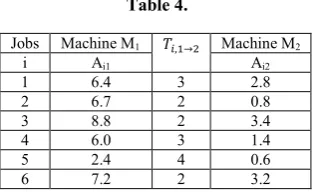
[image:4.595.355.513.57.154.2]M2 are given in the following table:
Table 4.
Step 2: The processing times for fictitious machines G and H
are given in the table below:
Table 5.
Jobs Machine G Machine H i Aʹi1 Aʹi2
1 9.4 5.8
2 8.7 2.8
3 10.8 5.4
4 9.0 4.4
5 6.4 4.6
6 9.2 5.2
Step 3: We have Aʹi1 ≥ Aʹj2 for each job i and j as computed in
step 2 and so the structural conditions are satisfied.
Step 4: The processing times Aʹα1 andAʹα2 for the equivalent
job block α = (2, 4) are calculated as:
Aʹα1 = Aʹr1 + Aʹm1 – min (Aʹm1, Aʹr2) (Here r=2 & m=4)
= 8.7 + 9.0 – min (9.0, 2.8) = 17.7 − 2.8 = 14.9 Aʹα2 = Aʹr2 + Aʹm2 – min (Aʹm1, Aʹr2)
= 2.8 + 4.4 – min (9.0, 2.8) = 7.2 − 2.8 = 4.4
Step 5: We have Aʹi1 ≥ Aʹj2 for each i and j and so using step 5
we get βk = (3, 1, 6, 5).
Now, we know that the equivalent job for job-block is associative i.e. ((i1, i2), i3) = (i1, (i2, i3)) and so we have,
= (3, 1, 6, 5) = ((3, 1), 6, 5) = (α1, 6, 5) = (α2, 5); where α1 =
(3, 1) and α2 = (α1, 6).
Therefore, we obtain
′
= 10.8 + 9.4 – min (9.4, 5.4) = 20.2 − 5.4 = 14.8
′
= 5.4 + 5.8 – min (9.4, 5.4) = 11.2 − 5.4 = 5.8
′ = 14.8 + 9.2 – min (9.2, 5.8) = 24.0 – 5.8 = 18.2 ′ = 5.8 + 5.2 – min (9.2, 5.8) = 11.0 – 5.8 = 5.2 ′
= 18.2 + 6.4 – min (6.4, 5.2) = 24.6 – 5.2 = 19.4
′
= 5.2 + 4.6 – min (6.4, 5.2) = 9.8 – 5.2 = 4.6
Step 6: The reduced problem is defined below:
Table 6.
Jobs Machine G Machine H i Aʹi1 Aʹi2
α 14.9 4.4 βk 19.4 4.6
Step 7: Here, Aʹi1 ≥ Aʹj2 for each i and j, and thus the structural
relations hold good.
Step 8: The {Aʹi1} = 19.4 is for job βk i.e. I1 =βk and
{Aʹi2} = 4.4 is for job α i.e. Iʹ1 = α. Since I1
Iʹ1, so Jobs Machine M1 , → Machine M2i Ai1 Ai2
1 6.4 3 2.8
2 6.7 2 0.8
3 8.8 2 3.4
4 6.0 3 1.4
5 2.4 4 0.6
we put I1 = βk on the first position and Iʹ1 = α on the second
position.
Therefore, the optimal string Sʹ as per step 8 is given by Sʹ = (βk, α). Hence, the optimal sequence k of jobs as per string Sʹ
is k = 3 – 1 − 6 – 5 − 2 – 4.
The in-out table for optimal sequence k is:
Table 7.
Jobs Machine M1 , → Machine M2
i In-Out In-Out
3 0.0 − 8.8 2 10.8 − 14.2 1 8.8 − 15.2 3 18.2 − 21.0 6 15.2 − 22.4 2 24.4 − 27.6 5 22.4 − 24.8 4 28.8 − 29.4 2 24.8 − 31.5 2 33.5 − 34.3 4 31.5 – 37.5 3 40.5 – 41.9
Therefore, the total elapsed time = T ( k) = 41.9 units.
Utilization time of machine M2 = U2 ( ) = (41.9 – 10.8) units.
= 31.1 units.
Remarks
If we solve the same problem by Johnson’s (1954) method by treating job block β as sub flow shop scheduling problem of the main problem we get the new job block βʹ from the job block β (disjoint from job block α)as βʹ = (1, 3, 6, 5). The processing times ′′ and ′′ for the job block βʹ on the guidelines of
Maggu and Das (1977) are computed as:
We have, βʹ = (1, 3, 6, 5) = ((1, 3), 6, 5) = (αʹ, 6, 5) = (γ, 5); where αʹ = (1, 3) and γ = (αʹ, 6).
′
′
= 9.4 + 10.8 – min (10.8, 5.8) = 20.2 – 5.8 = 14.4.
′
′
= 5.8 + 5.4 – min (10.8, 5.8) = 11.2 – 5.8 = 5.4.
′ = 14.4 + 9.2 – min (9.2, 5.4) = 23.6 – 5.4 = 18.2. ′
= 5.4 + 5.2 – min (9.2, 5.4) = 10.6 – 5.4 = 5.2.
′
′
= 18.2 + 6.4 – min (6.4, 5.2) = 24.6 – 5.2 = 19.4.
′
′
= 5.2 + 4.6 – min (6.4, 5.2) = 9.8 – 5.2 = 4.6.
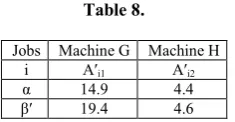
[image:5.595.344.521.58.154.2]The reduced problem is defined below:
Table 8.
By Johnson’s (1954) algorithm the optimal string Sʹ is given by Sʹ = (βʹ, α).
Therefore, the optimal sequence for the original problem corresponding to optimal string Sʹ is given by = 1 – 3 – 6 – 5 − 2 – 4.
The in – out flow table for the optimal sequence is:
Therefore, the total elapsed time = T ( ) = 41.9 units.
Utilization time of machine M2 = U2 ( ) = (41.9 − 9.4) units.
[image:5.595.87.237.159.256.2]= 32.5 units.
Table 9.
Jobs Machine M1 , → Machine M2
i In - Out In - Out 1 0.0 – 6.4 3 9.4 − 12.2 3 6.4 − 15.2 2 17.2 − 20.6 6 15.2 − 22.4 2 24.4 − 27.6 5 22.4 − 24.8 4 28.8 − 29.4 2 24.8 − 31.5 2 33.5 − 34.3 4 31.5 – 37.5 3 40.5 – 41.9
Conclusion
The algorithm proposed in this paper to minimize the makespan and hence the utilization time of machines gives an optimal string of jobs having minimum utilization time irrespective of the makespan. If we apply the algorithm proposed by Johnson (1954) to find the optimal string of jobs to minimize the utilization time of machines then, we see that the minimum elapsed time may not always correspond to minimum utilization time. From table 9 we see that the utilization time of machine M2 is U2 ( ) = 32.5 units with
makespan of 41.9 units. However, if the proposed algorithm is applied the utilization time of machine M2 as per table 7 is U2
( k) = 31.1 units with the same makespan of 41.9 units. Hence,
the proposed algorithm is more efficient as it optimizes both the makespan and the utilization time simultaneously for a specially structured two stage flow shop scheduling problem with jobs in string of disjoint job blocks including transportation time.
REFERENCES
Baker, K.R. 1974. “Introduction to Sequencing and Scheduling”, John Wiley and Sons, New York.
Bellman, R. 1956, “Mathematical aspects of scheduling theory,
Journal of Soc. Industrial and Applied Mathematics, 4, pp. 168-205.
Cambell, H.A., Dudek, R.A. and Smith, M.L. 1970. “A heuristic algorithm for n-jobs, m-machines sequencing problem”, Management Science, Vol.16, pp. 630-637. Chung, Y.L. and Zhi, L.C. 2001. “Machine scheduling with
transportation considerations”, Journal of Scheduling, Vol. 4, pp. 3-24.
Gupta, D, Sharma, S. and Gulati, N. 2011. “n × 3 flow shop production schedule, processing time, set up time, each associated with probabilities along with jobs in a string of disjoint job-block’, Antarctica Journal of Mathematics, Vol.8,No.5, pp. 443-457.
Gupta, D., Bala, S. and Singla, P. 2012. “A new Heuristic approach for specially structured two stage flow shop scheduling to minimize rental cost, processing time associated with probabilities including transportation time, job block criteria and job weightage”, Advances in Applied Science Research, Vol. 3, Issue 4, pp. 2500-2507.
Gupta, D., Sharma, S. & Bala, S. 2012. “Specially Structured Two Stage Flow Shop Scheduling To Minimize the Rental Cost”, International Journal of Emerging trends in Engineering and Development, 1(2), 206-215.
Gupta, D., Sharma, S., and Bala, S. 2012. “n×2 Specially structured flow shop scheduling with transportation time to minimizing rental cost of machines”, International Journal of Mathematical Archive-3(2), pp. 627-635.
Gupta, J.N.D. 1975. “Optimal Schedule for specially structured flow shop,” Naval Research Logistic, 22 (2), pp. 255-269.
Jobs Machine G Machine H i Aʹi1 Aʹi2
α 14.9 4.4
[image:5.595.105.223.577.638.2]Heydari, A.P.D. 2003. “On flow shop scheduling problem with processing of jobs in string of disjoint job blocks: fixed order jobs and arbitrary order jobs,” JISSOR Vol. XXIV, No. 1-4, pp. 39-43.
Jackson, J. R. 1956. “An extension of Johnson’s results on job lot scheduling”, Naval Research Logistics Quarterly, 3, pp. 201-203.
Johnson, S.M. 1954. “Optimal two and three stage production schedule with setup time included”, Nav. Res. Log. Quart.1 (1), 61-68.
Kise, H. 1991. “On an automated two-machine flowshop scheduling problem with infinite buffer”, Journal of the Operations Research Society of Japan, 34, pp. 354-361. Langston, M. A. 1987. “Inter-stage transportation planning in
the deterministic flow-shop environment”, Operations Research, 35, pp. 556-564.
Maggu, P. L. and Das, G. 1977. “Equivalent jobs for job blocks in job- sequencing”, Opsearch, Vol. 5, pp. 293-298.
Maggu, P.L. and Das, G. 1980. “On 2 × n sequencing problem with transportation times of jobs”, Pure and Applied Mathematika Sciences, Vol. 12, pp. 1-6.
Maggu, P.L. Das, G. and Kumar, R. 1981. “On equivalent job for job block in 2 × n sequencing problem with transportation times”, Journal of the OR Society of Japan, 24, pp. 136-146.
Mitten, L.G. 1959. “Sequencing n jobs on two machines with arbitrary time lags”, Management Science, 5, pp. 293-298. Singh, T.P. and Gupta, D. 2005. “Minimizing rental cost in
two stage flow shop, the processing time associated with probabilities including job block”, Reflection de ERA, Vol. 1, No. 2, pp. 107-120.
Singh, T.P., Kumar, V. and Gupta, D. 2006. “n×2 flowshop scheduling problem in which processing time, Set up time each associated with probabilities along with jobs in a string of disjoint job block”, Journal of Mathematical Science, Reflection des ERA, Vol. 1, pp. 11-20.