~@Eh €tID 'UTJ ~~I {ffih, ! .. llft.ma~r..b @;,1ll(~, @1'lI!l1
tfUll~
CIRCLE 1 ON READER CARD
Blending I)ata Betrieval, [:ntry j~nd Management, the XL40 combines the newest distributed processing and data entry tech-nology with an exceptional file retrieval capability. Distributed KeyProcessing means data is entered, validated, and managed at
the source-where it originates-by people who really know what the information represents. Distributed KeyProcessing reduces your data processing costs by detecting and correcting errors before they reach the mainframe, providing local pre-processing, and optimizing the management of your organization's data.
First in a family of CMC Distributed KeyProcessing Systems, the XL40 is available with one to seven keystations in a choice of keypunch-style keyboard or typewriter style with numeric pad, and features expandable disk capacity from 4.4 to 35.2 megabytes. Using a variety of industry-standard protocols, including HASP workstation, the XL40 communicates with your mainframe wherever it's located.
CIRCLE 4 ON READER CARD
Your software dreams come true with a fully compatible subset of ANSI COBOL and XL/OS, an automatic and dynamic multi-task operating system specially designed for the XL family. XL/OS provides disk and memory allocation, ensures data and system integrity, and controls all system resources. The XL40's information retrieval package, COSAM (COBOL Shared Access Method) features indexed files which you can retrieve and update on the spot, ensuring instantaneous response at the source.
Don't just dream about it, call or write today for our brochure on the XL40 Distributed KeyProcessing System, The DREAM Machine for Data Retrieval, Entry And Management. With the XL40, just as with dreams ... the possibilities are unlimited.
KeyProcessing is a trademark of
a division of Pertec Computer Corporation
IN COMPUTER PERIPHERALS,
THERE IS ONLY ONE ALTERNATIVE
TO ITEL.
And that's no exaggeration, either,
It's something we can back up with fact after fact.
For instance: Did you know that we supply more plug-compatible
monolithic main memory and 3330-type disk drives than any-one else?
Moreover, when you deal with Itel the savings are enormous,
It's this kind of all-out creative effort that has put us right upfuere with IBM, Not only in computer peripherals, But in field engineer-ing, In systems and software, In financial packaging, In total computer capability,
CIRCLE 98 ON READER CARD
When it comes to experience and reputation, it's either IBM, Or Itel.
When you get to price/
performance, however, there is no alternative,
There is only Itel,
:ITEL
CORPORAT1ON
Data Products Group
VOLUME
23 NUMBER'2 This issue 128,000 copies.FEATURES
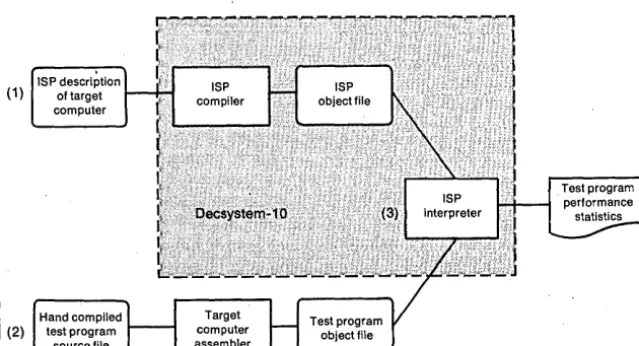
48 COMPARING COMPUTER ARCH ITECTU RES
William E. Burr and William R. Smith. A first try at measuring that conceptual thing we call an "architecture"-with impressive results.
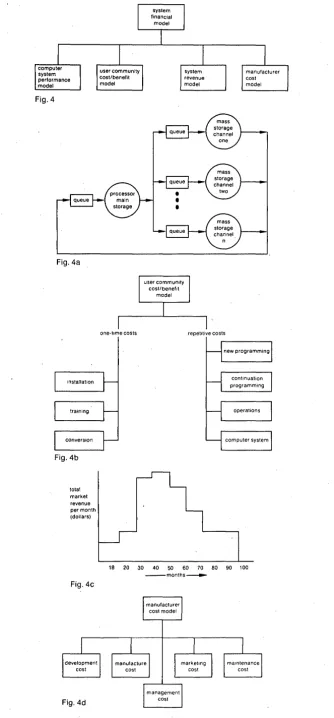
53 UNIVAC'S FINANCIAL MODEL FOR COMPUTER DEVELOPMENT
George A. Champine. Here's how the shape of the next system is really decided.
63 SIX FUTURE STRATEGIES FOR IBM
Marvin L. Silverman. Here are the moves voted "most likely to succeed" between now and the early 1980s. '
NEWS IN PERSPECTIVE
136 BUDGETS
DP budgets will grow at a slower rate than in '76.
137 ANTITRUST
A change in pace at the first West Coast trial.
139 MAINFRAMERS
Amdahl in 1976 went from oblivion to become a major factor in the mainframe business.
142 PLUG COMPATIBLE MANUFACTURERS
steve Ippolito's 145-like Cobra is just his first product. National aims at IBM with top-to-bottom line. Price advantage is no problem to Itel.
146 CITIES
New York's frantic struggle to develop a financial system.
DEPARTMENTS
6 LOOKING BACK
11 LETTERS
Reader response to several recent articles, and one person's experience with IBM legal research.
1.5 LOOK AHEAD
21 PEOPLE
Gil Jones: Retired in accordance with company policy; others in .
new posts. .
26 CALENDAR
29 SOURCE DATA
The latest vendor lit, new periodicals, courses, reports and refer-ences, and a review of the Lewis/Rosenkrantz/Stearns book on compiler design theory.
February, 1977
72 THE MIDICOMPUTER
Douglas J. TheiS. They try to deliver the power of a maxi at the price ofa mini-and come darn close.
87 JUST ENOUGH QUEUING THEORY
Joe M. Wiley. Configuring a computer, or a network? Setting up a transaction processor? You need it-and it's easy.
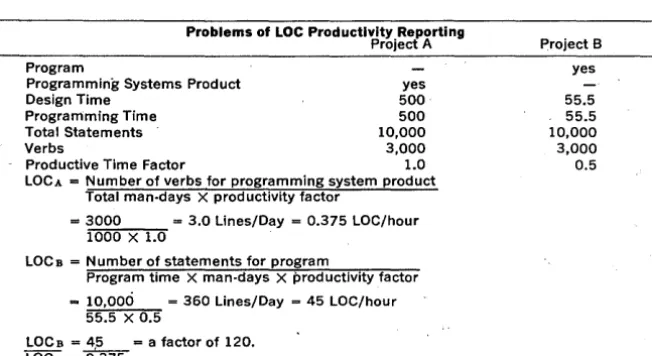
106 A WORKING MEASURE OF PRODUCTIVITY
James R. Johnson. It is at least a partial answer for managers who want proof.
121 CONVERTING TO MVS
Kevin P. Farrell. It cost Aetna .474 man-days just to look at it.
134 DATA COMMUNICATIONS
Tom McCusker. Preview of two conferences on the subject-one in Washington, the other in Atlanta.
196 THE FORUM
Frederic G. Withington. If we really believe what we say about dp spending, we'll break all our old rules.
149 COMPANIES
Mohawk Data: trim and in the black.
150 SMALL BUSINESS SYSTEMS
And my dog spot.
152 HEALTH CARE
That tooth's long gone.
Privacy safeguards urged by Westin.
156 INTERNATIONAL
ICL, Inc. now looks bElyond NYC.
160 BENCHMARKS
Telex acquisition; Opposition to AT&T; Tymnet expansion; ITT network approved; Big business; For the home and hobbyist; Memorex in System/3 market; IBM settles suit; Satellite go· ahead; Outright purchases.
47 EDITOR'S READOUT
To counter AT&T's drive for total monopolistic control over tele-communications through the Bell bill, we need alternative legis-lation. now.
168 HARDWARE
Low-cost storage devices: Ampex' plug-compatible core-based disc replacement, and a 32 megabyte cartridge carousel.
182 SOFTWARE
MARK IV security, H-P dual processing, system modeling, dis-tribution management, and more CICS flexibility.
188 MARKETPLACE
192 ADVERTISERS' INDEX About the Cover
Looking into underlying architectures is step one in fitting the machine to the job-or vice versa. Our design, meshing the two problems is by Barbara Benson.
4
If a profusion of claims has you confused about the right terminal for your application and budget, MEGADATA will provide the right an-swers ... in applications and in cost savings. Our terminals range from the full-scale System 700 to the low-price System MC77. Both families of terminals contain a12-bit LSI microprocessor, an extensive keyboard with a large number of function keys, and a bright easily readable display .. " And 'our software can commtmicate with almost all sophisticated computers in any format, protocol, line discipline, and speed.
Our customers have achieved economies up to 35 percent in opera-tions with MEGADATA terminals. But claims are easy to make, so let's look at some of the details.
SYSTEM 700
o Memory up to 73 K Words o 126-Station Keyboard
o 15-lnch Diagonal Display o Character Enhancement
o Transmission Rates from 50 to ,18.4 Kilobaud Serial, ,-10,000 Characters Parallel
SYSTEM MC77 '
o Memory up to 8K Words o 85-Station Keyboard
o 12-lnch Diagonal Display
o Transmission Rates from 50 to 38.4 Kilobaud Serial, 10,000 Characters Parallel
UPS-7
Consists of all the hardware and the operating system software to enable the user to create his own unique applications program for systems 700 and MC77.
AND LET'S NOT FORGET THE PERIPHERALS! o Single and Dual Floppy Disks
o IBM Compatible Tape o Paper Tape Punch/Readers
o Low-, Medium-, and High-Speed Printers APPLICATIONS
MEGADATA's termin'als ,have found world-wide application in such 'diverse fields as banking, education, medicine, airline reservations, inventory control, newspaper and book publishing and editing, scien-tific research, processing industries, and broad-based management systems. And if you have dual-language or touch screen applications, we also have the right terminal.
For more information on MEGADAT A's terminals and how they can work for you, call or write TODAY! John A. Hill, V.P. Sales
MEG'
A
'111AT
A
CORPORATION 'v '\ JLJ v '\ U ' \
a
Western Regional Office350 '11 D' • B h . N Y k1171r. 15.910 Ventura Boulevard
o
Suite800 rVI e rive 0 emla, ew o r " E ' C I'f . 9 16
Tel. 516-589-6800· Telex 14-4659
T~fl~~3-9;~-~~~;
13CIRCLE 119 ON READER CARD
DRTRMATION.
EDITORIAL STAFF Editor
Artlcl •• Editor International Editor European Editor Product. Editor Department. Editor Reprint Editor N.w. Editor Bureau Manag.r.
S.n Fr.ncl.co Lo. Ang.I •• Greenwich New York Wa.hlngton, D.C. Boston Corr •• pond.nt.
Mlnn.apoll. Southw •• t Au.tr.U. Edltorl.1 Advl.or T.chnlc.1 Advl.or Contributing Editor.
EDITORIAL OFFICES
John L. Kirkley Richard A. McLaughlin Angeline Pantages Nancy Foy Michael Cashman Laura Semonian Pat Minford Tom McCusker Edward K. Yasakl Edith D. Myers Angeline Pantages Laton McCartney Linda J. Flato
Vln McLellan James K. Johnson Robert F. Alex.nd.r Ken McGregor Robert L. Patrick Lowell Amdahl Paul Armer, Howard Bromberg, Philip H. Dom, Louis B. Marlenth.l, Carl Reynolds F. G. Withington William Helgason John M. Eger
Headquarter.: 1801 S. La Cienega Blvd., Los An-geles, CA 90035. Phone (213) 559-5111. Eastern: 35 Mason St., Greenwich, CT 06830, (203) 661-5400. 420 Lexington Ave., New York, N.Y. 10017, (212) 682-7760. 134 Mt. Auburn St., Cambridge, Mass. 02138, (617) 354-2125. 6605 Burlington 'PI., Springfield, VA 22152, (703) 569-3383. Southwestern: 2711 Cedar Springs, Dallas, TX 75201. (214) 744-0161. Western: 2680 Bayshore Frontage Rd., Suite 401, Mountain View, CA 94043, {415) 965-8222. Foreign: 8 Pellerin Rd., London N. 16; (01) 249-1177; 24 Stafford Road, Artarmon, Sydney, NSW 2064, Australia, 41-5748. GRAPHIC DESIGN a PRODUCTION
Art & Production
Dlr.ctor Cleve Marie Boutell Advertising
Production Manager Marilee Pitman Production AIII.tant Alberta R. Martin CIRCULATION
35 Mason Street, Greenwich, CT 06830 Circulation Man.g.r Suzann. A. Ry.n Mark.tlng R •••• rch
Manag.r Publl.h.r Assistant Publl.h.r Circulation audited . by Business Publications
Audit
Deborah Dw.lley James M. Morrl. F. Douglas De Carlo
-American Member ,J..." Business
~ABP Pre.s, Inc.
DATAMATION Is pub-lished monthly on or about the first day of every month by Tech-nical Publishing Company, 1301 South Grove Ave., Barrington, Illinois' 60010; Arthur L. Rice, Jr., Chairman of the Board; James B. Tafel, President; Gardner F. Landon, Executive Vice President. Executive, Circulation and Advertising offices, 35 Mason Street, Greenwich, CT 06830, (203) 661-5400. Editorial offices, 1801 S. La Clenega Blvd., Los Angeles, CA 90035. Published at Chicago, III. DATAMATION Is circulated without charge by name and title to certain qualified Individuals In the United States and Canada who are employed by companies Involved with automatic Information handling equipment. Available to others by sub-scription at the rate of $24. Reduced rate for qualified students, $14. Foreign subscriptions $40, Japan and Australia $55. Sole agent for all subscriptions outside the U.S.A. and Canada is J. B. Tratsart, Ltd. 154 A Greenford Road, Harrow, Middlesex HA13QT, England. No subscription agency is authorized by us to solicit or take orders for subscriptions. Controlled circu-lations paid at Columbus, OH and Form 3579 to be sent to Technical Publishing Company, P.O. Box 2000, Greenwich, CT 06830. © Copyright 1977 Technical Publishing Company. ~ "Datamation" registered trademark of, Technical Publishing Company. Microfilm copies of DATAMATION may be obtained from University Microfilms, A Xerox Company, 300 No. Zeeb Road, Ann Arbor, Michi-gan 48106. Printed by Beslow Associates, Inc.
·SI
classifies
crops over26 times faster
for
NASA.
When NASA installed
Goodyear's STARAN® associative
processor at the Johnson Space
Center, their goal was to improve
speed and volume of image
processing for the LACIE (Large
Area Crop Inventory Experiment)
program. The challenge was
classifying billions of data bits
from satellite images to help
LACIE personnel determine wheat
acreage.
Now STARAN has proven it
can do the job over
26
times faster
than was ever possible before.
In only 8 minutes, STARAN
classifies approximately
7.6
million
acres into 10 distinct classes
of data. Previously, it had taken
conventional computers over
31h
hours to categorize these
same images.
By combilling content
addressability with parallel array
arithmetic, a unique capability to
process thousands of picture
elements at once produces dramatic
improvements in image
throughput. That's why the
STARAN processing system is
GOOD;rYEAR
DIGITAL SYSTEMS
unmatched in it5 ability to solve
complex problems involving
operations on many similar data
streams or high-speed searches of
many similar file records.
So before you invest a lot of
money in a high data rate digital
system, invest
a
little time to look
into STARAN.
Itworks for
NASA.
Itcan work for you too.
For complete information,
write to Wayne Brubaker,
Goodyear Aerospace Corporation,
. Akron, Ohio
44315.
Or call him at
(216) 794-3631.
CIRCLE 127 ON READER CARD
6
Looking Back in
CRTFlMRTICN~January-February, 1958
Patenis: Notice to cease infringement of
his patent rights have been sent to lead-ing manufacturers of digital computers by John T. Potter, president of Potter Instrument Co., Plainview, N.J. The patent covers the use of magnetic cores for storing and retrieving data, a meth-od employed by most major computer manufacturers.
Schools: Western Data Processing
Center at UCLA soon will have a 709,
given to the university by IBM.· The
corporation also has agreed to share the cost of a $750,000 research build-ing, which will house the computer .
. The Outlook: For all its benefits,
"mass production" has tended to yoke millions of people to repetitive jobs requiring a fraction of their ability. Computers offer the hope of removing this corrupting influence on our na-tional character. But the automatic age will not come easily. It is my opinion that our existing tax structure runs counter to the principles on which America's future depends.-James R. Bradburn, vice president, Burroughs Corp.
February, 1967
Time-Sharing:
CRTRMRTtlCN, Large
time-shar-ing centers will not replace free standing ma-chines and will not perform all the functions of all the machines that are running today. There will have' to be huge amounts of user oriented' software written and new markets developed. The industry; misinformed about a number of facets of time-sharing, is correct in the supposition that some form of really large time-sharing utility will exist in 1975 or so.-Harris Hy-man.
IBM: The complaint of service bu-reaus that universities with educational discounts from IBM are undercutting their prices for these services are among those aired before the Justice Dept. as part of the antitrust charges being toted against IBM. Others relate to pricing, the delivery of equipment in nsequential model order, and on-line services. Justice is studying the
case. :ft:
Distance
is
the
name
Of
the game.
In golf, the distance a low handicapper
gets off the tee makes him hard to beat. And
"distance" in a computer ribbon - the kind
of distance you get with Roytype's Gold
Scanoptik™ computer ribbon - gives you
the same advantage.
Gold scanoptik ribbons not only "drive"
for distance, up to a million lines per ribbon,
they give you a print-out that is jet black,
crisp, clean and nonsmearing, character
after character. In fact, the writing quality
of Gold scanoptik ribbons is so good, major
utilities and other commercial customers
have reported rejection rates as low as
1/2
of
1%! And the Gold scanoptik ink formulation
doesn't "dust" on impact, downtime and
maintenance are held to a minimum.
Ask your Roytype salesman for all the
detailS on Gold Scanoptik and the other
multipass film ribbons for computers,
typewriters and accounting machines. He's
an expert on driving for distance.
J. T. Dessureau
Roytype Division of Litton Industries 1031 New Britain Avenue
West Hartford, Connecticut 06110
Please send further information on Roytype Gold Scanoptik computer ribbons for _ _ _ _ _ _ computer printer to:
NAME _ _
ADDRESS ~ _ _ _ _ _ _ _ _ _ _ _ _ _
CITY _ _ _ _ _ _ _ _ _ _ _ _ _ _ _ _ _ _ _ STATE _ _ _ ZIP _ _ _
rn
ROY TYPE
The
Distributed
Systems
Environment:
Guess whos staking
out
. the
lions.share7
Distributed systems.
Everybody's talking about them
- exciting new computer
sys-tems that let you put computer
power wherever you need it
in your organization.
Distributed systems.
Chances are they're going to be
important to you. So it's
impor-tant for you to know who's in the
best position to help you grow
into them. It's Honeywell.
Honeywell, by announcing
several important new products,
laying down disciplines, and
supporting standards, has
taken a responsive approach
to distributed systems:
The Honeywell Distributed
Systems Environment.
This is where it's all going
to happen. The environment
within which Honeywell
hard-ware, softhard-ware, and data
com-munications can be combined
into a system that allows you,
the flexibility of distril?uting
your processing, while still
maintaining standardization
and control. A system that will
help you produce the right data
in the right place, and make it
available to the right people at
the right time.
We've been working
toward the Distributed Systems
Environment for years. With
time-sharing, transaction
proc-essing, data base management,
data communications, and
net-works of processors and
minicomputers and terminals.
It's time we took the wraps off.
We've expanded Series 60 with
several new processors.
The new Model 66/85 is a
high-technology top-of-the-line
extension of Series 60
larg'e-scale systems. It uses new
high-speed Current Mode Logic (CML)
integrated circuits, revolutionary
micropackaging of the new
circuits, and many other design
innovations to improve price/
performance while reducing size.
Three new models bring
better price/performance and
added peripheral capacity to
the middle range (Level 64) of
Honeywell's Series 60 line.
Minicomputer technology
upgrades specialized
processor performance.
Based on Level 6
minicom-puter technology; Honeywell's
new DATANET 6678 front-end
network processor is equipped
with advanced communications
software and protocols. More
compact than previous models,
it offers faster instruction
execu-tion, and higher performance.
Honeywell
Honeywell's Level 6
and System 700 minicomputers
are also particularly effective
~when functioning as remote
network processors - such as
remote batch and/or remote
job entry systems or message
concentrators.
Better data management
software.
Honeywell's new Data
Management-IV for Level 66
users provides all the necessary
data base management
func-tions, including a personal
interactive query feature that,
makes
iteasier for the right
people to get the right data.
Broad range of terminals.
Honeywell's new
dis-tributed systems terminal, DST
6/500, is a powerful unit for the
remote user who needs
exten-sive local processing and
com-m unications capabilities. Other
units include multifunctional
video terminals in single-station
or clustered versions.
After all, when you're after
the lion's share, you don't
pussyfoot around.
Honeywell's Distributed
Systems Environment. It's
the best place to build a system
that works the way you work.
Honeywell Information Systems, 200 Smith Street (MS 487), Waltham, Massachusetts 02154.
10
You
won't
find
a beHer
family
of
printers for
Iheprice.
Iii
that
simple.
The New Centronics 700 Series.
Now, the features that make our model 700 the best,
lowest-priced serial printer are available in a
Jamz'ly oj
seven
models: uncomplicated modular construction; the
reliability of fewer moving parts; high parts commonality;
and low price. All of which means a lower cost of ownership.
The new 700 family covers a full range of serial printer
requirements: 80- and 132-column format; 60 to 180 cps
speed range; bi-directional and logic-seeking operations;
and 110-300 baud KSR and RO teleprinters.
Like all Centronics printers, the 700 family is better
because we back them with a wide choice of customizing
options and accessories. More than 100 sales and service
locations worldwide. Centronics' financial stability, and
dependability proven by more than 80,000 printers installed.
Simplicity of design, full range capabilities, and better
back-up make our 700 series printers simply better.
Centronics Data Computer Corp., Hudson, N.H. 03051,
Tel. (603) 883-0111. Or Centronics Offices in Canada and.
throughout the world.
I:EnTROnII:S® PRinTERS
.
Simply
Better
letters
Centralized bottle-up
Although I agree with Mr. Wagner's concept of decentralized computing (November p. 86), I believe he has overlooked several important consider-ations. Just as hardware costs have de-creased for small computers, the larger machines have also, come down in price. The problem with many central-ized computer facilities is that
man-c. gement has not passed these savings to its users either in the form of lower costs or increased capacity. As Mr. Wagner states, central facilities are us-ually run to optimize hardware costs rather than human costs and hence operate like a bottled-up super high-way. Simply increasing the availability of the computer would make a dra-matic change in the service level to its users. This can be solved by a policy decision that would be no more diffi-cult to make than the decision to de-centralize using minicomputers.
More important, I believe, is the concept of decentralizing the central-ized facility . . . time-sharing service companies have been offering this ca-pability to their users since 1968". There is no reason that all computer users cannot enjoy this service. The user can make his or her own decision about how to solve his or her own problems-whether to use a standard programming language or a software package, whether the program is to run interactively or in a batch mode, and on and on.
There are also drawbacks to com-mitting to a small decentralized mini-computer installation. Several have been mentioned, including the current availability of software. But even when this is rectified, the quantity and diver-sity of the software that a given mini installation can maintain will always be a problem and the centralized facility will probably always be one step ahead of the mini in this area. If the user's needs are simple, then a mini will be the answer. But if there is complexity and diversity, both of which may evolve over time, then the ability to address the user's changing require-ments is important. For example, a newly introduced mini is set up to solve the user's accounting needs ... but now he wants management planning aids. He must start the search for a package to do financial planning. The next logi-cal step is to tie this to his accounting system. If the financial planning pack-age cannot be run on the mini, he is in trouble. The user would like to see
February, 1977
graphical output from this planning process but cannot justify the cost of purchasing a quality plotter. Again he must go elsewhere. The end result is that each small group of users is doing software and installation management instead of leaving this to one central-ized group of "professionals."
The well run centralized facility will provide many alternatives that suit the user's needs best, even when his needs change. I disagree with Mr. Wagner's
statement that the computer "is not all things to all men." It is at its best when it can be. Only then can the user feel confident that his choice today will be applicable to tomorrow's problems.
I am not a diehard supporter of the large mainframe, but we should all be aware that decentralized computing is not limited to the mini and is available today. A well run centralized installa-tion can provide a cost effective decen-tralized service.
HAROLD FEINLEIB
National CSS, Inc. Norwalk, Connecticut
Limiting the librarian
Editorial changes drastically altered the implications of our paper "A Com-puterized 'Librarian'," (December. p. 61 ). The qualifying phrase "For A Batch Environment" was omitted from the end of the title, and text describing our group was changed to read as if all of Exxon Production Research were being represented. Both changes imply a scope far beyond our original manu-script . . . Datamation's wording er-roneously implies that the efforts of Our group, a fraction of the total pro-gramming staff, have set policy for all of Exxon Production Research Co. This change leads the reader to believe that the entire company is engaged in using the programming techniques de-scribed in the paper and that all or a majority agree with our conclusions. N either statement is true. There are many programming groups within our company, and both batch and interac-tive terminals are extensively used, as are various source maintenance pro-grams.
R.A. BAKER
Exxon Production Research Co. B ouston, Texas
We regret that neither the original paper nor the published version suf-ficiently qualified the size of the group being represented. Our apologies for confusing the issue. The batch re-striction, on the other hand, seemed well described in the text.
Serpent's tooth
Mr. Liu (A Look At Software Mainte-nance, November p. 51) clearly has the command of his subject. In the spirit of the Cretan proverb, "only those the snake has bitten can tell each other how it feels," Mr. Liu has clearly been there.
One point he made, though, en-gorged my hood with venom. He says: "There is no evidence that a program-mer with seven years of experience can design or write a better program than one with three years of experience." If
this ·were true, there would be no need for salary increases beyond the third year. But it's not true. The good tech-nicians I've talked with over the years continue to grow. Programmers must incorporate broader technology and learn from their past mistakes, from successes of their own and of others. I have found that experienced program-mers write correct programs, do it quickly, generate efficient code, and document clearly. Three years isn't enough to top out in skill level, even with a phenomenal training program. This is not to close our eyes to medi-ocrity. There are folks around who are not effective. Until licensing or profes-sional exams like CDP become indus-try requirements, there is another way . . . each individual manager has the responsibility of keeping his own area clear of deadwood. Mr. Liu may, on reflection, wish to disassociate himself from that point. -. . fortunately, the tenet is not critical to his very fine presentation, so he may shed it without loss,as the serpent does to grow.
LAWRENCE H. COOKE, JR.
Midlantic National Bank West Orange, New Jersey Mr. Liu responds: To understand pro-grammers productivity, one must first understand the basic dp learning curve. The dp learning pattern indi'; cates that after three years the addi-tional gain in technical knowledge for an average programmer is statistically insignificant. This concept is further supported by several leading commer-cial programmer knowledge survey tests in which the general tendency is to provide multiple evaluation stan-dards for programmers with experi-ence ranging from less than one year, one to three years, and "over three years" grouped as one large classifi-cation.
Test drive a robot
I would like to correct some inaccura-cies in your report on AIC'S ROBOT (December p. 182). ROBOT is not yet
letters
interfaced to System/2000. The only DBMS currently supported is ADABAS, which provides an efficient "memory" and other DBMS support for the system. ROBOT is more comprehensive than pre-vious natural language processors by virtue of its applicability to any subject area, but the real advance is in the fact that it is the first such system that is completely packaged and practical. No special skills are required to put up new files or applications. The system re-quires less· than 120K bytes and less than one cpu second to answer a re-quest, and is by no means limited to one file or data base at a time. Finally, the three month trial for ROBOT is cur-rently offered without charge, although this may change in the future.
PAUL KRAUSS
Artificial Intelligence Corp. Kensington, Maryland
Underwhelmed by IBM
Your December editorial, describing Paul Armer's experience as a potential witness for CalComp in their suit against mM, says that Paul was over-whelmed by IBM's discovery request for "every document, every paper, every scrap
of
material generated as a result of his long involvement with the field." I thought you might be inter-ested in hearing from a CalComp wit-ness who endured the experience Paul resisted.You might be mollified to learn that the production of documents is not as painful as· it might be. Though I was served with a subpoena whIch, asked that I bring with me or produce for inspection all of my documents, in fact I did not have to move any documents anywhere. I have file drawers and bookcases full of such documents in my home,' where I 'work, and mM arranged, at times convenient to me,
to come here and copy the material of interest to them. The mM represent-atives were polite, anxious not to trou-ble me, and careful to leave my docu-ments in the condition and order' in which they found them. I was paid my normal consulting fee for that small fraction of the time they were here, which required me to answer questions or help them locate material. None of my documents had to leave my prem-ises.
You may also be interested to learn that mM was here for 43 hours over a period of five days; that three to six , mM representatives were present dur-ing that time; that they brought three microfilm cameras and a xerographic copier to use in copying documents; that they copied over 16,000 pages (ac-cording to an estimate by a CalComp representative); and that judging from
12
their apparent familiarity with those documents when they took my deposi-tion and cross examined me on the witness stand, at least one person must have read all 16,000 pages.
And I am only one witness in one trial.
MONTGOMERY PHISTER, JR.
Systems Consultant Santa Monica, California
Fortran standards
Dennis M. MelTill's Forum (October 1976, p. 191) "Let's Hear it For FORTRAN Too!" struck a responsive chord. I only hope the X3J3 Commit-tee of the American National Stan-dards Institute heeds 'his suggestion for the inclusion of block structures with a minimum' of new syntactic units. His combination of the DO and the IF state-ments is a long overdue streamlining of the language.
Another modest syntactic change which I would like to suggest involves
relaxation of the strictures which sur-round the DO statement itself. For ex-ample, at present it is possible with some FORTRAN compilers to write:;
DO 10 I=N,1 U=V+W 10 X=Y+Z
DO 20 I=2,N A=B+C 20 D=E+F
and have only the "DO 10" block exe-cuted when N = 1 and only the "DO 20" executed when. N =2. Of course this would be considered a mistake by those compiler writers who have de-creed that "the DO loop will execute once regdrdless of the values assigned to the control parameters." This group has earned my eternal enmity for sen-tencing me to endless writing of the construction:
IF(N.LE.O) GO TO 40 DO 30 I=I,N
30 A=B+C 40 CONTINUE
Perhaps someday the standard will insist on testing the loop parameters
before executing the loop (and not at the end of the loop). Aside from the reduced wear and tear on my second finger it would make the rudimentary
block structure illustrated in the first example more generally acceptable.
Better yet, let's relax the limits on the syntax of the "V =nl,Il.2,nS" por-tion of the DO statement so that:
1) The n's may be any arithmetic expression, and
2) The "V =nl,Il.2,ns" can be re-placed by a logical expression which determines if the DO loop (group) should be executed at all (once).
3) The "V=nl,D.2,ns" can be en-tirely omitted per Merrill.
The example written by Merrill as:' IF(I.EQ.J)DO 10
A=B+C 10 D=E+F
ELSE: DO 20 U=V+W 20 X=Y+Z
CONTINUE
could also be rendered with the num-ber 2 change above as:
DO 10I.EQ.J A=B+C 10 D=E+F
D020I.NE.J U=V+W 20 X=Y+Z
I also hope as block structures come to FORTRAN that the block terminators are identified with statement numbers. Not only is it more in keeping with traditional FORTRAN syntax, but it will provide unambiguous correspondence between a' block's beginning and its end. Anyone who has bullied his way, through someone's ALGOL or PLI I (without labeled ends) can appreciate the clarity that begin-end labeling lends to the code.
FORTRAN needs to grow with the new developments in programming, but let's hope it retains the spartan simplicity that lends itself to rapid cod-ing.
DONALD N. ANDERSON, Ph.D.
Anchorage, Alaska
Mr. Merrill will be pleased .to learn that the proposed new FORTRAN stan-dard was modified in July by ANSI Committee X3J3 to include my pro-posal for an IF-THEN-ELSE construct similar to the one he suggested.
An example of the syntax is: IF (I.EQ. 1) THEN
A=B+C D=E
ELSE IF (I .EQ. 2) THEN P=Q+R ELSE CALL SUB X=y,~Z pNDIF WALT,BRAINERD
,Manager, Product Support TID-East/ Large Systems Burroughs Corporation Paoli, Pennsylvania
o
\fAVJat?lI\\'.!{fl~l!t§jili@@?l~~11~@@)@fl~1~1'l[OC;§@i~(~i1~~lt~lf§i \'1t~II
•..
ri?Jij'(:'&V@Pf!II'~'~~}i Wl?)~ta~~~(?x!l
€m~K~I~ti~~~ilif~;Xil\'l@lR(:jl~$.'}!w
.
tt~m)\t~i~1~I§})~(~f!I~1It~1,i,(!fff~;1!fiC~~f~;
r:{,~!f!(cr~)~!J(' mr~ij:~(~I~miffif:JmJ
l~@Al)Y~'A!lli{~Ii\ !!~l!T@~! {~Im)'ffijlW(~jT.
fti~~{:filt!fiW{~lSf~-Jf!(~Irs&€lfJr n"r(~t~[~~11~"@Wlff@~br!a;'W~~ll~):!,i!1~ ®::::lJft?€3~m-!)f@nnl'1~~f'. ,., ,
'Ift .... ....
t?:oo@!Wt?JmIEJiJ§ID;< '.'
€l!f~~A2I(n'<!liftrl?,h>"
.
.
@W~ls~t,.·,~,~rtlf~~~:fm§l!tm! @€~":fti@Hml@~.
.... ...•... ... ...
. .. :'.' ".
,J1a:~fl"!IJil!nr~Huml!l€I.'€J. ...'
4till)~ttf!v,@f")€f~yOC;(!l!~$'1£Qff:<:'{rffffit[~' t1@O~)@ft
,
!mf~~J.},~~~~'
ffl€1lin~J!tgl~lt!rmt~_~Ut!1if<::;·
U1?fm~mi i!~,,~.·
'.
i\fllU~, ~":~il;~~~!l~rr'@~1!Jl!Hi21it~!!tll~
.
~1!nr,(~4,.,h~}1
... ' ...
.I!@~17
··'~m~'~~flf~~~~t~1!tll(ID€ro.®.~·;
,J~iYI}j~)\~:ill(~r~~~Jfl»~m~rf'@t?1.~.ffiE{~1i
.
WJ~{~~a~4~)tltrt\vl?f1,@rulltmm
'. " ~ . ,
r~~~V··~
••
·~·".~
f[)
'Q --n .
1-0''y
D . ..' l . - ' . .'f~
0 . . . .'x.1))
ll_lYQ1V/
A - ... ...•. \
ir~~1
( ..
< ' ' 1 . 1 ( :
~~/&2tf\~--/
1ThY®
@'A~/mr~~· Jll~ ~
if
·IZW~
Poof! It's AOS from Data General.
An advanced multiprogramming operating
system for ECLIPSE computers. That's as
easy to use as a snap of the fingers.<With
intelligence that would make Merlin blush.
So look closely.
'.: .... ... "
, AOScan make time do
tricks~By
giving
you the power to handle timesharing, batch
. and real-time users on the same computer, .. ,
:' at the same time.
'
It's no illusion thatAOS gives lndividual
Y·'C./'I"coO''''L"'
resources' that . appear ·to· bededicateci'
"",~,",
... t.£v"'·.ly to them. While simPlifying
... ..., ...
~... of multiple, simultaneous' ,
tions.AndJetting the
"_L'>,"_~I""
payi.pgfor the
.... ..., ... , ...
t~r·get the~best
. . Ipossible distribution' of system
capab~lity.
Our·wizardmakes it all look so.easy.
How doesAOSdo it? Well, without
giving awaythewhole'bag of tricks, AOS
gets
a
good portion of its skill
fromheuris-. tic, CPU schedulingfromheuris-. Along with a lot of
special'~ffects
to 'elefy the
im(1gina~on.Like·'
. allnique system (.\ccoul1ting.
(.\n(t~ecllrity;
....
facility. Smart
~p()olel".A.InultiplellatchJoll,,··
••
·.····i'.
stream ..•
facility.Apd?igh-leveLlal1guClg~~.·,~··
.. ' .
andutiliti~~:
.• · •. ··.; ...•.•... /... ...
, ' ...•. , ...•....•...•...•.
. Weshoulclri ....
a'T,~~
l3utifYQll'd
I
"FS" TRICKLING INTO IBM ANNOUNCEMENTS
Another scenario about IBM's future products has "Future System" (FS) trickling in over the next five years or so. The first step--breaking up most of MVS into select-able units--already occurred in, 1976 (August '76, p. 102).' In 1977, the next two steps will occur: a more powerful replacement for the 168, due out soon" which employs a new generation of electronics (like Amdhal's) and dedicated processors (e.g. an input/output'processor, a file processor, and a simpler. cpu working out of a common memory). Each processor will run its own selectable units. In 1978-79, smaller dedicated processors and improved selectable units,appear.
The new generation of .electronics and software then gradually moves down the pro-duct line, first replacing the 158 in 1978-79 and the 138 and 148 about 1981. More and more selectable units of the operating system software will be broken off, and probably separately priced until only the central resource management core remains. This core of MVS will be replaced in 1981 bya new 'operating' system," probably based on virtual machine principles and implemented in a super fast control store. At that point--v.oila,FS.
SINGER'S NOT THROUGH WITH COMPUTERS YET
A'gro~p of users of Singer 'Business Machines equipment is unhappy with the Singer Corp. It feels Singer didn':t live 'up::bO some promises when it dropped the business machines operation. The users are thinking lawsuit and are working toward that end with the Chicago law, firm, Jenner and Block. Donn W. Sanford, whose company, The Sanford Organization, administers the affairs of Forumlnte~ational,the users group for Singer Business Machines equipment users, is acting as a coordinator between. the unhappy users and the law firm, but he's made it quite clear that Forum as an organi-zation has no interest in the proposed litigation.
"Forum has no ax to grind," said Sanford. He declined to name the unhappy users or to say how many are involved, only that if it comes to a suit it will be a "multi--plaintiff" suit. He did say that most of the complainants are users of, Singer's System 10 computer. They have a healthy target. Singer, now rid of its money losing , operations, posted net income of $35.8 million in the fourth quarter of 1976.
SENATE MAY BE CONSIDERING ALTERNATIVE TO BELL BILL
How about anew communications reform act? Tired of listening to AT&T's anti-compet-itivejingoisms,someriewly enlightened congressional legislators are considering exactly that~-a pro-competitive alternative to MaBell's widely touted Consumer' Communications Reform Act. This behind the scenes movemeritto draft alternative telecommunications legislation h'as been slowly picking up steam,especiallyin the U.S. Senate where a bill ,may be surfacing within several months.
Ostensibly desIgned to cut away the bureaucratic red tape hobbling telec,ommtini-cations marketeers, the rumored proposal would streamline Federal Communitelec,ommtini-cations Commission,procedures. Also bundled into the bill would be reforms aimed directly atMa Bell":"-onthe UnifQrmSystem of Accounts,cross-subsidization,and federalvs. state jurisdiction.
\ Among several prominent senators looking into the draft bill is Sen. Gary Hart (D-Col). While still not actively promoting the pro-competitive legislation, he's indicatea. his interest in seeking Bell. bill alternatives. Meanwhile, since coD.verliug in January, the House has racked up close to 30 new BEdl bills, and that's despite optimistic industry predictions that the mono ply measure would garner substantially
fewer sponsors this year.' ..
OTP ON THE CHOPPING BLOCK ' . .. ,
Newly elected President Jimmy Carter apparently plans to follow through' on his cam-paignpromise ,to cut back the burgeoriing federal bureaucracy. One of the first victims, the ill-fated White· House Office' of Telecommunications Policy, is already,,'
on the chopping block. '
LOO~< A~-EAD
'\
program. Along with the shifts would be sharp cuts in personnel, and its $8.5 million' FY funding would be cut to less, than $3 million.
Said one government source: the office "has been slowly dying over the past year. In the last few months," he said, "OTP was reporting only to a very low level func-tionary on the (White House) Domestic Council staff. It got to the point-where the office, for all intents and purposes, didn't exist anymore."
"HONEYWELL OFF TO A BIG START WITH 66/85
Metropolitan Life Insurance Co. has purchased one of the new 66/85 Honeywe~l systems after excluding IBM from the bidding. "We didn' t fe~l IBM sh.ould' be asked to compete ," explains Richard Conlan, sr. v.p. for the insurance firm which traditionally has used both Honeywell and IBM equipment. "We had our own internal reasons for making this decision." The $11.1 million Metropolitan installation represents the second 66/85 sale for Honeywell and will replace a number of Honeywell 8200s. A Midwestern ' manufacturing company received the first order. and Honeywell claimS it has already sold as many of the new systems as it can manuf~cture in 1977.
SWITCH FOR QANTEL? ,
Qantel Corp., Hayward, Calif., producer of 'small business computer systems which has proclaimed long and loud that it is a hardware maker and not a software house, may be changing direction. 'A major announcement expected some time this spring is eXpected to include applications software. Qantel is calling its efforts "a common sense" approach. '
HO-HUM EFT REPORT DUE FEB. 23
Due out late this month, the interim report of the National Commission on Electronic Fund Transfers isn't expected to contain any earth-shattering recommendations. What it contains are piecemeal "positions" on security and privacy, the government's role as a system operator, and the legal ana regulatory hangup of branch banking. The bombshells, if any,will come from Commission critics who are anxiously waiting the report results on Feb. 23 to begin firing away.
And these critics appear to have a well stocked arsenal of ammunition. Plagued by internal politicking; the 26-member Commis'sionis reported to have had difficulty reaching agreement on some of the'stickier EFT issues, 'preferring instead to stone-wall them. Fueling this internal dissention, according to one banking industry source, has been the commissioners' "general ~ispleasure" with executive director John B. Benton and his staff. Fed up with Benton's "organizational" procedures, some of the more. irascible members supposedly grt.tritbled early last year about axing the trouble-some executive director. That probably would prove particularly appealing to certain congressional critics who have contended that Benton, formerly of TRW, couldn't handle the job.
OVERSEAS BUYERS MOVING TO BIG COMPUTERS
In the international user community, 1978 and 1979 'will be the big years for computer buying,accordingtopreliminary results of Datamation's' international budget survey, appearing in the March issue International Supplement. MOre than half of 80 respon-dents will be moving on to bigger systems during these years, most staying with their current vendor.
But 1977 won't be a slow market, since planned hardware additions rank equally with inflation in reasons given for budget increases. Most users are upgr.ading current systems withadded'memory, peripherals, and terminals.
While plug-compatible cpu offerings are in initial phases abroad, the overseas IBM users show a surprising williD:gness to consider offerings by Amdahl Corp •. and Itel. .Four of 40 already plan to buy them, while ,an additional five definitely are looking.
It seems many more could be convinced to have a look-see if the pcm makers could show strong service and support in their countries.
STOCK TRANSFER SYSTEM: PROBLEMS OR A DISASTER?
Citibank's vice president John Gould vehemently denies reports that the bank might see~
new bids for another system design in securities 'processing, but he concedes that the Interdata 8/32 cluster, installed at the,bank has been a source of considerable trouble. "We've got a pretty lousy image on the Street relative to stock transfer," says Gould,' but adds that not all of the problems are due to Interdata'sequipment. He said
"MARK,!V®h~s
been everything it.
was
billed
to be . .
. A testimonial by Jack Moran, Corporate DP Manager, Butler ManufacturingCompany,*Kansas City, MO. I'lf I had to select the one thing I like best about MARK IV,it'would be the obvious productivity' improvement we've .enjoyed. Today we'redoing everything we w~re doing In
1970 when our programming staff was 40% larger. "We hsvea 3701145 running five to six thousand jobs a month, three shifts a day,with a large teleprocessing requirement. The primary payoff ,we were after was in manufacturing applications, including order entry, order processing, and material and inventory90ntrol, as well as spin-offs in accounts receivable, sales analysis and general accounting. The majority of these systems, rep-resenting about 75% of our total processing load,' are now in MARK IV. " ' , . " ,
"An important ,'part of the MARK IV selection process was an evaluation of Informatics as a supplier. How competent were their support personnel? How timely and well-tested' were, their product updates? How ef-fective were their educational offerings? In all'" these areas we evaluated Informatics to' be superior to their
competition." ' .
-WHAT IS MARK ,IV?
MARK
IV
is 'the most versatile and widely used software product in the worldforappli-cation implementation, data, management' and' informa-tion processing. Six powerful models (with prices from $12,000) are in use ()n IBM 360/370, Univac 70/90, Sie-r.Dr.I= ., ... ("\1./ DI=Anl=D rADnmens 4004 and Amdahl 470 computers at over 1 ,000 installations in 43 countries. Programs. in MARK IVre-quire onlyaboutone-tenththe statements of Cobol, and users report 600/0 t090% cost and .time reductiqns on most MARK IV applications. Send the coupon today for
detailed information.
-", "',.-",;
Software Products
®.
*
Butler, Manufacturing Company is the leader in the pre-engineered buildings industry.r---I ' "
-I Informatics Inc., Software Products, Dept.D,
I
21050VanowenSt.,Canoga Park, Calif. 91304I I I
I
Name' Title ______ _I
!
Dept. Computer _ _ _ _ _I
I
Firm _ _ _ _ _~-~---~----.;.---I I
I
Address _ _ _ _ _ _ _ _ _ _ _ _ _I I
I
City State/ProvinceIntroduciqg.
three new mmt's
that think
like mainframes.
Meet Varian's
new V77 Family of
high-performance minicomputers.
Three distinctive new models. All 'fast.
Each powerful. A family trio most mainframes
can relate to. For help with almost any scientific,
industrial, or data communications application.
The V77 Family delivers all the speed and
performance you expect from Varian. Plus the
unexpected, too. In the form of total family
com-patibility and shared memory capabilities. Up
and
down the family tree. For complete open-ended
flexibility. In capacity and price.
The world's first mainframe-on-a-board.
Our new V77-200.
Quite frankly, the new V77-200 delivers
more computing power than any other
computer-on-a-board you can buy. Handling up to 32K/16-bit
words of 660ns MOS memory.
Big machine features include a fully
micro-programmed architecture, an 8-register CPU,
a 32-bit arithmetic capability, powerful set of 187
18
instructions, hardware multiply/divide, direct
memory access, programmed I/O, real-time clock,
and a teletype/CRT controller.
There's big machine performance, too.
Example: multiplication functions handled in
4.9 microseconds - divide in just 8.
The new V77-200 means more cost-effective
computing in many scientific, instrument control,
or data communications environments.
The in-between that's a go-between.
Our new V77-400 ..
If
yours is a mUltiprocessing or distributed
processing network application, our new V77-400
just might be "the tie that binds:'
Because on top of all its standard big
machine features, there's an incredibly flexible dual
port memory. (With up to 256K/16-bit words of
660ns MOS memory in a single, standard chassis.)
The V77-400's dual port memory, working
with its unique direct memory access system,
functions as a bridge when linked to other V77
Family computers in closely coupled, shared
memory multiprocessor arrangements.
An optional Writable Control Store
is also available. Letting you expand the
V77-400's instruction set to further
improve the speed of both
program-ming and program execution.
Top-of-the-line performance for almost
any application. Our new V77-600.
Varian's new V77-600 sets new standards
for all would-be high-performance mini's.
First, with a long list of standard big
machine features. Second, with up to 1024K/16-bit
words of 660ns MOS memory. And third, with a
host of performance enhancing options. Including
Writable Control Store, a floating point processor,
and special scientific and commercial firmware.
For the ultimate in performance
enhance-. ment, an optional high-speed cache memory
is also offered - cutting the V77-600's average
execution time in half.
I •
How our mini's speak fluent mainframe.'
You won't waste any time or money training
our new V77 Family how to communicate with
your mainframe. Or developing your own control
programs.
Because all V77 Family members utilize
Varian's VORTEX (or VORTEX II) operating
- - -
---~---system - two of the world's best real-time ---~---systems.
Both systems permit concurrent job
execu-tion by allocating priorities. And help tailor other
subsystems to fit scientific to commercial, real-time
to batch, and stand-alone to data communications
environments.
TOTAL, a highly efficient, network-type
data base management system, is now available
as a VORTEX II subsystem.
Usually
found on only
larger computers,
TOTAL allows
you to define and
access your data
base with
power-ful, high-level
lan-guage processors
like COBOL,
FOR-TRAN IV Level G,
and RPGII. Opening the
-door to large libraries of already
developed applications programs.
The benefits of a well-structured family.
Our new V77 Family represents more than
just a continuing commitment to total hardware
and software compatibility. Because it's a
commit-ment to solving basic price/performance needs
on several different levels.
-For those needing more computing
power, there's a V77 that's an affordable,
high-performance solution.
For those wanting
less wasted overhead,
there's a less experisive,
high-performance
alternative.
Plus an
attrac-tive new V77 discount
plan designed to give
even modest-volume
OEM buyers a big break.
Finally, for those
with special multiprocessing or distributed data
processing requirements, there's an entire V77
Family. Specifically engineered to work well
together- through shared memories,
intercom-puter I/O bus lines, and shared communications
channels - as new cost-effective replacements
for typical "patchwork" systems.
Varian. A commitment to innovation.
Varian Data Machines has played a
signifi-cant role in the evolution of digital minicomputers
for almost a decade now.
Consistently producing innovations not
only meaningful to the industry, but to the end-user
as well. A look at just the last five years tells
the story ...
In 1972, VDM
developed the first
mini-computer operating
system with all the
multi-task and file
han-dling capabilities of a
la:rge computer.
A year later,
VDM created the first
microprogrammed
mini-computer with a 65-bit
Writable Control Store.
In 1975, two VDM
firsts: a minicomputer
with a data base management
system equivalent to those for large computers,
and, the first 64K word semiconductor memory
package on a single board.
Today, it's the whole new V77 Family.
Well-structured and ready. Breaking new
ground in terms of Varian size,
compati-bility, and price/performance. Three new
mini's that really do think like mainframes.
For additional V77 Family planning
literature, contact any of the 38 Varian
offices listed below, or Varian Data
Machines, 2722 Michelson Drive,
P.
O.
Box C-19504, Irvine, California 92713,
(714) 833-2400. In Europe, contact Varian
Associates Ltd., Molesey Road, Walton-on-Thames,
Surrey, England, Telephone 28971.
@varian
Mini's that think like mainframes.
U.S. OFFICES: Los Angeles (213) 598-4438, San Diego (714) 276-9462, San Francisco (408) 736-5630, Seattle (206) 641-4500, Denver (303) 770-2151, Dallas (214) 231-5145, Houston (713) 781-0105, st. Louis (314) 739-6433, Chicago (312) 692-7184, Detroit (313) 645-9950, Cleveland (216) 238-6960, Orlando (305) 299-1592, Atlanta (404) 252-0047, Washington, D.C. (301) 773-6670, Philadelphia (215) 643-2355, New York City (212) 325-5248, Rochester (716) 586-3273, Boston (617) 890-6072. INTERNATIONAL OFFICES: Brussels (02) 4662000, Darmstadt (06151) 86386, Munchen (089) 8126093, Bensberg (02204) 61066, Amsterdam (020) 15 94 10, Stockholm (08) 820030, Zug (042) 23 25 75, Surrey 093 2228971, Toronto, Montreal, Vancouver, Ottawa, Calgary, Melbourne 560-7133, Sydney 43-0673, Sao Paulo (011) 240-3449, Singapore 2352602, Tokyo 403-7101, New Zealand 697-099, Taipei 559082.
UNIVERSAL'S
For two-wire, full-duplex operation at 1200 BPS, Universal Data
Systems proudly announces the Model 12-12, the newest addition
NEWEST
to the UDS family of data modems. The unit operates synchro-,
nously or asynchronously over unconditioned dial-up or private
MODEM
telephone lines.
Terminal interface discipline with the 12-12 is identical to that
commonly used for
103/113
modems. Using experience-proved
phase shift modulation techniques, the UDS-12-12 transmits at
1200 BPS or any integral sub-multiple rate, without restrapping
or adjustments.
The 12-12 is insensitive to word length, and it includes integral
provision for automatic remote and localloopback testing.
De-livery: 45 days ARG. For technical details contact UDS today.
$600 Single Unit Price.
III
universal daba HosbeUrG
4900 Bradford Drive. Huntsville, Alabama 35805 • Telephone (205) 837-8100 • TWX 810-726-2100Created by HIli & McKenzIe Advert,slng W,nter Park FlorIda
people
The
Gap Can
Be
Closed, But ...
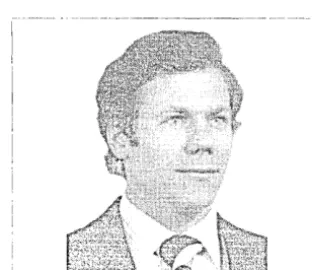
Gil Jones is retired from IBM in accor-dance with the company's policies gov-erning top executive tenure. Sixty last month, Gilbert E. Jones is still ener-getic and disciplined. He looks less like the 38-year veteran, vice chairman of the board stereotype, and more like the driving marketing executive and inter-nationalist, roles that took him to the top of IBM.
Jones's career has had the kind of rapid, steady progression to which young IBMers learn to aspire. He joined IBM as a sales rep soon after graduation from Harvard in 1938. He took time out to serve in the Navy during the war, then rejoined IBM and first surfaced at corporate levels in 1953 when he became executive assis-'tant to the president. Three years later
he was sales manager for the corpora-tion. After another three years he won the presidency of the prestigious Data Processing Div.
Jones's international career . coin-cided with IBM'S period of greatest growth and reorganization. overseas. He moved over to IBM World Trade in 1961 as vice president. There he was, in essence, the inside man while Arthur K. (Dick) Watson was the corpora-tion's ambassador and outside contact. "He had a dream, and he was able to project it to governments and to IBM chiefs in foreign countries," Jones re-calls. "He was a statesman like his fa-ther." Watson left Jones and a small group of exceptionally competent men the task of day-to-day management. They worked under the premise, as J ones notes, that "the best guys are the
hardest to manage." .
The independent thinkers and lead-ers assembled under the World Trade flag subjected themselves individually to tremendous work discipline. Jones is often credited with bringing a disci-plined, orderly approach to the collec-tion of relatively independent, scrappy country organizations that made up World Trade.
These foreign companies had been relatively autonomous through the for-ties and fiffor-ties. But with the rapid growth patterns and the proliferation of more complicated products as com-puters entered the scene, discipline, as well as innovation and drive, was
nec-February, 1977
essary. Jones and :-111s people brought two important ingredients to the World Trade recipe. Thel..first was the
impor-tance of scheduling. "You can't have a project without also having a schedule for the time it goes into production," he reiterates. Second was cost. "With-out knowing what the cost would be, you can't have rational development.'" That discipline, changed development completely in World Trade, permitting the "one-world" product line and a structure of control and coordination that is the envy of most other compa-nies. Jones stresses that while it may have been American engineering and development management that put the emphasis on getting the product at re-alistic cost . and schedule, the Euro-peans scored particularly high on indi-vidual inventiveness. "The European engineer is every bit as good
as
or better than his American counterpart,"GIL JONES ... energetic and disciplined
Jones says, then smiles as he adds: "Particularly in programming."
With a similar discipline and drive in World Trade marketing, the interna-tional organization grew from a country-by-country punch-card firm through the 1401, then the 360 era, and into the 370s. Its revenues grew tenfold in that decade, from about $300 million to almost $3 billion.
International business has become much more complicated now, and more important as well. The orderly, growth in World Trade helped the in-ternational organization achieve more than half the corporate profits, and half the revenues. As the seventies be-gan Jones was elected to IBM'S main board, then became chairman of World Trade. In February 1974 he became vice chairman of IBM'S board of directors.
Jone's classic and meteoric IBM ca-reer was not without mishaps-and these, too, are part of the cultural knowledge of IBMers. He is the most visible graduate of the "penalty box," a
unique IBM inst~tution that permits sinners to redeem themselves after a suitable incarceration. While J ones was still head of dp the population of cus-tomer engIneers in the V.S. sagged
(someone down the line worked too hard to cut down maintenance costs), which resulted in morale problems among overworked CE'S, and some jeopardy to the company's vital stan-dards of service. The company righted the imbalance quick,ly, and Jones spent nine months in a tiny office with few visible duties. After a short transitional job he went into the World Trade ex-ecutive position in late 1961. He has told the story himself at a number of gatherings. Its message is clear: keep trying.
When Jones returned to the corpo-rate fold in 1974 his international know how must have been a help at top corporate levels. With the fluctuating dollar and rapid changes in other cur-rencies, at a tim~ when the interna-tional business was even more impor-tant, IBM had to tread very carefully. J ones says the major reasons for the shift from leased to purchased systems have been the rapid changes in tech-nology, inflation (and the resulting fact that users can no longer be sure their monthly price-tag will remain the same), and a similar effect from cur-rency fluctuations. The structure of in-ternational labs and factories helps buffer the currency effects to some ex-tent, but the situation is "still compli-cated~ Jones points out that a mythical product announced at, say, $100 would initially have its prices every-where "in the world within $5 or $6 of the V.S. price. But as currencies and
manufacturing sites change, some products can become imbalanced over the years by as much as, say, $20 to $35. The company tries to keep the prices as similar as possible, but price controls in eight major countries com-plicate the matter still further.
Today, while most companies (en-couraged to some extent by their friendly neighborhood computer ven-dors) are trying to decentralize (or at least distribute themselves a little, IBM in Europe seems to be centralizing to some extent. "IBM Europe is becoming more of a single entity," Jones ex-plains. "You find a new organization
of functions today." ,
. Dick Watson deserves credit for the formation of World Trade and selec-tion of autonomous and often fiercely independent country leaders who were deeply rooted in their own countries and able to' root IBM just as firmly in the postwar era. Jones and his team are known among' World Traders as the ones who brought the order and disci-pline necessary for the ten-fold growth. He, in turn, gives credit to the. third