Abstract— This paper proposes an age artificial immune system (AAIS), for optimal order pickings in an Automated Storage and Retrieval System (AS/RS) with multiple input/ output stations. A mathematical model is presented to describe the characteristics of the AS/RS. It is optimized with the proposed algorithm, which is based on the clonal selection principle and the aging concept. Unlike conventional algorithms for artificial immune systems, the proposed algorithm consists of antibodies whose abilities to be cloned and to survive depend on their ages, and adopts a mutation scheme based on randomized rankings. To further improve the performance of AAIS, a crossover operator is also included in the algorithm to form the AAIS_CX algorithm. The performance of both algorithms is tested with the problems of optimal order pickings in an AS/RS with multiple input/output stations. Comparison of the results obtained by using AAIS_CX, AAIS, the techniques of nearest neighbor heuristics, genetic algorithms and ant colony systems clearly shows that AAIS_CX is superior to the other algorithms. Suggestions for future work are also included.
Index Terms— Artificial immune system, AS/RS, clonal selection, order picking.
I. INTRODUCTION
Many computational intelligence methodologies are inspired from natural phenomena, such as evolution and biological processes in human bodies. Artificial immune system, which has received much attention in recent years, is inspired from the immune system in human bodies. The technique is capable of learning and using memory to enhance the utilization of the available information. It is also well known for its efficiency in adapting to a changing environment. It has been applied to solve problems in a wide range of areas, such as pattern recognition, vehicle routing, and job shop scheduling.
Mak, Lau and Wang [1] have introduced the concept of aging in genetic algorithms for the design of virtual cellular manufacturing systems. They have assumed that the survival and birth rates of the chromosomes are age dependent, and that the chromosomes are discarded when their ages have exceeded a certain value. It has been shown that the aging concept is effective in preventing the search process from premature convergence. In this paper, an age artificial immune system (AAIS) based on the clonal selection principle and the aging
Manuscript received February 28, 2007.
K. L. Mak is Professor at the Dept. of Industrial and Manufacturing Systems Engineering (IMSE), the University of Hong Kong. (phone: 852-28592586; e-mail: [email protected]).
Peggy S. K. Lau is a PhD student at the Dept. of IMSE, HKU (e-mail: [email protected]).
concept is proposed. Unlike conventional algorithms for artificial immune systems, the proposed algorithm consists of antibodies whose abilities to be cloned and to survive depend on their ages, and adopts a mutation scheme based on randomized rankings. To further improve the proposed algorithm, a crossover operator is also included to form the AAIS_CX algorithm. Both algorithms are used to solve an order picking problem for an AS/RS with multiple input/output (I/O) stations. The results are compared with those of other metaheuristics like genetic algorithm (GA) and ant colony system (ACS).
This paper is organized as follows. Section 2 gives the literature review on the related topics. Section 3 describes the proposed algorithms and explains how they differ from conventional ones. Numerical experiments of optimizing the order picking sequence for an AS/RS with multiple I/O stations are presented in section 4. The conclusion and suggestions for further research are given in Section 5.
II. LITERATURE REVIEW
Artificial immune system (AIS) is inspired from the human immune system which consists of cells, molecules and organs. They form an identification mechanism which is capable of identifying and combating dysfunction from one’s cells and infectious microorganisms. In the immune system, antigen presenting cells (APC) ingest and digest harmful antigens found. They fragment the antigens into antigenic peptides which form major histocompatibility complex (MHC) molecules. T cells then recognize the MHC molecules and are activated to divide and secrete chemical signals to mobilize other components of the immune system, e.g. B-cells, to combat the antigens. B-cells which have receptor molecules of a single specificity on the surface then divide and differentiate into plasma cells which secrete antibodies, and the antibodies can neutralize antigens. In order to response to different antigens, a wide diversity of B-cells is needed and achieved by frequent mutation and editing of genes [2].
By mimicking human’s immune system, AIS can be applied to cases with no prior knowledge [3]. According to [3], there are 3 main categories of AIS. They are clonal selection principle based AIS, GA-aided AIS and immune networks. Clonal selection principle describes how the antibodies with higher affinity are selected, cloned and mutated, such that the population of antibodies can recognize and combat the present antigens better. CLONAGE [4] is one of the most popular algorithms based on this principle, which does not include any crossover operation among antibodies. GA-aided AIS makes
An age artificial immune system for order
pickings in an AS/RS with multiple I/O stations
use of the crossover operator in GA to form new antibodies on top of the clonal selection principle. Algorithms based on immune networks are inspired by the network principle among cells. It is suggested that B-cells are stimulated by antigens, and suppressed by other similar B-cells at the same time. This improves the diversity of cells and makes the algorithms more adaptable to a changing environment.
The proposed AAIS is based on the clonal selection principle. In AAIS, mutation is the only process which changes the antibodies, thus determining the efficiency of the algorithm. However, too much mutation may lead to loss of good antibodies. The difficulty can be overcome in some cases by including tailored made mutation schemes in the algorithms. For example, two tailor-made mutation processes, division processing with Simulated Annealing and escape processing were introduced in [5] for creating and integrating sub-tours among solutions to solve n-TSP problems. It was shown that the resulting algorithm is better than GA in terms of solution quality and computational time. Another clonal selection principle based algorithm called opt-IA was proposed in [6], which is a modification of CLONAGE [4]. In such an algorithm, B-cells are selected without duplication from the cloned population to form B-cells of the next generation. The remaining slots in the new population are filled up by randomly generated new B-cells. Unlike AAIS, the aging concept is not applied to the cloning and survival of antibodies in opt-IA. A B-cell is simply erased from the population at a particular age under the static strategy, or is erased with a probability governed by the equation, P
( )
(
e B)
B die
τ τ ln2/
1− −
= where
τ
B is the age of an antibody. To test the performance of opt-IA, the algorithm is applied with different hypermutation operators to solve trap functions and a protein structure prediction problem [6]. It is shown that opt-IA performs better than CLONAGE. Although opt-IA is parameter sensitive, the performance of the algorithm can be improved by simultaneously using different mutation schemes. In [7], the performances of CLONAGE and opt-IA are tested and compared by solving the one counting problem, trap functions, numerical functions, and the protein structure prediction problem. However, no test is conducted for common NP hard problems, like TSP and VRP.In the development of the age genetic algorithm (AGA), Mak, Lau and Wang [1] have introduced a more comprehensive age concept to enhance diversity in the population. The survival and birth rates of individuals in a population depend on their ages. Age-group l+1 of the new population is generated from age-group l according to the survival rate of the individuals. Individuals are selected as parents from different age groups according to their birth rates to give birth to new individuals. From the results reported in [1], AGA performs better than conventional GA. Compared with opt-IA, the age concept introduced in [1] is more comprehensive and brings larger effect on the search process.
Based on the clonal selection principal and the aging concept described above, the proposed AAIS is used to solve an order picking problem for an AS/RS with multiple I/O stations. Since the introduction of AS/RS 50 years ago, different models of the system have been widely used in different industries. AS/RS do not only minimize human efforts in handling materials, but also
increases the capability of handling heavy cargoes and allows computerized control to achieve optimal efficiency. Its advantages have been reported in many studies [8]. The order picking problem of an AS/RS has also been widely studied. Han [9] has shown that using dual command cycle in order pickings, the throughput of an AS/RS can be increased by 10-15%. Kanet [10] has detailed the cost related to the operations of an AS/RS and uses integer programming to determine the optimal operation sequence for retrieval of orders. Chetty and Reddy [11] have proposed a GA to solve the retrieval order sequencing problem for an AS/RS and have compared the algorithm with heuristics rules such as FCFS and NNB. The same problem has also been studied by Yin and Ran [12] using multiple pass GA. Lee and Schaefer [13] have presented both static and dynamic approaches to solve the order picking problem for an AS/RS with single I/O station. In the static approach, the optimal retrieval order sequence for a block of orders is determined. Once the orders have been completely processed, another block of orders is selected and its optimal retrieval order sequence determined. Berg and Gademann [14] have also applied a static block sequence approach to solve the order picking problem for an AS/RS with the I/O station located at an arbitrary position. They have modeled the problem as a transportation problem. Ghamai and Wang [8] have proposed a genetic algorithm to sequence retrieval orders for an AS/RS with multiple stock locations and shown that their algorithm performs much better than enumeration in terms of computational speed. However, the problem of optimizing both storage orders and retrieval orders simultaneously for an AS/RS with multiple I/O stations has received very little attention, although its solution has a profound effect on the operation of the system.
III. ALGORITHMS A. AAIS
In the proposed AAIS, antibodies are assigned with an attribute called age. The algorithm differs from opt-IA in that the number of antibodies selected to enter the next generation and the number of clones produced from each selected antibody depend on the ages of antibodies. Both the clonal rate and the survival rate of an antibody increase initially and decline gradually as its age. Table 1 shows an example which indicates that the antibody reaches its golden age at age =2, and is eliminated from the body at age = 4.
Table 1 Clonal and survival rates
Age 0 1 2 3 4
Clonal Rate 0.5 0.8 0.9 0.6 0.3
Survival Rate 0.4 0.6 0.6 0.3 0
The following notations are used to facilitate the presentation: t iteration index (t= 0,1,2…)
n population size
N number of orders to be sequenced
nf number of antibodies survived to iteration
t+1
nr number of new antibodies randomly
generated for iteration t+1 cri clonal rate at age i
m parameter in determining MN(t, a) Ab(t) the set of antibodies at iteration t Ab(t,a) antibody a at iteration t
CAb(t) the set of cloned antibodies at iteration t CAb(t,a) cloned antibody a at iteration t
CAb(t,best) the best cloned antibody at iteration t age(Ab(t, a)) age of Ab(t, a) at iteration t
age(CAb(t,a)) age of CAb(t, a) at iteration t
RAb(t,a) rank of the source of clones, Ab(t, a) among Ab(t)
Aff(Ab(t,a)) affinity of Ab(t, a) at iteration t Aff(CAb(t,a)) affinity of CAb(t, a) at iteration t
CN(t,a) number of clones created from selected Ab(t, a)at iteration t
TCN total number of clones created in each iteration
MN(t,a) number of mutation carried out for CAb(t, a) at iteration t
Pb(CAb(t,a)) probability of CAb(t, a) to be survived at iteration t
The basic procedures of the proposed age artificial immune system are outlined below:
Step 1: Set t =0, generate n antibodies randomly, and assign age(Ab(t,a)) = 0 for a = 1,2,3…n
Step 2:
a) Clone all the antibodies in Ab(t) to CAb(t,a). The number of clones created from Ab(t,a) is determined by:
( ) ( ) ( ) ( ) ( ) ( ) ( ) ⎟ ⎟ ⎟ ⎟ ⎠ ⎞ ⎜ ⎜ ⎜ ⎜ ⎝ ⎛ − × × × =
∑
= c n i i t CAb i t CAb age a t CAb a t CAb age n TCN Aff cr Aff cr round a t CN c 1 , , , , ) , (b) Assign: age(CAb(t,a)) = 0 for a = 1, 2, 3. .. (TCN-nc)
c) For x = 1, 2,…nc; a= (TCN-nc+1)… .(TCN-nc), copy Ab(t,x)
to the CAb(t,a), set age(CAb(t,a)) = age(Ab(t,x)).
Step 3: Mutate the cloned antibodies by interchanging sections of the antibodies. The mutation scheme of interchanging two orders in the solution is applied here. The number of times of mutation performed is determined by:
MN(t,a) = round(RAb(t,a)
×
rand(0,1)×
m)and no mutation is performed on CAb(t,a), for a= (TCN-nc+1)… .(TCN-nc)
Step 4: Set t = t +1; generate the population by: a) Copy nr randomly created antibodies to Ab(t,x)
b) Assign age(Ab(t,x)) = 0 for x = 1,2,.. nr.
c) Select nf antibodies from CAb(t-1) to Ab(t) and assign them
as Ab(t,x) for x = nr+1, …, nr +nf. with the following
probability ( ) ( ) ( ) ( ) TCN a for sr sr a t CAb Pb TCN i i t CAb age a t CAb age , , 2 , 1 )) , 1 ( ( 1 , 1 , 1 K = = −
∑
= − −d) Assign age(Ab(t, a)) = age(Ab(t-1, a))+1 for a= 1,2…TCN e) Copy CAb(t, best) to Ab(t, n)
Step 5: Check the pre-specified stopping condition. If it is satisfied, terminate the search process, and return the overall best solution as the final solution. Otherwise, go to step 2.
In human bodies, it is unreasonable to assume that the mutation for antibodies with the same affinity is always the same. So, a mutation scheme is proposed based on randomized ranking in step 3. The number of mutation operations performed is defined as round(RAb(t,a)*rand(0,1)*m). A random factor is added to introduce variations in the mutation for the antibodies of same affinity. Meanwhile, the ranking among the selected antibodies is still used as a guideline to direct the search process to more promising areas, as more clones are produced from better antibodies. Different degree of mutation performed on duplicated antibodies allows different degree of exploitation and exploration from the same solution. This prevents the search process from being trapped in a local optimum easily. Besides, it is important to maintain the antibody representing the overall best solution so far. If an antibody is found to be better than the overall best antibody, it replaces the overall best antibody to become the new overall best antibody. This enables the search process to converge to the global optimal solution regardless of the initial population distribution.
B. AAIS_CX
To further improve the performance of AAIS, a crossover operator is incorporated into the basic algorithm of AAIS to form the AAIS_CX. The procedures of AAIS_CX are outlined as follows:
Steps 1 – 3 are the same as steps 1–3 of AAIS. Step 4: Select a pool of candidate antibodies by:
a) Copy nr randomly created antibodies to the pool, assign
their ages = 0.
b) Select nf antibodies from all the CAb(t-1, a) with the
following probability: ( ( )) ( ) ( ) TCN a for sr sr a t CAb Pb TCN
i ageCAbt i
a t CAb age , , 2 , 1 )) , 1 ( ( 1 , 1 , 1 K = = −
∑
= − −c) Copy CAb(t, best) to the candidate pool
Step 5: Select antibodies from the whole population and assign them to the parent pool by using the 2-antibodies-competition process: select two antibodies randomly, and assign the one with higher affinity to the parent pool.
Step 6: Build Ab(t+1) by using the following steps:
a) Select antibodies from the candidate pool in accordance with their survival rate. An antibody can survive to the iteration t+1 if the random number generated is smaller than its survival rate corresponding to its age,
rand(0,1) <= sr age(CAb(t-1, a)).
b) Assume that y antibodies have survived. (n-y) children antibodies created by the crossover operations are selected to enter Ab(t+1). The crossover operations used can be any conventional crossover operation, such as EAX and single point crossover.
of parent 1 and parent 2 are candidates to be the first order to be picked in the child antibody. Between these two orders, the one which is feasible and closer to the origin should be selected. Assuming that order A is the 1st order of the child antibody. The orders immediately following order A in parents 1 and 2 are compared. The one which is feasible and closer to order A is selected as the next picking order in the child antibody. If both orders are infeasible, a feasible order is then selected randomly. The process continues until the whole child antibody is formed. Step 7: Check the pre-specified stopping condition. If it is satisfied, terminate the search process, and return the overall best solution as the final solution. Otherwise, go to step 2.
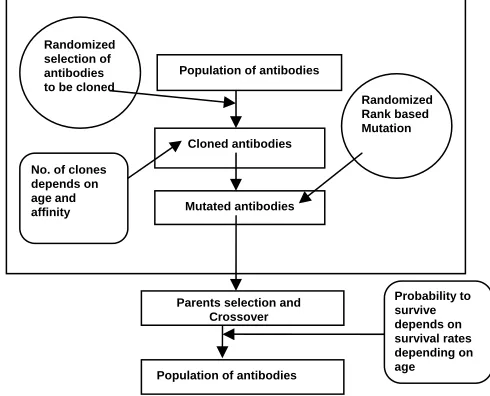
Figure 1 shows the flow of AAIS_CX. In general, the age concept is applied in the following areas:
1. Cloning: Under the conventional clonal selection principal, a highly affiliated antibody could produce a relatively large number of clones, which causes an imbalance between exploitation and exploration of the search space, resulting in the trapping of the search process into a local optimum. When the aging concept is applied to the cloning process, antibodies which have reached a certain age are discarded even though they possess high affinity, thus allowing less affiliated antibodies to be cloned. This results in a better balance between exploitation and exploration of the search space.
2. Survival: The survival probability of an antibody depends on its age. The abandonment of old antibodies with high affinity will provide room for new antibodies to enter the next generation during the search process. This improves diversity and prevents premature convergence.
IV. SYSTEM ANALYSIS
This study seeks to determine the optimal order picking sequence for an AS/RS with multiple I/O stations at an air cargo terminal. An optimal order picking sequence is essential to enhance the operational efficiency of the following three processes: (1) inbound cargoes are unloaded from planes and stored in the AS/RS before they are retrieved for order breaking service or picking up by customers, (2) outbound cargoes either arrive at the terminal in containers or as bulk cargoes, which are then packed together and stored in the AS/RS until they are retrieved to be loaded on planes, (3) some cargoes are reshuffled to better utilize the warehouse space. At each input station, storage orders are handled in a first-come-first-serve basis, and retrieval orders are taken from the rack to a particular output station, while reshuffle orders are moved from one rack to another.
All orders can simply be considered as of the same type but with different starting locations and destinations. It is assumed that the stacker crane is originally located at the origin, (0, 0), i.e. the bottom-left corner of the racks. Hence, the distance traveled in serving the first order is calculated as the sum of the distance traveled from the origin to the starting location of the first order and the distance traveled from the starting location to its destination. The distance traveled in serving any other order is calculated as the sum of the distance traveled between the destination of the preceding order to the starting location of the
[image:4.612.316.561.157.355.2]current order and the distance from the starting location to the destination of the current order. It is also assumed that the stacker crane will return to the origin after serving the last order. Therefore, the extra distance traveled after the last order is calculated as the distance traveled from the destination of the last order to the origin. The time to transfer containers between the crane and the racks is assumed to be negligible. Indeed, this problem can be formulated as a constrained traveling salesman problem (TSP).
Fig. 1 Structure and features of AAIS_CX A. Mathematical Model
The following notations are used in the development of the mathematical model.
tβk traveling time for the order βk
tlast traveling time of the extra distance traveled after all
orders are finished
βk an order to handled by the stacker crane. {β1, β2, .. βN}
is therefore a sequence of N orders to be handled. N number of orders
k
g
Wβ horizontal distance traveled to the starting location of
order βk
k
g
H β vertical distance traveled to the starting location of order βk
k
p
Wβ horizontal distance traveled to the destination of order βk
k
p
H β vertical distance traveled to the destination of order βk Wlast horizontal distance traveled after finishing the last order
Hlast vertical distance traveled after finishing the last order k
w
S β column index of the starting location of order βk k
h
Sβ row index of the starting location of order βk k
w
D β column index of the destination of order βk k
h
Dβ row index of the destination of order βk
h height of a rack w width of a rack SPh horizontal speed
SPv vertical speed
IPx The set of storage order from the input station x
Parents selection and Crossover
Population of antibodies Population of antibodies
Cloned antibodies
Mutated antibodies Randomized
selection of antibodies to be cloned
No. of clones depends on ageand affinity
Randomized Rank based Mutation
k
x
Indβ Index of storage order βk in the input station x, i.e. if
order βk is the 1st order at input station x, then k
x Indβ will be 1
The objective of the model is to minimize the time needed to handle all orders at the AS/RS, including storage, retrieval and reshuffle orders:
Minimize {
∑
= n
k k
t
1
β + tlast} (1)
where
⎭ ⎬ ⎫ ⎩
⎨ ⎧ + ⎭ ⎬ ⎫ ⎩
⎨ ⎧ =
v p
h p
v g
h g
SP H SP W SP
H SP W
t k k k k
k
β β β
β
β max , max , (2)
1
1 ∀ ≠
− ×
=w S D − k
Wgβk wβk wβk (3) 1
1 ∀ ≠
− ×
=h S D − k
Hgβk hβk hβk (4) 1
0 ∀ =
− ×
=w S k
Wgβk wβk (5) 1
0 ∀ =
− ×
=h S k
Hgβk hβk (6) k
S D w W
k k
k w w
pβ = × β − β ∀ (7) k
S D h H
k k
k h h
pβ = × β − β ∀ (8)
⎭ ⎬ ⎫ ⎩
⎨ ⎧ =
w last
h last
last SP
H SP W
t max , (9) n
k D
w
Wlast= × wβk −0 ∀ = (10) n
k D
h
Hlast= × hβk −0 ∀ = (11)
Subject to b > a if
a
x
Ind β < Indxβb ∀βa,βb ∈IPx,∀x=1,2,3 (12)
Equation (1) shows that the objective function represents the total traveling time of the stacker crane, which consists of two parts: (1) the total amount of time required to handle orders 1 to N, and (2) the amount of time required to travel back to the origin after order N has been completed. Hence, minimizing this objective function is equivalent to maximizing the throughput of the stacker crane which is defined as 3600/ (objective value /N). Equation (2) calculates the time required to handle one order. It is the summation of the time needed to travel the distance from the destination of the preceding order to the starting location of the current order and the distance from the starting location of the current order to its destination. As the stacker crane can move horizontally and vertically simultaneously, the time is measured as the maximum of the times needed to complete the horizontal movement and the vertical movement, respectively. Equations (3) and (4) calculate the horizontal (vertical) distance traveled by multiplying the width (height) of a rack with the differences of the column (row) indexes for the 2nd to the Nth orders. Equations (5) and (6) calculate the horizontal (vertical) distance for the 1st order when the column (row) indexes of the origin are zero. Equations (7) and (8) calculate the horizontal and vertical distances from the starting location of an order to its destination. Equation (9) calculates the time for the stacker crane to travel back to the origin after all orders are finished, which is the maximum of the time given by equations (10) and (11), of completing the horizontal movement and the vertical movement, respectively.
Constraint (12) states that storage orders βa and βb, waiting at
the same input station with order βa precedes order βb, should be
handled in a first-come-first-serve manner. It is because the stacker crane cannot access order βb before order βa has left the
station. Hence, if
a
x
Indβ < Indxβb , order βa precedes order βb,
its position in the entire order sequence must be larger than that of order βa, and if Indxβa>1, order βa cannot occupy the first
position of the entire order sequence. B. Experiments
The proposed AAIS and AAIS_CX are used to determine the optimal order picking sequence for an AS/RS. To evaluate the algorithms, their performances are compared with that of nearest neighbor heuristics (NNB), genetic algorithm (GA), and ant colony system (ACS). In order to satisfy constraints (12) and (13), special heuristics is embedded in the procedures of GA, ACS, AAIS and AAIS_CX to ensure that every solution remains feasible throughout the search process.
In the AS/RS, there is only one aisle, with 16x9 storage racks on each side of the aisle. There are 3 input and 3 output stations located on different floors. The output stations are located at the racks (3, 5), (3, 7) and (3, 9), while the input stations are located at the racks (6, 1), (6, 3) and (6, 7). 18 randomly generated test cases are used in the experiments. The cases consist of 20, 50 and 100 orders. The percentage of storage, retrieval and reshuffle orders are 35%, 55% and 10%, respectively.
In the experiments, ACS algorithm runs 1000 iterations with 10 ants for cases with 20 and 50 orders, and only 500 iterations for cases with 100 orders to keep the computation time at a reasonable level. As suggested in the literature [15], the parameters qo and τoare set as 0.9 and 1/C
NNB
, respectively, β is chosen from the range [2, 5], and both ρ and ξ are chosen from the range [0.1, 0.9]. GA runs 100 iterations with a population size of 100 for test cases with 20 and 50 orders, and 200 iterations for cases with 100 orders to achieve better results. AAIS and AAIS_CX run 500 iterations with a population size of 100, and a clone size of 200 respectively. All the algorithms are programmed in JAVA and run on a Pentium IV 3.2 GHz computer with 512M Ram.
C. Results and Discussion
Tables 2 and 3 summarize the best and the average of the best solutions obtained by running each of the algorithms 10 times, as well as the average of the corresponding computation time needed to achieve the best solutions. Figures 3 and 4 show the convergence behavior of the search processes of GA, ACS, AAIS and AAIS_CX in one typical run.
differences become smaller as the number of orders increases. Moreover, it can be seen from figures 3 and 4 that both AAIS and AAIS_CX have better exploration ability in searching for the “optimal” solution. The aging concept prevents the search process of both algorithms from premature convergence, while the clonal selection process keeps exploring areas with promising results. Hence, both AAIS and AAIS_CX are efficient methodologies for solving order picking problems, especially when the number of orders is large.
V. CONCLUSIONS
In this paper, an Age Artificial Immune System (AAIS) has been proposed. The aging concept is used to govern the cloning and survival of antibodies. To further enhance the performance of the algorithm, a crossover operator is added to AAIS to form the Age Artificial Immune System with Crossover (AAIS_CX). The algorithms have been tested by solving an order picking problem for an AS/RS with multiple input/ output stations. It is shown that the performance of AAIS_CX is better than that of AAIS, GA and ACS in all test cases. Indeed, the proposed AAIS and AAIS_CX are efficient and effective means for optimizing order picking sequences.
Although AIS has been shown to be efficient in optimization, the parameters of the algorithm, such as survival, clonal rates, and numbers of mutation, need to be fine-tuned for good performance. Therefore, future research can focus on designing algorithms in which the parameters change adaptively to the environment. In addition, the convergence behaviour of the proposed algorithms should also be investigated.
REFERENCES
[1] K. L. Mak, J. S. K. Lau, and X. X. Wang. A genetic scheduling methodology for virtual cellular manufacturing systems: an industrial application. International Journal of Production Research, vol. 43, 2005. [2] L. N. d. Castro and F. J. V. Zuben, Artificial Immune Systems: Part I- Basic Theory and Applications. Technical Report TR-DCA 01/99, 1999. [3] X. Wang, X. Z. Gao, and S. J. Ovaska, Artificial Immune Optimization
Methods and Applications - a Survey, 2004
[4] L. N. d. Castro and F. J. V. Zuben, Learning and Optimization Using the Clonal Selection Principle. IEEE Trans. on Evolutionary Computation,
vol. 6, 2002. 239-251
[5] S. E. Naruaki Toma, Koji Yamada, An Immune Co-evolutionary Algorithm for N-th Agent's Traveling Salesman Problem. Proceedings
2003 IEEE International symposium on Computational Intelligence in Robotics and Automation, July 16-20, 2003
[6] V. Cutello, G. Nicosia, and M. Pavone, Exploring the Capability of Immune Algorithms: A Characterization of Hypermutation Operators.
Proceedings of Artificial Immune Systems: Third International Conference, ICARIS 2004, Catania, Sicily, Italy, September 13-16, 2004. Lecture Notes in Computer Science vol. 3239, 2004. 263-276
[7] G. N. Vincenzo Cutello , Giuseppe Nicosia and Mario Pavone, Clonal Selection Algorithms: A Comparative Case Study Using Effective Mutation Potentials. Lecture Notes in Computer Science Artificial
Immune Systems vol. 3627: Proceedings of 4th International Conference, ICARIS 2005, Banff, Alberta, Canada, August 14-17, 2005.
[8] Yaghoub Khojasteh Ghamari and S. Wang, A Genetic Algorithm for Order Picking in Automated Storage and Retrieval Systems with Multiple Stock Locations. IEMS, vol. 4, no. 2, 2005, 136-144.
[9] M.H. Han, L.F, McGinnis, J.S. Shieh, J.A. White, On Sequencing Retrievals in an Automated Storage/ Retrieval System, IIE
Transactions.1987. 56 -66
[10] John J. Kanet and Richard G. Ramirex, Optimal Stock Picking Decisions in Automated Storage and Retrieval Systems. OMEGA Int. J. of Mgmt Sci., vol. 14, no. 3, 1986. 239-244.
[11] O. V. Krishnaiah Chetty and M. Sarveswar Reddy, Genetic Algorithm for studies on AS/RS integrated with machines. Int J Adv Manuf Technol vol. 22, 2003. 932-940.
[12] Y.L. Yin and H. Rau, Dynamic selection of sequencing rules for a class-based unit-load automated storage and retrieval system.
International Journal of Adv. Manufacturing Technology, published online 2005.
[13] H. Felix Lee and S. K. Schaefer, Sequencing Methods for Automated Storage and Retrieval Systems with Dedicated Storage. Computers ind.
Engng, Vol. 32, No. 2, 1997. 351-362
[14] Jeroen P. van den Berg and A..J. R.M. (NOUD) Gademann, Optimal routing in an automated storage/retrieval system with dedicated storage,
IIE Transactions, vol.31, 1999. 407-415.
[15] M. Dorigo and T. Stutzle, Ant Colony Optimization, United States of America: The MIT Press, 2004
1000 1050 1100 1150 1200 1250 1300 1350
0 2 4 6 8 10 12 14 16 18 20 22 24 time(s)
o
b
je
ct
iv
e va
lu
e
ACS AAIS GA AAIS_CX
2100 2200 2300 2400 2500 2600
0 8 16 24 32 40 48 56 64 72 80 88 96 104
time (s)
o
b
jec
ti
ve
v
al
u
e
ACS AAIS GA AAIS_CX
Fig. 3 Best-of-all solutions against time in the case 7 (50 orders) for GA, ACS, AAIS and AAIS_CX; Fig. 4 Best-of-all solutions against time in the case 13 (100 orders) for GA, ACS, AAIS and AAIS_CX
Table 2 Results of NNB, AAIS, AAIS_CX, ACS and GA in cases of 20 and 50 orders
Case
/order NNB AAIS AAIS_CX ACS GA
avg best time avg best time avg best time avg best Time
13/100 2395 2155 2146 22.3 2139 2132 38.3 2297 2276 32.2 2263 2257 94.4 14/100 2445 2206 2176 24.2 2162 2156 36.9 2303 2263 30.5 2292 2280 81.9 15/100 2443 2231 2201 26.4 2192 2173 47.8 2364 2343 24.5 2337 2322 74.0 16/100 2731 2561 2552 30.1 2524 2520 46.6 2660 2621 27.3 2621 2605 82.2 17/100 2701 2469 2439 37.6 2431 2419 43.9 2577 2539 31.8 2529 2471 102.3 18/100 2698 2485 2479 36.4 2434 2427 42.7 2606 2566 33.7 2522 2508 73.9
Table 3 Results of NNB, AAIS, AAIS_CX, ACS and GA in cases of 20 and 50 orders
Case
/order NNB AAIS AAIS_CX ACS GA avg best time avg best time avg best time avg best Time