Exploring Recombination for
Efficient Decoding of Neural Machine Translation
Zhisong Zhang∗, Rui Wang2,†, Masao Utiyama2, Eiichiro Sumita2 and Hai Zhao1,†
1Department of Computer Science and Engineering, Shanghai Jiao Tong University
2National Institute of Information and Communications Technology (NICT)
{wangrui, mutiyama, eiichiro.sumita}@nict.go.jp, [email protected]
Abstract
In Neural Machine Translation (NMT), the decoder can capture the features of the en-tire prediction history with neural connections and representations. This means that partial hypotheses with different prefixes will be re-garded differently no matter how similar they are. However, this might be inefficient since some partial hypotheses can contain only local differences that will not influence future pre-dictions. In this work, we introduce recom-bination in NMT decoding based on the con-cept of the “equivalence” of partial hypothe-ses. Heuristically, we use a simple n-gram suffix based equivalence function and adapt it into beam search decoding. Through exper-iments on large-scale Chinese-to-English and English-to-Germen translation tasks, we show that the proposed method can obtain similar translation quality with a smaller beam size, making NMT decoding more efficient.
1 Introduction
Recently, end-to-end Neural Machine Translation (NMT) models (Sutskever et al.,2014;Bahdanau et al., 2015) have achieved notable success. A remarkable characteristic of NMT is that the de-coder, which is typically implemented using Re-current Neural Network (RNN), can capture the features of the entire decoding history. This model
∗
Zhisong Zhang was a graduate student at SJTU and a re-search intern at NICT when conducting this work. This work is partially supported by the program “Promotion of Global Communications Plan: Research, Development, and Social Demonstration of Multilingual Speech Translation Technol-ogy” of MIC, Japan. Hai Zhao was partially supported by National Key Research and Development Program of China (No. 2017YFB0304100), National Natural Science Foun-dation of China (No. 61672343 and No. 61733011), Key Project of National Society Science Foundation of China (No. 15-ZDA041), The Art and Science Interdisciplinary Funds of Shanghai Jiao Tong University (No. 14JCRZ04). Thanks a lot for the helpful discussions with Kehai Chen.
†
Co-corresponding authors
Src 有 消息 说 , 这 两 个 城市 的 工人 已
经 成立 了 独立 工会 .
Ref some sources said that the workers in::::these:::two
::::cities have established ...
according to some sources , the workers of ::::
these:::two::::citieshave(−0.075) already(−0.331) set(−0.536) up(−0.001) ...
Output according to some sources , workers of
::::
these:::two::::citieshave(−0.073) already(−0.248) set(−0.783) up(−0.001) ...
it has been reported that the workers of
::::
[image:1.595.307.522.467.569.2]these:::two::::citieshave(−0.058) already(−0.414) set(−0.608) up(−0.001) ...
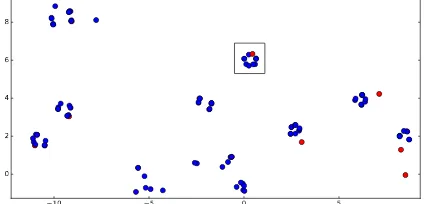
Table 1: Example of similar partial hypotheses in beam search. The hidden layers of the partial hypotheses ending with “cities” correspond to the nodes box ed in Figure1(only three hypotheses are listed for brevity). The negative log probabilities calculated by the model for the words predicted after “cities” are given in parentheses.
10 5 0 5
0 2 4 6 8
Figure 1: t-SNE visualization (Maaten and Hinton,2008) of the recurrent hidden layer vectors for partial hypotheses for the example in Table1. Reference and prediction hypothe-ses are presented as red and blue nodes, respectively. The nodes inside the box represent the hidden features of partial hypotheses ending with “cities”.
does not depend on any independence assump-tions and treats sequences with different prefixes as totally different hypotheses. However, many of the NMT output sequences are quite similar and they typically contain only local differences that do not influence future decoding significantly.
Algorithm 1Merging for Beam Search.
Require: list of sorted candidatesC; beam sizek; equivalence functionEq.
Ensure: list of candidates surviving in the beam:C0. 1: C0= [ ]
2: # Scan according to the sorted order.
3: forcinC:
4: merge flag =False
5: # Check previous surviving states for merging.
6: forsinC0:
7: # Check with candidate merger states.
8: fors0insequence(s):
9: ifEq(c,s0)andscore(c)<score(s0): 10: merge flag =True
11: # Pruning by the merger.
12: if notmerge flag: 13: C0.append(c)
14: # Pruning by the beam size.
15: iflen(C0)>=k:
16: break
17: return C0
end with “cities” share similar patterns. Firstly, as shown in Figure1, their hidden layer features are close in the latent space. Moreover, for future pre-dictions, the model predicts identical sequences and gives similar scores for them. Although go-ing through different paths, these partial hypothe-ses appear to be similar or likely equivalent.
Intuitively, for efficiency, we do not need to ex-pand all of these partial hypotheses (states) since they have similar future predictions. In fact, this corresponds to the idea of hypothesis recombi-nation (also known as state merging, which will be used interchangeably) from traditional Phrase-Based Statistical Machine Translation (PBSMT) (Koehn et al., 2003). Given a method to find mergeable states, we can employ recombination in NMT decoding as well.
In this paper, we adopt the mechanism of recombination in NMT decoding based on the definition of “equivalence” of partial hypothe-ses. Heuristically, we try a simple n-gram suf-fix based equivalence function and apply it to beam search without adding any neural computa-tion cost. Through experiments on two large-scale translation tasks, we show that it can help to make the decoding more efficient.
Most recent NMT studies have focused on model improvement (Luong et al.,2015;Tu et al.,
2016b;Gehring et al.,2017;Vaswani et al.,2017), and only a few have studied the search problem di-rectly. For example,Khayrallah et al.(2017) and
Stahlberg et al.(2016) explored searching on lat-tices generated by traditional Statistical Machine Translation (SMT). In addition, Freitag and
Al-Onaizan(2017) investigated different beam search pruning strategies; however, they primarily fo-cused on pruning candidates locally. (Niehues et al., 2017) analyzed the effects of modeling and searching, but focused on re-ranking analy-sis. Rather than considering candidates from other model’sk-best lists, we focus on the own explo-ration space of a single NMT model and provide a method for more efficient searching.
2 Method
For state merging, “equivalence” should be de-fined from the aspect of future predictions: states with the same predictions in the future decoding process can be regarded as equivalent. We use an equivalence functionEq(s1, s2)to denote that the
two statess1ands2can be regarded as equivalent.
With the concept of equivalence, we can build the method of recombination over it. There are mainly two problems to solve:
1. How to merge states given functionEq? (§2.1) 2. How to obtain this equivalence function? (§2.2)
2.1 Search with Merging
To adopt an equivalence function Eq(s1, s2) to
merge states in a search process, we need to spec-ify the logic of the merging mechanism. Here, without loss of generality, we specifically focus on the typical beam search.
We adopt merging in NMT beam search with a simple method: retaining the word-level search process and adding a state merger when pruning the beam at each time step. Algorithm1shows the proposed merging-enhanced pruning method.
Ordinary beam search only prunes candidates based on beam size (Lines 15-16), while the pro-posed method adds a merger to prune extra equiv-alent states (Lines 6-10). To manage the merging process, candidate list C are ordered1 by model score and considered in turn. When checking equivalence for one candidate state c, we con-sider all current-step surviving states and their step antecedences. We include previous-step states, because equivalent states may have dif-ferent sequence lengths and thus not be in the same beam-search step. In Line 8, we define “sequence” as a function of obtaining the possible states that
1
can merge the current candidatec. If a candidate statecis not merged with any higher-ranked state, it is added to the surviving list C0 (Line 13) and can possibly merge the lower-ranked ones later.
When deciding whether to merge, we also con-sider a criterion on model scores: we only merge statec when its score is lower than s0. Since we also consider previous-step states with different sequence lengths, a length rewardλis added for this comparison of partial hypotheses: score(s) = P
y∈sλ+ logp(y). We also attempted length
nor-malization, but found it performed slightly worse. The merged partial hypotheses can be stored, and by assuming that their future predictions will be the same as their mergers, a lattice-like trans-lation graph can be obtained. We can further ex-tract k-best list from this structure using another beam-search on the lattice (also with length re-ward when comparing partial hypotheses). Note that this beam search process can be fast, since we reuse the model scores from previous search and no extra neural computations will be included.
2.2 Equivalence Function
Finding an exact equivalence function for NMT is difficult, because future predictions relies on the features from the entire previous sequence and any different sequences are not the same according to the NMT model. Here, we consider an-gram suf-fix based heuristic approximation for this problem. We adopt an approximate equivalence function:
Eq0(s1, s2) ≡ s1.suf f ix(n) =s2.suf f ix(n)
∧ |s1.length−s2.length|< r
Here,suf f ix(n) represents then-gram suffix of the sequence of a state, andr is the threshold for the length different of the two states.
This definition of equivalence only considers a subset of state features, which are inspired by PB-SMT. In PBSMT, different sequences could lead to states with identical features based on n-gram suffix, and these states are exactly equivalent. Al-though this is not the case for NMT, the subset may encodes important and relevant features.
Although this function is simple and brings ex-tra approximation, it has the merit of efficiency. In Algorithm1, we can store then-gram features of the surviving states in a hash-map and replace the for-loop checking (Line 6-10) with hashing, making the extra time-complexity O(1) for each state. During experiments, we found the extra cost
brought by feature matching is far less than the cost of original neural computation.
3 Experiments and Analysis
The proposed method was evaluated on two trans-lation tasks: NIST Chinese-English (Zh-En) and WMT English-German (En-De). For Zh-En, the training set comprised 1.4M sentences pairs from LDC corpora. NIST 02 was selected as the devel-opment set and NIST 03 to 06 were used for test-ing. For En-De, 4.5M WMT training data were utilized, the concatenation of newstest 2012 and 2013 was adopted as the development set, and newstest 2014 to 2016 were adopted as the test set. We implemented2 an attentional RNN-based NMT model and its decoder in Python with the DyNet toolkit (Neubig et al., 2017). All the ex-periments were carried out on one P100 GPU. For Zh-En, we set the vocabulary size of both sides to 30K, and for En-De, we adopted 50K BPE opera-tions (Sennrich et al.,2016). The evaluation met-ric was tokenized BLEU (Papineni et al., 2002) calculated bymulti-bleu.perl. Detailed set-tings can be found in the supplementary material.
We added a local threshold pruner to exclude unlikely words whose probabilities were less than 10% of the highest and adopted length normaliza-tion for final hypotheses ranking. For comparing partial hypotheses, the length rewardλwas set to 1.0 and 0.4 for Zh-En and En-De, respectively. For the equivalence function, we utilized a suffix of 4-gram and a length difference thresholdrof 2.
These hyper-parameters were set by prelim-inary experiments. For the length difference thresholdr, we found that relatively small r like 1 or 2 was better than larger ones, which is rea-sonable since if the merged hypotheses differs too much in length, there are higher chances that they covered different information. Forn-gram suffix, we found smallern-grams made more bad merges and 4-gram is a reasonably good choice, slightly larger ones gave slightly worse results and also less chances of recombination.
3.1 Results
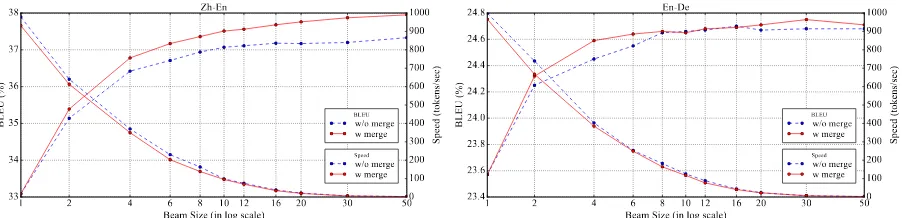
Figure2show the results of various beam sizes on the concatenation of all test sets. Separate results are given in the supplementary material.
As shown by the speed curves, merging adds little extra cost (less than 10%) to decoding at
%HDP6L]HLQORJVFDOH
%/(8
=K(Q
%/(8
ZRPHUJH ZPHUJH
6SHHGWRNHQVVHF
6SHHG
ZRPHUJH ZPHUJH
%HDP6L]HLQORJVFDOH
%/(8
(Q'H
%/(8
ZRPHUJH ZPHUJH
6SHHGWRNHQVVHF
6SHHG
[image:4.595.75.526.63.172.2]ZRPHUJH ZPHUJH
Figure 2: Translation quality and speed of Zh-En and En-De test sets (5453 sentences by concatenating NIST 03 to 06 and 8171 sentences by concatenating newstest 2014 to 2016, respectively).
the same beam size. Moreover, since bringing no extra neural computations, the proposed merging mechanism is transparent to neural architectures and easy to adopt. In our experiments, we used batched decoding on GPU and merging did not in-fluence the efficiency of this implementation.
For translation quality, the results indicate that the proposed methods can yield improvements at various beam sizes for Zh-En and small beam sizes for En-De. Moreover, in some way, merging can make the search more efficient. For example, in both datasets, merge-enhanced searchers with beam-size 6 can obtain comparable or better re-sults compared to those of ordinary searchers with beam-size 12 (on BLEU, 37.17 vs. 37.11 for Zh-En, 24.64 vs. 24.67 for En-De). As for decoding speed, the one of beam-size 6 can be more than twice of the one of beam-size 12 (over 200 to-kens/second vs. around 100 toto-kens/second). That is to say, with merging, we can achieve similar translation quality with a smaller beam size, which leads to higher decoding speed.
The results show that for large beam sizes, ex-panding explored search space by increasing beam size or adopting merging helps more in Zh-En than En-De. A possible explanation for this is that in NIST Zh-En dataset, each source sentences has four references for evaluation, which encour-ages the diversity brought by expanding reached search space. In Table2, we compare the BLEU scores with multiple and single references on sev-eral beam sizes, and the single-reference results does not always increase along the beam size like the multiple ones. The En-De dataset also has only one reference and is similar to this case.
The results also show that expanding explored search space does not always bring improvements. This concerns more on modeling than searching and corresponds with previous findings on the re-lations between NMT searching and modeling (Tu et al.,2016a;Niehues et al.,2017;Li et al.,2018).
Ref\Beam 10 16 30 50
[image:4.595.323.510.204.244.2]Multi-Ref 37.07 37.17 37.19 37.32 Single-Ref 18.23 18.29 18.23 18.26
Table 2: Comparisons of multi- and single-reference BLEU scores of NIST 03-06 with “w/o merging”. “Multi-Ref” uses all four references, and “Single-Ref” only uses the second one, whose evaluations disagree most with “Multi-ref”.
The potential of the proposed method might be better realized with improved NMT models.
3.2 Analysis
We further analyzed the merge-enhanced search process. For these analyses, we mainly checked decoding with a beam size of 10 on Zh-En dataset.
Frequency of Merging First, we investigated
how often recombination occurs and how much it expands the explored output space. For a beam size of 10, with influences from the local pruner and the proposed merger, the average expanding size is 7.60 for each step, and the average num-ber of merger-pruned partial hypotheses is 0.61 per step (22.5 per sentence). This indicates that a partial hypothesis is recombined in every two steps. The output translation graph can hold much more output space than the originalk-best list, and we found that on average the possible output se-quences were averagely 200 times the beam size. Figure3shows an example of the output transla-tion graph.
Merging and Similarity of Hidden States It is
according to reports , workers of these two cities have established independent trade unions .
reported sources
sources some
has was
set
the up
, already independent trade unions .
already
, workers of these
workers of these two cities have
it is
workers of these two cities
in these two cities have
in these two cities have set
the workers of these two cities have already up independent trade unions .
been that
the workers of
the workers of these
set up
an
independent trade unions .
independent trade union .
an independent trade union .
established independent trade unions formed independent trade unions .
established independent trade unions . in these two cities have
[image:5.595.78.524.66.252.2]reported that the workers of these reported that the workers
Figure 3: An example output translation graph. The red nodes and dashed arrows indicate merge points.
Beam w/ merge w/o merge
1 1.6% / 90.6% 1.6% / 90.6%
4 8.0% / 51.3% 5.2% / 54.8%
10 29.1% / 15.7% –
16 44.5% / 11.8% 28.2% / 5.6%
30 64.6% / 20.3% 56.4% / 20.2%
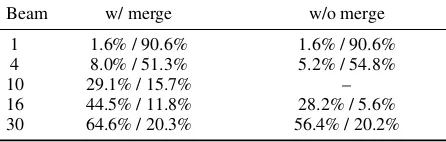
Table 3: Comparisons of prediction model scores between different searching settings and a basic setting, which is “Beam=10, w/o merge”. The pattern “a%/b%” means that compared with the basic setting, a%of the sentences get higher model scores andb%get lower ones. For the rest (1-a%-b%), they give identical predictions.
threshold) in the equivalence function, however, we found that this does not bring obvious addi-tional benefits.
Effects of Merging We further conducted
com-parisons between the predictions of ordinary and merge-enhanced beam search. First, we investi-gated the model scores of their predictions. As shown in Table 3, we selected “Beam=10, no merge” as the basic setting, and compared the pre-dictions of other settings with it. Overall, the merge-enhanced searcher can obtain higher model score predictions, which suggests its stronger search ability, because the goal of searching is to return hypotheses with higher model scores.
Moreover, we tried a re-ranking experiment on 100-best lists with 4-checkpoint-model-ensemble, and only found similar slight improvements for plain and merge-enhanced search. Nevertheless, since merge-enhanced search can obtain a output translation graph, we expect that the graph can contain more diverse hypotheses.
To verify this, we compared the oracle BLEU scores within the reached space. To extract
or-acle hypotheses from the translation graphs, we simply adopted approximate Partial BLEU Ora-cle (Dreyer et al., 2007; Sokolov et al., 2012). Merge-based searcher could obtain an oracle score of 47.83, while ordinary beam searcher could only get 42.57. Only by increasing the beam size up to 100 could the ordinary beam searcher achieve a better result of 48.74. This indicates that recombi-nation helps to touch more output space.
4 Conclusion and Discussion
In this work, 1) we show that decoding with heuristic recombination can obtain similar trans-lation qualities with smaller beam sizes, thus in-creasing efficiency, and, 2) we empirically explore the decoding process and analyze the influences of recombination from various aspects.
Although the improvements brought by recom-bination depend on careful refinements of the model, this concerns more on modeling, since the goal of decoding is to find hypotheses with higher model scores. The potential of recombination may be further realized by improving how the output sequences are modeled. Another interesting topic will be the combination with SMT or extra larger language models (Wang et al.,2013,2014).
[image:5.595.75.298.296.367.2]References
Dzmitry Bahdanau, Kyunghyun Cho, and Yoshua Ben-gio. 2015. Neural machine translation by jointly learning to align and translate. InICLR.
Markus Dreyer, Keith Hall, and Sanjeev Khudanpur. 2007. Comparing reordering constraints for smt us-ing efficient bleu oracle computation. In Proceed-ings of SSST, NAACL-HLT 2007 / AMTA Workshop on Syntax and Structure in Statistical Translation, pages 103–110, Rochester, New York.
Markus Freitag and Yaser Al-Onaizan. 2017. Beam search strategies for neural machine translation. In
Proceedings of the First Workshop on Neural Ma-chine Translation, pages 56–60, Vancouver.
Jonas Gehring, Michael Auli, David Grangier, and Yann Dauphin. 2017. A convolutional encoder model for neural machine translation. In Proceed-ings of the 55th Annual Meeting of the Association for Computational Linguistics, pages 123–135, Van-couver, Canada.
Huda Khayrallah, Gaurav Kumar, Kevin Duh, Matt Post, and Philipp Koehn. 2017. Neural lattice search for domain adaptation in machine translation. In
Proceedings of IJCNLP, pages 20–25, Taipei, Tai-wan.
Philipp Koehn, Franz Josef Och, and Daniel Marcu. 2003. Statistical phrase-based translation. In Pro-ceedings of the 2003 Conference of the North Amer-ican Chapter of the Association for Computational Linguistics on Human Language Technology, pages 48–54.
Yanyang Li, Tong Xiao, Yinqiao Li, Qiang Wang, Changming Xu, and Jingbo Zhu. 2018. A simple and effective approach to coverage-aware neural ma-chine translation. InProceedings of the 56th Annual Meeting of the Association for Computational Lin-guistics, volume 2, pages 292–297.
Thang Luong, Hieu Pham, and Christopher D. Man-ning. 2015. Effective approaches to attention-based neural machine translation. InProceedings of the 2015 Conference on Empirical Methods in Natu-ral Language Processing, pages 1412–1421, Lisbon, Portugal.
Laurens van der Maaten and Geoffrey Hinton. 2008. Visualizing data using t-SNE. Journal of machine learning research, 9(Nov):2579–2605.
Graham Neubig, Chris Dyer, Yoav Goldberg, Austin Matthews, Waleed Ammar, Antonios Anastasopou-los, Miguel Ballesteros, David Chiang, Daniel Clothiaux, Trevor Cohn, et al. 2017. Dynet: The dynamic neural network toolkit. arXiv preprint arXiv:1701.03980.
Jan Niehues, Eunah Cho, Thanh-Le Ha, and Alex Waibel. 2017. Analyzing neural mt search and model performance. In Proceedings of the First
Workshop on Neural Machine Translation, pages 11–17, Vancouver.
Kishore Papineni, Salim Roukos, Todd Ward, and Wei-Jing Zhu. 2002. BLEU: a method for automatic evaluation of machine translation. InProceedings of 40th Annual Meeting of the Association for Com-putational Linguistics, pages 311–318, Philadelphia, Pennsylvania, USA.
Rico Sennrich, Barry Haddow, and Alexandra Birch. 2016.Neural machine translation of rare words with subword units. InProceedings of the 54th Annual Meeting of the Association for Computational Lin-guistics, pages 1715–1725, Berlin, Germany.
Artem Sokolov, Guillaume Wisniewski, and Francois Yvon. 2012. Computing lattice bleu oracle scores for machine translation. InProceedings of the 13th Conference of the European Chapter of the Associa-tion for ComputaAssocia-tional Linguistics, pages 120–129, Avignon, France.
Felix Stahlberg, Eva Hasler, Aurelien Waite, and Bill Byrne. 2016. Syntactically guided neural machine translation. InProceedings of the 54th Annual Meet-ing of the Association for Computational LMeet-inguis- Linguis-tics, pages 299–305, Berlin, Germany.
Ilya Sutskever, Oriol Vinyals, and Quoc V Le. 2014.
Sequence to sequence learning with neural net-works. InNIPS, pages 3104–3112.
Zhaopeng Tu, Yang Liu, Lifeng Shang, Xiaohua Liu, and Hang Li. 2016a. Neural machine translation with reconstruction. InProceedings of AAAI.
Zhaopeng Tu, Zhengdong Lu, Yang Liu, Xiaohua Liu, and Hang Li. 2016b. Modeling coverage for neural machine translation. InProceedings of the 54th An-nual Meeting of the Association for Computational Linguistics, pages 76–85, Berlin, Germany.
Ashish Vaswani, Noam Shazeer, Niki Parmar, Jakob Uszkoreit, Llion Jones, Aidan N Gomez, Ł ukasz Kaiser, and Illia Polosukhin. 2017. Attention is all you need. InNIPS, pages 6000–6010.
Rui Wang, Masao Utiyama, Isao Goto, Eiichro Sumita, Hai Zhao, and Bao-Liang Lu. 2013. Converting continuous-space language models into n-gram lan-guage models for statistical machine translation. In
Proceedings of the 2013 Conference on Empirical Methods in Natural Language Processing, Seattle, Washington, USA.