Experimental Study on GGBS based Concrete
block
R. Loga Raja1, Dr. T.Balasubramani2, J. S. Albin3, M. Aravindha Ramavel3 , A. Mario Jean3.
1
Assistant professor, 2Associate professor, 3U.G Scholar, Department of civil engineering, St.Joseph college of engineering, Chennai-602117
Abstract: Concrete blocks containing GGBS and rice husk ash should be promoted as a new construction materials to replace the existing blocks in market.
Properties of the materials used must be better understand first to obtain the desired concrete block.The compressive strength, water absorption and impact test are conducted in M40 grade concrete. Physical test of recently preparing mix are also carried out 390mm*190mm*190mm concrete blocks are cast and compacting the blocks for 7,14,28 at 0,10,15&20 percent replacement level. In conclusion the high performance of masnory blocks can be produced using rice husk ash and GGBS a cement replacement material.
Keywords: GGBS, M40,Rice husk ash, Concrete block, strength improvement.
I. INTRODUCTION
GGBS is a mineral admixture used for alternative materials for cement. Rice husk is also known as rice hull is a by product of rice milling product demand for rice have increased due to population growth that exceed every year. Therefore the pressure of silica in this pozolonic materials makes possible in case of RHA to replace part of cement the important of quality propertiesof block namely strength, durability and fire resistance.
In optimum level of RHA is 5% is referred in international journels. Structural members are to be designed to satisfy the requirements of serviceability and safety limit state for various environmental conditions. A structure could also be said to be a complex entity constructed from the arrangements of several parts. In engineering and architecture a structure is a body or assembly of the body elements to form a system capable of resisting loads.
The effects of loads on physical structure are determined through structural analysis. Structures can also be categorized by the type of material used for its construction. Structural engineering depends on the knowledge of materials and their properties in order to understand how different materials support and resist loads. However the objectives of these research are to study on GGBS based concrete block with addition of rice huskash as a alternative material for cement.
II. LITERATURE REVIEW
Wang Ling al Analyzed the performance and the effects of GGBS on fresh concrete and hardened concrete. The strength of GGBS concrete is high and heat of hydration is low and it is resistant to chemical corrosion.
S.Arivalagan studied the effects of partially replacing cement with 20%,30%&40% GGBS at different age of strength and strength efficiency factor of hardening concrete.
The specimen showed increase in compressive strength when tested 7 and an 28 days, for 20% replacement of cement. Split tensile strength and flexural strength of concrete also increased at 20% cement replacement.
Atul Dubeyet. al. examined the effects on compressive strength of concrete by partial replacing of cement with 5 to 30 % of BFS. The test was conducted on cubes made of standard size of 150 mm x 150 mm x 150 mm at 7, 14 and 28 days. He concluded that the strength of concrete decreases as the percentage of BFS increase. The depreciation in 28 days compressive strength is being near about only 5 % on replacement of OPC with 15% blast furnace slag powder
III. MATERIAL COLLECTION
A. Cement
Fig:1 OPC grade 53 Cement
B. Fine Aggregate
River sand zone II was used in this study.
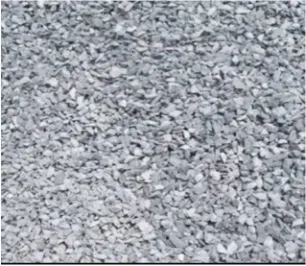
C. Coarse Aggregate
[image:2.612.230.383.355.488.2]The coarse aggregate particles passing through 12.5mm and retained on 4.75mm IS sieve used as the natural aggregate which met the grading requirement of IS 383-1970
Fig 2:Coarse aggregate(10mm)
D. Water
Ordinary portable water
E. Ground Granulated Blast Slag GGBS were used
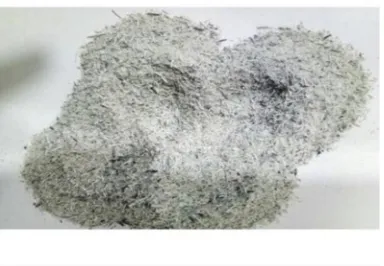
[image:2.612.213.398.578.716.2]F. Rice Husk Ash
[image:3.612.212.404.119.252.2]Rice husk is also known as rice hull is a by product of rice miling product the optimum.
Fig 4: Rice husk ash
Table 1: Physical and chemical properties RHA:
S.NO Oxide
composition
RHA
1 SiO₂ 88.32
2 Al₂O₃ 0.46
3 Fe₂O₃ 0.67
4 CaO 0.67
5 MgO 0.44
6 Na₂O₃ 0.12
7 Specific gravity 2.11
Table 2: physical and chemical properties of GGBS
S.NO Oxide composition GGBS
1 CaO 40
2 SiO₂ 35
3 Al₂O₃ 12
4 Fe₂O₃ 0.2
5 MgO 10
6 Specific gravity 2.9
IV. MIX DESIGN
Mix design (as per code IS 10262-1982) Grade of concrete (M40)
A. Target Mean Strength fck’=fck+1.65S
=48.25N/mm²
B. Selection of w/c Ratio
The free water cement ratio required for the target strength 48.25N/mm² is 0.45 Max w/c ratio=0.45
C. The Selection Of Water And Sand Content
Water content per m³ of concrete=208kg Required water content = 208+(208*6/100) Cement content=551.2kg
Determination of FA=793.40kg Determination of CA=700.90kg Mix ratio=1:1.439:1.27
Table 3: Combination used based GGBS and rice husk ash:
Specimen 1 2 3 4
Cement 100% 85% 75% 65%
FA 100% 100% 100% 100%
CA 100% 100% 100% 100%
GGBS --- 10% 20% 30%
RHA --- 5% 5% 5%
W/C ratio 0.4 0.4 0.4 0.4
V. RESULTS AND DISCUSSIONS
[image:4.612.185.429.317.575.2]A. Compressive Strength Test
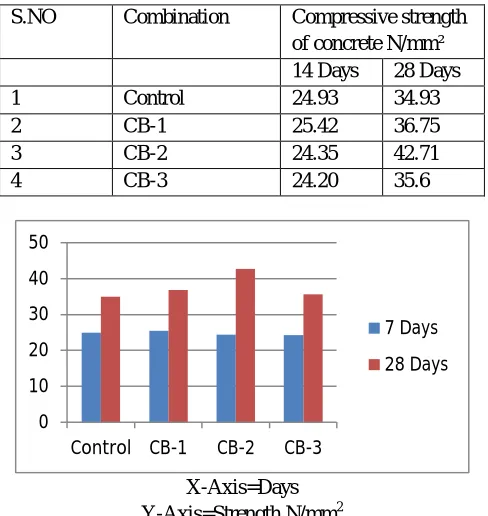
Table 4: Compressive strength test based on GGBS and RHA Concrete block:
S.NO Combination Compressive strength
of concrete N/mm²
14 Days 28 Days
1 Control 24.93 34.93
2 CB-1 25.42 36.75
3 CB-2 24.35 42.71
4 CB-3 24.20 35.6
X-Axis=Days
Y-Axis=Strength N/mm2
Fig 5: Graphical representation of compressive strength obtained at 14 days and 28 days
[image:4.612.172.439.632.729.2]B. Water Absorption
Table 5: Water Absorption Test
S.no Combination Dry
weight
Wet weight
Percentage of water absorption
1 Control 29.730 30.200 1.6
2 CB-1 29.570 30.480 3.07
3 CB-2 29.820 30.280 1.54
4 CB-3 29.760 30.190 1.44
0 10 20 30 40 50
Control CB-1 CB-2 CB-3
7 Days
X-Axis=Types of concrete Y-Axis=Water absorption
Fig 6: Graphical representation of water absorption
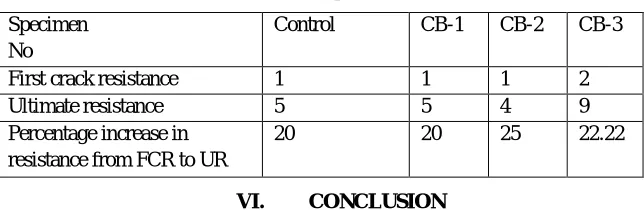
C. Impact Test
Table 6: Impact test
VI. CONCLUSION
In this research which is based on the replacement of cement with GGBS and rice huskash in concrete block. This concrete blocks are used exhibited good result in compression test, Impact test and water absorption. The results obtained varied based on the percentage of GGBS like 10%,20% and 30%. Which was replaced with cement. The rice huskash kept constant at the optimum level of 5%. The optimum result for compression test, Impact test and water absorption of concrete block was obtained at 20%. Its very economical when compare to other types of block. We recommended the blocks are used to residential buildings, office buildings and apartments also. Its contain high strength and durable concrete blocks.
REFERENCE
[1] S.Arivalagan(2014):Sustainable studies on concrete with GGBS has a replacement material in cement,Jordan journals of civil engineering, volume 8,No.3 [2] Vinayak Awasard,et,al,(2014): Analysis of strength characteristics of GGBS concrete,IJAET:volume:07.
[3] Farah Alwani, Badorul Hisham and Megat Azmi Megat Johari, properties of concrete block containing Rice husk, proceedings of AWAM-2007, school of civil engineering, USM-2007
[4] K.Kartini, H.B.Mahmud,M.S. Hamidha, B.Nor Azmi, The absorption characteristics of rice huskash concrete, proceeding brunei international conference on engineering and technology, Burnei,491-499(2005)
[5] M.S.Ismail , A.M.Waliuddin, effects of rice husk on high strength concrete, construction and building materials, 10(7),521-526(1996)
[6] M.Nehdi, J. Duquette, EI Damatty, performance of Rice husk Ash Produced Using a New Technology as Mineral Admixtures in concrete, Cement and Concrete Research.33, 1203-1210(2003)
[7] Martin O’Connell, ciaran McNally, and Mark G.Richardson (2012). Performance of concrete incorporating GGBS in aggressive wastewater environments , construction and building materials,27(1),368-374.
[8] K.Ganesan, K.Rajagopal, K.Thangavel, Rice huskash blended cement: Assessment of optimal level of replacement for strength and permeability of concrete, construction building material , 22(8), 1675-1683(2008)
[9] http://www.ecocem.ie/technical,working.htm
[10] http://ggbsreviewgroup.blogspot.in/
[11] European journal of scientific research ISSN 1450-216X Vol.88 No.1 october, 2012, pp.155163@Euro journals publishing , inc, 2012
http://www.europeanjournal of scientific research.com
[12] .R. Logaraja,Dr.Shahul hameed"Thermal and impact resistance concrete".Journal of structural Technology.vol2,issue1,April2017.R. Logaraja et.al A comparative study on various building blocks as an alternative to conventional bricks"IJARSE,vol5,March2016.
0 0.5 1 1.5 2 2.5
Water absorption
Water absorption
Specimen No
Control CB-1 CB-2 CB-3
First crack resistance 1 1 1 2
Ultimate resistance 5 5 4 9
Percentage increase in resistance from FCR to UR
[image:5.612.146.468.306.411.2]