1
Faculty of Electrical Engineering,
Mathematics & Computer Science
Anomaly-based Detection of
Lateral Movement in a
Microsoft Windows Environment
Using the Windows security event log for detecting
lateral movement techniques executed by a professional red team.
by
Mart Meijerink
Thesis to obtain the degree of
Master of Science in Computer Science
with a specialisation in Cyber Security
January 2019
Supervisors:
Abstract
Cyber security is a very important topic for organisations and yearly many thousands of incidents occur. When adversaries intruded the information technology (IT) systems of a targeted organi-sation in 2017, they managed to avoid detection for a median time of 101 days. This shows that organisations are insufficiently able to detect intruders in their systems.
These long-term intrusions are often executed by sophisticated attackers, typically called ad-vanced persistent threats (APTs). APTs are capable of using a variety of tactics and techniques, one of which is lateral movement. This tactic is the act of adversaries moving from system to system to increase their influence and reach their objectives by penetrating further into their target’s IT environment. By failing to detect lateral movement, organisations are exposed to leakage of data and attackers increase their chance of staying persistent, even after detection.
Therefore, the detection techniques concerning lateral movement have been researched, based on which 2 host-based anomaly detection approaches have been implemented for the detection of anomalous logon patterns. As Microsoft Windows is adopted most by enterprise-size companies, detection efforts were focused towards a Microsoft Windows environment. The Windows security event log is chosen to supply the data used for the detection approaches, because related work has shown its potential. Despite that, little research focused on this natively available logging, although, its widespread availability to security monitoring and incident response teams.
To evaluate the implemented anomaly detection approaches, operational data has been gath-ered from an enterprise-size company. Additionally, a professional red team has been tasked to execute lateral movement in a typical enterprise IT environment. This has been combined into a dataset featuring 58 event logs supplemented with malicious logon records from the attack environ-ment, resulting in a realistic dataset. The anomaly detection approaches have been implemented based on clustering, using HDBSCAN, and a statistical technique, using principal component based classification (PCC).
The results indicate that both approaches are able to identify deviating logons based on the Windows security event log. Clustering achieved a true positive rate (TPR) of 85.63% with an 8.29% false positive rate (FPR). PCC was able to detect less malicious logons with a TPR of 59.81%, however, better performance with respect to the FPR, 4.70%, was achieved as well.
This thesis shows that anomaly detection based on the Windows security event log of an indi-vidual system is an effective method for the detection of lateral movement. From the perspective of a security monitoring architecture, the main contribution of this approach is the conclusion that it is possible to distribute part of the detection efforts of a centralised monitoring solution, such as a security information and event management (SIEM) solution, toward the individual workstations in an organisation’s environment.
Contents
Abstract ii
1 Introduction 1
2 Background 4
2.1 Lateral Movement . . . 4
2.1.1 Advanced Persistent Threats . . . 4
2.1.2 Attack Life Cycle . . . 5
2.1.3 Tactic & Techniques . . . 6
2.2 Intrusion Detection . . . 10
2.2.1 Anomaly Detection . . . 10
2.2.2 Lateral Movement Detection . . . 12
2.3 Windows Security Event Log . . . 13
2.4 Concluding Remarks . . . 17
3 Methodology 18 3.1 Data . . . 18
3.1.1 Windows Security Events . . . 19
3.1.2 Log Sources . . . 22
3.1.3 Assumptions and Limitations . . . 24
3.2 Method . . . 25
3.2.1 Evaluation Measures . . . 25
3.2.2 Evaluation Process . . . 26
3.3 Anomaly Detection Approach . . . 27
3.3.1 Pre-processing . . . 28
3.3.2 Feature Selection . . . 29
3.3.3 Machine Learning Algorithms . . . 30
3.4 Concluding Remarks . . . 31
4 Results 32 4.1 Observations . . . 32
4.1.1 Exploration . . . 32
4.1.2 Summarised Results . . . 33
4.1.3 False Positives . . . 35
4.1.4 False Negatives . . . 37
4.2 Anomaly Detection Approach Analysis . . . 37
4.2.1 Filtering . . . 38
4.2.2 Features . . . 38 4.3 Concluding Remarks . . . 40 4.3.1 Limitations . . . 41
5 Conclusion 42
5.1 Future Work . . . 43
Chapter 1
Introduction
Most companies in society are aware cyber attacks pose a risk to their organisation and cyber security, therefore, is a very important topic [23]. However, every year numerous headlines appear of businesses, hospitals, and even cities and goverments being the victim of cyber criminals. In March 2018, Wired reported on the SamSam ransomware attack on the city of Atlanta [47]. Unlike other ransomware attacks, the attackers behind SamSam infiltrated the network of their victims first, to obtain information about the network and the target organisation [47, 55]. The information gathered via reconnaissance was then capitalised on by the attackers by encrypting important systems and demanding a ransom “at price points that are both potentially manageable for victim organisations and worthwhile for attackers” [47]. Another example of adversaries infiltrating a company and maintaining persistence in its information technology (IT) systems, is the data breach of hotel chain Marriott [31]. In November 2018, Marriott disclosed adversaries intruded the network and maintained persistence over a 4 year period. The Marriott data breach affected 500 million guests who’s data was stolen, including cases where sensitive personal information was leaked, such as passport numbers or financial information [31].
By November 2018, the SamSam group received an estimated $6 million in ransom payments, but had caused over $30 million in damages and losses to their victims [55]. Upon Marriott’s disclosure of the data breach, their stock price plummeted 5.6 percent as analysts assessed that Marriott could be liable for fines and settlements up to $200 million [22]. This shows that the impact of intrusions is highly relevant, as well as from a financial as a business continuity perspective.
These examples are not isolated incidents, as reflected by the Online Trust Alliance review on cyber incidents [48], which mentioned 159,700 cyber incidents during the course of 2017. However, 44% of the companies do not have a security operations centre (SOC) to monitor their IT envi-ronment [23]. Related to this, FireEye, a security provider specialised in monitoring and defence of IT environments, reported the median time adversaries managed to stay undetected in the IT environments of their victims to be 101 days [37]. Of these intrusions, 72% stayed undetected for at least 1 month and over 28% even more than 1 year. These headlines and surveys regarding cyber security show organisations are insufficiently able to detect intrusions of adversaries in their network. These long-term intrusions often involve sophisticated attackers, which are capable of advanced tactics and techniques. These adversaries execute structured attacks, during which typically low-privileged systems, such as employees’ workstations, are compromised first [52], because detection efforts and preventive control measures are aimed at high-value systems. The prioritisation of detection and prevention efforts is not only due to the relevance of data stored on high-value systems, but also related to the financial and technical impact of collecting event logs from a large base of
distributed endpoints into a centralised security information and event management (SIEM) solution. Although, adversaries are able to compromise the network boundaries in this way, no access to sensitive information is gained as of yet. Therefore, attackers employ lateral movement, which is the act of adversaries moving from system to system to increase their influence and reach their objectives by penetrating further into their target’s IT environment. Due to defenders’ focus of monitoring efforts and as evidenced by the long periods adversaries are able to evade discovery, it is clear that detection of lateral movement is insufficient and this thesis addresses that fact.
In order to investigate the current efforts of intrusion detection research aimed at the detection of lateral movement, the following research question (RQ) has been devised:
RQ1: What are the intrusion detection techniques used for detecting lateral movement?
Previous research focused mainly on host-based data, because attackers often execute lateral move-ment attacks by leveraging legitimate system features and using valid credentials [13]. Therefore, host data gives defenders a better overall picture of any anomalous actions, as opposed to network traffic. Host-based data consists of a myriad of different log types, however, authentication attempts were a commonly inspected source by related work [3, 24, 28, 34, 51, 52]. These methods mostly collected host-based data for the application of a centralised detection approach in SIEM tools. This introduces a huge burden, because of the vast amount of data involved when incorporating data of low-privilege systems [19]. Based on the findings of this question, it was therefore decided to research 2 anomaly-based detection approaches, which use host-based data for the detection of lateral movement with a special focus towards logon events. Although, this thesis introduces a new technique to apply the implementation of the 2 researched detection methods, the main contribution of this thesis lies not in the specific detection techniques. More important is the application of these techniques based on the data supplied by individual, low-privilege systems, such as workstations, which shows that part of the detection efforts can be distributed.
The investigation of a host-based anomaly detection is focused on Microsoft Windows 10 work-stations in enterprise organisations. Microsoft Windows is chosen for its large adoption by businesses world-wide. For example, the Microsoft Windows 10 operating system is adopted by 200 million enterprise users [30]. Additionally, Gartner stated 85% of enterprises started deployment of Win-dows 10 by the end of 2017 [25]. Therefore, a major impact can be made with improved detection on this platform. Given the chosen anomaly detection approaches, the next research question is aimed at finding the host data supplied by the Microsoft Windows operating system, which could aid detection:
RQ2: What logging provided by Microsoft Windows systems can be used for detecting advanced lateral movement techniques?
This research question is aimed to focus specifically on advanced lateral movement techniques that use legitimate, built-in operating system features, instead of exploits to work around installed secu-rity barriers. These techniques are usually harder to detect, among others because they follow the normal, intended path of execution, usually also including valid credentials. Research shows that the Windows security event log provides the logging based on which an anomaly detection approach can deviate between benign and malicious behaviour [3, 17, 28, 52]. Especially, due to the availability of logon events. Related work, providing the answers to these research questions, is discussed and explained in detail in chapter 2.
3
RQ3: Which anomaly detection method better detects a deviation in the Windows secu-rity event log?
In chapter 3 the process is described to build a proof of concept, evaluate it, and supply it with the data necessary for evaluation. For this effort the Windows security event logs from workstations in an enterprise-size company have been gathered. Combined with the data from attacks executed by a professional red team, a realistic dataset has been constructed. Based on an evaluation of the proof of concept, the third research question is answered.
Chapter 2
Background
As mentioned in chapter 1, adversaries manage to intrude organisations’ IT environments and stay undetected for long periods of time. Lateral movement is a tactic commonly employed in such cyber intrusions and this chapter gives an overview of lateral movement in section 2.1. Afterwards, existing research into intrusion detection, specifically in the area of lateral movement, is discussed in section 2.2. Lastly, the Windows domain and Active Directory (AD) are introduced in section 2.3 to describe previous work covering the Windows security event log investigated in this research. This results in the concluding remarks of section 2.4, which answers the first two research questions (RQ1: What are the intrusion detection techniques used for detecting lateral movement? RQ2:
What logging provided by Microsoft Windows systems can be used for detecting advanced lateral movement techniques?).
2.1
Lateral Movement
This section gives an overview of the adversaries able to execute attacks involving lateral movement in subsection 2.1.1. Followed by a description of the life cycle of a cyber attack in subsection 2.1.2. Lastly, subsection 2.1.3 covers what lateral movement comprises in general and specific techniques to execute lateral movement aimed at avoiding detection.
2.1.1
Advanced Persistent Threats
The threat actors involved in lateral movement typically display high resourcefulness, clear motiva-tion and goals, and strong technical skills. As stated in chapter 1, FireEye reported a global median dwell time of 101 days after the initial compromise before organisations were able to discover a breach of their network [37]. Groups with the skill set to stay undetected and persistent for such a long time are often called advanced persistent threats (APTs). Chen, Desmet, and Huygens [21] introduced four distinguishing characteristics APTs display in their approach:
1. specific targets and clear objectives;
2. highly organised and well-resourced attackers;
3. a long-term campaign with repeated attempts;
4. stealthy and evasive attack techniques.
2.1. LATERAL MOVEMENT 5
Initial Recon
Initial Compromise
Establish Foothold
Escalate Privileges
Complete Mission Internal
Recon Maintain
Presence
[image:9.595.72.499.75.247.2]Move Laterally
Figure 2.1: The attack life cycle, as defined by Mandiant [36].
These characteristics differentiate intrusion attempts by APTs from ordinary intrusion attempts. Besides that, they also give insight as to why and how these adversaries are able to intrude their target’s network and stay undetected. An attack of an APT group is typically aimed against a specific organisation or industry, incorporating extensive reconnaissance on the target. Combined with an organised and well-resourced approach, this explains their persistence displayed by repeated attempts and the use of stealthy and evasive attack techniques to complete the mission. APTs are thus fierce opponents, which are difficult to counter. However, these threat actors do not constantly reinvent themselves and their intrusion attempts can therefore be modelled. The next section describes the steps that an intrusion consists of.
2.1.2
Attack Life Cycle
Cyber security is a cat-and-mouse game between attackers and defenders, in which the defenders have long thought to be at a continues disadvantage. Until Hutchins, Cloppert, and Amin [27] defined the notion of the cyber kill chain model, stating that attackers have “no inherent advantage over defenders”. This led to the development of attack models to aid and structure detection efforts, by modelling the structured approach of APTs.
As described in chapter 1, lateral movement is executed inside the IT environment of the target and the cyber kill chain model [27] addresses the fact that defenders are able to detect traces of adversaries when being attacked. The Mandiant attack life cycle [36] views the different stages of a cyber attack in a slightly different way. Unlike the chained phases of the cyber kill chain, Mandiant defined cyber attacks as a life cycle, including a circular component, as visualised in Figure 2.1. Adversaries enter the IT environment of their target during the initial compromise stage and establish a foothold. From this point forward, attackers evade the control measures protecting an organisation’s network boundaries. However, they can still be detected by the monitoring efforts of an organisation. Adversaries employ tactics, such as privilege escalation [11] and discovery [4], to expand their sphere of influence over the compromised machines. The increased privileges and obtained knowledge about the intruded environment enable attackers to spread through the network by executing lateral movement [5], searching for the high-value systems holding the information of their mission’s objectives.
environment. Multiple efforts exist to document the tactics, techniques, and procedures (TTPs) of APTs in a generic fashion. Adversarial Tactics, Techniques & Common Knowledge (ATT&CK) [57] is an example of such a knowledge base. ATT&CK is built on information derived from open source reporting that documents the approaches of specific threat groups and red teaming efforts mimicking those techniques to provide detection and mitigation recommendations [53]. Therefore, ATT&CK is a valuable resource considering tactics, such as lateral movement, and the techniques supporting those tactics. The next section covers lateral movement and techniques to execute lateral movement.
2.1.3
Tactic & Techniques
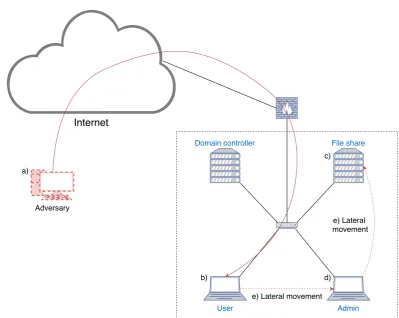
A tactic represents the reason why an attacker performs an action along the course of an intrusion and is strictly linked to the objective that the attacker wants to achieve. Lateral movement is one of the generic tactics [5] that are commonly employed by APTs during cyber intrusions. Lateral movement provides threat actors with deeper access into a targeted network, granting logical access and control over systems that are considered instrumental for the completion of the mission. In most network intrusions, initially a low-privileged system or user account is compromised via, for example, spear-phishing or a web drive-by [8, 52]. Although attackers now have a foothold in the network, they may still be far from their mission objective. At this point lateral movement enables them to either compromise new systems, containing sensitive data they are interested in, or pivot from previously compromised systems toward new target systems within the organisation’s network. In Figure 2.2 a simplified network setup is shown with the connection path from a) an adversary to b) a compromised workstation. Suppose c) the file share contains confidential files which are an APT’s objective. The confidential files are accessible by d) administrator users, but not by the user of the compromised workstation. To gain access to those confidential files, the adversary could e) execute lateral movement as shown in Figure 2.2 to complete its objective. Lateral movement, in this case, consists of obtaining access to the admin workstation, after which the adversary is able to abuse those privileges to access the confidential files at the file share server.
Stealth and evasion are a clear indicator of the skill level which enables advanced adversaries to remain undetected in their targets’ environments and this also depends on the techniques used. A generic description is given with the introduction of the tactic lateral movement, which enables adversaries to expand their presence in a network environment to fulfil their objectives. Techniques represents the way an attacker achieves a tactical objective by performing a predetermined action. In the context of lateral movement, a technique describes a specific implementation to actually execute lateral movement within a victim’s network.
2.1. LATERAL MOVEMENT 7
User Admin
Domain controller File share
Internet
Adversary
e) Lateral movement
e) Lateral movement a)
b)
c)
[image:11.595.79.479.103.421.2]d)
Figure 2.2: Initial compromise of network and lateral movement towards file share.
techniques will be detected by the same solution. In addition, well-known hacking tools, such as Cobalt Strike [6] and Mimikatz [9], have the built-in capability to execute these techniques. The next sections give a detailed overview of these mentioned advanced techniques.
Pass the Hash
The authentication process in Microsoft Windows does not always need direct input from a user. User credentials can also be supplied programmatically by applications [40]. The lateral movement technique pass-the-hash [10] exploits this feature to directly inject a hash of the password in the applicable authentication process. This removes the need for adversaries to obtain access to a user’s cleartext password. Thereby, credentials are cached in the Security Accounts Manager (SAM) database [40], so users do not need to constantly supply their logon information. However, credential dumping tools such as Mimikatz [9] are able to retrieve these stored credentials [7], which results in adversaries obtaining password hashes to valid accounts [13].
because the programmatic process call is not distinctive from a legitimate call to these authentication process [10, 40].
Windows Management Instrumentation
Windows Management Instrumentation (WMI) [46] is an administrative feature for local, as well as remote access. WMI allows administrators of enterprise environments to manage remote computers through automating administrative tasks, but can also distribute management data to other parts of the operating system. All Microsoft Windows desktop and server platforms have WMI installed by default. WMI can be used through programs supplying graphical interfaces, but also called directly via scripts to automate tasks.
Adversaries have been known to create PowerShell scripts, which download and execute remote access tools (RATs) [2]. This technique uses PowerShell, which is a natively available tool in Win-dows, and runs from memory on the target system leaving no artefacts behind for forensic analysis. By using the features offered by WMI and the deployment of PowerShell scripts remotely, attackers can execute lateral movement in the IT environment of their victims [2, 14].
To create an interactive shell at the target computer, the Invoke-WmiMethod-command can be used from a PowerShell at the compromised system. The command, as shown in Listing 2.1, creates a new Windows process with the supplied credentials at the system specified by theComputerName -option. The credentials can be supplied either via a PSCredential-object or a plain text user-name. When a username is supplied, a password prompt will show up. Therefore, the use of a
PSCredential-object is to be expected for automated scripts. When no credentials are supplied, the WMI method is run as the current user.
Listing 2.1: Creation of an interactive PowerShell using WMI Invoke−WmiMethod −Path Win32 Process −Name c r e a t e
−ComputerName <ComputerName>
−C r e d e n t i a l <P S C r e d e n t i a l | Username>
−ArgumentList P o w e r S h e l l
T ec hnique / T yp e of logging API monitoring Authen tication logs Binary file metadata loss Data
[image:13.595.106.440.95.702.2]2.2
Intrusion Detection
Intrusion detection systems (IDSs) are either using network or host-based data [15]. Network IDSs gather log information from network traffic. Whereas a host-based IDS collects audit data from endpoints in the IT environment. The detection strategies of IDSs can be divided in two major approaches [16]: signature-based detection or anomaly detection. Signature-based systems are generally strong in detecting known attacks. Artefacts specific to certain techniques, which show up in log sources, are identified and are described in a signature to detect executions of those techniques. As an attack first needs to be described in a signature, however, these systems are unable to detect new, deviating attack techniques.
Anomaly detection IDSs, on the other hand, employ a different strategy. They learn a profile of the normal behaviour under the assumption that no intrusions are present during training. Af-terwards, anomaly detection declares unusual, unseen behaviour as malicious when it does not fit the learned profile. Therefore, anomaly detection systems do hold the promise to detect unknown attacks as well and they could work in a more automated fashion. However, this strategy does also have its drawbacks as anomaly detection systems suffer from false positives, because anomalies in the data could also have been caused by new legitimate behaviour or noise [1]. Other drawbacks include the initial learning period before deployment and the tendency of anomaly detectors to be more resource intensive [16].
The remainder of this section discusses research into anomaly detection in subsection 2.2.1, describing the challenges to take into account and different anomaly detection methods. Intrusion detection research aimed at lateral movement detection is covered in subsection 2.2.2. The limitations of these approaches and log sources are described and the topics covered in this section, answers the first research question.
2.2.1
Anomaly Detection
Despite the challenges of anomaly detection mentioned, anomaly-based detection is chosen because of its possibility to detect new techniques, which adversaries rapidly keep developing. This section, therefore, first discusses the challenges related to anomaly detection. Afterwards clustering and statistical techniques, used to implement anomaly detection, are described.
Among the challenges of anomaly detection, as identified by Ahmed, Mahmood, and Hu [1], are the lack of universally applicable techniques, noisy data, a lack of publicly available datasets, and drift of the legitimate behaviour of users which has to be accounted for. Besides the challenges to implement an anomaly detection system, also the evaluation of anomaly detection research has been criticised. A comprehensive study by Tavallee, Stakhanova, and Ghorbani [56] surveyed research on anomaly-based intrusion detection, assessing the validity and reliability of the experiments. Three dimensions, relating to 1) the employed data, 2) the evaluation of the method’s performance, and 3) the performed experiments, have been identified to review the research in scope. A detailed description of these reviewed dimensions is given:
1) Employed data Concerning the data used, problems in reporting existed among others due to failing to give a definition of what constituted as an anomaly [49] or a proper description of normalisation of the data or the employed features.
2.2. INTRUSION DETECTION 11
concerned that different types of attack should be evaluated and reported on separately. This thesis adheres to this practice as only lateral movement is evaluated.
3) Performed Experiments Reproducibility of an experiment is an important factor for exper-imental science [49], however, Tavallee, Stakhanova, and Ghorbani [56] found that the docu-mentation of experimental process often lacked in the reviewed papers.
As mentioned, anomaly detection holds the promise of automatically detecting new types of intru-sions, but also suffers from drawbacks which pose challenges to the development of such a system. In addition, shortcomings with regards to the evaluation of anomaly detection research have been identified, which impacts the applicability of that research.
Li and Oprea [34] described the design of an analytics framework based on operational security logs. One of the main insights given, is that “hosts in an enterprise network are constrained by company policies and employee job functions, and exhibit more homogeneity than those on the open internet” [34]. Dedicated hosts, utilised by a single user, are monitored by a system that identifies hosts displaying anomalous activity which does not fit the expected behaviour previously learned. This homogeneity does allow to better define the scope as well and develop a more robust detection system. Next, techniques to implement an anomaly detection system are described.
Ahmed, Mahmood, and Hu [1] covered network anomaly detection, analysing among others classification, clustering, and statistical techniques. Similarly, Buczak and Guven [18] surveyed methods for cyber intrusion detection. Anomalies with respect to lateral movement attacks can be well detected by clustering and statistical techniques [1, 18]. These attacks are targeted at hosts inside an IT environment and do not generate huge amounts of traffic, because one of the objectives is to stay undetected. Therefore, these intrusions are rare in relation to the total amount of traffic. However, traffic patterns of intrusions deviate statistically from benign traffic patterns and clustering or statistical techniques are able to detect these deviations.
The main advantage for clustering methods is that they can work unsupervised without explicit descriptions of what constitutes as an anomaly [18]. According to Ahmed, Mahmood, and Hu [1], clustering techniques work with three key assumptions which every research states about anomalies:
1. Data which does not fit clusters constructed from benign data is considered anomalous, in case of density-based clustering algorithms this assumption translates into considering noise as anomalies.
2. In clusters containing both benign and anomalous data points, anomalous points lie further from the nearest cluster centroid, therefore, a distance-based threshold can separate benign from anomalous data.
3. When data is clustered in multiple clusters, anomalous points tend to belong to smaller and sparser clusters. Separation of benign and anomalous clusters should therefore happen based on size, density, or a combination of size and density.
Statistical techniques, on the other hand, determine the expected value for a new data point based on training data. When the observed value deviates significantly from the expected value, that data point is considered an anomaly. A significant deviation typically follows the 3 sigma rule of thumb [1], which describes that a deviation of more than 3 standard deviations from the mean is typically an outlier.
important, because the components describing the least amount of variation are ignored. This data model, which is also free from any assumption about the statistical distribution of the data, is found to closely model specifically the expected value of normal data instances. Anomalies, however, generally show a large deviation from the expected value, because most of the variance concerning anomalous data points is captured by the dropped principal components, which explain the least variation over the total amount data [32]. This method works under the assumption that the amount of anomalous instances in the training data is negligible [50]. The next section describes intrusion detection techniques aimed at the detection of lateral movement.
2.2.2
Lateral Movement Detection
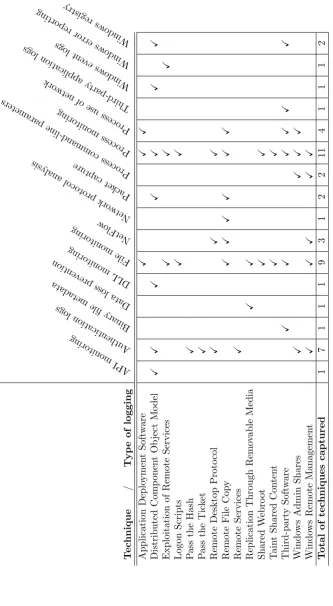
As described in section 2.1, ATT&CK [57] lists many lateral movement techniques and describes detection and mitigation strategies. The detection sources, as mentioned by ATT&CK, of known lateral movement techniques can be found in Table 2.1. The main difference regarding lateral movement detection in comparison with other intrusion detection efforts, lies in the fact that lateral movement follows an initial compromise of the network. Due to this, lateral movement is typically executed behind the security control measures installed to protect the network boundaries of an organisation. Research into anomaly detection, as described in subsection 2.2.1, mainly works with network data and shows a focus on high privilege systems. This section gives an overview of intrusion detection aimed at the detection of lateral movement.
A lateral movement detection architecture is proposed by Fawaz et al. [24] to propagate host-level monitoring to a global, network-wide view. Detection is based on monitoring inter-process commu-nication at host-level of which the results are collected at clusters to build a host commucommu-nication graph. The host communication graphs are evaluated globally to identify inter-cluster connections. By monitoring the system calls of processes, Fawaz et al. [24] argue that they are able to better detect lateral movement than by “using timing information or port numbers”. While this approach shows monitoring of the network usage of processes is able to indicate lateral movement, no qual-ification whether or not the movement is malicious can be given [24] and, as indicated by column ‘process use of network’ in Table 2.1, ATT&CK states inter-process communication is only able to detect 4 out of the 15 listed techniques. In contrast though, Fawaz et al. [24] present their approach as a “first step towards discovering evidence of malicious lateral movement” for a wider scope than indicated by ATT&CK.
2.3. WINDOWS SECURITY EVENT LOG 13
this results in a realistic scenario with a detector trained by researched malicious behaviour. The detector was able to correctly detect 92% of the malicious commands at a false positive rate of 1%, while for a 0.1% false positive rate the true positive rate stayed high with 89%.
In their focus on lateral movement techniques using valid credentials in enterprise networks, Siadati and Memon [51] did observe, similar to one of the conclusions of Li and Oprea [34], that the logons of users within an organisation are somewhat structured and mostly predictable. Credential-based lateral movement, on the other hand, is very unlikely to adhere to standard logon patterns. Using pattern mining, Siadati and Memon [51] created patterns of logons to determine the typical structure. Based on the patterns found, a classifier was employed to determine whether or not a new logon adheres to the learned patterns based on the user accounts and computers involved. Promising results have been reported of an 82% detection rate with 0.3% false positives on a dataset gathered at a global financial company containing 5 months of data with millions of logons and synthetic attack traces generated based on penetration testing campaigns. The main limitation addressed by the researchers was that the dataset was limited to one company.
Research has been discussed which covers multiple of the logging sources mentioned in Table 2.1, as listed by techniques described in ATT&CK [57]. Process and file monitoring clearly have the abil-ity to cover the detection of most lateral movement techniques. However, many intrusion detection systems focus on network traffic or log sources of critical systems and network devices. As attackers initially compromise non-critical systems and lateral movement is executed over peer-to-peer con-nections, that scope has its limitations regarding the detection of lateral movement. Research into the detection of lateral movement therefore shows more interest in host-based log sources. As such, Buyukkayhan et al. [19], Fawaz et al. [24], and Wijnands [58] do focus on endpoint monitoring of workstations, looking at process monitoring on a fine-grained level to develop process graphs. These approaches are prone to the specific behaviour of users and the installation image of the workstation under inspection. Confirmed by the conclusion of Wijnands [58]: specific processes running on a system hugely impact this type of monitoring, resulting in false positives. The method of Hendler, Kels, and Rubin [26], focusing on the logging of PowerShell scripts, holds promise, especially for the detection of advanced adversaries who aim to utilise techniques using administrative features such as Windows admin shares and WMI. In addition, Siadati and Memon [51] their approach is interesting as it focuses on logon patterns which used data on logons in a Windows environment. The data collected can be found in the Windows security event log. The administrative lateral move-ment techniques also create logon patterns and although attackers might try to follow established patterns to evade detection, this will not always be possible for them, especially in the beginning of an intrusion when the necessary credentials are not yet available [51]. The next section introduces the Windows security event log as a source for intrusion detection techniques.
2.3
Windows Security Event Log
This section focuses on the security event log Windows offers and indicates strategies for the detection of anomalies. To better understand the context, first the Active Directory Domain Services are described, which offer the services for administrators to store and manage users and resources in a Windows domain.
Users
Groups
[image:18.595.124.503.94.384.2]Resources
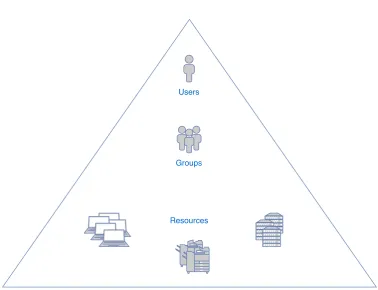
Figure 2.3: Active Directory manages resources and users via role-based access control defined in groups.
group. In AD the information about accounts and groups is stored, as visualised in Figure 2.3. Two main types of accounts exist in a Windows domain. User accounts to allow people to log on to the domain and computer accounts to manage resources. User accounts and computer accounts are administered in the same way and are part of groups to manage their privileges. The domain controller as shown in Figure 2.2 is where Active Directory resides [39]. The domain controllers are the servers responsible for providing directory information throughout the domain and therefore also validate credentials.
In order to keep track of privilege usage and actions executed by users, the Windows operating system offers event logging which features three standard types of event logs: being 1) the application log, 2) the system log, and 3) the security log. Application event records contain diagnostic logging information about installed applications and the logging message and structure depend on the source application. The system log also registers diagnostic events, however, those event records are related to the machine. Events regarding networking and other communication protocols are to be expected, as well as logging concerning machine policies. Both application and system events contain mostly a textual description of the diagnostic event record.
2.3. WINDOWS SECURITY EVENT LOG 15
the active audit policy [44]. Moreover, most attributes are categorical labels, for example defining the specific type of a logon or the privilege used by a process. The remainder of this section covers methods using the Windows security events for threat detection purposes.
Public institutions such as the Japanese Computer Emergency Response Team Coordination Centre (JPCERT/CC) and its European counterpart, CERT-EU, have researched the impact of cyber attacks in Microsoft Windows environments. JPCERT investigated almost 50 typical tools attackers have been known to use in support of various tactics, among others for lateral move-ment [28]. Tools able to execute pass-the-hash [10] attacks or misuse WMI [14] are both covered. The research focused on traces execution of these tools left behind as evidence in event log records. Logs have been scrutinised before and after execution of the tools to infer the changes introduced into the event logs, but also registry entries have been inspected. An overview per tool has been compiled, detailing which evidence is introduced in a specific event log [29]. The analysis results are a valuable resource in incident detection and investigations. As many tools do not show evidence of execution with the default Windows logging settings, JPCERT concluded on the importance of developing an elaborate enough audit policy. CERT-EU [52] similarly inspected the influence on log records in the case of lateral movement techniques, such as pass-the-hash and pass-the-ticket. Collecting the event logs from the domain controllers is deemed most important, while the collection of events from workstations of administrators and other high privilege accounts is to be considered. CERT-EU advises to monitor important account groups, with the ‘Domain Administrators’ being the most important. Other accounts mentioned are service accounts, emergency accounts, and busi-ness critical accounts. Event types of interest include the event registered when a domain controller validates credentials, event ID 4776, and logon events, event ID 4624. Monitoring could be set up rule-based and generic detection rules are offered. Focus should be on the source of an account logon, this could be the workstation or network address logged in the event record. Taking these fields into account, a logon of an admin account from a workstation or network address other than its regular, registered workstation or IP address should be triggered upon.
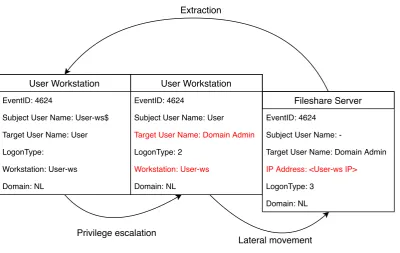
A manager in cyber incident response at KPMG explained the use of Windows event logs to detect lateral movement in forensic investigations. The Windows event logs of the systems in the forensic scope are gathered and the logon events are inspected. Logons from one machine to the other are chained and any unexpected events, especially connections returning to a previously found host in the chain, are flagged. The connections between different machines which create a loop back to an earlier seen host, might indicate actions from an adversary creating persistence in the network after moving laterally or the extraction of valuable information, as visualised in Figure 2.4. Anomalies do not only show up when a logon is initiated from an unexpected location, but also when an account logon occurs on an unexpected system. Most accounts in an enterprise environment are expected to be used onto a pre-defined set of systems. Any deviations from this set possibly indicate attacks and these deviations are reflected in the Windows event log.
User Workstation
EventID: 4624
Subject User Name: User-ws$ Target User Name: User LogonType:
Workstation: User-ws Domain: NL
User Workstation
EventID: 4624
Subject User Name: User
Target User Name: Domain Admin
LogonType: 2
Workstation: User-ws
Domain: NL
Fileshare Server
EventID: 4624 Subject User Name:
-Target User Name: Domain Admin
IP Address: <User-ws IP>
LogonType: 3 Domain: NL
Extraction
Privilege escalation
[image:20.595.117.518.105.358.2]Lateral movement
Figure 2.4: Deducing lateral movement through correlation of Windows security logon event records.
events related to the domain and its Active Directory (AD). Besides using the event identifier of an event and number of distinct users, only features regarding the series of events were captured. Selected features defined among others the total number of security event records, the total number of different event types, and other statistics regarding the frequency and percentages of the events. As no further attributes apart from the event identifier and user were inspected, this approach differs hugely as described by incident responders.
2.4. CONCLUDING REMARKS 17
did not detect the anomalies and continuous feedback helped to improve the process significantly. False positives were reduced by achieving better separation of accounts or computers based on their privileges, respectively, the type of computer.
This review of the research conducted into Windows security event logging indicates that events can be used to identify cyber attacks, such as lateral movement. Clustering techniques have been used to deduce the source machine based on event patterns, but also anomalies regarding authentication could be detected. Both Basagoiti et al. [17] and Asanger and Hutchison [3] mention event logs of individual workstations and servers could be of interest to extend the scope of their research. Combining the findings on intrusion detection and the Windows security event logs, the next section answers the first two research questions.
2.4
Concluding Remarks
This chapter introduced lateral movement and described intrusion detection with a special interest towards anomaly detection. Specific methods targeting the detection of lateral movement attacks have been covered and a shift from network-based towards host-based detection can be seen. Which is logical as lateral movement happens after a system inside the IT environment has been compromised. Anomaly detection is able to discern deviating behaviour related to lateral movement in logon patterns.
The detection of lateral movement attacks, therefore, focuses on identifying these patterns or patterns in the network connections between computers. As stated, these connections have a certain degree of predictability in an enterprise network. Deviations from the expected logon patterns need to be detected, as those could indicate lateral movement.
Different methods have been proposed, but clustering and statistical methods have shown promis-ing results. Clusterpromis-ing currently has a focus towards density-based methods, which perform stronger than classical clustering algorithms based on distance measures due to their ability to cope with re-gions with differing density. Statistical methods calculate the difference between the expected and actual value and declare anomalies when the deviation exceeds a certain threshold. Typically the deviation threshold lies around 3 standard deviations, following the 3 sigma rule of thumb [1].
An audit policy can be activated for the Windows security event log to log the necessary events and attributes to detect lateral movement. Forensic investigations look into the originating location of an account logon to determine any abnormalities and research showed that clustering is able to deviate between the originating servers and detect suspicious authentication attempts and account deviations based on the Windows security event log. Monitoring is able to aid detection of lateral movement based on anomalous logons [10] or WMI commands [14]. The Windows security log is also able to provide this information.
As indicated by the literature [3, 28, 52], to obtain a complete picture of the IT environment, event logs of workstations should be used as well. Although, lateral movement detection is possible with the event logs of the domain controllers, as those together have a fairly complete picture regarding network logons, it does not show everything.
Chapter 3
Methodology
As described in chapter 2, numerous methods have been developed to detect lateral movement in network-based as well as in host-based data. However, adversaries are still able to remain undetected in their targets’ networks for many days. In order to counter this trend and be able to better detect attackers, the need for more fine-grained logging is stressed by Buyukkayhan et al. [19] and Lee and Lee [33]. As concluded in section 2.4, host-based intrusion detection holds promise to improve detection techniques, especially in the case of intrusions starting at low privilege workstations. This thesis therefore investigates whether the Windows security event log could be used for detection of lateral movement techniques. In particular, focus lies with those techniques were attackers leverage already available operating system features and administrative tools. Because the huge amounts of log data [19] available at endpoints, anomaly detection is chosen to process the data using machine learning techniques. Following the recommendations of Tavallaee, Stakhanova, and Ghorbani [56] to explicitly state what constitutes as an anomaly, anomalies to be detected by the proposed detection methods of this thesis are defined as:
Windows security event log records that deviate from benign records with respect to the credentials, originating location, or privileges involved, because of adversaries executing lateral movement techniques.
Following the dimensions identified by Tavallaee, Stakhanova, and Ghorbani [56] for the evaluation of anomaly detection research, first the dataset gathered to research lateral movement techniques is described in section 3.1 covering the Windows security events and domain setup used. Next, section 3.2 covers the method employed to answer the research question. The experiment setup to research the effectiveness of host-based anomaly detection is described and the assumptions made and limitations involved are detailed. Lastly, section 3.3 explains the anomaly detection steps employed to handle the security event logs and apply the detection algorithms on the dataset.
3.1
Data
In order to develop a dataset which could be used to answer the research question, Windows security event logs have been gathered. This section describes the Windows security events which can be found in the dataset in subsection 3.1.1. Next, in subsection 3.1.2 the machines from which the logs have been gathered are described. Finally, the implications with respect to the limitations of the developed dataset are discussed in subsection 3.1.3.
3.1. DATA 19
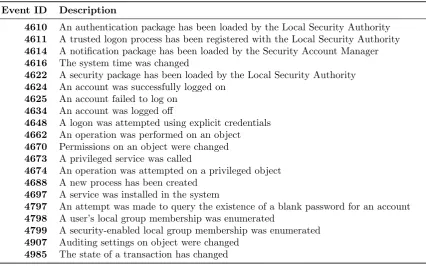
Event ID Description
4610 An authentication package has been loaded by the Local Security Authority 4611 A trusted logon process has been registered with the Local Security Authority 4614 A notification package has been loaded by the Security Account Manager
4616 The system time was changed
4622 A security package has been loaded by the Local Security Authority 4624 An account was successfully logged on
4625 An account failed to log on 4634 An account was logged off
4648 A logon was attempted using explicit credentials 4662 An operation was performed on an object 4670 Permissions on an object were changed 4673 A privileged service was called
4674 An operation was attempted on a privileged object 4688 A new process has been created
4697 A service was installed in the system
4797 An attempt was made to query the existence of a blank password for an account 4798 A user’s local group membership was enumerated
4799 A security-enabled local group membership was enumerated 4907 Auditing settings on object were changed
[image:23.595.70.497.105.371.2]4985 The state of a transaction has changed
Table 3.1: Top 15 and logon related event types present in the dataset.
3.1.1
Windows Security Events
As stated in section 2.3, the Microsoft Windows operating system logs many security related events in the event log [44]. Registered event records are, among others, different types of logons, new processes being created, privileges being requested by processes, but also security related system settings being adjusted. This section describes the type of Windows events logged and the attributes found in a security event record.
Administrators can design an audit policy to define the event types logged in the security log. Not only is it possible to define which types of events to register, but also which attributes of an event are collected in the event data. One specific example is the process creation event. Besides the standard attributes collected, such as the process name and the parent process of the process being created, it is also possible to log the command line options used to create the process.
In general, the security event log contains system data and event data. System data logs the information about the system creating the log record and contains attributes such as the event identifier, the system time, and the computer name. The event data contains the attributes which identify the specific event that occurred. The event data generally contains the user account initiating the logged action and the process executing the action. Usually, also an account is involved on which the action is executed. Examples of event data attributes which are typically specific to an event, are the parent process in case of a process creation event, the type and origin of a logon in case of a logon event, or the type of privilege requested or used in case of an event regarding the use or request of certain privileges.
4611 4624 4648 4662 4673 4674 4688 4798 4799 4907 4985 Event ID
0.0 0.1 0.2 0.3 0.4 0.5
Frequency
Event types frequency
4611: A trusted logon process has been registered with the Local Security Authority 4624: An account was successfully logged on
4648: A logon was attempted using explicit credentials 4662: An operation was performed on an object 4673: A privileged service was called
4674: An operation was attempted on a privileged object 4688: A new process has been created
4798: A user's local group membership was enumerated 4799: A security-enabled local group membership was enumerated 4907: Auditing settings on object were changed
[image:24.595.101.531.103.270.2]4985: The state of a transaction has changed
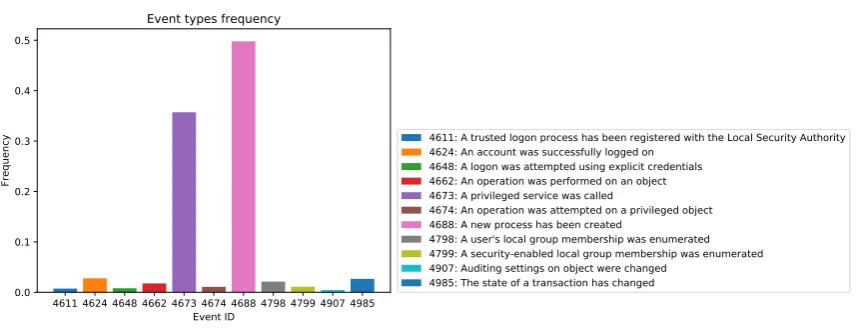
Figure 3.1: Top 10 most frequently occurring benign events.
available at every workstation. These events contain too little information for anomaly detection as no comparison to similar event records can be made. The 15 most occurring Windows security events included in the dataset are shown in Table 3.1, where each event identifier and the corresponding description of the event are listed. Besides the top 15, also less frequent events related to the logon process have been added to Table 3.1, because of the indication given by related work that logon events should be monitored to detect lateral movement, as described in section 2.3. As can be seen in Table 3.1, a variety of events is covered by the audit policy. Quite some events relate to the authentication process. Security events related to process creations and their privileges are well represented. Other events with respect to the adjustment of security related settings or startup and shutdown were less common. This is logical as settings are not adjusted daily, but logons, which also include unlocking a computer, and the usage of processes are typical actions. See Figure 3.1 for an overview of the distribution of the top 10 most frequent events in the dataset. The following section describes a few specific examples of events which could be encountered in the dataset.
Examples
This section gives two concrete examples of logged events. Detailed are a record of a process creation event, one of the most common events in the dataset, and a logon event, of interest as indicated by related work [3, 28, 52].
In Listing 3.1 an example is shown of the event attributes logged in a logon record [41]. The event data contains attributes such asLogon Type,Logon Process, andLogon Guid which are obvious examples of typical attributes specific to a logon event. Most events contain at least information about the user account which initiated the event, therefore, the attributes such asSubjectUserName
and TargetUserName are found in the event data of most events. In the case of the example in Listing 3.1, the domain computer account was logged on locally. The type of logon, 3, specifies that “a user or computer logged on to this computer from the network” [41], which originated from localhost as signified by theSource Network Address ::1. The authentication involved aKerberos
authentication as declared by the detailed authentication attributes. This particular example is seen at all workstations in a Windows domain environment and functions as a check-in to keep up to date with the active directory and its policies.
3.1. DATA 21
Listing 3.1: Event 4624 - Logon An a c c o u n t was s u c c e s s f u l l y l o g g e d on .
S u b j e c t :
S e c u r i t y ID : S−1−0−0
Account Name : −
Account Domain : −
Logon ID : 0 x0
Logon I n f o r m a t i o n :
Logon Type : 3
R e s t r i c t e d Admin Mode : −
V i r t u a l Account : No
E l e v a t e d Token : Yes
I m p e r s o n a t i o n L e v e l : I m p e r s o n a t i o n
New Logon :
S e c u r i t y ID : S−1−5−18
Account Name : <ComputerName>$
Account Domain : <DomainName>
Logon ID : 0xB287ED54
Linked Logon ID : 0 x0
Network Account Name : −
Network Account Domain : −
Logon GUID : {dc7a3e49−e4c9−b4d0−f a d f−7283 a138c548}
P r o c e s s I n f o r m a t i o n :
P r o c e s s ID : 0 x0
P r o c e s s Name : −
Network I n f o r m a t i o n :
Workstation Name : −
S o u r c e Network Address : : : 1
S o u r c e Port : 0
D e t a i l e d A u t h e n t i c a t i o n I n f o r m a t i o n :
Logon P r o c e s s : K er be r os
A u t h e n t i c a t i o n Package : K er be r os T r a n s i t e d S e r v i c e s : −
Package Name (NTLM o n l y ) : −
Listing 3.2: Event 4688 - Process Creation A new p r o c e s s has been c r e a t e d .
C r e a t o r S u b j e c t :
S e c u r i t y ID : S−1−5−18
Account Name : <ComputerName>$
Account Domain : <DomainName>
Logon ID : 0x3E7
Target S u b j e c t :
S e c u r i t y ID : S−1−0−0
Account Name : −
Account Domain : −
Logon ID : 0 x0
P r o c e s s I n f o r m a t i o n :
New P r o c e s s ID : 0 x8cc
New P r o c e s s Name : C:\Windows\System32\s v c h o s t . exe Token E l e v a t i o n Type : %%1936
Mandatory Lab el : Mandatory L ab el\System Mandatory L e v e l
C r e a t o r P r o c e s s ID : 0 x318
C r e a t o r P r o c e s s Name : C:\Windows\System32\s e r v i c e s . exe P r o c e s s Command Li ne :
attributes are independent of the type of event as opposed to the event data. As explained, the event data, however, contains attributes specific to an event type. Process creation events contain among others theCreator Process Name andToken Elevation Type, which indicates the privileges with which the process is created. As seen in the example of Listing 3.2, the computer account has tasked theservicesprocess to start a new instance of svchost.
Given the specification of the events in the dataset and the attributes available, the next section describes the origin and amount of security event logs gathered.
3.1.2
Log Sources
At this point the Windows security events in the dataset have been described and concrete examples have been shown. As one event log corresponds to one specific machine which gathered the events, an overview of the different sources follows. Two main sources can be distinguished in the dataset: operational logs, which originated from personal workstations in an enterprise company, and an attack environment, set up to gather lateral movement traces executed by a professional red team. In the next sections the different sources are described which have been summarised in Table 3.2.
Operational Logs
techni-3.1. DATA 23
Source Machines Logs Records/Log Total
Operational security logs
All events 36 60 ∼30,900 1,851,818
Logon events (4624) 34 58 ∼880 51,030
Attack environment
All events 1 1 34,881 34,881
Logon events (4624) 1 1 651 651
[image:27.595.116.446.106.225.2]Total 37 61 - 1,886,699
Table 3.2: Amount of records gathered from the different type of machines
cal roles to managerial roles. Each log contained on average 31,000 events, which roughly translates to a period of 1 to 3 weeks depending on how intensively a particular workstation had been used. From the same set of workstations, another 24 security event logs were available to recollect at least 3 weeks later, to obtain a new sample from the same machines. Making the total dataset contain 60 logs, counting over 1.85 million records. As described, process creations and privilege use were the most frequent events, however, special attention has been payed to the logon events given related works [3, 28, 52], as indicated earlier.
Attack Environment Logs
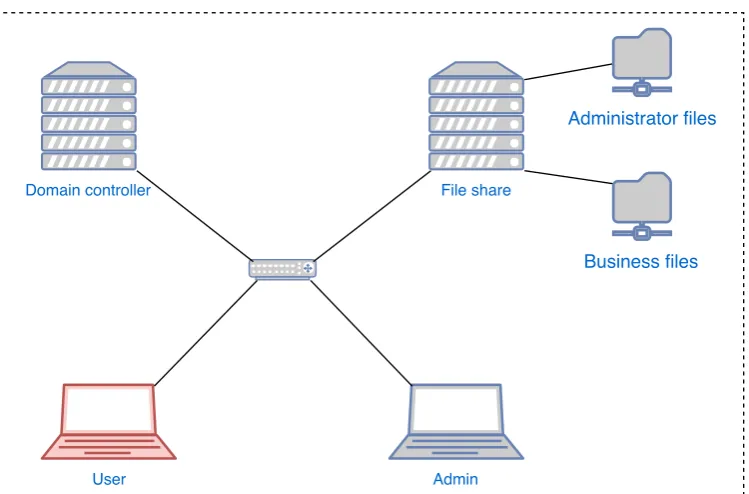
An environment has been developed containing a Windows domain setup. The Windows domain consisted of four machines. Two servers, one domain controller managing the domain and one server offering file sharing services, were installed and supplemented with two workstations, one intended for a non-privileged user and one intended for an administrator user. Two domain accounts have been created reflecting the described situation. Besides the non-privileged user and the admin user account, a domain administrator account was prepared with full privileges in the domain. The non-privileged user could access theBusiness files network folder, shown in Figure 3.2, at the file share server. The administrator had unrestricted access to the file share server and was able to log on remotely. All administrator accounts in the attack environment had access to theAdministrator files
folder at the file share. An audit policy responsible for logging security related events, incorporating at least the same type of events as the collected workstation logs, was configured.
After setting up the Windows domain environment, red teaming professionals of KPMG have been asked to attack the environment. The machines set up in the attack environment are displayed in Figure 3.2 indicating the starting point for the red teamers in red: the User workstation. The starting point represents a system in the network where attackers have established a foothold after the initial compromise with the intent to move laterally within the target environment. The following scenario has been used to define the goal for the red team:
1. The goal of the attack was to reach a folder at the file share which was only accessible to admin users, visualised in Figure 3.2 by theAdministrator files network folder.
2. The non-privileged user account was considered compromised, credentials to the user account and network access to the user’s workstation were provided, as shown in Figure 3.2 by the red workstationUser.
User Admin
Domain controller File share
[image:28.595.129.504.107.354.2]Business files Administrator files
Figure 3.2: Attack environment setup.
Within these boundaries the red teamers were free to try and choose any technique which they deemed effective based on their expertise. As multiple attackers have contributed in this experiment, multiple techniques regarding discovery [4], the actual lateral movement [5], and possibly privilege escalation [11] have been executed, following different attack paths. No focus on specific threat actors or adversarial techniques was added. This ensures any positive results will be able to more generically detect intrusions in a Windows domain environment. As these red teamers use methodologies such as discussed in Mitre’s ATT&CK framework [57], which have been described based on research on APTs, the attack techniques display sophistication which is roughly comparable to APTs. From the attack environment only the event log of the user workstation has been collected and the event records have been extracted during the time frames the red teamers have been active.
Limitations related to the collection and compilation of the dataset as described, are addressed in the next section.
3.1.3
Assumptions and Limitations
3.2. METHOD 25
of lateral movement is possible in the first place by using anomaly detection on security event log records of individual machines. The audit policy of the attack environment was more elaborate, such that initial suggestions might be identified of specific events and attributes which might hold promise for future work.
Another point of attention is the different approach different attackers could take. This concern has been mainly addressed by asking multiple red teaming professionals to execute lateral movement in the environment. Within the given scenario multiple approaches have been executed by these professionals to gather a variety of attack techniques, as described. These techniques have been based on known APT behaviour, such as described in ATT&CK [57]. Although new, unknown techniques will always arise, research on zero-days indicates an attack path seldom consists of only zero-days [54]. This finding also indicates that attackers do not constantly reinvent themselves, as also indicated by attack models such as the Mandiant attack life cycle [36]. Combined with the application of an anomaly detection strategy, it is assumed that the proposed solution is able to discover new lateral movement attack techniques as long as execution of such a new technique is still recorded in the Windows security logon event.
Lastly, the event logs only stem from one company and different companies could feature a different network topology and differences in usage of the Windows domain. It is assumed the anomaly detection approach is able to learn the patterns given a certain topology, however, this can only be confirmed when data of multiple companies is available. Next, the method to research and evaluate lateral movement detection on this dataset are described.
3.2
Method
Given the dataset as described in the previous section, this section covers the method followed to answer the main research question. As stated in section 2.3, related work on the Windows security event log inspected the use of anomaly detection using the event logs of the domain controllers [3, 17], but ignored workstation logs which offer a huge potential for lateral movement detection. The method followed by this thesis to investigate host-based anomaly detection is divided in three steps:
1. A sample is drawn from the malicious records and adapted to remove biases from the work-station log under inspection.
2. The thresholds are inspected on an event log basis, to determine the optimal threshold for the dataset.
3. The anomaly detection approach is run over the complete dataset with a random amount of malicious records to inspect the overall performance.
Detection of anomalies is inspired by the work of Asanger and Hutchison [3], but the validation differs as no security operators are involved. The remainder of this section describes the process to evaluate the performance and covers its limitations. However, first the evaluation measures to express the performance are described.
3.2.1
Evaluation Measures
positive is a malicious record correctly classified as such. Opposite, a false positive is a benign record which has been incorrectly classified as malicious. Similarly, negative classifications are a prediction of benign actions. The TPR, as expressed in Equation 3.1, is the fraction of correctly classified malicious records with respect to all the malicious records in the dataset. The true positive rate (TPR) therefore indicates the detection capability of the solution.
T P R= tp
tp+f n (3.1)
The false positive rate (FPR) is the amount of benign records incorrectly classified as malicious in relation to the total population of benign records. In Equation 3.2 the FPR is formulated.
F P R= f p
f p+tn (3.2)
According to Axelsson [16], the false positive rate is the most important measure for the effectiveness of an intrusion detection method. While a high detection rate is favourable as an organisation wants to be able to detect as many anomalies as possible, this comes at a cost. Because an anomaly detector’s performance operates with a trade-off between the TPR and FPR; an increased detection rate brings along a higher false positive rate (FPR) as well. As argued by Axelsson [16], this will eventually result in analysts ignoring the alarms of the system. Therefore, it is important to keep the FPR low enough, such that the impact of false positive alarms in terms of the required effort of security analysts is justified in relation to the amount of correctly detected malicious actions.
A good way to visualise this trade-off is by means of a receiver operator curve (ROC). The ROC plots the TPR against the FPR to indicate the ability to detect attacks given the rate of false alarms to be expected for a system. The area under the ROC is a performance measure of a machine learning algorithm independent of the chosen threshold. The bigger the area under the curve (AUC), the higher the TPRs achieved at lower FPRs. The ROC is therefore a helpful tool in finding well performing thresholds, based on the requirements of users.
To ensure results can be generalised, within the discussed limitations, the TPR and FPR are reported after cross-validation over the different logs with a different amount of malicious records, as is explained in the next section. The next section also covers the establishment of optimal thresholds based on the inspection of the area under the curve of the ROCs.
3.2.2
Evaluation Process
The security event log of every workstation in the dataset is evaluated using a host-centric approach. The evaluation of a machine’s event log is then executed on a record basis, grouped per event type. The three steps that constitute the development and evaluation process are highlighted in this section. First, the adaptation of malicious records to the evaluated event log is discussed. Next, the inspection of the ROCs to find optimal thresholds is detailed. Finally, the cross-validation over the different available logs is described.
3.3. ANOMALY DETECTION APPROACH 27
user account of the employee’s workstation. Besides the accounts, also the workstation name has to be substituted. After this adaptation step, the malicious records no longer displayed any biases due to being collected from a different environment. The adaptation was possible because malicious records were identical to the benign records taken from the security log, apart from the attributes, as identified in section 2.3, which might indicate malicious actions.
After adapting the records, the test set of the inspected event log is sampled with malicious event records, similar to Hendler, Kels, and Rubin [26]. The training set is populated only with assumed benign records from the operational logs, following a typical anomaly detection setup. The test set features 50% benign events and 50% malicious events when being evaluated to build the ROCs. The ROCs are constructed by taking 5 draws of the malicious records to cross-validate with 5 different test sets for each event log. This results in an average ROC to limit the influence of outlying curves. The mean ROC is calculated per event log before an average ROC per anomaly detection method is constructed. Based on the individual mean ROCs, the optimal threshold is selected based on the maximum difference between the TPR and FPR.
With the selected threshold, the performance of each method is evaluated by inspecting the average TPR and FPR based on a test set containing a randomly sized sample of malicious actions. Influences due to a fixed percentage of malicious records are therefore countered by this approach. The next section covers limitations of this method and makes assumptions taken explicit.
Assumptions and Limitations
As mentioned, the operational logs are assumed to only contain benign records. The systems are part of a managed network that includes host and network based security controls. As no security incident has been detected during the period when logs have been collected, an assumption has been made to consider no incident has effectively occurred. It has to be noted, however, that this assumption is no guarantee that anomalies are not present in the benign samples.
Most of the limitations are mentioned in subsection 3.1.3, as they are specific to the dataset. Concerning the method, it is assumed that its applicability and performance are limited when an organisation does not supply dedicated workstations to its personnel. In that case, employees could switch workstations between days which would probably make it harder to establish a standard pattern from which lateral movement will be a deviation. Although a proper separation between departments could prove to be enough, this cannot be tested as the dataset is comprised of work-station logs assigned to a specific employee. The described method is not able to overcome this limitation with the current dataset.
Another limitation of the described method is that all events are grouped by event type before evaluation. Unlike Basagoiti et al. [17], any patterns between records of different events can therefore not be discerned and anomalies in the context of the relations between different event types cannot be detected. However, related to Asanger and Hutchison [3], the event attributes of each record are inspected more closely and records are evaluated per event type to detect any deviations between the activities represented by each record. This is the aim of the tested anomaly detection methods. Now that the process to test an anomaly detection solution is explained, using the dataset as described in section 3.1, the actual application of machine learning used to develop an anomaly detector is introduced in the next section.
![Figure 2.1: The attack life cycle, as defined by Mandiant [36].](https://thumb-us.123doks.com/thumbv2/123dok_us/9634719.465919/9.595.72.499.75.247/figure-attack-life-cycle-dened-mandiant.webp)