Dual Information Processing of Cardiovascular Disease Risk
Perception: An Examination of the Extended Parallel Process
Model
A thesis submitted to
The University of Dublin, Trinity College for the degree of
Doctor of Philosophy
Sinéad Moylett School of Psychology
The University of Dublin, Trinity College
Declaration
I declare that this thesis has not been submitted as an exercise for a degree at this or any
other university and it is entirely my own work.
I agree to deposit this thesis in the University’s open access institutional repository or
allow the library to do so on my behalf, subject to Irish Copyright Legislation and
Trinity College Library conditions of use and acknowledgement.
Signed: ____________________________ Sinéad Moylett
Summary
The overall objective of this thesis was to examine dual information processing
of CVD risk communications through empirical manipulations of both information
processing modes (cognitive and affective), and to examine the effect of such on risk
appraisals for CVD and efficacy appraisals for the associated health behaviours. The
thesis evolved into an examination of the Extended Parallel Process Model (EPPM;
Witte, 1992, 1994) for communicating about CVD among Irish samples.
Chapter 2 presented a narrative review of the most relevant literature from dual
processing theories of risk and decision-making. One of the main outcomes of the
review was the lack of consideration given to the role of affect, and few previous
investigations could be identified that have given equal consideration to both affective
and cognitive processes in dual information processing of health communications. In
trying to better understand the exact processes of “how” both information processing
modes influence threat and efficacy appraisals for health threats and their associated
health behaviours, no previous research has assessed both incidental and integral
manipulations of information processing for CVD. In line with this, it was noted that
there was a lack of research examining CVD in comparisons to other diseases (e.g.,
cancer).
Chapter 3 presents the method and results of an equal examination of dual
information processing for CVD risks and the associated health behaviours within
health communications, utilising an incidental manipulation. The study utilised a novel
combination of images and word search puzzles to prime both affective and cognitive
information processing modes, and to examine the potential impact of such on CVD
risk perception. The results of the study did not support the manipulation. Additional
for future studies, with more of a focus on integral information processing for health
communications.
Initially, chapter 4 presented a review of the EPPM for CVD and the associated
health behaviours. The objective of study 2 was an experimental test of EPPM-based
communications about CVD and the associated health behaviours. Given the lack of
overall effects from the EPPM-based CVD messages and the inconsistent results for
threat, study 2 provided little evidence to support the use of the EPPM. However, the
study suffered from heavily skewed data and sampled a young population. Future
investigations aimed to conduct a more focused examination of EPPM-based CVD risk
messages among an older population (60+ years).
Chapters 5 and 6 discussed the mixed method approach of study 3. Chapter 5
presented a quantitative examination of six EPPM-based threat-to-efficacy ratios in
CVD health messages. Part 1 of study 3 provided little evidence to support the use of
the EPPM among older individuals. Due to these results, a think aloud methodology
was used in part 2 to allow for a more in-depth investigation (Chapter 6). The
qualitative findings highlighted a few important considerations; varying levels of threat
appraisals for different CVD manifestations and the considerable role of comparative
perceptions were found to impact on the effectiveness of the current EPPM-based CVD
risk communications.
Chapter 7 is a discussion of the results and findings from all three studies.
Overall, there was a lack of evidence found to support the EPPM, suggesting that the
theory might not be the most suitable model for developing CVD risk communications.
A number of key findings should be noted: the considerable role of comparative
examples for threat and efficacy appraisals, misleading levels of health literacy, and
Acknowledgements
I would like to sincerely thank all of the participants who very generously gave
up their time to take part in this research. Particularly those from study 3, who were so
willing to openly share their experiences of cardiovascular disease with me.
A massive thanks to Dr. David Hevey, who has been an incredible source of
support and encouragement. I could not have asked for a better supervisor. Thank you
for all the advice, guidance, and your good humour in times of stress.
I would like to thank all the agencies, organisations and individuals who
supported the studies by advertising it to their volunteers, members, clients, readers,
and even friends, in various ways. I would also like to acknowledge that this PhD was
made possible through the provision of funding from the School of Psychology, Trinity
College Dublin, for which I will be ever grateful. Sincere thanks to Taarika, Eoghan,
Sarah, Sam and Kathryn for their help over the three years. Sam, your positivity and
enthusiasm were perfectly timed and greatly appreciated.
Within the School of Psychology, I would like to thank Dr. Malcolm
MacLachlan, Dr. Lorraine Swords and Dr. Maeve Bracken for their appraisal of this
research. The recruitment tips were particularly helpful. I am very grateful to Dr. Sam
Cromie for giving me an incredible opportunity within the time of my PhD, along with
his good nature and humour. A special thanks to Shane, Tara, Ciara, and Sarah for
being incredible colleagues and friends at a particularly stressful time. A huge thanks to
all the executive and IT staff within the School of Psychology for your advice,
problem-solving skills and kind words.
To all the past and present residents of Room 0.20 in Áras an Phiarsaigh, I’m
delighted to be able to say that I held a brief space within your ranks. I was warned by a
it can be. I am extremely glad to be able to say that thanks to all of you I have had the
complete and total opposite experience. A special mention to Kristin for so kindly
putting up with the never-ending stream of questions within my first year when you
were writing up. With the perspective of hindsight, I am so sorry! Thank you to
Veronica for always checking in and never failing to include a line of hope and
encouragement. Des, thank you for the rugby chats – I will never forget your rendition
of Flower of Scotland – and always having a slightly dark but hilarious way of putting
things in perspective.
To Claire, who’s been there the longest and put up with a flood of PhD
gibberish over too many weekends to count, thank you! Emily and Georgia, I will never
be able to adequately express my gratitude to either of you for the past three years (and
a bit). For coffee breaks, kitchen dance parties, Hummingbird Bakery cheesecake, SPSS
syntax, sunny lunches on the cricket pitch, burrito Fridays, weekend hikes, Christmas
dinners, knock-off lightsabers, PhD hoodies, wine-fuelled ranting sessions, constant
positivity, and general all-round greatness; the two of you are by far the best
office-mates anyone could ever wish for!
Finally, massive thanks to my family. For supporting me throughout the years
and a providing a safe (and quiet) place to run to when it all became a bit too much. To
Seán, who decided to leave the country five months before I finished, leaving me with
the attention of being an only child, I will think of a suitable revenge once my brain
begins to function properly again. A huge thank you to Mom & Dad, for their constant,
and at times very patient, love and support. It may be a cliché, but I would not be here
Abbreviations
ANEW Affective Norms for English Words
BIS Behavioural Inhibition System
CEST Cognitive-Experiential Self-Theory
CHD Coronary Heart Disease
CVD Cardiovascular Disease
DCU Dublin City University
EAT Edinburgh Associative Thesaurus
EFA Exploratory Factor Analysis
EnRG Environmental Research framework for weight Gain prevention
EPPM Extended Parallel Process Model
HBM Health Belief Model
HPV Human Papillomavirus
IAPS International Affective Picture System
IMPACT The IMPACT mortality model is a cell-based epidemiology model
KMO Kaiser-Meyer-Olkin
MI Myocardial Infarction
MRC Medical Research Council
NHS National Health Service (UK)
NFA Need for Affect
NFC Need for Cognition
PANAS-X Positive and Negative Affect Schedule-Expanded Form
PCA Principal Component Analysis
PMT Protection Motivation Theory
RBD Risk Behaviour Diagnosis Scale
REI-40 Rational-Experiential Inventory (40 items)
RISP Risk Information Seeking and Processing Model
RPQ Risk Perception Questionnaire (Study 1)
SRMI Self-Regulation Model of Illness
STD/STI Sexual Transmitted Disease/Sexual Transmitted Illness
SUN2012 Database of environmental scenes, places and objects
TCD Trinity College Dublin
TILDA The Irish Longitudinal Study of Aging
TPB Theory of Planned Behaviour
TRA Theory of Reasoned Action
UCD University College Dublin
Table of Contents
Declaration ... ii
Summary ... iii
Acknowledgements ... v
Abbreviations ... vii
Table of Contents ... ix
List of Tables ... xvi
List of Figures ... xviii
Chapter 1: General Introduction ... 1
1.1 Cardiovascular Disease ... 1
1.1.1 Primary prevention ... 3
1.1.2 CVD risk factors ... 5
1.2 Health Communication ... 8
1.3. Conclusion ... 9
Chapter 2: Review of Dual Processing Theories ... 11
2.1 Dual Processing Theories of Decision-Making ... 11
2.1.1 Early theories of dual processing in decision-making ... 11
2.1.2 Applications to health ... 17
2.2 Dual Processing Theories of Risk Perception ... 20
2.2.1 Dual processing theories of risk perception with health behaviour change models ... 24
2.2.2 Affective reactivity ... 28
2.3 Dual Processing and Risk in Health ... 30
2.3.1 Health communication ... 35
Chapter 3: Priming of Dual Information Processing for CVD Risk ...42
3.1 Introduction ...42
3.1.1 Dual processing and risk perception in health communication: Priming ...42
3.1.2 Objective and hypotheses of pilot study ...47
3.2 Pilot Study...47
3.2.1 Method ...47
3.2.2 Results ...51
3.2.3 Discussion ...56
3.3 Method ...61
3.3.1 Design ...61
3.3.2 Participants ...61
3.3.3 Materials ...62
3.3.4 Measures ...66
3.3.5 Procedure ...70
3.3.6 Analysis ...71
3.4 Results ...72
3.4.1 Sample characteristics ...72
3.4.2 Descriptive statistics ...75
3.4.3 Differences between information processing groups ...76
3.4.4 Summary of results ...82
3.5 Factor Analysis on Risk Perception Questionnaire ...83
3.5.1 Initial factor analysis ...84
3.5.2 Refined three factor model ...90
3.6 Discussion ... 93
3.6.1 Study 1 ... 93
3.6.2 Factor analysis ... 99
3.6.3 Conclusions and future research ... 101
Chapter 4: Testing the EPPM Among the General Population ... 103
4.1 Introduction ... 103
4.1.1 Extended Parallel Process Model (EPPM) ... 103
4.1.2 Applications to disease and health behaviours ... 107
4.1.3 EPPM: Evaluation ... 117
4.1.4 Objective and hypotheses ... 121
4.2 Method ... 123
4.2.1 Design ... 123
4.2.2 Participants ... 123
4.2.3 Materials ... 124
4.2.4 Measures ... 125
4.2.5 Procedure ... 127
4.2.6 Analysis ... 128
4.3 Results ... 130
4.3.1 Sample characteristics ... 130
4.3.2 Descriptive statistics ... 135
4.3.3 Associations between EPPM message groups and control processes ... 138
4.3.4 Threat and efficacy appraisals, and message derogation ... 139
4.3.5 Personal and comparative susceptibility and severity of CVD ... 145
4.4 Discussion...147
4.4.1 Theoretical implications ...148
4.4.2 Practical implications ...156
4.4.3 Limitations ...157
4.4.4 Conclusions and future research ...158
Chapter 5: Testing EPPM Propositions Among an At-Risk Population, Part 1 ...160
5.1 Introduction ...160
5.1.1 Older populations ...160
5.1.2 Testing EPPM propositions ...167
5.1.3 Objectives and hypotheses ...170
5.2 Method ...172
5.2.1 Design ...172
5.2.2 Participants ...173
5.2.3 Materials ...174
5.2.4 Measures ...175
5.2.5 Procedure ...175
5.2.6 Analysis ...176
5.3 Results ...178
5.3.1 Sample characteristics ...178
5.3.2 Descriptive statistics ...183
5.3.3 Associations between EPPM message groups and control processes ...187
5.3.4 Threat and efficacy appraisals, and message derogation ...187
5.3.7 Summary of results ... 197
5.4 Discussion ... 198
5.4.1 Theoretical implications ... 199
5.4.2 Practical implications ... 202
5.4.3 Limitations ... 204
5.4.4 Conclusions and future research ... 204
Chapter 6: Testing EPPM Propositions Among an At-Risk Population, Part 2 ... 206
6.1 Introduction ... 206
6.1.1 Think aloud ... 206
6.1.2 Objective ... 208
6.2 Method ... 208
6.2.1 Design ... 208
6.2.2 Participants ... 209
6.2.3 Materials ... 209
6.2.4 Measures ... 209
6.2.5 Data collection ... 209
6.2.6 Procedure ... 210
6.2.7 Analysis ... 211
6.3 Findings ... 213
6.3.1 Danger- and fear-control processes ... 213
6.3.2 Threat ... 216
6.3.3 Efficacy ... 226
6.3.4 CVD associated factors ... 235
6.3.5 Interview and health literacy ... 239
6.4.1 Summary of findings ...246
6.4.2 Theoretical implications ...248
6.4.3 Practical implications ...253
6.4.4 Limitations ...254
6.4.5 Conclusions and future research ...254
Chapter 7: General Discussion ...256
7.1 Summary of Research...257
7.2 Implications and Future Research ...260
7.2.1 EPPM ...260
7.2.2 Social influences ...265
7.2.3 Practical implications ...276
7.3 Limitations ...281
7.4 Summary and Conclusion ...285
References ...287
Appendix A: Ethical Approval Letters ...331
Appendix B: Word Search Puzzles (Pilot Study) ...335
Appendix C: Demographic Questionnaire (Pilot Study) ...337
Appendix D: Participant Consent Form ...338
Appendix E: Details of Images Included in Image-based Manipulations (Study 1) 339 Appendix F: Word Search Puzzles (Study 1) ...343
Appendix G: CVD Risk Message (Study 1) ...349
Appendix H: Demographic, Medical and Health Information Questionnaire ...350
Appendix I: Risk Perception Questionnaire (Study 1) ...352
Appendix J: Participant Information & Debriefing Sheet for Study 1 ...354
Appendix L: Method and Relevant Descriptive Statistics of Additional Study ... 358
Appendix M: EPPM-based CVD Risk Messages (Study 2) ... 366
Appendix N: Risk Behaviour Diagnosis Scale (Study 2) ... 374
Appendix O: Participants Information and Debriefing Sheet for Study 2 ... 378
Appendix P: Additional Descriptive Statistics from the RBD Scale (Study 2) ... 380
Appendix Q: Additional Chi-square Analyses (Study 2) ... 382
Appendix R: Additional Analyses (Study 2) ... 383
Appendix S: EPPM Threat-to-Efficacy Ratio Messages (Study 3) ... 384
Appendix T: Study Recruitment Poster (Study 3) ... 390
Appendix U: Additional Negative Emotional Reaction Measures (Study 3) ... 391
Appendix V: Additional Descriptive Statistics (Study 3) ... 392
Appendix W: Chi-square Analyses (Study 3) ... 394
Appendix X: Additional Analyses (Study 3) ... 396
Appendix Y: Information Sheet for Think Aloud Procedure (Study 3) ... 397
List of Tables
Table 1.1 Rozanski’s (2014) five broad divisions for CHD behavioural risk factors 7
Table 2.1 Comparison of the experiential and rational systems from the CEST 16
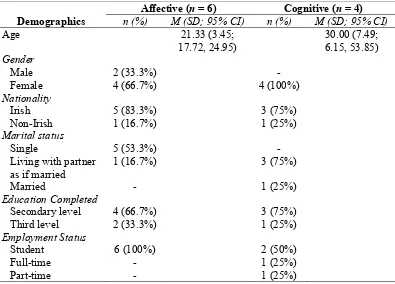
Table 3.1 Demographic characteristics for sample 52
Table 3.2 Descriptive statistics for the NFA and NFC pre-word search puzzle (Time 1) 53
Table 3.3 Descriptive statistics for the NFA and NFC post-word search puzzle (Time 2)53
Table 3.4 Demographic characteristics for sample 73
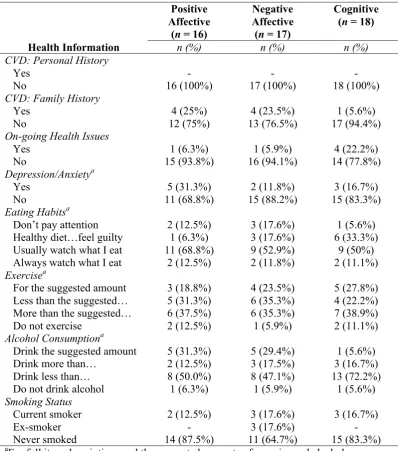
Table 3.5 Health information for sample 74
Table 3.6 Descriptive statistics for items measuring results of the word search puzzles 76
Table 3.7 Descriptive statistics for affective and cognitive information processing 77
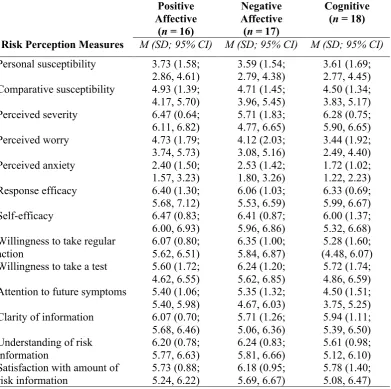
Table 3.8 Descriptive statistics for risk perception measures 78
Table 3.9 Parametric and non-parametric analyses of outcomes approaching
significance 79
Table 3.10 Correlation matrix for all RPQ variables 85
Table 3.11 Varimax rotated item loadings for three factor solution 87
Table 3.12 Varimax rotated item loadings for refined three factor solution 91
Table 3.13 Descriptive statistics for refined three factors across information processing
groups 92
Table 4.1 Demographic characteristics for sample 131
Table 4.2 Self-reported medical history for sample 132
Table 4.3 Health behaviour information for sample 133
Table 4.4 Descriptive statistics for threat measures from the RBD scale from sample 135
Table 4.5 Descriptive statistics for normally distributed efficacy measures from the
Table 4.6 Descriptive statistics for non-normally distributed efficacy measures from the
RBD Scale from sample 137
Table 4.7 Descriptive statistics for message derogation measures from the RBD Scale
from sample 138
Table 4.8 Number and percentage breakdown between message groups and control
processes 139
Table 4.9 Descriptive statistics for sample personal and comparative susceptibility and
severity 145
Table 5.1 Demographic characteristics for sample 179
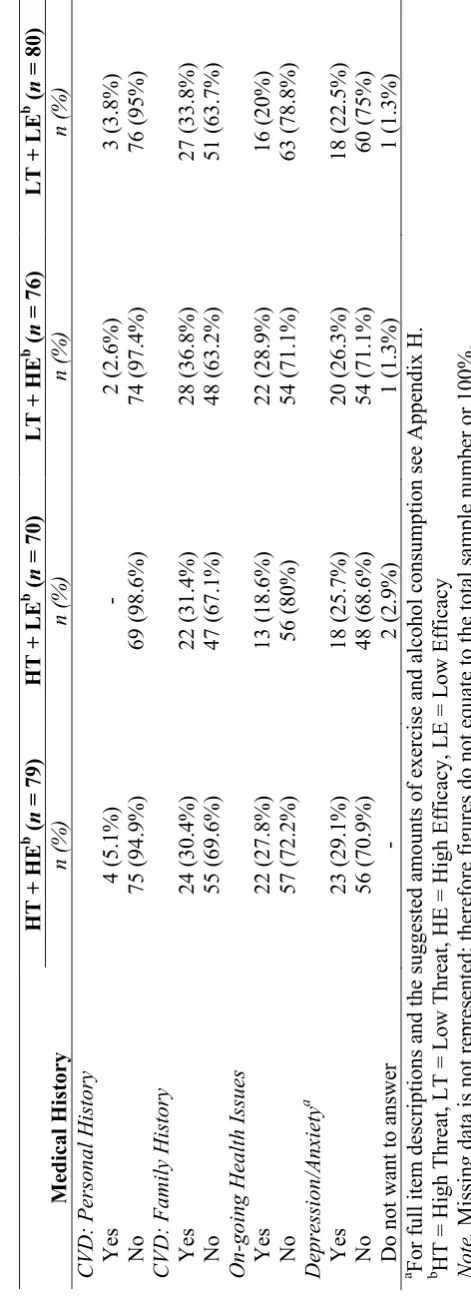
Table 5.2 Self-reported medical history for sample 181
Table 5.3 Health behaviour information for sample 182
Table 5.4 Descriptive statistics for normally distributed threat and efficacy measures
from the RBD scale from sample 184
Table 5.5 Descriptive statistics for non-normally distributed threat and efficacy
measures from the RBD Scale for sample 185
Table 5.6 Descriptive statistics for personal and comparative susceptibility and severity
List of Figures
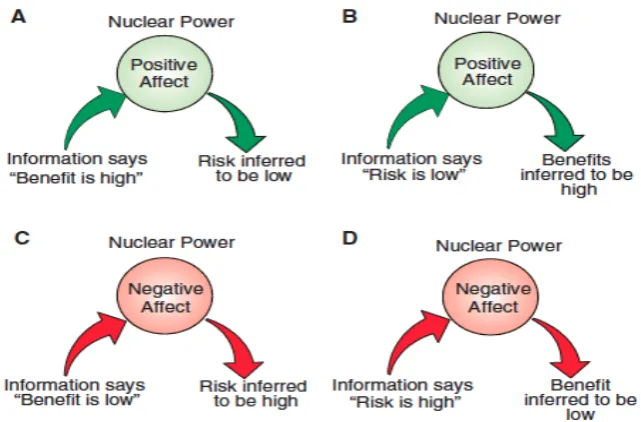
Figure 2.1. A model displaying the inverse relationship between perceived risk and
perceived benefit of nuclear power, and how positive and negative affect
associated with the nuclear power can impact this inverse relationship. 22
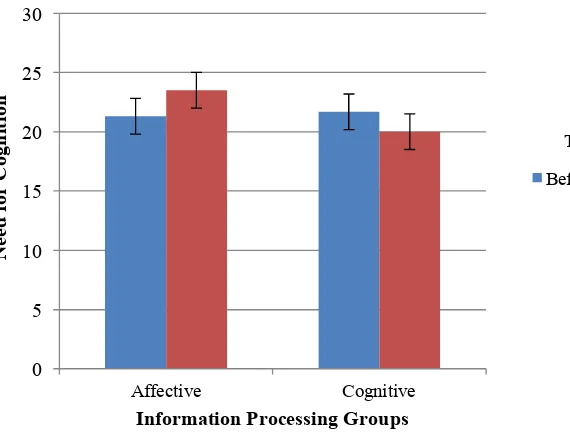
Figure 3.1. NFC scores before and after completion of the word search puzzle by both
information-processing groups. 55
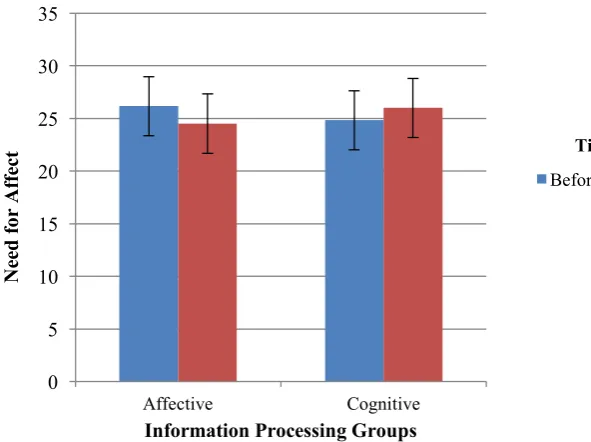
Figure 3.2. NFA scores before and after completion of the word search puzzle by both
information-processing groups. 56
Figure 3.3. Bar chart of means for total number of words found across the
information-processing groups. 80
Figure 3.4. Bar chart of means for number of neutral words found across the
information processing groups. 81
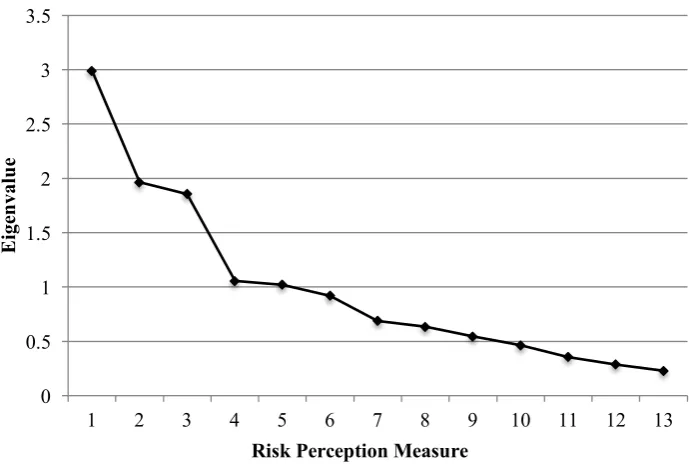
Figure 3.5. Scree plot for principle components analysis (un-rotated) on the 13 risk
perception measures. 87
Figure 4.1. The Extended Parallel Process Model (Witte, 1992; 1994). 105
Figure 4.2. Line graph of group means (back-transformed) for perceived threat of CVD
across the four groups. 140
Figure 4.3. Line graph of group means for smoking perceived efficacy
(back-transformed) across the four groups. 141
Figure 4.4. Line graph of group means for eating healthily perceived efficacy (back
transformed) across the four groups. 143
Figure 4.5. Line graph of group means for behavioural intentions for partaking in
exercise in the next month (back-transformed) across the four groups. 144
Figure 5.1. Bar graph of group means for fear across the six groups. 189
Figure 5.3. Bar graph of group means for anxious across the six groups. 191
Figure 5.4. Visual depiction of the two conceptual models tested within the multiple
regression analyses with moderation. 192
Figure 5.5. Simple slopes for the association between message groups and physical
Chapter 1: General Introduction
In order to give context to the constructs examined in this thesis, the following
chapter presents a brief discussion of the overall rates of cardiovascular diseases (CVD)
within Ireland. Additionally, consideration is paid to the effectiveness of primary
prevention for reducing the rates of CVD, and along with such the risk factors and
health behaviours associated with CVD are included. Lastly, topics relating to health
communication are considered.
1.1 Cardiovascular Disease
CVD, which include diseases of the heart (e.g., ischaemic heart disease or
coronary artery disease), vascular diseases of the brain (e.g., cerebrovascular disease or
stroke) and diseases of blood vessels (e.g., hypertension), are the leading cause of death
and disability in the world (Mendis, Puska, & Norrving, 2011; WHO, 2016). CVD
cause the most deaths (17.5 million people annually) out of all those (38 million people
annually) attributed to non-communicable diseases (NCDs; WHO, 2015). Variations in
the rates of CVD have been noted across the world, with high-income countries
experiencing decreases over the past two decades, however low-incomes countries have
seen huge increases (Neylon et al., 2013).
Regional variations can be seen across Europe for rates of CVD and
cardiovascular mortality (Eurostat, 2009; Muller-Nordhorn, Rossnagel, Mey, &
Willich, 2004; Sans, Kesteloot, & Kromhout, 1997), with higher rates in eastern versus
western European nations, and the lowest rates among southern European nations
(Muller-Nordhorn, Binting, Roll, & Willich, 2008). Furthermore, these disparities
change considerably when CVD is broken down into more specific CVD manifestations
2008). In 2012, the European Society of Cardiology estimated the potential cost of
CVD to the European economy at almost €196 billion a year. Of this total cost of CVD, around 54% (≈€106 billion) is attributed to health care costs, 24% (≈€47 billion) due to productivity losses and 22% (≈€43 billion) due to the informal care of people with CVD (Nichols et al., 2012).
Within an Irish context, CVD are the most common cause of death in Ireland
with approximately 10,000 people dying each year from CVD (McGee, 2010). In 2000,
the Republic of Ireland implemented a major CVD prevention strategy entitled
‘Building Healthier Hearts’ (Building Healthier Hearts: The Report of the Cardiovascular Health Strategy Group, 1999), that was further updated in 2010 (McGee, 2010), with focuses on improving pre-hospital, hospital and primary care, as
well as risk factor reductions among the population. Similar to worldwide trends for
high-incomes countries (Aspelund et al., 2010; Finegold, Asaria, & Francis, 2013;
Roger, 2007; Young, Capewell, Ford, & Critchley, 2010), Ireland has seen declines in
CVD deaths and mortality rates since a peak in the mid-1980s through to the mid-2000s
(Bennett, Hughes, Jennings, Kee, & Shelley, 2013; Bennett et al., 2006; O'Hara,
Bennett, O'Flaherty, & Jennings, 2008; O'Keeffe et al., 2013).
Despite the reductions, for over two decades Ireland has held one of the top
three positions among all EU-15 countries for male and female age standardised (all
ages) coronary heart disease (CHD) mortality (O'Hara et al., 2008). The rates for
premature deaths due to CVD in Ireland are still above the average for the EU member
countries before 2004 (Foundation, 2016) and CHD is still the main cause of mortality
1.1.1 Primary prevention
In the attempts to identify the key variables influencing the rates of CVD, a
variety of policy models have become popular within the literature (e.g., IMPACT,
CHD Policy Model, PREVENT, Global Burden of Disease; Unal, Capewell, &
Critchley, 2006). Using the data from population-level, longitudinal studies of CVD and
health in general (e.g., British Regional Heart Study, the Whitehall studies; Lennon et
al., 2015; Marmot, & Brunner, 2005), these epidemiological models seek to establish
how much of the changes in CVD rates can be attributed to the influence of
population-level risk factors and of evidence-based treatments and/or interventions (Bajekal et al.,
2012).
1.1.1.1 IMPACT models.
In particular, the IMPACT model (Capewell, Morrison, & McMurray, 1999) has
become popular, due to its ability to consider a wide range of population risk factors as
well as treatments and time trends on large sets of patient data. Developed in 1996
based on CHD, the IMPACT mortality model is a cell-based epidemiology model that
accumulates information from primary and/or secondary sources about patient numbers,
treatments, risk factors and mortality rates, and can therefore be used to make estimates
about the among of mortality decline that can be achieved over time from treatments
and/or risk factor reductions (Unal et al., 2006; Unal, Critchley, Fidan, & Capewell,
2005). Weinstein et al. (2003) has succinctly described the IMPACT model as "a
logical mathematical framework that permits the integration of facts and values to
produce outcomes of interest to clinicians and decision makers".
In terms of CVD, IMPACT models can take into account the population-level
prevalence of subcategories of CVD and trends in major cardiovascular risk factors
medical and surgical treatments, and how effective both treatments and risk factor
reductions are (Bennett et al., 2006). Investigations utilising the IMPACT model have
been completed across an array of countries to examine the possible key variables
influencing CVD mortality rates, deaths prevented or postponed and life-years gained
(Unal et al., 2006).
From Irish data, it has been noted that similar to trends around the world, CHD
mortality peaked in the mid-1980s. This was followed by a decrease up until 1998,
which has exceeded that of other nations such as the UK and Finland (O'Hara et al.,
2008). Reductions of 68% for men and 69% for women in CHD mortality (resulting in
6,450 fewer deaths) in the Republic of Ireland were found from 1985 and 2006 with
narrowing gender gaps for both younger and older age groups (Kabir et al., 2013). Of
the deaths prevented, again through analysis using the IMPACT model, the study
attributed ≈40% of such to improvements in the uptake of treatments and ≈48% to improvements in risk factor levels among the population.
Due to criticisms in the literature of population-based models about output
plausibility (face validity), predictive validity (of future events) and the greater use of
such models for decision-making in policy and resource allocation (Briggs,
Wolstenholme, Blakely, & Scarborough, 2016; Critchley & Capewell, 2002; Kopec et
al., 2010), calls have been made for more sophisticated models, particularly in terms of
the outcome measure used. A number of CVD models have been highlighted has being
overly reliant on mortality as an outcome (Critchley & Capewell, 2002). Therefore,
recent research has begun to consider outcomes such as life-years gained,
cost-effectiveness of treatments/interventions and projections into the future of CVD rates if
For the Republic of Ireland, Kabir, Bennett, Shelley, et al. (2007) found through
the IMPACT CHD mortality model that considerably more life-years-gained could be
attributed to risk factor reductions (32,705) than to treatments (14,505). In a similar
examination of reductions in cardiovascular risk factors, Kabir and colleagues (2007)
also found that if the reduction targets for CHD risk factors set out in The Irish Health
Strategy “Shaping a Healthier Future” (Department of Health, 2001) could be met by
2010 then the expected number of deaths due to CHD would be almost halved.
Unfortunately, the targets were not met. Similar projections with risk factor reductions
accounting for more than cardiology treatments have been made for life-years gained in
England and Wales between 1981 and 2000 (Unal et al., 2005), in Scotland between
1975 and 1994 (Critchley, Capewell, & Unal, 2003) and the US between 1980 and 2000
(Capewell et al., 2009). Irrespective of the outcome measure, the vast majority of such
models have come out with results in favour of primary prevention, over secondary, for
significant reductions to the rates and burden of CVD.
1.1.2 CVD risk factors
1.1.2.1 Behavioural cardiology
Due to the results of such IMPACT models based on CHD and CVD rates, and
the ever increasing demands on global healthcare services because of an growing
ageing population within developed countries (WHO, 2015), those within sectors for
healthcare policy and guidelines are calling for greater consideration of associated risk
factors and what can be done to change them (Briggs et al., 2016). The NHS in England
in 2014 called for a “radical upgrade in prevention and public health” (NHS, 2014).
Additionally, within the area of cardiology, a new discipline has been recognised, that
of behavioural cardiology (Das & O'Keefe, 2008; Katz & Wajngarten, 2015; Pickering,
emphasis on both lifestyle and psychosocial factors, along with biological ones, and
how they can impact CVD. As the global rates of CVD increased in the early 1980s
despite advances in medical treatment, greater consideration was given to the impact
that psychosocial risk factors can have on CVD (Pickering et al., 2003; Rozanski,
2014). Growing from the discipline of behavioural medicine, behavioural cardiology
seeks to elucidate a number of areas, such as the influence of psychosocial risk factors
on the rates of CVD, the relationship between mental and physical health for CVD, and
what psychological and behavioural aspects influence patient levels of adherence to
medical recommendations (Katz & Wajngarten, 2015; Rozanski, 2014).
Within healthcare, it is being accepted that behaviours have a role to play in the
occurrence and course of diseases (Graves & Miller, 2003; Millar & Millar, 1993;
Rozanski, 2014; Rozanski, Blumenthal, Davidson, Saab, & Kubzansky, 2005). There
are slight differences between authors in terms of which behaviours they deem most
important and the level of impact they have on specific risk factors. Based on an
analysis of epidemiological data, Rozanski (2014) recently presented five broad
divisions, which include a number of subcategories, for CHD behavioural risk factors
that should be considered within the field of behavioural cardiology (see Table 1.1).
Along with the more classic and well-established risk factors of smoking, diet,
obesity and stress (Mendis et al., 2011; Oliveira, Avezum, & Roever, 2015), the author
highlighted the need to consider more psychological and emotion based risk factors
such as anxiety, pessimism and poor social support, as well their associated cognitive
components, e.g., the individual’s own perception of stress and their thoughts towards a
sense of purpose. Results can be seen throughout the literature where changes to the
classic risk factors and other less established lifestyle factors, such as diet, exercise,
biomedical measures, e.g., cholesterol, plasma triglycerides, cardiac reactivity and
premature ventricular contractions (Benson, Alexander, & Feldman, 1975; Haskell et
al., 1994; Watts et al., 1992).
Table 1.1
Rozanski’s (2014) five broad divisions for CHD behavioural risk factors Behavioural Risk Factors
1. Physical Health Behaviours 3. Chronic Stressors
a) Physical inactivity a) Situational stressors
b) Poor diet and obesity • Work stress
c) Smoking • Martial stress
d) Poor or inadequate sleep • Social stressors
e) Inadequate rest and relaxation • Caregiver strain 2. Negative Emotions and Mental Mind-sets • Childhood and adult abuse
a) Depressive symptoms • Medical illness
b) Anxiety b) Perceived stress
c) Pessimism 4. Social Isolation and Poor Social Support d) Anger and hostility 5. Lack of Sense of Purpose Note. From “Behavioral Cardiology: Current Advances and Future Directions” by A. Rozanski, 2014, Journal of the American College of Cardiology, 64(1), p. 101. Copyright 2014 by The American College of Cardiology Foundation.
In line with such findings and similar to the arguments of Rozanski (2014)
above, other authors have also emphasised the role of lifestyle and emotional factors for
the occurrence and treatment of CVD for a number of decades (Graves & Miller, 2003;
Millar & Millar, 1993; Rozanski et al., 2005). With recognising the importance of these
emotional and behavioural factors, and the premise that they are amenable to change
(Berra, 2010; Fine, Philogene, Gramling, Coups, & Sinha, 2004), efforts are being
directed towards identifying the exact mechanisms for their influence on health
behaviours and subsequently, health outcomes (e.g., CVD; Heitman, 2004; Klein &
Stefanek, 2007; Millar & Millar, 1993). Bellg (2003) examined the key components
needed for the development of new behaviours and maintenance of such for preventive
specific factors that are important for lifestyle adherence. In particular relevance to this
thesis, communication, health beliefs and literacy are identified as key components to
incentivising and maintaining changes in lifestyle behaviours. Furthermore as suggested
by Katz and Wajngarten (2015), the issues of health communication and patient
education are central constructs within many health behaviour change theories, e.g.,
Health Belief Model (HBM; Janz, & Becker, 1984), Stages of Change (Prochaska,
Prochaska, & Levesque, 2001).
1.2 Health Communication
Effective communication of health information (e.g., disease, risks, associated
health behaviours) is a key component to any public health protection strategy;
however, it is a complicated and challenging process. In current times, the public are no
longer relying only on the medical community for information about health risks (e.g.,
over-the-counter risk screening tests, online tools for estimating personal risk,
abundance of information about risk factors on the Internet) and health risk information
is being received in various media forms and environments where the appropriate
support may not be available (Fox, 2011; Rus & Cameron, 2016). Therefore, there is a
growing need to better understand the psychological effects of health information and
the factors that influence how health information is processed. Investigations have
shown that in spite of numerous efforts to communicate the risks of CVD and to
educate about heart healthy lifestyles, understanding of CVD and the associated health
behaviours is generally poor (Green, Grant, Hill, Brizzolara, & Belmont, 2003;
Lambrinou, Protopapas, & Kalogirou, 2014; Oliver-Mcneil & Artinian, 2002; Safeer,
Cooke, & Keenan, 2006).
Advances are being made, with newer investigations focusing on the use of
Salisbury, 2014; Neubeck et al., 2016; Nolan et al., 2014; Winter, Sheats, & King,
2016). Future research is still warranted, as mentioned above there are still considerable
gaps in the literature relating to lifestyle factors influencing CVD. When
communicating about risks, this task becomes even harder given what has been termed
as “The Perception Gap”: the considerable differences that are seen between the
perception of risks by those in academic and scientific communities versus the general
public (Ropeik, 2012). Miscommunications leading to poor understanding and
misrepresentation, along with problems with health literacy and low levels of
awareness, are still hindering successful communication strategies and behavioural
changes for CVD (Lambrinou et al., 2014; Pickering et al., 2003; Ropeik, 2010).
1.3 Conclusion
Ireland has one of the highest European rates for CVD and they are the most
common cause of death in the country (McGee, 2010). As discussed above in section
1.1.1, primary prevention, compared to secondary prevention, has been shown to be the
more effective method for reducing the rates of CVD, and a key component of any
primary prevention strategy is communicating health information to the public.
Therefore, this thesis is focused on examining dual information processing of CVD risk
within health communications. The following chapters describe the mixed method
approach utilised across a number of theoretical-based, empirical examinations of
health communications containing information about CVD threat appraisals and
efficacy appraisals for the associated health behaviours. Chapter two presents a
narrative review of the most relevant literature from dual processing theories of risk,
judgement and decision-making. Chapter three tests the use of an incidental dual
information processing manipulation on CVD risk perception based on Slovic’s
Slovic, Peters, Finucane, & Macgregor, 2005). Informed from the results of study one
(chapter three), chapters four, five and six present two studies that focused on an
integral manipulation of the CVD health communications, and tested the propositions of
the Extended Parallel Processing Model (EPPM; Witte, 1992; Witte, 2009; Witte,
Meyer, & Martell, 2001). Chapter seven is a discussion of the results and findings from
all three studies, and their contribution to the literature on dual information processing
Chapter 2: Review of Dual Processing Theories
2.1 Dual Processing Theories of Decision-Making
Given that the large majority of research examining dual processing of risk
perception grew from the body of literature examining decision-making, a review of
such is presented first, with a focus on those from a social-cognitive perspective.
Following which, a more in-depth examination of these dual-processing theories for
health risks is presented. Lastly, specific dual processing theories of risk perception and
their application to health are discussed, highlighting the areas still requiring
investigation.
2.1.1 Early theories of dual processing in decision-making
One of the first prominent arguments for a dichotomy of affective and cognitive
components in attitude formation, judgements and in turn, decision-making was posited
by Zajonc (1980) who argued that some of our very first reactions to stimuli are
affective, and that all of our perceptions contain some aspect of affect. In opposition to
Lazarus (1982), Zajonc (1980, 1984) argued that these affective processes occur as part
of our appraisals, and can be independent of cognitive processes, to the point where
they can occur prior to cognitive-based ones. Defining affect as the emotional responses
and feelings to an object, and cognition (termed ‘evaluation’ rather than cognition) as
the thoughts, beliefs and judgements, further evidence was found for separate processes
in the formation of attitudes towards such events and objects as blood donation,
computers and snakes (Breckler, 1984; Breckler & Wiggins, 1989). Zajonc (1980)
maintained that affective, as well as cognitive, reactions occurred automatically, and
went on to guide judgment and choice by acting as orienting mechanisms.
From working with patients with damage to the ventromedial frontal cortices of
but ability to “feel” was impaired, Damasio (1994) posited that human thought is made
up of images, which are constructed to contain perceptual and symbolic representations
(e.g., sounds, smells, ideas, words, etc.). Through learning, positive and negative
feelings can become connected to these images, which in turn can be directly or
indirectly connected to somatic states, such that negative feelings can “sound an alarm”
and positive ones can act as “a beacon of incentive” for prospective outcomes (Slovic,
Finucane, Peters, & MacGregor, 2007, p.1335). The brain-injured patients that Damasio
and colleagues (1990) studied where found to have an impaired ability at anticipating
future monetary losses and gains on a card selection game. From this, Damasio (1994)
hypothesized that it was the absence of these emotional somatic markers, caused by
damage to the frontal lobe, which resulted in the accuracy and efficiency of the
patients’ decision-making to decrease.
As research into the role of affect and the dichotomy of affective and cognitive
processes in attitude and judgement formation continued, more and more consideration
was given to its influence for an array of topics, e.g., social judgements (Forgas, 1995);
reasoning (Epstein, 1994; Sloman, 1996); economics (Fudenberg & Levine, 2006);
consumer behaviour (Han, Lerner, & Keltner, 2007; Kahneman, 2011; Tuan Pham,
2004); and risk and benefits (Alhakami & Slovic, 1994; Finucane, Alhakami, Slovic, &
Johnson, 2000). A large body of literature encompassing a number of different
psychological disciplines now exists examining what are termed as dual-process
theories of human behaviour. A significant number of these are based within cognitive
and social psychology, and the vast majority of them are examining social judgement,
reasoning, information processing and decision-making (Evans, 2008). The main
similarity between all is the proposal of two distinct systems for processing: an
analytical-based, conscious and slow one (Evans, 2003, 2008; Greifeneder, Bless, &
Pham, 2011; Quartz, 2009; Reyna & Brainerd, 2011; Reyna & Rivers, 2008).
2.1.1.1 Cognitive and social-cognitive perspectives
Building from a cognitive perspective, Sloman (1996) presented one of the first
theories to suggest two computational forms for reasoning; the first ‘System 1’ is
associative, sourcing knowledge from personal experience, while also processing
statistical information and correlations in the environment. On the other hand, ‘System
2’ is a rule-based system, learning comes from language, culture and formal systems.
Information and representations within ‘System 2’ are deliberate, symbolic and utilise
formal analysis (Osman, 2004). Research into such cognitive and neuroscience-based
systems of dual processing for various forms of decision-making has continued and
become more sophisticated with the use of computerised decision tasks and advances in
imaging technology (Martin & Delgado, 2011; Schiebener & Brand, 2015).
In addition, with a heavy emphasis on memory and semantic processing, the
fuzzy-trace theory (Brainerd & Reyna, 2001; Reyna & Brainerd, 1995) proposes a dual
system for value-based representations: verbatim or gist. Individuals will use both when
faced with a problem or situation that they must solve. The main premise behind the
theory suggests that through learning, individuals store the vague gist of information for
reasoning and decision making in fundamentally two ways. Verbatim representations
are concrete, either the exact words or numbers that make up the precise surface of the
information, while gist representations are more vague and contain the “bottom-line”
meaning of the problem or situation (Reyna & Brainerd, 2011). Not content with the
heavily cognitive-based dual process theories however, a large number of researchers
have proposed dual process theories from a social cognitive perspective. Among some
Frederick (2002), both of which acknowledged the existence of two different modes of
judging relevant information: one systematic or deliberate mode with an emphasis on
abstract and impersonal targets, and a second heuristic mode with more of an emphasis
on specific, personal and vivid thoughts and targets.
2.1.1.2 Evaluation
It should be noted that the number of dual process theories within the social
cognitive perspective, as described by Kruglanski and Gigerenzer (2011), has reached
“epidemic proportions”. Calls have been made for a uni-model that encompasses all the
possible factors that can impact on social judgement and decision-making, to replace
the multiple dual-process models with their varying terminology (Gigerenzer & Regier,
1996; Keren & Schul, 2009; Kruglanski & Gigerenzer, 2011; Osman, 2004).
Furthermore, attempts have been made to combine broad dual process theories from
both cognitive and social perspectives (Stanovich & West, 1999). As the names
suggest, those from a cognitive perspective place greater emphasis on purely cognitive
processes and structures, whereas those from a social cognitive perspective argue for
greater consideration of the cognitive abilities that allow us to understand and interpret
the behaviour of others (Spunt, 2015). Among the social cognitive dual process theories
more emphasis is placed on topics such as consciousness (Falk, Berkman, Whalen, &
Lieberman, 2011; Lieberman, 2009), free will and the impact of moral and legal
influences on the individual’s behaviour and outcomes of such (Evans, 2008; Spunt,
2015). However, both the cognitive and social cognitive dual process theories, in
comparison to dual process theories from other psychological perspectives (e.g.,
Slovic’s risk-as-analysis versus risk-as-feelings, Extended Parallel Process Model),
place less of an emphasis on the role of affect and/or emotional influences within
With a number of similarities to the fuzzy-trace theory (Brainerd & Reyna,
2001; Reyna & Brainerd, 1995) the cognitive-experiential self-theory (CEST; Epstein,
1994; Epstein & Pacini, 1999) is one of the more prominent social cognitive
dual-process theories. Epstein (1994) posited a dual-dual-process theory of information
processing emphasising the importance of individual differences in personality types
(Reyna & Rivers, 2008). The theory posits that in processing information from
everyday life, we do so in two fundamentally different ways: one intuitive, automatic,
and ‘experiential’ system that emotions are explicitly linked to, and the other analytical,
deliberative, verbal, and ‘rational’ system. The ‘experiential’ system encodes reality in
the preconscious and utilises affective images and narratives. Therefore, memories are
stored about events along with the linked emotional accompaniments. If the emotional
accompaniments are positive, they guide the individual towards actions and thoughts
that will reproduce the pleasant feelings. If not, and they are negative, the individual is
guided towards avoidant thoughts and behaviours (Epstein, 1994). This is in
comparison to the ‘rational’ system, which is affect free, operates in the conscious and
processes knowledge analytically (see Table 2.1).
The CEST (Epstein, 1994; Epstein & Pacini, 1999) is distinct among the social
cognitive based dual process theories as it posits a parallel-competitive structure for the
two systems. Although the two systems have access to different forms of information
and knowledge, they are competing processing styles (Evans, 2008). Similar to the
work of Zajonc (1980) though, the CEST (Epstein, 1994; Epstein & Pacini, 1999)
proposes that not only is the information from everyday life processed and stored along
two different modes, but additionally the associated mode can impact and guide the
Table 2.1
Comparison of the experiential and rational systems from the CEST (Epstein, 1994;
Epstein & Pacini, 1999)
Experiential system Rational system
1. Holistic 1. Analytic
2. Automatic, effortless 2. Intentional, effortful
3. Affective: Pleasure-pain oriented (what feels good)
3. Logical: Reason oriented (what is rational)
4. Associationistic connections 4. Logical connections
5. Behaviour mediated by “vibes” from past events
5. Behavioral mediated by conscious appraisal of events
6. Encodes reality in concrete images, metaphors, and narratives
6. Encodes reality in abstract symbols, words, and numbers
7. More rapid processing: oriented toward immediate action
7. Slower processing: oriented toward delayed action
8. Slower and more resistant to change: Change with repetitive or intense experience
8. Changes more rapidly and easily: changes with strength of argument and new evidence
9. More crudely differentiated: Broad generalisation gradient; stereotypical thinking
9. More highly differentiated
10. More crudely integrated: Dissociative, emotional complexes; context-specific processing
10. More highly integrated: Context- general principles
11. Experience passively and
preconsciously; we are seized by our emotions
11. Experienced actively and consciously: We are in control of our thoughts
12. Self-evidently valid: “Experiencing is believing”
12. Requires justification via logic and evidence
Note. From “Individual differences in intuitive-experiential and analytical-rational
thinking styles” by S. Epstein, R. Pacini, V. Denes-Raj, and H. Heier, 1996, Journal of
Personality and Social Psychology, 71(2), p. 391. Copyright 1996 by the American
Psychological Association, Inc.
In general when comparing across all such dual process theories, the main
differences are contended in terms of the level of independence between the two
systems and how they are connected (Keren & Schul, 2009; Kruglanski & Gigerenzer,
2011; Osman, 2004), the level of consideration given to affect within the various
models (Hanoch & Vitouch, 2004; Slovic et al., 2005; Wang, 2006), the effect of
multiple environmental cues on outcomes (Evans, 2008; Haidt, 2001) and individual
review calling for a uni-model, Keren and Schul (2009) highlighted that the use of
different names across the models, as well as vague terminology in descriptions and
labelling, were a cause for serious concern.
In a similar review of dual-process theories for reasoning, judgement and social
cognition, Evans (2008) acknowledged similar concerns: however, due to these
differences and a lack of continuous distinction between the two systems across various
models, as of yet a generic theory that encompasses all may not be possible. Evans and
Stanovich (2013) argue that one general model to cover all theories would be
misleading and most probably mistaken as it is not possible to conclude that different
authors are referring to the same underlying systems within their models. Therefore it
would not be appropriate to group all dual process theories together and claim they are
the same (Evans & Stanovich, 2013).
2.1.2 Applications to health
Within the literature, examples can be found of cognitive and social cognitive
dual process theories applied to various forms of health information, behaviours and
outcomes (Breckler & Wiggins, 1989; Dhaliwal, 2011; Fagerlin, Zikmund-Fisher, &
Ubel, 2005; Millar & Millar, 1990; Norman, 2009; Reyna, 2008; Reyna, Nelson, Han,
& Pignone, 2015), and attempts at specialised dual process theories for attitude,
judgement and decision-making in terms of health. The Cognitive-Affective Mismatch
Hypothesis (Hiruma & Riddiford, 1984) was proposed in the early 90s, examining how
the differences between cognitive and affective-based attitudes could impact subsequent
health behaviours. In an early examination of the different influences from cognitive
and affective-based processing, Millar and Millar (1993) showed how undergraduate
students had a tendency to respond in an affective or cognitive-based manner depending
differently depending on the type of information they were given about different health
behaviours.
At a similar time, the Self-Regulation Model of Illness (SRMI), based on the
idea of illness representations, provided a model for how symptoms and emotions
experienced by an individual when faced with a health threat can influence their
perception of illness and subsequently their coping behaviour (Diefenbach & Leventhal,
1996; Leventhal, Diefenbach, & Leventhal, 1992). The model grew from the results of
studies examining fear communications in the late 1960s by Leventhal (1970) and was
originally referred to as the “Common Sense Model of Illness Representation” (CSM).
It suggested that when presented with a health threat, an individual will engage in
parallel processing of the information in two ways in order to try and understand the
illness or disease threat: a cognitive processing level where external and internal stimuli
evoke ‘cognitive’ illness representations that consider the perceived reality of the health
threat, such as identity, timeline, causal, controllability and consequences based on
prior health and illness experiences (Hale, Treharne, & Kitas, 2007). In parallel, an
emotional processing level deals with the emotional reactions to the threat, such as fear,
anxiety, annoyance, happiness or hope that can be evoked by the health-relevant stimuli
(Diefenbach & Leventhal, 1996; Hagger & Orbell, 2003).
The model has been applied to a large number of health behaviours and
outcomes (Hagger & Orbell, 2003), including patient behaviour after myocardial
infarction (MI; Petrie, Weinman, Sharpe, & Buckley, 1996), adherence among
individuals with chronic illness (Brandes & Mullan, 2014; Reynolds, 2003), diabetes
self-management (Lange & Piette, 2006) and smoking behaviour in lung cancer patients
(Browning, Wewers, Ferketich, Otterson, & Reynolds, 2009). Among a sample of 143
believed the illness was controllable or could be cured where significantly more likely
to attend the cardiac rehabilitation course, and those who perceived that the illness
would last for a short time and have less grave consequences were significantly more
likely to have returned to work within six weeks of the myocardial incident. Browning
and colleagues (2009) conducted the first longitudinal (6 months) study to examine the
change in illness representations over time in lung cancer patients and their smoking
behaviour, an important health-related behaviour change for such a population. The
sample size of the study was quite small (n = 52) and unfortunately, a considerable
number were lost at the 6-month follow up due to death (n = 29).
Among those who did complete the follow-up, a large majority of them still
smoked. It was found that patients’ representations about the identity of the illness over
time had increased, and in turn they reported experiencing increased disease and
treatment-related symptomatology. The results of both studies examining lung cancer
and MI patients are in line with Hagger and Orbell’s (2003) meta-analytic review of the
SRMI. However, the results across the literature for the SRMI are not consistent. In a
meta-analysis of the SRMI in relation to adherence among chronically ill patients (e.g.,
diabetes, hypertension, asthma), the authors reported low effect sizes from the analysis
(-0.02 to 0.12) and found little support for a relationship between SRMI mental
representations and different types of adherence behaviours. The meta-analysis included
23 studies that covered 12 different chronic illnesses, the most common being diabetes,
hypertension and asthma, and assessed adherence to medication, diet and exercise,
disease-specific adherence behaviours and self-reported adherence additionally. The
conclusions of the meta-analysis (Hagger & Orbell, 2003) were in line with some of the
first studies examining the SRMI (Diefenbach & Leventhal, 1996), that the model may
The SRMI posits a causal relationship between illness mental representations
and outcomes, mediated by coping (Diefenbach & Leventhal, 1996; Leventhal et al.,
1992); however, due to a large amount of cross-sectional research examining the SRMI
there is a lack of evidence to support such casual links. Similar to other dual-process
theories, there is a considerable amount of discussion around “what” the two system do
but a deficiency in asserting “how” the systems actually operate (De Neys & Glumicic,
2008). Additionally, there are a lack of reviews consolidating relevant material in
relation to dual-process theories and specific illnesses and outcomes. As the aim of this
thesis is an examination of dual processes in terms of CVD risk perception and the
associated health behaviours, dual process theories in terms of risk perception and
health behaviours will now be discussed.
2.2 Dual Processing Theories of Risk Perception
Slovic and colleagues (Slovic et al., 2004, 2007; Slovic & Peters, 2006; Slovic,
Peters, Finucane, & MacGregor, 2005) argued that risk is perceived and acted upon in
two fundamental ways. Firstly, ‘risk as analysis’, where logic, reason and scientific
deliberation work on risk assessment and decision-making. Secondly, ‘risk as feelings’,
where instinctive and intuitive tendencies are relied upon when assessing risk. Slovic’s
theory (Slovic et al., 2004, 2007; Slovic & Peters, 2006; Slovic et al., 2005) of two
distinct systems processing risk falls under the category of dual process theories of
judgement and decision-making (Evans, 2008), and was built on examinations of
previous dual-process theories of information processing and previous research
examining the role of affect in risk perception (Chaiken & Trope, 1999; Kahneman &
Frederick, 2002; Sloman, 1996). The growth of which was similar to that of the
social-cognitive based SRMI theory above. Early studies displayed the impact of fear, anger
Keltner, 2000; Lerner & Keltner, 2001; Sandman, 1989). Sandman (1989) showed that
dread had a significant role to play in determining public perception and acceptance of
risk, while Lerner et al. (2003) and Lerner and Keltner (2000) displayed how fear can
intensify risk estimates through uncertainty and situational control, and anger can
reduce risk estimates through certainty and individual control.
The results of two similar studies showed that judgments of risk are made not
only on what people think of the risk in question, but also by how they feel about that
risk (Alhakami & Slovic, 1994; Finucane et al., 2000). Within their theory, Slovic and
colleagues (Slovic et al., 2004, 2007; Slovic & Peters, 2006; Slovic et al., 2005) placed
a great amount of importance on the role of affect and in turn, what has become known
as the affect heuristic. Early assessments of the affect heuristic demonstrated its
influence in decision-making by making certain pieces of information more salient for
the individual, thus increasing the speed at which decisions could be made (Schwarz &
Clore, 1988). Defining affect as the “faint whispers of emotion”, and the amount of
specific goodness or badness (a) experienced as a feeling state (with or without
consciousness) and (b) demarcating a positive or negative quality of a stimulus (Slovic
& Peters, 2006, p. 322), the model highlighted the speed and usefulness of affect
heuristics for risk assessment and decision making in real-world environments. This
speed was particularly useful in environments where complex and large amounts of
information need to be processed and in situations where mental resources maybe
limited or under a time pressure.
Early examinations into the affect heuristic had suggested that an inverse
relationship existed between the perceived risk and the perceived benefit of an activity.
That is, when the risk of an activity is judged to be high, the benefit of that activity
Furthermore, this inverse relationship was strongly associated with the level of positive
or negative affect associated with the activity (Finucane et al., 2000) as displayed in
Figure 2.1).
Figure 2.1. A model displaying the inverse relationship between perceived risk and
perceived benefit of nuclear power, and how positive and negative affect associated with the nuclear power can impact this inverse relationship. Support for this model was found by Finucane, Alhakami, Slovic, & Johnson (2000). From ‘‘Risk perception and
affect,’’ by P. Slovic, and E. Peters, 2006, Current Directions in Psychological Science,
15(6), p. 323. Copyright 2006 by Association for Psychological Science.
Slovic, Monahan, and MacGregor (2000) in their study building on the findings
above and those of others (Denes-Raj & Epstein, 1994), showed the difference between
these two information processing systems for risk perception. Experienced forensic
psychologists and psychiatrists were asked to judge the likelihood that a mental patient
would commit an act of violence within 6 months of being discharged from the
hospital. Results showed that when clinicians were given another expert’s assessment of
the patient’s risk of violent behaviour framed in terms of a relative frequency (e.g. “20
out of every 100 patients similar to Mr. Jones are estimated to commit an act of
violence”), they labelled the patient as more dangerous than did the clinicians who were
[image:41.595.127.448.162.373.2]Jones are estimated to have a 20% chance of committing an act of violence”; Slovic et
al., 2000). Among the clinicians who received the risk as a relative frequency, 41%
refused to discharge Mr. Jones. In comparison those who received the risk framed as a
probability, 21% refused to discharge him, showing that the relative frequency risk
group perceived a greater risk (Slovic et al., 2000). It is believed that the
relative-frequency information activated more affect-laden images in the clinicians as they
processed the information, which in turn induced perceptions of greater risk (Slovic et
al., 2000).
This study highlighted how affective processes can impact information
processing and how similar these influences can be to those posited by Epstein (1994),
Sloman (1996) and others in dual process theories of reasoning, judgement and decision
making, as well as the ‘risk as feelings’ model proposed by Loewenstein, Weber, Hsee,
and Welch (2001). Similar to the findings of Damasio, Tranel, and Damasio (1990a),
researchers into risk perception have gone further and argued that without these
affective mechanisms the information lacks a certain level of meaning and therefore,
the information will not be utilised within the decision making process (Bateman, Dent,
Peters, Slovic, & Starmer, 2007). More recent research has provided evidence for the
speed and latent nature of affective processing for decision-making, in comparison to
cognitive processing (Saunders & Buehner, 2013).
There are limitations and negative consequences to dual processing of risks that
should be noted. As with other dual process models for decision-making, questions
have been raised about the potential relationships between affective and cognitive risk
beliefs, with calls in the literature for future research to consider the possible
inter-relationships among affective and cognitive-laden risks (Janssen, Waters, van Osch,