
Taste masking and evaluation methods for orodispersible tablets
11
0
0
Full text
(2) 201. masking in fast dissolving/ drug particles. ODTs are the disintegrating tablets include sweeteners and flavors; however, these are not a sufficient means for tastemasking many bitter drugs. Most of the ODT technologies incorporate unique forms of taste masking as well. The primary methods of taste-masking include adsorption onto or complexation with carriers and spray coating of solid dosage forms, which increase consumer choice, for the reason of rapid disintegrate/dissolve in oral cavity within seconds and swallowed without the need of water or chewing [4, 5]. As tablet disintegrates in mouth this could enhance the clinical effect of the drug through pre-gastric absorption from the mouth, pharynx and esophagus. This leads to an increase in bioavailability by avoiding first pass metabolism[6]. Definition The Center for Drug Evaluation and Research (CDER), US FDA defined Oral Disintegrating Tablets (ODT) as “A solid dosage form containing medicinal substances, which disintegrates rapidly, usually within a matter of seconds, when placed upon the tongue.” A fast dissolving tablet can be defined as a solid dosage form that can disintegrates into smaller granules which slowly dissolve in the mouth. The disintegration time for fast dissolving tablet varies from a few seconds to more than a minute depending on the formulation and the size of the tablet [4]. A fast disintegrating or dissolving system or tablet can be defined as a solid dosage form that can disintegrate or dissolve within 30 seconds, in the oral cavity resulting in a solution or suspension without administration of water. The fast disintegrating tablets are synonymous with fast dissolving tablets, melt in mouth tablets, rapimelts, Porous tablets, Orodispersible, quick dissolving or rapidly disintegrating tablets, Mouth dissolving tablets. Their growing importance was underlined recently when European pharmacopoeia adopted the term “Orodispersible tablet” as a tablet that to be placed in the mouth where it disperses rapidly, before swallowing significance of this drug delivery system includes administration without water, accuracy dosage, easy portability, alternative to liquid dosage. Int. J. Pharm & Ind. Res. Vol - 01. forms ideal for pediatrics and geriatric patients and rapid onset of action. [7] Biopharmaceutical Consideration [6] When new drug delivery system put on, it is must that to consider Biopharmaceutical factor like metabolism and excretion. Pharmacokinetics In this consideration, study has done on absorption, distribution, metabolism and excretion. After absorption, drug attains therapeutic level and therefore elicits pharmacological effect, so both rate and extend of absorption is important. In conventional dosage form there is delay in disintegration and therefore dissolution while ODT is rapidly disintegrates in oral cavity and dissolution is fast. Due to disintegration of ODT in mouth absorption in started from mouth, pharynx and esophagus. Some factors like age, GI pH, and blood flow through GI are taken into consideration, because elders may be considered as separate unique Medicare population. Drug distribution depends on many factors like tissue permeability, perfusion rate, binding of drug to tissue, disease state, drug interaction etc. In geriatric patients, decrease in body mass and total body water result in decreased volume of distribution of water-soluble drugs and increased volume of distribution (V d) of lipid soluble drugs. Duration and intensity of action depends upon rate of drug removal from the body or site of action i.e. biotransformation. Decrease in liver volume, regional blood flow to liver reduces the biotransformation of drug through oxidation, reduction and hydrolysis. Excretion by renal clearance is slowed, thus half-life of renal excreted drugs increase [6]. Pharmacodynamics Drug reception interaction impaired in elderly as well as in young adult due to undue development of organ. Decreased ability of the body to respond baro reflexive stimuli, cardiac output, and orthostatic hypotension may see in taking antihypertensive like prazosin. Decreased sensitivity of the CVS to β-adrenergic agonist and antagonist. Immunity is less and taken into consideration while administered antibiotics. Issue - 03. Jul - Sep 2011.
(3) 202. Altered response to drug therapy-elderly show decreased bronchodilator effect of theophylline Shows increased sensitivity to barbiturates. Concomitant illnesses are often present in elderly, which is also taken into consideration, while multiple drug therapy prescribed. Research workers have clinically evaluated drug combination for various classes’ cardiovascular agents, diuretics, anti-hypertensive in geriatrics. The combination choice depends on disease state of the patient. Taste masking technologies It is estimated that there are about 10,000 taste buds on the tongue, roof of the mouth, cheeks, and throat, and each bud has 60–100 receptor cells. These receptor cells interact with molecules dissolved in the saliva and produce a positive or negative taste sensation.[8] Many drugs are unpalatable and unattractive in their natural state. Physiological and physicochemical approaches have been used to prevent drugs from interacting with taste buds, and thus to eliminate or reduce negative sensory response. Taste masking is an essential requirement for fast dissolving tablets for commercial success. Taste masking of the active ingredients can be achieved by various techniques. Drugs with unacceptable bitter taste can be microencapsulated into pH sensitive acrylic polymers [9]. Cefuroxime axetil is microencapsulated in various types of acrylic polymers (e.g., Eudragit E, Eudragit L-55 and Eudragit RL) by solvent evaporation and solvent extraction techniques. These polymer microspheres showed efficient taste masking and complete dissolution in a short period. Fine granules of drug and disintegrant (e.g. low substituted hydroxypropyl cellulose) when coated with a water insoluble polymer (e.g. ethylcellulose) masked the bitter taste of sparfloxacin [10]. The addition of low substituted hydroxypropyl cellulose as disintegrant to the drug in cores, resulted in increased dissolution rate and bioavailability of sparfloxacin compared to its conventional tablets [11]. After ODTs disintegrate/dissolve in the saliva, the drug in ODTs remains in the oral cavity until it is swallowed. If the drug has a bitter taste, taste Int. J. Pharm & Ind. Res. Vol - 01. masking is critically important in the formulation for maximal patient acceptability. Current taste masking in ODTs is achieved by using sweet-tasking substances as diluents, adding flavors, or encapsulating the unpleasant drug into micro particles or granules. 1. Addition of Sweeteners and Flavors Sugar-based excipients have a negative heat of dissolution, dissolve quickly in saliva, and provide a pleasing mouth feel and good taste-masking to the final product [12]. Most of the products in the market use this kind of excipient to give pleasant mouth feeling. WOWTAB® used the so-called “smooth melt action” of sugar and sugar like (e.g., mannitol) excipients (13). The Zydis® dosage form also uses sweeteners and flavors to mask an unpleasant taste (14). In the NuLev® DuraSolv® tablet, the low dose of hyoscyamine sulfate was sufficiently taste-masked by incorporating a sweetener and a flavor [15]. Flosses and small spheres of saccharides containing unpleasant drugs were mixed with sweeteners and flavors to provide taste masking [16]. 2. Adjustment of pH Values Many drugs are less soluble at pH different from the pH value of the mouth, which are around 5.9. Drugs can be insufficiently solubilized to be available to taste if the equilibrium concentration is below the taste threshold. [17] After a solubilization inhibitor, such as sodium carbonate, sodium bicarbonate, sodium hydroxide, or calcium carbonate, was added to increase the pH when granules including a drug sildenafil dissolved in aqueous medium, the bitter taste of the drug was successfully masked by a sweetener alone [18]. 3. Coating or Encapsulation of Unpleasant Drugs In some instances, sweeteners and flavors may not be sufficient to mask bitter drugs, so alternative methods of taste masking need to be employed. Frequently, the bitter-tasting drug powder is coated to inhibit or retard dissolution and solubilization of the drug. This allows time for all of the particles to be swallowed before the taste is perceived in the mouth. [19] When using a coating or encapsulation for taste masking, complete coating is necessary to prevent exposure of the taste buds to a bitter-tasting drug. It is important Issue - 03. Jul - Sep 2011.
(4) 203. that the coating remain intact while the dosage form is in the mouth. The process of Microcaps® (Eurand) is also based on a microencapsulation technology i.e., deposition of a polymeric membrane on drug particles. This deposition is typically carried out in a liquid phase using the technique known as phase separation or coacervation. This process is also very useful in obtaining microcapsules for delayed or controlled release applications, in addition to taste masking. The typical size of microcapsule is 0.2–0.8 mm [20, 21, 22]. The bitter taste of Linezolid was masked by a combination of microencapsulation by coacervation and subsequent functional membrane coating on the microcapsules with Eudragit L30D [23]. Small particles such as crystals, granules, and pellets were coated with aqueous dispersions of methacrylic acid and methacrylic ester copolymers (Eudragit RL 30D, RS 30D, L 30 D-55, and NE 30D) for taste masking and compressed into FDTs [24]. The FDTs were containing the taste-masked granules of pirenzepine HCl or oxybutynin HCl were prepared by coating the drugs with aminoalkyl methacrylate copolymers (Eudragit E100) using the extrusion method [24]. Tastemasked immediate release micromatrix powders were formed by spray drying the drug and cationic copolymer [25]. Cima’s taste-masking technology also uses coating of the active ingredient with a material that delays the dissolution in the mouth of drugs with objectionable taste [26]. Taste-masked microcapsules were prepared by a phase separation approach. Fırst a polymeric material (water-insoluble) for microencapsulation of the drug is dissolved in a nonpolar organic solvent with a second polymeric material that promotes phase separation of the first polymeric material at a temperature where both polymers dissolve. As the temperature is lowered, the first polymer forms a coating layer on the drug by phase separation, and a dispersion of microencapsulated drug is produced. After removing the solvent and the second polymeric material from the dispersion, isolated taste-masked microcapsules were obtained [27]. The mouth feel of OraSolv® tablets is different from that of most other orally disintegrating tablets, because of the presence of an effervescent couple comprising an acidic compound and a carbonate or bicarbonate salt. Int. J. Pharm & Ind. Res. Vol - 01. In MicroMask™ by KV Pharmaceutical, the tastemasking system was prepared by casting or spin congealing melt dispersions or solutions of a drug in a molten blend of materials. A major amount of wax core material has a melting point within the range of 50–200 °C. The taste masking process does not use solvents of any kind, and therefore leads to faster and more efficient production [28]. Bite-dispersion tablets were prepared using a waxy material and phospholipid [29]. Addition of fatty acid ester(s) and/or waxes (e.g., Witepsol H32) contributed to taste masking of drugs having an irritating taste [30]. When an active ingredient, such as acetaminophen, has a bitter taste, it can be encapsulated in a material such as Partially hydrogenated cottonseed oil, corn oil, flavored oil, zein (corn protein), cellulose, or candied sugar. Encapsulation with one or more of these materials has been found to enhance the palatability of acetaminophen while the tablet is dissolving in the mouth. Flashtab® technology [31] involves the use of coated multiparticles of active ingredients for effective tastemasking. Other coating techniques designed for protecting drugs can also be used for taste-masking purposes. In addition to coating bitter-tasting drug particles,drugs were simply blended with cyclodextrin. Blending with cyclodextrin without the conventional complex formation was shown to be effective in masking the unpleasant-tasting active ingredients in ODTs [32]. 4. Granulation Taste masking by granulation is achieved by decreasing the surface area of the drug by increasing its particle size. The additional benefit obtained is ease of processing for tablet compression as the majority of drugs have a low bulk density. Additionally, polymers that serve as binders and taste-masking agents may be incorporated, which reduce the perception of taste. Granulation may be achieved with or without the use of a solvent. Dry granulation involves the use of forming compacts/slugs that are milled for blending [33]. Wet granulation can be achieved by using the fluid bed process or highshear granulation. In the fluid bed process, the drug is suspended in the bed with air, and a binder is Issue - 03. Jul - Sep 2011.
(5) 204. sprayed from the top. The granules formed are porous and not amenable to further processing like coating. In high-shear granulation, the granule formation occurs by spraying a liquid binder onto drug/mixture of drugs with excipients that are being agitated by combined action of an impeller and chopper. The granules obtained are dense and may be used directly or coated further in a fluid bed. This approach is suitable for high-dose drugs (>50 mg) with unpleasant taste [34]. 5. Psychological Modulation of Bitterness Taste masking with addition of competing agents involves modulating the psychological perception of bitterness. To understand this better, the theory of perception of taste is in order. The biochemical and physiological basis of bitterness has been summarized recently [35, 36]. There are two theories. One theory contends that receptors for common taste stimuli such as salt, bitter, and sweet are present in specific locations of the tongue. The second theory contends that taste buds respond to all stimuli to a different extent. Regardless of the mechanism, taste masking is achieved by the addition of specific inhibitors to suppress the stimuli. This approach is likely to involve the use of an inhibitor specific to the taste masking of the drug in question. In general, there is no specific universal inhibitor available, which will mask all the taste stimuli. 6) Freeze drying process This method is used to develop fast-dissolving oral technologies such as Zydis and Lyoc Technology. Zydis is a tablet-shaped dosage form that spontaneously disintegrates in the mouth in seconds.[3] This is due to the high porosity produced by the freeze drying process. The Zydis process requires the active ingredient to be dissolved or suspended in an aqueous solution of water-soluble structure formers. The resultant mixture is then poured into the preformed blister pockets of a laminate film and freeze dried [15]. The two most commonly used structural excipients are gelatine and mannitol, although other suitable excipients can be used. This process is ideally suited to low solubility drugs such as these are more readily freeze dried. Int. J. Pharm & Ind. Res. Vol - 01. Evaluation of Oro Dispersible Tablets General appearance Mainly it includes the visual identity, elegance, consumer acceptance and the size and shape of the tablet. [13] Thickness Tablet thickness is an important characteristic in reproducing appearance and also in counting by using filling equipment. Some filling equipment utilizes the uniform thickness of the tablets as a counting mechanism. [13, 37] Ten tablets were taken and their thickness was recorded using micrometer. Weight variation Weight of individual twenty tablets is recorded and after that all twenty tablets are weighed at a time on a digital balance.[37] Then the average weight is determined from the tablet. As per IP this method is satisfactory to determine the drug content uniformity. Table 1: Weight Variation Specification as per IP Average Weight of Tablet 80mg or less More than 80 mg less than 259 mg 250 mg or more. % Deviation ± 10 ± 7.5 ±5. Hardness The tablet hardness is defined as the force applied diametrically of the tablet to break the tablet. [38] It is determined by taking six tablets from each formulation by a Monsanto hardness tester. It is expressed in kg/ cm2 Crushing Strength It is the force required to break a tablet by compression in the radial direction, it is an important parameter in formulation of mouth dissolve tablets because excessive crushing strength significantly reduces the disintegration time. In the present study the crushing strength of the tablet was measured using Pfizer hardness testers. An average of three observations is reported. Friability It is determined by taking six tablets from each formulation with the help of Roche Fribrilator. [38] After that the preweighed six tablets were rotated at 25 Issue - 03. Jul - Sep 2011.
(6) 205. rpm for 4 minutes. The tablets were reweighed after removal of the fine particles using 60 mesh and the percentage of weight loss is calculated. % friability = (Loss in weight/ Initial weight) ×100. In all aspect, the range is within limit of 0.1% - 0.9%. at the bottom of the desiccator for 3 days. One tablet as control (without superdisintegrant) was kept to assess the moisture uptake due to other excipients. Tablets were weighed and the percentage increase in weight was recorded.. Dispersion time This test is performed to ensure disintegration of tablets in the salivary fluid, if it is to be used as a ODT. Tablet was added to 10 ml of phosphate buffer solution, ph 6.8 at 37+0.5ºc, Time required for complete dispersion of a Tablet was measured.. Dissolution test The development of dissolution methods for ODTs is comparable to the approach taken for conventional tablets and is practically identical. Dissolution conditions for drugs listed in a pharmacopoeia monograph, is a good place to start with scouting runs for a bioequivalent ODT. [13, 41] Other media such as 0.1 N HCl and buffers (pH - 4.5 and 6.8) should be evaluated for ODT much in the same way as conventional tablets. USP dissolution apparatus 1 and 2 can be used. USP 1 Basket apparatus may have certain applications, but sometimes tablet fragments or disintegrated tablet masses may become trapped on the inside top of the basket at the spindle where little or no effective stirring occurs, yielding irreproducible dissolution profiles. Kancke proposed USP 2 Paddle apparatus, which is the most suitable and common choice for ODTs, with a paddle speed of 50 rpm commonly used. Typically, the dissolution of ODT is very fast when using USP monograph conditions; hence, slower paddle speeds may be utilized to obtain a profile.. Wetting time It is mainly related to the disintegration properties of tablets. It is determined by a tablet is placed on piece of tissue paper folded twice and kept in a Petridis (Internal diameter = 6.5 cm) containing 6 ml of water and the time for complete wetting was measured. The lower wetting time implies the quick disintegration of the tablet. [13, 39, 40] Water absorption ratio For measuring water absorption ratio the weight of the tablet before keeping in the petridish is noted (W b). The wetted tablet from the petridish is taken and reweighed (W a). [13, 39] The water absorption ratio, R can be then determined according to the following equation. R = 100 (W a-W b) / W b Uniformity of dispersion This test was applicable only to dispersible tablets. In this method, two tablets were placed in 100ml of water and stirred gently until completely dispersed. [41] A smooth dispersion must be obtained which passes through a sieve screen with a nominal mesh aperture of 7110µm (sieve no. 22). Moisture uptake studies Moisture uptake studies for ODT should be conducted to assess the stability of the formulation. Ten tablets from each formulation were kept in a desiccator over calcium chloride at 37°C for 24 h.[41] The tablets were then weighed and exposed to 75% relative humidity, at room temperature for 2 weeks. Required humidity was achieved by keeping saturated sodium chloride solution Int. J. Pharm & Ind. Res. Vol - 01. The USP 2 Paddle apparatus at 50-100 rpm is suitable for dissolution testing of taste-masked drug as well. The media used for the taste-masked drug should match that of the finished product to maximize the value of the test. High-performance liquid chromatography (HPLC) is often required to analyze dissolution aliquots due to presence of UV absorbing components, specifically flavors and sweetener. Excipient to drug ratio may be higher since the formulation is designed to have good taste and mouth feel, decreasing the detection of the drug to background (excipient) in the UV spectrophotometer. Stability testing of drug (temperature dependent stability studies) The fast dissolving tablets are packed in suitable packaging and stored under the following conditions for a period as prescribed by ICH guidelines for Issue - 03. Jul - Sep 2011.
(7) 206. accelerated studies. [13] (i) 40 ± 1 °C, (ii) 50 ± 1 °C, (iii) 37 ±1 °C and RH 75% ± 5% The tablets were withdrawn after a period of 15 days and analyzed for physical characterization (Visual defects, Hardness, Friability, Disintegrations, and Dissolution etc.) and drug content. The data obtained is fitted into first order equations to determine the kinetics of degradation. Accelerated stability data are plotting according Arrhenius equation to determine the shelf life at 25 °C. Determination of disintegration time of ODTS ODTs should be strong enough to survive rough handling during manufacturing and shipping processes, and yet friable enough to instantly dissolve or disintegrate into small particles for easy swallowing by the patient. Conventional disintegration tests for ordinary tablets may not allow precise measurement of the disintegration time of ODTs because of their fast disintegration. It is also hard to distinguish among ODTs, which release their ingredients very quickly. In vitro testing may not always reflect the real in vivo disintegration of tablets. In general, the method described in the US Pharmacopoeia can produce data for evaluation of the disintegration time; however, no additional information might be extracted. It is also possible to evaluate the tendency of the disintegration kinetics by visual examination. However, these evaluations are not sufficiently objective [42]. When developing ODT formulations, it is important to evaluate the effect of different excipients on the disintegration time. In order to predict the disintegration time of ODTs and the effects of different formulation parameters, a few methods have been proposed [43-45]. It is important to define a suitable method to better distinguish between the disintegration times of different ODTs and to find better correlation between in vitro and in vivo data. To achieve this goal, a modified dissolution apparatus was applied to ODTs with disintegration times too fast to distinguish the differences between the tablets when the conventional methods were used [45]. A. In vivo Determination of Disintegration Time In vivo disintegration tests of ODTs can be conducted on volunteers who are usually randomized to receive Int. J. Pharm & Ind. Res. Vol - 01. the treatments and then directed to clean their mouths with water[45]. Tablets are placed on their tongues, and the time for disintegration is measured by immediately starting a stopwatch. The volunteers are allowed to move ODTs against the upper roof of the mouth with their tongue and to cause a gentle tumbling action on the tablet without biting on it or tumbling it from side to side. Immediately after the last noticeable granule has disintegrated, the stopwatch is stopped and the time recorded. B. In vitro determination of disintegration time 1. Modified US pharmacopoeia method Instead of using the disintegration apparatus described in the US Pharmacopoeia, a modified method has been proposed [43]. The disintegration apparatus was the same as the USP dissolution test Apparatus 2, which uses a paddle stirring element and 1000-mL cylindrical vessel at 37 °C. Distilled water was chosen for the disintegration medium instead of a buffer solution. A tablet to be tested was put on the bottom of a sinker, which was placed in the middle of the vessel and hung by a hook to the lid of the vessel with a distance of 6– 8.5 cm. Disintegration time was determined at the point at which the tablet disintegrated and passed through the screen of the sinker completely. The opening of mesh of the sinker was 3–3.5 mm in height and 3.5–4 mm in width. 2. Texture Analyzer Method: The Texture Analyzer (Stable Micro Systems, U.K.) was applied to measure the beginning and ending time of disintegration [44]. A tablet was adhered to the bottom of a probe, which was attached to the load cell with a very thin layer of glue or double-sided tape. A small amount of water, usually 0.4 mL, in a beaker or petridish was used as a disintegration medium at room temperature. The tablet was submerged in water and compressed against the bottom of the beaker or petridish with a constant pressure. The beaker size could be varied, and the beaker could even be a water bath to keep the temperature constant. The instrument was programmed to apply a moderate force for up to 60 seconds so that the penetration distance could be measured as the tablet was compressed while submerged in the water. The probe distance would be steady as the tablet remained Issue - 03. Jul - Sep 2011.
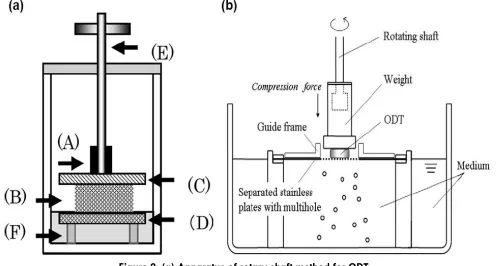
(8) 207. cohesive. However, as the tablet disintegrated, the compression distances increased, because the probe had to keep the pressure constant. The time for the tablet to disintegrate was determined by measuring the distance the probe traveled into the tablet. Typical time-distance profiles generated by the Texture Analyzer software enabled the calculation of beginning and ending of disintegration time. El-Arini and Clas [46] performed the in vitro disintegration test of commercially available ODTs by the Texture Analyzer instrument. The differences in the disintegration mechanisms of the ODTs, which derived from the formulation and/or manufacturing process, were reflected in the shape of their disintegration profiles. Moreover, the in vitro disintegration times obtained by the simulated in vivo conditions were correlated with the reported in vivo disintegration times.. Figure 1 Texture analzer apparatus for disintegration test 3. CCD Camera Method The CCD (Charge Coupled Device) camera apparatus comprises two distinct sections a disintegration component and a measurement device [42]. The mode of measurement involves the continuous acquisition of pictures by the CCD camera to record the time course of disintegration. The acquired pictures are simultaneously transferred to the computer and stored. The key point of this apparatus is to combine the detailed pictures obtained by the CCD camera. The disintegration apparatus consists of a plastic cell partitioned into two parts: one component comprises an inner tank containing a stirring bar, a grid fabricated Int. J. Pharm & Ind. Res. Vol - 01. from stainless-steel, and a disintegration medium (distilled water, 200 mL, 37 ± 2 °C); the second component is an outer tank of thermo stated water. The grid is constructed of three hollow areas equidistant from the center. These hollow points represent the position of the tablets, and a support is added for each tablet to avoid movement during the disintegration test. The CCD camera method permits documentation of the disintegration time course with sequentially obtained pictures. The computer enables calculation of the surface area of each tablet at any time point, as well as the design of graphs that show decrease in the tablet surface area as a function of time. The disintegration time and the area under the curve can be calculated from these graphs as qualitative parameters that can be correlated to the oral disintegration time. Consequently, results depend on the direction and focal length of the camera relative to the tablet. The disadvantage of the method involves difficulty associated with the application of mechanical stress to test tablets. Thus, the time required for a single test is several minutes, which is greater than that for the in vivo disintegration time. 4. Rotary-Shaft Method: ODTs generally receive some mechanical stress produced by the tongue in the human mouth. Narazaki et al. [47] developed a suitable disintegration method for ODTs. In this method, the ODT is placed on stainless steel wire gauze, which is slightly immersed in test medium, and a rotary shaft is employed to provide mechanical stress to the tablet by means of its rotation and weight. The critical parameters of this method are the rotation speed and the mechanical stress. To assess our method, several placebo ODTs were prepared and exposed to severe storage conditions (60 °C/75% RH for 1 week) in order to obtain ODTs with a wide range of disintegration times. These placebo ODTs were used to compare the disintegration times obtained by several methods, including the proposed (Rotary-shaft) method. The disintegration time of the placebo ODTs in human sensory test varied widely after storage. The disintegration times determined by the conventional disintegration test were in good correlation to those in the human sensory test, but the slope was 0.241, far from 1. There was no correlation between the disintegration time of ODTs in the human sensory test Issue - 03. Jul - Sep 2011.
(9) 208. Figure 2: (a) Apparatus of rotary shaft method for ODT (A) Weight, (B) ODT, (C) Wetting sponge, (D) Wire gauze, (E) rotary shaft, (F) medium.. (b) Improved rotary shaft apparatus. and those determined by the conventional dissolution test. In contrast, a good correlation between the disintegration times was obtained with the new method and the human sensory test, and the slope was 0.858, very close to 1. It was concluded that the proposed method was suitable for the measurement of the disintegration time of ODTs. This new method might provide a valuable approach for establishing the official disintegration test for ODTs in the future. 5. Sieve Method A simple device based on a shaking water bath was designed to measure the disintegration time of ODTs [48]. The device is composed of a 10-mesh sieve and a glass cylinder. The sieve is placed into the cylinder at a certain position so that 2 mL of disintegration medium fills the space below the sieve of the cylinder. Then, 1mL of the medium is added into the device, so that it is available for an ODT to be tested. The device is in a reciprocal shaking water bath keeping the temperature at (kept at a constant temperature) 37 °C. While the shaker is running in horizontal back-andforth motions with 150 rpm, an ODT is placed onto the top of the sieve immersed in the disintegration medium. Int. J. Pharm & Ind. Res. Vol - 01. Conclusion Taste masking is an essential requirement for mouth dissolving tablets for commercial success. Mouth dissolving tablet, which disintegrate or dissolve in the saliva produce a positive or negative taste sensation. Most of the drugs have unpalatable taste in which taste masking plays critical role in formulating MDT. The negative taste sensation of drugs can be reduced or eliminated by various approaches like Addition of Sweeteners and Flavors, Adjustment of pH Values, Coating or Encapsulation of Unpleasant Drugs. Conventional disintegration tests for ordinary tablets may not allow precise measurement of the disintegration time of ODTs because of their fast disintegration. The US Pharmacopoeia can produce data for evaluation of the disintegration time however no additional information might be extracted. It is also possible to evaluate the tendency of the disintegration kinetics by visual examination. When developing ODT formulations, it is important to evaluate the effect of different excipients on the disintegration time. In vitro testing may not always reflect the real in vivo disintegration of tablets.. Issue - 03. Jul - Sep 2011.
(10) 209. References 1. Sastry SV, Nyshdham JR, Fix JA. Recent technological advances in oral drug delivery: A review. Pharmaceutical Science and Technology Today. 2000; 3:138-45. 2. Seager H. Drug-delivery products and the Zydis fast-dissolving dosage form. Journal of Pharmacy and Pharmacology. 1998; 50(4):37582. 3. R. Yarwood, “Zydis - A Novel, Fast Dissolving Dosage Form,”Man. Chem., February 1990: 36– 37. 4. Seager, H., " Drug-deliver Products and the Zydis Fast-dissolving Dosage Form", J.Pharm and Pharmacol., 1998;50:375-382. 5. Bradoo, R., Shahani, S., Poojary, S., Deewan, B. and Sudarshan, S., JAMA India., 2001; 4(10) : 2731. 6. Chang RK, Guo X, Burnside B, Couch R. FastDissolving Tablets, Pharm Technology., 2000;24(6): 52-58. 7. Fu Y, Yang S, Jeong SH, Kimura S, Park K. Orally fast disintegrating tablets: developments, technologies, taste‐ masking and clinical studies. Crit. Rev. Ther .Drug. Carrier. Sys. 2004; 21: 433‐476. 8. Kumaresan C, Orally Disintegrating Tablet -Rapid Disintegration, Sweet Taste, And Target Release Profile, pharmainfo.net sep9 2008. 9. Lorenzp- Lamosa, M.L., Cuna, M., Vila-Jato, J.L. and Torres, D., J. Microencapsul., 1997, 14, 607. 10. Shirai, Y., Sogo, K., Yamamoto, K., Kojima, K., Fujioka, H., Makita, H. and Nakamura, Y., Biol. Pharm. Bull., 1993, 16, 172. 11. Shirai, Y., Sogo, K., Fujioka, H. and Nakamura, Y., Biol. Pharm. Bull., 1994, 17, 427. 12. Reo JP, Fredrickson JK. Taste masking science and technology applied to compacted oral solid dosage, Part 3. Am Pharm Rev 2002; 5(4):8–14. 13. Mizumoto T, Masuda Y, Fukui M. Intrabuccally dissolving compressed moldings and production process thereof. 1996. US Patent 5,576,014. 14. H.Seager,“Drug Delivery Products and the Zydis Fast Dissolving Dosage Form, ”J.Pharm. Pharmacol., 1998: 375–382.. Int. J. Pharm & Ind. Res. Vol - 01. 15. Khankari RK, Hontz J, Chastain SJ, Katzner L. Rapidly dissolving tablet dosage form. 2001. US Patent 6,221,392. 16. Misra TK, Currington JW, Montwill B, Kamath SV, Sanghvi PP, Sisak JR, Raiden M. Fast-dissolving comestible units formed under high-speed/highpressure conditions. 2000. US Patent 6,048,541. 17. Morella AM, Pitman IH, Heinicke GW. Taste masked liquid suspensions. 2001. US Patent 6,197,348. 18. Tian W, Langride J. Fast dissolving and taste masked oral dosage form comprising sildenafil. 2004. Patent WO2004017976. 19. Bettman MJ, Percel PJ, Powell TC. Eff ervescent microcapsules. 1998. US Patent 5,709,886. 20. Ghanta SR, Guisinger RE. Procedure for encapsulating ibuprofen. 1998. US Patent 5,814,332. 21. Friend DR, Ng S, Sarabia RE, Weber TP, Geoff roy J-M. Taste-masked microcapsule compositions and methods of manufacture. 2000. US Patent 6,139,865. 22. Percel PJ, Venkatesh GM, Vishnupad KS. Functional coating of linezolid microcapsules for tastemasking and associated formulation for oral administration. 2001. WO Patent 0,152,848. 23. Lehamann K, Petereit H-U, Dreher D. Fast disintigrating contrlled release tablets from coated particles. Drug Made Germany 1994; 37(2):53– 60. 24. Ishikawa T, Watanabe Y, Utoguchi N, Matsumoto M. Preparation and evaluation of tablets rapidly disintegrating in saliva containing bitter-tastemasked granules by the compression method. Chem Pharm Bull 1999; 47(10):1451–1454. 25. Cumming KI, Harris E. Taste-masked formulations. 2000. US Patent 6,153,220. 26. Alkire TG, Sanftleben RA, Schuehle SS. Taste masking microparticles for oral dosage forms. 1997. US Patent 5,607,697. 27. Geoff roy J-M, Friend DR, Ng S, Weber TP, Sarabia RE. Taste-masked microcapsule compositions and methods of manufacture. 2000. US Patent 6,139,865. 28. Cuca RC, Harland RS, Riley J, Th omas C, Lagoviyer Y, Levinson RS. Taste masked. Issue - 03. Jul - Sep 2011.
(11) 210. 29.. 30.. 31.. 32.. 33. 34.. 35.. 36.. 37.. 38.. 39.. 40.. 41.. pharmaceutical materials. 1996. US Patent 5,494,681. Venkatesh GM, Palepu NR. Process for manufacturing bite-dispersion tablets. 2002. US Patent 6,475,510. Gergely G, Gergely T, Gergely I. Taste-masked pharmaceutical preparation in the form of an eff ervescent and/or disintegrating tablet or an instant granulate. 1993. WO Patent 9,313,760. Cousin G, Bruna E, Gendrot E. Rapidly disintegratable multiparticular tablet. 1995. US Patent 5,464,632. Stroppolo F, Ciccarello F, Milani R, Bellorini L. Oral pharmaceutical compositions containing cyclodextrins as taste masking agent. 2002. WO Patent 0,241,920. Pebley WS, Jager NE, Th ompson SJ. Rapidly distintegrating tablet. 1994. US Patent 5,298,261. Pandya HB, Callahan TP. Taste masking for unplatable formulations. 1998. US Patent 5,837,286. Brown, D. Orally disintegrating tablets - taste over speed. Drug Delivery Technology 2003, 3 (6), pp. 58–61. Stier, R. Masking bitter taste of pharmaceutical actives. Drug Delivery Technology 2004, 4 (2), pp. 52–57. Lalla, JK., Mamania, HM., Fast dissolving rofecoxzib tablets, Indian J. Pharm. Sci., 2004, 59(4): 23-26. Hiremanth JG, Shastry CS, Srinath MS. Pharmaceutical approaches of taste masking in oral dosage forms. Indian drugs 2004; 41: 253257. Bhagvati ST, Hiremath SN, Sreenivas SA. Comparative evaluation of disintegrants by formulating cefixime dispersible tablets. Indian J Pharm Educ Res 2005 Oct-Dec; 39(4): 194-197. Bi Y, Sunada H, Yonezawa Y, Danjo K, Otsuka A, Iida K. Preparation and evaluation of a compressed tablet rapidly disintegrating in the oral cavity. Chem Pharm Bull 1996; 44(11):2121– 2127. DP Venkatesh, CG Geetha Rao. Formulation of taste masked orodispersible tablets of ambroxol hydrochloride. Asian Journal of Pharmaceutics, Oct-Dec 2008, 261-264. Int. J. Pharm & Ind. Res. Vol - 01. 42. Morita Y, Tsushima Y, Yasui M, Termoz R, Ajioka J, Takayama K. Evaluation of the disintegration time of rapidly disintegrating tablets via a novel method utilizing a CCD camera. Chem Pharm Bull 2002; 50(9):1181–1186. 43. Bi Y, Sunada H, Yonezawa Y, Danjo K, Otsuka A, Iida K. Preparation and evaluation of a compressed tablet rapidly disintegrating in the oral cavity. Chem Pharm Bull 1996; 44(11):2121– 2127. 44. Dor PJM, Fıx JA. In vitro determination of disintegration time of quick-dissolve tablets using a new method. Pharm Dev Technol 2000; 5(4):575– 577. 45. Dobetti L. Fast-melting tablets: Developments and technologies. Pharm Technol N Am 2001; Suppl.:44–50. 46. El-Arini SK, Clas S-D. Evaluation of disintegration testing of diff erent fast dissolving tablets using the texture analyzer. Pharm Dev Technol 2002; 7(3):361–371. 47. Narazaki R, Harada T, Takami N, Kato Y, Ohwaki T. A new method for disintegration studies of rapid disintegrating tablet. Chem Pharm Bull 2004; 52(6):704–707. 48. Fu Y, Jeong SH, Park K. Preparation of fast dissolving tablets based on mannose. Polym Mater Sci Eng Preprint 2003; 89:821–822.. Issue - 03. Jul - Sep 2011.
(12)
Figure
Related documents
Figure 4 Performance of individual-level isolation based on different spatial indexes for determining targeted individuals ( none : no counter measure, random : a portion of
The rats were divided into 4 groups including sham group: healthy rats without any intervention, control group: rats treated with busulfan in two doses of 25 mg/kg and 15 mg/ kg
Interaction of the Chemical Environment With the Infant and Young
Based on these findings and other studies regarding the pathoge- nesis and risk factors of NAFLD and different dietary patterns (43-52) we can suggest Fig.. 2: Effects of
Abstract Given an image sequence of a scene consisting of multiple rigidly moving objects, multi-body structure- and-motion (MSaM) is the task to segment the image fea- ture tracks
As previous research has found that order flow can explain exchange rate movements on a daily and weekly basis, we find it reasonable to assume that it is possible to
In two patients, follow-up of more than 10 years was done, with complete cure in one patient and benign course of illness in the other.. Because of the rarity of the disease
In this approached system, secure code PHP functions are proposed to detect and prevent form XSS attack by using two methods, the first one is to use regular expression to
